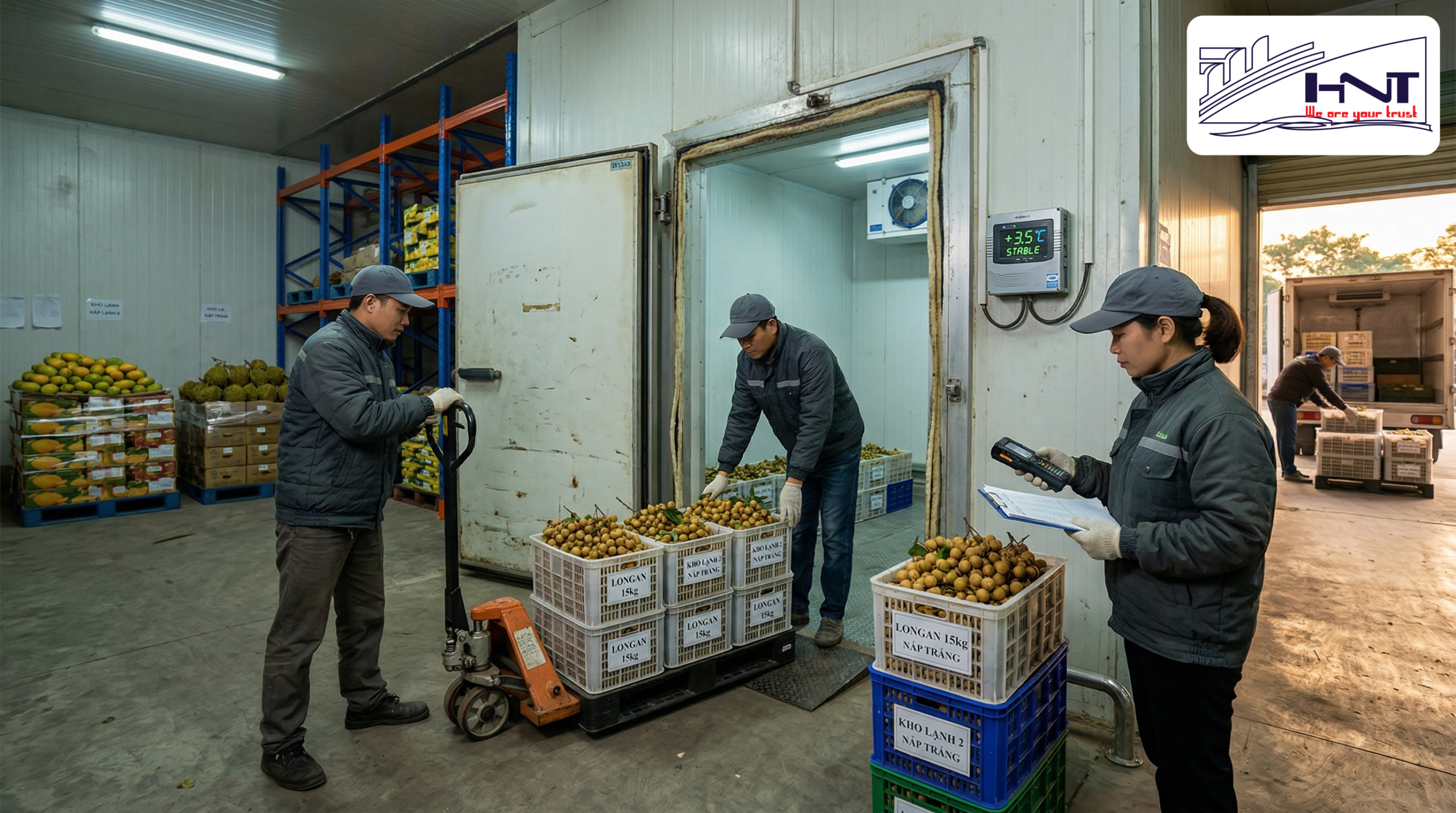
Agricultural product damage is the biggest concern in North-South fruit transport today. According to 2026 market data, demand for inter-regional fruit trade grew by over 15%. However, poor preservation has caused significant losses. This article will help you choose the right preservation method and optimize freight costs effectively.
Importance of North-South fruit transport at standard temperatures
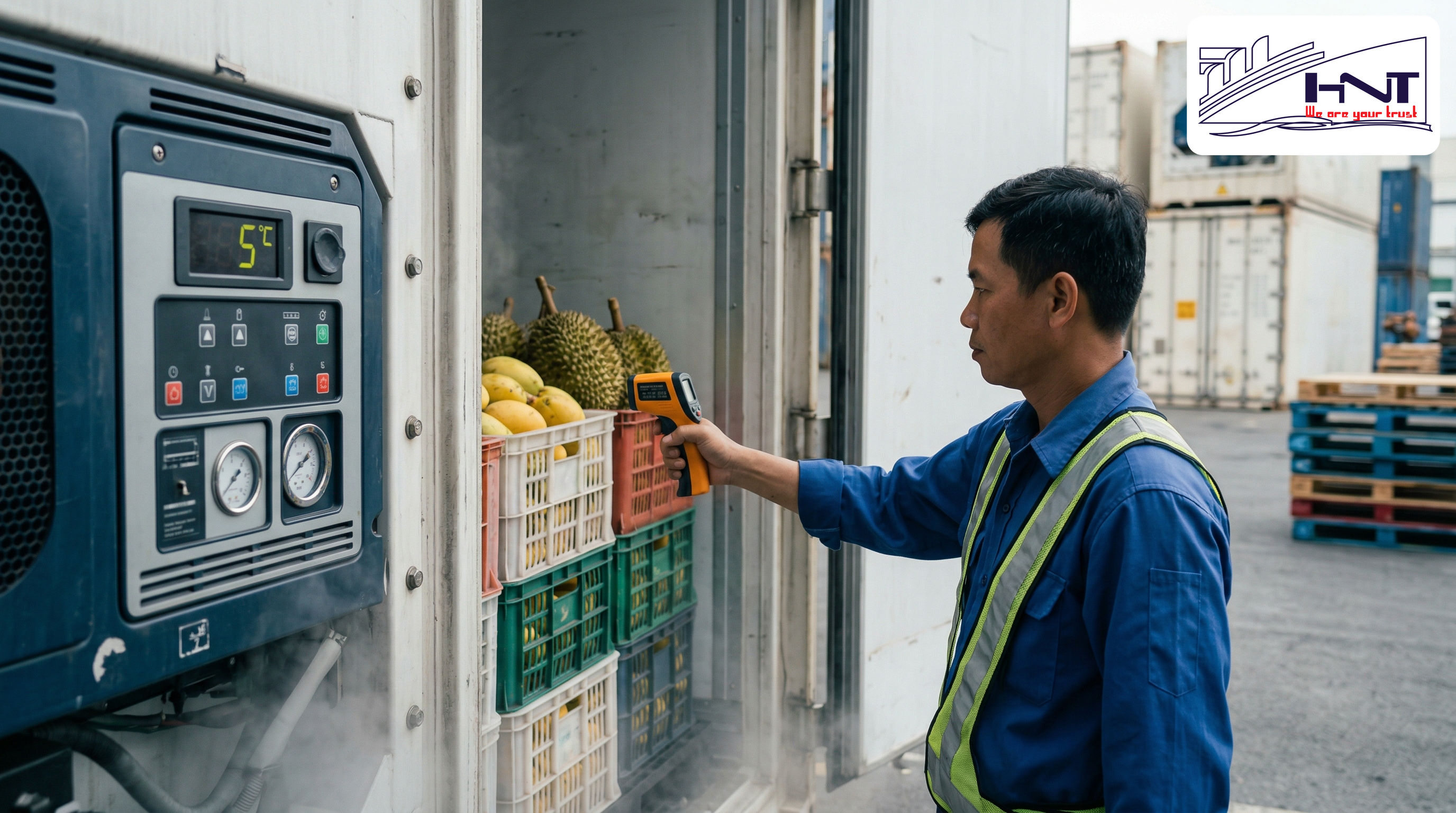
Loss risks when failing to maintain the cold supply chain
Agricultural products are extremely sensitive to changes in the external environment. High ambient temperatures accelerate ripening and produce more ethylene gas. This phenomenon leads to fruit rotting and spoiling very quickly.
The consequence is that businesses may lose an entire high-value shipment.
The reality from Moc Chau Clean Agricultural Products Company clearly demonstrates this issue. The business once sent 5 tons of plums to Ho Chi Minh City by conventional tarpaulin truck. Due to intense heat, the amount of damaged goods reached nearly 30%.
This incident caused a direct capital loss of more than 50 million VND.
According to data from Vietnam Logistics Business Association, the loss rate of agricultural products in Vietnam is quite high. This figure can reach 25% without a standard cold storage system. Investing in cold transport is not just a cost but a necessary insurance policy.
Good preservation helps enhance the competitive position of Vietnamese products.
Temperature standards for each type of specialty fruit
Each type of specialty fruit requires a completely separate storage temperature range. Setting the correct temperature helps inhibit the growth of bacteria and mold. Thanks to this, product quality is maintained throughout long-distance journeys.
Shippers need to understand the biological characteristics of the fruit to request the carrier to set standards correctly.
| Specialty fruit type | Ideal temperature | Standard humidity | Shelf Life |
|---|---|---|---|
| Durian, Mangosteen | 10°C – 13°C | 85% – 90% | 14 – 21 days |
| Dragon fruit, Mango | 7°C – 10°C | 90% – 95% | 15 – 25 days |
| Lychee, Longan | 2°C – 5°C | 90% – 95% | 20 – 30 days |
| Strawberry, Cherry | 0°C – 2°C | 90% – 95% | 7 – 10 days |
VinaFruit Tien Giang Cooperative always strictly implements this set of standards. When delivering whole durians to the Hanoi market, they fix the temperature at 10 degrees Celsius. Thanks to good control, the rate of cracked or overripe fruit is almost zero.
Distribution partners always receive fresh goods meeting high-end supermarket standards.
Optimizing costs for cheap North-South freight transport
The problem of cutting logistics costs is always a top priority for every business. Many shippers frequently look for cheap North-South freight packages to maximize profits. However, cheap prices must not mean cutting back on the quality of the cooling system.
Instead, the secret lies in smartly utilizing return truck routes.
- Closely monitor the overall temperature chart through data logger devices.
- Ensure the fan system circulates cold air to every corner of the truck.
- Use insulated partitions to divide different temperature compartments.
- Clean the truck body after each trip to kill mold.
- Check the condition of the rubber gaskets on the truck doors carefully to avoid heat loss.
- Pre-cool the entire storage chamber for at least two hours before loading.
According to HNT LOGISTICS' experience, coordinating round-trip shipments brings high efficiency. This strategy can help reduce freight costs by 15% to 20% in real conditions. Smart connectivity between transit stations creates benefits for both parties.
Customers get good prices while carriers optimize their operating capacity.
Popular North-to-South transport methods
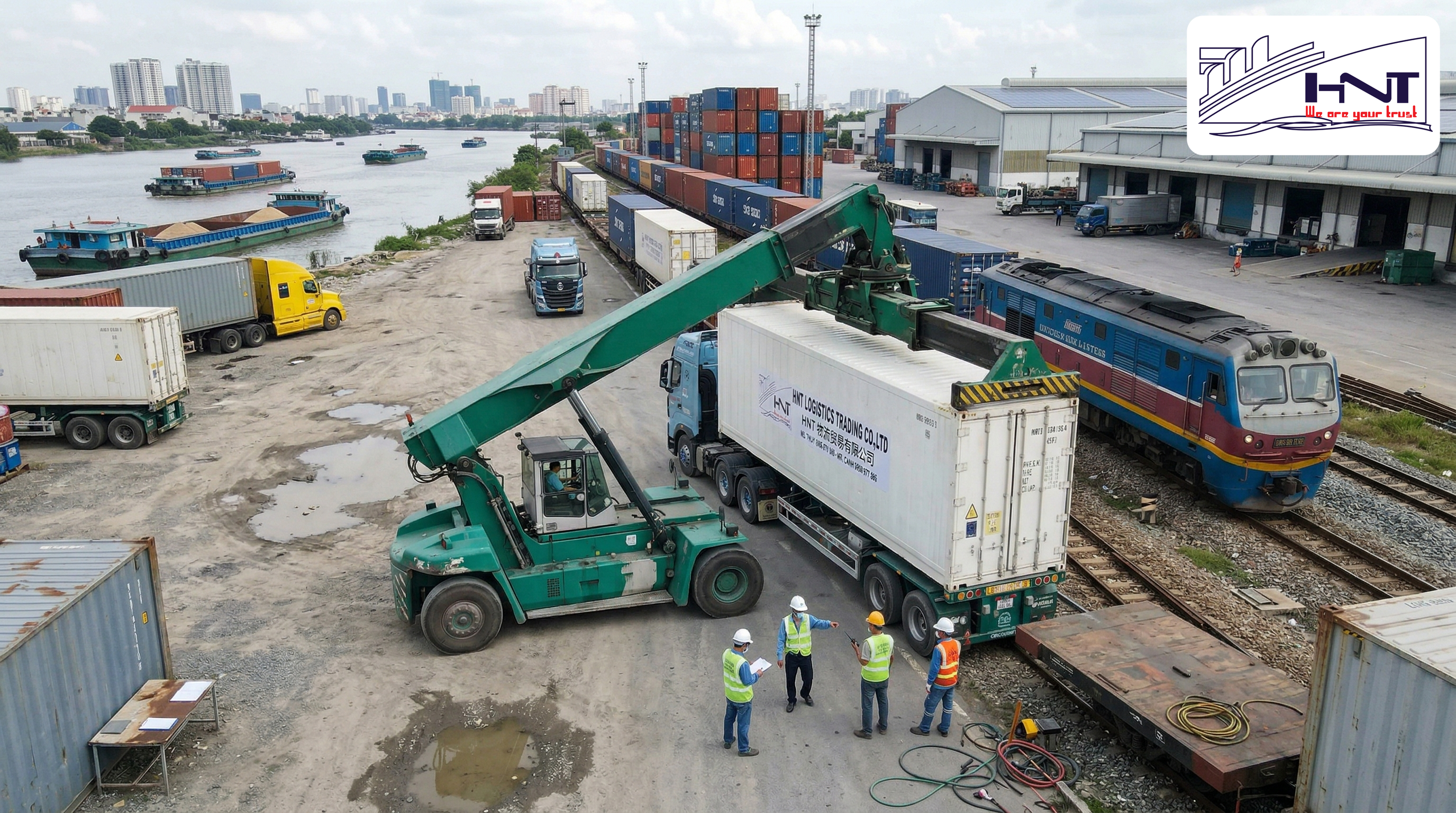
Advantages of North-South refrigerated truck transport
When researching North-to-South transport services, refrigerated truck systems always hold an absolute advantage. This method possesses active cooling capability from high-capacity compressors. Continuous cold air circulation keeps the truck body temperature stable.
Customers are completely at ease even when the truck passes through regions with the harshest weather.
Using North-South refrigerated truck transport services brings high safety for goods. The air suspension system on new truck models helps maximize shock absorption. Fruit is not crushed when the vehicle moves through bumpy, hilly roads.
This is the top choice for export orders with high economic value.
North-South LCL refrigerated transport solutions for SMEs
Not every business has enough volume to rent an entire truck. Full truckload will cause great waste for small-scale production facilities. The solution of consolidation on a refrigerated trip is becoming an inevitable trend.
This approach helps share operating costs reasonably and effectively.
Many small businesses appreciate the North-South LCL refrigerated transport solution for its flexibility. Customers can refer to more professional domestic transport services, to plan optimal consolidation. Goods are clearly zoned in the truck body to avoid cross-odor contamination.
Reputable units will group items with the same temperature range together.
Comparing costs and time between methods
The decision on which delivery method to choose depends heavily on budget and time limits. Road transport by truck has a superior advantage in flexible door-to-door delivery speed. However, if the item does not require urgent time, sea transport is a good option.
Sea vessels combined with refrigerated containers provide extremely competitive freight rates for large volumes.
| Delivery method | Average time | Safety level | Suitable business model |
|---|---|---|---|
| Full refrigerated truckload | 48 – 60 hours | Incabable | Export factories, large agents |
| Refrigerated LCL consolidation | 72 – 96 hours | Infrastructure | Small cooperatives, retail stores |
| Refrigerated sea container | 5 – 7 days | Standard-compliant, inspected | Large volume, non-urgent goods |
Viet A Fruit Co., Ltd. in Hanoi used to face difficulties having to constantly rent full trips. After switching to refrigerated LCL services, they saved 40% in costs. Business cash flow improved significantly while delivery time still met commitments.
This transition helped them overcome a period of strong market volatility.
Meanwhile, Binh Thuan Phat Dragon Fruit Purchasing Facility chose a different option. They prioritize sending refrigerated containers by sea to Hai Phong port for traditional partners. Although the transport time is a few days longer, the freight rate is half as cheap.
This helps them compete directly on wholesale prices in the Northern region.
- Check the periodic inspection certificate of the vehicle's refrigeration system.
- Evaluate the provider's ability to handle roadside incidents.
- Review the automatic temperature warning system via mobile application.
- Require clear damage compensation commitments in the transport contract.
- Prioritize carriers with maintenance stations along National Highway 1A.
Quality control process for North-South fruit transport
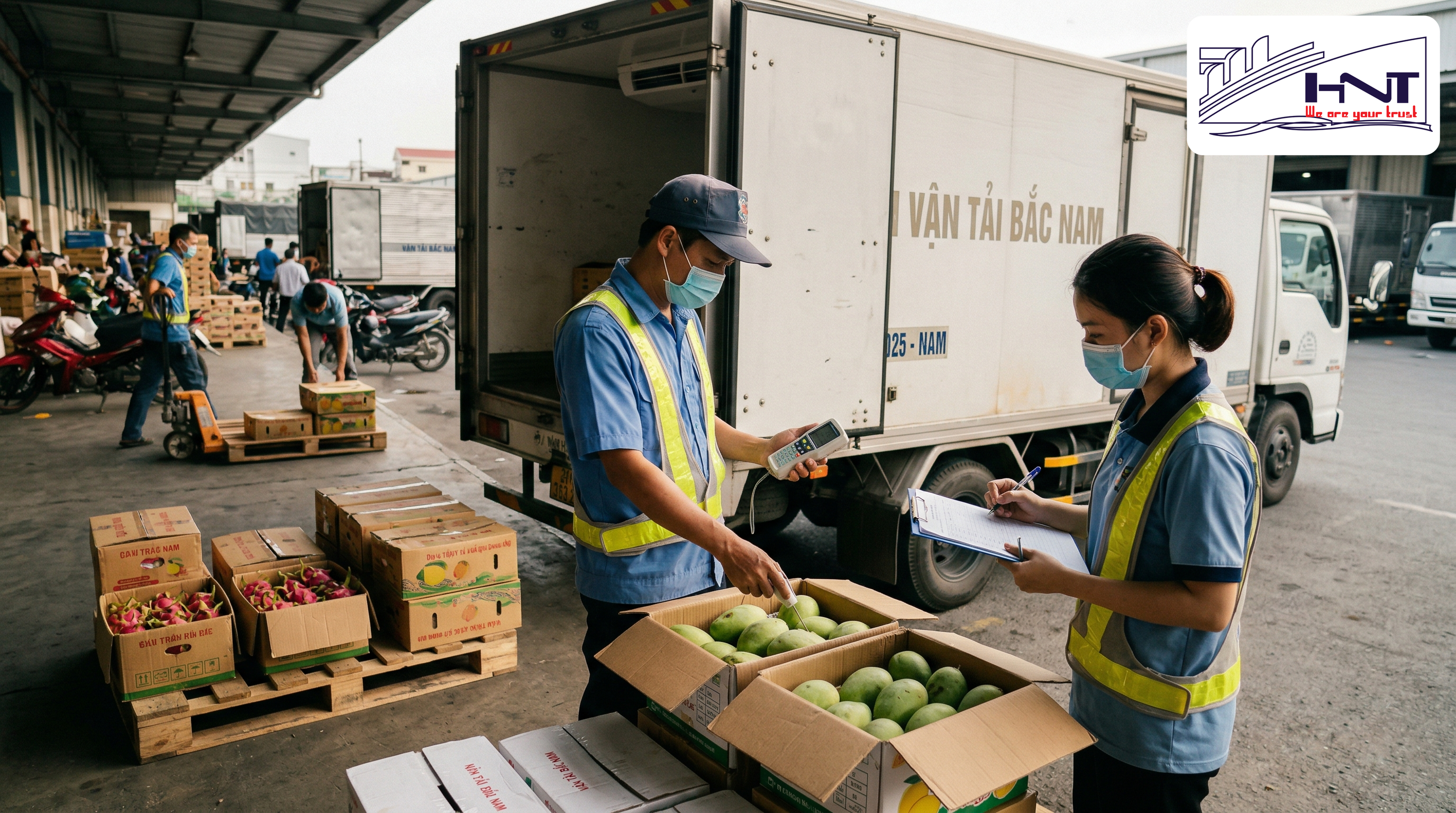
Packaging and sorting at the orchard
The initial packaging stage at the orchard determines 50% of the trip's success. Fruits need to be carefully sorted by ripeness and size before boxing. The use of specialized perforated cardboard boxes helps enhance ventilation.
Padding with foam or plastic mesh will minimize force impacts from light collisions.
Packages need to be clearly labeled with specific temperature indications. This packaging specification strictly complies with national standards for fresh food preservation during circulation. If packed too tightly, ethylene gas will accumulate and ruin the entire product.
Reasonable space helps maintain more stable fruit quality.
Loading process onto specialized refrigerated trucks
The operation of loading goods onto the truck needs to be carried out in the shortest time possible. Cold storage doors and truck doors must be tightly connected to avoid losing cold air. Technical staff must turn on the truck's cooling system to standard before loading.
Sudden temperature differences will cause the fruit to suffer thermal shock and surface condensation.
Arranging packages on the truck must follow the principle of not obstructing the air conditioning vents. Between layers of boxes, there should be a standard gap of about 5 to 10 centimeters. Uniform circulation of cold air is vital to keep temperatures from varying.
If stacked close to the truck ceiling, the top layer of goods can easily freeze and be damaged.
Temperature monitoring via real-time GPS systems
Applying real-time temperature monitoring technology is a big step forward in the logistics industry. Smart sensor devices are installed discreetly inside the refrigerated truck body. They continuously record data and transmit it to the operation center via GPS waves.
Any abnormal temperature fluctuations are immediately alerted to the phone.
Dalat EcoFarm strawberry farm has successfully applied this modern IoT sensor system. During a shipment to the North, the software detected the air conditioner losing pressure when the truck reached Ca Pass. The technical team immediately contacted the carrier to request a timely stop to fix the problem.
Thanks to that, 2 tons of high-end strawberries were saved intact.
Laba banana export enterprises in Lam Dong also set very strict requirements for partners. They force the transport companies to extract automatic temperature charts every 4 hours. This data is clear evidence proving that the goods are always kept in the best conditions.
Supermarkets in the North always prioritize importing from such transparent sources.
- Clean the cold chamber with safe biological disinfectant solutions.
- Ensure the drainage grooves under the vehicle floor are not partially blocked.
- Arrange goods at least 20 centimeters away from the cooling air vents.
- Use specialized lashing straps to fix pallets close to each other.
- Wrap the outside of the pallets with shrink film to limit dust attachment.
- Record detailed handover reports of the goods' condition at the yard.
HNT LOGISTICS recommends that shippers should request hard copies of temperature logs from transport partners. Detailed electronic data as soon as the vehicle arrives is an important basis for acceptance. Transparency in process management helps both parties cooperate sustainably in the long term.
Experiences in optimizing freight costs for businesses

Choosing the right truck type for the payload
Choosing the wrong vehicle load capacity is a common cause that drives up logistics costs. Renting a 15-ton truck to carry a cargo volume of only about 8 tons causes great waste. Businesses need to accurately convert between the actual weight and the volumetric weight of the shipment.
Understanding these indices helps shippers negotiate freight rates closer to reality.
Each fruit item has a completely different packaging density. Watermelons are heavy but occupy relatively little volumetric space in the truck. Conversely, durians packed in foam boxes are light but occupy a very large surface area.
Choosing a vehicle with appropriate internal dimensions will maximize the use of empty space.
Packaging to optimize truck cargo volume
Standardizing packaging dimensions according to pallet standards is the secret to increasing loading and unloading efficiency. Properly designed cartons will eliminate useless gaps in the truck. This allows businesses to load a significant amount of additional goods on the same trip.
Increased transport volume means the average freight rate per kg decreases.
Viet Xanh Agricultural Products Joint Stock Company in Bac Giang has improved its entire packaging process. They redesigned lychee cartons to fit perfectly with standard pallet dimensions. This small change helped them increase their cargo volume by 15% per refrigerated trip.
Overall transport costs during the harvest season decreased by an impressive figure.
In Ho Chi Minh City, Cho Lon Fruit Depot has a different space optimization strategy. They group fruits with the same storage temperature range together. This smart consolidation helps them minimize the number of truck trips needed each week.
Business efficiency increases significantly when operating costs are strictly and reasonably controlled.
Planning delivery to avoid peak seasons
During holidays or peak harvest seasons, refrigerated truck rates often skyrocket. The scarcity of vehicle supply puts shippers in a position where they are forced to accept high prices. Proactively planning shipments early will help businesses avoid this price fever.
Signing long-term master contracts is a solution to maintain stable and safe freight rates.
- Accurately determine the actual total cubic meter (CBM) of the shipment.
- Negotiate all-inclusive lump-sum freight rates per trip instead of per kg.
- Request commercial discounts when committing to large shipping volumes.
- Take advantage of back-haul freight incentives from service providers.
- Clearly define additional loading and unloading surcharges in the contract.
In summary, North-South fruit transportation is an extremely important link in the agricultural value chain. Strict temperature control and the application of smart packaging strategies bring dual benefits. Businesses not only ensure the quality of goods but also save a significant budget.
- Inappropriate storage temperature is the main cause of agricultural loss up to 25%.
- Consolidating refrigerated LCL (Less than Container Load) is the perfect economic solution for small and medium-sized enterprises.
- Monitoring temperature fluctuations with GPS tracking devices helps detect and handle incidents early.
- Optimizing carton box packaging specifications according to pallet size helps enhance loading and unloading efficiency.
- Signing long-term delivery contracts helps stabilize freight rates during peak months.
HNT LOGISTICS is always ready to support customers in designing comprehensive cold chain solutions. Our team of experts is committed to providing safe and cost-optimized delivery solutions. Contact us today to receive a detailed quote and professional transport route consultation.