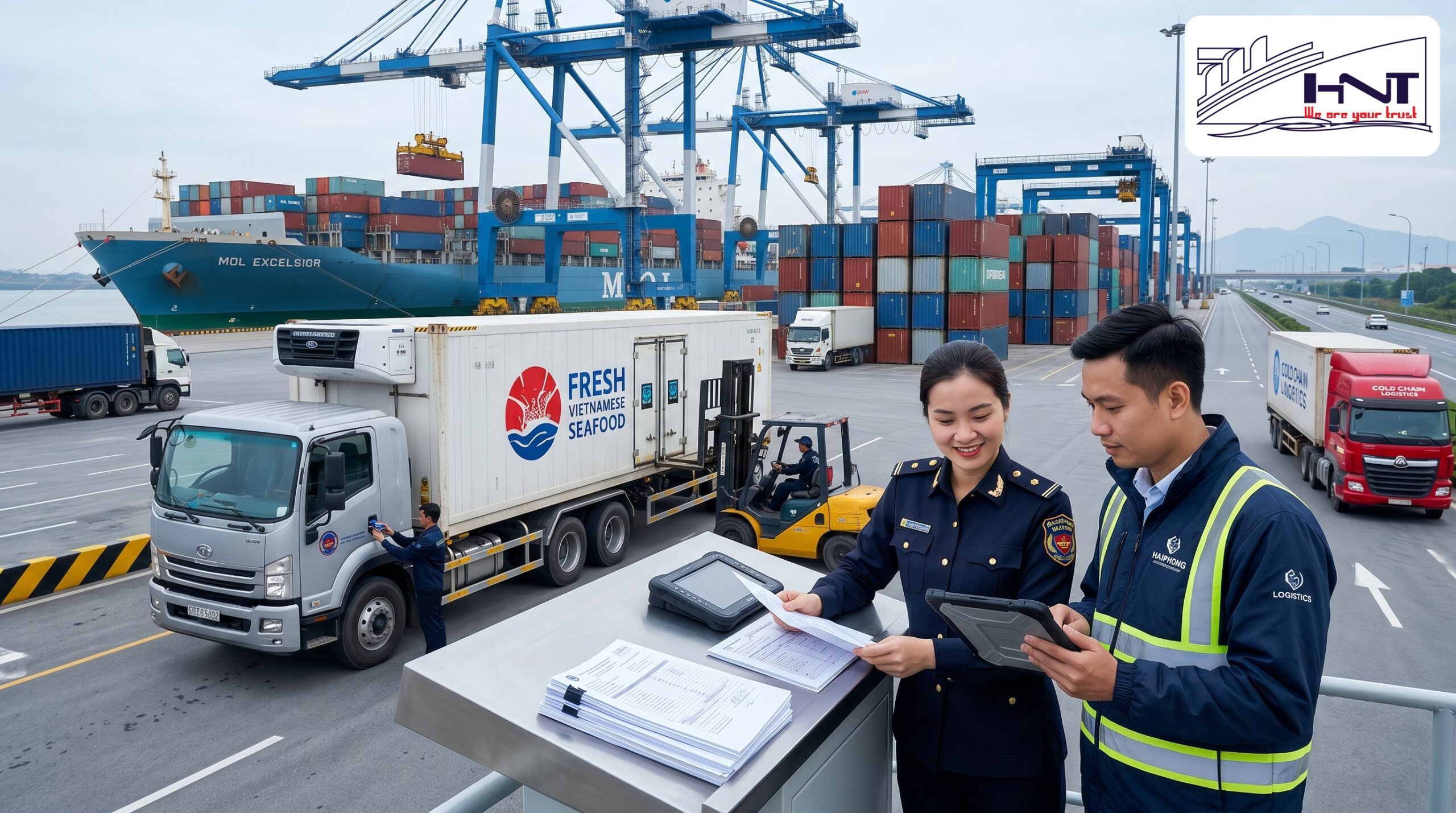
Understanding how to do import-export customs procedures is a key factor. A standard process helps businesses optimize costs effectively. According to statistics, import-export turnover in 2026 reached over 683 billion USD. Rapid customs clearance helps reduce 15% of warehousing costs. This article will provide detailed instructions on the steps to take. Through this, businesses can easily handle any arising problems.
General regulations on how to do import-export customs procedures
Basic legal principles
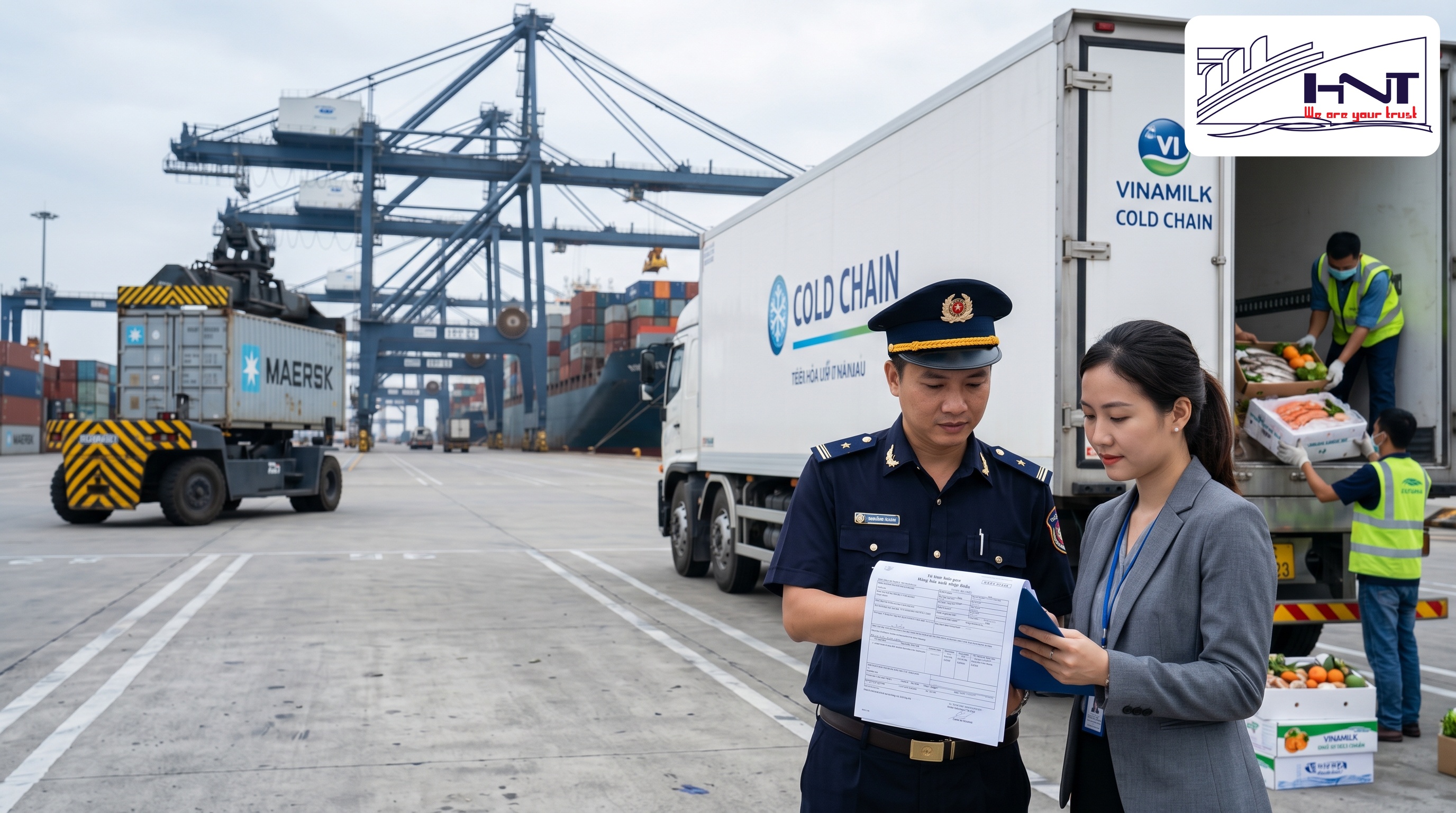
The customs declaration process must strictly comply with current laws. Businesses must update regulations regularly to avoid errors. Using a digital signature is currently a mandatory requirement. The VNACCS data system receives information continuously 24/7. This creates maximum favorable conditions for all exporters. Good compliance helps enhance trade credibility.
Entities required to declare
Every organization or individual with trading goods must declare. The goods owner or an authorized agent performs this directly. Transport vehicle operators also belong to this group of subjects. According to marine logistics market report, the volume of filings is growing continuously. Identifying the correct subject helps the customs clearance process take place more smoothly.
Standard document filing deadlines
Businesses need to accurately remember the deadline for submitting declarations. For export goods, submit after gathering goods at the yard. No later than four hours before the vehicle exits. For import goods, submit before the goods arrive at the border gate. Or submit within thirty days from when the goods arrive at the port.
Regulations for filing documents include the following important principles:
- Electronic customs declarations are valid for circulation within fifteen days from the date of official registration on the system.
- Attached documents must be fully signed with a valid digital signature by the legal representative of the import-export business.
- Green channel goods are automatically approved for customs clearance by the system immediately without the need for paper document inspection or physical inspection.
- Yellow channel goods require customs officers to conduct a detailed inspection of all paper documents before granting customs clearance.
- Red channel goods must undergo a physical inspection process at the container yard under the strict supervision of officers.
As a practical example, Minh Ca Mau Seafood Company once faced difficulties. They did not clearly understand the deadline for submitting electronic declarations. Thanks to timely adjustments, they reduced two days of yard storage. The cost savings amounted to ten million VND per shipment. Another case is Tien Giang Fruit Enterprise exporting to China. They submitted their documents exactly four hours before the ship departed. As a result, the shipment of dragon fruit was cleared smoothly. The company avoided a late penalty of twenty million VND.
| Channel Type | Inspection Level | Estimated Time | Notes |
|---|---|---|---|
| Green Channel | System automatically approves | Under five minutes | Exempt from document inspection |
| Yellow Channel | Check paper documents | One to two hours | Submission of copies required |
| Red Channel | Physical inspection of goods | Half a day to one day | Must open container for inspection |
| Penalty Channel | Comprehensive inspection | Over two days | Applied in case of violation |
Guide to preparing customs documentation for import and export goods
List of mandatory documents
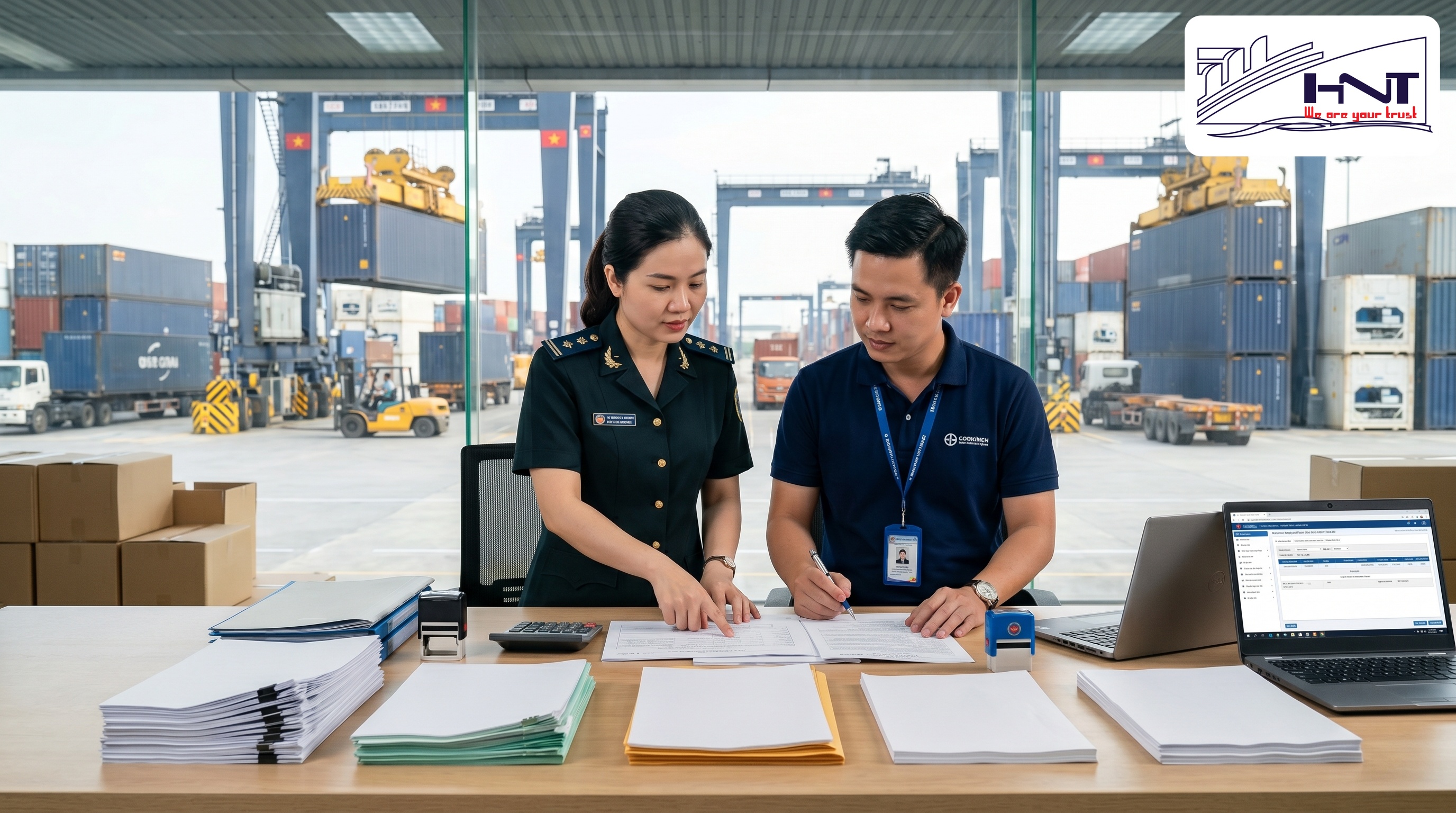
The preparation of import customs documentation requires accuracy. Core documents include commercial contracts and commercial invoices. Packing lists are also indispensable documents. In addition, bills of lading are important proof of delivery. Certificates of origin help businesses enjoy tariff preferences.
Specialized documents for agricultural and aquatic products
Agricultural and aquatic goods require many complex specialized licenses. Quarantine certificates for animals and plants are an absolute mandatory requirement. Food safety and hygiene certificates protect consumers. HNT LOGISTICS recommends that businesses prepare these documents early. This helps prevent goods from being held at the port of departure.
Common documentation errors
Many businesses often make errors of information discrepancy on invoices. The weight on the packing list does not match the actual goods. Incorrect HS codes lead to incorrect tax calculation. Signatures and seals on paper documents are blurred or missing. Thorough review helps minimize the red channel.
The standard list of documents includes the following detailed items:
- A commercial invoice that clearly and accurately shows the actual value of the entire shipment being prepared for export abroad.
- A detailed packing list stating the number of packages, net weight, and gross weight of the shipment for reconciliation purposes.
- An original bill of lading or a copy with a valid seal from the shipping line or freight forwarding agent.
- Certificate of origin Form E or Form D depending on the requirements of the importing market to enjoy special incentives.
- Specialized import licenses for categories of goods subject to special control by relevant ministries and departments.
For example, Binh Duong Agricultural Products Company exports cashews to Europe. Initially, they lacked a fumigation certificate for the wooden container. Thanks to urgent supplementation, the shipment departed on schedule as committed. They saved five million VND in storage penalty costs. Similarly, An Giang Rice Exporter prepared a very perfect set of documents. The partner's documents were processed quickly. The shipment was cleared within just four hours. International partners highly appreciate this professionalism.
| Document Type | Purpose of Use | Issuing Authority | Mandatory Status |
|---|---|---|---|
| Commercial invoice | Determine product value | Seller enterprise | 100% Mandatory |
| Packing | Count quantity | Manufacturer | 100% Mandatory |
| Bill of lading | Confirmation of ownership | Shipping line | 100% Mandatory |
| Certificate of origin | Enjoy tax incentives | Ministry of Industry and Trade | Contractual options |
Import and export customs clearance procedure
Electronic data declaration
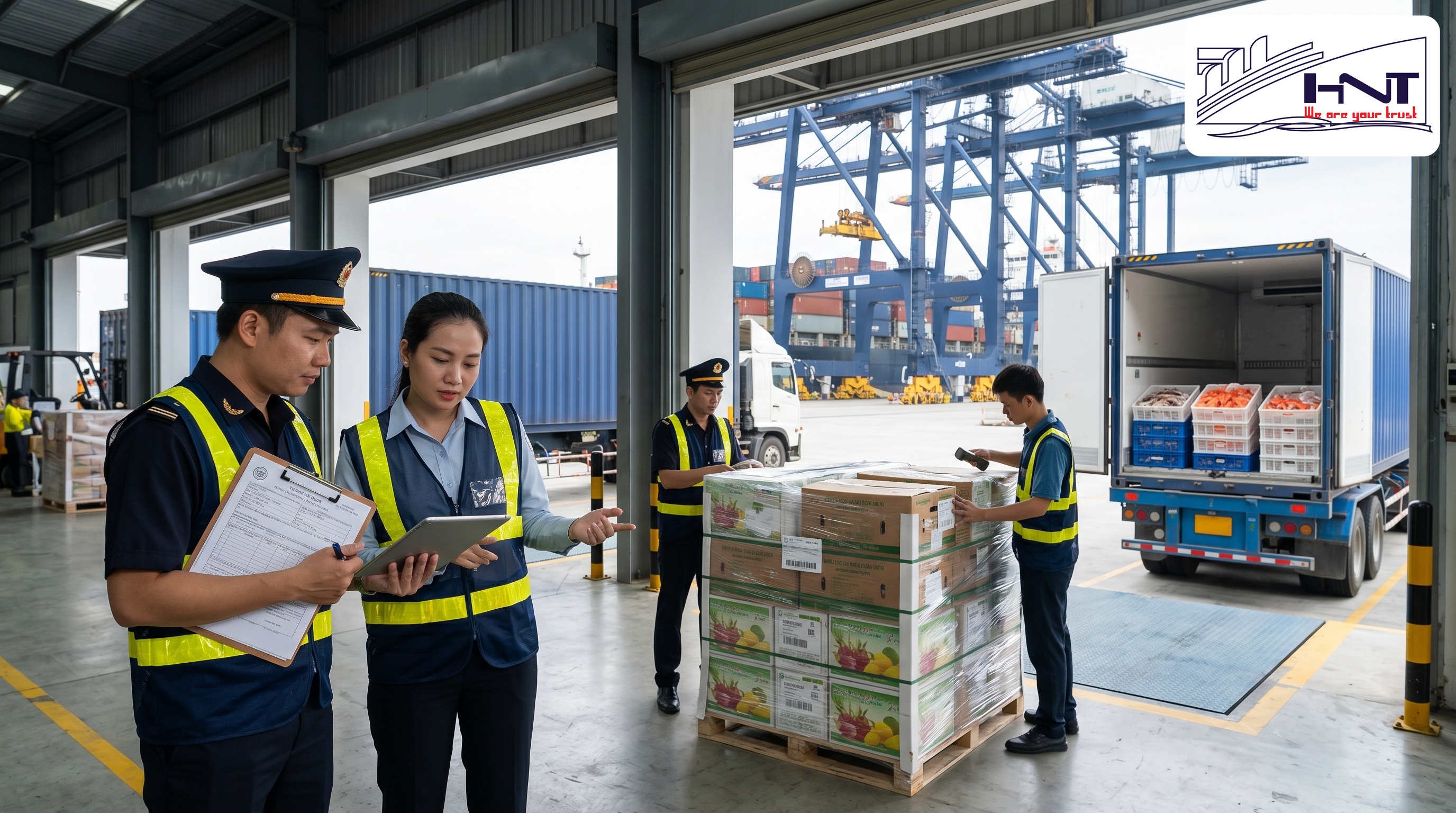
Work import customs clearance procedure starts with an online declaration. Enterprises install ECUS software and log in using a digital signature. The declarant enters shipment information into the criteria on the software. The data is then transmitted directly to the management agency's system. Declaring the correct HS code helps calculate taxes extremely accurately.
Get delivery order quickly
After the declaration is transmitted, the enterprise proceeds to get the delivery order. The delivery order is issued by the shipping line or freight forwarding agent. This document allows the cargo owner to take the container out of the seaport. Storage fees often arise if the delivery order is obtained late. This process requires smooth coordination between parties.
Complete tax and fee payment
Enterprises need to fulfill financial obligations before receiving goods. Types of taxes include import tax, special consumption tax, and VAT. Electronic tax payment via commercial banks is the optimal method. Tax money is updated immediately on the interconnected system. Afterward, customs officers will officially stamp customs clearance.
The 6 basic steps in the clearance procedure include:
- Enterprises proceed to register an account and set up a valid digital signature on the unified national VNACCS portal system.
- The person in charge proceeds to carefully check and reconcile all commercial documents related to the import shipment.
- Proceed to transmit electronic declaration data to the customs network system and wait to receive the automatically returned channeling results.
- Enterprises urgently pay the full amount of taxes and fees incurred in accordance with the official notification of state management agencies.
- Promptly present the physical document set or open the yard for actual inspection of goods if the declaration is unfortunately channeled into yellow or red.
- Perform the operation of printing the barcode to pass through the seaport customs supervision area and dispatch trucks to bring goods to the warehouse safely.
District 7 Equipment Import Company is a successful example. They transmitted the electronic declaration at two o'clock on a weekend morning. The system automatically assigned green channel and cleared customs in three seconds. This helped save one day of waiting at Cat Lai port. Meanwhile, Dong Nai Wood Enterprise imports raw materials from the US. They apply automatic electronic tax payment via partner banks. The declaration process is extremely smooth and favorable. Goods are brought to the production workshop according to the planned schedule.
| Execution Step | Supporting Tools | Responsible Agency | Completion Time |
|---|---|---|---|
| Transmit declaration | ECUS Software | VNACCS System | Fifteen minutes |
| Get delivery order | Email or Portal | Shipping line | One to two hours |
| Electronic tax payment | Internet Banking | State Bank | Thirty minutes |
| Customs supervision | Declaration barcode | Border gate customs | Five to ten minutes |
Benefits of hiring professional import-export customs services
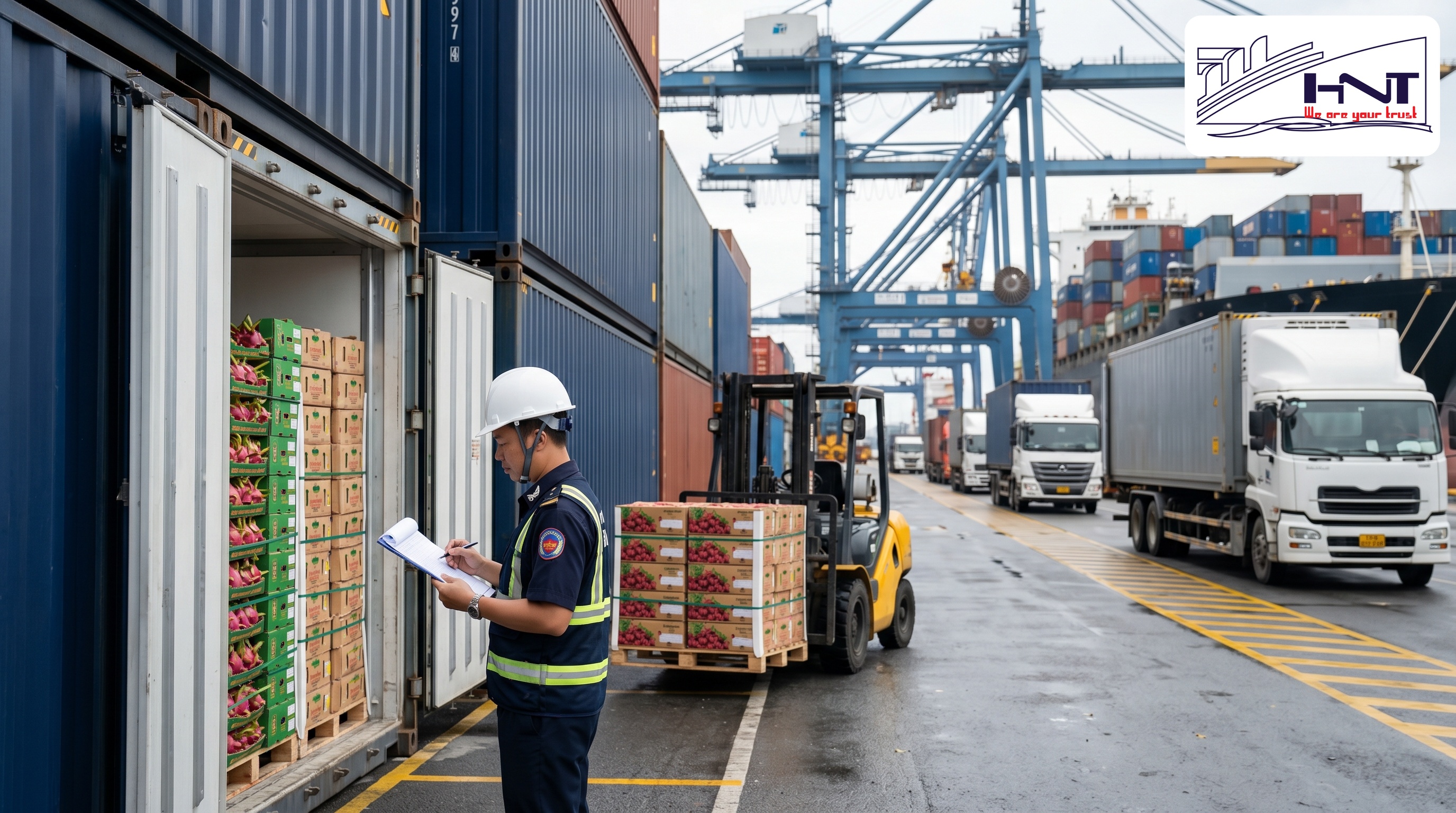
Optimize customs clearance time
Using import-export customs service brings tremendous benefits. Professional agents have deep understanding of operational processes. They process documents quickly and minimize errors. The time for goods release is significantly shortened compared to doing it yourself. This is especially important for goods requiring cold storage.
Limit legal risks
Import-export regulations are frequently changed and updated. Customs agents help businesses apply the correct HS code for goods. They represent and explain to authorities when issues arise. Goods avoid the risk of confiscation or administrative penalties. This companionship creates absolute peace of mind for cargo owners.
Save storage costs
Storage at seaports costs a not insignificant fee. Delays in procedures cause this cost to skyrocket very quickly. According to HNT LOGISTICS' experience, hiring an agent helps optimize costs. The team of experts will flexibly handle all arising situations. Delivering goods on time significantly improves business efficiency.
Benefits of using professional services include:
- Using the service helps businesses save significant time reviewing and reconciling complex daily commercial documents.
- Professional agents help cargo owners avoid heavy administrative penalties due to negligence in incorrectly declaring HS codes for goods.
- Customs experts help optimize the continuous flow of goods in busy seaport areas.
- Businesses are always supported with timely advice on tariff incentives from the latest generation of free trade agreements.
- Outsourcing customs services helps significantly cut the costs of maintaining a dedicated permanent staff team at the company office.
Long An Packaging Company decided to hire a professional agent for support. They reduced their monthly internal personnel costs by thirty percent. The speed of delivery to foreign partners increased significantly. This optimization helped them sign more high-value contracts. Tan Binh Garment Enterprise almost missed a ship to the US. Thanks to using external customs clearance services, the incident was resolved. The agent processed the red channel declaration extremely quickly. The shipment of exported clothing boarded the ship safely and on schedule.
Special notes for import customs dossiers for cold goods
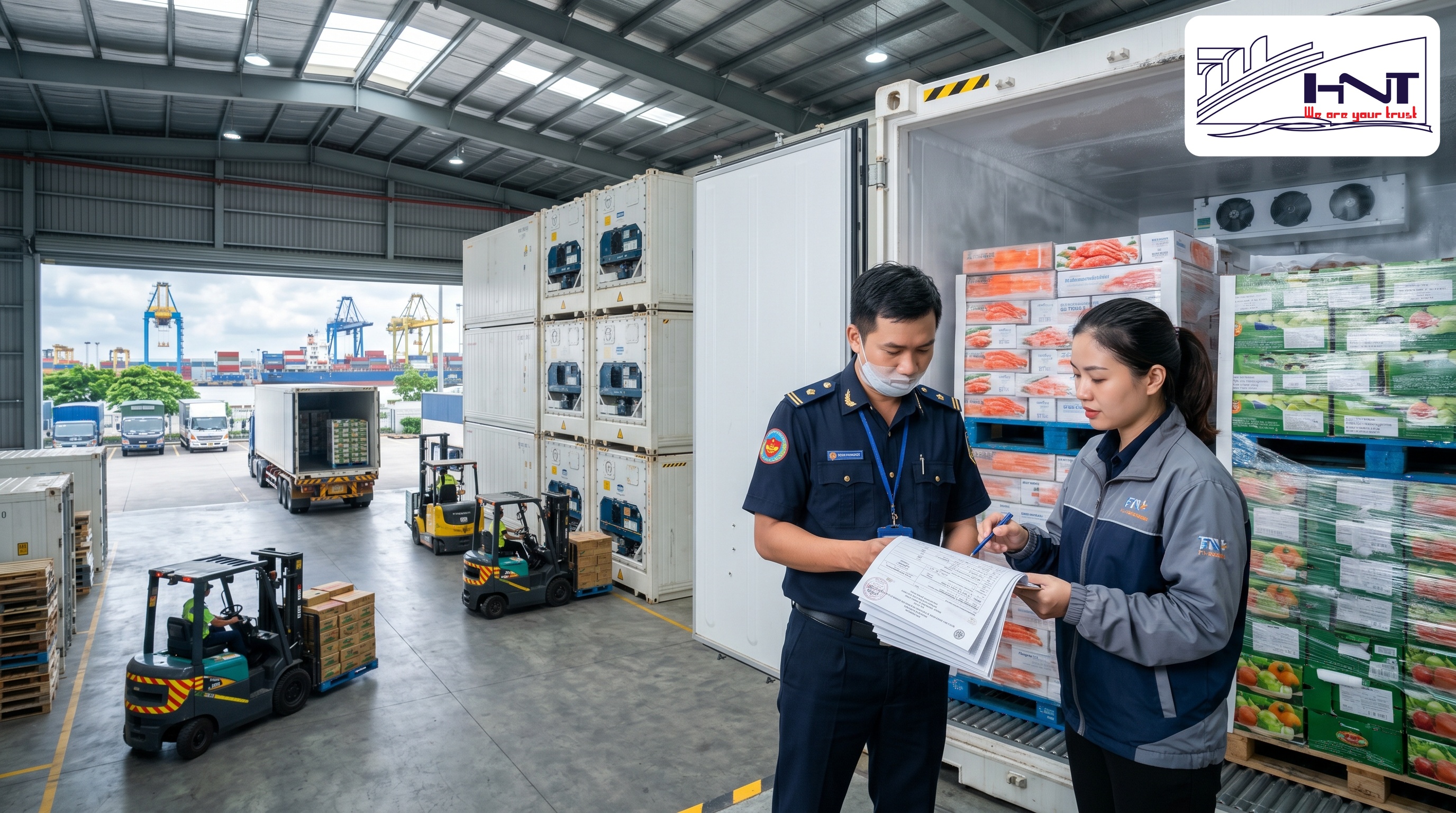
Temperature inspection standards
Fresh products require extremely strict preservation standards. The container temperature setting must be clearly stated on the bill of lading. Customs officers often prioritize quick inspections of these items. However, businesses need to present full quarantine certificates. Careful preparation ensures that product quality does not decline.
Shorten circulation time
Time is a vital factor for cold agricultural products. Each hour that passes affects the freshness of the product. Using frozen goods transportation service professionally is necessary. The procedure stage needs to be prioritized for handling before the ship arrives at the port. Goods should be moved directly from the port to cold storage warehouses.
Overcoming red channel incidents
Red channel inspection is a major challenge for refrigerated containers. Opening the container door at the yard can change the temperature. Businesses need to request inspections at areas with electricity supply for preservation. Import customs dossier must be prepared and ready for immediate reconciliation. Quick reactions help minimize damage to product quality.
Notes when handling cold goods include the following factors:
- Shippers must personally and thoroughly check the set temperature of the cooling system before sealing the export container door.
- Always have the valid original food safety certificate ready to present immediately when requested by customs officers.
- Proactively request that port yard management provide a continuous power supply for refrigerated containers waiting for customs clearance.
- Documentation staff need to declare early on the electronic software immediately upon receiving notification that goods have safely reached the destination port.
- Enterprises should proactively arrange specialized refrigerated trucks to wait at the port area to unload goods quickly after customs clearance.
Binh Thuan Dragon Fruit Cooperative always focuses on paperwork. They prepare phytosanitary certificates very early. The dragon fruit shipment maintains the standard temperature, not falling out of the container. Fruits arriving at the Australian market still retain perfect freshness. Can Tho Tra Fish Company is also a typical example. Their import documentation files are always complete and accurate. Specialized inspections are completed in just one single day. The business saves tens of millions of VND in electricity costs at the port.
Mastering how to do import-export customs procedures is the key to success. This process requires meticulousness, precision, and compliance with the law. Every mistake can lead to serious financial consequences.
- Clearly understand legal regulations and deadlines for submitting standard declarations.
- Prepare a set of accurate, complete, and valid commercial documents.
- Apply software technology to declare electronic data quickly.
- Flexibly handle situations of being flagged for red or yellow customs channels.
- Prioritize continuous temperature preservation for agricultural and aquatic goods.
- Partner with professional logistics units to minimize risks.
With thorough preparation, businesses will enhance their competitiveness. HNT LOGISTICS is proud to be a reliable transportation and logistics partner. We are ready to accompany Vietnamese export businesses. Contact us immediately via hotline 096 309 78 19 or email marketing@hntshipping.com so your business can confidently reach out to the world firmly.