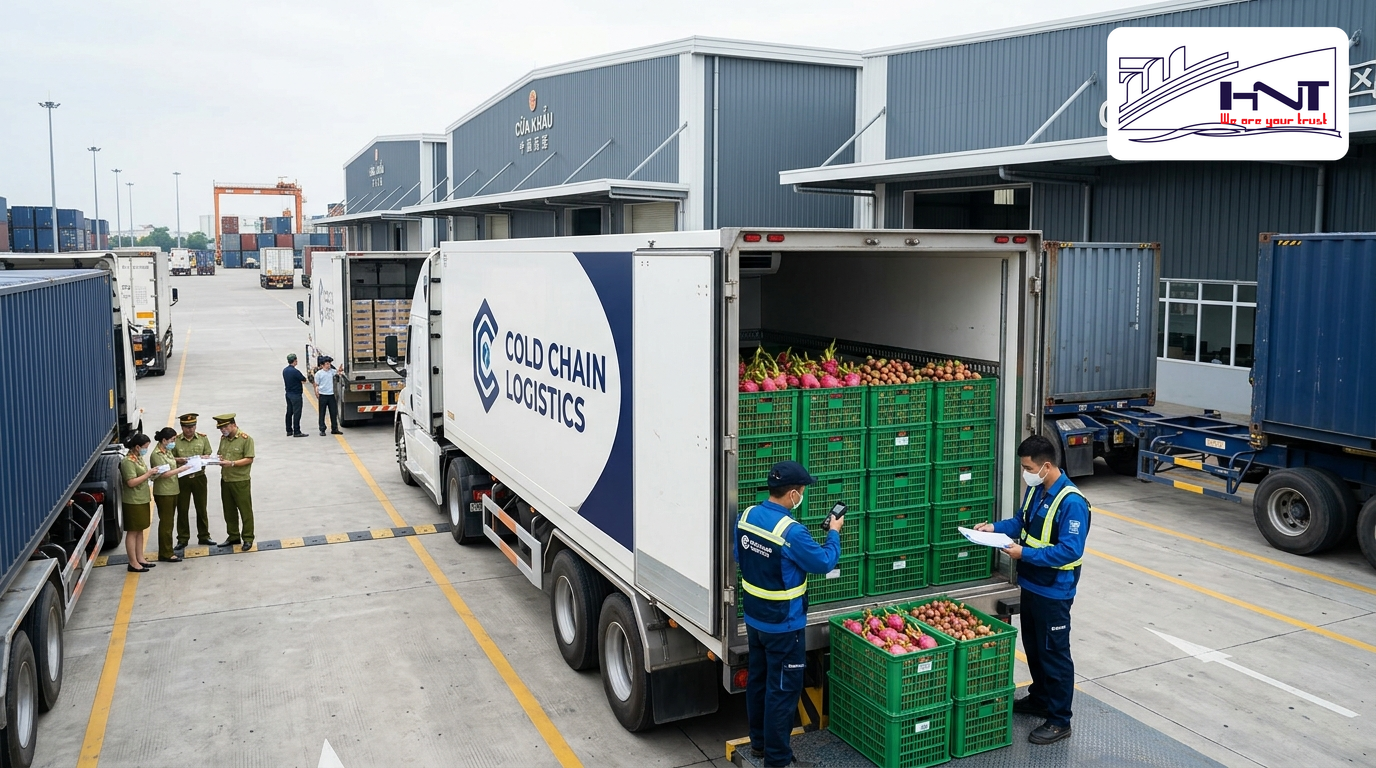
Transporting agricultural products to China by refrigerated truck is becoming a mandatory requirement for many businesses exporting fresh fruits, vegetables, and high-value agricultural products. Just one mistake in quarantine or temperature control can cause the shipment to be delayed in customs clearance.
During the 2026-2026 period, China continues to tighten 'SPS requirements', traceability, and export business registration. At the same time, many Vietnamese agricultural products have been expanded for official export, creating great opportunities but also requiring businesses to comply with strict processes. This article provides a detailed guide to the entire process of transport by refrigerated truck through border gates to reduce risks and optimize costs.
Transporting agricultural products to China by refrigerated truck: Current context and requirements
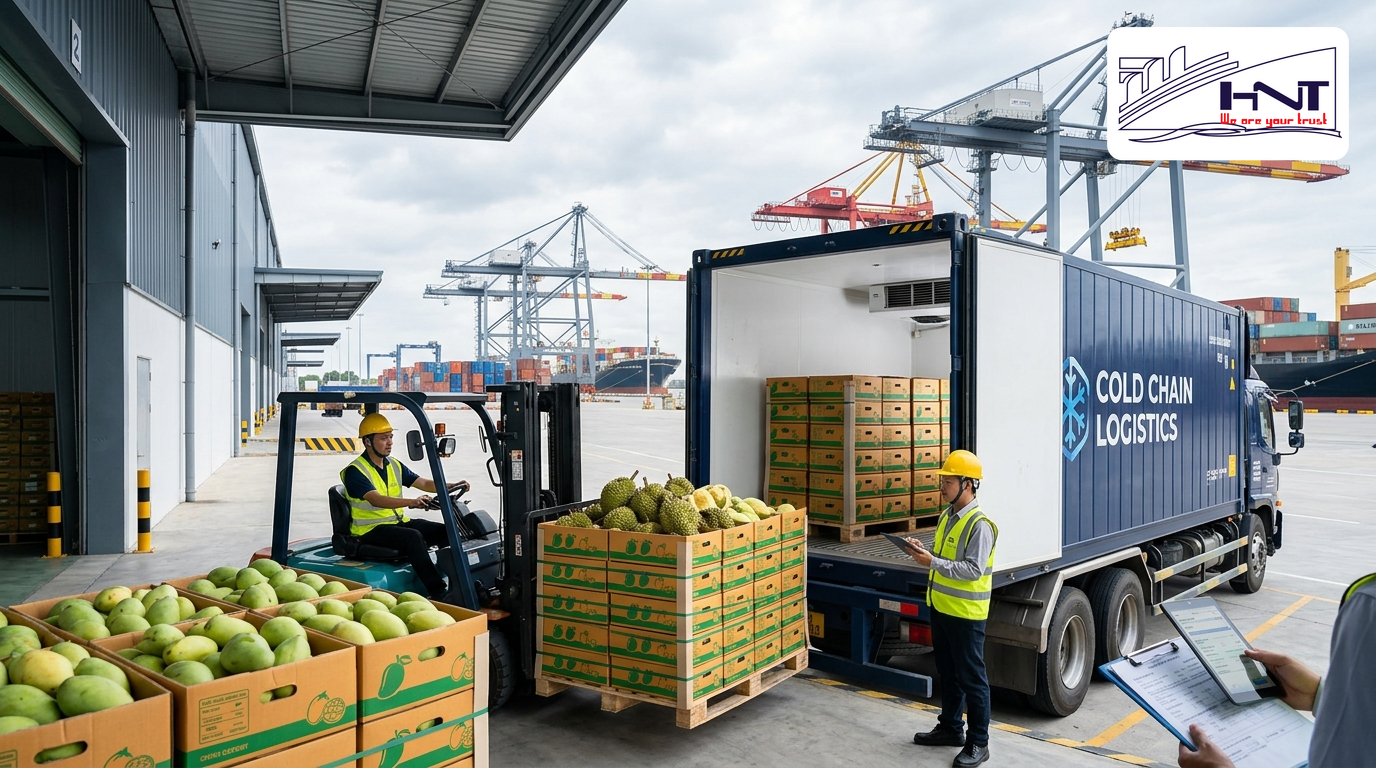
Trends in agricultural product exports for the 2026-2026 period
The Chinese market remains an important destination for many Vietnamese agricultural products. New protocols for passion fruit, chili, bird's nest, and many other products have expanded opportunities for official exports. At the same time, Chinese Customs authorities have increased requirements for registration and certification for many groups of imported agricultural products.
According to recent SPS notifications, thousands of agricultural product codes belonging to many product groups must meet additional confirmation requirements from competent authorities before customs declaration. This makes document preparation more important than ever.
The role of refrigerated trucks in the supply chain
Refrigerated trucks help maintain a stable temperature from the packing warehouse to the border gate. This is the deciding factor for the quality of durian, dragon fruit, mango, jackfruit, rambutan, and many other perishable goods.
According to HNT LOGISTICS' experience, choosing the appropriate temperature range for each type of agricultural product can help reduce loss rates by 5% to 15% during cross-border road transport.
Key border gates for agricultural exports
- Huynh Nghi – Lang Son is suitable for large-volume fruit export shipments.
- Tan Thanh strongly serves fresh agricultural products and vegetables.
- Chi Ma supports a number of specialized routes to China.
- Mong Cai connects favorably with the Guangxi region.
- Bac Luan II is used for many official export shipments.
| Border gate | Loại hàng phù hợp | Advantages | Note |
|---|---|---|---|
| Huu Nghi | Fresh fruit | Large capacity | Easy congestion during peak season |
| Tan Thanh | Agricultural products | Agricultural product specialty | Need to book in advance |
| Mong Cai | Fruits and vegetables | Good connectivity | Strict document control |
| Chi Ma | Specialized goods | Flexible | Dependent on customs clearance schedule |
Process of transporting agricultural products to China via border gates
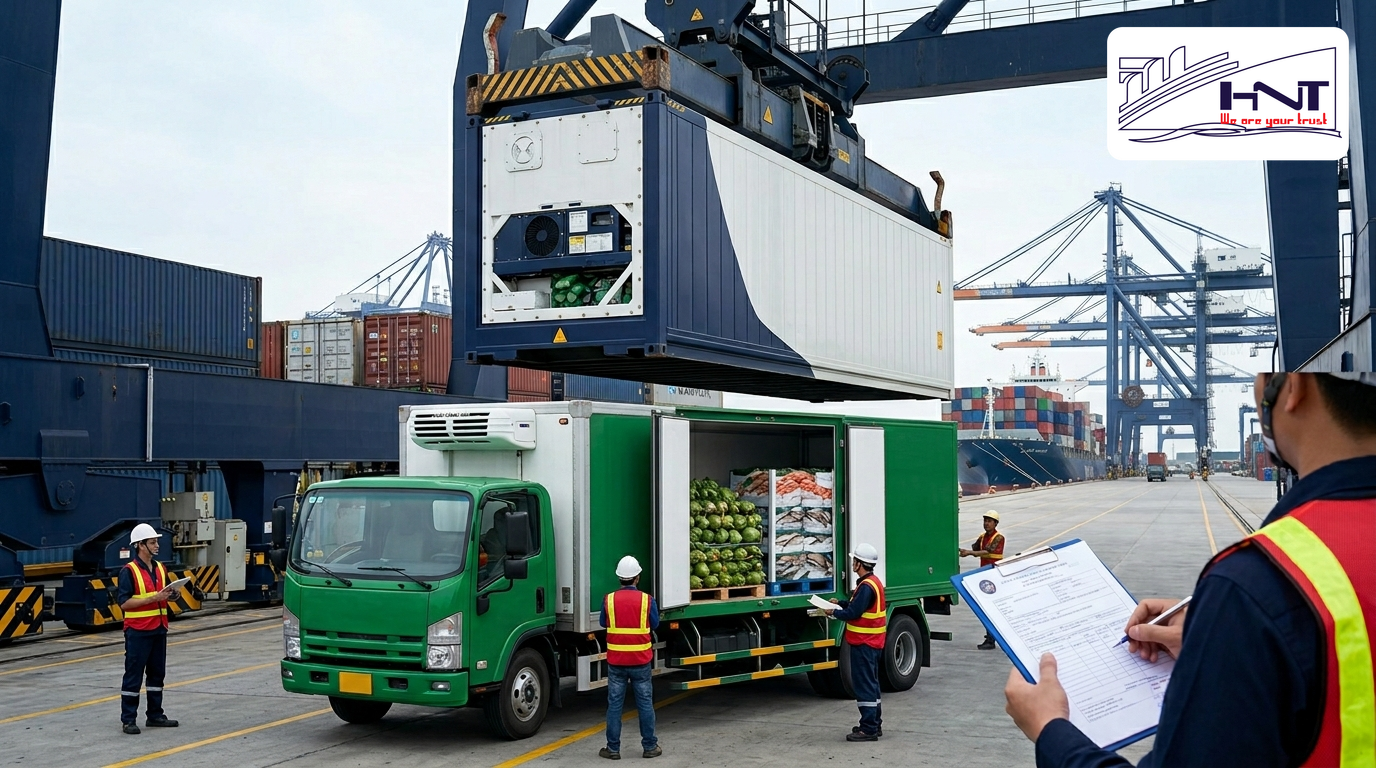
Preparing export documents
Businesses need to complete foreign trade contracts, commercial invoices, packing lists, certificates of origin, phytosanitary certificates, and documents related to planting area codes.
Based on HNT LOGISTICS' experience, businesses should check the consistency of information between documents and product labels before the truck departs to minimize requests for document corrections at the border gate.
- Confirm export conditions of the commodity.
- Check planting area code and packing facility.
- Prepare a complete set of customs documents.
- Register for phytosanitary inspection.
- Electronic customs declaration.
- Arrange reefer truck schedule and delivery schedule.
Quarantine and export procedures at the Chinese border gate
Export procedures at the Chinese border gate currently focus on traceability, food safety, and quarantine. Some commodity groups must also meet additional confirmation requirements from competent authorities.
Businesses need to regularly monitor changes from GACC and SPS agencies to avoid cases where goods arrive at the border gate but do not meet new requirements.
Coordinate reefer trucks transporting agricultural products China
Reefer trucks transporting agricultural products to China must be cleaned, disinfected, and temperature-calibrated before receiving goods. Temperature data must be saved throughout the entire journey.
For example, Mekong Fruit Company in Tien Giang exported 24 tons of durian to Guangxi. Thanks to continuous temperature monitoring at 13 degrees Celsius, the loss rate was reduced to less than 1%.
Another business in Dong Thap exported mangoes via Huu Nghi. Completing the documentation 48 hours in advance helped shorten customs clearance waiting time by about 30%.
| Step | Duration | Executing entity | Result |
|---|---|---|---|
| Document preparation | 1-2 days | Chủ hàng | Complete set of documents |
| Kiểm dịch | 0.5-1 day | Specialized agency | Certificate |
| Customs declaration | Within the day | Doanh nghiệp | Export declaration |
| Customs clearance | 1-24 hours | Customs | Truck crosses border gate |
China road export services and shipping route selection
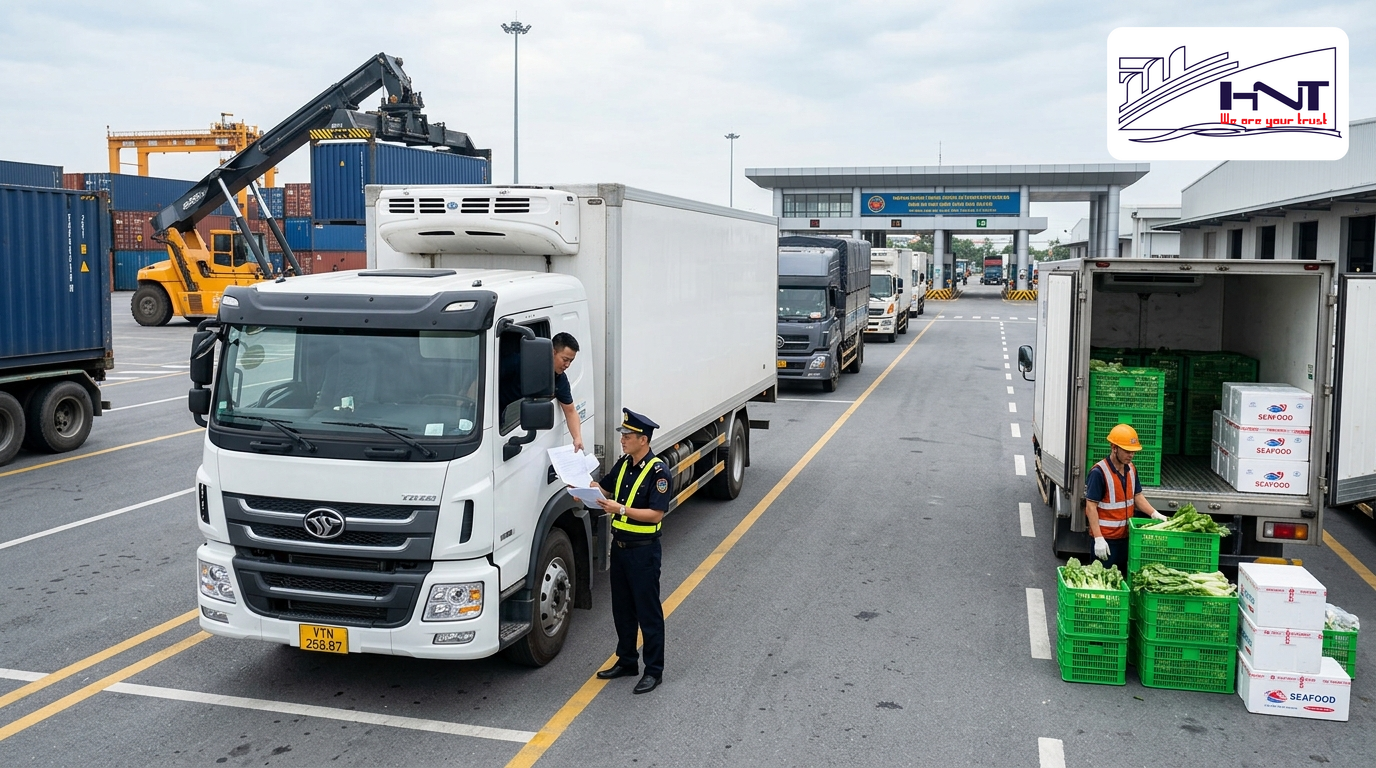
Comparing route options
China road export services are suitable for goods requiring fast delivery and continuous cold chain storage. The route from the Southwest region to Lang Son is commonly used for fresh fruit.
Actual shipping time
Depending on the starting point, transit time from the South to the border gate ranges from 2 to 4 days. After customs clearance, goods can continue to Guangxi, Guangdong, or domestic distribution centers.
Risk management during peak season
- Book refrigerated trucks early before the harvest season.
- Check the customs clearance capacity of the border gate.
- Prepare alternative routes in case of congestion.
- Monitor temperature via GPS.
- Purchase appropriate cargo insurance.
A dragon fruit export business in Long An switched from a single route to a two-border-gate contingency plan. As a result, the business avoided prolonged truck detention during peak season.
A cooperative in Ben Tre exporting fresh coconuts to Guangdong applied an online temperature tracking system. Quality complaint rates decreased significantly after three months of operation.
According to HNT LOGISTICS' recommendations, businesses should build a logistics plan at least two weeks before the harvest season to proactively secure vehicles and customs clearance schedules.
China road freight rates and how to optimize costs
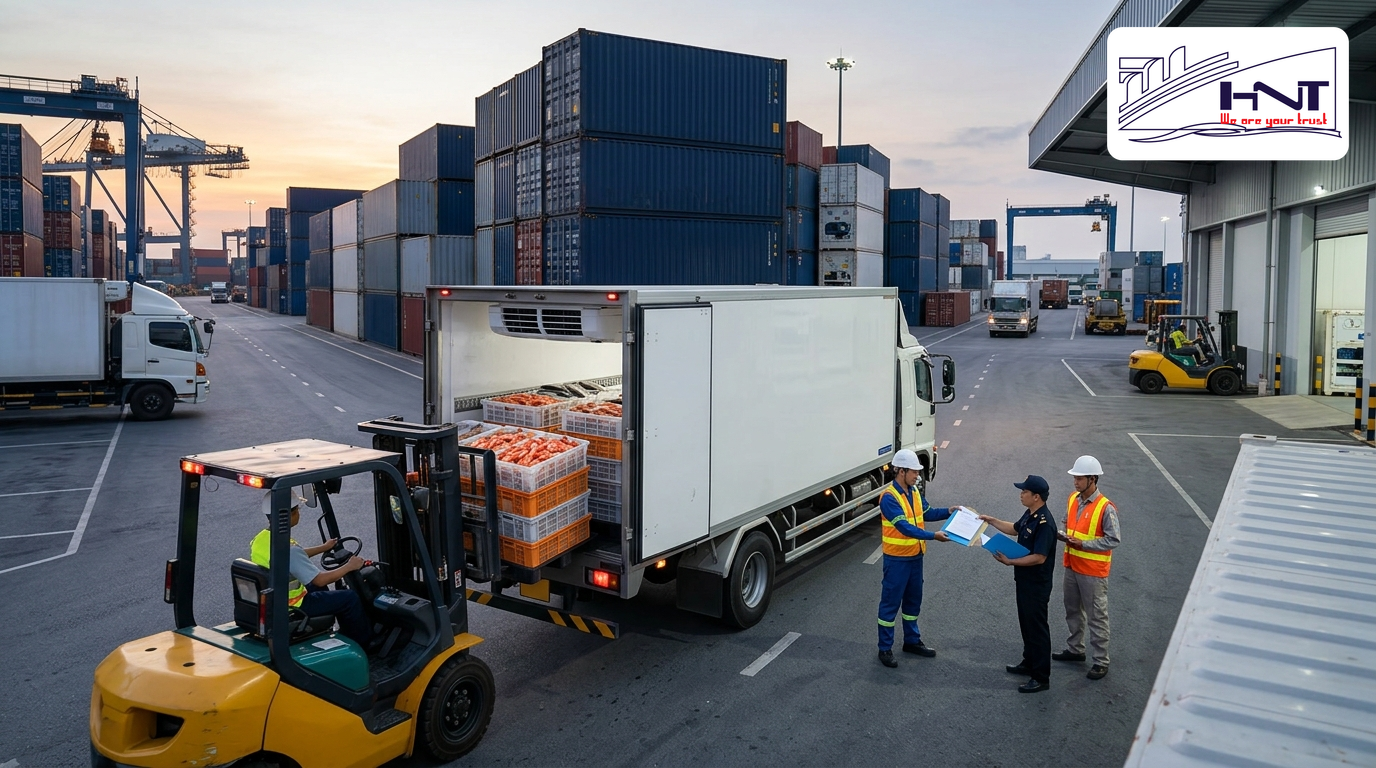
Freight rate components
China road freight rates depend on distance, type of refrigerated truck, required temperature, season, and waiting time at the border gate.
- Domestic freight charges.
- Specialized refrigerated truck costs.
- Customs and documentation fees.
- Quarantine costs.
- Toll and fuel fees.
- Storage charges if incurred.
Factors affecting costs
The harvest season for durian, dragon fruit, and lychee often causes a sharp increase in demand for refrigerated trucks. This can cause freight rates to fluctuate significantly in a short period.
Experience in optimizing logistics budgets
Businesses should consolidate cargo to full load, book trucks early, and use logistics units with cross-border networks. In addition, standardizing documentation also helps reduce the risk of truck detention costs.
For example, Green Farm Company in Dak Lak optimized its loading schedule and booked trucks 10 days in advance. As a result, logistics costs decreased by about 12% compared to the previous season.
A jackfruit export business in Tien Giang applied a flexible delivery schedule based on off-peak customs clearance hours. Waiting time decreased by nearly one day, leading to a significant reduction in operating costs.
| Elements | Cost impact | Impact level | Recommendation |
|---|---|---|---|
| Seasonal | Truck price increase | Infrastructure | Book early |
| Loại hàng | Increase temperature requirement | Standard-compliant, inspected | Load control |
| Border gate congestion | Vehicle demurrage incurred | Infrastructure | Route contingency |
| Incorrect documentation | Customs clearance delay | Infrastructure | Review before export |
Transporting agricultural products to China by refrigerated truck requires synchronous coordination between production, quarantine, customs, and transportation. Businesses need to proactively update new regulations, especially SPS requirements, traceability, and export business registration.
- Prepare complete documentation before exporting goods.
- Control temperature throughout the journey.
- Select the appropriate border gate for each item.
- Monitor changes in Chinese regulations.
- Optimize vehicle schedules to reduce costs.
- Build contingency plans for peak season.
For businesses needing to expand into the Chinese market, cooperating with an experienced logistics provider will help reduce risks and improve supply chain efficiency. HNT LOGISTICS is ready to accompany businesses exporting agricultural products, seafood, and fresh goods with cold chain transport, customs declaration, and cross-border customs clearance support.