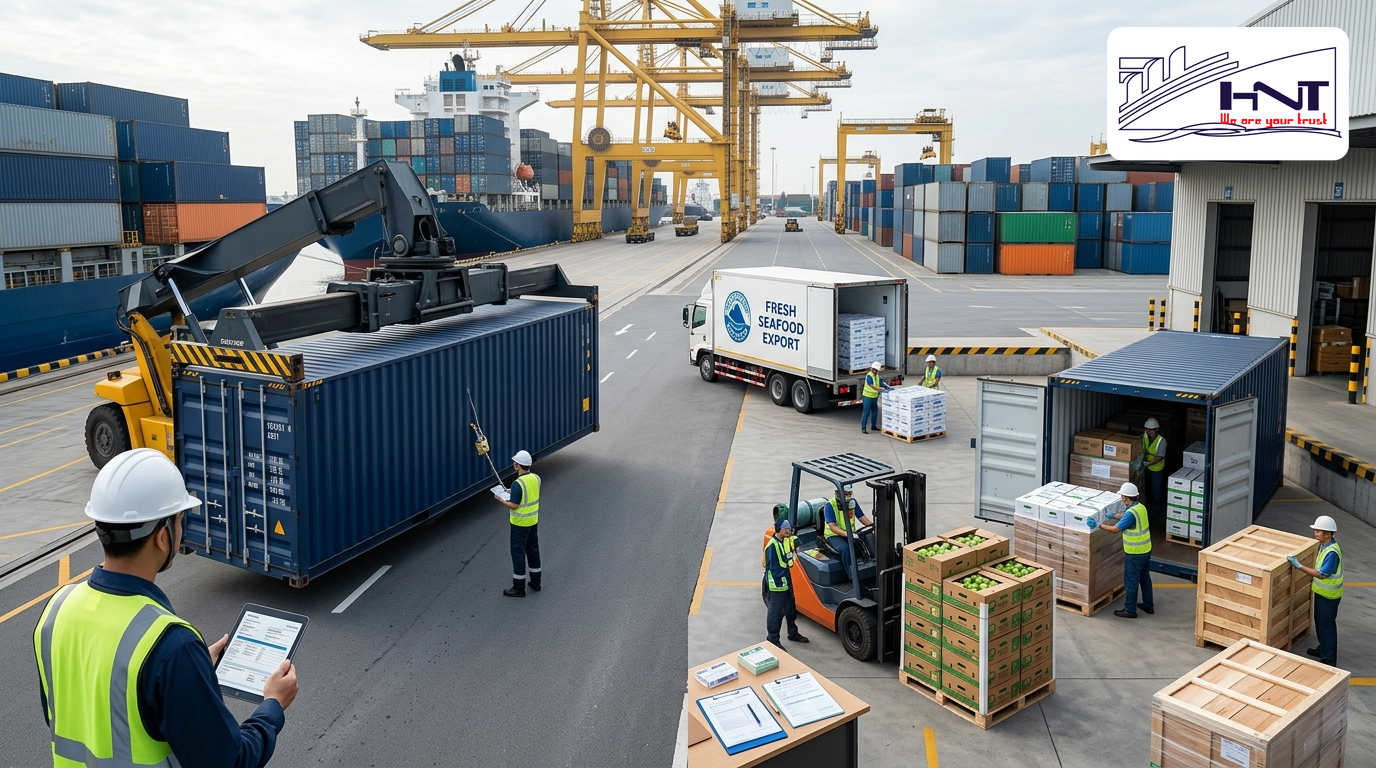
International sea freight always presents businesses with an important decision: whether to choose FCL or LCL to optimize costs and delivery time. Choosing incorrectly can increase logistics costs, lead to storage surcharges, or cause export delays.
Industry data shows Vietnam's seafood exports reaching over 11.3 billion USD in 2026, an increase of over 12% compared to the previous year. At the same time, the export of agricultural, forestry, and aquatic products is nearing the 70 billion USD mark, leading to a sharp increase in demand for sea freight containers. Exporting businesses are increasingly interested in container operational efficiency and international vessel schedules. Accordingly, understanding FCL and LCL has become a practical requirement for exporters.
This article will analyze in detail the international sea freight process, the differences between FCL and LCL, how to control costs, and the selection criteria suitable for each type of export cargo.
International sea freight process and the position of FCL, LCL
Steps in the export shipping process
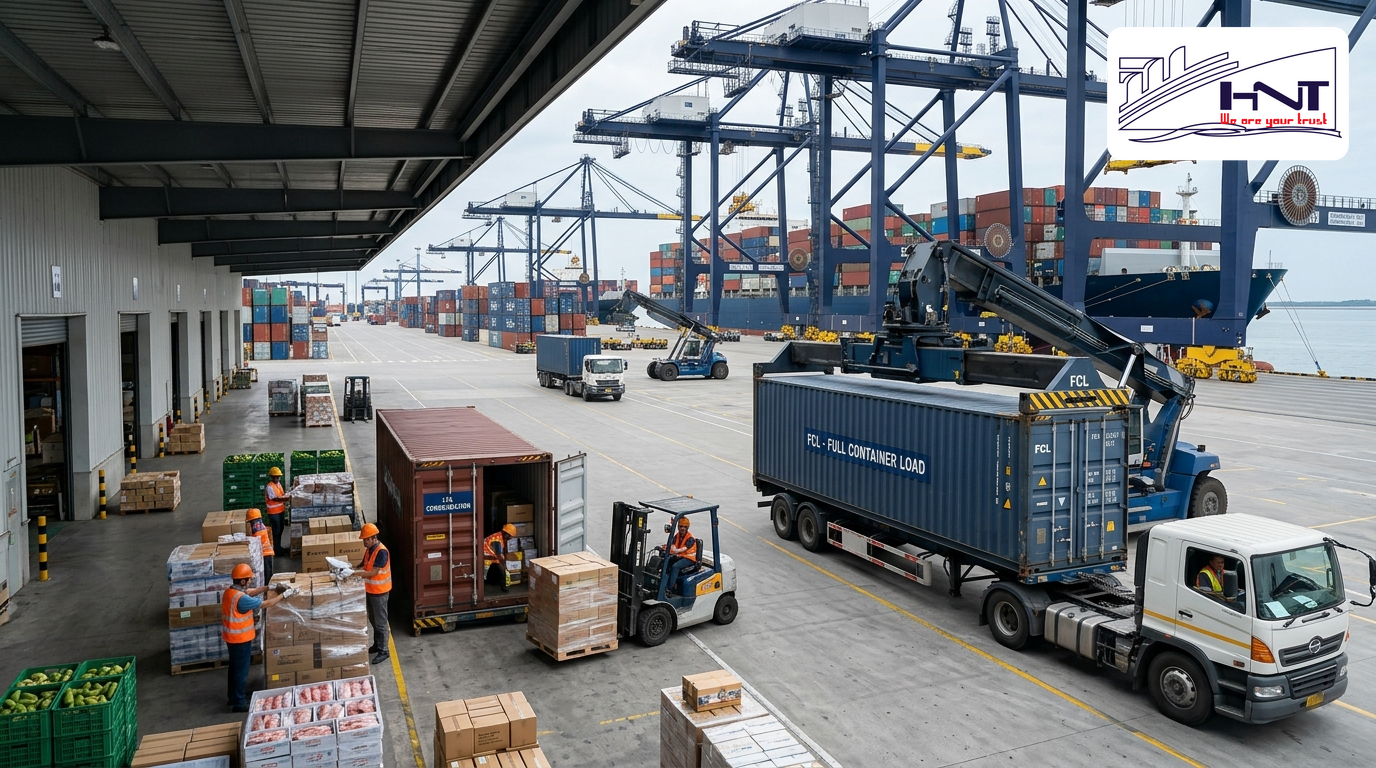
A standard export shipping process typically starts with vessel booking, cargo packing, customs declaration, bill of lading issuance, and delivery at the destination port. Regardless of whether FCL or LCL is chosen, businesses must still fully comply with these steps.
- Confirm trade terms and Incoterms.
- Booking with a shipping line or forwarder.
- Prepare export documents.
- Packing cargo and transporting it to the port.
- Electronic customs declaration.
- Customs clearance and loading onto the vessel.
- First Translation
For example, Mekong Fruit Company in Tien Giang exports mangoes to Shanghai using a 40RF FCL container. The entire process from packing to loading onto the vessel is completed in 3 days, helping to reduce the risk of cold chain breakage.
A handicraft business in Binh Duong exports 8 CBM of goods to Hamburg using LCL. The goods are consolidated at a CFS warehouse before being loaded into a shared container, saving nearly 35% in costs compared to renting a full container.
Differences between FCL and LCL in each step
FCL allows businesses to use the entire container. Conversely, LCL requires consolidating cargo with many other shippers at a CFS warehouse.
The biggest difference lies in the packing stage, the waiting time for cargo consolidation, and handling at the destination. With LCL, businesses must account for additional time for devanning at the destination port.
Role of checking vessel schedules
Checking vessel schedules helps businesses determine ETD, ETA, and choose the appropriate transport route. During periods of market volatility, regularly tracking vessel schedules helps reduce the risk of delivery delays.
| Criteria | FCL | LCL | Tác động |
|---|---|---|---|
| Packing | At shipper's warehouse | At CFS | Different process |
| Processing time | Fast | Longer | ETA impact |
| Cargo control | Infrastructure | Standard-compliant, inspected | Risk impact |
| Cost | Good when fully loaded | Good when having small amount of cargo | Optimize budget |
Distinguishing between FCL international sea freight and LCL less-than-container-load shipping
Characteristics of FCL
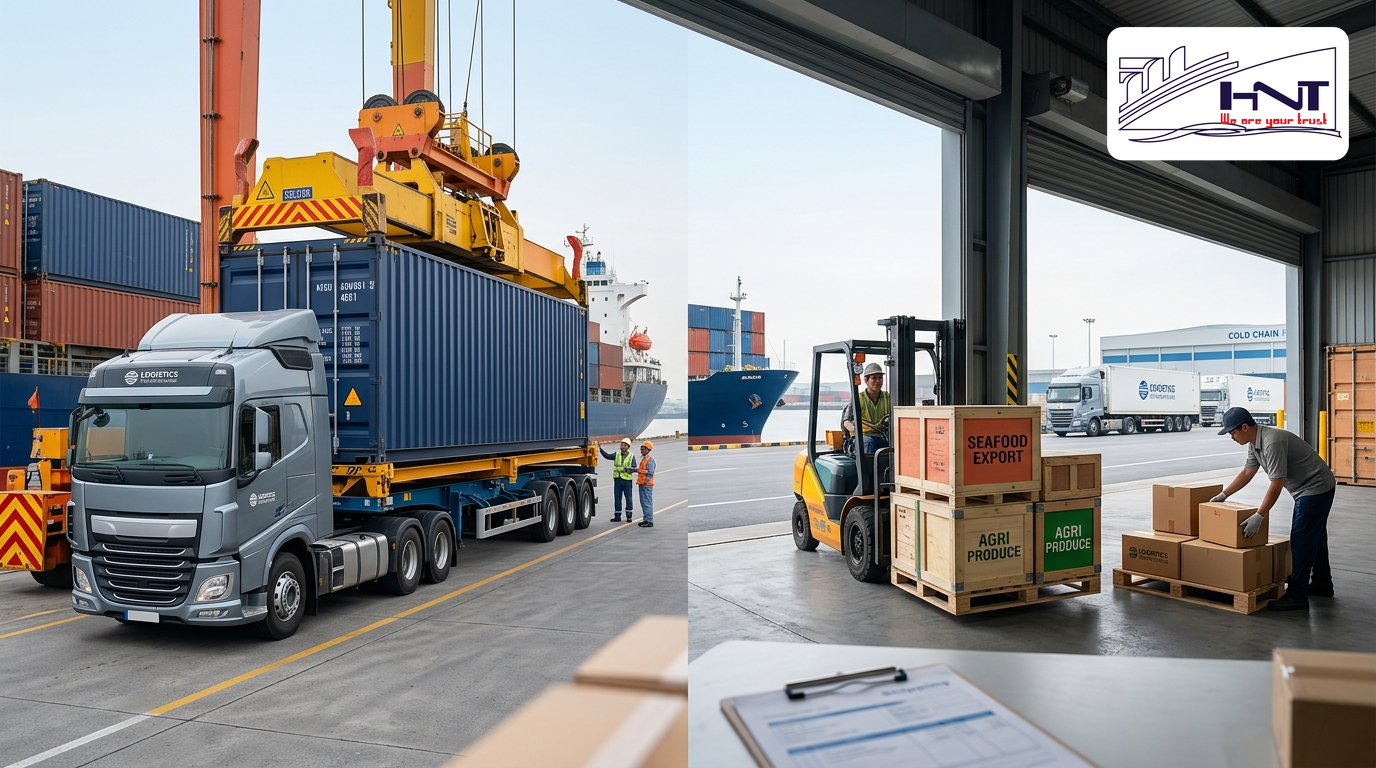
FCL is a form of full container rental. The business is responsible for using the entire container space and does not share it with other shippers.
- Reduce risk of damage by not having to group cargo.
- Shorten processing time at the port.
- Easy to control temperature for cold cargo.
- Suitable for large orders.
- Increase cargo security.
According to HNT LOGISTICS experience, frozen seafood shipments exported to the United States are often more effective when using FCL because it helps maintain a stable cold chain and limits opening the container multiple times.
Characteristics of LCL shipping
LCL shipping is suitable for businesses with small volumes or testing exports to new markets.
- No need to rent a full container.
- Reduce working capital pressure.
- Flexible with small orders.
- Easy to access new markets.
- Suitable for dry cargo, consumer goods.
A coffee business in Dak Lak exporting 12 CBM to Busan reduced logistics costs by 28% by using LCL instead of FCL.
A furniture company in Dong Nai exporting samples to Rotterdam by LCL, saving significantly on empty container storage costs.
Detailed comparison table
| Elements | FCL | LCL | Recommendation |
|---|---|---|---|
| Output | Large | Small | Based on CBM |
| Unit cost | Low when fully loaded | Higher | Total cost comparison |
| Transit Time | Fast | Longer | Important for fresh goods |
| Rủi ro | Low | Higher | Packing control |
| Cold chain | Good | Restrictions | Prioritize FCL |
Choosing international sea freight FCL or LCL
Based on cargo volume
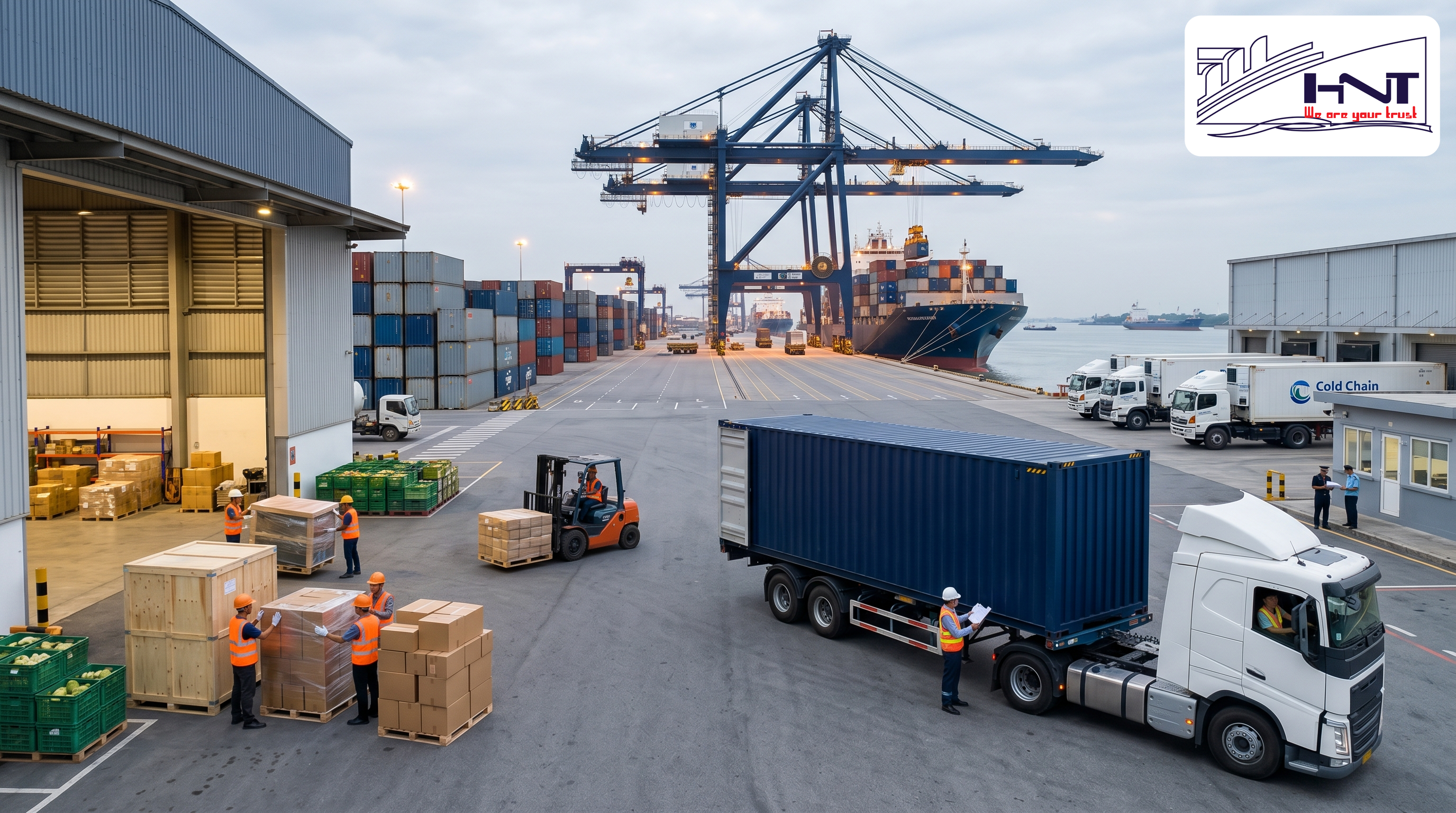
When the volume exceeds about 15-18 CBM, businesses should calculate the FCL option. The actual threshold also depends on the shipping route and container type.
Based on the experience of HNT LOGISTICS, many fruit exporting businesses to China have switched from LCL to FCL when volume increases weekly, helping to reduce costs per kilogram of goods.
According to product characteristics
Seafood, fresh fruits and frozen foods are often more suitable for FCL. Dry goods, samples or small batches are suitable for LCL.
- Frozen seafood.
- Export fruits.
- Processed agricultural products.
- Wooden furniture.
- Consumer goods.
- Machinery and spare parts.
According to the export market
Distant markets such as the USA and Europe often prioritize FCL for large-scale commercial goods. Southeast Asian routes can flexibly use LCL.
In 2026, Vietnam's seafood exports exceeded 11.3 billion USD and many businesses increased the rate of using full reefer containers to meet traceability and quality requirements from major import markets.
| Thị trường | Loại hàng | Recommendation | Reason |
|---|---|---|---|
| Hoa Kỳ | Seafood | FCL | Cold chain |
| EU | Fruits | FCL | Quality control |
| ASEAN | Consumer goods | LCL/FCL | Flexible |
| China | Agricultural products | FCL | Delivery speed |
Optimize international sea freight processes and reduce risks
Document and customs control
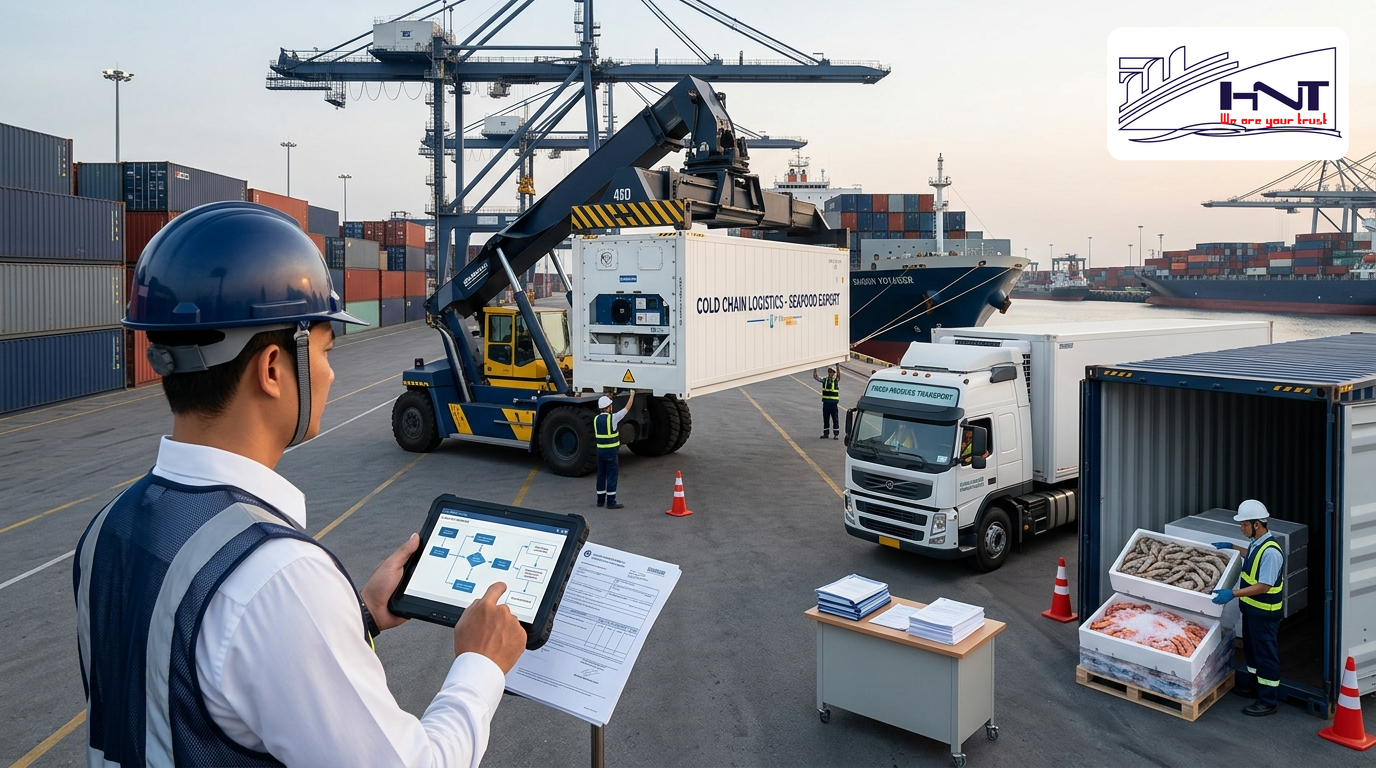
Legal changes in 2026 related to Law No. 90/2026/QH15 and decrees guiding customs procedures require businesses to update regularly to avoid declaration errors.
According to HNT LOGISTICS' recommendation, businesses should review documents at least 48 hours before the cutoff time to reduce the risk of being refused loading or delayed customs clearance.
Manage vessel schedules and container capacity
The sea freight market is still affected by freight rate fluctuations and shipping line network adjustments. Monitoring schedules regularly helps shippers react quickly to ETA changes or transshipments.
- Track ETD weekly.
- Check document cutoff.
- Confirm empty container.
- Prepare alternative vessel schedules.
- Control warehouse delivery time.
Cooperate with an international shipping company
An experienced international shipping company will support optimizing shipping routes, container booking, handling documents and advising on choosing appropriate FCL or LCL.
For businesses exporting agricultural products, seafood and fresh fruits, early coordination with a logistics provider helps control temperature, transit time and quarantine requirements of import markets well.
Choosing the right option between FCL and LCL is a key factor in international sea freight. This decision directly affects costs, delivery time and risk control capability.
- FCL is suitable for large shipments.
- LCL is suitable for small shipments.
- Check the train schedule regularly.
- Calculate total logistics costs.
- Prioritize FCL for refrigerated goods.
- Control documents before the cutoff.
- Work with reputable logistics partners.
In the context of Vietnam's exports continuing to grow strongly, businesses need to build long-term logistics strategies instead of just choosing based on freight rates. HNT LOGISTICS is ready to accompany export businesses nationwide in consulting on transport routes, optimizing containers, and improving supply chain efficiency.