Khi tìm hiểu về quá cảnh trái cây thái lan đi trung quốc, một container sầu riêng xuất phát từ Thái Lan có thể duy trì nhiệt độ ổn định suốt hành trình nhưng vẫn phát sinh thiệt hại nếu mắc kẹt tại cửa khẩu, sai thông tin niêm phong hoặc không đáp ứng yêu cầu kiểm dịch của Trung Quốc. Với trái cây tươi, chi phí vận chuyển thấp chưa chắc mang lại hiệu quả nếu thời gian giao hàng kéo dài và tỷ lệ hàng đạt chuẩn giảm.
Bài toán quá cảnh trái cây thái lan đi trung quốc vì vậy cần được giải quyết bằng một gói logistics xuyên biên giới, kết hợp thiết kế tuyến đường, phương tiện vận tải, hồ sơ pháp lý, bảo quản lạnh và kiểm soát trách nhiệm giao nhận. HNT Logistics tiếp cận hoạt động này từ góc độ tổng chi phí đến điểm nhận hàng, thay vì chỉ so sánh giá thuê xe hoặc cước vận chuyển riêng lẻ.
Đối với giải pháp quá cảnh trái cây thái lan đi trung quốc, bài phân tích tập trung vào sầu riêng, măng cụt và nhãn tươi có xuất xứ Thái Lan, được vận chuyển qua lãnh thổ Việt Nam để nhập khẩu vào Trung Quốc. Các thông số bảo quản tham khảo nghiên cứu của UC Davis Postharvest Research and Extension Center; nội dung tuân thủ tham chiếu customs regulations và Công bố số 89/2026 của Tổng cục Hải quan Trung Quốc. Số liệu chi phí, thời gian và năng lực phương tiện trong phần mô phỏng là giả định phục vụ lập phương án, không phải báo giá hoặc cam kết thông quan.
Quá Cảnh Trái Cây Thái Lan Đi Trung Quốc: Thiết Kế Gói Vận Chuyển Theo Cấu Trúc Chuỗi Cung Ứng Xuyên Biên Giới
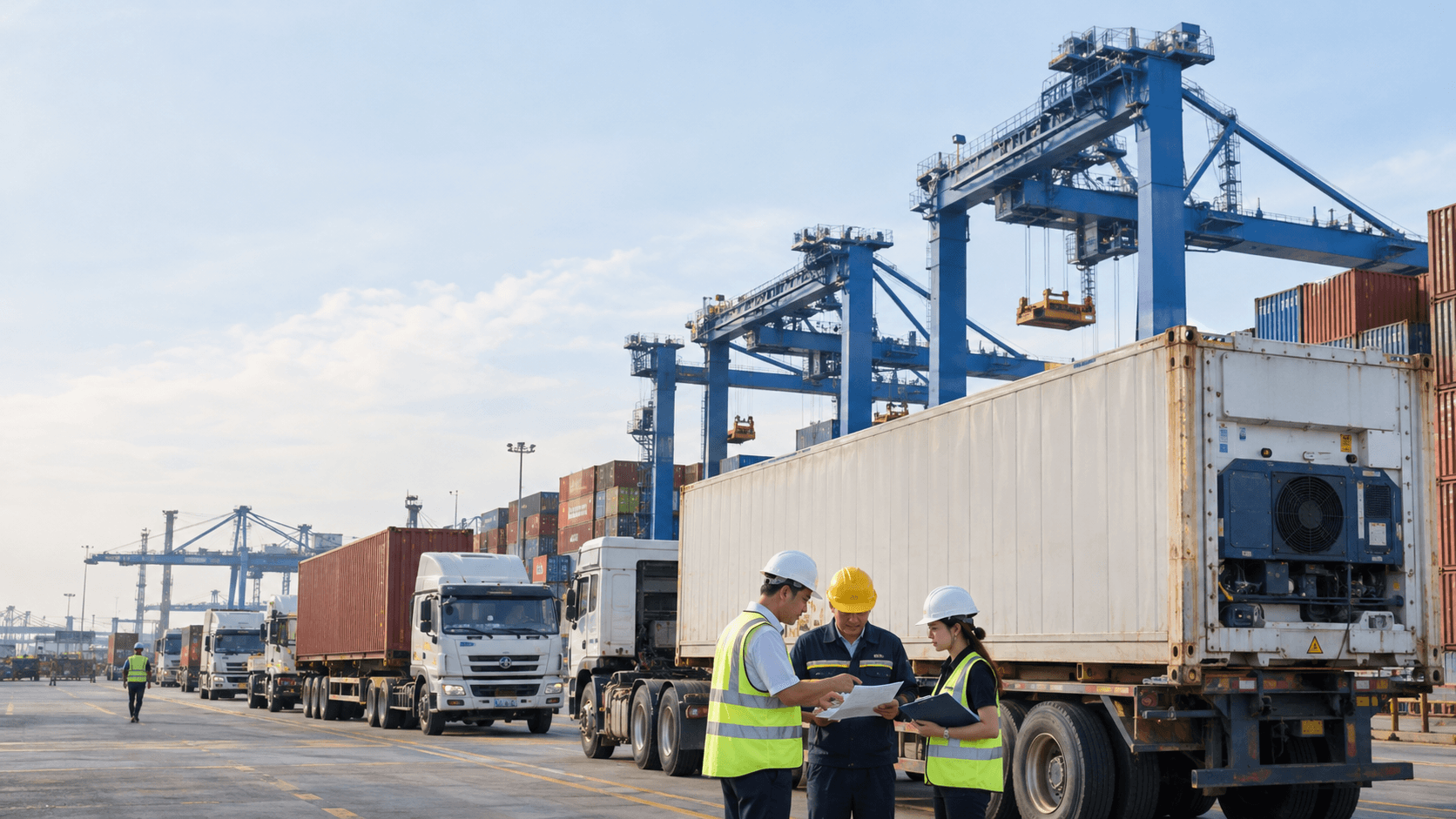
Phân tích mô hình vận chuyển hàng trái cây từ Thái Lan qua lãnh thổ Việt Nam sang Trung Quốc theo luồng hàng, điểm chuyển tiếp và phạm vi trách nhiệm của từng bên tham gia
Trong quá trình vận chuyển và thông quan quá cảnh trái cây thái lan đi trung quốc, mô hình vận chuyển được hình thành từ ba quốc gia nhưng thường liên quan ít nhất bốn hệ thống nghiệp vụ: xuất khẩu tại Thái Lan, vận tải qua nước trung gian, quá cảnh chịu giám sát hải quan tại Việt Nam và nhập khẩu tại Trung Quốc. Nếu hàng đi đường bộ từ Thái Lan qua Lào vào Việt Nam, cơ chế áp dụng tại Lào cũng phải được xác định riêng, không thể mặc nhiên coi toàn tuyến là một thủ tục quá cảnh duy nhất.
Để tối ưu chi phí và tiến độ quá cảnh trái cây thái lan đi trung quốc, luồng hàng điển hình bắt đầu tại vườn trồng hoặc cơ sở đóng gói được chấp thuận, sau đó chuyển tới điểm đóng container lạnh tại Thái Lan. Container tiếp tục đến cửa khẩu Thái Lan – Lào, đi qua Lào, nhập cảnh Việt Nam tại cửa khẩu được phép, di chuyển trên tuyến quá cảnh phù hợp và xuất cảnh sang Trung Quốc. Tại điểm đích, người nhập khẩu hoàn thành thủ tục trước khi hàng được đưa vào lưu thông.
Theo kinh nghiệm vận hành thực tế của HNT Logistics về quá cảnh trái cây thái lan đi trung quốc, Quyền sở hữu hàng hóa và trách nhiệm vận tải cần được phân biệt rõ. Nhà xuất khẩu Thái Lan chịu trách nhiệm về nguồn gốc, chất lượng và chứng từ theo hợp đồng mua bán; đơn vị vận tải chịu trách nhiệm trong phạm vi nhận chở; doanh nghiệp tổ chức logistics phối hợp giữa các bên; còn nhà nhập khẩu Trung Quốc thực hiện nghĩa vụ nhập khẩu được phân định trong hợp đồng.
Khi tìm hiểu về quá cảnh trái cây thái lan đi trung quốc, điều kiện Incoterms ảnh hưởng trực tiếp đến bên chịu chi phí, tổ chức vận chuyển và rủi ro giữa người bán với người mua. Tuy nhiên, Incoterms không tự động thay thế hợp đồng vận tải, trách nhiệm khai báo hải quan hoặc yêu cầu kiểm dịch. Hợp đồng cần ghi nhận riêng thời điểm chuyển giao rủi ro mua bán và thời điểm đơn vị vận tải tiếp nhận trách nhiệm bảo quản hàng.
Xây dựng phương án tổ chức vận tải theo ba lớp vận hành gồm chặng nội địa Thái Lan, chặng quá cảnh qua Việt Nam và chặng giao hàng tại Trung Quốc
Lớp vận hành thứ nhất bắt đầu từ nhà đóng gói tại Thái Lan. Nhiệm vụ trọng tâm là kiểm tra độ chín, phân loại, tiền làm lạnh theo quy trình được phê duyệt, vệ sinh container, kiểm tra máy lạnh và hoàn tất niêm phong. Việc bố trí xe phải dựa trên thời gian đóng hàng thực tế, bởi container đến quá sớm hoặc quá muộn đều có thể làm gián đoạn dây chuyền.
Lớp thứ hai bao gồm kết nối vận tải qua Lào và quá cảnh Việt Nam. Tại đây, doanh nghiệp phải kiểm tra giấy phép phương tiện, điều kiện tuyến đường, cơ chế giám sát hải quan và khả năng đổi đầu kéo nhưng vẫn giữ nguyên container. Đối với hàng trái cây thuộc phạm vi Nghị định thư Trung Quốc – Thái Lan về quá cảnh nước thứ ba, không được tự ý mở hoặc thay container trên lãnh thổ nước quá cảnh.
Lớp thứ ba bắt đầu khi container đến cửa khẩu Trung Quốc. Ngoài thủ tục hải quan và kiểm dịch, nhà nhập khẩu cần bố trí địa điểm tiếp nhận, phương tiện kéo tiếp, thiết bị nâng hạ và nhân sự kiểm đếm. Nếu điểm giao cuối cùng nằm sâu trong nội địa Trung Quốc, thời gian và chi phí vận tải sau thông quan phải được cộng vào ngân sách toàn trình.
Phương án vận tải đa phương thức có thể được nghiên cứu khi kết hợp đường bộ, đường sắt hoặc đường biển. Tuy nhiên, chuyển đổi phương thức không đồng nghĩa được phép đổi container hoặc mở hàng. Tính hợp pháp và khả năng duy trì nguyên trạng container phải được xác minh trước khi lựa chọn phương án.
Xác định điều kiện khả thi của tuyến quá cảnh dựa trên tư cách chủ hàng, loại hình hải quan, phương tiện liên vận, khả năng tiếp nhận tại cửa khẩu và yêu cầu của thị trường đích
Điều kiện đầu tiên là xác định đúng chủ thể xuất khẩu, chủ sở hữu lô hàng, đơn vị khai báo và nhà nhập khẩu có năng lực tiếp nhận tại Trung Quốc. Trái cây Thái Lan đi xuyên lãnh thổ Việt Nam không đương nhiên trở thành hàng nhập khẩu để tiêu thụ tại Việt Nam. Hàng phải được đặt trong chế độ quản lý phù hợp với bản chất vận chuyển và đi qua các cửa khẩu, tuyến đường được phép.
Luật Quản lý ngoại thương Việt Nam số 05/2017/QH14 quy định nguyên tắc quản lý hàng hóa quá cảnh, giám sát hải quan và việc sử dụng cửa khẩu, tuyến đường theo quy định. Doanh nghiệp cần đối chiếu thêm Luật Hải quan, Nghị định 08/2015/NĐ-CP cùng văn bản sửa đổi, bổ sung và các quy định có hiệu lực tại thời điểm thực hiện. Không nên sử dụng mẫu hồ sơ cũ mà chưa kiểm tra cập nhật.
Khả năng vận hành còn phụ thuộc giấy phép liên vận, đăng ký phương tiện, bảo hiểm, tải trọng, quy định về lái xe và quyền đi qua từng lãnh thổ. Giấy phép hợp lệ ở Thái Lan hoặc Lào không mặc nhiên tạo quyền lưu thông tại Việt Nam hay Trung Quốc. Với tuyến Việt Nam – Trung Quốc, phạm vi hoạt động phải phù hợp giấy phép vận tải đường bộ quốc tế và cửa khẩu được ghi nhận.
Đối với thị trường đích, sự phù hợp của chủng loại trái cây, mã số vườn trồng, cơ sở đóng gói, chứng thư kiểm dịch và cửa khẩu nhập khẩu là điều kiện quyết định. Một hành trình khả thi về mặt đường bộ vẫn có thể không khả thi về pháp lý nếu cửa khẩu dự kiến không được chấp thuận tiếp nhận lô trái cây theo cơ chế áp dụng.
Thiết lập mô hình phối hợp giữa nhà cung cấp Thái Lan, đơn vị tổ chức vận tải, đại lý hải quan, đơn vị khai thác tại Việt Nam và nhà nhập khẩu Trung Quốc nhằm duy trì tính liên tục của lô hàng
Mô hình điều phối cần có một đầu mối chịu trách nhiệm quản lý tiến độ tổng thể và các đầu mối chuyên môn được phân quyền tại từng quốc gia. Nhà cung cấp xác nhận chất lượng và chứng từ xuất khẩu; đại lý hải quan thực hiện nghiệp vụ theo ủy quyền; nhà vận tải cung cấp xe, container và dữ liệu hành trình; nhà nhập khẩu xác nhận điều kiện tiếp nhận trước khi phương tiện khởi hành.
Thông tin vận hành nên được tập trung trên một bảng theo dõi lô hàng, sử dụng thống nhất số container, số niêm phong, biển số phương tiện, số chứng thư và thời điểm dự kiến đến cửa khẩu. Khi một bên cập nhật thay đổi, các bên còn lại phải được thông báo theo quy trình thay vì sử dụng những phiên bản chứng từ khác nhau.
Trong quản trị thực tế, HNT Logistics có thể đóng vai trò đầu mối thiết kế và điều phối phương án trong phạm vi dịch vụ được thống nhất. Việc thực hiện qua các đối tác Thái Lan, Lào hoặc Trung Quốc cần được xác định bằng hợp đồng, giấy phép, phạm vi ủy quyền và năng lực khai thác thực tế, tránh nhầm lẫn giữa vai trò tổ chức vận tải với tư cách nhà vận tải được cấp phép tại từng quốc gia.
Quá Cảnh Trái Cây Thái Lan Đi Trung Quốc: Phân Tích Điểm Nghẽn Vận Hành Theo Từng Chặng Logistics
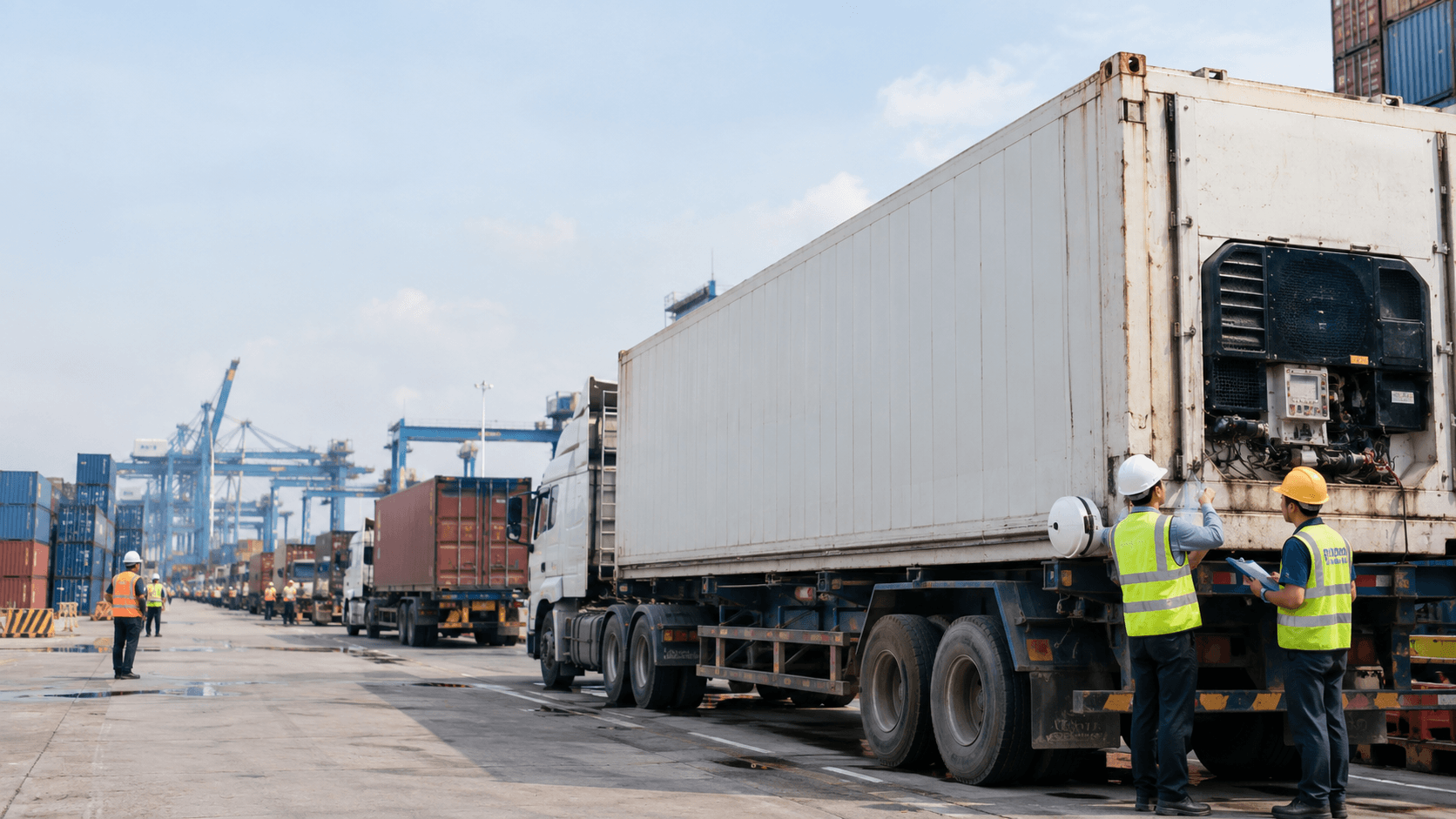
Lập sơ đồ hành trình từ vùng thu mua tại Thái Lan đến điểm giao hàng tại Trung Quốc, xác định các điểm chuyển phương tiện, kiểm soát biên giới và bàn giao trách nhiệm
A reference route may begin at a packing facility in eastern Thailand, pass through Mukdahan, enter Laos at Savannakhet, continue to the Lao Bao area of Vietnam, and travel to a northern Vietnamese border crossing before entering China. This is only a geographical diagram for research purposes, not confirmation that the entire corridor is licensed for every shipment.
In particular, the Chinese entry port must be included in the list of ports authorized under the applicable quarantine regulations. Announcement No. 89/2026 of the General Administration of Customs of China lists ports such as Youyiguan, Dongxing, Mong Ha, Shuikou, and several other Chinese ports. Port names, connecting routes, and the scope of acceptance must be verified against the current notices issued by the authorities on both sides.
| Route Stage | Main Activities | Mandatory Control Points | Responsible Party |
|---|---|---|---|
| Thai Orchard or Packing Facility | Procurement, Sorting, Container Loading | Origin, Quality, Temperature, Seal Integrity | Exporter and Packing Facility |
| Thailand–Laos Border Crossing | Exit and International Transit | Vehicle Permits, Export Documents, Container | Transport Operator and Local Agent |
| Laotian Territory | Transit Transportation | Authorized Route, Seal Integrity | Transport Operator and Transit Agent |
| Vietnamese Entry Border Crossing | Transit Acceptance and Supervision Registration | Documents, Route, Container, Seal Number | Customs Clearance Agent and Transport Operator |
| Vietnamese Exit Border Crossing | Confirmation of Goods Leaving the Territory | Document Verification, Seal Integrity, Supervision Status | Customs Broker and Transport Operator |
| Chinese Border Crossing | Import and Quarantine Inspection | Phytosanitary Certificate, Origin, Inspection Criteria | Importer and Chinese Agent |
| Chinese Receiving Warehouse | Container Delivery, Unloading, and Acceptance Inspection | Weight, Quality, Temperature, Delivery and Receipt Record | Người nhận hàng và nhà vận tải chặng cuối |
Sơ đồ điều hành phải tách biệt điểm đổi đầu kéo với điểm mở container. Tại một bãi chuyển tiếp, việc nâng nguyên container từ chassis này sang chassis khác không đồng nghĩa với chuyển tải hàng hóa ra khỏi container. Sự phân biệt này đặc biệt quan trọng vì hàng trái cây Thái Lan quá cảnh nước thứ ba có yêu cầu duy trì nguyên trạng container theo cơ chế kiểm dịch song phương.
Phân tích phương án chạy xuyên suốt, đổi đầu kéo hoặc chuyển tải theo điều kiện kết nối phương tiện, năng lực khai thác và mức độ cần thiết phải mở niêm phong
Phương án chạy xuyên suốt sử dụng tổ hợp phương tiện được phép vận hành qua các quốc gia và cửa khẩu liên quan. Lợi thế là giảm số lần bàn giao và tránh nâng hạ không cần thiết. Tuy nhiên, tính khả thi bị giới hạn bởi giấy phép liên vận, phạm vi lưu thông, điều kiện lái xe, quy định phương tiện và khả năng chấp nhận của cơ quan chức năng.
Phương án đổi đầu kéo giữ nguyên container lạnh và ưu tiên giữ nguyên niêm phong. Tại cửa khẩu hoặc điểm chuyển tiếp được phép, đầu kéo mới tiếp nhận chassis hoặc container theo cấu hình kỹ thuật phù hợp. Trước khi bàn giao, hai bên kiểm tra điện lạnh, khóa cửa, tình trạng vỏ container và chụp ảnh niêm phong để xác nhận không phát sinh can thiệp vào hàng.
Phương án chuyển tải cần được phân biệt thành hai trường hợp. Chuyển nguyên container bằng thiết bị nâng hạ có thể được nghiên cứu nếu đáp ứng điều kiện giám sát. Ngược lại, rút trái cây từ container cũ để đóng sang container mới tại nước quá cảnh không phù hợp yêu cầu không mở hoặc đổi container trong Công bố số 89/2026 của Trung Quốc, trừ khi có cơ chế xử lý ngoại lệ được cơ quan có thẩm quyền chấp thuận.
Với quá cảnh sầu riêng thái lan đi trung quốc, ưu tiên duy trì container nguyên niêm phong giúp giảm rủi ro va đập, ảnh hưởng nhiệt và mất khả năng truy xuất. Việc chọn phương án cuối cùng phải dựa trên giấy phép thực tế và xác nhận của các bên quản lý cửa khẩu, thay vì chỉ dựa trên lợi ích rút ngắn thời gian.
Thiết kế cơ chế điều phối lịch xe, lịch tiếp nhận tại cửa khẩu và thời gian dự phòng cho từng chặng nhằm hạn chế đứt quãng chuỗi vận chuyển
Lịch vận tải nên lập ngược từ thời điểm người mua Trung Quốc có thể tiếp nhận lô hàng. Sau khi xác nhận thời gian xử lý nhập khẩu, doanh nghiệp mới xác định thời điểm đến cửa khẩu Trung Quốc, thời điểm rời Việt Nam và thời điểm đóng container tại Thái Lan. Cách lập kế hoạch này giúp hạn chế tình trạng xe đến trước nhưng chứng từ hoặc đầu mối tiếp nhận chưa sẵn sàng.
Mỗi điểm bàn giao cần có thời gian đến dự kiến ETA, thời gian hoàn thành dự kiến ETD và ngưỡng cảnh báo. Thời gian dự phòng nên phân bổ tại những công đoạn biến động lớn như kiểm tra biên giới, đổi phương tiện hoặc chờ tiếp nhận. Không nên dùng toàn bộ khoảng dự phòng để trì hoãn khởi hành vì dễ làm mất khả năng xử lý khi phát sinh kiểm tra bổ sung.
Ví dụ, đối với hành trình kế hoạch sáu ngày, doanh nghiệp có thể dành riêng 12-24 giờ dự phòng cho chờ cửa khẩu và phối hợp phương tiện, tùy dữ liệu thực tế của tuyến. Đây là giả định lập kế hoạch, không phải thời gian thông quan tiêu chuẩn. Khi xây dựng lịch chính thức, cần kiểm tra giờ làm việc, ngày nghỉ, lưu lượng hàng mùa vụ và quy trình đăng ký phương tiện tại từng cửa khẩu.
Ngưỡng kiểm soát chứng thư kiểm dịch đặc biệt quan trọng. Theo Công bố số 89/2026, chứng thư kiểm dịch thực vật trong cơ chế trái cây Trung Quốc – Thái Lan quá cảnh nước thứ ba có thời hạn hiệu lực 10 ngày. Doanh nghiệp cần tính lịch phát hành và thời gian vận chuyển tương ứng, đồng thời kiểm tra việc áp dụng, cách tính hiệu lực và yêu cầu hiện hành với cơ quan có thẩm quyền trước khi xuất hàng.
Xây dựng phương án xử lý sai lệch số liệu hàng hóa, thay đổi lịch thông quan, phương tiện không đáp ứng điều kiện khai thác hoặc điểm trung chuyển mất khả năng tiếp nhận
Sai lệch khối lượng, số kiện hoặc số niêm phong phải được xử lý trước khi phương tiện đến điểm kiểm tra tiếp theo. Đội chứng từ cần xác định sai lệch xuất phát từ cân thực tế, lỗi nhập liệu hay thay đổi hàng hóa. Hồ sơ sửa đổi chỉ được sử dụng sau khi được bên có thẩm quyền chấp thuận; không tự ý điều chỉnh số liệu để hợp thức hóa sự khác biệt.
Khi lịch thông quan thay đổi, điều phối phải đánh giá ngay thời gian nhiên liệu, khả năng duy trì điện lạnh và thời hạn chứng từ. Nếu đầu kéo gặp sự cố, có thể tổ chức thay đầu kéo hoặc thiết bị cấp điện phù hợp trong phạm vi được phép. Mọi thao tác liên quan container đang chịu giám sát cần thông báo và thực hiện theo yêu cầu cơ quan chức năng.
Nếu bãi trung chuyển ngừng tiếp nhận, phương án thay thế phải được kiểm tra về tính hợp pháp của địa điểm, khả năng nâng container lạnh, nguồn điện và điều kiện vận tải kết nối. Việc tự ý đổi tuyến hoặc thay đổi địa điểm lưu giữ có thể làm phát sinh vi phạm chế độ quá cảnh, ngay cả khi mục tiêu là bảo vệ chất lượng hàng hóa.
Quy trình ứng phó nên quy định rõ ai có quyền quyết định dừng xe, thay phương tiện, yêu cầu giám định và thông báo cho chủ hàng. Các khoản chi phí xử lý sự cố phải có chứng từ và được phân loại theo nguyên nhân khách quan, lỗi khai thác hoặc yêu cầu phát sinh của khách hàng để phục vụ đối soát sau hành trình.
Quá Cảnh Sầu Riêng, Măng Cụt Và Nhãn Thái Lan Đi Trung Quốc: Thiết Lập Tiêu Chuẩn An Toàn Theo Từng Nhóm Hàng
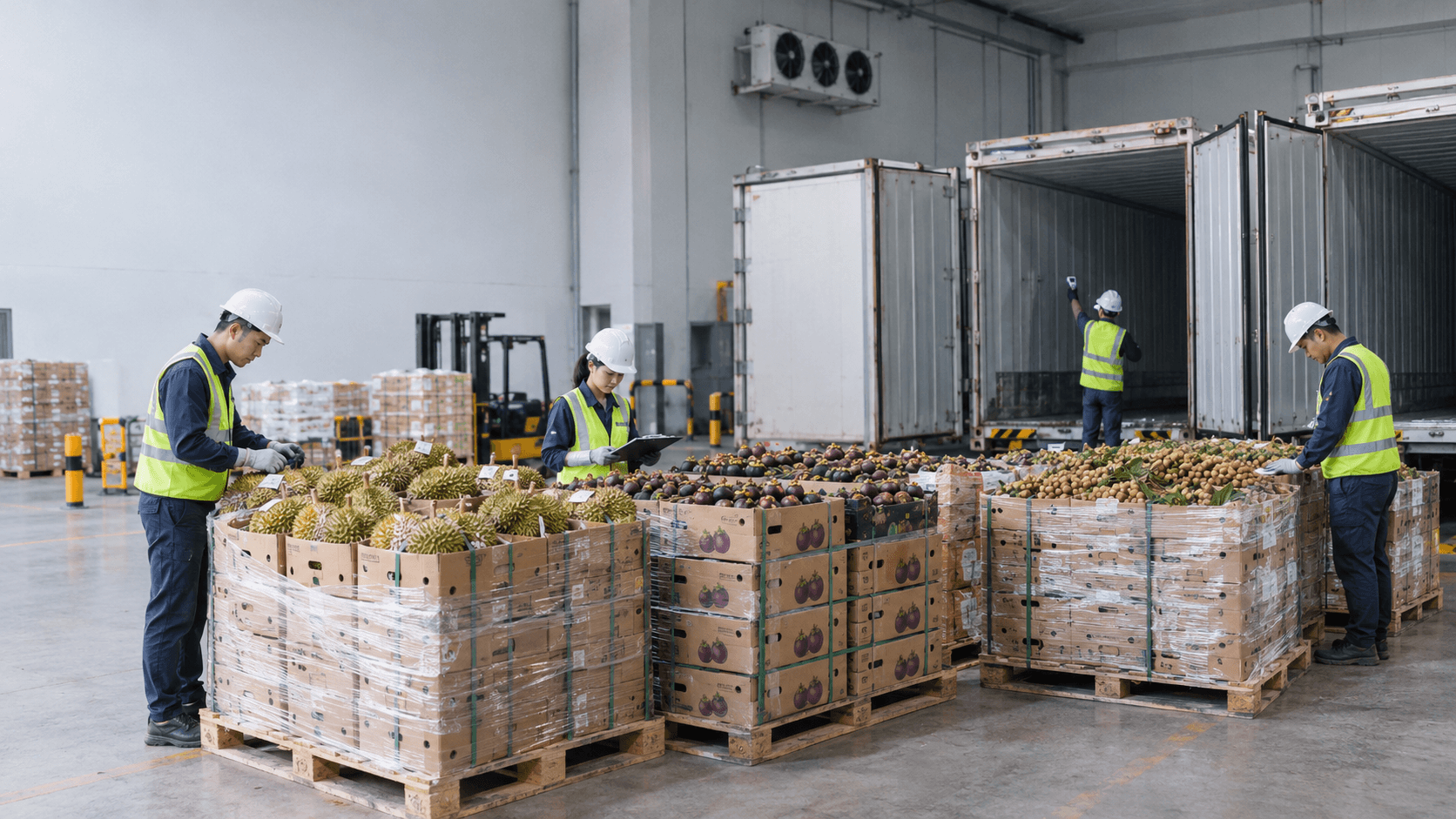
Phân tích rủi ro sinh lý sau thu hoạch của sầu riêng, măng cụt và nhãn để xác định mức độ nhạy cảm với thời gian vận chuyển, rung chấn, mất nước và biến động nhiệt độ
Sầu riêng là loại trái cây có cường độ hô hấp và sinh ethylene đáng kể trong quá trình chín. Nhiệt độ quá cao làm tăng tốc độ chín, nguy cơ nứt vỏ và suy giảm chất lượng; nhiệt độ quá thấp lại có thể gây tổn thương lạnh. Với lô sầu riêng chưa chín hoàn toàn, việc lựa chọn nhiệt độ phải phù hợp giống, độ trưởng thành và thời gian dự kiến vận chuyển.
Măng cụt nhạy cảm với va đập và biến động điều kiện bảo quản. Dù lớp vỏ bên ngoài tương đối dày, tổn thương cơ học có thể dẫn đến hiện tượng cứng vỏ, biến đổi cấu trúc múi hoặc suy giảm phẩm chất bên trong. Khi vận chuyển đường dài, các điểm dễ xảy ra hư hại thường là công đoạn xếp kiện, phanh gấp, rung lắc trên đường xấu và nâng hạ container.
Nhãn có vỏ mỏng và dễ mất nước, thể hiện qua hiện tượng sẫm màu vỏ. Khi bảo quản không phù hợp, trái có thể giảm độ tươi thương phẩm dù phần thịt bên trong chưa hư hỏng rõ rệt. Đối với quá cảnh nhãn thái lan đi trung quốc, kiểm soát độ ẩm và tình trạng bao bì quan trọng tương đương với duy trì nhiệt độ lạnh.
Khả năng chịu thời gian của ba nhóm trái cây không giống nhau. Vì vậy, hợp đồng logistics cần quy định giới hạn tuổi hàng từ thời điểm thu hoạch, thời gian tối đa trước khi đóng container và thời hạn giao dự kiến. Chỉ tiêu này nên được xác nhận bởi nhà xuất khẩu hoặc chuyên gia sau thu hoạch thay vì dùng chung một tiêu chuẩn cho mọi loại trái cây.
Xây dựng ma trận thông số vận hành cho container lạnh theo từng loại trái cây, xác định nhiệt độ cài đặt, độ thông gió, độ ẩm và yêu cầu tiền làm lạnh dựa trên đặc tính hàng hóa cùng hướng dẫn bảo quản đã được xác nhận
Container lạnh sử dụng bộ điều khiển nhiệt độ không khí, trong khi nhiệt độ thực tế tại tâm trái cây chịu ảnh hưởng của tiền làm lạnh, kiểu bao bì, mật độ xếp và luồng gió. Do đó, nhiệt độ cài đặt không thể thay thế dữ liệu đo nhiệt độ sản phẩm. Trước khi đóng hàng, cần xác định nhiệt độ tâm quả và điều kiện bảo quản được chủ hàng phê duyệt.
| Chỉ tiêu | Fresh durian | Măng cụt tươi | Fresh longan |
|---|---|---|---|
| Reference Storage Temperature | 13-15°C | 13 ± 1°C | 5 ± 1°C |
| Độ ẩm tương đối tham khảo | 90-95% | 90-95% | 90-95% |
| Characteristics to be controlled | Ripening process, ethylene, chilling injury | Peel firmness, mechanical damage, segment deterioration | Moisture loss, peel discoloration, fungal diseases |
| Ventilation | Set according to respiration load and professional guidelines | Set according to product conditions and equipment | Set according to gas exchange requirements and packaging |
| Pre-cooling | Bring the cargo temperature to the approved storage target | Apply appropriate precooling and avoid excessive cooling | Precool to limit moisture loss and respiration |
| Reference sources | UC Davis – Durian | UC Davis – Mangosteen | UC Davis – Longan |
The temperature ranges above are reference storage parameters for fresh produce based on UC Davis materials, not mandatory levels applicable to every variety, ripeness stage, or export process. Alternative settings may be used in practice if validated through postharvest procedures, quality testing, and the cargo owner's requirements. Long-term storage temperatures must not automatically be used as setpoints for every shipment.
The ventilation rate of a refrigerated container is generally adjusted using the fresh air vent according to the equipment design and may be expressed as a volumetric flow rate in cubic meters per hour. There is no single fixed ventilation rate suitable for all three types of fruit. The technical team must consider cargo weight, respiration rate, heat load, gas concentrations, and the refrigerated container manufacturer's guidelines before approving the settings.
Before loading, the container must undergo a PTI inspection, including checks of cleanliness, drainage, door gaskets, airflow, and continuous operating capability. The cargo must be appropriately precooled at the packing facility. A refrigerated container is primarily intended to maintain transport conditions and should not be used as a rapid-cooling device for an entire load that is still warm after harvest.
Technical reference sources: UC Davis Postharvest Research and Extension Center, including the Durian, Mangosteen, and Longan materials available at postharvest.ucdavis.edu. When preparing official operating guidelines, HNT Logistics and the cargo owner should also review data from the packer, variety-specific characteristics, and the refrigerated container manufacturer's instructions.
Establish compatibility criteria when consolidating cargo, controlling odors, gas exchange, packaging specifications, and stacking capability to minimize cross-effects between commodities
Loading multiple fruit types into the same container is appropriate only when they are compatible in terms of temperature, humidity, ventilation requirements, odors, and phytosanitary conditions. Durian has a strong characteristic odor, and its ethylene production varies with ripeness, while longan requires a significantly lower storage temperature. For this reason, the three fruit types should not automatically be consolidated in a standard refrigerated container.
For mangosteen transit to China, consolidation with other products should only be implemented after assessing the effects of temperature, ripeness, generated gases, and packaging structure. If separate temperature zones are required, specialized equipment with independent control capabilities must be used, its suitability must be verified, and the arrangement must be procedurally approved.
Carton specifications, plastic trays, or protective materials must meet requirements for compression resistance, hygiene, and traceability. Cargo must not be stacked above the load limit markings, obstruct air outlets, or block return air passages inside the container. Appropriate void fillers must be used to minimize movement without obstructing air circulation.
In particular, cargo consolidation must not rely on opening the container mid-route to add or remove goods. For fruit covered by the China–Thailand Third-Country Transit Protocol, which prohibits opening the container and container replacement, consolidation must be organized at an authorized loading point, with documentation controls for each shipment.
Establish a monitoring mechanism for container condition, temperature data, door integrity, seal numbers, and packaging condition at transfer points throughout the transit journey
Each container must have an operational record containing the container number, seal number, PTI results, temperature setpoint, recorded temperature data, door condition, and photographs taken at loading. Monitoring should combine the refrigeration unit's sensors with an independent measuring device positioned appropriately inside the container, as agreed in advance with the cargo owner.
At tractor-unit changes or handover points, the receiving party must verify the container number, seal condition, displayed temperature, refrigeration unit alarms, power supply, and signs of external damage. Internal packaging inspections may only be conducted when the container is lawfully opened by an authorized person at an approved location. The seal must not be broken solely to take photographs confirming the cargo.
For transport involving extended waiting periods, backup power supplies and fuel for the generator set are important factors. The plan must identify in advance the locations where power can be supplied, the genset's operating limits, and refueling responsibilities. Monitoring data helps identify when abnormalities occur but does not, by itself, establish the cause of damage without information about the initial cargo quality.
The handover report should combine technical data with delivery and receipt evidence, thereby distinguishing risks arising from refrigeration failures, loading and unloading operations, cargo that did not meet standards before loading, or uncontrolled waiting periods. This also provides supporting evidence for inspections and the handling of compensation claims under the insurance contract, where the loss falls within the insured coverage.
Thailand Fruit Transit to China: Transit Documentation Control and Acceptance Conditions in the Destination Country

Distinguish between the documentation required for transit procedures in Vietnam, export documentation from Thailand, and import and phytosanitary documentation in China according to the actual transport arrangement
A shipment transported through three countries cannot use a single set of documents for every procedure. Thai export documents reflect the origin and export rights; Vietnamese transit documents serve to supervise goods transported through the territory; while Chinese import documents determine eligibility for the goods to be imported and circulated.
| Document category | Documents or information to review | Control purpose |
|---|---|---|
| Thai export | Commercial invoice, packing list, export documents, Phytosanitary Certificate, orchard and packing facility data | Prove the transaction, actual origin, and compliance with export requirements |
| International transportation | Relevant transport documents, transportation contract, vehicle information, container, seal, and cross-border transport permits | Prove the transportation route, responsibilities, and operating rights |
| Transit through Vietnam | Transit documentation or declaration under the applicable procedures, transport documents, specialized documents or permits if required | Manage goods under customs supervision and confirm exit |
| Chinese import | Import declaration, phytosanitary certificate, commercial documents, relevant registration codes, transport documents, and traceability information | Verify import eligibility, quarantine requirements, and cargo release |
The above list is an operational review framework, not a uniform list of statutory documents applicable to every type of transaction. Some procedures use electronic data instead of paper documents, while permits or written approvals are only required in specific cases. Customs brokers must accurately determine the applicable procedures before asking cargo owners to prepare the necessary documents.
To monitor Vietnamese customs regulations, businesses can consult the Vietnam Trade Information Portal at vntr.moit.gov.vn, particularly the procedures for transit goods and customs supervision. They should also cross-check currently effective legal documents, including changes related to Decree 206/2026/ND-CP and updated guidance. Information on the portal does not replace confirmation of the applicable procedures with the directly responsible customs authority.
Verify the current import requirements for Thai durians, mangosteens, and longans, including the scope of permitted products, phytosanitary requirements, traceability, and specialized certificates
Fresh durians, fresh mangosteens, and fresh longans originating from Thailand are fruit categories that China permits to be imported under their respective conditions. However, inclusion on the list does not mean that every shipment will be accepted. The registration status of orchards and packing facilities, product-specific regulations, and control measures in force at the time of import must still be verified.
Announcement No. 89/2026 of the General Administration of Customs of China, effective November 3, 2026, establishes phytosanitary quarantine procedures for fruits exported and imported between China and Thailand through a third country. The regulation specifies requirements concerning permitted fruit lists, ports of entry, orchard and packing facility registration, packaging labels, sealing, phytosanitary certificates, and transportation conditions.
For Thai goods exported to China under this mechanism, packaging must include information about the fruit type, origin, orchard, and packing facility or relevant registration code. The English phrase Export to the People’s Republic of China must appear on the cartons as required by the Protocol. This information must be consistent with the actual documentation and the registration lists approved by the Chinese authorities.
The phytosanitary certificate issued by the competent Thai authority must meet the content requirements of the applicable mechanism, including the additional declaration under the Protocol, container number, and seal number. Announcement No. 89/2026 stipulates a validity period of 10 days and a mechanism for transmitting certificate information between the relevant authorities before the goods arrive at the port of entry.
One particularly important requirement is the container must not be opened or replaced during transportation through a third country. Therefore, container transfers, cargo unloading, or unauthorized opening of container doors in Vietnam or Laos must be excluded from the standard procedure. If an incident requiring intervention occurs, the coordinating party must obtain guidance and approval from the relevant competent authorities before taking action.
For durians, importers must additionally check food safety control requirements and the standards applied by China at the time of import, including any warnings or enhanced inspection measures, if applicable. For longans, requirements concerning post-harvest treatment and residues of treatment substances must be verified against current regulations. The phytosanitary requirements for one fruit cannot be inferred from those for another.
The primary legal reference for direct verification is GACC Announcement No. 89/2026, republished on the China Ministry of Commerce portal: dcj.mofcom.gov.cn/article/zcfb/zcwg/202601/20260103241562.shtml. The list of fruits permitted for import and registration status should be checked through the official GACC publication system: customs.gov.cn. Businesses must confirm the applicable version immediately before departure, as permitted lists, ports of entry, and phytosanitary measures may be adjusted.
Develop a procedure for cross-checking bills of lading, commercial invoices, packing lists, transit declarations, transport documents, container information, and seal numbers in accordance with applicable requirements
The cross-checking process begins with the original data from the packing facility. The product name, variety or product classification, number of packages, net weight, gross weight, consignor and consignee information, and shipment identification code must be consistent before transport documents are prepared. If there is a discrepancy between warehouse weighing records and declared figures, the cause must be clarified before the container is sealed.
After loading is completed, the documentation team must cross-check the container and seal numbers on the transport documents, phytosanitary certificate, transit documentation, and notification sent to the Chinese import agent. For shipments using multiple transport documents across different countries, all documents must reflect the same cargo movement and must not create inconsistencies regarding the origin or destination.
The internal control system should apply a two-level principle: documentation staff prepare and conduct the initial review, while the compliance officer performs an independent verification. Any amendments after issuance must record the time, approving person, reason, and new version. Previous versions must be retained for traceability but must no longer be used for current procedures.
Verification of acceptance requirements in China must be completed before departure rather than waiting until the vehicle reaches the border crossing. The importer must confirm the declaration details, orchard and packing facility status, specialized standards, and whether documents issued by Thailand can be used. This control step reduces the risk of vehicles arriving at their destination but being unable to register the imports.
Establish compliance checkpoints before departure, identify the point of contact for document processing, and determine coordination procedures when authorities request inspections, additional documents, or procedural adjustments
Before loading the container, the exporter and coordinating unit must confirm the validity of the product, growing area, packing facility, intended port or border crossing, and transportation schedule. Before leaving Thailand, the phytosanitary certificate, vehicle permits, route, and estimated arrival time in China must be checked. Any unconfirmed item must be treated as a risk that needs to be addressed before departure.
During transit through Vietnam, the enterprise must make customs declarations in accordance with the applicable customs procedure type and supervision regime. The goods must be transported along an authorized route, with seals maintained and procedures confirming departure from the territory completed. If customs authorities require a physical inspection, the declarant must cooperate according to their instructions and retain the relevant inspection records.
When authorities require a container to be opened for inspection, the procedure must follow the process designated by the competent authority. The coordinating unit must record the inspection report, cargo condition, any seal changes, and the impact on the phytosanitary certificate. At the same time, the Chinese side must be notified to verify whether the shipment can continue its journey in accordance with the Protocol; it must not be assumed that seal replacement is always automatically recognized.
For unclear legal changes or interpretations of operational procedures, the parties should consult Vietnamese customs regulations and the regulations of the General Administration of Customs of China rather than relying solely on transportation practices. The compliance contact must consolidate responses in writing or in electronic records, ensuring that operational decisions have a legal basis and are retained with the shipment documentation.
Transit of Thai Fruits to China: Comparison Table of Shipping Packages and Estimated Total Logistics Costs
A comparison of 20-foot and 40-foot refrigerated full-container shipping options and refrigerated consolidated cargo options based on shipment volume, usable capacity, permitted payload, and suitability for each type of fruit
Container selection must be based on the actual loading volume, permitted cargo payload, packaging structure, and storage conditions. A 40-foot High Cube reefer container generally offers a volume advantage for large shipments, while a 20-foot reefer container may be more suitable for smaller shipments and payload restrictions. However, 20-foot reefer configurations are not always available at every operating location.
| Criteria | 20-foot reefer | 40-foot High Cube reefer | Refrigerated consolidated cargo |
|---|---|---|---|
| Approximate external length | 6,058 m | 12,192 m | Depends on the vehicle |
| Approximate external width | 2,438 m | 2,438 m | Depends on the vehicle |
| Approximate external height | 2,591 m | 2,896 m | Depends on the vehicle |
| Approximate internal volume | Approximately 26-29 m³ | Approximately 65-68 m³ | Allocated according to shipment and consolidation conditions |
| Approximate design payload | Approximately 21-27 tons | Approximately 28-30 tons | Depends on the vehicle and total consolidated cargo |
| Simulated fruit shipment volume | 10-16 tons | 18-24 tons | 2-10 tons per shipment |
| Advantages | Manage a separate lot | Optimize full loads to reduce cost per kg when capacity is sufficient | Allocate costs for small shipments |
| Restrictions | Freight cost per kg may be high at low capacity utilization | Volume requirements and loading capacity | Difficult to coordinate temperature, documentation, and sealing |
The specifications are reference values based on common container configurations and do not replace the specifications provided by the container supplier. The actual payload must account for tare weight, maximum gross weight, axle loads, national regulations, and route restrictions. The volume ranges in the table are intended only to simulate fruit loading capacity and do not represent guaranteed commercial payloads.
For durians with irregular shapes and thorn protection requirements, usable volume is often affected by packaging gaps. Mangosteens and longans can be packed in different carton sizes, resulting in significant variations in loading density. Businesses need to prepare a loading plan based on carton dimensions, maximum stacking height, and ventilation clearance.
Refrigerated consolidated shipping can reduce nominal costs for small shipments but increases the risk of storage incompatibility and complicates documentation. For Thai fruit shipments transiting through a third country for import into China, consolidation should only be selected when lawful consolidation at the origin, single sealing, and an unchanged container throughout the transit journey can be ensured.
Cost estimate table by component, including transportation within Thailand, transit transportation, tractor units, fuel, border fees, transshipment, customs declarations, container monitoring, and delivery in China
The estimate must cover the entire journey from the pickup point in Thailand to the delivery point in China. If businesses compare only the truck rates for the Vietnam leg, they may overlook costs for transit through Laos, tractor unit changes, genset fuel, lifting equipment, vehicle waiting time, and domestic delivery in China. These expenses can significantly affect the overall cost-effectiveness of the proposed solution.
The table below uses a hypothetical financial scenario: a 40-foot High Cube refrigerated container, a cargo load of 20,000 kg, a route through Laos and Vietnam, and delivery to a specified receiving location in China. The unit is million Vietnamese dong per container. These are not market freight rates confirmed by HNT Logistics, do not represent government fees, and must not be used to settle an actual shipment.
| Cost component | Assumed value (million VND) | Conditions to verify |
|---|---|---|
| Domestic transportation in Thailand | 18,0 | Pickup location, distance, waiting time |
| Transportation through Laos | 12,0 | Route, permits, partner services |
| Transit transportation through Vietnam | 24,0 | Distance, toll stations, road conditions |
| Coordination and tractor unit changes | 5,0 | Number of changeover points and vehicle configuration |
| Fuel and refrigeration unit operation | 7,0 | Running and waiting time, genset, fuel prices |
| Border service costs | 6,0 | Actual services and legitimate charges |
| Full-container lifting and handling, if applicable | 3,0 | Location, equipment, monitoring |
| Declaration services and document processing | 5,0 | Agency scope in each country |
| Container monitoring and temperature data | 2,0 | Thiết bị, truyền dữ liệu, báo cáo |
| Giao hàng nội địa Trung Quốc | 10,0 | Điểm giao sau thông quan, khoảng cách |
| Tổng chi phí cơ sở giả định | 92,0 | Chưa gồm dự phòng và các khoản loại trừ |
Tổng chi phí giả định 92 triệu đồng tương ứng 4.600 đồng/kg hàng xếp ban đầu ở mức 20.000 kg. Chỉ số này chưa phản ánh hao hụt, hàng bị loại khi nghiệm thu hoặc chi phí chờ ngoài kế hoạch. Với sản lượng đạt chuẩn thấp hơn, giá logistics phân bổ trên một kilogram thực nhận sẽ tăng.
Dự toán cũng chưa bao gồm giá trị hàng hóa, thuế nhập khẩu Trung Quốc, VAT nhập khẩu nếu phát sinh, các khoản thuế hoặc nghĩa vụ khác của người nhập khẩu, bảo hiểm hàng hóa, chi phí kiểm nghiệm chuyên ngành bất thường và các khoản xử lý vi phạm. Trường hợp đã có đơn giá trọn gói, cần kiểm tra để tránh tính trùng nhiên liệu, xe đầu kéo hoặc phí cửa khẩu trong các cấu phần.
Ngân sách chính thức phải được lập bằng báo giá riêng từ các nhà cung cấp dịch vụ tại từng quốc gia, với tuyến đường, sản lượng, thời gian, điều kiện giao nhận và cơ chế tính phụ phí cụ thể. Các khoản thu nhà nước cần tách khỏi phí dịch vụ thương mại và phải có căn cứ chứng từ.
Bảng so sánh tổng thời gian toàn trình theo phương án chạy thẳng, đổi đầu kéo và chuyển tải, có xét đến thời gian chờ tại điểm bàn giao và điều kiện khai thác thực tế
Thời gian toàn trình phải được tính từ khi nhận container đã sẵn sàng vận chuyển tại Thái Lan đến lúc giao hàng tại địa điểm đích đã thỏa thuận. Cần tách thời gian xe chạy thực tế, thời gian chờ tại các biên giới, thời gian chuyển phương tiện và thời gian xử lý nhập khẩu. Nếu gộp tất cả thành một con số, doanh nghiệp sẽ khó xác định điểm nghẽn cần cải thiện.
| Chỉ tiêu mô phỏng | Chạy xuyên suốt | Đổi đầu kéo, giữ container | Chuyển nguyên container |
|---|---|---|---|
| Thời gian chạy xe và kết nối | 72-96 giờ | 72-96 giờ | 72-96 giờ |
| Thời gian thủ tục và chờ biên giới | 18-36 giờ | 18-36 giờ | 18-36 giờ |
| Thời gian bàn giao, chuyển phương tiện | 2-6 hours | 6-16 giờ | 12-30 giờ |
| Tổng thời gian mô phỏng | 92-138 giờ | 96-148 giờ | 102-162 giờ |
| Rủi ro vận hành nổi bật | Giới hạn giấy phép liên vận | Khớp lịch đầu kéo, cấp điện lạnh | Nâng hạ, năng lực bãi và giám sát |
Các khoảng thời gian trong bảng là kịch bản giả định để so sánh cấu trúc vận hành, tương đương khoảng bốn đến bảy ngày, không phải kết quả khảo sát tuyến hoặc thời gian được cơ quan chức năng bảo đảm. Thời gian thực tế phụ thuộc vùng xuất phát, điểm đến, tuyến được phép, giấy phép phương tiện, lưu lượng cửa khẩu và chế độ kiểm dịch của lô hàng.
Phương án chạy xuyên suốt chỉ được xem là khả thi khi tất cả quốc gia và cửa khẩu cho phép tổ hợp phương tiện thực hiện hành trình. Phương án đổi đầu kéo thường có thể linh hoạt hơn về khai thác nhưng cần đồng bộ người kéo, chassis, nguồn điện và điểm bàn giao. Phương án nâng chuyển nguyên container phải có thiết bị đạt yêu cầu và được phép thực hiện trong cơ chế giám sát tương ứng.
Không nên đưa phương án rút trái cây sang container khác vào bảng như một lựa chọn thông thường, bởi yêu cầu kiểm dịch đối với trái cây Thái Lan quá cảnh nước thứ ba không cho phép mở hoặc thay container trong hành trình. Nếu xảy ra trường hợp ngoại lệ, thời gian xử lý phải được đánh giá riêng sau khi có hướng dẫn của cơ quan có thẩm quyền.
Bảng mô phỏng chi phí thực nhận trên mỗi kilogram hàng đạt chuẩn theo các kịch bản sản lượng, thời gian chờ, tỷ lệ hao hụt và phát sinh lưu xe, lưu bãi hoặc điều chỉnh lịch vận chuyển
For fresh fruit, the logistics indicator with greater management significance than the initially quoted freight rate per kilogram is logistics cost per kilogram of accepted goods actually received. This indicator simultaneously reflects transportation capacity, preservation quality, and bottleneck handling efficiency. When a single container incurs substantial losses, the allocated cost per unit of saleable goods that meet standards will increase even if the freight rate remains unchanged.
Simulation formula: Logistics cost/kg of accepted goods = (Total base transportation cost + Actual surcharges + Additional costs) / (Initial loaded weight × (1 – Loss or rejection rate)). Here, losses refer to the proportion of goods that fail to meet the agreed acceptance standards, not necessarily the proportion of physical weight lost.
| Scenario | Initial goods | Lost/rejected goods | Accepted goods | Total cost (million VND) | Cost per compliant kg |
|---|---|---|---|---|---|
| Base case, delivered as scheduled | 20,000 kg | 2% | 19,600 kg | 92,0 | 4,694 VND |
| Border crossing delays, additional cost of 6 million | 20,000 kg | 4% | 19,200 kg | 98,0 | 5,104 VND |
| Extended delays, additional cost of 12 million | 20,000 kg | 8% | 18,400 kg | 104,0 | 5,652 VND |
| Only 16 tons loaded, but a full container is still rented | 16,000 kg | 2% | 15,680 kg | 92,0 | 5,867 VND |
| 20 tons, optimized coordination reduces costs by 5 million | 20,000 kg | 2% | 19,600 kg | 87,0 | 4,439 VND |
In the base scenario, 92 million VND divided by 19,600 kg of accepted goods yields approximately 4,694 VND/kg. When total costs increase to 104 million VND and the rejection rate reaches 18%, the allocated cost rises to approximately 5,652 VND/kg. This increase demonstrates that waiting costs and declining quality can simultaneously affect the economic efficiency of a shipment.
The simulation table does not include the commercial value of rejected goods, discounted sales costs, or losses resulting from missing the market window. If these losses are added, the total economic cost could be significantly higher. Businesses should evaluate performance using actual acceptance data rather than treating the assumed loss rate as a quality forecast.
For shipments with narrow profit margins, saving a few million VND in transportation costs while increasing the risk of damage may not deliver any real benefit. Conversely, stable transportation arrangements, optimized vehicle schedules, and reduced waiting times can improve the actual cost per accepted kilogram even when the base freight rate is not the lowest.
HNT Logistics' Thailand-to-China Fruit Transit Transportation Services: Optimizing Budgets and Supporting Delivery Chain Control
Develop a transportation package based on the type of fruit, shipment volume, origin in Thailand, destination in China, preservation requirements, and the business's delivery deadline
Thailand-to-China fruit transit transportation packages should be designed based on the actual specifications of each shipment. For durians, businesses must provide the variety, ripeness, harvest time, packaging specifications, and delivery and acceptance standards. For mangosteens or longans, additional requirements for moisture loss control, temperature, loss limits, and post-harvest handling conditions must be specified.
HNT Logistics can advise on service structures based on shipment volume, pickup location, delivery destination, container type, and required delivery deadline. The proposed plan is then reviewed against routes through Laos and Vietnam, licensing conditions, operational capabilities at border crossings, and Chinese import requirements. Confirming that the route is compliant is a prerequisite before issuing the official transportation plan.
Shipments with sufficient volume can be evaluated for a 40-foot refrigerated full-container option, while medium-sized shipments require an assessment of whether a 20-foot container or consolidation from an eligible packing location is feasible. The final decision must be evaluated simultaneously against costs, temperature requirements, transportation schedules, and conditions for keeping the container sealed during transit.
In addition to container transportation services, organizational capabilities multimodal transportation help businesses explore suitable connection options for journeys involving multiple transfer points. However, any changes in transportation mode or equipment must be assessed for legal compliance, quarantine requirements, and the ability to keep the container intact before implementation.
Optimize the budget by coordinating container capacity, vehicle dispatch plans, handover times, and cross-border transportation options to reduce waiting costs and inefficient operations
Budget optimization is not simply about negotiating lower transportation rates. For refrigerated fruit shipments, the focus is on increasing container utilization within safe limits, coordinating loading schedules, reducing vehicle waiting times, and minimizing loading and unloading operations. Small changes in coordination can reduce additional costs without increasing the risk of damage.
HNT Logistics aims to develop vehicle dispatch plans based on loading schedules and border checkpoint capacity, while identifying in advance tractor head exchange points, refrigerated power sources, and backup vehicles. Options should be compared based on total costs to the delivery point, overall transit time, and expected volume of goods meeting quality standards, rather than relying on a single container rate.
Coordinating capacity multimodal transportation also supports the evaluation of options combining road transport with other transportation methods when the legal framework and infrastructure meet requirements. Regardless of the selected configuration, container integrity, seals, and phytosanitary certificates must take priority over cost savings alone.
The budget should be divided into fixed costs per container, variable costs based on distance or time, and a risk contingency fund. A transparent cost structure helps businesses identify expenses that can be optimized, those dependent on regulatory authorities, and those incurred only when schedules or delivery and receipt conditions change.
Establish a service control mechanism for each handover milestone, defining responsibilities for cost reconciliation, progress updates, and incident handling within the scope of the contract
The service contract should specify control milestones, including container receipt in Thailand, completion of sealing, departure from Thailand, transit through Laos, entry into and exit from Vietnam, importation into China, and final delivery. Each milestone should have evidence of completion, a confirming party, the actual time, and the container's condition.
Service quality indicators may include the rate of on-time progress updates, the number of refrigeration system alerts, unplanned waiting time, the rate of documents requiring correction, and budget variance. These KPIs must be mutually agreed upon by both parties in the contract and are not default commitments for every shipment.
For additional expenses, businesses should establish an approval process before costs are incurred, except in emergencies involving cargo protection or compliance with regulatory requirements. Vehicle detention, yard storage, electricity supply, tractor head replacement, and document processing costs must be reconciled against valid supporting documents and explanations of the reasons for the additional expenses.
In the event of a quality dispute, refrigeration system data, seal photographs, handover records, inspection certificates, and product temperature records must be compiled to determine responsibility within the scope of the contract. HNT Logistics and relevant partners can determine specific obligations only on the basis of the service agreement, supporting evidence, and applicable laws.
HNT Logistics supports businesses in implementing transit transportation services for Thai fruit to China through transportation coordination, refrigerated containers, customs clearance coordination, and cargo safety control solutions, aiming to optimize costs and maintain transparency throughout the journey
With a focus on providing logistics solutions for import-export businesses, HNT Logistics Trading Company Limited specializes in road and sea FCL container transportation, refrigerated cargo transport, freight coordination, customs procedure support, and international transportation connections. These capabilities provide a foundation for analyzing and developing service plans suited to transportation routes involving multiple handover points.
For the Thailand–Laos–Vietnam–China route, HNT Logistics' plan should be implemented based on verification of permits, partner capabilities, border checkpoint conditions, and specific import documentation. This helps customers receive a practical plan in which each party's responsibilities, transportation equipment, timelines, and risk management procedures are defined in advance.
The proposed service package may include transportation route consultation, refrigerated container selection, dispatch planning, document consistency checks, handover schedule monitoring, and cost reconciliation. Procedures in each country must be carried out by legally qualified entities in accordance with authorization and contractual agreements.
For businesses arranging transit transportation of Thai durians to China, mangosteens to China, or Thai longans to China, operational priorities should be determined based on the physiological characteristics of the fruit. A suitable plan must not only ensure that containers reach border checkpoints on schedule but also protect product quality, document validity, and acceptance at the destination.
The effectiveness of transit transportation of Thai fruit to China is measured by total costs to the delivery point, compliance levels, and the proportion of goods meeting quality standards after the entire journey. When information, transportation equipment, and responsibilities are organized into a unified chain, businesses can better control risks and make more accurate transportation decisions.
Businesses seeking to design transit routes, estimate refrigerated container costs, or review transportation requirements for Thai fruit shipments to China can contact us HNT Logistics through the website https://hntshipping.com.vn. Please provide the type of fruit, shipment volume, loading location in Thailand, delivery location in China, and expected schedule so HNT Logistics can advise on the transportation structure, the scope of procedures requiring coordination, and a budget plan tailored to each shipment.