When researching shipping fresh durian to Taiwan, a shipment of fresh durian departing from Ho Chi Minh City may be in excellent condition when packed but still lose commercial value if the shipment is delayed, storage temperatures are unsuitable, or it fails food safety inspections in Taiwan. In particular, whole durian continues to respire and ripen after harvest, making transportation time a decisive factor in the proportion of goods accepted by buyers.
For businesses looking for a solution for shipping fresh durian to Taiwan, the challenge is not simply choosing between sea freight and air freight. Shippers must verify import requirements, control pesticide residues, select the harvest time, design the cold chain, and estimate all additional costs. HNT Logistics assesses each shipment based on feasibility before confirming the transportation schedule and committing to delivery arrangements.
For fresh durian shipping solutions to Taiwan, the following information is intended for commercial exports of whole durian from the Ho Chi Minh City area to Taiwan. The illustrative time frames, temperatures, and cost ranges are for preliminary planning purposes only and do not replace current phytosanitary requirements, variety-specific storage guidelines, or confirmed quotations for individual shipments.
Shipping Fresh Durian to Taiwan from HCMC: Assessing Shipment Feasibility Before Finalizing the Logistics Plan
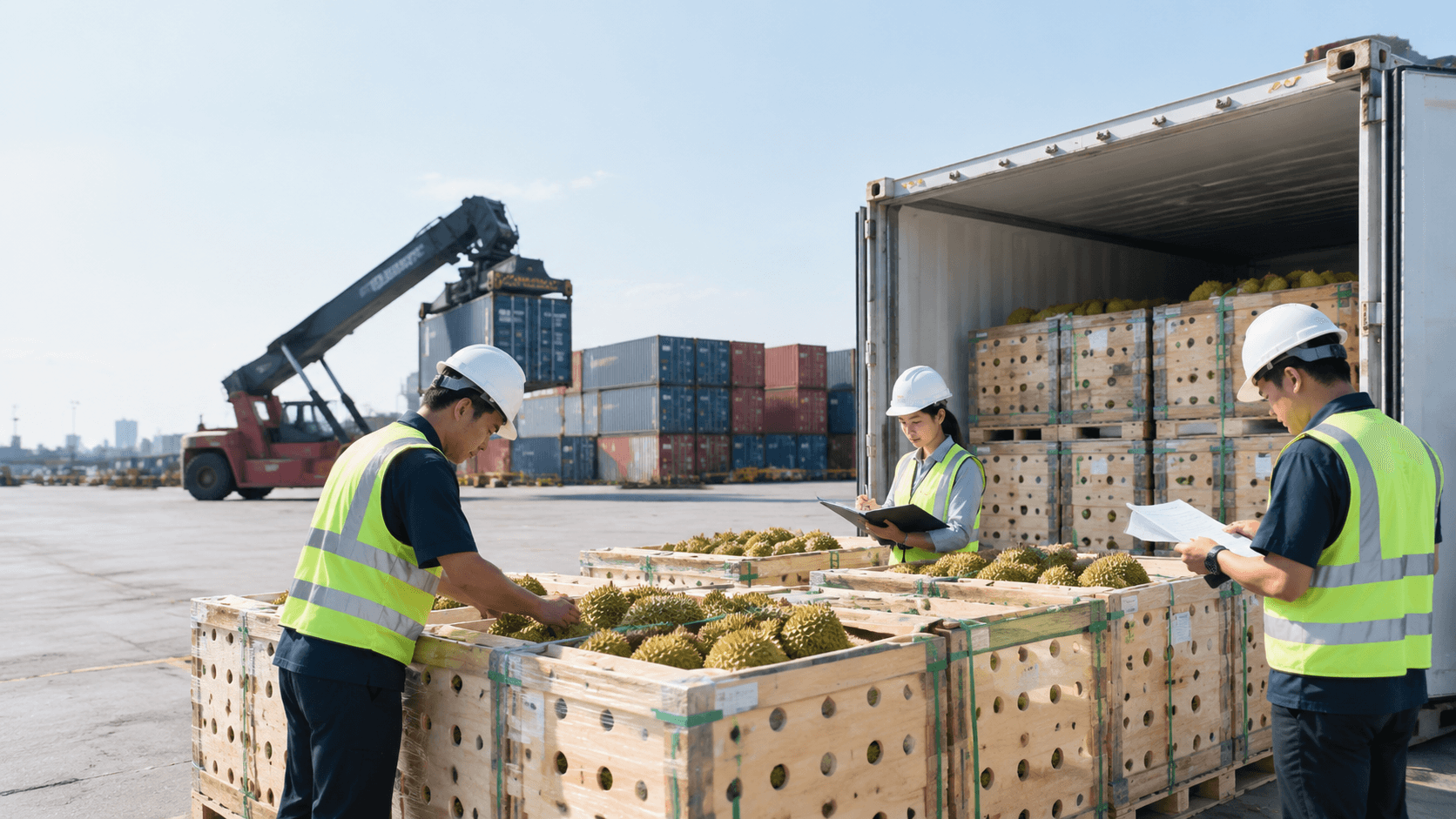
Identify the durian variety, whole-fruit specifications, commercial volume, and quality standards required by the Taiwanese importer
During transportation and customs clearance for shipping fresh durian to Taiwan, businesses should agree with the importer on the durian variety, average weight per fruit, acceptable size, defect rate, harvest maturity, and desired ripeness at the delivery point before booking transportation. Ri6, Monthong, and other commercial varieties differ in flesh, rind, stem characteristics, and ripening rates, so a single operating standard cannot be applied to every shipment.
To optimize the cost and schedule of shipping fresh durian to Taiwan, the assessment documents should specify the variety name, scientific name Durio zibethinus, production origin, total weight, estimated number of fruits, carton specifications, and grading proportions. For example, a 12,000 kg shipment with an average fruit weight of 3 kg corresponds to approximately 4,000 fruits, excluding cartons, pallets, and cushioning materials. Distinguishing net weight from gross weight is essential when calculating payload and freight charges.
Commercial standards must be specified in a contract appendix or confirmed in the buyer's technical requirements. If the Taiwanese buyer accepts only fruits with uncracked rinds, intact stems, and relatively uniform ripeness, the business must arrange grading at the packing facility rather than waiting until the export warehouse to remove defective goods. This approach reduces transportation costs for products that clearly fail to meet the required standards.
Analyze physiological maturity, respiration intensity, and quality changes to determine the viable transportation time limit for each shipment
Durian is a fruit that continues to ripen after harvest and may experience a significant increase in respiration activity and ethylene production during ripening. At high ambient temperatures, quality changes may accelerate, causing the fruit to soften quickly, develop a strong odor, crack, or have a shorter commercial shelf life. Therefore, the transportation schedule must be based on the fruit's actual condition rather than the harvest date alone.
Businesses should record the harvest time, fruit age based on cultivation records, physiological maturity, stem condition, signs of cracking, and flesh temperature or the measurement-zone temperature specified in the control procedures. Representative samples from each shipment can be monitored under the intended storage conditions to assess ripening progression. The number of days after fruit set must be adjusted according to variety, weather, and growing region; a single fixed figure should not be treated as a universal standard.
For sea freight, the actual transit timeline must include transportation from the warehouse to the port, waiting for container yard entry, time aboard the vessel, import customs clearance, and final delivery. A voyage with a short sailing time may still be unsuitable if the fruit is nearly ripe when the container is packed or must wait for specialized inspections at the destination port.
Compare Taiwan's fresh durian acceptance requirements with the supply source, packing facility capabilities, and exporter's ability to comply
Export feasibility depends on two distinct sets of conditions: the importing market's legal requirements and the customer's commercial requirements. A shipment that meets size, appearance, and sensory quality standards may still fail to clear customs if it violates phytosanitary requirements or pesticide residue limits.
Businesses must verify traceability capabilities, agricultural input usage records, pesticide application schedules, pre-harvest intervals, and the ability to provide laboratory samples. Packing facilities must have suitable areas for receiving, grading, sanitation, packing, storage, and pest control. Any requirements for growing area codes or packing facility codes must be determined according to the regulations actually applicable to the shipment; China's regulatory framework must not be automatically applied to other markets.
In particular, it is necessary to clarify which business will be named as the exporter, which party will be responsible for testing, and which importer will handle the receiving procedures in Taiwan. When these three parties do not use consistent shipment data, customs clearance delays often occur even when the transportation plan has been prepared relatively thoroughly.
Establish a backward schedule from the expected delivery date in Taiwan to determine the harvest date, preliminary processing, document completion, and transportation handover
The backward schedule starts from the time the importer needs to receive goods that meet the required standards, then subtracts the time required for domestic delivery in Taiwan, import inspections, port or airport handling, international transportation, and origin-side processing. This planning method helps businesses determine the latest feasible harvest date while allowing sufficient time for quarantine inspections and document processing.
For air freight, preliminary planning may allocate approximately 24–72 hours for the entire process after handover, provided flights, procedures, and customs clearance proceed smoothly. Sea freight requires a longer allowance, depending on the loading port, discharge port, shipping route, and transshipment arrangements. These are planning ranges only, not guarantees of transportation or customs clearance times.
Key control points include the cargo acceptance deadline at the warehouse, the documentation cut-off, the terminal cut-off, the deadline for completing quarantine inspections, the container delivery time, and the deadline for confirming the bill of lading. If the harvest schedule changes, the entire timeline must be updated accordingly to prevent fruit from being harvested before transportation or cargo space is ready.
Exporting Fresh Durian to Taiwan: Controlling Import Requirements and Risks During Shipment Approval
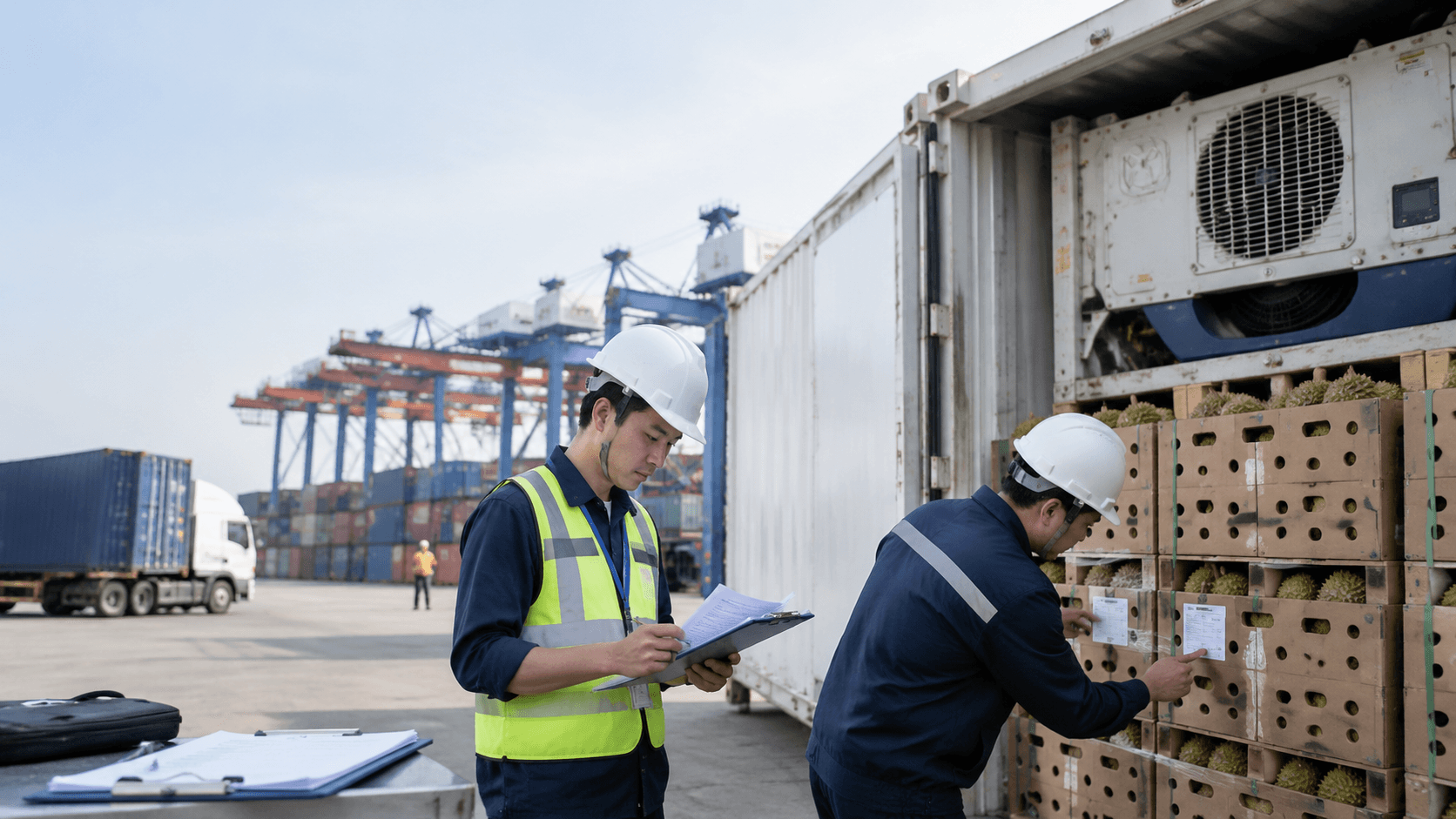
Verify whether fresh durian from Vietnam is permitted to enter Taiwan and confirm the phytosanitary requirements currently in force before purchasing the goods
Activities of exporting fresh durian to Taiwan must begin with checking the applicable import requirements for the specific country of origin, product type, and commercial import format. Taiwan's Animal and Plant Health Inspection Agency, abbreviated as APHIA, publishes a database for checking permitted plant imports and phytosanitary requirements at https://smartpq2.aphia.gov.tw/APP/APP01. Businesses should look up whole durian originating from Vietnam and confirm the conditions applicable to the intended import date.
Border inspection notices issued by Taiwan's Food and Drug Administration, or Taiwan FDA, in 2026 have recorded cases involving fresh durian shipments originating from Vietnam, including the Ri6 and Kanyao varieties, that were subject to enforcement due to non-compliant pesticide residues. This indicates that commercial imports have been recorded, but it does not mean that every shipment of Vietnamese durian automatically qualifies for import. Permitted import status, phytosanitary treatment requirements, and enhanced inspection measures must still be confirmed for the relevant period.
APHIA publishes lookup guidance and regulations at https://www.aphia.gov.tw/ws.php?id=14344. Businesses should also cross-check updated phytosanitary regulations effective April 1, 2026, and obtain written confirmation from the importer or agent in Taiwan. The prohibition on passengers carrying fresh fruit in their luggage must not be confused with the regulated commercial import process.
Approval principle: Do not purchase large quantities or make non-cancellable delivery commitments until the applicable import eligibility, phytosanitary, and food safety requirements have been verified for the specific shipment.
Verify requirements for growing areas, packing facilities, traceability, and pest control under the regulations applicable to the shipment
Traceability records must be connected from the harvesting orchard to the final shipment. Each lot should have an internal identification code, information about the farm or production area, harvest date, quantity received into storage, grading results, packing date, and carton code. When an issue is detected during inspection, this system makes it possible to isolate the affected portion of the shipment instead of impacting the company's entire output.
Regarding phytosanitary quarantine, pest control requirements must be based on the lists and measures prescribed by Taiwan for Vietnamese durians. Businesses should not independently determine quarantine treatment methods or treatment temperatures based on experience with other commodities. If mandatory treatment is required, the procedure must be confirmed in advance by the competent authority and the importer before implementation.
Alongside quarantine, pesticide residues are an independent risk that must be controlled. For example, on July 14, 2026, the Taiwan FDA announced that a shipment of Ri6 durians from Vietnam was non-compliant because acetamiprid was detected at 0.02 ppm, while the limit cited by the agency for that case was 0.01 ppm. Businesses must check the current limits for each active ingredient and product and must not use this example alone as a general limits table. Reference source: https://www.fda.gov.tw/UnsafeFood/UnsafeFoodContent.aspx?id=6071.
Prepare an export documentation package including the contract, commercial invoice, packing list, customs declaration, and specialized certificates as actually required
The documentation package must be checked for consistency in the seller's name, buyer's name, product variety, quantity, net weight, gross weight, place of origin, and delivery terms. The data on the phytosanitary certificate must match the actual goods and the commercial documents. Discrepancies in the scientific name, number of packages, container number, or consignee information may require the shipment to be explained or the documents to be amended.
- A confirmed foreign trade contract or purchase order specifying the Incoterms and the responsibilities of each party.
- A Commercial Invoice containing the full product name, unit price, total value, payment currency, and transaction information.
- A Packing List describing the number of cartons, number of pallets, net weight, gross weight, and packing specifications.
- An export customs declaration and data used for goods classification; HS code 0810.60 is a reference basis for fresh durians, but the detailed code must be verified in each country.
- A Phytosanitary Certificate issued by the competent phytosanitary authority of Vietnam in accordance with applicable regulations.
- A bill of lading or air waybill, together with booking confirmation and relevant transportation data.
- A certificate of origin if required to obtain preferential treatment or fulfill the contract; issuance and use depend on the rules of origin, agreements, and actual conditions.
- Pesticide residue test results, traceability records, specialized treatment documents, or supplementary import documents if required by the Taiwanese side.
For customs declaration, the correct HS code, customs value, export procedure type, and customs clearance location must be determined before the goods arrive at the port. If the business chooses refrigerated container transportation, the documentation must also accurately state the container number, seal number, and any changes made after loading. Old shipping documents should not be reused to declare a new shipment when the quantity or export facility has changed.
Establish a prior confirmation mechanism with the importer and the customs clearance contact in Taiwan to reduce the risk of import refusal, re-export, or destruction of goods
Before the harvest date, the importer must confirm the import commodity code, quarantine conditions, certificate requirements, food inspection procedures, and receiving capacity at the destination port or airport. Confirmation should be retained as a traceable email or written document, together with the verified version of the documentation. This provides a basis for handling regulatory changes or disputes over responsibilities.
Taiwan conducts phytosanitary inspections and food safety inspections through the relevant authorities. Non-compliant shipments may be subject to treatment, import refusal, re-export, or destruction, depending on the findings and applicable regulations. For fresh durians, waiting for corrective measures may also allow the fruit to continue ripening, significantly reducing the recoverable value after an incident.
HNT Logistics recommends that businesses establish a pre-shipment approval mechanism requiring three separate confirmations: commercial approval from the buyer, confirmation of import legality from the Taiwanese contact, and confirmation of operational feasibility from the transportation provider. If any of these three conditions is not met, shipment handover to the carrier should be suspended to avoid turning risks into actual costs.
Shipping Fresh Durian to Taiwan: Designing a Preservation Chain Based on the Fruit's Physiological Characteristics
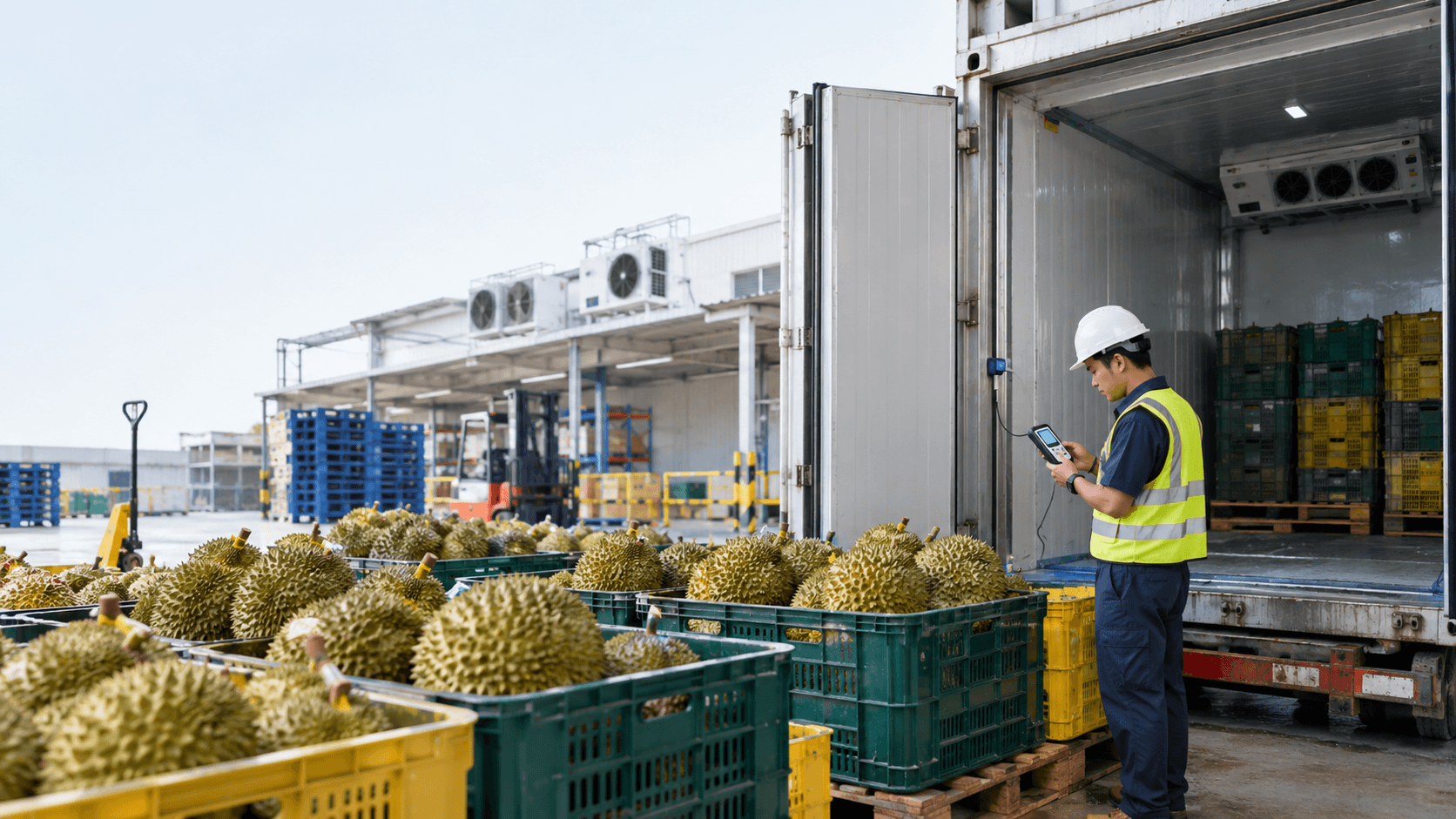
Classify durians by harvest maturity, stem condition, thorn integrity, and degree of uniformity to determine shipment packing standards
Whole durians have a hard, thorny rind, but this does not mean they can withstand strong impacts. Broken thorns, bruised stems, natural cracks, or damage to the rind can increase contamination risks and reduce quality. Businesses should grade the fruit upon receipt, separating fruit that shows signs of rapid ripening, fruit that is overripe, or fruit that does not meet export requirements.
Each packing group should be relatively uniform in variety, size, and maturity. If fruit at different stages of ripeness is mixed in the same carton or pallet, the heat generated during respiration and the required time to consumption will be difficult to control. For contracts requiring a high degree of uniformity, businesses should conduct sampling, record photographs, and prepare an acceptance inspection report before packing.
Develop a preliminary processing, cleaning, grading, and carton-packing procedure to minimize rind cracking, impact damage, contamination, and quality deterioration
The preliminary processing procedure should begin in a clean receiving area with a roof and separation from potential sources of contamination. The fruit should be inspected, foreign matter removed, graded, and cleaned according to an approved procedure. Do not arbitrarily soak the fruit in chemicals, spray preservatives, or apply post-harvest treatments without first verifying the legality of the substances used and their ability to meet Taiwan's residue standards.
Moisture-resistant cartons, specialized plastic crates, or packaging approved by the importer must have a load-bearing structure suitable for the fruit's thorny shape. Cushioning materials should minimize direct contact between individual fruits while ensuring adequate ventilation. For lots using cartons, stacking load tests should be conducted under the expected operating humidity conditions to minimize bottom-carton deformation during cold storage or long-distance transportation.
A packing specification of 10–20 kg net weight per carton can be used to simulate a commercial arrangement, but it is not a mandatory standard. The final weight depends on fruit size, packaging load capacity, and buyer requirements. Ventilation holes must be positioned so that they are not completely blocked when pallets are stacked, especially for refrigerated container shipments.
Determine suitable temperature, ventilation, and humidity settings based on the durian variety, cargo condition, and storage guidelines confirmed for the shipment
Temperature control is a decisive factor in determining the commercial shelf life of fresh durians, but the lowest possible temperature should not automatically be selected. Fruit may suffer chilling injury if stored below the chilling tolerance threshold for its variety and harvest maturity. Conversely, excessively high temperatures accelerate ripening, increase the risk of rind cracking, and reduce quality before delivery to the buyer.
A range of 12–15°C can be used as an initial assumption for evaluating a storage plan for certain shipments of whole durians, but it is not a standard temperature applicable to every variety. The setpoint should only be confirmed after reviewing post-harvest guidelines, storage trial results, maturity, transportation time, and customer requirements. Relative humidity of approximately 85–90% may serve as a starting point for technical evaluation, but water condensation, mold, and packaging moisture resistance must be controlled.
Refrigerated containers must be checked for machine condition, cleanliness, sensors, doors, and air circulation systems. The goods should be loaded into the container only after reaching an appropriate receiving temperature; a refrigerated transport container should not be used as a rapid-cooling device to replace a pre-cooling facility. If fresh-air ventilation is required, the airflow rate must be configured according to the cargo's physiological requirements and the equipment supplier's guidelines. A fixed ventilation opening should not be applied arbitrarily to every shipment.
Throughout the transportation process, temperature and sensor location data logs help distinguish between supply air temperature, return air temperature, and the actual temperature of the goods. When a claim arises, these logs are more valuable than simply presenting the set temperature on the control panel. For high-value cargo, independent data loggers can be placed at representative locations after agreement with the relevant parties.
Establish odor control, vehicle sanitation, and loading and unloading procedures to minimize the impact on other goods during transportation operations
The characteristic odor of durian may affect acceptance by airlines, cargo handling warehouses, and freight consolidation providers. Not all carriers accept fresh durian under the same packaging conditions. Businesses must accurately declare the commodity name, ripeness status, and odor control methods so that the carrier can confirm acceptance before the booking is issued.
Cargo vehicles must be clean, free of chemical residues and unusual odors, and must not carry mixed loads with products that could pose a food safety risk. During loading and unloading, pallets should be kept out of direct sunlight, cartons should not be dragged, and the time cold storage doors remain open should be controlled. For refrigerated containers, cargo must not obstruct the supply or return airflow and must not exceed the equipment's load line or cargo stacking height limit.
Before sealing, the person in charge must record the seal number, door condition, refrigeration unit status, cargo temperature, and the time container loading is completed. This is an important set of data for determining responsibility at each handover point during international transportation.
Comparison Table of Fresh Durian Shipping Options to Taiwan and Logistics Freight Cost Structure

Comparison of air and sea freight in terms of total transit time, suitable shipment volumes, storage requirements, and ability to meet delivery deadlines
The two transportation methods have different timeframes and risk profiles. Air freight reduces international transit time but is subject to capacity constraints, acceptance conditions for odorous cargo, and charges based on chargeable weight. Sea freight is more suitable for large commercial volumes, especially when using a full refrigerated container, but port waiting times, transshipment, and the fruit's remaining commercial shelf life must be carefully considered.
| Criteria | Air | Sea |
|---|---|---|
| Expected origin | Tan Son Nhat International Airport | Suitable ports in the Ho Chi Minh City and Cai Mep areas, depending on the route |
| Expected destination | An airport in Taiwan capable of accepting the cargo | Taiwanese port as confirmed in the booking |
| International transit time | Flight time measured in hours; excludes waiting for flights and cargo handling | Depends on direct shipping routes, transshipment, and carrier schedules |
| Estimated total transit time for preliminary planning | Approximately 1–3 days under favorable conditions | Approximately 5–12 days or longer, depending on the route and customs clearance |
| Suitable shipment size | Small shipments, high-value goods, and orders requiring fast delivery | Large shipments, full-container loads, or accepted refrigerated consolidation options |
| Consolidated (LTL) | Cool storage, suitable insulated packaging, and control of time spent outside storage | Refrigerated containers, pre-cooling, ventilation, and data monitoring |
| Main risks | Flight delays, rejection of strong-smelling cargo, and capacity limitations | Schedule changes, transshipment, port storage, power outages, or temperature deviations |
| Selection criteria | Carrier confirmation of cargo acceptance and a suitable delivery timeframe | The shipment's remaining commercial shelf life must be sufficient for the entire transit and contingency period |
The time ranges in the table are assumptions for comparison purposes and are not confirmed operating schedules for any specific carrier. Before booking, businesses must obtain the transportation schedule, port of departure, port of arrival, transshipment time, and delivery deadline from the transport provider. For durian that already shows signs of ripening quickly, prioritizing a safe total transit time may be more important than the difference in freight costs.
Fresh durian shipping cost calculation table for Taiwan, itemized by component, including pickup in Ho Chi Minh City, packaging, domestic transportation, port or airport handling, international freight, and documentation
Để đánh giá cước vận chuyển sầu riêng tươi đi đài loan, chủ hàng cần yêu cầu bảng giá theo từng công đoạn và điều kiện thanh toán. Báo giá chỉ thể hiện ocean freight hoặc air freight chưa phản ánh đầy đủ chi phí thực tế nếu thiếu phí lấy hàng, nâng hạ, điện lạnh, kiểm dịch, khai báo, kho lạnh và giao hàng tại Đài Loan.
Bảng dưới đây là ví dụ tính ngân sách giả định cho một container lạnh với 12.000 kg hàng tịnh, không phải bảng giá HNT Logistics, không phản ánh giá thị trường tại ngày xuất bản và không được sử dụng để chốt giao dịch.
| Category | Chi phí giả định (VNĐ) | Notes |
|---|---|---|
| Lấy hàng và vận chuyển từ điểm tập kết đến cơ sở đóng gói tại HCM | 6.000.000 | Phụ thuộc cự ly, số chuyến và yêu cầu bảo quản |
| Phân loại, vật tư và đóng gói | 18.000.000 | Giả định 1.500 VNĐ/kg |
| Vận tải nội địa đến cảng và điều phối container | 8.000.000 | Phụ thuộc loại xe, tuyến đường và thời gian chờ |
| Nâng hạ, xử lý cảng và điện lạnh đầu xuất | 7.000.000 | Phải xác nhận theo biểu phí thực tế |
| Cước vận tải biển quốc tế | 25.000.000 | Giả định để mô phỏng, không phải báo giá tuyến |
| Chứng từ, khai báo và phối hợp kiểm dịch | 5.000.000 | Chưa bao gồm mọi xét nghiệm phát sinh |
| Dự phòng thay đổi lịch và xử lý phát sinh | 6.000.000 | Ngân sách quản trị nội bộ |
| Tổng ngân sách mô phỏng | 75.000.000 | Tương đương 6.250 VNĐ/kg hàng xuất |
Để so sánh chính xác, doanh nghiệp cần quy đổi ngoại tệ theo tỷ giá thống nhất, xác định thuế và phụ phí được báo giá đã bao gồm hay chưa, đồng thời chỉ rõ bên chịu chi phí tại Đài Loan. Nếu điều kiện giao hàng là FOB, phạm vi chi phí người bán khác đáng kể so với CPT, CIP, CFR, CIF hoặc DAP. Việc sử dụng Incoterms 2026 phải phù hợp phương thức vận tải và địa điểm giao hàng được ghi cụ thể trong hợp đồng.
Bảng đối chiếu phương án đóng kiện, pallet và container lạnh theo thể tích hữu dụng, giới hạn tải trọng, khả năng thông khí và hiệu suất sử dụng không gian
Tối ưu không gian không có nghĩa là xếp hàng đến giới hạn thể tích danh nghĩa. Sầu riêng có hình dạng không đều, lớp gai nhô ra và yêu cầu lưu thông không khí nên tỷ lệ sử dụng không gian thực tế phụ thuộc cấu trúc thùng và sơ đồ xếp. Đặc biệt, việc chặn đường hồi khí có thể làm nhiệt độ phân bố không đồng đều dù công suất máy lạnh vẫn hoạt động.
| Method | Reference specifications | Khả năng thông khí | Lưu ý tải trọng |
|---|---|---|---|
| Thùng carton hoặc thùng nhựa | Ví dụ 10–20 kg tịnh/thùng | Phụ thuộc vị trí và diện tích lỗ thông khí | Thử tải chịu nén và khả năng chống ẩm |
| Pallet tiêu chuẩn | Có thể sử dụng kích thước 1.000 x 1.200 mm hoặc loại được người mua chấp thuận | Cần giữ đường lưu thông khí giữa các khối hàng | Không vượt tải pallet và giới hạn chiều cao khai thác |
| 20-foot refrigerated container | Thể tích hình học bên trong thường khoảng 28 m³, tùy model | Hệ thống gió tuần hoàn và thông gió theo cấu hình | Payload phải kiểm tra trên CSC plate và thông số thiết bị |
| Container lạnh 40 feet High Cube | Thể tích hình học bên trong thường khoảng 67 m³, tùy model | Yêu cầu bố trí khoảng trống cấp và hồi khí đúng kỹ thuật | Giới hạn bởi tải trọng container, phương tiện và quy định đường bộ |
Thể tích hình học trong bảng không phải thể tích hữu dụng được phép chất hàng. Để lập phương án, doanh nghiệp phải trừ phần không gian dành cho luồng khí, giới hạn vạch xếp hàng, hệ thống lạnh, pallet và khoảng hở vận hành. Nếu dùng pallet gỗ, phải đối chiếu yêu cầu vật liệu bao bì gỗ nhập khẩu, bao gồm việc tuân thủ ISPM 15 khi áp dụng.
Bảng phân tích chi phí rủi ro gồm hao hụt chất lượng, lưu kho, lưu bãi, kiểm tra chuyên ngành, thay đổi lịch vận chuyển và xử lý hàng không đạt yêu cầu
Chi phí lớn nhất của vận tải sầu riêng chưa chắc nằm ở cước vận chuyển. Một ngày lưu cảng có thể kéo theo phí điện lạnh, lưu container, điều chỉnh kế hoạch giao hàng và suy giảm tỷ lệ hàng đạt chuẩn. Khi kiểm tra dư lượng hoặc kiểm dịch không đạt, doanh nghiệp còn đối mặt với chi phí xử lý, tái xuất, tiêu hủy và tranh chấp hợp đồng.
| Nhóm rủi ro | Ảnh hưởng tài chính | Control measure |
|---|---|---|
| Hao hụt chất lượng | Giảm khối lượng bán được, giảm giá thương mại | Phân loại đúng độ già, giám sát nhiệt độ và thời gian |
| Lưu kho và lưu bãi | Phí kho lạnh, điện lạnh, lưu container | Đồng bộ lịch kiểm dịch, hạ bãi và ngày tàu chạy |
| Specialized inspection | Phí lấy mẫu, xét nghiệm, lưu giữ hàng | Kiểm nghiệm trước xuất và đối chiếu yêu cầu nhập khẩu |
| Thay đổi lịch vận chuyển | Phí đổi booking, kéo dài bảo quản, thay đổi xe | Chọn lịch có phương án dự phòng |
| Hàng không đạt yêu cầu | Tái xuất, tiêu hủy, lưu giữ và tổn thất giá trị hàng | Phê duyệt pháp lý trước thu mua và bảo hiểm phù hợp |
Để lượng hóa rủi ro, doanh nghiệp có thể lập ngân sách theo xác suất xảy ra và mức tổn thất dự kiến. Tuy nhiên, các khoản như từ chối nhập khẩu không thể chỉ đánh giá bằng chi phí trung bình vì hậu quả có thể ảnh hưởng đến toàn bộ lô hàng. Những rủi ro có tác động nghiêm trọng cần có phương án phòng ngừa độc lập, kể cả khi xác suất xảy ra được đánh giá là thấp.
Tối Ưu Cước Vận Chuyển Sầu Riêng Tươi Đi Đài Loan Theo Chi Phí Thực Tế Trên Mỗi Kilogram Hàng Đạt Chuẩn
Xây dựng mô hình tổng chi phí logistics theo sản lượng, mùa vụ, phương thức vận tải, điều kiện giao hàng và phạm vi dịch vụ được lựa chọn
Mô hình chi phí cần bắt đầu từ khối lượng hàng thương mại dự kiến và cách vận tải được tính cước. Đường hàng không thường tính theo trọng lượng tính cước dựa trên trọng lượng thực tế hoặc trọng lượng thể tích theo quy tắc của hãng. Với container nguyên chuyến, doanh nghiệp phải phân bổ tổng chi phí container trên lượng hàng phù hợp tải trọng và điều kiện bảo quản, không cố chất đầy để giảm đơn giá.
Tổng chi phí logistics có thể được mô hình hóa bằng công thức: C = C_lấy_hàng + C_đóng_gói + C_nội_địa + C_đầu_xuất + C_quốc_tế + C_chứng_từ + C_đầu_nhập + C_dự_phòng. Trong đó, chi phí đầu nhập chỉ được cộng vào trách nhiệm của người bán nếu phù hợp điều kiện giao hàng. Doanh nghiệp cần tránh tính trùng phụ phí được hãng vận tải hoặc đại lý đã gộp trong báo giá trọn gói.
Mùa vụ có thể tác động đồng thời đến giá mua, năng lực kho đóng gói, khả năng bố trí xe lạnh, lịch tàu và nhu cầu đặt chỗ. Do đó, việc so sánh giữa các nhà cung cấp cần dựa trên cùng ngày vận chuyển, cùng loại container, cùng điểm giao nhận và cùng điều kiện phát sinh. Một đơn giá thấp hơn nhưng thiếu phí điện lạnh hoặc chưa bao gồm vận chuyển đầu cuối không phản ánh phương án tiết kiệm hơn.
Tính chi phí hàng đạt chuẩn tại điểm nhận bằng cách kết hợp cước vận tải, chi phí đóng gói, tỷ lệ hao hụt và ngân sách dự phòng cho phát sinh
Chỉ tiêu đáng theo dõi nhất không phải cước vận tải trên một kilogram xuất đi mà là chi phí logistics phân bổ cho một kilogram được nhà nhập khẩu chấp nhận. Chỉ tiêu này giúp nhận diện lợi ích thực tế của việc đầu tư đóng gói tốt hơn, rút ngắn thời gian giao nhận hoặc lựa chọn phương án vận chuyển có rủi ro thấp hơn.
Công thức: Chi phí logistics/kg đạt chuẩn = Tổng chi phí logistics thực tế / Khối lượng hàng được chấp nhận tại điểm nhận. Nếu xuất 12.000 kg và tỷ lệ đạt chuẩn là 96%, khối lượng được chấp nhận tương đương 11.520 kg. Với tổng ngân sách mô phỏng 75.000.000 VNĐ, chi phí logistics phân bổ đạt khoảng 6.510 VNĐ/kg đạt chuẩn, thay vì 6.250 VNĐ/kg khi chỉ chia cho khối lượng ban đầu.
Nếu tỷ lệ đạt chuẩn giảm xuống 90%, khối lượng được chấp nhận còn 10.800 kg và chi phí logistics phân bổ tăng lên khoảng 6.944 VNĐ/kg. Chênh lệch này chưa bao gồm giá trị hàng bị loại, chi phí thu hồi hoặc khoản giảm giá do người mua yêu cầu. Vì vậy, tiết kiệm vài triệu đồng tiền vận chuyển có thể không hiệu quả nếu làm tăng đáng kể tỷ lệ hàng mất giá trị.
Khi lập dự toán, nên tách hao hụt vật lý, hàng bị hạ cấp thương mại và hàng không đủ điều kiện nhập khẩu. Ba nhóm này có mức độ thu hồi giá trị khác nhau. Đối với lô hàng bị từ chối nhập khẩu, doanh nghiệp còn phải xem xét quyền sở hữu, trách nhiệm theo hợp đồng, khả năng tái xuất và giới hạn bảo hiểm trước khi quyết định phương án xử lý.
Tối ưu lịch thu hoạch, thời gian tập kết, quy cách đóng kiện và kế hoạch đặt chỗ để giảm thời gian chờ mà không đánh đổi chất lượng trái
Tối ưu vận chuyển bắt đầu tại vườn thu hoạch chứ không phải khi container đến kho. Nếu tổ chức thu hoạch trước khi có xác nhận booking, hàng có thể phải lưu kho kéo dài và giảm thời gian thương mại. Ngược lại, chờ đến sát giờ cắt máng mới đưa hàng đi kiểm dịch có thể khiến doanh nghiệp không đủ thời gian xử lý khi phát hiện sai lệch hồ sơ hoặc cần kiểm tra bổ sung.
Phương án hiệu quả là khóa lịch vận chuyển theo các mốc có trách nhiệm rõ ràng: hoàn tất kiểm nghiệm, phê duyệt lô, xác nhận phương tiện, thu hoạch, sơ chế, đóng hàng, phát hành chứng thư và bàn giao. Mỗi mốc cần có thời gian dự phòng hợp lý. Dự phòng không nhất thiết phải kéo dài lưu kho; ưu tiên tạo khoảng linh hoạt trước khi thu hoạch và chuẩn bị sẵn phương án vận chuyển thay thế.
Quy cách bao bì cũng ảnh hưởng đến hiệu suất. Nếu thùng quá lớn, hàng có thể bị chèn ép hoặc khó phân phối tại điểm đến. Nếu thùng quá nhỏ, chi phí vật tư, thao tác và thể tích bao bì có thể tăng. Doanh nghiệp nên thử sơ đồ xếp thực tế, tính số kiện trên pallet và kiểm tra khả năng lưu thông khí trước khi quyết định sản lượng đặt chỗ.
Thiết lập ma trận rủi ro theo mức độ ảnh hưởng tài chính, khả năng xảy ra và phương án ứng phó khi chậm chuyến, sai lệch hồ sơ hoặc gián đoạn bảo quản
Ma trận rủi ro nên được đánh giá theo hai yếu tố: khả năng xảy ra và mức độ ảnh hưởng đến giá trị thương mại của lô hàng. Có thể sử dụng thang nội bộ từ 1 đến 5 cho từng yếu tố, sau đó nhân hai điểm số để xác định mức độ ưu tiên quản trị. Đây là công cụ ra quyết định nội bộ, không phải thang điểm kiểm dịch hay tiêu chuẩn đánh giá của cơ quan quản lý.
Đối với chậm chuyến, phương án ứng phó gồm kiểm tra lịch thay thế, đánh giá lại thời gian bảo quản còn lại và xin xác nhận tiếp nhận mới của khách hàng. Nếu sai lệch hồ sơ, cần xác định khả năng chỉnh sửa trước khi hàng rời cảng, tránh tự ý sửa dữ liệu chứng thư đã phát hành. Khi container gặp sự cố lạnh, phải ưu tiên duy trì nguồn điện, ghi nhận nhiệt độ thực tế và phối hợp hãng vận tải kiểm tra kỹ thuật.
Riêng rủi ro vi phạm dư lượng hoặc không đáp ứng điều kiện kiểm dịch phải được kiểm soát từ trước thu hoạch. Việc thay đổi phương thức vận chuyển không thể khắc phục một lô hàng không đủ điều kiện pháp lý. Doanh nghiệp nên giữ quyền tạm dừng xuất hàng cho đến khi hồ sơ kiểm nghiệm và xác nhận nhập khẩu được hoàn tất.
Dịch Vụ Vận Chuyển Sầu Riêng Tươi Đi Đài Loan Trọn Gói Của HNT Logistics: Đồng Bộ Vận Tải, Chứng Từ Và Kiểm Soát Chi Phí
Xây dựng phương án dịch vụ theo điểm lấy hàng tại HCM, sản lượng, thời hạn giao nhận và yêu cầu bảo quản của đối tác Đài Loan
Đối với doanh nghiệp cần dịch vụ vận chuyển sầu riêng tươi đi đài loan, HNT Logistics có thể tư vấn cấu trúc logistics dựa trên bốn nhóm thông tin: điểm lấy hàng, sản lượng, thời hạn giao và điều kiện bảo quản. Từ dữ liệu này, đơn vị logistics xây dựng phương án vận tải nội địa, loại phương tiện, cảng hoặc sân bay đầu xuất và phạm vi chứng từ cần phối hợp.
Chủ hàng nên cung cấp địa chỉ lấy hàng cụ thể tại TP.HCM hoặc khu vực lân cận, khối lượng từng đợt, giống sầu riêng, quy cách thùng, nhiệt độ dự kiến, cảng đích và Incoterms. Nếu lô hàng đang ở giai đoạn lập kế hoạch, HNT Logistics có thể cùng doanh nghiệp đối chiếu các yêu cầu kỹ thuật trước khi chốt lựa chọn phương thức. Việc bố trí dịch vụ quốc tế phụ thuộc lịch khai thác, khả năng tiếp nhận hàng và xác nhận của các đối tác vận tải.
Phối hợp vận tải đường bộ, bố trí phương tiện hoặc container phù hợp, kết nối vận tải quốc tế và điều phối các mốc bàn giao theo kế hoạch
HNT Logistics có kinh nghiệm trong hoạt động vận tải container, vận tải lạnh và giao nhận tại các cụm cảng lớn. Khi xử lý sầu riêng xuất khẩu từ HCM, khâu vận tải đường bộ cần được kết nối với lịch kho đóng gói, thời gian kiểm dịch và kế hoạch giao container. Xe hoặc container phải được kiểm tra trước khi tiếp nhận hàng, đặc biệt là vệ sinh thùng, khả năng duy trì nhiệt độ và điều kiện bốc xếp.
Nếu sử dụng multimodal transportation, kế hoạch phải xác định rõ điểm chuyển giao trách nhiệm giữa vận tải đường bộ, kho, cảng và hãng vận tải quốc tế. Việc kết hợp nhiều chặng chỉ có ý nghĩa khi thời gian chờ, nhiệt độ và chứng từ được kiểm soát xuyên suốt. Mỗi điểm bàn giao nên ghi nhận tình trạng hàng, số kiện, niêm phong và các thông số bảo quản liên quan.
Trong trường hợp sử dụng container lạnh đường biển, HNT Logistics có thể hỗ trợ điều phối những công đoạn thuộc phạm vi dịch vụ đã thỏa thuận. Nếu chuyển sang hàng không, cần xác minh trước năng lực tiếp nhận sầu riêng nguyên trái và yêu cầu kiểm soát mùi của hãng. Doanh nghiệp không nên mặc nhiên coi hai phương án có thể thay thế ngay lập tức khi xảy ra sự cố lịch vận chuyển.
Hỗ trợ khai báo hải quan xuất khẩu, rà soát chứng từ và phối hợp thủ tục kiểm dịch thực vật theo điều kiện thực tế của lô hàng
Customs customs declaration cần được chuẩn bị đồng bộ với hồ sơ thương mại và yêu cầu kiểm dịch của nước nhập khẩu. HNT Logistics có thể hỗ trợ rà soát thông tin trên Invoice, Packing List, hợp đồng, chứng từ vận tải và các dữ liệu phục vụ khai báo xuất khẩu theo phạm vi nghiệp vụ. Các chứng thư chuyên ngành phải được cấp bởi cơ quan có thẩm quyền, không phải bởi doanh nghiệp logistics.
Đối với kiểm dịch thực vật, doanh nghiệp xuất khẩu cần phối hợp với cơ quan kiểm dịch tại Việt Nam để thực hiện đăng ký, kiểm tra và nhận chứng thư theo quy trình áp dụng. HNT Logistics có thể hỗ trợ điều phối vận tải và cung cấp dữ liệu phục vụ thủ tục, đồng thời trao đổi với nhà nhập khẩu về yêu cầu chứng từ. Việc có chứng thư kiểm dịch xuất khẩu không thay thế nghĩa vụ đáp ứng quy định kiểm dịch và an toàn thực phẩm khi hàng đến Đài Loan.
Khi cần kiểm nghiệm dư lượng, doanh nghiệp phải lựa chọn phòng thử nghiệm có năng lực phù hợp, xác định danh mục hoạt chất cần phân tích theo tiêu chuẩn hiện hành của thị trường đích và thống nhất cách lấy mẫu đại diện. Không nên chỉ kiểm tra những hoạt chất từng bị cảnh báo trong quá khứ, bởi giới hạn và danh mục rủi ro có thể thay đổi theo thời gian.
HNT Logistics đồng hành cùng doanh nghiệp xuất khẩu sầu riêng với phương án logistics minh bạch, kiểm soát rủi ro hàng tươi và tối ưu chi phí từ HCM đến Đài Loan theo phạm vi dịch vụ thống nhất
Giá trị của một phương án vận chuyển sầu riêng tươi đi đài loan trọn gói nằm ở khả năng kết nối nhiều công đoạn thành một kế hoạch có thể kiểm soát. Doanh nghiệp cần biết hàng được tiếp nhận khi nào, ai chịu trách nhiệm ở từng chặng, thời điểm chuyển giao rủi ro và chi phí nào chưa nằm trong báo giá. Những nội dung này cần được thể hiện rõ trong hợp đồng dịch vụ hoặc xác nhận vận chuyển.
HNT Logistics định hướng phối hợp vận tải nội địa, kết nối vận chuyển quốc tế, rà soát chứng từ và hỗ trợ điều phối thủ tục xuất khẩu theo từng trường hợp. Phương án dịch vụ phải dựa trên điều kiện nhập khẩu đã được xác nhận, năng lực vận tải thực tế và yêu cầu bảo quản của lô hàng. Không một giải pháp logistics nào có thể thay thế kiểm soát chất lượng nông sản từ vùng trồng hoặc bảo đảm thông quan khi hàng hóa vi phạm quy định.
Để chủ động ngân sách, doanh nghiệp nên yêu cầu báo giá phân tách cước vận tải, phí cảng, chi phí đóng gói, điện lạnh, chứng từ, kiểm tra chuyên ngành và những khoản phát sinh có điều kiện. Khi hai nhà cung cấp có cùng phạm vi dịch vụ, việc so sánh chi phí trên mỗi kilogram hàng đạt chuẩn sẽ phản ánh hiệu quả thực tế tốt hơn so với chỉ nhìn vào giá cước quốc tế.
Vận chuyển sầu riêng tươi đi đài loan từ HCM chỉ thực sự hiệu quả khi ba điều kiện được đáp ứng đồng thời: lô hàng đủ điều kiện nhập khẩu, chuỗi bảo quản phù hợp với đặc tính sinh lý của trái và tổng chi phí được kiểm soát từ điểm lấy hàng đến điểm giao nhận. Chuẩn bị đúng ngay từ thời điểm phê duyệt nguồn hàng giúp doanh nghiệp hạn chế rủi ro chậm thông quan, hao hụt chất lượng và tranh chấp thương mại.
Doanh nghiệp đang lên kế hoạch xuất khẩu sầu riêng tươi sang Đài Loan có thể liên hệ HNT Logistics qua website https://hntshipping.com.vn hoặc hotline 0911.446.060 và 0949.393.300 để trao đổi phương án giao nhận, kiểm soát chuỗi lạnh và dự toán logistics theo sản lượng thực tế. Cung cấp sớm thông tin nguồn hàng, thời hạn giao, điều kiện nhập khẩu đã xác nhận và yêu cầu của đối tác sẽ giúp quá trình xây dựng phương án minh bạch, khả thi và phù hợp hơn với mục tiêu kinh doanh.