


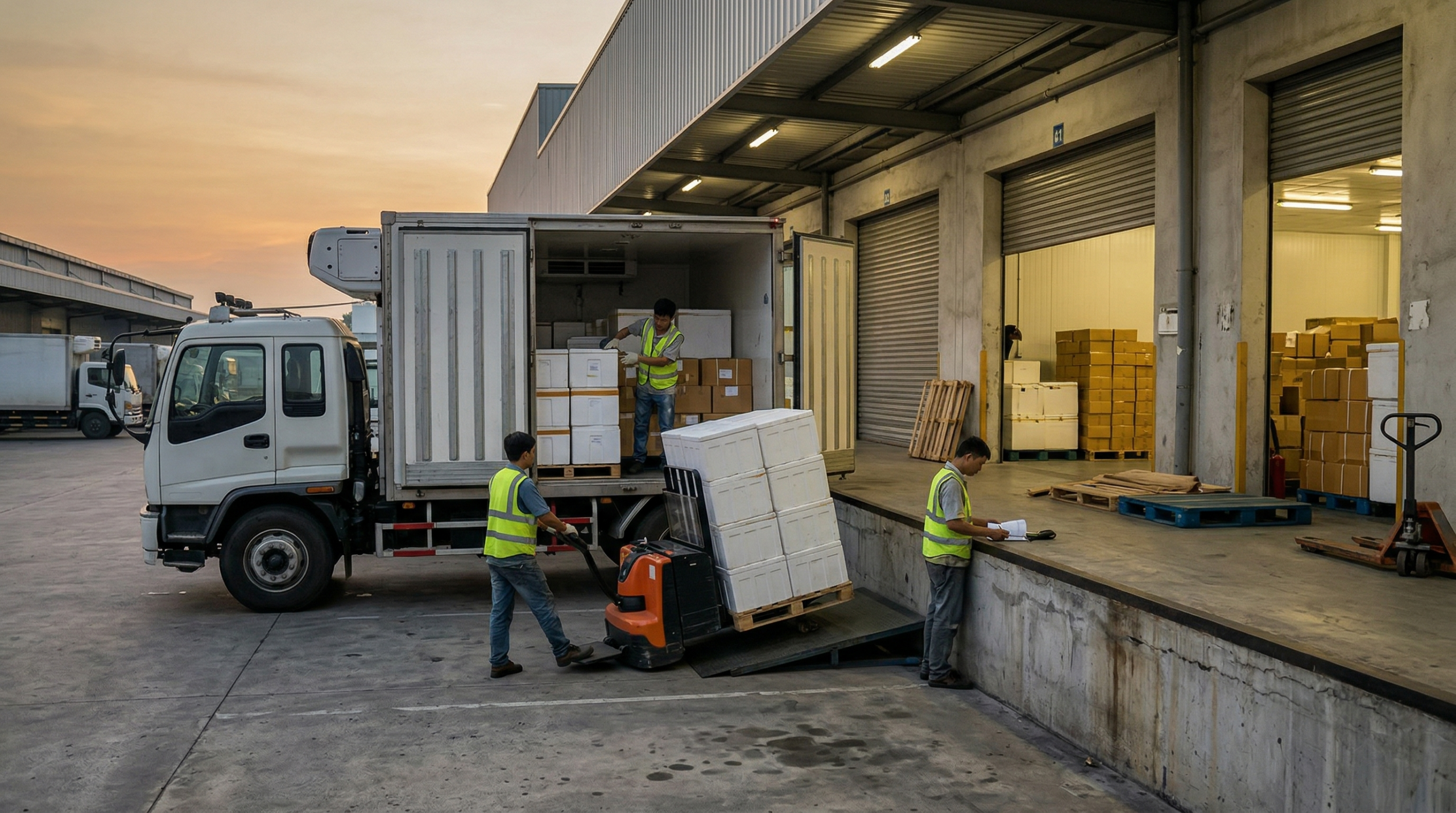
Damaged goods during North-South cold chain shipping is a major concern for businesses. According to the 2026 Vietnam Logistics Report, the cold chain loss rate remains at 20%. This article will help you optimize processes and cut costs effectively.
1. Temperature Standards for North-South Frozen Goods Shipping
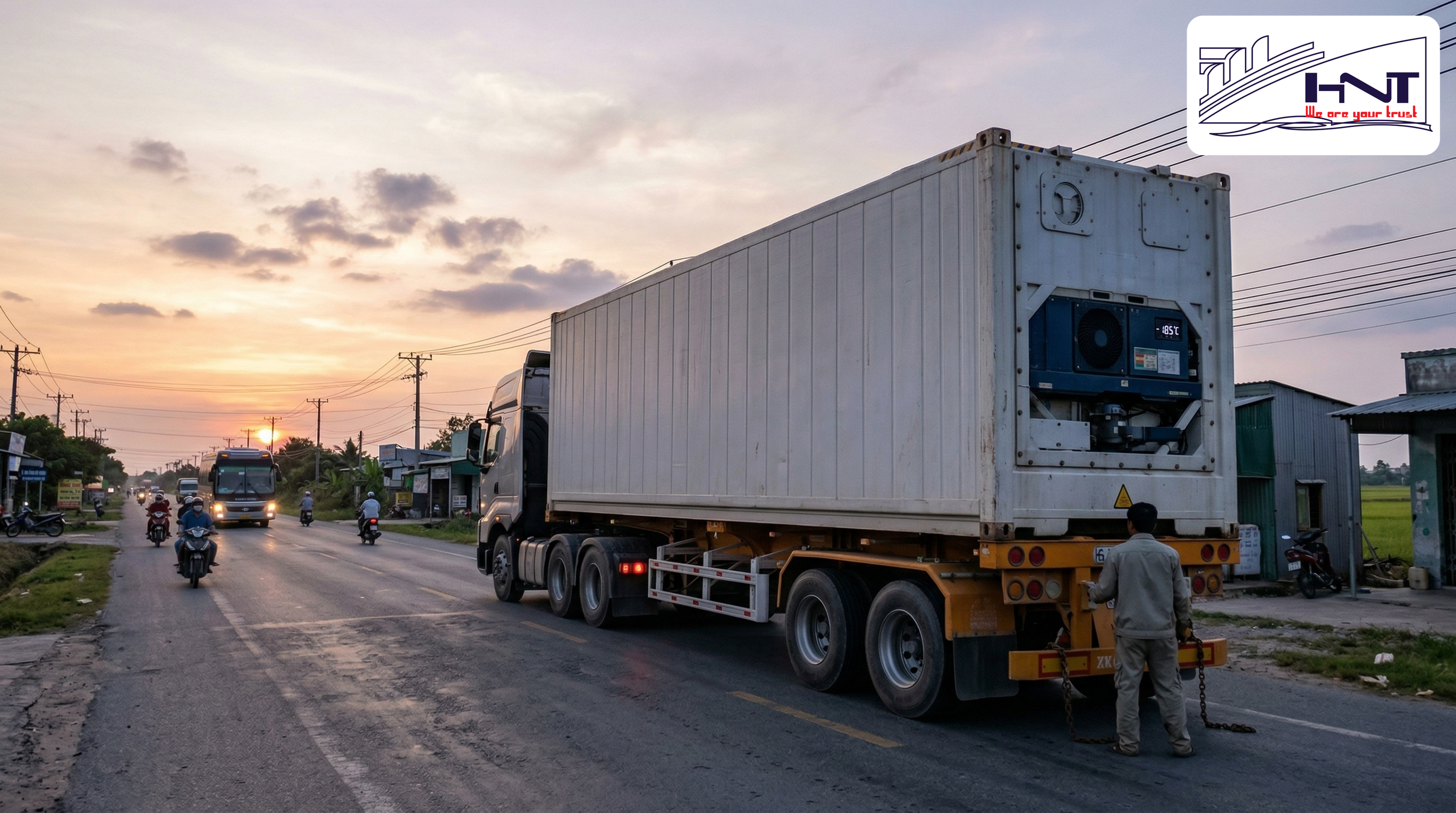
To preserve quality during North-South cold chain shipping, temperature control is a vital factor. Each type of commodity requires a completely different storage environment. Confusing temperature ranges will destroy the product structure immediately.
Classifying temperature ranges for agricultural and fishery products
Frozen seafood needs to maintain a deep negative temperature from -18 to -25 degrees Celsius. Fresh fruit only requires cooling levels from 2 to 8 degrees Celsius. According to HNT LOGISTICS' experience, businesses need to clearly identify the biological characteristics of the goods.
This helps in choosing the most suitable refrigeration method.
Risks of cold chain breaks at transit points
Gathering yards are often the places most prone to sudden temperature spikes. Prolonged loading and unloading under the hot sun reduces product shelf life. Specifically, the Logistics Performance Index (LPI) of the World Bank also warns about warehousing infrastructure.
Current transit points still do not meet standard refrigeration system requirements.
Proper packaging standards for Styrofoam boxes and gel ice
Using thermal wrap combined with standard Styrofoam boxes is the first line of defense. The amount of gel ice must be calculated based on the actual total transport time. You must factor in buffer time for traffic jams.
A reasonable gel ice density will keep the temperature stable throughout the long journey.
- Choose high-density Styrofoam boxes with a minimum wall thickness of 5cm.
- Alternate layers of gel ice and goods so that heat is distributed evenly.
- Seal all gaps in the box with specialized waterproof tape.
- Wrap an additional layer of PE film outside to prevent packaging scratches.
- Clearly mark fragile symbols and temperature requirements.
Practical Example 1: Bien Xanh Seafood Company in Can Tho reduced its damage rate by 15%. They strictly applied 5-layer insulated Styrofoam packaging. As a result, catfish fillet shipments to Hanoi are always absolutely safe.
Practical Example 2: The Clean Agriculture Cooperative in Binh Duong once suffered a loss of 50 million VND due to melted gel ice. Subsequently, they switched to standard dry ice and completely resolved this issue.
| Commodity Type | Required Temperature | Packaging Notes |
|---|---|---|
| Frozen seafood | -18°C to -25°C | Use thick Styrofoam boxes, dry ice |
| Imported beef | -10°C to -18°C | Wrap with waterproof PE film |
| Chilled fresh fruit | 2°C to 8°C | Layer gel ice for even heat dissipation |
| Pharmaceuticals, vaccines | 2°C to 8°C | Include data logger inside the box |
2. Evaluating North-South Refrigerated Truck Rental Solutions
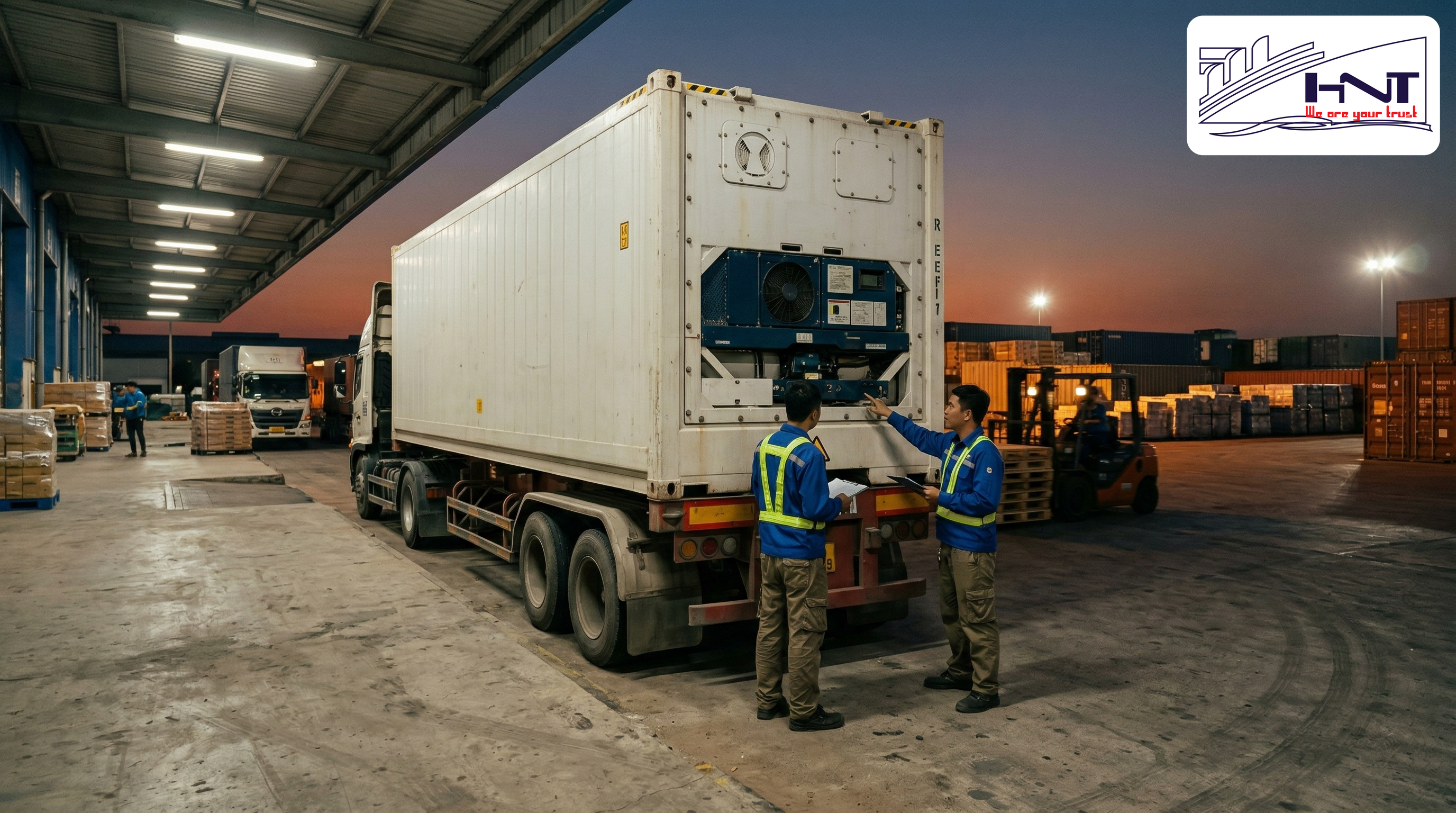
When shipping frozen goods North-South, investing in renting Businesses have many transport options depending on volume and budget. Understanding the pros and cons of each method helps significantly optimize costs. Below are the three most popular delivery models on the market today. brings great initiative to the supply chain. However, businesses need to consider the financial equation carefully. You must choose between full truckload or consolidated shipping.
Advantages of Full Container Load (FCL) for high-value goods
Renting a whole truck gives you absolute control over space and temperature. Goods are not mixed with the flavors or odors of other partners' products. This method is particularly suitable for pharmaceutical shipments or premium imported beef.
It minimizes the risk of unintended cross-contamination.
The cost calculation of Less than Container Load (LCL) for SMEs
Consolidated shipping is a lifesaver for small-scale production facilities. You only pay for the exact space and weight of your goods. However, actual delivery time will be slower than normal.
The reason is that the truck must stop at multiple points to drop off goods for other owners.
Technical factors to check on refrigerated containers
Businesses must directly inspect the refrigeration status before loading goods onto the truck. The compressor system and rubber door seals must ensure absolute tightness. HNT LOGISTICS recommends that customers always request temperature charts from the carrier.
This historical data proves the actual capability of the vehicle.
- Check the deep cooling of the air conditioner about 2 hours before loading.
- Confirm the truck doors close tightly with no light leakage.
- Ensure the truck floor is clean, with no standing water or strange odors.
- Attach an independent temperature tracking device in the middle of the cargo.
- Check tire and battery status to avoid breakdowns along the way.
Practical Example 1: An Khang Pharmaceutical Company in Hanoi always rents full refrigerated trucks. They need to transport large quantities of vaccines safely to Ho Chi Minh City. This decisive choice helps them meet the strict standards of the Ministry of Health.
Practical Example 2: Minh Tri Vietnamese Sausage facility in Dong Nai saved 40% in transport costs. They chose to consolidate their refrigerated shipments with a fresh milk industry partner.
| Comparison Criteria | Full Container Load (FCL) | Less than Container Load (LCL) |
|---|---|---|
| Actual transport cost | Very high, requires a large budget | Low, helps maximize savings |
| Delivery time | Fast and on time | Slower due to multiple stops |
| Cross-contamination risk | Almost never occurs | Potential for damage exists |
| Suitable users | Large enterprises, high-value goods | SMEs, small production facilities |
3. Comparing North-South Consolidation Centers and Coach Shipping
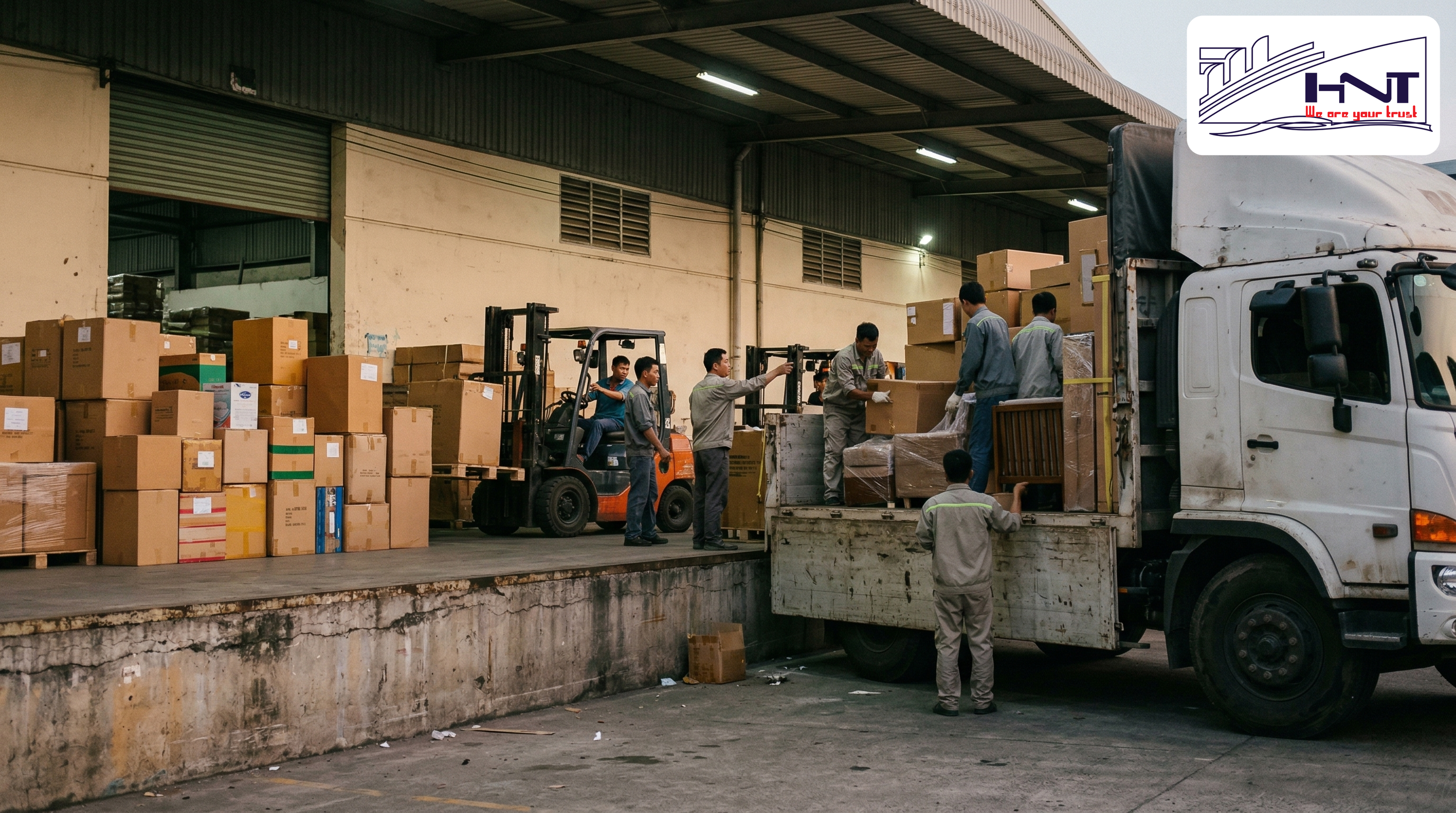
Many small businesses hesitate between choosing Total lead time is minimized, taking only 48 to 60 hours. This is a mandatory choice for high-value import-export shipments. or utilizing coach routes. Each transport method has completely different advantages and risks. A wrong decision can ruin an entire high-value shipment.
Cargo handling capacity of specialized consolidation centers
Large consolidation centers have much more professional warehousing and handling systems. They often invest in cold storage for staging to protect goods from external weather. This helps maintain a stable temperature during the waiting period.
Your shipment will be safe before being loaded onto the vehicle.
Weight limitations when shipping via North-South coaches
Many people choose to send North-South frozen goods via coaches to save money. However, this form of Although delivery time may be extended by a day due to multiple drops, the cost is usually only a third of renting a full truck. is only truly suitable for small, compact parcels. Coach cargo holds are very cramped and subject to high radiant heat from the engine.
The amount of cooling gel ice will melt much faster than normal.
Cargo insurance solutions when shipping through third parties
Risks of loss or quality degradation are always present when entrusting to third parties. You need to require a clear transport contract with transparent compensation terms. Purchasing cargo insurance is an essential safety cushion.
It helps minimize financial pressure when unexpected incidents occur.
- Request the partner to issue a delivery receipt with a valid red seal.
- Take detailed photos of the external condition of the package before handover.
- Declare the actual value of the goods as a basis for insurance.
- Carefully check the liability exemption clauses provided by the carrier.
- Agree in writing beforehand on the maximum allowed delivery time.
Practical Example 1: A Northwest Specialty store in Lao Cai once lost 50kg of smoked buffalo meat. The cause was shipping via a coach hold that was too hot. Now, they only cooperate with consolidation centers that have cold storage.
Practical Example 2: Miet Vuon Fruit Company in Tien Giang received 20 million VND in compensation. The incident occurred because a durian shipment was delivered late. A strict insurance contract helped them reduce their losses.
4. Standard Preparation Process Before North-South Truck Shipping
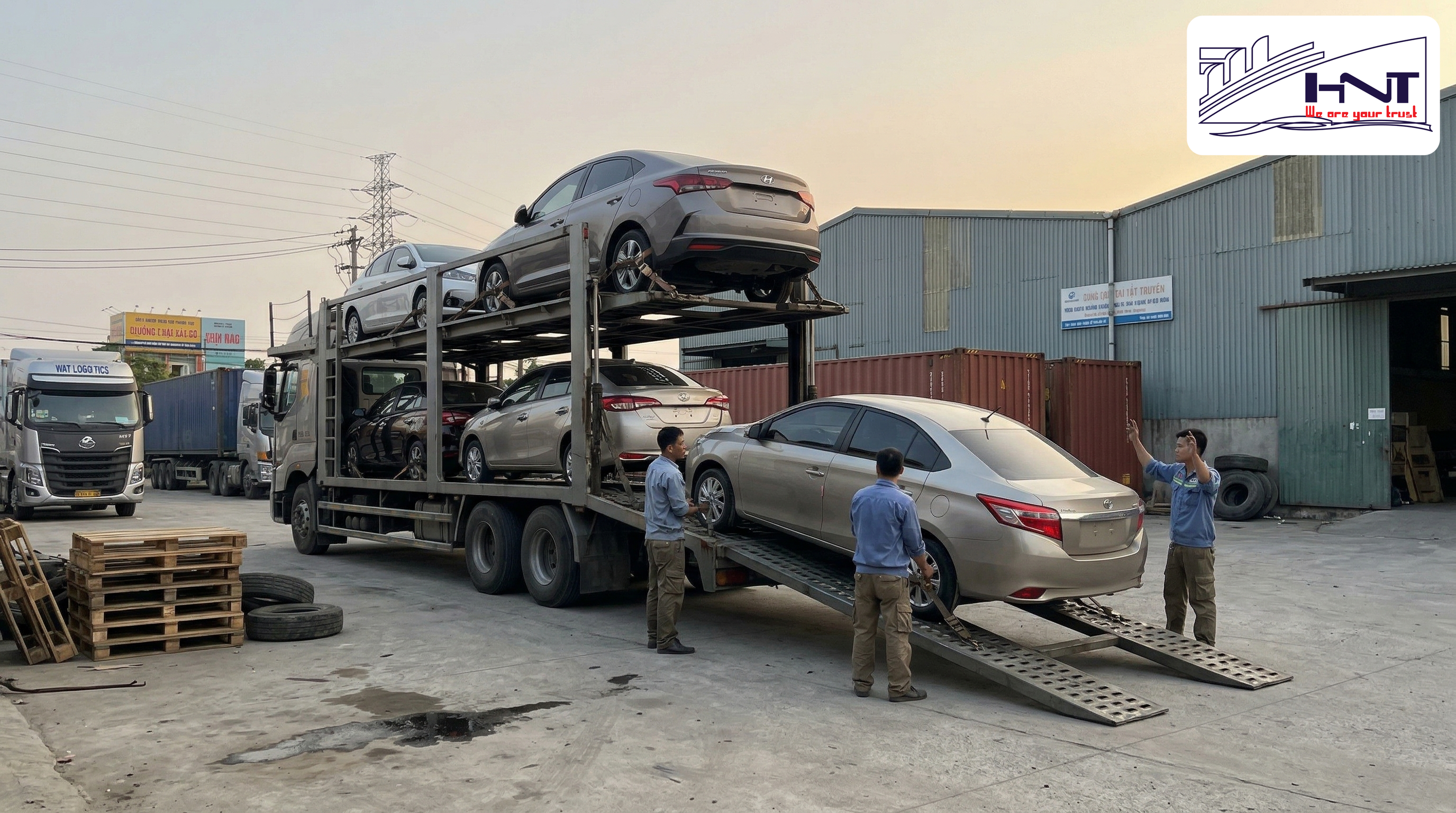
For the process of sending goods North-South to take place smoothly, the preparation stage plays a decisive role. A methodical process will help businesses avoid cumbersome legal troubles. It also thoroughly prevents risks arising along the long journey.
Preparing quarantine documents and electronic invoices
Market management agencies inspect very strictly on key national highways. Agricultural and aquatic products must have valid animal and plant quarantine certificates. In addition, timely presentation of electronic invoices will help trucks avoid being detained at the yard.
All documents should be pre-printed and handed over to the driver.
Installing temperature recording devices (Data Loggers)
Automatic temperature recording devices are indisputable evidence if a dispute occurs. You should program the data sampling time to be approximately every 15 minutes. This device needs to be placed deep inside the core of the package to accurately reflect reality.
It should not be placed near the outer edge of the styrofoam box.
Pickup and defrosting plans at the destination warehouse
The cold chain process does not end as soon as the truck arrives at the destination. The loading and unloading team at the destination must be ready to receive the goods immediately to put them into cold storage. The defrosting plan also needs to strictly comply with ISO 22000 standards to ensure quality.
Sudden temperature differences will damage food cells.
- Make a detailed list of all types of legal documents that need to be sent with the vehicle.
- Thoroughly check the battery capacity and start the data logger device before packing.
- Notify the expected arrival schedule to the receiving warehouse staff in advance.
- Prepare forklift systems and pallets at the destination unloading area.
- Conduct a product core temperature check immediately upon opening the container lid.
Practical Example 1: Saigon Food Company was once heavily fined and had its goods detained at a weighing station. The driver accidentally forgot to bring a copy of the food safety certificate.
Practical Example 2: Nha Trang Seafood Processing Plant won a lawsuit against a transport company thanks to data logger records. The data proved the truck's refrigeration unit was turned off for 4 hours while crossing the pass.
5. Optimizing Long-Distance Logistics Efficiency

In general, the decision to ship frozen goods South-North requires extremely careful and meticulous calculation. You need to choose the right thermal packaging and evaluate the capacity of the transport unit. Every small mistake comes at a very high cost.
Mastering the above principles will directly protect your business assets. At the same time, it helps maintain solid brand reputation with consuming partners. Always prioritize safety and transparency in every logistics stage.
- Accurately classify storage temperature ranges for each specific agricultural and aquatic item.
- Use high-quality styrofoam boxes and arrange cooling gel packs according to the correct rating.
- Thoroughly check the truck's refrigeration system before starting to load goods.
- Prioritize large-scale specialized transport hubs instead of cramped passenger bus holds.
- Always attach standard temperature monitoring devices and establish clear cargo insurance contracts.
If your business is looking for a reliable partner, HNT LOGISTICS is always ready to accompany you. We provide logistics service package, thoroughly solving complex international and domestic transport problems. Contact us now for a detailed quote and the most optimal solution.