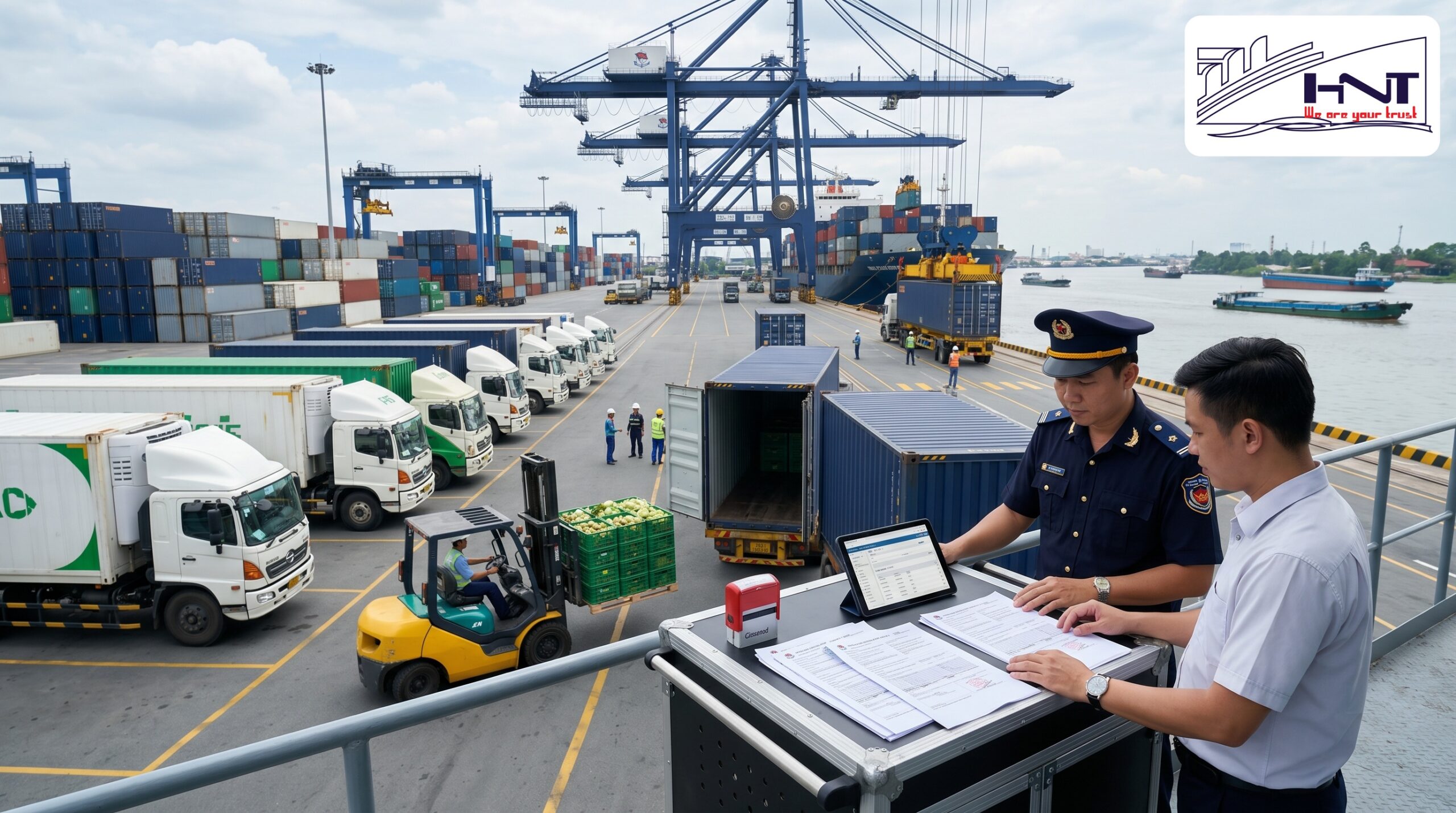
Perform accurately customs procedures for export goods is the decisive step to bring products to the international market. This process requires legal knowledge and extreme caution.
According to the 2026 report, agricultural export turnover of Vietnam grew by an impressive 20%. However, statistics also show that the rate of demurrage due to errors in paperwork still accounts for about 8% of total shipments. This article will analyze in detail the most effective customs clearance process.
Overview of customs procedures for export goods
This process is not simply about submitting documents. It is a strict system of inspection and supervision.
The nature of export customs clearance procedures
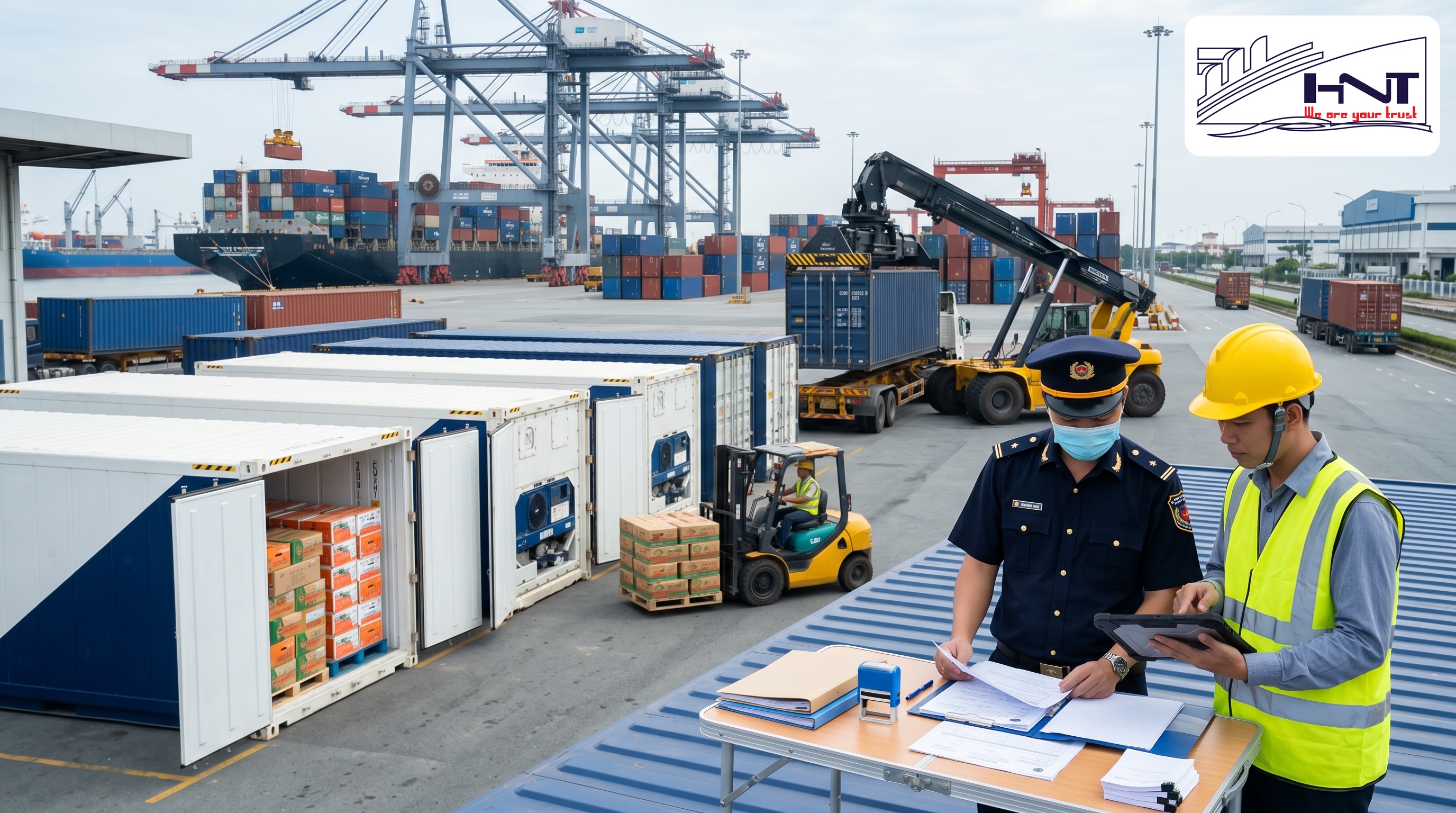
In essence, export customs clearance procedures are the state agency's verification of the legality of goods. They confirm that the shipment is eligible to leave the territory of Vietnam. This process helps prevent smuggling and tax evasion effectively.
Why do businesses need to understand the process?
Lack of understanding can lead to heavy financial losses. Businesses that understand the law will be more proactive in logistics. They can forecast pick-up times and board ships accurately.
Subjects under customs supervision
All international trading goods are subject to strict supervision. Vehicles transporting goods are also included in this control. The main purpose is to ensure national economic security.
- Ensuring export goods are completely valid and in accordance with the law.
- Preventing the risk of administrative fines of up to tens of millions of dong.
- Avoiding the situation where containers have to be stored for many days at seaports.
- Increasing the company's credibility with foreign partners.
- Helping businesses optimize cash flow thanks to rapid turnover.
The first practical example is Hung Phat Agricultural Products Company in Can Tho. They once faced difficulties exporting rice to the South China market. After standardizing the process, they saved 2 million VND in demurrage costs per container.
The second practical example is Tan Thuan Textile and Garment Enterprise in Binh Duong. Previously, they were frequently delayed in shipping schedules due to document errors. When applying the correct process, their customs clearance time was reduced by a full day immediately.
| Channel classification | Inspection level | Expected duration | Delay risk |
|---|---|---|---|
| Green Channel | Exemption from document and cargo inspection | 15 to 30 minutes | Very low |
| Yellow Channel | Detailed inspection of the entire profile | 2 to 4 hours | Standard-compliant, inspected |
| Red Channel | Document inspection and physical goods inspection | 1 to 2 days | Incabable |
| High-Priority Red Channel | Special inspection for high-risk goods | 2 to 3 days | Highest |
Standard document set for export customs declaration procedures
Preparing documents is the most time-consuming and error-prone stage. Each type of good requires its own specific set of documents.
Mandatory commercial and transport documents
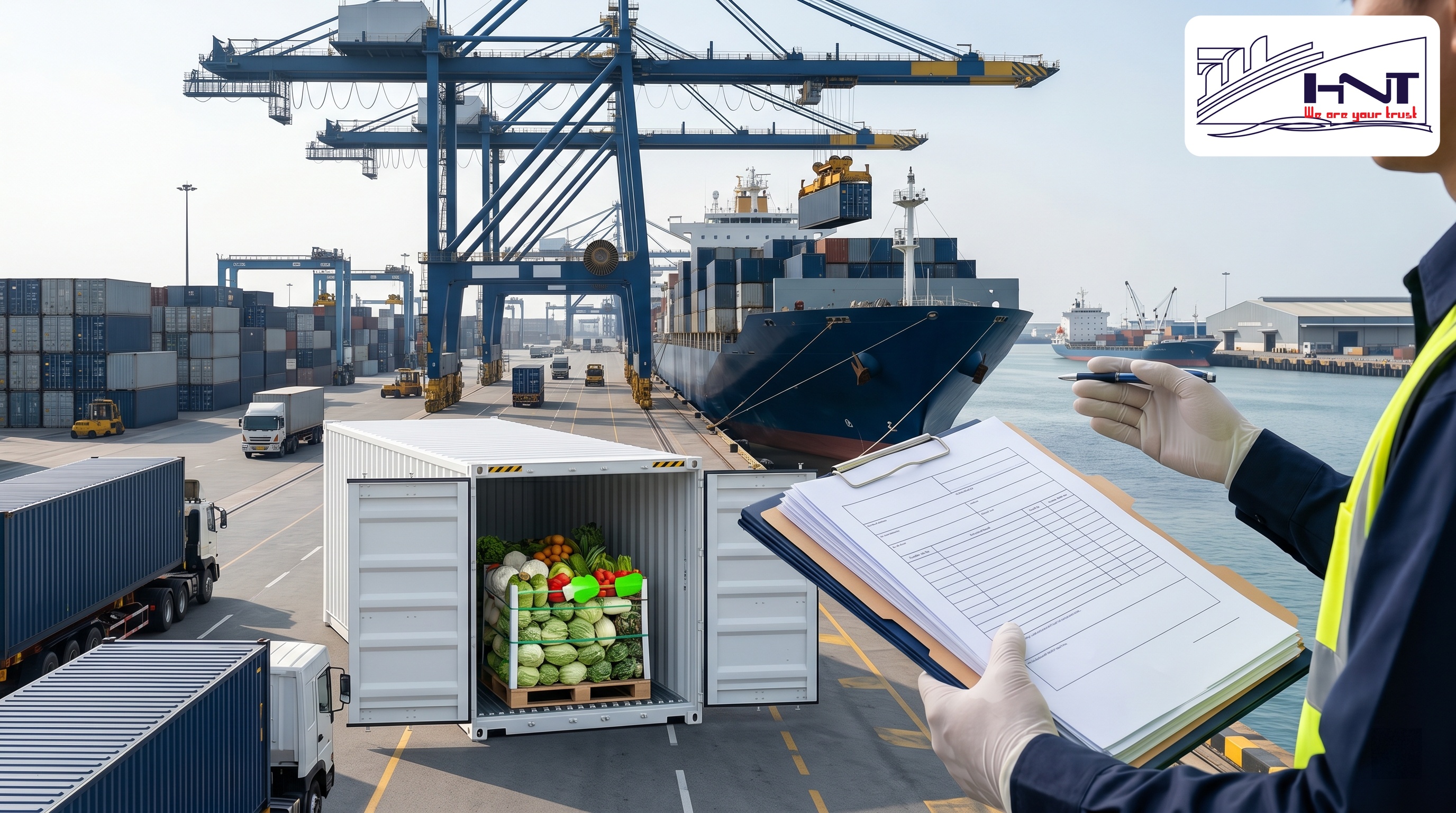
Commercial contracts and commercial invoices are the two most fundamental foundations. The packing list helps authorities understand the quantity. The bill of lading is important evidence of goods handover.
Permits and specialized inspections
Some goods require export permits issued by ministries and sectors. Especially fresh agricultural products or deeply processed foods. The process of applying for permits needs to be carried out before customs declaration.
Notes when completing export customs declaration procedures
Executing export customs declaration procedures requires data consistency. The weight on the packing list must perfectly match the bill of lading. Any discrepancy will cause the declaration to be rejected immediately.
- International commercial contracts must have clear signatures and stamps.
- Commercial invoices need to accurately reflect the actual value of the shipment.
- The detailed packing list accurately describes the net weight and gross weight.
- Certificate of origin helps partners enjoy import tax incentives.
- Phytosanitary/animal quarantine certificates apply specifically to agricultural, forestry, and aquatic products.
- Product quality certificates are issued by reputable independent inspection agencies.
Based on practical experience, HNT LOGISTICS always recommends that customers cross-check these figures. Thorough verification helps avoid the risk of cancelling the declaration and declaring from the beginning.
Minh Hai Seafood Company in Ca Mau is a typical example. They have applied an automated document management software system since last year. As a result, the customs clearance processing time is 4 hours faster per shipment.
Cho Gao Fruit Facility in Tien Giang also achieved positive results. They prepared phytosanitary certificates 3 days before the ship sailed. As a result, they avoided a 10 million VND fine for missing the export ship to Europe.
| Type of export goods | Mandatory accompanying documents | Authorized issuing agency | Document validity period |
|---|---|---|---|
| Fresh agricultural products | Certificate of phytosanitary | Plant Protection Department | Per export shipment |
| Frozen seafood | Health quality certificate | Quality Management Department | Per export shipment |
| Light industrial goods | Certificate of Origin Form B | Chamber of Commerce and Industry | From 6 to 12 months |
| Finished wood forest products | Legal forest product origin documentation | Local Forest Protection Department | Per export shipment |
5 steps to perform customs procedures for exported goods
Mastering each small step helps the overall process run smoothly. Businesses need to operate carefully on the electronic declaration system.
Declaring information on VNACCS software
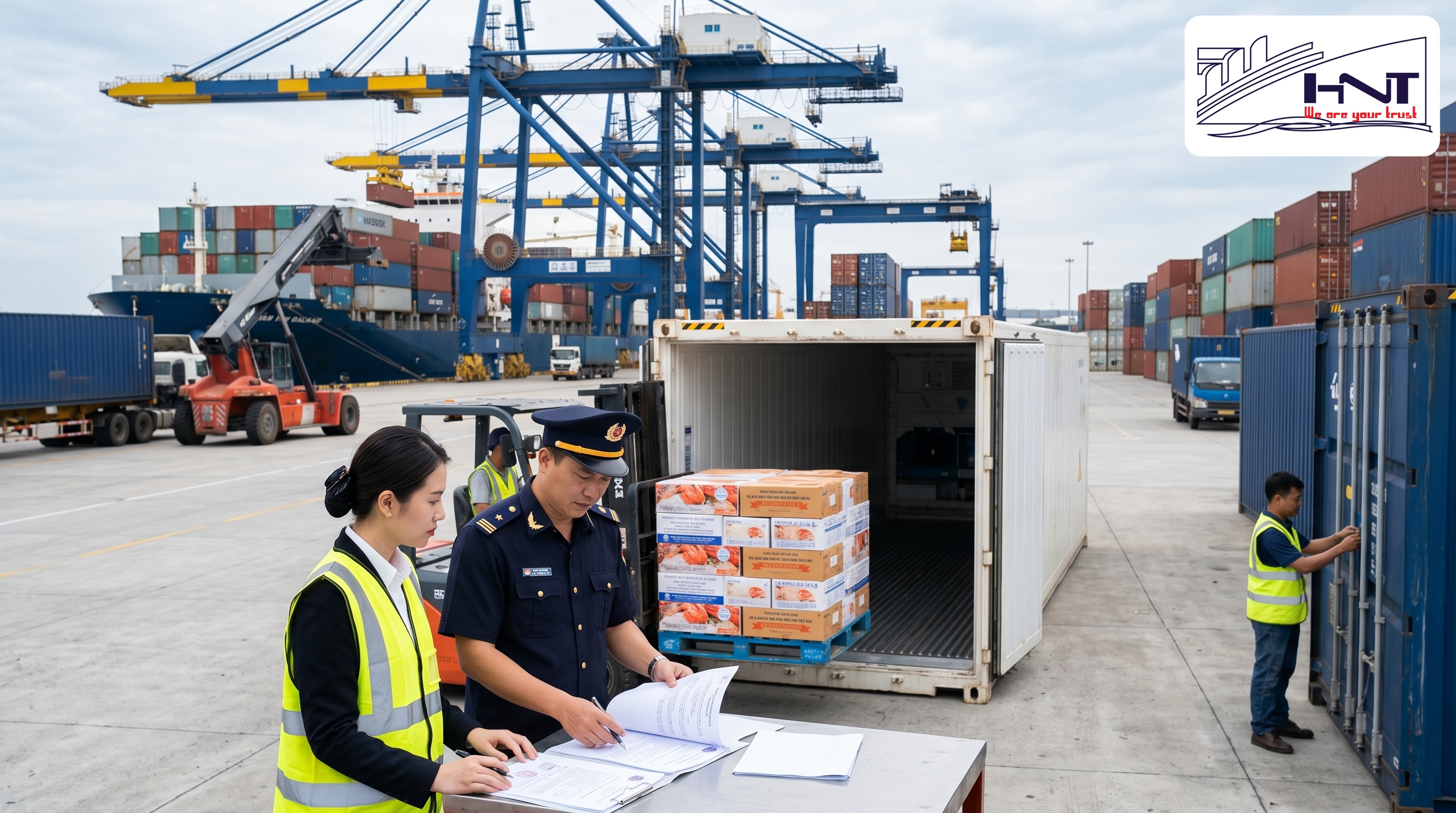
The declarant proceeds to input information from documents into the software. This data is transmitted directly to the General Department of Customs' network system. This requires a stable internet connection and a valid digital signature.
Receiving declaration channeling results
The system automatically analyzes risks and returns channeling results. Green channel means the shipment goes straight to the port without inspection. Red channel requires opening the container for direct physical inspection.
Completing customs clearance procedures for export declarations
After paying taxes and fees, the business proceeds with customs clearance procedures for export declarations. This is the step to confirm that the shipment has officially cleared customs. The container is then allowed to be dropped at the yard awaiting loading onto the ship.
- The first step is to create a valid account on the VNACCS declaration system.
- The second step requires accurate entry of every number from the invoice and bill of lading.
- The third step is to plug in the USB token digital signature to transmit data to the network.
- The fourth step is to print the barcode declaration after receiving the approval notification.
- The final step is to submit this declaration to the customs officer supervising at the port gate.
Dong Nai Furniture Company used to lose many days due to red channel channeling. By being transparent about wood origin documents, they increased their green channel rate to 80%. This helped them reduce 30% of handling and inspection costs.
Saigon Plastics Enterprise in District 7 also optimized its process effectively. Applying modern declaration software helps reduce data entry errors significantly. Thanks to that, they never miss the shipping line's cutoff time.
Specific regulations on export procedures for medical gloves
Medical items require extremely strict standards. Importing countries control the quality of these products very tightly.
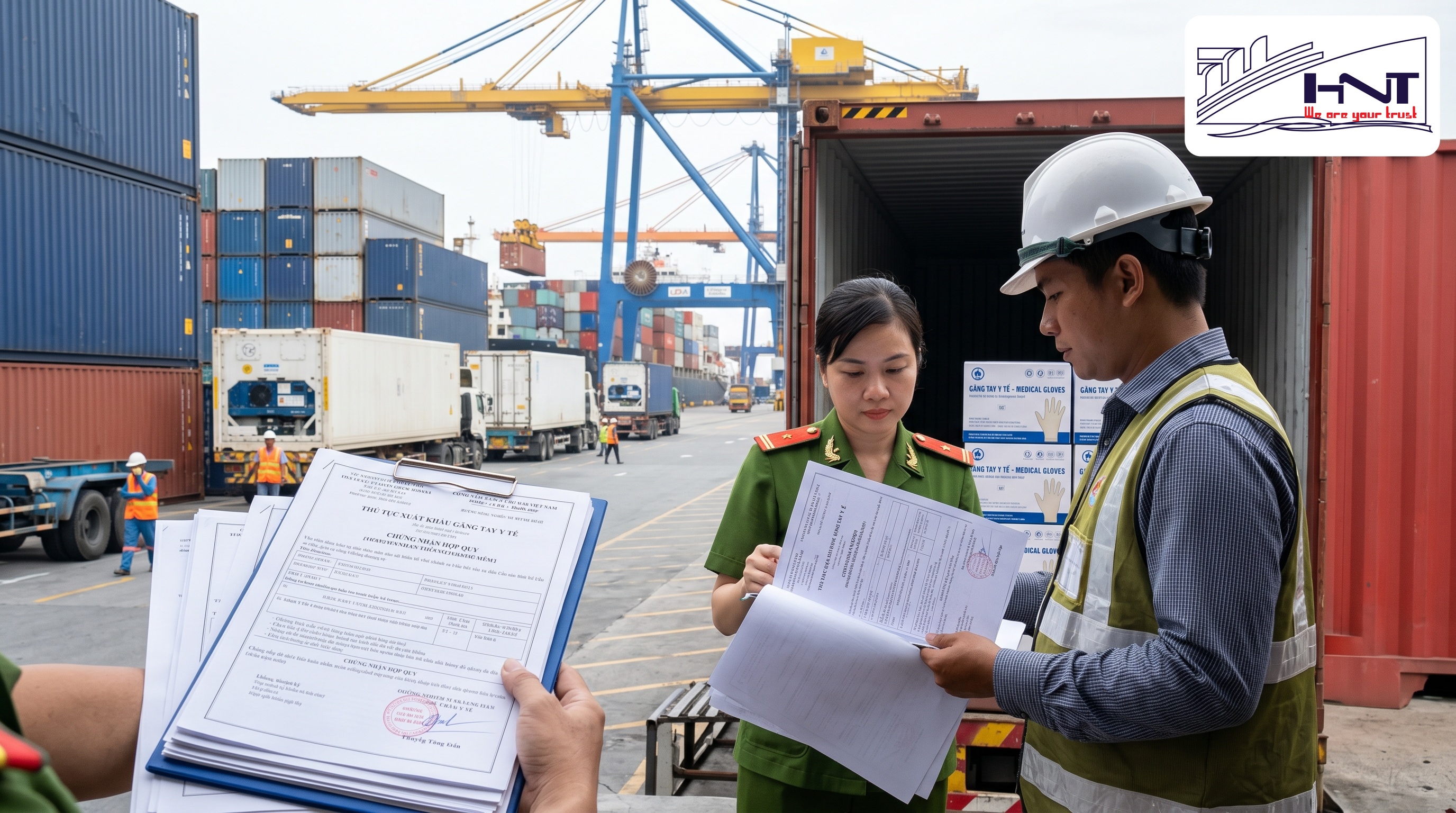
Strict international quality standards
Medical gloves must meet CE standards for the European market. The North American market requires United States FDA certification. Without these certificates, goods will certainly be denied entry.
License from the Vietnam Ministry of Health
Enterprises need to provide a Certificate of Free Sale (CFS). A certificate of eligibility for medical device production is also mandatory. The licensing process usually takes 2 to 4 working weeks.
HS code and tax rate for medical glove export procedures
Looking up the correct HS code is the core of medical glove export procedures. An incorrect HS code leads to applying the wrong export tax rate. This can lead to very heavy administrative penalties.
- Non-sterile medical rubber gloves need to be carefully vacuum-packed.
- Sterile surgical gloves require storage in a cool, standard-compliant environment.
- Product packaging must clearly print the barcode and accurate information about the manufacturing factory.
- The expiration date must be printed prominently in the language of the importing country.
- A test report from an international lab is an indispensable document in the dossier.
- An ISO 13485 certificate specifically for medical device quality management systems is required.
Binh Tan Medical Equipment Company specializes in exporting to North America. They were once stuck with 5 containers at the port of Los Angeles due to missing a valid FDA certificate. This lesson makes them always check the document set one month in advance.
Long An Glove Manufacturing Factory also understands the importance of licenses. They invested in upgrading their internal lab to proactively inspect product quality daily. As a result, their rate of products meeting European export standards is always at 99%.
| Import market | Mandatory certification | Applicable technical standards | Customs clearance difficulty |
|---|---|---|---|
| United States market | FDA 510k certification | ASTM D6319 standard | Very strict |
| European market | CE Marking certification | EN 455 standard | Strict |
| Japan market | Japanese PMDA certification | JIS T 9115 standard | Medium difficulty |
| Southeast Asian market | Certificate of Free Sale (CFS) | ISO 13485 standard | Standard-compliant, inspected |
Time-optimized solutions from logistics experts
Proactive risk prevention is the wisest strategy. Smooth coordination between departments will bring high efficiency.
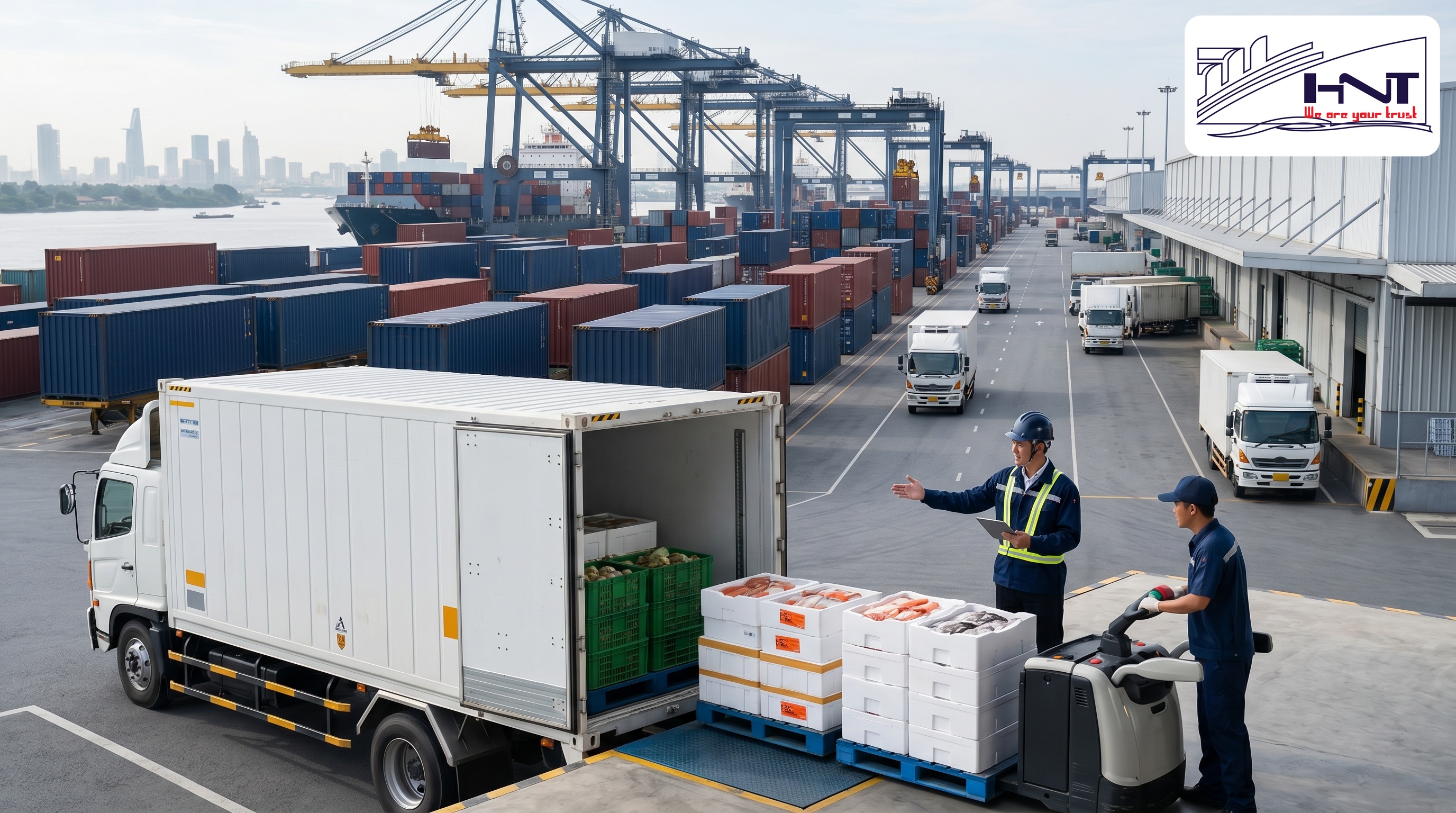
Digitize the entire record storage process
Storing documents on cloud computing platforms is an inevitable trend. It helps retrieve data in seconds when customs requests it. Digital records are never lost or torn.
Build standard SOP workflows
Every import-export employee needs a clear set of guidelines. Standard SOP processes minimize personal information discrepancies. All work steps are fully controlled and recorded in the system.
Select a reputable and professional customs broker
Outsourcing customs services is an effective time-saving solution. Agents understand the law and have good relationships at the port. They handle emerging issues much faster than businesses doing it themselves.
- Regularly update the latest circulars issued quarterly by the Ministry of Finance.
- Organize advanced professional training courses for import-export department staff.
- Establish a direct communication channel with the officer in charge at the port customs branch.
- Register to use priority customs clearance services for reputable A-grade enterprises.
- Synchronize data from warehouses to the company's electronic declaration system quickly.
Da Lat Agricultural Cooperative is always proud of the customs clearance speed for fresh fruits and vegetables. By applying smart barcodes, their inspection time decreased by 50%. Fruits and vegetables thus retain their freshness when reaching Japan.
Buon Ma Thuot Coffee Company is also a bright spot in logistics management. Using all-inclusive customs services has helped them free up time to focus on production. Their import-export department operating costs decrease significantly each year.
As one of the leading partners, HNT LOGISTICS understands these challenges. We are always ready to support businesses in optimizing every smallest step. The process of working with customs will become extremely smooth.
In summary, customs procedures for export goods plays a vital role in international trade. To ensure goods flow smoothly, businesses need to pay attention to:
- Thoroughly check the consistency of all commercial documents.
- Prepare specialized licenses ready before the vessel departs.
- Apply software technology to declaration to limit errors.
- Master the specific regulations for each item such as medical equipment.
- Find a transportation partner with deep expertise and rich experience.
If you are looking for an optimal transportation solution, let us assist you. HNT LOGISTICS is proud to be a reputable logistics partner for agricultural and aquatic product export enterprises from the South to the world. With deep expertise, we are committed to bringing absolute peace of mind for each of your shipments.