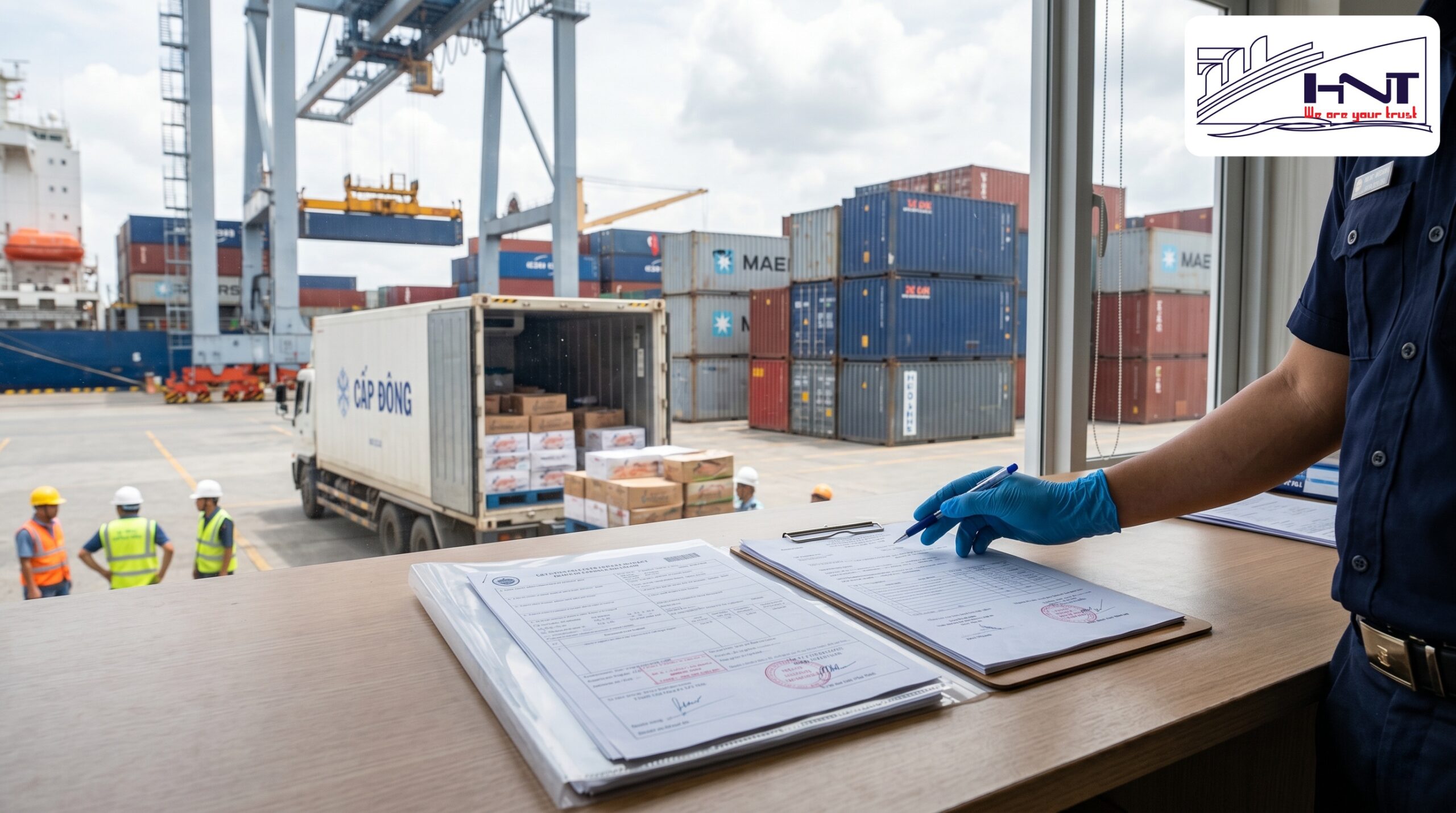
Proper preparation of an export customs dossier is a mandatory requirement for fast customs clearance. This set of documents determines delivery schedules and transport cost efficiency for every business.
According to 2026 customs statistics, over 15% of Vietnamese agricultural shipments exported to Asia faced delays due to document errors. In early 2026, the average customs clearance time at major seaports decreased by 12% thanks to the application of digitalization. This article will provide detailed instructions on how to prepare documents, helping businesses optimize processes and maximize operational cost savings.
The Important Role of the Export Customs Dossier
Possessing a an export customs dossier complete set provides many advantages. It is the basis for allowing a shipment to be exported. Without this set of documents, goods cannot leave the port. This is a prerequisite in international trade.
A standard dossier helps the process of working with customs more smoothly. Businesses will save a lot of precious time. Transparent information helps build long-term credibility. This is extremely important for regular exporters.
Basic concept of export customs dossier
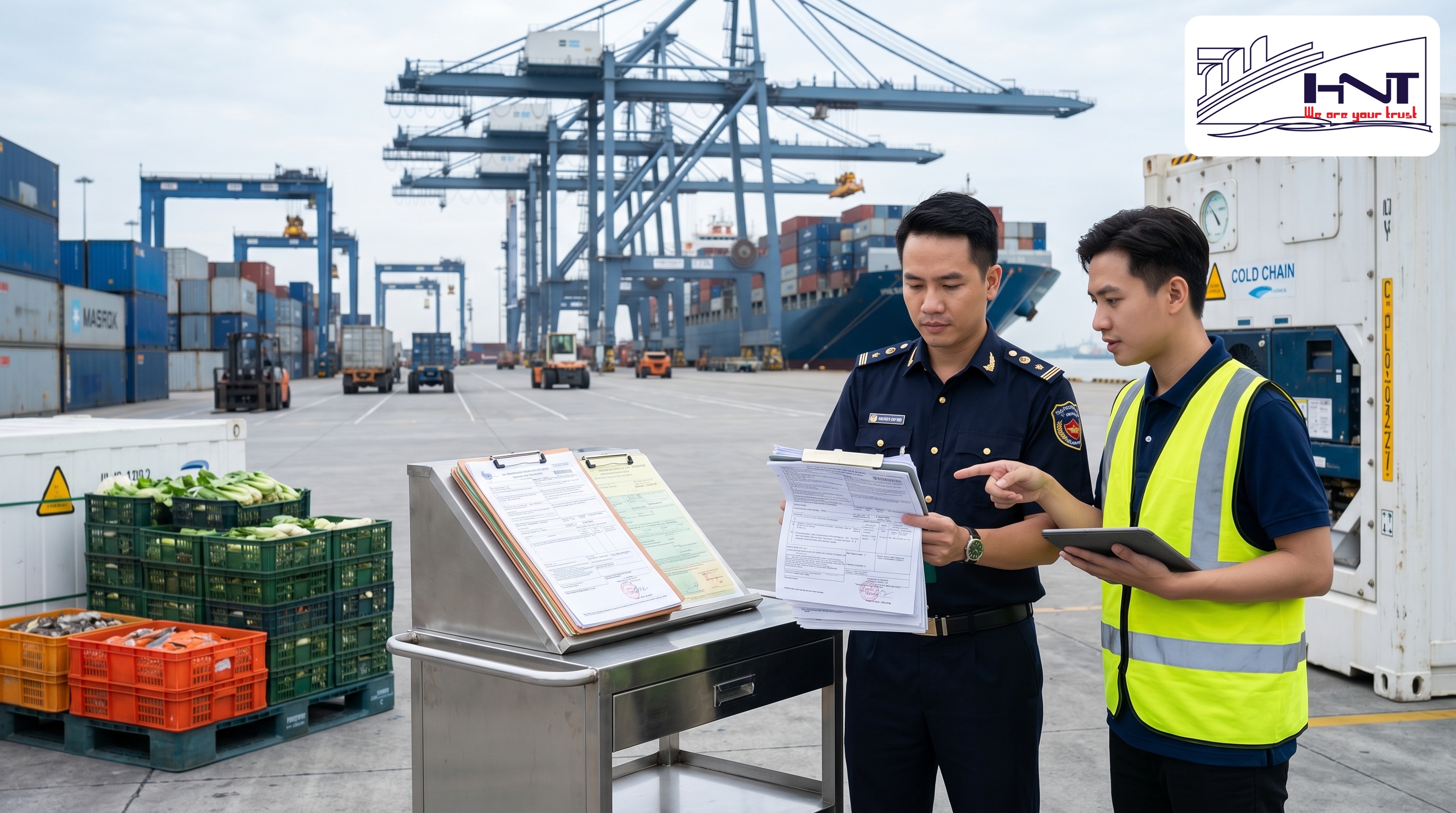
An export customs dossier is a collection of legal documents. They describe the shipment that needs to be exported in detail. Functional authorities use these documents for inspection. The purpose is to monitor security and manage the flow of goods.
The customs declarant must be responsible for accuracy. All figures on the documents must match the actual goods. Information fraud will be severely penalized. Businesses need to strictly comply with all current regulations.
Direct impact on supply chain costs
A an export customs dossier Accuracy helps reduce storage costs. Shipments cleared early will not incur detention charges. Logistics costs are thereby strictly controlled. The business's profits are better preserved.
Based on HNT LOGISTICS' experience, carefully reviewing documents will prevent unnecessary fines. A small error in paperwork can cause major damage. Businesses need to build strict cross-checking procedures.
Legal basis for protecting business interests
Declarations are the highest legal evidence. It protects the company's rights in commercial disputes. All purchase agreements are based on these documents. This is a safe international payment tool.
Foreign partners always require complete and clear dossiers. They use them to complete import procedures at the destination port. Professionalism in documentation affirms service quality. Customers will trust and cooperate longer.
List of practical benefits from preparing documents well:
- Speed up customs clearance approval at major seaports.
- Significantly save on daily warehouse and container storage fees.
- Ensure delivery times are on schedule as committed to international partners.
- Minimize the risk of administrative penalties due to incorrect declarations.
- Build high reliability with local state management agencies.
Practical example: Nam Long Agricultural Products Company in the South was once stuck with goods due to paperwork errors. After reviewing and standardizing, they reduced storage costs by 40%. Dragon fruit shipments exported to Japan were cleared 2 days faster.
Practical example: Hai Phat Seafood Company in Ca Mau applied automated document checking software. They saved about 200 USD in incidental fees for each container. Every shipment of frozen shrimp boarded the ship on the expected schedule.
Practical tips: Always use a standard checklist to cross-reference all information before submitting official documents to the system.
| Evaluation criteria | Accurate declared documents | Inaccurate declared documents |
|---|---|---|
| Processing time | Fast customs clearance from 1 to 3 hours | Lasts from 2 to 4 working days |
| Storage fees | No demurrage fees incurred | Subject to very expensive container storage fees |
| Risk of shipment delay | Very low, ensuring schedule adherence | High possibility of missing export shipment |
| Payment progress | On-time payment according to letter of credit | Cash flow delays due to waiting for corrections |
6 Mandatory Documents in the Export Customs Dossier
To complete an export customs dossier, businesses need to collect 6 types of documents. Missing one of these, the dossier will be rejected. Document collection must be done before the goods reach the port. Thorough preparation determines the success or failure of the shipment.
These documents are closely linked. Information on quantity and weight must be consistent across all documents. Any discrepancy will make customs suspicious. The inspection process at that time will be severely stalled.
Commercial invoice and packing list
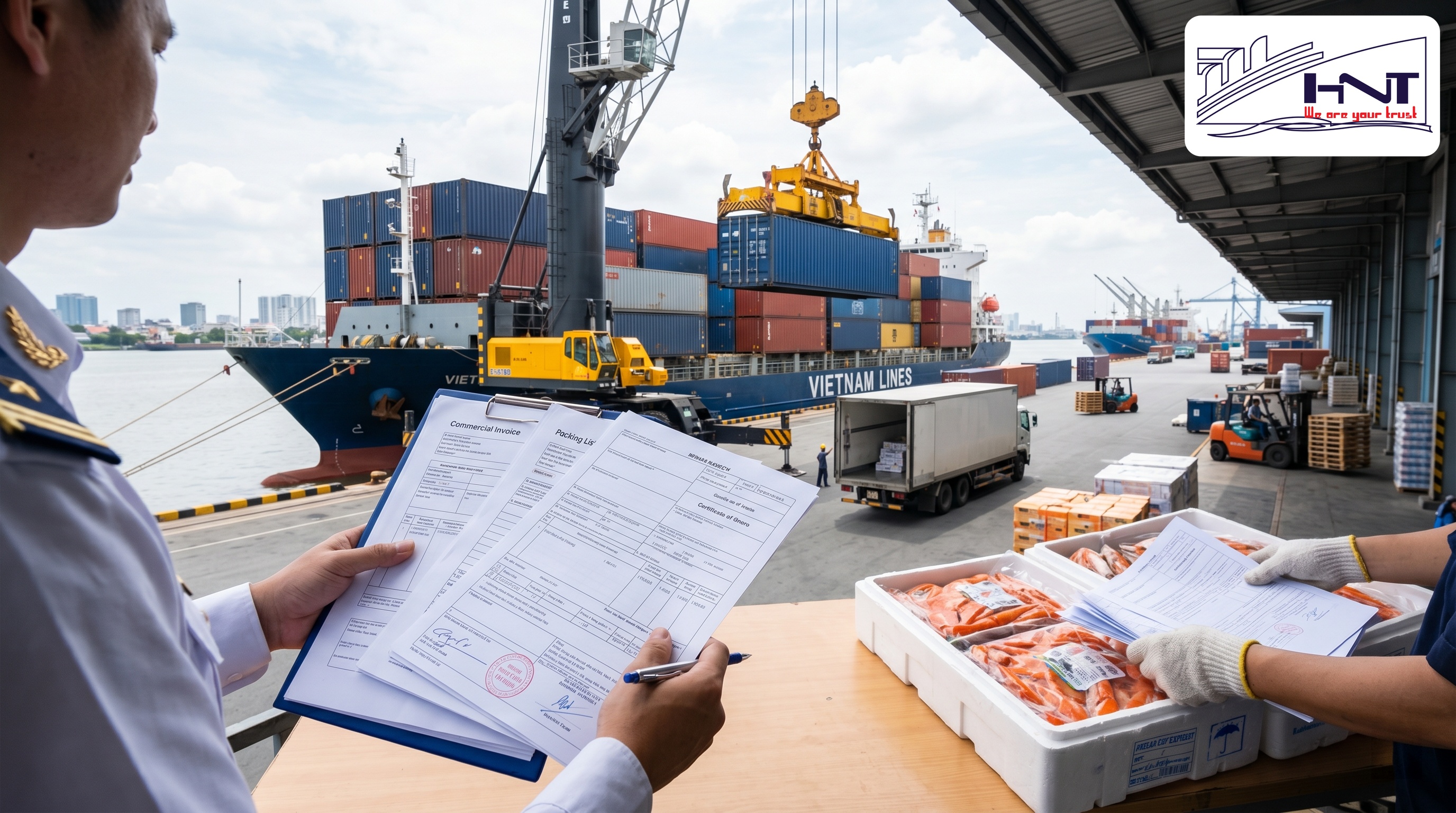
The commercial invoice shows the value of the export shipment. This is the basis for calculating related taxes. It proves the sales transaction between the two parties. Figures on the invoice must be absolutely accurate.
The packing list describes in detail how the goods are arranged. It indicates the weight, dimensions, and number of packages. The customs authority cross-references it with the actual inspection. These two documents are the backbone of every dossier.
Related sea transport documents
The bill of lading is a receipt confirming receipt of goods. The shipping line issues the bill of lading when the goods have been loaded onto the ship. This is the document proving ownership of the assets. It is very important in international payments.
The booking note is a confirmation of booking on the transport ship. This document has information about the ship voyage and the cut-off time. Businesses rely on this to plan domestic transport. Matching the data with the bill of lading is a mandatory requirement.
Customs dossiers for specific export goods
Some goods require a certificate of origin to enjoy preferences. Agricultural products require additional quarantine certificates. This ensures goods do not carry dangerous pathogens. This is a customs dossier for conditional export goods.
Aquatic products need a safety quality certificate. Dangerous goods require special packaging permits. Each type of specific good has separate legal requirements. Businesses need to research carefully before signing an export contract.
List of 6 essential core documents:
- International commercial invoice with signature and seal.
- Detailed packing list clearly stating the weight.
- Valid booking note from the shipping line.
- Sea waybill (Bill of Lading) represents ownership.
- The electronic customs declaration has been channeled on the system.
- Certificate of origin and specialized licenses included.
Practical example: Viet Phat Wood Company in Binh Duong once forgot to submit the certificate of origin. This caused the European partner to miss out on import tax reductions. After the incident, they always put the C/O as the number one priority in their files.
Practical example: The Southern Packaging enterprise exporting to the US got their goods stuck due to a Packing List error. They had to pay an extra 500 USD in storage fees. Since then, they have established a document approval process across three levels of management.
Practical tips: Digitize all draft documents and store them on the cloud system so that departments can check them together before printing hard copies.
Export Customs Dossier Submission Procedure
The submission process an export customs dossier today is very convenient. Most procedures have been completely digitized. The customs clearance network system helps reduce manual paperwork. However, the process still needs to follow strict steps.
The customs declarant must have a valid digital certificate. Data transmission must take place before the prescribed cutoff time. If transmitted late, the shipment will not be loaded onto the vessel in time. Seamless coordination between departments is essential.
Review and cross-check document data
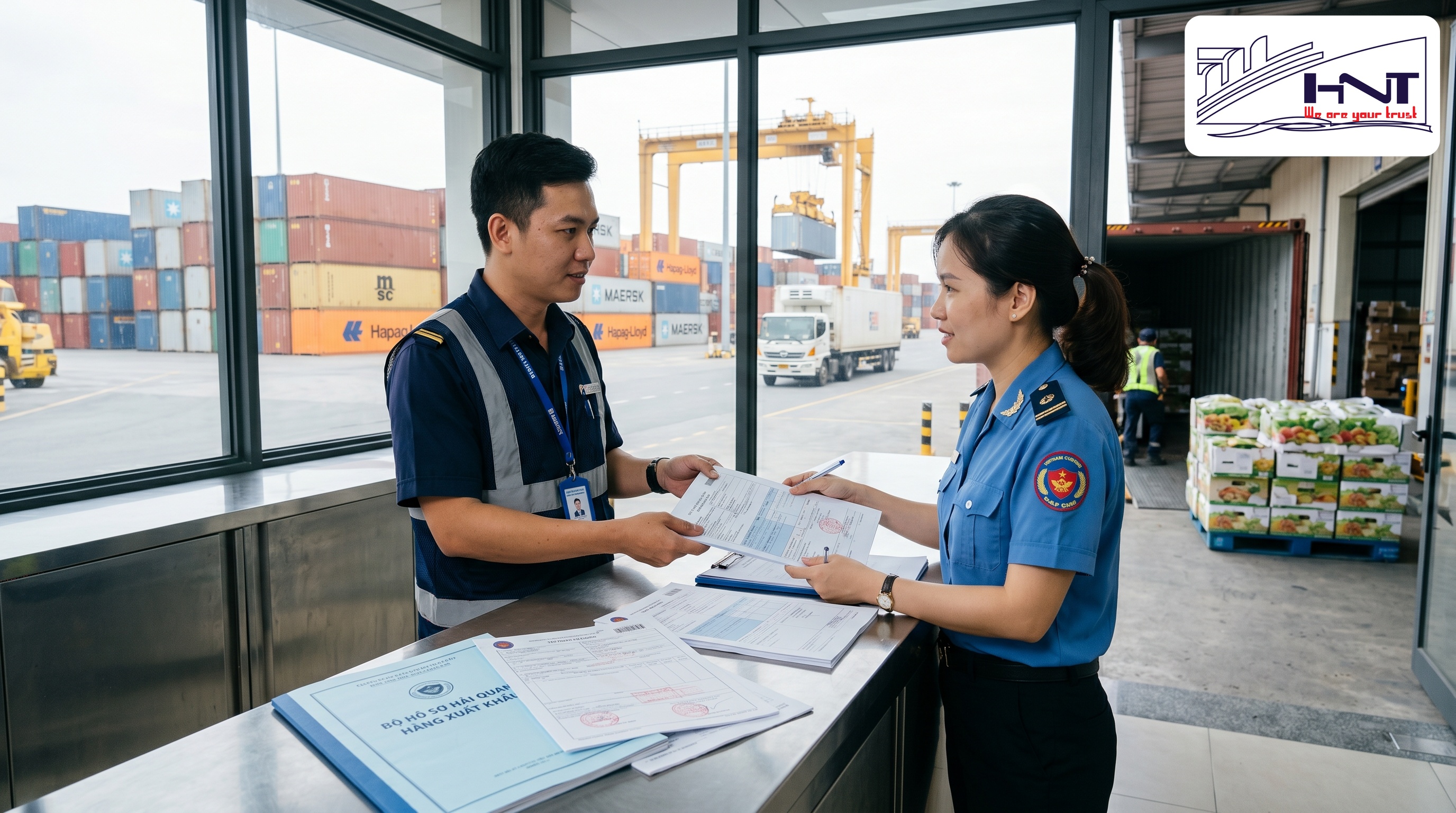
The first step is to collect all relevant draft documents. Staff conduct a cross-check of every single smallest number. The HS code of the goods must be assigned accurately. Net weight and gross weight must not have any errors.
HNT LOGISTICS advises businesses to use error-checking software. Visual cross-checking is prone to mistakes. Any spelling error can cause trouble. The review stage determines the speed of subsequent steps.
Electronic declaration via the customs clearance system
After the data matches, staff enter the information into the software. The VNACCS system will receive the electronic customs declaration. Users need to fill in the correct guidance criteria. Then, they click the official data transmission button.
The system will automatically respond with the customs declaration number. This is the unique management code for that shipment. The declaration status will be displayed immediately. The system operates continuously to ensure consistency.
Prepare paper dossiers when requested by authorities
Despite electronic declaration, the original document set remains very important. When customs requests an inspection, the paper version must be ready. The documents need to have valid signatures and legal seals. Document bundling must be neat and in the correct prescribed order.
The person handling the procedures brings the dossier to the managing customs branch. Information explanation takes place directly at the reception counter. A professional and cooperative attitude helps speed up the approval process. Businesses should send experienced personnel to the field.
List of declaration steps to remember:
- Collect complete draft invoices and relevant packing lists.
- Cross-check HS code information, weight, and goods description.
- Use digital signature to transmit data to the software system.
- Closely monitor the status response notification from the customs authority.
- Prepare hard copy document files stamped as true copies.
- Present the original dossier to the receiving officer if an inspection is requested.
Practical example: An Thai Textile and Garment Company in Dong Nai frequently declared the wrong HS code. They had to invite experts to retrain their staff. As a result, the time to complete the declaration was shortened by 50%.
Practical example: The Western Fruit Cooperative once transmitted data late. They almost missed a shipment of durian exported to China. Currently, they require the declaration to be transmitted at least 12 hours before the cutoff time.
Practical tips: Always keep a color-printed copy of all red-stamped documents on the truck so the driver can present them immediately at the port gate.
| Process phase | Key tasks to be done | Estimated processing time |
|---|---|---|
| Data preparation | Cross-check invoices and packing | About 1 to 2 working hours |
| System declaration | Transmit data to customs software | 15 to 30 minutes to complete |
| Waiting for feedback | Receive channeling results from the General Department | About 5 to 10 minutes wait |
| On-site processing | Submit hard copies and explain if necessary | About 2 to 4 hours depending on reality |
Customs Channeling for Export Goods
The system automatically classifies an export customs dossier into three levels. These are green channel, yellow channel, and red channel. Channeling is based on the enterprise's risk level. Legal compliance history plays a decisive role in this step.
Channeling helps state agencies focus control resources. High-risk shipments will be strictly inspected. Conversely, reputable businesses will be given maximum facilitation. Understanding this regulation helps proactively plan logistics.
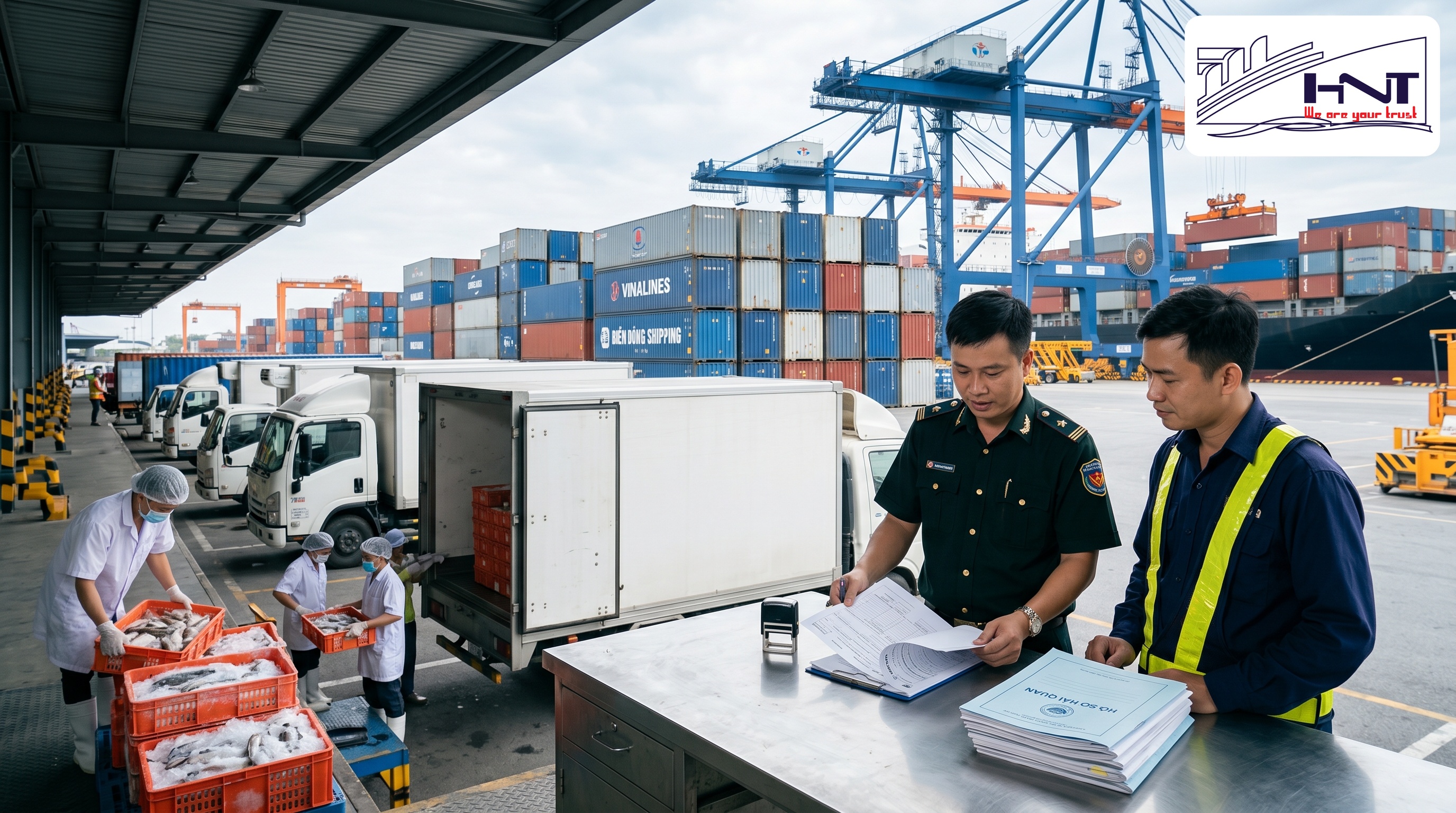
Characteristics of immediate clearance for the green channel
This is the most favorable channel for all export enterprises. Green channel declarations will be accepted for automatic clearance by the system. Customs dossiers for export goods at this time do not need to be submitted in paper form. This saves a large amount of waiting time.
Goods are allowed to be moved directly to the area waiting to be loaded onto the ship. Businesses only need to print the barcode to pass through the port supervision area. To achieve green channel status, the company must have a good declaration history. Maintaining credibility is a vital strategy.
Strict document verification requirements for the yellow channel
When a declaration enters the yellow channel, customs will inspect the documents. They examine the validity of all related documents. Actual goods are not yet subject to container opening for inspection. However, businesses must bring the original dossier to the sub-department.
Customs officers will carefully scrutinize the value and origin of the shipment. If any abnormalities are detected, they will request further explanation. Preparing transparent documents helps this stage pass smoothly. Customers can consult customs declaration services professionally to save time.
Process for actual physical inspection of goods for the red channel
This is the strictest level of control in the system. In addition to checking paper documents, actual goods are also examined. Customs officers will go down to the yard to open the container for inspection. This process takes a lot of time and effort.
The inspection rate can be from 1% to 100% of shipments depending on the risk level. All costs for loading, unloading, and cutting seals must be paid by the business. If there are major violations, goods may be suspended from export. This is a situation no one wants to happen.
List of criteria affecting channeling results:
- Compliance with customs laws in the last three years.
- Current state policies for managing export items.
- System of random risk assessment criteria on management software.
- Origin and receiving market of the export shipment.
- Completeness and transparency of the accompanying transport document set.
Practical example: Saigon Electronics Company always maintains a green lane rate of 95%. Thanks to transparent declarations, they do not incur physical inspection fees. Their component supply chain exported to South Korea is always smooth.
Practical example: Tay Nguyen Coffee Company was once switched to the red lane due to a tax code error. The shipment was 100% inspected, causing a delay in the departure schedule. They had to suffer a loss of 800 USD in unnecessary fines and storage fees.
Practical tips: If the declaration is in the yellow lane, bring a certified copy of the entire commercial contract to the branch to explain immediately.
| Result classification | Requirements for documents | Requirements for goods inspection |
|---|---|---|
| Green lane profile | Exemption from detailed examination of paper documents | Exemption from physical inspection of goods |
| Yellow lane profile | Detailed examination of all paper documents | Exemption from physical inspection of goods |
| Red lane profile | Detailed examination of all paper documents | Mandatory physical inspection of goods |
Notes When Preparing Export Customs Documentation
To an export customs dossier always standard, requiring high caution. The logistics industry always hides many risks of regulation changes. Proactive learning is the best way to protect goods. Businesses should not be subjective at any stage.
A smooth customs clearance process depends heavily on people. Documentation staff need solid expertise and practical experience. Continuous personnel training brings great efficiency. This is the most sustainable profitable investment.
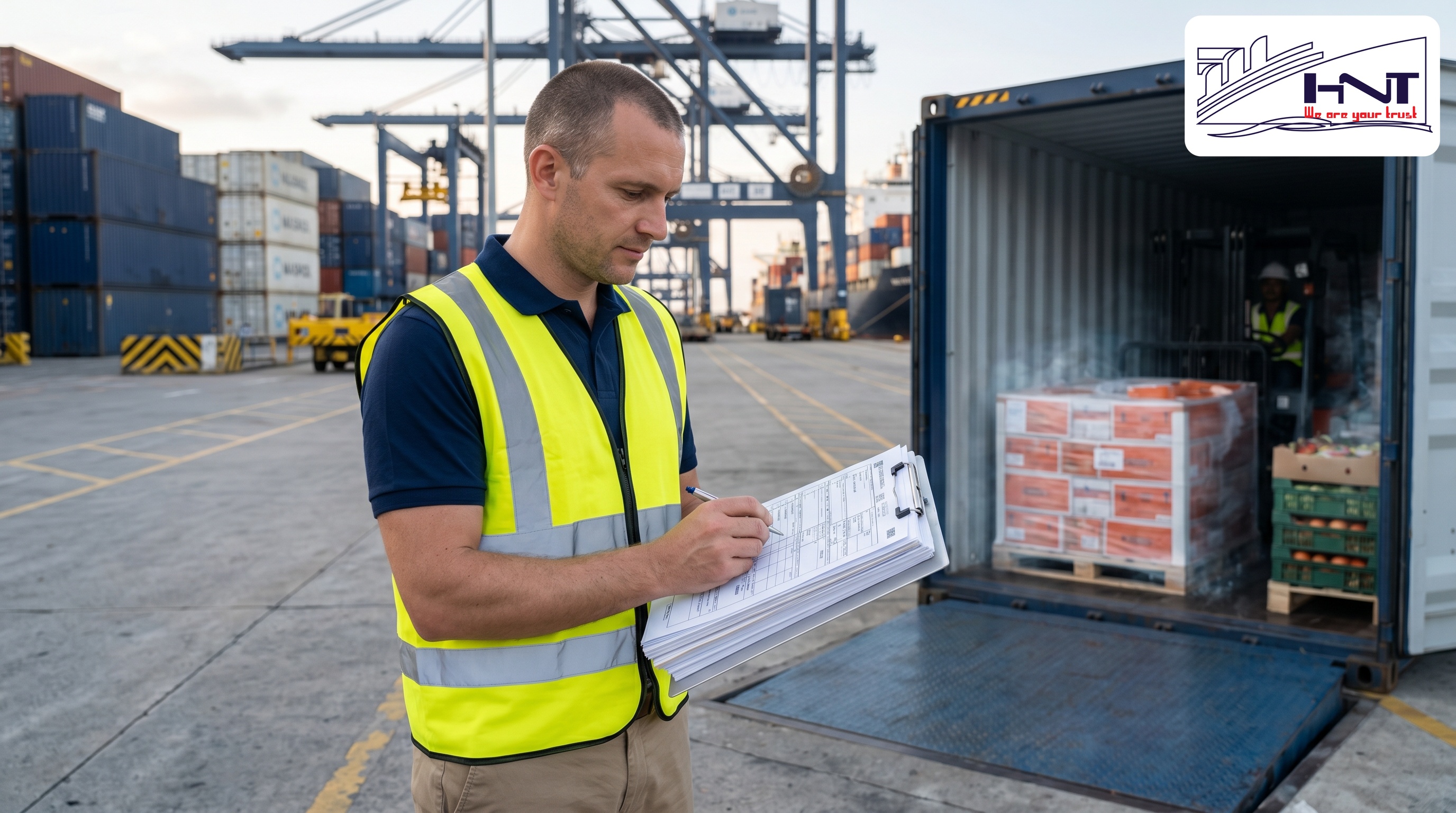
How to avoid discrepancies in cargo weight information
Weight (VGM) errors are a common cause of shipment delays. The weight of goods recorded on the packing list must match reality. Any significant difference leads to the container having to be re-weighed. This process is costly in both money and time.
Checking the load right at the warehouse is very necessary. Electronic scales must be maintained and calibrated periodically. Even a small error makes customs suspect fraud. Businesses should always measure with accurate equipment.
Proactively update new risk management regulations
International trade law is constantly adjusted. Failure to grasp new laws will invalidate the documentation set. Decrees on taxes and quarantine change frequently every year. Updating information is a task that cannot be neglected.
Business owners should subscribe to newsletters from the General Department. Attending professional transport seminars is also very useful. It helps to prepare thoroughly for large-scale exports. Long-term vision helps businesses overcome all barriers.
How to make quick and easy export customs procedures
Outsourcing professional declaration services is a current trend. Making export customs procedures requires high specialization. Customs agents have good relationships and deep experience. They know how to solve arising incidents very quickly.
This helps manufacturing businesses focus on their core. Reducing pressure for internal administrative departments is very effective. When choosing an agent, it is necessary to carefully consider their capacity and reputation. Customer peace of mind is the measure of service value.
List of common errors to avoid absolutely:
- Discrepancy in gross weight and net weight information on papers.
- Providing the wrong tax code or business registration address.
- Applying the wrong HS code leading to changes in the current tax rate.
- Missing legal signature or blurred corporate seal.
- Transmitting data to the system later than the prescribed cut-off time.
Practical example: Rang Dong Asia Plastic Company was once fined 15 million VND for declaring the wrong HS code. Since then, they have hired a professional customs agent. Currently, their shipments always complete procedures within 4 hours.
Practical example: Dong Nam Fertilizer Company has reduced weight errors by 100%. They equipped an automated truck scale system that connects directly to the software. This helps the document reconciliation process take place perfectly.
Practical tips: Create an online communication group between documentation staff, the warehouse department, and truck drivers to update file status in real-time.
Conclusion on Optimizing Export Customs Documentation
In summary, a an export customs dossier complete set is the key to opening the door to international trade. It helps the supply chain operate smoothly and optimizes costs. Enterprises need to pay special attention to accuracy and consistency. Professionalism in document preparation is sustainable competitiveness in the global market.
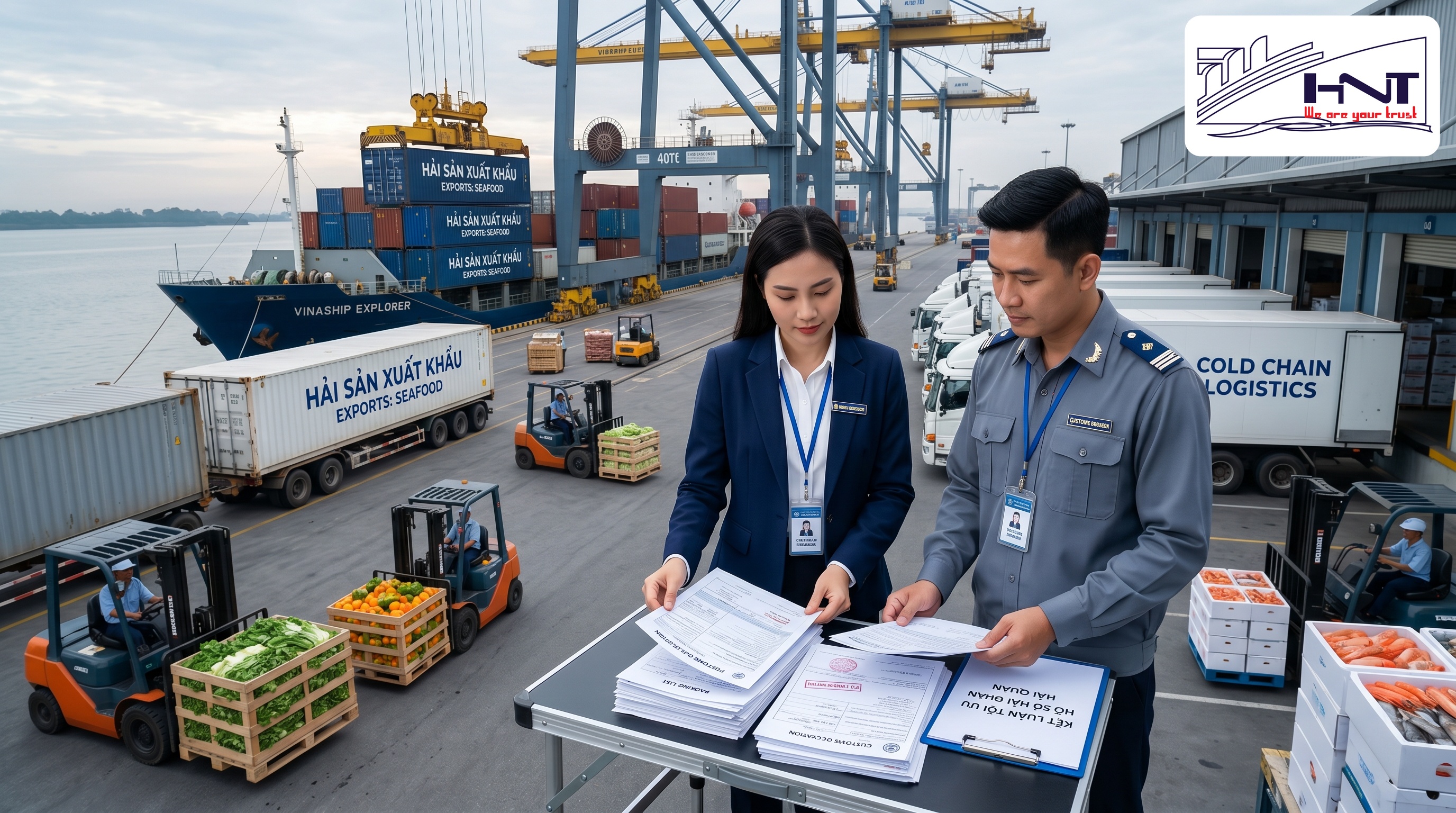
- A complete set of documents protects the shipment from the risk of expensive storage fees.
- Transparency of documents helps increase the favorable green channel clearance rate.
- Weight data and HS codes need to be carefully cross-checked.
- Digitizing the draft storage process helps to review errors more quickly.
- Hiring a professional declaration service is the best time-saving option.
With many years of experience, HNT LOGISTICS is always ready to accompany you. HNT LOGISTICS, a reliable transport and logistics partner for Vietnamese export businesses, is committed to providing fast and streamlined customs clearance solutions. Contact us immediately via hotline 096 309 78 19 or email marketing@hntshipping.com for advice on the most effective route.