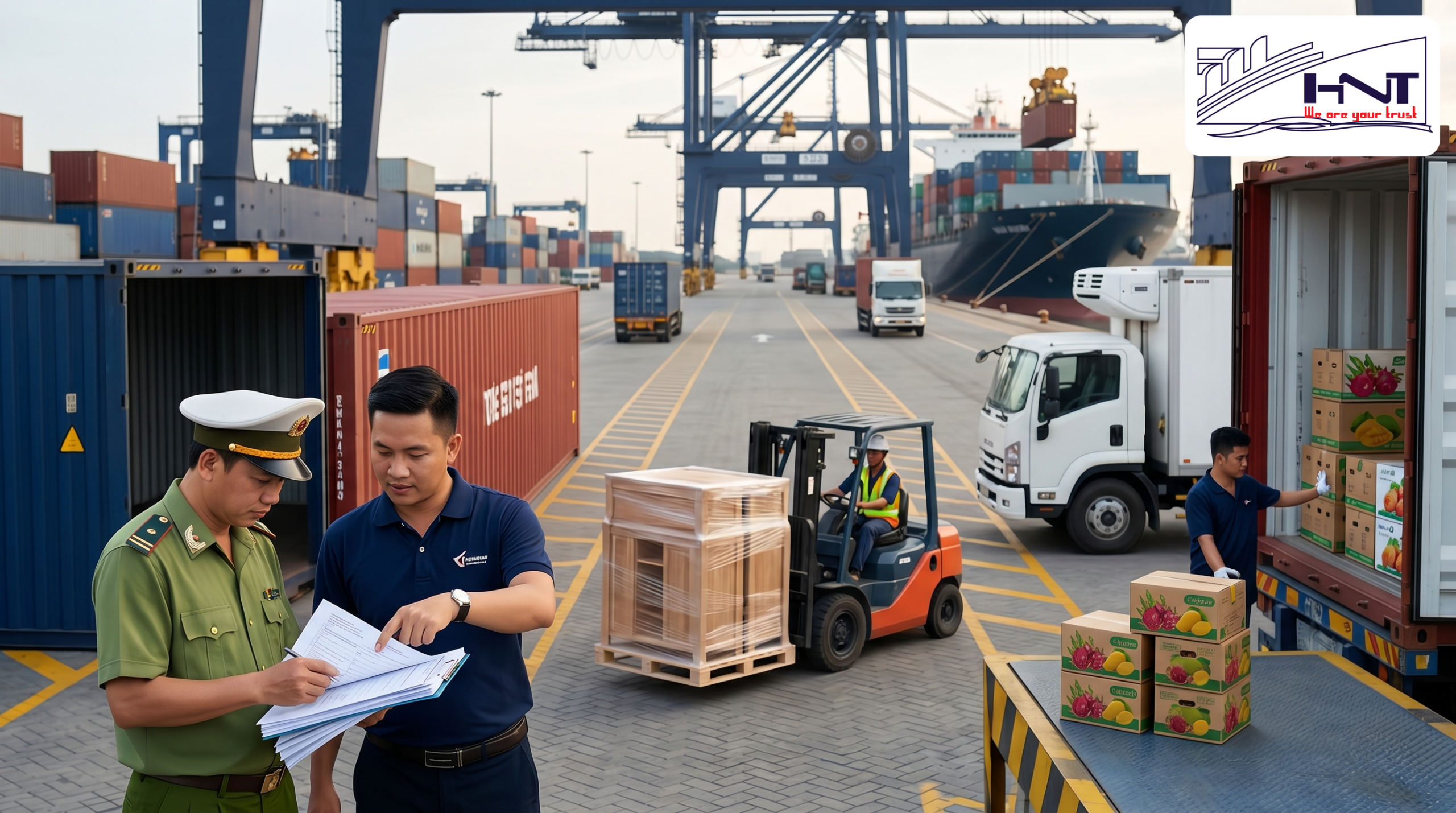
Full-package customs services becomes urgent when the container has arrived at Cat Lai Port but the HS code, label, or origin documents still do not match. In the first six months of 2026, exports of agricultural, forestry, and aquatic products reached approximately 33.84 billion USD; specifically, agricultural products reached 18.46 billion USD and forestry products reached 8.82 billion USD. This article helps businesses control documents, vessel schedules, and decide when to authorize exports.
Where are agricultural and wood product exporters losing costs before opening the declaration?
Costs are usually not lost in one large sum. It leaks through document revisions, container delivery order changes, storage fees, and urgent processing. For fresh goods, one day of delay also narrows the sales time in the destination market. Therefore, businesses need to check the readiness of documents before sending trucks into the port.
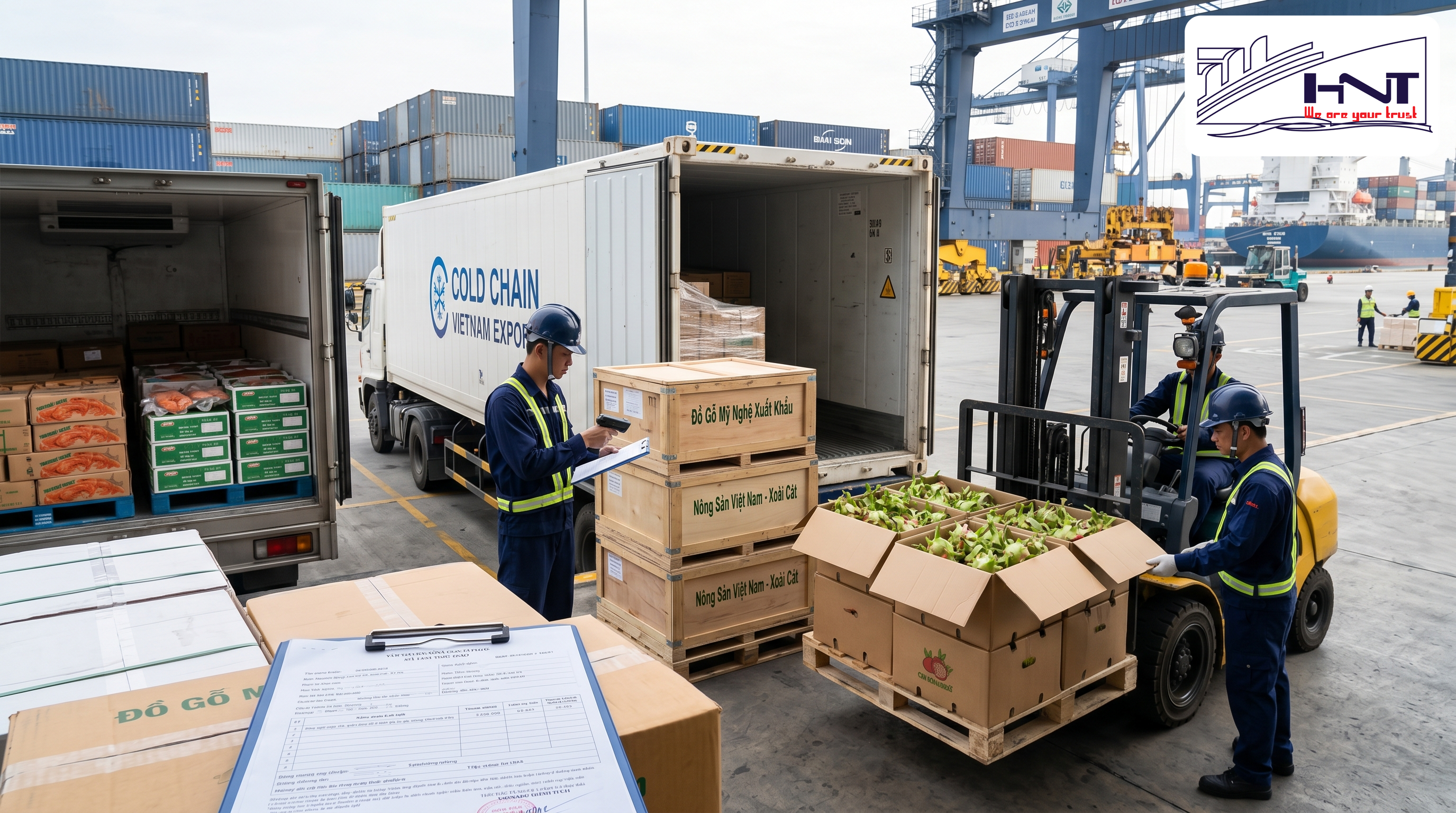
Bottlenecks causing agricultural shipments to miss vessel schedules despite complete documentation
Having the sufficient number of documents does not mean meeting the conditions for declaration. Product name, specifications, growing area code, container number, and set temperature must be consistent. For fresh fruit going to China, quarantine requirements are usually tied to registered growing areas and packaging facilities.
Common risks when handling wood product export procedures related to origin and specialized documents
Wood products are easily subject to deep inquiries about composition descriptions, wood species, raw material origins, and supply chain documents. Discrepancies between contracts, invoices, packing lists, and declarations prolong the explanation process. Wood export procedures need to be reviewed from the raw material procurement stage, not after the container is loaded.
Unexpected costs when self-handling export customs declarations
Self-declaring businesses often overlook costs for bill of lading revisions, container storage fees, additional lifting fees, and waiting truck costs. Demurrage/Detention fees can increase rapidly when documents are not approved on time. Full-service customs services help separate which costs are mandatory and which arise due to process errors.
Checklist for reviewing documents before the declaration transmission day to avoid multiple revisions
- Cross-check product name, specifications, number of packages, and weight between contracts, invoices, and packing lists.
- Confirm HS code based on product composition, usage, processing level, and related technical documentation.
- Check vessel departure date, port entry deadline, document submission deadline, and empty container pickup time.
- Verify growing area codes, packaging facilities, and quarantine certificates for each batch of fresh goods.
- Cross-check container number, seal number, and set temperature before issuing the bill of lading.
- Check payment terms, delivery terms, and C/O requirements of the buyer.
| Checkpoint | Risks if incorrect | Person in charge | Closing time |
|---|---|---|---|
| HS Code | Amend declaration | Import export | Before booking |
| Growing area code | Not qualified for quarantine | Procurement | Before loading goods |
| Cold temperature | Quality degradation | Cold storage | Before container loading |
| Delivery terms | Cost dispute | Business | Before contract signing |
Practical summary: lock the declaration dataset at least 24 hours before the container loading date. For example, An Phu Fruit Company in Tien Giang once adjusted the number of packages after sealing a reefer container bound for Shanghai. When switching to a single-source data checklist, the business reduced document revisions by half in the next three shipments.
What tasks does the full-service export customs declaration service support?
Effective export customs declaration service is more than just transmitting the declaration. The value lies in the ability to detect conflicts before the cargo reaches the yard. Standardized documents will help sales, production, and transportation departments use the same data throughout the journey.
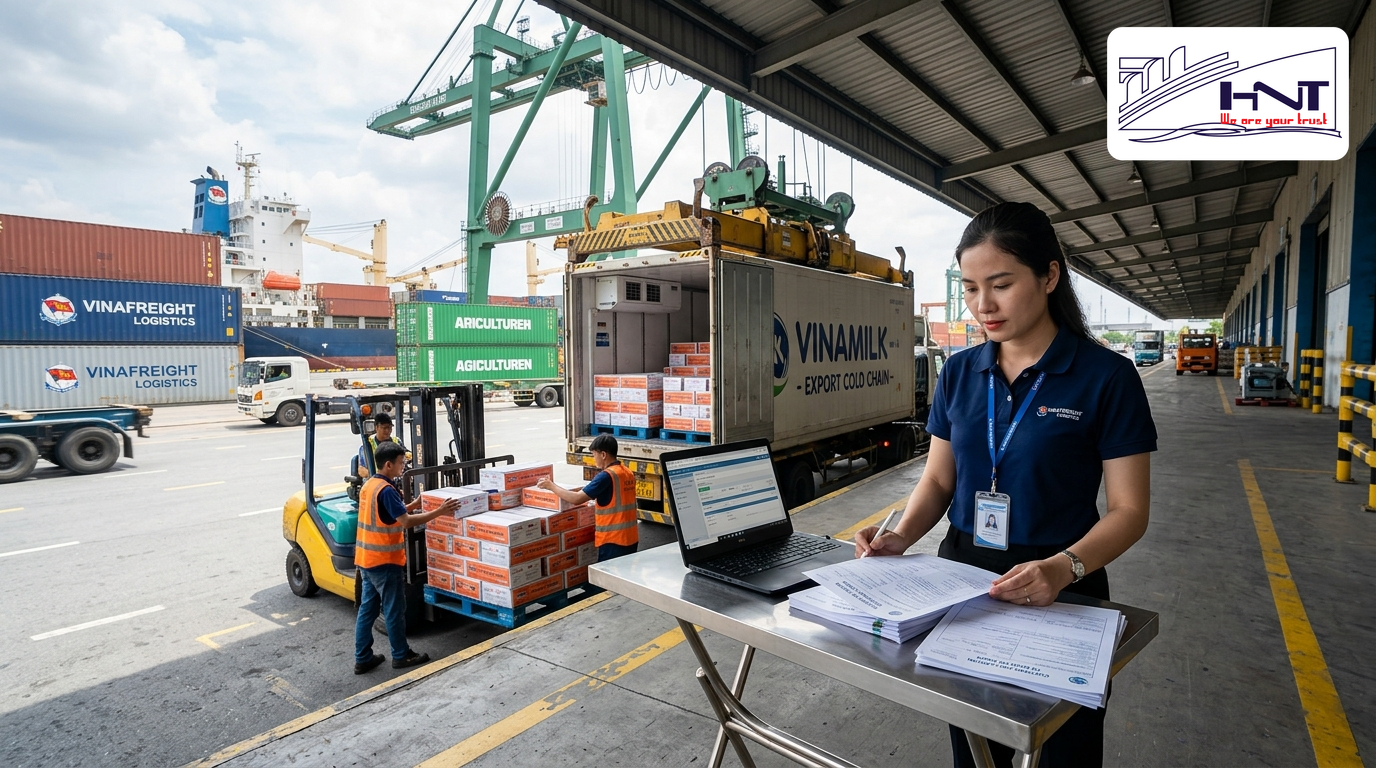
Standardizing export document sets by product group
Fresh agricultural products need quarantine files, traceability, and storage instructions. Wood products need descriptions of materials, processing procedures, and documents proving appropriate origin. Frozen goods need clarification on temperature, shelf life, and labeling specifications. Do not use a common document template for all product groups.
Declaring HS codes and product policies before registering the declaration
HS code determines management policy and how to describe goods. Businesses need to compare composition, usage, processing level, and technical documents. Determining this early helps avoid situations where the ship is booked but it is discovered that the goods need additional documents or specialized explanations.
Performing customs declaration, submitting documents, and coordinating physical inspections
Circular 121/2026/TT-BTC is effective from February 1, 2026, amending several regulations on customs procedures, inspection, and supervision. Businesses should update the process of attaching files, storing data, and responding to requests for additions according to the current regulations.
Tracking customs clearance and handling arising situations at the port
After transmitting the declaration, it is necessary to monitor the channel classification results, yard deadline, and cutoff time. Yellow channel requires preparing clear documents. Red channel requires coordinating physical inspection, keeping the seal intact when necessary, and coordinating vehicles to match the inspection schedule.
Supporting document completion after clearance and storing documents
Post-clearance documents should be stored by shipment code, buyer, and inspection period. HNT LOGISTICS recommends storing declaration data, bills of lading, C/O, quarantine certificates, and internal approval exchanges simultaneously. This storage method shortens retrieval time when buyers, banks, or regulatory agencies request reconciliation.
- Evaluating commercial documents before confirming the empty container pickup schedule at the port.
- Standardizing product names with a unified language between contracts and customs declarations.
- Cross-referencing HS codes with technical descriptions, composition, and actual processing levels.
- Preparing phytosanitary certificates or specialized documents according to the destination market.
- Tracking declaration channels and processing deadlines to avoid missing the cutoff time.
- Storing electronic files by shipment code to serve post-clearance inspections.
| Group of goods | Key documents | Main risks | Points to confirm |
|---|---|---|---|
| Fresh fruit | Quarantine, growing area | Mismatching codes | Packing log |
| Thủy sản đông lạnh | Quality, temperature | Cold chain breakage | Container specifications |
| Wooden furniture | Raw material origin | Incomplete description | Wood species, composition |
| Dried agricultural products | Quality, label | Incorrect specifications | Humidity, packaging |
For example, Minh Thanh Wood Company in Binh Duong exported tables and chairs to the United States and lost a day because the product description on the packing list differed from the invoice. After building a standardized template, the business reduced the time for document reconciliation before declaration from four hours to 90 minutes.
Process for implementing full customs brokerage services from booking receipt to cargo loading
Full customs brokerage services must operate as a process with clear milestones. A booking is not the starting point for declaration. It is the signal to lock cargo data, warehouse schedules, documents, and risk management plans before the container enters the port.
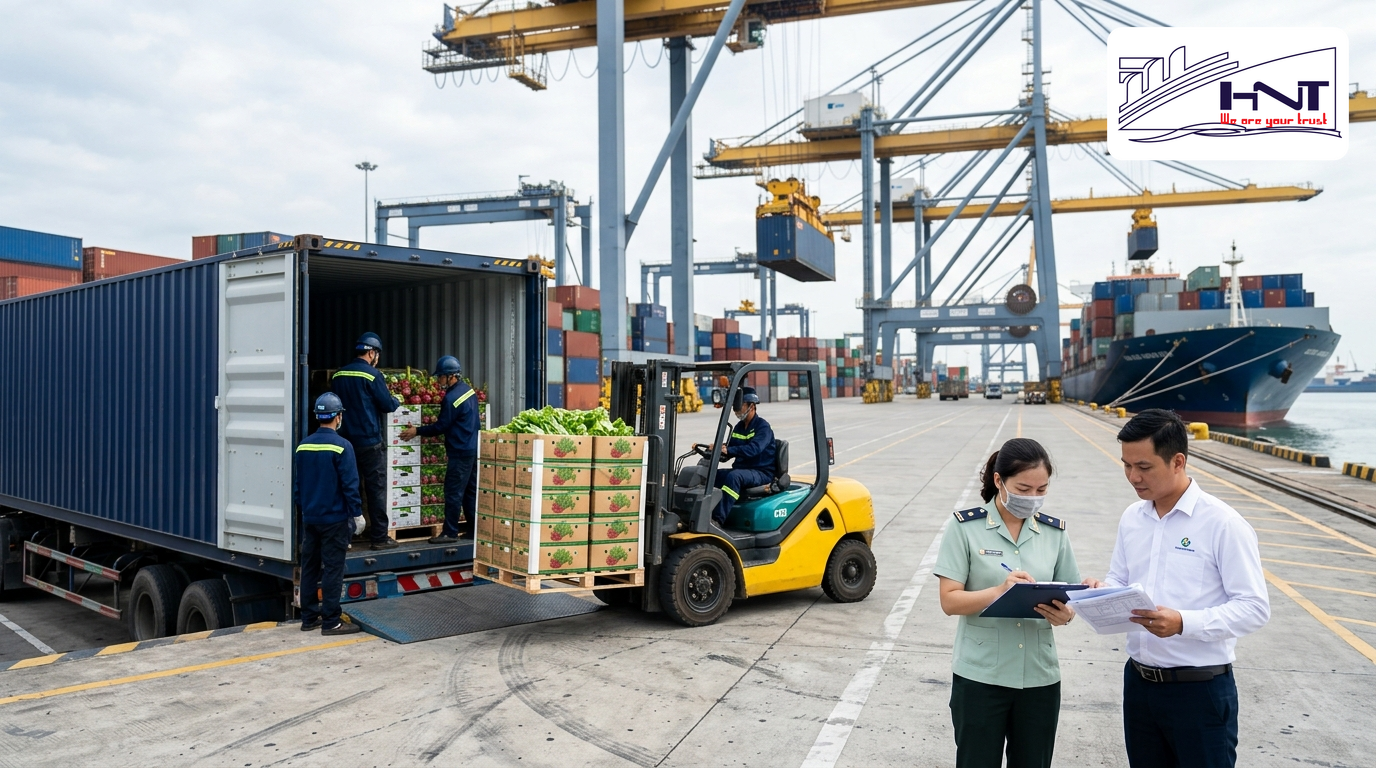
Shipment information receipt and initial risk assessment stage
The processing unit needs to collect information about the exporter, consignee, delivery terms, port of departure, port of destination, and shipping schedule. At the same time, it is necessary to confirm which specialized management group the item belongs to. Risks must be linked to each shipment, not just the customer.
Pre-declaration document preparation stage
This stage includes checking contracts, invoices, packing lists, permits, and quarantine documents. For cold chain cargo, it is necessary to further check the set temperature, pre-cooling time, and power supply capacity at the yard. The appropriate internal grouping is refrigerated container standards.
Processing stage for yellow or red channel declaration
The yellow channel requires fast, focused document responses. The red channel requires on-site coordination, assigning personnel knowledgeable about the goods, and preparing preservation plans. Do not arbitrarily change seals or open cargo before instructions from customs authorities.
Stage of completing tax and fee obligations and confirming customs clearance
Exported goods may not incur export taxes, but businesses still need to check the policy for each item. In addition to tax obligations, it is necessary to settle port fees, document fees, refrigeration electricity fees, and charges prescribed by the shipping line or yard. Only then can the cargo loading plan be confirmed.
Common errors after channel results and quick handling methods
- Slow response to document requests due to no clear assignment of internal approval points.
- Container number discrepancy between declaration and bill of lading due to changing containers close to closing time.
- Incorrect seal number because warehouse staff updated data after the truck left the yard.
- Missing technical documentation when inspection officers request an explanation of wood product composition.
- Failure to monitor refrigeration electricity fees, causing cold cargo preservation to be interrupted at the yard.
- Scheduling customs inspection too close to the cargo closing time increases the risk of missing the voyage.
| Phase | Mandatory output | Risk if delayed | Proposed milestone |
|---|---|---|---|
| Receive booking | Shipment assessment sheet | Wrong route, wrong schedule | Day of receipt |
| Document preparation | Reconciled document set | Amend declaration | Before loading goods |
| Channeling | Document or inspection plan | Missed cut-off | Within the day |
| Customs clearance | Confirm loading | Incurred fees | Before train departure |
Based on the experience of HNT LOGISTICS, reefer dragon fruit shipments from Long An to Shanghai should have their seal numbers and temperature locked before the truck enters Cat Lai Port. A business that assumed this principle avoided second document changes and kept the booked vessel.
When to use export entrustment services instead of self-exporting?
Export entrustment services are suitable when a business has production capacity but is not ready for legal management, international payments, and export documentation. This decision should not be based solely on 'lack of experience'. Compare service costs with the risk of losing customers, missing vessels, or document errors.
Case where the business is not eligible or lacks export experience
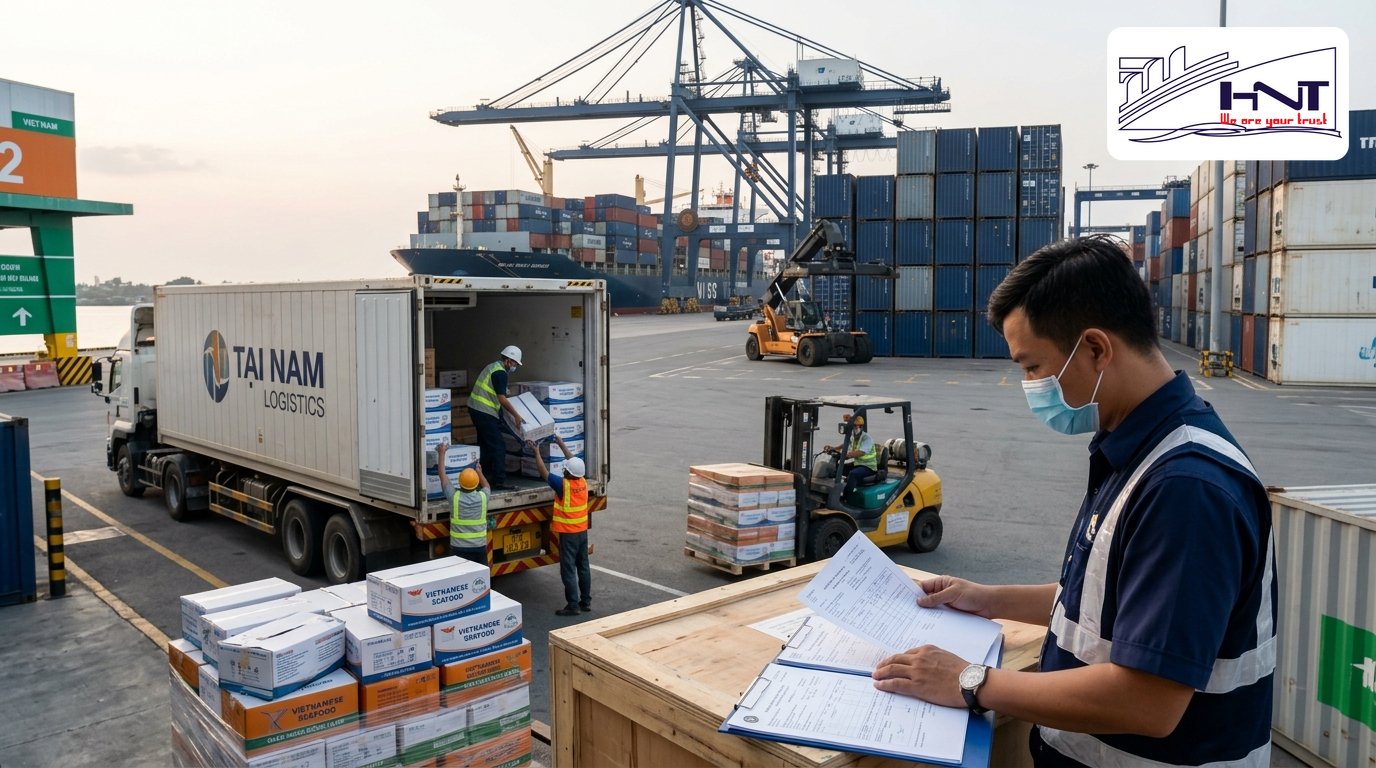
New businesses need time to establish processes for procurement, quality, contracts, and foreign currency management. During this phase, the entrusted entity can handle transactions, prepare documents, and coordinate payments as agreed. However, the entrustment contract must clearly specify responsibilities regarding goods, prices, and claims.
Benefits of export entrustment for seasonal agricultural orders
Seasonal agricultural orders have very narrow time margins. If a business only exports a few shipments per year, maintaining a specialized declaration department may not be efficient. Export entrustment services help utilize ready-made processes, but the business still needs to control quality, traceability, and loading schedules.
Solutions for wood product manufacturing businesses wanting to expand into international markets
Wood furniture factories can focus on design, material control, and delivery capacity. The entrusted entity supports commercial transactions and documentation. This is a transitional option, not a complete replacement for internal export capacity if the business wants sustainable expansion.
Legal, payment, and documentation tasks are assumed by the entrusted entity
- Be named on the export contract within the scope agreed upon in the entrustment agreement.
- Issue or coordinate the inspection of invoices, packing lists, and export bills of lading.
- Carry out customs declarations, monitor customs clearance, and coordinate the handling of document requests.
- Manage international payment progress according to contract conditions and bank documents.
- Coordinate the application for C/O, quarantine, or certificates required for each receiving market.
- Store transaction records and settle service fees for each actual shipment.
| Criteria | Self-named | Export consignment | Suitable when |
|---|---|---|---|
| Control buyers | Infrastructure | According to contract | Already have a team |
| Legal records | Self-manage | Supported | New to exporting |
| Fixed costs | Higher | Flexible by shipment | Seasonal orders |
| Implementation speed | Internal dependence | Faster | Need to reach the market soon |
For example, Dong Nam Wood Workshop in Dong Nai received a trial order to Melbourne in small quantities. Because they did not have an international payment process, the business used entrustment for the first two shipments. Afterward, they used the sample document data to build an internal process and self-named from the third shipment.
Insight: Export shipment delays are not due to customs but due to incorrect preparation before the declaration date
Customs only sees the data provided by the business. Most delays start from the moment sales finalize delivery terms but do not pass full information to production and logistics. Therefore, pre-declaration control must be part of the sales process, not just the task of import-export personnel.
Why determining the HS code late increases the risk of delivery schedule delays
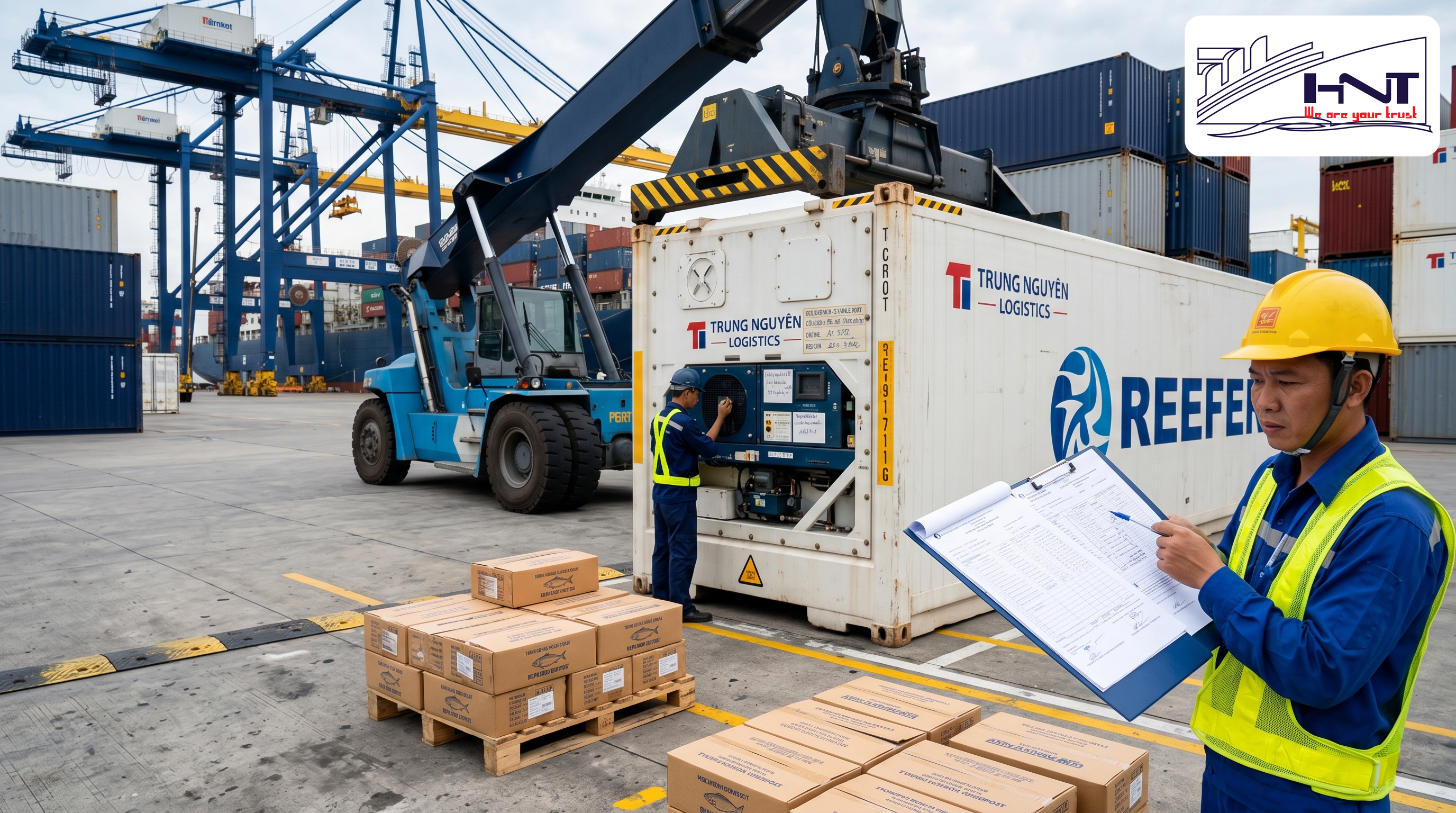
Late HS codes delay policy checks and technical document preparation. For furniture, material details or wood types can change the description. For agricultural products, the level of processing and packaging specifications must also accurately reflect the nature of the goods.
The time period businesses often ignore between signing a contract and booking a vessel
This gap should be used to confirm delivery terms, document sets, import requirements, and loading capacity. Do not consider booking as the first step. This is the time to finalize recipient information, labels, payment terms, shipping routes, and container plans.
How to synchronize information between sales, production, and logistics departments before export
Businesses should use a unified shipment sheet. This sheet must include item codes, buyers, delivery terms, destination ports, delivery schedules, packaging specifications, and documentation requirements. According to experts at HNT LOGISTICS, a single data source helps reduce the situation where each department uses a different version.
Establish internal control processes to reduce reliance on last-minute troubleshooting
- Set up a shipment finalization meeting between sales, production, and logistics before the container closing date.
- Appoint a shipment data owner and authorization for document changes.
- Set deadlines to lock HS codes, product specifications, and recipient information before booking.
- Require all changes in package counts or weights to be recorded on a common form.
- Build a document portfolio for each market to avoid last-minute document searching.
- Evaluate the causes of vessel delays after each shipment and turn them into corrective actions.
| Information | Business | Production | Logistics |
|---|---|---|---|
| Delivery terms | Finalize | Identify | Cost check |
| Packaging specifications | Customer confirmation | Execution | Declaration |
| Delivery schedule | Commitment | Planning | Book vessel |
| Specialized documentation | Provide requirements | Coordinate | Complete file |
For example, a hypothetical seafood factory in Ca Mau shipping cold cargo from Cat Lai Port to Busan once had to change voyages because the production department changed the number of boxes after declaration. When applying a data lock sheet 36 hours in advance, the business maintained a stable shipping schedule for the next five shipments.
Criteria for selecting full-service customs providers and long-term cost optimization plans
Choosing a full-service customs provider should not be based solely on the declared price. Businesses need to look at risk classification capabilities, on-site response, file management, and the ability to forecast costs. Low quotes that lack a clear scope of work often create disputes when yellow or red channels occur.
Capabilities to evaluate before signing a service contract
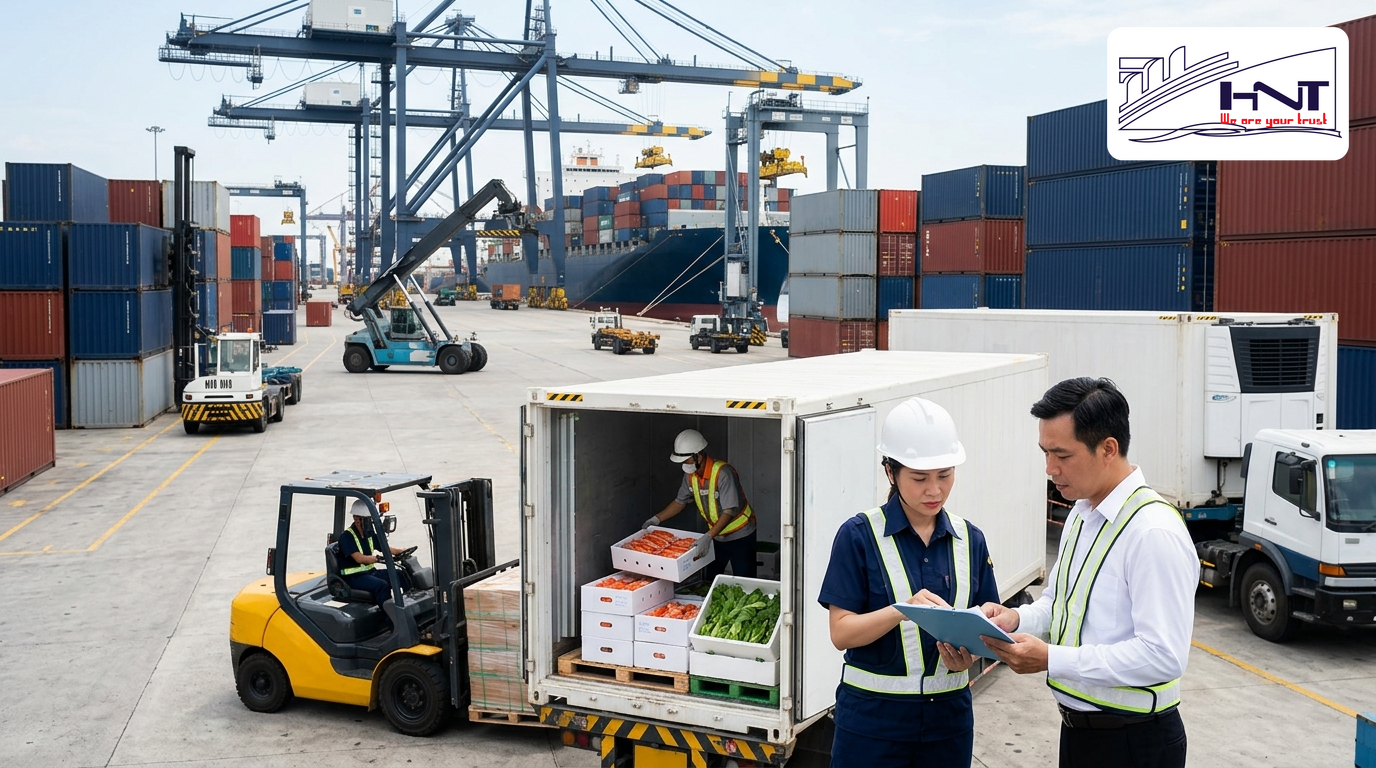
Evaluate experience by commodity group, handling capacity at the port, after-hours communication mechanisms, and how the unit manages files. A suitable provider must be able to explain risks with specific data. A suitable internal term is customs brokerage for export.
How to compare quotes to identify potential costs
Quotes must clearly separate declaration fees, documentation fees, on-site fees, inspection fees, electricity/refrigeration fees, and amounts collected by the port or shipping line. Do not accept a 'full-service' line without knowing the applicable conditions. Ask specifically what costs arise when changing bookings, amending declarations, or conducting physical inspections.
KPIs to track after each export shipment to reduce operating costs
Businesses should track the rate of declaration amendments, hours from declaration to customs clearance, missed shipment rates, and additional costs per container. These indicators show whether the error lies in documentation, the warehouse, or coordination. KPIs should not be used to assign personal responsibility but to improve processes.
Storage of export records and data for post-clearance audits
- Store declarations, invoices, contracts, packing lists, and bills of lading by each shipment code.
- Attach quarantine certificates, C/O, and technical documents to the same controlled electronic folder.
- Save internal approvals for changes in quantity, price, specifications, or delivery terms.
- Reconcile declaration data with payment documents to reduce future explanation risks.
- Delegate access permissions to avoid editing original files after goods have been cleared.
- Set up a periodic review schedule for items with high export frequency.
| KPI | Calculation Method | Management Objective | Action when increasing |
|---|---|---|---|
| Declaration amendment rate | Number of amended declarations divided by total declarations | Reduce data errors | Review handover points |
| Customs clearance time | Hours from transmission to completion | Maintain vessel schedule | Check missing documents |
| Chi phí phát sinh | Unexpected fees per shipment | Control budget | Negotiate service scope |
| Missed shipment rate | Missed shipments divided by total shipments | Protect customer commitments | Review booking and inventory |
Practical summary: Choose a partner that can turn data from each shipment into preventive actions. HNT LOGISTICS is a reliable freight forwarding and logistics partner for businesses exporting agricultural products, seafood, and fresh fruits, when businesses need to coordinate declarations, cold chains, and shipping schedules within a single operational point of contact.
Full-service customs services only provide value when businesses prepare data early and maintain discipline across departments. Instead of waiting for incidents at the port, build a control mechanism from the time of signing the contract until the bill of lading is issued. This protects schedules, profit margins, and long-term delivery reputation.
- Lock HS codes and commodity policies before booking vessels or ordering empty containers.
- Synchronize contracts, invoices, packing lists, and declaration data from a single source.
- Review quarantine, growing area, and packing facility requirements before loading fresh goods.
- Compare quotes based on the scope of handling rather than just choosing the lowest declaration fee.
- Monitor KPIs for declaration amendments, customs clearance time, and shipment missed rates by month.
- Use export entrustment services when legal or payment capacity cannot keep up with orders.
For businesses wanting to reduce last-minute handling, turn each shipment into improvement data for the next one. HNT LOGISTICS can accompany you as a reputable freight forwarding and logistics partner, helping Vietnamese exporters standardize documents, control cold chain risks, and build sustainable export processes.