A container of durians originating from the Central Highlands growing region may be stored at the correct temperature but still incur losses if it has to wait for several days at the border crossing. For fresh longans, prolonged transit times increase the risk of moisture loss, skin darkening and reduced commercial value. Meanwhile, oranges can withstand transportation relatively well but still face risks of skin bruising, fungal diseases and the import market's acceptance conditions. Therefore, fruit transit through China is not simply a matter of finding the cheapest transport option.
When considering fruit transit through China, exporters should recognise that practical efficiency depends on coordination between growing regions, packing facilities, refrigerated transport, customs procedures, phytosanitary inspections and the receiving capacity of Chinese partners. A lack of coordination at just one stage can prolong delivery times, increase additional costs and significantly reduce the proportion of goods meeting commercial standards.
For fruit transit solutions through China, from the perspective of cross-border logistics consultancy, HNT Logistics analyses transport options for durians, longans and oranges based on four decisive factors: the legality of the transaction, the stability of the cold chain, total transport and delivery costs, and risk management capabilities. The technical specifications in this article serve as a reference for developing a suitable plan; import conditions, transport routes and phytosanitary requirements must be verified against the regulations in force at the time of implementation.
Fruit Transit Through China: Analysis of Cross-Border Transport Chains Based on the Characteristics of Each Commodity
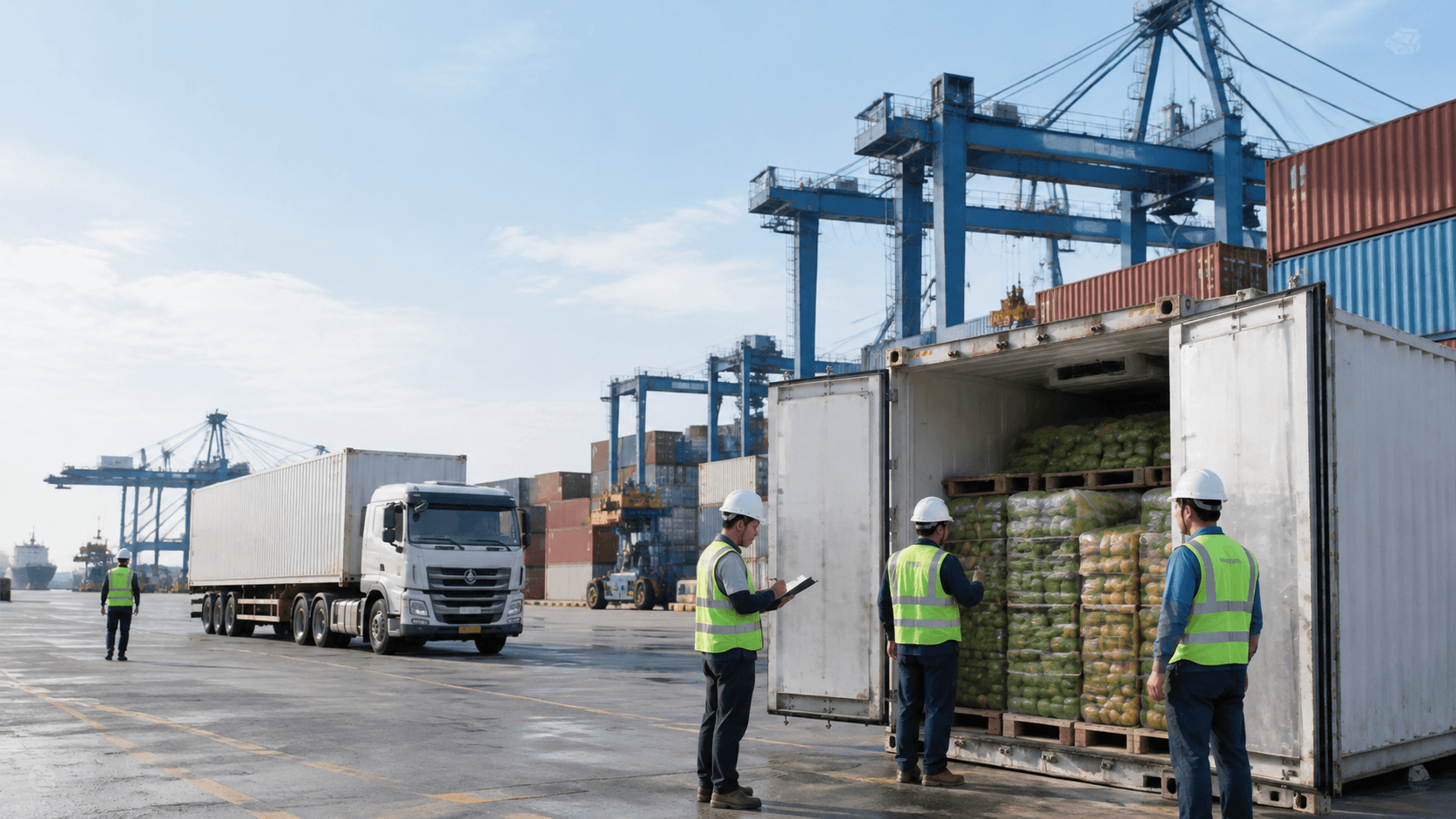
Distinguish between transit, intermodal transport and direct export models to determine the correct operational scope, legal responsibilities and transport arrangements
During the transportation and customs clearance of fruit transiting through China, the term 'transit' is commonly used in logistics to describe the movement of goods across borders or through an intermediate country. However, under customs law, goods in transit have a distinct legal scope and are not synonymous with all transportation activities involving goods exported to China. Misclassifying the type of operation at the outset may result in the incorrect selection of documentation, routes or customs supervision procedures.
To optimise costs and transit times for fruit shipments to China, durian or longan of Vietnamese origin sold to Chinese businesses and transported directly across the Vietnam–China border are generally considered standard exports from Vietnam and imports into China. Transport may use cross-border intermodal vehicles or organised cross-border freight forwarding, but this does not automatically classify the shipment as goods in transit in the legal sense.
Based on HNT Logistics' practical operational experience with fruit shipments to China, by contrast, fruit originating in a third country, passing through Vietnamese territory before continuing to China, may fall under Vietnam's goods-in-transit regime. If Vietnamese goods pass through Laos before being imported into China, the transit regulations of Laos, intermodal transport requirements and China's import procedures must be considered. Each country has its own competent authorities responsible for the section of the journey within its territory.
When exploring fruit shipments to China, international intermodal transport refers to the organisation of freight movements across multiple countries or transport legs, depending on the applicable arrangements. A transport provider may carry out a cross-border journey or coordinate several carriers at designated handover points. Before signing a contract, businesses must establish which party is responsible for the vehicles, seals, temperature control, waiting times and any losses.
For fruit transit solutions to China, businesses should consult the 2014 Customs Law, the 2017 Law on Foreign Trade Management, Decree No. 08/2015/ND-CP and the amendments and supplements currently in force to determine the correct customs procedure. These regulations provide an important basis for distinguishing between export procedures, transport under customs supervision, goods in transit and transhipment activities at ports or border gates.
Develop a cargo flow from southern growing areas to consolidation points, Vietnamese border gates and receiving locations in China, taking into account the characteristics of each type of fruit.
The transport chain usually begins at the harvesting area, then passes through a pre-processing or packing facility, a consolidation warehouse, a domestic transport route, an export border gate and the distribution network in China. For goods originating in the Mekong Delta or Southeast Vietnam, businesses can consider road transport northwards or a combination of sea and road freight, depending on the delivery destination and schedule.
For durians harvested in Dak Lak, Lam Dong or other southern growing areas, the packing location should be selected to minimise the long-distance transport of ungraded fruit. Durians continue to respire and ripen after harvesting; therefore, extending the time between harvesting and container loading reduces the remaining shelf life available for transport and distribution.
For longan from the Mekong Delta, the collection process should minimise exposure to direct sunlight, reduce the number of vehicle transfers and control the time between harvesting and cooling. If fruit from several farms is consolidated into one container, batch codes, harvesting times, fruit condition and carton specifications should be standardised to avoid quality variations within the same shipment.
For orange shipments in transit to China, the first step is to verify whether the specific orange variety, origin and product condition are legally eligible for import. As of the October 2026 review, Vietnamese fresh oranges should not be assumed to have an official export mechanism equivalent to that for durians or longans. China's approval of certain other citrus fruits does not mean that all types of oranges are permitted for import.
When planning the route, border gates in Lang Son, Lao Cai, Quang Ninh or other handover locations should only be included when they meet the actual customs clearance requirements, cargo specifications and handling capacity. The nearest border gate is not necessarily the best option if it requires multiple transhipments or lacks power supply infrastructure for refrigerated containers.
Analyse the differences between durians, longans and oranges in terms of temperature sensitivity, tolerance to vibration, rate of quality deterioration and maximum transport time.
Durian is a climacteric fruit, meaning that its ripening process can accelerate significantly after harvesting. The ripening rate is influenced by the variety, maturity at harvest, temperature and storage conditions. At higher temperatures, respiration and ethylene production increase, causing the flesh to soften more quickly, raising the risk of cracking and separation, and reducing the remaining marketable shelf life.
Different durian varieties do not ripen at the same rate or have the same level of cold tolerance. According to the postharvest technical guidance from the University of California, Davis, the recommended reference temperature for fresh durians is approximately 13–15°C, with a relative humidity of 90–95%. Storage at excessively low temperatures can cause physiological damage, darkening of the peel and affect the fruit's ability to ripen normally.
Longan is a fruit with a relatively thin skin, making it susceptible to moisture loss and discolouration when stored under unsuitable conditions. Although smaller than durians, longan clusters are still vulnerable to bruising, fruit drop and stem damage when cartons are subjected to continuous vibration. The common problem is not only internal deterioration but also a decline in appearance, which reduces the selling price.
Oranges have a better protective peel but are not immune to mechanical damage. Excessive stacking creates pressure on the lower layers, while friction between fruits can cause scratches and create entry points for fungal diseases. The storage potential of oranges depends on the variety, ripeness, growing region and pre-harvest conditions.
There is no fixed transport time limit that is suitable for every shipment. The theoretical storage life under optimal conditions is not the amount of time available for waiting at the border. Businesses need to calculate the transport time budget from the moment of harvesting, including packing, pre-cooling, road transport, customs clearance, quarantine inspection, delivery and a contingency allowance for unexpected incidents.
Establish the implementation requirements before accepting the goods, including the legal status of all parties, authorised transport routes, import conditions and the specialised documentation applicable to each shipment.
Before accepting a shipment, the logistics provider must verify the legal status of the exporter, importer, customs declarant and the parties responsible for specialised regulatory procedures. Where a trading company purchases goods from multiple packing facilities, the documentation must clearly demonstrate the origin of the goods and the relationships between the parties involved.
Import conditions must be checked against the product's scientific or commercial name, country of origin, fresh or frozen status, and the applicable entry requirements in China. For durians, it is necessary to distinguish between the regulations governing fresh and frozen durians. For longans, the applicable quarantine conditions, recognised registration codes and current requirements for the commodity must be verified.
For oranges, businesses should not confirm an international transportation schedule based solely on a customer's request to book a vehicle. Verification results from the competent plant quarantine authority and the Chinese importing party regarding market access, required documentation, and conditions at the intended border checkpoint are necessary.
Implementation multimodal transportation must also take into account vehicle requirements, route operating rights, load regulations, and the ability to maintain the cold chain. A plan should only be considered feasible when commercial, legal, and operational requirements are all met, rather than simply because a vehicle is available to receive the goods.
Transit of Durian, Longan, and Oranges to China: Establishing Preservation Plans Based on the Physiological Characteristics of Each Fruit
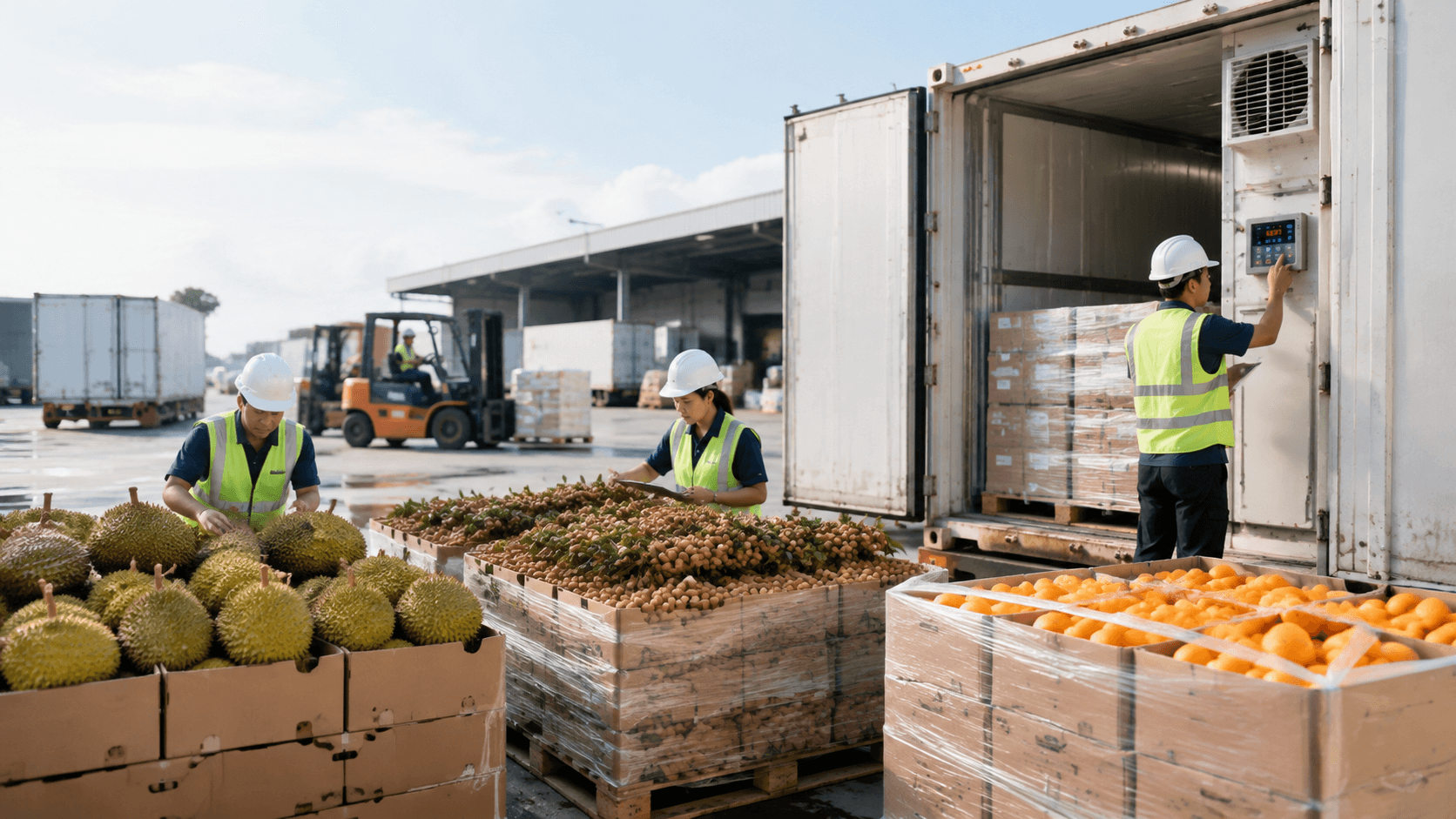
Develop a matrix of preservation requirements based on harvest condition, ripeness, fruit variety, and the expected duration of the cross-border journey
Establishing storage temperatures must begin with shipment-specific data rather than a default setting for refrigerated containers. For durians, information about the fruit variety, harvest age, physiological maturity, and ripeness at the time of packing largely determines the preservation strategy. If the fruit has already ripened rapidly, lowering the temperature cannot reverse physiological processes that have already occurred.
For longans, initial quality, stem integrity, and the rate of cooling after harvest have a significant impact on appearance upon arrival. For oranges, varietal characteristics and the risk of chilling injury must be assessed before selecting a temperature. High relative humidity helps limit water loss but must be accompanied by condensation control and packaging hygiene.
| Item | Reference Storage Temperature | Relative humidity | Factors to Control | Operational notes |
|---|---|---|---|---|
| Fresh durian | 13–15°C | 90–95% | Variety, ripeness, ethylene, chilling injury | Avoid setting the temperature too low and reduce waiting time |
| Fresh longan | Approximately 4–6°C, with a reference target of 5°C | 90–95% | Water loss, peel browning, stem damage, fungal diseases | Cool promptly and maintain a stable cold chain |
| Fresh oranges | Approximately 3–8°C for many varieties; some varieties require higher temperatures | 90–95% | Peel abrasions, decay, variety-specific chilling injury | Adjust according to variety and production region |
The above matrix is compiled from postharvest technical resources published by the UC Davis Postharvest Research and Extension Center, including the Durian, Longan, and Orange fact sheets available at postharvest.ucdavis.edu. These are scientific reference parameters, not universally mandatory requirements for every variety or transportation contract. The official temperature setting must be confirmed with the cargo owner and the importer's quality requirements.
For operational planning, businesses should distinguish between the estimated duration and the contingency period. For example, a route planned to take three days by truck but requiring an additional two days as a customs clearance buffer cannot be evaluated based solely on the three days of travel. This is particularly important for durian shipments that have already reached advanced commercial ripeness.
Analyze the criteria for selecting refrigerated containers, temperature-controlled trucks, or conventional vehicles based on cargo characteristics and actual operating conditions
Refrigerated containers are suitable for large shipments requiring continuous preservation and a clearly defined power supply plan at stopping points. Refrigeration equipment can control the air temperature inside the cargo compartment, but its effectiveness depends on container quality, cargo loading arrangements, airflow, and the initial temperature of the products.
Refrigerated trucks are generally more flexible when collecting goods from multiple growing regions or accessing packing facilities with restricted internal roads. However, the truck's actual cooling capacity, cargo compartment airtightness, backup power supply or fuel for the refrigeration unit during waiting periods must be inspected. Using a refrigerated truck does not guarantee product quality if the goods have not been properly precooled.
Conventional vehicles may be considered for certain shipments on short routes under suitable environmental conditions and with the cargo owner's approval following a risk assessment. For long cross-border routes, this option generally increases temperature fluctuations and makes quality control more difficult. In particular, conventional trucks should not be used for temperature-sensitive longans or durians solely to reduce initial costs.
When selecting equipment, businesses must simultaneously assess shipment volume, packaging weight, actual cargo volume, road weight limits, and transshipment arrangements at the border checkpoint. A 40-foot refrigerated container may have a greater volume than a 20-foot container, but this does not mean it is permitted to carry twice the cargo weight.
For contracts involving refrigerated container rental, equipment acceptance records should document the condition of the container shell, doors, seals, air circulation floor, refrigeration unit, power supply, drainage system, and the results of technical inspections before departure. This provides an important basis for determining responsibility if temperature-related incidents occur.
Establish procedures for monitoring temperature, ventilation, humidity, and equipment condition during cargo waiting, transshipment, and handover stages
Cold chain monitoring should begin when the goods are moved into the staging area. Postharvest fruit may accumulate field heat, particularly when placed in large baskets or boxes under high ambient temperatures. If warm cargo is loaded directly into a container, the refrigeration unit must handle a significant additional heat load, increasing the time required to reach a stable condition.
Before loading, the fruit pulp temperature or a representative product temperature must be determined using an appropriate measurement method. The temperature displayed on the container controller primarily reflects the equipment sensor location and cannot fully replace actual cargo temperature data. Therefore, high-value shipments should also use independent data loggers.
During transit, the operational log should record the departure time, set temperature, supply-air and return-air temperatures where supported by the equipment, power failures, refrigeration unit alarms and door-opening durations. When a container is waiting at a terminal or border crossing, the power supply point, responsible inspection personnel and contingency arrangements in the event of a power interruption must be clearly identified.
Ventilation must be configured according to the requirements of each fruit type and the equipment manufacturer's technical guidance. Increasing the ventilation rate is not always beneficial, as it may increase heat exchange or make it more difficult for the system to maintain the desired conditions. For longans, moisture loss and condensation control must be considered alongside packaging structure and air circulation capacity.
At the handover point, checking only the set temperature and then confirming that the goods meet the required standards is insufficient. The recipient should cross-check temperature records, inspect the seals, take sample measurements of the goods' temperature where necessary and record their physical condition. If any irregularities are detected, a handover report must be prepared at the time of transfer, before the goods are distributed or moved into another warehouse.
Establish quality control procedures using batch codes, temperature data, condition photographs, delivery and handover records, and criteria for assessing cargo losses.
Each batch of fruit must be traceable from the growing area to the final recipient using a consistent identification code structure. The batch code should be linked to the harvest date, packing facility, number of cartons, vehicle details, container number and seal number. In the event of a complaint, this system makes it possible to pinpoint the cause rather than having to inspect the entire consignment.
Photographic evidence should be recorded at key stages: before loading, during loading, after the doors have been fully closed, before the seal is removed and at handover. The images should show an overview of the goods, packaging condition, securing and cushioning arrangements, identification codes and any areas showing signs of irregularities.
Temperature data must be linked to actual timestamps and stored in a retrievable format. When a temperature excursion is detected, the start time, duration, extent of deviation and measurement location must be established. A brief alarm at the return-air sensor cannot automatically be taken to mean that all the fruit has spoiled; conversely, a stable set-point temperature does not prove that the goods have suffered no damage.
Loss assessment criteria should be agreed in the contract, including the proportions of bruised, cracked, rotten or spoiled, dehydrated or discoloured fruit, as well as non-conformity with specifications or failure to meet commercial requirements. For high-value disputes, an appropriate representative sampling and independent inspection procedure should be established.
A complete quality documentation file helps businesses demonstrate that they have fulfilled their preservation obligations and supports the handling of compensation claims. However, ultimate legal liability still depends on the contract, delivery terms, evidence of the cause and the scope of insurance cover, where applicable.
Fruit Transit to China: Managing Intermodal Transport Records, Phytosanitary Inspections and Continuity of the Documentary Trail

Distinguishing documentation requirements by transport mode, actual transit arrangements and the roles of Vietnam, any transit country and the receiving authorities in China
A single standard set of documents cannot be used for every cross-border transport route. If goods are exported directly from Vietnam to China, the main considerations are export procedures in Vietnam, phytosanitary requirements and import customs clearance in China. If the goods pass through a third country, the applicable customs and transport arrangements in the transit country must also be established.
Where goods transit through Vietnamese territory in the strict legal sense, they are subject to customs supervision and must comply with the relevant requirements concerning routes, border checkpoints, time limits and procedures. The Law on Foreign Trade Management sets out the principles governing the management of transit goods, while the specific documentation procedures are determined by implementing regulations and relevant international treaties.
For operational reference, businesses can consult Vietnamese customs authority regulations through the Vietnam Trade Information Portal at vntr.moit.gov.vn. This database provides information on procedures and regulatory documents, but businesses must still verify their legal validity and the applicable guidance at the time of customs declaration.
For the Vietnam–Laos–China route, it is essential to clarify whether the transit country accepts fresh plant-based goods along the proposed route, how far the vehicle is permitted to operate, and whether transshipment or a change of tractor unit is required. A Vietnamese transport permit or set of documents cannot automatically be used as a substitute for the procedures required by the transit country.
Compile a checklist of documents to be cross-checked, including contracts, commercial invoices, packing lists, customs declarations, phytosanitary certificates and transport documentation in accordance with applicable regulations.
The shipment documentation must consistently reflect the commercial nature of the transaction, the parties involved and the actual goods. For fruit exports, the documentation package typically includes a foreign trade contract, commercial invoice, packing list, customs declaration data and phytosanitary certificate as required by applicable regulations. Additional documents depend on the type of fruit, destination market and mode of transport.
Operational checklists should be standardised to minimise errors when multiple departments are involved in the process:
- Foreign trade contract and agreed delivery and payment terms, including the allocation of responsibilities.
- Commercial invoice showing the seller, buyer, goods description, quantity, value and delivery terms.
- Packing list showing the number of packages, net weight, gross weight, packaging specifications and batch code.
- Customs declaration and related documentation corresponding to the applicable export, transit or transport under customs supervision procedures.
- Phytosanitary certificate, growing area records, packing facility records and test results where required.
- Transport documents and information about the vehicle, driver, container, seals, collection point and delivery point.
- Certificate of Origin (C/O), where applicable and where the business intends to claim preferential treatment or is required to present it upon a valid request.
- Permits, approvals or documents relating to transit routes, international through transport and specialised procedures where required by law.
A C/O is not a substitute for a phytosanitary certificate. Similarly, possessing a phytosanitary certificate does not mean that a shipment automatically qualifies for import into China if the product has not been granted market access or the production facility does not meet registration requirements.
When using services customs declaration, businesses must provide accurate original data rather than merely forwarding documents that have been formally completed. The customs declaration service provider is responsible for helping verify the consistency of the documentation within the scope of the contract, but the cargo owner remains responsible for the origin, quality, and accuracy of the commercial information it provides.
Verify the specific import requirements for durian, longan, and oranges, including growing area registration numbers, packing facility registration, traceability, and current phytosanitary requirements
For durian transit to China, the import requirements for fresh durian must be checked against the phytosanitary protocol between Vietnam and China and relevant notices issued by the General Administration of Customs of China (GACC). Growing areas and packing facilities must comply with the applicable registration, management, and recognition mechanisms. Packaging information must ensure traceability to the correct production entity.
In addition to plant quarantine, durian must also meet food safety requirements. Starting in 2026, the control of cadmium and the colorant Auramine O has become a particularly important issue for durian exports to China. According to information published in July 2026, the list of testing facilities approved by GACC has been expanded; businesses should verify the current valid list and the requirements applicable to each shipment before sampling.
For longan transit to China, it should be noted that longan is among the Vietnamese fruits that have been exported through official channels under the current management mechanism. However, its protocol structure and specialized documentation should not be considered identical to those for durian. Businesses must verify growing area codes, approved packing facilities where applicable, pest requirements, product labeling, and phytosanitary certificates.
For orange transit to China, the most important control point is market access. Information published in 2026 indicates that oranges and citrus fruits remain part of ongoing efforts to open the market. By May 2026, Vietnam had announced separate protocols for fresh pomelos and fresh lemons, but this does not constitute evidence that all fresh orange varieties are authorized for export. The import eligibility status of oranges must be independently confirmed before quoting international transportation rates.
Businesses should regularly monitor the guidance issued by the Department of Crop Production and Plant Protection at ppd.gov.vn and updates regarding quarantine requirements, growing area codes, and packing facilities. Document No. 612/TTBVTV-ATTPMT dated 01/04/2026 is an example of a specialized authority updating requirements related to testing laboratories used for food safety inspections of fruit exported to China.
Verification must be completed before collection and loading. If a type of fruit is not accepted for import by China based on its origin and product status, changing the border crossing or routing the goods through a third country does not alter the underlying import requirements and is not a lawful way to circumvent market access restrictions.
Establish a cross-checking mechanism for data across commercial documents, package quantities, weights, vehicle information, seal numbers, and shipment identification before departure
One common error that causes processing delays is a mismatch between the number of packages on the packing list and the declared information or loading report. Discrepancies may result from last-minute additions, changes in actual weight, or the use of multiple document versions. If not detected before the truck leaves the warehouse, adjustments may become more complicated once the goods are under customs supervision.
HNT Logistics recommends using a data reconciliation sheet before departure. This sheet links the shipment code, growing area code, packing facility, product name, package count, weight, container number, seal number, vehicle number, and consignee information. Any changes must be updated simultaneously across all affected records.
For example, a longan shipment consisting of 2,000 cartons, each with a net weight of 10 kg, corresponds to 20,000 kg of net goods. If the average packaging weight is 0.8 kg per carton, the expected gross weight is 21,600 kg, excluding pallets or other dunnage materials. These figures must be consistent with the actual weighbridge ticket and the vehicle's load capacity.
The seal number must be recorded immediately after loading and cross-checked before handover to the receiving party. If the container is opened for inspection, the inspecting authority or party, time, reason, and new seal number must be clearly recorded. This documentation trail helps maintain continuity of evidence and reduces disputes regarding the condition of the shipment.
Fruit Transit to China: Comparison Table of Transportation Options, Storage Parameters, and Operating Costs
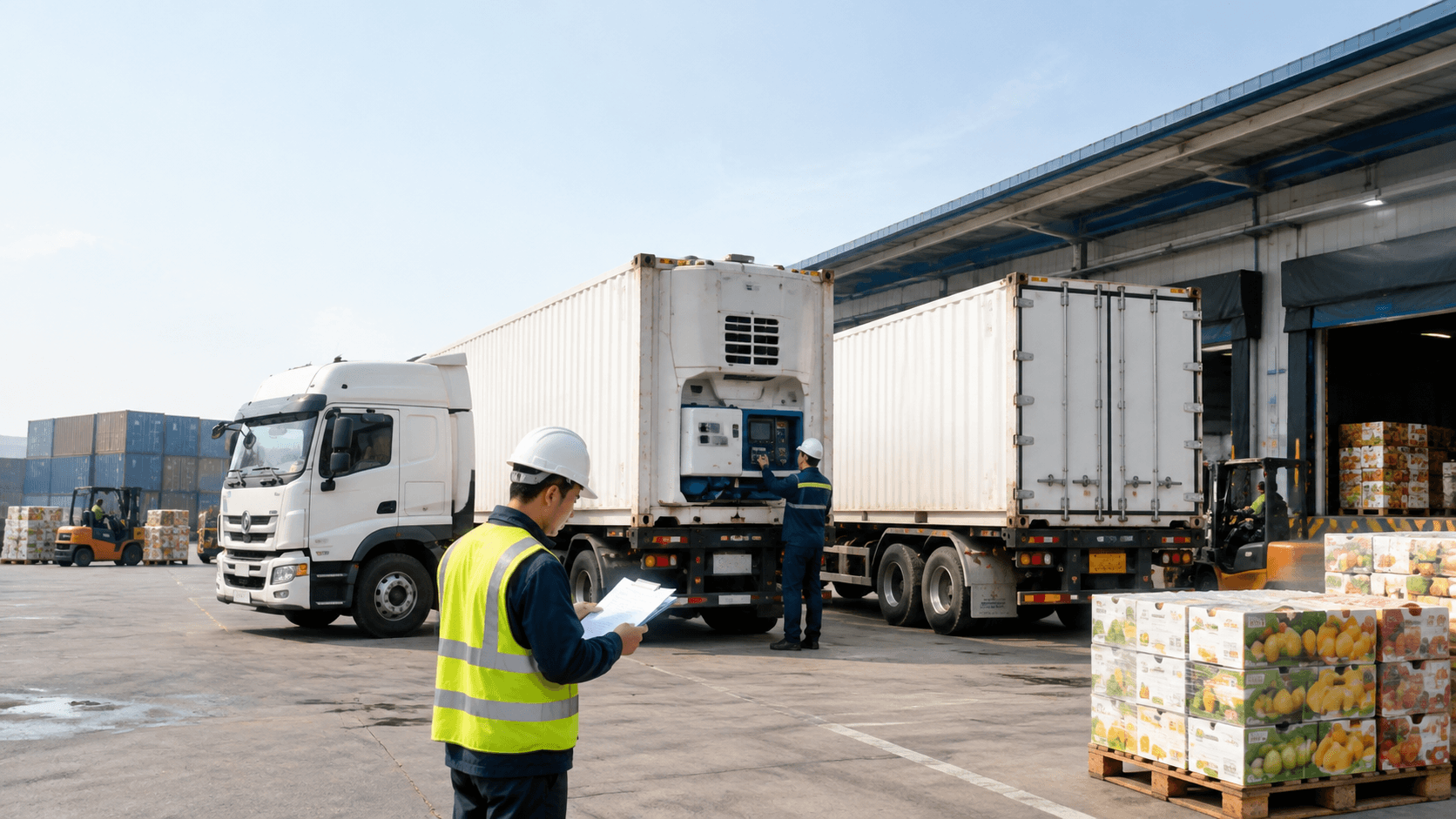
A comparison of durian, longan, and oranges based on storage characteristics, sensitivity to waiting time, packaging requirements, and suitable transportation methods
No single transportation method is optimal for all three products. Durian requires ripening control and protection against mechanical damage; longan is particularly sensitive to moisture loss, skin browning, and disruptions to the cold chain; oranges generally have a longer potential storage life under suitable conditions but still require control of fungal diseases and surface damage.
| Criteria | Durian | Longan | Oranges |
|---|---|---|---|
| Reference temperature | 13–15°C | 4–6°C | 3–8°C, depending on variety |
| Sensitivity to waiting time | High when the fruit is ripening | High due to deterioration in appearance | Depends on variety and initial quality |
| Risk of damage | Rapid ripening, fruit cracking, bruising, chilling injury | Skin browning, moisture loss, fruit drop, fungal diseases | Skin bruising, scratches, decay, chilling injury |
| Packing | Sturdy cartons, size grading, minimizing impact and excessive stacking pressure | Ventilated cartons, minimizing vibration and moisture loss | Compression-resistant cartons, size grading, and appropriate cushioning |
| Recommended transportation method | Refrigerated container or refrigerated truck | Refrigerated container or monitored refrigerated truck | Refrigerated truck or container depending on the variety and transit time |
| Management focus | Ripeness and delivery time | Cold chain continuity and appearance | Skin condition, ventilation, and import requirements |
These differences show that quoting shipping costs based solely on weight is insufficient. Two shipments weighing the same 20 tons may require different equipment configurations, transit times, and insurance coverage. Actual costs must be assessed alongside the risks of quality degradation and the proportion of goods accepted by the buyer.
Comparison table of 20-foot and 40-foot refrigerated containers by usable volume, permitted payload, cargo arrangement, airflow requirements, and container utilization efficiency
Refrigerated containers have space allocated for the refrigeration unit, insulation, and air distribution system, so their usable dimensions are smaller than those of equivalent dry containers. For road transport, in addition to equipment specifications, it is necessary to check axle load limits, the vehicle's gross weight, bridge and road conditions, and the regulations of each country along the route.
| Parameters | 20-foot refrigerated container | 40-foot High Cube refrigerated container |
|---|---|---|
| External dimensions (length × width × height) | 6,058 × 2,438 × 2,591 mm | 12,192 × 2,438 × 2,896 mm |
| Reference internal dimensions | 5,456 × 2,288 × 2,263 mm | 11,590 × 2,284 × 2,544 mm |
| Nominal volume | Approximately 28.2 m³ | Approximately 67.5 m³ |
| Reference tare weight | 2,810 kg | 4,490 kg |
| Maximum cargo payload according to equipment model | 27,670 kg | 30,510 kg |
| Maximum gross weight according to model | 30,480 kg | 35,000 kg |
| Cargo loading requirements | Do not obstruct the air supply floor or return air passages | Control load distribution, stacking height, and air circulation passages |
| Operating characteristics | Suitable for certain small, heavy, or volume-limited shipments | Suitable for large shipments, bulky packaging, and needs to optimize volume |
The specifications above are based on equipment models published by shipping company Ocean Network Express in its Reefer Brochure 2026 at one-line.com. Actual dimensions, payload, and volume may vary by manufacturer, model, and owner. In particular, the technical payload stated on a container does not mean that the same cargo weight is permitted on all road transport routes.
For refrigerated cargo, the entire nominal volume must not be utilized if doing so obstructs airflow. Cargo must remain below the loading limit line, must not block the air return path, and must be arranged with clearance in accordance with equipment guidelines. Adding a few extra pallets to reduce freight costs per kilogram may increase the risk of localized overheating and cargo damage.
Container utilization efficiency is assessed based on both the volume fill rate and the percentage of legally permissible payload capacity used. For lightweight packaged fruit, volume limitations or pallet configurations may become restrictive before weight limits are reached. For heavier packaged fruit, businesses may reach the payload limit before using the full container volume.
A breakdown table analyzing total costs by individual components, including domestic transportation, tractor-trailer services, cross-border freight, border gate fees, transshipment, quarantine inspection, customs clearance, and preservation costs according to the service scope
Total logistics costs must be calculated according to the actual scope of responsibility to avoid charging the same item twice or leaving costs unaccounted for. For example, a domestic transportation quotation may already include the tractor unit and fuel, while another quotation may separately list container drayage fees, road tolls, and waiting time.
The table below is a hypothetical budget model for a cross-border refrigerated shipment, using millions of Vietnamese dong as the unit. This is not a market price list, an official quotation from HNT Logistics, or a fee schedule issued by a government authority.
| Component | Estimated costs | Conditions to be confirmed |
|---|---|---|
| Domestic consolidated cargo transportation | VND 5.0 million | Pickup location, number of collection points, distance |
| Tractor-trailer services and long-haul transportation within Vietnam | VND 35.0 million | Route, fuel, tolls, equipment type |
| Cross-border transportation or the China-side transportation leg | VND 18.0 million | Handover point and transportation scope |
| Border gate handling costs | VND 4.0 million | Yard services, vehicles, and lawful charges |
| Transshipment or cargo transfer | VND 4.0 million | Whether transshipment is required or the container is delivered intact |
| Related quarantine inspection and testing | VND 3.0 million | Inspection criteria, number of samples, and service provider |
| Customs clearance and document processing | VND 3.0 million | Customs procedure type and service scope |
| Cold storage, electricity, and monitoring | VND 4.0 million | Usage duration and calculation method |
| Operational contingency | VND 4.0 million | Risks of waiting, rescheduling, and additional costs |
| Simulated total budget | VND 80.0 million | Not yet a service quotation |
The model does not automatically include import duties, value-added tax, cargo insurance, financing fees, packaging costs at origin, additional inspections, or fees outside the scope of the contract. Foreign exchange rates and payment terms may also change the total cost if part of the service is provided in China.
Businesses should request quotations that clearly specify the starting point, destination, number of free waiting days or hours, truck detention charging period, additional charges, responsibility for power supply, and conditions for rescheduling. This approach helps compare quotations with equivalent scopes rather than simply choosing the carrier with the lowest initial price.
Simulated logistics costs per kilogram of compliant goods under different scenarios involving shipment volume, waiting time, loss rate, and additional truck detention or storage charges
Transportation cost per kilogram loaded onto a truck does not accurately reflect commercial efficiency. A more appropriate metric is logistics cost per kilogram of goods accepted after transportation. When waiting times increase or loss rates rise, the denominator decreases while total costs may continue to increase.
The calculation formula is defined as follows: Logistics cost per compliant kilogram = Total actual logistics costs / Weight of goods accepted as compliant. Where the compliant weight equals the initial shipment weight multiplied by the compliance rate, if the business uses a simple two-state classification method of compliant and non-compliant.
| Scenario | Initial shipment weight | Waiting time | Loss rate | Additional costs | Total logistics costs | Cost per kg meeting the standard |
|---|---|---|---|---|---|---|
| A – Base plan | 20,000 kg | 12 hours | 2% | VND 0 | VND 80 million | VND 4,082/kg |
| B – Extended waiting | 20,000 kg | 48 hours | 5% | VND 8 million | VND 88 million | VND 4,632/kg |
| C – Extended waiting and high losses | 20,000 kg | 72 hours | 10% | VND 15 million | VND 95 million | VND 5,278/kg |
| D – Shipment volume optimization | 24,000 kg | 12 hours | 2% | VND 4 million | VND 84 million | 3,571 VND/kg |
In Scenario A, 20,000 kg of goods with a compliance rate of 98% yields 19,600 kg accepted upon inspection. Total logistics costs of VND 80 million correspond to approximately VND 4,082/kg. In Scenario C, the compliant volume drops to 18,000 kg and total costs increase to VND 95 million, bringing the unit cost to approximately VND 5,278/kg, nearly 29.3% higher than in the base scenario.
Scenario D illustrates the potential benefits of increasing the transported volume along the same operating chain. However, 24 tons is only a calculation assumption and must be checked against legal load limits, axle loads, equipment tare weight, cargo loading volume, and airflow requirements. This should not be treated as a default loading recommendation for refrigerated containers.
The model also does not account for the commercial value of rejected goods. When the loss rate is high, actual damages also include the cost of goods, expenses for handling non-compliant products, quality downgrades, and compensation payable under applicable contractual terms. Therefore, choosing an option that saves a few million VND but increases the risk of damage may result in lower overall economic efficiency.
Fruit Transit Services to China: Optimizing Costs and Managing Risks Throughout the Journey
Develop a transportation route selection model based on total pickup and delivery time, operating distance, border gate capacity, transshipment costs, and the preservation requirements of each type of fruit
The route selection model should evaluate the total time from the pickup point to the final delivery destination, not just road distance. A shorter route that requires multiple transshipments, lengthy inspection waits, or locations without a stable power supply may incur higher costs and risks than a longer route that enables a continuous transportation chain.
For goods originating in the south, businesses can analyze direct road transportation to the northern border gate area, options combining container transportation through seaports, or intermodal routes through a third country where there is a legal basis and a practical operational advantage. All options must satisfy China's import requirements; route selection cannot replace market access authorization.
For durian, the weighting factors should prioritize reliable transit times and minimizing the number of times containers are opened. For longan, greater weight should be given to temperature maintenance and reducing transshipment time. For oranges, once all import requirements have been verified, businesses can also assess the benefits of optimizing shipment volumes and reducing the number of trips.
A practical approach is to create an internal scoring table covering total costs, average transit time, maximum acceptable delay, number of handover points, power supply availability, and incident response capacity. The model must use actual route operating data rather than relying solely on maximum vehicle speeds or ideal customs clearance schedules.
For businesses with a regular supply of goods, multimodal transportation additional options can be created for organizing FCL transportation, coordinating tractor units, and connecting pickup and delivery legs. However, these benefits only materialize when loading schedules, vehicle schedules, and customs clearance capacity are synchronized.
Analyze cost drivers arising from customs clearance delays, vehicle changes, extended cargo storage times, delivery schedule adjustments, and additional specialized documentation
Customs clearance waiting costs are not limited to vehicle detention fees. When a refrigerated container remains stationary for an extended period, businesses may incur additional electricity costs, fuel for generators, yard fees, dispatch personnel expenses, and delivery rescheduling costs. If the waiting period coincides with the stage when fruit quality begins to deteriorate rapidly, commercial losses may also exceed direct operational charges.
Vehicle changes are a notable risk point at cross-border handover locations. If goods must be unloaded from one container and transferred to another vehicle, they may be exposed to ambient temperatures, experience increased impact, and develop discrepancies in package counts. Therefore, transshipment costs should be assessed alongside handling time and the risk of losses.
Additional specialized documentation can also delay transit if businesses have not verified the requirements in advance. For example, invalid test results, mismatched packing facility codes, or phytosanitary information requiring correction may force vehicles to wait while the goods continue to consume their remaining preservation time.
The cost management plan should clearly define response activation thresholds. When waiting time exceeds the expected limit, the dispatch team must reassess temperature conditions, remaining preservation time, the importer's receiving schedule, and lawful operational alternatives. They should not continue waiting indefinitely simply because costs have already been incurred on the original route.
Establish a risk matrix for each leg, with response plans for temperature excursions, vehicle disruptions, document discrepancies, or changes in border gate acceptance conditions
Logistics risk management must identify incidents at each point where responsibility is transferred. In sourcing areas, risks are usually associated with incoming product quality and packaging delays. During transportation, risks center on equipment, vehicles, and temperature. At border gates, the focus shifts to documentation, receiving capacity, and waiting times.
| Leg | Main Risk | Identification Signals | Response Plan |
|---|---|---|---|
| Collection and Packaging | Warm goods, incorrect batch codes, non-compliant packaging | High incoming product temperature, mismatched documents | Suspend packing, re-sort the goods, and verify the data |
| Inland transport | Refrigeration Unit Failure, Vehicle Disruption | Equipment alarms, rising temperatures, signal loss | Check the power supply, dispatch support vehicles, or arrange replacement transport |
| Vietnamese Border Gate | Customs clearance delays, document discrepancies | Procedures not completed, waiting time exceeds the plan | Coordinate with customs brokers, process documentation, and ensure power supply |
| Transshipment | Cold chain disruption, package count discrepancies, and packaging damage | Long opening times and mismatched delivery and receipt records | Count and inspect, record images, and transship at a suitable location |
| Chinese reception | Changes to requirements or additional inspections | Supplementary notices from authorities or importers | Verify official requirements, adjust schedules, and ensure lawful preservation |
| Final delivery | Quality dispute | Losses, bruising and damage, and abnormal temperature data | Prepare incident reports, take samples, arrange inspections when necessary, and cross-check against the contract |
For temperature incidents, the first step is to verify the data and equipment condition, avoiding sudden temperature adjustments before understanding the cause. Check the power supply, refrigeration unit status, container doors, airflow, and the cargo's heat load. If storage conditions cannot be restored, the transport provider must notify the cargo owner to agree on transferring the cargo to another vehicle or using an alternative storage facility.
If a border crossing changes its acceptance conditions, the handling plan must be based on official notices and the feasibility of completing lawful procedures. Switching to another border crossing requires reassessing the permitted route, customs documentation, transport documents, transit time, and the importer's acceptance conditions. The route should not be changed arbitrarily for goods under customs supervision.
Establish a coordination mechanism among cargo owners, transport providers, customs brokers, and importers to agree on the point of contact for incident handling, cost responsibilities, and acceptance criteria
An efficient cross-border shipment requires a unified coordination contact while clearly defining each party's responsibilities. The cargo owner is responsible for providing product information, origin, storage conditions, and agreed delivery and acceptance standards. The transport provider is responsible for performing the transportation services under the contract, including vehicle management and coordinating the handling of incidents within its scope of work.
The customs broker handles declarations, document verification, and communication with competent authorities within the scope of its authorization. The importer must confirm import conditions, the cargo receipt location, the receiving schedule, and procedures on the Chinese side that fall under its responsibility. These responsibilities should be clearly defined before departure rather than waiting until an incident occurs.
The service contract must specify how waiting time is calculated, any additional charges that must be notified in advance, preservation responsibilities when changing vehicles, and methods for verifying losses. For refrigerated cargo, it is advisable to additionally specify recognized temperature data sources, sampling methods, and the deadline for submitting claims.
An effective coordination mechanism does not necessarily require every party to participate in every decision. Instead, there should be a single point of contact for receiving information and a clear approval mechanism for decisions that change costs, routes, or storage conditions. This enables incidents to be handled quickly while ensuring accountability remains traceable.
HNT Logistics Partners with Businesses to Implement Controlled Logistics Chain Services for Fruit Transit to China
Collect shipment data, including fruit type, volume, pickup point, storage requirements, proposed route, and delivery and receipt locations, to develop a suitable transportation plan
For HNT Logistics, planning begins with collecting specific shipment data rather than simply receiving route information and container quantities. Businesses need to provide the fruit type and variety, cargo condition, volume, packaging specifications, pickup point, readiness time, and expected delivery and receipt locations.
Information about required temperatures, maximum delivery time, sales contract conditions, and document status also directly affects the implementation plan. For shipments with an importer already identified in China, confirming the receiving location and responsibilities for import-side procedures should be done early to minimize plan changes after the cargo has been packed.
Based on these data, HNT Logistics can coordinate the development of a transportation plan, propose suitable vehicle types, identify handover points, and clarify cost components according to the requested service scope. In cases where import conditions have not been verified, particularly for fresh oranges, international transportation arrangements must be conditional on completing legal verification before cargo acceptance.
Coordinate the deployment of tractor units, refrigerated containers, or specialized vehicles, organize intermodal transportation, and coordinate handover points according to the agreed plan
HNT Logistics specializes in organizing FCL container transportation by road and sea, combining refrigerated cargo transportation solutions with international intermodal transport. Its tractor-unit coordination capabilities at port clusters such as Cat Lai, Hai Phong, Dinh Vu, Tan Vu, and Lach Huyen provide a foundation for developing suitable transportation chains for shipments collected at or connected through seaport systems.
For fruit shipments requiring refrigerated storage, the plan may include deploying refrigerated containers, specialized vehicles, coordinating loading locations, and arranging power supply during waiting periods. Equipment selection must be based on cargo volume, loading conditions, route, and actual availability when the contract is executed.
Along Vietnam–Laos–China intermodal routes or Vietnam–China transportation routes, HNT Logistics can coordinate with relevant partners to organize pickup and delivery within the agreed service scope. Operations depend on permits, vehicle conditions, authorized routes, and the applicable regulations of each country; not every route can automatically be served using the same mode of transportation.
For shipments requiring refrigerated container rental, the coordination plan should clearly specify the empty container pickup time, cargo loading time, equipment usage period, power supply costs, and handover arrangements. This gives businesses a better basis for proactive cost management and reduces the risk of storage disruptions.
Support document reviews, customs declarations, and coordination of plant quarantine procedures within the agreed service scope, legal conditions, and actual requirements of each shipment
Export fruit documentation requires coordination among trading companies, production facilities, logistics providers, and specialized authorities. HNT Logistics can help customers review document consistency, prepare declaration data, coordinate customs procedures, and connect the steps related to plant quarantine within the agreed service scope.
For durian, the main checks cover growing area registration codes, packing facility codes, phytosanitary certificates, food safety testing requirements, and traceability information. For longan, origin documentation, phytosanitary standards, and acceptance requirements must be cross-checked. For fresh oranges, verification that imports into China are permitted must be completed before commercial transportation begins.
Through the service customs declaration, HNT Logistics can coordinate with businesses to minimize discrepancies between commercial documents and the actual shipment data. However, the issuance of phytosanitary certificates, import approvals, customs clearance decisions, and specialized permits falls under the authority of the relevant competent authorities.
HNT Logistics does not replace the shipper's responsibility to provide truthful information or the importer's legal obligations in China. The appropriate approach is to clarify the person responsible for each document, the completion deadline, and the mandatory conditions that must be met before the vehicle departs.
HNT Logistics is committed to working alongside businesses to optimize costs, ensure transparency in operational plans, and coordinate cargo safety control throughout the transit of durian, longan, and oranges to China within the scope of the agreed services.
The goal of a cross-border fruit transportation plan is not only to ensure that the required number of packages is delivered, but also to maintain commercial quality and control total costs. HNT Logistics provides consulting services based on the characteristics of the shipment, legal requirements, operational conditions, and the ability of all parties to coordinate, rather than applying the same solution to every type of fruit.
For transiting durian to China, the focus is on controlling ripeness, temperature, and delivery time. For transiting longan to China, the priority is maintaining cold chain continuity, minimizing water loss, and preventing deterioration in appearance. For oranges, the prerequisite is verifying market access before selecting routes and organizing transportation.
When businesses search for fruit transit services to China, they need to evaluate service providers not only based on freight rates but also on coordination capabilities, the scope of documentation support, how unexpected issues are managed, and contingency plans for handling incidents. A transparent quotation must clearly specify what services are included, which tasks are performed by partners, and the conditions under which additional costs may arise.
HNT Logistics works alongside customers to research transportation options, coordinate vehicle arrangements, provide import-export operational support, and control pickup and delivery points in accordance with contractual terms. Matters related to transit time, cargo quality, and compensation liability should be defined using specific criteria that suit actual operating conditions.
Efficient fruit transit to China must begin with a logistics chain planned before the goods leave the production area. Once import requirements have been verified, the appropriate preservation equipment selected, documents cross-checked, and costs estimated according to risk scenarios, businesses will be better positioned to protect cargo quality and export profitability.
Businesses that need to develop transportation plans for durian and longan or assess the requirements for shipping orange consignments to China can contact HNT LOGISTICS TRADING COMPANY LIMITED (HNT Logistics) through the official website https://hntshipping.com.vn to provide shipment details and discuss transportation, preservation, documentation, and logistics budget solutions tailored to their actual needs.