


Transporting goods through the International Lao Cai Border Gate requires businesses to simultaneously control three factors: cargo acceptance conditions, customs clearance progress, and total cross-border logistics costs. A shipment with complete export documents may still incur vehicle detention fees, yard storage charges, or cargo quality deterioration if it fails to meet China's import requirements.
For businesses exporting agricultural products, production materials, and containerized goods, choosing between Lao Cai Border Gate and Thanh Thuy Border Gate in Ha Giang should be based on cargo pickup locations, destination markets, actual handling capacity, and cross-border transportation conditions. A shorter route does not necessarily result in lower total delivery costs.
HNT Logistics analyzes transportation organization procedures, customs documentation control, cost estimation, and risk management across two Vietnam–China trade corridors, helping businesses develop logistics solutions suited to their cargo characteristics and business plans.
International Lao Cai Border Gate: Analyzing Cargo Handling Capacity and Selecting Vietnam–China Transportation Corridors
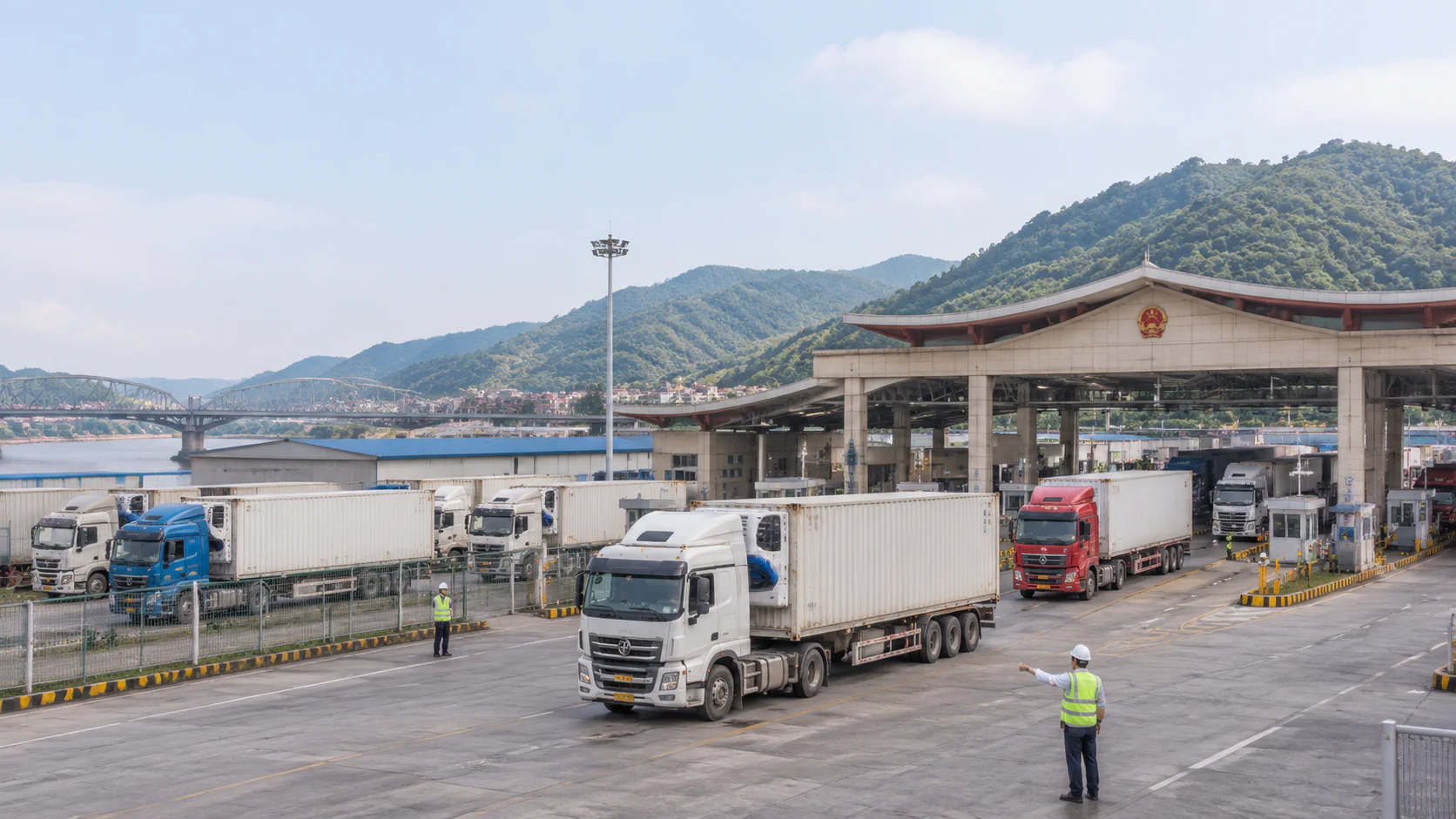
Analyzing cargo handling characteristics at the International Lao Cai Border Gate, identifying the role of the Kim Thanh area and trade connections with Hekou (China)
The International Lao Cai Border Gate plays an important role in the Kunming–Lao Cai–Hanoi–Hai Phong economic corridor. Within the border gate system in this area, the Kim Thanh road bridge customs clearance point connects with the Hekou area in China's Yunnan Province and serves as a key hub for road-based import and export activities.
The Kim Thanh area offers advantages in transportation connectivity, cargo consolidation locations, specialized inspection systems, and logistics services supporting customs clearance. Businesses can organize transportation from manufacturing centers in northern Vietnam, raw material areas in central Vietnam, and southern Vietnam to the border gate area before completing cross-border delivery.
Under Decision No. 58/2026/QD-UBND dated July 29, 2026, issued by the Lao Cai Provincial People's Committee, export-import and immigration procedures through the Kim Thanh road bridge customs clearance point are organized through coordination between competent authorities and the digital border gate platform. Businesses must prepare vehicle data, cargo information, and delivery details in accordance with the applicable management procedures.
From Hekou, goods can continue to Mengzi, Kunming, and distribution centers throughout Yunnan Province. This provides a significant advantage for businesses serving customers in southwestern China, particularly when organizing road transportation in combination with domestic distribution warehouse networks.
However, handling capacity is not a fixed parameter applicable at all times. The number of vehicles processed depends on working schedules on both sides, cargo composition, physical inspection rates, vehicle clearance capacity, and the receiving capacity of Chinese importers.
Assessing handling capacity by cargo category, including fresh agricultural products, dry containers, refrigerated containers, production materials, and commercial goods, based on inspection conditions, transportation vehicles, and preservation requirements
For fresh agricultural products, acceptance conditions at the International Lao Cai Border Gate primarily depend on the list of products permitted for import into China, phytosanitary requirements, traceability, and product-specific regulations. Having suitable transportation vehicles does not automatically mean that a shipment qualifies for export.
Dry containerized goods such as components, consumer goods, production materials, and industrial products are generally less sensitive to waiting times than fresh agricultural products. However, businesses must control commodity policies, HS codes, weight, packaging specifications, and specialized inspection requirements before arranging transportation.
Refrigerated containers are suitable for goods requiring stable temperatures throughout the journey. When operating through the Lao Cai border route, businesses should confirm electricity availability at the yard, generator arrangements, expected waiting times, and transshipment conditions to minimize the risk of cold-chain disruption.
| Group of goods | Suitable vehicle | Key Control Requirements | Risks to Consider |
|---|---|---|---|
| Fresh agricultural products | Refrigerated containers or specialized vehicles | Quarantine requirements, growing area codes, and packing facility registration according to product requirements | Spoilage, delayed quarantine inspections, or import rejection |
| Industrial goods | 20-foot or 40-foot dry containers | HS codes, commodity policies, and load capacity | Incorrect declarations, overloading, and additional inspections |
| Frozen food | Refrigerated container | Temperature, food safety, and import conditions | Cold-chain disruption |
| Production materials | Dry containers or specialized trucks | Packaging specifications, weight, and permits if applicable | Delayed material deliveries affecting production |
| General commercial goods | Containers or box trucks | Cargo classification, documentation, and product labeling | Discrepancies between documents and actual cargo |
The classification table above is intended for preliminary transportation planning and does not replace confirmation of acceptance conditions by the border gate and Chinese regulatory authorities for each specific commodity code.
Analyzing the differences between transporting goods through the International Lao Cai Border Gate and the Thanh Thuy Border Gate route in Ha Giang based on cargo origins, receiving and delivery areas in China, and actual transportation capabilities
Thanh Thuy Border Gate in Ha Giang connects with Tianbao Border Gate in the Wenshan area of China's Yunnan Province. Following the 2026 provincial administrative reorganization, the former Ha Giang area became part of Tuyen Quang Province. The Ha Giang–Thanh Thuy route name remains widely used to identify this transportation corridor.
In terms of trade geography, Lao Cai Border Gate is convenient for goods destined for Hekou, Mengzi, and Kunming. Meanwhile, the Thanh Thuy Border Gate route in Ha Giang may be more suitable for cargo originating in Ha Giang and Tuyen Quang, as well as businesses with delivery addresses in Wenshan or neighboring areas.
The key difference lies in the ability to organize end-to-end transportation. Lao Cai benefits from connectivity with the Noi Bai–Lao Cai Expressway and regional logistics networks. The Thanh Thuy route requires more careful assessment of mountainous road conditions, tractor unit and semi-trailer availability, consolidation locations, and receiving capacity on the Tianbao side.
Businesses should not automatically assume that Ha Giang Border Gate is a direct alternative when Lao Cai is congested. Route switching is only feasible when the new border gate accepts the relevant goods, vehicles meet transportation requirements, documentation can be processed appropriately, and the Chinese importer confirms its ability to receive the shipment.
Identifying border gate selection criteria based on vehicle type, load capacity, estimated time, cargo acceptance conditions, and connectivity with warehouse networks on both sides of the border
Border gate selection should begin with the legal admissibility of the shipment. Businesses should then assess transportation conditions, including vehicle combination dimensions, axle loads, total vehicle weight, permitted road routes, and the availability of cross-border vehicles.
A standard 20-foot container has approximate external dimensions of 6.06 x 2.44 x 2.59 m. A standard 40-foot container is approximately 12.19 m long, while a 40-foot High Cube container is approximately 2.90 m high. Container dimensions and the actual height of the vehicle combination must be checked against the operating conditions of the route.
| Type of Container | External dimensions: length x width x height | Reference capacity | Application |
|---|---|---|---|
| 20ft Dry | 6.06 x 2.44 x 2.59 m | 33 m³ | Heavy goods, materials, machinery |
| 40ft Dry | 12.19 x 2.44 x 2.59 m | 67 m³ | Commercial goods, industrial products |
| 40-foot High Cube | 12.19 x 2.44 x 2.90 m | 76 m³ | Bulky cargo |
| 40-foot High Cube refrigerated container | 12.19 x 2.44 x 2.90 m | Approximately 67–68 m³ | Agricultural products and food requiring temperature control |
The specifications above are for reference and may vary by container manufacturer. Actual cargo payload must be determined based on the container data plate, tare weight, vehicle technical limits, and road weight regulations. Do not use the container's designed payload as the sole basis for determining the permitted cargo weight.
International Lao Cai Border Gate Customs Clearance: Establishing Document Control Procedures and Customs Processing Sequences
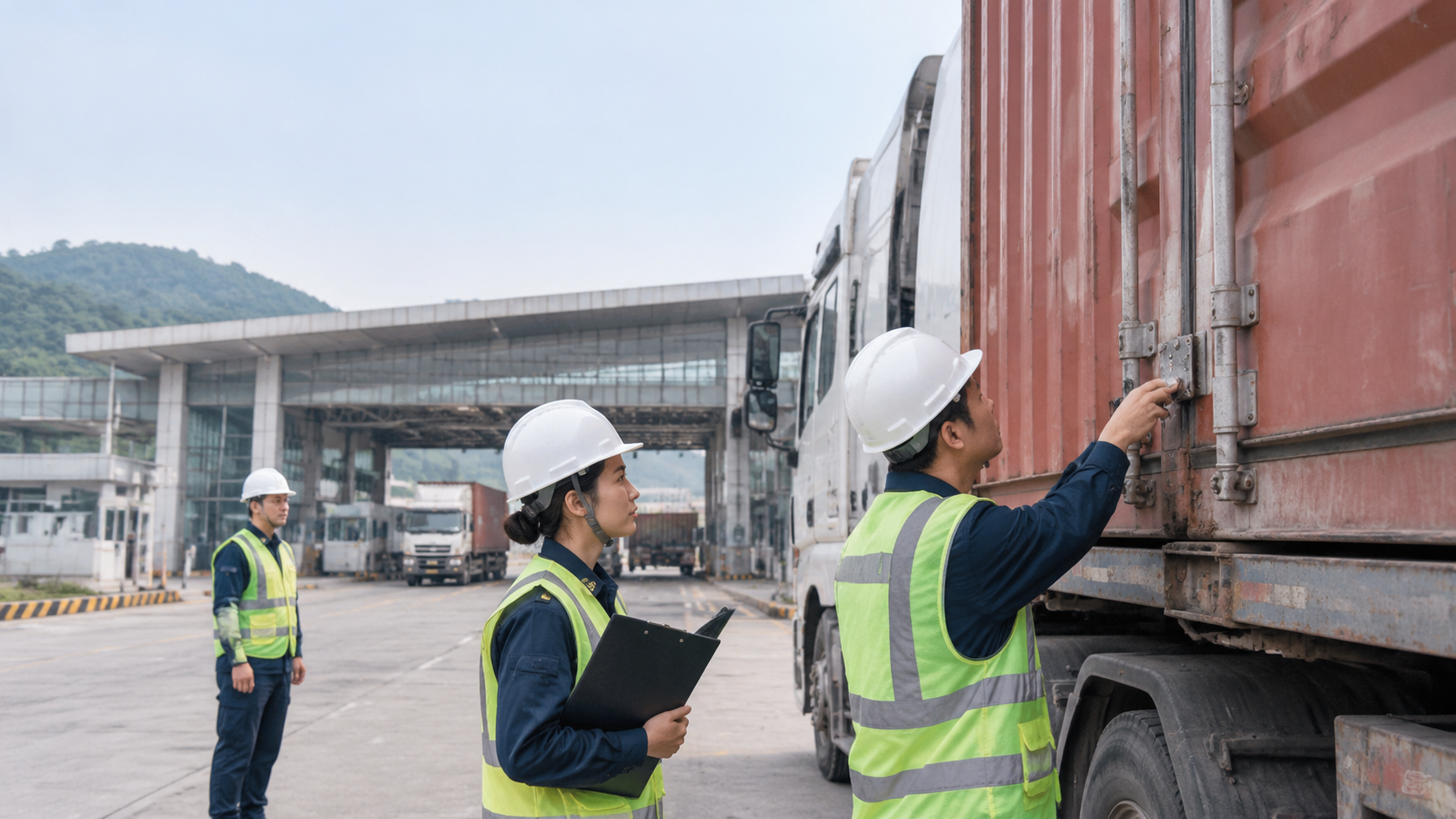
Establishing a declaration data preparation process covering product names, HS codes, origin, value, quantity, weight, packaging methods, and exporter and importer information before vehicles arrive at the border gate
The quality of declaration data significantly determines customs clearance progress at the International Lao Cai Border Gate. Businesses should establish a unified data set for each shipment as soon as an order is confirmed rather than waiting until vehicles arrive at the border to compile documents and resolve discrepancies.
Product names must accurately reflect the commercial nature and technical characteristics of the goods. HS codes are determined based on composition, use, structure, and commodity classification rules. For agricultural products, fresh, frozen, dried, and processed products must be clearly distinguished because their management policies may differ.
Declared values must be determined in accordance with customs valuation regulations applicable to exported or imported goods. Incoterms delivery conditions, transportation costs, insurance, and relevant adjustments must be clarified to minimize discrepancies between commercial values and declared values.
Before carrying out customs declaration services, the documentation department must cross-check net weight, gross weight, package quantity, seller and buyer information, and delivery locations. For full-container shipments, container numbers and seal numbers must be accurately updated once the actual vehicle has been identified.
Data control principles: Each shipment must have one unified source of information, updated under controlled procedures and confirmed before the declaration is transmitted. Any changes made after cargo loading must be communicated simultaneously to the transportation department, documentation team, and importing partner.
Analyzing the sequence of electronic customs declarations, declaration registration, channel assignment results, document or physical inspections, and fulfillment of tax obligations under applicable regulations
Customs procedures at the International Lao Cai Border Gate are implemented in accordance with the Customs Law and current implementing regulations. Businesses should review Circular No. 38/2015/TT-BTC, Circular No. 39/2018/TT-BTC, Circular No. 121/2026/TT-BTC, and any amendments or supplements remaining in force at the time of declaration registration.
Information about commodity policies, electronic procedures, and operational guidance should be verified on the Customs Department information portal at customs.gov.vn. This is an important reference when businesses determine documentation requirements, declaration registration locations, and procedures for handling arising situations.
- Step 1 – Check import and export eligibility: Determine commodity policies, permits, quarantine requirements, import conditions in China, and the acceptance capacity of the intended border gate.
- Step 2 – Prepare documentation: Compile commercial documents, cargo data, and certificates and permits required for the relevant import or export category.
- Step 3 – Submit the electronic customs declaration: Enter the data, verify the information, and transmit the declaration through the electronic customs system currently in use.
- Step 4 – Receive the channel assignment result: Comply with document inspection or physical cargo inspection requirements as determined by the customs authority.
- Step 5 – Fulfill financial obligations: Pay taxes, fees, and other related financial obligations where applicable under the regulations.
- Step 6 – Complete procedures and supervision: Meet customs clearance requirements, move goods through the supervision area, and coordinate the import procedures on the Chinese side.
| Channel Assignment Result | Standard Processing Method | Business Requirements |
|---|---|---|
| Green channel | Generally exempt from detailed document inspection and physical inspection | Complete customs clearance conditions, tax obligations, and specialized requirements if applicable |
| Yellow channel | Customs document inspection | Provide documents, explanations, and supplementary information as requested |
| Red channel | Document inspection and physical cargo inspection | Arrange vehicles, personnel, inspection locations, and conditions for opening packages or containers |
Channel assignment results do not replace quarantine or specialized inspection requirements. Green-channel shipments may still need to fulfill other regulatory conditions before crossing the border. Customs authorities may also apply inspection measures within their authority when risk indicators are detected.
In principle, Article 23 of the Customs Law stipulates a maximum document inspection period of two working hours from receipt of complete documentation. The normal maximum period for physical cargo inspection is eight working hours from the time the declarant presents all goods. Cases subject to specialized inspection or involving complex shipments are subject to corresponding time calculation and extension mechanisms.
Businesses must distinguish statutory customs processing periods from the total time vehicles spend waiting at the border gate. Queuing, quarantine, sampling, transshipment, completion of immigration procedures, and processing of import documents in China may extend actual delivery and handover times.
When referring to friendship border gate customs clearance procedures in Lang Son, businesses may apply the same general principles of document preparation and data control. However, vehicle coordination procedures, receiving schedules, and border management processes should not be copied directly to the Lao Cai route because each location has its own operating arrangements.
Clarifying coordination between customs authorities, quarantine agencies, specialized inspection authorities, border gate management units, and transportation businesses during shipment processing
Cross-border customs clearance involves coordination among multiple organizations. Customs authorities conduct procedures, inspections, and cargo supervision within their authority. Plant quarantine agencies assess quarantine conditions for regulated goods. Specialized inspection authorities handle requirements relating to quality, food safety, or specialized permits.
In the Kim Thanh area, the digital border gate platform supports information management and coordination between organizations under local procedures. Updating data on this platform does not replace electronic customs procedures. Businesses must complete each category of procedure according to the responsibilities of the relevant competent authority.
Border gate management units and border guard forces carry out coordination and management of immigration activities, maintain order, and ensure related conditions. Transportation businesses are responsible for arranging suitable vehicles, preparing vehicle and driver documents, and organizing delivery and receipt according to the agreed service scope.
To reduce processing time, cargo owners should clearly identify the responsible contact for each stage. The documentation department monitors document status, the transportation department updates journey progress, and the receiving contact in China confirms acceptance schedules and import procedure completion status.
Establishing cross-checking procedures for Commercial Invoices, Packing Lists, foreign trade contracts, transport documents, C/O certificates, and declaration data to minimize discrepancies that may delay customs clearance
Document cross-checking should focus on information consistency rather than simply counting the number of documents. A minor discrepancy in units of measurement, weight, or importer name may result in requests for explanations, document amendments, and longer processing times at Lao Cai Border Gate.
| Documentation | Data to be checked | Comparison Items |
|---|---|---|
| Commercial Invoice | Product names, quantities, unit prices, values, and delivery terms | Contracts and customs declarations |
| Packing List | Package quantity, net weight, gross weight, and packaging specifications | Weighing slips, actual cargo, and declared data |
| Foreign trade contracts | Information about parties, delivery terms, and payment | Commercial invoices and delivery agreements |
| Transport document | Vehicles, containers, cargo pickup locations, and delivery locations | Transport orders and actual delivery and receipt records |
| Care of | Origin, shipment information, and origin criteria | Invoices, origin supporting documents, and applicable agreement rules |
| Phytosanitary certificate | Product name, quantity, origin, and certification details | Growing area records, packing facilities, and import requirements |
| Customs declaration form | HS codes, values, quantities, shipment types, and business information | All source data for the shipment |
Not all documents in the table are mandatory components of customs documentation for every shipment. Businesses must distinguish between documents used for commercial management, transportation documents, and documents that must be submitted or presented under commodity policies, shipment types, and legal regulations.
For exports to China seeking preferential tariff treatment, businesses may consider a C/O Form E under the ASEAN–China Free Trade Agreement or an appropriate certificate of origin under RCEP. The choice must be based on rules of origin, preferential tariff rates, and the ability to meet supporting documentation requirements.
A C/O does not replace a phytosanitary certificate and does not automatically guarantee that goods will be permitted for import. HNT Logistics supports businesses in reviewing documents, coordinating applications for C/O issuance, and preparing documentation within the agreed service scope. Certification authority belongs to the agencies or organizations designated by law.
Lao Cai Border Gate and Thanh Thuy Border Gate in Ha Giang: Organizing Vehicle Coordination and Controlling Cross-Border Transportation Routes
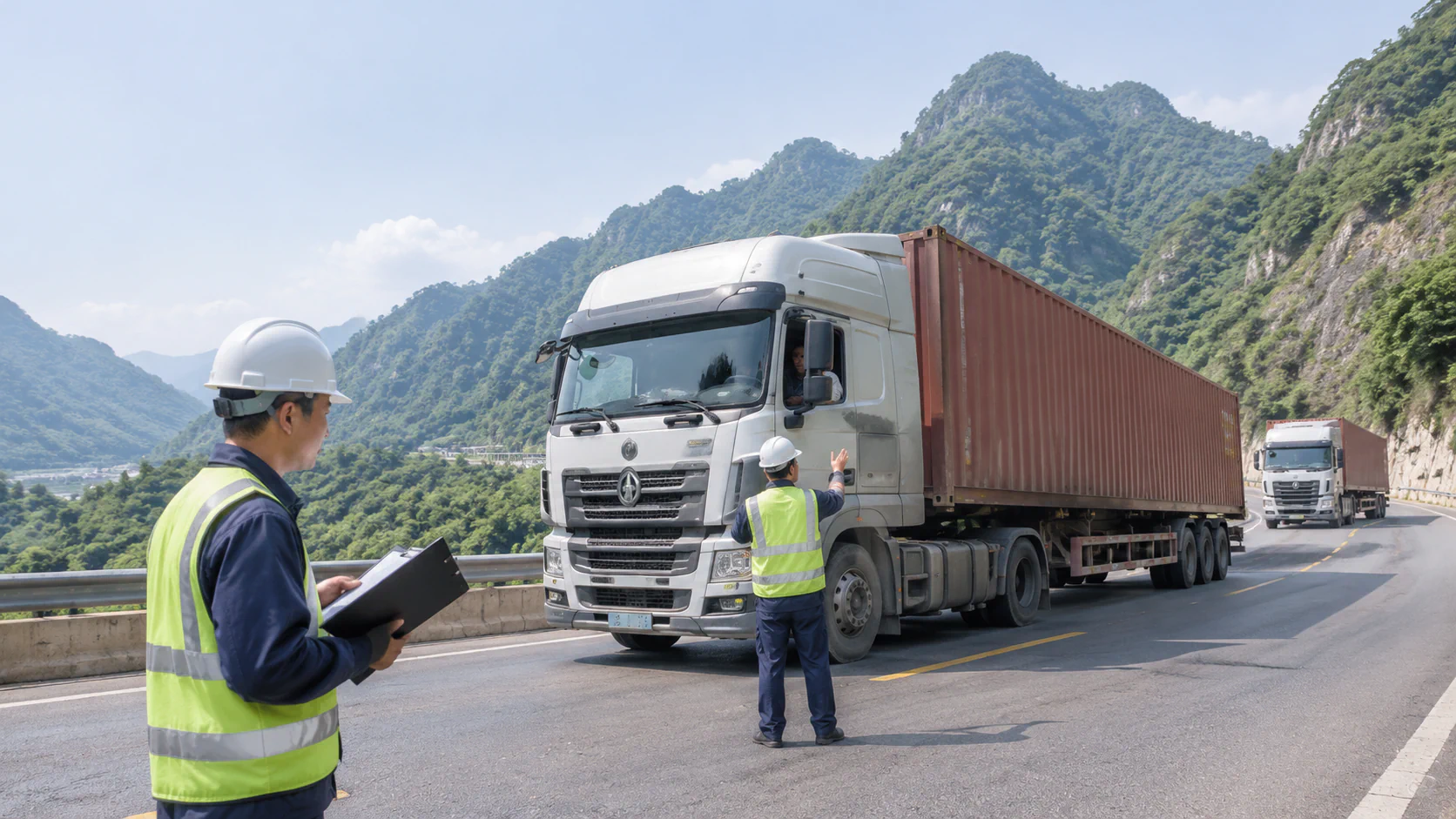
Analyzing transportation options from manufacturing centers, consolidation warehouses, and northern raw material areas to the International Lao Cai Border Gate through the interregional road network
For goods originating in Hanoi and northern industrial areas, the Noi Bai–Lao Cai Expressway is an important road corridor for accessing the Kim Thanh area. Connections with ring roads, national highways, and interregional expressways allow businesses to consolidate goods from multiple production locations.
Goods originating in Hai Phong can be arranged for container transportation from warehouses, ports, or industrial parks to the Hanoi–Lao Cai corridor. When planning, businesses should account for empty container pickup, cargo loading, weight checks, document completion, and traffic conditions on each road section.
For agricultural products from southern Vietnam and the Central Highlands, journeys generally pass through multiple provinces before reaching the border gate. Transportation plans should prioritize cold-chain continuity, driver rest periods, fuel availability, and actual receiving schedules in the border area.
Vehicle departure times should be calculated backward from confirmed delivery and receiving schedules. If businesses only consider driving time without allowing for inspections, consolidation, and waiting for Chinese-side acceptance, vehicles may arrive too early or miss their delivery schedules.
Developing transportation plans for the Ha Giang–Thanh Thuy Border Gate route based on mountainous terrain, road surface conditions, truck accessibility, and vehicle coordination requirements
The transportation route to Thanh Thuy Border Gate in Ha Giang features mountainous terrain, with varying gradients, curve radii, and road surface conditions. The feasibility of operating heavy vehicles must be assessed across the entire journey rather than by inspecting only the road section near the border gate.
For goods originating in Hanoi, businesses can consider a connecting corridor through Tuyen Quang, National Highway 2, and the Ha Giang area before reaching Thanh Thuy Border Gate. Specific plans must be updated according to road operating conditions, ongoing construction projects, and current traffic restriction notices.
Tractor units transporting containers must be inspected for their ability to operate on steep roads, brake system condition, tires, cooling systems, and load-bearing capacity. During the rainy season, landslide risks or traffic restrictions may change journey times and require alternative route arrangements.
For time-sensitive shipments, businesses should confirm traffic conditions and acceptance capacity at Ha Giang Border Gate before dispatching vehicles. Savings in transportation charges become meaningless if unplanned transshipment occurs or goods must remain on vehicles for several days.
Assessing tractor unit, semi-trailer, and container connectivity on both routes; determining transshipment or vehicle exchange arrangements when required by cross-border vehicle management regulations
Vietnam–China cross-border transportation must comply with regulations on cross-border road transport management, international transport permits, authorized operating routes, and immigration procedures for vehicles and drivers. Not every domestic tractor unit is eligible for cross-border operations.
Businesses should refer to Circular No. 37/2026/TT-BGTVT and amendments under Circular No. 26/2026/TT-BXD, while also checking the regulations remaining in force at the time of transportation. The international transport route list includes the Ha Giang–Thanh Thuy–Tianbao–Wenshan corridor and corresponding routes through Lao Cai.
Delivery and receipt arrangements may be organized through direct cross-border transportation, tractor unit exchange, lifting and transferring entire containers, or cargo transshipment. The choice depends on vehicle permits, management conditions in both countries, yard infrastructure, and agreements between transportation businesses.
| Method | Operating Characteristics | Conditions and Risks |
|---|---|---|
| Direct cross-border transportation | Vehicles eligible to complete the journey across the border | Appropriate permits, transport routes, and immigration documents are required |
| Tractor unit exchange | Replacing the tractor unit to continue transporting the cargo combination | Technical compatibility and legal conditions for the semi-trailer must be ensured |
| Container lifting and transfer | Transferring an entire container to another vehicle | Depends on lifting equipment, delivery yards, and supervision procedures |
| Cargo transshipment | Transferring goods from one vehicle to another | Increases processing time and the risk of damage and cold-chain disruption |
For refrigerated containers, retaining the original container helps minimize the need to open the cargo doors. However, vehicle exchanges or lifting operations must still control power supply, seal condition, and temperature. Any operation involving goods under customs supervision must follow authorized procedures.
Establishing a journey monitoring system based on departure, load control checkpoints, consolidation points, border gate areas, vehicle handover, and receiving confirmation on the other side of the border
Cross-border journey management must rely on verifiable control milestones. GPS location data only indicates where a vehicle is; it is insufficient to determine whether a shipment has completed procedures, been authorized to cross the border, or been handed over to the importer.
| Control milestones | Data to Record | Target |
|---|---|---|
| Loading completed | Package quantity, cargo photos, container, seal, and temperature if applicable | Initial condition confirmation |
| Check payload | Weighing slip and vehicle specifications | Control of lawful road operation eligibility |
| Vehicle departure | Time, location, and estimated arrival time | Transportation progress monitoring |
| Arrival at consolidation point | Yard entry time, document status, and processing schedule | Waiting time control |
| Export procedures completed | Declaration status and authorization to pass through the supervision area | Legal progress confirmation |
| Border handover | Handover records, vehicle, and cargo condition | Determining each party's responsibilities |
| Receiving in China | Partner confirmation, receiving time, and cargo condition | Completion of the corresponding delivery milestone |
For refrigerated goods, temperature data must be monitored throughout the journey, including waiting periods at yards and vehicle transfers. Independent temperature recording devices help verify storage history when disputes arise regarding quality or compensation responsibilities.
International Lao Cai Border Gate: Transportation Route Comparison Table and Customs Clearance Cost Estimation Model
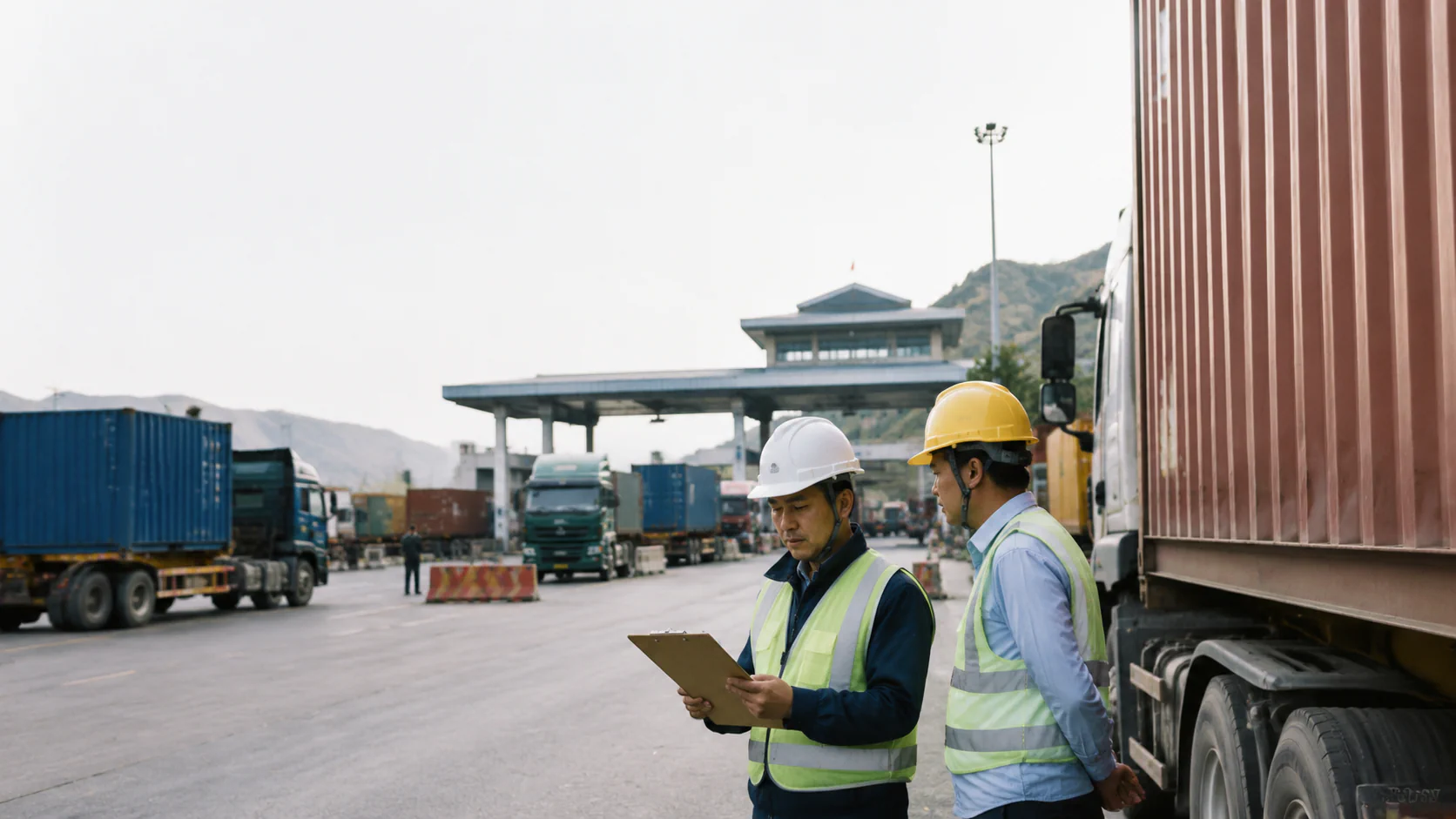
Preparing a comparison table for transportation routes through Lao Cai Border Gate and Thanh Thuy Border Gate in Ha Giang based on reference distances, terrain conditions, estimated journey times, container handling capacity, and suitability for different cargo categories
To compare the two routes on the same basis, HNT Logistics uses a hypothetical starting point in the Hanoi area and a destination at the cargo consolidation area on the Vietnamese side of the border. The distances and times below are preliminary planning estimates, not measured journey results or guaranteed transportation times.
| Criteria | International Lao Cai Border Gate | Thanh Thuy Border Gate, Ha Giang |
|---|---|---|
| Reference distance from Hanoi | Approximately 290–330 km | Approximately 300–350 km |
| Estimated driving time | Approximately 6–8 hours | Approximately 8–11 hours |
| Connecting corridor | Noi Bai–Lao Cai Expressway and roads connecting to the border gate | Tuyen Quang–Ha Giang corridor, National Highway 2, and roads connecting to Thanh Thuy |
| Terrain characteristics | Advantages from expressway corridor operations | Mountainous road sections require attention |
| Opposite border gate | Hekou, Yunnan | Tianbao, Yunnan |
| Connected markets | Hekou, Mengzi, Kunming | Tianbao, Wenshan, and surrounding areas |
| Container transportation capacity | Advantages from the logistics ecosystem and interregional connectivity | Vehicle, yard, and individual shipment acceptance capacity must be confirmed |
| Suitable cargo | Agricultural products, dry goods, refrigerated goods, and eligible production materials | Goods from northeastern source areas and cargo destined for Wenshan that meet acceptance requirements |
| Main risk factors | Fluctuating cargo volumes, waiting times, and handling capacity | Road conditions, vehicle availability, and receiving capacity |
The times in the table exclude loading, legally required rest periods, weight inspections, border gate waiting, customs clearance, and delivery and receipt procedures in China. Actual distances also depend on warehouse addresses, authorized routes, vehicle types, and infrastructure conditions when vehicles are dispatched.
When the final delivery point is in Wenshan, businesses must include the transportation distance on the Chinese side before concluding that the Lao Cai route is more advantageous. Conversely, for customers in Kunming or Mengzi, the Hekou corridor may offer advantages in organizing end-to-end distribution.
Developing a cost classification table by stage, including tractor unit freight, fuel, tolls, handling fees, yard charges, transshipment fees, customs declaration fees, specialized inspection fees, and vehicle detention costs
Logistics costs through the International Lao Cai Border Gate include more than transportation charges from the warehouse to the border. Businesses must also estimate expenses related to vehicle management, document processing, specialized inspections, delivery and receipt, and time-dependent additional services.
| Cost Item | Common unit of measurement | Calculation Basis |
|---|---|---|
| Tractor unit freight | VND/trip | Distance, container type, direction of transport, and vehicle availability |
| Fuel | VND/liter or VND/trip | Fuel consumption and scope of charges already included |
| Road toll fees | VND/trip | Actual route and vehicle category |
| Lifting fee | VND/visit | Container type and equipment used |
| Yard charges | VND/visit or day | Fee schedule of the yard operator |
| Border gate infrastructure usage fees | Per vehicle or per shipment | Applicable local regulations |
| Transshipment fees | VND/ton or trip | Transshipment method, labor, and equipment |
| Customs service fees | VND/declaration or shipment | Scope of work and document complexity |
| Specialized inspection costs | VND/shipment or sample | Quarantine, testing, and actual service requirements |
| Vehicle detention costs | VND/vehicle/day | Waiting time exceeding the free period under the contract |
| Cold-chain maintenance costs | VND/container/day | Electricity, generator fuel, and related services |
| Transportation costs in China | VND or CNY/trip | Final delivery point and service scope |
When reviewing quotations, businesses must determine whether fuel, tolls, and operating expenses are already included in the vehicle freight charge. If an all-inclusive freight quotation is used, do not add costs that are already covered. This is an important principle for avoiding discrepancies when comparing logistics providers.
Commercial service charges must also be distinguished from taxes, fees, and charges imposed under state regulations. Expenses incurred at yards or border gates should have clear calculation bases, supporting documents, and approval mechanisms agreed upon between cargo owners and transportation businesses.
Designing a model to calculate total logistics costs per ton or per container under three scenarios: smooth customs clearance, additional physical inspection, and prolonged congestion in the border gate area
The cost estimation model should separate base costs from time-dependent variable costs. Base costs include transportation, handling, documentation, and identified services. Variable costs include vehicle detention, yard storage, additional inspections, cold-chain maintenance, and other arising expenses.
Total logistics costs = Base transportation costs + Cargo and documentation handling costs + Additional waiting costs + Additional inspection costs + Delivery and receipt and Chinese-side transportation costs within the service scope.
Logistics costs per ton = Total logistics costs / Actual cargo weight used as the calculation basis.
The following example uses one 40-foot refrigerated container carrying 22 tons of goods, covering transportation from a hypothetical warehouse in Hanoi to the handover point in the border area. The amounts are illustrative estimates, not official border gate fee schedules, market quotations, or binding quotations from HNT Logistics.
| Item | Smooth customs clearance | Additional physical inspection | Prolonged congestion |
|---|---|---|---|
| Base transportation freight including fuel and road tolls | 12.000.000 | 12.000.000 | 12.000.000 |
| Base handling and delivery costs | 2.000.000 | 2.000.000 | 2.000.000 |
| Base documentation processing costs | 1.500.000 | 1.500.000 | 1.500.000 |
| Additional inspection and processing costs | 0 | 1.500.000 | 1.500.000 |
| Assumed chargeable waiting time | 0 days | 1 day | 4 days |
| Vehicle detention, assumed at VND 1,000,000/day | 0 | 1.000.000 | 4.000.000 |
| Cold-chain maintenance, assumed at VND 800,000/day | 0 | 800.000 | 3.200.000 |
| Additional yard storage costs | 0 | 300.000 | 1.200.000 |
| Total cost/container | 15.500.000 | 19.100.000 | 25.400.000 |
| Cost/ton of cargo | 704.545 | 868.182 | 1.154.545 |
| Increase compared with the base scenario | 0% | 23,2% | 63,9% |
Currency: VND. The model excludes VAT, import and export duties, unspecified mandatory testing costs, domestic transportation in China, cargo insurance, and commercial losses. These items must be added if they fall within the actual delivery scope.
The illustrative results show that logistics costs for the same container may increase from VND 15.5 million to VND 25.4 million when four days of chargeable waiting time and additional inspections occur. The VND 9.9 million difference can directly affect the profit margins of exporting businesses.
Businesses can use this model structure and replace the figures with actual quotations for Lao Cai Border Gate and Thanh Thuy Border Gate in Ha Giang. The same delivery scope, vehicle type, cargo weight, and cost calculation principles must be used to ensure meaningful comparisons.
Analyzing the impact of customs clearance waiting times, yard storage periods, vehicle changes, and differences in operating payloads on the actual costs of each transportation option
Waiting times increase transportation costs through several mechanisms. Vehicles held for longer periods have lower turnaround capacity, incur vehicle detention expenses, and affect subsequent trip schedules. For refrigerated goods, businesses must also maintain electricity or fuel supplies throughout the waiting period.
Vehicle changes may generate additional handling, labor, yard storage, and cargo counting costs. If transshipment requires opening a container, the risk of cargo loss or damage also increases. These expenses should be identified before selecting a cross-border delivery arrangement.
Operating payload directly affects the cost per ton of cargo. Assuming a total trip cost of VND 20 million, transporting 22 tons results in a cost of approximately VND 909,091 per ton. If only 18 tons can be transported, the cost increases to approximately VND 1,111,111 per ton, representing a 22.2% increase.
This difference demonstrates that businesses must simultaneously assess trip costs and the permitted cargo weight. However, payload optimization must remain within technical, legal, and cargo safety limits and must not involve overloading or obstructing cold-air circulation.
Developing a route selection performance evaluation framework based on total delivery costs, journey stability, schedule control, and cargo safety rather than simply comparing transportation rates
Businesses can use a weighted scoring method to choose between the International Lao Cai Border Gate and Thanh Thuy Border Gate in Ha Giang. This method is suitable for regular exporters that need to establish primary transportation routes and backup plans rather than make isolated decisions for individual shipments.
| Evaluation criteria | Proposed Weight | Measurement Basis |
|---|---|---|
| Total delivery costs | 30% | End-to-end costs per container or ton of cargo |
| Journey stability | 25% | Transportation time variability and on-time delivery rate |
| Cargo safety and quality | 25% | Damage and loss rates and temperature control capabilities |
| Acceptance and coordination capacity | 15% | Vehicle, yard, and delivery schedule availability |
| Contingency handling capacity | 5% | Response times and procedural support capabilities |
| Total | 100% | Evaluation based on the same service scope |
Before assigning scores, businesses must eliminate routes that fail to meet legal requirements or are not authorized to accept the relevant goods. Eligible routes can be scored on a scale of 1 to 5 based on quotations, shipment data, and confirmed acceptance information.
Weights can be adjusted according to product characteristics. For durian and high-value fresh fruits, the weighting assigned to cargo safety and delivery time stability should be considered for increase. For industrial materials that are less sensitive to preservation conditions, total costs may receive higher priority.
International Lao Cai Border Gate Customs Clearance: Transportation Risk Management and Cargo Safety in Border Areas
Analyzing vehicle congestion, changes in receiving schedules, document discrepancies, additional inspections, and delivery disruptions affecting customs clearance progress in the border gate area
Congestion at the International Lao Cai Border Gate may result from vehicle volumes exceeding processing capacity, changes in Chinese-side receiving schedules, increased inspection rates, or insufficient receiving capacity at yards. These factors may occur independently or simultaneously.
During agricultural harvest seasons, transportation demand is often concentrated within a short period. If businesses do not schedule vehicle departures effectively, many vehicles may arrive at the border gate simultaneously, placing pressure on consolidation yards, transshipment services, and buyers' receiving capacity.
Documentation risks are commonly associated with incorrect HS codes, incomplete product names, weight discrepancies, incorrect importer information, or unsuitable certificates. For agricultural products, growing area codes and packing facilities that no longer meet eligibility requirements may also affect import eligibility.
To control these fluctuations, businesses should maintain a contact responsible for updating border gate notices and Chinese-side receiving schedules before dispatching vehicles. When actual progress deviates from the plan, delivery times, additional costs, and remaining product shelf life must be recalculated.
Establishing procedures to control vehicle weight, cargo distribution inside containers, vehicle condition, seal integrity, and package quantity verification before goods enter inspection areas
Container safety control must begin at the loading warehouse. Operations personnel should inspect the floor, walls, doors, locking condition, water resistance, and any signs of damage that may affect cargo during long-distance transportation.
Heavy goods must be distributed appropriately according to container floor load limits and the axle load limits of the vehicle combination. Improper cargo distribution may cause a vehicle to exceed axle load limits even when the total cargo weight remains within the expected limit.
For refrigerated containers, cargo must be arranged so that supply and return airflow are not obstructed. Businesses must comply with equipment manufacturers' loading limits, control package stability, and select securing methods appropriate for road transportation conditions.
- Inspect container, tractor unit, and semi-trailer conditions before loading.
- Cross-check cargo weight, container tare weight, and vehicle load limits.
- Count packages according to the Packing List and create photographic records when necessary.
- Inspect load distribution, securing arrangements, and airflow for refrigerated goods.
- Record the container number, commercial seal number, and sealing condition.
- Retain weighing slips, loading records, and handover information for the coordination department.
A company's commercial seal must be distinguished from a customs seal. Opening, replacing, or handling seals on goods under supervision must comply with the requirements of the competent authority. Do not open containers for inspection or transshipment without first meeting the applicable legal conditions.
Developing protection plans for fresh agricultural products, particularly durian, dragon fruit, mangoes, and jackfruit, against prolonged waiting times, temperature fluctuations, bruising, and quality deterioration
Fresh agricultural products continue to respire and undergo physiological changes after harvesting. Therefore, transportation time and storage conditions directly affect the proportion of marketable goods upon delivery to buyers. Refrigerated containers are only effective when product temperature, packaging, ventilation, and operating procedures are controlled consistently.
Each type of fruit has different storage temperature thresholds. Excessively high temperatures accelerate ripening and quality deterioration, while excessively low temperatures may cause chilling injury in certain tropical fruits. A single temperature setting should not be used for all agricultural products.
| Agricultural product type | Reference Storage Temperature | Reference relative humidity | Factors to Control |
|---|---|---|---|
| Whole fresh durian | 13–15°C | 90–95% | Maturity, harvest time, chilling injury, and fruit cracking |
| Dragon Fruit | Around 10°C | 90–95% | Dehydration, crown damage, and chilling injury |
| Green mangoes at mature harvest stage | Around 13°C | 90–95% | Maturity, chilling injury, and mechanical bruising |
| Whole fresh jackfruit | Around 13°C | 85–95% | Ripening rate, impact damage, and chilling injury |
| Frozen fruit products | Generally -18°C or lower according to product requirements | According to packaging specifications | Maintaining frozen conditions and minimizing temperature fluctuations |
Technical reference source: postharvest handling and storage publications from the UC Davis Postharvest Research and Extension Center. These are guidance parameters, not mandatory temperature settings for every variety, maturity level, packaging specification, or transportation period.
Before loading, businesses must determine the core temperature of the products and carry out pre-cooling where appropriate. Refrigerated containers are primarily designed to maintain storage conditions. Their equipment should not automatically be assumed capable of rapidly cooling an entire load of fruit that is still warm after harvesting.
Refrigeration equipment must be inspected before transportation, including operating performance, temperature sensors, container doors, and power supply. When vehicles arrive at consolidation areas, continuous electricity or generator power must be arranged according to the shipment's preservation requirements.
For durian exports to China, businesses must review the 2026 Protocol on phytosanitary requirements, traceability requirements, and current inspection regulations. Growing area codes, packing facility registration, and acceptance status by Chinese regulatory authorities must be confirmed before export.
Requirements relating to cadmium and Yellow O coloring substances in durian and jackfruit must be checked against the latest notices from regulatory authorities and China's General Administration of Customs. The list of accepted testing facilities may change. Businesses should not use results from facilities whose eligibility for the shipment has not been confirmed.
Guidance from the Department of Crop Production and Plant Protection is an important reference for quarantine activities, growing area code management, and agricultural product traceability. Preparing these requirements at the source helps reduce the risk of having to resolve documentation issues after vehicles have already arrived at the border gate.
To control commercial losses, businesses must determine the remaining shelf life of the shipment and the quality standards accepted by buyers. When waiting times become prolonged, decisions to continue transportation, return goods to refrigerated storage, or implement another solution must be based on actual quality data and legal conditions.
Developing contingency plans for border congestion, declaration data discrepancies, vehicles failing to meet road operation requirements, or goods being subject to additional specialized inspections
Contingency plans should be developed before vehicles leave the warehouse. Businesses must identify alternative consolidation locations, additional vehicle sources, cold-chain maintenance capabilities, and documentation contacts. Advance preparation reduces decision-making time when unexpected changes occur.
| Incident | Response Plan | Control conditions |
|---|---|---|
| Congestion or changes in receiving schedules | Adjust departure times and arrange suitable waiting yards | Confirm the revised schedule and remaining storage time limits |
| Declaration data discrepancies | Review documents and carry out supplementary declarations or appropriate procedures | Comply with legal procedures and customs authority requirements |
| Vehicles failing to meet road operation requirements | Arrange replacement vehicles or lawful transshipment | Check load capacity, permits, and cargo supervision conditions |
| Additional specialized inspection | Coordinate document submission, sampling, and waiting for results | Maintain preservation conditions and do not move goods out of the managed area without authorization |
| Refrigeration equipment failure | Arrange alternative power supplies, equipment, or vehicles | Record temperatures and assess cargo quality |
| Border gate change required | Reassess the Lao Cai, Thanh Thuy, or another suitable border gate route | Confirm acceptance conditions, documents, permits, and partner approval |
Contingency costs should be determined based on potential waiting days, vehicle detention charges, cold-chain maintenance costs, and cargo value. For long-term transportation contracts, businesses should agree in advance on notification responsibilities, cost approval mechanisms, and procedures for determining the causes of additional expenses.
Cargo insurance can support financial risk management, but coverage depends on the specific policy. Delays, natural deterioration of goods, or temperature fluctuations may be excluded or require additional insurance clauses. Businesses must review insurance coverage before transportation.
HNT Logistics Supports Transportation Through the International Lao Cai Border Gate and Ha Giang Route with End-to-End Logistics Control Solutions
Receiving information about cargo types, expected HS codes, volumes, packaging specifications, transportation vehicles, pickup locations, and delivery addresses in China to assess the operating feasibility of each route
HNT Logistics approaches transportation requirements based on shipment characteristics and business delivery objectives. Before preparing a quotation, the responsible team must determine product names, expected HS codes, volumes, weights, packaging specifications, preservation conditions, and final delivery addresses in China.
For agricultural products, additional information should include product varieties, maturity, harvest dates, growing area codes, packing facilities, and quarantine requirements. For production materials, HNT Logistics focuses on assessing load capacity, package dimensions, loading and unloading conditions, and delivery deadlines according to production schedules.
Complete data from the outset helps identify feasible transportation options and minimizes quotations with incomplete service scopes. If the receiving border gate or warehouse address in China has not yet been confirmed, route selection and total logistics budget estimates should remain preliminary.
Consulting on the selection of transportation corridors through the International Lao Cai Border Gate or Thanh Thuy Border Gate in Ha Giang based on cargo conditions, handling capacity, delivery deadlines, and total logistics budgets
HNT Logistics evaluates transportation options through the International Lao Cai Border Gate based on connectivity along the Hanoi–Lao Cai–Hekou corridor, transportation conditions, border service systems, and delivery addresses in China. This route may be suitable for businesses targeting consumer markets in Yunnan.
For Thanh Thuy Border Gate in Ha Giang, options are considered based on cargo origins, road conditions, vehicle availability, and receiving capacity of partners in Tianbao and Wenshan. HNT Logistics does not assume that the route with the lowest freight charge is automatically the most suitable option for every shipment.
The consultation process focuses on total delivery costs, including transportation, document processing, delivery and receipt, waiting times, and foreseeable additional expenses. The service scope, handover point, and responsibilities of each party must be agreed upon before implementing the transportation plan.
Coordinating tractor units, dry containers or refrigerated containers, organizing cross-border transportation, standardizing documents, and supporting customs declarations within the agreed service scope
HNT Logistics provides full-container-load (FCL) transportation, road freight, refrigerated cargo transportation, and multimodal transportation solutions suited to import and export requirements. Vehicles are selected based on cargo characteristics, preservation requirements, route conditions, and operating availability at the time of implementation.
For businesses requiring customs declaration services, HNT Logistics supports data reviews, document consistency checks, and coordination of procedures within the authorized or agreed service scope. Customs clearance results depend on regulatory compliance and decisions made by competent authorities.
During transportation, departure, consolidation, document processing, and cargo handover milestones are used to monitor progress under the service plan. When changes occur in receiving schedules, vehicles, or inspection requirements, businesses should be provided with information to coordinate appropriate responses.
In addition to Vietnam–China cross-border transportation, HNT Logistics also provides container transportation connections at Cat Lai and Hai Phong port clusters, north–south refrigerated cargo transportation, and Vietnam–Laos–China cross-border transportation. Combining multiple stages can help businesses reduce the number of delivery and receipt contacts throughout the supply chain.
HNT Logistics supports businesses in transportation and customs clearance through the International Lao Cai Border Gate and the Ha Giang route with cross-border logistics solutions aimed at optimizing end-to-end costs, proactively coordinating vehicles, controlling procedural risks, and ensuring cargo safety at every delivery and receipt stage.
Transportation efficiency through the International Lao Cai Border Gate should not be assessed solely by vehicle freight rates or the processing speed of a single declaration. Real value lies in coordinating the entire transportation chain, from cargo preparation and document control to vehicle arrangement and completed delivery under agreed commercial conditions.
For businesses engaged in regular import and export activities, building route-specific cost data, recording waiting times, and monitoring on-time delivery rates provide a foundation for improving long-term logistics performance. These data also help businesses make more proactive decisions when choosing between Lao Cai Border Gate and the Thanh Thuy route in Ha Giang.
HNT Logistics focuses on transportation solutions with clearly defined service scopes, appropriate cost estimates, and coordination mechanisms for handling incidents according to each shipment. Businesses requiring container transportation, agricultural exports, or cross-border logistics can provide cargo details and delivery addresses to receive advice on specific solutions.
HNT LOGISTICS TRADING COMPANY LIMITED – HNT Logistics
Address: 8A Hoang Minh Giam Street, Ho Chi Minh City, Vietnam.
Website: https://hntshipping.com.vn
Email: marketing@hntshipping.com
Contact our hotline 096 309 78 19 to receive advice from HNT Logistics on selecting transportation routes through the International Lao Cai Border Gate, assessing operating conditions on the Ha Giang route, and preparing logistics quotations suited to your company's import and export plans.