


An ASEAN shipment entering a bonded warehouse in Vietnam may lose its tariff preference if the back-to-back C/O has incorrect quantities, reference numbers, or re-export documents. This article explains how to check the conditions, prepare the dossier, and coordinate the re-export schedule in accordance with regulations.
The 2026 context makes document control even more critical. Vietnam's agricultural, forestry, and fishery exports in the first seven months of the year reached approximately USD 42.8 billion, up 7.5%. Fisheries alone reached approximately USD 6.86 billion. On August 20, 2026, Drewry's World Container Index reached USD 4,526 for a 40-foot container, up 4% during the week.
What is a back-to-back C/O and what is its scope of application for transit goods
A back-to-back C/O is a certificate of origin issued by the competent authority in an intermediate member country based on the original proof of origin. The goods are not considered to acquire new origin in the intermediate country. This mechanism applies when goods pass through a member country, are stored or split into lots, and then re-exported to another member country.
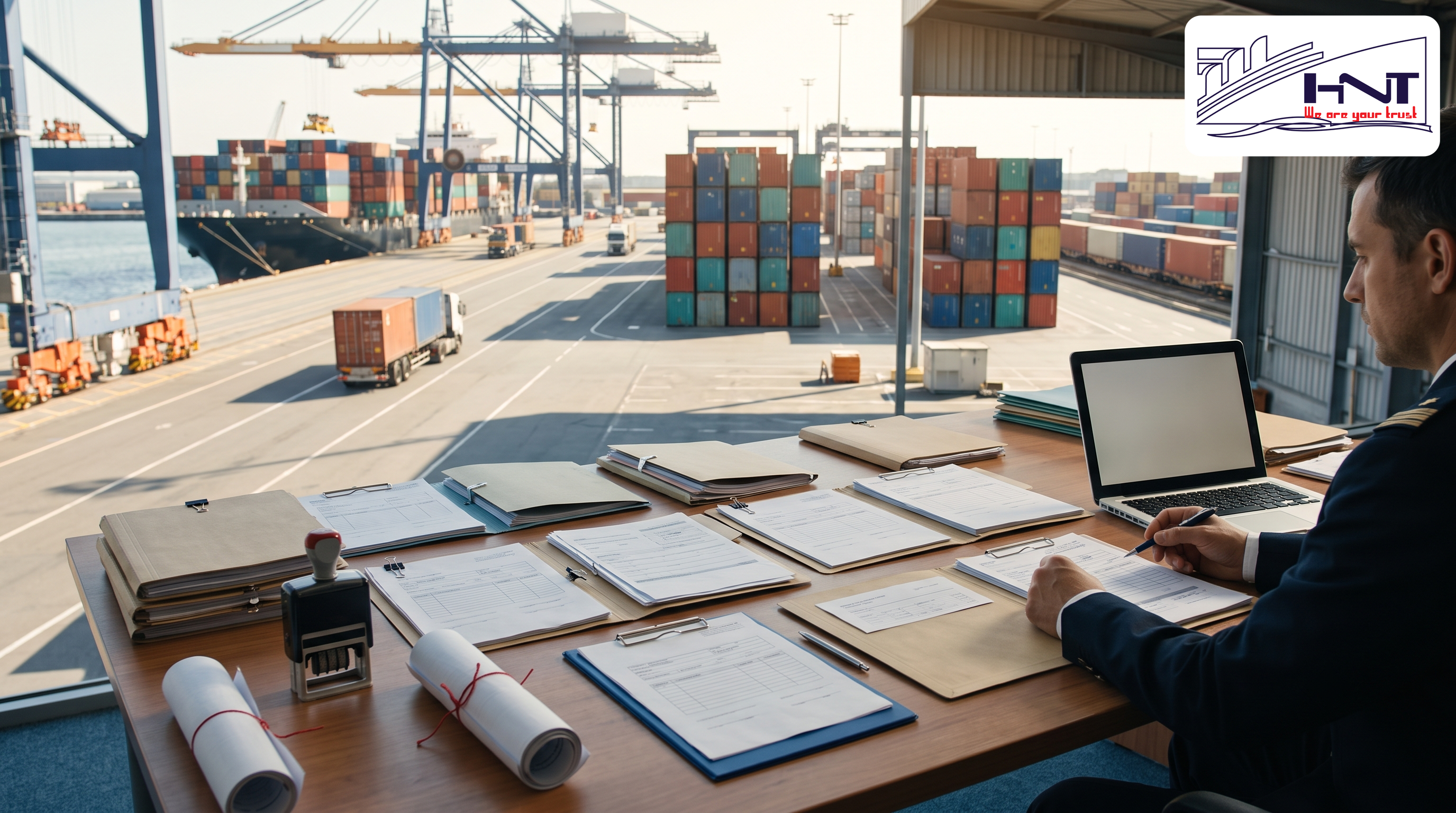
Distinguishing a back-to-back C/O from a newly issued C/O
The key point is that a back-to-back C/O inherits the origin that was previously established. The intermediary enterprise may not turn warehousing or lot splitting into an origin-conferring operation. Therefore, the dossier must demonstrate a continuous goods chain from the original C/O to the re-export lot.
- The original C/O proves origin from the first exporting member country.
- The back-to-back C/O is based on origin information previously established.
- The goods must remain identifiable throughout the warehousing and re-export process.
- The re-exported quantity must not exceed the quantity originally certified.
- Lot splitting must control the total quantity issued for each re-export.
- Activities in the intermediate country must not change the nature of the origin.
| Criteria | Back-to-back C/O | Newly issued C/O | Inspection risk |
|---|---|---|---|
| Proof source | Original C/O or proof of origin | Production records in the issuing country | Broken document chain |
| Goods through an intermediary | Yes | Not required | Goods cannot be identified |
| Split shipment | Can | By export lot | Exceeds original quantity |
| Origin | No change | Determined upon issuance | Incorrect declaration of criteria |
What is a Back-to-Back C/O under ATIGA
Cụm từ C/O Back to Back là gì thường được doanh nghiệp tìm khi xử lý C/O mẫu D. Theo cơ chế ATIGA, C/O giáp lưng phải thể hiện dấu hiệu tương ứng và liên kết với chứng từ xuất xứ ban đầu. Hướng dẫn theo Thông tư số 10/2026/TT-BCT yêu cầu ghi số tham chiếu và ngày cấp chứng từ xuất xứ gốc tại ô quy định của mẫu D.
Hypothetical example one: Mekong Orchard Company in Tien Giang imports a lot of ASEAN raw materials through Cat Lai Port, stores them in a bonded warehouse, and then splits them into two lots for re-export to Thailand. Because the documentation department tracks cumulative quantities, the total re-exported quantity exactly matches the original C/O and no additional explanation is required.
Hypothetical example two: Nam Viet Components Company in Binh Duong receives goods through Vietnam for re-export to Malaysia. Because the container numbers on the warehouse documents do not match the bill of lading, the dossier is temporarily suspended for clarification. After reconciling the bill of lading, warehouse declaration, and warehouse receipt, the enterprise avoids having to re-declare the entire origin dossier.
Conclusion: treat the back-to-back C/O as a document traceability chain, not as an independent C/O newly created in the intermediate country.
Conditions for issuing a back-to-back C/O under current regulations
The conditions for issuing a back-to-back C/O should be checked before the goods are included in a re-export plan. Decree No. 31/2018/ND-CP provides a specialized dossier for this type of C/O. The focus is on the initial proof of origin, transport documents, and import and export bonded warehouse documents with appropriate confirmation.

Conditions regarding the original proof of origin
The enterprise must ensure that the original proof of origin remains applicable to the lot being re-exported. Key data include the goods description, HS Code, quantity, origin criteria, first exporting country, and exporter information. Any discrepancy must be resolved before the dossier is submitted.
- The original proof of origin must be valid and fall under a mechanism that permits the issuance of a back-to-back C/O.
- The goods description must be sufficient to reconcile with the goods stored in the bonded warehouse.
- The HS Code must be checked according to the rules applicable under the agreement.
- The origin criterion on the new C/O must be consistent with the original document.
- The re-export quantity must remain within the quantity of goods that has been certified.
- The reference number and issue date of the original document must be declared in the correct location.
| Data | Inspection source | Request | Common errors |
|---|---|---|---|
| Item code | Original C/O | Consistent | Different code version |
| Quantity | C/O and warehouse receipt | Does not exceed original quantity | Do not deduct already issued lots |
| Origin criteria | Original C/O | Maintain appropriate consistency | Automatically change the criterion |
| Reference number | Original C/O | Declare accurately | Incorrect character |
| Issue date | Original C/O | Duplicate of original dossier | Confused bill of lading date |
Conditions regarding goods in the bonded warehouse
For goods transiting Vietnam under the bonded warehouse model, the enterprise must prove that the re-export lot is the same goods that entered the warehouse. A copy of the bonded warehouse import and export goods declaration certified by the customs authority is an important dossier component. Changes to packaging or splitting packages must not compromise the ability to identify the goods.
HNT LOGISTICS recommends preparing a reconciliation table by container number, package count, and weight immediately upon warehousing. This helps detect discrepancies before applying for a back-to-back C/O and reduces the risk of having to amend declarations when the vessel is close to the cargo cut-off date.
Hypothetical example one: Delta Seafood Hub Company in Ca Mau puts 24 tons of frozen seafood into a bonded warehouse in Ho Chi Minh City. The warehouse system keeps each lot separate by bill of lading number and temperature. When re-exporting 12 tons to Singapore, the enterprise accurately proves the corresponding portion of the goods without affecting the cold chain.
Hypothetical example two: GreenRiver Produce Company in Can Tho imports 18 pallets of fruit for re-export to Cambodia. One pallet has its warehouse label replaced but retains its internal lot code. Thanks to the traceability records, the enterprise can reconcile this pallet with the original documents and avoid disputes over goods identification.
Conclusion: legal compliance is truly safe only when the C/O data, bill of lading, and warehouse data reflect the same shipment.
Step-by-step procedure for applying for a back-to-back C/O on eCoSys
The procedure for applying for a back-to-back C/O is currently carried out through the eCoSys electronic system for managing and issuing certificates of origin, while dossier submission methods under published administrative procedures are also available. Enterprises should complete trader profile registration before a shipment requiring issuance arises.

Required dossier
The specialized dossier components are published on the Ministry of Industry and Trade's Public Service Portal. Enterprises should create an electronic checklist before uploading documents to the system. Each document must use the same way of stating the goods name, quantity, unit of measure, and lot information.
- Prepare the application for issuance of a back-to-back C/O according to the applicable form.
- Complete the corresponding C/O form and mark the back-to-back C/O field.
- Prepare the original proof of origin issued by the first member country.
- Prepare a certified copy of the bill of lading or equivalent transport document.
- Prepare a copy of the bonded warehouse import and export declaration certified by customs.
- Reconcile the re-export quantity with the remaining quantity on the original proof of origin.
| Documentation | Purpose | Data to lock | Inspector |
|---|---|---|---|
| Application | Issuance request | Applicant, shipment | Documentation |
| Draft C/O | Certificate issuance | Original reference number | Import export |
| Original C/O | Proof of origin | Criteria, quantity | Compliance |
| Bill of lading | Proof of transport | Container, packages | Delivery |
| Warehouse declaration | Proof of storage | Warehouse entry, warehouse exit | Customs |
Submission sequence and processing time limits
According to the currently published administrative procedure information, complete and valid electronic dossiers are reviewed on the system within six working hours. After receiving a valid paper application for an electronically declared case, the subsequent processing time is published as two working hours. Direct submission has a processing time of eight working hours; dossiers sent by post take 24 working hours.
Based on HNT LOGISTICS' experience, enterprises should not plan vessel schedules based on the minimum processing time. Allow additional buffer for supplementary documents, container number discrepancies, or requests to clarify origin. The customs declaration service page should also be consulted when the shipment simultaneously involves bonded warehouse procedures.
Hypothetical example one: Dong Nam Agri Link Company in Dong Nai completes its dossier at 9:00, but discovers an incorrect unit of measure before submission. Correcting it immediately allows the dossier to be received the same day and the shipment to catch the vessel from Cat Lai Port to Jakarta.
Hypothetical example two: Hai Van Foods Company in Da Nang waits until just before the cargo closing time to apply for a C/O. A minor discrepancy in the package count causes the dossier to require supplementation, forcing the enterprise to move to the next sailing. Storage and transport adjustment costs increase significantly.
Conclusion: finalize the C/O dossier at least a safe internal buffer before the cargo closing time, rather than treating the administrative processing deadline as the transport contingency time.
Regulations on back-to-back C/O for transit goods and points that are easily rejected
Regulations on back-to-back C/O for transit goods focus on the continuity of origin and the traceability of the shipment. A dossier may be formally complete but still face risks if the quantity, origin criteria, or commercial information is incompatible with the original documents.
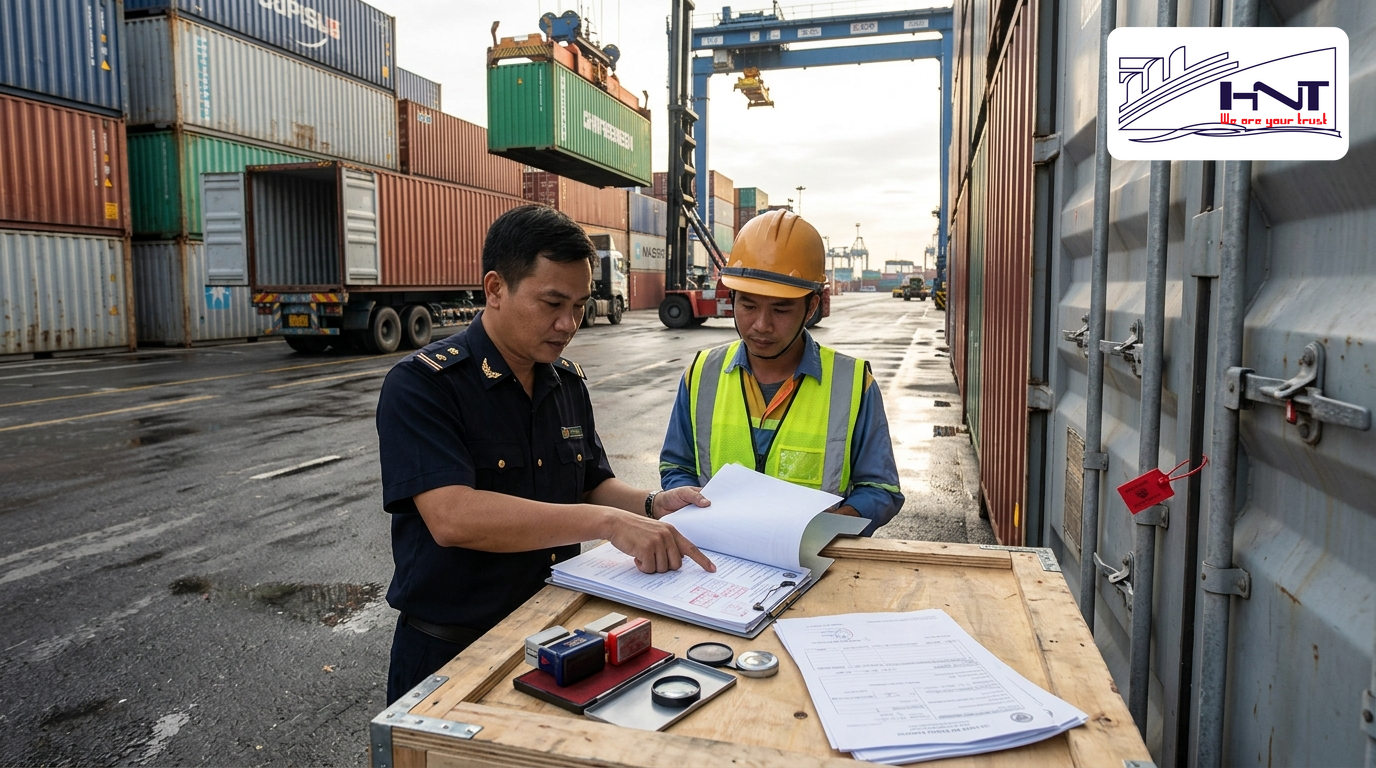
Discrepancies in quantity, value, and origin criteria
For split lots, the enterprise must manage the quantity already re-exported under each back-to-back C/O. The total quantity must not exceed the quantity certified on the original document. When the agreement or C/O form requires value data, the declaration must also follow the specific guidance of the applicable origin mechanism.
- Do not cumulatively re-export quantities exceeding the original proof of origin.
- Do not change the origin criterion merely because the goods pass through Vietnam.
- Do not use a commercial description that makes the goods no longer identifiable with the original dossier.
- Do not omit the reference number and issue date of the original proof of origin.
- Do not confuse the inbound bill of lading number with the transport document for the re-export lot.
- Do not allow the package count on the warehouse receipt to differ from the data declared on the C/O.
| Risk | Sign | Consequences | Control method |
|---|---|---|---|
| Exceeds quantity | Total re-export higher than original C/O | Insufficient basis for issuance | Cumulative tracking log |
| Incorrect criterion | Differs from original documents | Subject to verification request | Lock source data |
| Wrong bill of lading | Container does not match | Difficult to trace | Three-way reconciliation |
| Incorrect description | Goods name too different | Suspected different lot | Use consistent description |
| Incorrect issue date | Confused document date | Dossier returned | Two-layer inspection |
Third-party invoices and lot splitting
A commercial invoice may involve a third party in some regional transactions, but the enterprise must declare the correct field according to the rules of the applicable C/O form. The invoice does not replace the proof of origin. For Form D C/O, the back-to-back C/O information must be linked to the original proof of origin according to ATIGA guidance.
Hypothetical example one: Lotus Transit Company in Ho Chi Minh City splits a lot of components into three shipments to the Philippines. The employee prepares a table of the remaining quantity after each issuance. As a result, the third lot does not exceed the limit and the dossier does not require a quantity adjustment.
Hypothetical example two: SouthGate Trading Company in Binh Duong uses an invoice issued by an affiliated company in Singapore. The documentation department correctly declares the third-party invoice information while maintaining the origin data from the original C/O. The commercial and origin dossiers therefore remain separate.
Conclusion: separate the three data layers of origin, commercial, and transport information, then check their points of intersection before submitting the C/O.
Back-to-back C/O in logistics practice in 2026: risk and cost control
In 2026, freight rate volatility and vessel capacity make document errors more costly. On August 20, 2026, Drewry's intra-Asia container freight index increased 6% to USD 1,091 for a 40-foot container. At the same time, the trans-Pacific market recorded numerous canceled sailings and capacity adjustments.

Coordinating vessel schedules, bonded warehouses, and C/O application timing
The back-to-back C/O should be incorporated into the operating plan together with the vessel schedule, warehouse release time, and document closing deadline. If the goods are agricultural products, seafood, or fresh fruit, the enterprise must also distinguish origin requirements from quarantine, food safety, and cold-chain control requirements in the destination market.
- Finalize the re-export quantity before sending the request for issuance of the back-to-back C/O.
- Check the vessel schedule and document closing deadline before the dossier submission date.
- Allow buffer for requests for supplementary documents or origin verification.
- Synchronize the warehouse release order with the quantity on the expected C/O dossier.
- Check quarantine documents separately for agricultural products and fruit.
- Maintain separate temperature records for seafood and refrigerated goods during transit.
| Operational milestone | Task | Risk if delayed | Contingency |
|---|---|---|---|
| Before booking the vessel | Confirm the C/O mechanism | Choose the wrong route | Check the agreement |
| Before warehouse release | Lock quantity | Exceeds original quantity | Reconcile inventory |
| Before submitting the C/O | Review the dossier | Supplementary documents | Two-layer inspection |
| Before loading goods | Match container | Incorrect traceability | Cross-check the bill of lading |
| Before vessel departure | Retain document set | Difficult to verify | Retain electronic records |
According to experts at HNT LOGISTICS, shipments with back-to-back C/O should be managed using a single dossier code throughout warehousing, forwarding, and documentation. For refrigerated goods, enterprises should also consult refrigerated container standards and temperature monitoring procedures to avoid a situation where the C/O is valid but the quality of the goods deteriorates.
Hypothetical example one: FreshLink Tay Nam Company in Tien Giang re-exports fruit through Cat Lai Port to Malaysia. Because the C/O is finalized 24 hours before the internal warehouse release schedule, the operations team can resolve a pallet-count discrepancy without affecting the container closing time.
Hypothetical example two: BlueCoast Seafood Company in Ca Mau transports frozen goods to Singapore. Because the vessel schedule changes, the goods must remain in storage for one additional day. The C/O dossier remains consistent, while the temperature monitoring system maintains the operating limits set for the shipment.
Pre-re-export checklist
- Check that the original C/O or original proof of origin is complete and legible.
- Reconcile the goods name, HS Code, quantity, and origin criteria.
- Reconcile the inbound bill of lading with the bonded warehouse entry records.
- Lock the re-export lot quantity and update the remaining quantity in the tracking records.
- Check the reference number and issue date of the original proof of origin.
- Submit the dossier before the internal operational deadline; do not wait until the vessel schedule is imminent.
- Retain an electronic copy of the complete dossier for post-clearance verification.
Conclusion: in an environment of volatile freight rates and vessel capacity, a one-day delay caused by the C/O can create costs far greater than the time spent checking the dossier from the outset.
The back-to-back C/O is an important tool when goods with preferential origin pass through an intermediate member country before reaching the final market. The value of this mechanism lies in preserving the origin chain while providing flexibility for warehousing, lot splitting, and re-export. Enterprises should treat the C/O, bill of lading, and bonded warehouse documents as a unified data set.
- Identify the correct agreement and mechanism permitting the issuance of a back-to-back C/O.
- Check the original proof of origin before arranging the re-export.
- Do not allow the total quantity of split lots to exceed the quantity initially certified.
- Keep the origin criterion consistent with the original proof of origin.
- Synchronize the C/O with the bill of lading and bonded warehouse import and export declarations.
- Allow time for dossier supplementation before the vessel closing deadline.
- Retain traceability records so they are ready for inspection and verification.
For agricultural, seafood, and fresh fruit shipments, the C/O is only one part of the compliance equation. The enterprise must still manage quarantine, quality, and the cold chain independently. HNT LOGISTICS can support Vietnamese exporters with forwarding, bonded warehousing, documentation, and transport coordination to reduce risks at transition points. As a professional transport provider, HNT LOGISTICS is committed to delivering comprehensive supply chain solutions, helping Vietnamese businesses confidently conquer global markets. Contact us today at 8A Hoang Minh Giam, Ho Chi Minh City or via the marketing email at hntshipping.com for quotation support!