


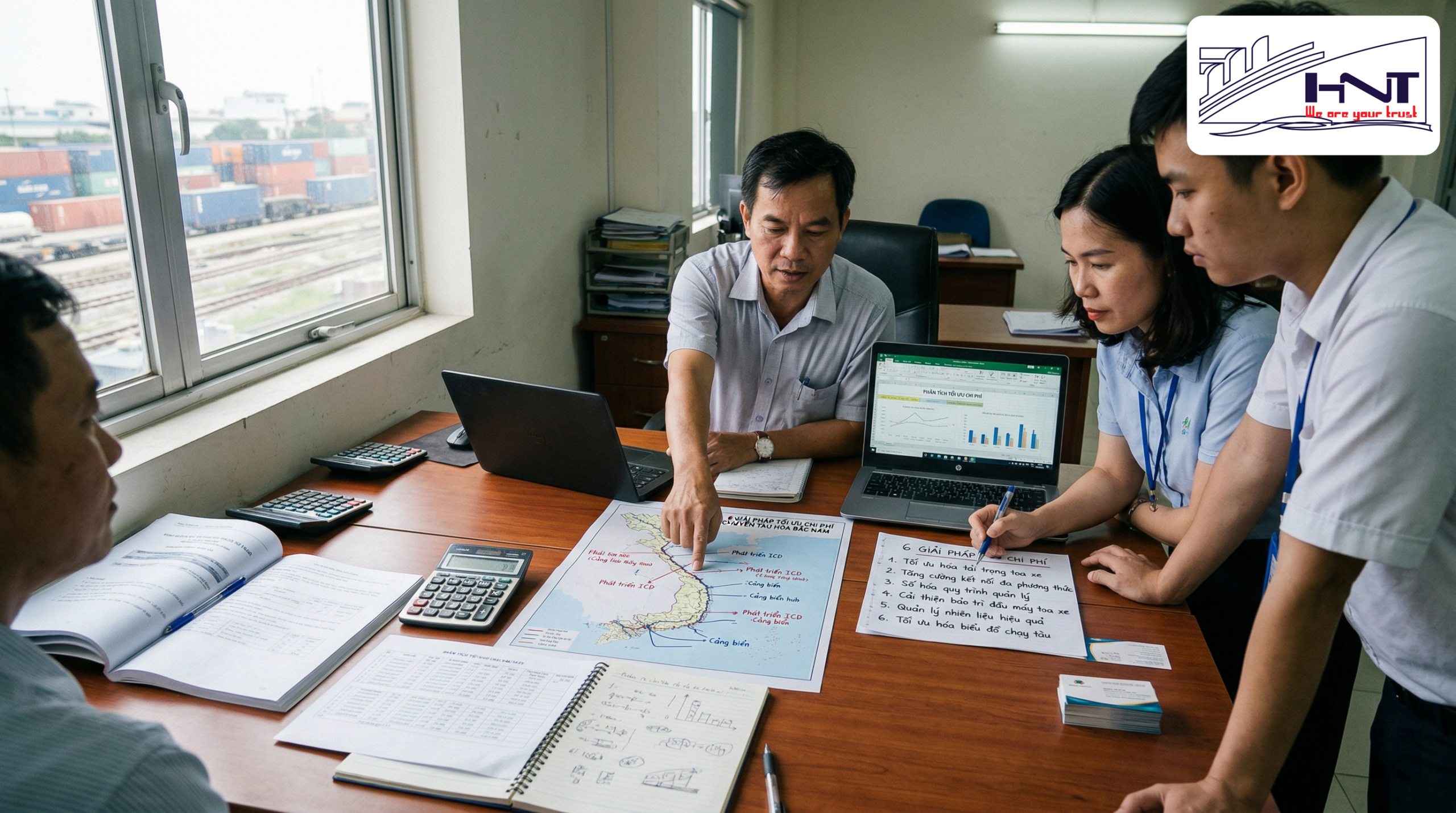
Logistics costs are always a difficult problem for domestic manufacturing and trading businesses. Choosing the method of North-South train transport is becoming a leading solution to balance budget and safety. According to the 2026 logistics market report, domestic rail transport costs are 20-30% lower than dedicated road transport.
Moreover, the on-time arrival rate of dedicated freight trains now reaches over 90%, an impressive figure. This article will analyze in detail the pros and cons, compare methods, and provide practical notes for import-export businesses to apply immediately to their supply chain.
Optimizing supply chain with North-South train transport
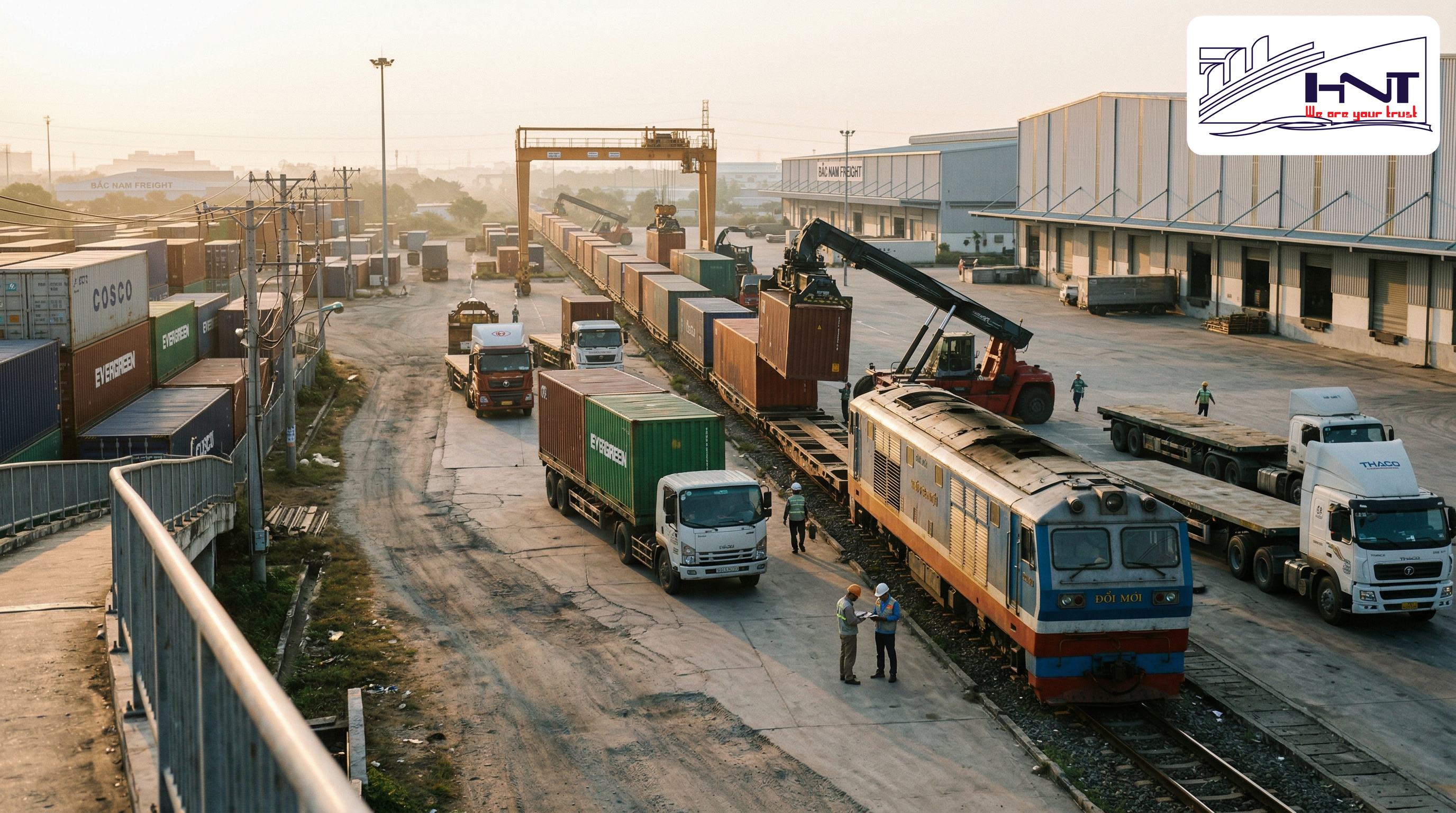
Method North-South train transport is increasingly affirming its position in the context of constantly fluctuating fuel prices. For journeys of thousands of kilometers, rail provides absolute peace of mind regarding rate stability. Businesses no longer have to struggle with dealing with sudden surcharge increases as they do when using other modes.
Core advantages of rail
The biggest advantage of the railway industry is its massive carrying capacity. One freight train can replace dozens of heavy container trucks running on highways. This not only helps reduce traffic pressure but also minimizes accidents and breakdowns along the way.
Train schedules are fixed, making it easy for shippers to plan production.
Objects goods fit
Rail is particularly suitable for large, bulky shipments that do not require urgent delivery. Items such as industrial machinery, construction materials, packaged consumer goods, or dry agricultural products are excellent candidates. The division of specialized wagons also helps preserve goods better throughout the long journey.
Current domestic transport trends
With the green transition trend, changing transport methods to minimize carbon emissions is strongly encouraged. According to a a report by the Ministry of Industry and Tradereport, increasing the proportion of domestic rail is a long-term strategy. Logistics companies are actively integrating this service into their systems to provide customers with the most competitive rates.
Thuan Phat Electronics Company in Tan Phu District, Ho Chi Minh City, previously faced difficulties sending 50 tons of air conditioners to Hanoi by road due to skyrocketing rates during the hot season. After switching to rail, they saved 25% on transport costs, equivalent to tens of millions of dong per trip.
Similarly, Viet Hung Textile Factory in Binh Duong frequently has to transport rolls of fabric to a processing workshop in Nam Dinh. By using closed wagons, the entire batch of fabric avoided mold damage caused by rain and storms, ensuring intact quality upon arrival.
According to HNT LOGISTICS experience, SMEs should allocate at least 40% of non-urgent cargo volume to rail to maintain stable cash flow. Diversifying methods is the key to effective risk management.
- Oversized and overweight goods are easily loaded and unloaded by large cranes.
- Safe chemicals and industrial raw materials.
- Large quantities of palletized consumer goods.
- Dried or standardized bagged agricultural products.
- Paper and pulp products that require enclosed space.
- Household electronic appliances that do not require express speed.
| Evaluation criteria | Outstanding features | Benefits provided |
|---|---|---|
| Cargo capacity | Hundreds of tons per train trip | Suitable for large-scale projects |
| Safety level | Less vibration, running on separate tracks | Reduces damage and packaging tearing rate |
| Schedule | Fixed according to station plan | Easy to forecast arrival time |
| Cost | Less affected by fuel price fluctuations | Accurate budget management |
Evaluation between train transport and North-South truck transport
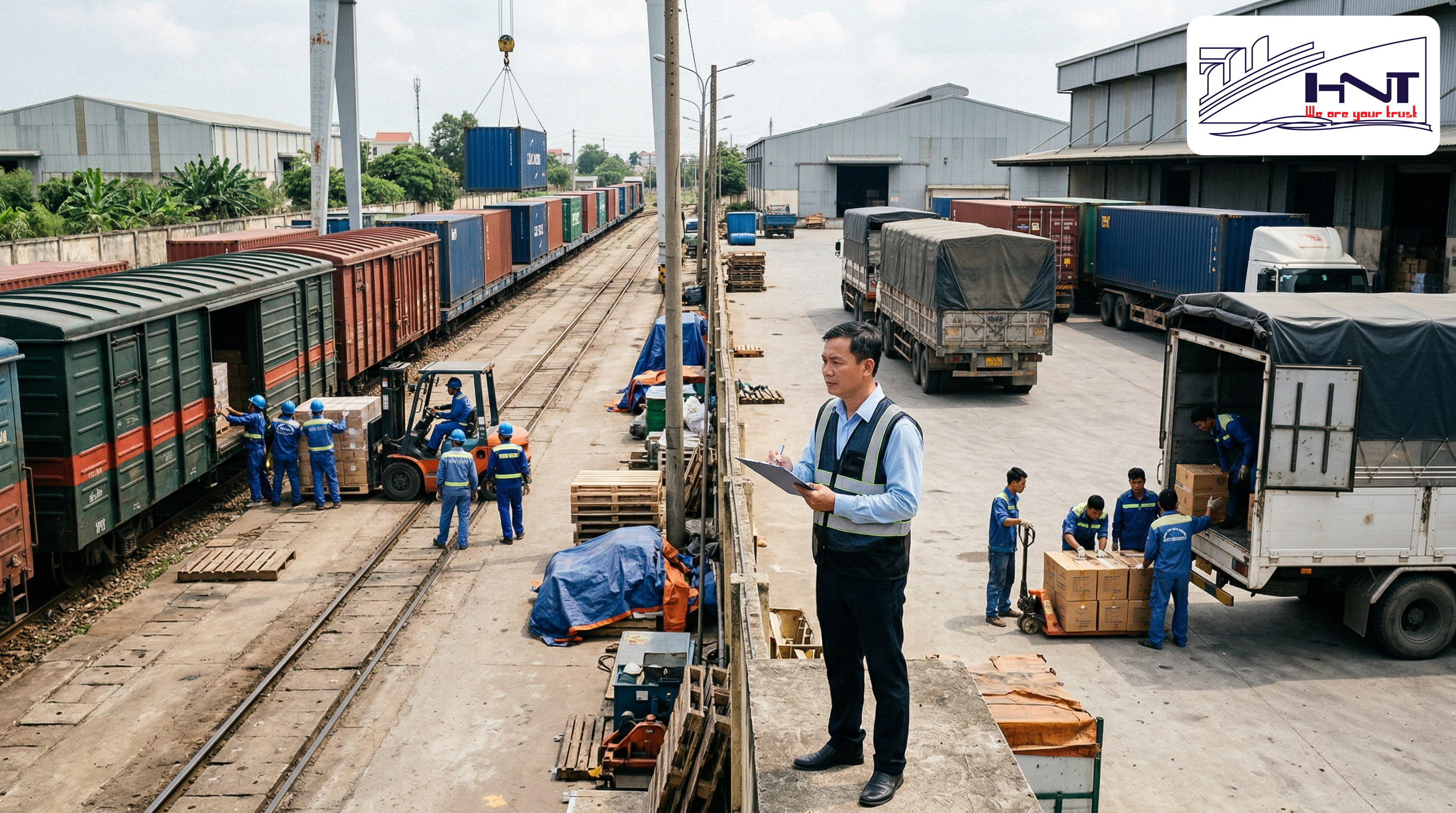
Decision to choose between rail and North-South truck transport depends on the balance between speed and the company's budget. Each method has its own distinct characteristics serving different supply chains. Understanding the nature of each form will help you make the most informed choice for each specific order.
The freight cost problem
Road transport often calculates freight flexibly per cubic meter or loose kilograms, along with many surcharges such as tolls and yard fees. In contrast, rail freight applies a fixed tariff, significantly cheaper when the shipment exceeds 3 tons. For full-carload goods, the savings can be extremely attractive, helping increase profit margins.
Time and safety factors
Road transport has a clear advantage in speed. A truck running continuously from South to North can take 3-4 days, while the train takes 5-7 days depending on wagon scheduling. However, rail wins in safety.
Fixed rail systems eliminate strong shaking, minimizing risks of traffic accidents or congestion due to bad weather.
Flexibility in delivery
Trucks can directly enter customers' warehouses in any terrain, providing maximum convenience. Meanwhile, trains must stop at central stations. To overcome this, logistics providers often offer additional small truck shuttle services from station to warehouse, forming a closed door-to-door chain.
Cần Thơ Agricultural Products Company once suffered heavy losses when a rice truck overturned on Hải Vân Pass. After switching to full rail wagons, their risk rate over the past year dropped to 0%, ensuring absolute reputation with northern dealers.
Hòa Bình Consumer Goods distributor in Hanoi needed to import kitchen equipment from Ho Chi Minh City. Due to urgent demand for the opening event, they had to use dedicated trucking. Although costs were higher by 30%, the goods arrived in just 72 hours.
Businesses need to clearly classify the priority level of goods: urgent goods should be delivered by truck, mobile inventory goods should be delivered by train to save costs.
- Actual volume of goods and volumetric weight.
- Maximum time committed to purchasing partners.
- Expected budget for the entire transportation phase.
- Physicochemical properties of the products to be sent.
- Accessibility of warehouses for large vehicles.
| Comparison criteria | Domestic train | Road truck |
|---|---|---|
| Transit time | Average of 5 to 7 days | Fast from 3 to 4 days |
| Risk level | Very low, smooth operation | Higher due to complex traffic |
| Flexibility | Only stop at designated stations | Door-to-door delivery in all areas |
| Cargo capacity | Excellent for super-heavy cargo | Suitable for general cargo, consumer goods |
Standard North-South railway transport process
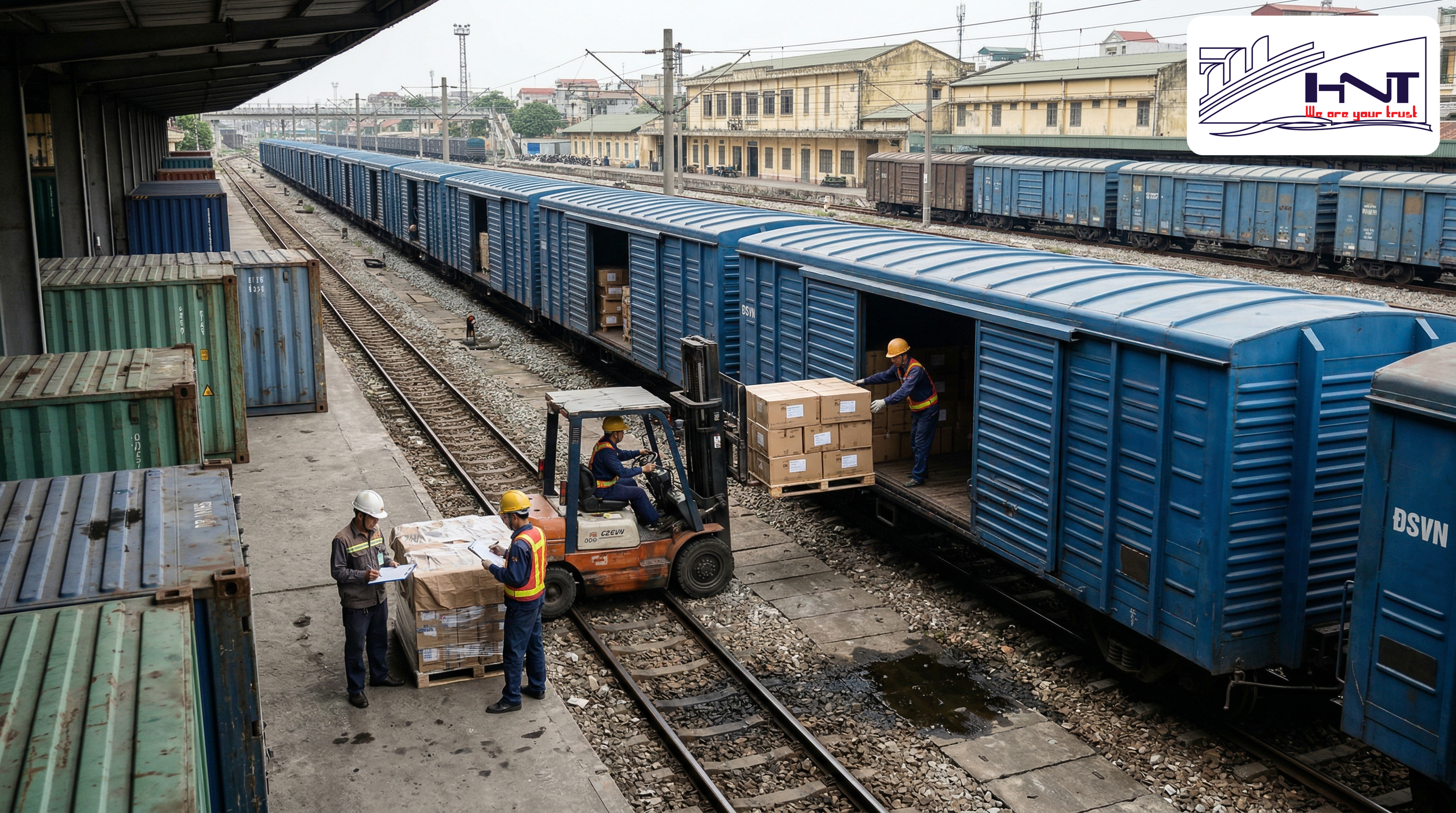
For a North-South railway transport trip to go smoothly, the preparation phase needs to be carried out methodically and professionally. Smooth coordination between the cargo owner, the railway station, and the logistics provider will help shorten processing time while ensuring goods are in the safest condition before the train rolls.
Packing and gathering at the station
Goods need to be packed according to technical standards before being brought to the station. Cartons must be wrapped with shrink film and palletized securely to withstand handling by forklifts. Gathering goods at the loading yard of Song Than or Giap Bat station must comply with the specified time frames to avoid missing the train due to arriving too late.
Handling documents and waybills
Legal compliance is a vital factor when transporting goods domestically. The file includes VAT invoices, internal transport and delivery slips, and sales contracts. Station staff will issue the original railway waybill, which is the most important document for the recipient to legally pick up the goods at the destination station.
Tracking delivery progress
Although positioning technology has not yet covered every carriage like trucks, professional transport companies still continuously update the train's location via the station operating system. Customers will receive notification as soon as the train arrives at the destination station, helping them proactively arrange personnel and small trucks to pick up goods quickly.
Phuong Nam Furniture Company (Binh Duong) always sends a team to directly supervise the process of hoisting wooden cabinet packages onto carriages. Thanks to careful lining with foam, 100% of their high-end furniture products always maintain a shiny surface when reaching customers in Hai Phong.
Dong Nai Mechanical Enterprise was once held up at the station due to providing incorrect information on a VAT invoice. Thanks to support from the professional documentation team, they were able to promptly supplement the papers and release the shipment that very morning.
HNT LOGISTICS recommends that businesses cross-check all documents at least twice before handing them over to the station to avoid incurring unnecessary storage costs.
- Make a detailed list of package quantities and weights.
- Pack securely, stick clear warning labels.
- Sign a transport contract with an intermediary unit.
- Hand over goods and sign the minutes at the loading station.
- Send the waybill code to the recipient at the destination end.
6 most economical North-South freight solutions
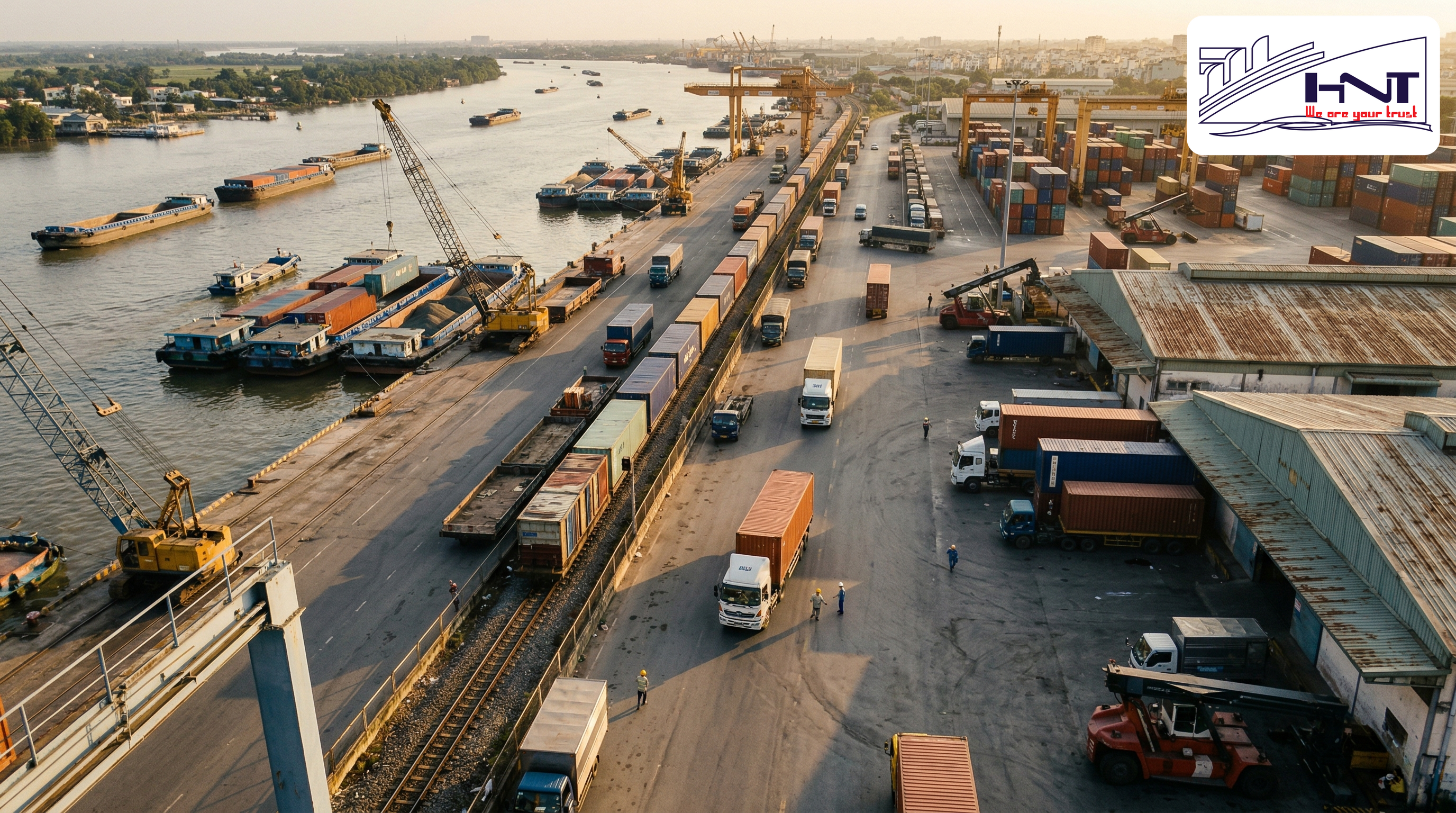
Implementing an effective North-South freight transport strategy is not just about finding a cheap price list. Businesses need to know how to maximize loading space, optimize procedure processes, and choose the golden time to send goods. Below are important notes that have been proven effective in practice.
Efficient LCL (Less than Container Load) consolidation
For small and medium-sized companies that do not have enough volume to lease a whole carriage, the consolidation (LCL) solution is a great lifesaver. By sharing carriage space with other shippers, costs will be shared significantly. The key here is to declare the actual dimensions accurately so that the transport unit can arrange the goods scientifically, avoiding cross-impact.
Plan early booking
During peak seasons such as near the Lunar New Year, the situation of carriage shortages occurs frequently. Planning to book a spot 2-3 weeks in advance will ensure your goods depart on time. This also helps you avoid having to pay extra toll fees or exorbitant priority loading/unloading fees at the station.
Choose a reputable logistics partner
A professional agent will provide a full-service package from picking up goods at the factory, completing procedures at the station, to delivering directly to the recipient's hands. They have the capability to handle arising situations such as delayed trains or damaged goods quickly. Long-term cooperation with a reliable partner will significantly improve logistics competency index of your business.
Rang Dong Plastic Company frequently combines shipments of lightweight plastic bottle shells with heavy equipment from other partners on the same carriage. This smart approach helps them maximize carriage volume, reducing freight costs by up to 15% compared to regular LCL shipping.
Tan Binh footwear factory once lost a major client due to train delays during the Tet holiday. Since last year, they changed their strategy, shipping goods before the 15th day of the twelfth lunar month. As a result, all orders were safely stored in the Northern general agent's warehouse before the peak period.
Continuously monitor and update the railway freight rate table on a quarterly basis, thereby renegotiating with suppliers to maintain a competitive advantage in product pricing.
- Accurately measure the dimensions of the cargo box to calculate the volume.
- Use wooden crating services for fragile goods.
- Purchase domestic cargo insurance for high-value shipments.
- Prepare a contingency plan to use trucks when needed urgently.
- Take advantage of backhaul train trips that have cheaper freight rates.
- Contact the freight forwarder to get a door-to-door all-in quote.
In summary, North-South train transport is an indispensable link in the modern logistics ecosystem. It thoroughly solves the problem of expensive road freight costs, while bringing incredible sustainability and stability to the supply chains of Vietnamese businesses.
- Significantly save operating costs for high-volume goods.
- Fixed schedules help proactively plan business activities.
- Minimize the risk of accidents and damage to goods during long-distance transport.
- Transparent documentation process, compliant with the law.
- Environmentally friendly, meeting the green transport trend.
If your business is looking for a safe and cost-effective trading option, consider integrating rail into your transport plan. HNT LOGISTICS is proud to be a strategic partner, providing comprehensive domestic and international transportation solutions, committed to bringing the highest practical value to every Vietnamese customer.