


When a durian container is held at the border gate due to an incorrect growing area code, the entire delivery schedule can fall apart in just one day.
In 2026, Vietnam's fruit and vegetable exports exceeded 8.56 billion USD, while the Chinese market accounted for approximately 64% of fruit and vegetable export turnover. By mid-July 2026, fruit and vegetable export turnover had reached 4.232 billion USD, creating higher compliance pressure for PUC and PHC.
This article helps businesses understand how to register, maintain, and correctly use codes in export documents. The focus is on reducing phytosanitary risks, protecting vessel schedules, and avoiding container storage costs.
what is a PUC growing area code and when is it mandatory?
The PUC growing area code is a management identifier for production areas that meet traceability, phytosanitary, and pest monitoring requirements. The Plant Production and Plant Protection Department maintains a section for managing growing area codes and packing facility codes and publishes lists of approved growing areas and packing facilities.
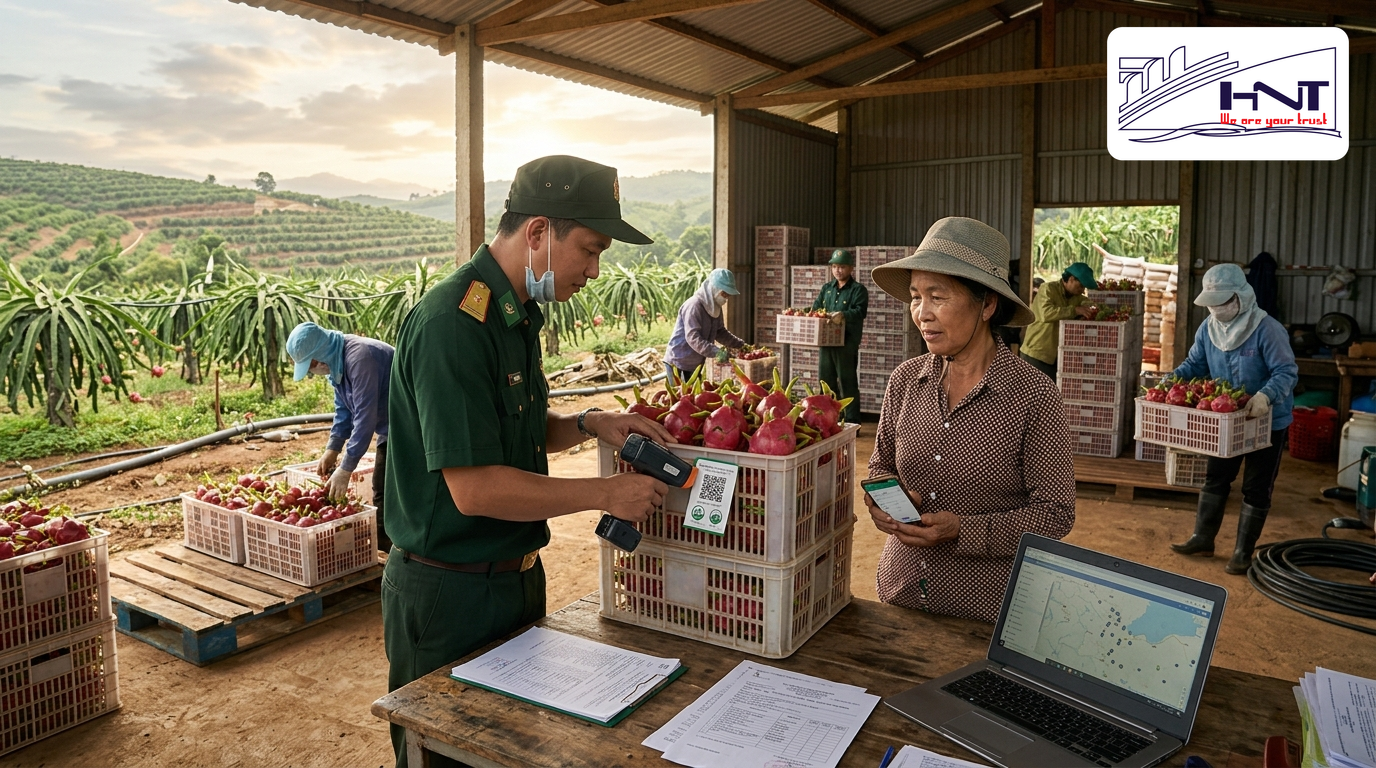
- Properly identify the entity registered as the growing area holder, the area, expected output, and export crops.
- Create boundary maps, coordinates, and lists of affiliated growers to avoid duplicate records.
- Maintain cultivation logs, pesticide records, and pre-harvest withholding periods.
- Control pests according to the requirements of the importing market, especially China.
- Put the PUC code on documents, traceability labels, and loading plans before booking the vessel.
| Category | Main requirement | Risks if incorrect | Documents to prepare |
|---|---|---|---|
| Area boundaries | Clear coordinates | Inspection mismatch | Map and grower list |
| Cultivation log | Record by lot | Not traceable | Paper or electronic logbook |
| Pest control | By quarantine pest | Shipment flagged | Monitoring report |
| Output | Area matches | Suspected code borrowing | Harvest plan |
For example, Mekong Viet Fruit Company in Tien Giang registered a 28-hectare mango growing area for the Cat Lai Port to Shanghai route. By standardizing electronic logs for each lot, the company reduced document reconciliation time by 18 hours before applying for a phytosanitary certificate.
In Dak Lak, Cao Nguyen Durian Cooperative once consolidated produce from three communes using one shared code. After separating the areas according to actual boundaries, the proportion of lots requiring additional documents fell from 12% to 2% in one crop season.
Practical tip: do not treat the PUC code as a one-time permit. Manage it as the traceability asset of the entire supply chain.
Role of growing area codes in traceability
The growing area code allows import authorities to trace a container back to the production area, spraying records, and harvest date. Therefore, production figures must be reasonable relative to the area. HNT LOGISTICS recommends reconciling the PUC with weighing slips, warehouse receiving slips, and the Bill of Lading before the loading date.
registering an export growing area code: documents and implementation process
Registration of an export growing area code should begin at the local level, after which the application is reviewed and updated according to the requirements of the importing market. Decree No. 38/2026/ND-CP has been cited by the Plant Production and Plant Protection Department as a basis for growing area codes and packing facility codes.
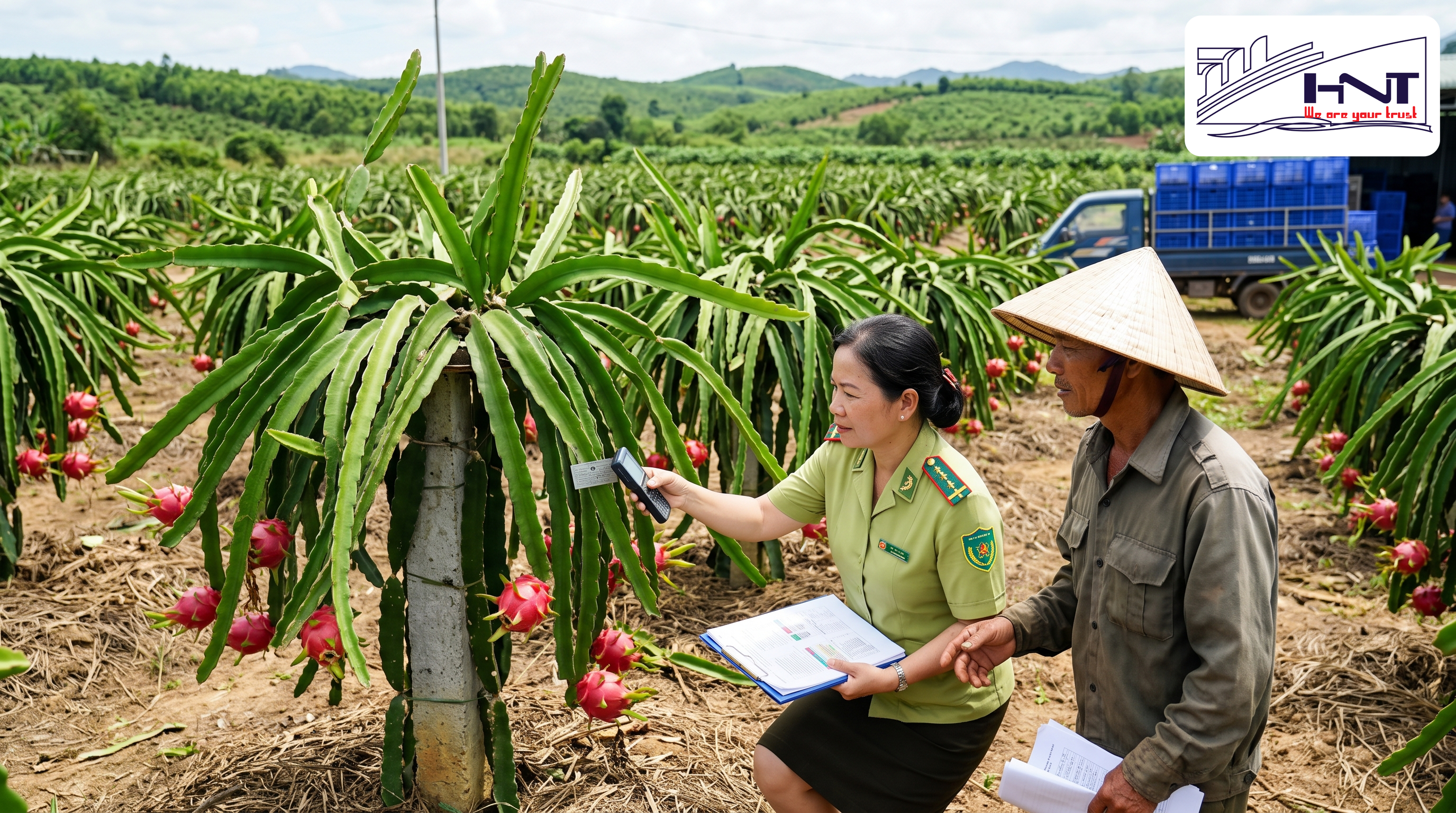
- Survey the production area and determine the crops, area, output, and target export market.
- Standardize cultivation logs, input material lists, and pest control records.
- Submit the application through the local specialized authority according to the applicable guidance.
- Receive the field inspection team, remedy non-compliant points, and retain the inspection report.
- Monitor approval results, update the lists, and review them before each crop season.
| Step | Task | Person in charge | Control point |
|---|---|---|---|
| 1 | Prepare area records | Growing area holder | Coordinates and area |
| 2 | Review cultivation | Agricultural techniques | Pesticide log |
| 3 | Submit application | Business or cooperative | Valid form |
| 4 | Field inspection | Specialized authority | Correct errors |
| 5 | Maintain code | Code holder | Periodic monitoring |
For example, An Phu Agricultural Products Company in Long An prepared dragon fruit growing area documents for the Cat Lai Port to Guangzhou route. By finalizing the map and logs 45 days in advance, the company avoided having to change the vessel schedule when its Chinese customer requested PUC confirmation.
In Binh Thuan, Minh Thuan Fresh Company separated growing area records by grower group. This approach ensured that harvest data did not exceed the registered output. The company also shortened its internal inspection time from three days to one day.
Practical tip: schedule registration at least one quarter before the main harvest season to allow time for corrective actions.
Checklist for agricultural PUC code issuance documents and procedures
Agricultural PUC code issuance procedures often encounter inconsistencies in data. Businesses should check the entity name, address, area, plant variety, output, pesticide logs, and area map. Each data field must be consistent across internal records, sales contracts, and export documents.
PHC packing facility code and control standards before export
The PHC packing facility code confirms a location capable of pre-processing, sorting, treating, and packing goods while maintaining lot uniformity. A packing facility is not merely a factory. It is the final control point before phytosanitary inspection, customs declaration, and delivery of the refrigerated container.
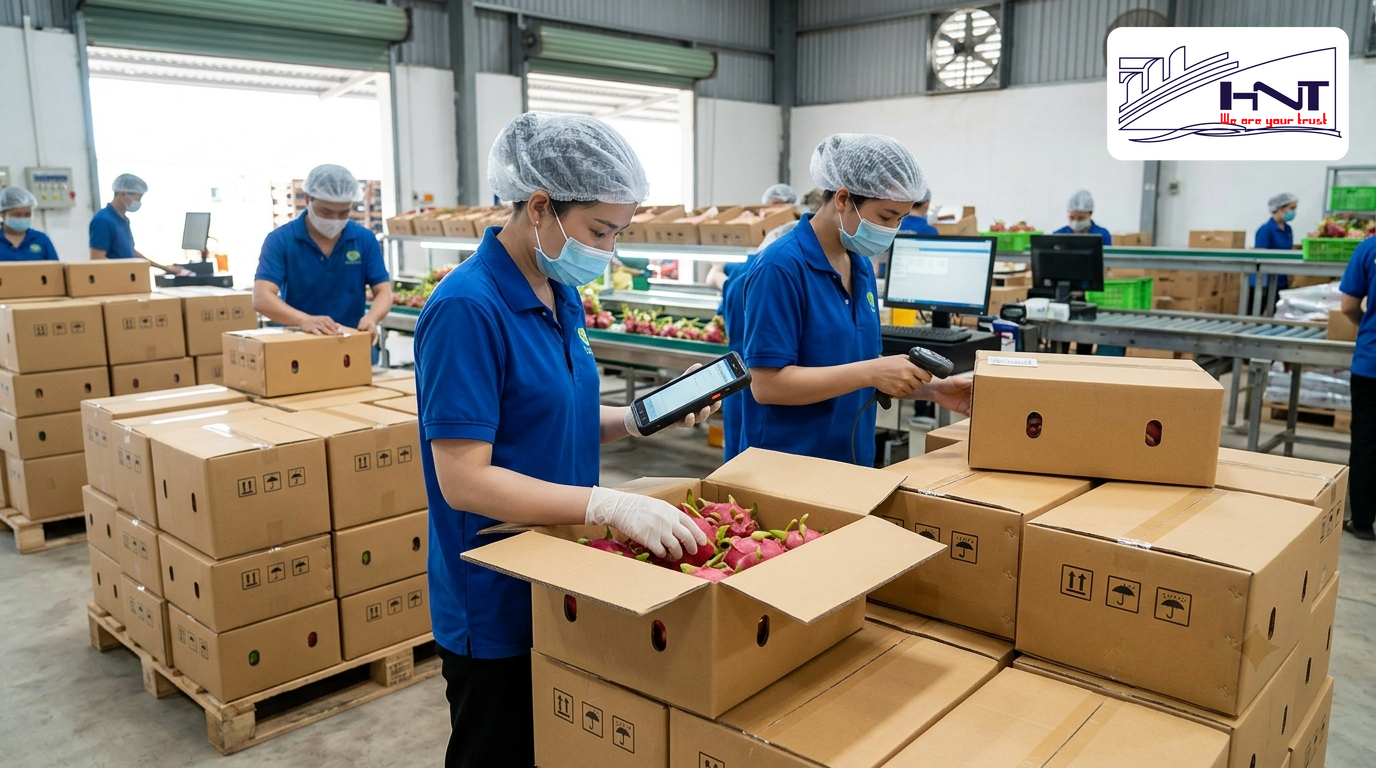
- Arrange a one-way product flow, separating receiving, sorting, treatment, packing, and dispatch areas.
- Record the PUC source of each lot and avoid mixing goods with different codes or goods that have not been approved.
- Clean contact surfaces, containers, pallets, and container staging areas by production shift.
- Keep records of weighing, sorting, treatment, carton packing, and outgoing quality inspection results.
- Check labels, PHC and PUC information, packing date, and destination market before sealing.
| Area | Operational requirements | Stored records | Common errors |
|---|---|---|---|
| Receive goods | Separate by PUC | Receiving slip | Code mixing |
| Sorting | Remove defective fruit | Sorting report | No record of loss rate |
| Treatment | Correct procedure | Treatment slip | Insufficient treatment time |
| Packing | Clear label | Carton list | Incorrect PHC code |
| Dispatch | Correct container | Sealing report | No temperature reconciliation |
For example, Phu Hung Packing House in Can Tho exported 40 tons of jackfruit to Nanning. By separating cold staging areas by PUC, the facility reduced labeling errors from 35 cartons to just 4 cartons in one shipment.
In Lam Dong, Da Lat Green Pack Company used a dedicated PHC code for its passion fruit line. By reconciling the code on labels and packing slips before the truck left the warehouse, the company avoided having to haul a container back to the port.
Practical tip: PHC should be checked as an internal customs checkpoint before the container leaves the warehouse.
Linking PHC with the Bill of Lading and phytosanitary inspection
Based on HNT LOGISTICS' experience, the documentation team should reconcile the PHC code with the phytosanitary certificate, packing list, and Bill of Lading. Businesses need an agricultural customs declaration service process to detect discrepancies before opening the customs declaration.
growing area codes for PHC packing facility standards for durian
For durian, PHC requirements are often stricter because the goods are high-value, have a short selling window, and are subject to close traceability scrutiny. PHC standards for durian packing facilities should focus on ripeness, foreign matter, surface treatment, traceability codes, and staging temperature before loading.
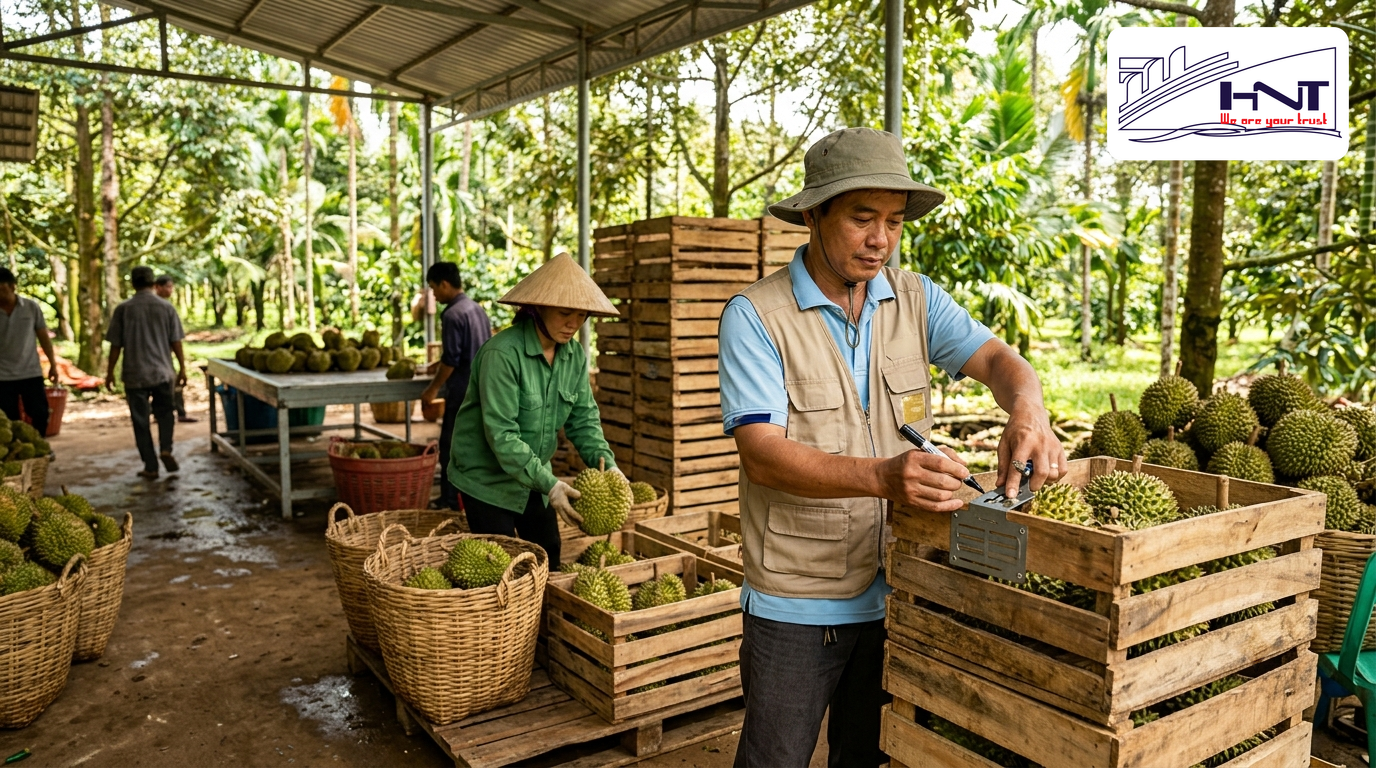
- Control ripeness according to the contract and avoid packing fruit that is too immature or too ripe in the same lot.
- Separate durians by PUC, variety, cutting date, and customer to reduce the risk of source mixing.
- Clean thorns, stems, plastic crates, and weighing areas before each packing shift.
- Record staging-room temperature, waiting time, and container number for traceability.
- Reconcile Chinese labels, PHC code, PUC code, and seal number before the truck departs.
| Control point | Recommended practice level | Accompanying documents | Logistics impact |
|---|---|---|---|
| Ripeness | Sort by lot | Product inspection slip | Reduce complaints |
| Staging temperature | Stabilize before packing | Warehouse log | Maintain quality |
| Code label | Clear PUC and PHC | Carton list | Avoid phytosanitary delays |
| Refrigerated container | Pre-cooling | Inspection report | Reduce thermal shock |
For example, Tan Phat Durian Company in Dak Nong packed 18 tons for shipment to Shenzhen in a 40-foot refrigerated container. By pre-cooling the container four hours in advance, the core temperature of the goods was more stable and the proportion of soft fruit fell by 3%.
In Tien Giang, Mekong Durian Link Company once used two PUCs in one packing shift. After splitting shifts by growing area code and placing a checklist at the warehouse door, counting time was reduced by 25 minutes per container.
Practical tip: durians should be documented by packing shift, not only by packing date.
Refrigerated container configuration for durian and fresh fruit
For refrigerated cargo, businesses need to check refrigerated container size standards, temperature set point, ventilation, and pre-cooling time. These parameters must match the contract, shipping line instructions, and the actual condition of the lot.
growing area codes in logistics and customs clearance documents
The growing area code must run consistently from the contract and packing list through the phytosanitary certificate to the customs declaration. If a document contains an incorrect code, the risk is not limited to phytosanitary inspection. Vessel schedules, container storage fees, and buyer confidence are all affected.

- Check PUC and PHC on the contract before issuing the loading plan.
- Reconcile the packing list with the phytosanitary certificate before transmitting declaration data.
- Send the draft Bill of Lading to the customer for early approval, especially for China and United States routes.
- Control the HS Code using the goods description table to avoid declaring the wrong product type.
- Monitor cut-off time, yard drop-off time, and the time the phytosanitary certificate is issued.
| Documentation | Field to check | Checker | Timing |
|---|---|---|---|
| Contract | PUC, PHC | Business | Before purchasing |
| Packing | Carton count, code | Warehouse | Before sealing |
| Quarantine certificate | Product name, code | Documentation | Pre-declaration |
| Bill of lading | Consignee, description | Forwarder | Before issuance |
| Customs declaration | HS Code | Declaration | Before customs clearance |
For example, Green Seafood Ca Mau Company exported frozen mangoes with the raw material growing area code to Long Beach. Rechecking the PUC in the document set helped the company avoid two days of container storage fees (Demurrage/Detention) at Hai Phong Port.
In Binh Duong, An Binh Food Company shipped a passion fruit lot to Rotterdam. By using an import-export document checklist, the documentation team detected a one-character error in the PHC before the Bill of Lading was issued.
Practical tip: lock PUC and PHC data in one master file, with only one authorized person allowed to edit it.
Control point before booking the vessel
According to experts at HNT LOGISTICS, businesses should complete phytosanitary procedures and draft documents at least 24 hours before the cut-off time. In 2026, Drewry recorded the Drewry World Container Index on 27/08/2026 at 4,473 USD per 40-foot container, showing that freight rate volatility continues to affect delivery planning.
growing area codes: maintenance, monitoring, and handling alerts
A growing area code may lose its commercial value if the growing area violates traceability, residue, or pest control requirements. Therefore, businesses need a post-registration monitoring plan. This part is often overlooked, but it determines the ability to export consistently.
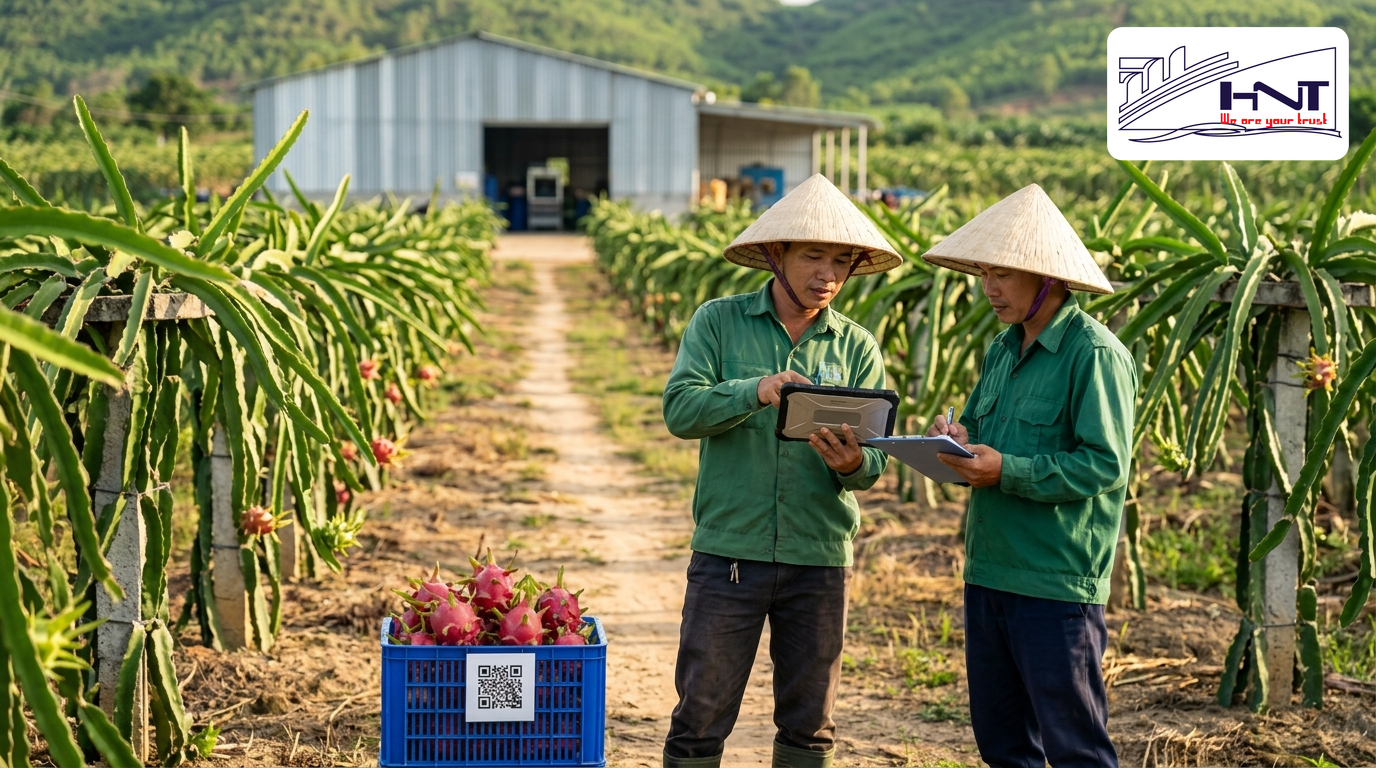
- Check cultivation logs weekly during the crop season, especially during the pre-harvest period.
- Reconcile purchased output with the capacity of the growing area to detect the risk of code borrowing.
- Keep sample records for each lot, including label photos, weighing slips, receiving slips, and export documents.
- Review market alerts, new phytosanitary requirements, and lists of approved codes.
- Suspend shipments from areas suspected of violations until verification is completed.
| Situation | Take immediate action | Records to retain | Target |
|---|---|---|---|
| Incorrect label | Lot quarantine | Carton photos | Do not ship incorrectly |
| Excess output | Stop collection | Weighing slip | Prevent code borrowing |
| Pest alert | Field inspection | Monitoring report | Rapid corrective action |
| Incorrect documents | Correct before declaration | Draft | Avoid storage at the terminal |
For example, Vinh Thuan Cooperative in Soc Trang discovered that purchased longan output exceeded the plan by 15%. The unit stopped the suspect shipment, rechecked the grower list, and retained the code for the remaining lots.
In Dong Nai, Fresh Link Vietnam Company was asked by a customer to explain why the PHC code did not match the carton label. By keeping photos of each pallet before container loading, the company proved that the error affected only 20 cartons and avoided having to destroy the entire lot.
Practical tip: a minor alert should be handled as a system incident, not as an isolated paperwork error.
Conclusion and key points to remember
The growing area code is the foundation for Vietnamese agricultural products to enter official trade channels, especially fresh fruit and durian. Businesses should manage PUC, PHC, phytosanitary procedures, documents, and refrigerated containers as one continuous chain. This approach helps reduce customs clearance delays and protect profit margins.
- Standardize growing area boundaries, cultivation logs, and output before submitting the application.
- Do not mix goods from different PUCs in the same shift without a clear control procedure.
- Reconcile PHC, PUC, phytosanitary certificate, and Bill of Lading before the truck leaves the warehouse.
- For durian, control temperature, ripeness, and labels for each packing shift.
- Monitor updates from the Plant Production and Plant Protection Department before each crop season.
- Proactively book vessel schedules, check freight rates, and maintain a backup plan when the market fluctuates.
When you need to build a stable export process, HNT LOGISTICS can work with businesses from document review and container selection to customs clearance coordination. Getting the approach right from the start helps turn the growing area code into a sustainable competitive advantage.