The cost of a shipment through Chua Ve Port is not only the trucking fee from the port to the warehouse. Businesses must also control container pickup time, loading and unloading, yard storage, vehicle waiting time, empty container return deadlines, document status and coordination between the port, shipping lines, customs and receiving warehouses. Just one delayed processing step can significantly increase the total logistics cost of the shipment.
For businesses with import-export cargo in Hai Phong, the challenge to solve is therefore organizing the entire journey from the quay to the factory instead of only finding a low-priced trucking trip. HNT Logistics provides FCL transportation, tractor trucks, refrigerated cargo, customs procedures and container trucking from Hai Phong port, while coordinating routes connecting Chua Ve, Hoang Dieu and Tan Vu with Hanoi, Hai Duong, Hung Yen, Bac Ninh, Bac Giang, Thai Nguyen and northern industrial parks.
What Is Chua Ve Port Hai Phong? Analyzing Its Role In The Northern Regional Container Transport Network
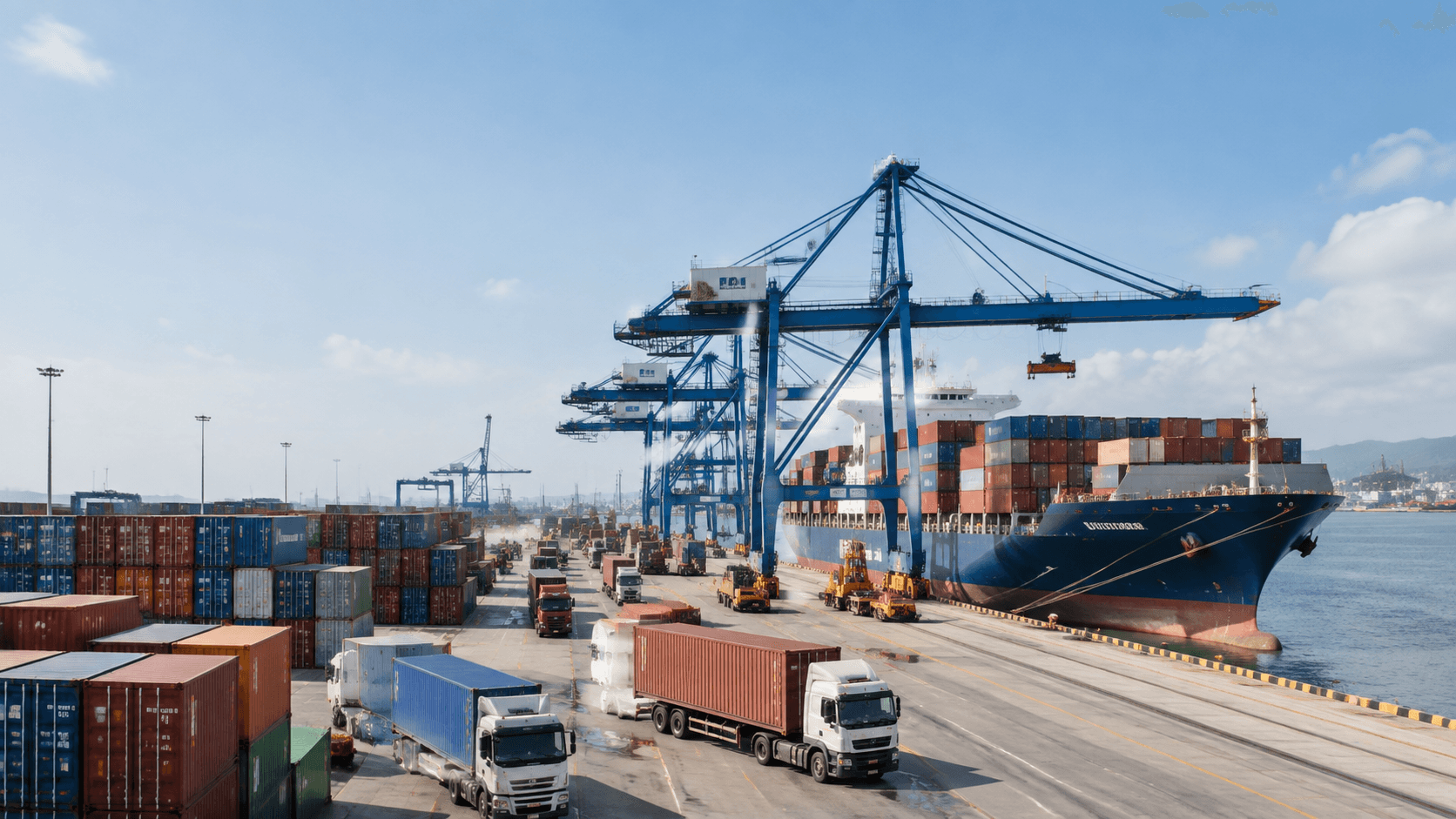
Overview of Chua Ve Port's operating location within the Hai Phong port cluster and its connectivity for import-export cargo
Chua Ve Port Hai Phong is located at No. 5 Chua Ve Street, Dong Hai area, Hai Phong. According to information published by maritime management authorities, Chua Ve container terminal has an area of about 20.21 hectares, including 5 berths with the main function of container handling. Published technical information for the berths records the length of each berth from about 150 to 198 m, and vessel operating capacity must be checked according to each berth, channel conditions and scheduling plans at the time the vessel enters the port.
Chua Ve's location facilitates road transportation organization from Hai Phong port area to production centers in the northern economic region. For imported goods, containers can be transported from the port to warehouses, ICDs or factories after completing delivery and customs clearance conditions. For exported goods, the process takes place in the opposite direction: collecting empty containers, loading cargo, completing procedures, lowering containers at the correct port and meeting the vessel's closing time.
One point that needs updating when preparing supplier records is that the operating structure has changed. Hai Phong Port announced in 2026 the conversion of Hoang Dieu Port One Member Limited Liability Company into Hoang Dieu Chua Ve Port One Member Limited Liability Company and the termination of Chua Ve Port Branch operations under the old structure. Therefore, businesses should check the current operating unit name, tariff schedule and transaction contact before each shipment instead of using outdated records.
The relationship between Chua Ve Port, Hoang Dieu Port and Tan Vu Port Hai Phong in the sea–road transportation chain
Chua Ve, Hoang Dieu and Tan Vu Port Hai Phong should not be considered three delivery points with completely identical functions. Published data from Hai Phong Port system shows that Chua Ve specializes in container handling; Hoang Dieu area has characteristics of general cargo, bulk cargo and dry cargo operations; while Tan Vu is a large-scale container hub with actual annual throughput exceeding one million TEU for many years.
For cargo owners, the actual port should not be selected only based on the distance to the factory. Shipping lines, service routes, bookings, cargo types, vessel schedules and designated terminals are the variables that determine the choice. After identifying the correct terminal, businesses can optimize road routes, container pickup or drop-off timing and truck planning. This is an important principle to avoid situations where domestic transport costs are optimized but port transfers or missed closing times occur.
Characteristics of receiving FCL containers, general cargo and cargo groups requiring special transport condition control
For FCL, common types include 20-foot, 40-foot and 40-foot High Cube containers. Standard external dimensions commonly found for 20-foot containers are approximately 6.058 x 2.438 x 2.591 m; 40-foot containers approximately 12.192 x 2.438 x 2.591 m; 40HC types have an external height of about 2.896 m. Internal dimensions, allowable cargo weight and actual gross weight must be checked on the CSC plate of the specific container provided.
Refrigerated cargo requires another layer of control. Depending on equipment model, reefers can operate within a wide temperature range, but the set point cannot be determined based on general experience. Frozen seafood often requires deep temperatures around -18°C or lower, while vegetables and chilled goods may operate in positive temperature ranges. Set point, ventilation, humidity and controlled atmosphere requirements must be based on commodity, buyer specifications and shipping line instructions.
Dangerous goods, oversized cargo, chemicals, food products, agricultural products, animals and plants, or goods subject to specialized inspection cannot apply the same process as ordinary dry containers. Before arranging trucks, HNT Logistics usually identifies the expected HS code, cargo characteristics, weight, packaging specifications, preservation requirements and legal conditions to avoid bringing containers to the port when documents are not yet eligible for processing.
Factors businesses need to evaluate when choosing Chua Ve Port as a cargo delivery and receiving point
Evaluation of a port option Chua Ve Port should be based on the total landed logistics cost. In addition to sea freight and container hauling costs, businesses need to calculate free time, storage, detention or demurrage according to shipping line conditions, handling fees, truck waiting costs, distance to the factory and the warehouse's ability to receive containers on schedule.
A solution with a truck fee lower by several hundred thousand VND does not necessarily have a lower total cost if trucks must wait for many hours or containers incur additional storage days. When planning, businesses should set timelines for customs clearance, delivery order pickup, port registration, truck dispatch, warehouse arrival time, cargo unloading time and empty return. This approach is especially important for businesses with large FCL volumes and continuous raw material import schedules.
Chua Ve Port Hai Phong Cargo Handling & Transportation Service: Operating Process From Port To Factory Warehouse
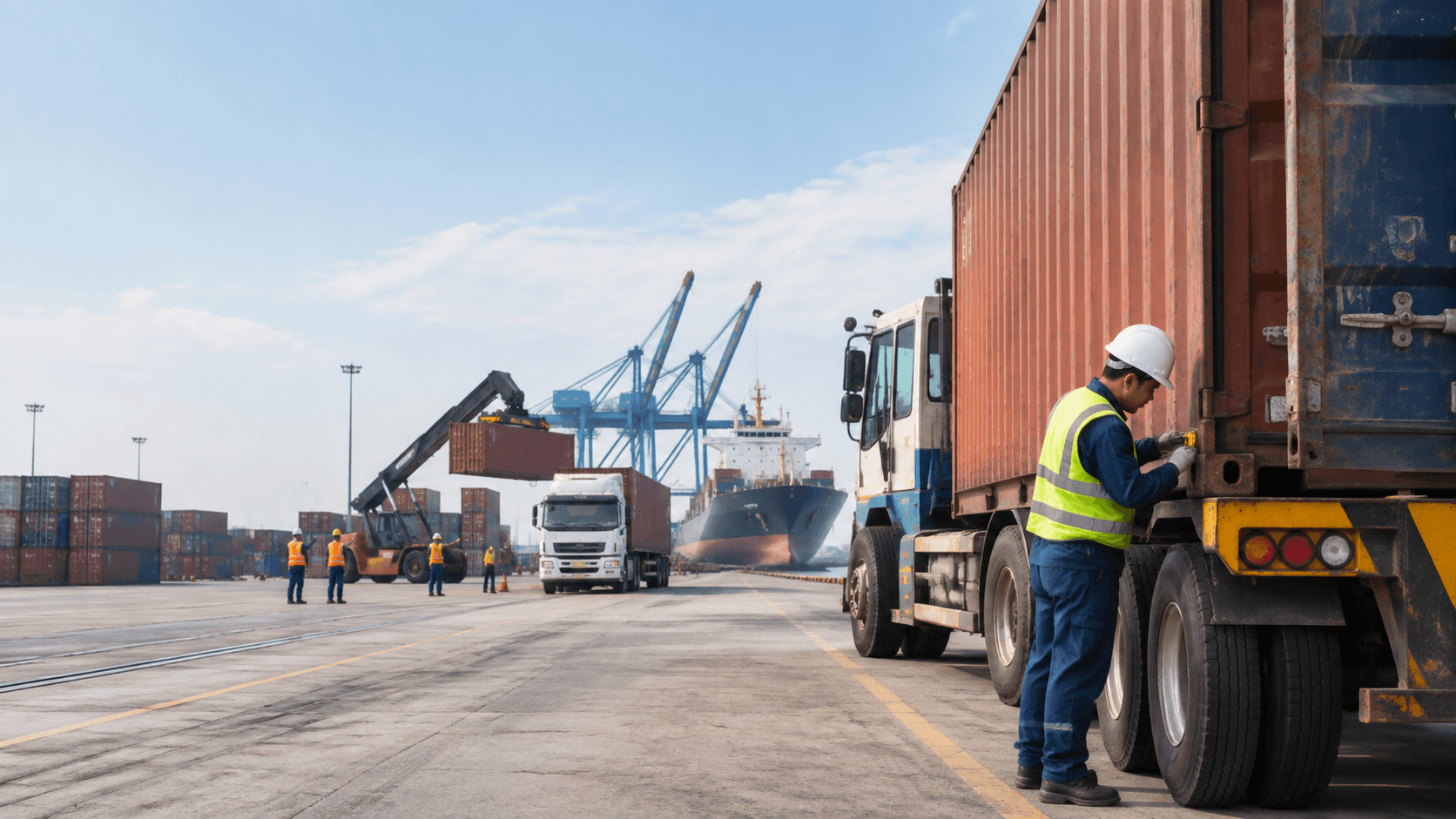
Receiving shipment information, checking container type, vessel schedule and developing a suitable transportation plan
The process begins with shipment data rather than truck dispatch. For imports, the operation team needs to receive bill of lading, vessel/voyage information, ETA, container number, seal number, container type, gross weight, delivery location and factory time requirements. For exports, additional information includes booking confirmation, cut-off, SI cut-off, VGM cut-off and warehouse loading availability time.
Based on this, HNT Logistics calculates distance, travel time, vehicle turnaround capability and cost risk milestones. For container trucking from Hai Phong port, truck schedules should be locked after confirming document status and delivery capability at the terminal. Dispatching trucks too early causes waiting time; dispatching too late may result in losing delivery slots or generating container storage costs.
The process for coordinating tractor units, container loading and handover of cargo at the Chua Ve port area
When cargo is ready for pick-up, dispatch assigns tractor units and chassis compatible with the container. Drivers complete port entry procedures under current terminal operating rules, collect the correct container, and check the container number, seal, external condition and delivery documents. After the container is lifted onto the chassis, it must be fully locked with twist-locks before the truck leaves the operating area.
At the receiving warehouse, the business should prepare the site and manpower or equipment for unloading before the truck arrives. A 20ft container with heavy cargo may require a different unloading method from a 40HC container with bulky cargo. For pallet cargo, forklifts must match the load capacity; for machinery or heavy pieces, determine the centre of gravity, lifting points and crane equipment before opening the container.
Checking delivery documents, EIR slips, delivery orders (D/O) and container condition before leaving the port
The D/O is the key basis for receiving import cargo, while the EIR records handover and equipment condition at each transfer point. Businesses should not treat the EIR as a mere procedural document. If a container is dented, punctured, has damaged doors, floor irregularities or an unsuitable seal, the condition should be recorded immediately at the handover point with documents and photos to reduce later liability disputes.
Before the truck leaves the gate, dispatch must cross-check at least the container number, seal number, container type, delivery order and delivery address. For customs documents, businesses must follow the rules regulations of customs authorities that are in force at the time the declaration is opened, and check the commodity policy instead of relying only on the experience of the previous shipment.
Coordinating with the port, shipping lines, warehouses and businesses to minimise waiting time and incidental costs
One container trip must align four operating schedules: terminal, shipping line, truck and warehouse. If the warehouse only receives cargo until 16:00 but the container is released late in the afternoon, the truck plan must be adjusted immediately. Conversely, if a truck has entered the port but the D/O or procedures are not ready, it will incur unnecessary waiting costs.
HNT Logistics prioritises checking bottlenecks before a vehicle departs: customs clearance status, order validity, terminal, free time, warehouse receiving hours and empty return plans. This is a more effective way to manage costs than handling each incident separately after the container has left the port.
Hoang Dieu Hai Phong Port Combined with Chua Ve Port: Optimal Solutions for Container and General Cargo Flows
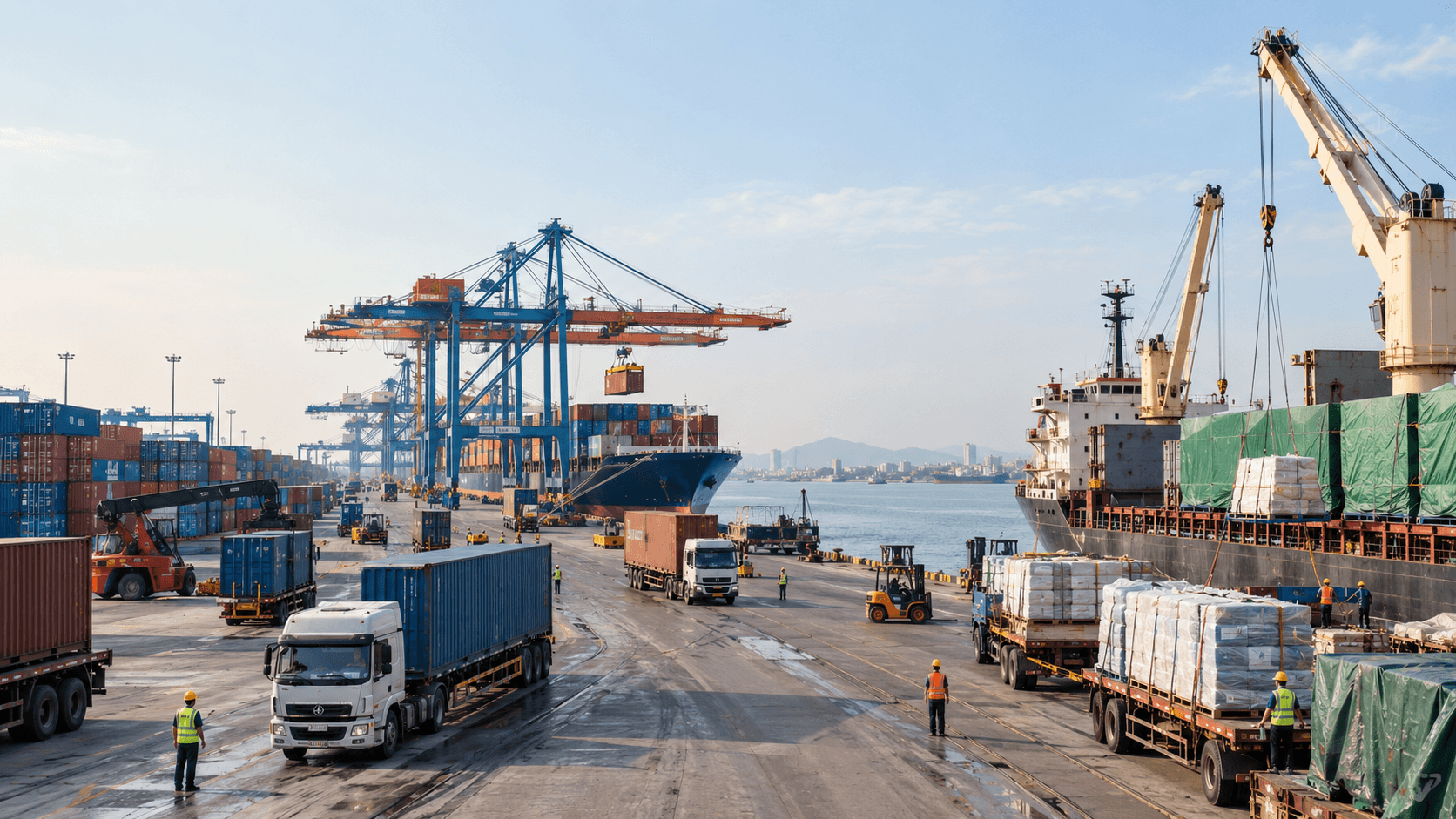
The Complementary Roles of Hoang Dieu Port and Chua Ve Port in Cargo Handling in the Hai Phong Area
Hoang Dieu Hai Phong Port has the character of mixed, bulk and dry cargo operations, whereas the Chua Ve area is more strongly associated with container handling. Port authority data published for the Hoang Dieu area records an area of approximately 16.3 ha and a throughput capacity of 10 million tonnes per year. These figures reflect infrastructure functions and do not mean every cargo type or every vessel can be handled under the same conditions.
The complementarity between the two areas matters for businesses that have both bulk raw materials, machinery and project cargo as well as container cargo. Instead of organising each transport route separately, the truck plan can be built around vehicle turnaround, warehouse location and handling times to limit empty running.
Analysis of Transport Coordination Options by Cargo Group: Dry Containers, Reefer Containers and Bulk Cargo
Dry containers prioritise truck turnaround, lawful payload and container pick-up and return schedules. Reefer containers additionally require checks on refrigeration units, set points, power supply, genset fuel where needed and the permissible power interruption time. For bulk or general cargo at the Hoang Dieu port, vehicles must be selected based on the characteristics of the packages, weather protection capacity, payload and handling equipment.
Do not use a single freight rate to compare the three cargo groups. Reefer costs carry additional refrigeration equipment and monitoring factors; bulk cargo may depend on loading and unloading time; dry containers are sensitive to free time and container turnaround. Separating the cost drivers helps businesses negotiate freight rates more accurately.
Solutions for Connecting Hoang Dieu Hai Phong Port with Bonded Warehouses, ICDs, Factories and Northern Industrial Parks
From Hai Phong, cargo can connect to industrial centres in Hai Duong, Hung Yen, Hanoi, Bac Ninh, Bac Giang, Thai Nguyen and surrounding areas. When choosing a route, the distance in kilometres is only one variable. Road closure times, traffic density, route payload limits, industrial park receiving hours and the location of empty return depots all directly affect costs.
For shipments that must be transferred via an ICD or bonded warehouse, businesses must clearly distinguish the customs status of the goods. Transporting cargo under customs supervision must follow the correct type and procedure; it cannot be handled like an ordinary domestic haulage trip.
How Businesses Choose the Right Transport Route to Reduce Vehicle Turnaround Time
The metric to track is the truck cycle time, from receipt of the order to completion of container return, rather than measuring only the time from port to factory. A truck that runs 100 km but waits four hours at the warehouse may be less efficient than a 150 km route with a stable delivery schedule. For fleets running several trips a day, this difference directly affects transport capacity and actual unit rates.
HNT Logistics builds routes based on the receiving port, delivery points, empty return depots, warehouse time windows and the ability to combine vehicle plans. For customers with steady volumes, historical waiting-time data can be used to adjust container pick-up times and reduce the share of trucks sitting idle.
Container Transport Costs and Specifications via Chua Ve Hai Phong Port
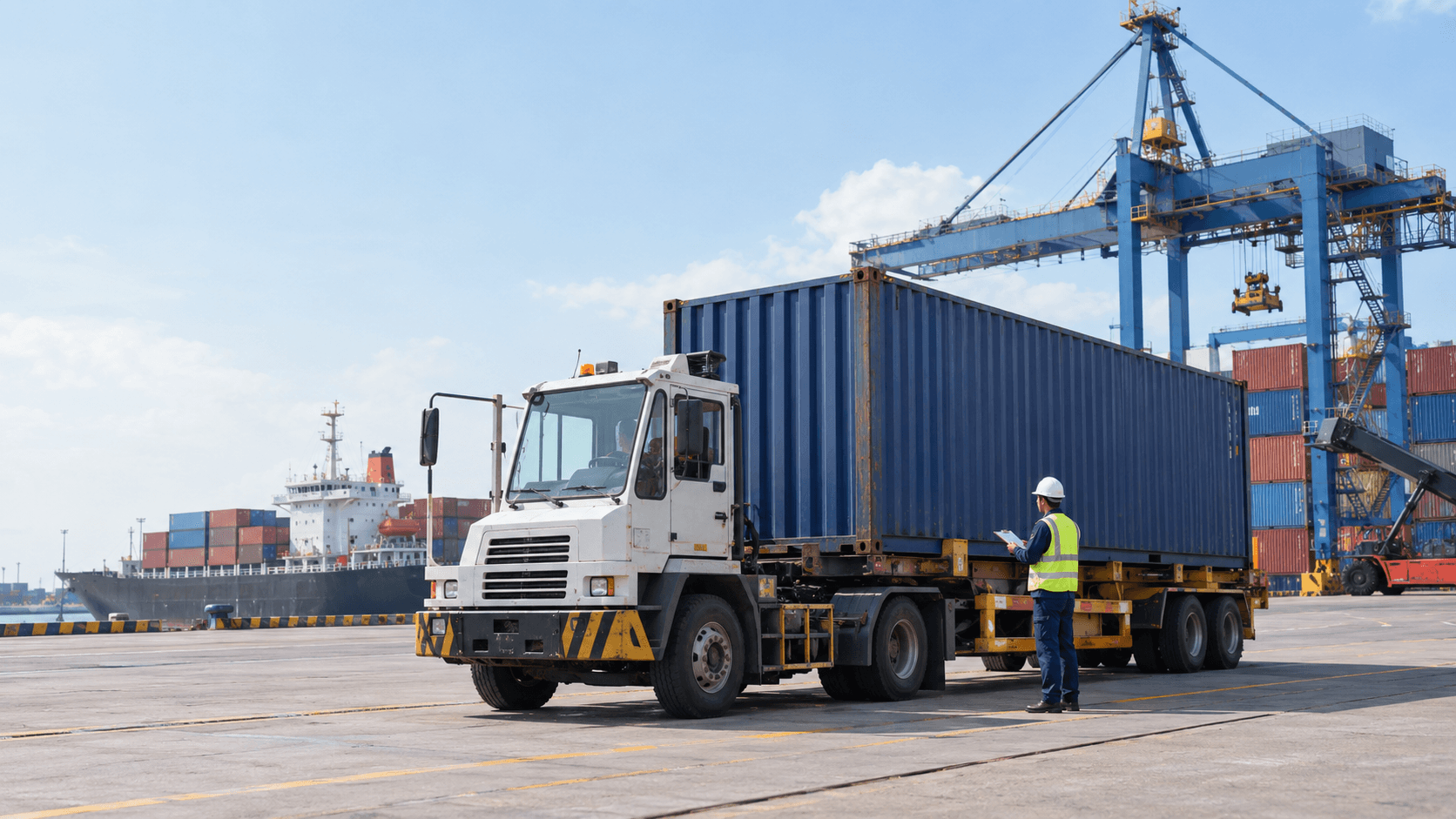
Cost Analysis Table for Loading, Lifting, Container Haulage and the Surcharges Commonly Incurred at the Port
Port and shipping line tariffs may change by period, container type, operation type and customer contract. Therefore, the table below is used as a cost estimation structure, not the official tariff of Chua Ve port. Commercial quotations must be rechecked at the time the shipment arises.
| Cost group | Calculation basis | Cost-changing factor | Control method |
|---|---|---|---|
| Container lifting/loading and unloading | By container and operation type | 20′, 40′, reefer, laden/empty | Check against the current tariff schedule |
| Container haulage | By route and container type | Km, payload, delivery point, travel direction | Confirm full address and gross weight |
| Vehicle waiting | By hour or shift | Port congestion, slow cargo withdrawal from warehouse, documents | Book warehouse slots and check orders in advance |
| Storage fees | By time and tariff | Number of days the container is at the terminal | Track unloading date and free time |
| Demurrage/detention | According to shipping line conditions | Free time and equipment return date | Set empty return deadline |
| Reefer | By actual service | Power, PTI, genset, monitoring | Confirm requirements before dispatching vehicles |
Comparison Table of Transport Options for 20ft, 40ft and Reefer Containers from Chua Ve Port to the Delivery Point
| Type of Container | Reference overall dimensions | Operating characteristics | Key points to monitor |
|---|---|---|---|
| 20′ Dry | 6,058 x 2,438 x 2,591 m | Suitable for heavy cargo with moderate volume | Gross weight, route payload, trailer |
| 40′ Dry | 12,192 x 2,438 x 2,591 m | Capacity greater than 20′ | Turning space and stuffing/stripping points |
| 40′ High Cube | 12,192 x 2,438 x 2,896 m | Increases cargo height capacity | Height clearance on route and at warehouse |
| Reefer | Depends on 20RF/40RF/40RH | Has refrigeration unit and insulation layer | Set point, ventilation, power supply, PTI |
The dimensions in the table are common nominal sizes. Actual containers may differ by manufacturer and model, especially reefers, where the refrigeration unit and insulation reduce internal dimensions. When preparing a loading plan, use the specifications of the actual equipment rather than inferring from external dimensions.
Checklist of Factors Affecting Transport Rates, Including Distance, Cargo Type, Waiting Time and Storage Requirements
| Variable | Impact on price | Information to provide when requesting a quote |
|---|---|---|
| Distance | Fuel, road fees, vehicle time | Port address – warehouse – depot |
| Type of Container | Trailer and operation plan | 20′, 40′, HC, RF |
| Weight | Vehicle payload and route | Gross weight/VGM |
| Waiting time | Reducing vehicle turnaround | Warehouse receiving hours and cargo withdrawal time |
| Refrigerated | Additional equipment and energy | Set point, ventilation, humidity |
| Special cargo | Vehicles, permits, safety | MSDS, dimensions, weight, cargo properties |
Logistics Cost Control Process Table, from Container Berthing at Port to Completion of Delivery
| Phase | Control point | Cost risk |
|---|---|---|
| Before ETA | Documents, HS code, cargo policy | Late declaration, missing permits |
| Vessel berthing | Discharge status and D/O | Increased storage time |
| Customs clearance | Declaration flow, specialised inspections | Waiting for customs examination or inspection |
| Container pick-up | EIR, container number, seal, shell condition | Wrong equipment, damage disputes |
| Warehouse delivery | Cargo receiving slot and withdrawal equipment | Vehicle waiting |
| Empty return | Depot and deadline | Detention and unplanned empty running |
Container Transport from Chua Ve Hai Phong Port with Tractor Units: Cargo Safety Control Along the Entire Route
Standards for Selecting Tractor Units, Container Chassis and Transport Equipment in the Hai Phong Port Area
Tractor units must meet technical requirements, registration inspection, payload and applicable traffic regulations. The trailer must suit the container type, the container locking system must operate fully, and the tyres and braking system must be in safe condition. Before each trip, dispatch must check the gross combined weight of the vehicle set against the permitted payload, not only the cargo weight on the packing list.
For high-value cargo or long journeys, seals and container photos should be checked at each pick-up and delivery point. HNT Logistics applies an evidence-based handover principle, helping to clearly establish the condition of equipment and cargo at each point where responsibility is transferred.
Reefer Container Monitoring Process During Transport: Temperature, Power Supply and Storage Conditions
A reefer is not equipment for rapidly freezing a batch of warm cargo. Cargo must be prepared at a suitable temperature under the commodity procedure before stuffing. On receiving a container, check the PTI where applicable, set point, operating mode, ventilation, alarms and power supply condition. For journeys requiring a genset, fuel quantity and continuous power supply capacity must be part of the trip plan.
For example, frozen seafood is commonly required to be kept at around -18°C or lower; many fresh fruits and vegetables operate in a range of about 0-8°C depending on the product. However, these ranges are for reference only. Do not change the set point independently unless instructed by the cargo owner, shipper or the party technically responsible for the shipment.
For fresh fruit, temperature is not the whole story. Ventilation and humidity can affect respiration, water loss and product quality. A container that maintains the correct temperature but has cargo blocking airflow under the T-floor can still create localised hot spots. Therefore, the loading pattern must be controlled together with the refrigeration unit settings.
Operational Risk Management Covering Port Congestion, Delayed Container Pick-up, Document Discrepancies and Yard Storage Charges
The most common risk is not always a traffic incident. A single wrong character in a container number, the wrong terminal, an expired order or a warehouse changing its receiving hours can each cause a vehicle to lose an entire shift. Dispatch should therefore include a pre-check step before drivers travel to the port.
For imports with short free time, businesses should set alerts per container rather than per bill of lading. One bill may cover several containers whose actual unloading or pick-up times differ. Tracking at container level gives better control over the risk of yard storage and detention.
GPS Tracking and Vehicle Dispatch Application to Keep Deliveries on Schedule
GPS has value when its data is used in operations, not merely to view vehicle location. Dispatch can compare actual ETA with warehouse slots, detect abnormal stops and proactively change vehicle plans. For routes serving multiple factories, historical data also supports calculating cycle time and building transport standards that reflect actual performance.
In refrigerated transport, journey data should be combined with temperature data where equipment supports it. When an alarm occurs, the operations team must establish the cause (power loss, equipment fault, door opening or environmental change) before deciding on a response. The goal is to protect the cargo while maintaining an evidence chain for traceability after delivery.
Optimising Customs Procedures and Full-Service Logistics via Chua Ve Hai Phong Port
Preparing Customs Declaration Documents, Specialised Inspections and Cargo Clearance Conditions at the Port
Customs documentation must be prepared according to the specific procedure type and commodity. The commercial document set usually includes the invoice, packing list, bill of lading and related documents; a C/O is used when the business applies for preferential treatment or needs to prove origin where applicable. Licences, quarantine, quality inspection or specialised documents depend on the HS code and the commodity management policy.
The key point is not to determine specialised obligations from a trade name alone. Businesses must analyse the description, composition, use, materials, technical specifications and HS code. When policy changes occur, check the current regulations of the competent authority and regulations of customs authorities before the cargo arrives, to reduce the risk of containers remaining at port waiting for documents.
Combining Loading Services, Container Transport and Customs Declaration to Shorten Shipment Processing Time
The integrated logistics model is effective when customs and transport share one timeline. As soon as the expected clearance time is known, dispatch can prepare trucks; when physical examination or specialised inspection changes, the truck plan is adjusted before waiting time arises. This is the practical benefit of combining customs declaration with transport rather than hiring completely separate providers.
HNT Logistics handles everything from document checks, declarations and port-handling coordination through container trucking from Hai Phong port to door delivery at the warehouse. For businesses with many shipments each month, a single coordination point helps standardise container data, deadlines, free time and delivery status, making logistics KPIs easier to control.
Plant Quarantine and Fresh Agricultural Export Solutions Through the Chua Ve – Hoang Dieu Port Cluster
Fresh agricultural exports must be checked against both Vietnam's requirements and the import conditions of the destination market at the same time. For cargo subject to plant quarantine, documentation, sampling, quarantine treatment where applicable and the phytosanitary certificate must be arranged to fit the packing and vessel schedules. For the Chinese market, businesses must also check the protocol, planting area codes, packing facilities and traceability requirements applicable to each type of fruit.
Transport must be coordinated with quarantine rather than waiting for all procedures to be completed before planning. Fresh fruit with a short shelf life is very sensitive to waiting time. If reefers are used, pre-cooling, set point, ventilation, stuffing pattern and power supply duration must be determined in advance. Shipping and terminal operating requirements must also be checked against information published by Vietnam Maritime and Inland Waterway Administration the same port operator at the time of execution.
HNT Logistics partners with import-export businesses to develop safe, cost-efficient sea – road transport plans
A sound logistics plan through Chua Ve Port must balance four factors: correct procedures, correct equipment, correct schedule and controlled total cost. Freight is only one component. The real value lies in the ability to reduce container dwell time at port, limit truck waiting, control shipping line deadlines and keep cargo condition stable throughout transport.
HNT Logistics provides FCL container transport by sea and road, multimodal transport, container haulage at the Hai Phong port cluster, North-South refrigerated transport, customs procedures, C/O, plant quarantine and cross-border transport between Vietnam, Laos and China. For each shipment, the plan is built around the actual terminal, container type, weight, vessel schedule, delivery point and storage requirements rather than applying one fixed transport setup.
Businesses requesting a transport quote from Chua Ve Hai Phong port, Hoang Dieu port or Tan Vu port should prepare the container size and type, cargo name, gross weight, the port where the container is picked up or returned, delivery address, expected schedule and any special requirements. The more complete the data, the closer the cost plan and truck schedule will be to reality.
If your business needs loading, customs declaration or container transport via Chua Ve port, Hoang Dieu port and the Hai Phong port cluster, please provide shipment details so that HNT Logistics can build a plan according to the actual vessel schedule and delivery points.