Khi tìm hiểu về vận chuyển đường biển kết hợp đường bộ, một container hàng từ nhà máy tại Hải Phòng đến kho nhận ở TPHCM phải trải qua nhiều công đoạn hơn chặng vận tải biển đơn thuần. Chi phí thực tế không chỉ nằm ở cước tàu mà còn phụ thuộc vào quãng đường kéo container, thời điểm hạ bãi, năng lực tiếp nhận tại cảng đích và thời gian trả vỏ rỗng. Chỉ cần một khâu thiếu phối hợp, doanh nghiệp có thể phát sinh phí lưu xe, nâng hạ hoặc lưu container ngoài dự toán.
Vận chuyển đường biển kết hợp đường bộ là giải pháp tổ chức liên hoàn giữa xe đầu kéo tại hai đầu tuyến và tàu vận tải biển nội địa. Phương án này phù hợp với nhiều lô hàng nguyên container, hàng công nghiệp, nguyên vật liệu sản xuất và hàng phân phối Bắc–Nam có kế hoạch giao nhận tương đối ổn định. Hiệu quả phụ thuộc vào cách lựa chọn cảng, bố trí phương tiện và kiểm soát tổng chi phí từ kho gửi đến kho nhận.
Đối với giải pháp vận chuyển đường biển kết hợp đường bộ, với năng lực cung cấp dịch vụ vận tải container FCL, giao nhận cảng và điều phối multimodal transportation, HNT Logistics hướng đến xây dựng phương án vận chuyển theo điều kiện thực tế của từng doanh nghiệp. Nội dung dưới đây phân tích quy trình khai thác, thông số container, cơ cấu chi phí, phương pháp kiểm soát rủi ro và các tiêu chí cần xác nhận trước khi triển khai tuyến Hải Phòng–TPHCM.
Vận Chuyển Đường Biển Kết Hợp Đường Bộ Hải Phòng–TPHCM: Thiết Kế Phương Án Theo Luồng Hàng Và Điểm Giao Nhận Thực Tế
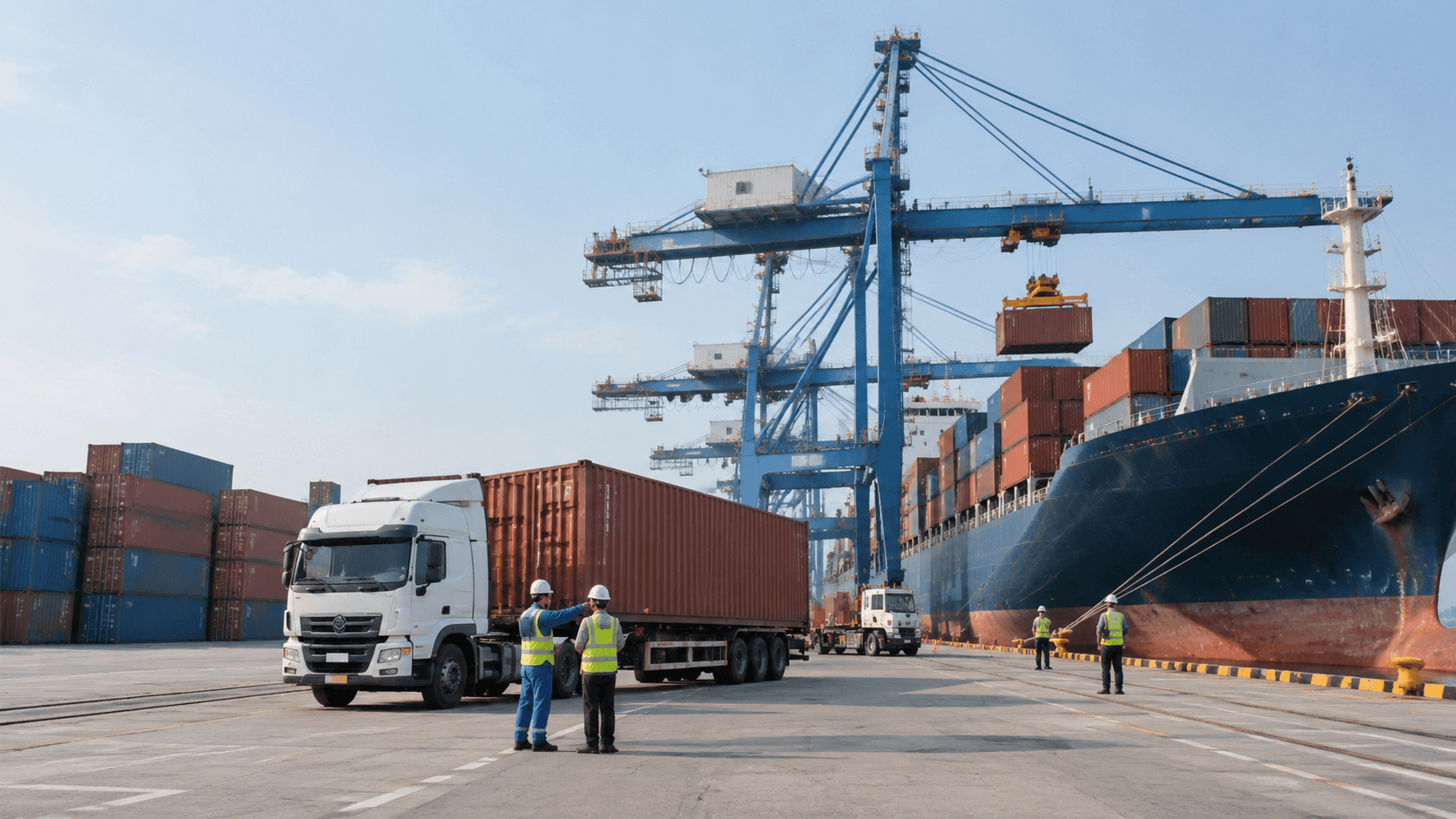
Phân loại nhu cầu vận chuyển hàng Bắc–Nam theo đặc tính lô hàng, mật độ xuất hàng, thời hạn giao nhận và yêu cầu phân phối tại khu vực Hải Phòng, Hà Nội, Bình Dương và TPHCM
Trong quá trình vận chuyển và thông quan vận chuyển đường biển kết hợp đường bộ, thiết kế phương án vận tải trước hết phải xác định doanh nghiệp đang vận chuyển loại hàng nào, sản lượng mỗi chuyến bao nhiêu và thời hạn nhận hàng có thể linh hoạt đến mức nào. Hàng cơ khí, thiết bị công nghiệp, linh kiện đóng pallet và nguyên liệu sản xuất thường có điều kiện khai thác khác hàng đông lạnh, hàng dễ vỡ hoặc hàng cần giao theo lịch sản xuất chính xác. Mỗi nhóm yêu cầu một cách bố trí container, phương tiện và thời gian dự phòng riêng.
Để tối ưu chi phí và tiến độ vận chuyển đường biển kết hợp đường bộ, đối với doanh nghiệp xuất hàng thường xuyên từ Hải Phòng hoặc Hà Nội vào TPHCM, việc gom đơn theo chu kỳ cố định có thể cải thiện hệ số sử dụng container. Ngược lại, những đơn hàng phát sinh không đều, thể tích nhỏ hoặc cần giao gấp phải được đánh giá thêm phương án vận tải đường bộ trực tiếp hoặc dịch vụ gom hàng. Không nên mặc định đường biển luôn có tổng chi phí thấp hơn khi chưa tính toàn bộ khâu đóng rút và giao nhận.
Theo kinh nghiệm vận hành thực tế của HNT Logistics về vận chuyển đường biển kết hợp đường bộ, một nhà máy tại Hà Nội có thể xuất hai container mỗi tuần đến các trung tâm phân phối ở Bình Dương và TPHCM. Nếu tổ chức vận chuyển container hải phòng hồ chí minh theo lịch cố định, đơn vị logistics có thể chủ động lịch xe và lịch tàu. Tuy nhiên, với hàng cần phân phối đến nhiều kho nhỏ, chi phí vận tải chặng cuối, khả năng rút hàng tại điểm tập kết và số lần giao sẽ ảnh hưởng đáng kể đến hiệu quả phương án.
Xác định điểm kết nối giữa vận tải đường bộ đầu xuất, cảng xếp hàng Hải Phòng, chặng biển nội địa và phương tiện giao hàng tại khu vực cảng đích
Khi tìm hiểu về vận chuyển đường biển kết hợp đường bộ, một chuỗi biển–bộ hiệu quả phải xác định rõ điểm bắt đầu và kết thúc trách nhiệm của từng chặng vận tải. Tại đầu xuất, xe đầu kéo nhận container rỗng theo lệnh cấp vỏ, di chuyển đến kho đóng hàng và đưa container có hàng về cảng theo thời hạn tiếp nhận. Container sau đó được xếp lên tàu nội địa đến khu vực cảng TPHCM, nơi xe đầu kéo tiếp nhận và vận chuyển đến địa điểm giao cuối cùng.
Đối với giải pháp vận chuyển đường biển kết hợp đường bộ, tại Hải Phòng, các khu vực khai thác như Đình Vũ, Tân Vũ và Lạch Huyện có đặc điểm vị trí, điều kiện tiếp nhận và kết nối dịch vụ khác nhau. Cảng xếp phải được xác nhận theo booking thực tế, không lựa chọn chỉ dựa trên khoảng cách từ kho. Tương tự, tại TPHCM, phương án qua Cát Lái chỉ phù hợp khi tuyến tàu có điểm dỡ và điều kiện giao nhận tương ứng.
Trong quá trình vận chuyển và thông quan vận chuyển đường biển kết hợp đường bộ, trong dịch vụ multimodal transportation, việc phối hợp đồng bộ giữa lịch tàu và lịch điều xe quan trọng hơn việc tối ưu riêng từng chặng. Một chuyến xe lấy hàng có giá thấp nhưng đưa container đến cảng sau giờ cut-off có thể khiến toàn bộ lô hàng phải chờ chuyến tàu kế tiếp, phát sinh chi phí lớn hơn phần cước xe tiết kiệm được.
Phân tích phương án vận chuyển nguyên container FCL, container khô, container lạnh và hàng đóng kiện theo tải trọng, thể tích sử dụng và điều kiện khai thác
FCL là phương án phù hợp khi doanh nghiệp có lượng hàng đủ lớn để thuê riêng container hoặc cần hạn chế việc đóng chung với hàng của đơn vị khác. Container khô 20 feet thường thuận lợi cho hàng tương đối nặng, trong khi container 40 feet hoặc 40HC thích hợp với nhiều nhóm hàng nhẹ nhưng chiếm thể tích lớn. Việc lựa chọn phải căn cứ đồng thời vào trọng lượng, kích thước kiện hàng và khả năng xếp dỡ.
Đối với hàng đóng kiện gỗ, máy móc và thiết bị có trọng tâm lệch, thể tích danh nghĩa của container không phản ánh chính xác khả năng chất hàng. Đơn vị vận tải cần kiểm tra kích thước cửa, phương án đưa kiện vào container, khoảng trống phục vụ chằng buộc và giới hạn tải trọng trên sàn. Nếu kiện vượt khổ container tiêu chuẩn, phải đánh giá riêng container chuyên dụng hoặc phương án vận chuyển khác.
Container lạnh yêu cầu kiểm soát nhiệt độ theo đặc tính hàng hóa thay vì áp dụng một mức cài đặt chung. Một số nhóm hàng đông lạnh có thể yêu cầu khoảng -18°C hoặc thấp hơn, trong khi hàng mát có thể sử dụng khoảng 2–8°C tùy sản phẩm. Đây chỉ là những khoảng nhiệt độ minh họa; nhiệt độ chính thức phải lấy từ yêu cầu bảo quản, đặc tính hàng và chỉ dẫn của chủ hàng.
Với hàng lạnh, cần kiểm tra nguồn điện tại kho, trạm cắm điện tại bãi, khả năng duy trì hoạt động máy lạnh trong quá trình vận chuyển và dữ liệu giám sát nhiệt độ. Hàng phải được làm lạnh sơ bộ đến mức phù hợp trước khi đóng container nếu quy trình sản phẩm yêu cầu. Container lạnh được thiết kế chủ yếu để duy trì điều kiện bảo quản, không nên sử dụng thay thế cho công đoạn cấp đông hoặc làm lạnh sản phẩm không đúng quy trình.
Thiết lập tiêu chí lựa chọn điểm lấy hàng, cảng giao nhận và địa điểm trả container nhằm hạn chế phát sinh trung chuyển, nâng hạ và vận chuyển ngoài kế hoạch
Vị trí lấy container rỗng, kho đóng hàng, cảng xếp và bãi trả container cần được xem xét như một hệ thống thống nhất. Nếu chọn bãi lấy rỗng ở xa nhà máy, quãng đường di chuyển tăng sẽ kéo theo chi phí nhiên liệu, thời gian điều xe và nguy cơ trễ lịch đóng hàng. Trường hợp bãi trả rỗng tại đầu đến nằm xa kho nhận, khoản chi phí này cũng phải được tính ngay từ giai đoạn báo giá.
Đối với vận chuyển hàng hóa hải phòng tphcm, doanh nghiệp nên cung cấp địa chỉ kho cụ thể, khung giờ làm việc và điều kiện tiếp cận của xe container. Kho nằm trong đường hạn chế tải trọng hoặc chỉ cho phép phương tiện ra vào theo giờ có thể phát sinh nhu cầu trung chuyển. Phương án tốt là khảo sát các giới hạn tiếp cận trước khi xác nhận lịch giao hàng.
Điểm nhận container tại cảng đích phải phù hợp với tuyến tàu đã đặt chỗ. Nếu tàu dỡ tại một cảng khác dự kiến, cần tính lại phương án kéo hàng, chứng từ giao nhận và bãi trả vỏ. Những điều chỉnh này nên được ghi nhận thành thay đổi kế hoạch có xác nhận của chủ hàng, thay vì chỉ thông báo khi xe đã triển khai.
Vận Chuyển Đường Biển Kết Hợp Đường Bộ Hải Phòng–TPHCM: Kiểm Soát Năng Lực Khai Thác Và Các Mốc Thời Gian Trong Chuỗi Giao Nhận
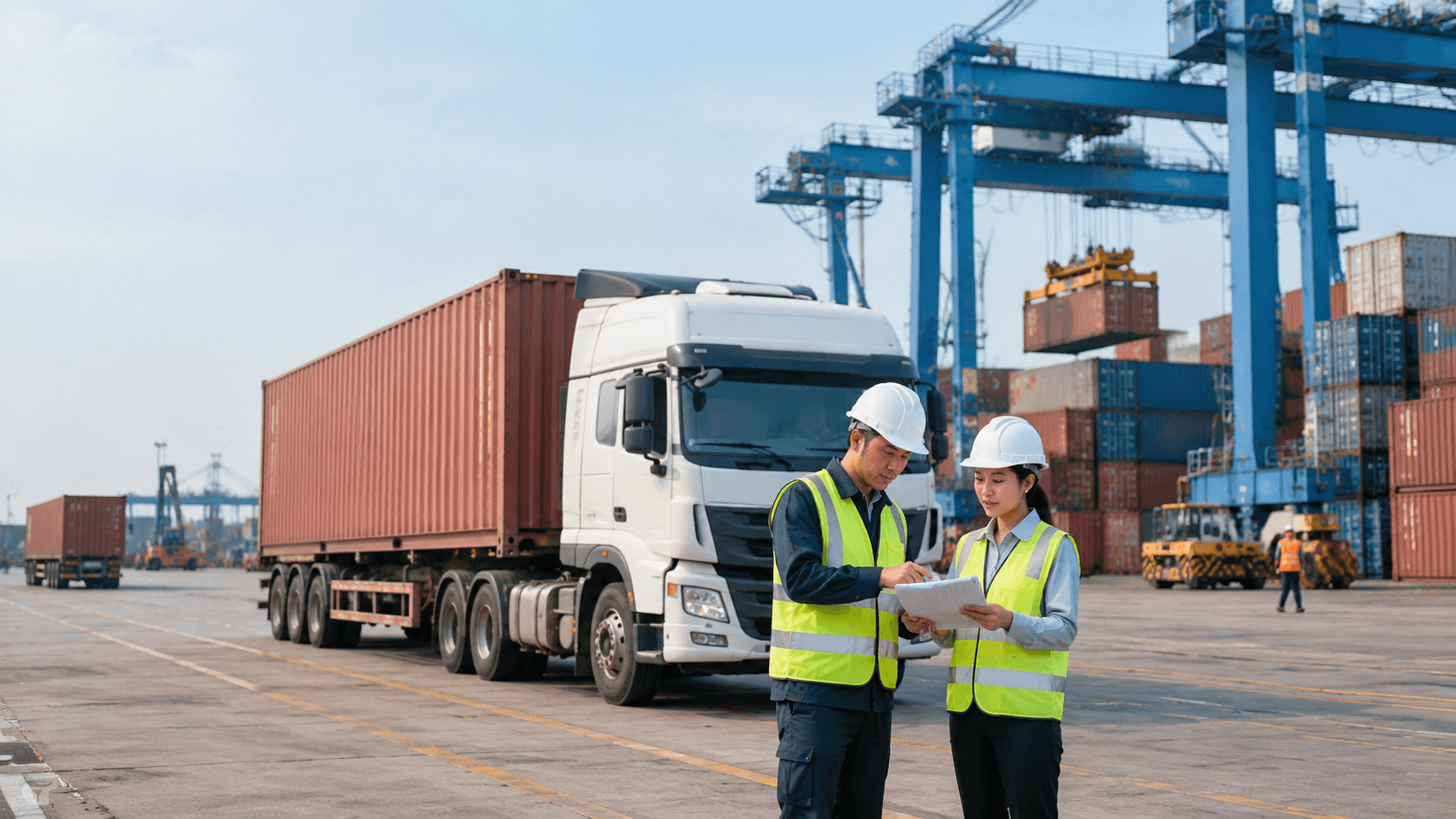
Xây dựng sơ đồ thời gian toàn trình từ lúc tiếp nhận hàng, điều xe lấy container, hạ bãi cảng Hải Phòng, xếp tàu, dỡ container tại TPHCM đến khi giao hàng cuối cùng
Thời gian vận chuyển toàn trình phải được tính từ lúc phương tiện được huy động theo kế hoạch lấy hàng đến khi người nhận hoàn tất tiếp nhận tại kho. Trong khoảng này có các công đoạn lấy vỏ rỗng, đóng hàng, vận chuyển đến cảng, chờ xếp tàu, vận chuyển biển, dỡ cảng, giải phóng container, kéo đến kho và trả vỏ. Không công đoạn nào được bỏ qua khi xây dựng cam kết tiến độ.
Bảng sau thể hiện một kịch bản lập kế hoạch minh họa cho lô FCL thông thường. Các khoảng thời gian không phải lịch tàu hiện hành hoặc cam kết dịch vụ; cần thay bằng lịch booking, thời gian xử lý cảng và điều kiện kho thực tế trước khi chốt ngày giao.
| Công đoạn | Thời gian dự kiến để lập kế hoạch | Yếu tố quyết định |
|---|---|---|
| Xác nhận booking, điều xe, cấp container | 0,5–2 ngày | Nguồn vỏ, lịch xe, yêu cầu đóng hàng |
| Đóng hàng và vận chuyển đến cảng Hải Phòng | 0,5–1,5 ngày | Khoảng cách, năng suất kho, thời hạn hạ bãi |
| Chờ xếp và hoàn thiện khai thác tàu | 0,5–2 ngày hoặc hơn | Lịch tàu, thời điểm tiếp nhận, năng lực cảng |
| Transport inland sea | Khoảng 3–5 ngày trong kịch bản tham khảo | Hải trình, tàu, tuyến ghé cảng, điều kiện thời tiết |
| Dỡ tàu, hoàn tất thủ tục giao nhận tại cảng đích | 0,5–2 ngày hoặc hơn | Giải phóng tàu, bãi, chứng từ, lệnh giao hàng |
| Kéo container đến kho và trả vỏ | 0,5–1,5 ngày | Khoảng cách, lịch kho, điều kiện đường bộ |
Từ giả định trên, doanh nghiệp có thể bố trí một cửa sổ kế hoạch khoảng 5–14 ngày cho toàn bộ quy trình, tùy mức độ trùng lặp giữa các công đoạn. Đây là khoảng mô phỏng để dự trù vận hành, không phải thời gian giao hàng được xác nhận. Lịch thực tế có thể ngắn hoặc dài hơn tùy tuyến tàu, thời điểm đặt chỗ, năng lực cảng và điều kiện lấy giao container.
Phân tích sự khác biệt giữa thời gian chạy tàu, thời gian chờ cầu bến, thời gian giải phóng container và thời gian vận chuyển từ cảng Cát Lái đến kho nhận
Thời gian chạy tàu phản ánh khoảng thời gian phương tiện vận tải thực hiện hành trình trên biển. Trong khi đó, thời gian từ ETA đến khi container có thể được giao còn phụ thuộc vào thời điểm tàu cập cầu, hoàn thành dỡ hàng, cập nhật trạng thái container và thủ tục giao nhận. Vì vậy, ETA không đồng nghĩa với thời điểm xe đầu kéo có thể lấy container ra khỏi cảng.
Đối với cảng Cát Lái, đơn vị vận tải cần xác nhận trạng thái hàng sẵn sàng giao, lệnh giao hàng, tình trạng thanh toán phí và khả năng bố trí xe theo thời gian thực tế. Sau khi container ra cổng, thời gian đến kho ở TPHCM hoặc Bình Dương tiếp tục chịu ảnh hưởng của vị trí kho, giờ hạn chế xe, mật độ giao thông và khả năng tiếp nhận của bên nhận.
HNT Logistics cần thể hiện riêng bốn mốc trong báo cáo tiến độ: tàu đến cảng, container được phép nhận, xe lấy hàng ra cổng và kho ký xác nhận giao hàng. Việc phân tách giúp xác định chính xác nguyên nhân chậm trễ, thay vì quy toàn bộ thời gian phát sinh cho chặng vận chuyển biển.
Thiết lập cơ chế đối chiếu lịch tàu, thời hạn hạ bãi, cut-off chứng từ, cut-off container và lịch điều xe để giảm nguy cơ lỡ chuyến
Trước khi bố trí phương tiện, điều phối viên phải xác nhận lịch tàu dự kiến, thời hạn tiếp nhận container tại cảng và thời hạn hoàn tất chứng từ do hãng tàu hoặc đơn vị khai thác quy định. Hai thời hạn này có thể khác nhau. Nếu hàng vào bãi đúng giờ nhưng thông tin vận tải, số seal hoặc dữ liệu trọng lượng chưa hoàn chỉnh theo yêu cầu, lô hàng vẫn có thể bị ảnh hưởng đến kế hoạch xếp tàu.
Cut-off container thường được hiểu là hạn cuối cảng hoặc hãng tàu chấp nhận container đủ điều kiện cho chuyến đã đặt. Cut-off chứng từ là thời hạn cung cấp thông tin phục vụ lập vận đơn, danh sách xếp tàu và hồ sơ liên quan. Với loại hàng hoặc tuyến vận tải có yêu cầu khai báo khối lượng xác nhận, đơn vị thực hiện phải kiểm tra thêm hạn nộp và cơ chế xác nhận tương ứng.
Quy trình điều phối nên bắt đầu từ thời điểm tàu dự kiến chạy rồi tính ngược về ngày đóng hàng, giờ xe đến kho và thời gian di chuyển dự phòng. Mỗi chuyến cần có người phụ trách booking, đầu kéo, chứng từ và xác nhận hạ bãi. Mọi thay đổi về giờ đóng hàng phải được kiểm tra lại với thời hạn tiếp nhận, thay vì chỉ điều chỉnh lịch xe.
Xây dựng phương án dự phòng khi tàu thay đổi lịch, cảng ùn tắc, container chưa sẵn sàng hoặc điểm nhận hàng không thể tiếp nhận theo kế hoạch
Tàu thay đổi ETA hoặc ETD là rủi ro vận hành cần tính đến khi thiết kế tiến độ. Nếu lịch tàu lùi, doanh nghiệp nên đánh giá việc giữ container tại kho hay đưa vào bãi theo thời hạn miễn phí và năng lực lưu giữ thực tế. Quyết định cần dựa vào chênh lệch chi phí giữa lưu xe, lưu bãi, lưu container và ảnh hưởng đến dây chuyền sản xuất của bên nhận.
Khi container rỗng không sẵn sàng, đơn vị logistics phải kiểm tra khả năng cấp loại vỏ tương đương được chủ hàng chấp nhận, chuyển bãi cấp rỗng hoặc điều chỉnh lịch đóng hàng. Với container lạnh, không được tự ý thay đổi loại thiết bị nếu chưa xác nhận dải nhiệt độ hoạt động, nguồn điện và khả năng bảo quản hàng hóa.
Trường hợp kho nhận tạm ngừng tiếp nhận, cần xác định thời gian lưu giữ được phép và chi phí liên quan trước khi chọn điểm chờ. Một phương án dự phòng tốt phải nêu rõ điều kiện kích hoạt, người phê duyệt, chi phí ước tính và phương án cập nhật lịch giao mới, tránh để các bên tự quyết định những phát sinh ngoài phạm vi hợp đồng.
Vận Chuyển Đường Biển Kết Hợp Đường Bộ: Kiểm Soát An Toàn Container Và Trách Nhiệm Tại Các Điểm Bàn Giao
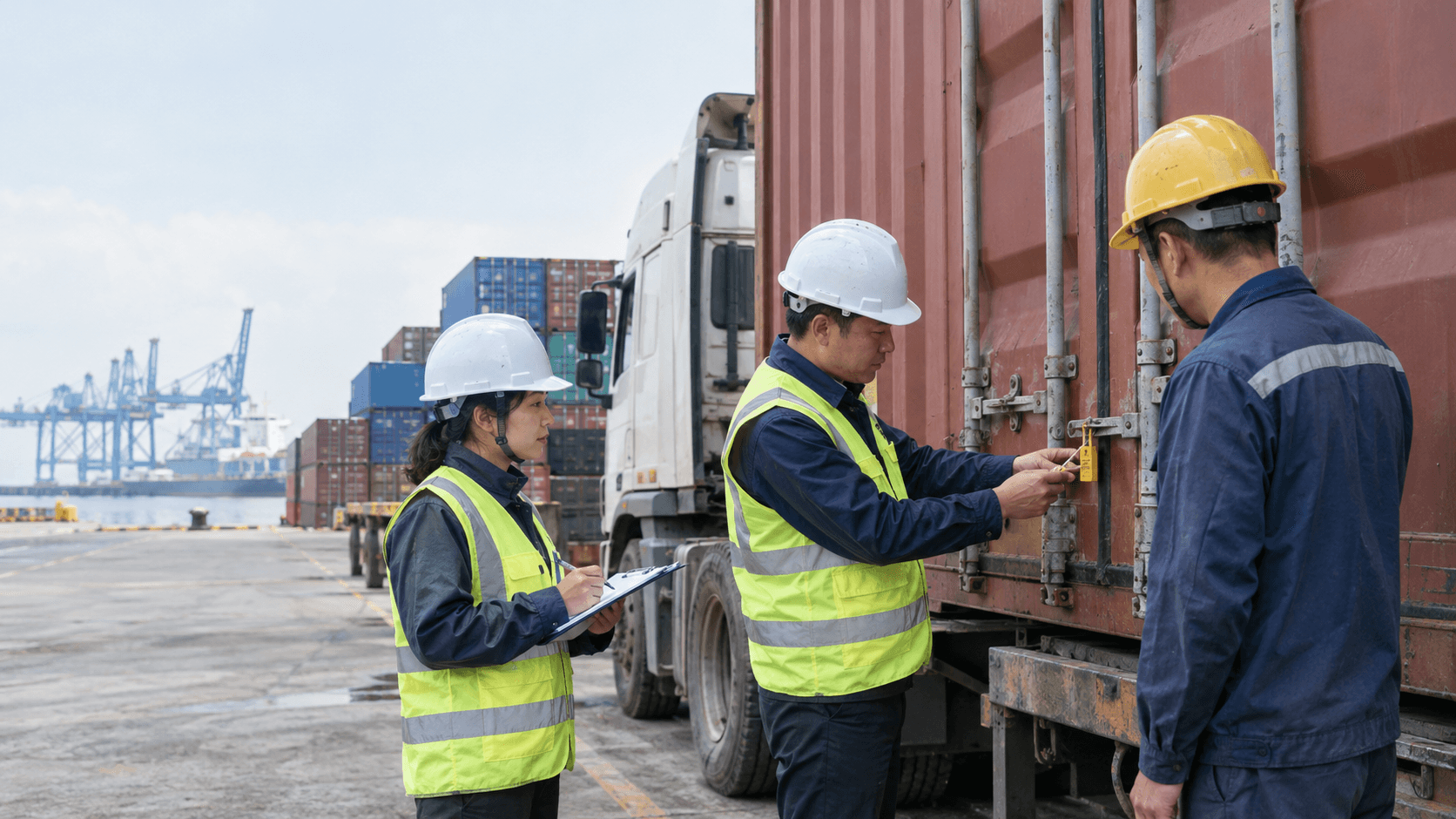
Thiết lập tiêu chí kiểm tra tình trạng vỏ container, sàn, cửa, gioăng kín, chốt khóa và số container trước khi đóng hàng tại kho xuất phát
Kiểm tra container rỗng là bước quan trọng trước khi đưa hàng vào bên trong. Người phụ trách cần đối chiếu số container với lệnh cấp vỏ, kiểm tra vách, nóc, sàn, cửa và các vị trí có dấu hiệu biến dạng. Vỏ container phải phù hợp với loại hàng và không có các lỗ thủng hoặc khe hở bất thường có thể làm nước, bụi hay côn trùng xâm nhập trong quá trình vận chuyển.
Sàn container cần được kiểm tra về khả năng chịu lực, độ sạch, dấu hiệu mục hoặc hư hỏng. Gioăng cửa phải còn khả năng làm kín; bản lề, thanh khóa và chốt cửa phải hoạt động bình thường. Đối với hàng nhạy cảm với mùi, ẩm hoặc hóa chất, phải kiểm tra cả mùi tồn dư và các dấu vết rò rỉ từ lần sử dụng trước.
For refrigerated containers, additional checks include the condition of the refrigeration unit, ventilation system, control panel, technical alarms, and pre-trip inspection results if required. The container's exterior should be photographed before loading and documented in the inspection report. If any defects affecting safety or cargo quality are detected, corrective action or container replacement must be requested before proceeding.
Establish a procedure for confirming quantities, weight, packaging condition, loading photographs, and seal numbers to provide a basis for verification during cargo handover.
Each shipment must have standardized loading records shared among the cargo owner, transport provider, and consignee. Basic documents include the packing list, package count, weight, dimensions, packaging description, container number, and seal number. For shipments requiring a high level of traceability, pallet codes, production batch codes, or equipment serial numbers should also be included to facilitate verification at the destination warehouse.
Loading photographs should show the container's condition before loading, each stage of cargo placement, the lashing arrangements, the cargo condition before the doors are closed, and the final sealing process. Photographs should include timestamps or be linked to the loading report. A clear set of images helps reduce disputes when damaged packaging or missing packages are discovered.
The seal must be checked for type and integrity, and its number must be accurately recorded in the transport documents. During delivery and receipt, the consignee must verify the container number, seal number, and door condition before opening the container. An intact seal is important evidence that the container remained sealed, but it does not by itself prove that the contents are complete or undamaged.
Analyze lashing requirements, load distribution, stacking limits, and cargo securing methods according to the characteristics of the goods to reduce the risk of shifting, toppling, breakage, or damage during transit.
Containers transported by sea are subject to vibration, acceleration, and movement in multiple directions. Cargo that is not properly secured may shift, tilt, or cause packaging deformation. This risk is greater for machinery with a high center of gravity, steel coils, metal structures, and packages with concentrated weight on small contact areas.
The loading plan must control the total weight, floor load-bearing capacity, concentrated loads, and load distribution along the container's length. Heavy packages generally need to be placed low and distributed appropriately. Cargo quantities should not be determined solely by cubic-meter capacity, as this may exceed weight limits or create an unsafe load distribution.
Lashing materials may include load-bearing straps, dunnage air bags, wooden supports, anti-slip mats, and suitable locking systems. Lashing forces must be calculated based on weight, shape, friction coefficients, and the mode of transport. The CTU Code guidelines issued by the IMO, ILO, and UNECE are useful technical references for packing and securing cargo in cargo transport units.
For packages that can be stacked, the packaging's compressive strength and storage conditions must be checked. Packages marked 'Do Not Stack' must not be used as supporting surfaces for items placed above them. For fragile goods or items sensitive to vibration, additional cushioning and mechanisms to limit movement throughout the journey are necessary.
Define the responsibilities of the cargo owner, road transport provider, port operator, and sea carrier when shortages, damage, or seal discrepancies occur.
Delivery and receipt disputes often arise when it is unclear at which stage the cargo was affected. Responsibilities must therefore be linked to documented handover times. The cargo owner is responsible for declaration, packaging, and cargo preparation obligations within the agreed scope. Road transport providers, ports, and sea carriers are responsible within the respective scope of applicable law and their contracts.
At the collection point, record the container and seal condition, receipt time, vehicle number, and handover personnel. When the container is dropped off at the terminal or passes through the port gate, equipment interchange receipts and transaction records serve as evidence of when responsibility was transferred. At the receiving warehouse, the delivery report must clearly describe any irregularities observed before and during container opening.
If a seal number discrepancy, signs of tampering with the doors, or container damage is detected, the consignee should suspend unloading or opening when safe to do so, prepare an incident report, and immediately notify the responsible parties. Independent inspection, reservation of the right to claim, and deadlines for submitting compensation claims must comply with the contract, transport documents, and applicable law.
A multimodal transport service contract must clearly specify whether the contracting provider is responsible for the entire route or only coordinates individual legs. It must also define insurance coverage, liability limits, exemptions from liability, and procedures for handling losses. Hiring a provider to coordinate multiple transport modes should not automatically be taken as evidence that all risks are fully insured.
Comparison Table for Shipping Containers from Hai Phong to Ho Chi Minh City: Operating Specifications, Transit Times, and Cost Structure
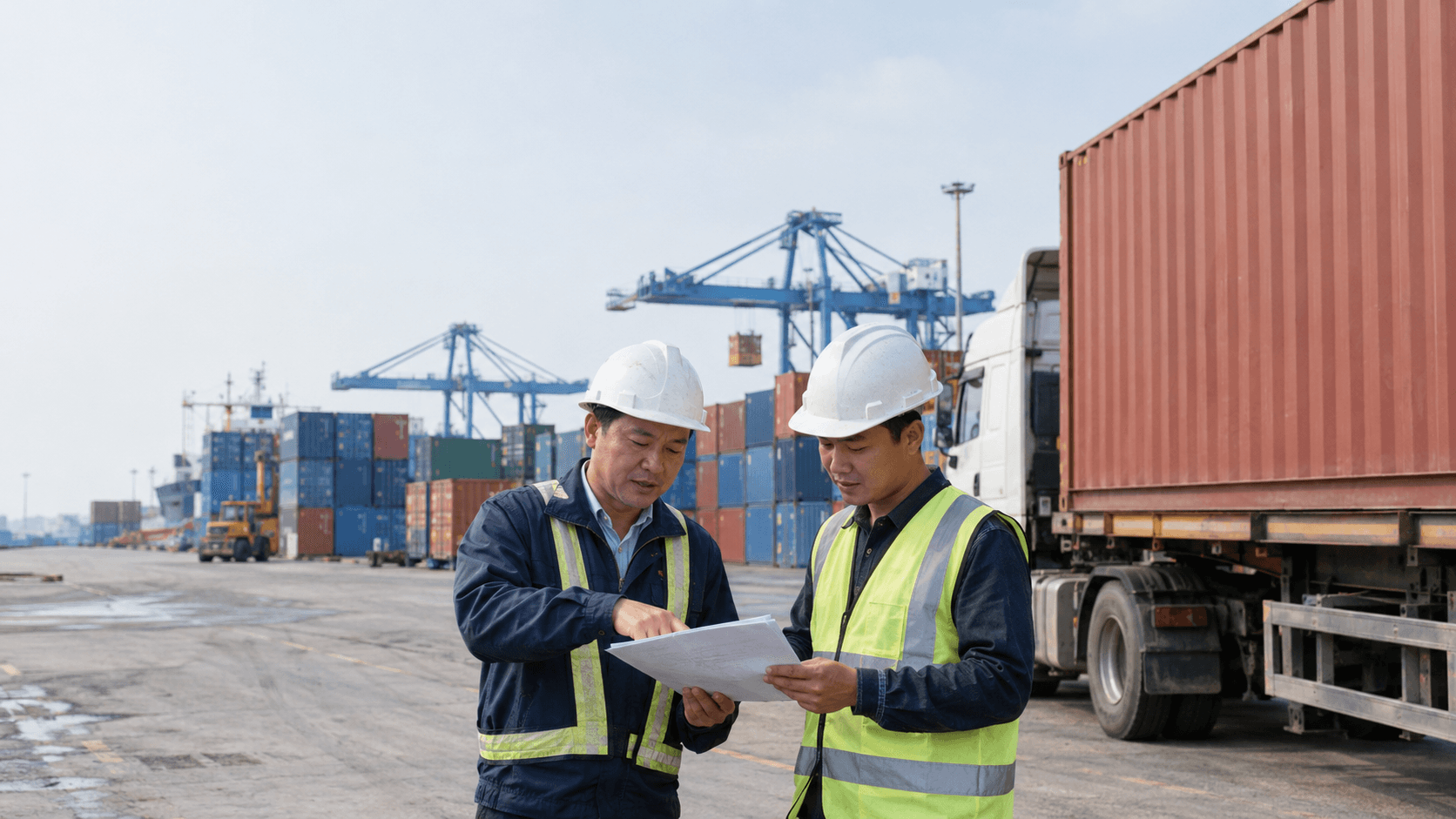
Comparison of 20-foot and 40-foot containers by reference dimensions, usable volume, permitted payload, and suitability for different cargo categories.
20-foot and 40-foot containers differ significantly in length and capacity, but payload capacity does not increase proportionally with volume. A 40-foot container is suitable for many bulky goods, while a 20-foot container is often preferred for relatively heavy cargo with a smaller volume. The specifications below are reference values for standard dry containers and may vary by individual unit.
| Technical specifications | 20-foot dry container | 40-foot dry container |
|---|---|---|
| External length | 6,058 m | 12,192 m |
| External width | 2,438 m | 2,438 m |
| External height | 2,591 m | 2,591 m |
| Internal length | Approximately 5.90 m | Approximately 12.03 m |
| Internal width | Approximately 2.35 m | Approximately 2.35 m |
| Internal height | Approximately 2.39 m | Approximately 2.39 m |
| Geometric internal volume | Approximately 33.2 m³ | Approximately 67.7 m³ |
| Actual cargo loading volume | Lower than the geometric volume, depending on the loading arrangement | Lower than the geometric volume, depending on the loading arrangement |
| Cargo payload based on DSV equipment examples | 25,000 kg | 27,600 kg |
| Suitable cargo groups | Machinery, materials, and relatively compact heavy cargo | Packaging, consumer goods, pallets, and bulky lightweight cargo |
Reference volume and payload specifications are based on DSV's technical documentation for dry containers at https://www.dsv.com/en-us/our-solutions/modes-of-transport/sea-freight/shipping-container-dimensions/dry-container. The actual permissible cargo weight must be checked against the CSC plate, tare weight, equipment limits, road regulations, and the vehicle's load-bearing capacity. The payload figures in the table must not be interpreted as the permitted load for travel on every road in Vietnam.
Businesses should also check the container door dimensions, not just the internal dimensions. A piece of machinery nearly as wide as the container's interior may still be unable to pass through the door. For a 40HC container, the internal height is typically around 2.70 m and the volume is approximately 76 m³, making it suitable for certain types of tall or high-volume cargo; however, transportation conditions must be confirmed separately.
Comparison table of sea freight combined with road transport versus end-to-end road transport, based on total transit time, carrying capacity, flexibility, and suitability for delivery schedules
The choice between sea-road transport and end-to-end road transport should be based on the total delivery time and total cost to the receiving warehouse. Road transport has advantages in many cases requiring quick departures, fewer transfer points, and direct delivery. Sea-road transport can be advantageous for large shipments scheduled in advance, especially when warehouses are located near port-connected corridors.
| Criteria | Sea freight combined with road transport | End-to-end road transport |
|---|---|---|
| Transportation structure | Origin truck – cargo ship – destination truck | Road vehicles transporting goods directly from the shipping warehouse to the receiving warehouse |
| Reference planning time | Approximately 5–14 days door-to-door in the illustrative scenario | Approximately 2–5 days in a typical direct-transport scenario |
| Flexibility of departure dates | Depends on vessel schedules and port handling capacity | May offer greater flexibility depending on truck schedules and road conditions |
| Transport capacity | Suitable for organizing multiple containers per vessel departure | Depends on the number of trucks and long-distance route coordination capacity |
| Transfer points | Multiple connection points, but the container seal can remain intact | Fewer cargo transfer points when transported directly |
| Ability to adjust delivery schedules | Requires coordination with vessel arrival times and container release | Can offer greater control, but remains subject to traffic and operational regulations |
| Suitable scenarios | Regular FCL shipments, non-urgent cargo, and relatively stable volumes | Cargo requiring fast delivery, urgent orders, or destinations far from ports |
The transit times in this table are for comparing transport options only and do not represent the official schedules of any carrier. In practice, the South-to-North Hai Phong–Saigon cargo route must also be assessed separately in terms of vessel schedules, container availability, and cargo flow balance. Transit times and costs in both directions must not be assumed to be identical.
Breakdown of Hai Phong–HCMC cargo transportation costs, including origin pickup, loading and unloading, port fees, ocean freight, documentation fees, destination container transport, and surcharges specified in the quotation
A full-route quotation should itemize each cost component so that cargo owners can understand the scope of services. If only ocean freight is quoted, businesses may not see most of the additional costs incurred at the origin and destination. The breakdown below helps verify the scope of a quotation without applying a fixed rate schedule to every container type.
| Category | Cost component | Points to check |
|---|---|---|
| Origin-side road transportation | Lấy rỗng, kéo container đến kho, vận chuyển hàng ra cảng | Distance, number of trips, waiting hours, tolls |
| Loading and lashing | Labor, lifting equipment, securing materials | Responsible party, standard rates, and equipment |
| Origin port charges | Lifting, container handling, and charges based on operating conditions | Which charges are already included in the freight rate or service fees |
| Ocean freight | Freight from the loading port to the discharge port | Container type, shipping line, voyage, surcharges |
| Documentation and delivery handling fees | Issuance, processing of documents, or related services | Free-of-charge conditions and additional issuance fees |
| Destination port charges | Lifting and handling costs according to delivery terms | Avoid double-charging for items already included |
| Destination road transport | Transporting cargo to the warehouse and returning the empty container | Empty container return location, waiting fees, restricted hours |
| Conditional surcharges | Storage, container detention, truck detention, schedule changes, customs inspection if applicable | Conditions triggering additional charges, unit rates, and approving party |
| Taxes and insurance | Service VAT, cargo insurance if purchased | Applicable tax rates and insurance coverage |
For import and export goods using Hai Phong or Ho Chi Minh City ports, customs clearance procedures and customs supervision must be checked separately if the goods are subject to regulatory control. Ordinary domestic cargo does not automatically require a customs declaration simply because it is transported by sea between two Vietnamese ports. However, goods under customs supervision, goods in transit, goods transferred between customs offices, or certain special cargo categories may be subject to separate procedural requirements.
When reviewing documentation, businesses can refer to the guidelines provided by the Vietnam Customs Department at https://www.customs.gov.vn and the procedural system at https://pus.customs.gov.vn. Do not confuse the fact that a transport company assists with documentation or customs declaration the assumption that every North–South shipment must undergo customs clearance procedures.
A projected cost calculation table per ton or per container based on volume, container type, pickup and delivery distances, waiting time, and excluded costs
To help businesses assess cost-effectiveness, an illustrative spreadsheet can be prepared for a 20-foot container transported from a warehouse in Hai Phong to a warehouse in Ho Chi Minh City. The amounts below are entirely hypothetical and are provided solely to illustrate the budgeting method. They are not verified market quotations, HNT Logistics tariff rates, or commitments from any shipping line.
| Illustrative cost item | Assumed costs |
|---|---|
| Initial pickup, empty container collection, and transport to the port | 2,500,000 VND |
| Loading, unloading, and handling at the port of origin | 1,000,000 VND |
| Domestic sea freight for a 20-foot container | 5,500,000 VND |
| Documentation and coordination fees | 500,000 VND |
| Loading, unloading, and handling at the destination port | 1,000,000 VND |
| Transporting the container to the warehouse and returning the empty container | 2,500,000 VND |
| Contingency allowance for conditional costs | 1,000,000 VND |
| Illustrative total budget | 14,000,000 VND/container |
If the container carries 15 tons of cargo, the simulated total budget of VND 14 million is equivalent to approximately VND 933,333 per ton. If the same total cost applies to only 10 tons, the unit cost increases to VND 1,400,000 per ton. This demonstrates that improving container utilization can significantly reduce the allocated cost per ton, provided that the loading arrangement complies with safety limits.
In this example, the contingency allowance is included in the management budget; it does not mean that the expense will necessarily arise or that the entire amount must be paid. The total excludes VAT, optional cargo insurance, special loading and unloading costs, specialized inspection expenses, and services outside the assumed scope. Before signing a contract, each item must be requoted based on the actual address, cargo weight, cargo type, and shipping schedule.
The formula for determining the cost per ton is the actual total transportation cost divided by the weight of cargo successfully delivered. For shipments requiring multiple containers, the total volume for each period, the number of containers used, and the fixed costs of coordination should also be considered. This method helps compare options with different load capacities and shipping frequencies on the same basis.
Hai Phong–Ho Chi Minh City Sea and Road Transport: Optimizing Total Logistics Costs and Minimizing Additional Charges
Analyze the total cost of ownership for each transportation option rather than comparing sea freight rates alone, including tractor-truck costs, handling, port storage, container detention, and final-mile delivery
The lowest transportation cost on a quotation does not necessarily represent the option with the lowest total logistics cost. Businesses must evaluate all expenses incurred from cargo preparation through final delivery, including foreseeable additional charges. For sea-and-road routes, ocean freight is only one component of the total cost.
A management formula can be used: total logistics costs equal origin-side charges plus origin port costs, ocean freight, destination port costs, destination-side charges, documentation fees, cargo handling costs, waiting charges, and other additional expenses. To comprehensively assess the impact on the business, inventory financing costs, production disruption risks, and losses caused by late delivery should also be included when they can be reasonably quantified.
For example, an option with ocean freight VND 800,000 lower but requiring the empty container to be returned to a yard significantly farther from the warehouse may result in a higher total cost. Similarly, choosing a vessel departure that does not align with the production schedule may increase the number of safety-stock days required. This is why the transportation procurement team should compare options using the same delivery scope and operating assumptions.
For businesses with large shipment volumes, maintaining a container-level cost database helps identify pickup routes, delivery routes, or time slots associated with frequent additional charges. Once sufficient data is available, businesses can negotiate volume-based pricing structures and adjust transportation arrangements instead of focusing solely on reducing ocean freight rates.
Determine the break-even point between full container load (FCL) and less-than-container-load (LCL) shipping based on volume, weight, shipping frequency, and loading and unloading costs
Not every shipment is suitable for a full container. For small shipments, less-than-container-load or consolidated shipping services may reduce the cost of unused space. However, consolidation often involves warehouse handling, loading and unloading, sorting, and potential waiting time. Businesses should compare the final cost delivered to the receiving warehouse rather than relying on the unit price per cubic meter alone.
The break-even volume can be estimated by dividing the fixed total cost of FCL by the per-cubic-meter shipping rate for the consolidated option. Assume that FCL has a total cost of VND 14 million and the consolidated option is quoted at VND 700,000/m³ for an equivalent scope of services. The simple break-even point is 20 m³. At this volume, the two options have equal theoretical costs if no other cost differences exist.
In practice, minimum charges, volumetric weight calculations, handling costs, individual package size limits, and distribution costs must also be considered. If consolidation incurs an additional fixed fee of VND 1.5 million, the break-even point changes to approximately 17.86 m³ under the same assumptions. This is an illustrative calculation, not a universal threshold for the Hai Phong–Ho Chi Minh City route.
Shipping frequency also affects the decision. Businesses that ship regularly may be able to consolidate enough cargo to fill a container each week, whereas daily shipments with continuous delivery requirements must balance transportation costs against the cost of waiting for consolidation. An effective FCL option must meet delivery deadlines, cargo safety requirements, and container utilization targets rather than merely reaching a volume threshold.
Develop a coordinated schedule for cargo loading, truck dispatch, vessel departures, and empty container returns to minimize truck waiting time, port storage, and container usage charges beyond the free-time allowance
Waiting time at the origin warehouse is a source of additional costs that is easily underestimated. If a container truck arrives on schedule but the warehouse has not prepared sufficient personnel or forklifts, truck waiting time may exceed the free-time allowance. Loading appointments should be based on actual loading productivity, the number of loading bays, package weights, and operating capacity during each shift.
The coordination team must separately calculate the free storage period at the port and the container usage period under the shipping line's or equipment provider's policy. Demurrage, detention, and storage have different scopes of application depending on the contractual terms. A single generic term should not be used to describe all container-related charges, as this may lead the accounting team and cargo owners to misunderstand the reasons for the expenses.
At the destination, confirm that the warehouse is ready before dispatching a truck to collect the container from the port. If the warehouse only accepts deliveries during business hours, collecting the container too late may cause the truck to wait overnight. The empty container return location and return deadline should also be verified to prevent container usage charges from continuing after the cargo has been delivered.
For refrigerated cargo, the plan must also account for the power supply during waiting periods and the ability to record temperatures. If a refrigerated container must remain at a warehouse for several hours, the operations team needs to clearly identify the power supply for the refrigeration unit, generator requirements, and procedures for handling equipment error alerts. Refrigeration must not be switched off to reduce costs without the cargo owner's technical approval.
Establish a budget control table covering the initial quotation, conditional surcharges, approved additional expenses, and reconciliation costs after delivery is completed
Each shipment should have a cost tracking code linked to the booking number, container number, and order. The budget table should show quoted costs, conditional surcharges, approved expenses, and final costs. This approach helps prevent additional expenses from being bundled into freight charges without explanation.
| Control Category | Information to Record | Handling Principles |
|---|---|---|
| Initial Budget | Quotation, service scope, validity period | Must be confirmed before implementation |
| Conditional surcharges | Applicable conditions, unit rates, free-time period | Provide advance notice if additional costs are likely to arise |
| Approved Additional Expenses | Reason, photos, supporting documents, approving person | Record the time and evidence of approval |
| Post-Delivery Costs | Invoices, receipts, delivery and handover records | Reconcile against the contractual scope |
| Budget Variance | Actual cost minus approved budget | Analyze the causes to improve the next shipment |
Businesses should distinguish additional expenses caused by changes to the cargo owner's requirements from those caused by operational arrangements. For example, a change in the delivery location requested by the cargo owner differs fundamentally from a transport provider incorrectly assigning an empty-container return yard. The approval mechanism must clarify which party bears the costs under the contract, the actual cause, and the supporting documentation.
After delivery, cost data should be consolidated by container, tonnage, cubic meter, and receiving location. Continuous monitoring helps identify bottlenecks that can be improved, such as warehouse waiting times, the percentage of shipments requiring schedule changes, or the number of port surcharge incidents. This provides a verifiable basis for long-term cost optimization.
HNT Logistics Supports End-to-End Hải Phòng–HCMC Cargo Transportation with a Transparent Sea–Road Solution
Collect information about cargo type, weight, dimensions, pickup point, delivery and receiving locations, and required deadlines to propose a suitable transportation plan
To develop a suitable transportation plan, HNT Logistics needs to collect complete shipment information from the outset. Key data includes the cargo name, gross weight, number of packages, dimensions, packaging method, pickup address, delivery address, and required timeline. For cargo requiring special storage conditions, additional information about temperature, sensitivity to vibration, and handling instructions must be provided.
For machinery, steel, or industrial equipment, additional photos, dimensional drawings, and center-of-gravity information should be provided where available. For palletized cargo, the pallet dimensions, number of stackable layers, and availability of forklifts at both warehouses must be determined. This information helps prevent incorrect container selection and unplanned lifting and handling arrangements.
When customers require end-to-end cargo transportation from Hải Phòng to HCMC, the requested scope must clearly specify whether the service includes empty-container pickup, loading, lashing and securing, lifting and handling at the port, sea freight, first-mile container drayage, unloading, and empty-container return. Only then can businesses compare service proposals on an equivalent basis.
Coordinate tractor-trailer dispatch, arrange dry or refrigerated containers according to actual requirements, connect shipping schedules, and organize pickup and delivery operations in the Hải Phòng port area and at Cát Lái Port
HNT Logistics aims to connect road and sea transportation through a unified pickup and delivery plan. In the Hải Phòng area, the plan must confirm the container collection point, cargo loading address, loading port, and suitable vessel schedule. In HCMC, the first-mile delivery plan is developed based on the actual discharge port, container availability time, and receiving conditions at the warehouse.
For dry containers, the priority is selecting the correct dimensions, payload capacity, and empty-container pickup and return locations. For refrigerated containers, requirements for the refrigeration unit, power supply, set temperature, and in-transit monitoring procedures must also be specified. HNT Logistics needs to confirm the availability of the required container type, vessel service, and technical requirements for each booking before committing to an implementation plan.
For container drayage at Hải Phòng Port, understanding the pickup and delivery procedures across port areas helps the transport provider proactively arrange vehicles and documentation. At the southern end, similar coordination must account for when containers are released at Cát Lái Port or the actual discharge point. The goal is to reduce waiting times and maintain continuity throughout the pickup and delivery process.
Assist with reviewing transport documents, coordinate customs procedures when within the scope of services, and provide a quotation breakdown by individual service item
Domestic transportation documents may include a contract or service confirmation, warehouse release note, packing list, transport documents, container details, seal number, and delivery receipt. The specific documentation depends on the cargo type, the parties involved in the transaction, and the requirements of the operating company. For import or export cargo, or goods under customs supervision, additional documents must be provided according to the relevant shipment type and applicable regulations.
When a shipment incurs customs obligations, HNT Logistics can coordinate customs declaration procedures within the scope of the agreed services and applicable legal requirements. The issuance of certificates of origin must also be distinguished from assistance with preparing, checking, or submitting documents. The authority to issue C/Os belongs to the competent authorities or organizations designated under applicable regulations and does not automatically rest with logistics companies.
To monitor matters related to port operations management and maritime transport activities, businesses can refer to information from Vietnam Maritime and Inland Waterway Administration through the state management information system at https://vimawa.gov.vn. Industry-specific regulations and notices must be checked against the actual transportation date, particularly when applicable to dangerous goods, special containers, or port operations subject to specific requirements.
HNT Logistics quotations should be itemized clearly, including origin charges, ocean freight, port charges, destination charges, and additional services. Surcharges should be accompanied by their applicable conditions, any free-time allowances, and approval procedures. This structure helps customers control costs from the time the service is booked until the final reconciliation is completed.
HNT Logistics supports businesses transporting goods from Hai Phong to Ho Chi Minh City through sea-and-road transportation solutions tailored to the characteristics of each shipment, aiming to optimize total costs, maintain container safety, and ensure transparent responsibilities throughout the delivery process.
The effectiveness of a transportation route is measured by more than vessel departure dates or freight rates per container. What matters is whether the cargo is collected according to schedule, loaded into suitable equipment, delivered to the correct location, and accompanied by clear documentation at every handover point. A well-designed combined sea-and-road transportation solution must balance total costs, delivery schedules, operational capacity, and cargo safety.
HNT Logistics aims to serve as a North–South logistics coordination partner for manufacturing, trading, and goods distribution businesses. By integrating tractor units, seaports, vessel schedules, and documentation procedures into a single plan, businesses can reduce unnecessary transshipment steps and control the responsibilities of every party involved.
For businesses with regular Hai Phong–Ho Chi Minh City freight transportation needs, cargo owners should establish shipping schedules, loading capacity standards, and monthly cost reconciliation procedures. With sufficiently detailed data, choosing between FCL, consolidated cargo, and end-to-end road transportation can be based on overall efficiency rather than subjective assumptions about freight rates.
Contact HNT Logistics to discuss Hai Phong–Ho Chi Minh City container transportation plans, evaluate combined sea-and-road options, and request a quotation based on the cargo pickup address, delivery location, container type, and actual deadline. Official website: https://hntshipping.com.vn. Contact hotlines published on the website: 0911 446 060 and 0949 393 300. HNT Logistics aims to provide logistics solutions with clear planning, transparent cost control, and seamless coordination from the origin warehouse to the destination warehouse.