When researching shipping services from Vietnam to Thailand, an export shipment may incur various costs beyond freight charges, including collection, packaging, warehousing, transhipment, customs declarations and local delivery. If businesses compare only the unit rate per kilogram or container, they may easily choose an option with a low initial freight charge but end up paying more than expected for the total delivery cost.
For businesses that regularly trade with Thailand, the key challenge is not simply finding a provider that offers affordable shipping services to Thailand, but also determining the right transport method, preparing documentation in accordance with the destination country's import regulations, and managing responsibilities among all parties throughout the entire journey. Errors involving HS codes, declared values, certificates of origin or specialised permits may result in shipments being held at border checkpoints, seaports or airports.
HNT Logistics provides international transport consultancy and organisation tailored to the requirements of each shipment, combining road, sea and air freight with support for import and export procedures within the agreed scope of services. The following article provides a detailed analysis of transport options, documentation requirements, cost components and reference shipping rates to Thailand for 2026, helping businesses prepare realistic budgets before dispatching their goods.
Shipping to Thailand: Analysis of Cross-Border Logistics Models by Shipment Size and Characteristics
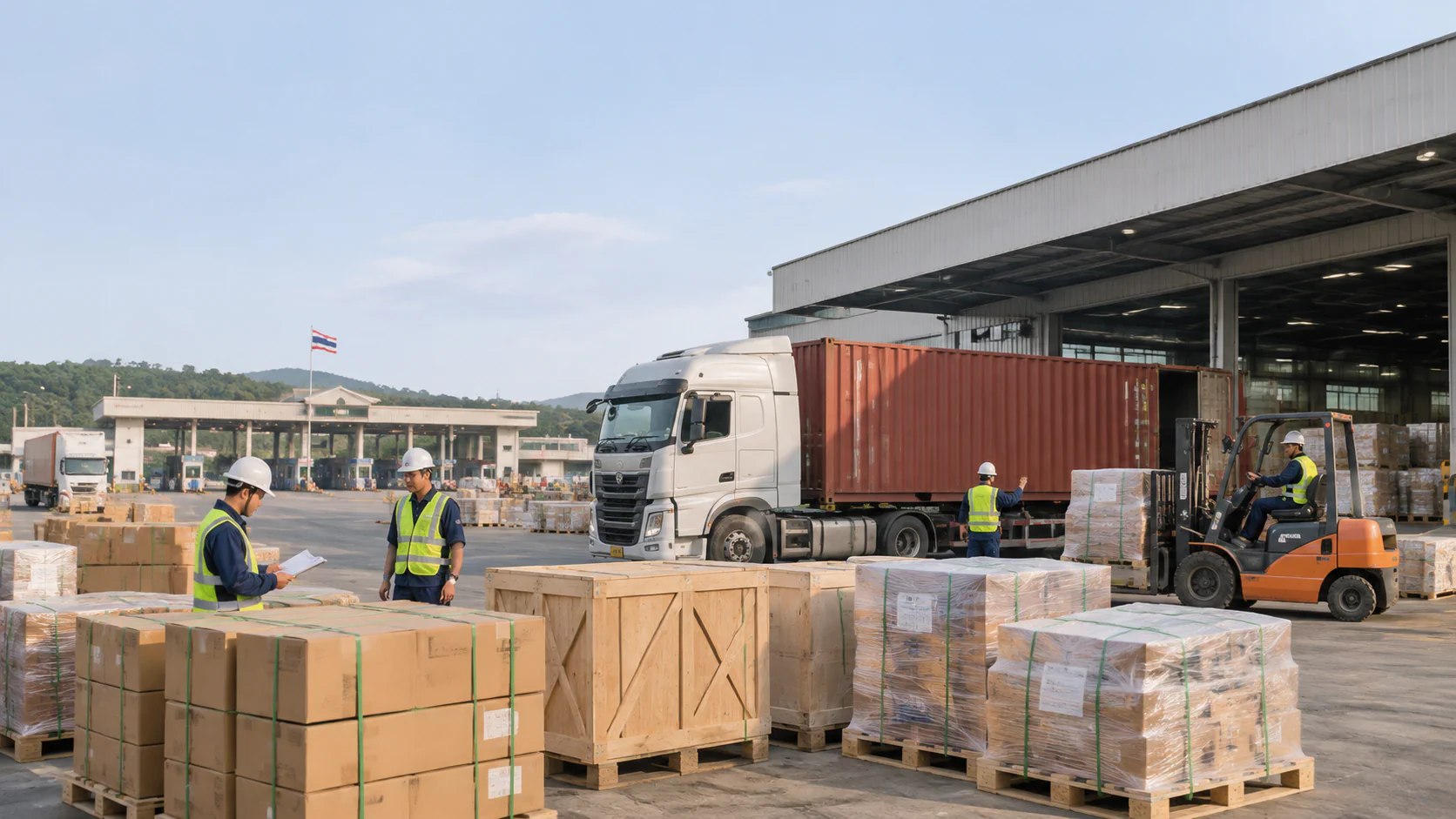
Distinguishing between B2B commercial shipments, samples, business-related goods and personal consignments to determine service scope, delivery documentation and sender responsibilities
When considering shipping solutions to Thailand, businesses should clearly identify the purpose of their shipment before selecting a shipping service. B2B commercial shipments are generally associated with sales contracts, commercial invoices, packing lists and import and export declaration requirements. The consignee in Thailand is typically a legally registered importing business with a tax identification number and the ability to complete customs clearance procedures in accordance with local regulations.
During the transport and customs clearance process for shipments to Thailand, samples intended for sales presentations, testing or quality assessments may not involve payment in the same way as ordinary commercial transactions. However, this does not mean they are exempt from customs declarations. The sender must accurately state the purpose of the sample shipment, its declared value, quantity and condition. If samples are being sent for testing, the possibility of re-exporting, destroying or changing their intended use in Thailand should be established in advance.
Business-related goods, such as display equipment, event materials, exhibition goods or construction tools, may require consideration of temporary import and re-export arrangements, tax guarantees or specialised documentation, depending on the circumstances. Meanwhile, personal belongings and gifts must be assessed under regulations governing baggage, postal consignments, duty-free value thresholds and restricted goods. Gift declarations should not be used to conceal genuine commercial transactions.
Classifying the shipment correctly from the outset helps identify the appropriate exporter of record, importer, party responsible for taxes and the scope of responsibility of the freight forwarding provider. This also enables HNT Logistics to assess whether the shipment can be accepted, select a suitable transport route and determine which services are required, rather than simply quoting a standalone freight rate.
Assessing the suitability of LCL groupage, full container load (FCL) shipping and parcel-based express delivery based on shipment volume, cargo density, shipment value and shipping frequency
LCL (Less than Container Load) consolidation is suitable for businesses whose shipment volumes are insufficient to fill an entire container. Goods from multiple shippers are consolidated, sorted and loaded into a shared container to split the main freight costs. This option is generally suitable for shipments ranging from a few packages to approximately 10–15 CBM, depending on consolidation schedules, service routes and tariff structures at both ports.
One important point to note is that LCL freight charges are not calculated solely on volume. Certain types of cargo with high weight density, fragile goods, items requiring special handling or goods that cannot be stowed together with other cargo may incur additional surcharges. Furthermore, LCL shipments must go through consolidation, loading, unloading and distribution at a CFS warehouse, meaning that goods are generally handled more frequently than with FCL shipments.
With FCL (Full Container Load), a business hires an entire 20-foot or 40-foot container to transport its shipment exclusively. This option is suitable for large shipment volumes, homogeneous cargo, shipments requiring control over loading and sealing, or businesses with regular export schedules. A volume of 13–15 CBM is often used as a starting point for comparing the cost-effectiveness of LCL and FCL, but it is not a fixed conversion threshold. Costs such as CFS charges, documentation fees, THC, domestic transportation and destination handling must also be taken into account.
Parcel courier services or air freight are generally more suitable for lightweight, high-value goods, urgently required replacement components, documents or commercial samples. For bulky but lightweight cargo, volumetric weight may exceed actual weight and become the basis for freight calculations. Businesses should therefore provide the dimensions of each package rather than only the total weight to obtain an accurate quotation.
An analysis of transport connectivity between Vietnam and Thailand via international road transit corridors, international sea routes and air transport networks, based on the actual delivery destination.
Vietnam and Thailand do not share a land border. Road transport between the two countries must pass through a transit country, typically Laos or Cambodia, depending on the corridor, origin and destination. Therefore, an international multimodal transport solution must be arranged based on transport permits, transit procedures, authorised vehicles and the coordination capabilities of transport operators in each country.
Sea freight connects Vietnamese ports such as Cat Lai, Cai Mep and Hai Phong with Thailand's port network, where Laem Chabang is a major container hub alongside Bangkok Port. This is an option worth considering for industrial goods, raw materials, consumer products and large-volume shipments. Vessel schedules, cut-off times, cargo loading schedules and available vessel space must be confirmed before arranging domestic transportation.
For time-sensitive shipments, air freight networks connecting international airports such as Tan Son Nhat, Noi Bai, Suvarnabhumi and Don Mueang facilitate transport between major economic centres. However, flight time is not the same as total door-to-door delivery time. Cargo acceptance, security screening, airport warehouse handling, customs clearance and domestic delivery must also be factored into the schedule.
The actual delivery address directly affects the choice of transport solution. Deliveries to Bangkok may benefit from a more convenient warehouse and distribution network. Shipments to Chiang Mai, Phuket or industrial provinces in eastern Thailand may require additional domestic transport within Thailand. Consequently, the total budget for the same shipment can vary significantly depending on whether delivery is arranged at Laem Chabang, Bangkok or Phuket.
Determine whether the shipment should be delivered directly to the recipient's warehouse, to a consolidation point or through a Thai-side logistics partner, based on the scope of responsibilities and the importer's receiving capabilities.
Door-to-Door delivery allows a business to have goods delivered to a specified address in Thailand instead of arranging collection at the port or airport itself. This service may include collection in Vietnam, international transportation, customs clearance coordination, destination handling and final delivery. However, it is essential to clarify whether the quotation includes import duties, VAT, customs clearance charges and delivery fees.
Under Port-to-Port shipping, the transport provider is responsible for transportation between the two ports in accordance with the booking terms, while the shipper and consignee arrange domestic transportation, customs procedures and related costs at both ends themselves. This option is suitable for businesses with their own import-export department and a dedicated freight forwarding partner in Thailand.
For deliveries to a consolidation point or CFS warehouse, the consignee must be able to collect the goods, complete the required documentation and settle local charges within the specified time limits. If the cargo remains in storage beyond the free-time period, the business may incur warehouse storage, terminal storage or container detention charges. Before confirming the delivery terms, it is important to check the warehouse's receiving capacity, operating hours, vehicle weight restrictions and whether container trucks can access the delivery location.
Incoterms such as EXW, FCA, FOB, CFR, CIF, CPT, CIP, DAP and DDP must also be agreed upon with the business partner. In particular, DDP should only be used when the seller has the legal standing and practical capability to arrange import obligations, taxes and related procedures in Thailand. DDP should not be specified simply because the seller wishes to offer door-to-door delivery without first identifying a legally eligible importer.
Shipping Goods to Thailand: Managing Import and Export Documentation and Cargo Acceptance Requirements in the Thai Market
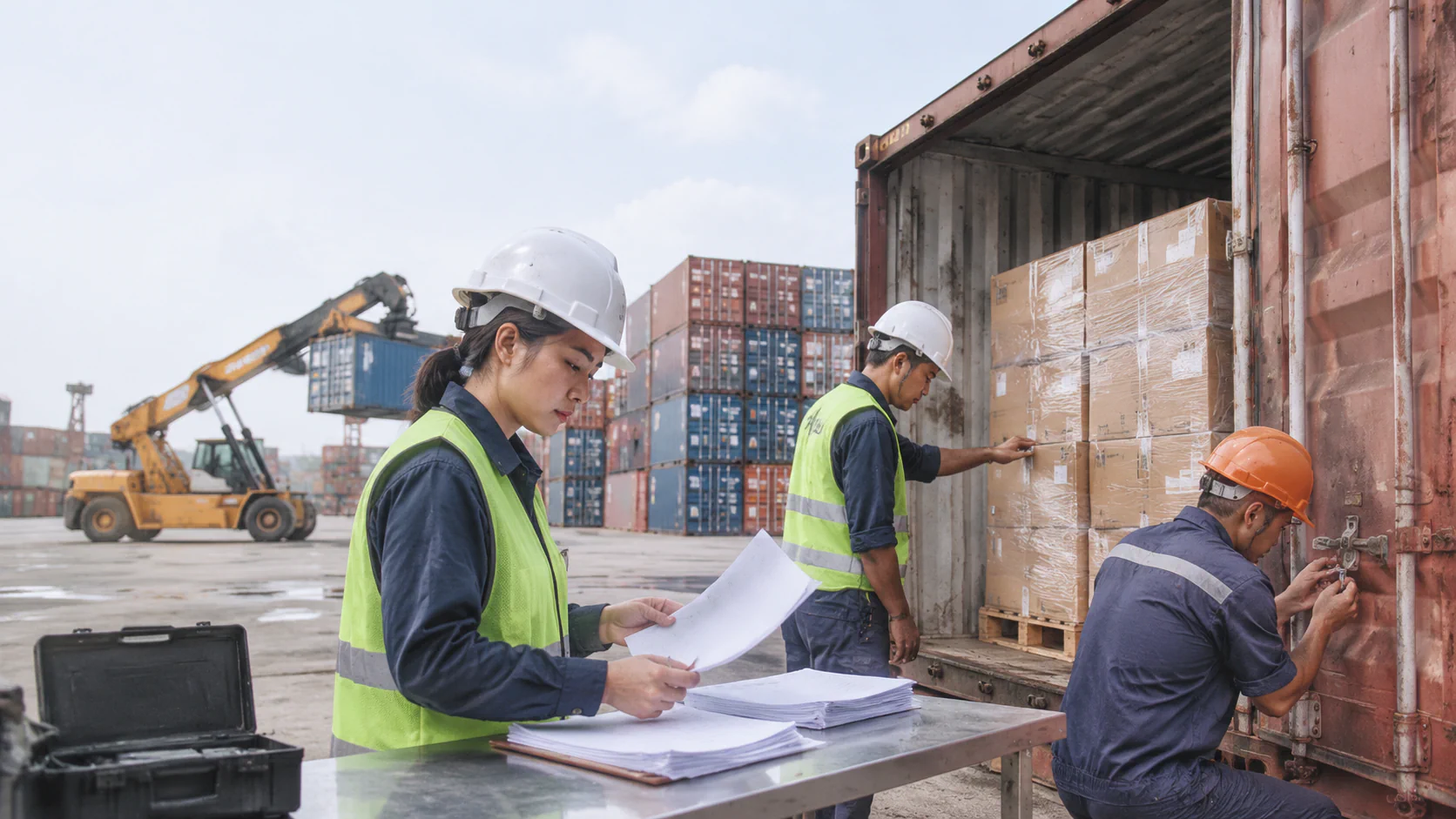
Build a shipment declaration dataset including the commercial name, composition, intended use, reference HS code, country of origin, quantity, weight, and goods value.
Shipping documentation is accurate only when cargo data is standardized from the outset. The commercial name must accurately reflect the nature of the product, avoiding generic descriptions such as accessories, consumer goods, components, or mixed goods when there is insufficient information to identify them. For products containing multiple components, businesses should describe the primary materials, composition ratios, intended use, and operating principles where necessary.
The HS code is an important basis for determining product policies, import duties, licensing requirements, and specialized inspections. Businesses may use Vietnam's reference HS codes when communicating with partners, but must cross-check Thailand's tariff schedule and classification rules. They should not assume that Vietnam's eight-digit HS codes always correspond exactly to the detailed classification codes used in the importing country.
The declared value must accurately reflect the transaction and the applicable customs valuation method. Transportation costs, insurance, production assistance, royalties, or related payments may affect the taxable value under applicable regulations. Undervaluing goods to reduce duties may result in valuation consultations, additional tax assessments, and penalties.
The minimum dataset should include the product name, provisional HS code, composition, intended use, country of origin, quantity, unit of measurement, net weight, gross weight, dimensions, declared value, delivery terms, and shipper and consignee information. For technical goods, businesses should prepare catalogs, photographs, specification documents, and English-language product descriptions to support inspections.
Analyze the documentation requirements for each transaction, including the Commercial Invoice, Packing List, bill of lading, sales contract, and Certificate of Origin (C/O) when the conditions for preferential tariff treatment are met.
The Commercial Invoice contains the seller's and buyer's information, goods descriptions, quantities, unit prices, total value, payment currency, and delivery terms. It is an important document that enables customs authorities to determine the nature of the transaction and the declared value. Discounts, promotional goods, or goods supplied free of charge must be clearly explained to avoid unsupported discrepancies between the invoice and the actual shipment records.
The Packing List provides information about packaging specifications, number of packages, net weight, gross weight, and volume. This document must match the actual cargo when it is weighed, measured, and counted at the warehouse. If a shipment contains multiple product codes, the quantity of each code in each package should be clearly specified to facilitate customs inspection and distribution at the destination.
A Bill of Lading for sea freight, an Air Waybill for air freight, or a road transport document serves as evidence that goods have been received and transported under the relevant shipping method. A sales contract is not necessarily mandatory in every import documentation set, but customs authorities may request it when verifying declared value, transaction terms, or relationships between the parties.
For goods originating from countries that meet the rules of origin under the ASEAN Trade in Goods Agreement (ATIGA), businesses may consider using Form D C/O or a validly applicable self-certification mechanism. Having a C/O does not automatically exempt goods from import duties. Products must satisfy the specific rules of origin, have supporting documentation, and be declared using the correct electronic Certificate of Origin reference when imported. Businesses should check the preferential tariff rate for each HS code in advance rather than assuming that all Vietnamese goods qualify for a 0% tariff rate. Refer to General Department of Customs regulations and the ATIGA guidelines to cross-check origin requirements, documentation, and applicable procedures.
Assess import licensing requirements, specialized inspection regulations, and supplementary documentation for food, cosmetics, products of plant origin, electronic equipment, and products subject to special regulatory controls.
Food products exported to Thailand must be classified according to their food category, ingredients, processing status, and intended use. Certain products fall under the supervision of the Thai FDA and require appropriate licenses or registration procedures before being imported for commercial distribution. Documentation may include manufacturer information, product labels, ingredients, quality standards, and documents relating to the importing facility. Goods should not be dispatched before confirming the importer's ability to receive them and the inspection requirements at the border checkpoint.
Cosmetics are a product category requiring particular attention. According to Thai FDA guidelines, cosmetics imported for commercial purposes must comply with product notification procedures, obtain a License per Invoice (LPI), and undergo inspection procedures at the relevant control points. Therefore, having only an invoice and packing list is insufficient to guarantee customs clearance. Labels, ingredients, intended uses, and importer information must be reviewed before shipment.
For products of plant origin, businesses must accurately identify the plant species, plant parts, whether the products are fresh, dried, or processed, their intended import use, and potential pest risks. Certain products may require a phytosanitary certificate, import permit, border inspection, or special treatment conditions. Fresh fruit and agricultural products should not be transported using standard dry-cargo procedures because their quarantine, timing, and storage requirements are different.
Electronic equipment must be checked to determine whether it falls under the regulatory authority of the NBTC, TISI, or other specialized agencies. Radio transmission products, telecommunications equipment, chargers, electrical devices, and products subject to mandatory safety standards may require registration, certification, or regulatory inspection. For chemicals, lithium batteries, dangerous goods, and solvent-containing products, businesses must provide an MSDS or SDS, hazardous classification information, and corresponding packaging requirements.
Businesses should consult the competent Thai regulatory authorities directly and confirm the regulations applicable at the time of importation. Important reference sources include Thai Customs, the Thai FDA, the Department of Agriculture, TISI, and NBTC. HNT Logistics can coordinate document reviews within the scope of its services, but product licensing and confirmation of import eligibility remain the responsibility of the competent authorities and the importer in Thailand.
Establish a consistency-checking process for shipper and consignee information, goods descriptions, HS codes, declared values, and transportation document data to minimize discrepancies during customs clearance.
A common error in import-export transactions is inconsistency between the invoice, packing list, and bill of lading. For example, the invoice may describe a specific type of component while the bill of lading only states mixed goods; the number of packages on the packing list may differ from the number handed over; or the consignee's address on the bill of lading may not match the importing company's information. Such discrepancies may cause customs authorities to request explanations or document amendments.
The control process should begin by creating a single standardized dataset for each shipment. The sales, import-export, warehouse, and freight forwarding departments should all use the same confirmed version. Before issuing transportation documents, businesses must cross-check legal names, addresses, company registration numbers, goods descriptions, quantities, weights, and delivery terms.
In particular, HS codes must be checked against Thailand's product policies rather than simply copied from previous shipments. When discrepancies in descriptions or declared values are identified, businesses should resolve them before the goods leave the warehouse. Amending documents after a vessel has departed or goods have crossed the border may incur amendment fees, delivery delays, and compliance risks.
For shipments containing multiple product codes, businesses should prepare a reconciliation table matching each product code across the invoice, packing list, catalog, and declaration data. This is a simple but effective measure for reducing confusion during customs inspection, customs channel assignment, or valuation verification. Businesses may refer to Ministry of Industry and Trade circulars and relevant specialized regulatory documents for specific products to determine the correct export and import policies.
Shipping Goods to Thailand: Designing Transportation Solutions and Managing Risks at Every Stage
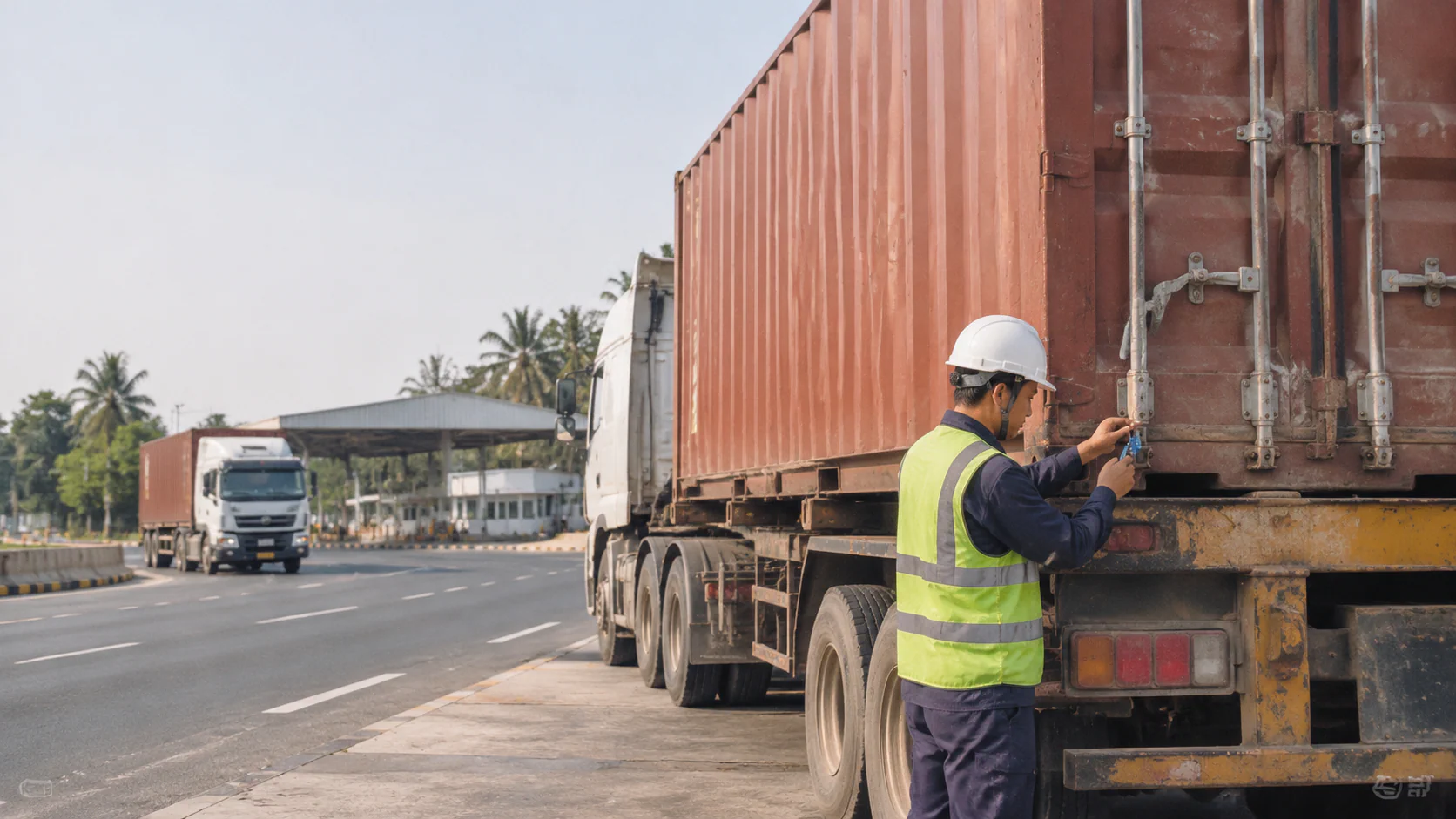
Analyze road freight options through border gates and regional Indochina transit corridors based on connectivity to Bangkok, Chiang Mai, Phuket, and distribution centers throughout Thailand.
Cross-border road freight offers flexibility in organizing cargo collection and delivery, particularly for shipments requiring direct connections between Vietnamese factory warehouses and distribution warehouses in Thailand. Since Vietnam and Thailand do not share a land border, vehicles must travel through transit corridors in Laos or Cambodia. Route selection depends on the departure location, delivery destination, cross-border transport permits, and vehicle operating conditions.
The Laos corridor may involve routes connecting through the Nakhon Phanom–Thakhek–Cha Lo or Mukdahan–Savannakhet–Lao Bao areas. These routes form part of the Indochina transportation corridor network, but this does not mean that all trucks can travel through the entire route freely without permits and transit procedures. Transport operators must confirm the border crossing pair, vehicle type, transshipment capabilities, and customs requirements for each leg before committing to a delivery schedule.
For shipments to Bangkok, the road network in central and northeastern Thailand provides connections to commercial centers, distribution warehouses, and industrial zones. Shipments to Chiang Mai require an additional transportation leg toward northern Thailand, while shipments to Phuket must account for the cost and time required to reach southern Thailand. A single standardized road freight rate should not be applied to all destinations throughout Thailand.
For palletized goods, machinery, or oversized cargo, businesses must check axle load limits, vehicle height, cargo dimensions, and road accessibility across mountain passes, bridges, and urban areas. Oversized or overweight cargo may require specialized permits and escort arrangements. During the rainy season, road conditions and transit times through challenging terrain must also be included in contingency plans.
Evaluate sea freight options based on the departure port, destination port, FCL/LCL arrangements, and cargo handling requirements at both ports for commercial shipments with substantial volumes.
Sea freight is generally a suitable option when businesses prioritize cost efficiency per unit of cargo. In southern Vietnam, Cat Lai and Cai Mep are key gateways to consider; in northern Vietnam, businesses can choose Hai Phong Port. In Thailand, Laem Chabang is an important container port serving the eastern industrial region, while Bangkok Port may be suitable for certain routes and domestic delivery requirements.
For FCL shipments, businesses must determine the appropriate container type, empty container release schedule, loading time, terminal gate-in deadline, and cut-off time. A 20GP container is suitable for many types of heavy cargo with relatively small volume, while 40GP or 40HC containers are generally more suitable for lightweight, bulky goods. However, the maximum operating payload also depends on shipping line, port, transportation vehicle, and road regulations along the route.
For LCL shipments, cargo is delivered to a CFS warehouse for weighing, measuring, sorting, and consolidation with other shipments. Shippers must account for cargo receiving deadlines before container loading, consolidation waiting time, and unloading time at the destination warehouse. A small shipment may have a low main freight charge, but CFS fees, documentation charges, and delivery fees can represent a significant proportion of the total cost.
Businesses must also distinguish between ocean transit time and total transit time. The period from the departure port to the destination port does not include all stages of cargo collection, customs declaration, terminal gate-in, vessel waiting time, cargo release, and domestic delivery. For shipments supporting production lines, contingency plans should be established rather than relying solely on published vessel schedules.
Determine when express air freight is appropriate based on cargo value, delivery deadlines, chargeable weight, and sensitivity to transportation time.
Express shipping to Thailand is suitable for documents, samples, replacement components, high-value products, or orders requiring urgent replenishment to prevent business interruptions. However, businesses should not assume that air cargo will be delivered immediately after the aircraft lands. Cargo reception, security screening, sorting, customs clearance, and domestic delivery may still take additional time depending on the product category.
Carriers generally calculate freight charges based on either actual weight or volumetric weight, whichever is higher. A commonly used reference formula is length x width x height in centimeters divided by 5,000 for certain air freight and express services. However, the actual divisor may vary depending on the carrier, service type, and contractual terms. Businesses should verify the specific chargeable weight calculation rules before confirming a price.
For example, a package measuring 60 x 50 x 40 cm has a volumetric weight of 24 kg using the 5,000 divisor. If its actual weight is only 12 kg, the carrier may charge based on 24 kg. This explains why oversized packaging often results in high shipping costs even when the actual weight is relatively low.
For temperature-sensitive goods or lithium batteries, businesses must confirm acceptance conditions, dangerous goods classification, capacity limits, and packaging specifications in advance. High-value goods should be fully declared and appropriate insurance should be considered. Air freight is truly cost-effective only when the additional expense is lower than the expected losses caused by delayed delivery through another transportation method.
Establish risk control checkpoints throughout the journey, including warehouse handover, transit, border inspections, customs clearance, cargo storage, and final delivery confirmation.
The first control point is cargo handover at the origin warehouse. The shipper and transport operator must confirm the number of packages, weight, packaging condition, seal status, and photographs of the cargo's condition. The handover record should clearly state the time, location, sender, recipient, and any irregularities identified before the cargo leaves the warehouse.
During transit, businesses should monitor vehicle location, seal condition, border crossing times, and scheduled stopping points. For high-value goods, refrigerated cargo, or shipments requiring security controls, an appropriate status update mechanism and incident response contact should be established. Every vehicle change or transshipment must be accompanied by corresponding handover records.
At the border checkpoint or port, businesses must monitor declaration status, customs channel results, inspection requirements, storage charges, and documentation processing deadlines. If goods are subject to specialized inspections, the importer must coordinate the provision of licenses, catalogs, quality certificates, or technical documents. Goods descriptions should never be changed arbitrarily to resolve an unexpected issue more quickly.
At the final delivery stage, the recipient must confirm the quantity, packaging condition, and receipt time. If packages are missing, packaging is torn, goods are dented, or products are damaged, these issues must be recorded immediately in the delivery report and supported with photographs. Signing a receipt without noting irregularities may make subsequent verification and compensation claims more difficult.
2026 Shipping Rates to Thailand: Comparing Options, Freight Cost Components, and Budget Simulations
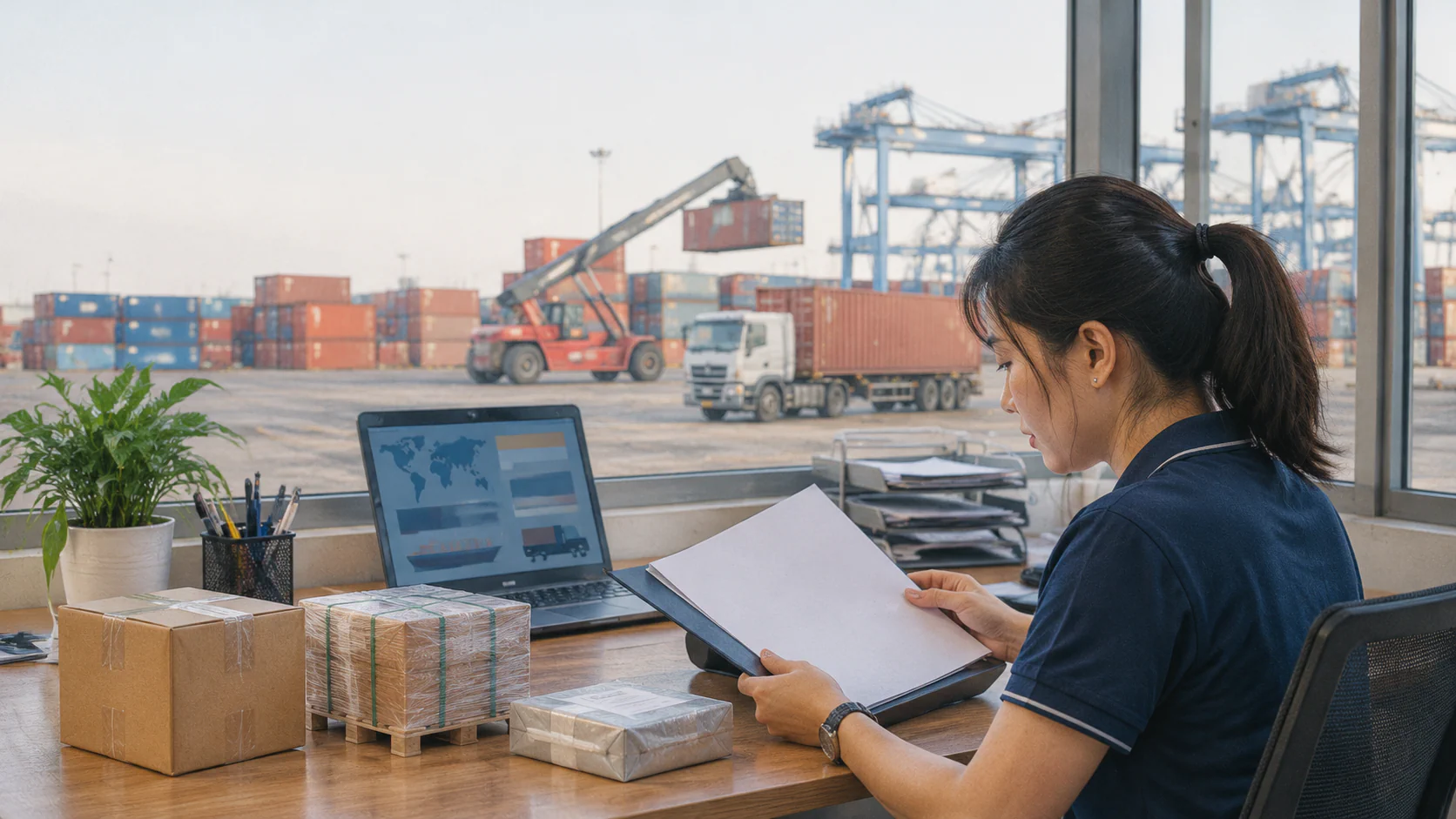
Develop a reference rate table for road freight, FCL/LCL sea freight, and air freight, categorized by weight, volume, package count, or container specifications.
Shipping rates to Thailand in 2026 should be understood as a budgeting reference rather than a fixed tariff applicable to every business. Actual freight charges vary according to pickup location, delivery destination, cargo type, chargeable weight, volume, shipping schedule, fuel surcharges, space availability, and customs clearance conditions. The figures below are market reference ranges for budgeting purposes, compiled from publicly available service rates as of November 2026. They are not official quotations from HNT Logistics.
For road freight, certain publicly advertised consolidated cargo services in Vietnam indicate rates of approximately VND 55,000–65,000/kg for standard shipments starting from 50 kg, depending on weight brackets and delivery conditions in Bangkok. This is a reference rate for a specific service and cannot automatically be applied to commercial cargo requiring complete declarations, specialized goods, or deliveries to distant provinces. For dedicated truck services, pricing must be calculated based on vehicle type, route, payload, and transit arrangements.
For sea freight, publicly available market data indicates reference rates of approximately USD 20–60/CBM for certain LCL routes and approximately USD 200–600 per 20-foot container for certain FCL routes. These rates primarily reflect the main freight charge or the scope of specific quotations and do not automatically include all origin charges in Vietnam, destination charges in Thailand, customs declarations, taxes, and domestic delivery. Businesses must verify the applicable conditions and validity period of each quotation.
For air freight, approximately USD 3–8/kg may be used as a preliminary budgeting range for certain types of standard cargo, depending on weight, flight route, and service conditions. Dangerous goods, refrigerated cargo, oversized shipments, and temperature-controlled products may have separate fee schedules and acceptance requirements. The lowest rate does not always represent the total delivery cost.
| Method | Unit of calculation | 2026 Reference Rates | Indicative transit time | Suitable Scope |
|---|---|---|---|---|
| Consolidated Road Freight | Chargeable kilograms | VND 55,000–65,000/kg for certain publicly advertised consolidated cargo services | Approximately 9–12 working days according to the reference service | Small commercial shipments, packages, and distribution cargo |
| Dedicated Road Freight | Per vehicle/trip | Quoted according to route, payload, and cross-border transport arrangements | Approximately 2–5 estimated operating days, excluding additional delays at border crossings | Palletized cargo, large shipments, and direct warehouse deliveries |
| LCL sea freight | CBM or RT | Approximately USD 20–60/CBM as a reference | Approximately 3–10 days of reference ocean transit, excluding handling at both ends | Shipments ranging from a few packages to approximately 10–15 CBM |
| FCL Sea Freight 20GP | Refrigerated Container | Approximately USD 200–600/container as a reference | Approximately 3–10 days of reference ocean transit | Large-volume commercial shipments |
| FCL Sea Freight 40GP/40HC | Refrigerated Container | Quoted according to route and equipment | Approximately 3–10 days of reference ocean transit | Bulky goods and large-volume shipments |
| Air | Chargeable kilograms | Approximately USD 3–8/kg as a reference | Approximately 1–3 days of air transportation, excluding customs clearance and domestic delivery | Urgent shipments, samples, components, and high-value goods |
The figures above are estimated budget ranges, not HNT Logistics' guaranteed transit times or freight rates. Actual transit times may vary due to vessel schedules, flight schedules, cargo consolidation time, specialized inspections, border conditions, and the importer's ability to receive the goods. For shipments with specific delivery schedules, businesses should request quotations based on the route, expected departure date, and actual service scope.
For standard containers, commonly encountered reference dimensions are as follows: a 20GP container has an internal length of approximately 5.9 m, width of 2.35 m, and height of 2.39 m; a 40GP container has an internal length of approximately 12.03 m, width of 2.35 m, and height of 2.39 m; and a 40HC container has an internal length of approximately 12.03 m, width of 2.35 m, and height of 2.69 m. Actual usable capacity and permissible payload depend on the manufacturer, specific equipment, and operating restrictions. The specifications of the assigned container must be confirmed before designing the loading plan.
Compare the advantages and disadvantages of each transportation method in terms of carrying capacity, estimated total transit time, specialized cargo handling capabilities, and suitability for different shipment sizes.
Transportation method selection should not be based solely on speed or unit price. Low-value but bulky cargo is generally more suitable for sea or road freight than air freight. Conversely, high-value production components requiring urgent replacement may cause substantial losses if a business chooses a cheaper but slower transportation method.
| Criteria | Cross-border Road Transport | Sea | Air |
|---|---|---|---|
| Carrying capacity | Flexible truck and container truck arrangements | Very large, suitable for FCL and LCL | Limited by payload and package dimensions |
| Duration | Suitable for regional transportation, subject to border conditions | Suitable for cargo that is not extremely urgent | Fastest main transportation leg |
| Unit cost | Moderate, depending on route and payload | Generally cost-effective for large and bulky cargo | Generally higher, calculated according to chargeable weight |
| Specialised Goods | Can accommodate refrigerated and oversized cargo subject to conditions | Suitable for many cargo types, subject to shipping line regulations | Limited for dangerous goods and cargo requiring special conditions |
| Delivery Scope | Can be arranged from warehouse to warehouse | Usually requires additional transportation at both ends | Usually requires airport handling and last-mile delivery |
| Suitable shipment size | Consolidated cargo, pallets, and full truckloads | LCL, FCL, and large-volume cargo | Small packages, urgent shipments, and high-value goods |
Road freight offers advantages for warehouse-to-warehouse connections but depends on cross-border transport procedures and border conditions. Sea freight provides substantial carrying capacity, and its main freight rate is generally competitive for bulky goods, but port charges and handling time must be considered. Air freight is suitable for time-sensitive requirements but can incur high charges if package dimensions are not optimized.
Businesses shipping regularly should develop a transportation selection matrix for each product category rather than relying on a single route. For example, frequently replenished inventory may be shipped by road; reserve raw materials may be transported by sea; and urgent replacement components may be shipped by air. This allocation helps balance inventory costs, delivery times, and supply chain stability.
Analyze the components of shipping rates to Thailand, including main freight charges, pickup fees, packaging, warehouse handling, documentation, customs declarations, destination delivery, and taxes or additional charges arising under applicable regulations.
International transportation costs generally consist of multiple components. The main freight charge covers the transportation of goods from the origin to the destination using the selected method. For sea freight, businesses should check THC, documentation fees, seal fees, LCL handling charges, container cleaning fees, fuel surcharges, and peak season surcharges where applicable. For road freight, it is necessary to determine whether the quoted rate includes transit fees, border charges, transshipment fees, and domestic transportation.
Pickup fees depend on the distance between the shipper's warehouse and the consolidation point, port, or airport. Packaging costs are determined by materials, reinforcement specifications, palletization, and preservation requirements. For fragile goods, machinery, or exports requiring wooden pallet fumigation, packaging costs may be higher than those for standard carton boxes.
Warehouse handling charges may apply when goods need weighing, measuring, counting, sorting, storage, consolidation, or unloading. For LCL cargo, businesses should clearly check the rate per CBM, weight, or chargeable unit, as well as minimum charges. For FCL cargo, they must determine lifting fees, terminal gate-in charges, empty container pickup and return fees, and free container storage periods.
Documentation and customs declaration fees depend on the export category, number of product lines, product policies, and documentation complexity. Import duties and VAT in Thailand are not automatically included in freight charges. Tax rates depend on the HS code, customs value, origin, ATIGA preferences, and current regulations. Businesses should separate logistics costs, taxes, and disbursement charges to avoid confusion when reconciling budgets.
To control costs, quotations should clearly specify each included and excluded charge, free storage and demurrage conditions, validity period, adjustment conditions when dimensions or weight change, and the payment responsibilities of the shipper and consignee. A quotation with a low total price but unclear responsibility boundaries may cause businesses to pay numerous additional charges at the destination.
Develop budget simulation scenarios for small shipments, consolidated commercial cargo, and full-container shipments, clearly identifying included costs, excluded costs, and quotation adjustment conditions.
To illustrate budget planning, consider the following three hypothetical scenarios. These are cost management models, not actual quotations or price commitments from HNT Logistics. The freight rates used for illustration are selected from market reference ranges, while actual costs must be confirmed according to the route, departure date, cargo characteristics, and service scope.
Scenario 1 – Small Shipment: A business sends 3 packages of product samples with a total actual weight of 30 kg. Each package measures 40 x 35 x 30 cm. Using a conversion factor of 5,000, the volumetric weight of each package is 8.4 kg, totaling 25.2 kg. The estimated chargeable weight is 30 kg if the carrier applies the rule of using whichever is greater between actual and volumetric weight. Assuming a rate of USD 6/kg, the main freight charge is USD 180. Pickup, packaging, documentation, and destination delivery fees must be added separately according to the actual quotation.
Scenario 2 – Consolidated Commercial Shipment: A business ships 5 CBM of consumer goods that are not classified as dangerous goods or products requiring specialized inspections. Using a reference rate of USD 35/CBM, the main sea freight charge is USD 175. However, the business must also budget for CFS fees, documentation, destination handling charges, customs clearance, import duties, and domestic delivery if Door-to-Door service is selected. If total additional charges at both ends and delivery amount to USD 300 under the hypothetical assumptions, the total logistics budget will be USD 475, excluding import duties and VAT.
Scenario 3 – Full Container Shipment: A business transports one 20GP container from Cat Lai to Laem Chabang. Assuming the main freight charge is USD 400/container, documentation and origin surcharges are USD 150, destination charges and port handling are USD 250, domestic transportation in Vietnam is USD 120, and domestic delivery in Thailand is USD 180, the simulated total logistics budget is USD 1,100, excluding customs procedures, import duties, VAT, insurance, and expenses outside the assumed scope.
| Situation | Scale | Assumed Main Freight | Assumed Additional Costs | Simulated Total |
|---|---|---|---|---|
| Sample Goods | 30 kg | USD 180 | Not determined | USD 180 + actual fees |
| LCL Consolidated Cargo | 5 CBM | USD 175 | USD 300 | USD 475 |
| Full container | 1 x 20GP | USD 400 | USD 700 | USD 1,100 |
In the scenarios above, the simulated costs exclude import duties, VAT in Thailand, specialized inspection fees, storage charges exceeding free time, licensing costs, quarantine fees, and expenses arising from documentation discrepancies. If the destination port, delivery address, package quantity, container type, or transportation schedule changes, the total budget must be recalculated.
Businesses should request quotations structured into three categories: costs in Vietnam, international transportation costs, and costs in Thailand. For comprehensive services, the freight forwarder should clearly identify disbursement charges and costs that cannot be determined in advance. This approach helps prevent situations where an initially low quotation results in a final total that exceeds the budget.
Analyze the factors causing cost differences between Bangkok and other locations, while evaluating cargo consolidation, package dimension optimization, and appropriate transportation schedule selection.
Bangkok benefits from an extensive network of warehouses, freight forwarding agents, distribution centers, and frequent domestic transportation services. Consequently, certain consolidated cargo services may offer more competitive rates than those serving locations far from major centers. However, this does not mean that every shipment to Bangkok is cheaper, as costs also depend on the exact delivery location, delivery time, vehicle accessibility, and loading and unloading conditions.
For Chiang Mai, Phuket, and provinces outside central areas, costs generally increase due to additional domestic transportation legs, delivery distances, and operating time. Cargo delivered to islands, resorts, warehouses in urban centers, or locations with vehicle weight restrictions may require smaller transfer vehicles. Businesses should provide the exact delivery address rather than only specifying a province or city.
Cargo consolidation can reduce unit costs when businesses have multiple small orders within the same period. However, additional warehouse storage costs, waiting time to accumulate sufficient volume, and the risk of delayed delivery must also be considered. If goods are seasonal or support production lines, waiting too long for consolidation may cause losses greater than the freight savings.
Optimizing package dimensions is one of the most effective ways to reduce costs. For air freight, reducing package volume can lower volumetric weight. For LCL shipments, efficient packaging helps reduce chargeable CBM. For FCL shipments, proper cargo arrangement maximizes container capacity while maintaining payload limits, weight distribution, and safe lashing requirements.
Businesses shipping regularly should establish fixed weekly or monthly transportation schedules. Early booking, standardized documentation, volume forecasting, and planned order consolidation improve freight cost control and minimize additional charges. This approach optimizes total logistics costs rather than focusing solely on negotiating lower rates for individual shipments.
Shipping Goods to Thailand: Managing Packaging Quality, Protecting Cargo, and Handling Losses
Establish classification criteria for fragility, moisture resistance, temperature sensitivity, leakage risks, and handling requirements to select packaging materials appropriate to each product's characteristics.
Packaging quality directly affects cargo loss rates during international transportation. Before shipping goods to Thailand, businesses should assess cargo characteristics such as fragility, moisture absorption, temperature sensitivity, leakage risks, deformation potential, and handling requirements. Packaging must be selected based on actual transportation conditions rather than appearance alone.
For fragile goods such as glassware, optical equipment, and ceramic products, impact-absorbing cushioning materials should be used, products should be secured inside cartons, and empty spaces should be minimized. For electronic goods, businesses should consider antistatic bags, moisture-resistant materials, and connector protection. Products with easily scratched surfaces should be wrapped individually before being placed in outer cartons.
Temperature-sensitive goods must have storage temperature limits confirmed by the manufacturer. For example, certain frozen foods generally need to be maintained at approximately -18°C or below, while some chilled products may require a temperature range of 2–8°C. These are examples of commonly encountered temperature ranges, not universal specifications for all products. Appropriate temperatures must be based on product characteristics, labels, technical documentation, and regulatory requirements.
For goods at risk of leakage, such as liquids, cosmetics, and industrial solutions, businesses must check cap tightness, pressure resistance, waterproof materials, and secondary packaging specifications. If products are classified as dangerous goods, the corresponding classification, packaging, and labeling regulations for the transportation method must be followed. Dangerous goods must never be transported as ordinary cargo simply because the quantity is small.
Analyze reinforcement options for cartons, palletization, vibration protection, waterproofing, and weight distribution to minimize deformation, impact, or damage during multi-stage transit.
Export cartons must have sufficient strength for the cargo weight and anticipated stacking layers. For heavy goods, businesses should select multi-layer cartons, reinforce corners and carton bottoms, and use cushioning materials to prevent movement inside. Oversized cartons allow goods to shift, while undersized cartons may create pressure on products and deform their packaging.
For commercial shipments containing multiple packages, palletization makes loading, unloading, and counting more convenient. Pallets must have dimensions compatible with forklifts, containers, and receiving warehouses. If wooden pallets are used in international trade, businesses must check the applicable treatment and IPPC marking requirements under ISPM 15. Pallets that do not meet the requirements may be subject to treatment or replacement at the destination.
Goods requiring vibration protection should be secured using appropriate cushioning materials, straps, and blocking systems. Machinery requires an assessment of its center of gravity, load-bearing points, and securing arrangements before container loading. Weight should not be concentrated in a single area, and heavy goods should not be stacked above fragile cargo.
For sea containers, businesses must pay attention to humidity and the risk of condensation inside the container. Moisture-sensitive goods should be wrapped with appropriate materials, desiccants should be used when necessary, and container conditions should be inspected before loading. Containers must be clean, dry, free from unusual odors, holes, or signs of water ingress. Refrigerated cargo requires inspection of the refrigeration unit, temperature settings, ventilation, and power supply according to operating requirements.
Establish pre-shipment condition records using photographs, package lists, weights, packaging conditions, and shipment identification information as evidence for verification if claims arise.
Condition records are important evidence for distinguishing damage that existed before handover from losses occurring during transportation. Before loading, businesses should photograph all products, product labels, serial numbers, packaging conditions, and areas vulnerable to damage. For high-value goods, video recordings of counting, packaging, and sealing processes are also recommended.
The package list should include identification codes, serial numbers, dimensions, weights, product quantities, and consignee information. When pallets are used, businesses should record pallet codes, the number of packages on each pallet, and the condition of straps and wrapping. For shipments containing multiple product codes, actual quantities must be reconciled with the packing list before handover to the transport operator.
For refrigerated cargo, businesses should record the temperature before loading, set temperature, transportation start time, and data from temperature recording devices where available. These records are particularly important when claims arise concerning the quality of food, pharmaceuticals, or other products requiring refrigerated storage.
Records should be stored under the shipment identification code and remain retrievable throughout the applicable claims, insurance, or internal audit period. When cargo loss occurs, businesses should retain packaging, photographs, delivery reports, and related documents, avoiding the unauthorized disposal of goods before receiving instructions from the insurer or transport operator.
Establish a mechanism for allocating responsibilities among cargo owners, transport operators, freight forwarders, and consignees; clarify insurance conditions, liability limits, and deadlines for reporting cargo loss.
The responsibilities of each party must be determined according to the transportation contract, bill of lading, delivery terms, and applicable legal regulations. Cargo owners are responsible for the accuracy of cargo information, the legality of exported goods, packaging standards within their scope of responsibility, and the provision of documentation. Carriers are responsible for cargo within the scope of their obligations as determined by the contract and relevant regulations.
A freight forwarder may act as a transportation agent or as a contractual carrier, depending on the specific agreement. These roles are not identical. Businesses should carefully review the freight forwarder's legal capacity, scope of responsibility, liability limitation clauses, and claims handling procedures. They should not automatically assume that a freight forwarder bears unlimited liability for every risk throughout the entire journey.
International cargo insurance is a financial risk mitigation tool, particularly for high-value goods, fragile products, refrigerated cargo, and shipments with long transit times. Insurance coverage may differ between broader and more limited coverage conditions, while exclusions may include inadequate packaging, natural deterioration, delivery delays, or the inherent characteristics of the goods. Businesses should carefully review insurance terms before purchasing coverage.
When cargo loss or damage is discovered, the consignee must immediately record the irregularities on the delivery report and notify the carrier and insurer within the prescribed period. There is no single notification deadline applicable to every type of contract and transportation method. Therefore, businesses must check the bill of lading terms, insurance contract, and applicable legal regulations. Late notification or insufficient evidence may reduce the likelihood of successful compensation.
HNT Logistics Supports Shipping to Thailand with Transportation Solutions and Transparent Cost Control
Receive information about cargo type, provisional HS code, package quantity, weight, dimensions, declared value, and delivery address in Thailand to assess whether the shipment can be accepted.
To develop a suitable shipping solution to Thailand, HNT Logistics needs to receive cargo information that is as complete as possible. Important details include product name, intended use, composition, provisional HS code, quantity, number of packages, net weight, gross weight, individual package dimensions, declared value, and delivery address in Thailand.
For specialized goods, customers should additionally provide catalogs, photographs, MSDS/SDS, quality certificates, storage temperature information, or relevant licenses where available. These details help assess carrier acceptance, packaging requirements, specialized inspection conditions, and potential risks at the destination.
Consignee information must also be verified before booking. Businesses should provide the legal name, address, telephone number, importing company information, and documentation contact person. If the consignee has limited experience with imports into Thailand, the availability of a customs broker or local support provider must be clarified before the goods are dispatched.
Recommend road, sea, or air freight options according to the budget, delivery deadline, and actual operating conditions.
HNT Logistics aims to select transportation methods based on total logistics costs and delivery requirements rather than comparing main freight charges alone. For small shipments, samples, or urgent replenishment cargo, air freight or express services may be suitable options. For consolidated cargo, palletized goods, and regular distribution requirements, businesses should compare cross-border road freight with LCL sea freight.
For large-volume shipments, FCL sea freight or dedicated road transport may help businesses achieve better control over schedules and loading arrangements. Selection should be based on the origin warehouse location, delivery address, shipment volume, cargo characteristics, customs conditions, and the receiving capacity of the importer in Thailand.
HNT can provide consultation multimodal transportation when a shipment requires multiple transportation legs to optimize time and costs. For example, cargo may be transported by truck from the warehouse to the port, continue by sea to Thailand, and then connect with a truck for delivery to the consignee's warehouse. Coordination requires a dedicated contact responsible for monitoring the entire journey and clearly defining the transfer of responsibility between parties.
Coordinate transportation, review import-export documentation, handle customs declarations within the agreed service scope, and connect with destination-side service providers to control delivery progress.
The implementation process begins with confirming shipment information and agreeing on the service scope. Once the transportation plan is approved, the parties review documents, confirm the cargo collection schedule, vehicle, consolidation point, and estimated departure time. For commercial goods, the invoice, packing list, and related documents must be completed before customs declaration.
HNT Logistics can coordinate international transportation, support import-export document reviews, and perform or connect customers with customs declaration services within the scope of the contract. Matters relating to import licenses, specialized inspections, taxes, and customs clearance in Thailand must be coordinated with the importer or qualified local partners.
During transportation, businesses should receive updates on key milestones, including cargo collection, warehouse arrival, export customs clearance, departure, arrival at the port or border checkpoint, completion of customs clearance, and final delivery. If customs inspections, vessel delays, or vehicle changes occur, notifications and response plans should be provided to minimize disruption to business operations.
For businesses with recurring transportation needs, standardized data and coordination procedures help shorten the processing time for subsequent shipments. HNT Logistics aims to control costs by individual components, clarify disbursement charges, service fees, and additional cost conditions rather than simply providing an unsupported lump-sum freight rate.
HNT Logistics accompanies customers shipping goods to Thailand with cross-border logistics solutions designed around the characteristics of each shipment, aiming to optimize total costs, ensure transparent charges, and protect cargo throughout the journey from Vietnam to the receiving destination in Thailand.
The effectiveness of a cross-border logistics solution should not be evaluated solely by the lowest price. Businesses need to consider total costs from the origin warehouse to the destination warehouse, total transit time, documentation capabilities, cargo safety, and incident response capabilities. A solution with a slightly higher freight charge but fewer transshipment stages, reduced storage time, and reliable delivery schedules may sometimes provide better economic value.
With experience in international transportation and freight forwarding services, HNT Logistics aims to accompany businesses from shipment assessment and transportation method selection to document verification and delivery coordination under an agreed service scope. Road, sea, and air freight solutions are evaluated according to cargo characteristics, budget, and actual operating conditions.
For businesses shipping commercial goods, samples, raw materials, equipment, or distribution products to Thailand, exchanging information before dispatch is an important step in minimizing additional costs. HNT Logistics recommends that customers prepare the product name, quantity, weight, dimensions, declared value, and delivery address so that the consulting team can develop an appropriate transportation solution.
Contact HNT Logistics for consultation and shipping quotations to Thailand in 2026:
Consultation and quick quotation hotline: 096 309 78 19
Email: marketing@hntshipping.com
Business address provided: 8A Hoang Minh Giam Street, Ho Chi Minh City, Vietnam.
Website: https://hntshipping.com.vn
HNT Logistics aims to provide cross-border transportation solutions tailored to each shipment, with transparent costs and cargo safety controls throughout the entire journey from Vietnam to the receiving destination in Thailand. Contact HNT Logistics before dispatching your goods to receive an assessment of transportation options, a review of documentation requirements, and a suitable budget plan aligned with your business objectives.
Professional reference sources: HNT Logistics – service information and contact details at hntshipping.com.vn; International Trade Administration – Thailand Import Requirements and Documentation (updated April 9, 2026); Thai Food and Drug Administration – Import Inspection Service; Singapore Customs – Electronic Exchange of Form D via ASEAN Single Window (updated July 29, 2026); ASEAN-Wide Self-Certification Guidebook; international freight rate data platforms Globy and Cogoport; and publicly available consolidated cargo transportation service data in Vietnam. Freight rates and transit times in this article are for reference purposes only and must be reconfirmed for each shipment and service booking date.