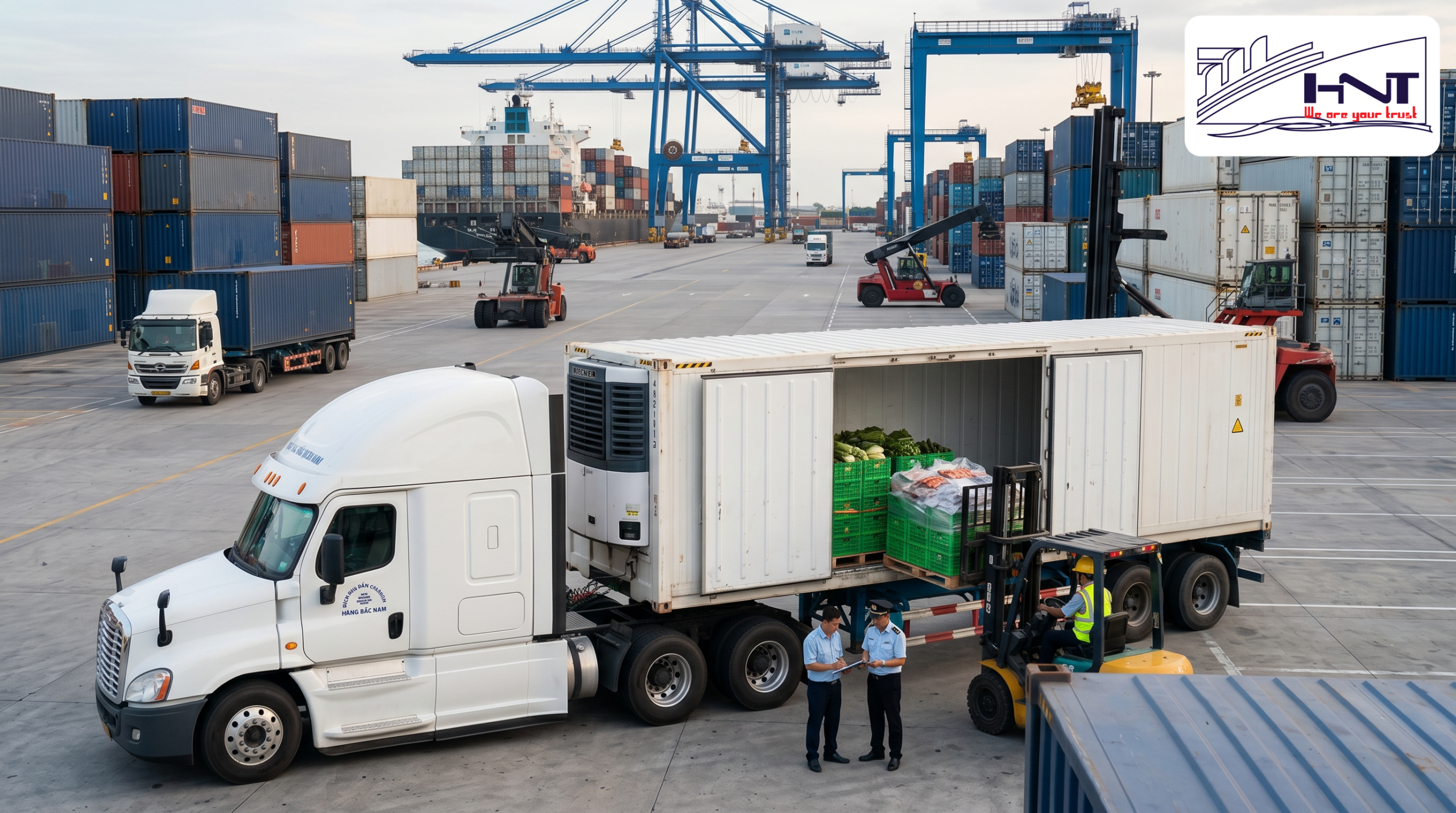
Freight transport from Hai Phong to HCM often gets stuck at the transfer point from the Northern warehouse to the Southern receiving warehouse: lack of cold space, mismatched consolidation schedules, and incurred surcharges. In 2026, Vietnam's seafood exports estimated to reach 11.2–11.3 billion USD; global seaborne trade only increases by 0,5%, so domestic plans must be tighter to maintain the delivery pace. The article helps choose vehicles, lock in freight rates, and control risks.
Choosing the appropriate Hai Phong to HCM freight transport method for each type of cargo and cost objective
The decision on the method must start with the delivery deadline, cargo characteristics, and final delivery point. Hai Phong to HCM freight transport by truck is suitable when direct delivery is needed. Domestic containers are suitable for large shipments, stable schedules, and have clear lifting points. You should not choose solely because the unit price per trip is low.
When to use interprovincial trucks instead of containers or multimodal combinations
Interprovincial cargo trucks are suitable for shipments below container capacity, multiple delivery points, or cargo requiring urgent delivery. Containers are more efficient when a single consignee takes the entire shipment. Combining road and domestic sea routes is only worth considering when the sailing schedule, empty container pick-up time, and yard drop-off time have all been confirmed.
North-South refrigerated freight transport solutions for food, agricultural products, and pharmaceuticals
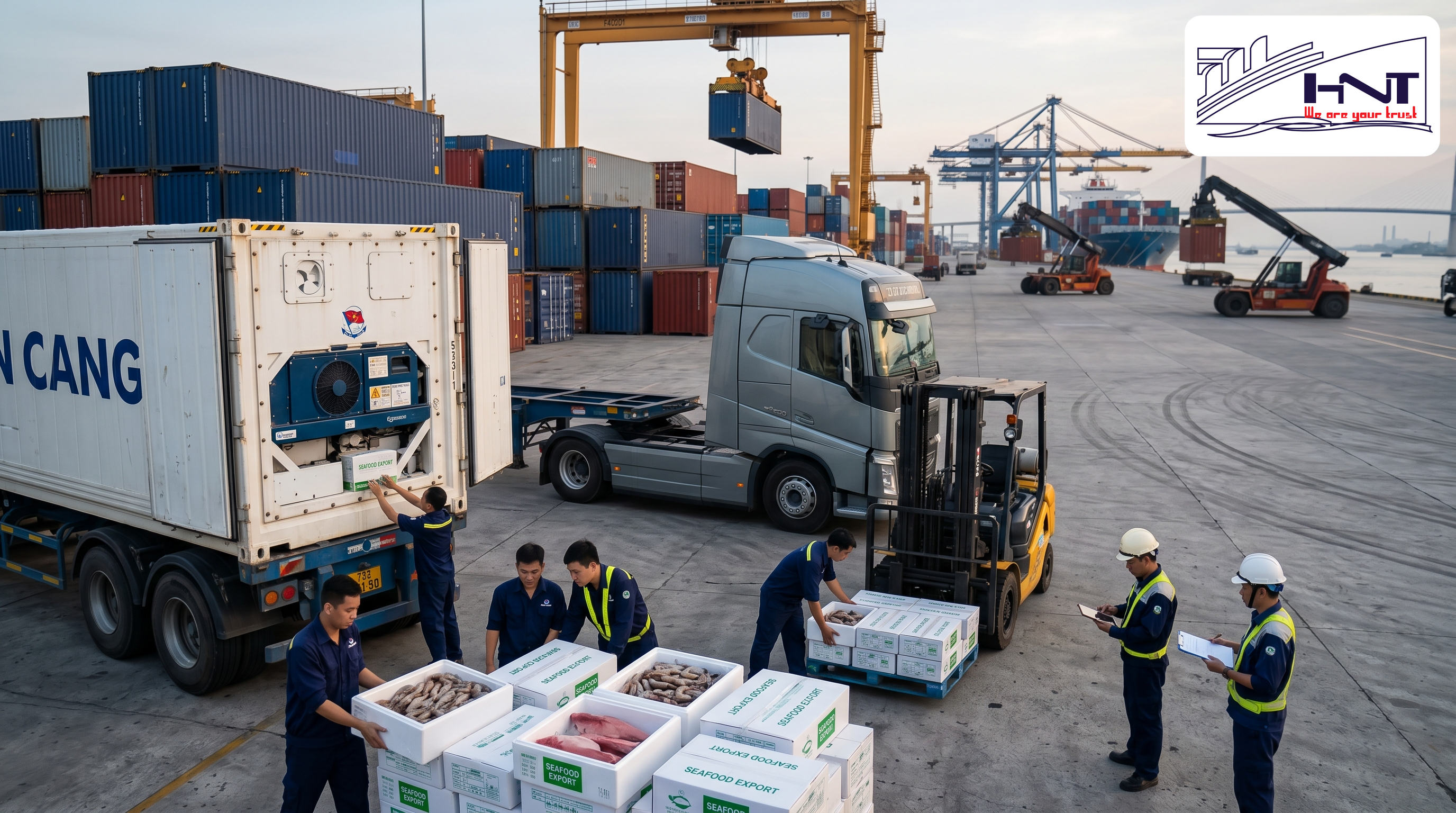
North-South refrigerated freight transport requires establishing the temperature, fluctuation limits, door opening times, and backup power plans before loading. Frozen goods need more than just refrigerated trucks. The cargo also needs pre-cooling, temperature recording sensors, and sealed handover records.
How to choose consolidated or full-truckload schedules to optimize North-South freight rates
Consolidation is reasonable for standard packages, flexible delivery deadlines, and items not easily susceptible to odors. Full-truckload is suitable for food, high-value goods, or shipments with temperature requirements. HNT LOGISTICS recommends locking in the pick-up time, delivery time, and truck waiting limits directly in the quote rather than just comparing prices per kilogram.
Cargo characteristics that directly affect time and freight rates
- The actual weight and converted volume determine the truck type, number of stacking positions, and operating costs.
- Oversized package dimensions reduce the possibility of consolidation and may require a separate lifting plan.
- Storage temperature, odor sensitivity, and leakage risks determine the required level of compartment separation.
- The number of pick-up points, delivery points, and load-ban timeframes directly affect the number of truck operating days.
- Cargo value and delivery conditions determine insurance needs and tallying levels.
| Method | Suitable | Strengths | Risks to lock in |
|---|---|---|---|
| Box truck | Small shipment, multiple delivery points | Flexible pick-up time | Waiting for loading and unloading |
| Dry container | Large shipment, single delivery point | Stable stacking unit | Lifting fee |
| Refrigerated truck | Temperature-controlled cargo | Fast direct delivery | Frequent door opening |
| Refrigerated container | Export shipments connecting to ports | Maintain cold chain | Yard electricity, empty return time |
Example: Minh Tan Fruit and Vegetable Company in Hai Duong sent 12 tons of pre-cooled lychees to Binh Duong. The full-truck refrigerated transport was delivered in 44 hours, with temperature maintained at 2–4°C. Another batch from An Phu Mechanical Factory in Hai Phong used a dry container for 21 tons of spare parts, reducing loading and unloading three times compared to consolidated shipping.
Conclusion: Compare total costs per complete batch, including waiting time and risk of damage, not just the truck freight rate.
How is North-South freight calculated to avoid unexpected additional costs
North-South freight rates usually include the main leg price, pick-up/delivery fees, and conditional services. For Hai Phong to HCM transport, the calculation basis must be clearly stated: kilogram, cubic meter, truck trip, or container. When prices change due to fuel, restricted hours, or peak seasons, the validity period of the quotation must be specified.
Factors determining freight rates based on weight, size, and distance
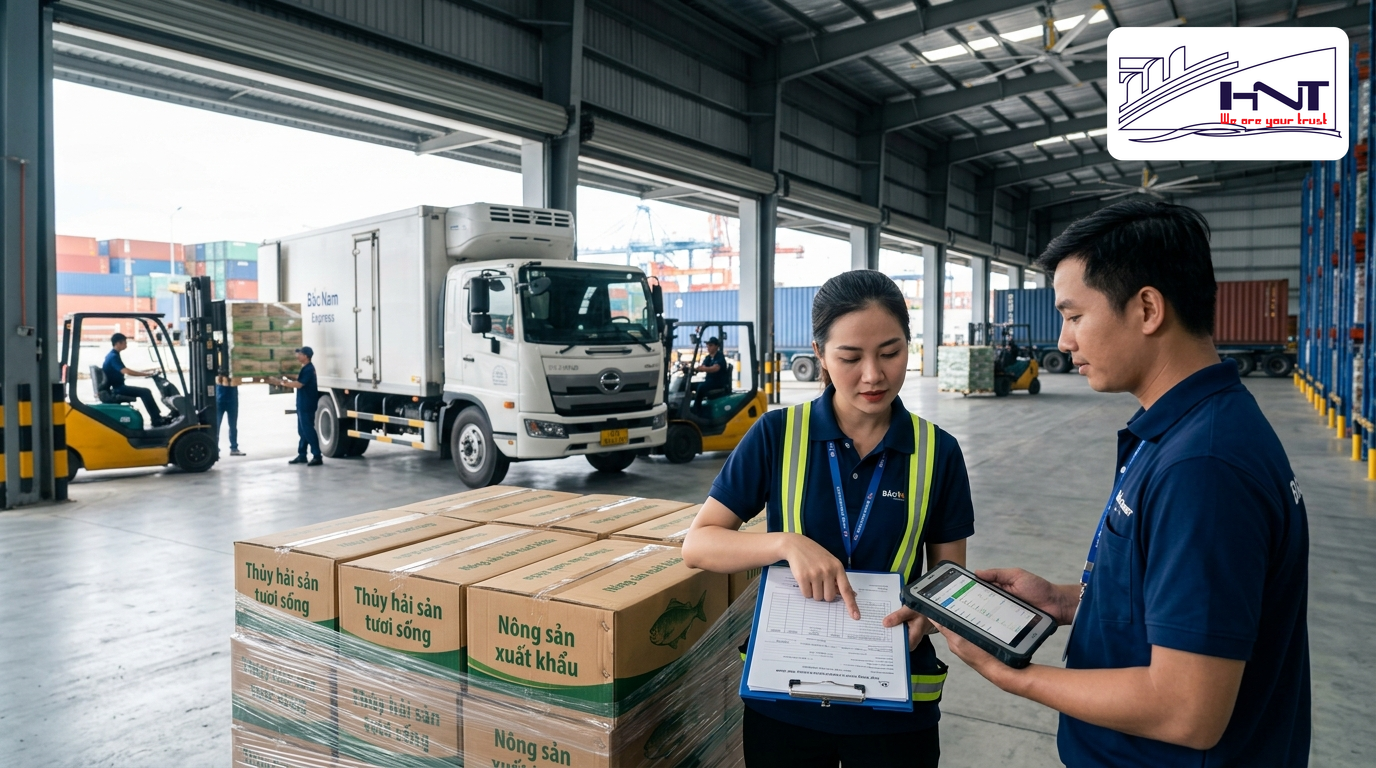
Transport units choose the higher rate between actual weight and converted volume. Light but bulky shipments occupy more loading space. Warehouses far from the main axis also increase vehicle dispatch costs. For containers, drayage fees, handling, and waiting time are often more important than a few percentage points of the base freight.
Cost differences between regular cargo, bulky cargo, and temperature-controlled cargo
Refrigerated cargo pays extra for the cooling unit, fuel, compartment cleaning, and thermal monitoring. Bulky cargo may require flatbed trucks, lashing, or special transit permits. Regular cargo needs to be packed to withstand vibration, but liability limits must still be clearly defined when delivering through multiple points.
Surcharges that customers often overlook when getting a quote
Commonly overlooked items include loading/unloading waiting, overtime delivery, lifting/handling, transshipment, yard storage, and electricity fees for refrigerated containers. In export, container storage fees (Demurrage/Detention) differ from domestic freight. According to UNCTAD, container freight has fluctuated sharply when maritime routes are interrupted, so quotations must clearly state the adjustment mechanism.
How to compare quotes between multiple transport units without being misled by low prices
- Set the same cargo parameters, pick-up time, delivery time, and loading/unloading conditions for all units providing quotes.
- Request to separate main leg freight, surcharges, free waiting time, and charges after the free period.
- Compare vehicle types, payload capacity, temperature recording equipment, and number of delivery points instead of just looking at the total amount.
- Check compensation terms, liability exclusions, and the process for establishing reports in case of damage.
- Evaluate vehicle availability during peak seasons, do not use low prices from normal days to make decisions.
| Item | Common calculation method | Needs confirmation | Risk of occurrence |
|---|---|---|---|
| Main freight | Trip or volume | Vehicle type | Payload changes |
| Vehicle waiting | By hour | Free hours | Slow loading/unloading |
| Handling | Per occurrence | Who pays | Missing equipment |
| Cold chain | Per day or trip | Target temperature | Frequent door openings |
Example: Song Hong Furniture Company received a price lower than 8% but excluding truck waiting and after-hours delivery in District 7. A complete quote helps the company avoid an extra 6.5 million VND. Nam Viet Pharmaceutical Company chose a refrigerated truck with continuous temperature recording, a price higher than 5% but reducing the risk of returned goods.
Conclusion: The best quote must be the quote with the clearest scope of work and the lowest total estimated cost.
Process of transporting goods from North to South from receiving goods to door-to-door delivery
The process of transporting goods from North to South must turn sales information into an executable transport order. Address, receiving time, number of packages, weight, temperature, and signer must be locked before dispatching the truck. For export connecting shipments, internal documents need to match the invoice, packing list, and Bill of Lading.
Checklist to prepare before handing over goods to the transport unit
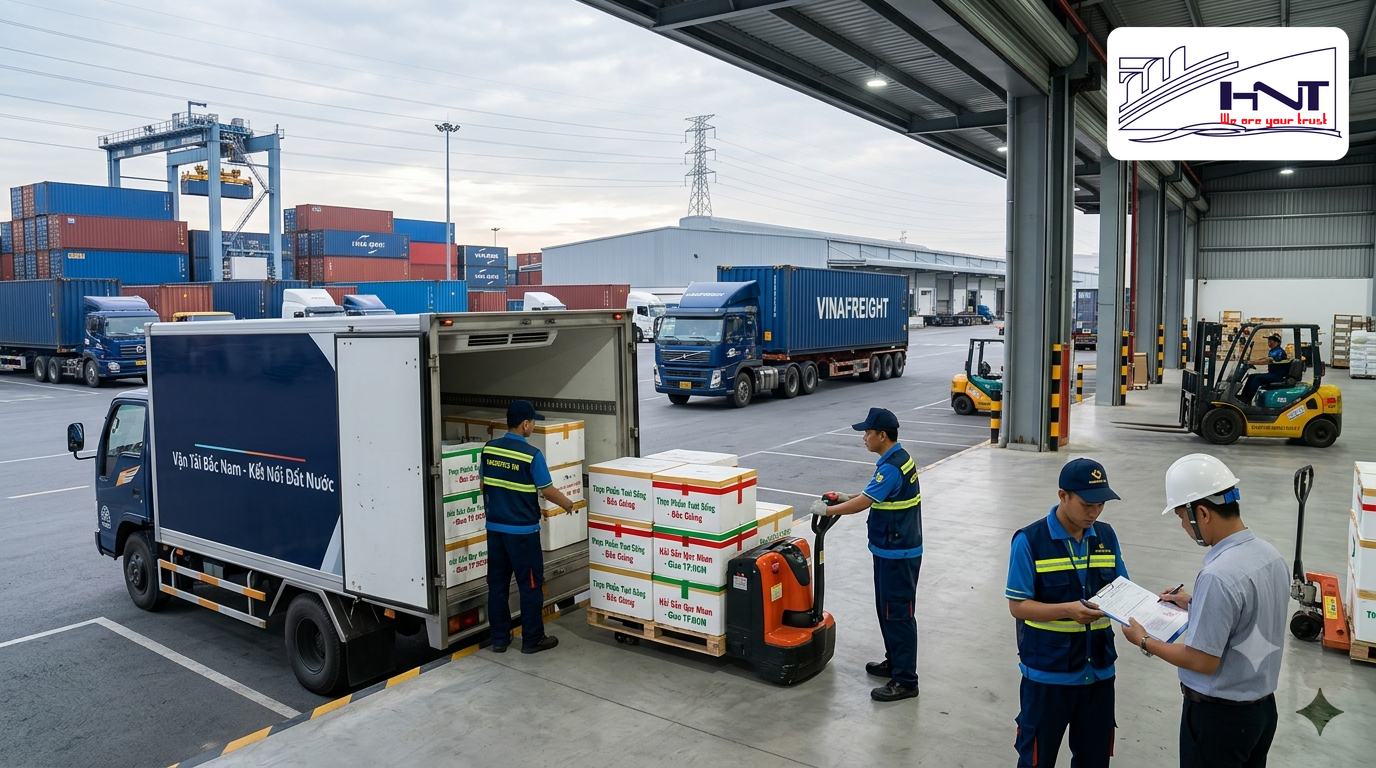
The sender needs to cross-check the number of packages, item codes, address, and receiving phone number. Cold goods must complete pre-cooling before the truck arrives. Export goods need to separate the document set from the physical goods, avoiding documents going on the wrong trip or missing the necessary confirmation copy.
Steps of tallying, packaging, and confirming information at the receiving point
Tally by package, take photos of the packaging condition, and record signs of denting or wetness before loading. Labels should show the receiver, order code, and stacking direction. For pallets, check the stretch wrap, corner protectors, and clearance for cold air circulation.
Tracking the journey and handling arising situations during transit
Effective tracking is not calling and asking continuously. Follow the milestones of the truck receiving goods, leaving the warehouse, arriving at the transit point, and completing delivery. Incidents must be classified immediately: delayed schedule, wrong number of packages, temperature deviation, or accident. Each situation needs a decision-maker and a response deadline.
Common errors that cause late delivery right from the sending stage
Common errors are declaring the wrong dimensions, not finishing packaging when the truck arrives, the receiver not being at the warehouse, and the address missing the gate or industrial park code. For cold goods, putting warm goods into the truck increases the cooling load. Based on HNT LOGISTICS' experience, a unified delivery receipt helps reduce disputes better than any verbal commitment.
Acceptance and reconciliation process when goods arrive at the final delivery point
- Cross-check the license plate, order code, and seal number before opening the cargo compartment door.
- Tally the number of packages according to the delivery receipt, confirming each discrepancy right at the time of delivery.
- Check the packaging, temperature, and scene photos before the receiver signs for confirmation.
- Make a separate report for missing, torn, wet goods, or those with signs of temperature change.
- Reconcile freight and surcharges after having sufficient delivery documents with valid signatures.
| Milestone | Documents or data | Person in charge | Control point |
|---|---|---|---|
| Before receiving | Vehicle dispatch slip | Sender | Number of packages, temperature |
| At the warehouse | Packing photos | Warehouse and driver | Stamp, seal |
| Transshipment | Update journey milestones | Coordinate | Delayed schedule |
| Final delivery | Delivery minutes | Recipient | Missing, damaged |
Example: Gia Phuc Cashew Company in Binh Phuoc shipped 480 cartons to Hai Phong for vessel export. Counting via order code reduced discrepancies from 11 to 0 items. Moc Chau Vegetable Cooperative sent fresh vegetables to Ho Chi Minh City, using seal photos and temperature logs to handle the receiver's feedback about damp packaging immediately.
Conclusion: Do not dispatch vehicles before completing a transport order form that can be verified with data.
Commitment to North-South delivery time and how to control delay risks
Delivery time commitments should be recorded by delivery window, not as an absolute figure. Shipping goods from Hai Phong to HCMC by regular truck usually takes about 2–4 days depending on pickup and delivery points. Container or multimodal transport needs to add time for loading/unloading, lifting/lowering, and waiting for schedules.
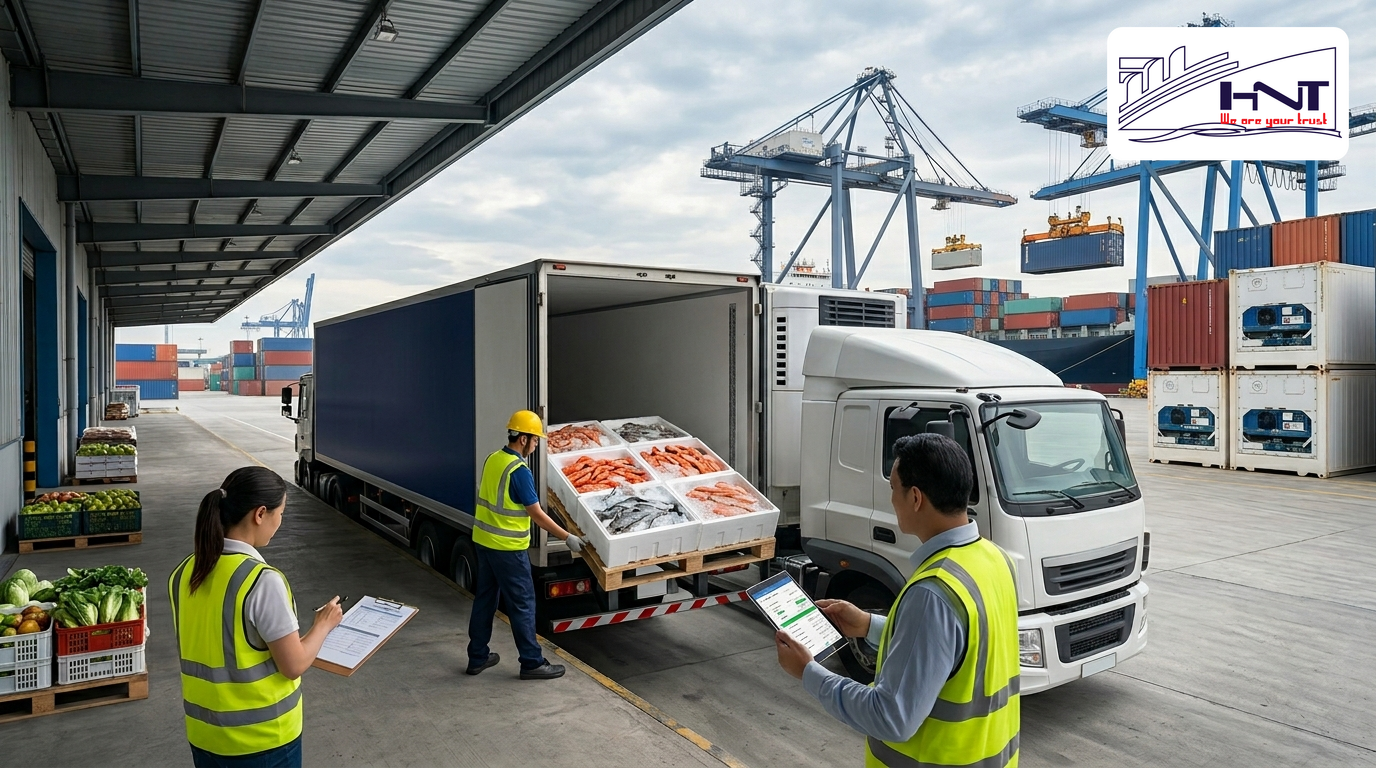
Actual transport time by route and vehicle type
Full truckload (FTL) going direct is usually fastest. Less-than-truckload (LTL) needs time for consolidation and deconsolidation. Refrigerated containers have additional time for plugging in, machine checks, and yard scheduling. Time must be calculated from when the goods are ready for pickup, not from when the seller issues the order.
Why can delivery times differ significantly on the same route?
Differences usually come from pickup schedules, number of delivery points, load restrictions, traffic congestion, and warehouse reception capacity. Agricultural seasons also cause shortages of refrigerated vehicles. Ask the transport unit to publish milestone updates and contingency plans for vehicle replacement when vehicles encounter incidents.
Stages most prone to delays in the North-South journey
Three points prone to delays are waiting for loading at the starting warehouse, waiting for transit, and waiting for unloading at the final warehouse. Export goods also face risks if documents do not match or if the vessel changes schedules. The Ministry of Industry and Trade recorded that Vietnam's seafood exports in the first nine months of 2026 reached about 8 billion USD, making seasonal cold chain capacity needs noteworthy.
Contingency measures for shipments that need to be delivered on time or seasonally
- Book vehicles or containers early by the week, especially before peak fruit and seafood seasons.
- Prepare a backup vehicle plan with equivalent load, temperature, and hygiene standards.
- Establish buffer time for the consolidation, temperature check, and delivery to industrial zones.
- Designate a decision-making point of contact when changes to addresses, times, or recipients arise.
- Use early warnings according to journey milestones to intervene before a delay becomes a violation.
| Method | Expected duration | Easy-to-delay points | Recommended buffer |
|---|---|---|---|
| Full truckload | 2–3 days | Starting warehouse, road transport | 12 hours |
| Consolidated shipment | 3–5 days | Consolidation and deconsolidation | 24 hours |
| Dry container | 4–6 days | Yard and vessel schedule | 36 hours |
| Refrigerated container | 4–6 days | Yard power, refrigeration unit | 36 hours |
Example: Ca Mau Food Company needs to ship frozen shrimp to Hai Phong before the vessel schedule. A 36-hour buffer and a backup refrigerated truck helped the 18-ton shipment arrive 14 hours early. Binh Duong Garment Company delivers materials to the North via consolidated trucks, but switched to full truckload when the customer requested fixed delivery on Monday mornings.
Conclusion: Do not commit to a time before clearly defining the 'ready to ship' milestone, warehouse receiving capacity, and contingency plans.
Experience in reducing shipping costs while ensuring cargo safety
Sustainable cost reduction comes from shipment design, not from squeezing the carrier's price. Hai Phong-HCMC shipping is efficient when package dimensions, departure schedules, and vehicle capacity are optimized simultaneously. Low prices but failed deliveries will create return costs, shortages, and lost export orders.
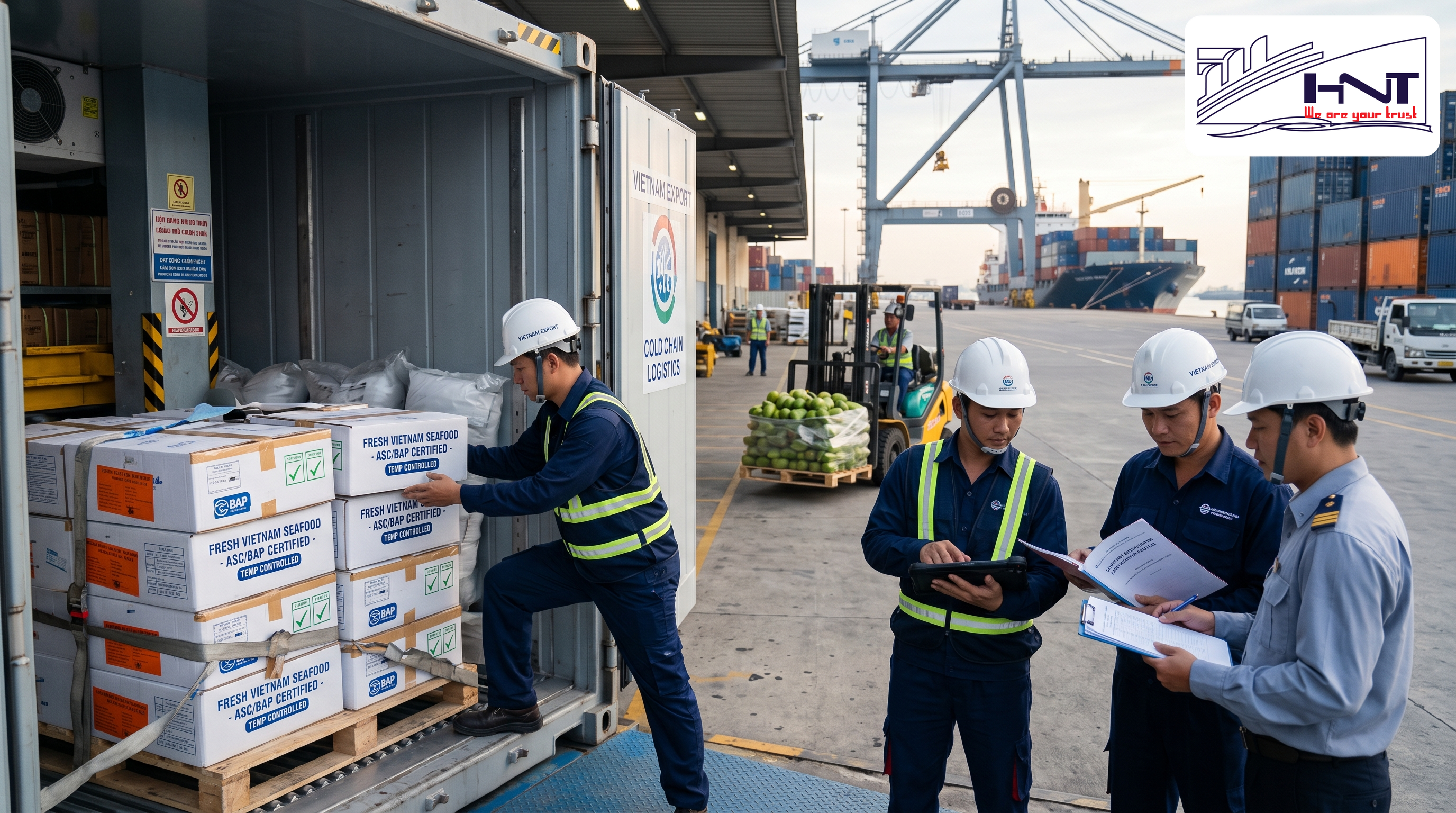
Optimize packaging dimensions to reduce volumetric costs
Standardize carton sizes according to pallets and internal truck dimensions. Large empty spaces increase chargeable volume. For refrigerated goods, do not pack so tightly that it blocks airflow. A good design must increase the number of packages while protecting ventilation and safe loading/unloading capabilities.
Consolidate orders and optimize departure schedules for better rates
Consolidation is effective when orders are in the same direction, have the same temperature requirements, and the same delivery deadlines. Do not consolidate strong-smelling food with goods that easily absorb odors. A fixed weekly departure schedule helps carriers arrange return trips and offer more stable quotes.
Types of goods that should have shipping insurance from the start
High-value goods, fragile equipment, pharmaceuticals, frozen seafood, and shipments with multiple transshipment points should consider insurance. Insurance does not replace packing control. It only transfers a portion of the financial loss when risks are proven by reports and documentation.
How to limit loss and damage during loading and transshipment
- Use a unified batch code on warehouse slips, package labels, and delivery receipts to avoid mix-ups.
- Pack according to stacking limits, with clear orientation instructions and designated lifting points.
- Take photos of all four sides of the pallet before handover to determine the original condition in case of disputes.
- Seal the truck or container and record the seal number on the delivery documents for cross-verification.
- Train warehouse staff on refrigerated goods, especially regarding door-opening times and the sequence of loading into the compartment.
| Measures | Additional cost | Main benefits | Suitable |
|---|---|---|---|
| Carton standardization | Low | Volume reduction | Boxed goods |
| Pallets and stretch wrap | Standard-compliant, inspected | Reduce dents and breakage | Stacked goods |
| Temperature sensors | Standard-compliant, inspected | Having temperature evidence | Refrigerated |
| Insurance | By value | Reduce financial loss | High-value goods |
Example: Hung Thinh Fruit Company in Tien Giang changed to standardized carton sizes, increasing the number of packages per refrigerated truck by 9%. Dong Nam Medical Equipment Company in Dong Nai purchased insurance for testing machines, which allowed the compensation file to be processed quickly when a package got wet due to an incident at a transit warehouse.
Conclusion: Prioritize small, measurable preventive costs before cutting back on risk control measures.
The trend of optimizing North-South supply chains using operational data instead of just choosing low-cost providers
The North-South supply chain should be managed using real-time data, errors, and end-to-end costs. Haiphong-HCM freight transport is only truly optimal when businesses know which trips are delayed, which reasons recur, and which customers increase waiting time. Cheap prices do not reflect these costs.
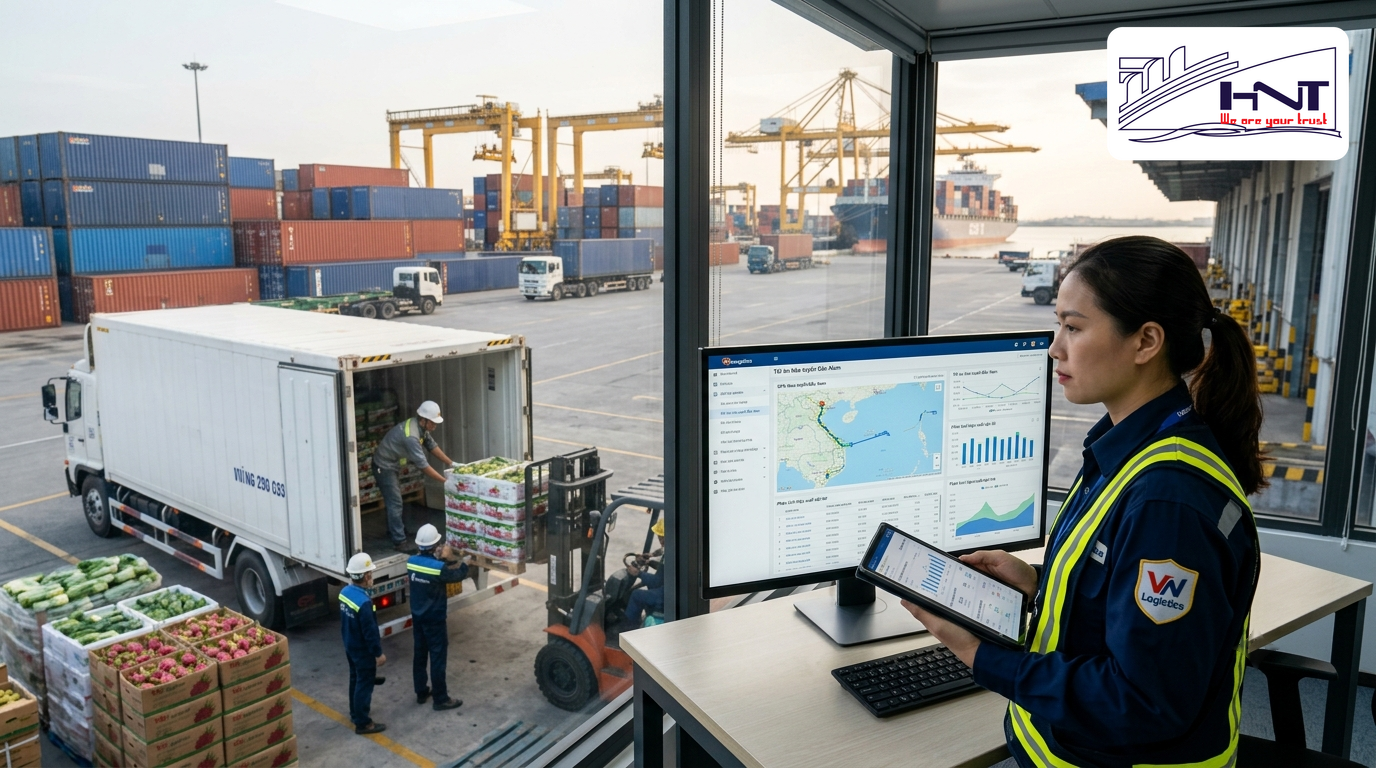
Why businesses lose more on hidden costs than visible freight rates
Hidden costs include safety stock, labor waiting for unloading, degradation of cold goods quality, and time spent handling complaints. A single delayed trip can cause a missed export container loading schedule. According to experts at HNT LOGISTICS, batch reporting needs to link transport costs with on-time delivery rates and damage rates.
Metrics to track when hiring long-term inter-provincial freight trucks
Businesses should track on-time delivery rates, waiting times, temperature deviations, damages, cost per unit, and the number of vehicle changes. These metrics create a basis for transparent negotiation. They also help identify when to switch from Less-than-Truckload (LTL) to Full-Truckload (FTL) contracts.
Applying logistics data to forecast seasonal transport demand
Weekly historical data shows which seasons face vehicle shortages, which points have long waiting times, and which items require additional cold storage capacity. Forecasting does not need to be overly complex. Simply combining confirmed orders, seasonality, holiday schedules, and existing warehouse capacity is enough to book space earlier.
Criteria for evaluating transport partners for inter-regional business expansion plans
- The ability to provide vehicles with the correct load and temperature during peak seasons has been proven by data.
- Incident notification processes have timelines, responsible personnel, and specific backup plans.
- Transparent quotations regarding surcharges, waiting times, and liability limits for each type of cargo.
- Capacity to record documents, images, and temperatures to support reconciliation and complaint handling.
- Experience in coordinating domestic transport with export files, including export customs brokerage services.
| Indicator | Measurement method | Internal goals | Action when deviating |
|---|---|---|---|
| On-time delivery | Orders within window | Over 95% | Route review |
| Waiting for warehouse | Hours per trip | Under 2 hours | Change receipt schedule |
| Temperature deviation | Times exceeding threshold | 0 times | Device inspection |
| Damaged | Defective units per thousand | Under 2 | Re-packing |
Example: Dong Thap Export Company analyzed 90 days of data, discovering that Friday evening deliveries caused an average warehouse wait of 5 hours. Shifting the schedule to Friday morning reduced surcharge costs by 18%. Ben Tre Seafood Company used temperature data to change rest stops, reducing the number of times cold truck doors were opened from four to two.
Conclusion: Choose partners based on data capability, operational discipline, and resilience during incidents, not based on a freight rate detached from context.
Conclusion: Effective Haiphong-HCM freight transport is a balancing act between time, temperature, cost, and delivery evidence. Shippers need to shift from buying truck trips to managing a decision chain supported by data.
- Choose full truckload when delivery deadlines or temperature integrity are more important than consolidated shipping costs.
- Lock in all surcharges, waiting times, and service levels before confirming North-South freight rates.
- Pre-cooling, temperature logging, and sealing are the three minimum control layers for frozen goods.
- Do not dispatch vehicles when package count information, pickup time, and receiving warehouse conditions have not been verified.
- Allocate actual buffer time for peak seasons, container yards, and warehouse locations with high wait potential.
- Use on-time delivery, damage, and waiting cost metrics to select long-term partners.
HNT LOGISTICS is a reputable freight forwarding and logistics partner for businesses exporting agricultural products, seafood, and fresh fruit. Build your Hai Phong to HCM shipping schedule based on the actual needs of each batch to expand your market without compromising cost and quality control.