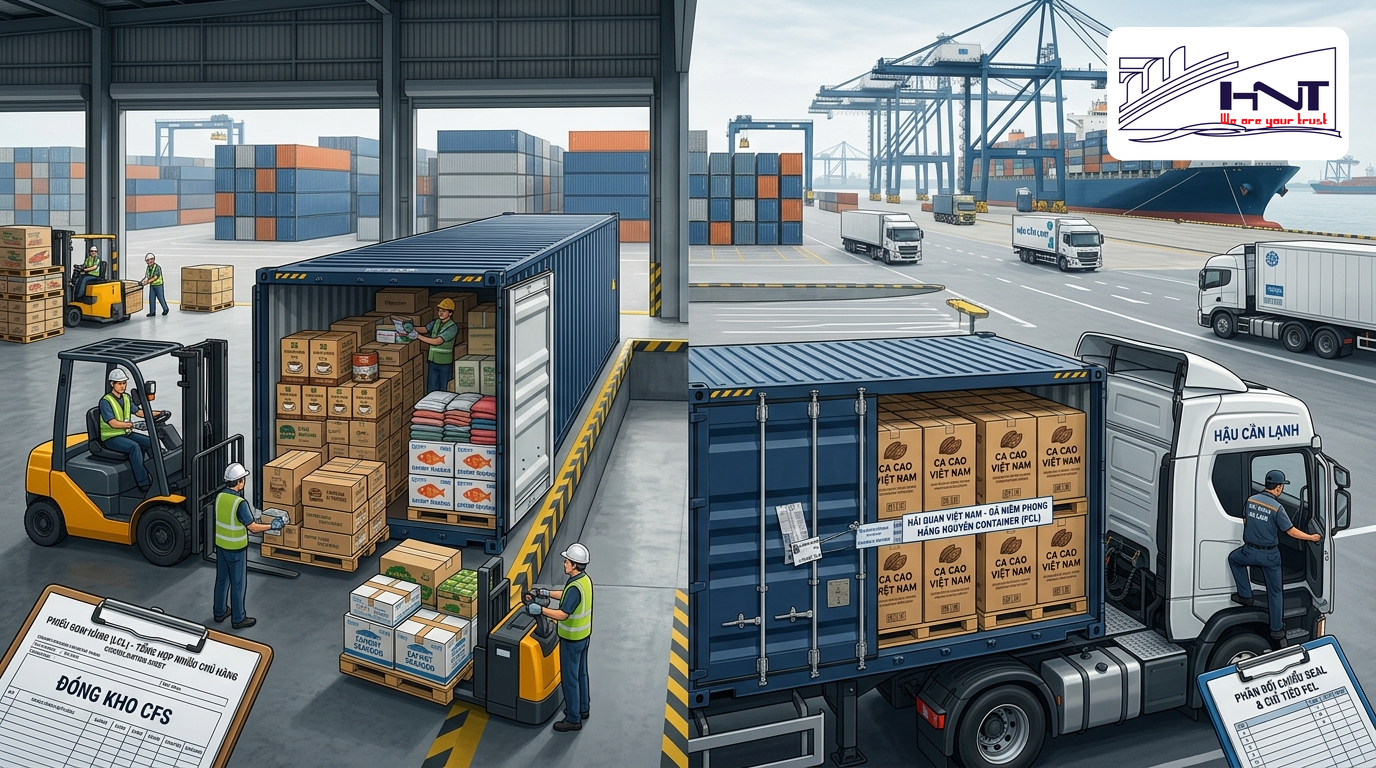
International sea freight shipping is the key choice for many Vietnamese export enterprises, but choosing between FCL or LCL remains a puzzle that directly affects costs and delivery schedules.
In 2026, Vietnam's seafood export turnover exceeded 11.3 billion USD. Many businesses continue to expand their markets to China, the EU, and North America, leading to an increasing demand for maritime transport optimization. According to industry reports, international container freight rates remain volatile due to geopolitical factors and global fleet capacity.
VnEconomy
+2
Vietnam Briefing
+2
This article helps businesses clearly understand the shipping process, the differences between FCL and LCL, and provides criteria for selecting the appropriate option for each type of cargo.
International sea freight shipping and the role of FCL and LCL
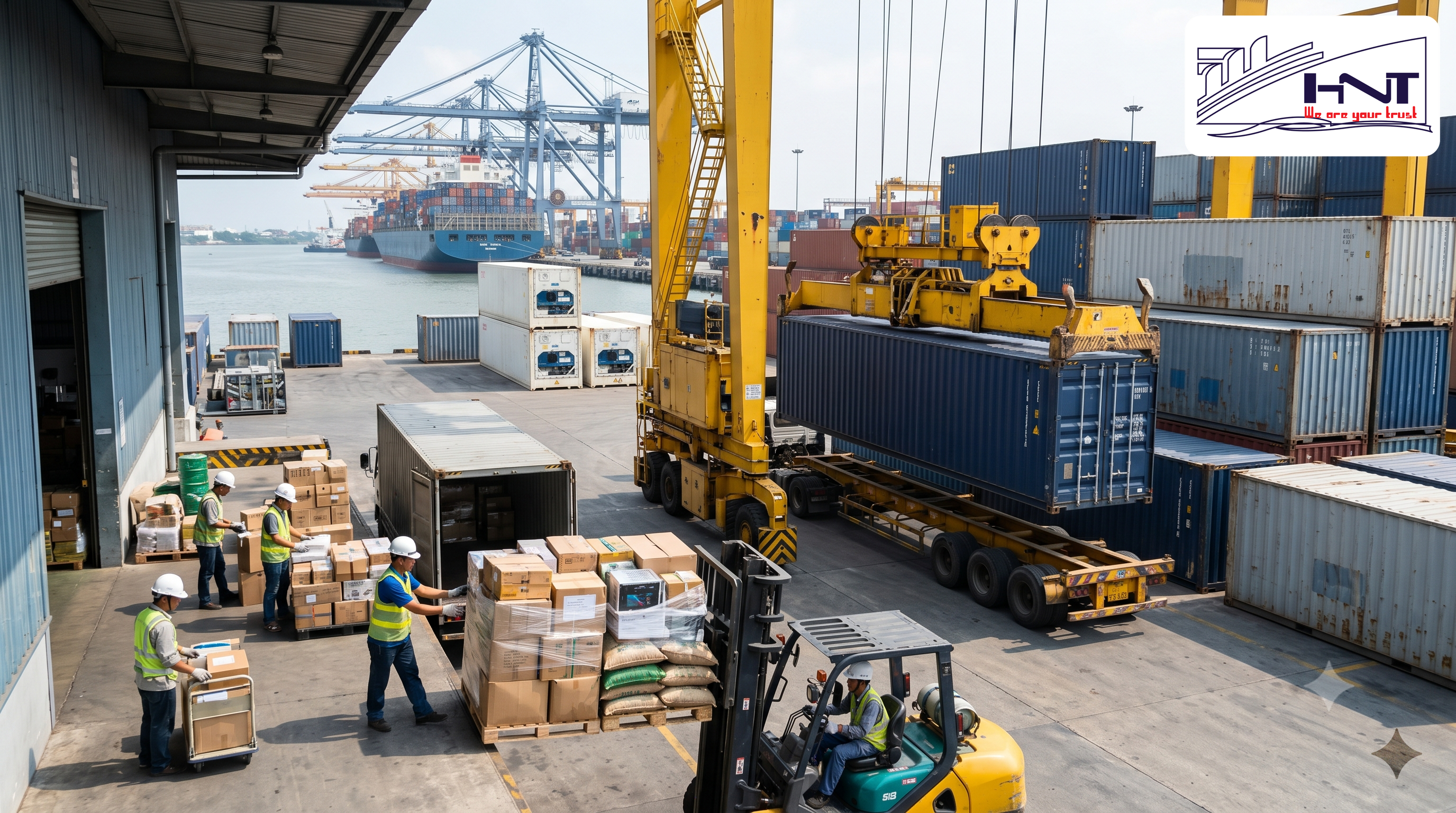
Current export context
Exports of agricultural products, seafood, and industrial goods continue to grow. This requires businesses to choose the appropriate shipping model to control logistics costs and delivery times.
According to VASEP data, seafood exports in 2026 reached over 11.3 billion USD. CPTPP markets and China continue to record high growth rates.
VnEconomy
+1
What is FCL?
FCL (Full Container Load) is a form of chartering an entire container. Businesses use the entire container space for their shipment.
FCL is suitable for goods with large volumes, high security requirements, or requiring strict temperature control.
What is LCL?
LCL (Less than Container Load) is a form of consolidation. Multiple shippers share a container together.
This option is suitable for small orders that need to optimize costs when not having enough load for a full container.
- Reduce initial investment costs for small shipments.
- Suitable for new export enterprises.
- Easy access to many international transport routes.
- No need to wait to consolidate enough goods for a full container.
- Increase flexibility in delivery planning.
| Criteria | FCL | LCL |
|---|---|---|
| Capacity | Full container | Consolidated shipping |
| Cost | Optimal when there is a lot of cargo | Optimal when there is little cargo |
| Rủi ro | Low | Higher |
| Duration | Faster | Need time to consolidate cargo |
International sea freight shipping process
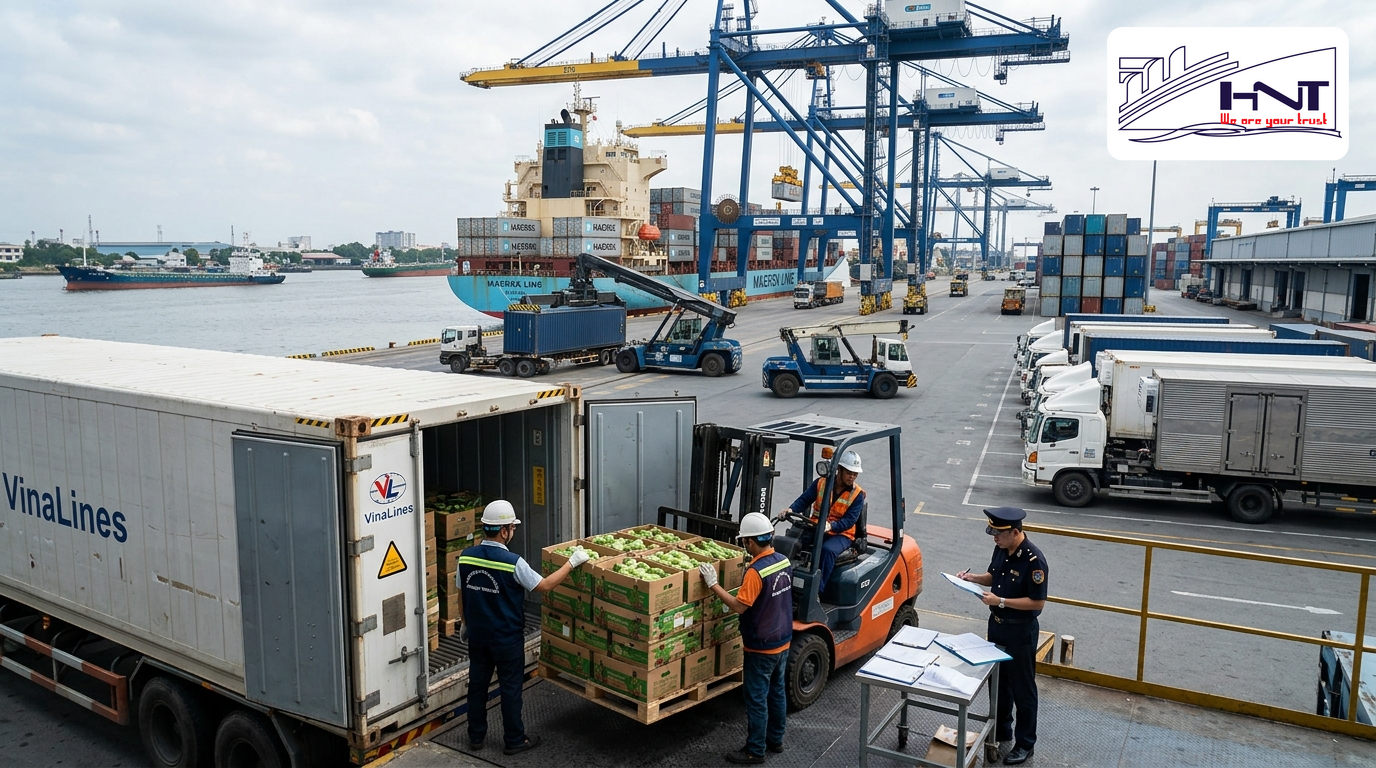
Prepare export documents
An effective export shipping process starts with accurate documentation. The dossier usually includes Commercial Invoice, Packing List, Commercial Contract, Certificate of Origin, and Bill of Lading.
From February 2026, many electronic customs procedures are updated according to Circular 121/2026/TT-BTC to enhance data management and reduce paper documents.
EY
+1
Check shipping schedule and booking
Businesses need to check the shipping schedule early to ensure space on the desired transport route. This is especially important during the peak season for agricultural exports.
According to HNT LOGISTICS experience, booking 10 to 21 days in advance helps minimize the risk of container shortages and peak season surcharges.
Customs clearance and loading
After completing the customs declaration, the goods are transported to the port and loaded onto the ship. This process requires close coordination between the business, the shipping line, and the freight forwarder.
Delivery at the port of destination
The consignee performs import procedures, receives the goods, and fulfills tax obligations according to the regulations of the importing country.
- Prepare complete export documents.
- Make a booking with the shipping line or forwarder.
- Electronic customs declaration.
- Load goods into containers.
- Load goods onto the ship.
- Track the shipping journey.
- Receive goods at the destination port.
For example, Mekong Fruit Company in Tien Giang exports dragon fruit from Cat Lai to Shanghai using 40RF refrigerated container. Booking 14 days in advance helps the business reduce the risk of missed sailings and maintain stable temperatures.
A seafood enterprise in Ca Mau exporting frozen shrimp to Rotterdam shortened their document preparation time to 24 hours thanks to the digitalization process.
Distinguishing FCL and LCL shipping
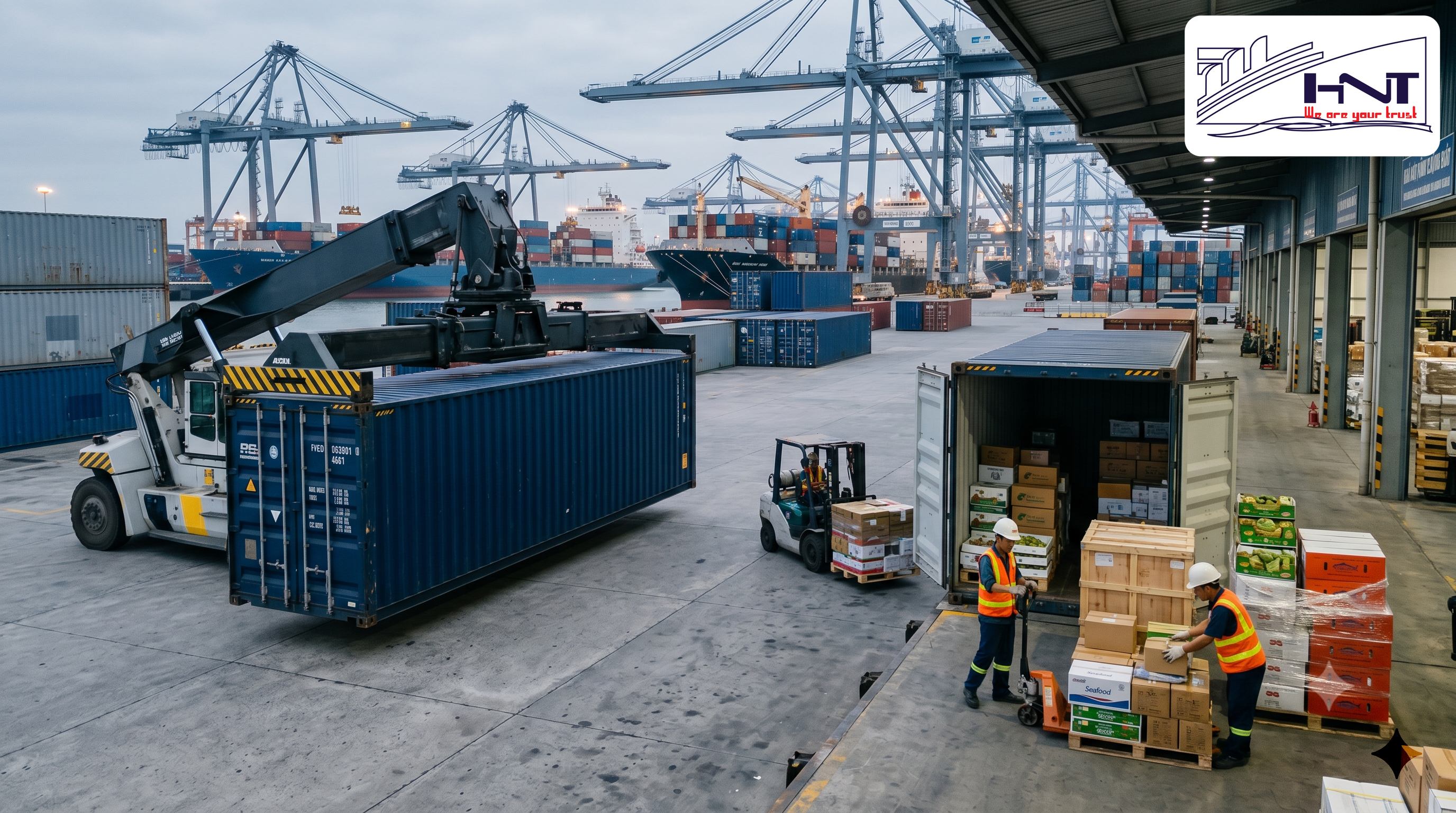
Cost comparison
FCL has a fixed cost for the entire container. Meanwhile, LCL shipping is calculated based on CBM or weight.
When volume exceeds approximately 15-18 CBM, FCL often provides better economic efficiency.
Transit time comparison
FCL does not require consolidation, so transit time is faster. LCL needs extra time for consolidating and deconsolidating at the port.
Cargo risk comparison
FCL limits contact with other owners' goods. Conversely, LCL has a risk of impact or delays due to the consolidation process.
- FCL is suitable for high-value goods.
- FCL is suitable for frozen food.
- LCL is suitable for trial orders.
- LCL is suitable for new businesses.
- FCL reduces the risk of lost cargo.
| Criteria | FCL | LCL | Recommendation |
|---|---|---|---|
| Cost | Fixed | By CBM | Depending on output |
| Duration | Fast | Slower | FCL |
| Safety | Infrastructure | Standard-compliant, inspected | FCL |
| Flexible | Lower | Infrastructure | LCL |
A furniture company in Binh Duong exporting 24 CBM to Los Angeles switched from LCL to FCL and reduced total logistics costs by 12%.
A coffee business in Dak Lak that only exports 5 CBM per month to Singapore continues to use LCL to optimize cash flow.
Choosing FCL or LCL for export businesses
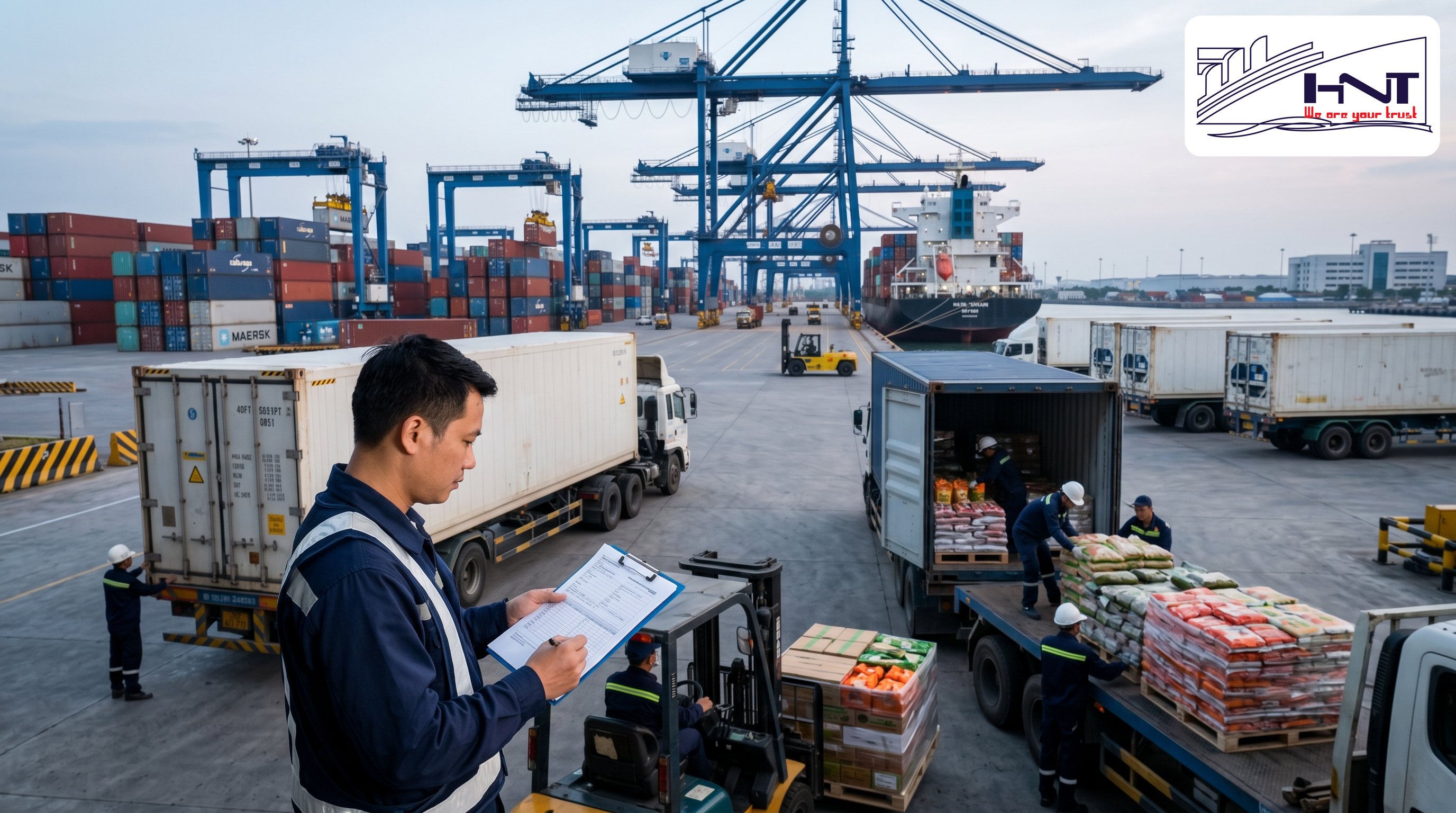
For agricultural products and fresh fruits
Perishable goods should prioritize FCL, especially with refrigerated containers. This helps maintain quality throughout the cold chain.
For frozen seafood
FCL is often the optimal choice due to strict requirements for temperature and traceability.
Choosing an international shipping company
Businesses should evaluate industry experience, agent network, customs clearance capabilities, and cold container management capacity.
According to experts at HNT LOGISTICS, export businesses should prioritize partners with experience in the target market and the ability to handle incidents at the destination port.
- Evaluate the coverage of the international network.
- Check customs clearance capacity.
- Consider cold cargo experience.
- Compare transit times.
- Evaluate customer service quality.
- Check shipment tracking capability.
Based on the experience of HNT LOGISTICS, businesses exporting agricultural products and seafood should review actual monthly output before deciding between FCL and LCL to optimize total logistics costs.
International sea freight shipping Efficiency does not only depend on freight rates but also on choosing the right container model. FCL is suitable for large shipments, high preservation requirements, and fast transit times. LCL is suitable for small orders and cash flow optimization.
- Evaluate output before choosing FCL or LCL.
- Check early vessel schedules during peak season.
- Prepare full documentation.
- Monitor fluctuations in ocean freight rates.
- Strictly control the cold chain for food products.
- Choose a logistics partner with international experience.
HNT LOGISTICS is ready to accompany Vietnamese businesses in exporting agricultural products, seafood, and industrial goods with optimal, safe, and effective ocean freight solutions.