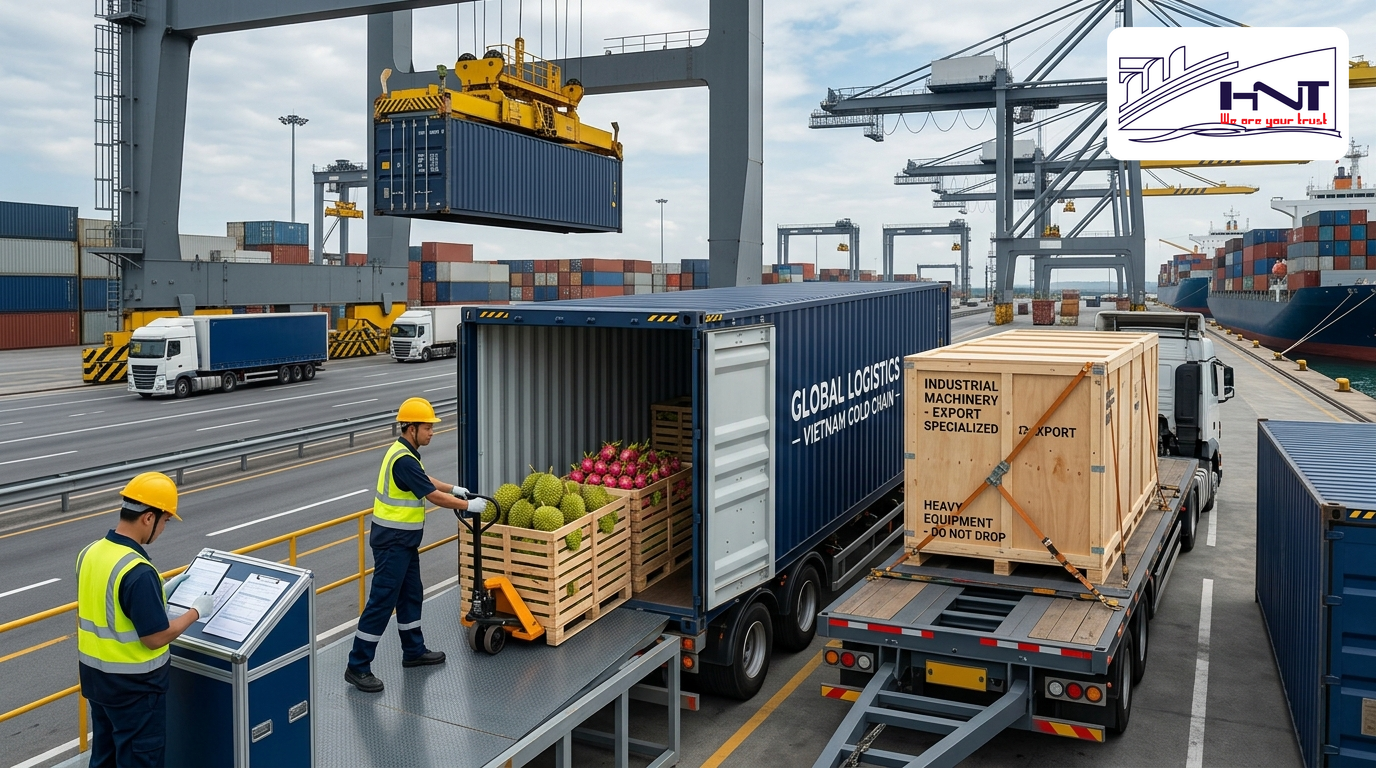
Road transport of durian to China often breaks rhythm at border gates, not at warehouses. Vietnam's fruit and vegetable export value continues to be a bright spot, but traceability and quality control still determine sales capability. This article helps businesses choose routes, protect the cold chain, prepare documents, and control total costs.
How to choose a road transport plan for durian to China that is both fast at customs clearance and maintains product quality?
Road transport of durian to China is suitable when buyers need quick delivery to Guangxi or wholesale markets in Southern China. Decisions must be based on ripeness, border gate waiting time, reefer truck capacity, and receipt schedule. Do not choose road transport just because of a low quote.
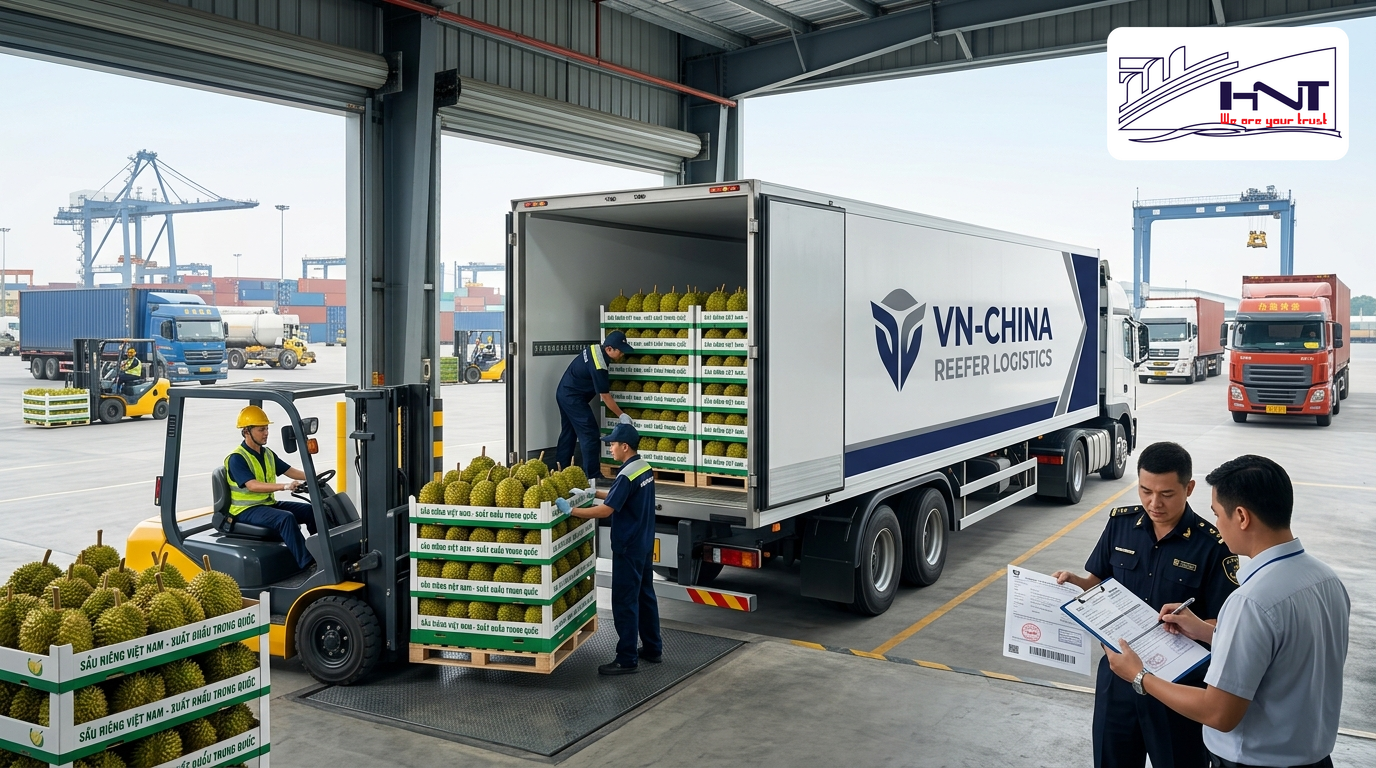
When should road transport be prioritized over sea transport for durian and dragon fruit exports?
Prioritize road transport for durian shipments that need to be delivered in a few days or dragon fruit with a short shelf life. Sea transport is suitable for large shipments, stable shipping schedules, and distant destinations. For dragon fruit exports to inland China, the inland trucking leg after the port must be added before comparison.
Comparing reefer containers, RF containers, and consolidated shipping options by season
Full-load reefer containers provide the best temperature protection. RF containers are only suitable when equipment, power points, and monitoring processes are confirmed. Consolidation reduces costs but increases the number of door openings and the risk of odor cross-contamination. HNT LOGISTICS recommends only consolidating shipments with the same temperature requirements, same border gate, and same delivery deadline.
The border routes most chosen by agricultural businesses
Lang Son is still a familiar choice for goods flowing into Guangxi, but businesses must check the receiving schedule and yard capacity daily. Have a contingency route suitable for the partner's import documents. Do not change routes at the last minute without confirming the quarantine point.
How to balance delivery speed and container freight rates for agricultural products
Freight rates for agricultural containers must be compared based on total costs to the delivery point. Add trucking, refrigeration, yard, inspection, waiting fees, spoilage, and capital costs. A shipment that is one day faster can be cheaper if it reduces the rejection rate at the wholesale market.
- Finalize ripeness levels before booking reefer trucks and determine cargo cutoff times.
- Confirm the buyer's receipt time before the truck leaves the warehouse.
- Set a maximum waiting threshold at the border gate to trigger contingency plans.
- Record temperature for each leg, not just when closing the container.
- Compare quotes based on delivery terms and expected incidental expenses.
- Check the ability to provide power for refrigeration at the yard when the truck has to wait overnight.
| Method | Suitable | Main risks | Control point |
|---|---|---|---|
| Full-load reefer truck | Urgent, high-value shipment | Border gate waiting | Backup generator |
| Sea | Large shipment, stable schedule | Ship delay | Buffer time |
| Trip consolidation | Small shipment | Frequent door opening | Same temperature level |
| RF container | Controlled cold chain | Power disruption | Temperature log |
Conclusion: road transport of durian to China is only fast when the truck schedule, documentation, and receipt point are all locked in before the cargo cutoff time.
Hypothetical example: Mekong Green Fruit Company in Tien Giang exports 18 tons of durian to Pingxiang. The reefer truck goes direct, has a generator, reducing yard time from 18 to 8 hours. Another example: Binh Thuan Dragon Fruit Company chooses sea transport for 4 containers going to Shanghai, accepting three more days but reducing unit costs by 14%.
What needs to be prepared before loading to reduce the risk of damage and returns?
The starting point for Chinese road transport of durian is the validity of the cultivation area and packing facility. Protocol requirements Fresh durian must comply with China's food safety and phytosanitary regulations. The code must match the records, labels, and traceability of each batch.
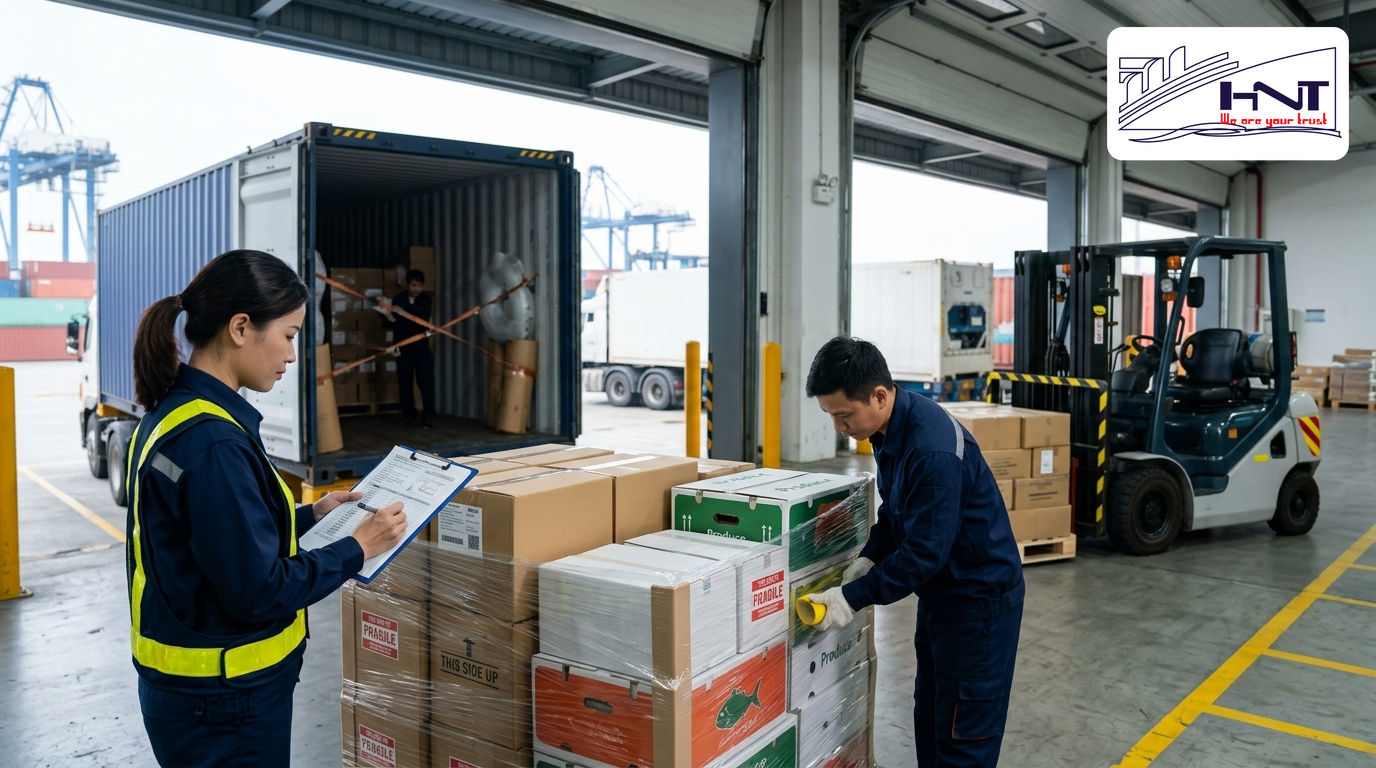
Checklist for checking cultivation area and packing facility codes before export date
Check cultivation area codes, packing facility codes, harvest logs, grower lists, and buyer information. Cross-check product name, quantity, specifications, and packing date between warehouse slips and documents. Do not use another unit's code without valid authorization.
Export packaging standards for durian and dragon fruit
Packaging for export agricultural products needs to protect the fruit, maintain ventilation, and allow for traceability. Use clean, moisture-resistant materials with no signs of harboring pests. Shipment labels should display the cultivation area code, packing facility, packing date, and identification information as required by the market.
Packaging errors that increase loss rates during road transport
Common errors include stacking too high, lack of cushioning, soft cartons due to moisture, and blocking ventilation vents. Durian can crack its shell from impact. Dragon fruit is prone to ear scratches and dehydration. Every small error at the warehouse can become a major dispute after delivery.
How to control temperature and ventilation right from the container loading stage
Pre-cool the truck container and goods according to internal procedures. Do not use a refrigerated truck to rapidly lower the temperature of goods that are still hot from the garden. Leave ventilation gaps, avoid pressing against the cooling unit, and place temperature recording devices in representative locations. Based on HNT LOGISTICS' experience, photos taken during loading help resolve claims faster.
- Cross-check the cultivation area code with the contract and approved list.
- Check the condition of the shell, stem, ripeness, and signs of pests.
- Dry the carton surfaces before entering the truck to limit mold.
- Place cushioning at contact points to reduce long-distance vibration.
- Seal with a code number and save photos fully before the truck leaves the warehouse.
- Send labels and packing lists to the importer for confirmation in advance.
| Hạng mục | Durian | Dragon Fruit | Proof documents |
|---|---|---|---|
| Traceability | Mã vùng trồng | Mã vùng trồng | Batch log |
| Packing | Anti-impact cushioning | Anti-ear scratch | Packing photos |
| Ventilation | Do not block vents | Do not press against walls | Loading diagram |
| Temperature | As per buyer requirements | As per buyer requirements | Equipment log |
Conclusion: do not let quality control begin at the border gate; it must begin at the collection point.
Hypothetical example: Phu Dien Cooperative in Dak Lak discovered a batch label missing the packing facility code before the truck departed and fixed it within the day. Another example: Nong Phat Long An Company replaced thin paper cartons with moisture-resistant ones, reducing the carton dent rate from 9% to 2% after three shipments.
How does the transportation process for durian and dragon fruit exports from warehouse to border gate take place?
An effective process does not wait for the truck to arrive to check documents. With Chinese road transport of durian, the plan must be set by the hour: pick up, load, customs declaration, arrive at the yard, and hand over. One coordinator is responsible for updating the ETA for the warehouse, driver, and buyer.
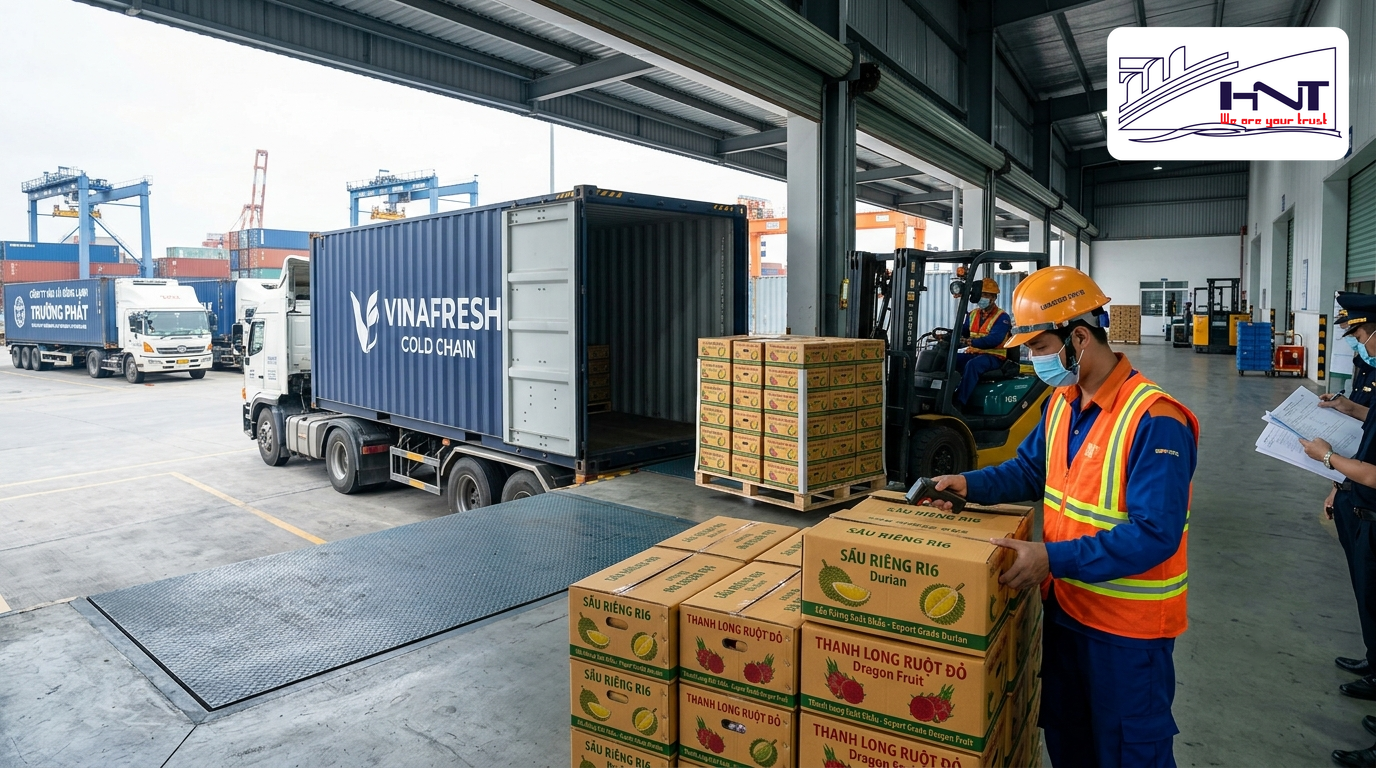
Steps for receiving goods and planning trucks before the pickup date
Confirm weight, number of packages, temperature, warehouse schedule, and expected route at least one day in advance. Check for a clean truck, functional refrigeration, insurance, and tracking devices. Create a backup truck plan in case the main vehicle breaks down. Do not schedule loading too close to the yard closing time.
Prepare customs documents and dossiers before the truck arrives at the border gate
The dossier usually includes the contract, commercial invoice, packing list, declaration, quarantine certificate when applicable and C/O when transaction conditions require. Customs procedures continue to be regulated by Circular 121/2026/TT-BTC, effective from February 01, 2026.
Common points of delay during the customs clearance waiting period
Delays often stem from batch code discrepancies, missing traceability photos, mismatched weighing information, or trucks arriving outside the yard schedule. Set up a final document check before the truck leaves the warehouse. According to experts at HNT LOGISTICS, separating the document checker from the preparer helps reduce subjective confirmation errors.
Checking goods quality after handover to the importing partner
Require the partner to confirm the time of receipt, displayed temperature, seal status, and initial rejection rate. The receipt report must be returned within the agreed timeframe. This is data to evaluate the carrier, packing warehouse, and border gate route for the next trip.
- Lock orders, warehouse schedule, and truck type before the pickup date.
- Inspect the truck, seal, and data logging equipment before loading.
- Cross-check documents with actual goods before transmitting the declaration.
- Update ETA for each leg for the warehouse and importing partner.
- Handle discrepancies right at the point of discovery, do not wait until the border gate.
- Collect the handover report and temperature log after delivery.
| Work milestones | Person in charge | Hồ sơ | Stop points |
|---|---|---|---|
| Before pickup | Coordinate | Truck dispatch order | Truck meets technical requirements |
| Before loading goods | Warehouse | Inspection slip | Goods meet quality requirements |
| Pre-declaration | Documentation | Invoice, packing list | Data matches |
| After delivery | Business | Receipt report | Finalize claims |
Conclusion: manage by time milestones and evidence, do not manage by disjointed messages.
Hypothetical example: Dai Phuc Export Company in Dong Nai creates a general ETA board and detects the truck is two hours off schedule before arriving at the yard. Another example: Hung Thinh Agricultural Products Company in Long An cross-checks the number of boxes before declaring, avoiding adjusting the declaration at the border gate.
What should businesses transporting machinery and equipment along with agricultural products pay attention to?
Transporting machinery and equipment and transporting fruits have opposing principles. Machinery needs load-bearing, lashing, and anti-vibration protection. Agricultural products need to be clean, ventilated, and have stable temperatures. Do not combine these two groups into one refrigerated truck compartment if there is a risk of oil, odor, or sharp objects causing an impact.
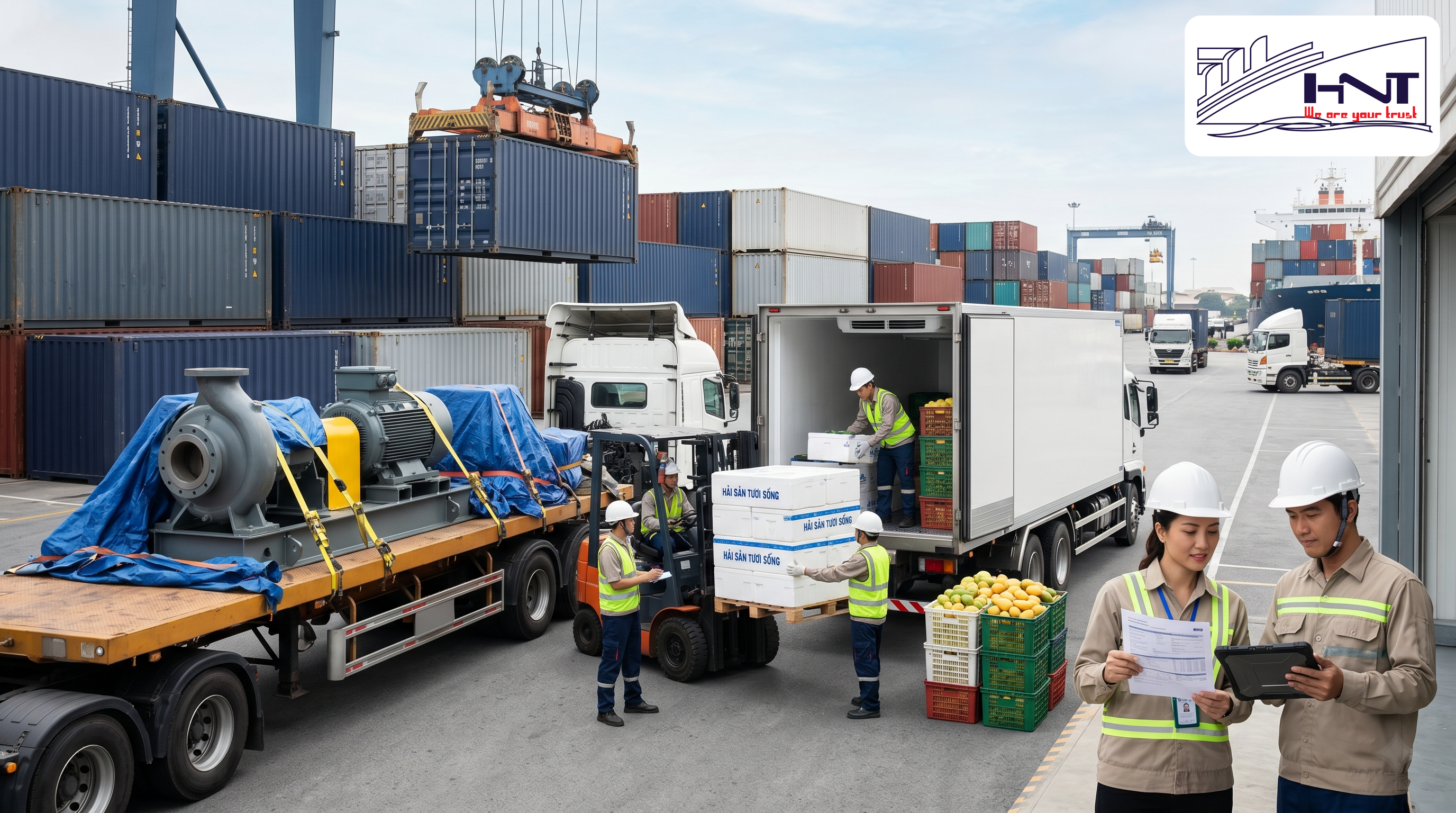
Differences in vehicle requirements between transporting machinery and equipment and agricultural products
Heavy machinery requires flatbed trucks, lowbed trailers, or trucks with properly rated lashing points. Agricultural products require clean refrigerated trucks capable of maintaining temperature. If using the same transport system, separate the trips, separate the compartments, or schedule the return trip; do not share cargo space.
Packing and reinforcement plan for heavy cargo to avoid affecting other shipments
Wooden crating or steel framing must account for the center of gravity, lifting points, and lashing force. Machine crates require protection for sharp edges. Clearly mark the weight, lifting orientation, and handling warnings. This helps the loading team avoid placing crates in the wrong position or damaging lifting equipment.
Organize combined transport schedules to optimize round-trip costs
Use return trips for machinery and equipment transport after refrigerated trucks have been cleaned and are no longer serving food. For other specialized vehicles, optimize by coordinating machinery delivery schedules along routes with agricultural cargo. The condition is that every trip must have a sanitation and load inspection report.
Common risks during declaration and loading of machinery at the border gate
A major risk is the description of goods missing the model, chassis number, capacity, origin, or HS code. Improper loading can cause an offset in the center of gravity. For used machinery, it is necessary to check the import requirements of the destination country before signing the contract.
- Completely separate oily machinery from agricultural and food areas.
- Record the actual weight on each crate to arrange vehicles and lifting equipment.
- Select lashing points according to the manufacturer's technical instructions.
- Take photos of the cargo before and after securing it on the vehicle.
- Cross-check model, serial number, and HS code before declaring.
- Check import regulations for used machinery of the destination market.
| Criteria | Agricultural products | Machinery | Do not ignore |
|---|---|---|---|
| Vehicle | Refrigerated truck | Flatbed truck or lowboy trailer | Load capacity |
| Rủi ro | Heat loss | Vibration | Inspection log |
| Packing | Ventilation | Lashing | Loading diagram |
| Documentation | Traceability | Model, serial number | Correct declaration |
Conclusion: optimizing return trips is only valuable when not traded for food safety risks or property damage.
Hypothetical example: Binh Duong Mechanical Company brings back two packing machine crates after a fruit delivery trip, but uses a separate flatbed truck. Another example: Minh Phat Equipment Factory in Da Nang replaces soft straps with correctly rated chains, reducing shifting when traveling through steep road sections.
What factors determine transport costs and actual profit of the shipment?
Road transport of durian to China cannot be managed with a single quote line. Real profit depends on the cost to the delivery point and the rate of accepted goods. International maritime fluctuations are still worth monitoring because disruptions in the Red Sea and the Gulf region can change network schedules, impacting reefer equipment prices.
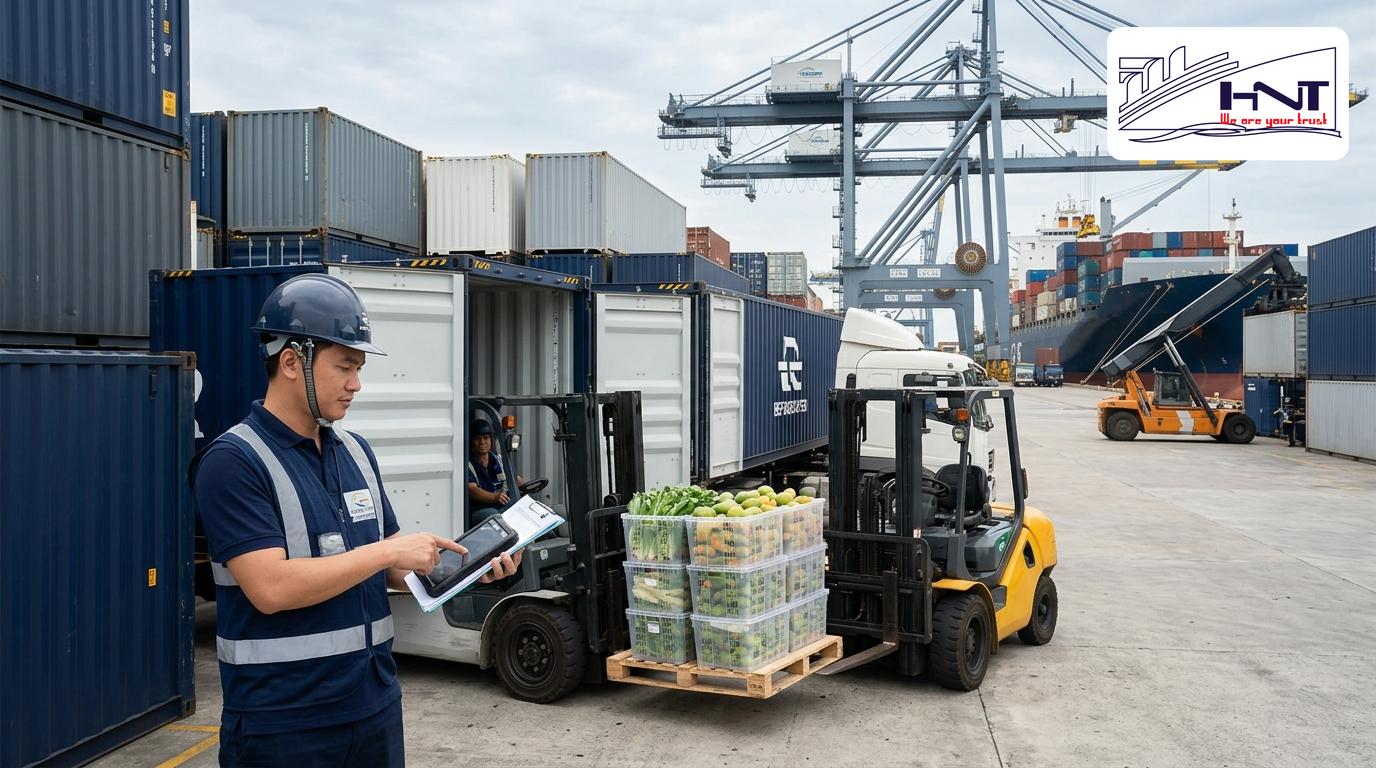
How to calculate container freight for agricultural products by distance and container type
Agricultural container freight should be separated into base freight, vehicle surcharges, refrigeration electricity, yard fees, waiting time, customs clearance, and loss contingency. Calculate costs per kilogram sold, not just per container. This forces businesses to see the cost of rejected goods after delivery.
Incurred costs often overlooked when planning exports
Commonly forgotten items include lifting fees, yard storage, electricity, quarantine, seal replacement, driver waiting time, and document correction costs. For sea freight, it is also necessary to control container demurrage fees. It is necessary to clearly specify the responsible party for each item in the contract and delivery terms.
Why a shipment with a low freight rate is not necessarily the lowest total cost
Low prices may come with old vehicles, lack of backup power, slow coordination, or limited insurance. A temperature incident causing a loss of a few percent of the cargo value is usually greater than the freight savings. Score quotes based on reliability, not just the number.
Expense tracking table template for road transport of durian to China
The table below is a template for internal management. Businesses should update it after each trip and compare it with the budget. The most important indicator is the cost per accepted kilogram, as it directly connects logistics with commercial profit.
- Record base freight separately from surcharges to avoid confusing mandatory costs.
- Allocate refrigeration based on actual time instead of beginning-of-period estimates.
- Track waiting costs at each location and the reason for occurrence.
- Calculate shrinkage based on the actual received price at the delivery point.
- Compare cost per kilogram accepted between transport providers.
- Reserve funds for schedule changes, weather, and additional inspections.
| Item | Budget | Actual | Reason for variance |
|---|---|---|---|
| Refrigerated truck freight | Record per contract | Record per invoice | Distance or waiting |
| Refrigeration | By estimated hours | By logbook | Border gate waiting |
| Yard fee | By schedule | By documentation | Arrive early or late |
| Shrinkage | By target ratio | By receipt record | Quality or temperature |
Conclusion: a good quote is one that allows for predicting total costs, not the lowest quote on the first line.
Hypothetical example: An Phuc Agricultural Products Company in Can Tho chose a quote 4% higher, in return they had a generator and reduced shrinkage by 2.5%. Another example: Thanh Cong Equipment Enterprise in Binh Duong consolidated return trip delivery schedules, reducing empty mileage by 17% after two months.
After each shipment, what metrics should be tracked to reduce risks and optimize subsequent trips?
Road transport of durian to China only improves when businesses turn each trip into data. Track shrinkage rate, waiting time, temperature deviation, incurred costs, and first-time right documentation rate. That is the foundation for better negotiation in the next season.
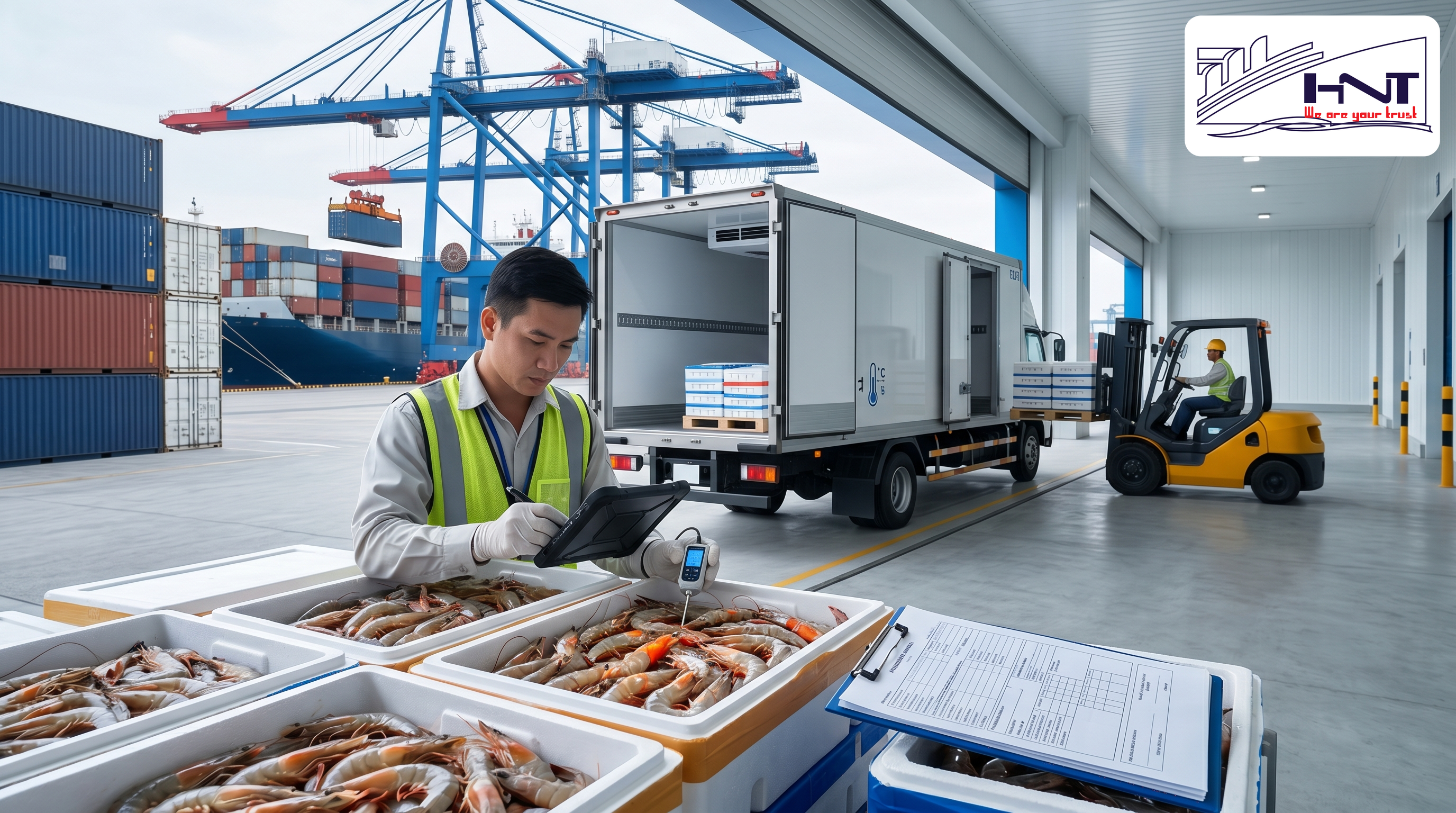
Evaluate actual shrinkage rate after delivery
Measure shrinkage by weight, quantity, and value. Distinguish damaged goods due to input quality, vibration, temperature, or customs delay. Receiving reports must have consistent photos, timestamps, and descriptions. Do not use verbal assessments to conclude responsibility.
Review the causes of unplanned costs by stage
Divide costs by warehouse, route, yard, procedures, and delivery points. Each item needs an owner for the cause and preventive action. If waiting fees recur, fix the pickup schedule or change yard plans instead of just negotiating for discounts.
Establish an early warning process for the peak export season
Set alert thresholds when waiting time exceeds plan, temperature deviates, profiles are missing, or yards are overloaded. Notifications must reach the right decision-makers. Avoid creating overly broad recipient groups as responses will be slow.
Develop selection criteria for transport providers for subsequent shipments.
Evaluate transport providers based on on-time performance, refrigerated capacity, incident response, surcharge transparency, and documentation quality. HNT LOGISTICS can assist businesses in building a supplier scorecard by lane and season, rather than choosing based on a single quote.
- Track the acceptance rate of goods by each buyer and route.
- Measure actual waiting time at warehouses, yards, and border crossings.
- Compare recorded temperatures with thresholds agreed upon in the contract.
- Categorize incurred costs by controllable causes.
- Assess the completeness of documentation from the first submission.
- Rank carriers based on data from the last three trips.
| Indicator | Target | Data source | Action when deviating |
|---|---|---|---|
| Shrinkage | According to contract | Receipt report | Review packaging |
| Border gate waiting | In buffer time | ETA, vehicle log | Activate backup route |
| Temperature | As per shipment requirements | Recording device | Cooling unit check |
| Incidental costs | Within budget | Invoice | Adjust budget estimate |
Conclusion: without post-delivery metrics, businesses are just repeating old operations with unpredictable costs.
Hypothetical example: Song Tien Fruit Company recorded increased yard waiting in three consecutive trips and shifted departure time six hours earlier. Another example: Dong Nam Electromechanical Company in Ho Chi Minh City uses a carrier scorecard, removing suppliers with two documentation errors in a quarter.
Safe road transport of durian to China needs to be treated as a profit problem, not just a trucking problem. Businesses need to lock in planting area data, control packaging, prepare documentation before the truck arrives, and calculate total cost. When implementing this discipline, each subsequent trip will be easier to forecast.
- Choose options based on sales deadline, not base freight rate.
- Lock in planting area code and packing facility before pickup date.
- Record temperature, waiting time, and handover minutes throughout the trip.
- Separate machinery from agricultural products to protect safety and quality.
- Calculate cost per kilogram accepted by the buyer.
- Use post-delivery data to score routes and carriers.
For exporters nationwide, HNT LOGISTICS is a reputable shipping and logistics partner for reviewing routes, configuring refrigerated trucks, documentation, and backup plans before peak season. Start with a standardized shipment data sheet, then negotiate freight rates.