

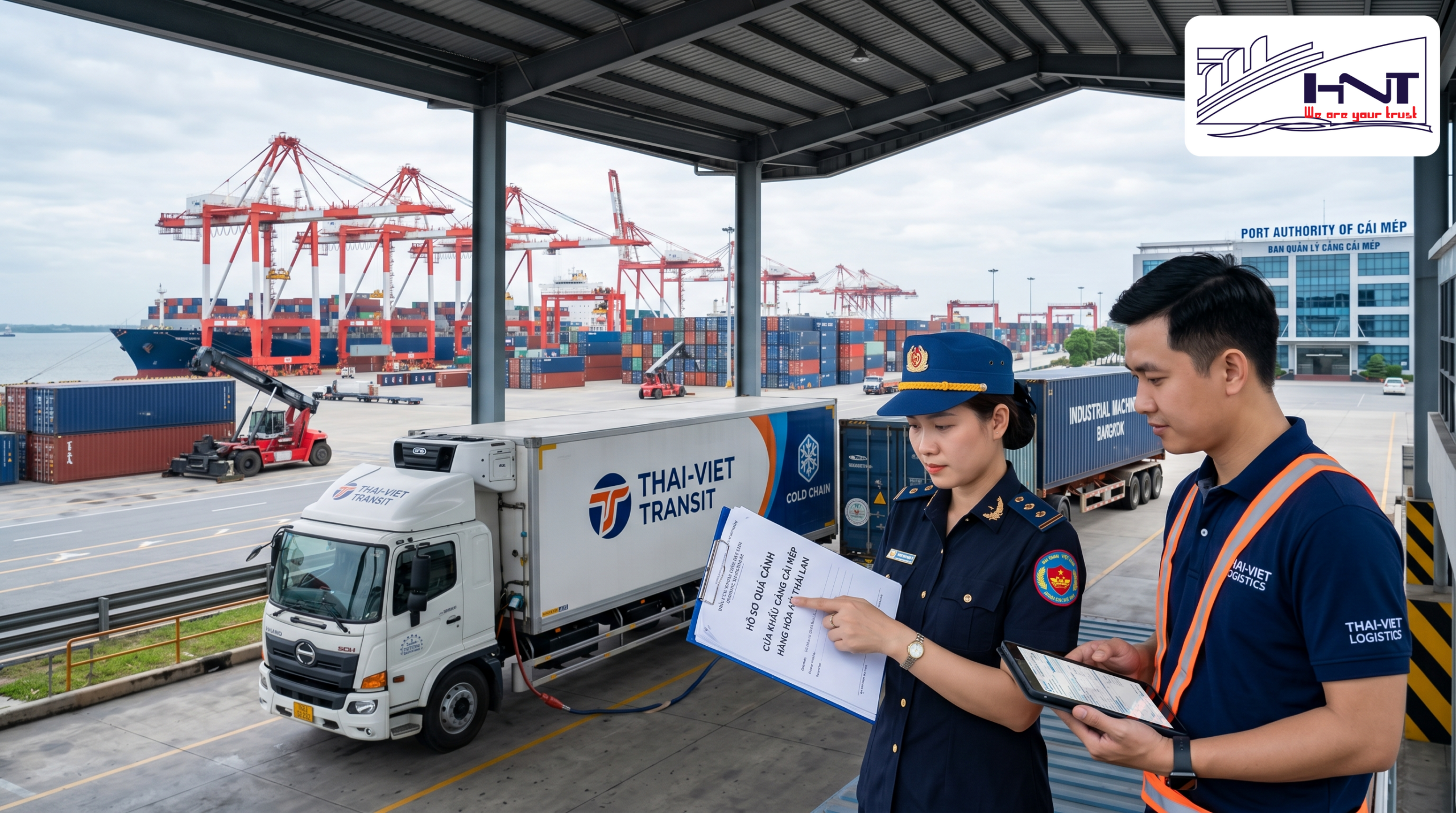
Cai Mep border gate customs is under heavy pressure as the volume of transit containers from Thailand increases sharply during the 2026 export season. Many businesses experience delayed manifests, incorrect shipment codes, and incurred container storage fees simply due to inconsistent declarations.
According to data from the Ministry of Industry and Trade and VASEP for the 2026 period, Vietnam's seafood exports has surpassed 10 billion USD, while the agriculture-forestry-fishery group is targeting 70 billion USD. This drives continuous demand for customs declaration services and cold chain operations in the Cai Mep area. This article helps businesses clearly understand declaration procedures, physical inspection, and safe handling of Thailand transit cargo.
Cai Mep border gate customs and its role in Thailand transit cargo
Cai Mep is currently an important deep-water port complex in Southern Vietnam. Many shipping routes to the US and Europe are transshipped directly from here. This causes port customs services to process a large number of transit containers every day.
According to the 2026 market reality, the shortage of empty containers at Cai Mep and Cat Lai still occurs during peak season. Cold-chain agricultural exporters are most affected due to extended waiting times.
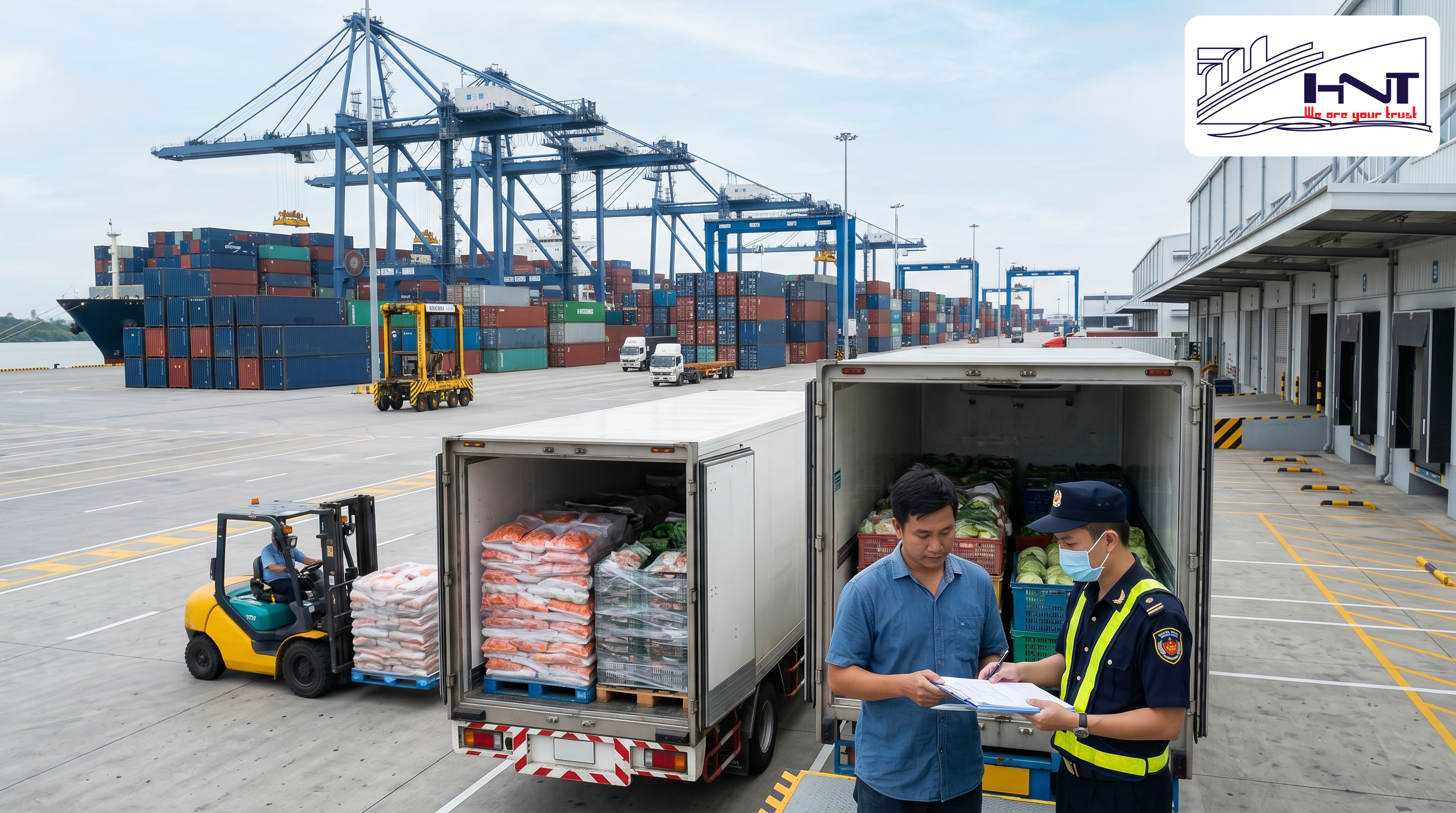
Legal conditions for declaring Thailand transit cargo
Transit cargo from Thailand must have an accurate manifest before the cut-off time. Businesses need to check the Bill of Lading, container seal, and shipping route before submitting the declaration.
- Check HS codes for consistency between invoice and packing list.
- Cross-check container numbers before entering the port.
- Confirm electronic EDO with the shipping line.
- Prepare quarantine documents if it is refrigerated cargo.
- Monitor container free time duration.
| Document type | Purpose | Issuing unit | Risks if incorrect |
|---|---|---|---|
| Bill of Lading | Transportation confirmation | Shipping line | Manifest delay |
| Commercial Invoice | Value declaration | Shipper | Incorrect taxable value declaration |
| Packing List | Declare number of packages | Shipper | Quantity discrepancy |
| Transit Permit | Transit clearance | Customs | Container hold |
Mekong Fruits company in Tien Giang once had its container held for 36 hours due to an incorrect seal on a transit manifest from Bangkok to Cai Mep. After adjusting EDI data synchronized with the shipping line, the company reduced 22% storage costs.
An electronics company in Binh Duong transporting components from Laem Chabang through Cai Mep to Long Beach shortened customs clearance time to just 8 hours thanks to standardized HS code data preparation.
Customs clearance service process for transit cargo
Customs declaration services require close coordination between freight forwarders, shipping lines, and on-site officers. For Thailand transit cargo, processing time usually depends on the manifest and inspection procedures.
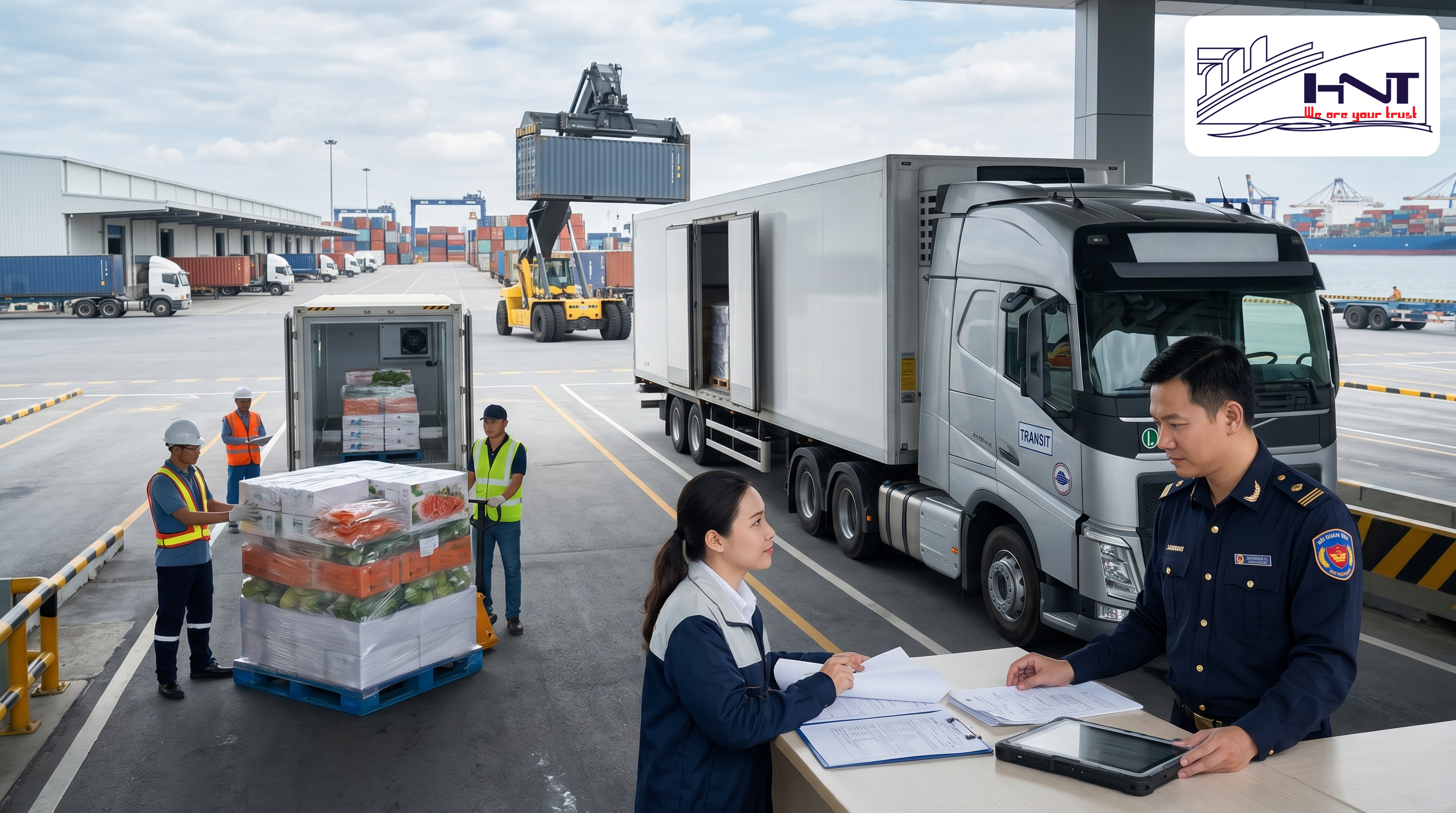
Mandatory documents for declaring Thailand transit cargo
Businesses must prepare a complete set of documents before the vessel arrives at the port. Missing even one document may result in the container being held for physical inspection.
- Standard Commercial Invoice and Packing List.
- Bill of Lading correctly showing the transshipment port.
- Transit declaration under the appropriate type code.
- Phytosanitary certificate for agricultural products.
- Fumigation certificate if required by the market.
- Booking information and container seal number.
According to Decree 08/2015/ND-CP and current updates to electronic customs procedures, businesses must declare the correct transport route and container status before the cargo arrives at the port.
For refrigerated cargo, the container temperature must remain stable throughout the transit process. Based on HNT LOGISTICS' practical experience, many frozen durian shipments to China have received quality warnings simply because the container lost power while waiting for physical inspection.
| Group of goods | Recommended temperature | Type of Container | Quarantine requirement |
|---|---|---|---|
| Frozen shrimp | -18°C | 40RF | Yes |
| Frozen durian | -20°C | 40RF | Yes |
| Fresh vegetables | 2-8°C | 20RF | Yes |
| Electronic components | Dry | 40HC | No |
A seafood factory in Ca Mau using the Thailand transit route via Cai Mep to Rotterdam reduced customs clearance waiting time by 18 hours after applying pre-alert manifest before vessel arrival.
A mango exporter in Dong Thap once incurred nearly USD 2,000 in demurrage because it forgot to confirm the phytosanitary inspection schedule. After switching to a synchronized booking process, the on-time delivery rate reached 98%.
HNT LOGISTICS recommends that businesses check the SI cut-off and manifest cut-off at least 24 hours in advance to limit last-minute EDI data corrections.
Customs services at Cai Mep and cost optimization solutions
Customs services at Cai Mep are changing rapidly in line with the port digitalization trend. Large export businesses have shifted to using electronic EDO and real-time container tracking.
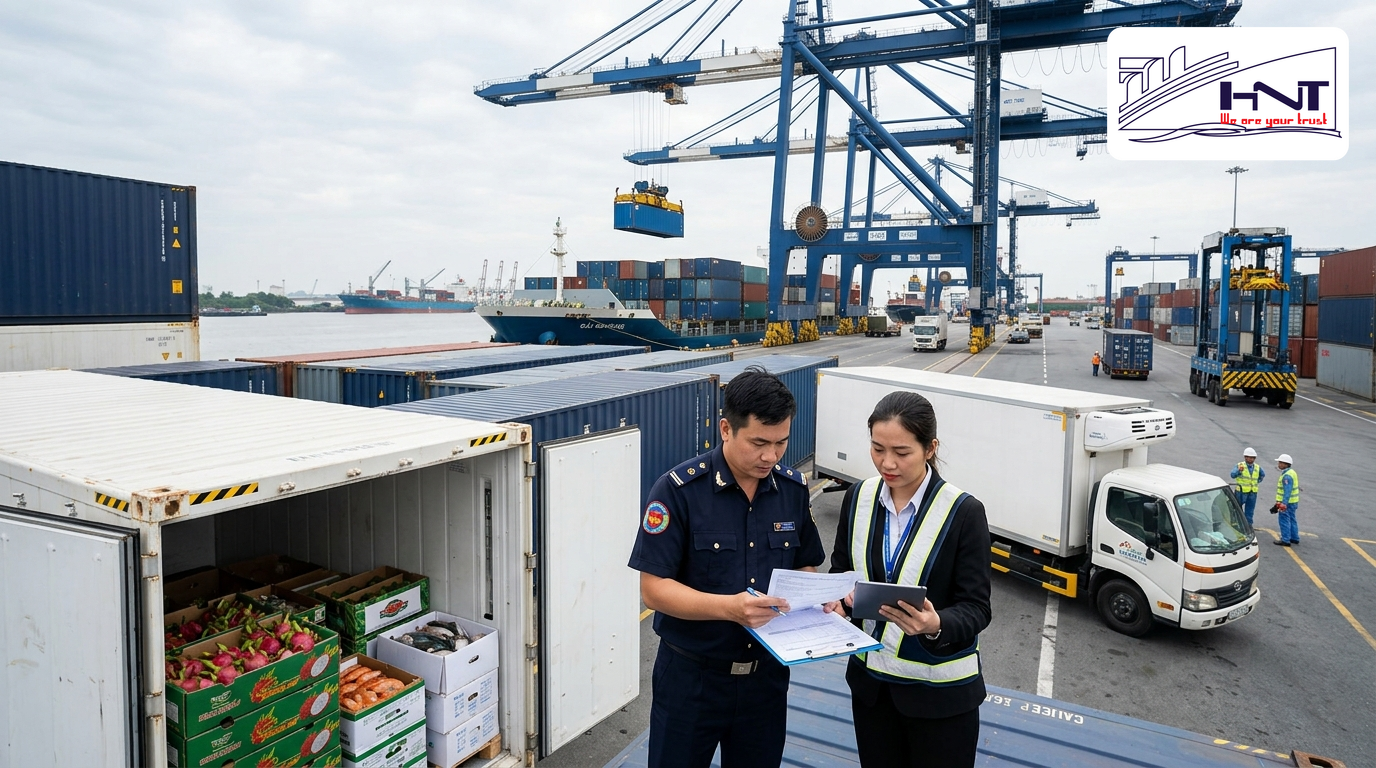
Common additional costs at the port
- Container storage fees when cargo pickup is delayed.
- Manifest correction fees after cut-off hours.
- Reefer electricity surcharge for reefer containers.
- Physical inspection fees at the yard.
- Domestic trucking costs from ICD.
According to logistics updates at the end of 2026, the shortage of 40HC containers still affects agricultural products and cashew exports. This forces businesses to place bookings earlier than before.
Based on HNT LOGISTICS' experience, seafood businesses should prioritize direct bookings on vessels to the US from Cai Mep instead of transshipping via Singapore during peak season to reduce the risk of cold-chain delays.
A wood company in Dong Nai reduced logistics costs by 12% when switching from the Cat Lai route to Cai Mep thanks to shorter vessel waiting time and lower congestion surcharges.
A pangasius exporter in An Giang once experienced container temperature loss on a transit route to Hamburg. After implementing a remote temperature monitoring system, the business kept the entire 40RF shipment stable.
Experience in choosing a reliable customs declaration service
Businesses need to choose a provider with practical experience in transit cargo and refrigerated containers. This is a decisive factor for processing speed at the border gate.
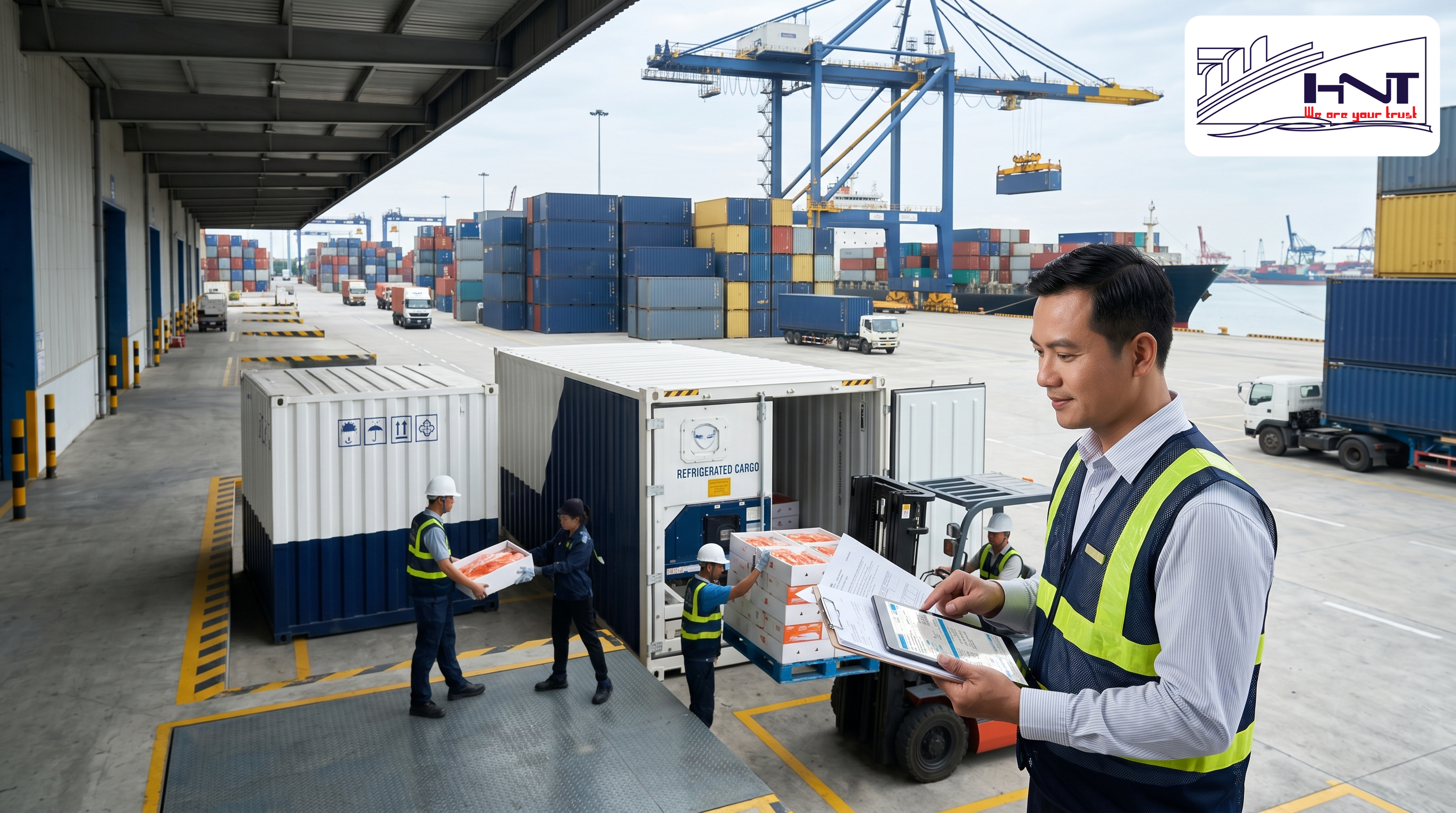
Operational checklist before cut-off time
- Confirm booking and vessel schedule.
- Compare manifest with invoice.
- Check refrigerated container condition.
- Confirm plant quarantine schedule.
- Check customs procedure code type.
- Track container free time.
HNT LOGISTICS recommends that businesses standardize document data from the booking stage to reduce the risk of declaration amendments and detention charges at the port.
A coconut processing company in Ben Tre reduced customs clearance time from 14 hours to 6 hours after applying a synchronized electronic declaration process with its forwarder.
An machinery import company in VSIP Binh Duong Industrial Park once faced delayed delivery due to an incorrect destination port on the Bill of Lading. After applying an internal checklist before SI cut-off time, the company no longer had manifest amendment issues.
The customs border gate at Cai Mep will continue to play a central role for Thailand transit cargo in the coming years. Businesses need to proactively standardize documentation, manage refrigerated containers, and closely monitor cut-off times to avoid storage costs.
- Check manifest before cut-off time.
- Synchronize HS code and seal data.
- Prioritize electronic EDO and real-time tracking.
- Continuously monitor refrigerated container temperature.
- Prepare quarantine schedule in advance.
- Early booking during peak season.
For businesses exporting agricultural products, seafood, and cold chain goods, choosing an experienced customs brokerage partner will determine supply chain efficiency. HNT LOGISTICS is a trusted logistics partner for Vietnamese enterprises needing fast transit cargo handling, cost optimization, and legal compliance assurance at Cai Mep port.