


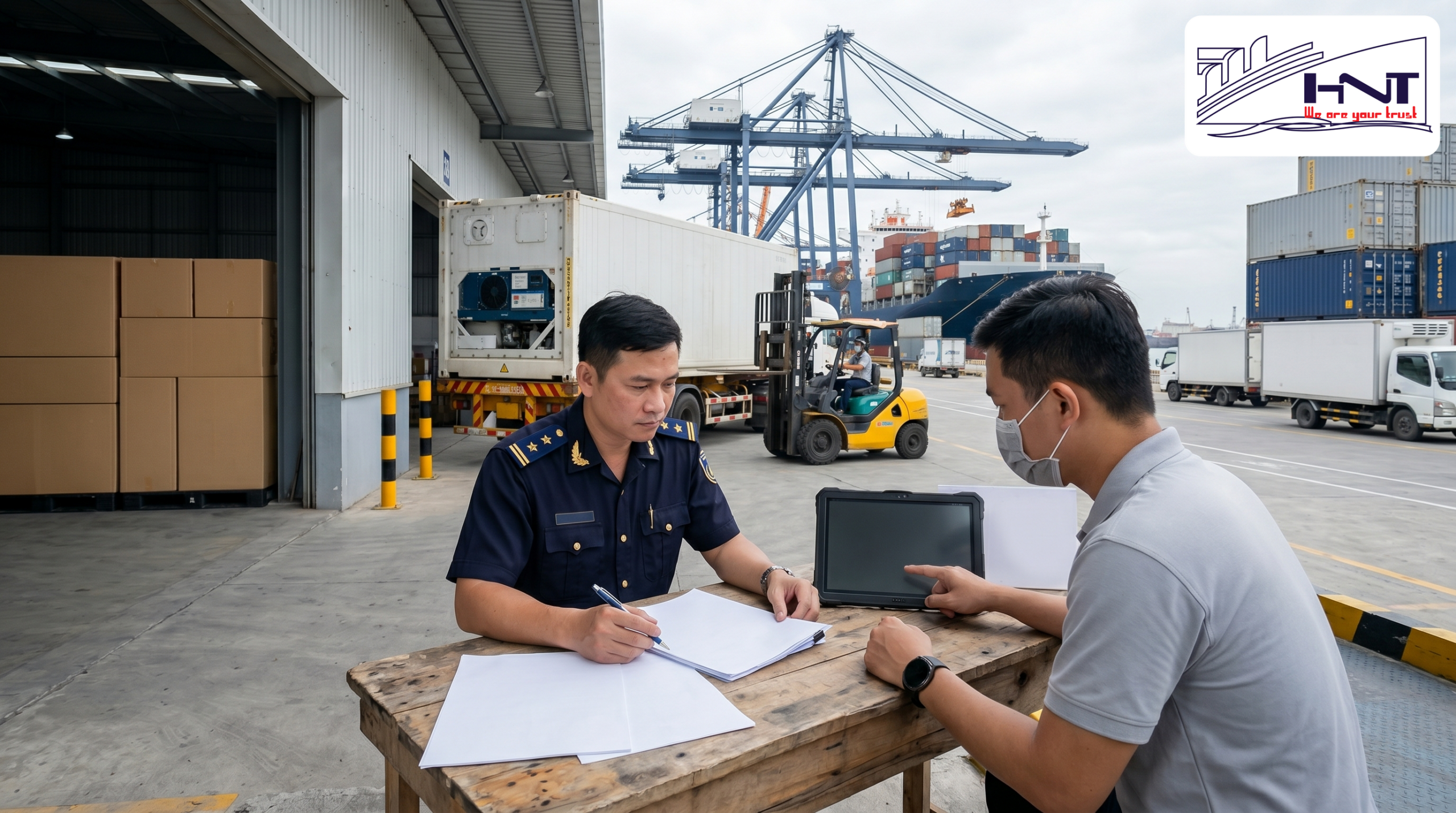
Customs clearance agent is becoming a mandatory solution for many import businesses as the free container storage period at ports gets shorter. Just a few days of delayed declaration can cause businesses to incur tens of millions of VND in DEM/DET fees.
According to updates from the General Department of Customs and the National Public Service Portal in 2026, document inspection time normal customs inspection takes a maximum of 2 working hours. Actual goods inspection takes a maximum of 8 hours if the documents are complete. However, many shipments are actually delayed due to missing quarantine documents, CO, or incorrect HS codes.
In 2026, Vietnam's seafood exports exceeding 11 billion USD according to VASEP. The pressure of refrigerated containers, vessel slots, and container turnaround time makes importers of raw materials increasingly need to optimize customs clearance time. This article helps businesses clearly understand the deadline for import customs procedures, how to coordinate with agents, and steps to avoid storage costs.
Customs clearance agents and the role of controlling customs clearance deadlines
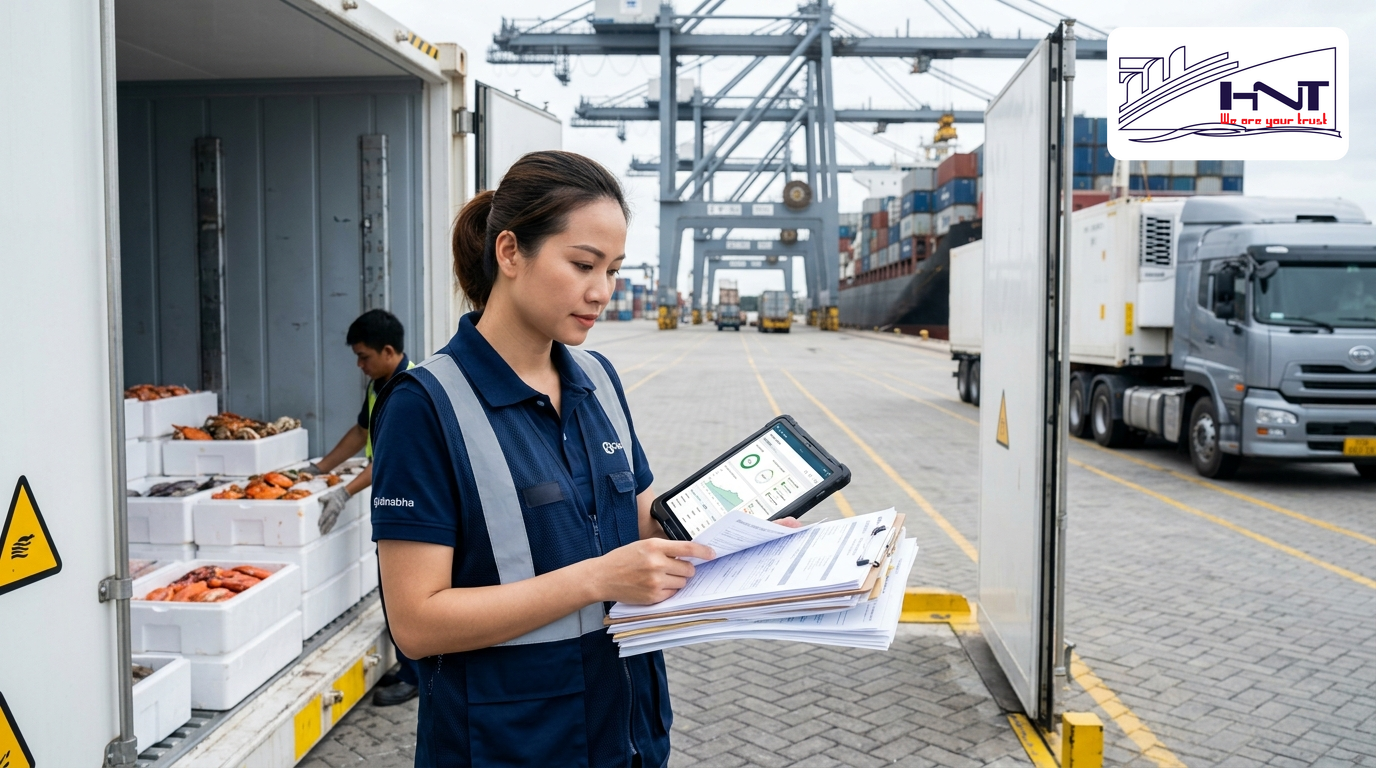
Legal framework on deadlines for import customs procedures
The deadline for import customs procedures depends on the type of goods, inspection level, and specialized documents. Under current regulations, businesses must submit declarations before or immediately when goods arrive at the border gate. If opening the declaration is delayed, businesses can easily lose their free container storage time.
For food products, frozen seafood, or machinery requiring specialized inspections, processing time usually extends by an additional 1 to 3 days. This is a common cause of storage fees arising at Cat Lai or Hai Phong ports.
| Category | Standard time | Risks arising | Related costs |
|---|---|---|---|
| Document inspection | 2 hours | Missing invoice | Storage fees |
| Customs inspection | 8 hours | Incorrect HS code | DEM/DET |
| Quarantine | 1-3 days | Missing certificate | Container detention |
| Applying for CO | 1 day | Wrong form | Delayed tax incentives |
- Preparing the manifest before ETA helps reduce declaration opening time.
- Checking the HS code before the vessel arrives at the port to avoid declaration amendments.
- Reviewing CO and invoice consistency with the container number.
- Monitoring vessel schedules and the carrier's free time.
- Checking quarantine requirements before the goods arrive at the port.
Minh Phu Food Company in Ca Mau once imported seafood materials from Busan to Cat Lai. Due to a missing Health Certificate, the shipment was held for an additional 4 days and incurred more than 42 million VND in refrigerated container storage fees.
A mechanical company in Binh Duong imported CNC machines from Osaka and declared the wrong HS code. The declaration correction process lasted two days, causing the entire factory delivery schedule to be delayed.
According to HNT LOGISTICS' experience, businesses should send scanned documents at least 48 hours before ETA so that agents can check validity and prepare early declarations.
Import customs declaration procedure through an agency
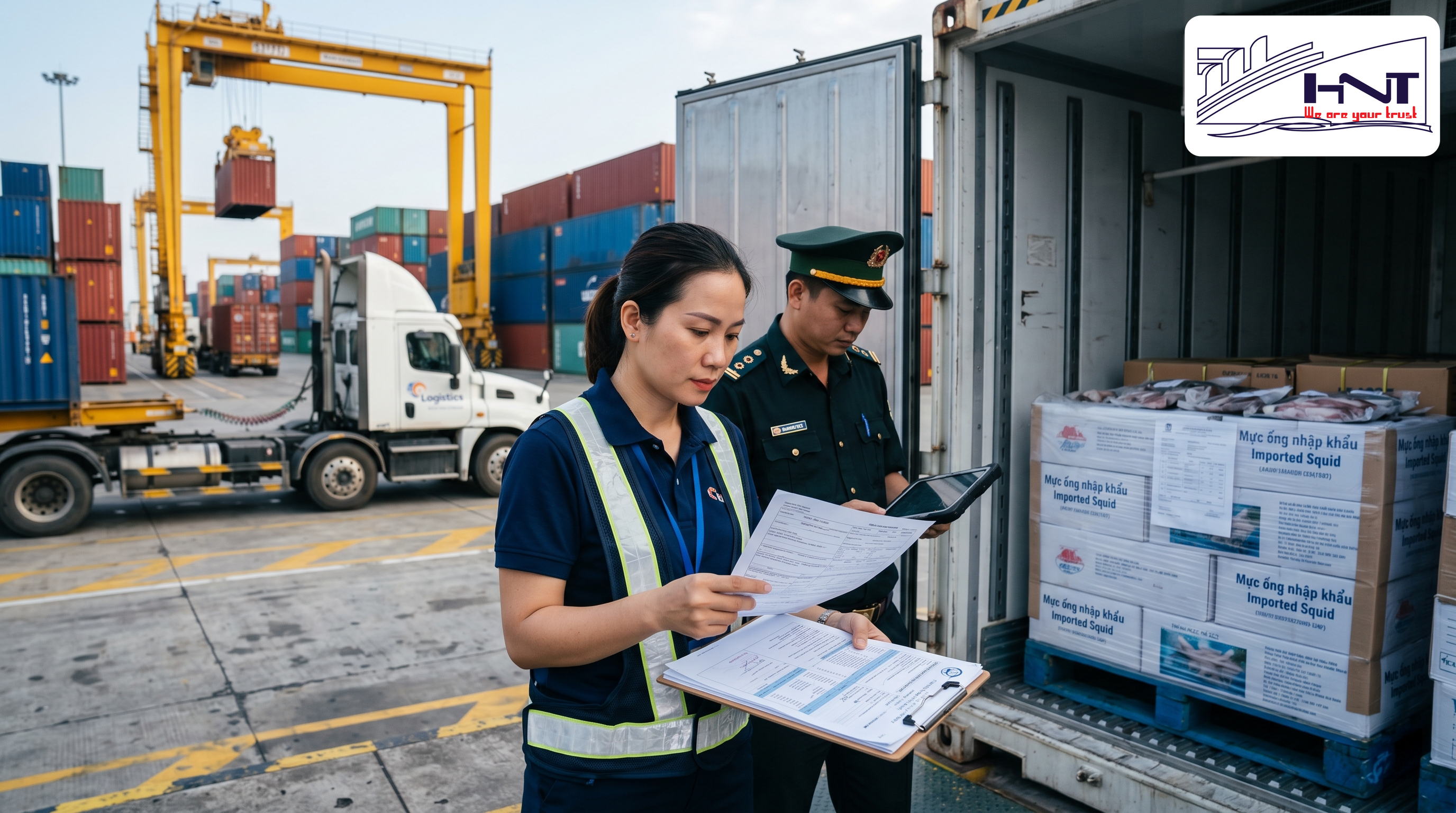
Declaration steps on VNACCS
The import customs declaration process usually begins with receiving the Arrival Notice and checking the manifest. The agency will compare the invoice, packing list, Bill of Lading, and import declaration type code before submitting the customs declaration.
After the VNACCS system assigns a clearance channel, the business proceeds with physical inspection or submits paper documents if required. Green channel shipments are usually completed within the day. Yellow or red channel shipments require additional inspection time.
- Receive the Arrival Notice and the shipping line's Debit Note.
- Check commercial documents and HS code.
- Submit the customs declaration through the VNACCS system.
- Pay import duty and VAT.
- Complete the physical inspection if assigned to the red channel.
- Obtain the delivery order and haul the container.
Documentation errors that cause businesses to incur storage penalties
Many businesses experience delays in import customs procedures due to incorrect product names, missing origin information, or invoices that do not match the packing list. These small errors often require customs to request declaration amendments.
For refrigerated cargo, prolonged customs clearance also increases the risk of losing the required storage temperature. This is especially serious for food ingredients or frozen seafood.
| Common errors | Consequences | Delay duration | Additional costs |
|---|---|---|---|
| Incorrect HS code | Amend declaration | 1-2 days | 5-20 million VND |
| Missing C/O | No preferential treatment | 1 day | Higher import tax |
| Missing quarantine inspection | Container hold | 2-3 days | Cold storage |
| Incorrect invoice | Customs requests additional documents | 1 day | DEM/DET |
Green Farm Company in Tien Giang imported frozen vegetables from Thailand and experienced delayed customs clearance because the invoice listed incorrect Incoterms. After making corrections, the business incurred an additional 18 million VND in storage charges.
An electronics company in Dong Nai importing components from Shenzhen was assigned to the red channel due to an incorrect gross weight. The agency had to submit additional technical documents within 24 hours.
HNT LOGISTICS recommends that businesses use a standard document checklist for each import route to reduce repeated declaration errors.
How customs brokerage services help reduce costs
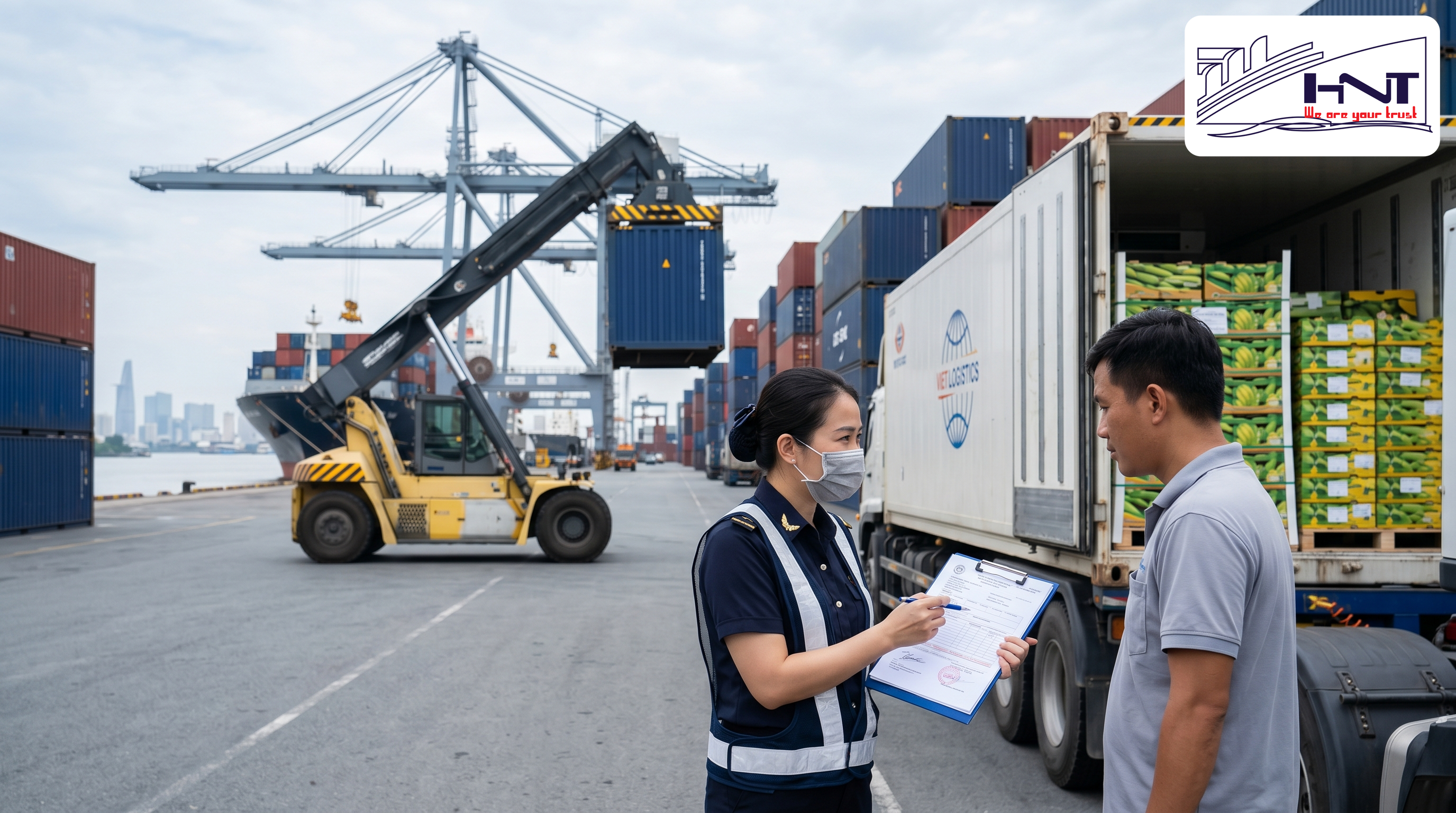
Comparison between self-declaration and hiring an agency
Customs brokerage services help businesses reduce the burden of document processing, especially for goods requiring quarantine inspection or FCL imports. Experienced agencies handle channel assignments and work directly with shipping lines, ports, and specialized inspection authorities.
Many small businesses submit declarations themselves to save costs. However, even a minor mistake can result in container storage costs far exceeding the agency service fee.
- The agency reviews the HS code before declaration.
- Check the shipping line's free time period.
- Support red channel processing and physical inspection.
- Coordinate quarantine procedures and specialized registrations.
- Optimize cargo pickup time at the port.
A fruit importing company in Long An once declared a refrigerated container from Melbourne to Cat Lai by itself. Due to the lack of a phytosanitary certificate, the cargo remained at the port for three consecutive days.
In contrast, a food business in Hai Phong hired an agency to prepare quarantine documents before the vessel arrived. The container was delivered to the warehouse on the same day the declaration was opened.
According to experts at HNT LOGISTICS, refrigerated import routes from China, South Korea, and Japan are currently facing shorter free time than before. Therefore, businesses should prepare complete documentation at least two days before the ETA.
Experience in handling import customs procedures to avoid risks
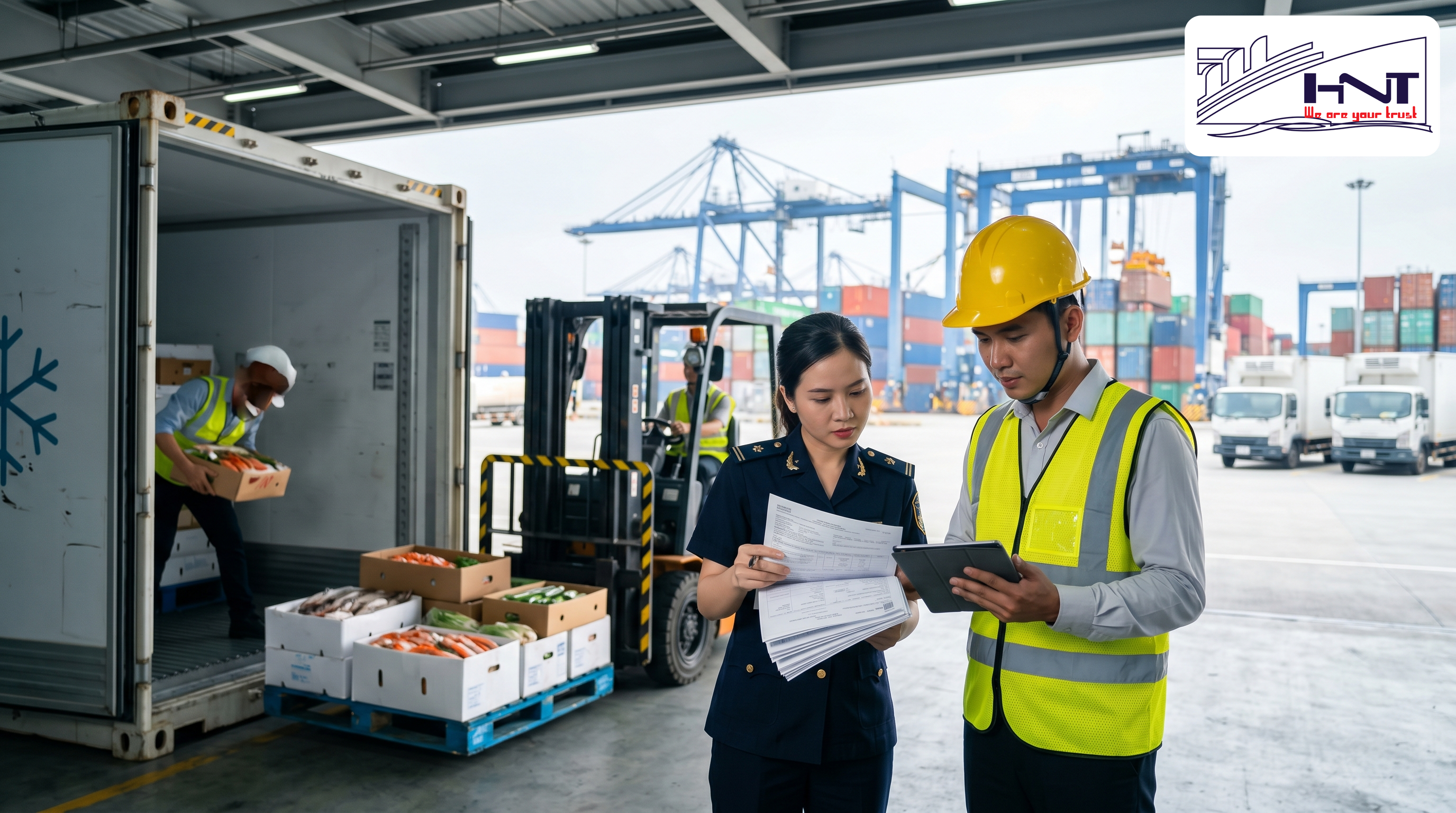
Checklist businesses should review before customs clearance
Businesses should establish a document inspection process for each product group. This helps minimize declaration amendments and avoid delays in receiving goods.
- Check that the product name matches on the invoice and packing list.
- Compare the container number between the BL and the manifest.
- Check the validity of quarantine documents and the Health Certificate.
- Confirm the HS code with the agency before declaration.
- Monitor the ETA and the cut-off time for obtaining the delivery order.
- Store electronic records for quick processing when requested by customs.
A company importing animal feed ingredients in Dong Nai reduced customs clearance time by 60% thanks to standardizing its document review process before ETA.
Meanwhile, a seafood importing company in Da Nang avoided more than 35 million VND in DEM charges by completing quarantine procedures before the vessel arrived at Tien Sa Port.
Businesses now need to closely monitor changes in quarantine regulations, traceability, and food safety requirements from the US and the EU. These factors directly affect import customs clearance processing time during the 2026-2026 period.
Customs clearance agent not only helps businesses complete documents in compliance with regulations but also effectively controls logistics costs as ports and shipping lines continue to tighten container storage time.
- Preparing documents before ETA helps reduce storage risks.
- Checking the HS code before opening the customs declaration is very important.
- Refrigerated cargo should prioritize early quarantine processing.
- Monitor the shipping line's free time daily.
- Synchronize the invoice, packing list, and BL to avoid declaration amendments.
- Hiring a professional agency helps reduce procedural errors.
As Vietnam's import and export activities continue to grow strongly in 2026-2026, businesses need to prioritize customs clearance speed and document accuracy. HNT LOGISTICS currently supports businesses nationwide with import customs procedures, refrigerated transportation, and optimizing container storage costs at major ports.