
An imported container that has arrived at Hai Phong does not necessarily mean it can be hauled to the factory immediately. Just a single incomplete delivery order, a declaration that does not meet conditions for passing through the supervision area, a container placed at the wrong yard, or a truck arriving at the wrong time can cause businesses to incur additional waiting time, storage fees, and risks of production schedule delays. Therefore, operations at Dinh Vu Port need to be viewed as a coordination chain between shipping lines, ports, customs, transport units, and receiving warehouses rather than a single truck trip.
For export cargo, the challenge is even stricter because businesses must simultaneously control booking, empty container release time, yard cut-off, document cut-off, VGM, customs procedures, and factory loading capacity. A delayed link can cause the container to miss the vessel schedule. This is also why the service container trucking from Hai Phong port needs to be associated with document coordination capability and port operation schedules, not only based on the number of available tractors.
What Is Hai Phong Dinh Vu Port? Analyzing Its Role in the Northern Import-Export Logistics Chain
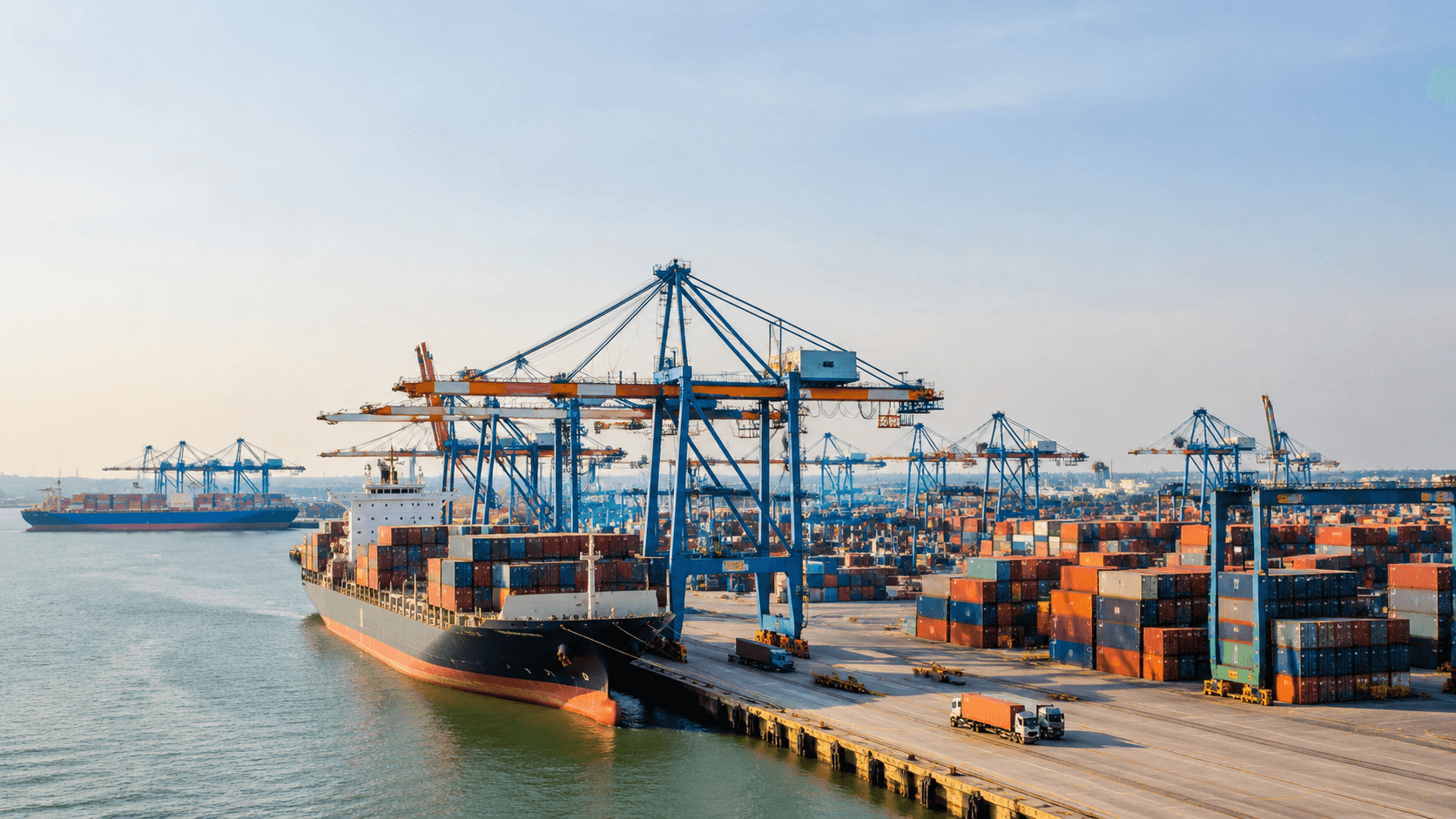
Overview of Dinh Vu port cluster, Nam Hai Dinh Vu Port and its position in the Hai Phong seaport system
Dinh Vu Port is located in the important eastern logistics gateway area of Hai Phong, where many container terminals, depots, bonded warehouses, industrial zones, and connecting routes to Hanoi, Hai Duong, Bac Ninh, and Quang Ninh are concentrated. According to information published by the operating enterprise, Dinh Vu Port has 2 berths with a total length of 425 m, a container yard of about 22 hectares, and an annual handling capacity of over 600,000 TEU.
In the same area, Nam Hai Dinh Vu Port is another container terminal and should not be confused with Nam Dinh Vu Port. Port management authorities confirm that Nam Hai Dinh Vu belongs to the Hai Phong seaport system and has container handling functions. Previous Gemadept documents recorded that this port has a berth length of about 450 m and a designed capacity of about 500,000 TEU/year.
In addition, VIP Green Port Hai Phong is located downstream of the Cam River, within the Dinh Vu – Cat Hai Economic Zone. The port announced that it has 2 berths with a total length of 400 m, a container yard capacity of about 12,000 TEU, and a system of up to 2,000 reefer container power plugs. These figures show that the Dinh Vu area is not a single port but an operational cluster with multiple terminal options and supporting service networks.
Characteristics of FCL container, reefer container, and import-export cargo operations through Dinh Vu Port
For FCL cargo, containers are delivered as a complete unit between the port and the loading or unloading location. Common configurations are 20-foot dry, 40-foot dry, and 40-foot high cube containers. Nominal external dimensions are usually about 6.06 m x 2.44 m x 2.59 m for 20-foot containers; 12.19 m x 2.44 m x 2.59 m for standard 40-foot containers; and a height of about 2.90 m for 40-foot high cube containers. Actual operating specifications must still be checked against the CSC plate of each container.
Reefer containers are more complex than dry containers because transportation plans must control set temperature, ventilation, refrigeration unit status, power outage duration, and power supply availability at the yard. For frozen food, the setting temperature is usually around -18°C to -25°C depending on the product; for fresh fruits, temperature and ventilation settings vary significantly according to each type of cargo, ripeness, and import market requirements. A fixed temperature should not be applied to all agricultural product groups.
Dinh Vu Port announces that it has reefer container handling areas and container yards serving containerized cargo. This is suitable for the export of seafood, food, fruits, and the import of raw materials requiring cold chain maintenance. However, businesses still need to check available power sockets, plugging time, PTI, yard receiving regulations, and specific shipping line requirements before each shipment.
Advantages of connectivity from Dinh Vu Port to industrial zones, warehouses, and Hai Phong sea routes
The greatest advantage of the Dinh Vu area is the connectivity between seaports and Northern production centers. From Hai Phong, containers can travel by road to industrial clusters in Hai Phong, Hai Duong, Hung Yen, Bac Ninh, Hanoi, Quang Ninh, or connect further into the northern corridor. The actual value does not lie only in geographical distance but in the ability to organize truck cycles, warehouse entry times, weight limits, and container free time.
For exports, businesses usually organize the factory – port – vessel route. For imports, the reverse flow is vessel – port yard – factory or ICD. If the shipment continues further by road, inland waterway, or rail, coordinating Hai Phong sea transport with domestic transportation creates a multimodal model that reduces transloading times and improves end-to-end container control.
Factors businesses need to evaluate before choosing Dinh Vu Port as a container delivery and receiving point
A terminal should not be selected only because it is close to the factory. For exports, the first deciding factor is usually the shipping line and the booking location where the container must be delivered. Then come vessel schedules, cut-off times, empty container availability, yard conditions, transportation time from warehouse to port, and congestion risks. A port that is 10 km closer but has longer truck waiting times can result in higher total costs.
For imports, businesses need to consider ETA, D/O availability time, customs clearance status, free time DEM/DET, warehouse receiving schedules, and empty return capability. Especially for cargo subject to specialized inspection, businesses must check product policies before scheduling trucks. Decision No. 31/2026/QD-TTg updated the list of certain imported goods requiring procedures at the import border gate, so each HS code and import type needs to be determined before creating a hauling plan.
Dinh Vu Hai Phong Container Delivery Service: Operating Process From Port To Factory Warehouse
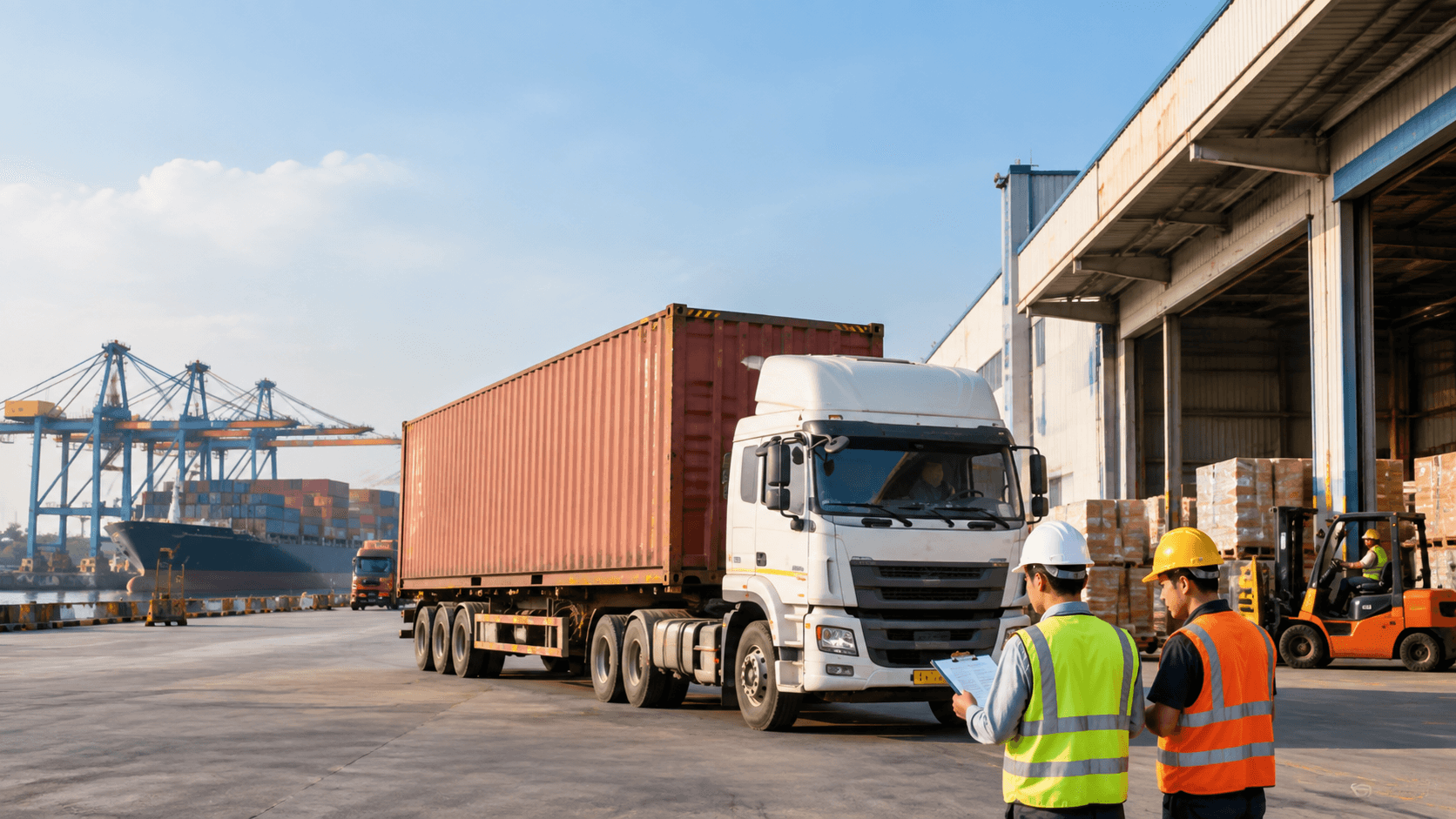
Receiving shipment information, vessel booking, container type and building a suitable delivery plan
A proper delivery plan must begin with shipment data. For exports, logistics providers need to receive booking, cargo name, container type, expected weight, loading location, cargo readiness date, warehouse operating hours, and cut-off times. For imports, additional information includes bill of lading, ETA, D/O, declaration status, delivery point, empty return requirements, and container free time.
HNT Logistics usually separates three layers when building a plan: commercial conditions and cargo owner's responsibilities; port – shipping line operating conditions; and actual transportation conditions. This approach helps avoid situations where the booking is correct but the truck has the wrong chassis type, or the container has customs clearance but the warehouse is not ready to receive it.
Container pickup process, EIR inspection, and coordination between port – shipping line – tractor before transportation
EIR is an important equipment interchange receipt when containers are handed over between parties. Drivers and coordinators need to check the container number, seal number, container condition, receiving depot or terminal, delivery time, and any abnormal notes. For empty export containers, severely dented shells, holes, unsecured doors, damaged floors, or reefer containers that have not passed PTI may directly affect the loading process.
Before trucks enter the port, coordinators should verify electronic delivery orders, necessary fee payment status, container codes, tractor license plates, chassis, and gate entry conditions. If data between the shipping line, port system, and driver's documents are inconsistent, the truck may arrive at the gate but cannot proceed with operations.
Coordinating container drayage from Dinh Vu Port to warehouses, factories, or domestic transshipment points
After the container leaves the port, distance is not the only factor determining vehicle productivity. Travel time is affected by peak hours, restricted routes, toll stations, waiting time at factories, cargo weighing, and security procedures. For large industrial zones, drivers may also need to register license plates in advance or complete safety procedures before entering the unloading area.
Logistics container trucking from Hai Phong port Efficiency needs to be coordinated based on truck cycles rather than separate trips. If import trucks can return empty containers to suitable depots or connect with the next export booking, transport businesses can reduce empty kilometers. However, combining operations is only possible when the shipping line, container type, depot, and delivery schedule allow it.
Controlling delivery documents, yard drop-off times, and handling arising situations at the port
For export cargo, key milestones need to be controlled on a timeline including cargo completion time, VGM declaration, customs declaration opening, customs clearance, yard drop-off, and vessel cut-off. Trucks should not depart from the factory when document status is still unclear, especially for long distances. Arriving too early increases waiting time; arriving too late risks missing the vessel.
For import cargo, it is necessary to distinguish between containers unloaded from vessels, containers qualified for delivery, issued D/O, and declarations completed for supervision. These are four different statuses. The regulations of customs authorities and specialized inspection policies must be checked according to HS code, cargo type, and actual goods instead of applying experience from previous shipments to later ones.
Dinh Vu Port Hai Phong Container Drayage: Solutions for Controlling Cargo Safety and Progress
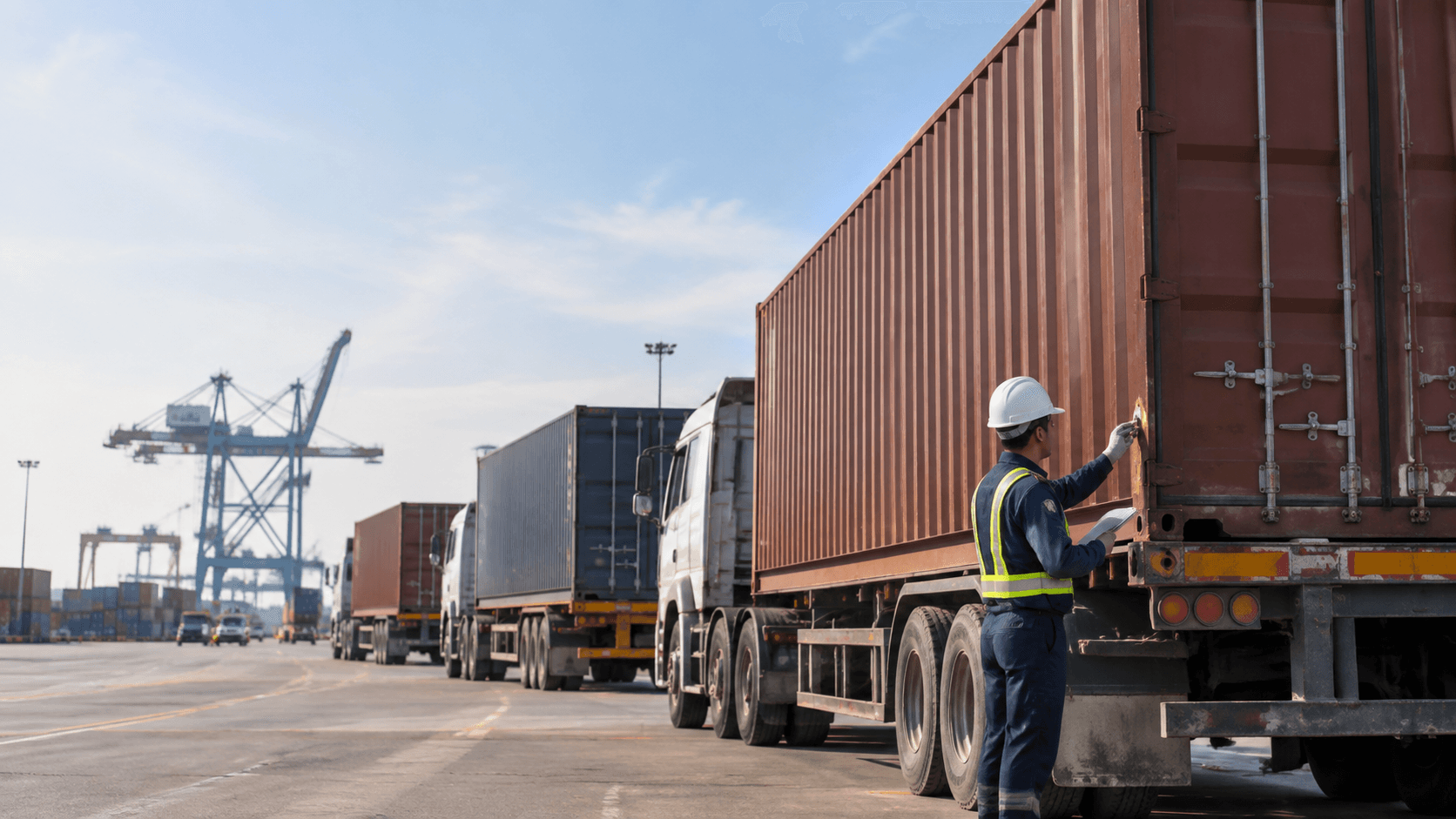
Container tractor truck coordination process for import-export cargo in the Dinh Vu area
Coordination usually begins before truck departure time. For export cargo, coordinators receive booking, check empty container pickup locations, arrange trucks to depots, haul containers to factories, wait for loading, and deliver containers to ports. For import cargo, the common sequence is confirming cargo pickup eligibility, sending tractors into terminals, receiving containers, delivering to factories, unloading, and returning empty containers according to shipping line instructions.
Each status needs a timestamp so the operations department knows where the container is: truck departure, depot arrival, container pickup, warehouse arrival, loading completion, warehouse departure, port gate entry, or delivery completion. This data is especially necessary when businesses operate multiple containers under the same booking because one delayed container can affect the overall plan.
Criteria for selecting dry container and reefer container transport vehicles for each cargo group
20-foot containers are often suitable for high-density goods or shipments with moderate volume, while 40-foot and 40-foot high cube containers are suitable for bulky goods or goods requiring more volume. However, cargo weight cannot be determined only from the container name. Businesses must check the maximum gross weight and tare on the CSC plate, while also comparing the load limits of tractors, chassis, and routes.
| Type of Container | Reference external dimensions | Common applications | Items to check before hauling |
|---|---|---|---|
| 20 feet dry | Approximately 6.06 x 2.44 x 2.59 m | Raw materials, machinery, heavy cargo | CSC plate, cargo weight, 20-foot chassis or compatible chassis |
| 40 feet dry | Approximately 12.19 x 2.44 x 2.59 m | Palletized goods, large-volume cargo | Vehicle length, turning radius, warehouse access capability |
| 40-foot high cube | Approximately 12.19 x 2.44 x 2.90 m | Lightweight but bulky goods | Overall height and route obstacles |
| 20/40 feet reefer | Depending on equipment type | Agricultural products, food, seafood | PTI, temperature, ventilation, power supply, and refrigeration unit data |
For reefers, drivers and coordinators do not only monitor the vehicle but also need to manage the refrigeration unit status. Before loading, PTI, cleanliness, door gaskets, T-floor, and settings must be checked. After loading, unnecessary door openings should be minimized. If the journey is long or there is waiting time, the power supply plan must be determined in advance.
Risk control during transportation: port congestion, container pickup waiting and delivery schedule delays
The most common risks are not accidents but time losses at the interaction points between two systems: the truck arrives but the port is not ready, the container is ready but the D/O has not been completed, the cargo has been cleared but the factory has no receiving slot. Therefore, dispatchers should check the status before sending trucks instead of solving problems after the truck is already waiting.
For exports, cut-off time needs a safety margin. If the route from the factory to the port takes three hours under normal conditions, three hours should not be considered sufficient by default. Businesses must add buffer time for congestion, weighing, seal replacement, document errors or equipment incidents. For high-value cargo or shipments with infrequent vessel schedules, the buffer margin should be larger.
Applying GPS, route management and driver coordination to ensure continuous container status tracking
GPS helps determine the truck's location but does not automatically solve problems. An effective operating system needs to combine location with operational status: waiting at the gate, lifting the container, delivering to the factory or returning the empty container. When data is standardized, dispatchers can detect delayed containers before customers have to call for updates.
For refrigerated cargo, journey monitoring should include set temperature, supply and return temperatures if the equipment supports it, machine warnings and power outage duration. A truck arriving on time but with a reefer losing cooling for an extended period is still a transportation failure.
Nam Hai Dinh Vu Port And VIP Greenport Hai Phong Port: Differences When Developing Logistics Plans
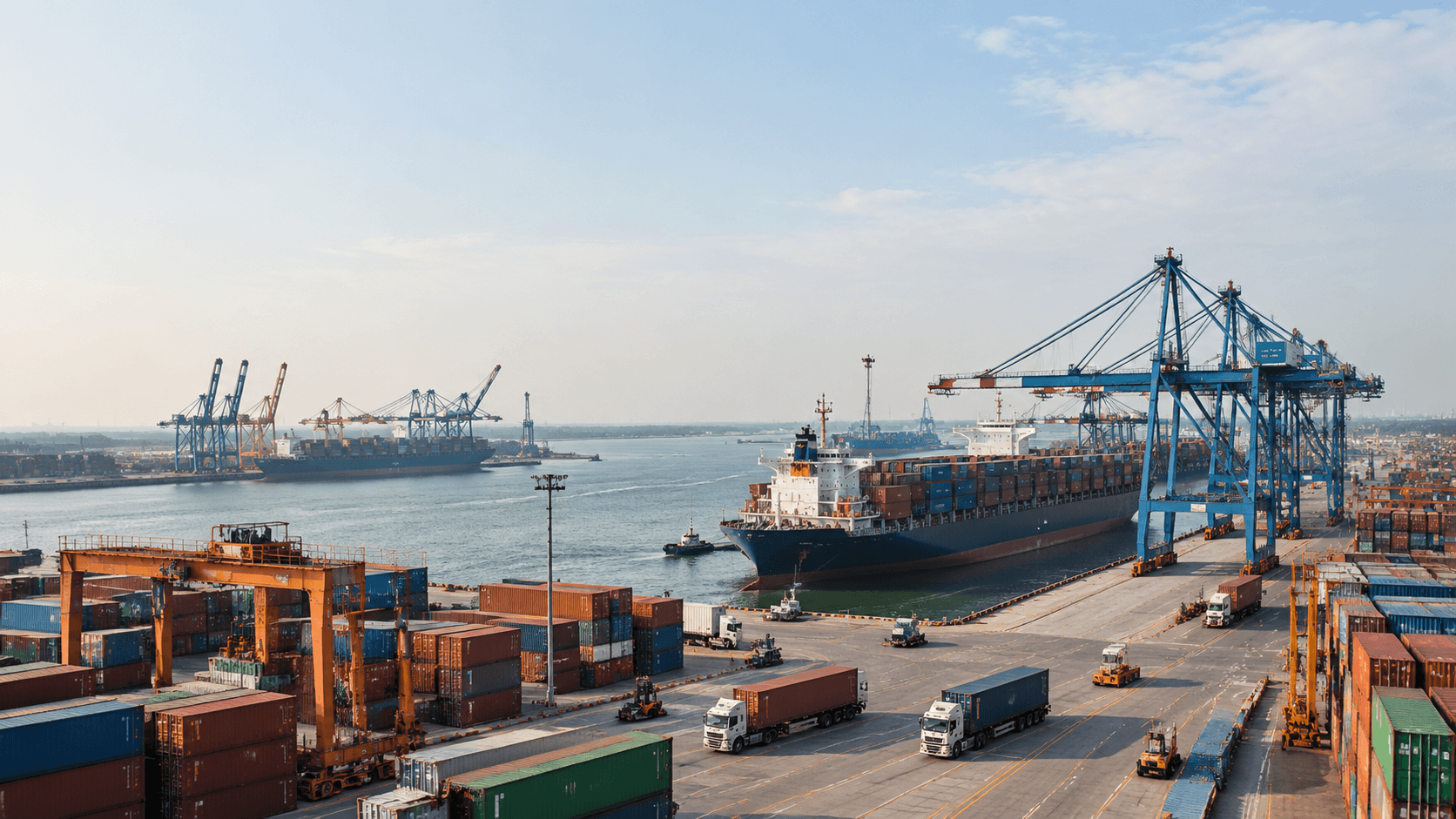
Operational characteristics of each port in the Dinh Vu port cluster in Hai Phong
Dinh Vu Port, Nam Hai Dinh Vu and VIP Greenport are all located in the Hai Phong logistics area but are terminals with their own operating systems, tariffs, shipping lines and operation schedules. Businesses should not use the general name “Dinh Vu port” on transport orders because drivers need the exact terminal to avoid entering the wrong gate or handling incorrect instructions.
Dinh Vu Port announces a capacity of over 600,000 TEU/year and a yard area of about 22 hectares. VIP Greenport announces a yard capacity of 12,000 TEU, 2,000 reefer plugs and an average handling productivity of 28 moves/hour/equipment. Nam Hai Dinh Vu is identified by the management authority as a container berth belonging to Hai Phong seaport.
Comparing container handling capacity, connection locations and cargo service scope
| Criteria | Dinh Vu Port | Nam Hai Dinh Vu | VIP Greenport |
|---|---|---|---|
| Main operation type | Container, general cargo | Container terminal | Container, yard services and handling |
| Reference berth length | 2 berths, total 425 m | Gemadept documents previously published approximately 450 m | 2 berths, total 400 m |
| Published capacity/yard | Over 600,000 TEU/year | Design capacity previously published at approximately 500,000 TEU/year | Yard capacity of about 12,000 TEU |
| Refrigerated | Has reefer infrastructure | Need to check capacity based on booking and timing | Published approximately 2,000 reefer plugs |
| Key selection factors | Booking, shipping line, vessel schedule, delivery point | Booking and service route | Booking, vessel schedules, reefer capacity and tariff rates |
The parameters in the table are used to understand terminal capacity, not as a basis for independently selecting a port instead of the shipping line. In container transportation, booking usually specifies the port of drop-off, empty container depot and cut-off time. Businesses need to use specific shipment data as the final basis.
How to choose the appropriate port based on vessel schedules, Hai Phong sea routes and final delivery points
For exports, the first criterion remains a suitable vessel route to the destination port, ETD date and transit time. A cheaper vessel schedule that only operates once a week can create significant risks if the container misses the sailing. Conversely, a high-frequency route allows businesses to have more alternatives when production is delayed.
For inland operations, it is necessary to calculate the distance from the factory to the port, vehicle turnaround time and empty container depot. If a container is imported to Bac Ninh but the designated empty return depot is in the opposite direction, actual costs may increase significantly. Therefore, route selection Hai Phong sea transport must be calculated based on total door-to-door costs rather than only ocean freight.
The role of logistics providers in optimizing operating plans between ports in the Dinh Vu area
A logistics provider adds value when it consolidates data from shipping lines, terminals, customs, truck fleets and factories into a single plan. If each party optimizes separately, the shipping line may choose a convenient sailing schedule while the factory does not have enough time to load cargo; the truck fleet may arrive on time but there is no delivery order yet.
Information from Vietnam Maritime and Inland Waterway Administration, ,.
Hai Phong Maritime Administration and the official websites of each terminal should be used to verify berth names, functions, maritime notices and operating conditions. This is especially necessary when there are channel dredging activities, changes in operating conditions or updated operational regulations.
Detailed Price List of Freight Forwarding and Container Haulage Services at Dinh Vu Port Hai Phong
Table of factors forming container haulage costs: container type, distance, waiting time and port surcharges.
| Cost group | How to determine | Container haulage prices should not be understood as a fixed rate for 'Dinh Vu – Hai Phong'. Two shipments with the same distance may have different prices if one uses a 20-foot container and the other uses a 40-foot reefer, or if one warehouse allows immediate truck entry while another requires four hours of waiting. Accurate quotations need to separate basic transportation charges and additional conditions. |
|---|---|---|
| Tractor freight | Points to ask when receiving a quotation | Container type, km, empty pickup – delivery – return points |
| Waiting fee | Are road tolls and fuel included | Number of hours the truck/chassis is held at the port or warehouse |
| Handling | How long is the free waiting time, and from what point is it calculated | According to terminal/depot and container type |
| Refrigeration | Which party is responsible under the delivery terms | Reefer plug-in time at the yard |
| Free port | Calculation by hour, shift or day | According to the terminal's current tariff schedule |
| Are there fuel surcharges or special service fees | Overtime fees | Occurring outside the agreed time frame |
Applicable rates at night, Sundays and holidays.
VIP Greenport currently publishes a service tariff applicable from 15/01/2026 and information on handling and lifting surcharges based on fuel fluctuations applicable from 28/03/2026. Therefore, businesses should not use an old fee schedule for all periods but should check the effective tariff at the operation date.
Cost analysis table for transporting 20-foot containers, 40-foot containers and refrigerated containers in the Hai Phong area.
| Because trucking rates change according to delivery points, load capacity, time slots, vehicle availability and empty return depots, HNT Logistics does not recommend publishing a hypothetical price and applying it to all businesses. The table below shows the actual quotation structure that should be used when requesting prices; the final amount is confirmed when the pickup point, delivery point, container type and transport schedule are fully available. | Service type Basic freight | Additional charges if incurred | Data required to finalize pricing |
|---|---|---|---|
| 20-foot dry container hauling | Quoted per trip/route | Waiting time, road/bridge fees, lifting, overtime, long-distance empty return | Delivery point, cargo load, depot, operating date |
| 40-foot dry container hauling | Quoted per trip/route | Waiting time, road/bridge fees, lifting, route restrictions | Warehouse address, receiving hours, chassis type |
| 40-foot HC container hauling | Quoted per trip/route | May require height/route survey if arising | Cargo height and warehouse access conditions |
| Refrigerated container hauling | Trucking rate + reefer operation requirements | Refrigeration power, genset if needed, waiting time, PTI, cold system incident handling | Set point, running time, commodity, ventilation |
If businesses need a reference for domestic sea freight costs, HNT once published reference rates for the Hai Phong – Ho Chi Minh City route at around 6.5-8.5 million VND for 20GP and 9.5-12.5 million VND for 40GP, excluding VAT and surcharges. This is a reference sea freight rate, not the container hauling price from Dinh Vu Port to the factory and should not be used as a substitute for current trucking quotations.
List of fees to check before transportation: lifting, storage, DEM/DET and additional costs
DEM, DET and storage fees are often grouped together in discussions but their nature is different. DEM relates to the time a loaded container stays under the shipping line control at the terminal beyond free time; DET usually relates to the time a container is kept outside the port beyond the free period; storage is a terminal yard fee applied by the terminal. Specific calculations vary by shipping line, port, container type and period.
| Charge | When additional charges may arise | Prevention methods |
|---|---|---|
| Container lifting/loading and unloading | Receiving, delivery, yard transfer or depot transfer | Check terminal/depot fee schedules before dispatching the truck |
| Storage | Container stays in the yard beyond free time or according to the fee schedule | Complete customs clearance and pick up cargo early |
| DEM | Loaded container stored at terminal beyond the shipping line free time | Monitor ETA, D/O and free time expiry date |
| DET | Keeping the container outside the terminal beyond free time | Schedule cargo unloading and empty container return from the beginning |
| Vehicle waiting fee | Depot/port not ready when the truck arrives | Book a slot and confirm status before dispatching |
| Reefer electricity fee | Refrigerated containers plugged into power at the yard | Accurately calculate gate-in and vessel loading time |
| Change order or adjustment fees | Incorrect booking, depot, container number or documents | Cross-check data before issuing trucking orders |
How businesses optimize logistics budgets when using full-service container freight forwarding
Optimization does not mean simply choosing the lowest trucking quotation. A low quote that does not specify waiting fees, road tolls, empty return fees or free time limits can make the total cost after the shipment higher. Businesses should request quotations with a clear all-in structure: what is included, what is excluded and which cases are considered additional charges.
A more effective way to reduce costs is to cut non-value-added time. When customs, shipping lines and trucking teams are coordinated by the same focal point, trucks can be arranged based on actual status rather than predictions. For regular shipments, businesses should measure three indicators: average waiting time, on-time delivery rate and costs incurred outside the quotation.
Optimize the Supply Chain Through Dinh Vu Port Hai Phong With HNT Logistics Multimodal Logistics Solutions
Combining Hai Phong sea freight with road transportation to shorten delivery and receiving time
The most effective model for many FCL shipments is to directly connect sea freight with trucking at both ends. Export cargo is assigned an empty container, packed at the factory, delivered to the port and loaded onto the vessel; imported cargo is received as a full container and delivered directly to the warehouse. By limiting transshipment, businesses reduce the risk of loss, shorten intermediate handling time and make responsibilities easier to identify.
HNT Logistics implements multimodal transportation by creating a unified plan for sea legs, road legs, containers, documents and delivery schedules. The term multimodal transportation here does not simply mean combining two transport methods, but controlling the transfer points between them to avoid creating additional waiting time.
Coordinating customs declaration, clearance and end-to-end container hauling services through one focal point
For imported cargo, truck coordination must follow declaration status instead of being separated from the documentation department. If the truck arrives before delivery conditions are completed, businesses incur waiting fees. If they only call trucks after full clearance, they may lack vehicles during peak hours. The better approach is to reserve transport capacity in advance but activate trucks according to procedural milestones.
HNT Logistics can coordinate customs declaration, C/O, phytosanitary inspection and container transportation according to shipment scope. Basic documents usually include commercial invoice, packing list, bill of lading, contract when required and relevant specialized documents. However, exact requirements must be determined based on HS code, product policies and import-export type.
Refrigerated container transportation solutions for agricultural exports through Dinh Vu Port
For fruits and agricultural products, a common mistake is focusing only on temperature while ignoring ripeness, ventilation and the time from harvesting to container loading. Refrigerated containers mainly maintain preservation conditions; they are not quick-freezing equipment for hot cargo. Goods must be processed or pre-cooled according to technical requirements before loading.
The process should check empty containers, PTI, cleanliness, odors, T-floor, loading limit marks and machine settings. After loading, the seal, temperature and yard delivery time must be controlled. For exported fruits, phytosanitary documents and importing market requirements must be completed at the right time to avoid prolonged refrigerated container waiting.
HNT Logistics has experience transporting fruits, seafood and refrigerated containers, while also operating routes related to the Chinese market. For agricultural products exported to China, sea routes through Hai Phong or road routes through border gates should be compared based on shelf life, delivery schedules, quarantine policies, border gate capacity and total supply chain costs rather than only one-leg freight rates.
HNT Logistics accompanies businesses in controlling costs, cargo safety and operational efficiency for import-export activities
The value of a logistics provider at Dinh Vu Port lies in the ability to oversee the entire process from booking to final delivery. A good solution must answer where the container is picked up, when the truck runs, what status the documents have reached, how much free time remains, when the warehouse receives the cargo and who is responsible if the schedule changes.
HNT Logistics provides FCL sea and road container transportation, container hauling within Hai Phong port clusters, North-South refrigerated transport, customs declaration, C/O support, phytosanitary inspection and Vietnam – Laos – China cross-border transportation. For each shipment, HNT builds a solution based on container type, delivery points, vessel schedule and actual legal requirements instead of applying a general price list to all customers.
For businesses that regularly operate through Dinh Vu Port Hai Phong, the goal is not only to move containers from point A to point B but also to reduce waiting time, control DEM/DET, minimize vessel rollovers and ensure cargo is handed over in the correct condition. This is how logistics transforms from a mandatory expense into a tool that protects production plans and delivery commitments.
Businesses needing to build plans for receiving, container hauling, refrigerated cargo or full-service logistics through Dinh Vu Port can contact HNT Logistics để kiểm tra tuyến, cấu hình container và báo giá theo lô hàng thực tế.