


Import-export businesses often look at ocean freight first, but budget errors usually come from charges collected at both ends of the port. Just one misunderstanding what is thc fee, incorrect DEM/DET free time, or missed CFS fees can make the total cost of a container differ significantly from the estimate. Therefore, local charges must be checked together with booking, Incoterms conditions, vessel schedule, and container trucking plans, rather than separated into a fee table to review later.
When learning about what thc fee is, from an operational perspective, local charges are not a single fee but a group of costs associated with port operations, containers, documents, and local services. Charges vary by shipping line, port, container type, route, timing, and commercial policies. According to Maersk OHC/DHC notices in Vietnam effective from May 2026, terminal handling rates are published separately for 20-foot, 40-foot, reefer, and special containers, showing that businesses should not use one fixed THC price for all shipments.
What Is THC Fee? Explaining Container Handling Costs in the Sea Logistics Supply Chain
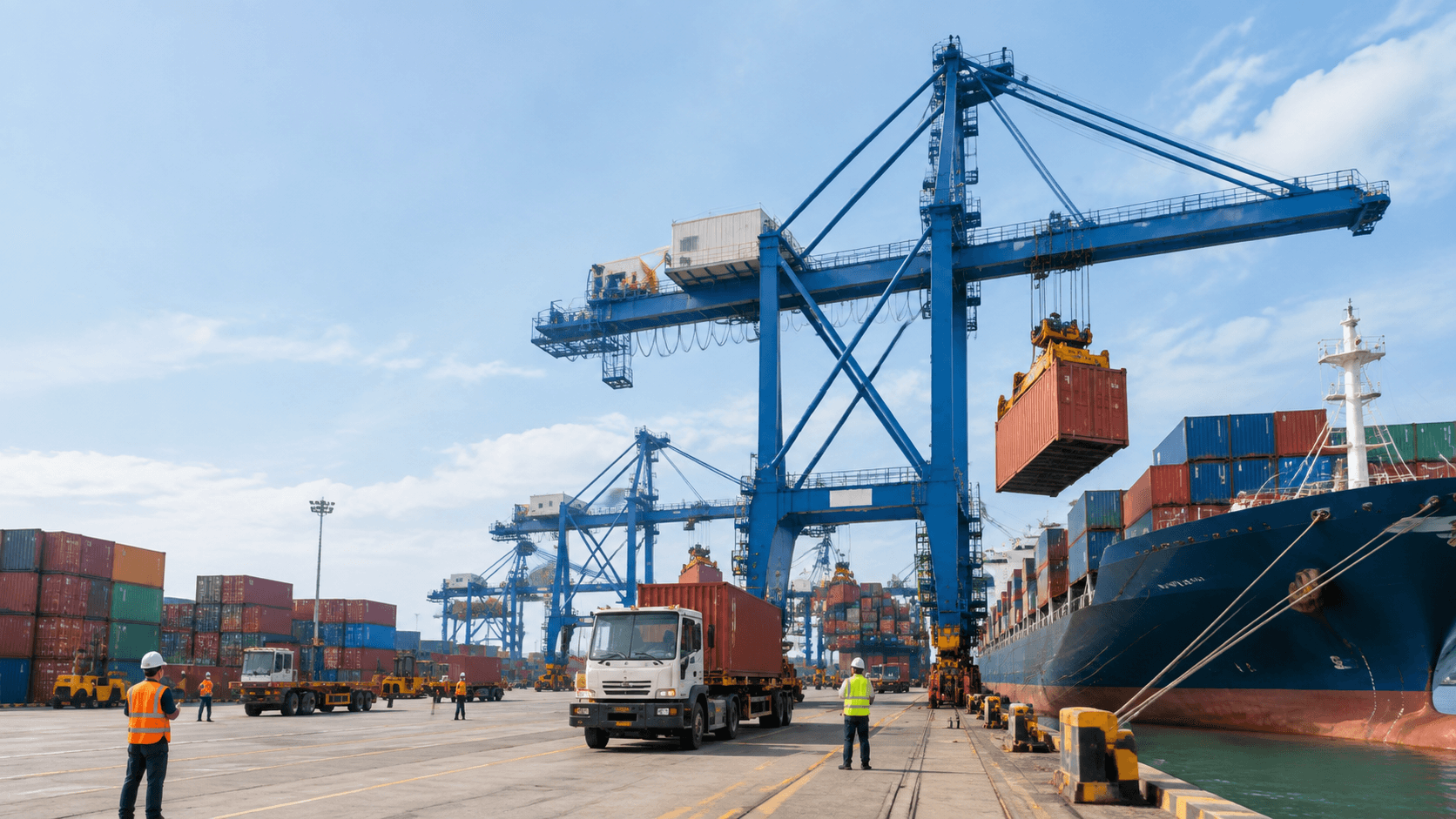
The concept of THC fee and the role of container lifting and handling charges in FCL sea transportation
For the solution of what thc fee is, THC, abbreviated as Terminal Handling Charge, is a fee related to container handling at the port terminal. In an FCL shipment, this charge is usually associated with processes from when the container enters the port operation system, moves within the yard, and is loaded onto the vessel at the origin, or unloaded from the vessel to the yard at destination. THC is therefore different from international ocean freight, which is paid for the main transport leg between two ports.
During transportation and customs clearance, what thc fee is, in practice in Vietnam, many shippers call THC a lifting fee, but the two concepts are not always identical. A lifting fee can be a specific service such as lift-on/lift-off at a depot or port, while THC is a broader cost component collected by the shipping line or operator according to the tariff. When receiving quotations, read the charge code, unit, and applicable conditions correctly instead of relying only on common names.
What items are included in THC for port operations: loading, container movement, and yard operations
To optimize costs and schedules, what thc fee is, operationally, THC generally reflects the cost of using equipment and labor to handle containers in the terminal: berths, quay cranes, forklifts or specialized equipment, internal movement between berth and yard, container positioning, and related operational management activities. The exact scope depends on the tariff of the shipping line, port, and service contract, so THC should not automatically be considered as including all port-related charges.
According to HNT Logistics practical operating experience on what thc fee is, for example, storage fees, inspection fees, handling for inspection, reefer electricity, container cleaning, container repair, or port change fees are usually separated. Businesses should ask forwarders to clearly explain which charges are included in THC and which are independent charges. This is especially important for reefer containers because additional electricity, temperature monitoring, or plug-in/plug-out service fees may arise depending on the terminal.
Difference between THC at the origin port (Origin THC) and THC at the destination port (Destination THC)
When learning about what thc fee is, THC at the origin is often shown as Origin THC or OHC, while at destination it may appear as Destination THC or DHC. Origin THC relates to container handling at the terminal before loading onto the vessel; Destination THC relates to handling after the vessel arrives and the container is discharged to the terminal. These two charges may be the same or different depending on the shipping line and market.
For the solution of what thc fee is, Maersk currently publishes separate OHC and DHC charges for Vietnam by container type. For example, the tariff effective from May 1, 2026 for Vietnam to worldwide and worldwide to Vietnam routes lists 3,250,000 VND/container for 20-foot dry and 5,000,000 VND/container for 40-foot dry, while reefer containers have higher rates. This is only an example from one shipping line at one point in time, not a general market tariff.
Why import-export businesses need to clearly understand THC fees before signing transport contracts
During transportation and customs clearance, what thc fee is, understanding THC correctly helps businesses separate three cost layers: ocean freight, local charges, and domestic transportation costs. If these three layers are mixed into one all-in figure without explanation, buyers find it difficult to compare quotations and may discover differences too late, after booking confirmation or container entry into the port. This is a common reason actual costs exceed the initial budget.
To optimize costs and schedules, what thc fee is, a good quotation should specify charge name, fee amount, unit calculated by container or bill of lading, currency, validity period, and exclusions. For routes requiring hai phong port container trucking, businesses must also check the specific terminal such as Dinh Vu, Tan Vu, or Lach Huyen because empty container pickup and return locations, trucking time, and yard conditions can change the total implementation cost.
What Is THC Fee When Allocating Payment Responsibilities Under Incoterms Delivery Terms
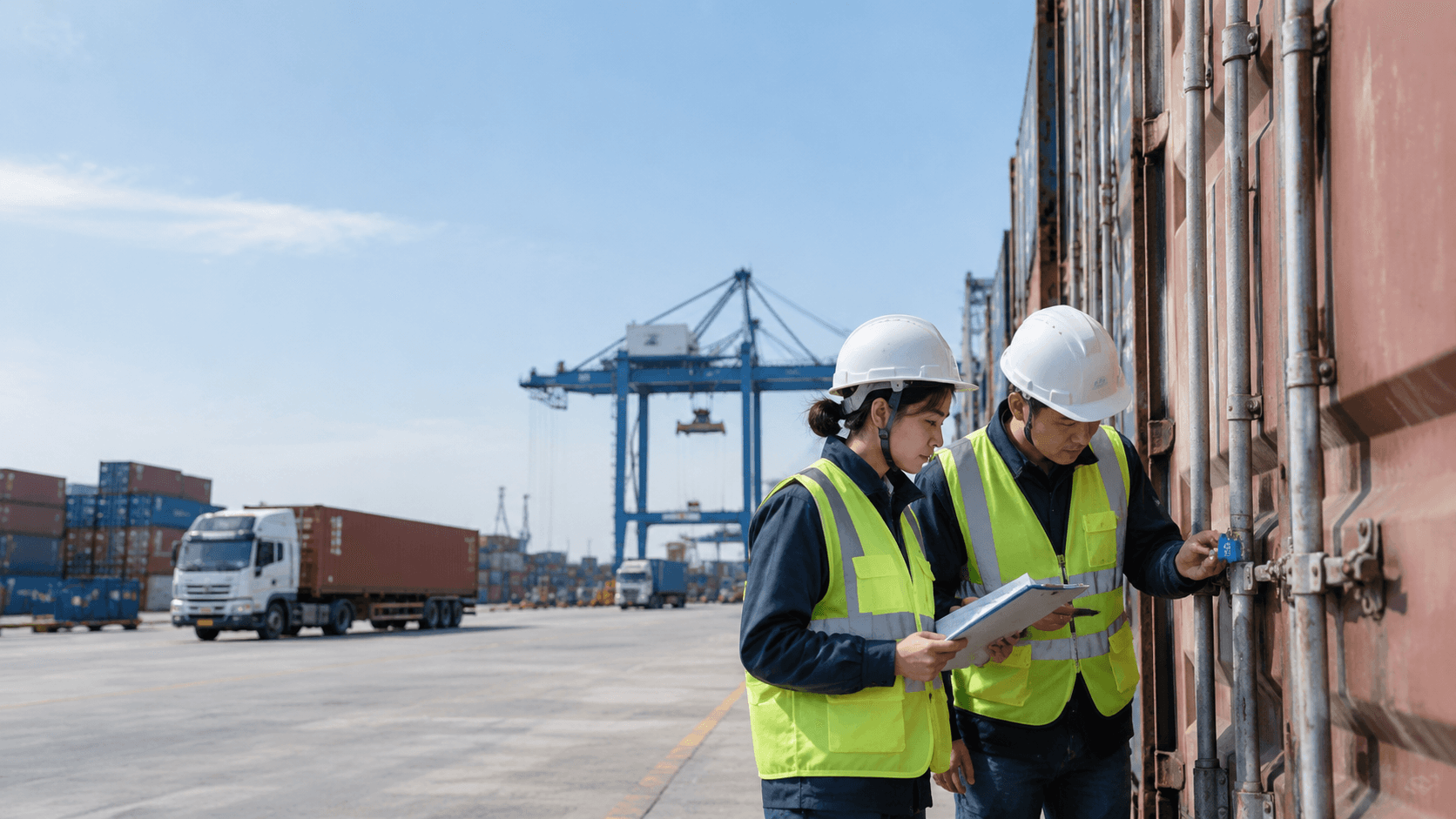
How to determine the party responsible for THC fees under FOB, CIF, EXW, and DDP conditions
According to HNT Logistics practical operating experience on what thc fee is, Incoterms allocate delivery obligations, costs, and risks between seller and buyer, but a mechanical rule should not be used to conclude who always pays THC. Under FOB, the seller bears costs to deliver goods on board at the origin port, while the buyer arranges the main transport; under CIF, the seller also contracts and pays freight to the destination port. However, whether THC is included in freight or separated depends on the transport contract and tariff.
When learning about what thc fee is, with EXW, the buyer carries most of the transport chain from the pickup point, so in practice they often need to control local charges at both origin and destination. With DDP, the seller has the broadest obligation up to the agreed delivery location, including import procedures under the applicable terms. ICC also emphasizes that cost obligations must be read together with the delivery point of each Incoterms rule, so foreign trade contracts need to clearly state the Incoterms version and specific location.
Relationship between THC fees, international ocean freight, and comprehensive logistics quotations
For the solution of what thc fee is, international ocean freight is the container transport price on the port-to-port leg, while THC is a terminal fee at one or both ends. When a forwarder provides an all-in logistics quotation, these parts may be combined commercially but should still be separated in cost analysis tables. Separation helps businesses identify which part changes with ocean freight market conditions and which part depends on local fees, ports, or shipping lines.
HNT Logistics also notes that all-in only has value when the scope of all-in is defined. Quotations should clearly state whether they include THC, D/O, handling, seal, CIC, cleaning, lifting fees, and whether DEM/DET are considered additional costs outside the estimate. Standardizing quotation structures helps purchasing departments avoid incorrect comparisons between suppliers that combine fees differently.
Points to check in booking notes, bills of lading, and foreign trade contracts to avoid additional costs
Booking notes should be compared with container number, equipment type, origin port, destination port, terminal, ETD, cut-off, free time, and charge terms. On the bill of lading, businesses should check shipper, consignee, notify party, loading/discharge ports, freight term prepaid or collect, and related notes. Foreign trade contracts must match delivery terms, delivery point, cargo type, document responsibilities, and the party appointing the shipping line.
- Confirm Ocean Freight and all local charges at origin and destination.
- Record free DEM, free DET, and how the start and end dates are calculated.
- Check the terminal, empty container pickup location and container return location.
- Compare Incoterms conditions, freight prepaid/collect and the paying party.
- Save the valid quotation version on the exact booking date.
The role of logistics providers in consulting reasonable seaport cost allocation solutions
A forwarder does not only book vessel space but also needs to translate the carrier's fee schedule into a cost structure that is easy for shippers to control. A capable provider will identify mandatory charges, negotiable charges, charges that only arise from delays and charges directly related to port selection or vessel schedules. This allows businesses to decide whether to buy FOB, CIF or another option based on total landed cost.
For shipments going through Northern Vietnam, consulting needs to be linked with capacity hai phong port container trucking, because trucking costs, waiting time, empty depot availability and cut-off times can affect the ability to utilize free time. If only ocean freight rates are optimized without synchronizing trucks, documents and terminals, the savings on ocean freight can be erased by waiting charges or DEM/DET fees.
What Are Sea Freight Local Charges? Detailed Analysis of Each Container Surcharge
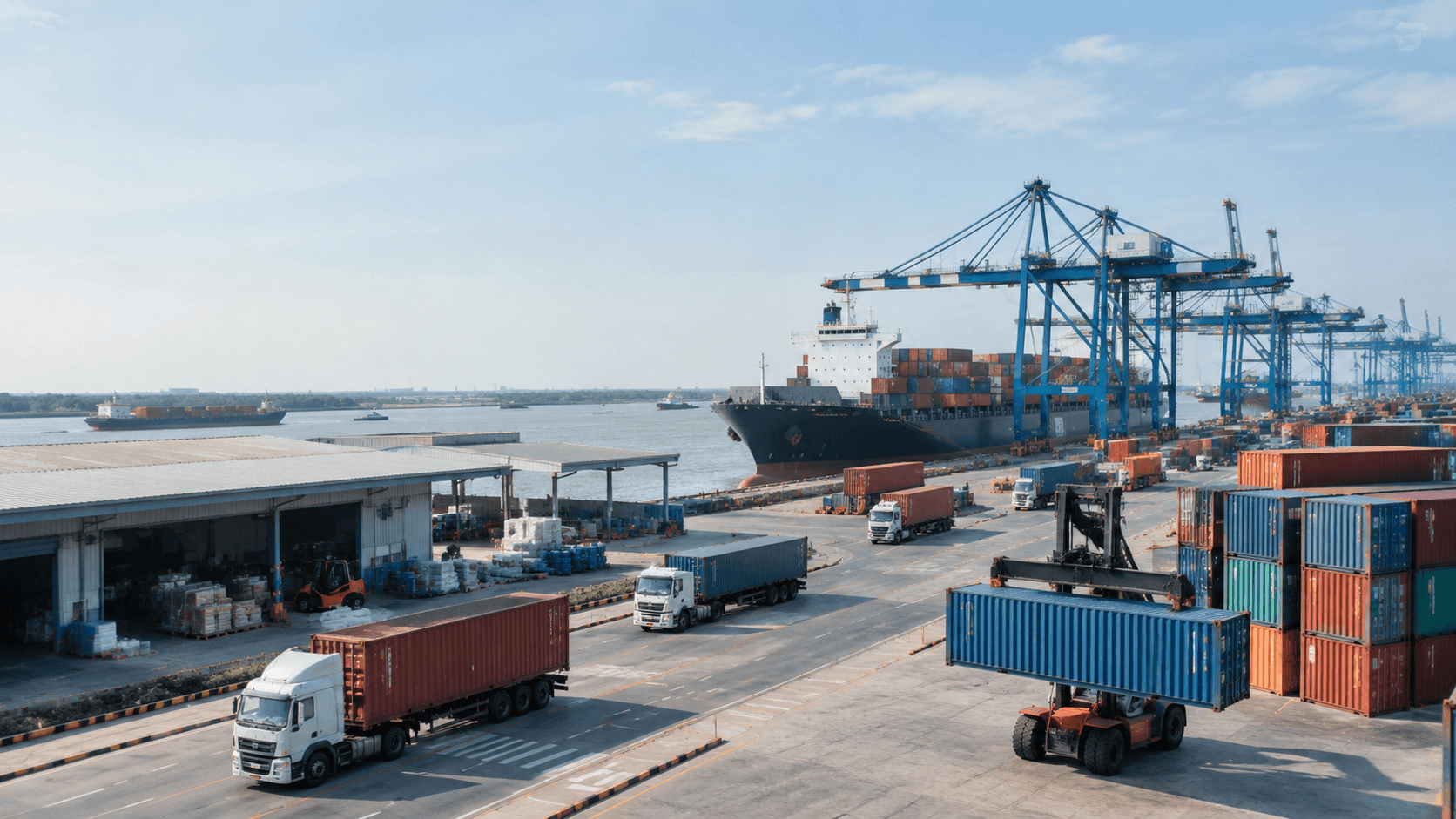
What are DEM/DET fees and how to control container free time to avoid storage costs
What is DEM/DET fee, or as commonly searched as what is dem det fee, needs to be understood based on the time a container stays in the terminal and the time a container stays outside the terminal, but specific definitions may differ by carrier and market. Usually, demurrage refers to the time a container exceeds free time in the port/terminal; detention refers to the time a business keeps the container outside the terminal beyond the allowed period. Some carriers apply combined free time, so the tariff of the specific booking must be reviewed. Maersk defines demurrage as keeping a container in the terminal beyond free time and detention as keeping a container outside the terminal beyond free time.
The biggest risk of DEM/DET is not in the first day's rate but in the progressive tier mechanism. When cargo is delayed due to documents, specialized inspections, lack of trucks or the factory not being ready to receive goods, the number of exceeded days can increase quickly. HNT recommends creating a free time tracking sheet for each container, clearly recording vessel arrival date, discharge date, pickup date, empty return date and the carrier's fee calculation rules.
What is CFS fee in LCL shipping and the difference from FCL cargo handling costs
What is CFS fee is understood as the cargo handling cost at a Container Freight Station for LCL shipments, where multiple shipments from different shippers are consolidated into or separated from a shared container. CFS fees may include activities such as receiving cargo, sorting, loading/unloading, warehouse arrangement and delivery handling according to the warehouse or forwarder's fee schedule. Calculation is usually based on CBM, RT or shipment.
Unlike LCL, FCL means one shipper uses a full container, so CFS does not arise under the logic of consolidating/separating LCL cargo, but THC, lifting fees, seal fees, cleaning, D/O, handling and container-related charges still apply. Therefore, CFS fee should not be confused with THC. The two charges serve different processing levels: THC relates to containers at the terminal, while CFS relates to LCL cargo inside the consolidation warehouse chain.
Container lifting fees, cleaning fees, seal fees and commonly accompanying port surcharges
Lifting fees usually arise when containers are lift-on/lift-off between trucks and yards or depots during each service stage. Seal fees are the cost of sealing containers; cleaning fees usually apply when returning containers and the carrier/depot requires cleaning at a standard or specialized level. For damaged containers, survey and repair charges may arise, but businesses need container condition records to avoid paying costs that are not their responsibility.
In addition to the above fees, common local charges also include D/O, documentation, handling, CIC, ISPS or route surcharges. HNT's website also lists THC, D/O, CIC, handling and DEM/DET as common charges at import points, while LCL cargo additionally has CFS and storage fees. This is why quotations should be grouped by “per container”, “per B/L” and “per shipment” instead of combining everything into one local charges line.
How to distinguish THC from Handling Fee, Pick Up/Off container and other Local Charges
THC is terminal handling at the container operation level in ports; Handling Fee is usually a professional service fee charged by forwarders or agents for document processing, coordination and shipment services; Pick Up/Off container may refer only to lifting or collecting/returning containers at a specific location. These three charges may appear together without necessarily being duplicate charges, but the provider must explain the service scope of each fee line.
The best way to check is to request a description of “what service is performed, by whom, where and what unit it is calculated by”. If two fee lines describe the same operation without differences in scope, businesses have grounds to request clarification. At the same time, they should compare port published rates, carrier information and specialized management information from Vietnam Maritime and Inland Waterway Administration when needing to verify port operation context.
Sea Freight Container Local Charges Table: THC, DEM/DET, CFS and Port Lifting Fees
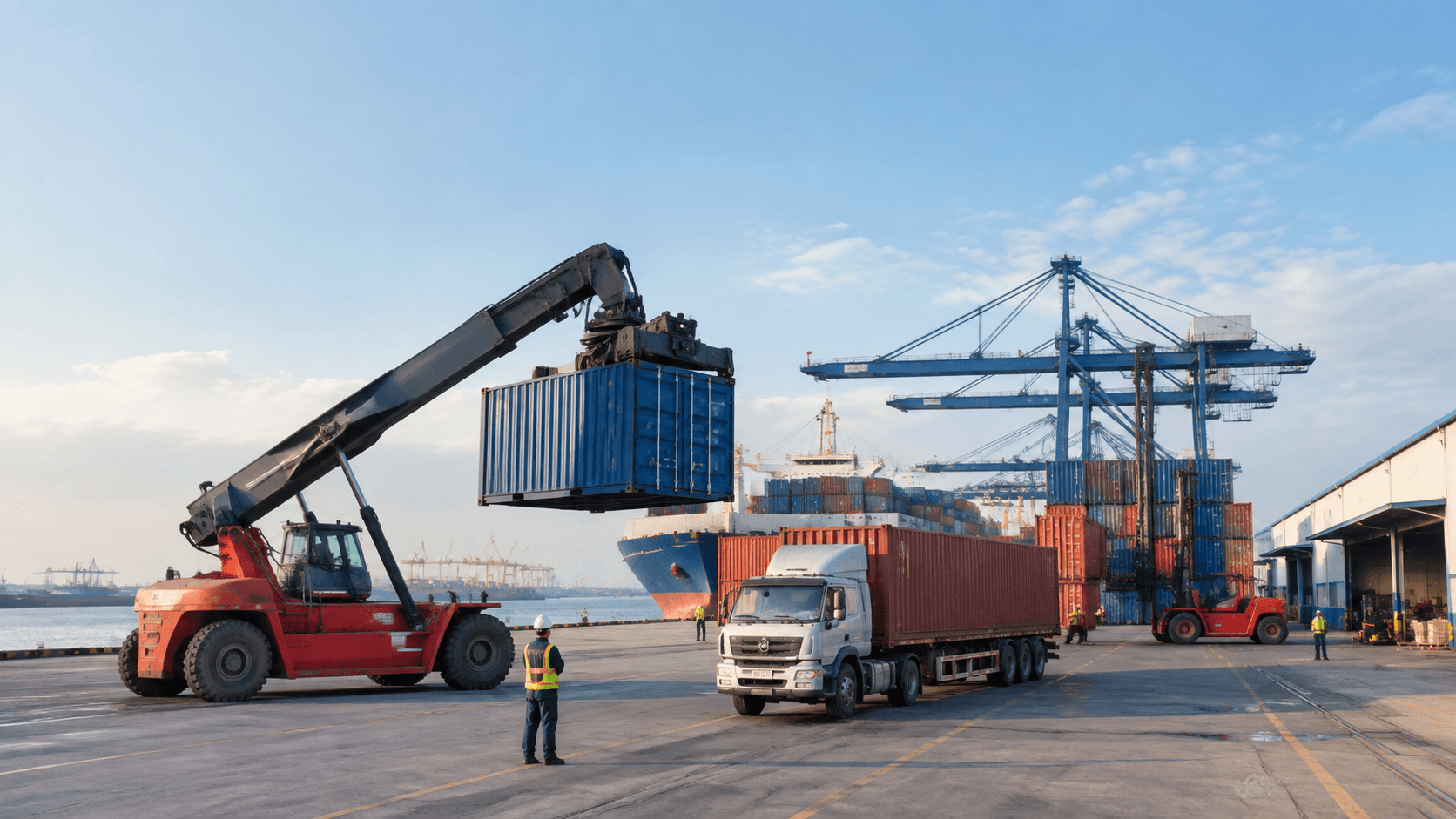
Classification table of Local Charges by export and import cargo stages
The table below is used to identify cost structures, not as a fixed price list. Actual rates must be obtained from carrier/forwarder quotations on the booking date, because many charges vary by port and container. For THC, 2026 reference rates can be compared with carrier OHC/DHC notices; while DEM/DET requires checking free time and the specific tariff for each shipment.
| Charge | Commonly incurred stage | Common unit of measurement | Key points to monitor |
|---|---|---|---|
| Origin THC/OHC | Export side | Refrigerated Container | Container type, shipping line, port of departure |
| Destination THC/DHC | Import side | Refrigerated Container | Destination port, container type, tariff |
| D/O | Import side | B/L or shipment | Bill of lading number, release agent |
| DEM/DET | When exceeding free time | Container/day | Date calculation milestone, free time, rate tier |
| CFS | LCL export/import | CBM, RT or shipment | CFS warehouse, minimum charge |
| Seal | Export side | Refrigerated Container | Seal type and shipping line |
| Cleaning | When returning empty container | Refrigerated Container | Container condition, cargo type |
| Lift-on/Lift-off | Port/depot | Times/container | Handling point, equipment type |
Comparison table of payment responsibilities for THC, DEM/DET, CFS fees under FCL and LCL models
FCL and LCL differ in the objects being handled. FCL focuses on full containers, while LCL involves additional consolidation warehouse processes. The final responsibility should still be read according to the sales contract and transportation contract, but the table below helps the logistics department identify which charges are likely to occur for budgeting purposes.
| Charge | FCL | LCL | Control notes |
|---|---|---|---|
| THC | Common | Can be allocated in LCL local charge | Check how the forwarder charges |
| DEM/DET | Direct risk by container | Usually not managed like FCL | LCL may incur CFS storage |
| CFS | Usually not applicable | Common | Calculated by CBM/RT or minimum charge |
| Seal | Common | Usually included in consol operations | Check quotes |
| Lifting fee | May arise separately | May be included in warehouse/handling fees | Not automatically included with THC |
Table of factors affecting port fee levels: container type, shipping route, operating port, and container storage time
Port fees do not only depend on container size. Reefer and special containers often have higher handling charges than dry containers due to equipment, yard location, and different handling requirements. For refrigerated containers, the operating temperature range can vary widely depending on the model and cargo, but the set temperature must follow the product preservation requirements; the temperature level itself does not automatically determine THC, while reefer power and monitoring may be separate charges.
| Elements | Reference specifications | Cost impact | Examples to check |
|---|---|---|---|
| 20′ GP | Internal dimensions approximately 5.90 × 2.35 × 2.39 m | Lower THC/lifting charges than 40′ containers in many tariffs | Tariff by container size |
| 40′ GP | Internal dimensions approximately 12.03 × 2.35 × 2.39 m | THC/lifting charges are usually higher than 20′ | Shipping line and terminal tariff |
| 40′ HC | Internal dimensions approximately 12.03 × 2.35 × 2.69 m | May be grouped with 40′ dry or separated by tariff | Container type code on booking |
| Reefer | Set temperature depends on cargo; must follow preservation requirements | THC is usually higher; additional power/monitoring charges may apply | PTI, plug-in, temperature monitoring |
| Special container | Open Top, Flat Rack… | May require separate equipment and operating plans | Oversized dimensions, crane handling plan |
| Port/terminal | Cat Lai, Dinh Vu, Tan Vu, Lach Huyen… | Different fee schedules and procedures | Designated terminal |
| Storage time | Based on calendar day or shipping line rules | Increases when exceeding free time | DEM/DET, storage |
Cost checklist to confirm before booking vessel and coordinating container trucks
Before confirming a booking, the import-export department should use a single checklist for both pricing and operations. This reduces situations where sales confirms freight rates but the operations team has no empty container pickup schedule or documents are not ready. If the shipment involves specialized inspection or import-export procedures, businesses should update operational requirements from Customs authorities and the corresponding specialized management authorities instead of relying only on vessel schedules.
| Required confirmation content | Control questions | Reference documents/sources |
|---|---|---|
| Ocean Freight | What date is the price valid until? | Quotation |
| THC and local charges | Are origin and destination charges included? | Tariff, quotation |
| Free time | Are DEM and DET separate or combined? | Booking confirmation |
| Cut-off | When are the CY cut-off, SI cut-off, and VGM cut-off? | Booking note |
| Empty depot | Where are containers picked up and returned? | EIR, empty container release order |
| Tractor head | Do the truck and factory time windows match? | Dispatch plan |
| Documentation | Are customs, C/O, and quarantine procedures ready? | Import-export document set |
What Is THC Fee In The Container Handling Process From Port To Factory Warehouse
The process of incurring THC fees from when the container enters the port, handling operations until handover to the shipping line
At the export side, the empty container is picked up from the depot, hauled to the warehouse for loading, sealed, and transported to the terminal before cut-off. After gate-in, the container is received, weighed/checked according to procedures, assigned a yard position, and waits for the vessel loading plan. These terminal operations are the foundation of THC/OHC charges. When the vessel departs, the main transportation segment shifts to ocean freight under the carrier contract.
At the import side, the container is discharged from the vessel, moved to the yard, and waits for completion of D/O, customs, and delivery procedures. Once eligible for pickup, the truck receives the container according to the EIR and hauls it to the warehouse. After unloading, the empty container must be returned to the correct depot and within the DET period. Therefore, THC is only one point in the chain; effective control must connect from discharge to warehouse delivery and empty return.
Combining THC fees with container trucking, vessel schedules, and yard cut-off times to optimize operations
Optimization does not mean choosing the carrier with the lowest THC but selecting the option with the lowest total cost and risk. A cheap vessel schedule with an excessively early cut-off may require trucks to bring containers to the yard earlier, increasing waiting time and the risk of storage charges. Conversely, a vessel schedule that matches the production rhythm allows empty pickup, cargo loading, and yard delivery in one continuous chain, reducing plan changes.
For FCL exports, the loading schedule should be locked based on three milestones: empty container pickup time, CY cut-off, and VGM/SI cut-off. For imports, the trucking plan should be linked to the actual ETA, D/O status, customs clearance, and container pickup gate. If there is transshipment or vessel delay, the logistics department must update free time instead of using the old ETA for planning.
Controlling port fee related documents: booking, EIR, D/O, and Local Charges invoices
Booking confirmation is the first source to check the route, vessel, cut-off, and free time conditions. EIR records container handover, container condition, and pickup/return time; this is important evidence when there is a detention or repair dispute. D/O establishes the right to receive goods at the import side, while local charges invoices need to be compared with tariff and quotation before payment.
Businesses should store records for each shipment under the same reference code, including quotation, booking, B/L, arrival notice, D/O, EIR, declarations, local charges invoices and any incident records if applicable. When data is scattered across emails, chat groups and on-site documents, identifying who is responsible for an additional charge becomes much more difficult.
Handling arising situations such as delayed container pickup, DEM/DET expiry and changes in operation schedules
When there is a risk of DEM/DET expiry, the first step is to identify the cause and the exact free time milestone according to the shipping line. If documents or specialized inspections are causing delays, priority should be given to releasing the cargo while also discussing early with the carrier/forwarder the possibility of requesting additional free time or commercial support. Do not wait until the container has exceeded many days before starting negotiations.
If the vessel changes schedule or the terminal changes its operating plan, it is necessary to review cut-off time, yard drop-off time and trucking plans. For refrigerated cargo, special control is required over the time the container stays without power, the time it is plugged in at the terminal and temperature data. Reefer electricity, monitoring or plug-in costs are often separate from THC, so confirmation should be requested in advance in the quotation.
Optimizing THC and Local Charges Through Effective Sea and Land Transportation Chain Management
Planning container pickup and return times to limit unexpected storage and demurrage costs
To reduce local charges, businesses must manage through time, not only through unit prices. At the export end, empty containers should not be picked up too early if the factory is not ready for stuffing; neither should containers be dropped off too close to cut-off time, as a trucking or documentation issue could cause the vessel to be missed. At the import end, D/O, customs and trucking should be prepared before the expected ETA to pick up containers early within free time.
A tracking table should include ETA/ETD, discharge date, last free day of DEM, last free day of DET, expected cargo pickup date and empty return date. When a milestone shifts, the system should issue an immediate alert. This turns DEM/DET from an “unexpected fee” into an operational metric that can be managed and assigned clearly among documentation, coordination and warehouse teams.
Choosing suitable FCL, LCL and refrigerated container transportation options based on cargo characteristics
FCL is suitable when volume is large enough, separate container control is needed or the company wants to reduce cargo handling times. LCL suits small shipments but requires calculation of additional CFS, consolidation/deconsolidation time and waiting risks. Refrigerated containers require assessment of temperature, ventilation, humidity, transit time and PTI requirements; for exported fruits, the transport schedule must also match phytosanitary inspection, packaging and destination border or port requirements.
There is no single CBM threshold to confirm that LCL or FCL is always cheaper, because it also depends on the route and local charges. The correct decision method is to calculate total door-to-door costs for both options, including CFS, THC, trucking, storage time and delay risks. For reefer, refrigeration and monitoring costs should also be added if charged separately by the terminal/shipping line.
Applying vessel schedule tracking, tractor coordination and document control to reduce hidden costs
Hidden costs often appear at the handover points between departments: sales knows the price but not the cut-off, documentation knows the D/O but does not update trucks, warehouses change receiving times but coordination is not informed. Businesses should use a shared shipment tracker to manage bookings, container numbers, seals, ETA/ETD, customs status, free time, trucks and additional costs.
Digitalization does not necessarily need to start with a large system. A dashboard with alert rules 48-72 hours before the last free day can already significantly reduce risks. More importantly, data must have owners: who updates vessel schedules, who confirms D/O, who locks in trucks, who is responsible for empty return. When responsibilities are clear, local charges become management data instead of expenses “that no one controls”.
HNT Logistics accompanies businesses in building safe port cost control and container transportation solutions
HNT Logistics provides solutions for FCL sea and road container cargo, multimodal transportation, container drayage at Cat Lai and Hai Phong port clusters, North-South refrigerated transport, customs declaration, C/O, phytosanitary inspection for exported fruits, along with Vietnam - Laos - China intermodal routes. HNT's approach is to simultaneously control vessel schedules, port costs, tractors and documents instead of separating each service individually.
When determining what is thc fee, local charges fees included in the quotation or why DEM/DET occurs, businesses should provide complete routes, cargo types, containers, Incoterms and expected timelines. HNT will have a basis to correctly separate costs and propose more suitable operational solutions instead of providing a general price without conditions.
The key point to remember is that THC, DEM/DET, CFS and handling fees cannot be effectively managed if only reviewed after the shipping line issues an invoice. They must be controlled from selecting Incoterms, receiving quotations, confirming bookings to container pickup and return. Businesses needing specific shipment consultation can contact HNT Logistics tại trụ sở Số 8A Hoàng Minh Giám, Thành phố Hồ Chí Minh, hoặc qua Hotline, Email để được tư vấn phương án và báo giá.