


A container that has arrived at the port but experiences a few hours of delay in truck arrival can lead to storage fees, warehouse waiting time, late empty container returns and even affect the production schedule of the business. For export cargo, the risk is even greater when the container cannot be delivered to the yard before the carrier's closing time. Therefore, choosing from various weight trucks to trailers is not simply a matter of finding a vehicle strong enough to pull containers but rather a coordinated solution between vessel schedules, ports, documents, drivers, chassis and delivery timelines.
HNT Logistics organizes container tractor rental services with a whole-chain coordination approach, serving FCL containers, dry containers and refrigerated containers in key operating areas such as Cat Lai, Hai Phong port clusters and routes connecting ports with ICDs, warehouses and factories. Businesses can combine road transportation with sea freight, customs procedures, C/O, quarantine and related logistics services to reduce the number of management points.
What Is a Container Tractor? Its Role in the Modern Seaport Transportation Chain
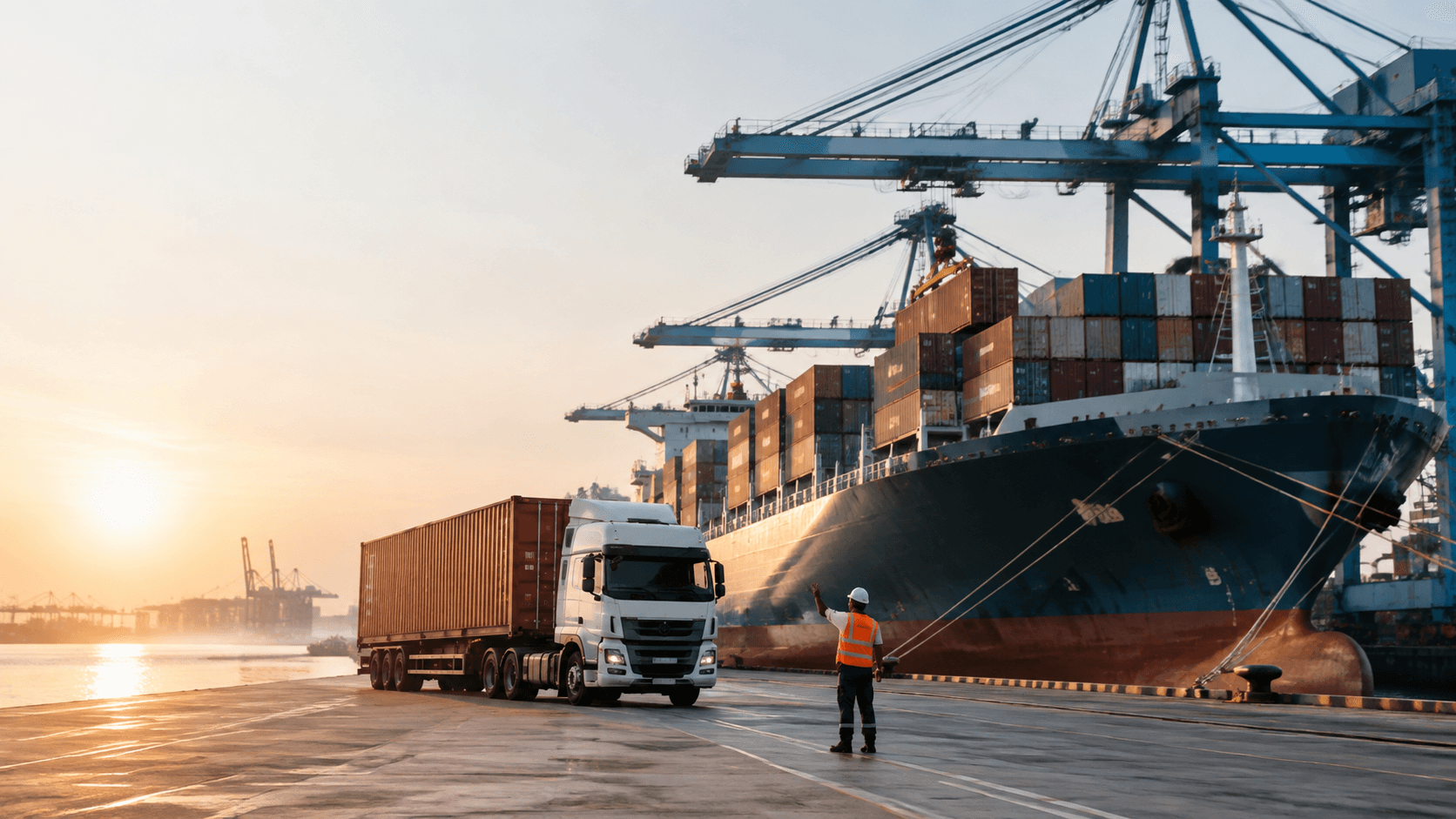
A tractor truck is a motor vehicle designed to pull semi-trailers through a fifth wheel coupling. In container operations, the semi-trailer or chassis serves as the supporting structure for the container, while the tractor provides pulling force and control systems. This configuration allows container tractor trucks to change chassis or containers for each task instead of using a fixed cargo box like conventional trucks.
Structure of tractor trucks and combination with dry containers and refrigerated containers in cargo transportation
A container tractor truck usually includes a cabin, engine, transmission system, drive axle, air brake system, fifth wheel, electrical system and safety equipment. The fifth wheel connects with the kingpin of the semi-trailer, forming a vehicle combination capable of bearing and distributing loads. When receiving a vehicle, the transport unit must check compatibility between the tractor, chassis, axle configuration and the expected container type.
20-foot and 40-foot dry containers are used for consumer goods, production materials, machinery, palletized cargo and many common import-export cargo groups. Refrigerated containers include additional cooling units, power supply systems and continuous operating requirements. Therefore, a container truck transporting refrigerated cargo not only needs pulling capability but also requires a power supply plan for the reefer during necessary stages and control of power interruption time.
Differences between container tractors, box trucks and conventional road transport vehicles
Box trucks integrate the cargo compartment directly onto the chassis, making them suitable for domestic transportation, multi-stop delivery or goods requiring frequent unloading. In contrast, tractors combined with semi-trailers allow containers to be packed at factories, sealed and kept as the same transport unit until reaching the port or destination. This is especially suitable for FCL because it limits transloading and reduces direct handling of goods.
The important difference lies in the operating method. With containers, businesses must additionally manage container numbers, seal numbers, empty container depots, delivery orders, free time limits and carrier regulations. Therefore, the value of container tractor services lies more in coordination capability than in the vehicle itself.
Role of container tractors in the port – ICD – warehouse factory connection model
In the FCL chain, tractor trucks create the physical connection between seaports, ICDs, depots and factories. For imports, vehicles receive containers at ports or ICDs and deliver them to warehouses for unloading before returning empty containers. For exports, the process usually works in reverse: receiving empty containers, pulling them to loading locations, sealing and delivering containers to ports according to bookings.
When businesses use multimodal transportation, the tractor leg must be planned according to vessel schedules rather than operated independently. A change in ETD, cut-off or container delivery location can alter the vehicle dispatch schedule. HNT Logistics therefore organizes multimodal transportation according to a unified timeline between road and sea instead of separating each stage into disconnected services.
Technical criteria to check before selecting container tractor rental services
Businesses need to check vehicle documents, registration status, permitted operating loads, axle configuration, tire condition, brakes, signal lights, fifth wheel and chassis. Actual cargo weight must be compared with the load capacity of the vehicle combination and road weight limits on the transportation route. Permitted load capacity should not be inferred only from engine power or the designed load capacity of the semi-trailer alone.
Technical requirements for motor vehicles, trailers and semi-trailers must be compared with standards, registration documents and traffic regulations effective at the time of transportation. QCVN 09:2015/BGTVT specifies technical requirements for automobiles, including requirements related to fifth wheels of semi-trailer tractors.
Container Tractor Rental Service at Seaports: Coordination Process from Booking to Delivery
Receiving shipment information, container type and building a suitable vehicle dispatch plan
An accurate transportation quotation must begin with shipment data. The coordinator needs to know whether the container is 20 feet or 40 feet, dry or refrigerated, cargo weight, pickup or delivery port, warehouse address, loading date, warehouse operating time and special requirements. For exports, booking, cut-off and vessel schedules are important data to determine empty container pickup and loading times.
For imports, HNT additionally needs ETA, customs clearance status, delivery order, container free time and empty return depot. Including these milestones in the plan helps from various weight trucks to trailers avoid unnecessary waiting at ports or warehouses, while reducing the risk of detention, demurrage and vehicle waiting costs.
Dispatching tractor trucks to pick up containers at Cat Lai port, Hai Phong port and key operating areas
Cat Lai and Hai Phong port clusters have large container volumes, so vehicle scheduling must be calculated based on cargo status, delivery orders, warehouse receiving hours and traffic conditions. In Hai Phong, the plan also needs to accurately identify terminals such as Dinh Vu, Tan Vu, Lach Huyen area or related depots to avoid vehicles moving to the wrong container pickup location.
HNT Logistics operates tractor services for port–warehouse and warehouse–port cargo flows while connecting with the FCL sea freight network. The HNT website also publishes domestic and international sea container transportation services and support services such as customs procedures, vessel booking, container rental, lifting and cargo counting.
Process of pulling containers from ports to warehouses, factories or domestic transfer points
After meeting pickup conditions, drivers receive assignments, check container information and arrive at terminals according to the plan. When receiving containers, they must compare container numbers, external conditions, seals and visible abnormalities. After leaving the port, vehicles follow planned routes to warehouses, factories or ICDs, while coordinators monitor ETA so receiving parties can prepare labor and handling equipment.
For exports, the process usually includes receiving empty containers at depots, checking container conditions, pulling them to factories for loading, confirming seals and transporting them to ports. There should be a buffer period before cut-off instead of planning close to the deadline. This is important because port congestion or delayed loading can cause containers to miss vessel departures.
Controlling documents, container delivery orders and empty return times after transportation
Coordinators need to control bookings or delivery orders, container information, seals, interchange receipts and depot instructions. For imports, empty return timing must be monitored from the moment loaded containers are picked up. If warehouse unloading is delayed or the depot changes receiving locations, businesses may incur additional container usage time and truck costs.
For cargo subject to specialized management, transport documents must be coordinated with customs procedures, quarantine or certificates of origin. Businesses should update customs authority regulations and specialized regulations according to each commodity instead of using one fixed checklist for all shipments, because management requirements may change by market and export period.
What Requirements Must Container Tractors Meet to Ensure Cargo Safety?
Checking tractor load capacity, container chassis and operation capability on each route
Load capacity must be considered across the entire tractor – semi-trailer – container – cargo combination. Besides total weight, axle load distribution must also be controlled. A vehicle with total weight within limits may still have issues if loads are improperly distributed across axle groups. Therefore, businesses must rely on vehicle records and current regulations, not use one general load figure for all tractors.
Factory access roads should also be surveyed when there are height restrictions, bridge weight limits, turning radius limitations or restricted vehicle hours. For warehouses located on narrow roads, being able to enter the area does not necessarily mean a long tractor combination can turn around safely. This data should be confirmed before the first trip on a new route.
Safety factors when transporting refrigerated containers containing exported agricultural products
Refrigerated containers need inspection of machinery condition, cleanliness, doors, seals, T-bar flooring and temperature settings according to cargo requirements. Before loading, reefers are usually prepared according to the shipper's process; goods must also reach required temperatures before loading if specified by the cold chain process. Reefers mainly maintain storage conditions and should not be assumed to quickly reduce the temperature of large quantities of warm cargo to target levels.
Temperature ranges cannot follow one formula for all agricultural products. Fresh, chilled and frozen goods have different requirements for temperature, ventilation, humidity and transportation time. Regarding frozen durian exported to China, official management information once stated the requirement for freezing at -35°C for at least one hour and maintaining storage and transportation at -18°C; businesses must still check protocols and requirements applicable to specific shipments.
For exported fruits, transportation is only one link in the chain. Quarantine requirements, growing area codes, packing facilities and traceability documents must be prepared according to importing market regulations. Vietnamese specialized agencies have continued updating protocols and guidance related to agricultural exports to China in 2026.
Risk management during container hauling: vessel delays, port congestion and additional costs
Three milestones requiring simultaneous coordination are warehouse completion time, travel time and port or carrier deadlines. If only based on kilometer distance, plans can fail due to congestion, cut-off changes or extended warehouse loading. HNT recommends setting target times earlier than mandatory deadlines and preparing solutions when vehicles cannot enter warehouses or ports as planned.
Common additional costs do not only come from fuel. Long waiting times, unplanned lifting, depot changes, container storage, yard storage or route repetition can significantly increase total costs. Therefore, quotations should clearly state included scope and surcharge conditions instead of only offering a low trip rate without operating conditions.
Applying GPS tracking and real-time vehicle status control
GPS helps coordinators identify vehicle location, stop duration and estimated arrival time, allowing coordination with warehouses or ports. However, location data only has value when combined with operational status such as waiting for empty pickup, loading, gate exit, delivery or empty return. Good transportation management must monitor both vehicles and container progress.
For reefers, temperature control needs to be designed separately according to equipment and shipment requirements. HNT's refrigerated cargo operation experience emphasizes pre-cooling before loading when required, maintaining airflow, checking seals and monitoring temperature during transit.
Container Tractor Truck Specifications and Rental Costs Businesses Need to Know
Classification table of tractor trucks by 20-foot, 40-foot container types and operating loads
The specifications below help businesses understand operating configurations. Actual cargo load is not determined only by nominal container capacity but must be compared with CSC plate, tare weight, maximum gross weight, tractor–chassis records and road weight limits on transportation routes.
| Type of Container | Reference external dimensions | Operating characteristics | Vehicle requirements |
|---|---|---|---|
| 20 feet dry | Approximately 6.06 m long; 2.44 m wide; 2.59 m high | Suitable for heavy goods, materials and palletized cargo | Tractor and 20-foot chassis or compatible chassis |
| 40 feet dry | Approximately 12.19 m long; 2.44 m wide; 2.59 m high | Large capacity, suitable for high-volume goods | Compatible tractor and 40-foot chassis |
| 40-foot high cube | Approximately 12.19 m long; 2.44 m wide; about 2.90 m high | Increases usable volume | Need to consider total height and route |
| 20/40 feet reefer | Depending on equipment type and container provider | Cold goods, food, agricultural products and seafood | Compatible chassis and cold chain maintenance plan |
The above dimensions are common nominal figures and may vary by manufacturer. When planning near-capacity or special cargo, HNT uses actual container specifications and vehicle records instead of using reference tables as legal foundations.
Comparison table of tractors used for dry containers and refrigerated containers
| Criteria | Dry container | Refrigerated container |
|---|---|---|
| Tractor requirements | Meet technical and load requirements | Meet technical requirements, load capacity and reefer operation plans |
| Pre-trip inspection | Container, seal, chassis, tires and brakes | Additional checks for cooling unit, temperature settings, doors, seals and airflow |
| Main risks | Delivery delays, container damage and overload | Additional risks of broken cold chain and temperature deviation |
| Coordinate | According to port and warehouse schedules | According to port, warehouse and cold supply maintenance schedules |
Factors forming container tractor rental prices: distance, port fees, waiting time and additional charges
There is no fixed price list suitable for every route because price container tractor rental services depends simultaneously on container pickup point, delivery point, container type, load, handling time and empty return conditions. A professional quotation should separate basic transport charges from costs that only arise when specific events occur.
| Component | Impact on price | Information to confirm |
|---|---|---|
| Tractor freight | By route or trip | Port/depot, warehouse address, container type |
| Distance | Affects fuel, road fees and vehicle time | Pickup point, delivery point and actual route |
| Port/depot fees | According to operator fee schedules | Terminal and performed operations |
| Waiting fee | Generated when exceeding agreed free waiting time | Warehouse hours and loading/unloading time |
| Handling | Depends on depot, port and operations | Whether included in quotation scope |
| Special surcharges | According to actual conditions | Legal overweight cargo, reefer requirements, depot changes and after-hours delivery |
HNT Logistics does not recommend businesses use an old price table to budget for all shipments. To receive actual rates, businesses should provide route, container type, weight, expected transportation date and handling time. HNT Logistics quick quotation hotline: 096 309 78 19.
How Businesses Calculate Container Transportation Costs to Optimize Logistics Budgets
Total costs should be calculated using a management formula including basic vehicle freight plus road fees, port/depot charges, lifting, expected waiting time and contingency costs. For imports, additional costs related to container usage time and storage must be monitored. For exports, the risk value of missing vessel schedules should be calculated instead of only optimizing a few hundred thousand VND in truck charges.
Businesses with stable volume should analyze costs per container and per route monthly. Data on trip numbers, average waiting time, on-time delivery rate and surcharges helps identify causes of high costs. This method is more effective than constantly changing transport providers based only on individual trip prices.
Container Tractor Rental Combined with Sea-Road Multimodal Transportation at HNT Logistics
Connecting sea transportation with container tractors in the import-export supply chain
The strength of the sea–road model is that containers can maintain the same cargo unit across multiple stages. HNT coordinates sea freight booking with schedules container tractor trucks, thereby determining empty pickup times, loading, port delivery or import container pickup. HNT currently publishes domestic and international FCL sea transportation capabilities together with domestic transport networks.
For multimodal transportation, the goal is not to combine as many services as possible but to reduce breakpoints between stages. When booking, tractors and warehouses are coordinated together, vessel schedule changes can be reflected more quickly in container pickup or delivery plans.
Solutions combining container tractors with customs declaration and cargo clearance services
Vehicles should not be dispatched to ports too early when shipments are not ready for delivery, but businesses also cannot wait until all procedures are completed before finding vehicles. Transport coordination and documentation teams need to share milestones such as declaration status, specialized inspection, delivery orders and warehouse schedules to place vehicles within the correct time window.
HNT Logistics provides customs declaration services along with related transportation services. Businesses still need to provide accurate documents including product names, expected HS codes, invoices, packing lists, bills of lading and licenses or specialized documents when required. Policy changes must be checked with customs authority regulations and specialized management authorities at the time of declaration opening.
Refrigerated container transportation for exported agricultural products: temperature and delivery time control
Cold agricultural products require simultaneous management of three factors: temperature, time and cargo condition before container loading. HNT coordinates truck arrival times with loading progress to reduce reefer waiting time. After loading, seals and operating parameters must be confirmed before containers leave warehouses.
For fruits exported to China, businesses should not consider quarantine certificates as additional procedures after loading. Vietnamese specialized agencies note that exported plant products subject to quarantine must be inspected and certified according to applicable requirements; specific protocols may also regulate growing areas, packing facilities and traceability.
Single-point management model from seaports to warehouses and production factories
When each stage is managed by different providers, cargo owners must handle gaps between carriers, trucking companies, customs and warehouses themselves. A single-point model helps centralize schedules, documents and coordination responsibilities. This is especially useful for businesses without large logistics departments or with many import-export containers at the same time.
HNT can build service scopes according to different needs, from individual tractor services to combined sea FCL, customs procedures, C/O, quarantine and multimodal transportation. Scope of work, freight conditions and responsibilities of each party should be confirmed before transportation so businesses can control budgets.
HNT Logistics Container Tractor Trucks: Fleet Capacity and Flexible Transportation Solutions
Operating standards for tractor fleets serving container transportation at major ports
Transportation capacity should not be evaluated simply by the number of vehicles. The ability to arrange the right vehicle type at the right time and have backup plans when vehicles fail directly affects container progress. HNT organizes coordination based on routes, container types, cargo loads and delivery windows at ports or factories.
Vehicles used for operations must meet applicable legal and technical requirements. The Vietnam Register publishes standards, certification procedures and data related to automobiles, trailers and semi-trailers; transport businesses must maintain vehicles suitable for registration records and current safety requirements.
Ability to serve multiple domestic container routes and delivery requirements according to vessel schedules
HNT Logistics focuses on routes connecting ports, warehouses and factories in the South, North as well as North–South transportation. HNT's website records refrigerated container transportation operations North–South and sea container routes between Hai Phong, Ho Chi Minh City, Da Nang, Quy Nhon and many other areas.
For international road routes, HNT also operates cross-border and transit solutions serving cargo to Laos, Thailand and China. Some plans from Ho Chi Minh City can connect Cat Lai with routes through Lao Bao, Savannakhet and subsequent destinations depending on cargo plans.
Vehicle maintenance and inspection process to reduce transportation interruptions
Before trips, safety-related items such as tires, brakes, lights, air systems, fifth wheels and chassis connections need inspection. For long-distance trips, early detection of worn tires or brake system abnormalities is more valuable than handling incidents after containers have left ports.
Periodic maintenance must be combined with pre-trip inspections and driver feedback. When a tractor must stop operations, coordinators need replacement plans without losing container delivery schedules. This is why businesses should evaluate transport providers at the system coordination level, not only look at a specific vehicle.
Long-term tractor rental solutions for businesses with stable container volumes
Businesses with stable weekly or monthly volumes can build priority vehicle plans or route-based transport contracts. Volume data helps HNT forecast vehicle capacity, reduce time searching for vehicles per trip and build clearer freight mechanisms. This model suits regular export factories or businesses importing materials on fixed schedules.
Before signing long-term plans, both parties should agree on expected volume, peak seasons, main routes, free waiting time, calculation methods for additional trips and adjustment mechanisms when input prices or operating conditions change. The goal is predictable costs rather than only locking a nominal unit price.
Frequently Asked Questions (FAQ) About Container Tractor Rental Services for Seaport Cargo Transportation
What information should be provided to receive an accurate container tractor rental quotation?
Businesses should provide container pickup port or depot, delivery address, 20-foot or 40-foot container type, dry or reefer, cargo weight, transportation date and handling time. Export shipments require booking and cut-off; imports require cargo status, delivery orders and empty return depot information when available.
Is container tractor rental calculated by trip, distance or usage time?
Most port–warehouse container shipments are priced by specific trips or routes, where distance, road fees and operating conditions are included in the pricing structure. Time still directly affects costs if vehicles wait for loading or unloading beyond agreed limits. Long-term contracts may apply separate pricing mechanisms based on volume.
What types of containers can tractor trucks transport in import-export operations?
Depending on chassis configuration and technical plans, tractors can serve dry containers, high cube containers, refrigerated containers and some specialized containers. Transportation acceptance must be based on dimensions, total weight, cargo characteristics and vehicle records. Oversized, overweight or dangerous goods require separate evaluation before confirming plans.
Should businesses rent dedicated tractors or use full container transportation services?
If businesses already have documentation teams, bookings and coordinators, dedicated tractor rental may be suitable. If they need simultaneous management of sea freight, ports, customs and domestic delivery, full services reduce coordination points. The decision should be based on total management costs and operational risks, not only vehicle rates.
Frequently Asked Questions (FAQ)
Q: What should be sent for HNT to provide a quick tractor quotation?
A: At minimum, provide pickup point, delivery point, container type, cargo weight, transportation date and expected loading or unloading time. Having booking or delivery orders helps HNT determine a more accurate plan.
Q: Can refrigerated containers use the same temperature setting for all types of fruits?
A: No. Temperature, ventilation and storage requirements depend on each product, fresh or frozen status and buyer requirements or export protocols. HNT operates according to technical parameters confirmed by cargo owners.
Q: Are waiting and lifting fees included in truck freight?
A: The scope depends on each route quotation. Businesses should clearly request vehicle freight, free waiting time, lifting fees, port/depot fees and surcharge conditions to avoid comparing quotations with different scopes.
Q: Can HNT combine tractor services with customs and sea transportation?
A: Yes. HNT Logistics provides container transportation, sea freight and customs declaration services, allowing businesses to organize solutions from warehouses to ports or from ports to warehouses through one coordination point.
Conclusion
The cost of one trip from various weight trucks to trailers is only part of total logistics costs. Businesses need to control whether containers are picked up on time, delivered within warehouse windows, returned to ports before cut-off, emptied on schedule and minimize waiting time or unplanned expenses. For refrigerated cargo, requirements also extend to reefer control, temperature and cold chain continuity.
HNT Logistics provides solutions container tractor trucks, sea FCL and road transportation, North–South refrigerated container transport, customs procedures and multimodal solutions suitable for each supply chain. Businesses needing route quotations can send shipment information to HNT Logistics via hotline 096 309 78 19 or email marketing@hntshipping.com to build transportation plans and specific cost structures.