


A container that has cleared customs but whose truck arrives a few hours late can lead to a series of costs: warehouse waiting, storage fees, changed loading plans, missed container drop-off deadlines, or even missed vessel schedules. Therefore, choosing from various weight trucks to trailers is not simply about renting a transport vehicle from the port to the warehouse. The business is actually purchasing coordination capability between vessel schedules, ports, depots, customs, warehouses, and production plans.
For FCL import and export shipments, an container tractor rental services effective solution must answer at least four questions: which container will be used, what total operating weight is involved, when can the truck pick up or return the container, and who is responsible for handling congestion, depot changes, or free-time expiration. This is also how HNT Logistics approaches trucking challenges instead of simply quoting a trip price.
HNT Logistics provides road transportation for FCL containers, connecting seaports with ICDs, depots, warehouses, and factories; while also coordinating sea freight, customs declarations, C/O, phytosanitary inspection, and reefer transportation. For southern routes, container hauling operations focus on Cat Lai port cluster and key industrial zones; in the north, demand for container trucking from Hai Phong port at Dinh Vu, Tan Vu, Lach Huyen, and surrounding areas.
What Is a Container Tractor? Its Role in the Modern Seaport Transportation Chain
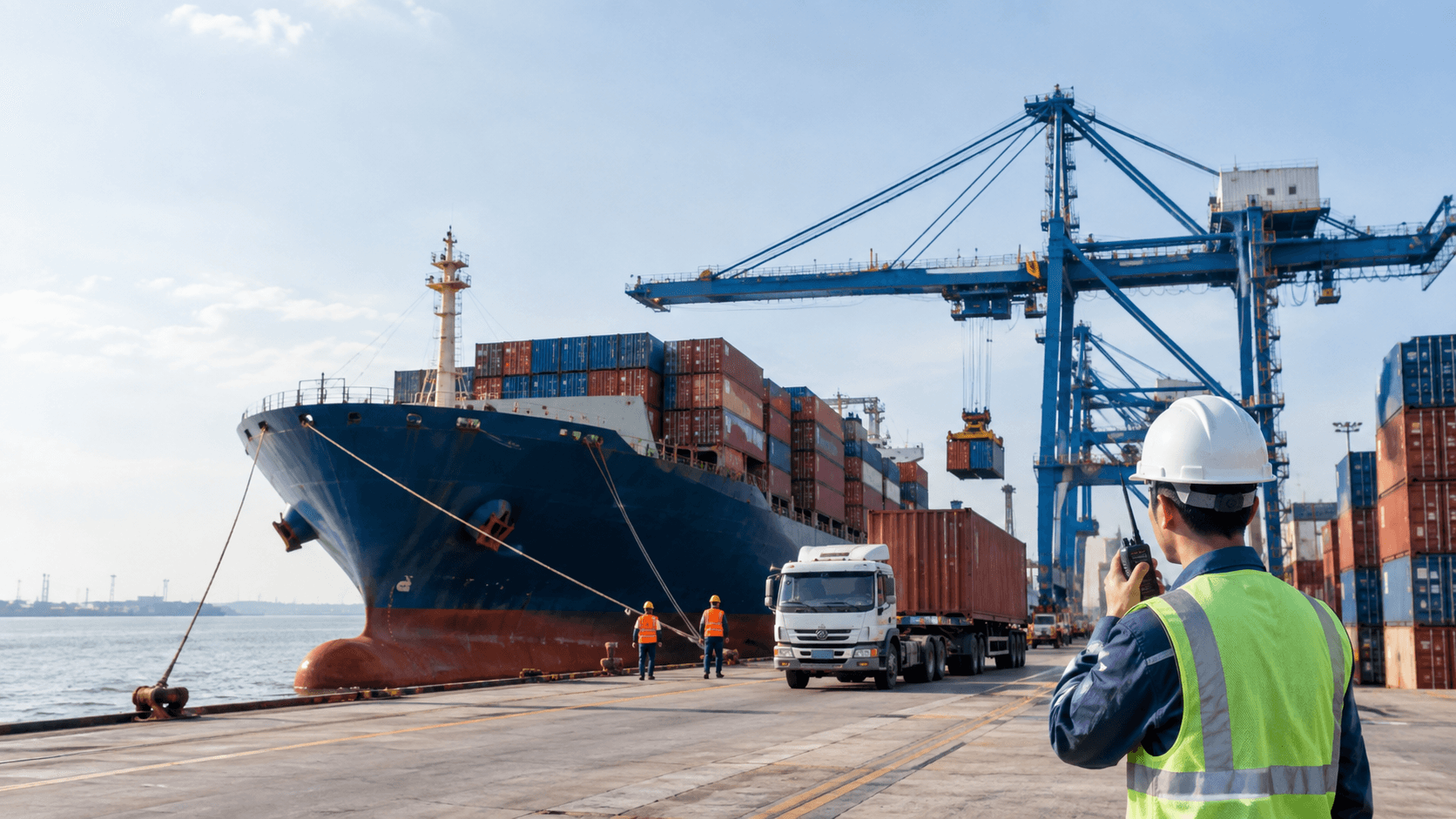
A container tractor truck is a combination of a tractor head and semi-trailer or chassis used to receive standard containers and transport them by road. Unlike fixed-body trucks, tractors can separate from chassis and containers, allowing one truck head to participate in multiple operating cycles when dispatch planning is organized effectively.
In seaport logistics, the value of a tractor is not only determined by engine capacity. The ability to connect the right chassis, comply with axle load regulations, enter ports within the correct time window, process delivery orders, and quickly turn vehicles around determines actual productivity. This is why two carriers using vehicles with similar configurations can still create very different service quality.
Structure of tractor trucks and combination with dry containers and refrigerated containers in cargo transportation
A basic combination includes a tractor cabin, engine, transmission system, pneumatic braking system, fifth wheel coupling, and semi-trailer or chassis with twist-lock locks to secure the container. 4×2 or 6×4 tractor configurations are selected depending on load, terrain, and operating conditions. When receiving containers, drivers must check container locks, tires, lights, brakes, and chassis condition before leaving the yard.
For dry containers, the main control points are weight, container condition, seal, and cargo distribution. For reefer containers, additional management is required for refrigeration units, power supply, set temperature, ventilation, and yard plug-in schedules. Reefer containers are not mobile freezing warehouses designed to quickly cool hot products; goods need appropriate pre-cooling before loading depending on product procedures.
Standard reefer containers from many shipping lines can operate within a range of approximately -30°C to +30°C; some specialized equipment can go lower. However, actual set temperatures must be based on cargo type, buyer requirements, and transport instructions, and it cannot be assumed that all agricultural products require the same temperature level.
Differences between container tractors, box trucks and conventional road transport vehicles
Box trucks carry goods directly inside the vehicle compartment, suitable for domestic transportation, multi-point delivery, or shipments that do not require maintaining the original international container. In contrast, container truck transporting maintains the original container unit from depot, port, or factory to destination. Goods can move from factory to vessel without unloading between stages if FCL is properly organized.
This difference directly affects costs. With conventional trucks, businesses usually focus on distance, cargo weight, and vehicle time. With container tractors, they must also calculate empty pickup time, yard return, lifting operations, empty depot return, shipping line free time, booking status, and port waiting time. Therefore, comparing two quotations only by trip price can easily lead to wrong decisions.
Role of container tractors in the port – ICD – warehouse factory connection model
The tractor is the link connecting sea transportation with the inland part of the supply chain. For imports, the journey usually goes from the quay or container yard to the factory warehouse and then returns the empty container to the designated depot. For exports, the truck receives an empty container, brings it to the loading warehouse, transports the sealed container to the port, and returns it before the CY cut-off deadline.
The more transition points between port – ICD – warehouse, the higher the coordination requirement. A small change such as a shipping line changing the empty container pickup location can increase truck travel distance by dozens of kilometers and disrupt loading schedules. Therefore, businesses need to view container tractor services as part of the supply chain plan rather than an independent transportation service.
Technical criteria to check before selecting container tractor rental services
The first criterion is compatibility between tractor, chassis, and container type. Next, it is necessary to check total combination weight, axle load, carrying capacity according to inspection records, tire condition, braking system, twist-locks, signal lights, and safety equipment. For routes with bridges or restricted load roads, transport plans must verify route conditions before departure.
In Vietnam, Circular 39/2026/TT-BGTVT regulates contents related to load limits, road clearance limits, cargo arrangement, and operation of overloaded or oversized vehicles; the document takes effect from January 1, 2026. An important principle is that vehicles must not exceed the allowable cargo weight specified in the design certificate recorded in the inspection certificate.
Therefore, businesses should not simply ask “how many tons can this truck pull” and apply one number to every shipment. They need to simultaneously check container specification plates, cargo weight, container tare, chassis configuration, vehicle documents, and route limitations. This reduces the risk of load adjustments, transport plan changes, or unexpected waiting time.
Container Tractor Rental Service at Seaports: Coordination Process from Booking to Delivery
A good trucking process starts before the truck moves. The dispatcher must understand booking information or delivery orders, identify container type, port or depot, pickup and return deadlines, warehouse address, receiving time, cargo weight, and special requirements. Without one of these pieces of information, the initial quotation may be correct in freight but wrong in total cost.
Receiving shipment information, container type and building a suitable vehicle dispatch plan
For exports, HNT Logistics needs information such as booking, 20-foot or 40-foot container type, dry or reefer, empty container depot, loading location, expected weight, loading date, and yard drop-off deadline. For reefer containers, additional information includes set temperature, ventilation requirements, genset if any, and pre-loading machine inspection plans.
For imports, required information focuses on container number, bill of lading, customs clearance status, delivery order or eDO, pickup port, delivery address, warehouse unloading capability, and empty depot return location. Dispatchers must calculate backward from warehouse receiving time to avoid trucks arriving too early and waiting for hours at the factory.
Dispatching tractor trucks to pick up containers at Cat Lai port, Hai Phong port and key operating areas
Cat Lai handles high container volume, so port entry timing, traffic conditions, lifting plans, and document progress need to be synchronized. A from various weight trucks to trailers arriving at the gate when the order is not ready does not create productivity but only increases waiting hours. Therefore, dispatchers must confirm order status and delivery capability before releasing the truck.
In the Hai Phong area, the challenge also includes multiple ports and depots located in Dinh Vu, Tan Vu, Lach Huyen clusters and the northern industrial zone network. When implementing container trucking from Hai Phong port, the terminal, depot, and empty return location must be clearly identified instead of simply writing “Hai Phong port”, because incorrect locations can significantly change travel distance and truck schedules.
Process of pulling containers from ports to warehouses, factories or domestic transfer points
After receiving the order, drivers enter the yard to collect the container and verify container number, seal number, container condition, and delivery documents. For sealed imported containers, images taken when receiving the container are important evidence if disputes later arise regarding dents, seals, or container condition. The truck should only leave the port after key information has been verified.
When arriving at the factory, the delivery process should record truck arrival time, processing start time, completion time, and seal condition. If unloading cargo, the warehouse should prepare personnel, forklifts, and operating areas in advance. Measuring each step helps businesses distinguish actual transportation time from waiting time caused by internal processes.
Controlling documents, container delivery orders and empty return times after transportation
For imports, after unloading, containers must be returned to the designated depot within the permitted period. For exports, booking, container number, seal number, VGM, declaration status, and yard drop-off time must be monitored. Specific conditions must be checked with shipping lines, ports, and Customs Department regulations applicable to each type of cargo at the implementation time.
Businesses also need to clearly separate detention, demurrage, storage, and truck waiting costs. These fees have different causes and collecting parties. All should not simply be called “container storage fees” and assumed to be the carrier's responsibility. Service contracts or booking confirmations should clearly define free waiting time, waiting rates, and principles for handling additional costs.
What Requirements Must Container Tractors Meet to Ensure Cargo Safety?
Container safety is not only about avoiding traffic accidents. For cargo owners, it also includes preventing seal loss, temperature deviation, wrong container delivery, missed cut-off, and limiting additional costs. Therefore, the standard of a service container tractor rental services should be evaluated based on vehicles, drivers, dispatch procedures, and data recording mechanisms.
Checking tractor load capacity, container chassis and operation capability on each route
Each shipment must compare expected cargo weight with container tare weight and the legal operating capability of the vehicle combination. A 20-foot container is not automatically “lighter” than a 40-foot container because dense cargo such as metals, raw materials, or machinery can create very high loads over a shorter length. Weight distribution inside the container also affects axle loads.
For routes with weak bridges, industrial park internal roads, truck time restrictions, or small turning radiuses, route surveys are as important as selecting tractors. A cheaper option that requires last-minute route changes can increase fuel costs and time. Therefore, professional quotations should identify expected operating routes from the beginning.
Safety factors when transporting refrigerated containers containing exported agricultural products
Fresh agricultural products are sensitive to temperature but also to humidity, ventilation, and ethylene. Before loading, reefer containers need inspection of machine condition, cleanliness, odor, T-bar floor, and airflow capability. Goods should not block air channels or exceed technical stacking limits because this may create uneven temperature zones inside the container.
Temperature must be set according to each agricultural product and commercial specification. Some vegetables require environments around 0°C, while many tropical fruits need significantly higher temperatures to avoid chilling injury. Maersk also notes that fresh fruits and vegetables may require around 0°C to 13°C depending on products, while frozen goods are commonly maintained at -18°C or lower.
For fruits exported to China, transportation planning must also synchronize phytosanitary inspection, growing area or packing facility documents when required, customs declarations, and delivery schedules. A fast truck cannot solve delays caused by unfinished certificates. HNT Logistics can coordinate trucking with customs declaration, C/O, and phytosanitary inspection to reduce processing points.
Risk management during container hauling: vessel delays, port congestion and additional costs
The most common export risk is planning too close to the cut-off deadline. If warehouse loading starts late, trucks encounter congestion, or documents need correction, the buffer almost disappears. Dispatchers should calculate backward from cut-off, adding driving time, port entry time, congestion allowance, and incident handling time before confirming warehouse arrival.
For imports, risks usually come from collecting containers before warehouses are ready or returning empties too late. A useful principle is monitoring three separate clocks: container free time, vehicle waiting time, and warehouse operation time. When these three milestones are placed in one plan, businesses can identify the real causes of costs.
Applying GPS tracking and real-time vehicle status control
GPS monitoring helps dispatchers know whether vehicles are moving, stopping, or arriving at delivery points, but GPS is only useful when operational statuses are standardized. Businesses should define milestones such as receiving orders, entering depots, collecting containers, arriving at warehouses, leaving warehouses, entering ports, and completing trips. When each milestone has a timestamp, data can be used to calculate vehicle cycle time and identify bottlenecks.
For reefer cargo, control needs to go beyond vehicle location. If equipment allows, businesses should store set temperature, temperature data, power outage time, and abnormal alerts. The goal is not to create more reports but to provide enough evidence to quickly handle delays, temperature deviations, or responsibility disputes between warehouses, carriers, and shipping lines.
Container Tractor Truck Specifications and Rental Costs Businesses Need to Know
The specifications below help businesses understand how to select solutions and do not replace data on the container CSC plate or vehicle inspection certificate. Dimensions, tare weight, and payload can vary between manufacturers, shipping lines, and container generations. Before loading heavy cargo, actual equipment data must be rechecked.
Classification table of tractor trucks by 20-foot, 40-foot container types and operating loads
| Type of Container | Typical external dimensions | Operating characteristics | Operating weight requirements to check | Tractor/chassis solution |
|---|---|---|---|---|
| 20 feet Dry | Approximately 6.058 x 2.438 x 2.591 m | Suitable for heavy cargo with moderate volume | Many units have maximum gross weight around 30.48 tons; actual payload depends on tare and plate | Tractor suitable for load + 20-foot chassis |
| 40 feet Dry | Approximately 12.192 x 2.438 x 2.591 m | Large volume, suitable for light to medium cargo | Must check gross, tare, axle load, and vehicle inspection documents | Tractor + 40-foot chassis |
| 40 feet High Cube | Approximately 12.192 x 2.438 x 2.896 m | Increased height and cargo volume | Legal load capacity cannot be inferred only from container volume | Tractor + compatible 40-foot chassis |
| 20/40 feet Reefer | External dimensions are similar to dry containers but internal space is smaller | Includes refrigeration unit and higher tare weight | Payload is lower than some dry containers of the same size; check each container plate | Compatible tractor and chassis; add electrical/genset requirements when needed |
A common mistake is using “container load capacity” as the only basis for planning. In reality, operating limits are also affected by vehicle load, axle distribution, and road structure. Carriers need to rely on specific vehicle combination documents instead of applying a general load level to every tractor.
Comparison table of tractors used for dry containers and refrigerated containers
| Criteria | Dry container | Refrigerated container |
|---|---|---|
| Control focus | Weight, seal, container condition, delivery schedule | Weight, seal, refrigeration unit, temperature, ventilation, power supply |
| Preparation before loading | Check cleanliness, dryness, no holes | PTI when required, hygiene inspection, refrigeration machine and temperature conditions |
| During waiting | Control time and container security | Also control refrigeration power and temperature |
| Specific risks | Container dents, seal loss, overload, missed cut-off | Loss of cooling, incorrect setpoint, blocked airflow, delayed power connection |
| Additional costs may arise | Truck waiting, lifting, roads, detention | Dry container costs plus refrigeration electricity, genset, machine inspection if applicable |
Not every reefer route requires genset on the tractor. Whether to use it depends on transit time, product characteristics, container configuration, and requirements from cargo owners or shipping lines. The important point is that this decision must be agreed before the truck receives the container instead of being handled after the reefer has left the depot.
Factors forming container tractor rental prices: distance, port fees, waiting time and additional charges
| Cost group | Formation method | When it occurs | Points to confirm beforehand |
|---|---|---|---|
| Basic tractor freight | By route/trip or contract arrangement | Every transportation trip | Pickup point, delivery point, container type, cargo weight |
| Road toll fees | Based on actual operating routes | Routes with toll stations | Whether included in freight or not |
| Lifting and terminal/depot fees | According to operator fee schedules | Container pickup, return, or transfer | Which party pays and reconciliation documents |
| Vehicle waiting fee | By hour or time window | Warehouse, port, depot handling longer than free time | Free waiting hours and rate afterward |
| Outside-hours charges | According to dispatch schedule and operating conditions | Night, holidays, or urgent requests | Confirm with carrier beforehand |
| Reefer surcharge | Depending on genset, electricity, PTI, or technical requirements | Refrigerated container | Which items belong to carrier, depot, or shipping line |
| Detention/Demurrage | According to shipping line conditions | Exceeding free time | Free time, fee start point, and fee end point |
HNT Logistics should not be evaluated by a single “truck price” separated from the shipment. To obtain an accurate quotation, businesses need to provide transport route, 20 or 40-foot container, dry or reefer type, weight, expected date, pickup/return points, loading or unloading time, and special requirements. Hotline for quick quotation information: 096 309 78 19.
How Businesses Calculate Container Transportation Costs to Optimize Logistics Budgets
Costs should be calculated based on total landed trucking cost rather than freight alone. The management formula can be understood as: tractor freight + road fees + lifting + waiting costs + reefer costs if any + controllable detention/demurrage charges + costs caused by schedule changes or route issues. This approach helps businesses compare suppliers on the same basis.
For example, a quotation that is 300,000 VND lower per trip is no longer cheaper if free waiting time is short and trucks often arrive late, causing warehouse overtime. Businesses with large volumes should track cost/container, waiting time/container, on-time delivery rate, and quotation variance rate. These indicators reflect operational quality better than only monitoring unit price.
Container Tractor Rental Combined with Sea-Road Multimodal Transportation at HNT Logistics
Trucking is most effective when it does not operate alone. HNT Logistics has advantages in connecting container road transportation with sea freight, customs declaration, and related import-export operations. For cargo owners, this model reduces information handovers and creates a single point that can view the entire chain from booking to delivery.
Connecting sea transportation with container tractors in the import-export supply chain
For export FCL cargo, transport planning must connect directly with vessel schedules: booking determines empty container pickup location, cut-off determines yard return deadline, and vessel schedules determine buffer time. If booking and truck dispatch departments operate separately, shipping line changes may reach carriers too late, causing truck changes or loading plan adjustments.
For imports, vessel ETA is only the starting point. There is still vessel unloading time, delivery order completion, customs clearance, container pickup, and factory delivery. HNT can build multimodal transport plans based on the entire journey instead of optimizing each stage separately, especially for businesses with both sea routes and domestic or regional distribution needs.
Solutions combining container tractors with customs declaration and cargo clearance services
Vehicles should only be dispatched when documents and declaration status are sufficient for the corresponding transportation step. Dispatching too early causes vehicle waiting; dispatching too late loses warehouse or port time windows. Therefore, dispatchers need continuous communication with documentation teams about invoices, packing lists, bills of lading, declarations, and specialized permits when required.
For C/O, phytosanitary certificates, or specialized documents, documentation schedules need to be included in the transport timeline. This is how HNT Logistics creates value by integrating customs declaration with trucking: not simply by “providing more services”, but by using one common plan to reduce container waiting time between steps.
Refrigerated container transportation for exported agricultural products: temperature and delivery time control
Cold chain requires higher time discipline than dry cargo. After pre-cooling, loading, and sealing, containers need to be transported according to planned schedules to reduce time away from fixed power sources. At ports, correct yard drop-off and power connection procedures are important steps to maintain preservation conditions.
HNT Logistics has developed content and services related to reefer containers, frozen goods, and North-South transportation; the company's website also describes reefer container transportation and trucking services in its service categories. Integrating tractors with documents and inspections is especially suitable for export fruit shipments with short commercial windows.
Single-point management model from seaports to warehouses and production factories
For businesses with frequent import-export operations, the biggest benefit of a single-point model is reducing the situation where “each supplier knows only one part”. When booking, customs, and trucking are managed on the same timeline, logistics managers know exactly where cargo is, who owns the next step, and the processing deadline.
This model also supports reconciliation. A complete trip report should include container number, route, order time, port/depot entry and exit times, warehouse arrival/departure times, delivery status, and additional costs. When data is detailed enough, businesses can improve processes instead of debating after every trip about responsibility for waiting time.
HNT Logistics Container Tractor Trucks: Fleet Capacity and Flexible Transportation Solutions
Fleet capability should not be evaluated only by the number of tractor units introduced. For B2B customers, more important questions are how many vehicles are available at the right time, replacement capability during incidents, route coverage, and coordination capacity during peak seasons. These factors need to be confirmed according to each customer's volume and transport schedule.
Operating standards for tractor fleets serving container transportation at major ports
A port operating fleet needs technically qualified vehicles, drivers familiar with port procedures, and dispatch teams closely following delivery orders. Before each trip, tractors and chassis must be checked for important items such as tires, brakes, lights, container locks, and air connections. Inspection records, registrations, and related documents must remain valid.
Port operations also involve terminal procedures, safety regulations, and specialized notices. Businesses should update guidance from ports, shipping lines, and Vietnam Maritime and Inland Waterway Administration, the agency currently responsible for maritime and inland waterway fields under the Ministry of Construction.
Ability to serve multiple domestic container routes and delivery requirements according to vessel schedules
HNT Logistics can organize container transportation in Ho Chi Minh City and Hai Phong, connecting industrial zones, warehouses, and factories; while also providing North-South reefer transportation and Vietnam – Laos – China international transport according to shipment requirements. For large volumes, plans should be provided weekly or monthly in advance to reserve vehicle capacity during important time windows.
For transport requirements tied to vessel schedules, response capability when schedules change is especially important. Shipping lines may adjust cut-off times, empty container depots, or operating plans. Carriers need mechanisms to reconfirm orders before dispatching vehicles to limit empty trips and optimize vehicle rotation.
Vehicle maintenance and inspection process to reduce transportation interruptions
Tractors operating continuously at ports experience high operational loads, especially on tires, braking systems, air systems, electrical systems, and chassis connection components. A good maintenance program should combine scheduled maintenance with pre-trip inspections and driver fault records. Vehicles should not wait until failure before repair.
For customers, the concern is not the carrier's entire internal technical documentation but the continuity plan. If an assigned truck has a problem before container pickup time, does the supplier have replacement vehicles? Who updates customers? Is there enough booking time for schedule changes? These questions should be asked before signing long-term contracts.
Long-term tractor rental solutions for businesses with stable container volumes
Businesses with weekly or monthly stable volumes should consider route and volume-based contracts instead of booking individual trips. With forecasts, carriers can proactively arrange trucks, drivers, and turnaround time; businesses can also build budgets more easily. Pricing mechanisms can define base freight, free waiting levels, outside-hour surcharges, and adjustment methods when fuel or route conditions change.
Long-term contracts should include KPIs instead of only price commitments. Suitable KPIs include on-time vehicle arrival rate, planned delivery rate, average waiting time, trips outside quotation rate, vehicle incident rate, and response time. This provides a foundation for HNT and cargo owners to improve performance after each reconciliation period.
Frequently Asked Questions (FAQ) About Container Tractor Rental Services for Seaport Cargo Transportation
What information should be provided to receive an accurate container tractor rental quotation?
Businesses should provide cargo type, 20 or 40-foot container, dry or reefer type, weight, pickup port or depot, delivery address, expected date, warehouse working hours, and special requirements. Export shipments need booking and yard drop-off time; imports should provide customs clearance status, delivery orders, and empty return depot.
Is container tractor rental calculated by trip, distance or usage time?
Most port container routes are built around fixed trips or routes, but final prices are affected by distance, container type, cargo weight, road fees, waiting time, port conditions, and outside-hour requirements. For customers with stable volumes, HNT can build contract and forecast-based pricing instead of quoting each trip separately.
What types of containers can tractor trucks transport in import-export operations?
Depending on chassis and tractor configuration, vehicles can operate 20-foot dry containers, 40-foot containers, 40-foot High Cube, reefer containers, and some specialized equipment. However, oversized, overweight, or special containers must be separately evaluated for dimensions, weight, routes, and required permits before transportation.
Should businesses rent dedicated tractors or use full container transportation services?
If businesses already have strong logistics teams managing bookings, documents, and customs, separate trucking rental may be suitable. Conversely, shipments requiring multiple coordinated steps or involving reefer cargo, inspections, C/O, and strict vessel schedules often fit integrated solutions better. Selection criteria should focus on total cost and risk control, not only truck price.
Frequently Asked Questions (FAQ)
Q: What should be sent to HNT Logistics to receive a quick tractor quotation?
A: Send pickup point, delivery point, container type, cargo weight, expected date, and whether the shipment is export or import. If available, provide booking, D/O, or depot information so dispatchers can check routes and timing before quoting.
Q: Does HNT handle reefer container transportation?
A: Yes. HNT Logistics provides reefer container transportation, including North-South transport demand and export cargo connections. When requesting a quotation, businesses should provide cargo type, set temperature, and power or genset requirements to build a suitable plan.
Q: Does the initial quotation include port waiting fees and empty return?
A: The scope must be confirmed in each quotation. Businesses should request clear details of base freight, free waiting hours, waiting rates, road fees, lifting fees, and any paid-on-behalf costs. Separating each component helps avoid misunderstandings during post-trip reconciliation.
Q: Can businesses rent tractors under long-term contracts?
A: Yes, route and volume-based solutions can be developed for stable container demand. Businesses should provide weekly or monthly forecasts so HNT can evaluate dispatch capacity, build pricing, and agree on delivery KPIs instead of booking only individual trips.
A good container tractor trucks service does not end when the container arrives at the warehouse. Quality must be viewed through the ability to collect the right container, deliver on schedule, comply with weight regulations, manage documents, minimize waiting time, and complete empty returns or yard drops according to plan. This is how trucking becomes a controllable link in the supply chain rather than just an expense.
HNT Logistics provides FCL container transportation solutions, road freight, multimodal transport, reefer containers, customs declarations, and import-export support services. Businesses needing quotations container tractor rental services at Cat Lai, Hai Phong, or warehouse–factory connecting routes can send complete shipment information to receive a suitable plan instead of applying one general price for every container.
Contact HNT Logistics để được tư vấn và báo giá nhanh!