


A container arriving at Cầu Treo Border Gate without the required transit documents can disrupt the trucking schedule and incur costs on the same day. This article helps businesses choose a route, prepare procedures, and estimate actual costs.
The 2026 context makes planning even more important. In 2026, Vietnam's exports of agricultural, forestry, and fishery products reached approximately USD 70.09 billion, up 12%; seafood alone reached approximately USD 11.3 billion. On August 20, 2026, Drewry's Global Container Index reached USD 4,526 for a 40-foot container, up 4% for the week.
In cross-border transportation, costs are not limited to kilometers. Businesses must also manage border gates, permits, vehicles, seals, and transit deadlines. Fuel prices are also highly volatile. The 0.05S diesel price at the August 20, 2026 price adjustment was no higher than VND 28,543 per liter, an increase of VND 1,310 per liter from the previous adjustment.
Cầu Treo and Cha Lo Border Gates: Which Transit Corridor Should You Choose?
Cầu Treo Border Gate in Hà Tĩnh connects with Nam Phao in Laos via National Highway 8. Cha Lo Border Gate in Quảng Bình connects with Na Phau via National Highway 12. Both corridors serve Laos–Vietnam transit cargo but are suitable for different cargo consolidation areas, delivery points, and vehicle schedules. These routes are listed in regulations on Lao goods transiting through Vietnam.
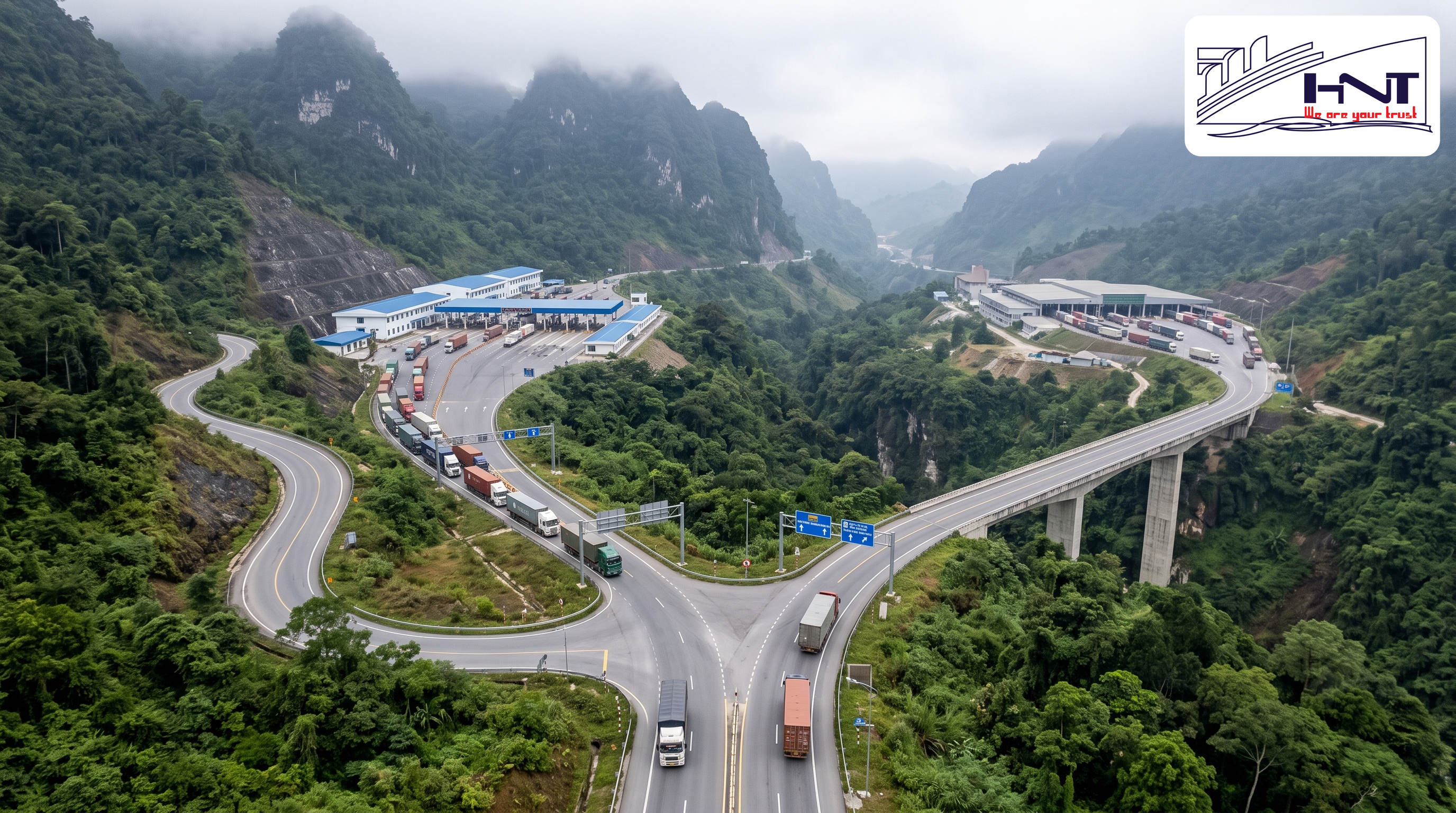
When Should You Prioritize Cầu Treo Border Gate?
Cầu Treo Border Gate is generally suitable when cargo flows involve Hà Tĩnh, the North Central region, or Vũng Áng Port. Berth No. 3 at Vũng Áng has been operational since March 2026, with a capacity of approximately 1.5–2.15 million tons per year. Vietnamese and Lao authorities are also promoting logistics connectivity among Vũng Áng, Cầu Treo International Border Gate, and Cha Lo International Border Gate.
When Should You Prioritize Cha Lo Border Gate?
Cha Lo Border Gate is a reasonable choice when the cargo consolidation point is near Quảng Bình or when the route on the Lao side is more favorable toward Khammouane. Businesses should compare total transit time rather than looking only at distance. A shorter route can still be more expensive if waiting for tractor replacement takes too long. HNT LOGISTICS recommends confirming the border gate, expected license plates, and pickup/delivery points in advance within the same operational plan.
- Prioritize Cầu Treo Border Gate when cargo needs fast connections to Hà Tĩnh, Vũng Áng, or the National Highway 8 corridor.
- Prioritize Cha Lo Border Gate when the destination in Laos is more conveniently served via Khammouane and the National Highway 12 corridor.
- Compare total door-to-door time, including driving, border waiting, tractor replacement, and seal inspection.
- Check in advance whether intermodal vehicles are available to avoid unnecessary transloading in the border gate area.
- For refrigerated cargo, prioritize corridors with clear power supply, fuel, and refrigerated cargo emergency response arrangements.
- Do not choose a route solely based on the lowest freight rate if waiting time may increase vehicle detention costs and cargo risks.
| Criteria | Cầu Treo Border Gate | Cha Lo Border Gate | Decision significance |
|---|---|---|---|
| Laos-side connection | Nam Phao | Na Phau | Choose based on the destination province in Laos |
| Main road axis | National Highway 8 | National Highway 12 | Impact of distance and load capacity |
| Favorable Vietnamese region | Hà Tĩnh, North Central region | Quảng Bình, North Central region | Reduce empty runs |
| Notable port connection | Vũng Áng | Routes connecting National Route 1 | Impact of the sea–road transit plan |
| Priority cargo | Containers, industrial cargo, refrigerated cargo | Containers, industrial cargo, general cargo | Specific vehicle inspection required |
Example 1: The hypothetical An Phú Grain company in Nghệ An has one full 40-foot container carrying starch to Vientiane. After comparing the two corridors, the company chooses the Cầu Treo border gate because it reduces the tractor truck's empty running distance. The hypothetical plan helps reduce coordination time by about six hours compared with the route detouring through Quảng Bình.
Example 2: The hypothetical Minh Sơn Equipment company in Đà Nẵng transports machinery to Khammouane. Because the delivery point is near the Na Phàu corridor, the company chooses the Cha Lo border gate. Although the tractor truck freight rate is about 4% higher in the estimated model, total journey costs decrease by about 7% thanks to the shorter distance after crossing the border.
Practical summary: Ask the carrier to quote the two border-gate options under the same load weight, departure time, and delivery point. Only then can the company properly compare the total costs.
Procedures for transporting transit goods through the Cầu Treo and Cha Lo border gates
Transit cargo transported through a border gate must be prepared as a continuous control process. The cargo is subject to customs supervision during transit through Vietnamese territory. Traditional regulations for Lao goods also specify that the carrier must be a licensed legal entity or a legally authorized party.
The current customs legal framework has been significantly updated. Decree No. 167/2026/ND-CP amending Decree 08/2015/NĐ-CP on customs procedures, inspection, supervision and control, effective from August 15, 2026. The Ministry of Industry and Trade also issued Consolidated Document 44/VBHN-BCT on 4/6/2026 regarding Lao goods transiting through Vietnam.
One point to note regarding the timing of legal application is that Decree 336/2026/NĐ-CP was issued on 22/8/2026 but will not take effect until 15/10/2026. Therefore, as of 27/8/2026, businesses should not apply the new procedures in advance as though they were already effective.
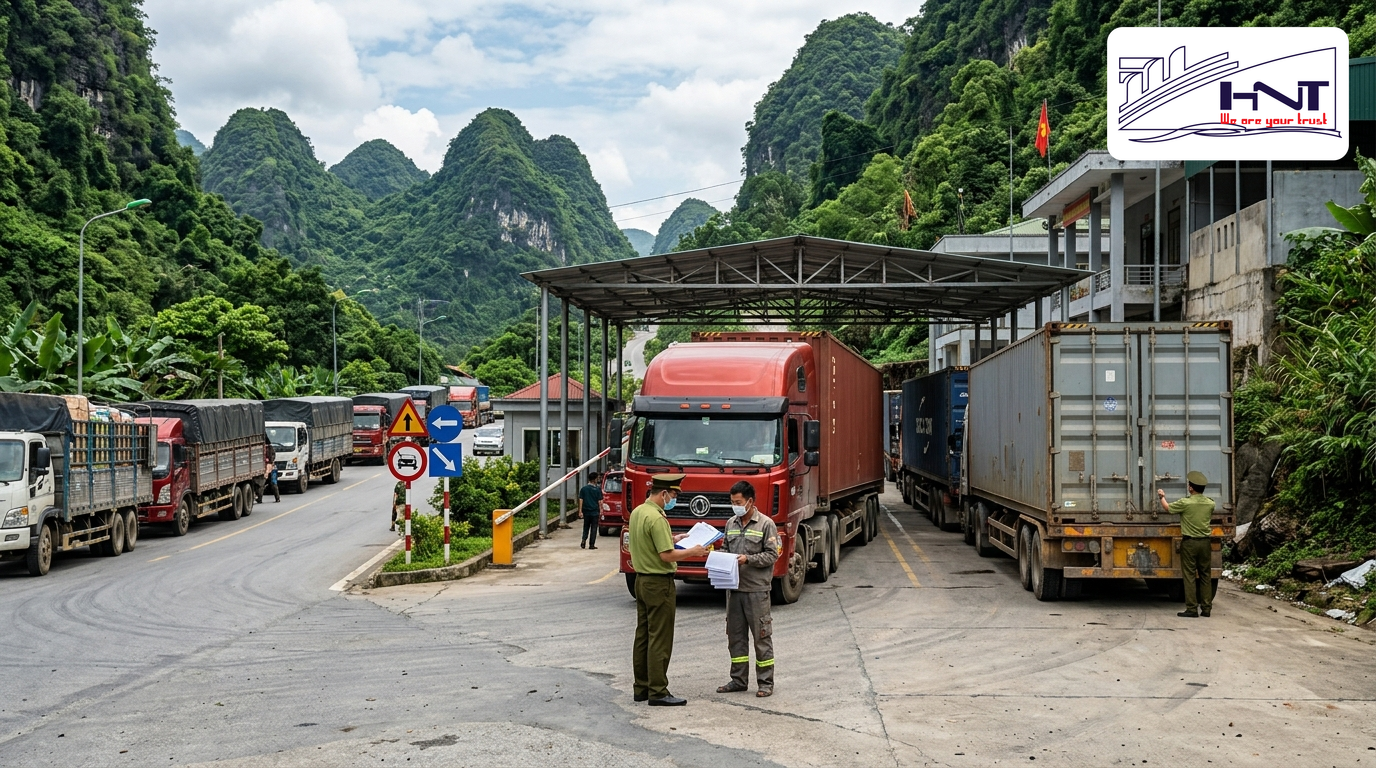
Documents and declarations at the Cầu Treo border gate
Actual documentation must be checked according to the nature of the shipment. The usual commercial document set includes the contract, invoice, packing list, and transport documents. For goods subject to specialized management, the corresponding license or quarantine documents must be added. The Bill of Lading should be consistent with the container information, seal number, and consignee.
Customs clearance procedures at the Cha Lo border gate
Customs clearance procedures at the Cha Lo border gate require checking the entry border gate, exit border gate, transport route, and estimated transit time in advance. Discrepancies between the declaration and the actual vehicle may delay confirmation of supervision. For goods requiring a transit permit, the business must complete the permit before the vehicle arrives at the border gate. Ordinary goods not subject to a permit follow the corresponding customs procedures.
- Identify the cargo owner, carrier, type of goods, HS Code, and specialized management requirements before the container pickup date.
- Finalize the entry border gate, exit border gate, and transport route in accordance with the prepared transit documentation.
- Cross-check the invoice, packing list, Bill of Lading, and transport contract to eliminate quantity discrepancies.
- Declare the customs procedures and provide the transit permit if the goods belong to a category requiring authorization from the competent authority.
- Check the container number, seal number, vehicle license plate, and carrier information before the vehicle leaves the supervision point.
- Keep documents with the vehicle, monitor the transit deadline, and immediately notify customs when a force majeure incident occurs.
| Documentation | Purpose | Points to check | Risks if incorrect |
|---|---|---|---|
| Commercial invoice | Identify the goods and value | Goods name, quantity | Explanation required |
| Packing | Package details | Weight, number of packages | Difficult to reconcile with reality |
| Bill of lading | Journey confirmation | Container, consignee | Incorrect transport information |
| Transport contract | Identify the carrier | Scope of liability | Difficult to handle incidents |
| Specialized permits | Comply with cargo management requirements | Validity and responsible parties | Cannot be cleared through customs |
| Inspection certificate | Meet biological requirements | Correct shipment and market | Hold, process, or return the cargo |
Example 1: Hypothetical company Dong Ha Foods in Quang Tri transports a container of agricultural products from Laos through the Cau Treo border gate to the port. The documentation team discovers that the seal number on the packing list differs by one character. Correcting it before the truck arrives helps avoid approximately four hours of assumed inspection and verification at the border gate.
Example 2: Hypothetical company Binh Minh Machinery in Binh Duong receives machinery in transit from Laos through the Cha Lo border gate. The company sends the electronic document set in advance to the customs declaration agent. By detecting early that the cargo description is inconsistent with the HS Code, the operations team corrects the documents before the truck departure date and does not have to reschedule the tractor unit.
The business needs to build an internal operations page for service customs declaration, clearly defining the person responsible for verifying documents, the declarant, and the person confirming the seal. This process reduces reliance on fragmented phone communications.
Practical summary: Complete document checks at least one work shift before the vehicle arrives at the border. The cost of correcting documents at the office is almost always lower than the cost of holding a truck at the border gate.
Latest Cau Treo and Cha Lo cross-border container transport rates
Cross-border transport quotations should not consist of just one line for the truck freight rate. A good quotation must clearly specify the pickup point, delivery point, container type, load capacity, border gate, procedural costs, free waiting time, and conditions for additional charges. With fuel prices fluctuating in 2026, a short quotation validity period helps reduce disputes between shippers and carriers.
Market data shows that transportation costs are sensitive to fuel prices. A March 2026 bulletin from the Vietnam Logistics Business Association noted that some domestic container routes increased by up to 25% amid rising fuel costs. Therefore, the framework below is only for preliminary budgeting and is not a fixed commercial quotation.
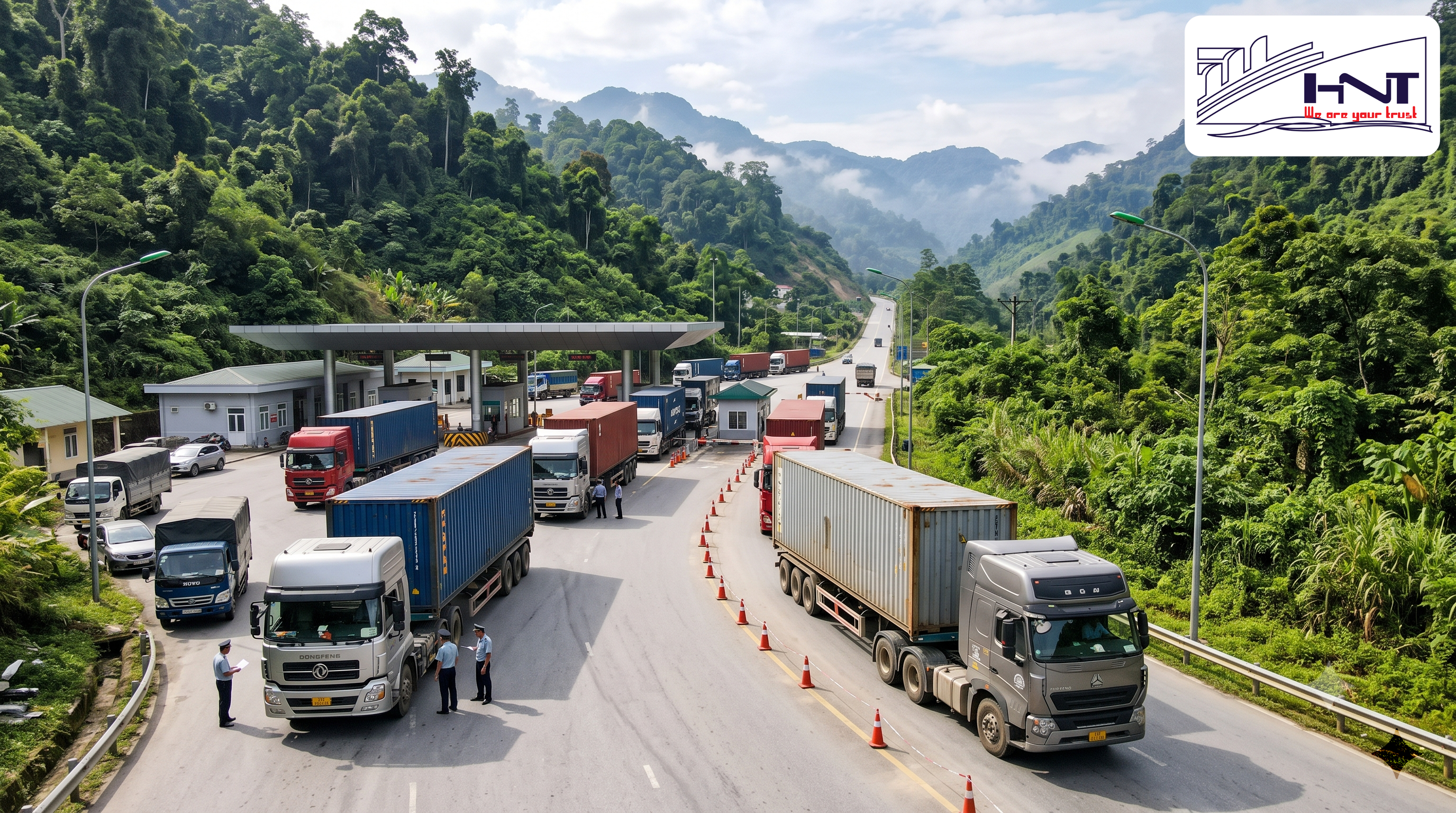
Cau Treo cross-border container trucking cost components
Cau Treo cross-border container trucking rates are typically formed from the tractor freight rate, distance, load capacity, container type, and waiting time. Procedural costs, transloading, tractor replacement, or refrigerated equipment use should be listed separately. If the cargo comes from a seaport, the business must also control container storage charges (Demurrage/Detention) according to the shipping line's terms and conditions.
How to lock in costs and avoid additional charges
Based on HNT LOGISTICS' experience, businesses should require quotations to clearly state the number of free waiting hours at the border gate and the rate for each additional hour. This clause is more useful than a bundled price that does not specify a limit. For cargo requiring vehicle changes at the border, the quotation must state which party bears the costs of loading and unloading, transloading, and cargo counting.
- Accurately specify whether the container is 20 feet, 40 feet, or refrigerated to avoid price adjustments after vehicle confirmation.
- State the actual cargo weight because heavier vehicles change fuel consumption, permit requirements, and tractor allocation.
- Confirm the Cau Treo border gate or Cha Lo border gate directly on the quotation instead of generally stating Vietnam–Laos transportation.
- Request free waiting time and hourly waiting charges to quantify the risk of congestion or prolonged inspections.
- Separate customs procedures, quarantine, transloading, and loading and unloading fees from the basic transportation rate for easier cost control.
- Specify the quotation validity period and fuel adjustment mechanism if the truck departs after the committed validity period.
| Reference item | 20-foot container | 40-foot container | Notes |
|---|---|---|---|
| Domestic trucking to the border gate | 8–18 million VND | 11–24 million VND | Depends on the pickup location |
| Road transit section | 12–28 million VND | 16–35 million VND | Depending on the delivery point in Laos |
| Procedures and documentation | 1.5–4 million VND | 1.5–4 million VND | Excluding special permits |
| Vehicle waiting fee | 0.8–1.8 million VND/day | 1–2 million VND/day | Applicable after the free waiting period |
| Transshipment or lifting and lowering | 2–6 million VND | 3–8 million VND | Only incurred when necessary |
| Refrigerated equipment | According to configuration | According to configuration | Fuel and monitoring must be quoted separately |
The above price range is a budgeting estimate model for budget planning purposes, not an official tariff of a government agency or HNT LOGISTICS. Actual prices must be confirmed based on the date, route, cargo weight, vehicle, delivery conditions, and cargo documentation.
Example 1: The hypothetical company Mekong Fresh in Tien Giang needs to transport a 40-foot container of dry goods to Vientiane through the Cau Treo border gate. The initial quote was 43 million VND but did not include waiting fees. After breaking down the components, the company chose a 45 million VND option with 12 hours of free waiting time, reducing contingency risk by approximately 5 million VND.
Example 2: The hypothetical company Nam Trung Steel in Binh Duong transports components through the Cha Lo border gate. Two trucking companies differ by 3 million VND in their quotes. The cheaper trucking company requires separate payment for tractor head replacement and lifting and lowering fees. When all costs are included, the option initially thought to be cheaper is actually about 8% higher. The company switches to a quote with transparent cost components.
Practical summary: When asking for a quote transit container transport, send the same request form to all suppliers. Compare the estimated total cost rather than comparing only the trucking rate.
Risk control at Cau Treo border gate for refrigerated goods, agricultural products, and seafood
Refrigerated goods face two layers of risk simultaneously: legal risk and temperature risk. A container with correct documentation can still cause significant losses if it loses refrigeration. Conversely, goods that are properly preserved may still be held if quarantine documentation is missing. A plan for passing through Cau Treo border gate must connect container technical requirements, border-crossing time, and the requirements of the destination market.
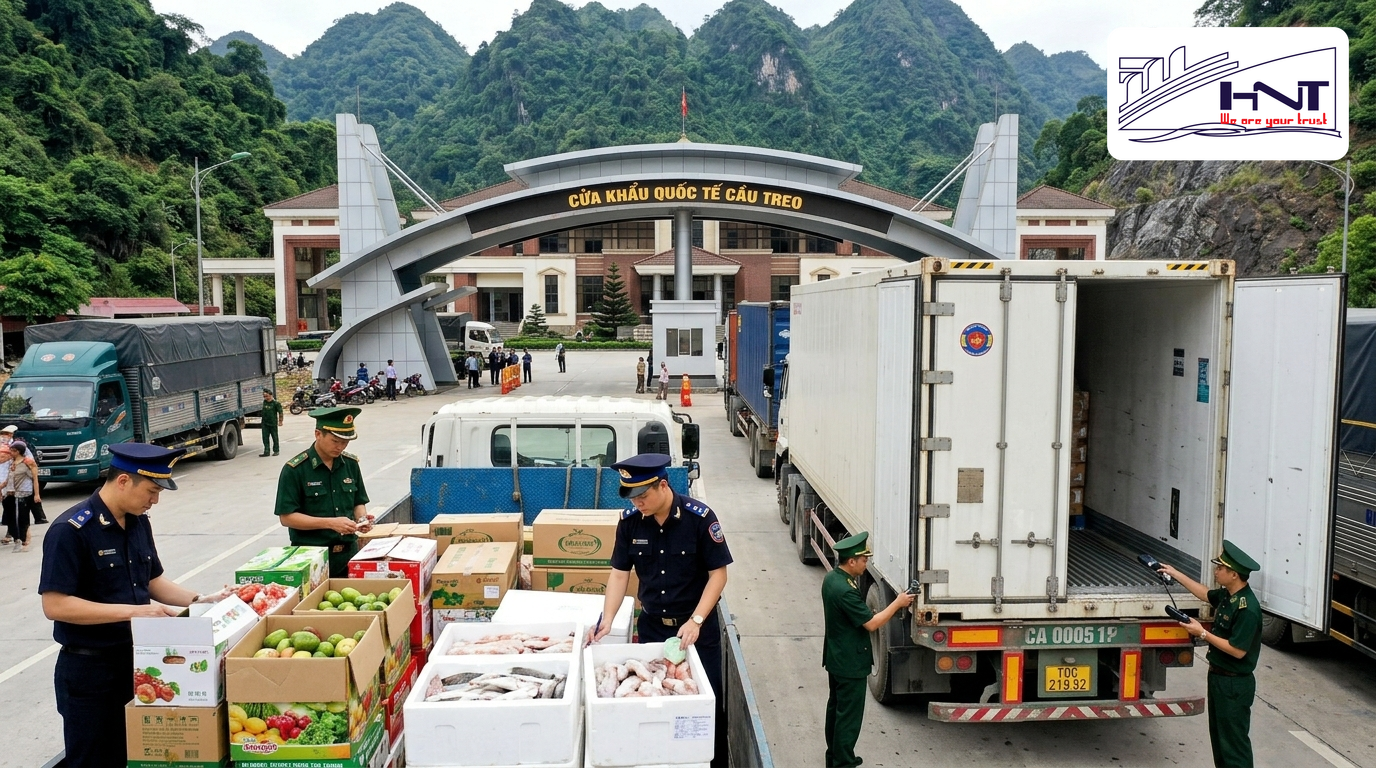
Cold chain and quarantine at Cau Treo border gate
For exported fruit, growing-area codes and packing facilities must be verified for each market. On August 21, 2026, the Plant Production and Plant Protection Department updated the list of growing areas and fresh-fruit packing facilities approved by the General Administration of Customs of China. This shows that market data can change and that outdated lists should not be used for new shipments.
If the goods continue to the European Union, many plants and plant products covered by the applicable regulations must have a phytosanitary certificate. European Union regulations require shipments to be inspected and comply with Regulation (EU) 2019/2072; certain fruits such as pineapples, coconuts, durians, bananas, and dates have specific exemptions from certification requirements.
Seal, time, and documentation control
Container seals must be checked at the loading point, vehicle handover point, and border gate. For refrigerated goods, the operations team should record the set temperature, return temperature, machine status, and fuel level. Refrigerated container specifications must be recorded in the transport order so the driver and dispatcher do not have to guess when an alert occurs.
- Record the set temperature, ventilation mode, and humidity according to the technical requirements for each type of agricultural or aquatic product.
- Check the refrigeration fuel before entering the border-gate area because the waiting time may be longer than the expected schedule.
- Photograph the seal number at the loading point, handover, and border gate to create an evidence trail in case of disputes.
- Confirm that the phytosanitary certificate, growing-area code, and packing facility are valid for the correct import market.
- Set temperature alert thresholds so the dispatcher can intervene before the cargo quality deteriorates significantly.
- Prepare a refrigerated-cargo emergency contact and backup power source if the container must remain stopped for a long time in the border area.
| Group of goods | Control point | Documents requiring attention | Main risks |
|---|---|---|---|
| Fresh fruit | Temperature, ventilation | Phytosanitary inspection, growing-area code | Dehydration, pests and diseases |
| Frozen seafood | Stable sub-zero temperature | Sanitation documents according to market requirements | Localized thawing |
| Dried agricultural products | Humidity, packaging | Phytosanitary inspection when applicable | Mold, insects |
| Processed food | Temperature according to label | Food safety records | Incorrect storage conditions |
| Planting materials | Biological control | Permits and phytosanitary inspection | Failure to meet import requirements |
Example 1: Hypothetical company Hậu Giang Tropical exports a fruit container through Cầu Treo border gate before connecting to another route. The dispatcher detects that the return-air temperature has risen by 2 degrees C over three hours. The truck is immediately taken to a refrigeration-system inspection point. Early intervention helps the temperature return to the required range before the cargo continues its journey.
Example 2: Hypothetical plant Biển Xanh Cà Mau transports frozen seafood through the Cha Lo corridor. Before the departure date, the documentation department discovers that the certificate lists the wrong container number. Requesting a correction before the pickup time avoids the risk of the shipment being held at the border and protects the cold chain's subsequent delivery schedule.
Practical summary: For refrigerated cargo, do not just schedule the truck. At the same time, create a documentation plan, a temperature plan, and an emergency-response plan. These three layers must use the same container number and seal number.
Operating plan through Cầu Treo border gate: from truck booking to handover
A stable transit trip is often determined before the truck departs. The dispatcher needs to know the loading time, expected ETA at the border gate, driver, license plate, document status, and recipient on the other side of the border. A single unconfirmed link can cause the truck schedule to be missed and lead to waiting costs.
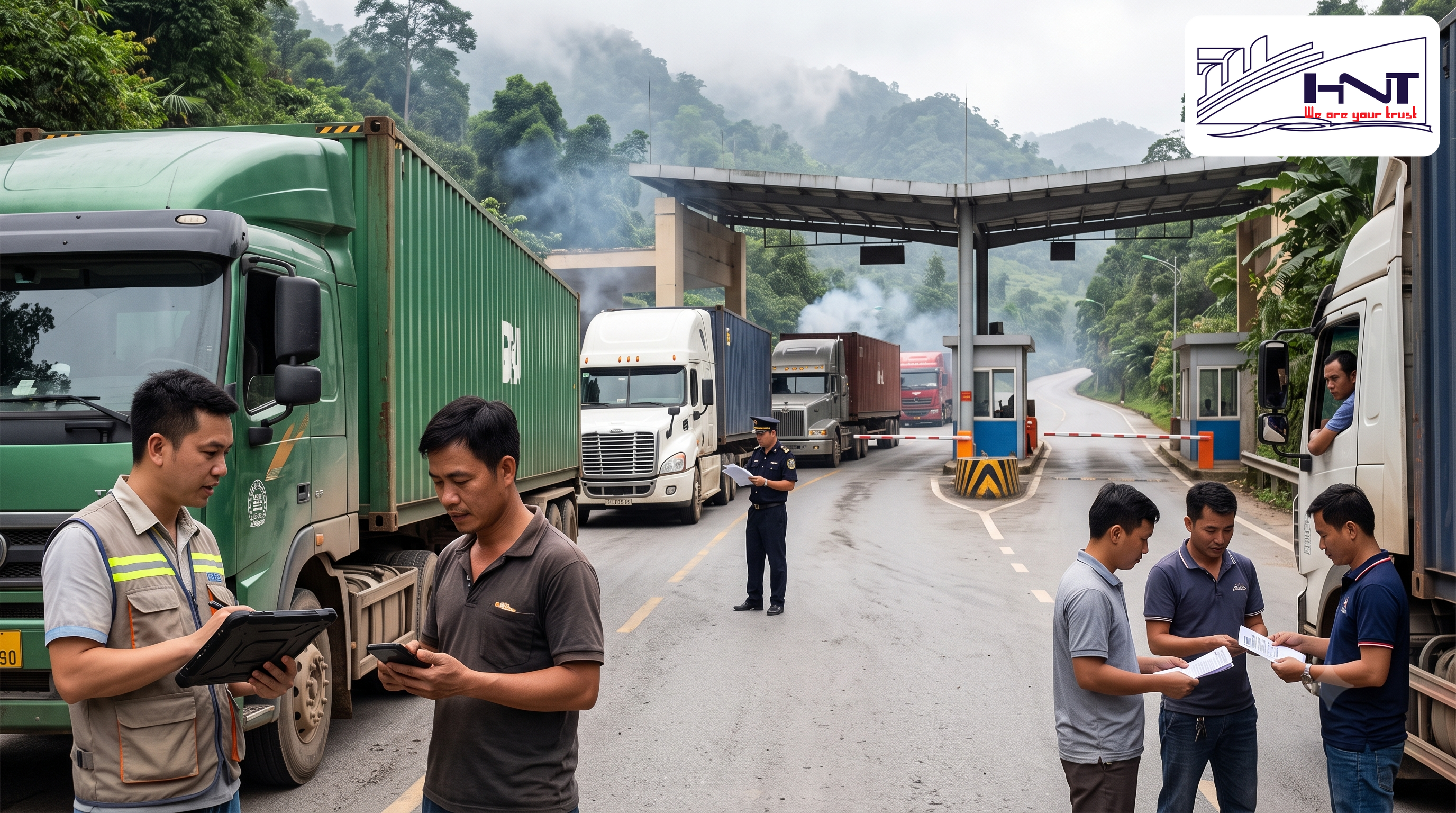
Dispatch schedule 48 hours before the border gate
During the 48 hours before arriving at Cầu Treo border gate, the documentation and transport teams must work from a shared status board. At the 24-hour mark, all critical information should be locked. At the six-hour mark, only operational changes should be handled; basic data such as cargo name, container number, or border gate should no longer be edited.
Criteria for selecting a transit transport provider
According to experts at HNT LOGISTICS, a provider should demonstrate three capabilities before accepting a shipment: suitable vehicles, a document processing procedure, and the ability to respond when a border gate is delayed. A provider that only offers a low quote but has no point of contact for handling incidents can create much higher costs once the goods are already on the truck.
- 48 hours before departure, confirm the vehicle type, container, load capacity, expected driver, and border gate to be used for the shipment.
- 36 hours before departure, complete checks of the invoice, packing list, bill of lading, permits, and specialized regulatory documents.
- 24 hours before departure, send the document package to the customs declaration provider and confirm the estimated time the truck will arrive at the border gate area.
- 12 hours before departure, check fuel, tires, seals, tracking equipment, and refrigeration equipment if using a refrigerated container.
- Six hours before departure, update the border gate status, contact the recipient in Laos, and agree on the vehicle handover point.
- After customs clearance, retain confirmation documents, the border crossing time, and proof of handover for cost reconciliation.
| Time milestone | Task to complete | Person in charge | Checkpoint |
|---|---|---|---|
| 48 hours before | Book the truck and confirm the border gate | Transport coordinator | No truck, no loading |
| 36 hours before | Check the document package | Import export | Correct errors before declaration |
| 24 hours before | Complete the declaration | Customs broker | Confirm eligibility to proceed |
| 12 hours before | Conduct a vehicle technical inspection | Carrier | Do not use a faulty vehicle |
| 6 hours before | Update the border gate status | Coordinate both ends | Adjust ETA if needed |
| After handover | Reconcile documents and fees | Accounting, logistics | Close the shipment file |
Example 1: The hypothetical company Thành Công Furniture in Đồng Nai sends production accessories to Laos through Cầu Treo border gate. The operations team applies the 48-hour schedule and discovers that the expected driver does not have all the required cross-border transport documents. The carrier replaces the driver before the departure date, helping the trip stay on its original delivery schedule.
Example 2: The hypothetical company Phu Yen Agro ships bagged goods through Cha Lo Border Gate. Before six o'clock, the dispatcher receives information that border processing time has increased. The company delays the warehouse departure time by four hours, avoiding trucks waiting overnight and reducing one day of waiting fees in the cost model.
Practical summary: The operating plan should have one person with ultimate responsibility. This person monitors the truck, documents, border gate, and costs on the same timeline.
For businesses that need frequent transportation, a Vietnam-Laos road freight standardized process will create greater value than negotiating each shipment separately. Data on waiting times, fuel prices, customs clearance times, and additional costs for each route should be saved for use in the next quotation.
Cau Treo Border Gate and Cha Lo Border Gate can both become efficient corridors if the business chooses correctly based on the cargo origin, destination, and legal requirements. A low price is not enough. A successful shipment requires the right documents, the right vehicle, the right route, and a plan for waiting times.
- Compare Cau Treo Border Gate and Cha Lo based on total door-to-door time, not just distance.
- Finalize the transit documentation before the truck reaches the border to avoid waiting fees and changes to the tractor schedule.
- Clearly separate vehicle freight charges, procedures, waiting fees, transloading, and refrigerated container costs when evaluating a quotation.
- Verify the regulations in force on the transportation date, especially when new regulations have been issued but are not yet effective.
- For agricultural and refrigerated goods, check quarantine requirements, growing area codes, temperature, and seal condition simultaneously.
- Use a 48-hour dispatch schedule to coordinate the carrier, customs, shipper, and consignee in Laos.
If a business needs to develop a plan through Cau Treo Border Gate or Cha Lo Border Gate for each container, it should provide the pickup point, delivery point, commodity, weight, and expected departure date. HNT LOGISTICS is a freight forwarding and logistics partner for Vietnamese exporters and can support route, documentation, and cost component reviews before the business finalizes its transportation plan. As a professional transportation provider, HNT LOGISTICS is committed to delivering comprehensive supply chain solutions, helping Vietnamese businesses confidently conquer global markets. Contact us today at 8A Hoang Minh Giam, Ho Chi Minh City or via the marketing email at hntshipping.com for quotation support!