


A shipment from Laos to a Vietnamese port may be stopped right at the border gate if the route is incorrect, permits are missing, or documents do not match. The Laos transit customs declaration service helps businesses control these bottlenecks in advance.
In 2026, Vietnam–Laos trade reached USD 2.98 billion, up 32,7% compared with 2026. In the first five months of 2026, two-way trade exceeded USD 1 billion. As of August 20, 2026, Drewry's World Container Index reached USD 4,526 per 40-foot container, up 4% for the week. These figures clearly show the growing need to control shipping schedules and costs.
When does the Laos transit customs declaration service apply?
The Laos transit customs declaration service is suitable when goods owned by a Lao cargo owner pass through Vietnam to reach a seaport, border gate, or third country. Transit goods are not automatically treated as imported goods for consumption in Vietnam. The cargo owner must correctly determine the entry border gate, exit border gate, transport route, and permit requirements before the vehicle or container departs.
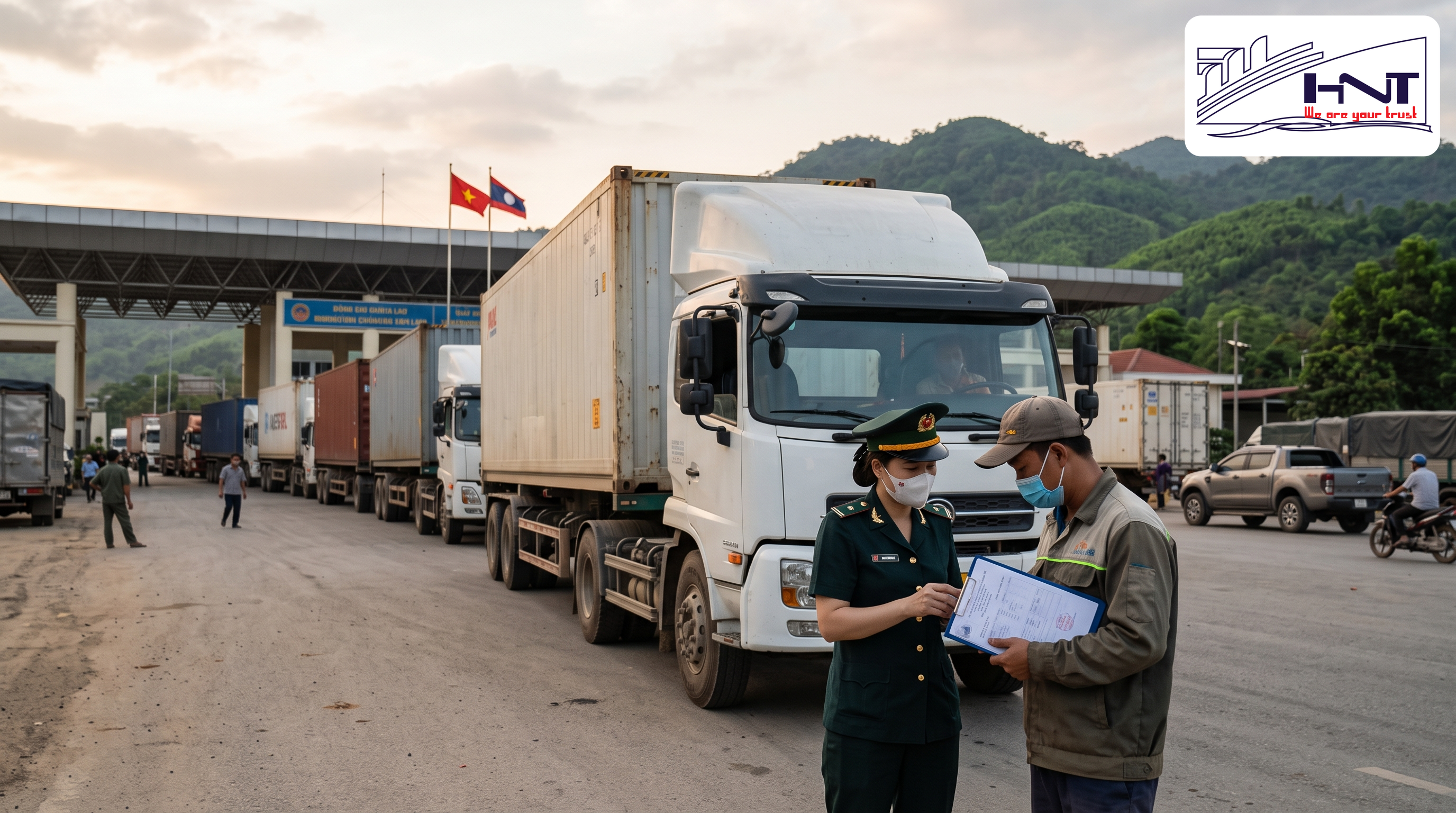
Scope of Lao goods transiting through Vietnam
The current specialized framework is consolidated in Consolidated Document 44/VBHN-BCT dated June 4, 2026. The document distinguishes goods requiring permits from goods that only need procedures at the customs authority. For goods not subject to permits, an important condition is transit through the pairs of border gates specified under the Vietnam–Laos Agreement.
- Identify the cargo owner in Laos and the carrier responsible within Vietnamese territory before making the declaration.
- Check whether the goods belong to a category requiring a transit permit before booking vehicles, containers, or connecting vessel schedules.
- Finalize the entry border gate, exit border gate, and transport route in accordance with the registered documents, avoiding unauthorized route changes.
- Cross-check quantity, weight, commodity codes, packaging, and marks and numbers between commercial documents and transport documents.
- Allow sufficient processing time at border gates and ports, especially when the shipment requires physical inspection or additional permits.
| Situation | Main handling | Risk to control |
|---|---|---|
| Ordinary goods | Declare transit procedures | Incorrect border gate or route |
| Goods subject to permits | Obtain permits before transportation | Departing without sufficient permits |
| Goods changing means of transport | Clearly declare the transport plan | Vehicle information does not match |
| Goods bound for seaports | Coordinate border gates and ports | Missing the container gate-in deadline |
Legal basis to check in 2026
Circular No. 121/2026/TT-BTC effective from February 1, 2026, amended guidance on customs procedures for transit goods. The new regulations continue to link transit procedures with the independent transport declaration and require related manifests to be declared on the system. Businesses still using old procedures should review their forms and declaration fields.
Example 1: The hypothetical company Mekong Khoáng Sản in Khammouane transports 24 tons of minerals through Cha Lo Border Gate to a central Vietnamese port. The responsible team checks permits before dispatching the vehicle, avoiding a situation where the vehicle reaches the border only to discover that specialized documents are missing.
Example 2: The hypothetical business Viêng Chăn Cơ Khí transports two containers of equipment through Vietnam. The initial documents incorrectly state the exit border gate. Reviewing the shipment before departure allows the plan to be corrected and avoids having to handle a route change while the goods are under customs supervision.
Practical summary: HNT LOGISTICS recommends finalizing the commodity policy, border gates, and transit route before issuing the transport order; these three factors largely determine whether the documents can be processed according to plan.
What documents are required for the Laos transit customs declaration service?
The Laos transit customs declaration service is effective only when the document set is consistent from the cargo owner to the carrier. Missing documents do more than delay the declaration. A small discrepancy in container number, weight, or marks and numbers may require the customs authority to verify the information before allowing the goods to continue their journey.
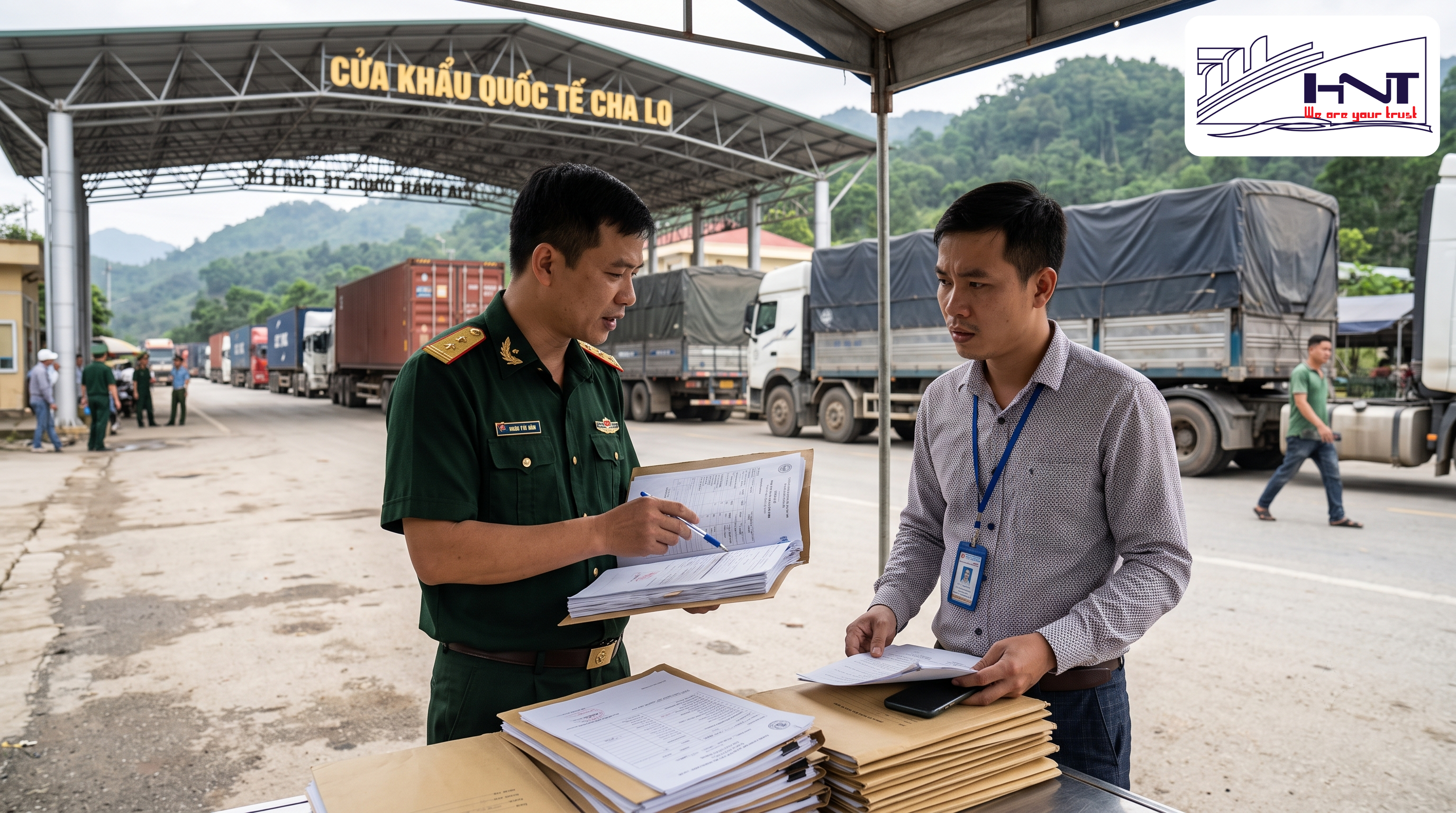
Core customs document set for transit goods
Under the current mechanism, the independent transport declaration and manifests using electronic forms are central. The Bill of Lading or equivalent transport document must still be controlled where applicable. If the goods are subject to a permit, the transit authorization document must be prepared in the appropriate form.
- The independent transport declaration must accurately reflect the place of departure, destination, means of transport, and expected transport time of the shipment.
- The cargo manifest must have consistent goods names, quantities, units of measurement, marks and numbers, and packaging information with the source documents.
- The Bill of Lading or equivalent transport document must be cross-checked against the container number, seal number, and final consignee.
- The transit permit must be submitted when the goods fall under a case where the law or Agreement requires a permit.
- Specialized documents must be prepared when the goods are subject to quarantine, food safety, quality, or other specialized management requirements.
| Documentation | Contents must match | Checkpoint |
|---|---|---|
| Transport declaration | Border gate, route, means of transport | According to the transport plan |
| Cargo manifest | Name, quantity, packaging | Match the source documents |
| Bill of lading | Container, consignor, consignee | No seal number discrepancies |
| License | Goods, validity period | Valid during transit |
| Specialized documentation | Correct type of goods | Valid and for the correct shipment |
Supplementary documents according to commodity policy
For agricultural products, seafood, or products of plant or animal origin, businesses must clearly separate transit procedures from quarantine requirements arising in each case. Goods should not be assumed to be exempt from all specialized inspections simply because they only pass through Vietnam. The applicable policy must be determined based on the HS Code, nature of the goods, and actual route.
Example 1: The hypothetical company Bolaven Green in Champasak transports bagged coffee through Lao Bao Border Gate for sea export. The weight of each bag is cross-checked against the transport documents before declaration. This eliminates a 420 kg discrepancy and avoids having to amend the documents after the vehicle has reached the border gate.
Example 2: The hypothetical business Savannakhet Foods transports frozen food ingredients through Vietnam. The document set is additionally checked for temperature and seal information. As a result, the fleet keeps the same container configuration throughout the supervised journey and reduces the risk of unnecessary container opening.
Practical summary: Before declaring, create a single reconciliation table covering the declaration, manifest, Bill of Lading, permits, and specialized documents; every discrepancy must be resolved before the vehicle reaches the border.
Step-by-step Laos transit customs declaration process
The transit customs declaration process should be designed according to the actual cargo flow, not just the document set. The Laos transit customs declaration service must coordinate the declarant, driver, entry border gate, domestic carrier, port, or exit border gate. The goal is to maintain continuous supervision until the goods leave Vietnamese territory.
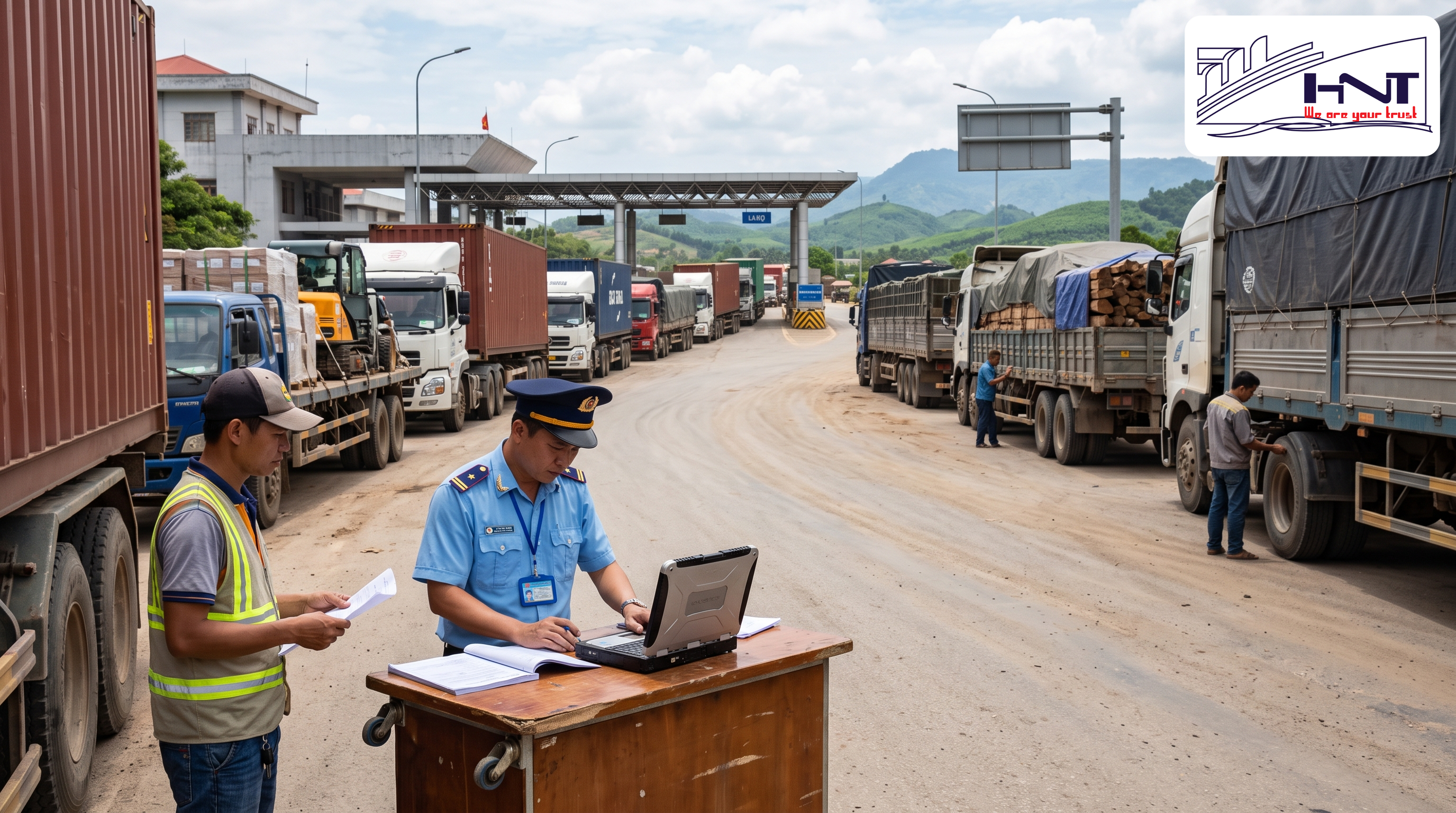
File the independent transport declaration
Current transit customs procedures are carried out under the independent transport mechanism and Article 43 of Decree 08/2015/NĐ-CP, as amended. Circular 121/2026/TT-BTC requires declarants to submit the relevant manifests according to the applicable forms when registering the independent transport declaration. For goods transported multiple times, the declaration method must ensure compliance with the registered transport time.
- Receive documents and determine the commodity policy, permit requirements, and relevant specialized management conditions.
- Cross-check the entry border gate, exit border gate, route, means of transport, container number, and seal number before transmitting the data.
- Register the independent transport declaration and submit electronic manifests according to the fields specified by the customs system.
- Coordinate with the customs authority at the place of departure to complete document inspection and physical inspection if required.
- Arrange transportation along the correct route and within the registered time, maintaining the original condition of the goods and seals during supervision.
- Carry out procedures at the destination and complete confirmation that the goods have departed or that the journey has ended in accordance with regulations.
| Step | Task | Control point | Required result |
|---|---|---|---|
| 1 | Check policy | Permits, specialized requirements | Eligible for declaration |
| 2 | Standardize Documents | Quantity, containers | Consistent data |
| 3 | Registering the declaration | Electronic fields | Valid declaration |
| 4 | Transportation | Route and timing | No interruption of supervision |
| 5 | End of journey | Destination confirmation | Transit completed |
Journey monitoring and confirmation at the exit border gate
A stage that is often overlooked is the period after the declaration is accepted. The goods remain under supervision throughout the journey. Drivers should not change routes, replace tractor units, break seals, or stop handling the goods based on their own decisions. When an incident occurs, the carrier should immediately notify the customs declaration contact point to determine the appropriate procedure.
Example 1: The hypothetical company Lan Xang Timber Components transports a container of wood accessories from Central Laos to Da Nang Port. The vehicle is monitored by border-gate milestones, transshipment points, and yard gate-in times. The plan includes a six-hour buffer, helping the container catch its sailing even when the border gate processes it more slowly than expected.
Example 2: The hypothetical business Vientiane Solar sends energy equipment through Vietnam. A tractor unit breaks down en route. The declaration service provider coordinates a vehicle replacement under the appropriate procedure instead of transferring the goods without authorization, allowing the shipment to continue without creating a supervision gap.
Practical summary: The business should standardize one service customs declaration with a dedicated contact available continuously from the entry border gate to the place where transit ends, rather than dividing responsibility among multiple parties that do not share the same information system.
Laos transit customs declaration service: what does the quotation include?
A quotation for the Laos transit customs declaration service should clearly separate government fees, professional service fees, and transportation costs. A single all-inclusive figure should not be used before the type of goods, border gate, number of vehicles, permit requirements, and destination port are known. Breaking down the components helps businesses compare providers and identify which costs may arise.
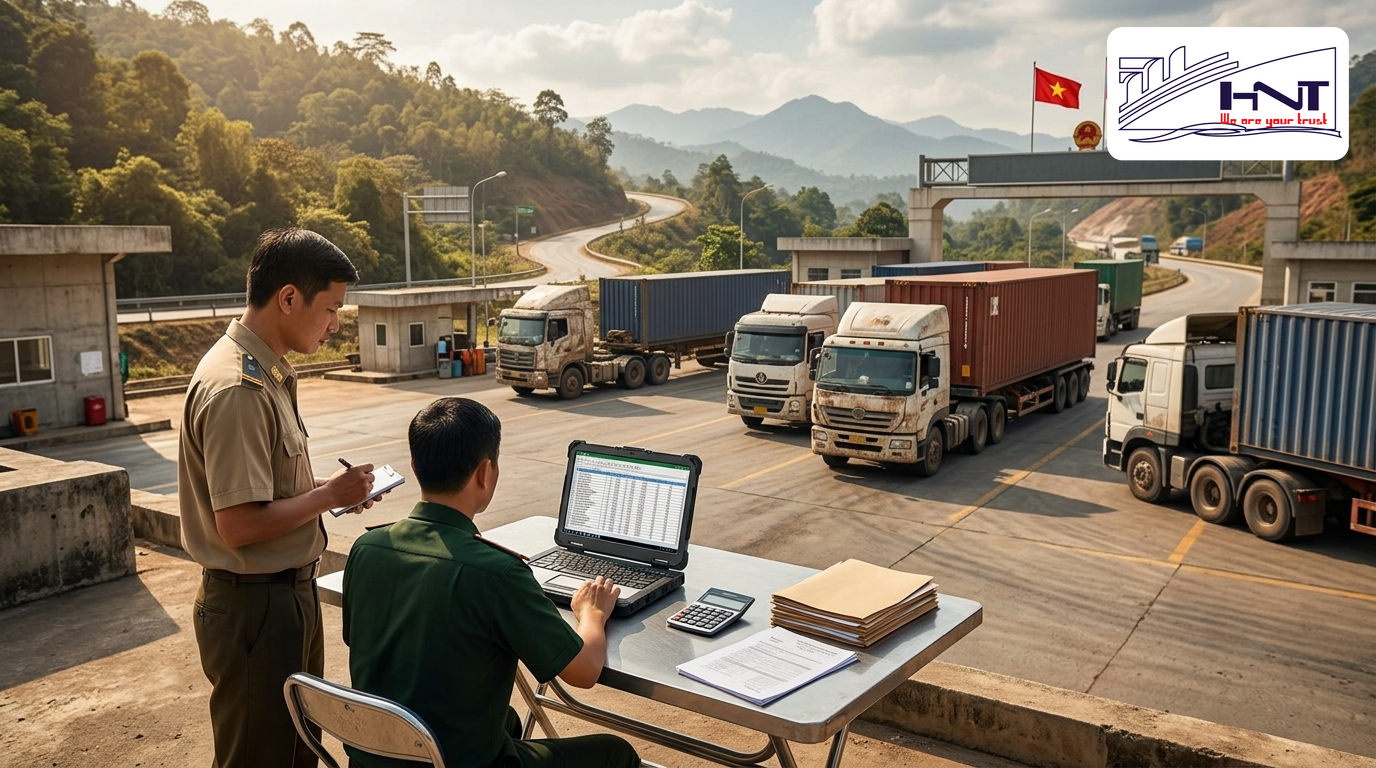
Government fees can be determined in advance
According to Thông tư 14/2026/TT-BTC, lệ phí đối với hàng hóa quá cảnh là 200.000 đồng mỗi tờ khai. Lệ phí phương tiện vận tải quá cảnh đường bộ là 200.000 đồng mỗi phương tiện; phương tiện đường thủy là 500.000 đồng mỗi phương tiện. Đây là mức thu nhà nước, không đồng nghĩa với phí dịch vụ khai báo của doanh nghiệp logistics.
- The fee for transit goods is determined by the actual number of declarations and should be separated from the agent's professional service fee.
- The vehicle fee depends on the type of vehicle and the number of vehicle trips subject to payment under the current fee schedule.
- Professional declaration fees depend on the number of goods lines, number of containers, completeness of the documents, and document amendment requirements.
- Permit processing fees only arise when the commodity policy requires a permit or permit extension before transit.
- Transportation costs depend on the border gate, destination port, vehicle type, weight, waiting time, and operating conditions at the relevant time.
- Additional costs may include lifting and handling, yard storage, physical inspection, sealing, or vehicle waiting if shipment processing is prolonged.
| Charge | Rate or calculation method | Nature |
|---|---|---|
| Transit goods fee | VND 200,000/declaration | Government rate |
| Road transport vehicle | VND 200,000/vehicle | Government rate |
| Waterway transport vehicle | VND 500,000/vehicle | Government rate |
| Professional declaration fee | Quoted per shipment | Service fee |
| Free shipping | Quoted according to the actual route | Operating costs |
Service and transportation costs must be quoted per shipment
The article does not assume HNT LOGISTICS's commercial pricing without official shipment-specific quotation data. A usable quotation should clearly state the scope of work, number of declarations, border gates, destination port, vehicle type, free waiting time, and conditions for additional charges. This approach helps buyers avoid comparing service packages with different scopes.
Example 1: The hypothetical company Pakse Agro needs to transport two containers of coffee through Lao Bao to Da Nang Port. The quotation separates government fees, customs declaration, transportation, and lifting and handling. As a result, the business discovers that the initially lower-priced option does not include border-gate waiting time.
Example 2: The hypothetical business Thakhek Machinery has four equipment trucks passing through Cha Lo. The option of making one declaration or multiple declarations is considered based on the actual transport plan. The business chooses a more synchronized vehicle schedule, reducing waiting hours and better controlling driver costs.
Practical summary: When requesting a quotation, ask for a breakdown of at least five groups: government fees, declaration, permits, transportation, and conditional additional costs.
Laos transit customs declaration service: how to reduce delays and additional costs
The greatest risk in the Laos transit customs declaration service usually does not lie in data entry. The risk arises when documents, vehicle schedules, and vessel schedules are not coordinated. A shipment that clears the border but misses the yard gate-in deadline may still incur costs far greater than the declaration fee.
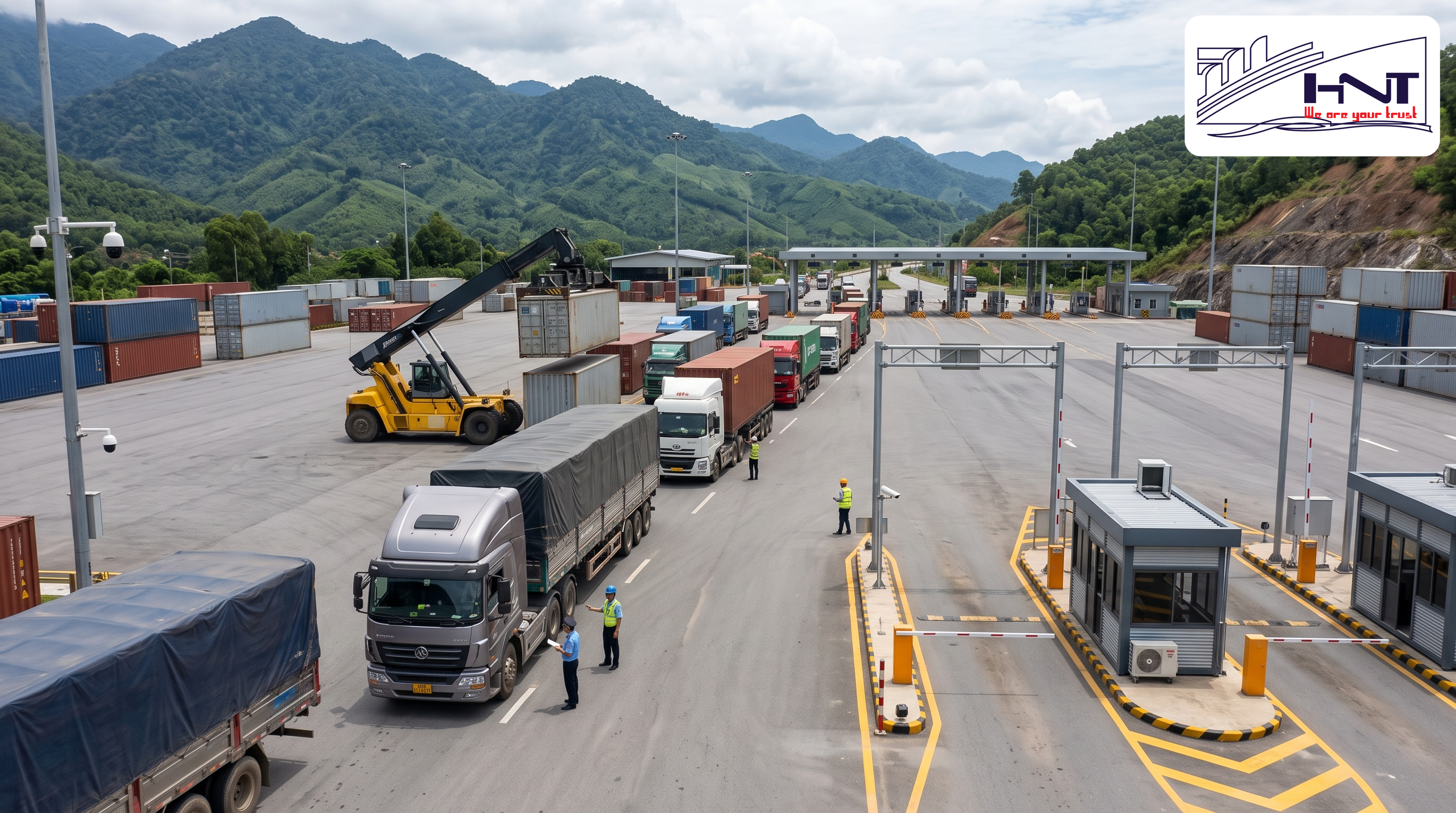
Control the route, seals, and timing
The Customs Law requires goods and means of transport to undergo procedures, inspection, and supervision, while being transported along the prescribed route and within the prescribed time. The 2026 regulations also allow situations involving changes in the mode or means of transport to be handled under the corresponding procedures, but businesses should not make changes on their own and legalize them afterward.
- Set vehicle arrival times at the border gate according to actual processing capacity, avoiding a concentration of vehicles close to the vessel's yard closing deadline.
- Photograph and record seal numbers at the cargo pickup point, border gate, and delivery point to trace discrepancies.
- Establish a contact point for vehicle incidents to obtain guidance before replacing a tractor unit or transloading the goods.
- Allow time for physical inspection, supplementary documents, and road congestion during the rainy season in the Central Vietnam area.
- Synchronize estimated arrival and departure times (ETA/ETD) with vehicle schedules, yard gate-in schedules, and port procedure completion deadlines.
- Check container and yard storage conditions in the quotation to avoid additional costs when the vessel schedule changes.
| Risk | Early signs | Measures |
|---|---|---|
| Wrong route | Vehicle schedule differs from documents | Finalize the route before declaration |
| Incorrect seal | Actual number differs from documents | Check at the pickup point |
| Missed vessel | Extended border-gate processing | Create a time buffer |
| Change of vehicle | Vehicle breakdown en route | Notify the customs contact point |
| Additional yard storage | Vessel schedule changes | Check free time |
Notes for agricultural products, seafood, and temperature-controlled goods
For perishable goods, customs time must be managed as part of the cold chain. Temperature, power supply, refrigeration fuel, door-opening time, and vehicle stopping locations should be recorded. Based on HNT LOGISTICS's experience, a good transit plan should include a backup power source before the refrigerated container leaves the loading point.
Example 1: The hypothetical company Bolikhamxay Fresh transports chilled produce through Vietnam for onward export. The container temperature limit is set from the beginning and the container is opened only when properly required. The vehicle schedule includes an eight-hour buffer, helping the goods maintain the cold chain even when the border gate conducts document checks.
Example 2: The hypothetical business Mekong River Foods transports frozen seafood from Laos to a Vietnamese seaport. The carrier provides a tractor unit capable of stable power supply while waiting. Continuous temperature monitoring helps the business demonstrate the storage condition when handing the goods over to the shipping line.
Practical summary: For refrigerated goods, manage three clocks simultaneously: customs time, free time at the port, and the safe duration of the temperature-controlled chain.
An effective Laos transit customs declaration service must connect legal compliance with operations. Businesses need to know whether permits are required, standardize documents, correctly file the transport declaration, maintain the approved route, and estimate costs by component. As Vietnam–Laos trade continues to grow, standardizing the process from the outset can significantly reduce the risks of border delays and missed vessel schedules.
- Check the commodity policy and permit requirements before booking vehicles or confirming the transport schedule through Vietnam.
- Reconcile the entire transit customs document set before transmitting the declaration, especially container and seal numbers.
- Transport only through the border gates, routes, means of transport, and times that have been declared or properly handled under the change procedure.
- Separate government fees from service fees when comparing quotations from different providers for the same scope of work.
- Allow a buffer for customs inspection, border congestion, and container gate-in deadlines at Vietnamese seaports.
- For refrigerated goods, monitor temperature, power supply, and waiting time as mandatory indicators in the transit plan.
Nếu doanh nghiệp cần triển khai dịch vụ khai báo hải quan hàng quá cảnh Lào theo một đầu mối, HNT LOGISTICS có thể đồng hành với vai trò đối tác giao nhận và logistics cho doanh nghiệp Việt Nam. Khi yêu cầu báo giá, nên cung cấp tên hàng, mã HS, số lượng, cửa khẩu vào, cảng hoặc cửa khẩu ra, loại phương tiện và lịch dự kiến để phương án được tính đúng ngay từ đầu. Với vị thế là đơn vị vận tải chuyên nghiệp, HNT LOGISTICS is committed to delivering comprehensive supply chain solutions, helping Vietnamese businesses confidently conquer global markets. Contact us today at 8A Hoang Minh Giam, Ho Chi Minh City or via the marketing email at hntshipping.com for quotation support!