
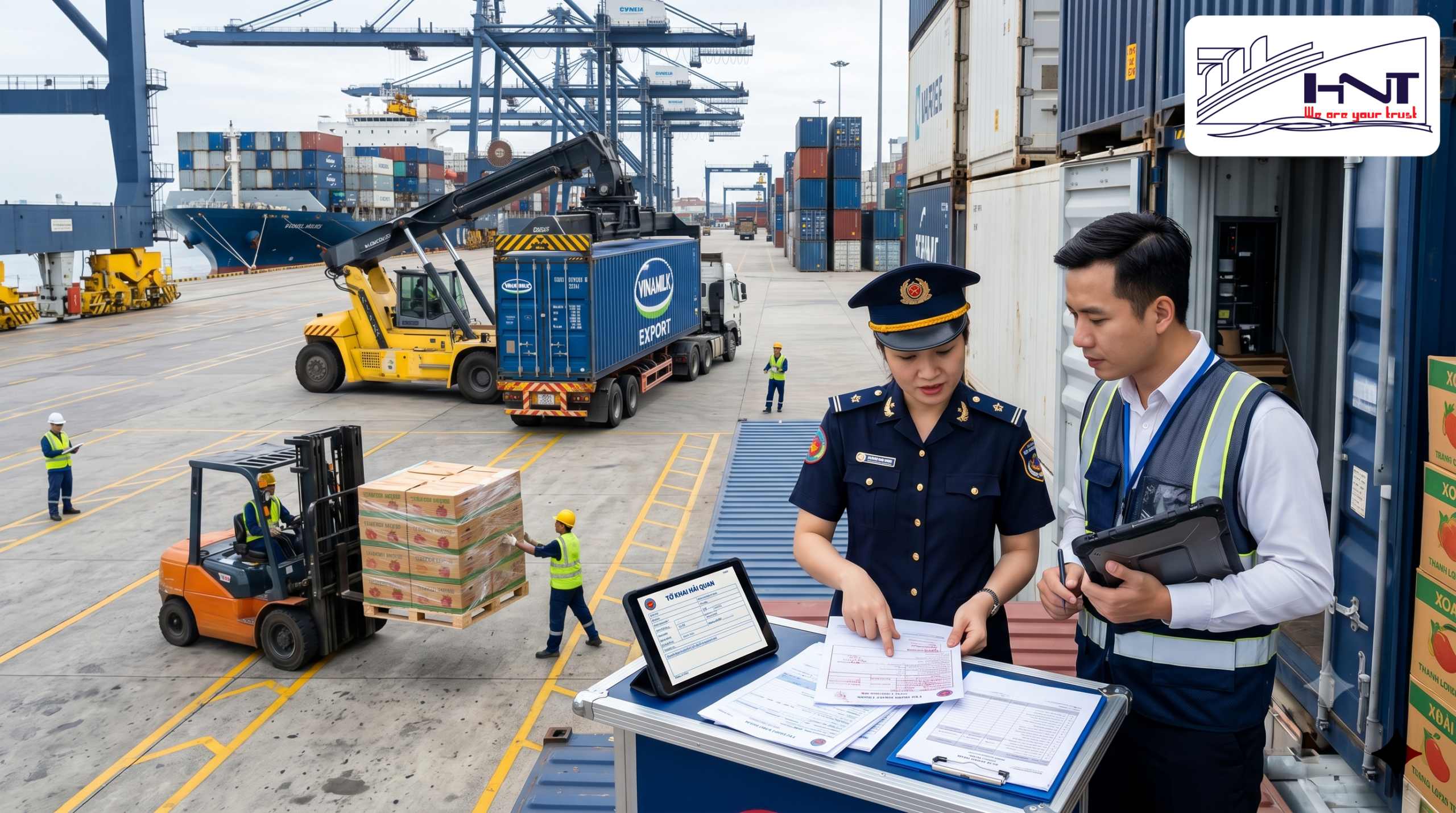
Export procedures is one of the stages that determines the progress of international delivery. Even a small error in customs declaration can cause a shipment to be delayed in customs clearance, incur storage fees, or affect delivery commitments to partners.
In the context of Vietnam's agricultural, forestry, and fishery exports reaching over 52 billion USD in the first 9 months of 2026 and continuing to grow strongly, the requirement to comply with customs regulations is increasingly tightened. Changes in locations for customs procedures according to Decree 167/2026/ND-CP and quarantine requirements in many import markets make it necessary for businesses to update their processes regularly.
The article below provides detailed instructions on the declaration process, documentation, and experience in performing customs procedures for export and import goods according to current regulations.
Export procedures and legal framework businesses need to know
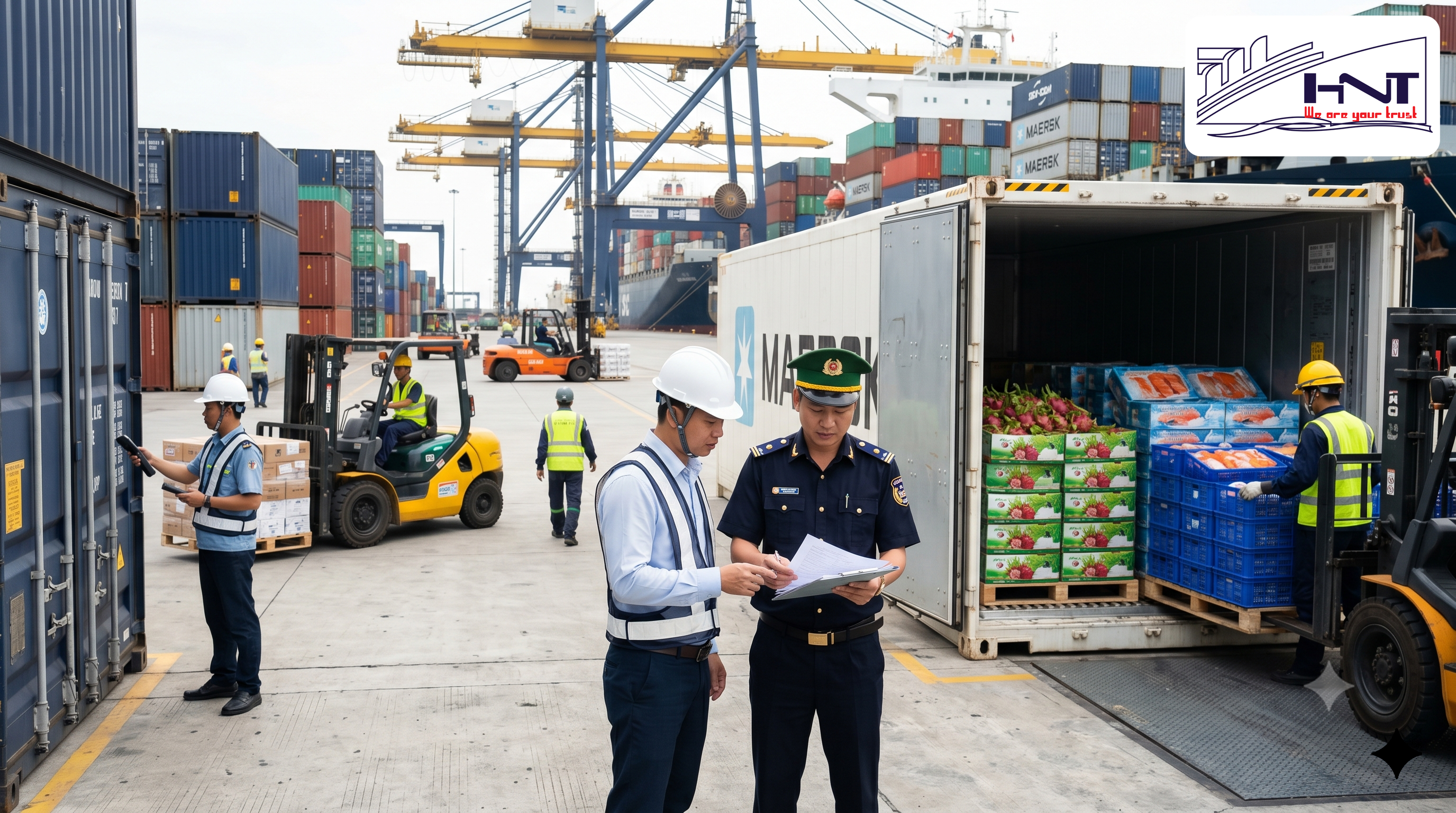
New customs regulations affecting import-export activities
Enterprises currently perform procedures according to the Customs Law, guiding circulars, and the latest amended decrees. Decree 167/2026/ND-CP has adjusted some regulations on locations for customs procedures for many types of import and export goods.
In addition, the new organizational structure of the General Department of Customs according to Decision 382/QD-BTC helps strengthen risk management and digitize the document processing flow.
Basic customs documentation
- Electronic customs declaration.
- Commercial invoice.
- Packing list.
- Bill of lading or transport documents.
- Certificate of origin when needed.
- Specialized licenses for managed goods.
- Quarantine or quality inspection certificate.
| Documentation | Exporting | Imported | Purpose |
|---|---|---|---|
| Customs declaration form | Yes | Yes | Official declaration |
| Commercial invoice | Yes | Yes | Valuation |
| Packing | Yes | Yes | Description of goods |
| Bill of lading | Yes | Yes | Proof of transport |
| Care of | When needed | When needed | Tariff preferences |
According to current commercial import procedure documents, the customs declaration and commercial invoice are the most important documents in the set of documents.
Process for performing export customs procedures
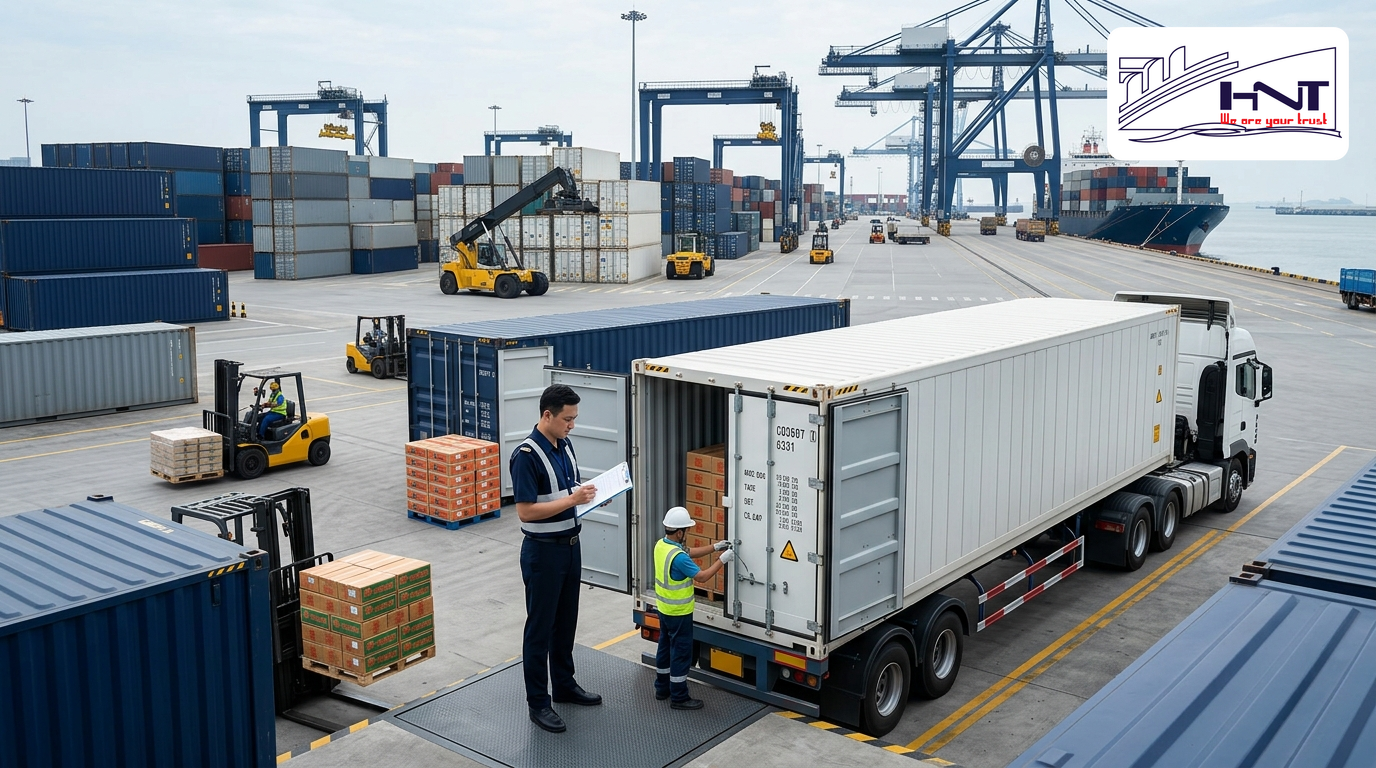
Preparing documents before declaration
Enterprises need to review information about the exporter, importer, HS code, quantity, value, and delivery terms. Accurate preparation helps limit the risk of amending the declaration.
Based on HNT LOGISTICS' experience, agricultural product exporters should complete plant quarantine and planting area certification before booking space on ships to avoid prolonging reefer container storage time.
Electronic declaration on the system
- Log in to the declaration system.
- Enter business information.
- Declare export type code.
- Declare HS code for goods.
- Attach electronic documents.
- Transmit declaration.
- Receive channeling results.
Stream results include green, yellow, and red channels. Each level requires different inspection.
Customs clearance and cargo supervision
After completing declaration and inspection obligations, businesses are cleared. Goods are then brought into the customs supervision area for export.
For example, Minh Phu Fruit Company in Tien Giang exports 12 containers of durian to Shanghai. Thanks to early preparation of quarantine documents, the business completed procedures within 8 hours and significantly reduced storage costs.
A seafood business in Ca Mau exports frozen shrimp to the United States via Cat Lai Port. Accurate HS code declaration helped the shipment be assigned to the green channel and shortened processing time by more than one day.
| Step | Content | Timing | Risks if incorrect |
|---|---|---|---|
| 1 | Document preparation | Pre-declaration | Missing documents |
| 2 | Submit declaration | Export date | Amend declaration |
| 3 | Channeling | Post-transmission | Prolonged inspection |
| 4 | Customs clearance | Post-inspection | Delayed delivery |
Customs procedure for importing goods
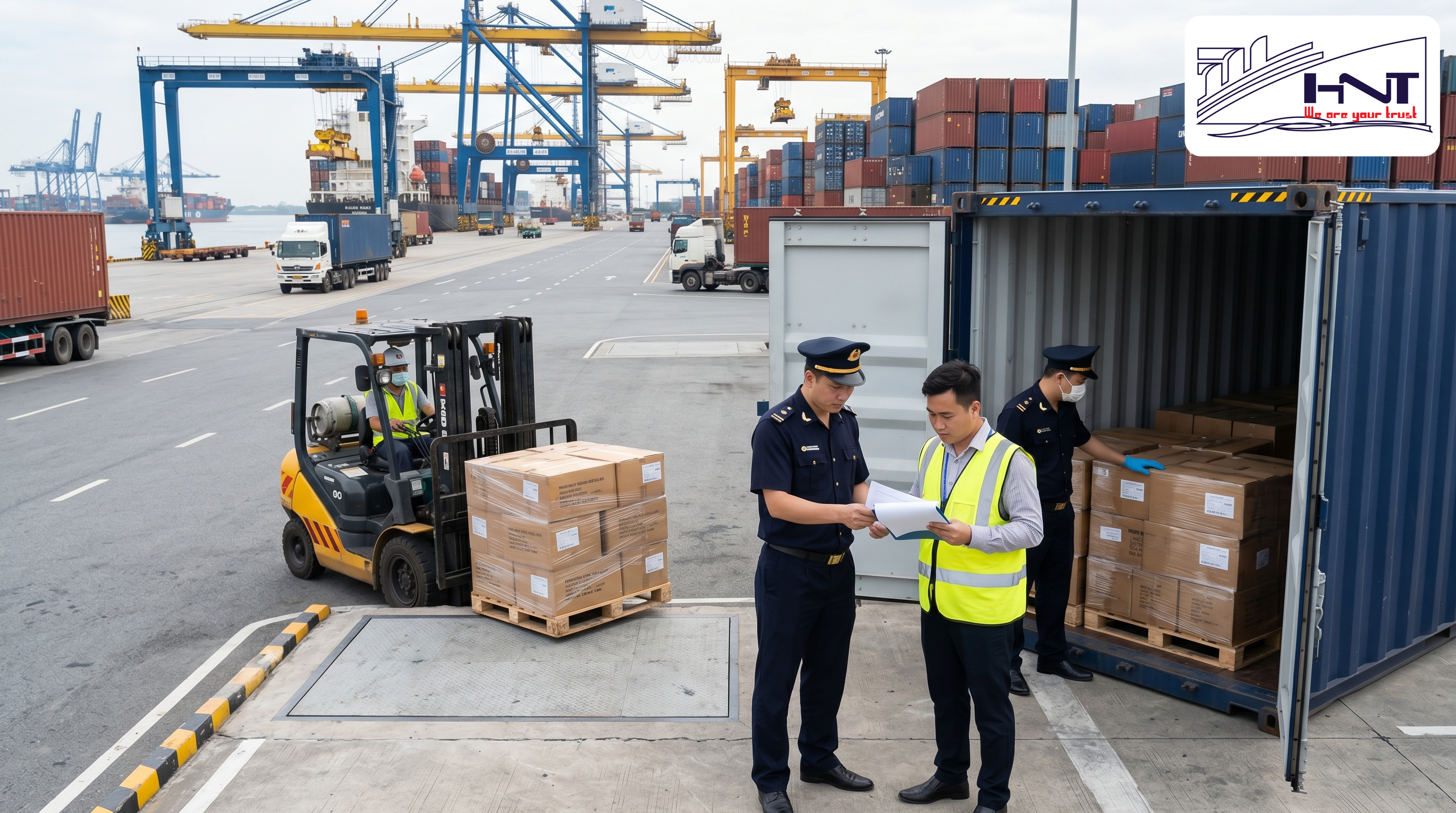
Import documents to prepare
Customs procedures for importing goods requires businesses to prepare a full set of documents as prescribed. In many cases, an import license or specialized inspection results are mandatory conditions.
Customs procedures for imported goods by channel
Green channel allows for fast clearance. Yellow channel requires document inspection. Red channel requires physical inspection of goods.
- Reconcile bill of lading with invoice.
- HS code verification.
- Determine tax calculation value.
- Check specialized licenses.
- Pay taxes on time.
- Archive documents after customs clearance.
Import customs declaration procedures and tax obligations
Businesses need to accurately determine import tax, value-added tax, and other fees. Discrepancies in declared value can lead to arrears or penalties.
For example, Binh Duong Technical Company imports production equipment from Germany. Checking the HS code beforehand helps businesses reduce the risk of tax arrears after customs clearance.
A factory in Dong Nai imports plastic raw materials from South Korea. Thanks to using the correct preferential C/O, the business saves more than 81% on import tax costs.
| Stream type | Document inspection | Goods inspection | Level |
|---|---|---|---|
| Green | No | No | Low |
| Yellow | Yes | No | Standardized, inspected |
| Red | Yes | Yes | Infrastructure |
Common errors when performing goods export procedures
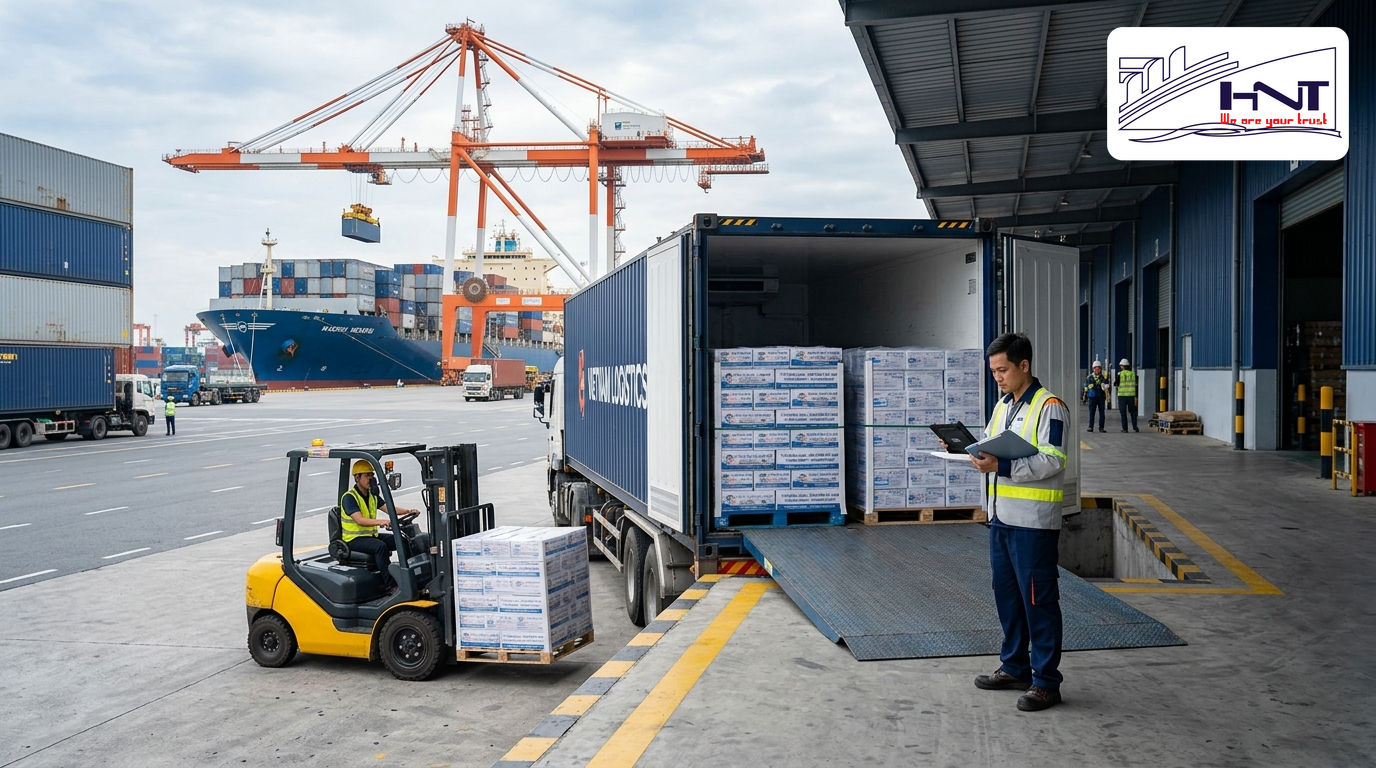
Incorrect HS code
This is the most common error. Incorrect HS code directly affects the tax rate and commodity management policy.
Incorrect declaration of customs value
Under-declaring or incorrectly declaring the value may lead to tax arrears and administrative penalties.
Missing specialized documents
Many agricultural products, food products, and seafood require quarantine or food safety certificates before customs clearance.
- Check the HS code before declaration.
- Cross-check the contract and invoice.
- Prepare all required permits.
- Maintain organized electronic records.
- Check the validity period of documents.
- Conduct periodic internal reviews.
According to experts at HNT LOGISTICS, establishing a two-layer document verification process before submitting the customs declaration can significantly reduce declaration amendments and additional costs.
Import-export trends and solutions to optimize customs procedures
In 2026, Vietnam's agricultural, forestry, and fishery exports exceeded USD 52 billion in the first nine months of the year. Seafood alone reached more than USD 8 billion and continued to grow. This has driven increasing demand for customs declarations and international transportation.
According to 2026 statistics, total seafood export turnover for the year reached approximately USD 11.3 billion. Exporting businesses should pay close attention to traceability documentation and quarantine certificates to meet the requirements of the United States, the European Union, and China.
HNT LOGISTICS recommends that businesses combine customs consulting, document management, and cold chain solutions from the export planning stage to minimize customs clearance risks and optimize logistics costs.
Conclusion
Mastering export procedures and the customs declaration process helps businesses effectively control international shipping schedules.
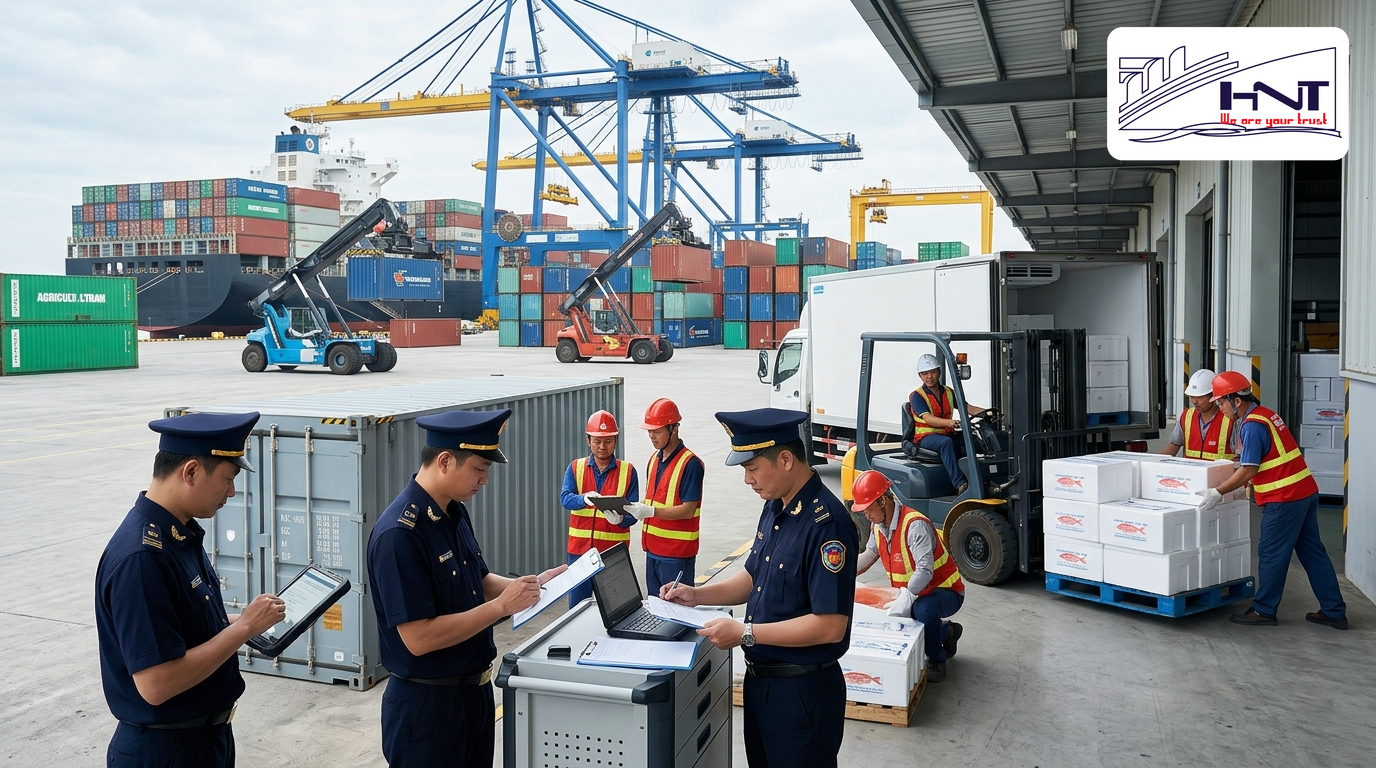
- Prepare complete documentation before declaration.
- Declare the correct HS code and customs value.
- Check specialized quarantine requirements.
- Regularly monitor customs inspection channel results.
- Take advantage of tax incentives from the C/O.
- Store records for post-clearance audits.
- Cooperate with an experienced logistics provider.
As customs regulations continue to evolve, businesses should proactively review their internal procedures and seek advice from HNT LOGISTICS to ensure import-export activities are conducted safely, legally, and efficiently.