


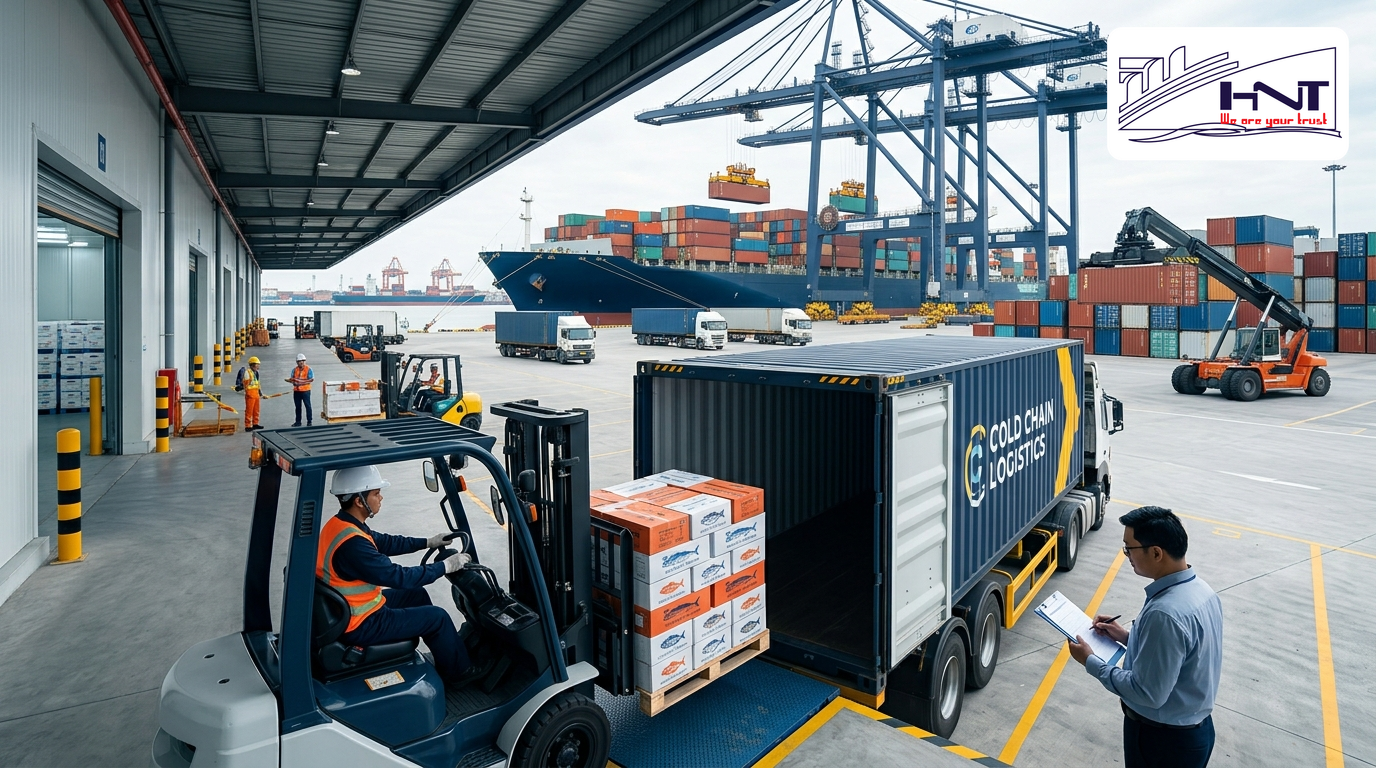
Freight quote often deviates significantly when businesses only ask for freight rates but ignore trucking fees, documentation, and last-mile delivery. Vietnam's fruit and vegetable exports in the first two months of 2026 increased by 44.9%; while the Drewry container freight index on 18/06/2026 reached 3,969 USD per 40-foot container. This article guides how to lock in a Door-to-Door plan based on total costs, not the lowest ocean freight.
Data needed to prepare for receiving a realistic Door-to-Door freight quote from the first attempt
A good request for quotation must help the freight forwarder correctly identify the container type, port of departure, delivery point, and responsibilities of each party. With cold goods, missing one detail about temperature or power plug location can leave a shipping quote missing important parts. Door-to-door service is only reliable when the scope of delivery is clearly recorded from the export warehouse to the recipient's address.
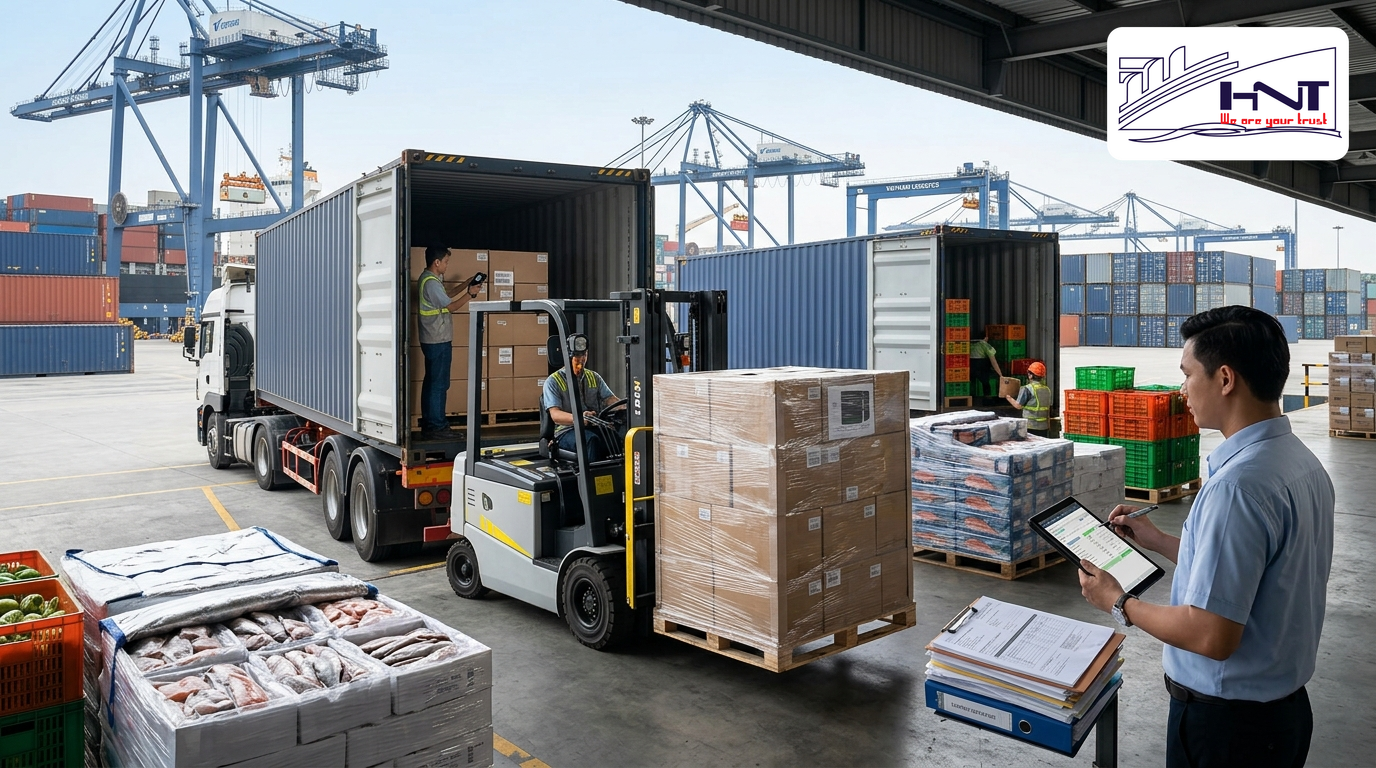
Checklist of shipment information to send before requesting an export quote
- Send the product name, estimated HS code, dangerous goods status, and quarantine requirements before asking for prices.
- Clearly state the pickup warehouse address, readiness time, and desired port or airport of departure.
- Provide the final destination, not just the port of discharge, to correctly calculate last-mile delivery freight.
- Record the number of packages, dimensions of each package, total net weight, and total gross weight.
- Define trade terms, the party paying the freight, and the responsibility for customs procedures in the importing country.
- Attach requirements for temperature, humidity, ventilation, and maximum transit time for cold goods.
| Data | Purpose of price calculation | Risks when missing |
|---|---|---|
| Warehouse address | Calculate trucking and waiting hours | Missing truck fees or waiting fees |
| Destination port | Determine ocean route | Choosing the wrong transshipment service |
| Final delivery point | Calculate delivery leg | Incurred import local charges |
| Cargo temperature | Select reefer container | Missing yard electricity and monitoring |
| Delivery terms | Obligation allocation | Disputes over taxes, fees, and documents |
How to determine CBM, chargeable weight, and delivery conditions before sending a request
CBM is calculated by length times width times height, converted to meters. LCL cargo is usually charged by measurement or converted weight, whichever is greater. FCL cargo needs to simultaneously check cargo payload, road-allowable payload, and pallet stacking capability. Do not use the container's design payload to determine the actual cargo quantity.
For example, Minh Phu Fruit Company in Tien Giang sends 18 pallets of cold mangoes to Shanghai. When re-measuring pallet height, the volume decreased from 28 to 25 CBM. The LCL freight quote decreased accordingly, while reducing the risk of having to change trucks. This is savings from accurate data, not from pressuring suppliers.
Commonly overlooked costs causing large differences between initial quotes and actual costs
Easily forgotten items include lifting fees, container cleaning, electricity, customs inspection, fumigation, quarantine, bill of lading issuance, and destination delivery fees. If the delivery term is DDP, businesses must also clarify import taxes, value-added tax, and the recipient's capability to perform customs procedures. Circular 121/2026/TT-BTC effective from 01/02/2026, so businesses need to review documentation processes with the declaring entity.
When to request a shipment-based quote and when to request a long-term contract quote
Ask for a shipment-based price when volume is low, destinations change, or goods are seasonal. Negotiate a contract when the business has stable frequency, repeating routes, and can forecast container numbers. Based on HNT LOGISTICS' experience, a contract is only effective when the business commits to minimum volume and controls the packing schedule.
Conclusion: Only confirm a quote when there is a clear breakdown of included items, excluded items, validity conditions, and the party responsible for arising fees.
What fees make up a Door-to-Door freight quote
A Door-to-Door freight quote is the total cost of multiple segments, not just one ocean freight line. Buyers need to request a price list broken down by origin, main transport, destination, and contingency fees. This way helps to compare two suppliers on the same service scope, rather than comparing non-equivalent quotes.
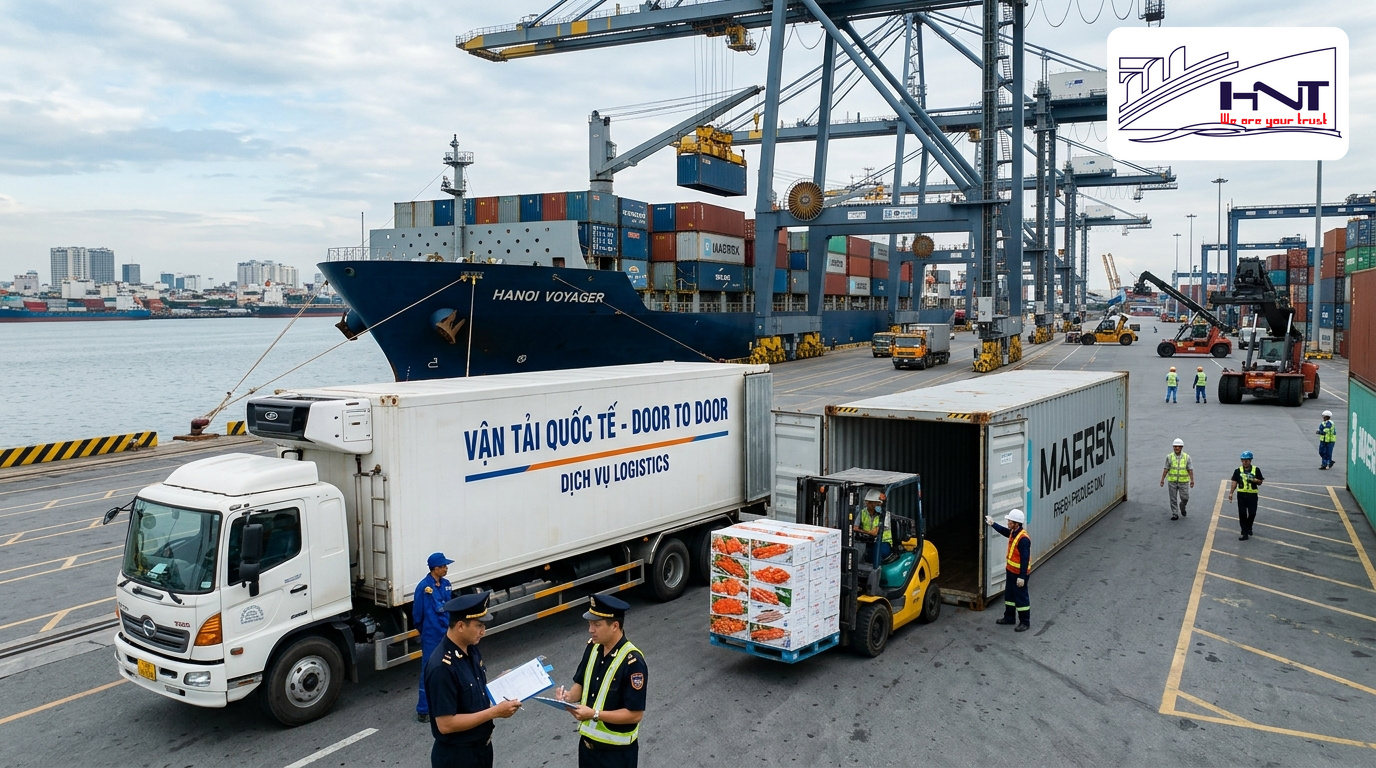
Inland transport costs from seller's warehouse to export port
Origin costs include truck pickup, loading/unloading, toll fees, waiting hours, packing, customs declaration, and empty container movement. For reefer containers, additional costs for power connection, machine inspection, and empty container pickup time are needed. The internal cluster suitable for implementing integration is reefer container transport service.
Ocean freight costs and carrier surcharges to monitor
Ocean freight consists of base freight and surcharges according to the carrier, season, equipment, or fuel. Drewry recorded the world container freight index increasing 121% to 3,969 USD per 40-foot container on 18/06/2026; therefore, quotes with short validity dates need to be rechecked before booking.
Last-mile delivery costs in the importing country
The last mile may include port discharge, import customs clearance, quarantine, road transport, warehouse scheduling, and returning empty containers. This rate fluctuates based on the delivery address, delivery regulations, appointment times, and congestion levels. With agricultural products, do not let the buyer assume that port fees include delivery to the warehouse.
Fees arising when changing vessel schedules or documents after booking
Changing the product name, number of packages, destination port, consignee, or container pickup schedule can generate document amendment fees, rebooking fees, and cancellation fees. A seafood processing business in Ca Mau once changed vessels after packing frozen pangasius containers. Not checking the document closing deadline caused them to incur bill of lading amendment fees and two extra days of power connection.
| Fee Group | Time of incurrence | Questions to finalize |
|---|---|---|
| Origin | Before goods enter the port | Are truck, loading/unloading, and power connection included? |
| Sea freight | When booking | When does the price validity expire? |
| Carrier surcharges | Per voyage | Is it adjustable? |
| Destination | When goods arrive at port | Is delivery to warehouse included? |
| Documentation | Before vessel departure date | Fees for amending, issuing, and sending documents? |
- Request a separation of ocean freight, carrier surcharges, and local surcharges for transparent comparison.
- Check the currency, applicable taxes, and payment terms for each expense item.
- Confirm whether the fee includes the bill of lading, customs declaration, and certificate of origin.
- Ask about plugging, cleaning, and repair fees for reefer containers right from the start.
- Request a quote with conditions for adjustment when shipping lines increase unexpected surcharges.
Conclusion: A cheaper quote lacking pick-up or having extra surcharges can be more expensive than a higher-priced option with full coverage.
How to check shipping schedules to reduce total costs instead of just finding the earliest trip
Checking shipping schedules must start from the cargo ready date, the buyer's delivery deadline, and processing time. The earliest trip sometimes has long waiting times at ports, multiple transshipments, or unsuitable pick-up deadlines. The goal is to optimize total cost and reliability, rather than just optimizing the departure date.
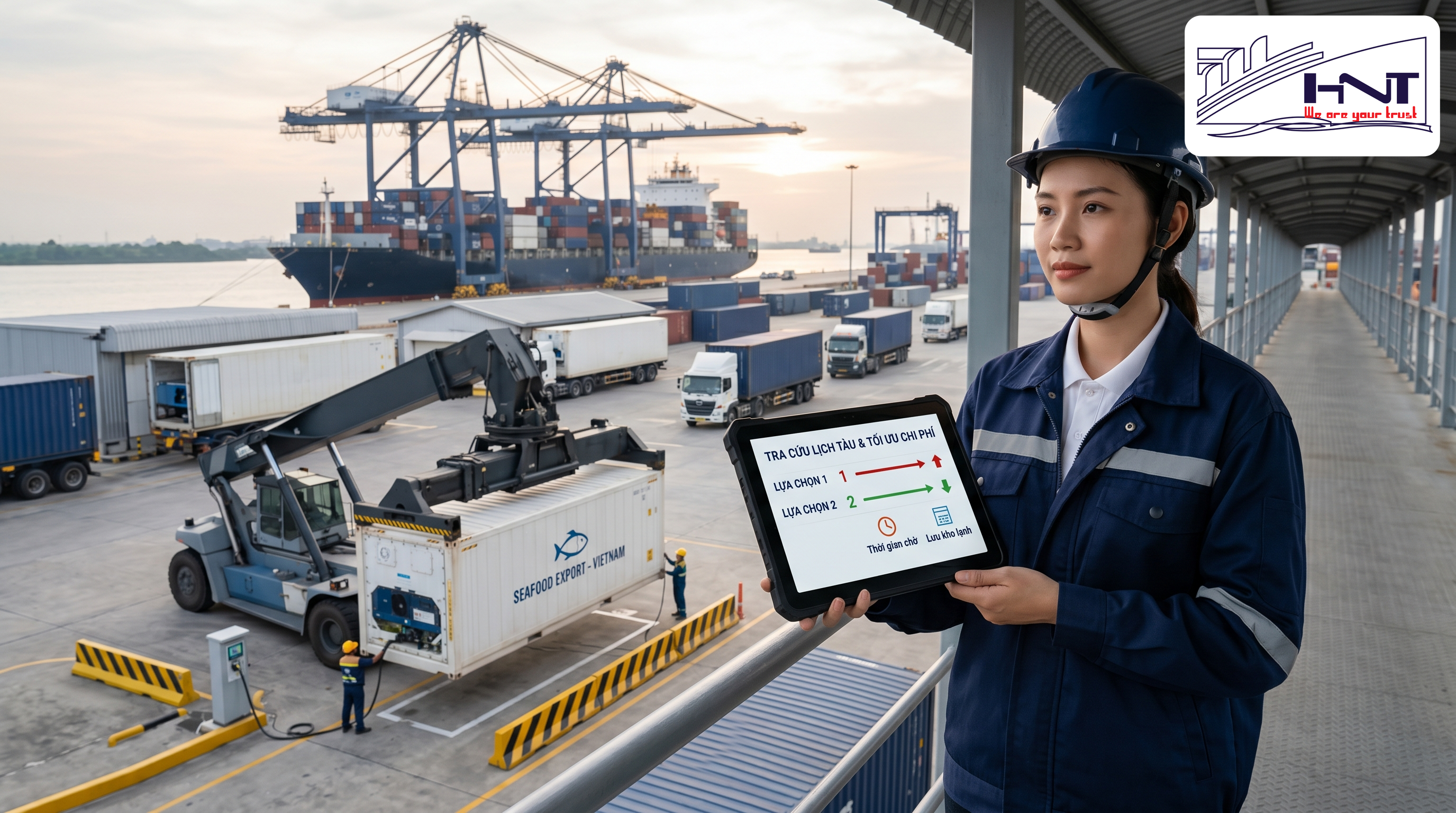
Indicators to compare when checking shipping schedules for each export market
- Compare the estimated departure date, estimated arrival date, and actual transit time for each option.
- Evaluate the number of transshipments, transshipment ports, and the schedule change history of that route.
- Check the cut-off time for yard gate-in, document closing, and cargo gate-in confirmation.
- Compare free demurrage and detention time with the consignee's customs clearance capacity.
- Compare the ability to supply reefer containers, especially during peak fruit and seafood seasons.
- Evaluate the warehouse delivery schedule at the destination, instead of just looking at the vessel arrival date.
How to identify shipping trips at risk of incurring demurrage and detention charges
Risk signs include tight connecting vessel schedules, congested transshipment ports, arrival dates coinciding with holidays, and low free time. It is necessary to reconcile ETA with quarantine schedules, receiving warehouse schedules, and the ability to submit documents. Demurrage and detention fees can increase faster than the initial ocean freight difference.
When to book to keep freight rates stable during peak season
Booking early helps secure equipment, but does not replace checking price terms. Drewry's Intra-Asia freight index once increased by 101% to 1,114 USD per 40-foot container in early June 2026, reflecting the risk of rapid price increases on regional corridors.
Mistakes in choosing shipping schedules that increase logistics costs despite low ocean freight
For example, An Khang Wood Company in Binh Duong chose a trip from Cat Lai Port to Long Beach with a 180 USD lower freight rate. However, the transshipment vessel took seven days longer and the buyer did not receive containers on weekends. The total demurrage and detention fees exceeded the initial difference. HNT LOGISTICS recommends comparing expected costs based on warehouse delivery dates, not just ocean freight.
| Criteria | Option A | Option B |
|---|---|---|
| Vessel departure date | Earlier | Two days later |
| Number of transshipments | Twice | Once |
| Free detention | Seven days | Fourteen days |
| Schedule stability | Lower | Higher |
| Total cost risk | Infrastructure | Lower |
Conclusion: A suitable shipping schedule is one that ensures goods arrive within the buyer's receiving capacity.
How to optimize export shipping costs at each stage of the shipment
Optimizing export shipping costs is not about cutting individual fees. It is about eliminating repetitive tasks, waiting times, and incorrect timing decisions. Businesses should manage shipments based on four milestones: pre-booking, packing, documentation, and post-shipment.
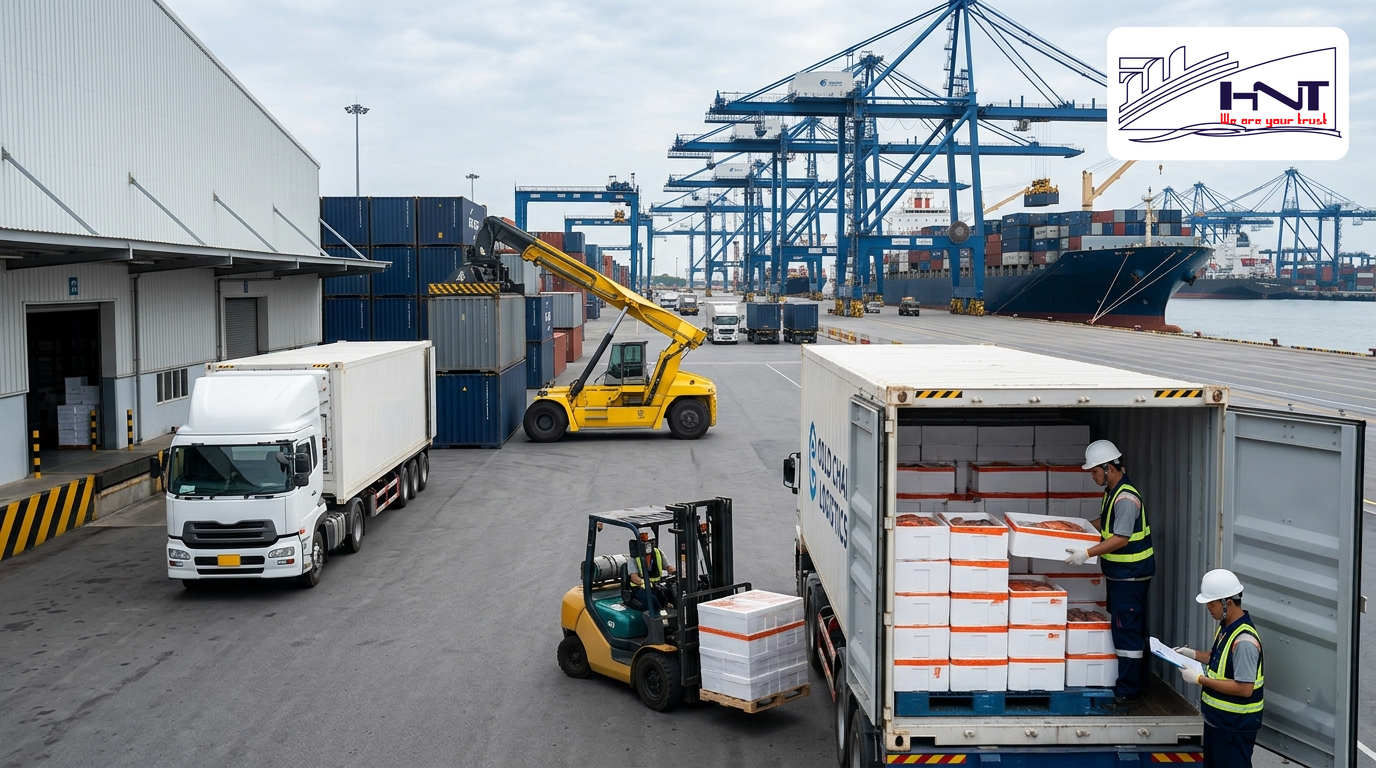
Before finalizing booking: select suitable shipping routes and delivery terms
Choose delivery terms based on the business's control capabilities. FOB is suitable when the buyer designates the shipping line. CIF is suitable when the seller can manage freight to the port. DDP should only be used when taxes, licenses, and the customs clearance party in the importing country have been verified.
During the packing stage: optimize volume and load to reduce unit costs
Optimizing loading requires simultaneous consideration of volume, payload, dunnage capacity, and cold airflow. Full Container Load/Less than Container Load (FCL/LCL) must be selected based on actual packing data. For fruit, pallets that are too high can block airflow and cause temperature differentials between positions.
During the documentation stage: limit amendment costs and demurrage
Cross-check invoices, packing lists, contracts, bills of lading, and quarantine certificates before the documentation cut-off time. China has approved an additional 829 growing area codes and 131 Vietnamese durian packing facilities in May 2026; businesses must still verify the validity of the code for each shipment.
After the vessel departs: track shipping milestones to avoid unplanned expenses
- Track the actual vessel departure date and update the buyer immediately if there are any changes.
- Check the transit schedule to prepare import documents before the cargo arrives at the port.
- Confirm the delivery order receipt date and the free container storage time with the destination agent.
- Cross-check the temperature logs of refrigerated containers throughout the journey for high-value goods.
- Save the actual cost table by batch code to facilitate negotiations for future shipments.
| Phase | Control point | Avoidable costs |
|---|---|---|
| Before booking | Delivery terms | Fees not under responsibility |
| Packing | CBM and payload | Change container type |
| Documentation | Consistent data | Bill of lading amendment fee |
| Post-shipment | ETA and delivery | Demurrage and detention |
Conclusion: Create a cost control table based on the timeline, instead of just reconciling invoices after the shipment is completed.
When does Door-to-Door service provide a cost advantage over hiring individual units separately
Door-to-Door service provides an advantage when goods have multiple delivery points, numerous documentation requirements, or the buyer needs a single point of responsibility. Hiring individual segments may be cheaper when the business has a strong operations team, steady volume, and a proven partner network. The deciding factor is the total cost of risk management, not just the unit price.
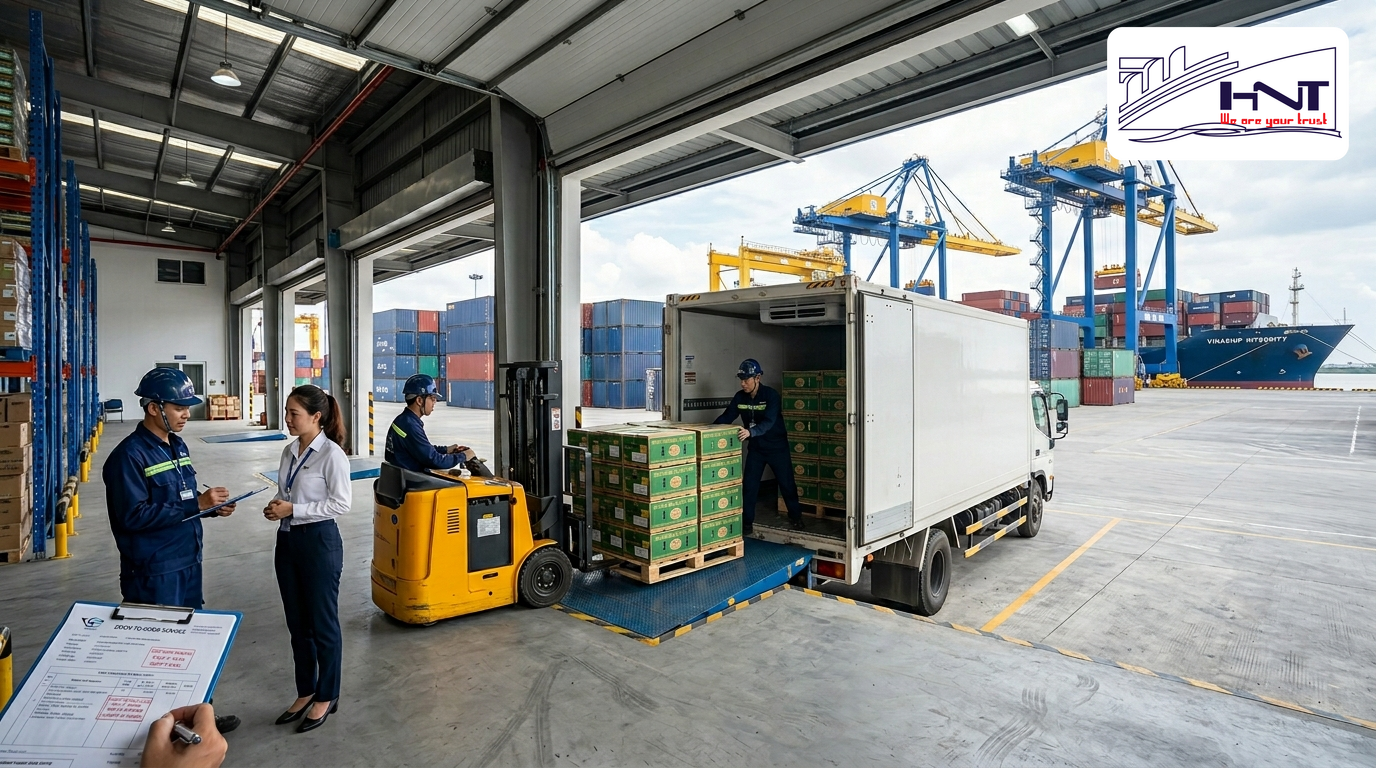
Compare total costs between the Door-to-Door model and hiring individual shipping segments
The split-segment model often creates multiple invoices, multiple points of contact, and makes it difficult to determine the responsible party in case of delays. Door-to-Door consolidates management, but businesses must require a detailed cost breakdown. A fresh coconut company in Ben Tre reduced internal coordination time by three hours per shipment when using a single point of contact to track trucks, ports, vessels, and warehouse delivery in Shanghai.
Types of cargo suitable for Door-to-Door export services
Temperature-controlled goods, perishable goods, cargo with strict warehouse delivery schedules, and products newly entering the market are often suitable. For frozen durian exported to China, packaging materials, labels, and registered facility information must comply with protocol requirements; a single-point management model helps reduce the risk of missing documentation at the final stage.
Signs that your business is paying more than necessary when managing logistics in-house
- Staff have to repeatedly contact multiple providers to determine who is responsible for each issue.
- Document correction costs recur because order data is not centrally controlled.
- Containers often arrive at the warehouse late because no one monitors truck schedules and yard cut-off times.
- Initial invoices often exceed estimates because there is no all-inclusive quotation before the vessel departs.
- The business does not retain route, pricing, and surcharge data for negotiating the next season.
Criteria for evaluating a Door-to-Door service provider before signing a contract
Assess route capability, destination agents, experience with similar cargo, and incident handling procedures. Require them to clearly specify exclusions in the quotation, response times, and responsibilities when vessel schedules change. According to experts at HNT LOGISTICS, for temperature-controlled cargo it is also necessary to assess container supply capacity, equipment inspection procedures, and contingency plans at the port.
| Criteria | Door-to-Door | Hire each transport leg separately |
|---|---|---|
| Đầu mối quản lý | Một đầu mối | Nhiều đầu mối |
| Transparent scope | Detailed price list required | Cần tự tổng hợp |
| Kiểm soát sự cố | Clearer responsibilities | Easy to shift responsibility |
| Phù hợp nhất | Complex cargo, new route | Stable route, strong team |
Conclusion: Do not choose Door-to-Door because it is convenient; choose it because it reduces the overall coordination cost and risk of the shipment.
Steps to take after receiving a quotation and finalizing the export plan
Receiving a quotation is not the end. This is the time for the business to finalize the scope, review risks, and establish standardized data for the shipment. A freight quotation has management value when it is compared with the actual costs after the shipment is completed.
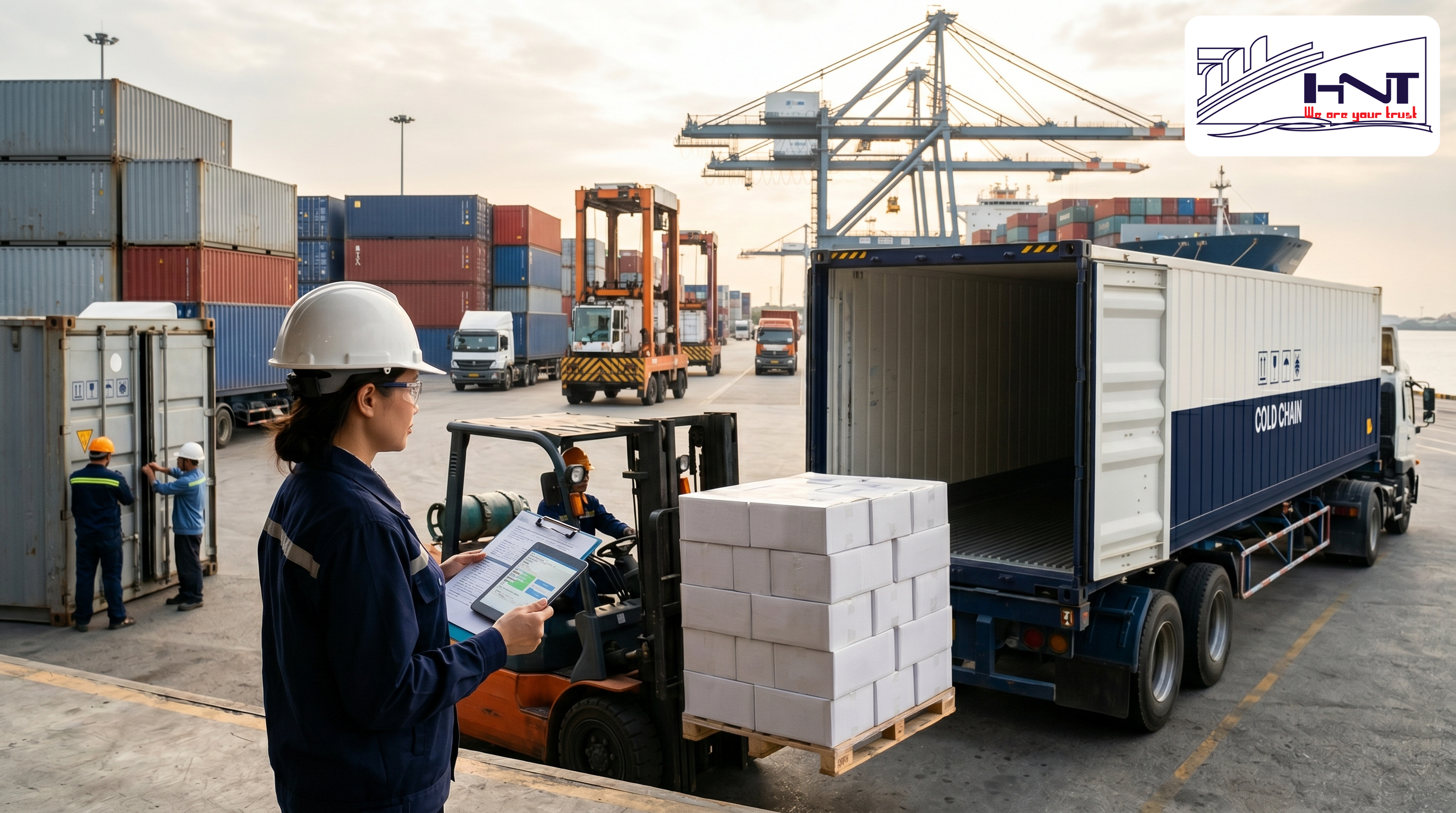
Compare the quotation with the scope of the full export procedure before signing confirmation
Check whether the quotation includes customs declaration, quarantine, fumigation, certificate of origin, bill of lading, and final delivery. The appropriate internal anchor text for linking is export customs brokerage services. The full export procedure must include a task list, required input documents, and the party responsible for each step.
Review surcharge terms and compensation responsibilities before the delivery date
Carefully read the conditions for freight adjustments, peak-season surcharges, schedule change fees, and liability limits. Clarify the notification process for delayed cargo, power loss in refrigerated containers, or additional inspections. Do not sign confirmation by email until there is a price validity clause and a list of exclusions.
Set up a process to track actual costs after each export shipment
- Attach a unified shipment code for contracts, bookings, documents, invoices, and logistics tracking sheets.
- Compare each invoice item against the approved quote before making payment.
- Categorize discrepancies into market fluctuations, data errors, requirement changes, or operational incidents.
- Record the actual times for vehicle arrival, yard drop-off, vessel departure, vessel arrival, and warehouse delivery.
- Hold a short post-shipment review meeting to improve processes before the next peak season.
Archive vessel schedule data and quotes to negotiate better for subsequent shipments
Save quotes by route, container type, shipping line, season, and surcharges. After three to six trips, businesses will see which route frequently changes schedules, which port generates the most fees, and which supplier provides the most incomplete quotes. Other suitable internal tags are Cat Lai to US vessel schedule.
| Data to store | Usage goal | Review cycle |
|---|---|---|
| Approved quotes | Invoice comparison | Each shipment |
| Actual ETA, ETD | Vessel schedule evaluation | Each trip |
| Incurred fees | Eliminate recurring errors | Monthly |
| On-time delivery rate | Supplier evaluation | Quarterly |
| Reefer container data | Protect cargo quality | Each container |
Conclusion: The best freight quote is one that is turned into negotiation data for subsequent shipments.
Conclusion: Freight quote control starts with shipment data but ends with the capability to manage total costs. Businesses should not choose the earliest voyage or lowest freight if it increases the risk of demurrage, delivery delays, or damage to refrigerated cargo.
- Standardize cargo data before requesting quotes to avoid discrepancies during execution.
- Compare quotes based on the scope of work, not just the displayed ocean freight.
- Lookup vessel schedules based on stability, transshipment, and free time.
- Control documents before the cut-off time to reduce amendment fees and delays.
- Save actual costs to identify recurring expenses on each route.
- Choose Door-to-Door when a single point of contact helps reduce risks and coordination time.
HNT LOGISTICS is the right shipping and logistics partner for Vietnamese exporters who need to evaluate routes, containers, and delivery scopes before finalizing prices. A well-informed decision today will protect profit margins for the entire next export season.