

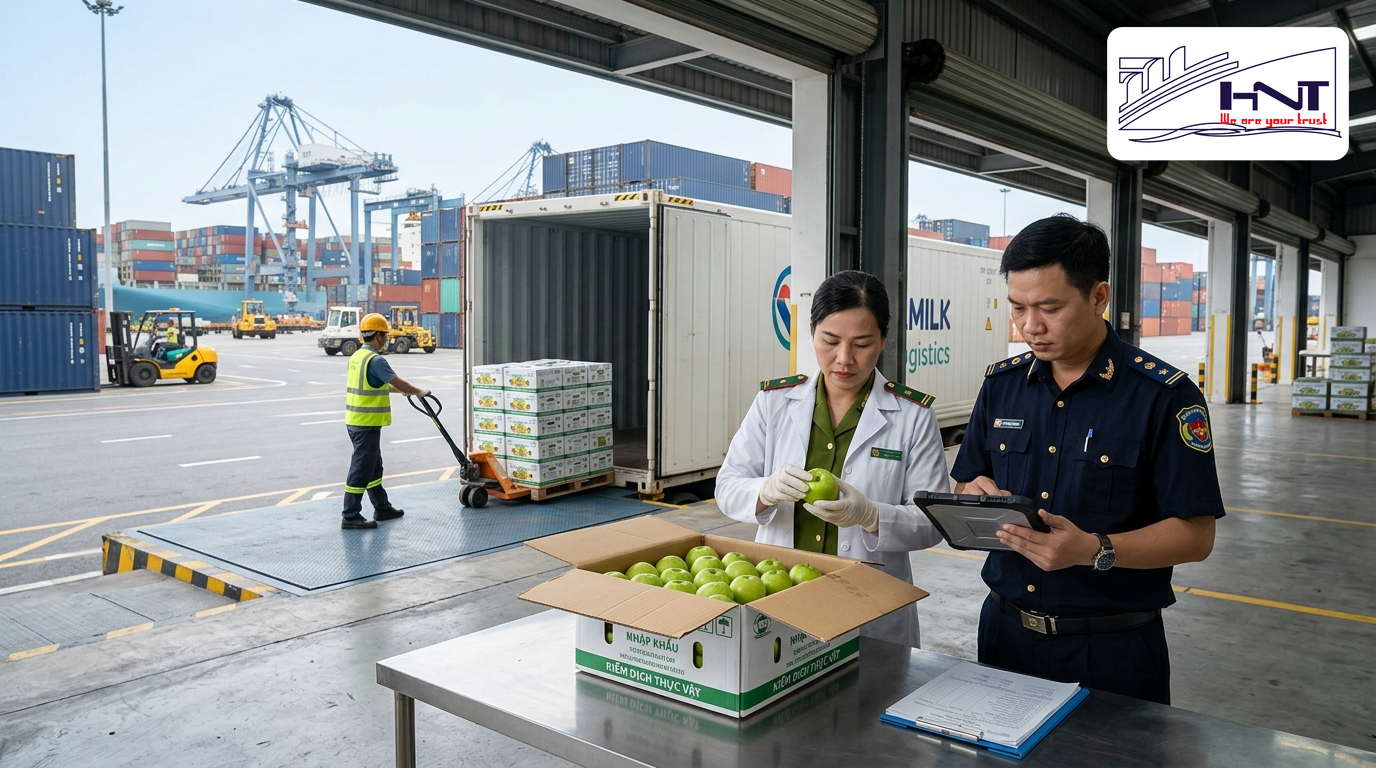
Customs declaration in electronic for a fruit container that can be delayed simply because the product name on the invoice differs by one word from the phytosanitary certificate. For fresh goods, every additional hour of waiting at the port increases the risk of temperature issues, losses and storage fees.
In 2026, Vietnam's fruit and vegetable export turnover increased strongly in many markets; in particular, the first ten months reached 7.09 billion USD according to Customs Department data. International container freight rates also fluctuate quickly: Drewry World Container Index on 18/6/2026 increased by 12%, reaching 3,969 USD for a 40-foot container. Therefore, import businesses need to secure the accuracy of documents before the goods arrive.
This guide instructs businesses on checking documents, carrying out electronic customs declaration, and coordinating plant quarantine and handling discrepancies before container storage fees arise. The focus is on fresh fruit imported by sea or air into Vietnam.
Checklist of documents to complete before electronic customs declaration for imported fruit shipments
Documents must be checked based on a unified data source. Do not let suppliers, purchasing departments and customs clearance agents use three different versions. A small discrepancy in specifications can require declaration amendments or additional quarantine procedures.
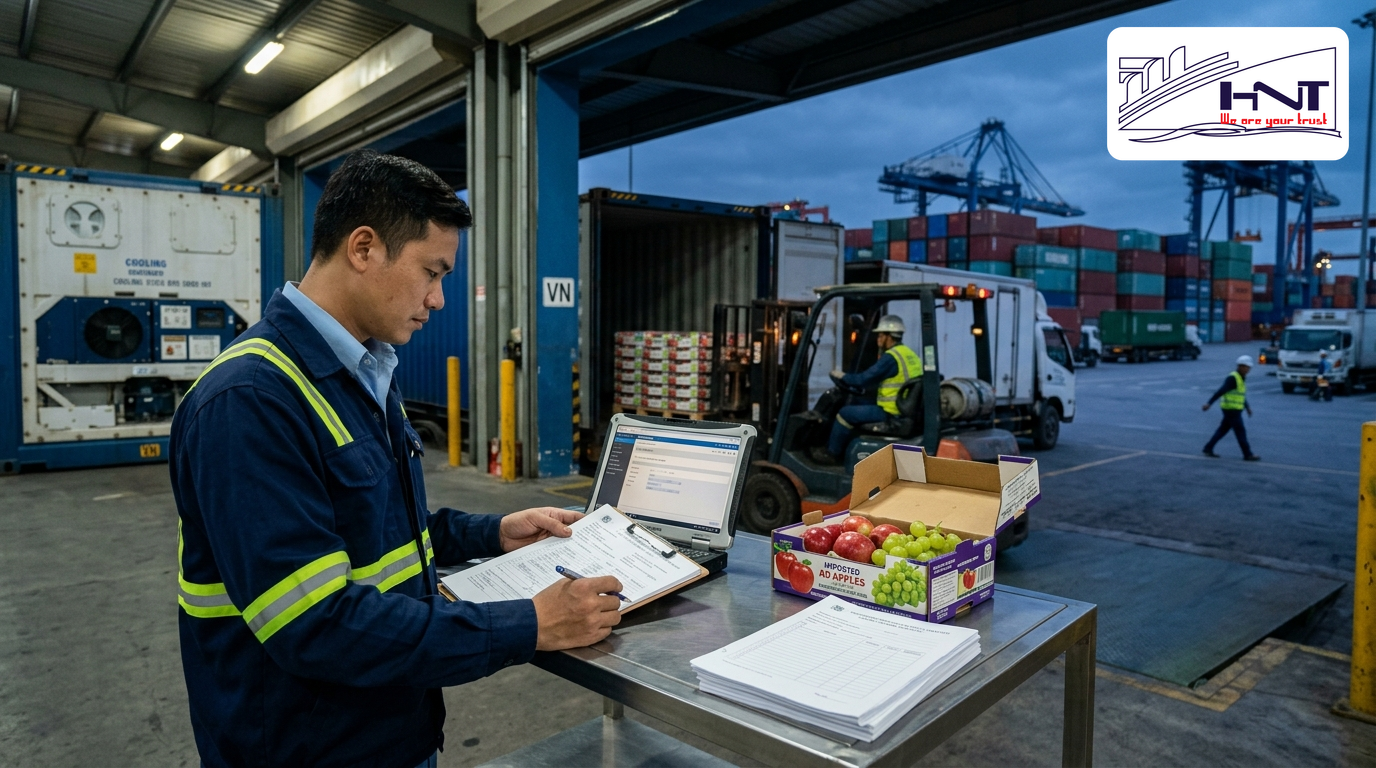
- The commercial invoice must consistently state the product name, quantity, unit price, delivery terms and payment currency with the signed contract.
- The packing list must show the number of packages, net weight, gross weight, marks and packaging specifications clearly.
- The bill of lading must match the port of loading, port of discharge, shipper, consignee, container number and expected arrival time.
- The phytosanitary certificate must correctly state the fruit species, exporting country, lot number and special treatment information if any.
- The HS code list must be reviewed according to the nature of the goods, fresh, frozen, pre-cut or processed status.
- Specialized permits must be confirmed before the vessel arrives at the port, especially shipments subject to pest risk analysis.
| Documentation | Cross-checking point | Risks if incorrect | Person in charge |
|---|---|---|---|
| Commercial invoice | Product name and value | Incorrect declared value | Purchasing department |
| Packing | Number of packages and weight | Inspection discrepancy | Supplier |
| Bill of lading | Port of discharge and container number | Unable to obtain delivery order | Shipping line |
| Inspection certificate | Plant species and exporting country | Waiting for additional verification | Exporter |
| Specialized permits | Product code and validity | Not eligible for customs clearance | Importing company |
Compare commercial documents and HS codes before opening the declaration
The HS code determines tax rates, management policies and specialized inspection requirements. Businesses should not select codes based on short trade names. Determine the product condition, preservation method, processing level and packaging composition before declaration.
For example, Minh Phat Food Company in Binh Duong imported two containers of fresh grapes from Chile through Cat Lai Port. The company discovered that the packing list showed 1,980 cartons but the bill of lading showed 2,000 cartons. Correcting the documents before transmitting the declaration helped avoid re-inspection and maintain the cold storage delivery schedule for the day.
Prepare the plant quarantine dossier and determine the Phyto Certificate requirements of the exporting country
What is a Phyto Certificate? This is a plant quarantine certificate issued by the competent authority of the exporting country. The certificate confirms that the shipment meets the quarantine requirements according to the information shown on the document. It should not be understood as a guarantee of automatic customs clearance.
Circular 14/2026/TT-BNNPTNT, effective from December 15, 2026, stipulates the list of regulated articles subject to plant quarantine and the group requiring pest risk analysis. Businesses should check whether the fruit, exporting country, and treatment status fall under cases requiring a permit before import.
Check fumigation requirements for each fruit group and supply market
Fumigated what is? This is a method of treating harmful organisms using substances or methods accepted by the competent authority. For fresh fruit, not every shipment requires fumigation. The requirement depends on the plant species, exporting country, target pests, and permit conditions.
HNT LOGISTICS recommends requesting the supplier to send a draft certificate before the container is sealed. This allows businesses to verify the active ingredient name, treatment time, and shipment identification number before the vessel departs the port.
Review specialized regulatory requirements to avoid being asked for additional documents after submitting the customs declaration
Plant quarantine, food safety, and customs procedures are three interconnected workflows but do not replace one another. A commercially valid dossier may still lack specialized regulatory requirements. Prepare a checklist for each HS code and each supplying country.
Practical tips: Finalize the minimum electronic dossier at least 48 hours before ETA. This buffer is sufficient to request the supplier to correct the scientific name, batch number, or treatment description before storage charges arise.
Submit the electronic customs declaration for imported fruit in the correct customs clearance sequence
Declaring in the correct sequence helps businesses control progress. Under the current customs process, receipt, inspection, registration, dossier processing, and customs clearance decisions are steps that must be monitored throughout. Do not submit the customs declaration until the input data has been finalized.
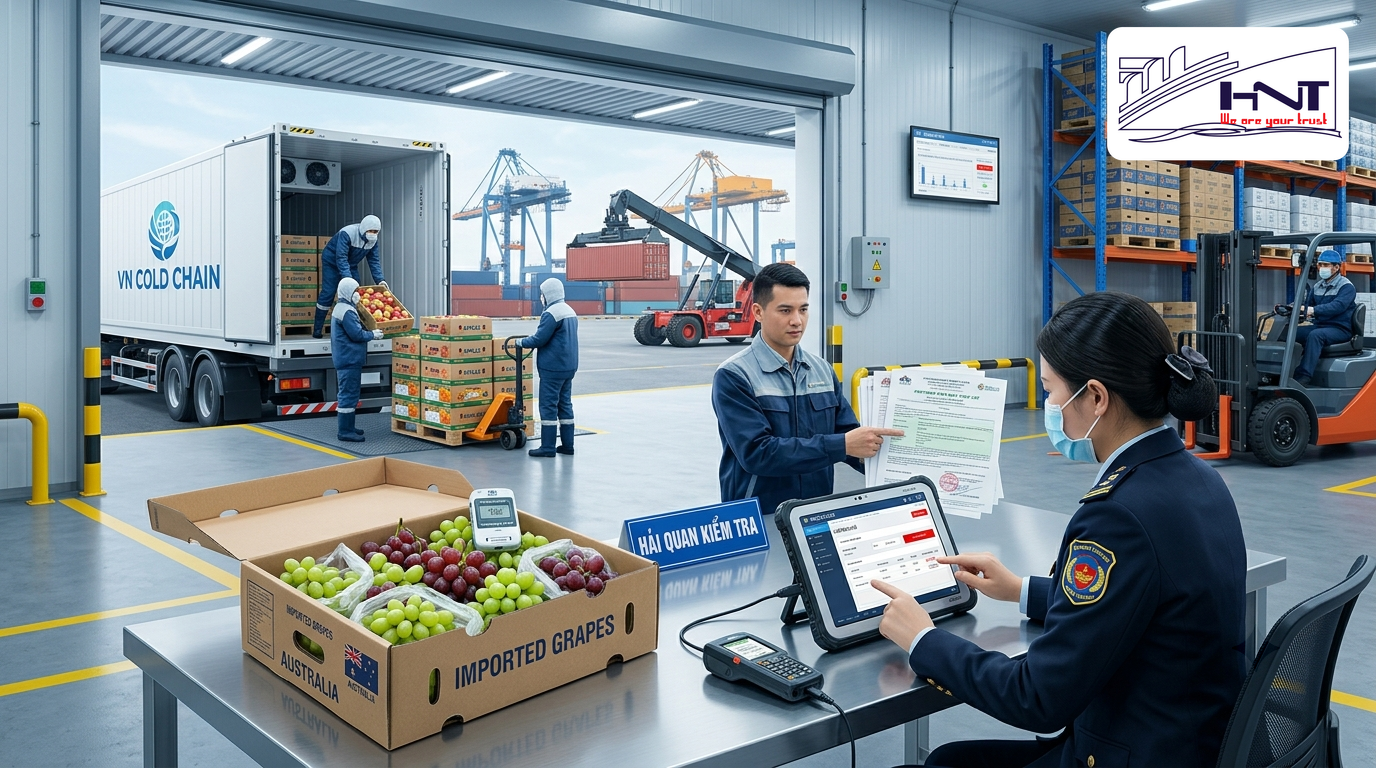
- Set the appropriate import type according to the shipment's purpose, whether for trading, processing, export production, or non-commercial import.
- Accurately enter the exporter, importer, delivery terms, transport method, and first port of entry.
- Declare the HS code, goods description, quantity, value, origin, and value adjustments according to the actual supporting documents.
- Attach or prepare documents that must be presented, especially permits and the plant quarantine certificate.
- Submit the data, receive the declaration number, monitor the inspection channel assignment results, and prepare handling plans for each situation.
- Pay taxes, coordinate specialized inspections, complete customs supervision, and only then dispatch vehicles to collect the goods from the port.
| Phase | Key data | Required outcome | Control point |
|---|---|---|---|
| Before submission | HS code, value, bill of lading | Consistent data set | Four-eye review |
| Transmit declaration | Shipment information | Declaration number | Submission log |
| Channeling | Dossier and actual goods | Handling request | Prepare for physical inspection |
| Quarantine | Certificate and product samples | Quarantine result | Coordinate sampling time |
| Customs clearance | Taxes and conditions | Customs clearance decision | Check system status |
Set up shipment data and transmit the first declaration on the system
When making an electronic customs declaration, bill of lading data must be entered according to the original documents. In particular, storage location code, port of discharge and container number must match the carrier declaration. An incorrect port of discharge code may cause the supervision process to be suspended.
For example, Nam Viet Fresh Company in Ho Chi Minh City imported 18 tons of New Zealand apples by air through Tan Son Nhat International Airport. The declaration team checked the air cargo warehouse code before transmission. The shipment was transferred for inspection within three hours after arriving at the warehouse.
How to handle when the system returns a customs declaration error immediately after data transmission
Customs declaration error often appears due to incorrect bill of lading number format, location code, currency code or value data. Do not edit based on guesswork. Save the error message, identify the rejected data field and compare it with the source documents.
If the error relates to HS code or product policy, the business should stop retransmitting in bulk. Check the classification basis, technical description and inspection requirements. Sending multiple uncontrolled versions can increase processing time.
Declaration channeling and tasks to be performed corresponding to each result
Green channel does not mean the business can skip plant inspection. Yellow channel requires completion of document inspection. Red channel may require physical inspection of goods. All situations must coordinate schedules with the storage location and inspection officers.
Submit phytosanitary inspection documents and coordinate physical inspection of goods
Inspection documents must come with the ability to access the actual goods. For refrigerated containers, it is necessary to agree on container opening time, container placement location and power source to maintain temperature. Extended sampling may affect the cold chain if there is no clear operating plan.
Complete tax obligations and receive customs clearance decision
Taxes must be paid according to the correct tax type and at the correct time. After completing obligations, the business needs to check customs clearance status, inspection conditions and confirm cargo release. Only arrange transport when all conditions are completed on the system.
Practical tips: Assign one person responsible for updating declaration status every two hours. This method reduces early vehicle dispatch and limits waiting fees at the port.
Where do imported fruit inspection procedures usually delay customs clearance
The common bottleneck is not document submission, but mismatched data and unsynchronized inspection schedules. Fresh fruit is also subject to storage time pressure. Therefore, any changes to certificates must be detected before the container enters the yard.
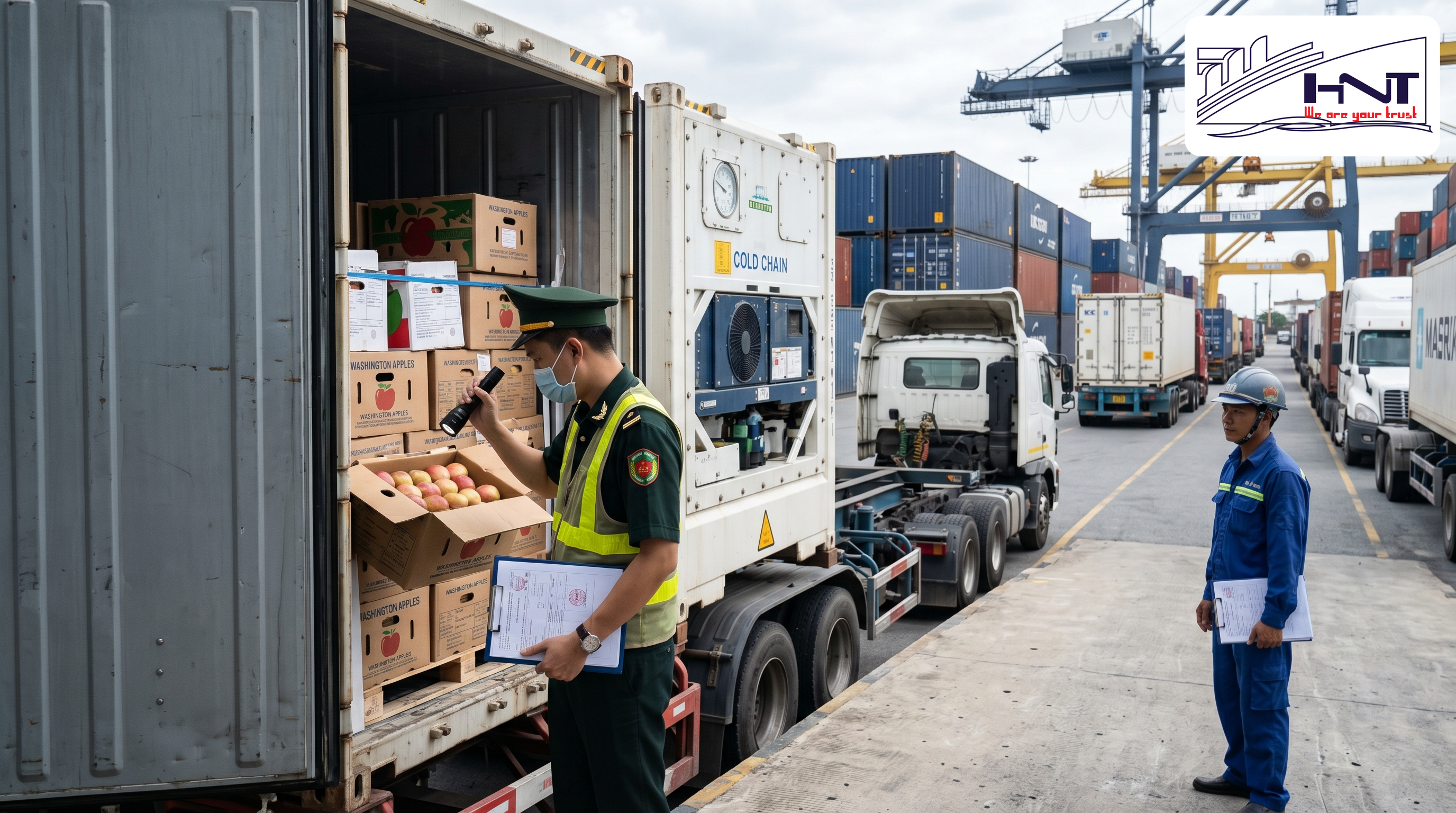
- Compare the common name, scientific name and commercial name of the fruit on the certificate with the invoice and declaration.
- Cross-check container number, seal number, lot code, package quantity and weight with the original bill of lading.
- Check certificate issuance date, issuing authority, signature, seal or electronic authentication mechanism of the exporting country.
- Verify the declared pest treatment content, especially when the permit requires specific treatment measures.
- Book the inspection time slot, sampling location and container opening personnel at the storage location.
- Maintain the preset temperature in the refrigerated container throughout the entire waiting time for sampling and result return.
| Checkpoint | Common discrepancies | Consequences | Prevention methods |
|---|---|---|---|
| Item name | Different scientific name | Verification required | Approve draft certificate |
| Lot number | Invoice discrepancy | Pending document correction | Use a unique lot code |
| Pest treatment | Missing treatment information | Additional sampling may be required | Verify the permit |
| Container temperature | Recorded data loss | Difficult to assess quality | Store temperature data |
The information on the Phyto Certificate is prone to discrepancies with the customs declaration
The question “What is a Phyto Certificate?” is only meaningful when a business knows how to read the certificate. Fields that are commonly incorrect include the plant name, lot number, country of origin, place of export, weight, and additional declaration. These data must be consistent with the customs declaration and the commercial document set.
Cases where a shipment is required to undergo additional quarantine sampling
A shipment may be sampled when the quarantine authority needs to verify harmful organisms, when the certificate shows signs of discrepancies, or when the goods belong to a high-risk category. Businesses cannot commit in advance to the result release time. Plan for refrigerated storage and yard storage costs.
Common errors related to fumigation and accompanying certificates
A common error is that the certificate states the treatment method but lacks the treatment date, treatment parameters, or the link to the lot number. If treatment is required, the description must support traceability. Do not use the treatment certificate of another lot to provide an explanation.
Experience in shortening the waiting time for quarantine results at the border gate
According to HNT LOGISTICS' experience, businesses should send scanned documents before ETA and schedule the inspection as soon as the container location is available. For fresh mangoes imported from Thailand through Cat Lai Port, assigning personnel to open the container in advance helps reduce nearly one day of coordination waiting time at the yard.
Practical tips: Require the cold storage facility to record the temperature before, during, and after the inspection. These data protect the business when quality disputes arise after customs clearance.
How to minimize customs declaration amendments and reduce the risk of additional storage costs
Amending a customs declaration is not merely an administrative procedure. It can lead to changes in taxes, document inspection, cargo release time, and container storage costs. Businesses should establish a data lock point before submitting the first customs declaration.
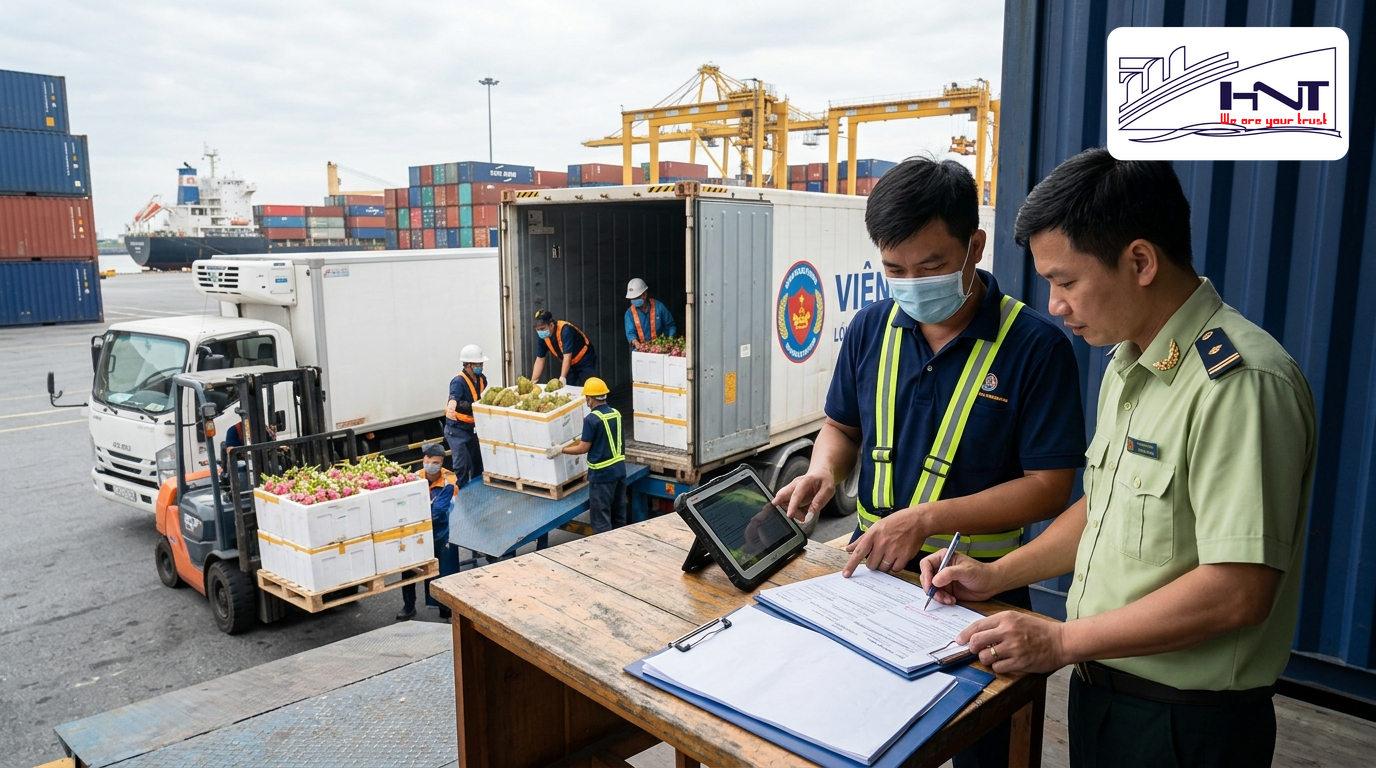
- Lock the bill of lading number, container number, port of discharge, and cargo storage location after receiving the official arrival notice.
- Verify the HS code against the goods description, packaging images, specialized catalog, and the supplier's technical documents.
- Check the customs value against the invoice, delivery terms, and any amounts that must be added or deducted according to regulations.
- Confirm that the unit of measurement on the customs declaration matches the invoice, packing list, and the actual packing in the container.
- Review the permit number, effective date, and issuing authority before entering the data into the specialized management system.
- Save a screenshot of the final data for responsibility tracing if errors occur after submission.
| Cost item | Cause | Control measure | Responsible tracking party |
|---|---|---|---|
| Storage fees | Quarantine delay | Book early | Port coordination |
| Container detention | Container return delay | Book truck and warehouse in advance | Inland transport |
| Refrigeration | Long wait for sampling | Track ETA and inspection schedule | Cold storage |
| Customs inspection | Incorrect declaration data | Four-eye review | Documentation department |
Mandatory data that must be rechecked before submitting the declaration
Electronic customs declarations should be rechecked across six categories: consignor, bill of lading, HS code, customs value, taxes, and permits. The figures must have supporting evidence. An internal spreadsheet is only a cross-checking tool and does not replace legally valid documents.
Signs indicating the risk of incorrect HS codes and declared customs values
The risk increases when the product name is too generic, the goods have multiple preservation conditions, or the invoice does not show detailed composition. The customs value should also be reviewed when FOB, CIF, or DDP terms are recorded incorrectly. All freight and insurance costs must be determined according to the actual delivery terms.
How to handle errors discovered after the declaration has been registered
Determine whether the error falls into the category that can be amended or requires handling according to customs authority guidance. Do not alter the source documents after the declaration has been registered. The company should prepare an internal report, identify the cause, and prepare a consistent explanation.
Control additional costs when physical inspection or specialized inspection is prolonged
For example, Dong Duong Produce Company in Dong Nai imports kiwifruit from New Zealand in a 40-foot refrigerated container. The shipment required additional sampling. By reserving a power supply and a backup tractor unit in advance, the company maintained a temperature of 1 degree C and kept additional costs within the approved budget.
Practical tips: use the instruction page refrigerated container size standards to choose the appropriate load capacity and allow spare airflow space. An overfilled container may reduce preservation efficiency while awaiting quarantine.
Practical perspective: Why a complete dossier can still face customs clearance delays
A complete dossier does not necessarily mean it is ready for customs clearance. “Complete” only reflects the number of documents. “Eligible” also depends on data consistency, permit status, inspection results, and the ability to arrange the goods at the border checkpoint.
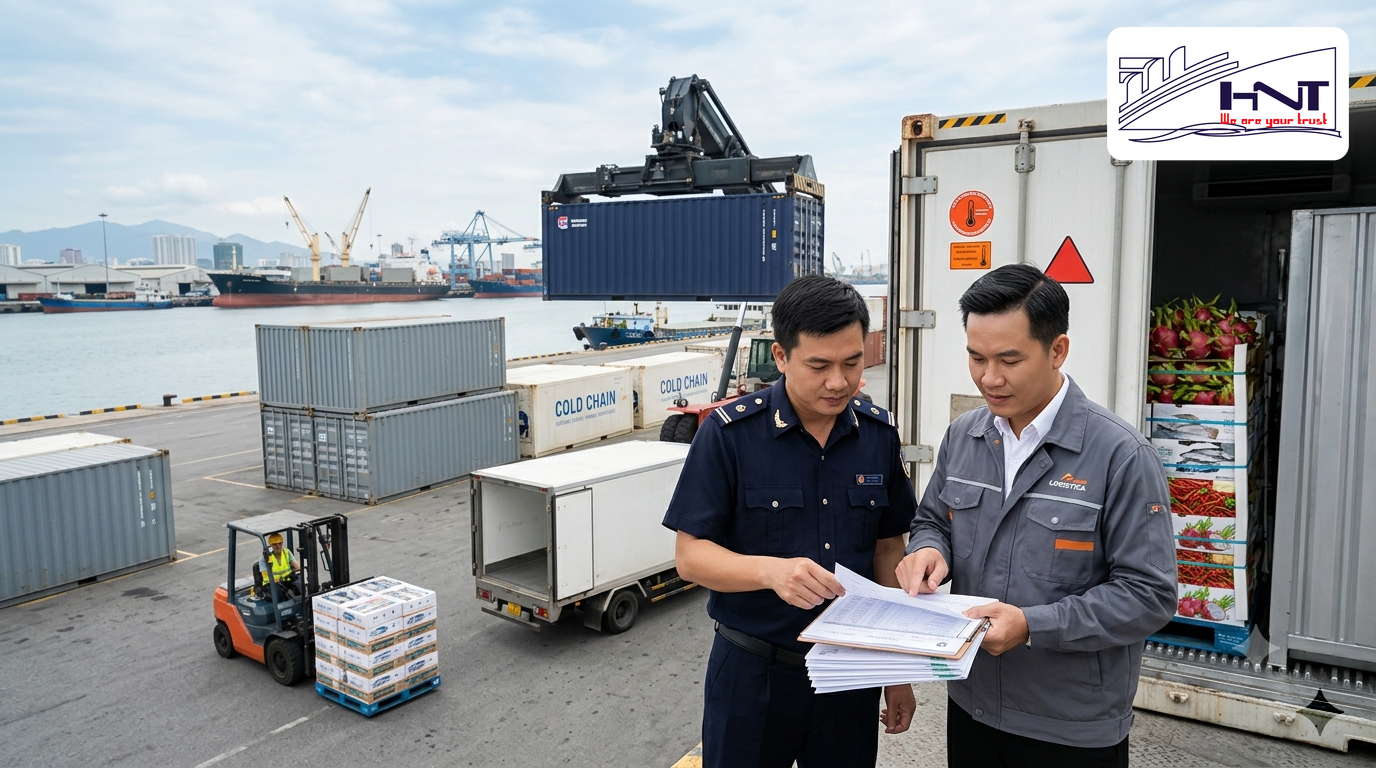
- The supplier changed the packing batch but did not update the batch number on the phytosanitary certificate before issuance.
- The importer used a commercial description different from the botanical name stated on the exporting country's phytosanitary certificate.
- The shipping line changed the vessel schedule, causing the ETA to differ from the original quarantine inspection booking at the port.
- The cold storage facility lacked available power connection points while the container was waiting for sampling or confirmation of results from the specialized authority.
- Peak agricultural produce season increases the number of shipments requiring inspection, extending coordination time at the quarantine inspection site.
- The purchasing, documentation, and logistics departments do not have a single point of approval for data changes before submission.
| Gap | Impact | Corrective measures | Desired outcome |
|---|---|---|---|
| Different product name | Verification delay | Approve draft certificate | Consistent documentation |
| Changed ETA | Missed quarantine schedule | Daily updates | Proactively book a schedule |
| Lack of power socket positions | Temperature risk | Book in advance | Stable cold chain |
| Unclear responsibilities | Slow response | Establish a single point of contact | Make quick decisions |
Data gaps between foreign suppliers and importers
Gaps often appear when suppliers use a lot management system different from the importer. One side manages by farm code. The other uses order code. Request a lot code reconciliation table right from the sales contract.
The difference between a valid dossier and a dossier eligible for specialized inspection
A valid dossier may follow the correct format but still lack data required for specialized inspection. For example, a certificate may be issued by the proper authority but lack the supplementary declaration required by the import license. This is a difference that businesses often discover too late.
Peak periods that cause document processing timelines to take longer than expected
Peak fruit import periods often coincide with harvest seasons, holidays, or shipping schedule changes. When international freight rates increase, businesses also tend to consolidate shipments into earlier voyages. The Drewry World Container Index on 18/6/2026 increased 12%, which is a signal requiring close monitoring of booking plans and budgets.
How businesses, logistics providers and authorities coordinate to reduce delays
Businesses should establish a coordination group including purchasing, documentation, cold storage, domestic transport and customs agents. Each person must have a response deadline. According to experts at HNT LOGISTICS, the most effective coordination method is to use a progress table tracking ETA, declaration status, quarantine and cargo pickup plans.
Practical tips: reference page service customs declaration to standardize responsibilities between the importer and the service provider. Service contracts need to clearly specify the person confirming HS codes, value and permits.
Tasks to perform after customs clearance to support future import shipments
Customs clearance is not the end point of risk management. A completed shipment is a valuable data source for reducing errors next time. Businesses need to store documents, reconcile costs and turn issues into control procedures.
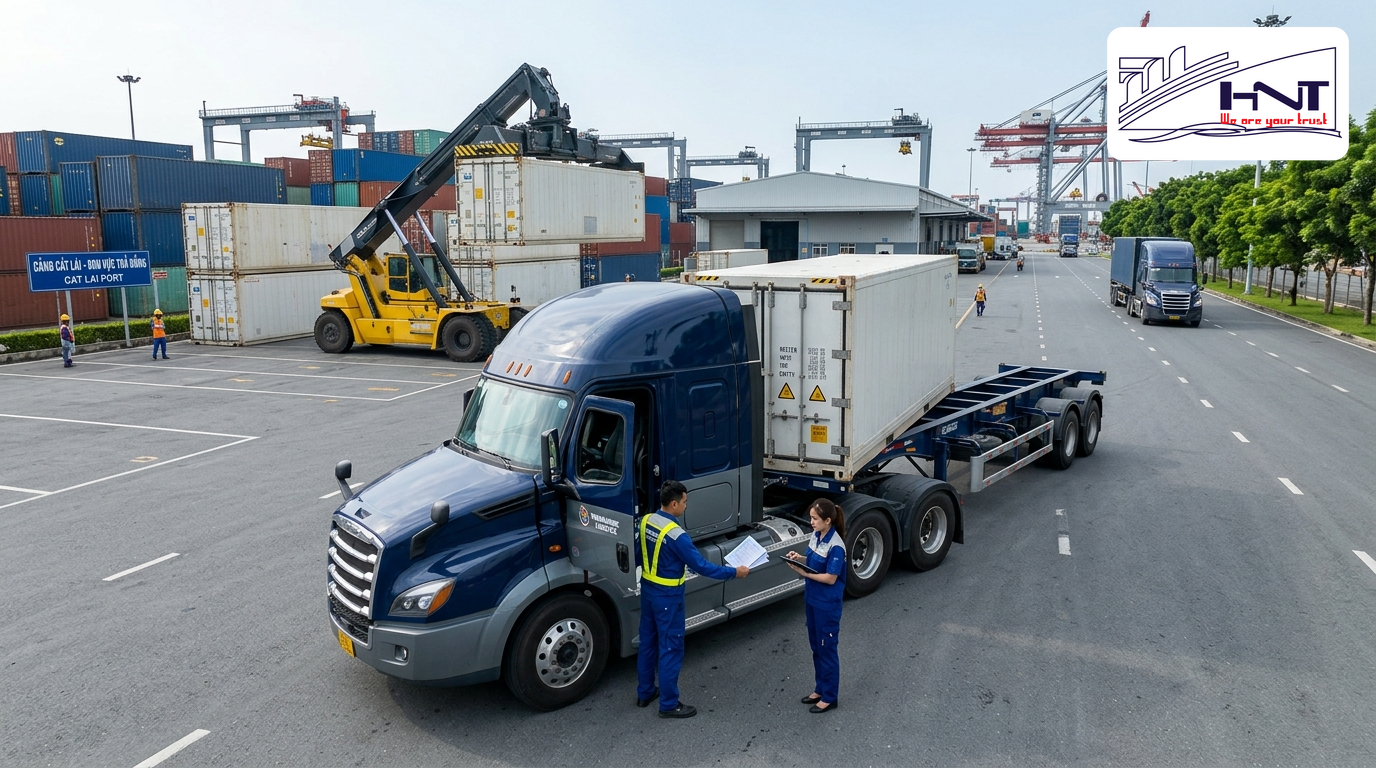
- Store declarations, invoices, bills of lading, quarantine certificates, permits and processing results in an electronic folder with access permissions.
- Compare estimated costs with actual fees including international freight, surcharges, refrigeration, storage and domestic transport.
- Record the reasons for declaration amendments, quarantine waiting time, responsible person and preventive measures for each error.
- Evaluate supplier capability based on document accuracy, response speed and compliance with quarantine requirements.
- Evaluate shipping lines, cold storage facilities and transport providers based on their ability to update ETA, maintain power supply and arrange vehicles on time.
- Update the list of HS codes, quarantine requirements and document lists for each exporting country after every shipment.
| Storage item | Purpose | Update time | Person in charge |
|---|---|---|---|
| Electronic dossier | Retrieval during post-clearance audit | Immediately after customs clearance | Documentation |
| Actual cost table | Control budget | Within seven days | Finance |
| Error list | Prevent recurrence | After each shipment | Logistics management |
| Supplier directory | Compliance assessment | Quarterly | Procurement |
Archive electronic document sets and quarantine documents for the required retention period
The archive must ensure quick retrieval by declaration number, bill of lading number, container number, and certificate number. Files must clearly indicate their origin, receipt date, and version. During post-clearance audits, the business must demonstrate the data chain from the contract to the customs clearance decision.
Compare actual costs with the original import plan
Separate market-driven costs from operational error costs. Freight increases due to market conditions are not the same as storage charges caused by late document submission. Proper classification helps the procurement department negotiate better and helps management identify areas that require investment.
Build an internal error list from shipments that encountered issues
The error list should describe actions, not just consequences. Instead of writing “delayed quarantine”, write “failed to verify the scientific name on the certificate before ETA”. Each error should have an owner, preventive measures, and an implementation deadline.
Standardize import procedures for subsequent fruit shipments
Import procedures must be standardized according to a matrix: exporting country, fruit type, HS code, permits, certificates, storage temperature, and cost risks. HNT LOGISTICS is a suitable logistics and freight forwarding partner for businesses to build a synchronized process from documentation to the cold chain.
Conclusion: Electronic customs declaration for imported fruit should be considered a cross-departmental process, not merely a data entry task. Businesses should consistently implement the following points:
- Lock invoice, bill of lading, HS code, and quarantine certificate data before submitting the customs declaration for the first time.
- Check permits, quarantine requirements, and pest treatment details for each fruit species and country.
- Prepare refrigerated transport, sampling, and vehicle dispatch plans for both customs channel assignment and additional inspection scenarios.
- Handle customs declaration errors based on source documents, not by making subjective data edits or resubmitting multiple versions.
- Separate market costs from internal error costs to control budgets and improve supplier quality.
- Archive electronic records, update the error list, and standardize responsibilities so subsequent shipments can clear customs more quickly.
For agricultural products, seafood, and fresh goods requiring a cold chain, speed is only valuable when accompanied by accuracy. HNT LOGISTICS supports Vietnamese import-export businesses with document consulting, customs brokerage, transportation, and logistics risk control nationwide. As a professional transportation provider, HNT LOGISTICS is committed to delivering comprehensive supply chain solutions, helping Vietnamese businesses confidently conquer global markets. Contact us today at 8A Hoang Minh Giam, Ho Chi Minh City or via the marketing email at hntshipping.com for quotation support!