


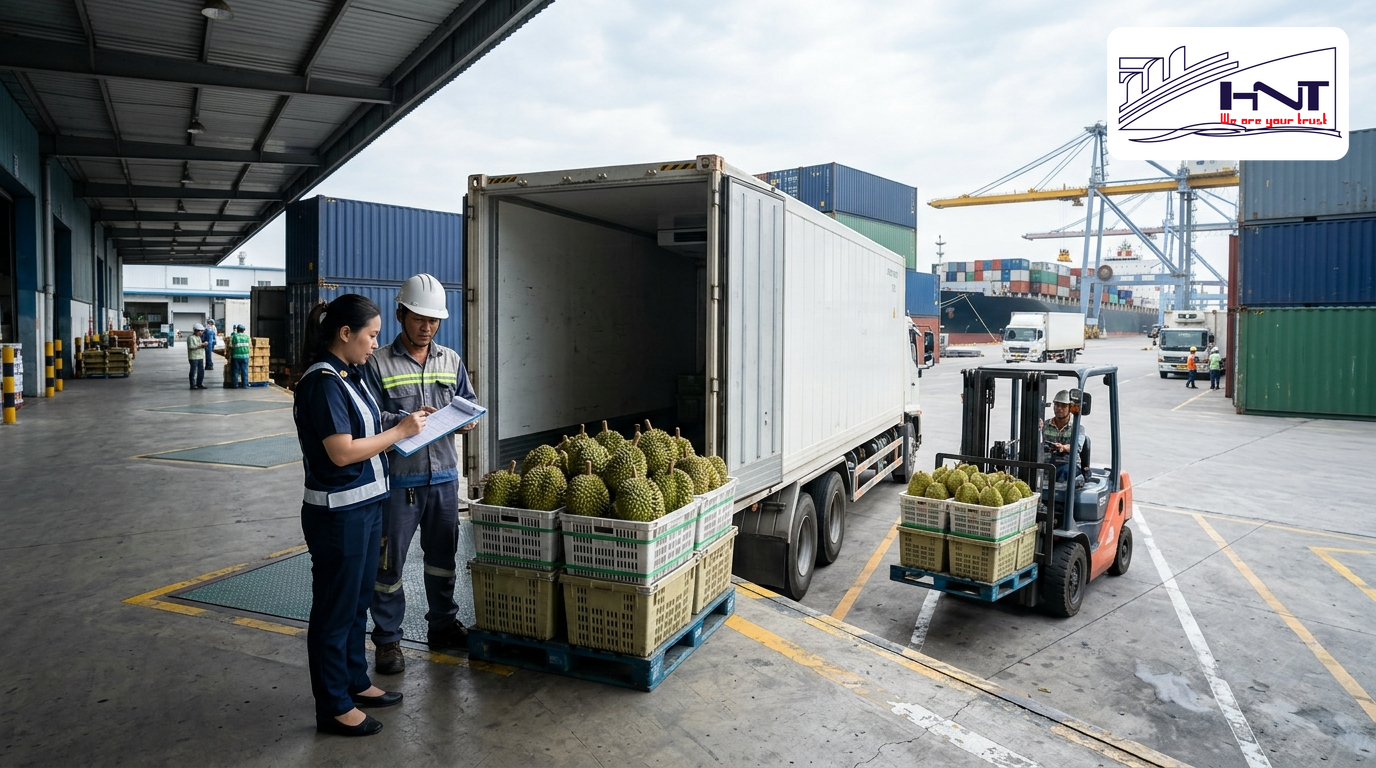
Durian transit procedures often encountered when the refrigerated truck has already arrived at the border gate but the growing area code, seal, or document data does not match. Just one small discrepancy can cause the delivery time slot to be missed and affect fruit quality.
In May 2026, China approved an additional 829 growing area codes and 131 durian packing facility codes from Vietnam. The total approved at that time was 1,396 growing area codes and 188 packing facilities. This is a market opportunity, but it also makes traceability requirements more stringent.
This article guides businesses in controlling documentation, declarations, journey monitoring, and the cold chain. The focus is on reducing the risk of vehicle delays, additional inspections, and waiting costs at the border gate.
Checklist businesses need to complete before carrying out durian transit procedures to China
Before dispatching a vehicle, businesses should treat each shipment as a unified data set. Even if the documents are correct, mismatches between the goods, refrigerated truck, or traceability codes may still require explanation. Checking at least one business day in advance gives the operations team time to correct the data.
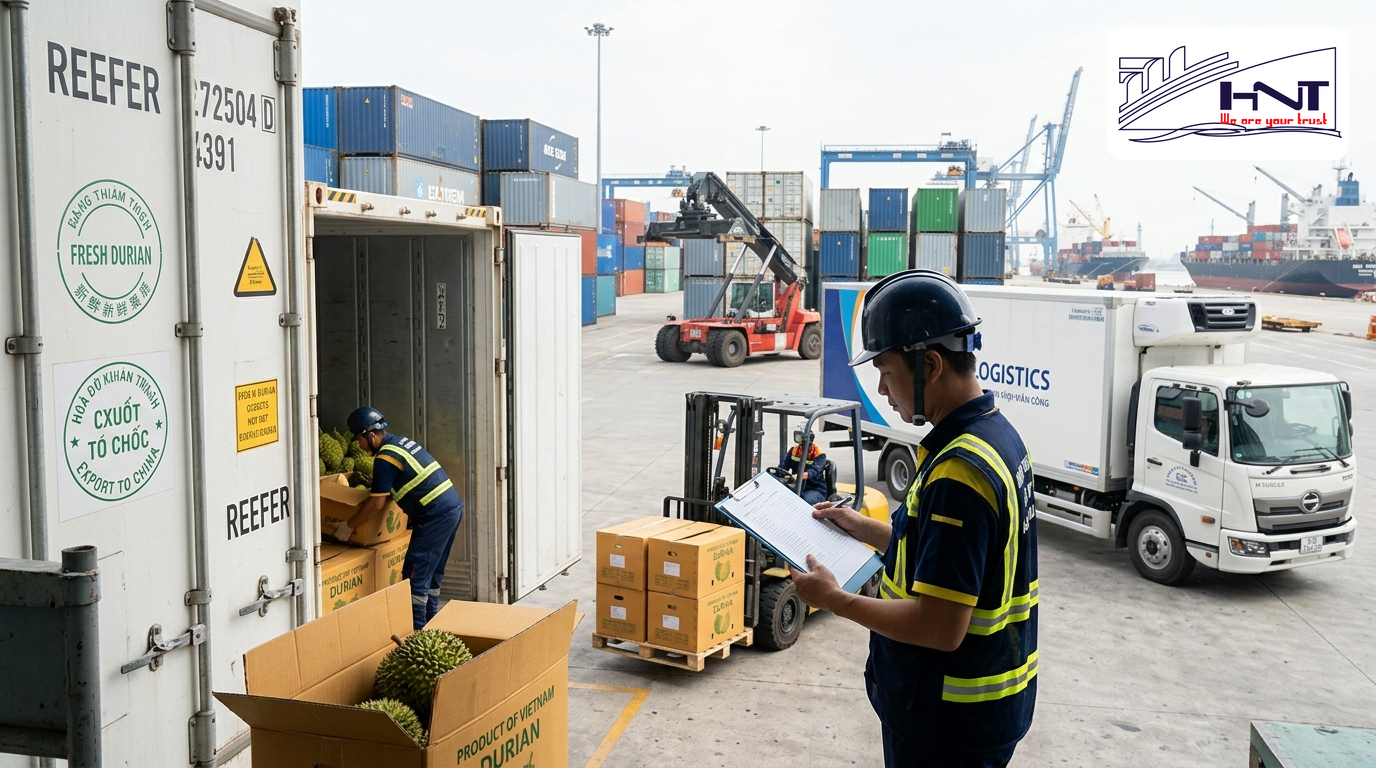
- Confirm that the contract clearly specifies which party is responsible for vehicle waiting costs, storage yard fees, and additional inspection expenses.
- Verify the growing area code, packing facility code, and shipment information against the list authorized for export.
- Check the set temperature, temperature recording device, and refrigeration unit fuel level before the truck leaves the warehouse.
- Finalize the border gate, route, tractor unit license plate, and driver before transmitting declaration data.
- Review the number of packages, net weight, gross weight, and seal number across all documents.
| Category | Person in charge | Closing time | Risks if incorrect |
|---|---|---|---|
| Planting area code | Procurement department | Before loading goods | Reject acceptance |
| Packing facility code | Packing facility | Before issuing the invoice | Verification required |
| Refrigerated truck temperature | Transport provider | Before departure | Quality degradation |
| Seal number | Warehouse coordination | After closing the truck doors | Physical inspection |
Review shipment conditions before entering the China overland transit route
The durian shipment must meet the requirements of the destination market, not just be eligible to leave Vietnam. Businesses need to check ripeness, signs of pests and diseases, packaging condition, and the ability to maintain temperature throughout the journey. Bruised fruit or sap leakage increases the likelihood of a physical inspection.
For example, Minh Phu Tien Giang Agricultural Products Company packed 18 tons of Ri6 durian for Bang Tuong. The company separated 42 boxes at risk of impact and replaced the pallets. As a result, the truck completed handover six hours earlier than expected.
Prepare the China transit document set to avoid requests for additional documents at the border gate
The China transit document set must present a consistent shipment identity. Businesses should prepare the contract, commercial invoice, packing list, road bill of lading, phytosanitary certificate, and documents proving the registration codes. All revisions must be version controlled.
Drivers should not be entrusted with the only copy. Use a numbered hard-copy set and an electronic set with locked content. According to HNT LOGISTICS' experience, sending the data reconciliation sheet to the border agent in advance helps detect seal discrepancies before the truck reaches the waiting yard.
Check consistency between commercial documents and transport information
The information that must match includes the exporter name, consignee, number of packages, weight, cargo type, vehicle code, and seal number. Using different units of measurement also creates risk. For example, the invoice states kilograms while the packing list states tons without a clear conversion.
Businesses should create a four-column checklist: source document, declared data, transport data, and verifier. An independent staff member should perform the final sign-off. This approach reduces the risk of the same error being copied across multiple documents.
Common reasons for rejection at the initial transit document acceptance stage
Commonly questioned points include expired growing area codes, packaging facilities not matching the shipment lot, vehicle license plates differing from declared data, seals missing numbers, or phytosanitary certificates not accurately reflecting the product type. Businesses also need to avoid manually editing signed documents.
Operating tip: only issue the final dossier after the coordinator confirms the vehicle, driver, and border gate. If replacing the tractor unit, the entire relevant data must be reassessed before the vehicle leaves the loading point.
The dossier and documents for transit through China need to be submitted according to each related party
The dossier does not belong solely to the import-export department. The cargo owner, packaging facility, transport unit, customs agent, and consignee all create data. Therefore, the business must appoint a focal point with the authority to finalize the last information.
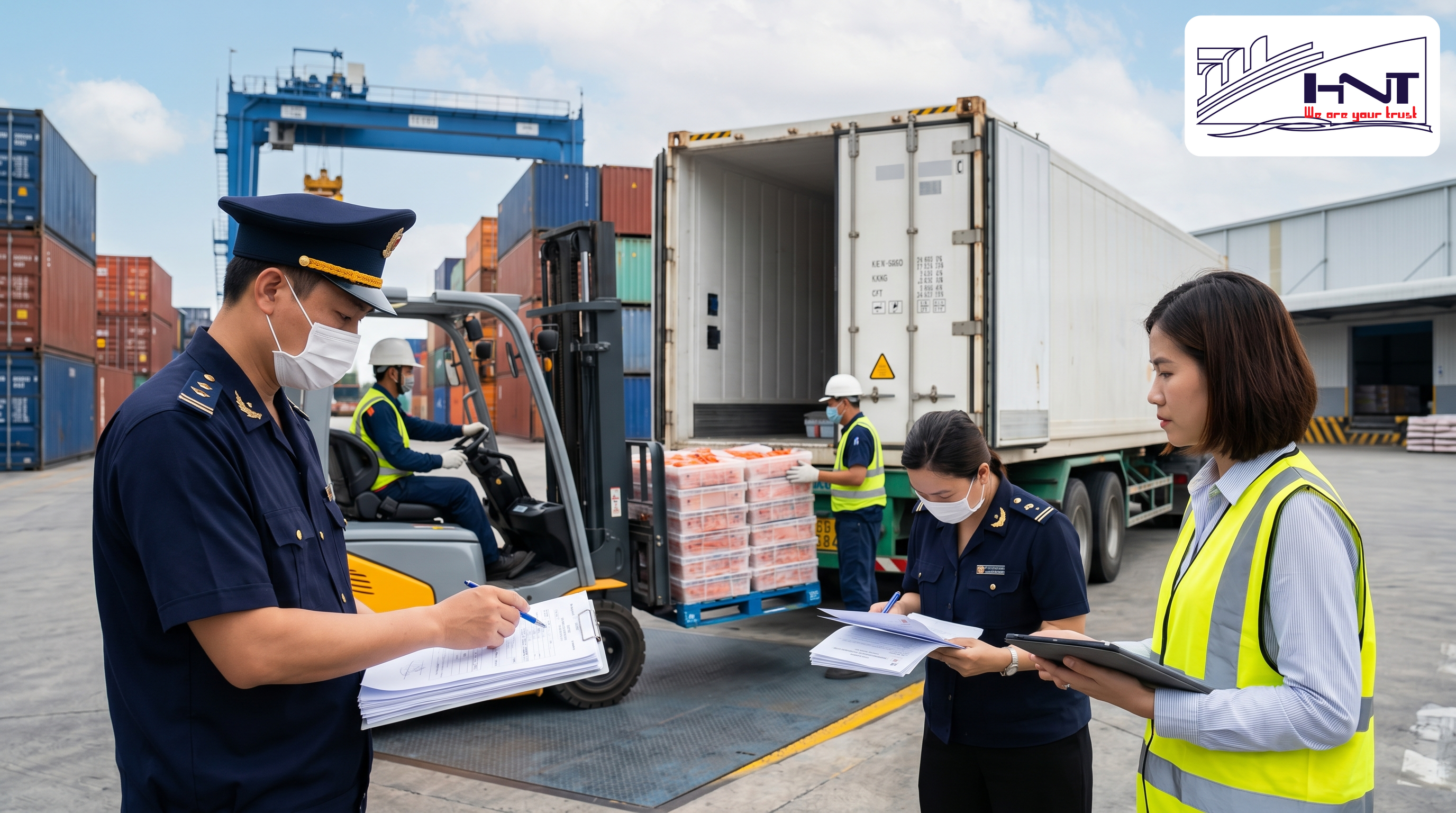
- The cargo owner prepares the contract, commercial invoice, packing list, and confirmed buyer information.
- The packaging facility provides traceability records, facility codes, and packaging data by each production day.
- The growing area provides cultivation logs, valid codes, and input material lot information.
- The transport unit provides license plates, driver information, route, and refrigerated vehicle inspection records.
- The customs agent controls declaration criteria, attached documents, and feedback from the system.
| Entity | Main documents | Control point | Consequences if missing |
|---|---|---|---|
| Shipper | Invoice, packing list | Number of packages and value | Delayed declaration |
| Growing area | Code, log | Lot traceability | Additional inspection |
| Packing facility | Facility code | Packing date | Reject acceptance |
| Transport | Vehicle form, seal | License plate and seal number | Stop the vehicle for verification |
Documents presented by the enterprise before declaring customs for transit goods
When making a customs declaration for transit goods, the enterprise needs to prepare commercial documents and appropriate specialized management documents. The dossier must accurately reflect the nature of the transaction. Do not use an invoice template from a previous lot and then manually edit it.
Decree No. 167/2026/ND-CP effective from August 15, 2026 and amending several provisions of Decree No. 08/2015/ND-CP. Businesses need to check the applicable regulations at the time of opening the declaration, instead of relying on old procedures.
Transport documents and vehicle sealing preparation before crossing the border gate
Transport documents must clearly show the vehicle, operator, route, refrigeration condition, and seal number. The seal must have photos taken when closing the vehicle. The photos must show the seal number, attachment position, and that the vehicle doors are securely closed.
For example, Krong Pac Durian Cooperative transported 16.5 tons from Dak Lak to Huu Nghi. The vehicle had to change tractor units at the transit point. The enterprise prepared a vehicle change record and updated the information in advance, avoiding a day of waiting for verification.
Requirements for phytosanitary documents and durian origin traceability
The phytosanitary certificate must match the actual shipment lot. Information about the growing area, packaging facility, quantity, and product type needs to be directly compared with the packing list. Frozen durian must also meet separate requirements for registered raw material sources and suitable processing facilities.
The specialized authority announced that by May 2026 there were 1,396 growing area codes approved by GACC. This figure does not replace the enterprise's need to check the validity of the specific code recorded on the shipment.
How to handle discrepancies in transit documents
The principle is to stop transmitting new data when a material discrepancy is detected. The business needs to identify the original document, the scope of impact, and the person authorized to issue the correction. Correcting one document while overlooking related documents will create even greater inconsistencies.
Operating tip: Classify discrepancies into three groups: typographical errors, commercial data errors, and actual change errors. Each group requires its own approver and processing deadline.
Customs declaration process for transit shipments of durian transported to China
The customs declaration process for transit shipments should start with verified data, not when the truck arrives at the border checkpoint. The business must check the declaration fields, attached documents, and response status. If the system returns an error, the cause must be resolved before retransmitting.
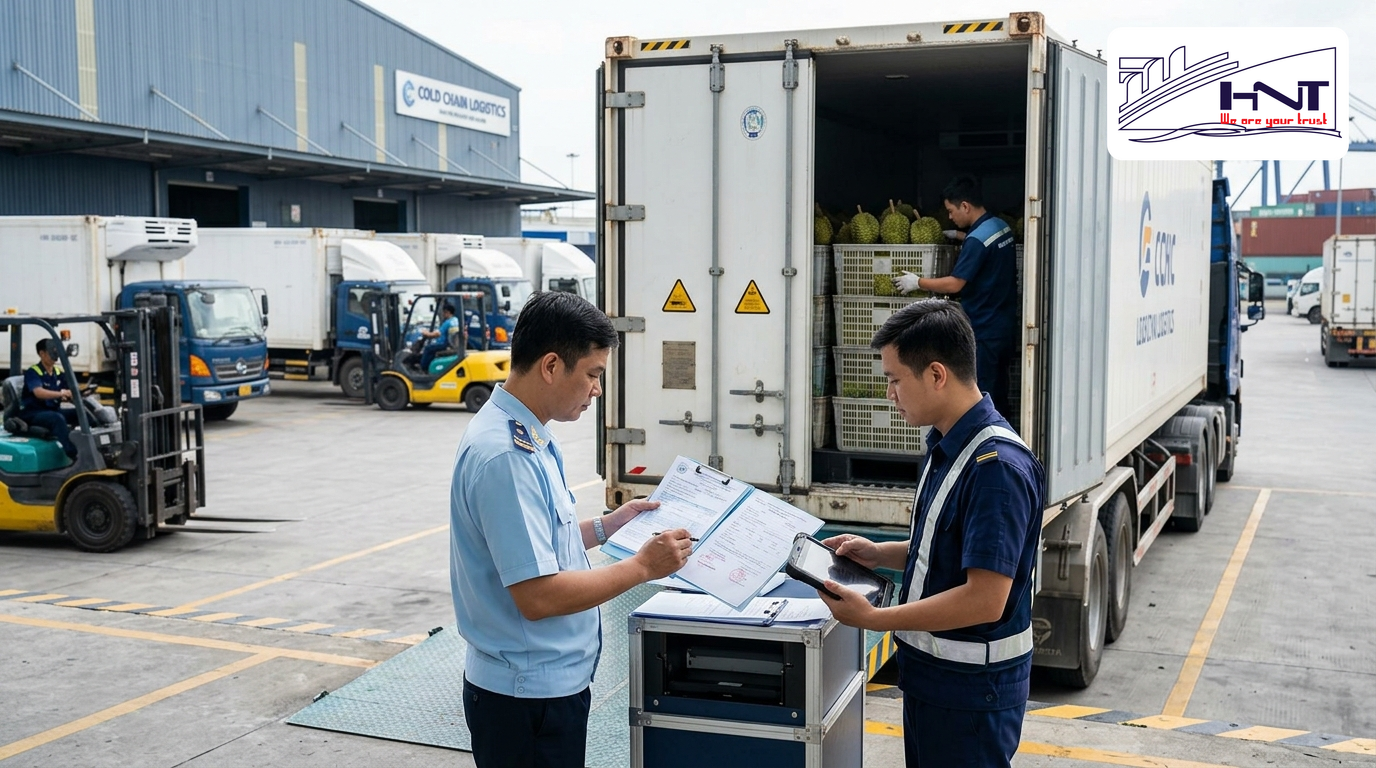
- Finalize commercial data, quarantine information, refrigerated truck details, and seal number in a single approved checklist.
- Prepare the declaration according to the correct declaration type and the management criteria of the customs authority at the border checkpoint.
- Transmit the data, monitor the response, and retain the receipt code for reconciliation with the on-site agent.
- Present the vehicle, cargo, and documents as required for supervision at the departure border checkpoint.
- Monitor the journey, seal status, and arrival time at the exit border checkpoint according to the registered plan.
- Receive confirmation that supervision has been completed, then archive the records for reconciliation and post-clearance audit.
| Step | Required output | Person in charge of monitoring | Main risks |
|---|---|---|---|
| Transmit declaration | Receipt code | Customs broker | Incorrect declaration field |
| Move the vehicle into the area | Confirm presence | Coordinate | Vehicle arrival delay |
| Sealed | Photos and report | Warehouse and logistics | Seal number mismatch |
| Leave the border checkpoint | Supervision status | Shipper | Route change |
Steps for submitting a customs declaration for transit goods at the departure border checkpoint
First, the customs broker reconciles the business information, shipment details, and specialized management documents. Then, the data is transmitted using the appropriate declaration fields. Once a response is received, the business must immediately verify the goods description, quantity, vehicle, and document status.
The vehicle should not be left waiting while the dossier is still in draft status. Opening the declaration too early also carries risks if the vehicle, seal number, or weight has not been finalized. The best time is after loading is completed and the final inspection has been carried out.
Process for supervising and confirming goods during transit
During transit, the business should maintain communication with the driver and border checkpoint coordinators. Events that must be recorded include unusual vehicle stops, temperature changes, loss of signal from the temperature recording device, or route changes. This data protects the business when explanations are required.
HNT LOGISTICS recommends setting temperature alerts and alerts for vehicle stops exceeding 30 minutes for overland durian shipments. Early alerts help resolve refrigeration issues or adjust coordination before the shipment quality declines.
Procedures at the exit border checkpoint and key milestones to monitor
At the exit border checkpoint, the business must monitor the vehicle's arrival time, seal confirmation, and supervision results. The vehicle crossing the border should not be considered the end of responsibility. The recipient should confirm the receipt time, cargo condition, and any discrepancies.
Four milestones should be monitored: the vehicle leaves the warehouse, enters the border checkpoint yard, completes the procedures, and is received by the recipient. Milestone-based reporting helps evaluate the actual waiting time for each route.
Common errors when submitting declarations and how to resolve them without delaying vehicle schedules
Common errors include incorrect declaration type codes, missing attached documents, mismatched package counts, incorrect license plate numbers, or inconsistent cargo names. The correct approach is to maintain a single source of original data and allow only one person to make edits. Do not allow multiple departments to make parallel adjustments.
Operating tip: prepare contingency scenarios for system errors, early vehicle arrivals, and late vehicle arrivals. Each scenario must include a primary contact phone number, response deadline, and cold chain maintenance plan.
Transit cargo regulations that directly affect durian customs clearance time
Transit cargo regulations directly affect progress because goods must follow the designated route, remain within the permitted time limit, and be subject to appropriate supervision. For durian, the pressure is even greater because quality depends on temperature, ventilation, and handling speed. Schedule deviations are not just a procedural issue.
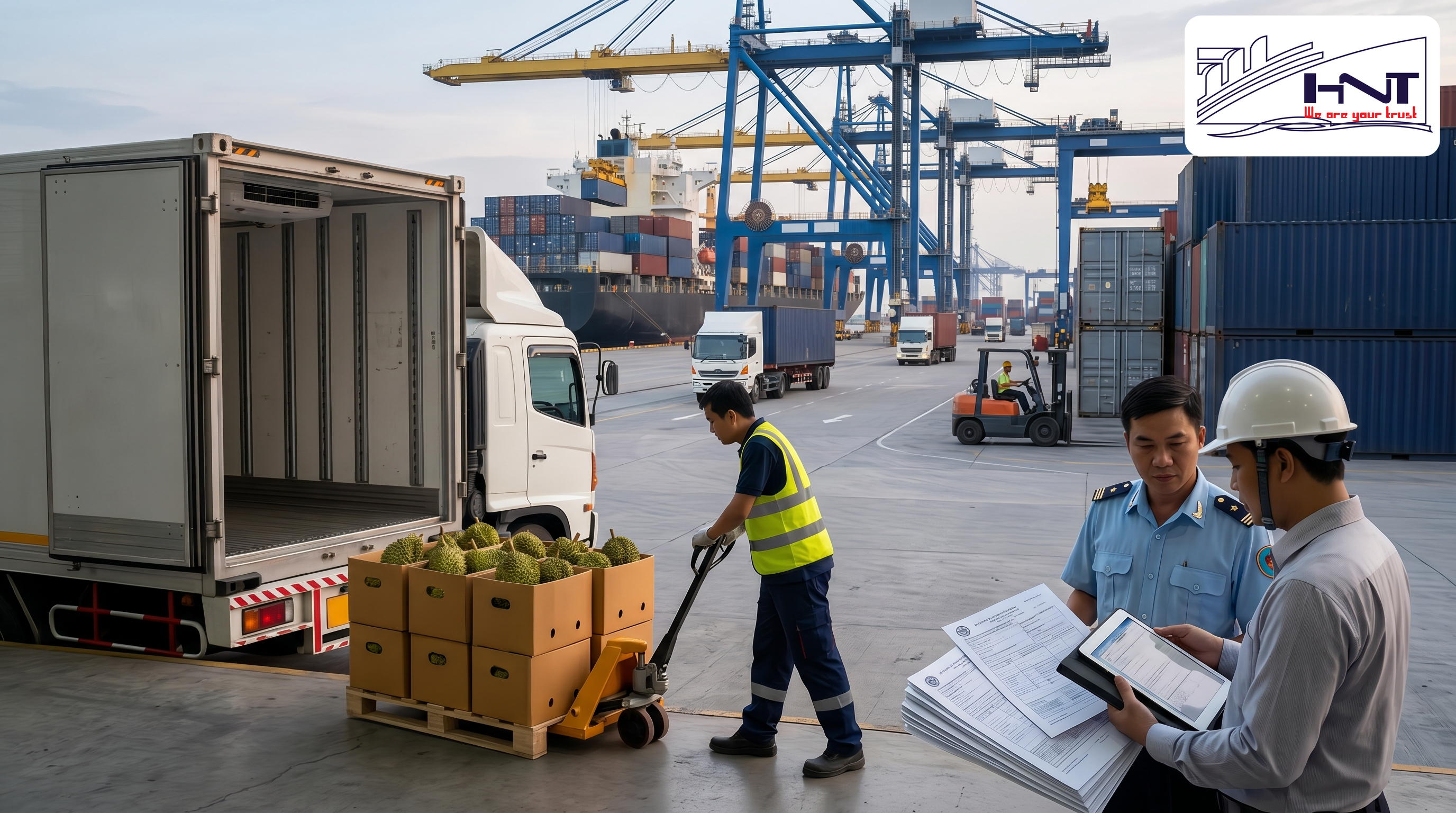
- Use only the routes, border checkpoints, and transport methods that match the declared data and transport agreement.
- Keep the seal intact until further instructions are received from the competent authority.
- Record every instance of opening the vehicle doors, repairing the refrigeration unit, or changing vehicles with a written report.
- Do not move the goods to a location outside the planned route without assessing the procedural impact.
- Monitor the journey time limit through regular reports from the driver and monitoring devices.
| Situation | Procedural impact | Cargo impact | Measures |
|---|---|---|---|
| Vehicle change | Data update required | Temperature risk | Create record |
| Broken seal | May be inspected | Late delivery | Take photos immediately |
| Long wait at the yard | Schedule delay | Increased refrigeration consumption | Fuel reserve |
| Route deviation | Explanation required | Increase time | Notify early |
Regulations on routes, storage time limits, and transit locations
Businesses should consider routes and time limits as part of their compliance commitment. Unusual journeys should have verifiable reasons, such as traffic congestion, weather, or dispatch requirements. Do not arbitrarily change yards simply because parking is more convenient.
For example, Dai Phat Dong Nai Export Company plans to deliver 20 tons of durian through Huu Nghi. When the waiting yard becomes overloaded, the company moves the vehicle only after the agent confirms the plan. As a result, the documentation is not interrupted and the temperature always remains within the configured range.
Requirements for sealing, cold storage, and physical inspection of goods
The seal demonstrates the integrity of the shipment. Cold storage demonstrates the ability to preserve commercial quality. These two factors must be controlled simultaneously. Refrigerated trucks must have temperature logs, backup fuel, and procedures for handling refrigeration unit failures.
Businesses should refer to the documentation on refrigerated container standards when designing operating thresholds and inspecting equipment. Even when transporting with refrigerated trucks, the principles of airflow distribution, cargo loading, and temperature recording must still be applied rigorously.
Cases subject to additional inspection during transit
Additional inspections often occur when documents show signs of inconsistency, unusual seals, unclear traceability information, or authorities need to conduct actual verification. This is not the time for businesses to argue based on feelings. Original data and on-site records must be provided.
The operations team should prepare cargo loading photos, seal photos, temperature logs, and package count comparison sheets in advance. These documents help shorten the explanation time much more than trying to retrieve information from multiple departments.
Risks arising when changing vehicles or transportation schedules
Changing vehicles creates three risks: declared data may no longer match, seals may be affected, and the cold chain may be interrupted. If a vehicle change is mandatory, the business must make a record clearly stating the reason, cargo condition, temperature, and new seal number if any.
Operating tip: Arrange backup vehicles with the same cold configuration for peak seasons. This is slightly more expensive, but lower than the cost of stopping a shipment and reducing product quality.
Why do many durian shipments with complete documents still incur costs when transiting through China
Complete documents do not mean no additional costs will occur. Costs often increase due to waiting time, lack of coordination, refrigerated vehicle fuel consumption, and changes in delivery schedules. Businesses need to track costs by cause instead of only looking at the total trip cost.
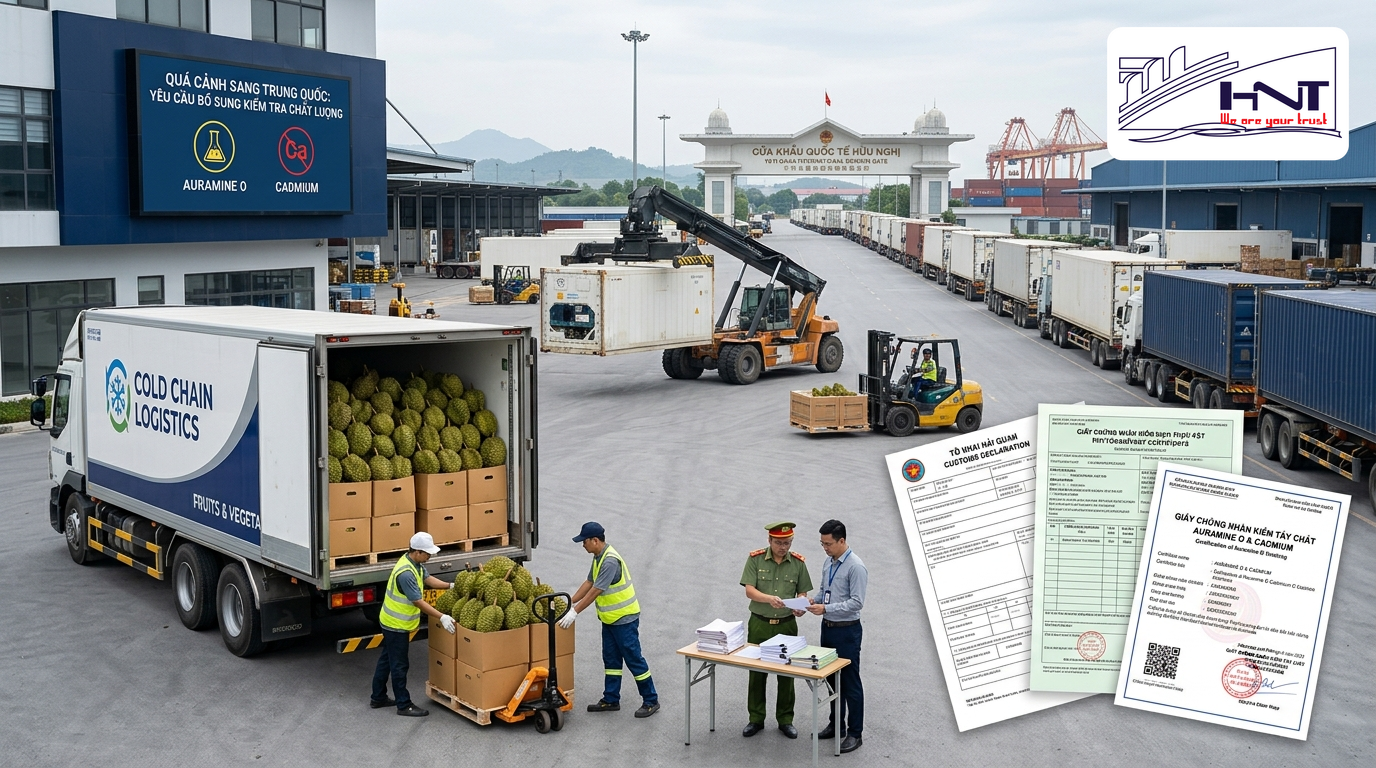
- Vehicle waiting fees increase quickly when yard appointments, clearance hours, and receiving times are not synchronized.
- Refrigeration fuel consumption increases when vehicles stop for a long time in hot weather conditions or when waiting yards are overloaded.
- Yard storage fees arise when documents need correction or cargo is required to undergo additional physical inspection.
- Labor costs increase when multiple parties handle the process but no one coordinates and makes the final decision.
- Quality reduction costs appear when temperature fluctuates or delivery time exceeds the plan.
| Cost group | Early signs | Measurement method | How to reduce |
|---|---|---|---|
| Vehicle waiting | Yard schedule delay | Waiting hours | Book early |
| Refrigeration unit | Long stop | Fuel | Device inspection |
| Document correction | Data mismatch | Number of corrections | Comparison sheet |
| Quality degradation | Temperature fluctuation | Complaint rate | Early warning |
Common bottlenecks appear at peak season border gates
Bottlenecks usually occur at waiting yards, inspection areas, vehicle exchange capacity, and the lack of synchronization between vehicle arrival times and receiving times. Peak seasons cause a small error to be amplified. Businesses need to finalize time slots with the receiving party before the vehicle departs.
For example, Hung Thinh Can Tho Agricultural Company divided 24 tons into two 12-ton trucks instead of one large truck. Vehicle arrangement costs increased, but waiting time decreased by 11 hours and the rate of fruit complaints due to temperature reduction decreased significantly.
Costs arising from document discrepancies and processing waiting time
Document discrepancies create double costs: document processing costs and vehicle operating costs during the waiting period. Businesses must separate these two items in the post-trip report. Then, the root cause becomes clear and can be corrected in the following process.
Should apply the service import-export document consulting for new shipments, shipments with customer changes, or transportation routes that have not yet operated stably. The pre-check fee helps avoid larger additional costs at the border gate.
Impact of storage temperature on the ability to receive shipments
Temperature does not only affect the internal quality of the fruit. Temperature data is also commercial evidence when the receiving party evaluates the shipment. Without continuous data, businesses find it difficult to protect themselves if there is a quality dispute after delivery.
Set the target temperature according to customer requirements and the characteristics of the shipment. At the same time, the temperature recording device should be checked before the trip. Do not wait until a complaint arises before downloading the data.
Experience in coordinating between the cargo owner, transport provider, and customs broker to reduce risks
Effective coordination requires one shared operations team, not multiple separate messaging groups. Everyone must know who makes decisions regarding documents, vehicles, temperature, and costs. Status reports should be sent at scheduled milestones instead of as scattered messages.
According to experts at HNT LOGISTICS, businesses should hold a 15-minute operations meeting before each trip during the peak season. The meeting should focus only on four points: documentation, vehicles, temperature, and receiving schedule.
Document management and transport planning after completing China's overland export procedures
China's overland export procedures do not end when the vehicle passes the border checkpoint. Businesses must still archive documents, reconcile costs, confirm receipt with the consignee, and evaluate quality. This is important data for reducing risks on the next shipment.
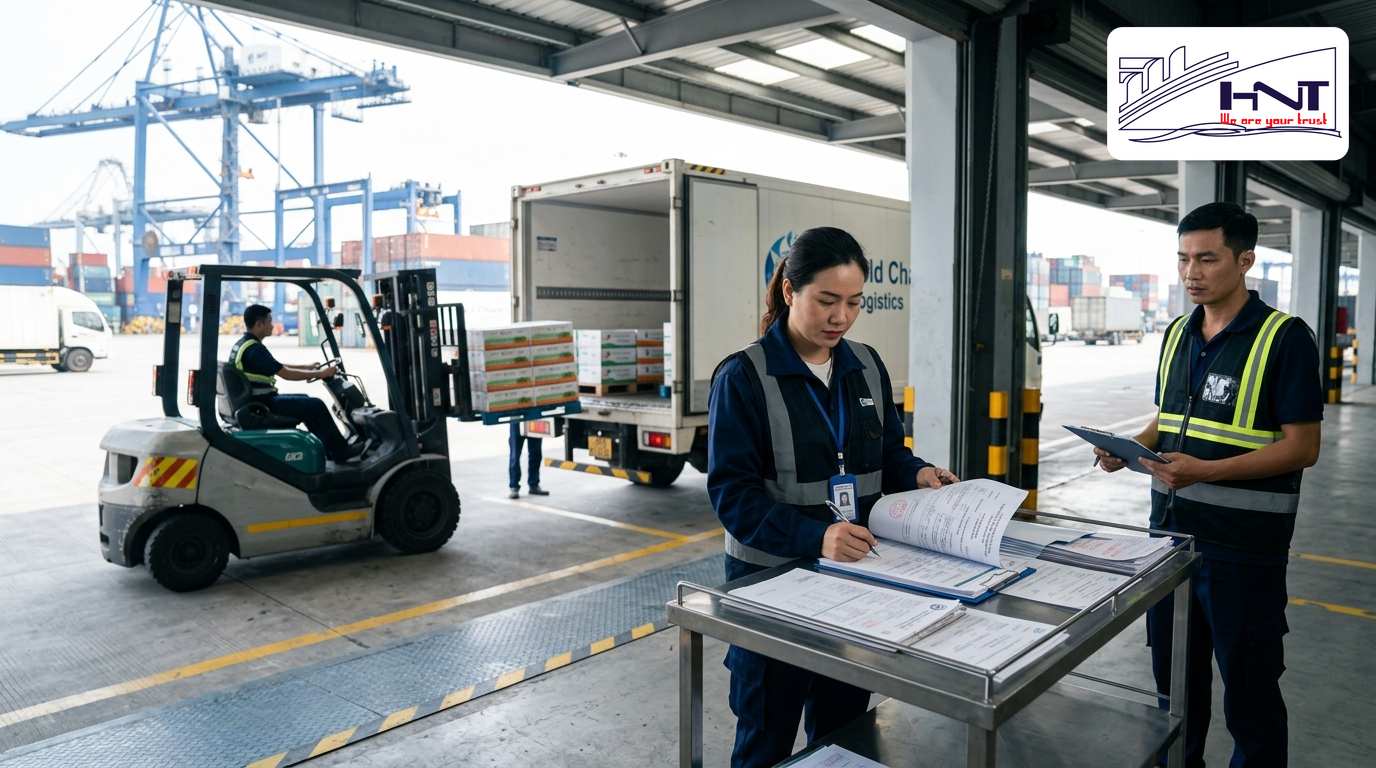
- Store the final document set together with all revised versions and the reasons for each revision to support post-audit reviews.
- Store loading photos, seal records, temperature data, and on-site reports in a single shipment file.
- Compare actual times with the plan to accurately identify bottlenecks at the warehouse, on the road, or at the border checkpoint.
- Evaluate costs by each cause instead of only summarizing the transportation cost for the entire trip.
- Update the list of transport providers, agents, and packing facilities based on the actual performance of each shipment.
| Stored records | Storage time | Purpose | Person in charge |
|---|---|---|---|
| Declaration and feedback | After completion | Post-clearance inspection | Import export |
| Quarantine certificate | Before delivery | Traceability | Quality |
| Temperature log | After unloading | Complaint | Transport |
| Cost report | After settlement | Route optimization | Finance |
List of documents to retain for reconciliation and post-audit reviews
Businesses should retain contracts, invoices, packing lists, quarantine certificates, declarations, processing feedback, and delivery records. In addition, seal photos, temperature logs, and evidence of adjustment communications are also very important.
Records should be named according to the shipment code, export date, and customer. This naming method helps retrieve them quickly when reconciliation is required. Avoid naming files after individuals because handovers become difficult when personnel change.
Track shipment status after completing transshipment
After supervision is completed, businesses still need to confirm the vehicle's arrival, seal condition, delivered quantity, and initial quality feedback. If any discrepancy arises, a report must be prepared immediately upon receipt.
For example, Phuong Nam Lam Dong Agricultural Company received feedback that four cartons showed signs of soft fruit. Thanks to the temperature log and loading photos, the business determined that the cause was the placement of the cushioning material, not the refrigerated truck.
Evaluate actual costs and optimize future shipments
The evaluation should compare the plan with actual performance based on waiting time, fuel consumption, yard costs, document correction costs, and quality complaints. This helps businesses identify which process needs improvement. They should not simply pressure transport providers to lower prices while ignoring operational causes.
Businesses can refer to overland refrigerated cargo transportation to standardize the calculation of costs based on waiting time and the level of temperature control. This is the foundation for selecting the right carrier, instead of choosing the lowest quoted price.
Build an internal control process for periodic durian transit shipments
The internal process should have five control gates: confirm the goods source, confirm documentation, confirm the refrigerated truck, confirm the declaration, and confirm delivery. Each gate should have an approver, a deadline, and retained evidence. Without control gates, businesses will repeat the same mistakes.
Durian transit procedures effectiveness is a data management process, not just submitting documents. Businesses should remember these key points:
- Check that the planting area code and packing facility code are valid and match the actual shipment before loading the truck.
- Cross-check the package count, weight, vehicle, and seal number across all documents before submitting the declaration.
- Record the temperature continuously to protect product quality and provide supporting evidence in the event of commercial disputes.
- Do not change the vehicle, change the route, or break the seal without assessing the impact on the monitoring documentation.
- Analyze costs by cause to eliminate bottlenecks instead of only negotiating lower transport prices.
- Store records by shipment code to support post-clearance audits, complaints, and optimization of recurring shipments.
HNT LOGISTICS supports businesses exporting durian, agricultural products, seafood, and fresh goods from Vietnam by controlling documentation, vehicle schedules, and the cold chain for each shipment. A clear process from warehouse to border gate helps businesses protect quality, schedules, and profit margins. As a professional transport provider, HNT LOGISTICS is committed to delivering comprehensive supply chain solutions, helping Vietnamese businesses confidently conquer global markets. Contact us today at 8A Hoang Minh Giam, Ho Chi Minh City or via the marketing email at hntshipping.com for quotation support!