

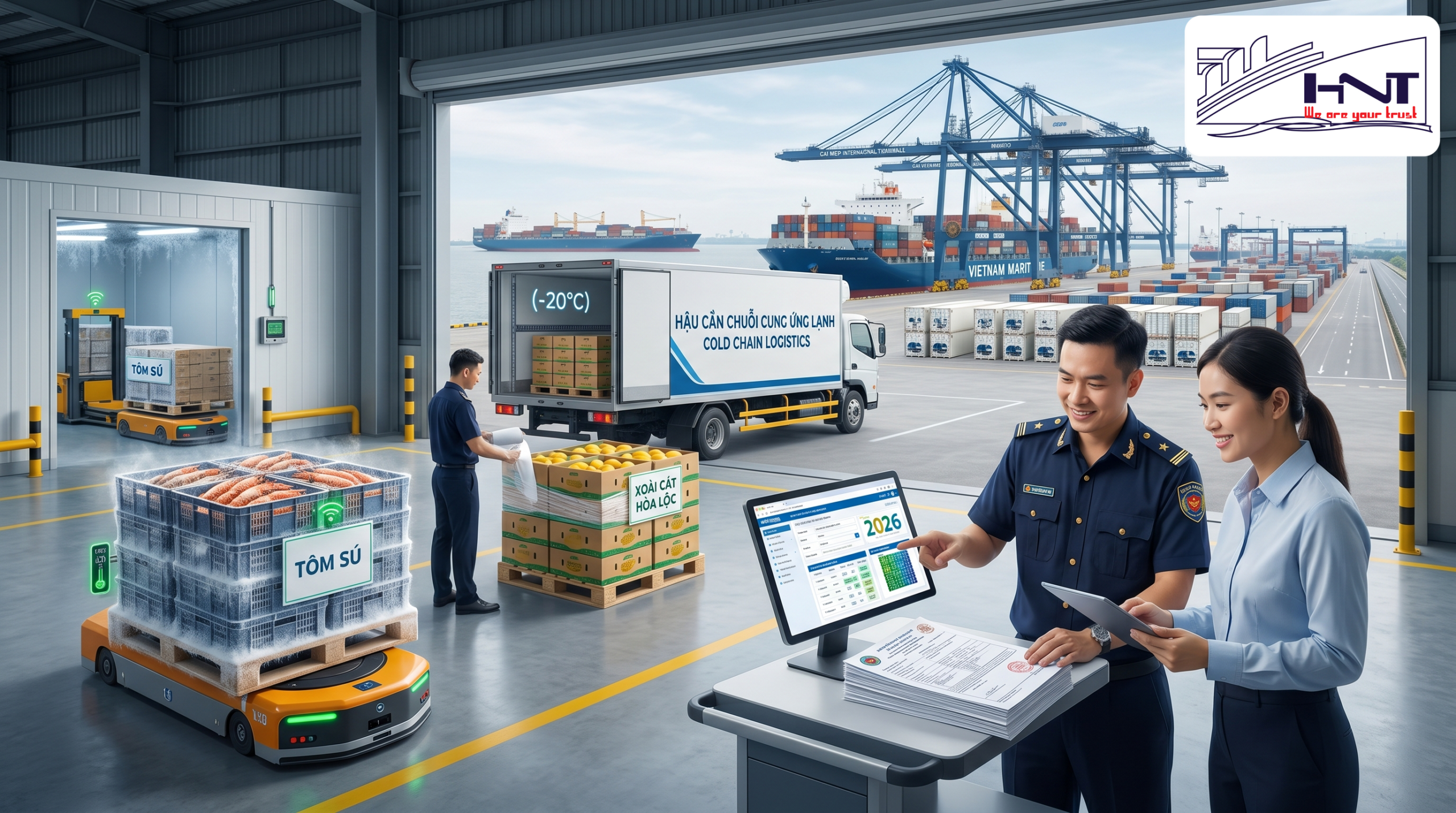
Many businesses frequently face storage fee risks due to complications with customs procedures for exporting agricultural products fresh produce at seaports. In 2026, Vietnam's agricultural export volume increased by more than 15%, requiring absolute accuracy in documentation. This article provides a detailed guide to completing documentation, optimizing customs clearance time, and protecting cargo quality.
The Importance of Customs Procedures for Exporting Agricultural Products
Understanding the customs clearance rules is vital for international trading businesses. A small documentation error can cause an entire shipment to be held, resulting in significant financial losses.
Strict Growing Area Code Requirements
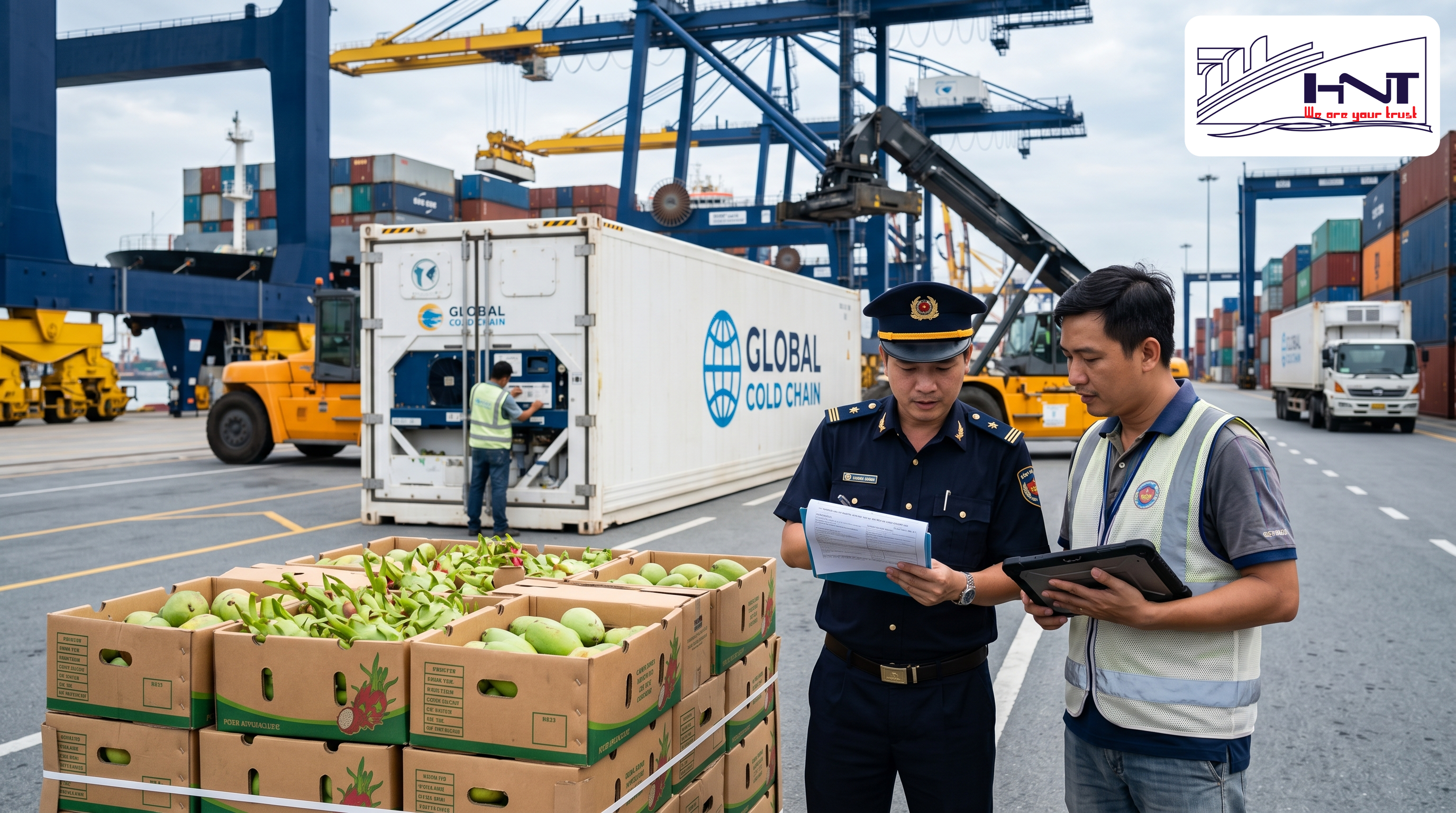
International markets are increasingly tightening requirements on the origin of imported goods. A growing area code is mandatory for tracing the origin of agricultural products. Customs authorities will strictly verify this information through the electronic system. If the code is invalid, the shipment will be immediately denied customs clearance.
Phytosanitary Standards
The phytosanitary certificate is an essential travel pass for goods. Sample collection registration must be completed before loading cargo into the container. The goods must be completely free of pests and diseases and meet the standards of the importing country. Any sign of non-compliance may result in the cargo being destroyed at the destination port.
Optimizing Port Operations
Understanding the export process helps businesses proactively arrange container drop-off schedules. Smooth coordination between the trucking team and on-site staff ensures cargo is delivered to the export staging area on time. Effective time management minimizes the risk of missing the vessel. HNT LOGISTICS recommends completing customs declaration submission at least 12 hours before the cargo cutoff time.
- Register for phytosanitary inspection as soon as the goods arrive at the packing warehouse.
- Verify the validity of the growing area code before harvesting.
- Prepare draft documentation in advance to cross-check data.
- Ensure wooden pallets are fumigated in accordance with ISPM 15 standards.
- Proactively monitor vessel schedules to arrange suitable transportation.
Example 1: A fruit cooperative in Tien Giang successfully exported 10 containers of durian to China. Thanks to thorough preparation of phytosanitary documentation, they cleared Tan Thanh border gate in just 4 hours.
Example 2: A spice exporting company in Binh Duong once had cargo stored for 3 days due to incorrect growing area code information. After standardizing its cross-checking process, it saved 50 million VND in storage fees each month.
| Document Type | Issuing Authority | Processing Time | Important Note |
|---|---|---|---|
| Phytosanitary Certificate (Phyto) | Veterinary and Plant Quarantine Authority | 1-2 working days | Register for sample collection at the port or warehouse |
| Certificate of Origin (C/O) | Ministry of Industry and Trade or VCCI | 1-3 working days | Ensure valid origin criteria are met |
| Fumigation Certificate | Licensed fumigation service provider | 24 hours after fumigation | Required for wooden packaging |
| Customs Declaration | Vietnam General Department of Customs via VNACCS | Immediately after transmitting data | A valid digital signature is required |
Steps to Prepare Documents for Fast Customs Clearance
A complete customs document set is the key for goods to be granted export permission as quickly as possible. These documents prove the legality and quality of the agricultural shipment.
Basic Essential Commercial Documents
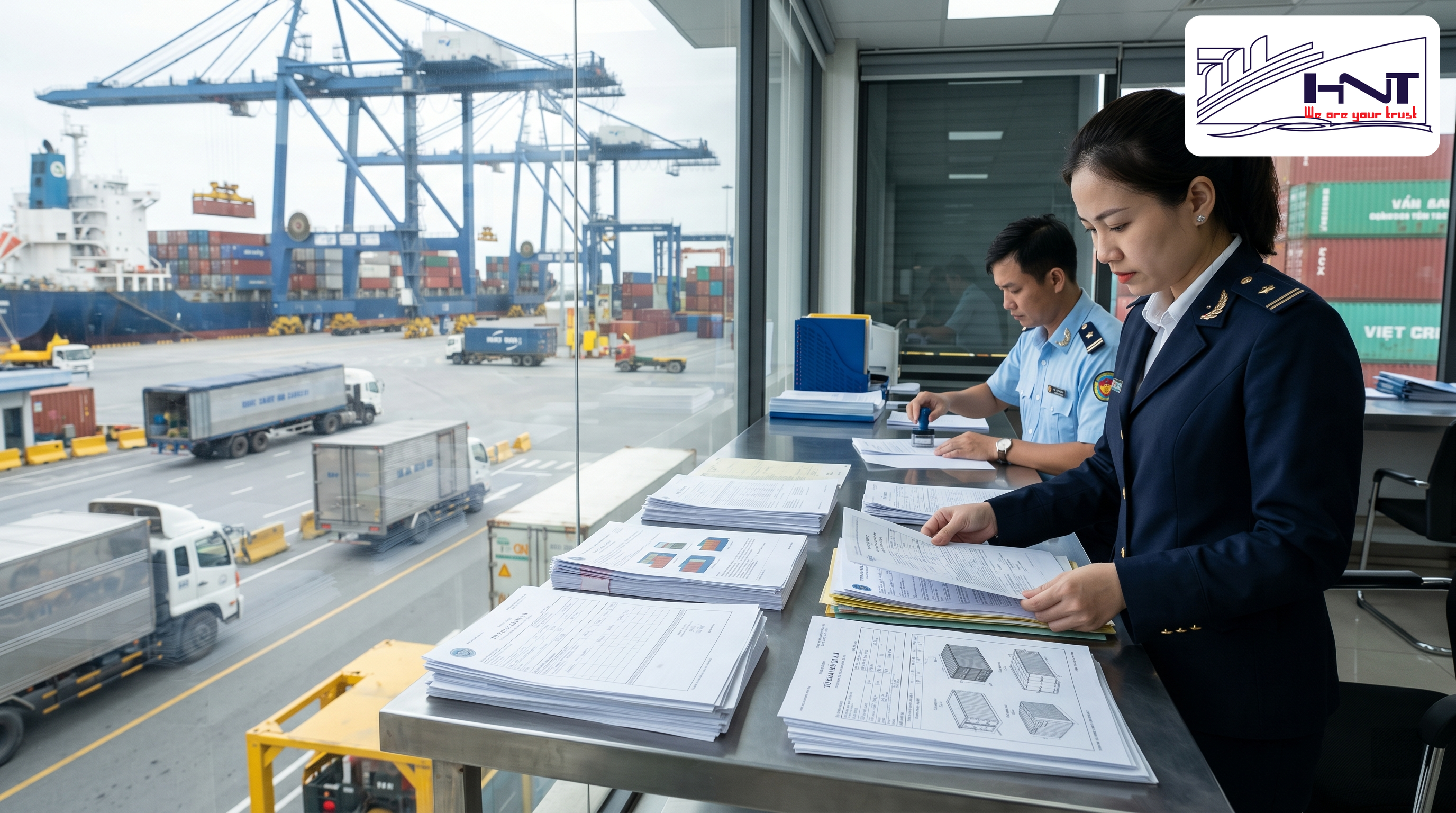
The commercial contract, commercial invoice and packing list are the core trio of documents. The information on these three types of documents must completely match in quantity, weight and value. Any discrepancy will cause the declaration to be flagged by the system, requiring time-consuming corrections.
Certificate of Origin C/O
Applying for a C/O helps import partners enjoy tariff incentives from Free Trade Agreements (FTA). The C/O process requires businesses to clearly prove the percentage of domestic materials. Based on HNT LOGISTICS experience, preparing a raw material norm table in advance will cut the C/O approval waiting time in half.
Declaration on the Electronic Customs System
The VNACCS/VCIS system allows declarations to be transmitted online 24/7. Businesses need to accurately enter the HS code of the exported agricultural product to apply the correct tax rate. Declaring the wrong HS code can lead to administrative penalties and shipment delays.
- Carefully review the commercial invoice before official issuance.
- Accurately weigh the net weight and gross weight of the shipment.
- Apply for a C/O form EUR.1 if exporting to the European market.
- Use licensed customs declaration software that is continuously updated.
- Check and compare the HS code with the latest customs database.
Example 1: A cashew processing factory in Dong Nai applied an automated software system to extract invoice data to VNACCS. As a result, they reduced 40% of typing time and completely eliminated manual data entry errors.
Example 2: An agricultural company in Lam Dong exported passion fruit to France. They proactively prepared the C/O form EUR.1 early, helping the French partner save 12% in import tax, thereby signing an additional long-term contract.
| Import Market | Required C/O Form Type | Average Document Approval Time |
|---|---|---|
| European Union (EU) | Form EUR.1 | 2-3 working days |
| China | Form E | 1-2 working days |
| Korean | Form AK / VK | 1 working day |
| ASEAN Countries | Form D | 1 working day |
Optimizing Sea Freight Costs and Choosing Containers
Logistics costs account for a large proportion of exported agricultural product prices. Therefore, negotiating effective sea freight rates is a core strategy to improve competitiveness.
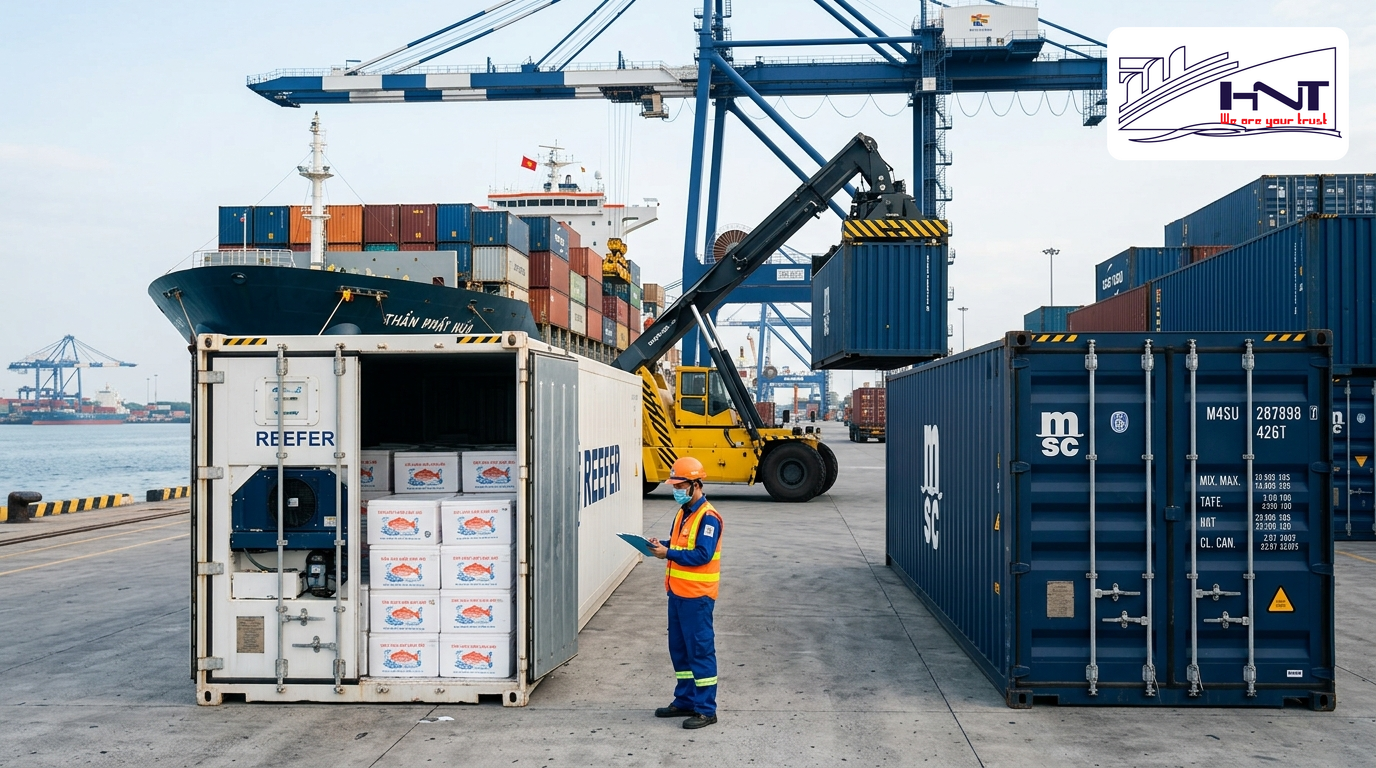
Current Sea Freight Cost Structure
Ocean freight includes the main transportation charge (Ocean Freight) and a range of local charges such as THC, documentation fees, and seal fees. Global crude oil price fluctuations directly affect fuel surcharges (BAF). Understanding each fee helps businesses avoid unnecessary cost increases.
Choosing the Right Refrigerated Container Standards
Fresh agricultural products need strict preservation conditions. Setting temperature, humidity and ventilation levels must match the biological characteristics of each fruit type. Experts at HNT LOGISTICS recommend that businesses always request shipping lines to provide refrigerated containers that have passed technical inspection (PTI) before loading.
Handling Peak Season Surcharge Fluctuations
During harvest season, shortages of empty refrigerated containers often occur. Shipping lines usually apply peak season surcharges (PSS), increasing financial pressure. Signing long-term freight contracts (Service Contract) is a solution to stabilize transportation costs during this period.
- Compare freight rates from at least 3 shipping lines before deciding on booking.
- Set refrigerated container temperature accurately according to agricultural product standards.
- Closely monitor the closing time schedule to avoid vessel rollover fees.
- Negotiate longer free storage time (DEM/DET) with shipping lines.
- Choose direct service routes to reduce transit time.
Example 1: A dragon fruit exporter in Long An switched from a transit route to a direct route to Shanghai. Although freight costs were 5% higher, they reduced sea transit time by 4 days, preserving fruit quality at the maximum level.
Example 2: A seafood company in Ca Mau loaded frozen shrimp. Because they did not check the container PTI carefully, the cooling system broke during transit. Thanks to purchasing all-risk cargo insurance (Condition A), they received full compensation for the shipment damage.
| Agricultural Product Type | Set Temperature (°C) | Ventilation Rate (CBM/H) | Maximum Storage Time |
|---|---|---|---|
| Fresh Dragon Fruit | +3 to +5 | 15 | 25 – 30 days |
| Fresh Passion Fruit | +5 to +7 | 20 | 20 – 25 days |
| Fresh Durian | +13 to +15 | 10 | 15 – 20 days |
| Export Green Bananas | +13 to +14 | 15 | 30 – 40 days |
Practical Solutions to Shorten Customs Clearance Time
Customs clearance speed directly determines capital turnover and the shelf life of agricultural products. Improving practical procedures at ports brings huge competitive advantages to exporters.
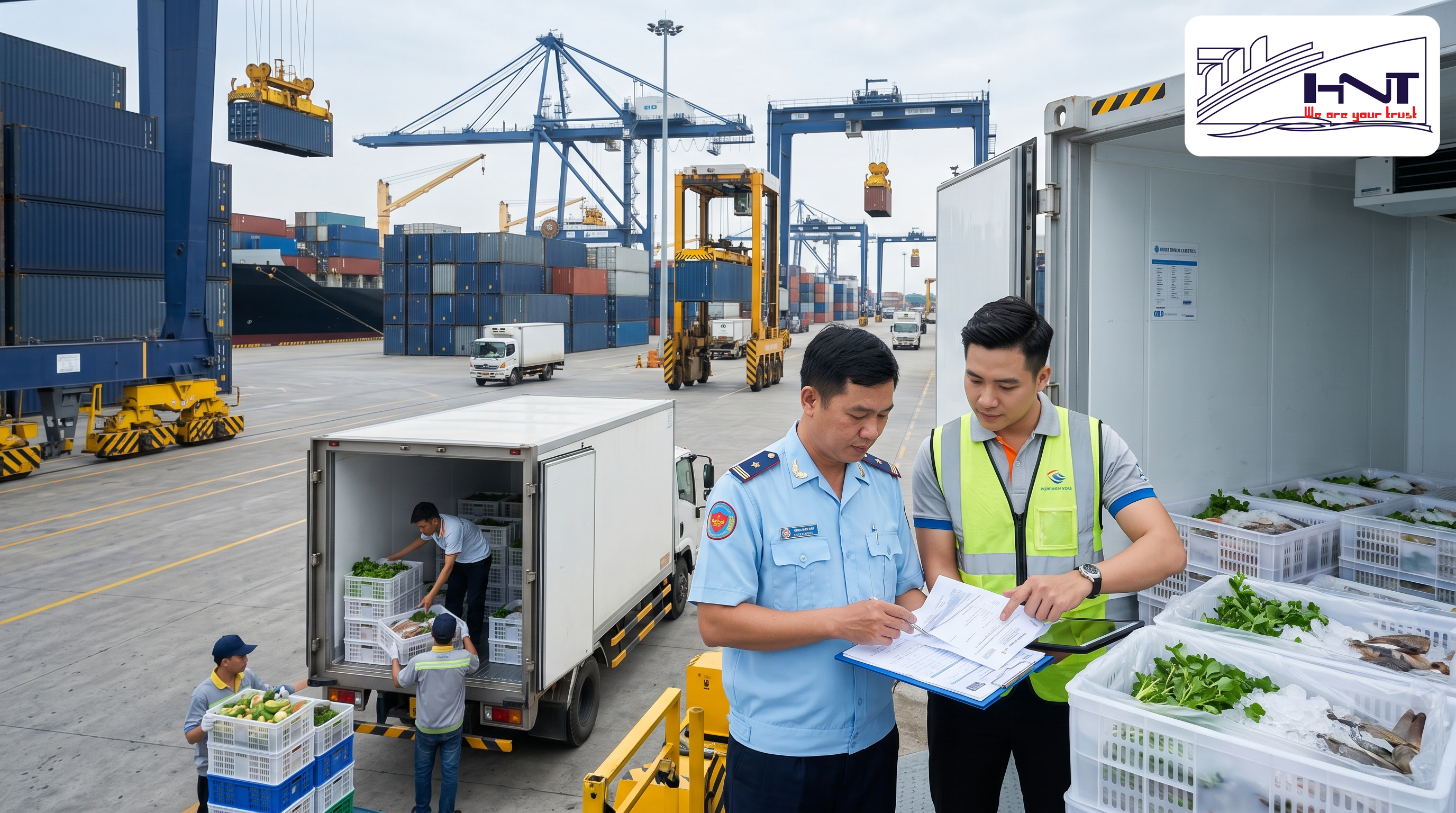
Strategy for Choosing the Appropriate Customs Channel
The customs system assigns green, yellow and red channels based on the business compliance level. Green channel goods are exempt from document and physical inspection. Maintaining transparent declaration history and paying taxes fully is the best way to keep the green channel declaration rate at the highest level.
Effective Coordination With Authorities
Explaining shipment information requires field staff with deep expertise in operations. When inspection is required (red channel), preparing loading workers and seal cutting in advance helps the inspection process proceed quickly. Professional and cooperative attitudes are always highly appreciated.
Experience in Handling Cargo Issues
Risks such as broken seals, dented containers or weight discrepancies are common incidents at ports. The fastest solution is to immediately contact an independent surveyor to make a record of the condition. Based on practical experience from HNT LOGISTICS, photographing the entire loading process at the warehouse provides strong evidence for resolving disputes.
- Maintain customs trust ratings at a low risk level.
- Prepare small cash amounts and handling service fees when going through cargo inspection at the port.
- Continuously update new circulars and regulations from the General Department of Customs.
- Take photos of the empty container condition before and after loading is completed.
- Use professional customs brokerage services to reduce pressure.
Example 1: A rice export company in Can Tho built a standardized ISO internal document control process. In 2026, 98% of their declarations achieved green channel status, saving thousands of waiting hours at Cat Lai port.
Example 2: A coffee exporter in Dak Lak encountered a weight discrepancy between actual goods and the declaration. By presenting transparent electronic weighing records from the factory, they quickly received customs approval to amend and supplement the declaration within the day.
| Customs Channel | Inspection Rate | Estimated Processing Time | Necessary Actions |
|---|---|---|---|
| Green Channel | Inspection exempt | 15 – 30 minutes | Only need to print barcode through the supervision area |
| Yellow Channel | Paper document inspection | 2 – 4 hours | Bring the original document set to the customs branch |
| Red Channel | Physical inspection of goods | 1 – 2 working days | Register transfer to inspection yard, cut container seal |
For successful export, customs procedures for exporting agricultural products must be carried out professionally and with absolute accuracy. Businesses need to proactively update the latest regulations on quarantine and strictly control documentation.
- Always check the validity of the planting area code from suppliers.
- Ensure phytosanitary documents completely match the actual shipment.
- Optimize sea freight costs by negotiating direct contracts with shipping lines.
- Choose qualified refrigerated containers to protect fresh agricultural products.
- Improve business reputation to increase the rate of fast green channel customs clearance.
The success of each international shipment greatly depends on the capability of the logistics partner. As a professional transportation provider, HNT LOGISTICS is committed to delivering comprehensive supply chain solutions, helping Vietnamese businesses confidently conquer global markets.