

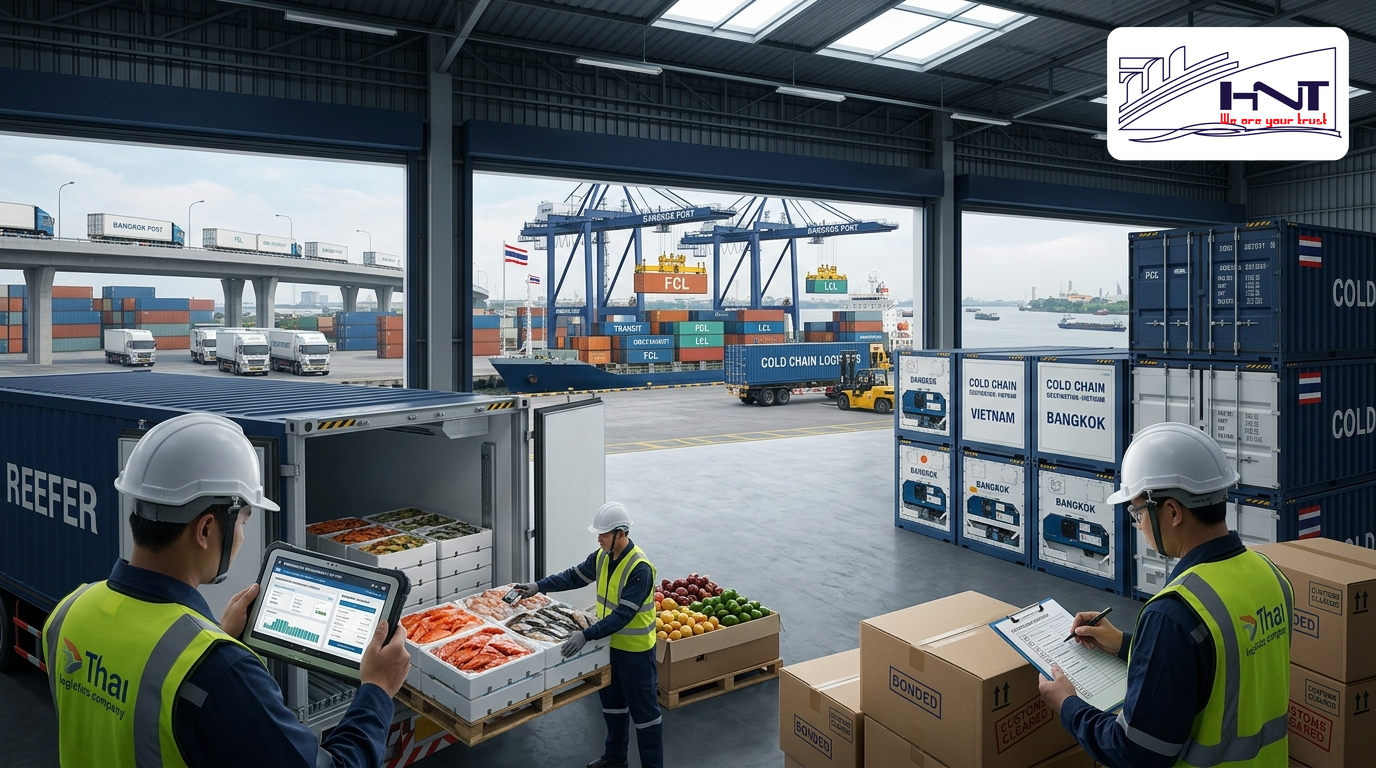
The congestion situation at international transshipment ports and the rising storage costs are becoming major bottlenecks for many Vietnamese businesses when exporting goods to third countries. In this context, choosing the route transiting through Thailand is emerging as an effective solution. According to the a report by the Ministry of Industry and Trade announcement at the beginning of 2026, the value of transshipment goods through ASEAN countries increased by more than 15%, especially agricultural and seafood products. This article will provide you with the most practical experience in handling goods through the Bangkok transit hub, helping to minimize storage costs and shorten operation time.
Overview of the Advantages of Choosing the Thailand Transit Route
The trans-Asian route passing through Cambodia and Laos to reach Thailand is not only an important economic corridor but also a strategic logistics link. Handling Thailand transit goods provides extremely high flexibility for Vietnamese exporters, especially when needing to connect cargo flights or mother vessels to Europe and America.
The transshipment role of Laem Chabang Port and Suvarnabhumi Airport
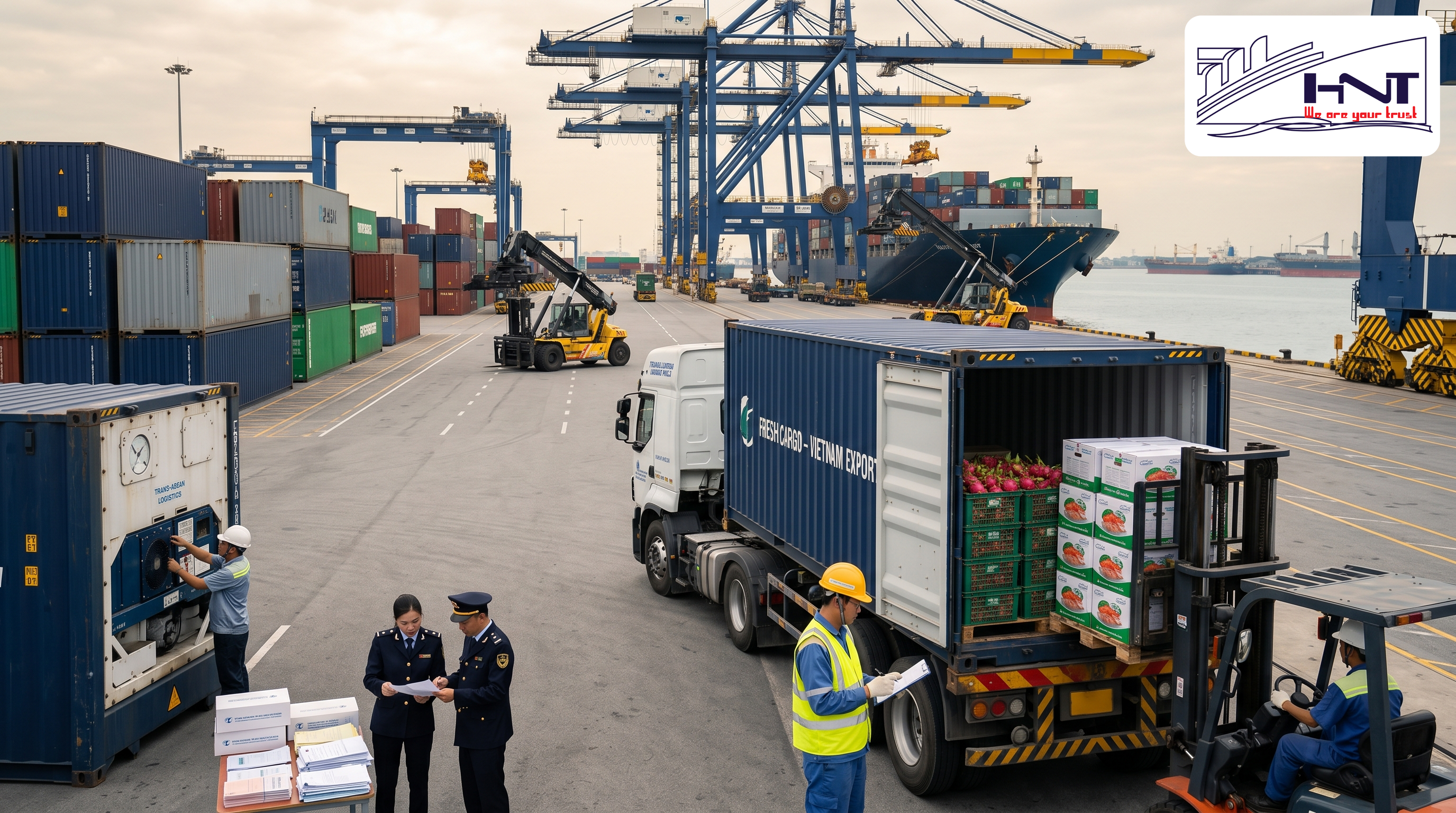
Thailand owns a highly developed logistics infrastructure system. Laem Chabang Port serves as the busiest maritime gateway in the region, capable of receiving ultra-large mother vessels. Meanwhile, Suvarnabhumi Airport in Bangkok is a major air freight hub. Connecting road transport from Vietnam to Bangkok to take advantage of the dense flight network at Suvarnabhumi helps businesses solve the problem of insufficient air cargo capacity at domestic airports during peak seasons.
Analysis of average time and comparative costs
Compared to using feeder vessels from Cat Lai to Singapore or Port Klang, the option of road transport to Thailand and then connecting onward can shorten transit time by 3 to 5 days. Although cross-border road freight costs may be slightly higher, the savings from avoiding container storage charges (DEM/DET) while waiting for mother vessels at traditional transshipment ports completely offset this difference.
| Transshipment route | Estimated time (Road + Connection) | Flexibility of vessel/flight schedule | Risk of storage and yard congestion |
|---|---|---|---|
| Ho Chi Minh – Bangkok – EU | 4 – 6 days (To Hub) | Very high (Many trips/day) | Low (If schedule is matched early) |
| Ho Chi Minh – Singapore – EU | 7 – 9 days (Feeder) | Medium-high | High (Easy to miss mother vessel) |
| Ho Chi Minh – Port Klang – EU | 6 – 8 days (Feeder) | Standardized, inspected | High (Peak season congestion) |
Evaluation of suitable commodity groups for this route
Not every type of goods is suitable for cross-border transportation. However, high-value goods with strict delivery time requirements are often the optimal choice. Below are some specific commodity groups:
- Whole fresh fruit products (Dragon fruit, durian, jackfruit) requiring strict cold storage.
- Frozen seafood products exported to the US and Canadian markets.
- Electronic components and microchips requiring urgent air shipment to enter production lines.
- Seasonal fashion textiles (Fast fashion) requiring rapid circulation.
- High-value industrial machinery and automotive parts.
In practice, Mekong Agricultural Products Company in Tien Giang once faced the risk of contract compensation due to a shortage of refrigerated containers for exporting durian to Australia from Cat Lai Port. By switching to refrigerated trucks through the Moc Bai border gate and transiting to Suvarnabhumi Airport, the company delivered on time and saved an order worth more than USD 200,000. Similarly, Ca Mau Seafood Processing Factory successfully exported frozen black tiger shrimp to the EU market via Laem Chabang, completely eliminating container power connection storage fees compared to waiting for a vessel in Vietnam.
Practical tip: Always check congestion at the land border gate at least 48 hours before dispatching the truck so you can adjust the driving schedule, avoiding arriving at the border gate without being able to clear customs, which would result in additional vehicle waiting costs.
Transit Logistics Declaration Process to Avoid Long-Term Storage
To ensure fast cargo flow without legal issues, transit logistics requires document consistency from start to finish. Any small error on the customs declaration may cause goods to be held up at the border, resulting in cargo being moved to an inspection warehouse or waiting yard.
Prepare legal documents at the departure point in Vietnam
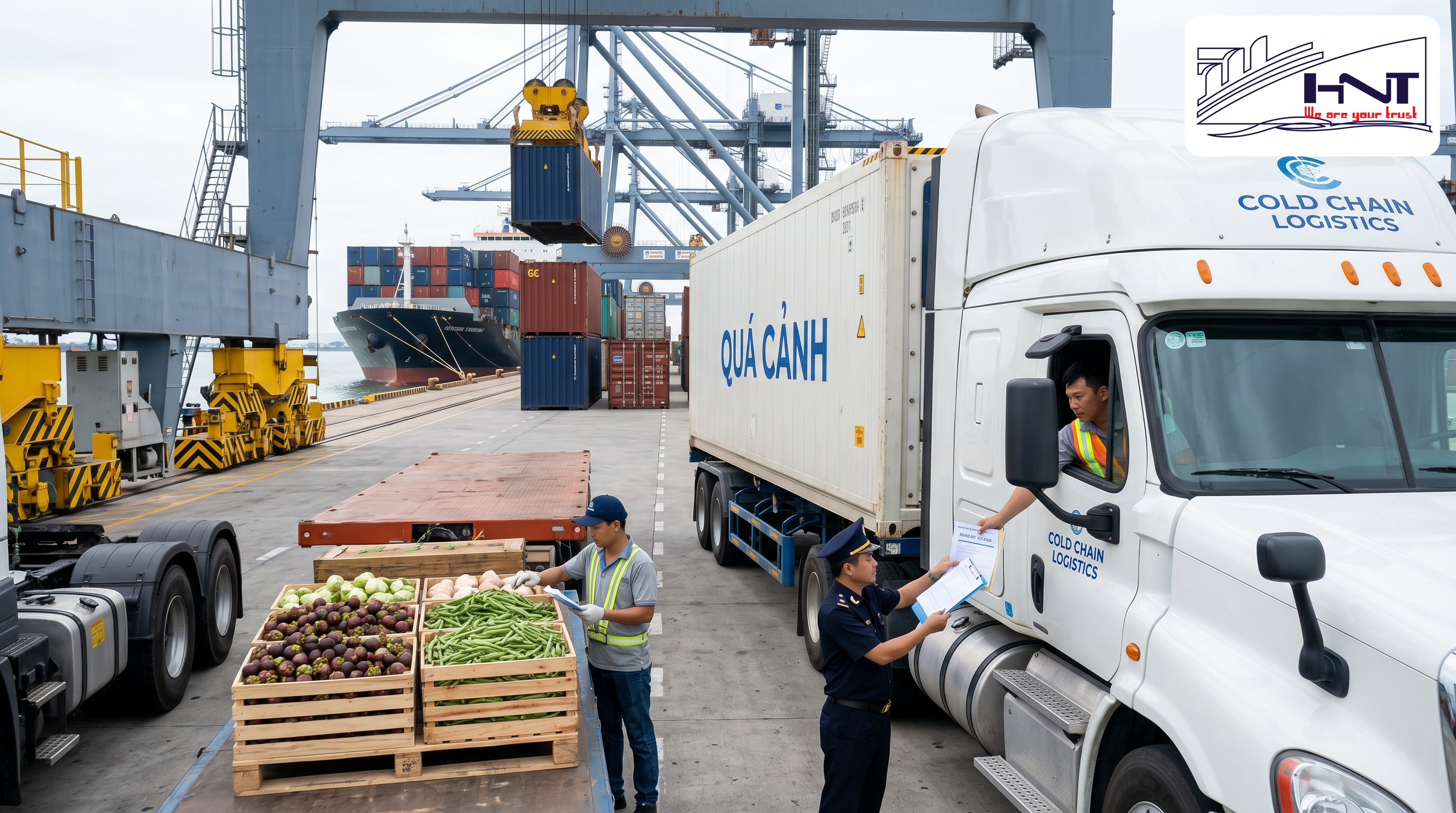
The export document set must be perfectly prepared before the truck departs. The Invoice, Packing List, C/O, and Phytosanitary Certificate (if applicable) must completely match in quantity, weight, and cargo description. Pay special attention that, for transshipment cargo, the route information and final destination must be clearly stated on the Bill of Lading so border customs authorities fully understand the shipment itinerary.
Submit the electronic declaration through the customs system
Submitting an independent electronic customs declaration for goods transported under customs supervision must be done carefully. The declaration type code must be accurate. Based on experience handling hundreds of shipments each month, HNT LOGISTICS recommends that businesses submit a draft declaration and send it to the border agent for verification before official submission. This completely eliminates the risk of system errors causing cargo to wait at the border yard.
Coordinate handover with the destination handling agent in Bangkok
Supply chain continuity depends greatly on the capability of the agent in Thailand. As soon as the cargo leaves Vietnam, the complete scanned document set (Pre-alert) must be sent to the agent in Bangkok. This agent will be responsible for opening the transit declaration and obtaining customs clearance approval in advance. The following steps require close coordination:
- Confirm the estimated time of arrival at the border (ETA).
- Pre-register the unloading yard or inspection area at the ICD in Thailand.
- Prepare a domestic Thai tractor truck at the transshipment point.
- Obtain transit permits in advance for specially controlled goods.
- Finalize the flight schedule or mother vessel cut-off time at Suvarnabhumi or Laem Chabang.
A typical example is Binh Duong Packaging Co., Ltd. Due to failing to send the Pre-alert to its agent in Thailand early, when the truck arrived at the Aranyaprathet border gate, the Thai customs system could not find the shipment data. The cargo had to remain at the border yard for 3 days, costing more than USD 450 in storage and vehicle parking fees. In contrast, a garment company in Dong Nai, thanks to thorough consultation, prepared its documentation process 3 days in advance. When the truck reached the border, transshipment and customs clearance took only 4 hours.
Practical tip: To optimize time, businesses should refer to the detailed cross-border road transport services provided by a reputable partner and require them to commit to specific lead times for each transport segment.
Cost Optimization Strategy for Warehouse Storage During Transit in Bangkok
The profit from an export shipment can be quickly eroded if warehouse storage costs become uncontrollable. Risk management during transit in Bangkok is about optimizing cargo flow so that goods are always “in transit” rather than “in storage”.
Methods for negotiating longer free storage time (Free time)
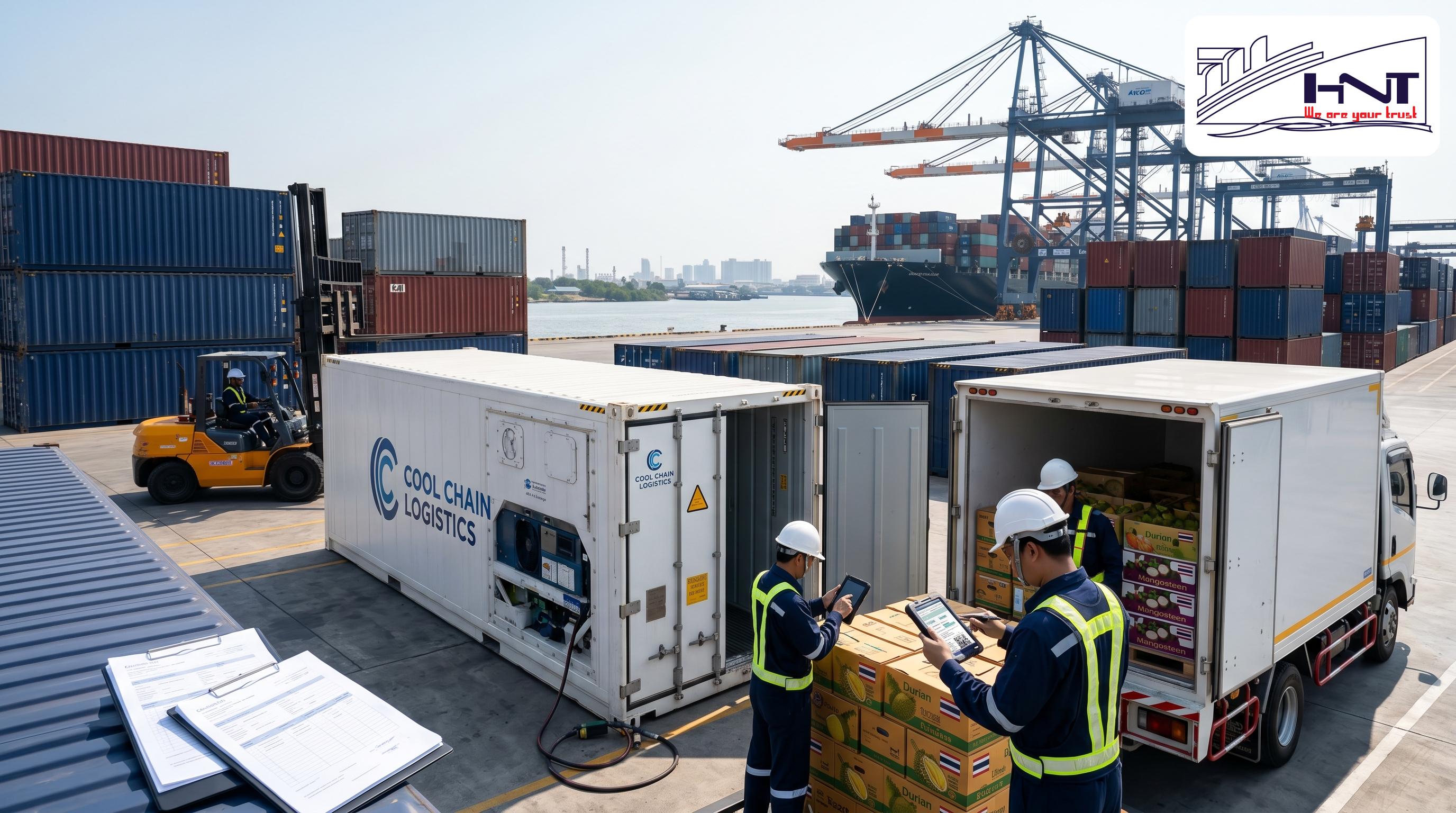
When booking ocean freight from Laem Chabang, do not focus only on the ocean freight rate. Proactively negotiate with the shipping line for additional DEM (storage) and DET (container detention) free time at the transshipment port. If the shipping line normally provides a combined 7 days, try to negotiate 14 to 21 days. This time buffer protects the business if the truck encounters problems on the road or border procedures are delayed.
Techniques for consolidating LCL cargo and scheduling seamless onward transport
For less-than-container-load (LCL) cargo, handling costs at the CFS (Container Freight Station) warehouse in Bangkok are significant. The technique is to consolidate cargo at the warehouse in Vietnam into one full container load (FCL) that functions as a self-managed consolidation container. Upon arrival in Bangkok, this full container can be transported directly to the port or airport for devanning and immediate transfer to the international carrier. The table below compares the cost differences:
| Cost items in Bangkok | Standard LCL cargo (Multiple stuffing/unstuffing) | Self-consolidation Consol technique (Only unstuffed once at the Hub) |
|---|---|---|
| CFS warehouse handling fee | 15–25 USD / CBM | No additional charges |
| Warehouse storage fee while awaiting consolidation | 5–10 USD / CBM / Day | Free inside the container |
| Risk of loss and damage | Around 2%–3% | Almost 0.1% |
| Domestic documentation costs | High (Split into multiple House Bills) | Low (Only 1 internal Master Bill processed) |
Bonded warehouse model for waiting shipments
If the waiting time for the mother vessel extends to several weeks, moving the cargo into a bonded warehouse in Thailand is a smarter solution than leaving the container plugged in at the port yard. A bonded warehouse allows businesses to store goods without paying import duties immediately, while storage fees charged per square meter or per pallet are always much lower than the container detention charges imposed by shipping lines.
Ben Tre Fruit Export Company successfully applied this strategy. When exporting 5 containers of fresh coconuts to the Middle East, the mother vessel schedule at Laem Chabang was delayed by 10 days due to a storm. Instead of paying a reefer plug-in fee of 50 USD/day/container at the port, they rented a bonded cold storage warehouse near the airport at a package price more than 60% lower. Similarly, the Bac Ninh Electronic Components Factory regularly transports loose components to a bonded warehouse in Bangkok, assembles finished products there, then flies them directly to Europe, saving thousands of USD in terminal storage costs each quarter.
Practical tip: Cost calculations must be based on the Total Landed Cost spreadsheet rather than looking only at the first-leg freight charge. Sometimes paying extra trucking costs to move cargo into a bonded warehouse can save an enormous DEM penalty.
Operational Risks And Legal Considerations When Transiting Through Thailand
Although this route has many advantages, transiting through thailand also involves several operational and policy-specific risks that cargo owners should pay close attention to in order to avoid unnecessary additional costs.
Localized congestion at inland ICDs
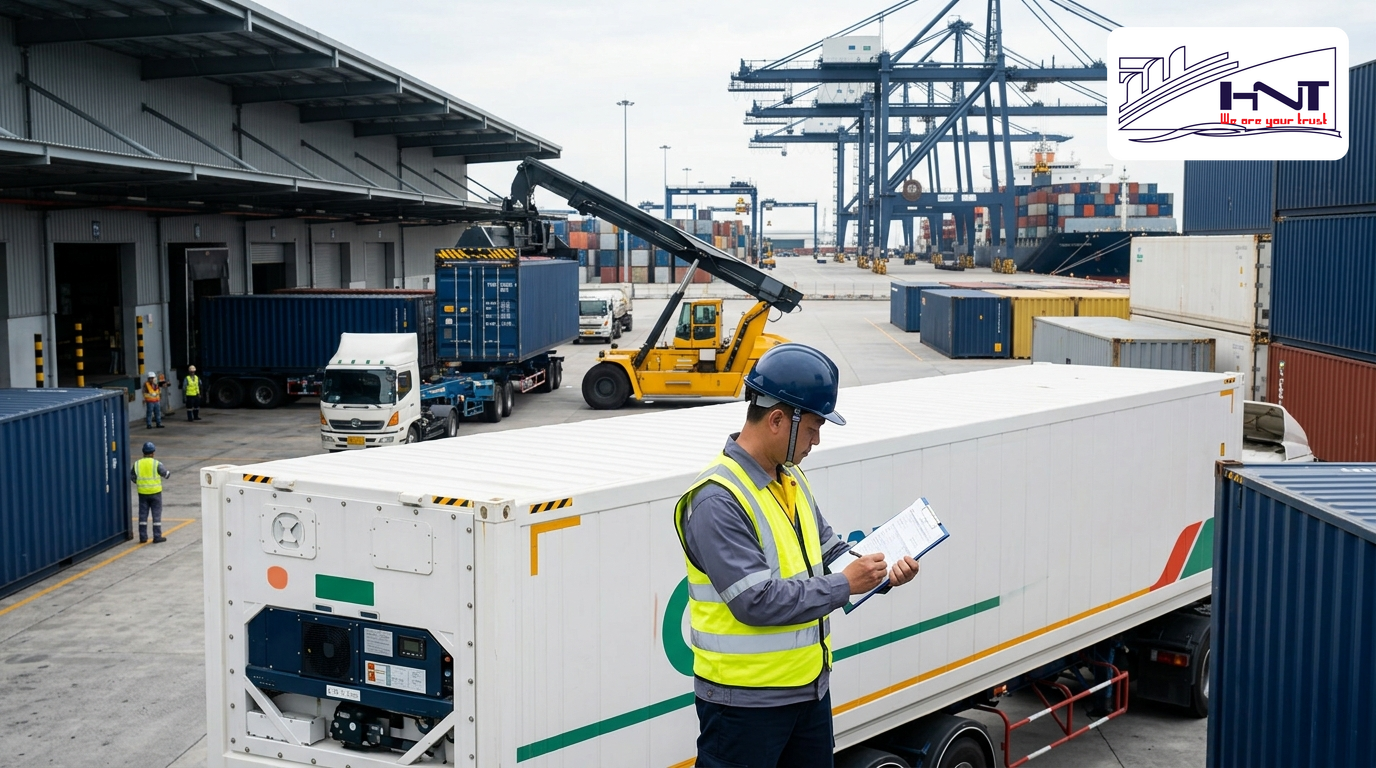
During peak agricultural harvest seasons (from May to August), the number of trucks arriving at inland customs clearance areas (ICDs) in Thailand, such as Lat Krabang, regularly exceeds capacity. Cargo may be held outside the ICD gate for 1 to 2 days just waiting for yard entry. To avoid this risk, carriers should maintain good relationships with yard management or schedule truck arrivals during off-peak nighttime hours.
Phytosanitary inspection and fumigation for agricultural products
Many businesses mistakenly assume that transit cargo does not need to comply with the host country's strict quarantine regulations. In fact, under Thai Customs regulations No. 234/2565 on transshipment goods, plant products, timber, and seeds must have a valid Phytosanitary Certificate from the country of origin, ensuring that the packaging is free from pests and diseases. If violations are found, Thai authorities have the right to order the goods destroyed or returned to their origin.
Handling weight discrepancies or container damage
Transferring cargo between Vietnamese/Cambodian trucks and Thai trucks at the border poses significant risks of cargo damage or changes to the container seal weight verification. Businesses should pay special attention to the following procedures:
- Always require photos of the cargo condition before and after transshipment.
- Use on-site weighing services at the transshipment yard to verify the VGM data.
- Record a Damage Report immediately if the cargo container is found to be torn or wet.
- Carefully inspect the condition of the refrigerated container exterior, especially the refrigeration unit and the temperature data logger.
- Purchase international cargo insurance with clauses covering risks during transshipment.
In practice, Long An Agricultural Cooperative once had an export rice shipment detained by Thai customs due to a 2-ton weight discrepancy between the customs declaration and the actual weight measured at the border. After verification, the cause was found to be a faulty electronic scale at the original warehouse, but they still spent 5 days correcting the documentation. In another case, Binh Dinh Wood Export Company avoided a compensation dispute worth thousands of USD with the shipping line because the agent photographed and confirmed that the container roof had already been punctured at the time of transshipment at the Savannakhet border checkpoint.
Practical tip: Based on HNT LOGISTICS' experience, assigning escort personnel or hiring an independent surveyor service at the border transshipment point is a worthwhile investment for high-value shipments.
Conclusion
Making effective use of the transport route transiting through Thailand is a combination of the art of commercial negotiation and sharp customs documentation handling skills. Businesses not only shorten delivery times but also protect their profit margins by thoroughly reducing unnecessary warehousing and yard storage costs at transit stations.
Below are the key points you need to master:
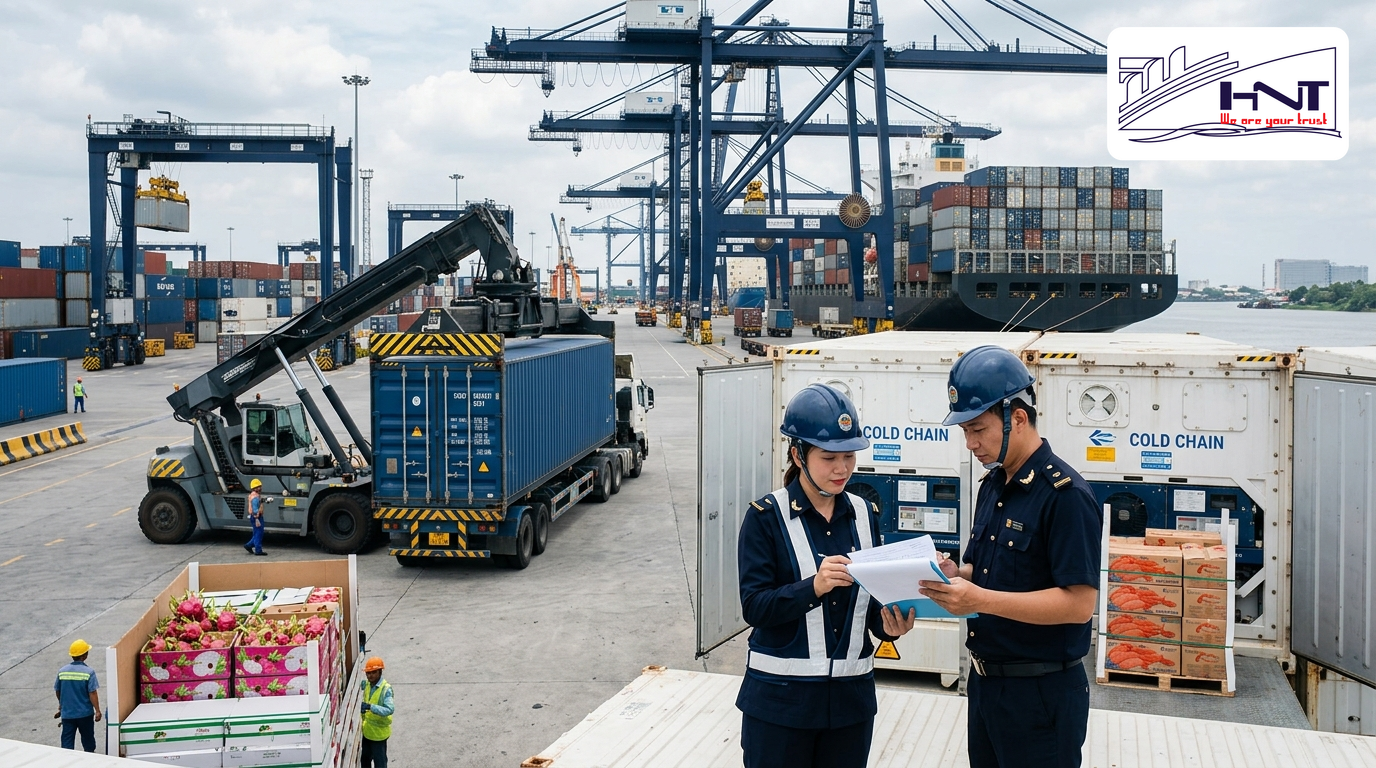
- Choose the right type of cargo (agricultural products, high-value goods, speed-sensitive goods) to maximize cost efficiency.
- Submit the draft customs declaration and send the Pre-alert early to the Bangkok destination agent to ensure seamless customs clearance.
- Negotiate for additional free storage time (Free time) from the shipping line to prepare for potential road transport delays.
- Take advantage of the bonded warehouse system in Bangkok for shipments waiting for long connecting transit instead of keeping them plugged in at the port.
- Closely supervise border transshipment operations to prevent risks of loss, damage, and documentation discrepancies.
- Strictly comply with the transit country's legal requirements for quarantine and fumigation documentation.
If your business is facing difficulties in finding a smooth and cost-optimized operational process, HNT LOGISTICS proudly serves as a reputable freight forwarding and logistics partner, ready to accompany Vietnamese exporters on every international route. Contact us today at 8A Hoang Minh Giam, Ho Chi Minh City or via the marketing email at hntshipping.com for a quotation!