When a durian container has already been moved to the container yard but the phytosanitary documents contain an incorrect product name, export phytosanitary procedures can delay the vessel departure and incur additional container storage charges.
In 2026, Vietnam's fruit and vegetable exports reached approximately USD 8.56 billion, an increase of nearly 20% compared with 2026. In the first five months of 2026, export turnover continued to reach approximately USD 2.67 billion. Meanwhile, the Drewry Container Index stood at around USD 4,473 for a 40-foot container at the end of August 2026, meaning documentation errors can quickly drive up costs.
This article helps businesses understand the procedures, prepare documentation, estimate costs, and coordinate customs declarations. The focus is on fresh fruit, refrigerated agricultural products, and shipments requiring export phytosanitary procedures before being shipped to China, the United States, the EU, or Southeast Asia.
Export phytosanitary procedures: When are they required?
Export phytosanitary procedures apply to regulated articles, including fresh fruit, vegetables, seeds, flowers, seedlings, and agricultural products that have not undergone complete treatment. The primary legal basis is Circular No. 33/2014/TT-BNNPTNT, together with relevant amendments. Businesses should check the importing country's requirements before finalizing contracts because export phytosanitary procedures determine whether goods can be shipped.
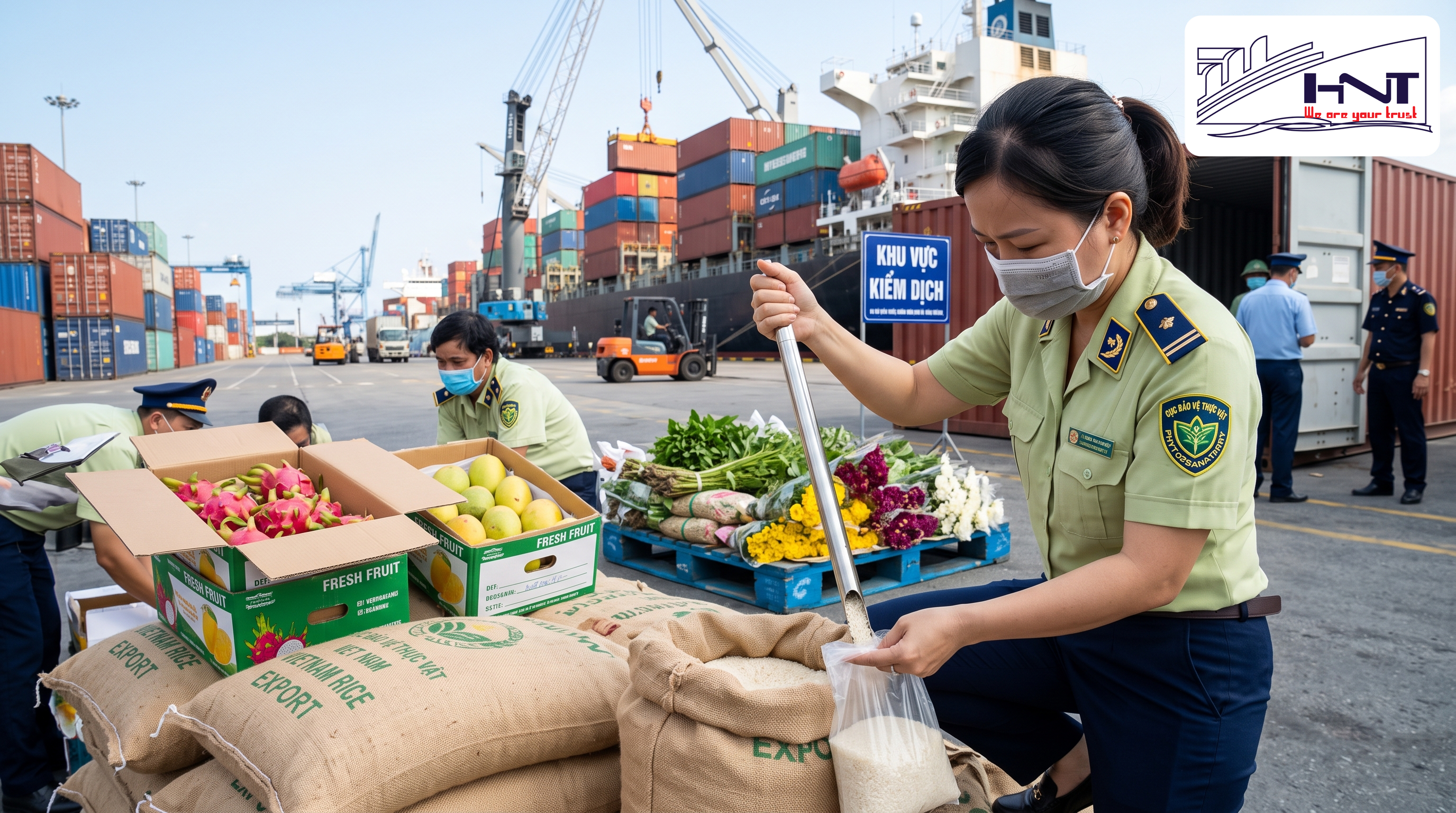
Shipment Requirements and Destination Markets
Each market has different requirements for export phytosanitary procedures, growing area codes, packing facility codes, pesticide residues, and cold treatment. HNT LOGISTICS recommends that businesses finalize phytosanitary requirements when negotiating Free on Board (FOB), Cost, Insurance and Freight (CIF), or Delivered Duty Paid (DDP) terms rather than waiting until the container loading date.
- Determine whether the product falls under Vietnam's and the importing country's list of regulated articles.
- Check growing area codes, packing facility codes, and traceability requirements for each market.
- Cross-check the contract against the product name, specifications, weight, and final destination country.
- Schedule sampling before refrigerated cargo loading to avoid disrupting the required storage temperature.
- Prepare labels, traceability stickers, packing lists, and post-harvest treatment documents.
- Allow extra time for re-inspection if the shipment shows signs of pests, diseases, or incorrect labeling.
| Group of goods | Main risks | Recommended documents | Operational Notes |
|---|---|---|---|
| Fresh durian | Incorrect growing area code | Contract, packing list, and facility code | Prioritize pre-inspected refrigerated containers |
| Dragon Fruit | Disease marks on the peel | Inspection records, invoices, and carton labels | Take samples before moving the cargo into the container yard |
| Banana | Premature ripening | Temperature plan and packing list | Book a stable shipping schedule |
| Mango | Residue levels exceeding permitted limits | Test results if required by the destination market | Avoid mixing products from different growing areas |
For example, Mekong Fresh Company in Tien Giang exported 18 tons of durian to Shanghai through Cat Lai Port. By checking the growing area code 48 hours in advance, the company maintained its shipping schedule and avoided one day of port storage charges. A cooperative in Gia Lai exporting passion fruit to Guangxi also shortened processing time by 12 hours by separating shipments with different packing facility codes.
Practical tip: Create a checklist for each market. A single standard documentation set is not sufficient for fresh fruit.
Step-by-Step Export Phytosanitary Procedures
Export phytosanitary procedures should be incorporated into the operational schedule alongside harvesting, preliminary processing, and transportation booking. For refrigerated cargo, a delay at any stage can cause the shipment to miss its temperature window. Businesses should clearly separate registration, physical inspection, certificate issuance, and document handover to customs.
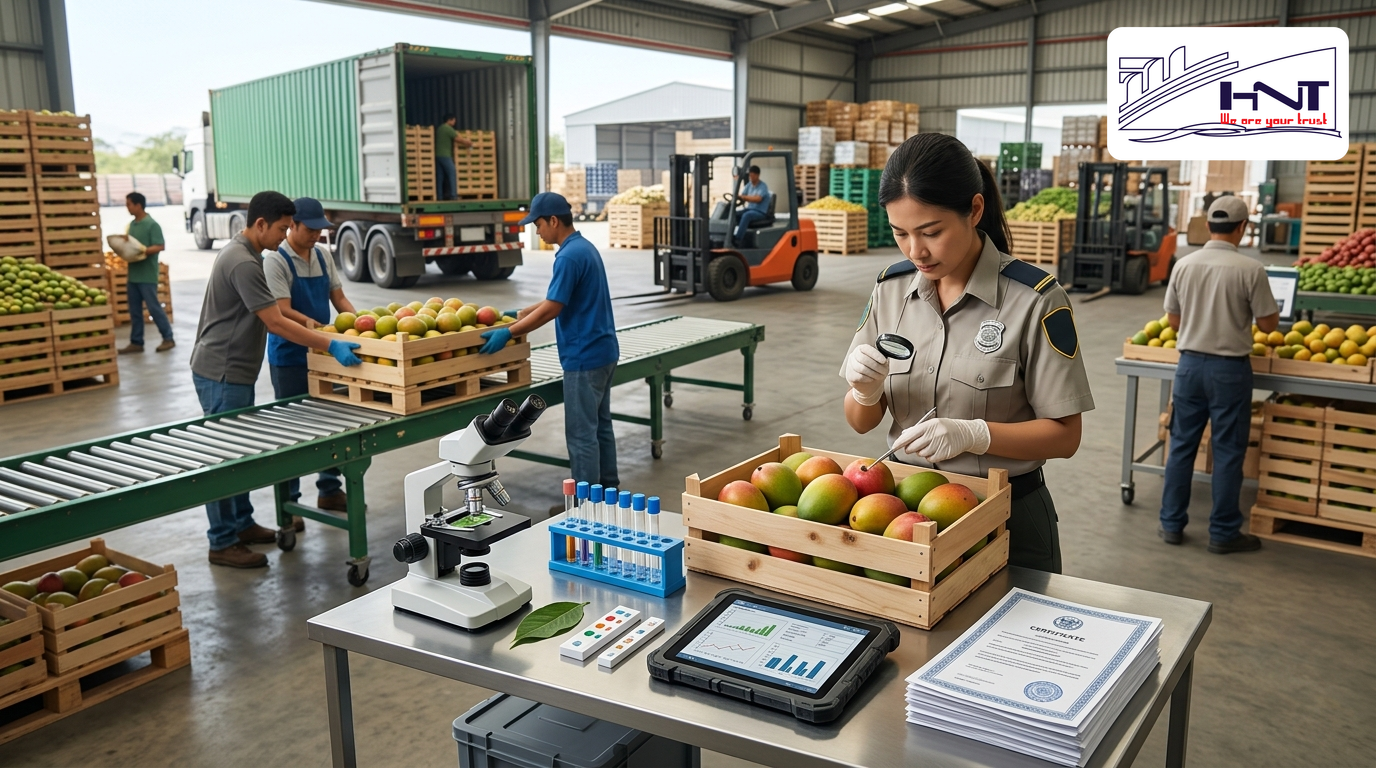
Documents to Prepare Before Loading
The basic documentation set generally includes a phytosanitary inspection application, contract, commercial invoice, packing list, draft bill of lading, and technical documents required by the importing country. If the shipment undergoes hot water treatment, irradiation, or cold treatment, the treatment certificates must match each individual batch number.
Document Submission and Sampling Process
- Check the destination market's import requirements before signing delivery terms.
- Register export phytosanitary procedures with the plant quarantine authority in the export area or at the border gate.
- Arrange the shipment so it is ready for inspection, with carton labels and separation by growing area code.
- Coordinate sampling, visual inspections, and record any additional treatment requirements, if applicable.
- Complete export phytosanitary procedures, obtain satisfactory inspection results, and request the issuance of a phytosanitary certificate.
- Hand over documents to the customs declaration team and shipping line before the documentation cut-off deadline.
| Step | Recommended timing | Person in charge | Control point |
|---|---|---|---|
| Review import requirements | 5-7 days before loading | Exporting | Growing area and packing facility codes |
| Register for quarantine | 1-2 days before loading | Documentation | Product name and weight |
| Sampling | When the goods are ready | Warehouse and quarantine inspection | Packaging condition |
| Receive the certificate | Before the documentation cut-off deadline | Delivery | Container number and seal number |
Based on HNT LOGISTICS' experience, a 22-ton mango shipment from An Phu Orchard Company in Dong Thap to Busan once avoided a vessel change because phytosanitary inspection was registered before container loading. An exporter in Binh Thuan shipping dragon fruit to Singapore reduced the number of warehouse door openings by two by grouping samples according to each growing area code.
Practical tip: Do not apply the final container seal until the phytosanitary information and draft bill of lading have been confirmed as consistent.
Phytosanitary Certificate and Accompanying Documents
A phytosanitary certificate is a document confirming that a shipment meets the importing country's quarantine requirements. Its contents generally need to be consistent with the contract, invoice, packing list, Bill of Lading, and Certificate of Origin. Even a single incorrect character in the consignee's name can cause export phytosanitary procedures to be questioned again.
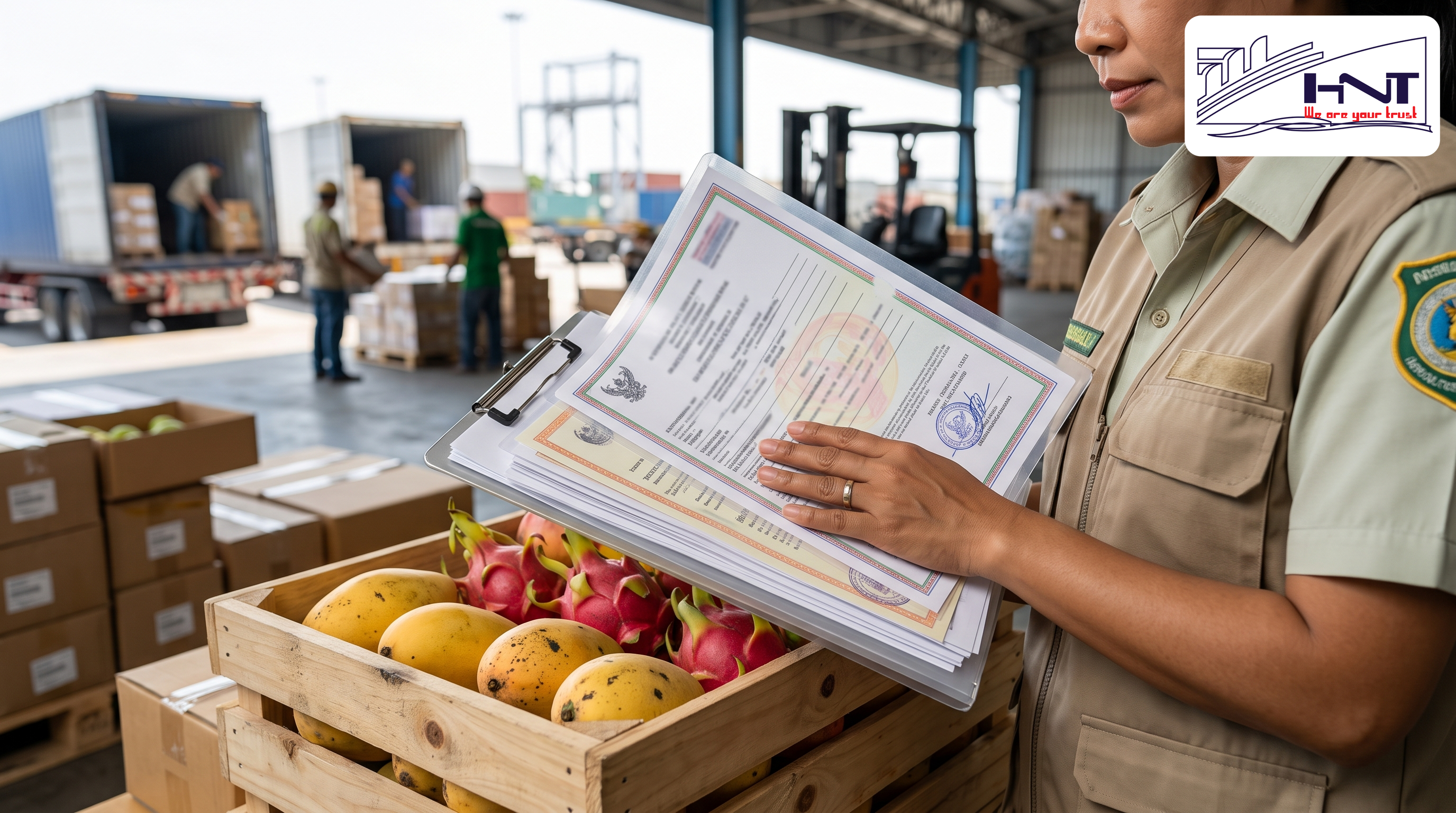
How to Cross-Check Documents to Avoid Discrepancies
Businesses should check documents according to the principle of one data set used consistently across multiple documents. The product name, scientific name, number of packages, net weight, gross weight, destination country, and discharge port must be consistent. For fresh fruit, treatment dates and loading dates must also follow a logical sequence.
- Cross-check the Vietnamese product name, commercial name, and scientific name before printing carton labels.
- Check the container number, seal number, and discharge port on the certificate against the draft bill of lading.
- Review growing area codes, packing facility codes, and batch numbers on every packing list.
- Ensure that the Certificate of Origin is appropriate for the market receiving preferential tariff treatment.
- Save clear scanned copies to send to buyers before the vessel departs or the aircraft takes off.
- Prepare a document amendment plan in case the shipping line changes the voyage or transshipment port.
| Documentation | Purpose | Data Must Match | Common errors |
|---|---|---|---|
| Quarantine certificate | Quarantine compliance | Product name, quantity, and destination | Incorrect growing area code |
| Commercial invoice | Payment and customs | Declared value and delivery terms | Incorrect FOB or CIF Terms |
| Packing | Package counting | Carton count and weight | Do not split the shipment |
| Bill of lading | International transportation | Container number and consignee | Wrong port of discharge |
For example, Loc Phat Agricultural Products Company in Long An exported 1,600 cartons of bananas to Osaka. The documentation team discovered that the draft bill of lading listed Kobe as the discharge port, so it was corrected before the certificate was issued. A mango exporter in Son La shipping by air to Frankfurt also avoided additional inquiries by using a consistent scientific name throughout the entire documentation set.
For complex shipments, businesses can standardize templates through an import-export documentation consulting service. This approach helps sales, warehouse, and forwarding teams work with the same data set.
Practical tip: Check documents horizontally across the entire set. Do not review each document in isolation.
Agricultural Product Customs Declaration Procedures After Quarantine Inspection
Agricultural product customs declaration procedures take place alongside quarantine inspections, but they are only safe when all documents are complete. Electronic declarations on the VNACCS/VCIS system must have the correct declaration type code, HS Code, customs value, loading port, and container information. Commercial agricultural exports generally use declaration type B11 under Decision No. 1357/QD-TCHQ.
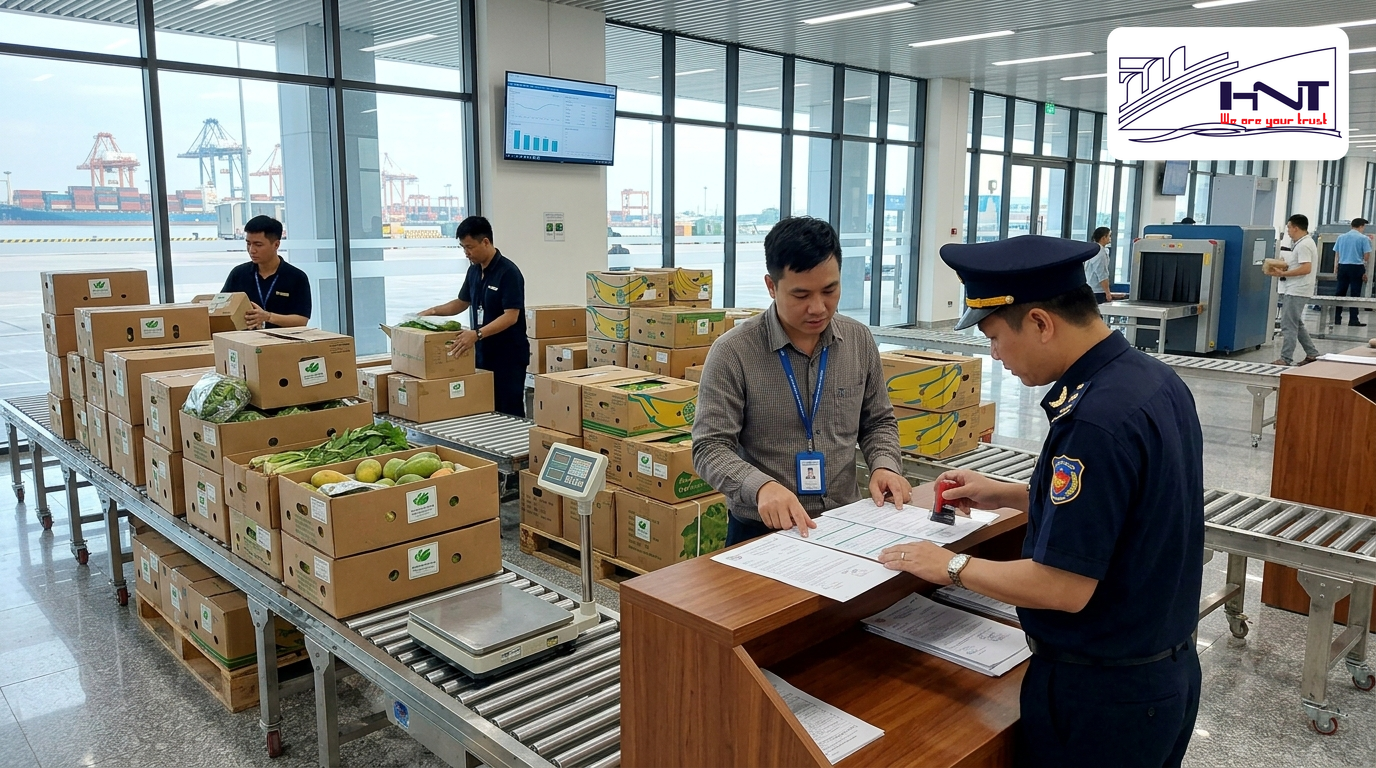
Declaration type, HS Code, and customs channel assignment
When the system assigns the green channel, goods can be cleared quickly if the documents contain no inconsistencies. The yellow channel requires document presentation, while the red channel may involve physical inspection. According to experts at HNT LOGISTICS, the documentation team should complete the phytosanitary certificate at least half a day before the shipping line's cargo cut-off.
- Determine the HS Code based on the nature of the goods and whether they are fresh, processed, or frozen.
- Select the appropriate declaration type, particularly for commercial exports, re-exports, or processing shipments.
- Declare the customs value according to the signed contract, invoice, and delivery terms.
- Attach phytosanitary documents when requested for verification by customs authorities or the buyer.
- Monitor customs channel assignments to arrange personnel for document processing or physical inspection in time.
- Check the shipping line's documentation cut-off deadline to avoid completing customs clearance but missing the vessel.
| Declaration item | Key points to check | Risks if incorrect | Risk reduction measures |
|---|---|---|---|
| Product code | Nature of the transaction | Amend declaration | Review the contract before declaration |
| HS Code | Cargo condition | Tax assessment or inspection | Keep classification records |
| Loading port | Cat Lai Port or Hai Phong Port | Incorrect transportation route | Cross-check the booking |
| Seal number | Actual container seal | Cargo held at the gate | Take photos after loading |
Vinh Thuan Fruit Company in Can Tho exported pomelos to Los Angeles through Cat Lai Port. By checking the B11 code and seal number in advance, the customs declaration was processed within the morning. A packing facility in Hai Duong exporting lychees to Bangkok also saved approximately six hours because its phytosanitary documents matched the packing list.
For shipments with multiple destinations, customs brokerage services help separate documentation sets for each buyer. This reduces errors in export phytosanitary procedures when a container contains multiple types of agricultural products belonging to different buyers.
Practical tip: Submit the customs declaration after obtaining the final container information, but do not wait until the shipping cut-off is imminent.
Quotation for Export Phytosanitary Procedures and Logistics Costs
Export phytosanitary procedure costs include government fees, sampling fees, documentation costs, sample transportation, additional inspections, and service fees if an agent is hired. Circular No. 223/2012/TT-BTC stipulates the fee and charge framework in the field of plant protection. Actual quotations also depend on the location, type of goods, and importing country's requirements.
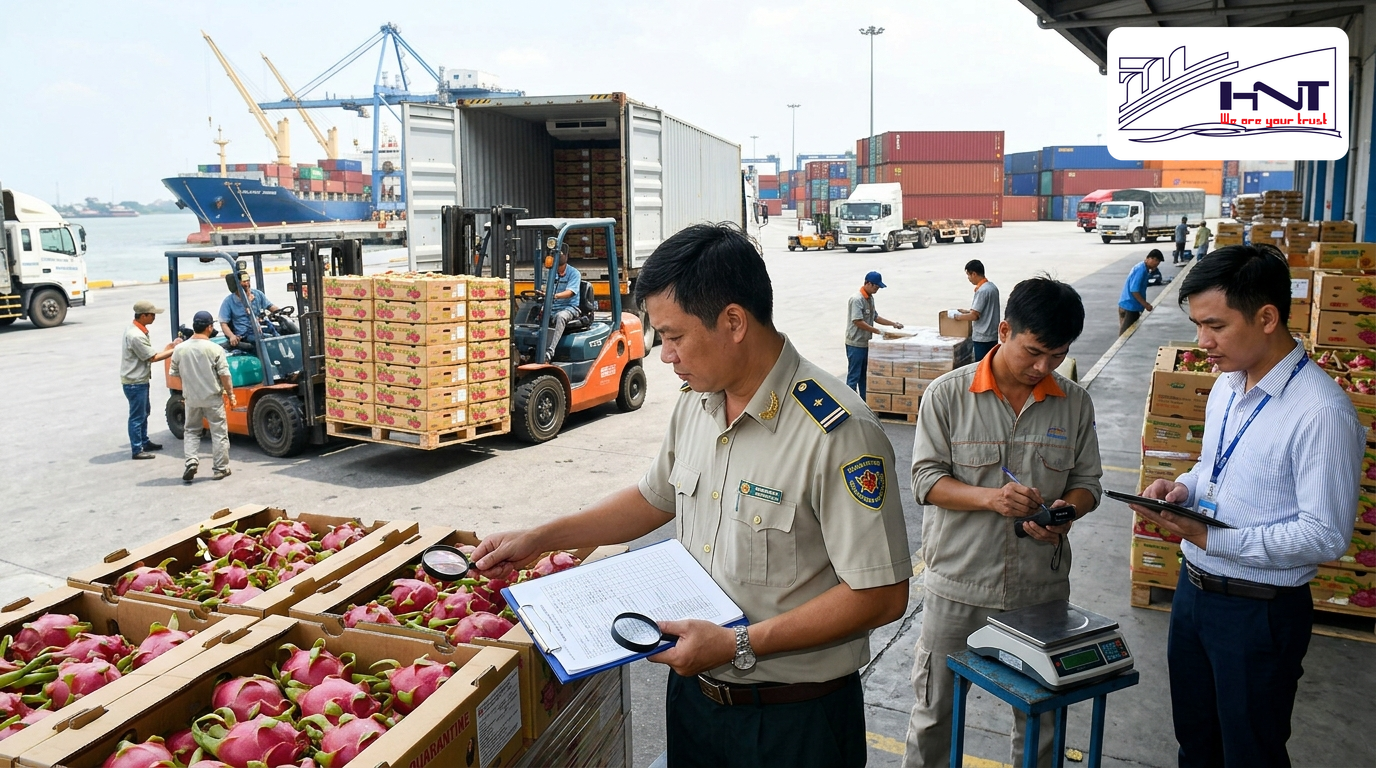
Common charges
Businesses should not ask only about the certificate issuance fee when arranging export phytosanitary procedures. For fresh fruit, the major costs often arise from waiting time, cold storage, container Demurrage/Detention charges, and vessel schedule changes. When freight rates fluctuate, a single missed sailing can eliminate the competitive advantage of the selling price.
- Export phytosanitary procedure and certificate issuance fees according to the current fee schedule of the competent authority.
- Sampling, sample transportation, or laboratory testing fees if additionally required by the importing market.
- Documentation service fees, application submission representation, and quarantine result tracking.
- Cold storage, lifting, container yard handling, and refrigerated container electricity charges during waiting periods.
- Sea or air freight surcharges when the market enters its peak season.
- Document amendment, bill of lading amendment, or vessel change costs if certificate issuance is delayed.
| Item | Reference rate | When it occurs | Note |
|---|---|---|---|
| Government phytosanitary inspection fee | According to the current fee schedule | When registering export phytosanitary procedures for the shipment | Verify again at the time of submission |
| Documentation services | Per shipment and level of complexity | When hiring an agent | The scope of work should be finalized |
| Cold storage while waiting for the certificate | Per day or per pallet | When goods must be stored | Direct impact on product quality |
| Refrigerated container electricity | Depending on the port and duration | When the container is moved into the yard early | Continuous temperature monitoring is required |
| Transportation document amendments | Depending on the carrier | When information is incorrect | Prevent through advance verification |
An exporter in Dak Lak shipping avocados to Dubai by air chose to conduct quarantine inspection at the packing facility. Although the service cost was higher, the company saved one day of storage. A jackfruit exporter in Hau Giang shipping to Guangzhou in refrigerated containers saved approximately 9% in costs by booking early before the peak season.
When comparing transportation costs, businesses should separately consider sea freight routes to the United States and shorter routes to China. These two route categories have very different surcharges, transit times, and risks.
Practical tip: A good quotation for export phytosanitary procedures must clearly specify the scope of services. Ask which fees include sampling, result tracking, and document amendments.
Export Phytosanitary Procedures for Key Markets
Export phytosanitary procedures vary significantly by market. China emphasizes protocols, growing area codes, and packing facility codes. The United States focuses on quarantine treatment and traceability. The EU prioritizes food safety, pesticide residues, and supply chain transparency. Southeast Asia is more flexible but still requires consistent documentation.
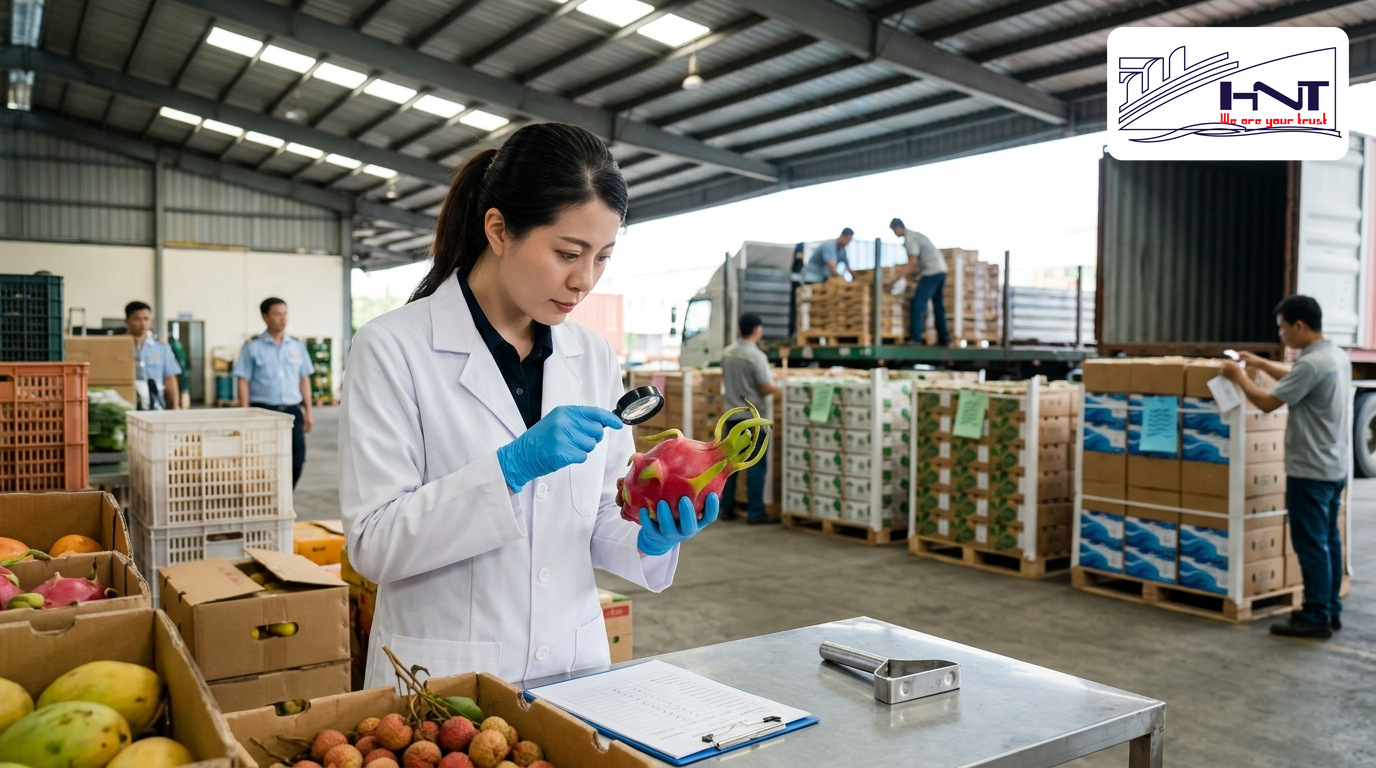
China, the United States, the EU, and Southeast Asia
For export phytosanitary procedures to China, businesses must closely monitor the list of fruits permitted for official imports. For the United States, additional time should be allocated for irradiation or cold treatment if applicable. For the EU, pesticide residue control and growing area documentation must be prepared from the beginning of the growing season.
- China: Prioritize checking growing area codes, packing facility codes, and protocol requirements.
- United States: Focus on quarantine treatment, traceability documents, and temperature-controlled transportation routes.
- EU: Manage pesticide residues, food safety documents, and supply chain information.
- Southeast Asia: Transit times are shorter, but documents must still match the final buyer's information.
- Japan and South Korea: Require consistent quality, clean packaging, and reliable delivery schedules.
- Middle East: Pay attention to temperature, transshipment time, and cold storage capabilities at the destination.
| Market | Quarantine inspection priorities | Common routes | Recommendation |
|---|---|---|---|
| China | Planting area code | Cat Lai to Shanghai | Check labels before loading |
| United States | Quarantine treatment | Hai Phong to Long Beach | Book early during peak season |
| EU | Residues and traceability | Cat Lai to Rotterdam | Keep growing area records |
| Southeast Asia | Consistent documentation | Cat Lai to Singapore | Prioritize short shipping schedules |
Nam Bo Harvest Company in Ben Tre exported rambutan to the Netherlands and maintained a stable temperature of 4-6 degrees Celsius by inspecting the container before loading. An agricultural exporter in Lam Dong shipping leafy vegetables to Singapore chose air freight, reducing delivery time to under 36 hours and keeping the loss rate below 1%.
For refrigerated cargo, refrigerated container specifications and temperature maintenance capabilities are just as important as documentation. An export phytosanitary shipment with a container at the correct temperature can still be held if its documents are incorrect. Conversely, correct documents cannot prevent commercial losses if the temperature deviates from the required range.
Practical tip: Build an export phytosanitary procedure matrix for each market. Each type of fruit requires its own quarantine inspection plan.
Conclusion: Optimizing Export Phytosanitary Procedures
Export phytosanitary procedures are not merely a certificate application step within export phytosanitary procedures. They are a quality, legal, and cost control point for the entire fresh fruit shipment. As Vietnam's fruit and vegetable market grows rapidly, businesses increasingly need strict export phytosanitary procedures to avoid missed sailings, temperature disruptions, and damage to their reputation with buyers.
- Check the importing country's requirements for export phytosanitary procedures before signing contracts and finalizing delivery terms.
- Standardize growing area codes, packing facility codes, and carton labels from the beginning of the growing season.
- Register export phytosanitary procedures early, especially for refrigerated containers and routes with short documentation cut-off deadlines.
- Cross-check phytosanitary certificates used in export phytosanitary procedures against invoices, packing lists, bills of lading, and certificates of origin.
- Submit customs declarations using final container data, the correct declaration type, and the appropriate HS Code.
- Estimate export phytosanitary procedure costs, including government fees, service fees, cold storage, container electricity, and vessel change risks.
- Design separate export phytosanitary procedures for China, the United States, the EU, Southeast Asia, and each type of fruit.
If your business needs a partner to coordinate quarantine inspections, documentation, customs declarations, and refrigerated transportation, HNT LOGISTICS is a reliable choice for Vietnamese exporters nationwide. Proper preparation helps shipments depart on schedule, maintain product quality, and protect profit margins. As a professional transportation provider, HNT LOGISTICS we are committed to providing comprehensive supply chain solutions, helping Vietnamese businesses confidently access global markets. Contact us at 8A Hoang Minh Giam, Ho Chi Minh City, or via the marketing email address at hntshipping.com to receive a quotation and assistance.