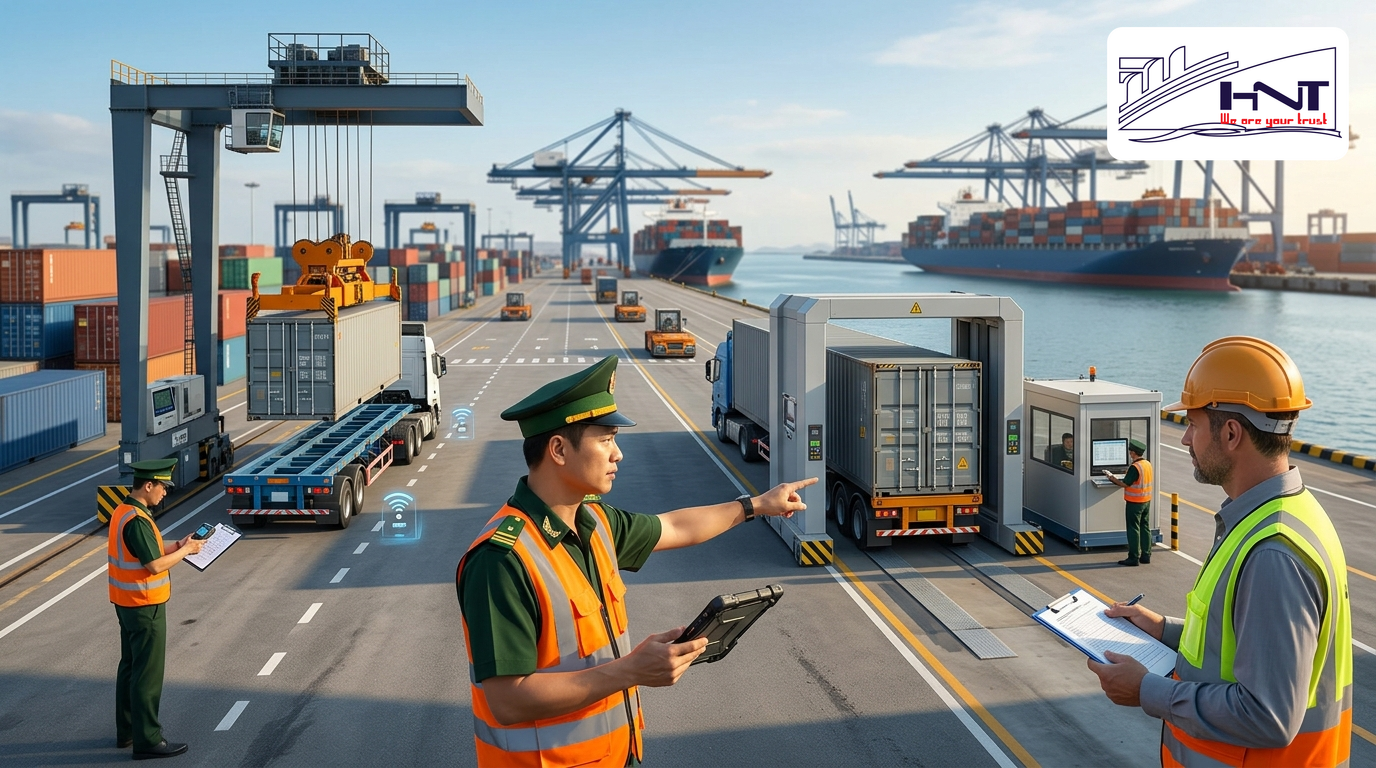
Customs clearance services in Hai Phong are often sought when containers have arrived at the port yard but documentation, HS Codes, or specialized inspections remain unresolved.
In 2026, the pressure is becoming even more evident. The Ministry of Industry and Trade reported that total import and export turnover reached USD 445.12 billion in the first five months of 2026. Agricultural, forestry and seafood export turnover reached USD 30.69 billion, while fruit and vegetable exports totalled nearly USD 2.06 billion in the first four months. This article therefore helps businesses choose the right procedures, estimate costs and reduce customs clearance risks at Hai Phong Port.
Which businesses are suitable for customs clearance services in Hai Phong?
Customs clearance services in Hai Phong are particularly suitable for businesses shipping goods through Hai Phong Port, Dinh Vu Port, Nam Dinh Vu, or nearby CFS warehouse areas. These services are commonly needed when businesses lack documentation personnel, are uncertain about HS Codes, or need to coordinate container transportation on the same day.
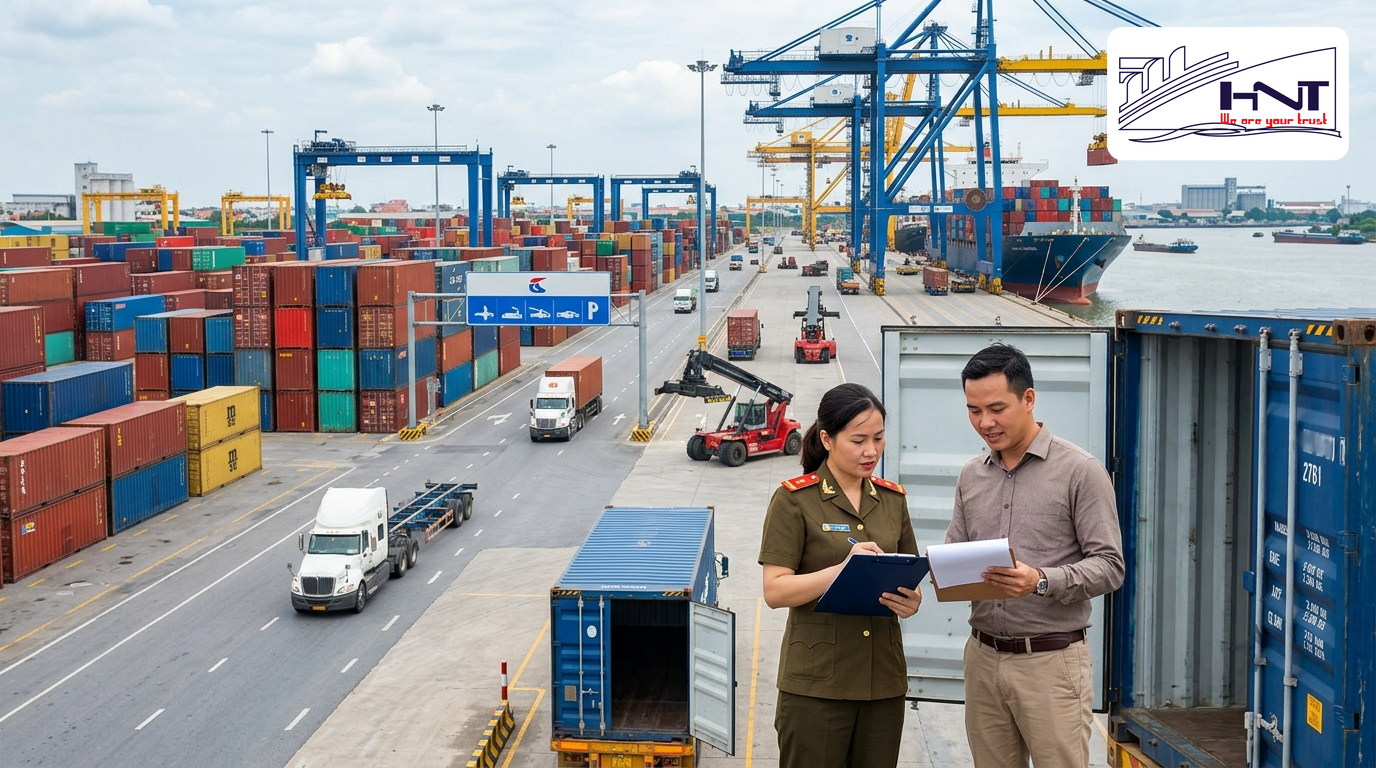
- Importers of production materials need to submit customs declarations promptly to maintain their factory delivery schedules.
- Agricultural exporters need to check phytosanitary certificates before unloading refrigerated containers.
- New trading companies need a representative to monitor customs channel assignments and respond to customs authorities.
- Factories handling project cargo need to review HS codes, customs values and applicable product policies.
- Seafood exporters need to synchronize bills of lading, Certificates of Origin (C/O), and quarantine documentation.
- LCL cargo owners need accurate documentation consolidation to avoid delays in delivery orders.
| Business Segment | Primary Needs | Risks of Handling Procedures Independently | Recommended solution |
|---|---|---|---|
| Manufacturing plants | Importing machinery and components | Incorrect HS Code | Review codes before declaration |
| Agricultural Exporter | Refrigerated and quarantined goods | Missed yard delivery deadlines | Schedule inspections and certificates early |
| Trading Company | Consumer goods imports | Missing specialized permits | Check product-specific regulations |
| LCL cargo owners | Less-than-container-load shipments | Delayed CFS cargo collection | Track delivery orders |
For example, Sao Bac Garment Company in Hai Duong imported 12 containers of fabric through Dinh Vu Port. By using customs clearance services in Hai Phong, the company standardized its HS Codes before the estimated time of departure (ETD), reducing waiting time for declaration amendments by one day. Another example is Minh Loc Fruit Company in Tien Giang, which exported frozen mangoes to South Korea while maintaining a stable temperature of -18 degrees Celsius by finalizing quarantine procedures before cargo loading.
Conclusion: Choose a service based on the level of documentation risk, not merely the declaration fee. HNT LOGISTICS recommends that businesses handling refrigerated goods, goods subject to specialized inspections, or high-value cargo review their documentation at least 48 hours before the vessel arrives.
Signs That You Should Hire a Customs Broker at Hai Phong Port
Customs brokerage services at Hai Phong Port become essential when multiple parties are involved in handling a shipment. Freight forwarders, shipping lines, warehouses, customs authorities, and trucking teams all operate according to different schedules. Even a minor discrepancy in an invoice, Bill of Lading, or C/O can disrupt the cargo transportation plan.
- Goods requiring phytosanitary inspections, animal quarantine, or food safety inspections.
- First-time imports without an established HS Code classification history.
- Businesses that need containers delivered to their factories on the same day as customs clearance.
- Shipments involving urgent payment terms or contractual penalties for late delivery.
- Seller-issued documents containing multiple revisions, increasing the risk of discrepancies in package quantities or weights.
The Customs Service Process in Hai Phong: From Documentation to Clearance
The customs clearance process in Hai Phong should begin before the vessel arrives. An effective approach involves finalizing the documentation set, checking product-specific regulations, preparing declaration data, and establishing contingency plans for customs channel assignments. Under current regulations, Circular 38/2015/TT-BTC and Circular 39/2018/TT-BTC remain important operational foundations.
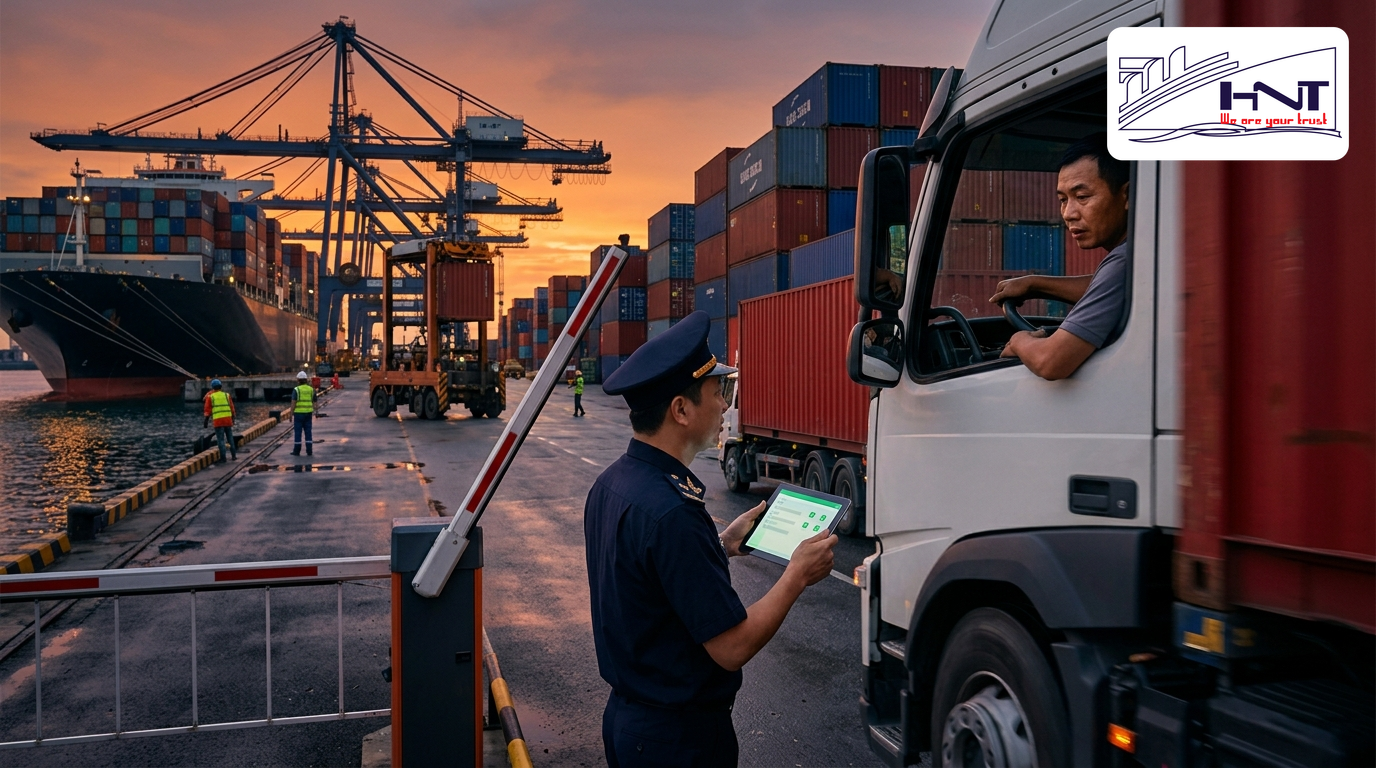
Preparing Documents for Customs Clearance Services
Customs clearance services involve more than entering data into a system. Declarants must understand the nature of the goods, trading conditions, customs value, origin, and specialized inspection requirements. Decree 167/2026/ND-CP Amendments to certain procedural provisions mean that businesses should review updated regulations before handling each major product category.
- Check commercial invoices, contracts, packing lists, and contractual delivery terms.
- Cross-check the Bill of Lading against container numbers, seal numbers, and the port of discharge.
- Determine HS Codes based on technical descriptions, intended uses, and manufacturer documentation.
- Check permits, quality declarations, quarantine requirements, and specialized certificates.
- Calculate import duties, value-added tax, and port-related charges in advance.
- Prepare explanations in case declarations are assigned to the yellow or red customs channel.
| Records | Inspection purpose | Common errors | Completion time |
|---|---|---|---|
| Commercial invoice | Valuation | Wrong delivery terms | Before declaration |
| Packing | Package reconciliation | Weight discrepancy | Before vessel arrival |
| Bill of lading | Cargo collection at the port | Incorrect consignee name | Before the delivery order is issued |
| Care of | Enjoy tax incentives | Incorrect origin criteria | Before submitting documentation |
| Inspection certificate | Agricultural and seafood products | Late registration | Before opening the customs declaration |
For example, An Phu Mechanical Engineering Company in Bac Ninh imported a packaging production line from Germany through Hai Phong Port. The documentation team discovered a discrepancy between the equipment description on the invoice and the technical documents. Correcting it before declaration helped avoid red-channel inspection and saved approximately 18 hours of waiting for clarification.
Another example is Bien Xanh Seafood Company in Ca Mau, which exported frozen fish cakes to Japan through Hai Phong. Based on HNT LOGISTICS' experience, refrigerated shipments should have their quarantine certificates, temperature records, and yard delivery schedules synchronized. This hypothetical shipment avoided two days of container storage and detention charges (Demurrage/Detention).
Conclusion: Businesses should create a separate document checklist for each product code. For complex goods, request import-export documentation consulting before the seller issues the final documents.
What Are the Differences Between Green, Yellow and Red Customs Channels?
The green channel generally allows rapid customs clearance once the system accepts the declaration data. The yellow channel requires document inspection, either in paper or electronic form. The red channel requires physical cargo inspection. Customs clearance services in Hai Phong provide the greatest value through risk prediction and preparation for explanations.
- Green-channel shipments require monitoring tax payments, printing barcodes, and collecting delivery orders on time.
- Yellow-channel shipments require consistent documentation, clear customs valuation explanations, and complete specialized inspection certificates.
- Red-channel shipments require personnel, forklifts, container opening arrangements, and the cargo owner's representative at the port yard.
- Refrigerated goods require minimizing container opening time to protect the core temperature of products.
- Machinery shipments should include catalogs, actual photographs, and Vietnamese descriptions of their functions.
Customs Service Quotation in Hai Phong and Costs to Budget For
Customs clearance service quotations in Hai Phong should be evaluated according to their cost structure rather than treated as an absolute all-inclusive figure. A good quotation should separately list declaration fees, document processing fees, specialized inspection fees, lifting and handling charges, yard storage fees, and additional expenses based on customs channel assignments.
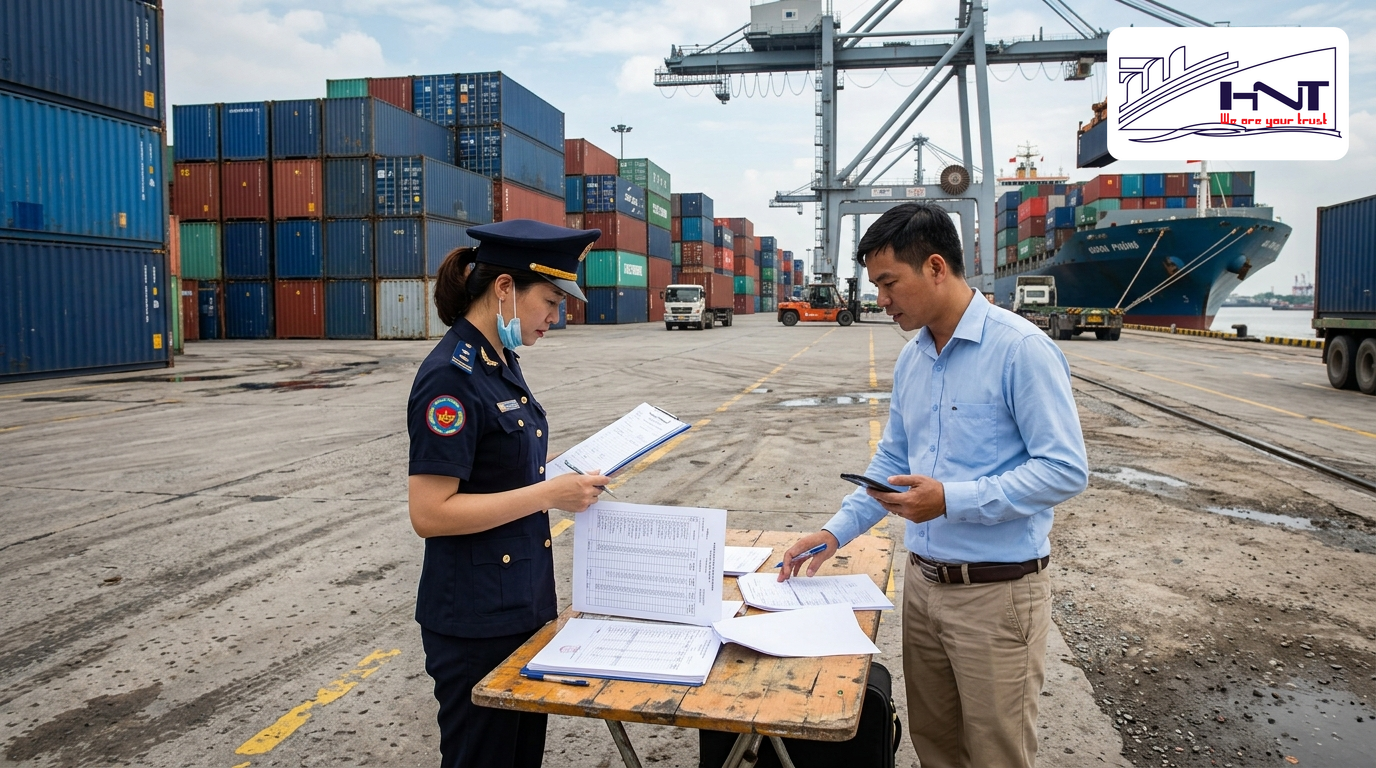
Understanding Customs Declaration Costs in Hai Phong
Hai Phong customs declaration costs generally vary according to cargo type, the number of declaration line items, inspection requirements, and cargo collection location. Standard export shipments usually cost less than imports involving duties, permits, or quarantine procedures. Full-container-load and less-than-container-load shipments (FCL/LCL) also differ significantly in handling requirements.
- Basic declaration fees apply to declarations with few product lines and straightforward documentation.
- HS Code verification fees increase when goods contain multiple technical components or mixed materials.
- Quarantine processing fees apply to agricultural products, seafood, timber, or products of animal origin.
- After-hours service fees may apply when vessel cut-off times are approaching or cargo must be unloaded urgently.
- Physical inspection fees depend on the yard, number of containers, labor requirements, and lifting equipment.
- Yard storage charges increase rapidly when businesses delay tax payments or delivery order collection.
| Category | Reference rate | Factors increasing costs | Cost control recommendations |
|---|---|---|---|
| Standard customs declaration | 700,000-1,500,000 VND | Multiple product lines | Standardize codes in advance |
| HS Code review | 500,000-2,000,000 VND | Technically complex goods | Provide product catalogs |
| Yellow-channel processing | 1,000,000-3,000,000 VND | Missing documents | Review documentation early |
| Physical inspection assistance | 2,000,000-5,000,000 VND | Multiple containers to open | Book yard appointments in advance |
| Specialized quarantine inspections | Based on actual documentation | Sampling or laboratory testing | Register before ETD |
For example, Binh Minh Furniture Company in Binh Duong imported metal accessories through Hai Phong Port. The initial quotation was low, but additional physical inspection costs arose because the cargo descriptions were too general. After switching to a risk-based quotation, the company budgeted an additional 3 million VND and avoided unexpected cash flow pressure.
A second example is Tan Phu Durian Cooperative in Dak Lak, which exported refrigerated containers to Shanghai. According to experts at HNT LOGISTICS, businesses should calculate declaration fees, quarantine fees, and refrigerated container electricity charges at the port yard simultaneously. This approach reduced the time spent waiting for cost confirmation before delivering containers to the yard by 12 hours.
Conclusion: The lowest price does not necessarily mean the lowest total cost. Businesses should request a fee schedule covering green-, yellow-, and red-channel scenarios before finalizing their budgets.
When Do Costs Exceed the Initial Quotation?
Costs increase when declared information does not match the actual cargo or when additional inspections are required. Furthermore, changes in the transportation market can affect vessel schedules and yard storage periods. Drewry's WCI index on August 27, 2026, decreased by 1% to USD 4,473 per 40-foot container, but still reflected elevated freight rate levels.
- The seller revises the invoice late, forcing the customs declaration to be canceled or resubmitted.
- The shipping line changes its arrival schedule, disrupting trucking and on-site personnel arrangements.
- The shipment is assigned to the red channel, requiring container opening, lifting and handling, and physical inspection.
- The C/O arrives late, preventing the business from receiving preferential tax treatment at the time of customs clearance.
- Refrigerated containers require additional electricity supply because of delayed quarantine inspections or sampling.
Customs Procedures at Dinh Vu Port and Key Considerations at the Hai Phong Port Complex
Customs procedures at Dinh Vu Port require close coordination between customs declaration teams, port yards, and trucking teams. The Hai Phong area has multiple ports, yards, and related warehouses. Therefore, customs clearance services in Hai Phong must accurately verify port codes, storage locations, and receiving customs branches before submitting declarations.
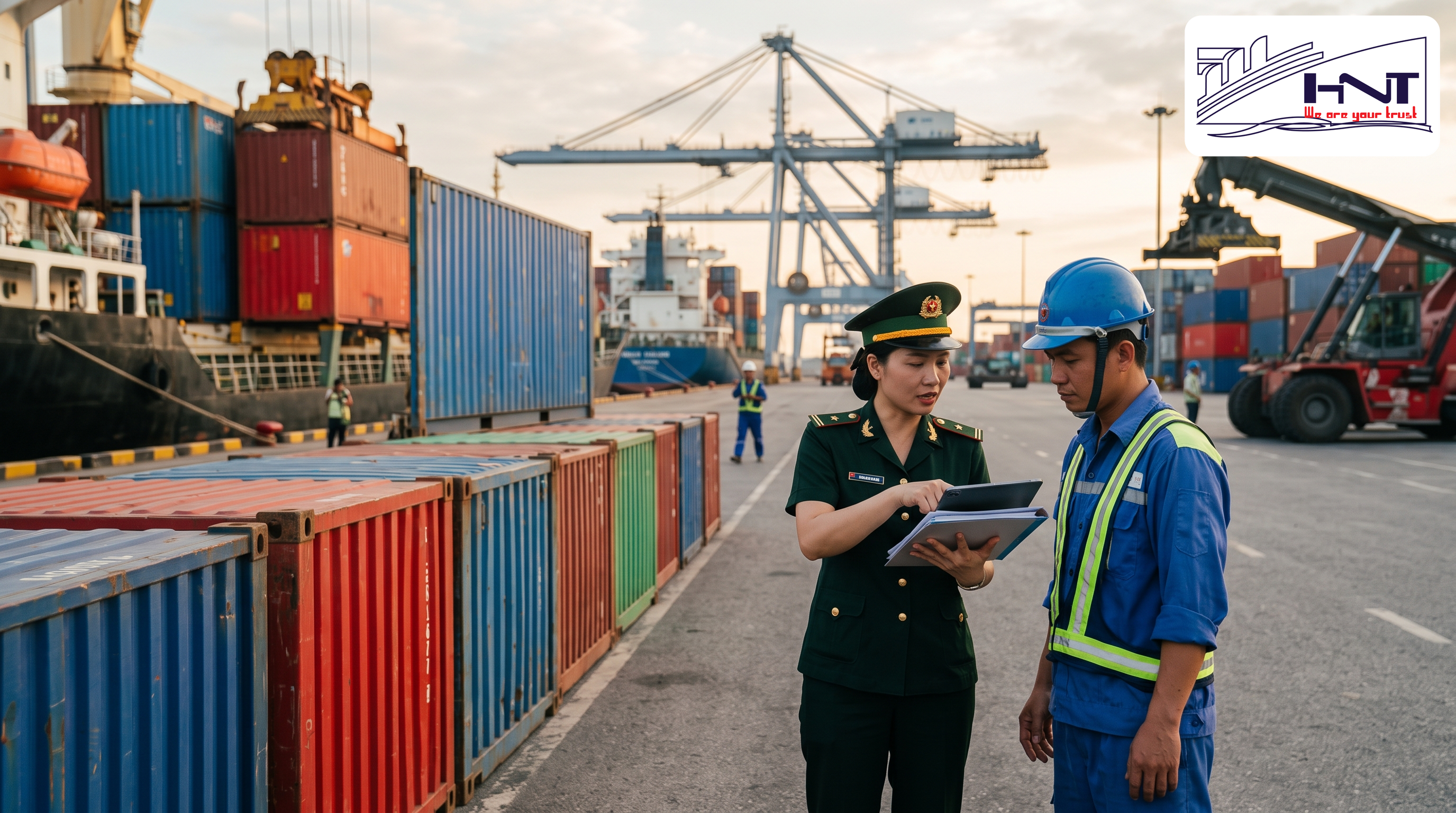
- Confirm the actual port of discharge to avoid confusion between Dinh Vu Port and the Nam Dinh Vu area.
- Check the storage location code to ensure that the declaration matches customs supervision data.
- Arrange container transportation after receiving customs clearance confirmation or a clear physical inspection plan.
- Check the free container storage period before deciding when to transport cargo to the warehouse.
- For refrigerated goods, ask the port to confirm electrical connection status and yard temperature.
- For project cargo, prepare a package layout diagram to facilitate faster physical inspections.
| Area | Suitable types of goods | Operational considerations | Risk to avoid |
|---|---|---|---|
| Dinh Vu Port | Standard import and export containers | Verify port codes | Incorrect storage location |
| Nam Dinh Vu | International container shipments | Confirm yard delivery time | Missed cargo cutoff |
| Hai Phong CFS Warehouse | Less-than-container-load cargo (LCL) | Collect delivery orders early | Missing cargo collection documents |
| Physical inspection yard | Red-channel and specialized cargo | Arrange on-site personnel | Additional lifting and handling charges |
For example, Hung Thinh Electronics Company in Hai Phong VSIP Industrial Park imported components from Shenzhen. The documents showed the correct port but an incorrect storage location. The customs declaration team detected the discrepancy before official submission, avoiding declaration amendments and maintaining the delivery schedule for the following morning.
Another example is Huong Dong Rice Company in Can Tho, which exported 10 containers of rice to the Philippines through Hai Phong. The company selected a sea freight route to Southeast Asia and arranged trucking one day earlier. As a result, the entire shipment entered the port yard on schedule without incurring container storage charges.
Conclusion: In the Hai Phong Port cluster, an incorrect location code can cost more than an incorrect service fee. Verify the port, warehouse, and customs branch before issuing the cargo delivery plan.
What Preparations Are Required for Chilled Goods, Agricultural Produce and Seafood?
Refrigerated goods passing through Hai Phong require simultaneous control of documentation and temperature. For seafood, VASEP reported that exports reached approximately USD 1 billion in January 2026, increasing by 30,6% compared with the same period in 2026. As volumes increase, quarantine schedules, electrical connections, and cargo loading arrangements should be booked in advance to avoid congestion.
- Prepare quarantine certificates, temperature records, and packing lists before transporting containers.
- Select refrigerated containers with the correct temperature range and inspect temperature recording equipment and container condition.
- Maintain traceability documentation for fresh fruit, seafood, and processed food products.
- Finalize yard delivery times in line with vessel schedules, quarantine deadlines, and port refrigeration services.
- Submit Vietnamese cargo descriptions in advance to prevent misunderstandings during physical inspections.
How to Choose a Reliable Customs Clearance Service Provider in Hai Phong
Selecting a customs clearance service provider in Hai Phong should be based on its ability to manage risks, not merely promises of fast customs clearance. A reliable provider must have document verification procedures, on-site personnel, the ability to explain HS Code classifications, and transportation arrangements after customs clearance.

- Experience handling the business's specific cargo categories, particularly refrigerated goods and goods subject to specialized inspections.
- Transparent quotations covering declarations, physical inspections, documentation, and additional port-related expenses.
- Personnel monitoring shipments in Hai Phong to respond quickly when customs authorities request additional documents.
- The ability to coordinate with shipping lines, warehouses, and trucking teams to avoid container storage charges.
- Expertise in advising on C/O, customs valuation, HS Codes, and international delivery terms.
- Post-clearance reports to help businesses maintain records and improve future shipments.
| Criteria | Questions to ask | Good signs | Risk indicator |
|---|---|---|---|
| Cargo handling experience | Have you handled this type of cargo before? | Provide specific examples | Vague answers |
| Cost transparency | Which fees are excluded? | Itemized cost breakdown | Unclear all-inclusive pricing |
| Port operations | Who handles physical inspections? | On-site personnel in Hai Phong | Dependence on third parties |
| Risk management | Do you review codes in advance? | A clear checklist | Only receive documents and submit declarations |
For example, Nam Viet Medical Equipment Company in Hanoi imported an analytical machine through Hai Phong Port. Its experienced equipment-handling partner requested technical documents, intended use information, and machine photographs before submitting the declaration. As a result, the company avoided HS Code amendments and maintained its installation schedule.
Another example is Lam Son Vegetable Company in Thanh Hoa, which exported frozen vegetables to Singapore. The customs brokerage provider coordinated the refrigerated container size specifications and quarantine schedule from the booking stage. The shipment maintained a temperature of -20 degrees Celsius until handover to the shipping line.
Conclusion: Ask the service provider to explain the handling process for a hypothetical shipment similar to your own. The more specific the response, the greater the ability to control risks.
Questions to Ask Before Signing a Contract
Before signing a contract, businesses should prepare a short but operationally relevant list of questions. This approach helps assess the actual capabilities of a customs clearance service provider in Hai Phong. Answers should clearly identify the person in charge, processing timelines, required documents, and limitations of responsibility.
- Does the provider check product-specific regulations before accepting the official customs declaration?
- Who is responsible if incorrect documentation results from unsuitable HS Code classification advice?
- How quickly does the provider respond when a declaration is assigned to the yellow or red channel?
- Which costs may arise outside the quotation already provided to the business?
- Can the provider coordinate domestic transportation from Hai Phong Port to the factory?
Conclusion: Optimising Customs Clearance Services in Hai Phong to Reduce Risks and Costs
Customs clearance services in Hai Phong are an important operational decision, particularly as Vietnamese trade grows rapidly and transportation costs fluctuate. Businesses should treat customs clearance as a risk management link in their supply chain, not merely an administrative procedure. When documentation is properly prepared, trucking, warehousing, port operations, and cash flow become more stable.
- Review HS Codes and product-specific regulations before the seller issues the final documents.
- Estimate costs according to green-, yellow-, and red-channel scenarios.
- Verify the correct port code, storage location, and receiving customs branch in Hai Phong.
- For refrigerated goods, finalize quarantine procedures, refrigeration arrangements, and yard delivery times before the vessel schedule.
- Request quotations that clearly separate declaration fees, physical inspection fees, quarantine fees, and domestic transportation charges.
- Retain post-clearance documentation for future inspections and to improve subsequent shipments.
If your business needs a logistics partner with expertise in documentation, seaports, and cold-chain operations, HNT LOGISTICS can support you from document review through transportation after customs clearance. The right approach involves early preparation, transparent quotations, and risk assessment before containers arrive at Hai Phong Port. As a professional transportation provider, HNT LOGISTICS we are committed to delivering comprehensive supply chain solutions that help Vietnamese businesses confidently expand into global markets. Contact us at 8A Hoang Minh Giam, Ho Chi Minh City, or via the marketing email address at hntshipping.com to receive a quotation and assistance.