


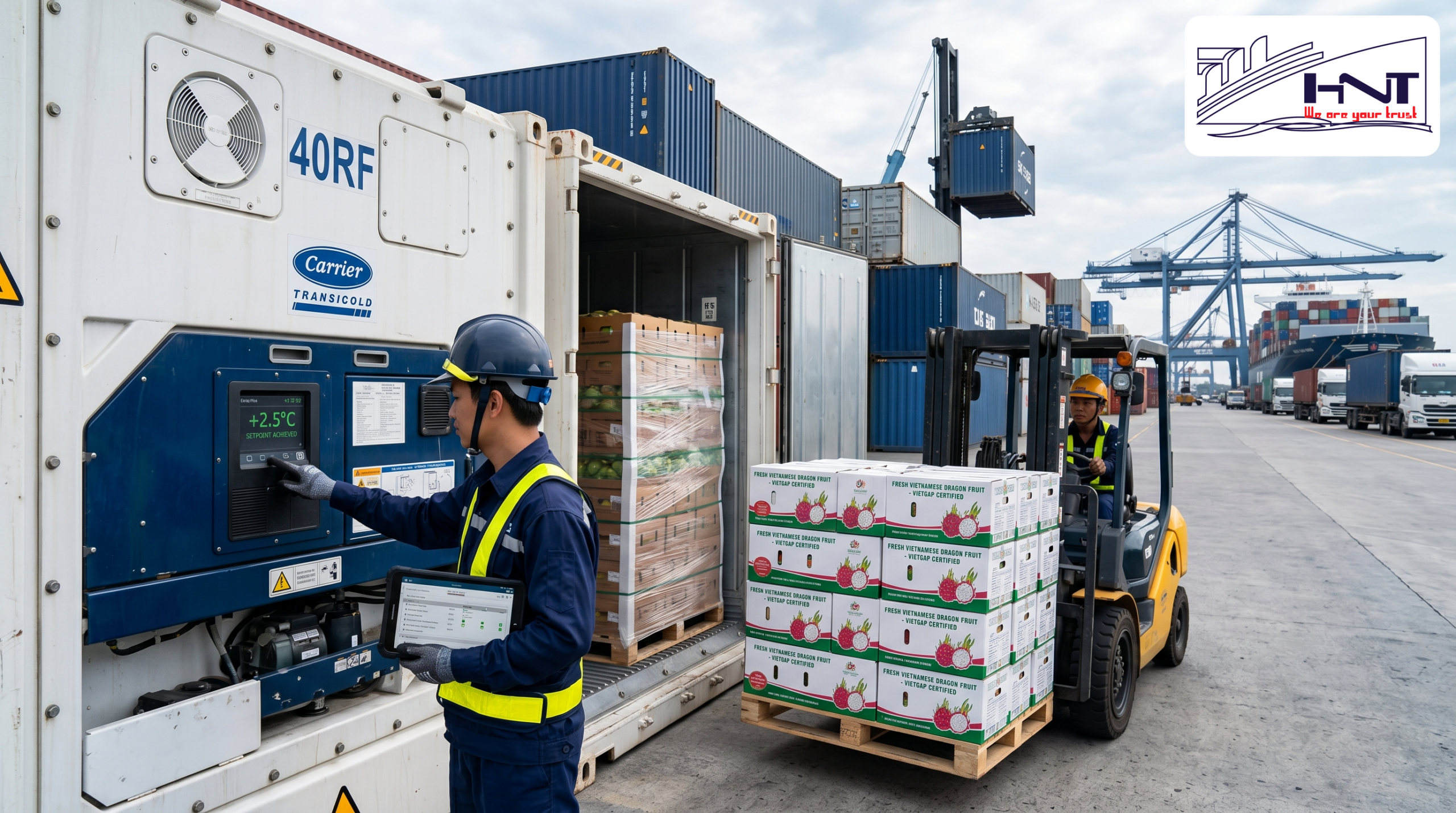
Frozen goods transport 40rf often fails not because the refrigeration unit breaks, but because the goods enter the container while still hot or the airflow is blocked. In 2026, Vietnam's seafood exports reached 11.3 billion USD; fruit and vegetable exports in 2026 reached about 7.15 billion USD. Therefore, cold chain control must be considered a condition for protecting revenue, not a final task.
This article guides businesses on designing packaging, load distribution, temperature settings and documentation for each refrigerated container shipment. The goal is to reduce hot spots, minimize losses and provide sufficient evidence when complaints arise at the destination port.
Designing agricultural product packaging plans according to product characteristics before loading into 40RF, 45RF refrigerated containers
Agricultural product packaging must start from biological characteristics, not from carton size. Products with high respiration rates generate heat faster. Ethylene-sensitive goods need to be separated from ethylene-producing groups. A good packaging layout must simultaneously control impact, vapor release and airflow.
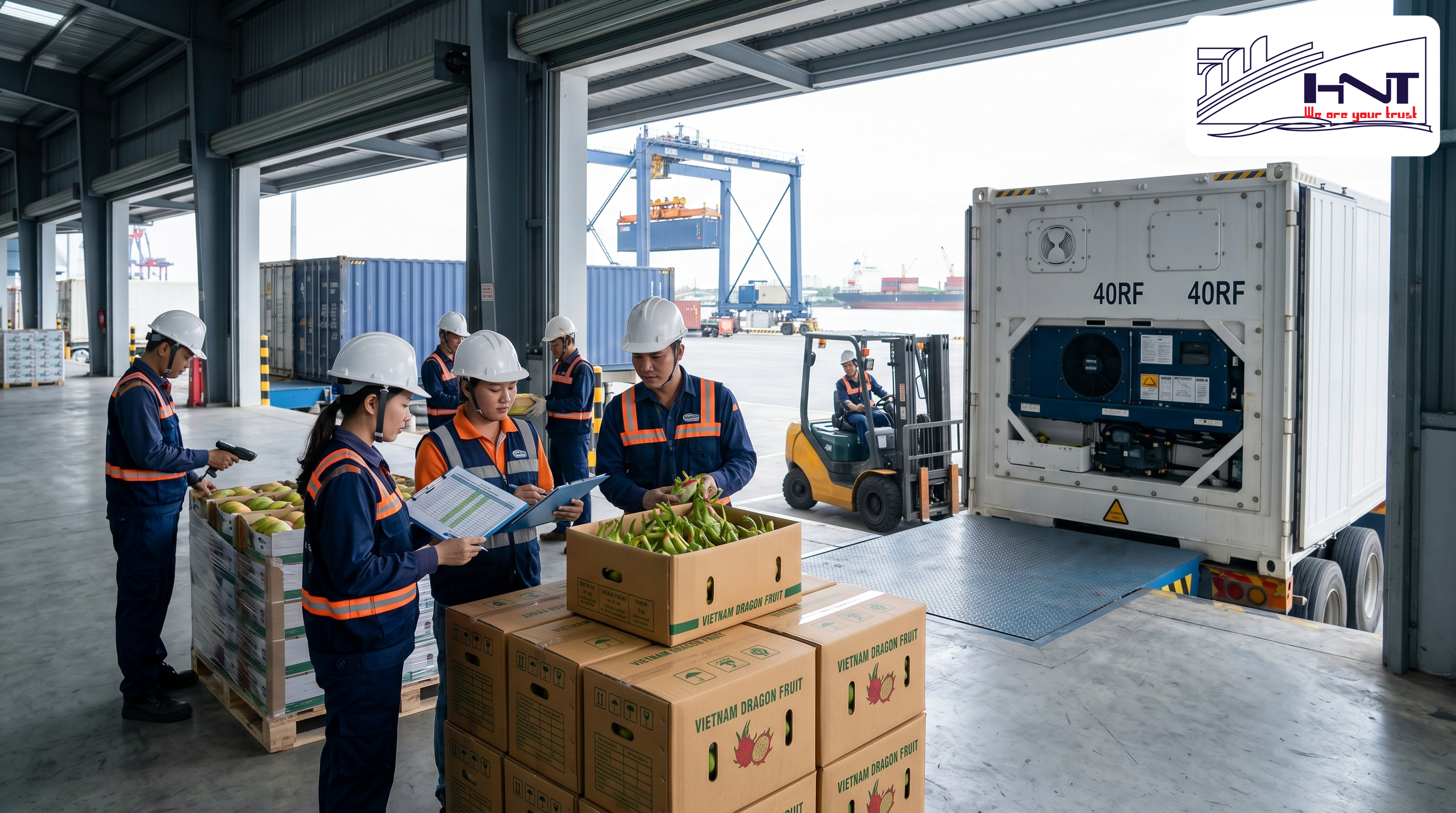
Classify agricultural products by respiration level to select suitable packaging materials and specifications
Leafy vegetables, mushrooms and asparagus belong to the high respiration group. Mangoes, dragon fruit and pomelo have medium levels. Seeds, dried roots and processed agricultural products are more stable. Cartons must resist moisture, have ventilation holes in the correct positions and not collapse when stacked.
Determine packaging ventilation to avoid heat and moisture accumulation during transport
Ventilation holes need to align when stacking cartons. Misaligned holes make cold air circulate around, creating hot zones in the pallet center. Overly sealed packaging causes condensation. Overly open packaging causes moisture loss and reduced commercial weight.
Pre-treatment checklist before bringing goods into the refrigerated container area
- Measure the core temperature of representative samples before bringing goods into the container loading area.
- Remove wet cartons, damaged cartons and product units showing signs of over-ripening.
- Check lot labels, packing dates and traceability codes on each pallet.
- Ensure pallets are clean, dry, and free of strange odors or broken wood.
- Compare pre-cooling temperature with the requirements of the buyer and contract.
- Prepare independent temperature recorders at the beginning, middle and end positions of the shipment.
Packaging mistakes for agricultural products that greatly reduce storage life
A common mistake is using the same carton specification for every product. For example, Minh Loc Agricultural Company in Tien Giang exported mangoes from Cat Lai Port to Shanghai. After switching to cartons with aligned ventilation holes and pre-cooling, the rate of wet cartons decreased from 91% to 21% in the 6-day trial shipment.
| Group of goods | Main risks | Prioritize packaging | Check before loading |
|---|---|---|---|
| Leafy vegetables | Water loss | Controlled moisture retention | Core temperature |
| Mango | Ethylene | Impact-resistant | Ripeness |
| Dragon Fruit | Condensation | Ventilated | Dry peel |
| Okra | Chilling injury | Insulating material | Set temperature |
Conclusion: Only load the container when the core temperature is close to the storage target. Refrigerated containers maintain temperature, they do not replace the product cooling process.
Optimize space and control container load to protect shipment quality
Container load control is not only related to road limits or container capacity limits. It determines pallet durability, carton deformation and airflow paths. Heavy goods placed incorrectly can block the T-floor, causing the machine to run while heat does not reach the shipment center.
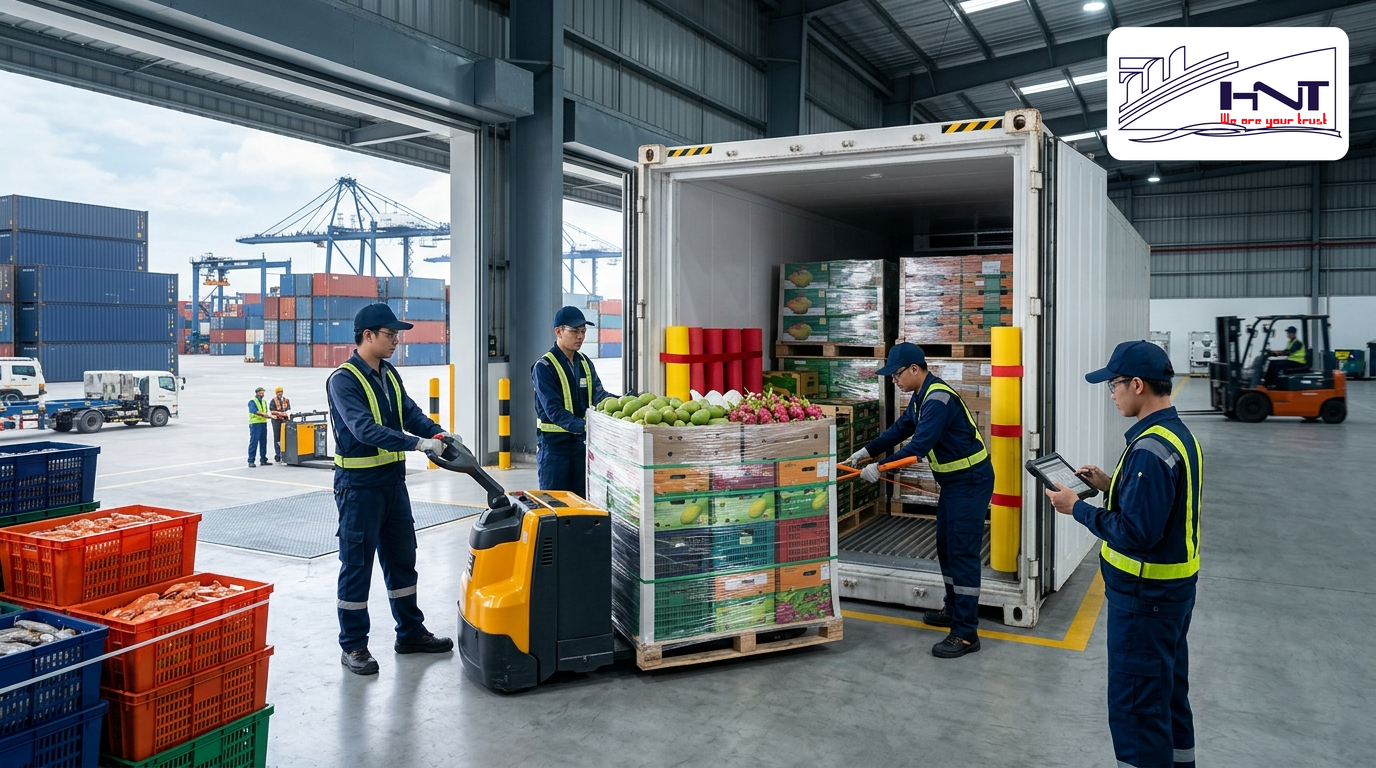
How to distribute load by area in a refrigerated container instead of stacking by intuition
Place heavy, sturdy goods low and near the middle according to pallet design. Do not push goods tightly against the front wall. The area near the refrigeration unit must follow carrier instructions, because high airflow speed can cause some products to lose water quickly.
The principle of leaving air gaps helps cold airflow circulate evenly
Do not block the return air door. Do not stack above the red line. Leave gaps according to the container layout and maintain distance along the walls. Each pallet must have a stable base so cold air can pass through instead of being blocked by overly tight wrapping.
Control container load when combining multiple agricultural products in the same shipment
Only combine goods when temperature, humidity, ethylene sensitivity and transport time are compatible. A required temperature difference greater than 2°C usually needs reassessment. Do not use lightweight goods to fill gaps if it distorts airflow.
Loading errors create hot spots and temperature differences between pallets
For example, Dai Phu Fruit and Vegetable Company in Long An once loaded 24 pomelo pallets close to the return air door on the Cat Lai – Hong Kong route. Temperature data showed the last pallet was 2.8°C higher. After reducing stacking height and leaving airflow gaps, the difference decreased to 0.9°C.
| Position | Loading principle | Risks when incorrect | Checking method |
|---|---|---|---|
| Container floor | Do not block air channels | Insufficient cold air | Observe before closing |
| Side wall | Leave technical gaps | Hot spot | Measure actual gaps |
| End of container | Do not press against the door | Difficult unloading | Check layout |
| Pallet top | Do not exceed load line | Block return air | Compare red line |
- Create a pallet layout before the truck collects the empty container at the depot.
- Place high-density goods on lower layers to reduce carton sinking.
- Maintain technical clearance according to container supplier instructions.
- Do not use wrapping film to cover the entire ventilated surface of the pallet.
- Check total cargo weight and container tare weight before sealing.
- Take photos of the four corners of the shipment for comparison during handover.
Conclusion: consider the loading layout as part of the quality record, not an instant decision at the warehouse.
Set the correct refrigerated container temperature from the stage before loading
Frozen goods transport 40rf requires clear determination of set temperature, target core temperature and fluctuation limits for each product. These three values are not always the same. Incorrect settings from the beginning often only appear after transshipment or when the receiver opens the container.

Choose set temperature for each group of fruits, vegetables and processed agricultural products
There is no single temperature level for all agricultural products. Green mangoes, dragon fruit, leafy vegetables and frozen goods have different requirements. Businesses must use technical specifications from buyers, packers and import market regulations.
When is pre-cooling needed before putting goods into the refrigerated container
Pre-cooling should be performed when the core temperature is higher than the target storage level. Required time depends on fruit size, packaging density and cooling method. Loading hot goods into the container increases heat load and may cause goods near the cooling unit to become excessively cold first.
Check refrigeration unit condition and sensors before sealing the container
Check floor cleanliness, door seals, airflow, ventilation mode and trial run results. Compare container number, seal number, set temperature, humidity if available and cooling mode on the handover record. This is a mandatory step before issuing the bill of lading.
Initial temperature setting errors are often only detected when goods reach the destination port
For example, Nam Ca Mau Seafood Company exported frozen shrimp from Cai Mep to Busan. Staff discovered the ventilation mode was set too high even though the goods required closed conditions. They corrected it before loading and saved screenshots of the settings, avoiding surface freezer burn risk during the 8-day journey.
| Group of goods | Main objective | Pre-loading requirement | Risk to avoid |
|---|---|---|---|
| Leafy vegetables | Reduce water loss | Fast cooling | Local freezing |
| Tropical fruits | Slow ripening | Check chilling injury | Temperature too low |
| Frozen seafood | Maintain deep freezing | Check ice layer | Temperature fluctuation |
| Processed agricultural products | Stable quality | Check sealed packaging | Condensation |
- Confirm core temperature using a calibrated probe before loading.
- Compare set temperature with the requirement on the buyer's order.
- Take a photo of the control panel before closing the door and sealing.
- Check door, seals, floor and drainage holes of the container.
- Record the end time of pre-cooling in the shipment file.
- Place an independent temperature recorder in an easily traceable position for destination arrival.
Conclusion: based on HNT LOGISTICS experience, the initial setting record has great value when disputes arise later.
Manage 40RF refrigerated container temperature and 45RF container parameters throughout the journey
Refrigerated container temperature management needs to combine data from the container unit, independent temperature recorder and carrier reports. Data is only useful when someone is responsible for reading, comparing and activating response plans when thresholds are exceeded.
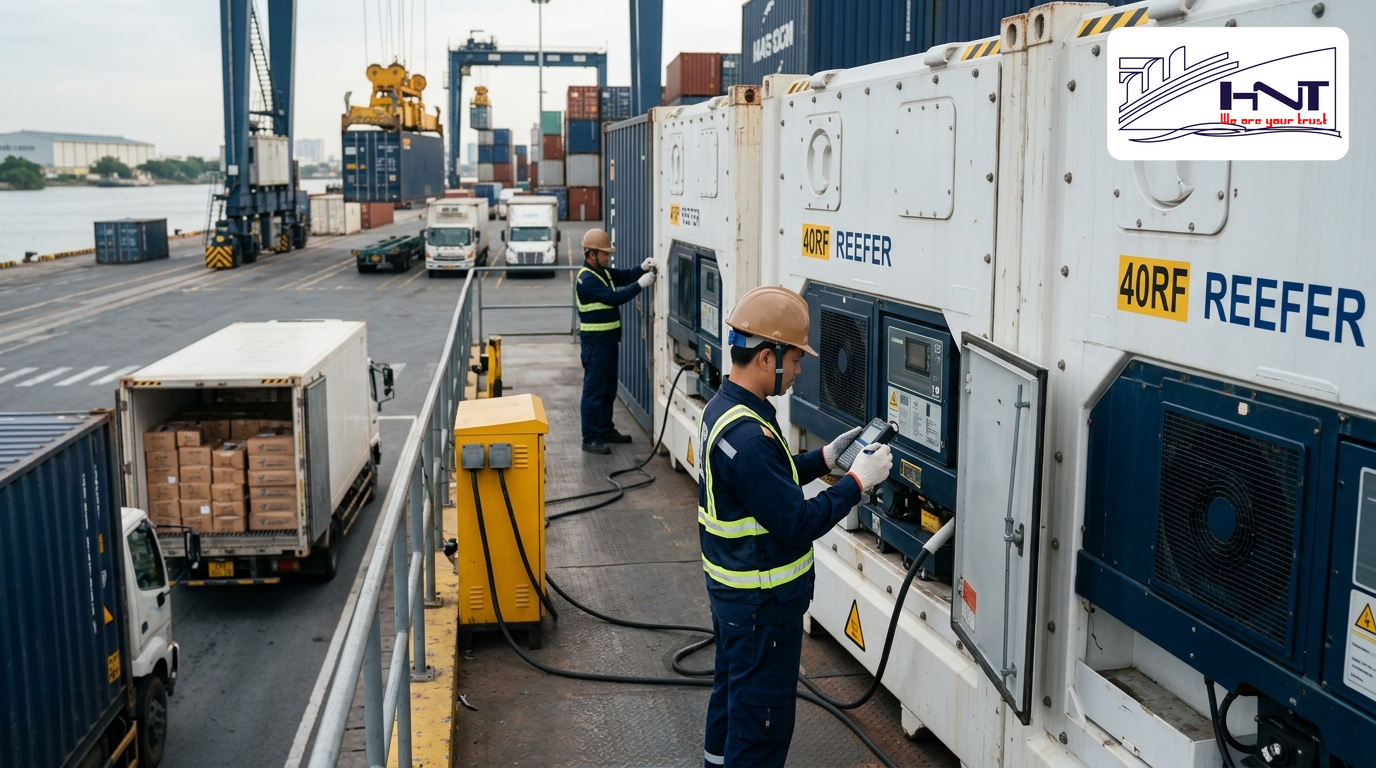
Monitor temperature data in real time to detect abnormalities early
Set review schedules before vessel departure, during transshipment and before destination arrival. Alerts should distinguish between short fluctuations due to door opening, prolonged power loss and continuous deviation. Do not evaluate based on only one measurement point.
Set alert thresholds when temperature exceeds storage limits
Alert thresholds must be recorded in the shipment plan. For example, a yellow alert occurs when temperature exceeds the target level for a predetermined period. A red alert occurs when core temperature is predicted to exceed quality limits or when the container loses power during transshipment.
Important 45RF container parameters when transporting large agricultural shipments
45rf container specifications vary by manufacturer, carrier and container production year. Businesses must confirm internal dimensions, permitted load, maximum stacking height, machine capacity and airflow direction on the actual assigned container. Do not use sample specifications instead of real data.
Handling power loss or temperature fluctuations during transshipment
When there is an alert, request the carrier to confirm power loss duration, container location, temperature before and after the incident. At the same time, prevent setting changes without approval. HNT LOGISTICS recommends preparing an emergency contact list at the transshipment port and destination agent.
| Data to monitor | Frequency | Person in charge | Action when deviating |
|---|---|---|---|
| Set temperature | Each leg | Coordinator | Compare orders |
| Return air temperature | Daily | Cold chain personnel | Trend analysis |
| Power source | During transshipment | Port agent | Request confirmation |
| Sealed | Each handover | Warehouse and site | Create record |
- Assign one contact point to receive temperature alerts day and night.
- Store raw data instead of only saving screenshots at each checkpoint.
- Request power source confirmation at each important transshipment point.
- Do not change settings before evaluating core temperature and buyer requirements.
- Record carrier response time for each alert.
- Compare seal numbers before and after technical intervention.
Conclusion: select containers based on verified container specifications and actual monitoring schedules, not only on quotations.
Practical insight: Why many agricultural shipments still spoil even when the refrigerated container operates normally
The refrigeration unit can operate normally while quality still declines. The cause is often initial core temperature, product respiration, humidity, ethylene and loading method. This explains why container machine reports cannot completely replace product quality checks.
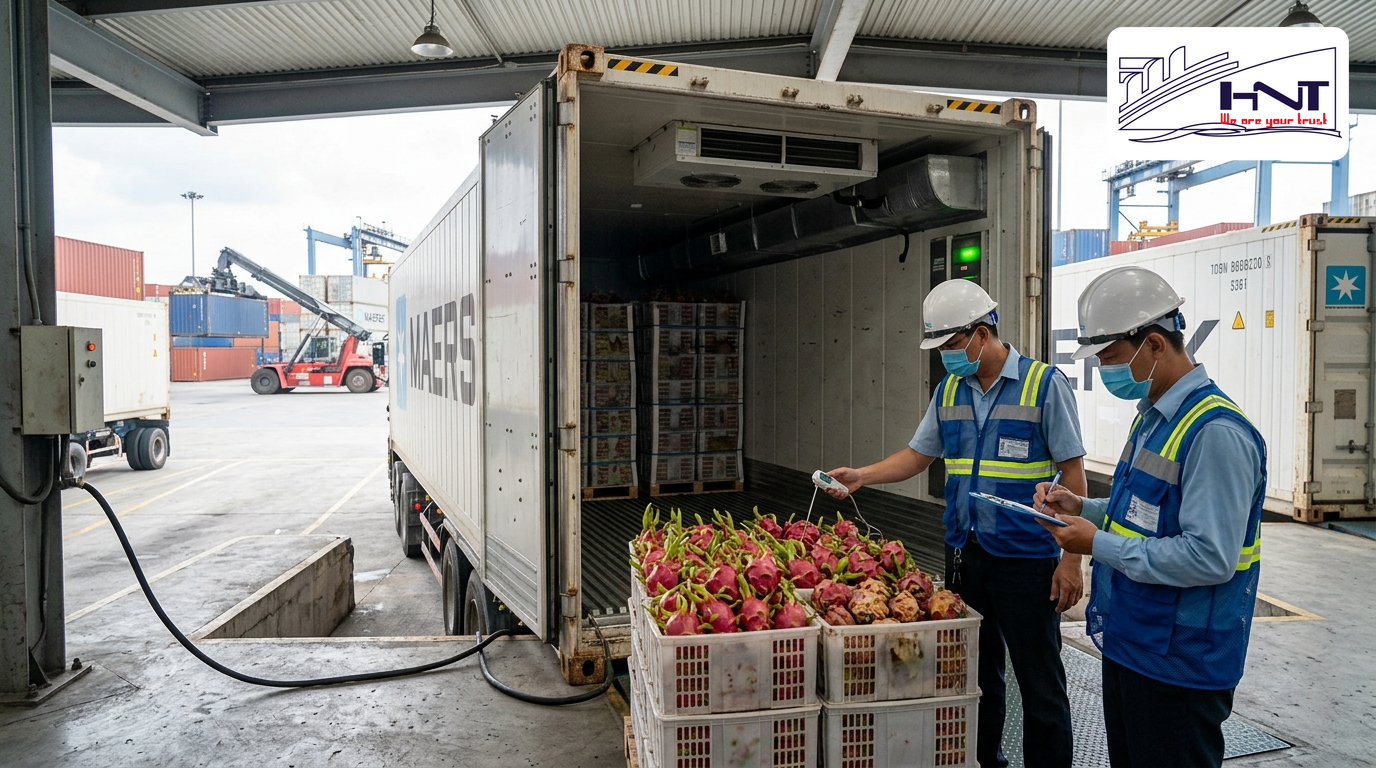
Misunderstanding the role of refrigerated containers in cooling goods
Refrigerated containers are designed to maintain the temperature of already cooled goods. They are not freezing chambers or rapid cooling rooms. When hot goods enter the container, the machine must handle a large heat load while airflow is restricted by pallets and packaging.
The gap between product core temperature and container set temperature
The temperature displayed on the control panel is the target air temperature. Core temperature changes more slowly. Large fruits, thickly stacked cartons and warm goods can maintain high core temperatures for many hours after the container reaches the set temperature.
Impact of humidity, ethylene gas and ventilation on agricultural product quality
Excessive humidity causes water buildup and mold. Low humidity causes dehydration. Ethylene accelerates ripening in many fruits. Ventilation must be controlled according to product type, because incorrect ventilation can cause temperature fluctuations or reduce preservation atmosphere efficiency.
Lessons from loss cases despite no equipment failure
For example, An Binh Agricultural Company in Binh Thuan exported dragon fruit to Rotterdam. The container unit showed no errors, but goods developed condensation because cartons were stacked too closely and initial core temperature was high. After applying pre-cooling and limiting pallet height, the rejection rate at destination decreased by 6 percentage points.
| Sign | Possible causes | Check immediately | Prevention |
|---|---|---|---|
| Wet cartons | Condensation | Packaging ventilation | Pre-cooling |
| Fast ripening goods | High ethylene | Product classification | Separate product groups |
| Hot spot | Block airflow | Pallet layout | Leave technical gaps |
| Water loss | Airflow too strong | Pallet position | Adjust loading |
- Measure core temperature before loading instead of assuming based on warehouse temperature.
- Do not combine products with different ripening speeds and ethylene sensitivity.
- Check ventilation after wrapping pallets, not only before.
- Place temperature recorders at positions with high hot spot risk.
- Evaluate delivery results by actual quality, not only container data.
- Discuss acceptable loss criteria with buyers before shipping.
Conclusion: when analyzing losses, compare temperature data, loading images and incoming core temperature on the same timeline.
Build risk control procedures and temperature monitoring records for each export shipment
Frozen goods transport 40rf requires a complete record from warehouse to receiver. This record helps trace responsibility among packers, cold storage, domestic transport units, carriers and buyers. It also supports handling complaints related to quality or container storage fees.
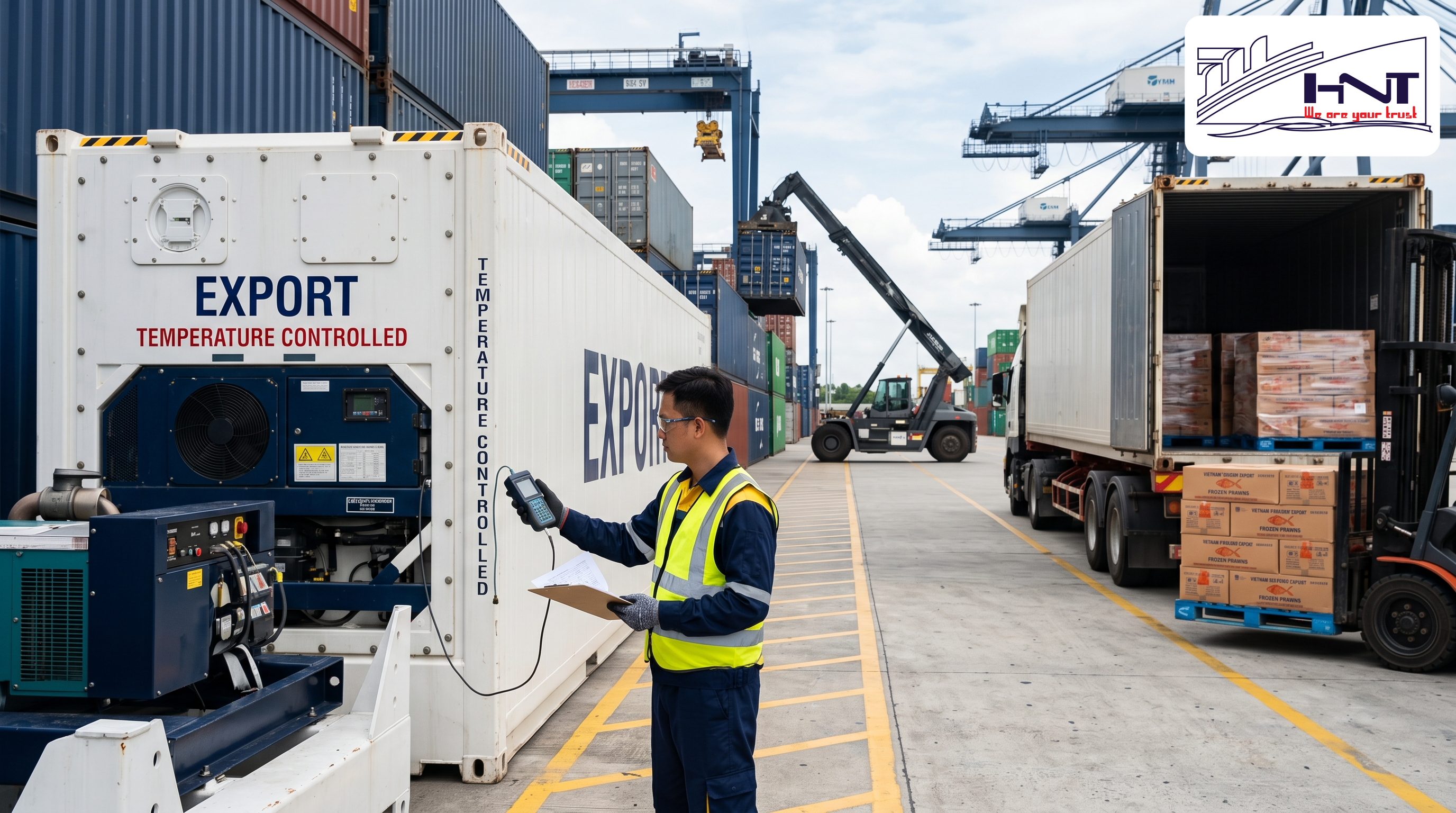
Data list to store for complaints and quality traceability
Store delivery orders, empty container photos, loading photos, core temperature, machine settings, seal numbers, power logs and temperature recorder data. Include phytosanitary certificates, certificates of origin and customs documents according to the import market.
Compare temperature logs with product condition during handover
Do not conclude from only one temperature chart. Match fluctuation times with vessel schedules, power connection times, transshipment points and handover records. For strict markets, store data samples in formats accepted by buyers.
Operational KPIs help evaluate 40RF frozen goods transport efficiency
KPIs should include the rate of shipments reaching target core temperature before loading, on-time alert handling rate, temperature differences between measurement points, damaged carton rate and incident response time. Indicators must be linked to improvement actions, not only reporting.
Criteria for selecting logistics partners with specialized refrigerated container management capability
Prioritize partners with container inspection procedures before loading, journey monitoring capability, contacts at transshipment ports and experience handling complaint records. According to HNT LOGISTICS experts, businesses should request a specific response procedure when temperature exceeds thresholds rather than only asking for freight rates.
| Records | Creation time | Purpose | Person storing |
|---|---|---|---|
| Empty container photos | Before loading | Prove container condition | Operations team |
| Core temperature | Before loading | Input control | Cold storage |
| Temperature log | Throughout journey | Incident traceability | Coordinator |
| Delivery minutes | Destination | Compare losses | Recipient |
- Store site photos with time and container number for each separate shipment.
- Link temperature data with lot code, seal number and corresponding bill of lading.
- Set clear alert response deadlines for each participant in the cold chain.
- Evaluate suppliers by proven incident handling capability.
- Review KPIs after each season to adjust packaging specifications.
- Prepare complaint documents before the container arrives at the destination port.
Conclusion: sustainable frozen goods transport 40rf requires sufficient data, fast response and clear responsibility from the beginning.
To reduce damage, businesses need to control goods before entering the container, not only inspect the refrigeration unit. Start with a consistent process from warehouse, refrigerated truck, port yard to destination port.
- Pre-cooling according to core temperature, not surface feel of the goods.
- Choose packaging with ventilation suitable for agricultural product respiration rate.
- Leave airflow gaps and control load before sealing the container.
- Confirm actual container specifications, especially for 45RF refrigerated containers.
- Set alert thresholds and response contacts throughout the journey.
- Store complete temperature records, site photos and handover documents.
HNT LOGISTICS is a trusted freight forwarding and logistics partner for businesses exporting agricultural products, seafood and fresh fruits nationwide. The company can support reviewing loading layouts, selecting containers, monitoring temperature and completing cold chain documents before export seasons. As a professional transport provider, HNT LOGISTICS is committed to delivering comprehensive supply chain solutions, helping Vietnamese businesses confidently conquer global markets. Contact us today at 8A Hoang Minh Giam, Ho Chi Minh City or via the marketing email at hntshipping.com for quotation support!