


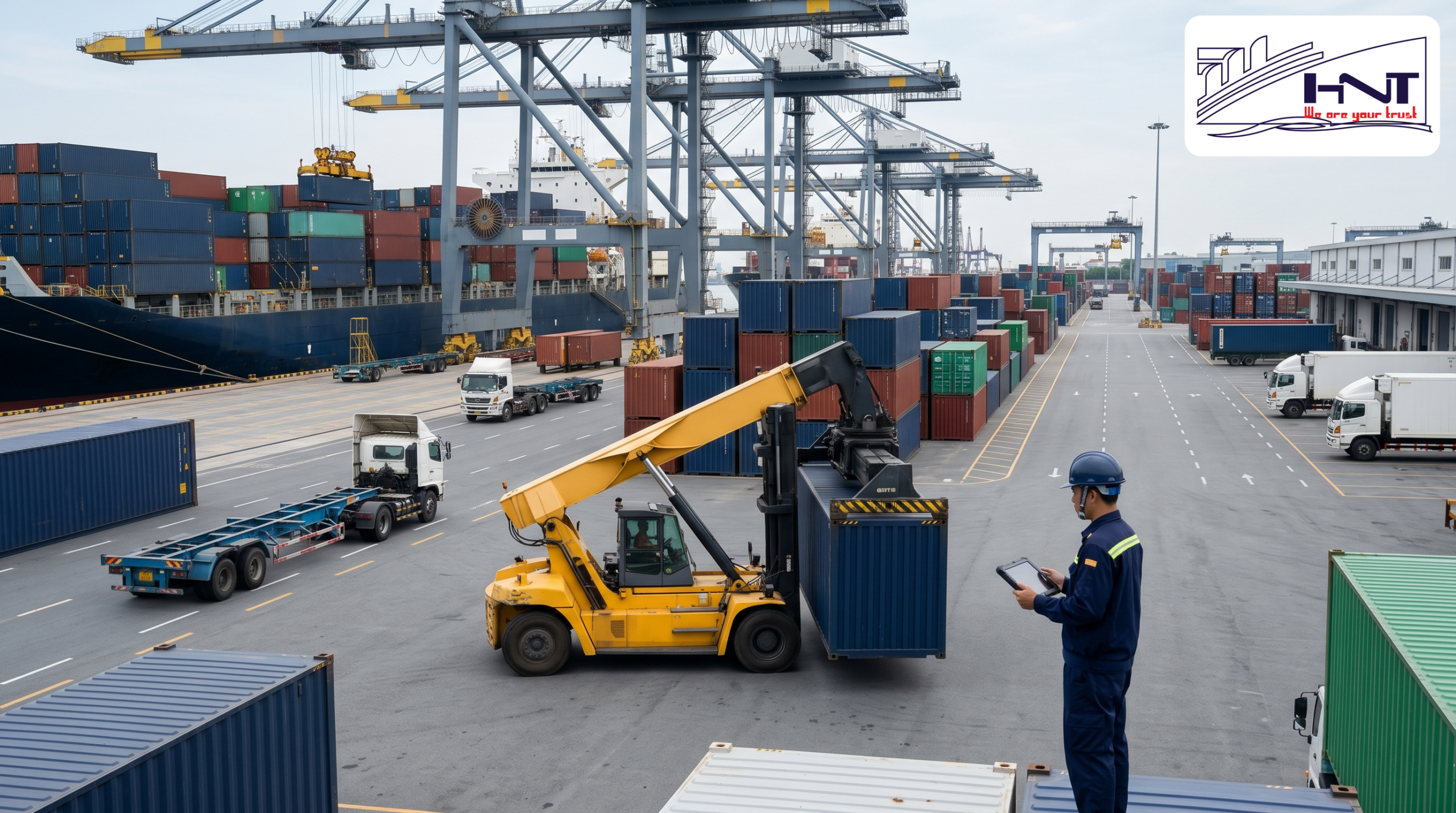
What is Local charge is the question that appears when businesses receive low sea freight quotes but the total cost increases sharply before the vessel departure date. In Q1 2026, Vietnam's exports are estimated to reach 102.8 billion USD; agricultural, forestry and fishery exports reached 15.72 billion USD. This article helps you break down surcharges, allocate responsibilities and control risks before confirming booking.
Freight fluctuations are currently not only in the main transportation costs. UNCTAD recorded that container freight rates remained high and highly volatile in 2026–2026 due to geopolitical tensions, changes in trade policies and supply-demand imbalances. Therefore, a quote should be viewed as a cost structure, not a single figure.
How to read a sea freight quote to identify all Local Charges before confirming booking
To understand what local charge is, first separate the quote into ocean freight, origin port charges, destination port charges and route-based surcharges. A good quote must state the unit of calculation, currency, validity period, applicable conditions and paying party. Do not confirm just because the ocean freight portion is lower than competitors.
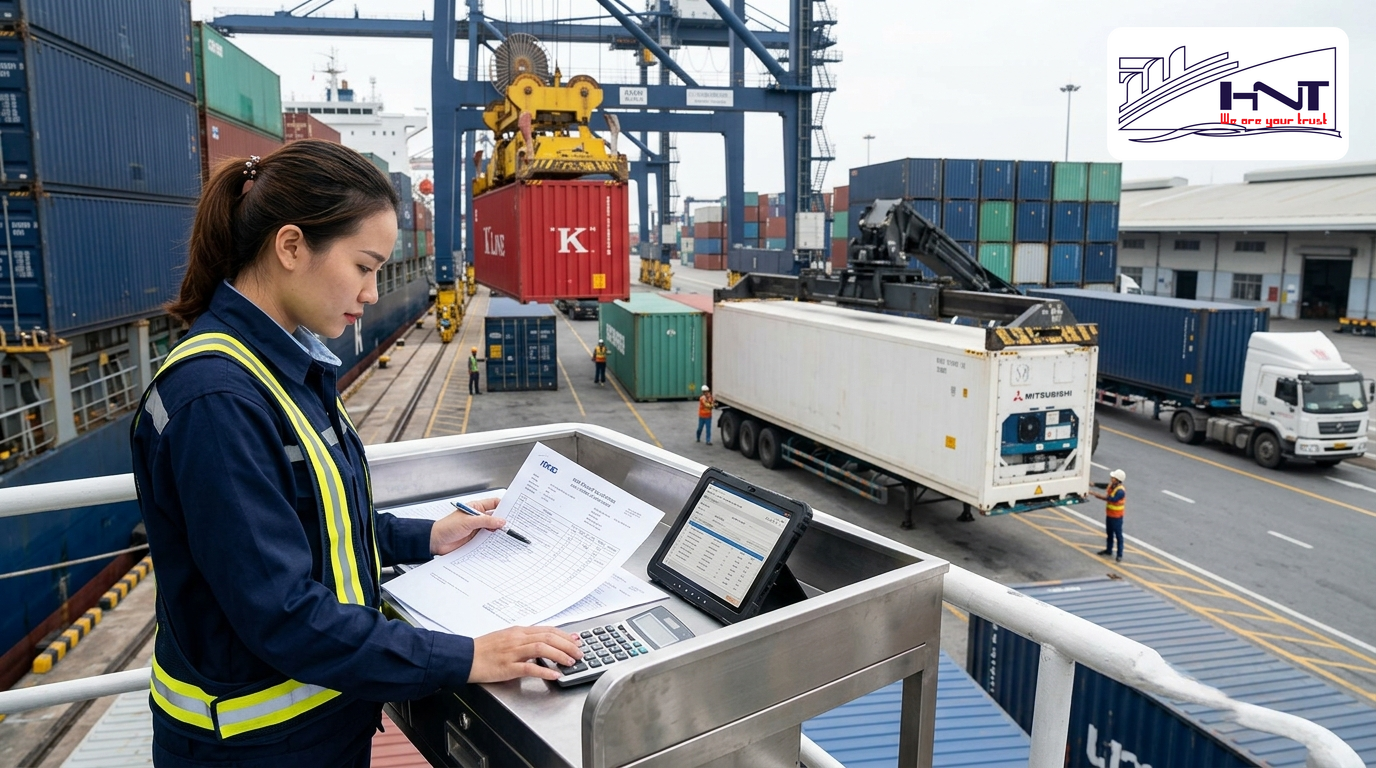
Surcharge items often overlooked when only comparing ocean freight rates
Main ocean freight is usually the most visible part. However, businesses may overlook handling fees, documentation fees, declaration fees, container cleaning fees, delivery order fees and bill of lading issuance fees. For refrigerated cargo, yard power costs, temperature monitoring and plugging-in fees can vary significantly depending on storage time.
- Compare container handling charges at the port for each container type, including 20 feet, 40 feet and refrigerated containers.
- Check documentation fees, bill of lading issuance fees and bill of lading amendment fees after the information closing time.
- Require clear statement of delivery order fees at the destination port, avoiding confusion with receiving agent fees.
- Confirm security declaration fees, customs declaration fees or mandatory data declaration fees according to the market.
- Ask separately about plugging-in fees, temperature monitoring and container cleaning for goods requiring a cold chain.
- Request clear indication of charges that may be adjusted after the cargo loading date or vessel departure date.
Distinguish costs incurred at origin port, destination port and surcharges according to the transportation route
Origin port charges are usually associated with container receipt, yard dropping, documentation and vessel loading. Destination port charges relate to delivery order, cargo arrival handling and obligations under the sales agreement. In contrast, route-based surcharges often change according to season, fuel, container imbalance or market conditions.
| Cost group | Time of incurrence | Person who needs to confirm | Common risks |
|---|---|---|---|
| Origin port | Before vessel departure | Seller or shipper | Missing yard dropping fee |
| Destination port | When goods arrive at port | Buyer or agent | Missing delivery order fee |
| By route | According to surcharge schedule | Shipping line or forwarder | BAF adjustment |
| Refrigerated | During storage period | Cargo owner and port | Yard power fee |
Local Charge comparison checklist between shipping line quotes, forwarders and receiving agents
Use a single comparison sheet for three quote sources. The first column records the fee name. The next columns record the applicable port, unit of calculation, collecting party, paying party and closing time. HNT LOGISTICS recommends requesting written confirmation for all items marked “according to actuals” or “subject to change”.
For example, An Phuc Agricultural Company in Tien Giang exports mangoes in refrigerated containers from Cat Lai Port to Shanghai. The main freight rate was 80 USD lower but excluded plugging-in fees and documentation fees. After comparing all charges, the company chose a quote that was 35 USD higher but reduced the risk of additional costs by approximately 190 USD per container.
Another example, Dong Nam Wood Company in Binh Duong sends a 40-foot container to Rotterdam. The forwarder provides an all-inclusive quote but does not specify the free time for container storage at the destination port. The company requests additional terms before booking, thereby avoiding disputes when the buyer delays cargo pickup by three days.
Practical summary: Do not approve a quotation when there is no table of total costs by each container and each port point.
The Local Charge surcharge group directly affects total logistics costs
Local charge is not a single type of fee. It is a group of auxiliary costs surrounding the sea freight journey. Most charges are valid, but they only have management value when the calculation basis, collection time, and payment responsibility are clearly explained.
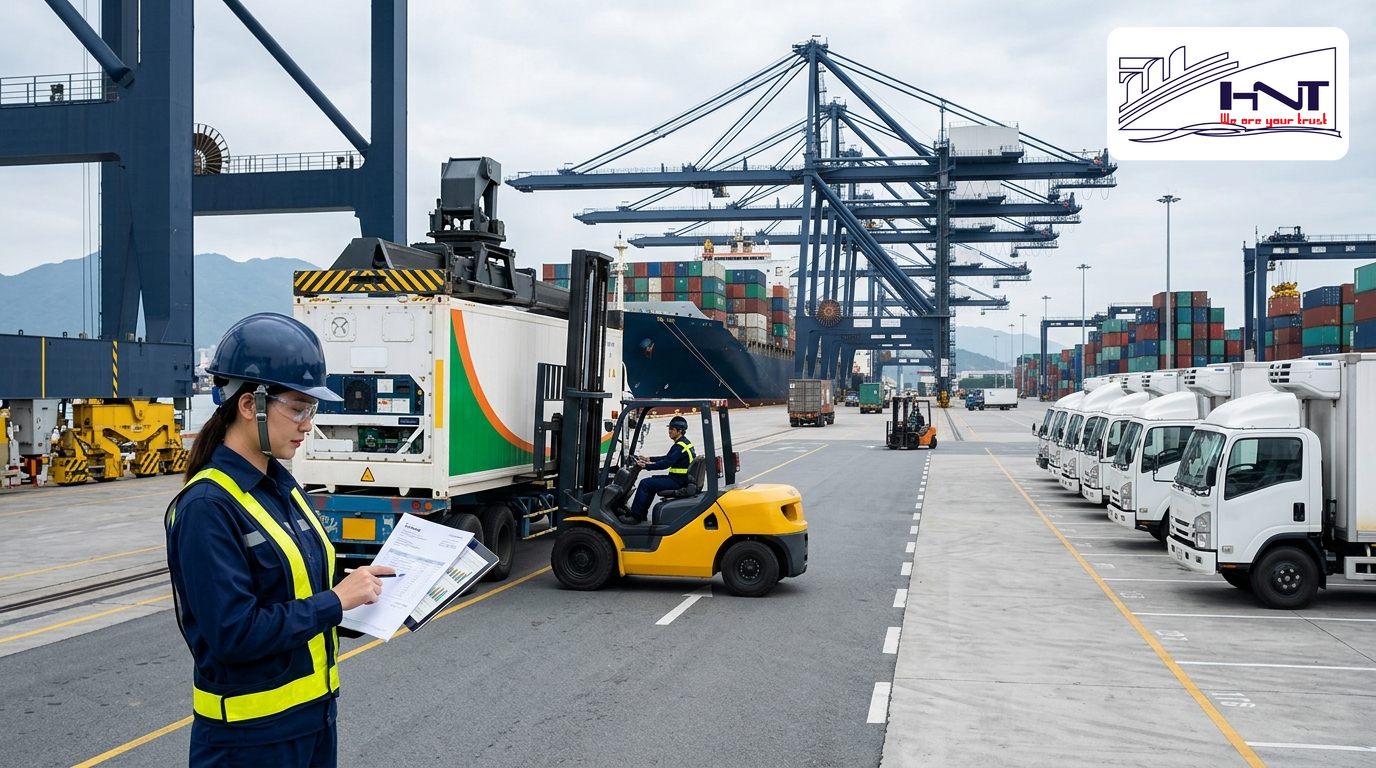
THC, Handling, D/O and mandatory processing fees at the port
Port handling fees, commonly called THC, relate to the activity of moving containers through the port area. Document processing fees relate to paperwork and coordination. D/O delivery order fees arise when receiving the delivery order. These charges differ between shipping lines, ports, forwarders and agents at the destination.
Do not assume THC is already included in ocean freight. Some quotations separate THC at the origin port, while other quotations have already included it in the freight. This difference creates a false impression of low prices. Compare total before-vessel costs instead of only comparing one ocean freight line.
What is BAF and when do fuel surcharges increase freight rates
What is BAF? BAF is a fuel adjustment surcharge, intended to reflect changes in vessel fuel costs. Fuel surcharges are usually announced by shipping lines on a cycle and by route. Some carriers use low-sulfur fuel indexes for calculation and update their fee schedules based on effective dates.
BAF does not mean that shipping lines can charge arbitrarily. The quotation must state the surcharge table, effective time, applicable route and update mechanism. When fuel prices rise or routes have to detour farther, BAF may increase. In that case, exporters need to clearly determine whether the price is locked by booking date or sailing date.
What is CIC and why does container imbalance generate costs
What is CIC fee? CIC is a container imbalance surcharge, applied when a shipping line needs to reposition empty containers to meet demand in a region. This fee is usually more noticeable on routes with unbalanced export and import volumes. CIC may apply by container type and change seasonally.
Businesses should ask about CIC at the time of requesting a quote, not only when receiving a booking. For refrigerated containers, repositioning specialized equipment is even more difficult than dry containers. Based on HNT LOGISTICS experience, fresh fruit shipments should maintain alternative carrier options when reefer equipment availability is scarce.
PSS, GRI, LSS and seasonal or market adjustment surcharges
PSS is a peak season surcharge. GRI is a general rate increase adjustment. LSS may refer to a security surcharge or a specific surcharge depending on each carrier's pricing schedule. Do not assume abbreviations with similar names have the same calculation method. Request an explanation table directly in the quotation.
| Surcharge | Purpose | Fluctuation factors | Control method |
|---|---|---|---|
| THC | Port processing | Port and container type | Consignee confirmation |
| BAF | Fuel adjustment | Fuel prices and routes | Check effective date |
| CIC | Equipment balance | Empty container source | Keep backup options |
| PSS | Peak season | Vessel space demand | Book early |
| GRI | Freight adjustment | Market | Lock price terms |
- Check the full name and definition of each surcharge code in the quotation before signing confirmation.
- Request a breakdown of surcharges by port of departure, port of destination, shipping route, and container type.
- Compare the BAF effective date with the scheduled vessel departure date, not only the quotation date.
- Book early before peak season to reduce the risk of PSS and container shortages.
- Clearly state whether CIC is reserved or adjusted when the shipping line changes voyage or transshipment port.
- Evaluate total cost per container instead of assessing each surcharge individually.
Example, Minh Khoi Seafood Factory in Ca Mau sends two refrigerated containers to Osaka. The vessel schedule is delayed by six days, increasing terminal electricity charges and the risk of BAF adjustment. The business requests confirmation of the new tariff before changing voyage, then switches to another schedule and keeps the cost difference within 41% of the budget.
Second example, Viet Phu Garment Company in Dong Nai exports apparel to Los Angeles. CIC increases before peak season. The company splits the shipment into two batches, keeping part of the space on the early voyage. This solution reduces average CIC cost by 70 USD per container compared to consolidating shipments into one week.
Practical summary: BAF, CIC and PSS must be considered budget variables, not fixed costs.
Industry-specific surcharges in import markets that businesses are likely to incur beyond estimates
Each import market has different requirements for data, documentation, and security controls. Local charges may increase when the shipper declares incorrect information, submits data late, or fails to prepare required documents. This is especially important for agricultural products, seafood, and temperature-controlled goods.
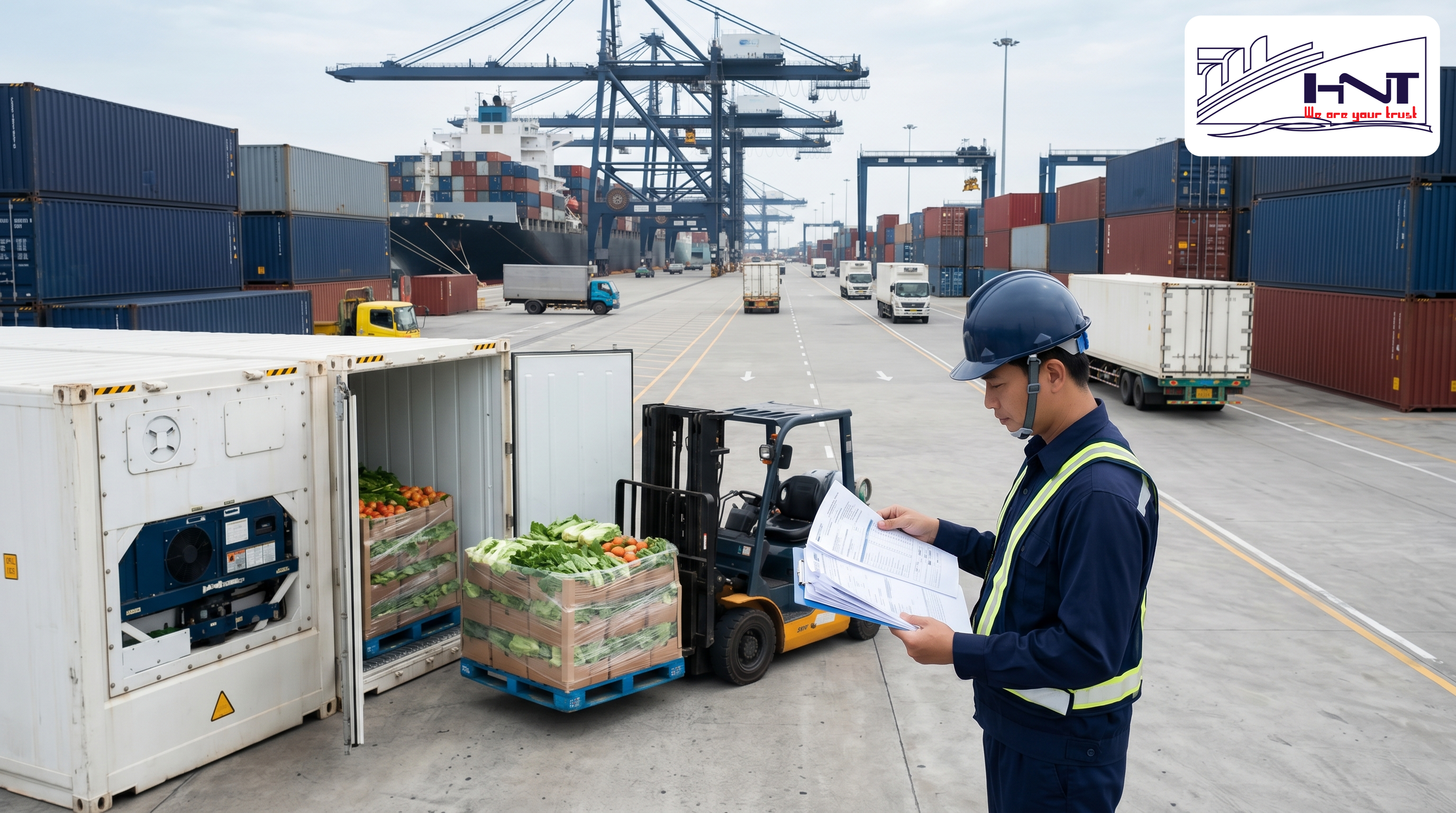
What is AMS fee and when must it be declared for shipments to the US
What is AMS fee? AMS is a fee related to cargo data declaration for the US transport management system. For sea shipments to the United States, cargo data must be transmitted to US Customs and Border Protection within 24 hours before the cargo is loaded onto the vessel at the foreign port.
Exporters should not treat AMS as the sole responsibility of the shipping line. Information on the commercial invoice, packing list, and bill of lading must be consistent. Incorrect consignee names, overly general cargo descriptions, or late changes in information may incur amendment fees, bill correction fees, or the risk of shipment delay.
Common documents and fees when exporting to Canada, EU, and Japan
Canada, the European Union, and Japan have different requirements for trade documents, certificates of origin, quarantine, and labeling. Service fees often arise when businesses apply for, amend, or supplement documents. For food products, quarantine certificates and traceability documentation must be prepared according to each market.
Exporting fruits and vegetables to the European Union requires close monitoring of food safety and plant quarantine requirements. Ministry of Industry and Trade data shows that Vietnam's fruit and vegetable exports to the European Union in the first nine months of 2026 reached 269 million USD, increasing 51.7% compared to the same period.
Difference between surcharges applied to FCL, LCL, and refrigerated containers
Full container load, less than container load, and refrigerated containers have different surcharge structures. FCL is usually charged per container. LCL may be charged by volume, weight, or shipment. Refrigerated containers incur additional costs such as terminal electricity, temperature monitoring, equipment checks, and handling of temperature deviations.
| Cargo type | Common pricing methods | Notable surcharges | Key control |
|---|---|---|---|
| FCL | Per container | THC, CIC, BAF | Check container condition |
| LCL | By volume or weight | Consolidation fee | Verification of conversion |
| Refrigerated container | Per container and time | Yard power, monitoring | Standard temperature recording |
| Dangerous goods | By shipment and equipment | Declaration fee | Submit documents early |
- Check pre-declaration requirements before cargo enters the port, especially for the U.S. and Canadian markets.
- Standardize cargo descriptions on the invoice, packing list, and bill of lading to reduce data amendment fees.
- Verify quarantine requirements, health certificates, or phytosanitary inspections before stuffing refrigerated cargo.
- Separate AMS declaration fees from bill of lading fees, document handling fees, and security fees.
- Request the power connection schedule and temperature inspection report when using refrigerated containers at the port.
- Compare volume-to-weight conversions for LCL cargo before confirming the price.
For example, Phu Tin Fruit Company in Long An exports refrigerated dragon fruit to Long Beach. A staff member entered the consignee's ZIP code incorrectly, requiring the AMS filing to be amended. The company corrected the information before the filing deadline, avoiding rollover to the next vessel and maintaining the cargo temperature at 7°C throughout the voyage.
Another example: Nam Hai Seafood Company in Da Nang exports frozen squid to Yokohama. The company used a 40-foot refrigerated container and requested a port power connection report. Complete documentation helped reduce processing time by nearly 12 hours when a fluctuating temperature signal was detected while waiting for vessel loading.
Practical summary: Market fees are not just declaration costs; they are the cost of preparing data on time.
Who pays Local Charges and how costs are allocated under Incoterms
Local charges can only be controlled when the sales contract and booking use the same cost allocation logic. Incoterms define the point at which responsibility transfers, but they do not replace a detailed list of charges. The contract should clearly specify who pays charges at the port of origin, the port of destination, and any surcharges incurred after the cargo is loaded on board.
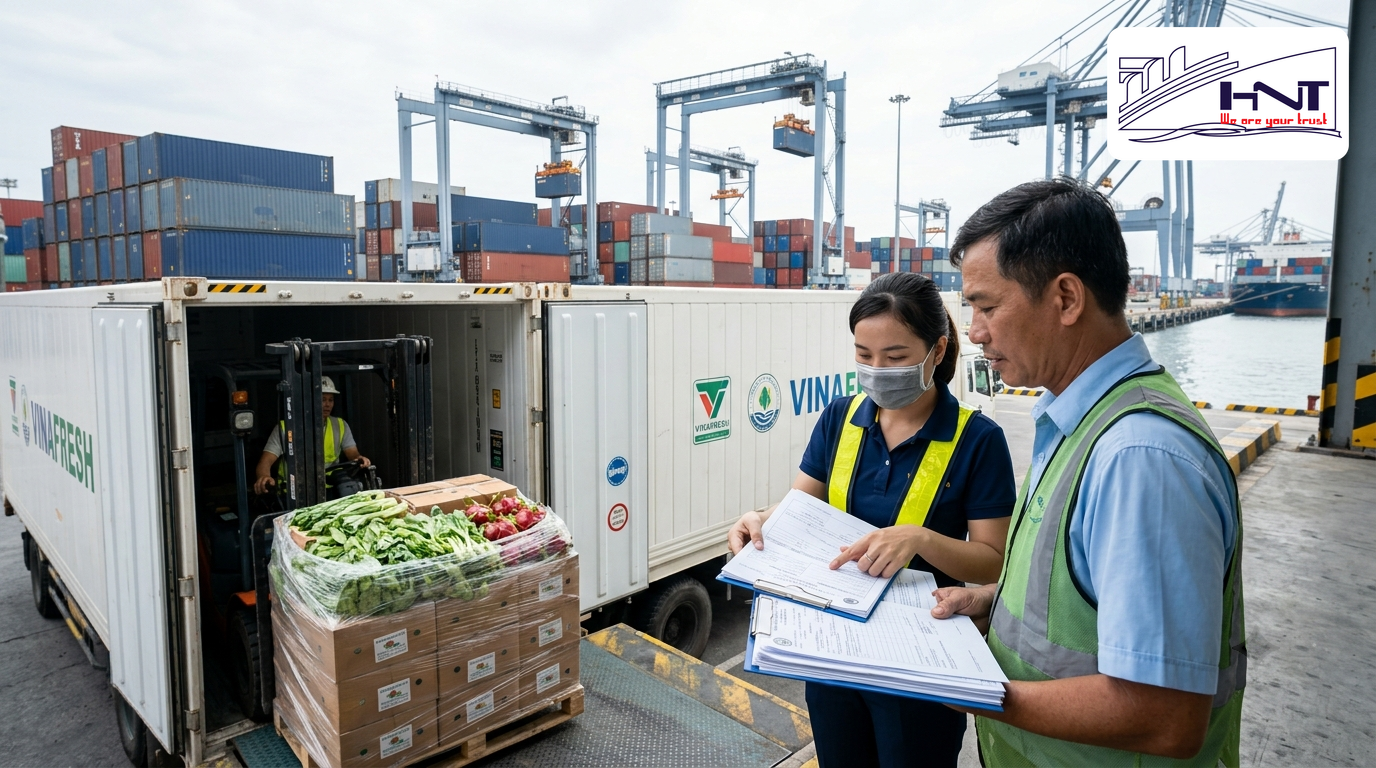
Charges that are the seller's responsibility before delivery
Under many common terms, the seller bears the cost of delivering the goods to the agreed delivery point, loading the cargo, inland transportation, export declaration, and origin port charges. Under FOB, the seller typically bears costs until the goods are delivered on board the vessel under the applicable rules, but THC and documentation fees should be clarified.
Charges the buyer usually pays at the destination port
The buyer usually bears charges after the cargo arrives at the destination port, depending on the delivery term. These may include delivery order fees, agency fees, storage charges, inspection fees, and inland transportation costs in the destination country. Under DDP, the seller has broader obligations and must also account for import duties, customs charges, and inland delivery costs.
Common Local Charge disputes under FOB, CIF, and DDP
Disputes often arise when a quotation states “freight included” without specifying the extent of the coverage. FOB commonly leads to disputes over origin THC. CIF commonly leads to disputes over destination port surcharges. DDP carries the highest risk if the seller has not verified taxes, customs charges, and inland delivery costs.
| Condition | Seller usually pays | Buyer usually pays | Points to clarify |
|---|---|---|---|
| FOB | Costs before loading on board | Freight and subsequent charges | Origin THC |
| CIF | Ocean freight and insurance | Origin charges | Delivery order fee |
| DDP | Most destination charges | Little or none | Import tax |
| FCA | Delivered at the named place | Post-delivery costs | Delivery point |
- List each type of local charge in the pricing appendix instead of only using the phrase “includes all costs”.
- Specify which party bears the costs when cargo incurs storage charges because the buyer is late in receiving documents or making payment.
- Clearly define approval rights before changing the transshipment port, shipping line, or delivery schedule.
- Specify how surcharges resulting from customs inspection, quarantine, or requests for additional documents will be handled.
- Agree on the payment currency, exchange rate, and response deadline for additional invoices.
- Cross-check the Incoterms conditions in the contract, commercial invoice, and shipping instructions.
For example, Tay Nguyen Phat Coffee Company sells goods FOB from Cat Lai Port to Hamburg. The buyer believes the origin THC is their responsibility. The contract appendix clearly states that the seller bears all costs of loading the goods onto the vessel, allowing both parties to resolve the issue within the day without delaying the documentation.
Another example: Minh Thanh Equipment Company in Binh Duong sells under DDP to Toronto. The quotation omitted the destination inspection fee. The business negotiated an additional contingency amount and a liability cap before signing, avoiding responsibility for the full inspection invoice incurred after the cargo arrived at the port.
Practical summary: Incoterms are the framework for dividing responsibilities; the cost appendix is the tool that prevents disputes.
Why do Local Charges vary significantly between providers on the same shipping route?
Differences in quotations are not always a sign that one party has calculated incorrectly. Each provider has a different structure for purchasing vessel space, cargo consolidation capability, documentation fees, and agent network. The important issue is identifying which charges are transparent, which can be adjusted, and which have not yet been included in the price.
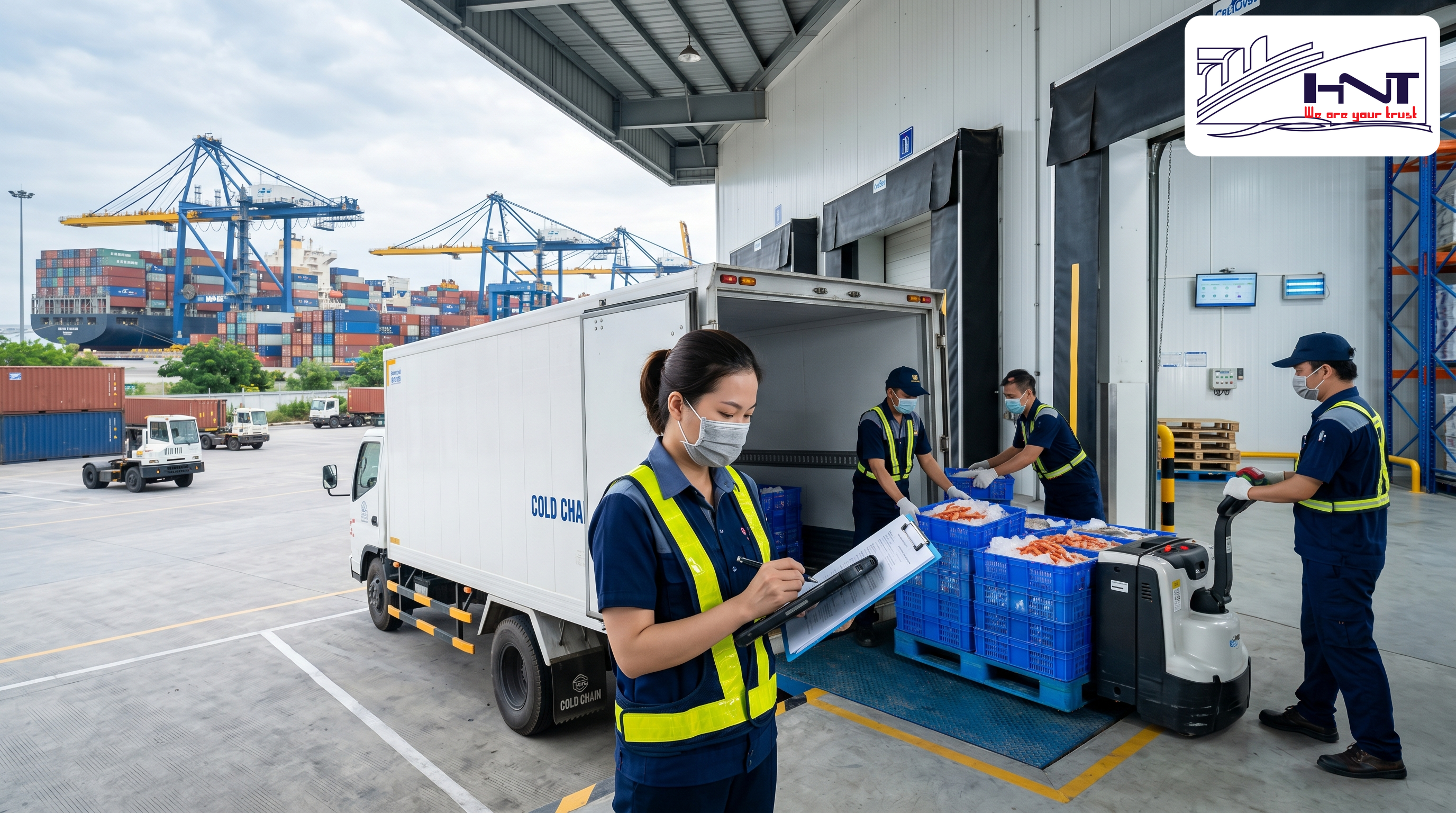
Publicly listed charges and charges that depend on the service provider
Some shipping lines publish BAF schedules, route surcharges, or effective dates. However, document handling fees, service fees, delivery order fees, and agency fees may vary by provider. Do not assume a high fee is unreasonable; ask for an explanation of the scope of work included.
How forwarders optimize or bundle surcharges into all-inclusive quotations
Forwarders may bundle multiple charges into an all-inclusive price so customers can budget more easily. This approach is useful when businesses need a fixed budget. However, an all-inclusive quotation must clearly specify exceptions, including customs inspection, storage, document amendments, charges caused by the consignee's delayed cargo pickup, and fees imposed by government authorities.
Signs that a quotation may lead to unexpected additional charges after the cargo has been loaded onto the vessel
Common signs include missing validity dates, missing port names, unspecified container types, stating “as incurred” without a calculation method, or quoting only the ocean freight. According to experts at HNT LOGISTICS, businesses should refuse to confirm a booking when the quotation does not clearly specify who has the authority to update surcharges after ETD.
| Sign | Meaning | Risk | Action |
|---|---|---|---|
| Price includes ocean freight only | Missing port charges | Budget overrun | Request a detailed breakdown |
| No validity date | Price not locked | Increase BAF | Record the effective date |
| No origin charge specified | Payer not specified | Dispute | Finalize Incoterms |
| No free period stated | Missing equipment conditions | Container demurrage fees | Ask about the number of free days |
- Request a quotation that clearly separates ocean freight, route-specific surcharges, and local service charges.
- Request that the quotation specify the port of loading, port of discharge, and final delivery point if using an all-inclusive quote.
- Check whether the quotation includes the fuel surcharge, container imbalance charge, and peak season surcharge.
- Ask about the applicable conditions in case of voyage changes, vessel changes, or transshipment through another port.
- Compare the free storage period and free container time instead of only comparing the base freight.
- Keep the approved quotation version for future invoice reconciliation.
For example, Loc Viet Furniture Company in Dong Nai receives three quotations for shipments to Sydney. The lowest quotation does not include the destination handling charge. After adding all charges, this price is USD 110 higher per container than the second option. The company chooses the provider with a transparent cost breakdown and clear terms for handling additional charges.
Another example, Phuong Nam Cashew Company in Binh Phuoc exports to Dubai. One freight forwarder provides an all-inclusive quotation but notes an exception for the bill of lading amendment fee. The business reviews it before issuing the documents and reduces the risk of urgent amendment charges during the vessel's sailing week.
Practical summary: The lowest quotation is not necessarily the best quotation; the quotation that can be controlled is the one that has value.
Local Charge control process to avoid cost overruns and delivery delays
What is Local Charge control in practice? It is the management process from requesting a quotation to reconciling the invoice. A good process should include control points before the contract, after booking, before the vessel departs, during transit, and after the shipment is completed. Each point should have a clearly assigned person in charge.
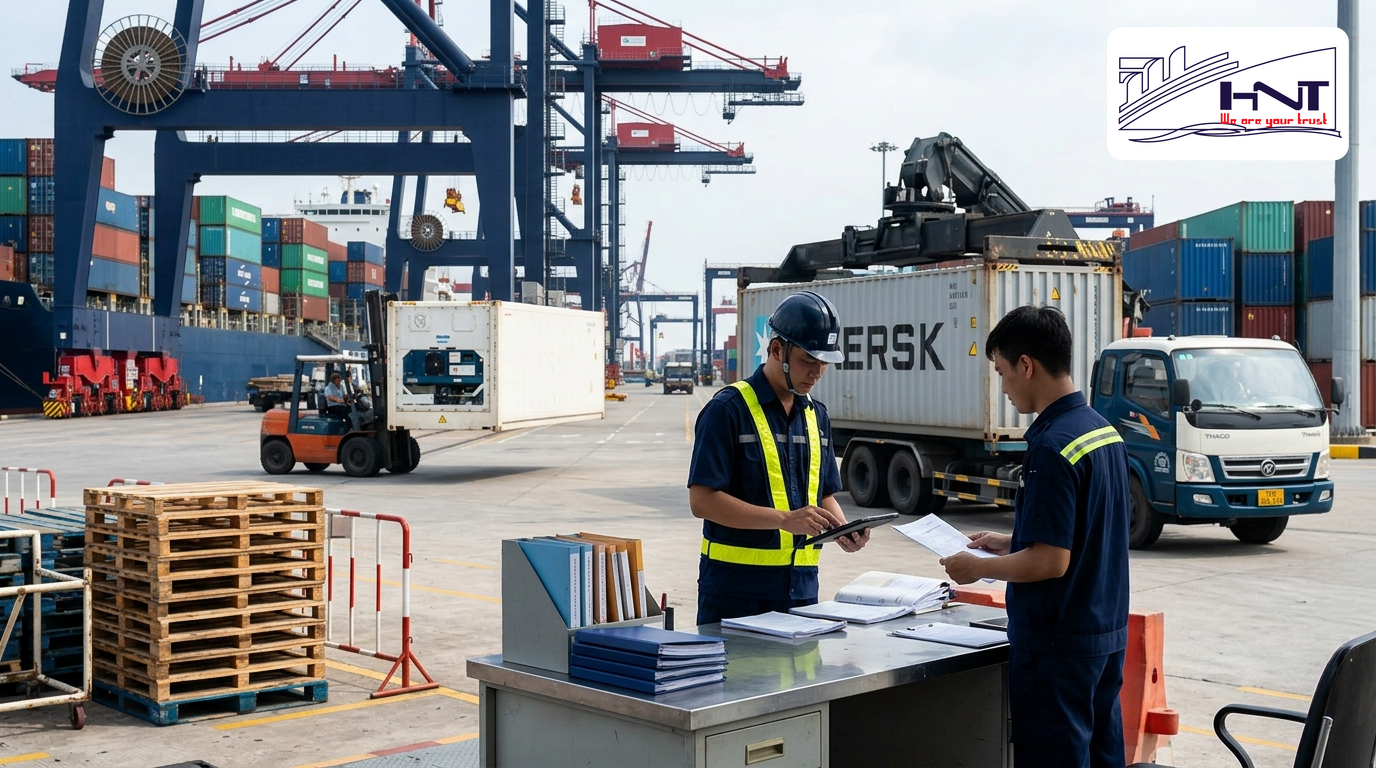
Items to confirm before signing an international shipping contract
Before the contract, confirm the route, container type, cargo ready date, quotation validity, applicable surcharges, number of free days, and payment terms. Clearly distinguish costs controlled by the supplier from costs determined by the shipping line, port, or regulatory authorities.
Check surcharges immediately after receiving the booking confirmation and SI
After receiving the booking confirmation and shipping instructions, recheck the vessel name, voyage, transshipment port, container type, container delivery deadline, document submission deadline, and declaration deadline. This is the time to identify charges not included in the quotation. Do not wait until the invoice is issued to reconcile them.
Handling situations where the shipping line updates surcharges while the cargo is in transit
When the shipping line updates surcharges, first determine the effective date and the contractual basis. Then compare them with the booking date, loading date, and reservation clause. If the charge is valid but has a significant impact, the business should immediately notify the buyer and request supporting documents or an official notice.
Store documents and reconcile costs after the shipment is completed
The reconciliation file includes the approved quotation, booking, surcharge confirmation, bill of lading, invoice, container report, and destination documents. Import-export documentation consulting should be standardized by route so staff can easily verify them. Proper recordkeeping helps identify systematic discrepancies and improve the budget for future shipments.
| Phase | Checklist | Person in charge | Expected outcome |
|---|---|---|---|
| Request a quotation | Surcharge table | Logistics procurement | Estimated total cost |
| Booking | Booking confirmation | Export coordination | Lock schedule and charges |
| Before vessel departure | SI and draft bill of lading | Documentation | Data submitted on time |
| In transit | Surcharge notification | Logistics management | Handle changes |
| After delivery | Invoice and documents | Accounting | Reconciliation completed |
- Create a total cost template for each container type and each frequently used ocean shipping route.
- Assign one person to approve all surcharges outside the previously signed quotation before payment.
- Reconcile the booking confirmation with the quotation within one business day of receipt.
- Check the AMS filing deadline, SI deadline, and container yard cutoff to avoid amendment or late fees.
- Keep a variance report between estimated and actual costs for each completed shipment.
- Evaluate suppliers based on surcharge transparency, not just the initial freight rate.
For example, Dong Thap Xanh Fruit and Vegetable Company exports refrigerated jackfruit to Busan. Staff use the pre-booking checklist and discover that the power connection fee has not been listed. The shipping line confirms the fee on the same day, helping the company adjust its selling price before issuing the commercial invoice.
Another example: Nam Viet Components Company in Hai Phong ships goods to Vancouver. When receiving a surcharge notice during transit, the company compares the effective date with the confirmed booking. The charge does not comply with the agreed terms, so the freight forwarder adjusts it before issuing the final invoice.
Practical summary: Effective cost control starts with the first document, not the final invoice.
Correctly understanding what is local charge helps businesses avoid being misled by low ocean freight rates. The goal is not to eliminate every surcharge. The goal is to know which charges are valid, who is responsible, when they can be adjusted, and how to respond to changes.
- Compare the total cost per container, not just the initially advertised ocean freight rate.
- Require the applicable port, effective date, unit of calculation, and paying party to be clearly stated for each charge.
- Check BAF, CIC, PSS, and reefer plug-in charges separately for seasonal or refrigerated shipments.
- Standardize documentation data to minimize AMS fees, bill of lading amendment fees, and late filing risks.
- Include Local Charge in the contract appendix according to FOB, CIF, or DDP terms.
- Store reconciliation records to identify suppliers with transparent and stable surcharges.
HNT LOGISTICS is a reputable freight forwarding and logistics partner for businesses exporting agricultural products, seafood, and fresh fruits from Vietnam. When needing to build route-based cost tables, select refrigerated containers, or review surcharges before booking, businesses should apply a control process from quotation to final shipment reconciliation to protect profit margins and delivery schedules. As a professional transportation provider, HNT LOGISTICS is committed to delivering comprehensive supply chain solutions, helping Vietnamese businesses confidently conquer global markets. Contact us today at 8A Hoang Minh Giam, Ho Chi Minh City or via the marketing email at hntshipping.com for quotation support!