When looking into shipping to hai phong, a container arriving on schedule at Hai Phong does not mean the cargo will be delivered as planned. Businesses must also handle the container pick-up or return point, free storage time limits, yard drop-off schedules, customs procedures, truck dispatch, quarantine and the warehouse's capacity to receive goods. If just one link is delayed by a few hours, waiting costs for vehicles, container storage charges or changes to the vessel schedule can arise immediately.
So, the question of shipping to hai phong needs to be viewed as a continuous operational chain across seaports, the ICD, container depots, shipping lines, transport operators and factories. For FCL, cold-chain or export agricultural cargo, choosing the wrong transshipment point may not raise freight rates much at first, but it can sharply increase total logistics costs through lifting charges, yard changes, empty runs or procedural waiting.
For shipping to Hai Phong, HNT Logistics approaches the Hai Phong route by controlling the entire journey rather than quoting a single truck leg. The operating plan is built from the booking, container type, discharge port, container pick-up location and packing time, through specialist procedures to factory delivery schedules, helping businesses identify costs and risks before the container starts to move.
Shipping to Hai Phong via ICD and Depot Systems: The Role of the Northern Container Transshipment Network
Differences between ICDs, container depots and seaports in the Hai Phong shipping chain
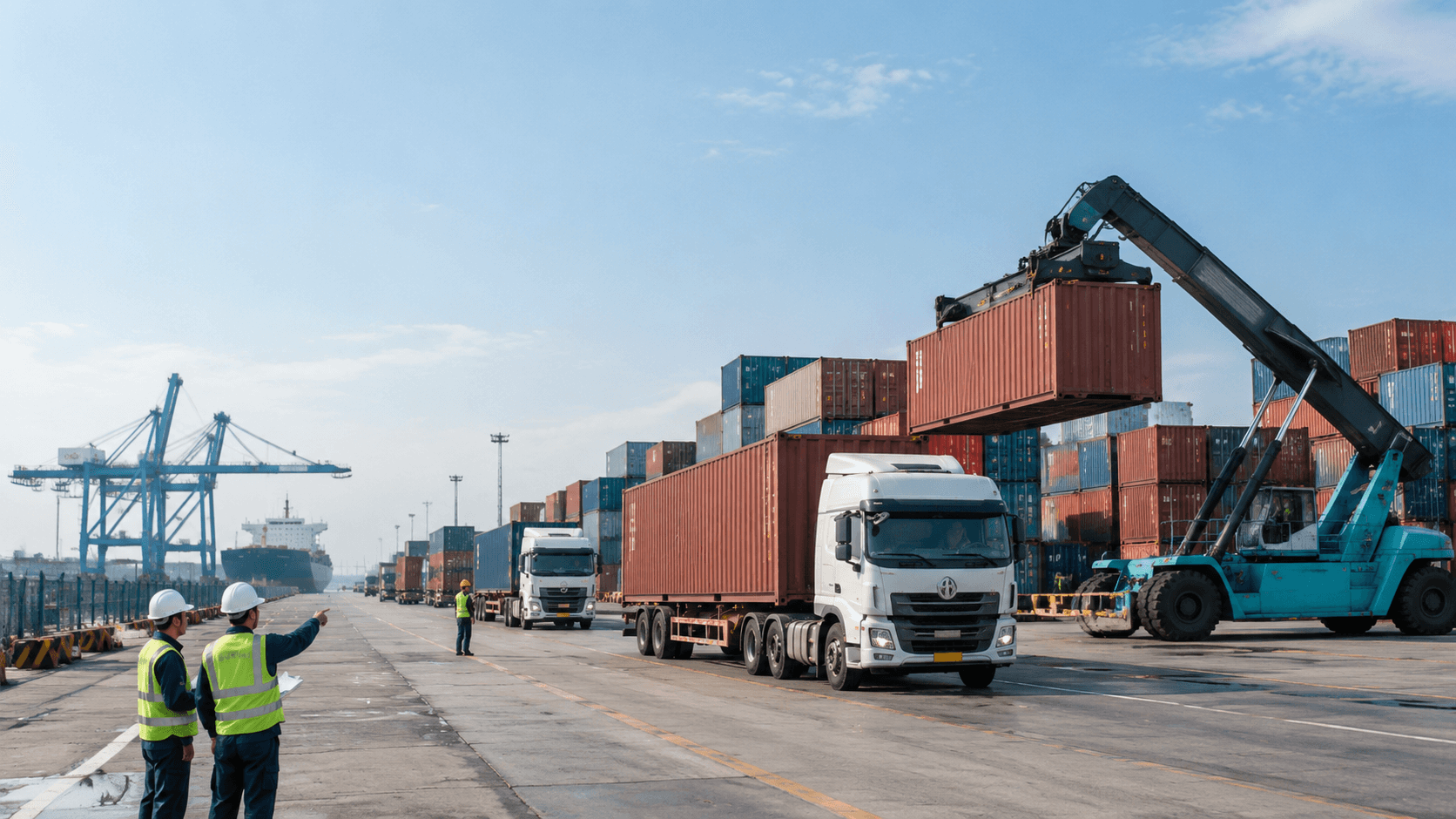
During transport and customs clearance for shipping to Hai Phong, the three concepts of ICD, depot and seaport are often used interchangeably, but their operational functions differ clearly. A seaport is where ships berth, containers are loaded and unloaded and international transport is connected. A depot mainly serves storage, release and return of empty containers, inspection and hull repair. An ICD is an inland customs or transshipment point that can combine warehousing, cargo consolidation, container handling and the connection of several transport modes.
| Category | ICD | Container depot | Seaport |
|---|---|---|---|
| Main role | Transshipment, cargo consolidation, container handling and procedural support according to licensed functions | Container storage, release and return of empties, inspection and container repair | Ship loading and unloading, yard storage and handling of import and export containers |
| Operating scope | Laden containers, consolidated cargo, road vehicles and domestic cargo flows | Mainly empty containers and shipping line equipment | Import and export containers, bulk cargo and general cargo depending on the berth |
| Relationship with shipping lines | May be a designated point in the container pick-up or return chain, or a transshipment point | Often designated by shipping lines to release or receive empty containers | The terminal that handles container exchange with vessels and cargo owners |
| Common risks | Choosing the wrong point adds extra truck legs or lifts | Lack of the correct container type, or containers not fit for loading | Gate congestion, cut-off times, yard storage and vessel schedule changes |
In practice shipping to hai phong, the pick-up location for empty containers does not necessarily match the port where laden containers are discharged. A booking may specify collecting the empty at a depot, hauling it to the packing factory, then discharging it at a different terminal. Businesses should therefore read the container release order, booking confirmation and shipping line instructions carefully before dispatching trucks, rather than assuming pick-up and return happen at the same place.
The functions of the Hai Phong ICD in consolidating cargo, storing containers and connecting factories
To optimise costs and schedules for shipping to Hai Phong, Hai Phong ICD and hinterland transshipment points help separate part of the logistics operations from the quay area. For businesses with factories in Hai Phong, Hai Duong, Bac Ninh, Bac Giang, Hung Yen or Hanoi, this model helps organise containers according to production schedules and reduces the pressure to bring all vehicles into the terminal at the same time.
Based on HNT Logistics practical operating experience with shipping to Hai Phong, the greatest value of an ICD lies not in adding one more stop but in its ability to synchronise cargo, containers and vehicles. When the plan is sound, containers can be taken to a suitable transshipment point before delivery to the factory or discharge at port. Conversely, if the ICD is not on the optimal route, businesses may bear extra costs for container haulage, lifts and vehicle turnaround time.
For factories handling large container volumes, planning container trucking from Hai Phong port around production time slots also helps reduce trucks arriving at the warehouse before cargo is ready to pack, or containers that are packed but cannot yet be discharged at port. HNT Logistics typically checks three key milestones before confirming vehicle dispatch schedules: the time the factory is ready, the time the terminal accepts containers and the booking cut-off.
How businesses choose the right transshipment point based on cargo type, transport route and delivery time
A suitable transshipment point must be selected from actual transport flows, not based only on listed lift fees. For heavy cargo, the distance laden containers travel strongly affects costs. For reefer containers, power supply, temperature monitoring and waiting time matter more. For export cargo close to vessel cut-off, the distance from depot to factory and from factory to terminal must be calculated backwards from the cut-off.
A plan with lower haulage rates may require long empty running, two lifts and depot waiting, making it more expensive than it first appeared. Businesses should calculate total cost by container cycle, including collecting the empty, empty movement, packing, laden movement, terminal discharge, waiting time and incidental charges, rather than comparing the price of each leg separately.
Shipping to Hai Phong combined with Hai Phong seaports: analysing cargo flows through the import-export gateway
The role of Hai Phong seaports in connecting domestic and international container traffic
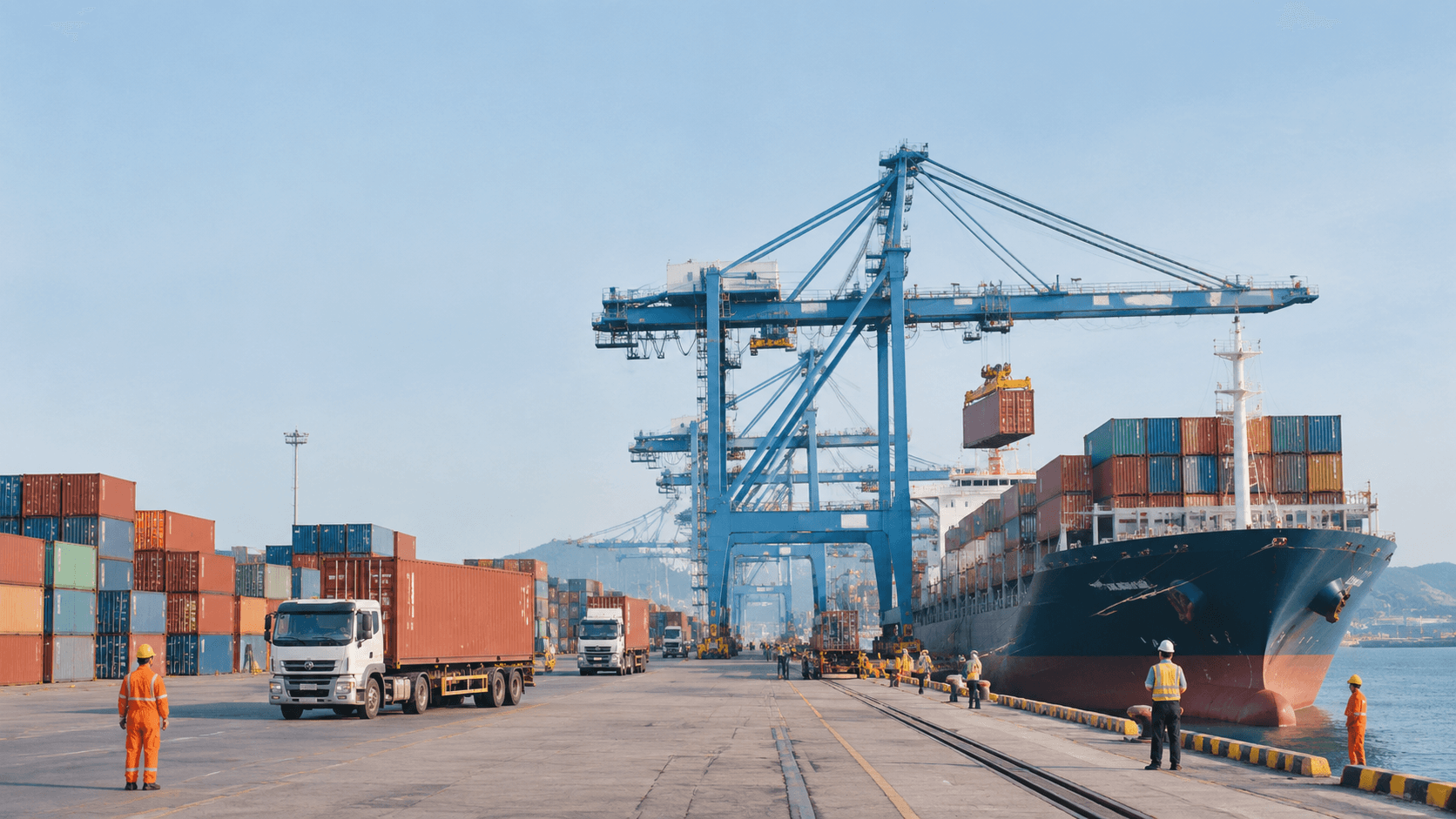
Hai Phong is the key seaport hub of the North, with a system of berths stretching from the Cam River area and Dinh Vu to the deep-water gateway of Lach Huyen. The national seaport master plan designates Lach Huyen as one of the priority international gateway port zones; in June 2026 the area received the container ship MATZ MAERSK of nearly 214,000 DWT in a lightened condition.
When businesses look into the seaports in Hai Phong, it is necessary to distinguish between Hai Phong seaport as a whole and each specific terminal or berth. Each terminal has different shipping routes, shipping lines, receiving conditions, working hours and handover procedures. The container points businesses often consider include the Tan Vu, Dinh Vu, Nam Dinh Vu and VIP GreenPort areas and the Lach Huyen deep-water berth system.
| Typical area or berth | Operating features to note | Significance for cargo owners |
|---|---|---|
| Creek District | Deep-water berth area, positioned as an international gateway, capable of receiving large-capacity container ships | Suitable for international routes and bookings designated by shipping lines at terminals in the area |
| Tan Vu | Large container handling area, connected to the Hai Phong road network | Check the terminal, pick-up and delivery hours and gate conditions before dispatching trucks |
| Dinh Vu | Concentrates many berths and logistics facilities, depots and warehouses | Convenient for connecting the depot – factory – port chain, but the correct terminal must be identified |
| Nam Dinh Vu | The port and logistics zone is developing downstream | It can create favourable handling options for certain bookings and transport routes |
| VIP GreenPort | Container berth in the Dinh Vu area; the managing authority has announced its container handling function | Shipping line bookings must be checked before planning container discharge |
According to public information from Vietnam Maritime and Inland Waterway Administration, VIP GreenPort is a container terminal within Hai Phong seaport, and the Hai Phong area has many berths with different handling functions. This shows that the term “Hai Phong port” on a transport plan is not enough to dispatch trucks; the logistics team must identify the correct terminal, location code and booking.
The link between seaports, the Hai Phong ICD, container depots and the truck fleet
A FCL export container typically passes through at least four control points: the empty release point, the packing factory, the terminal for discharge and the vessel. The tractor truck is the link connecting these points. If the empty release order changes but the truck fleet is not updated promptly, vehicles may go to the wrong depot, losing pick-up time and affecting the whole packing schedule behind it.
For import cargo, the flow runs in reverse: the container is discharged from the vessel at the terminal, completes delivery conditions and related procedures, then trucks collect the laden container for delivery to the factory. After stripping the cargo, the empty container must be returned to the designated depot. Returning it to the wrong place or past the deadline may incur container usage charges beyond the free period.
Dispatch solutions for FCL, reefer and export agricultural cargo through the Hai Phong area
Dry FCL cargo prioritises control of weight, container condition, packing schedule and cut-off. Reefer containers are more complex because, besides these factors, they also involve set temperature, ventilation, humidity or controlled-atmosphere settings depending on the goods. Fresh agricultural products also carry requirements for plant quarantine, growing areas, packing facilities and the conditions of the import market.
Common reefer equipment can maintain a wide temperature range; Maersk equipment documentation shows that some standard reefer containers operate at roughly -26°C to +30°C, while specialised equipment may go lower. However, the container's temperature range must not be used as the default storage temperature for the goods. The set-point must be taken from the technical requirements of each agricultural product, the cargo owner and the import market.
For fruit exported to China, businesses must also check the protocol or quarantine requirements applicable to each product. Vietnam's plant protection authority continues to update requirements on growing areas, packing facilities and quarantine; in 2026, guidance has been issued on implementing the protocol for fresh pomelo and fresh lime exported to China.
Hai Phong shipping process via ICD: from container receipt to delivery at the factory warehouse
Checking shipment information, booking, container type and building a multimodal transport plan
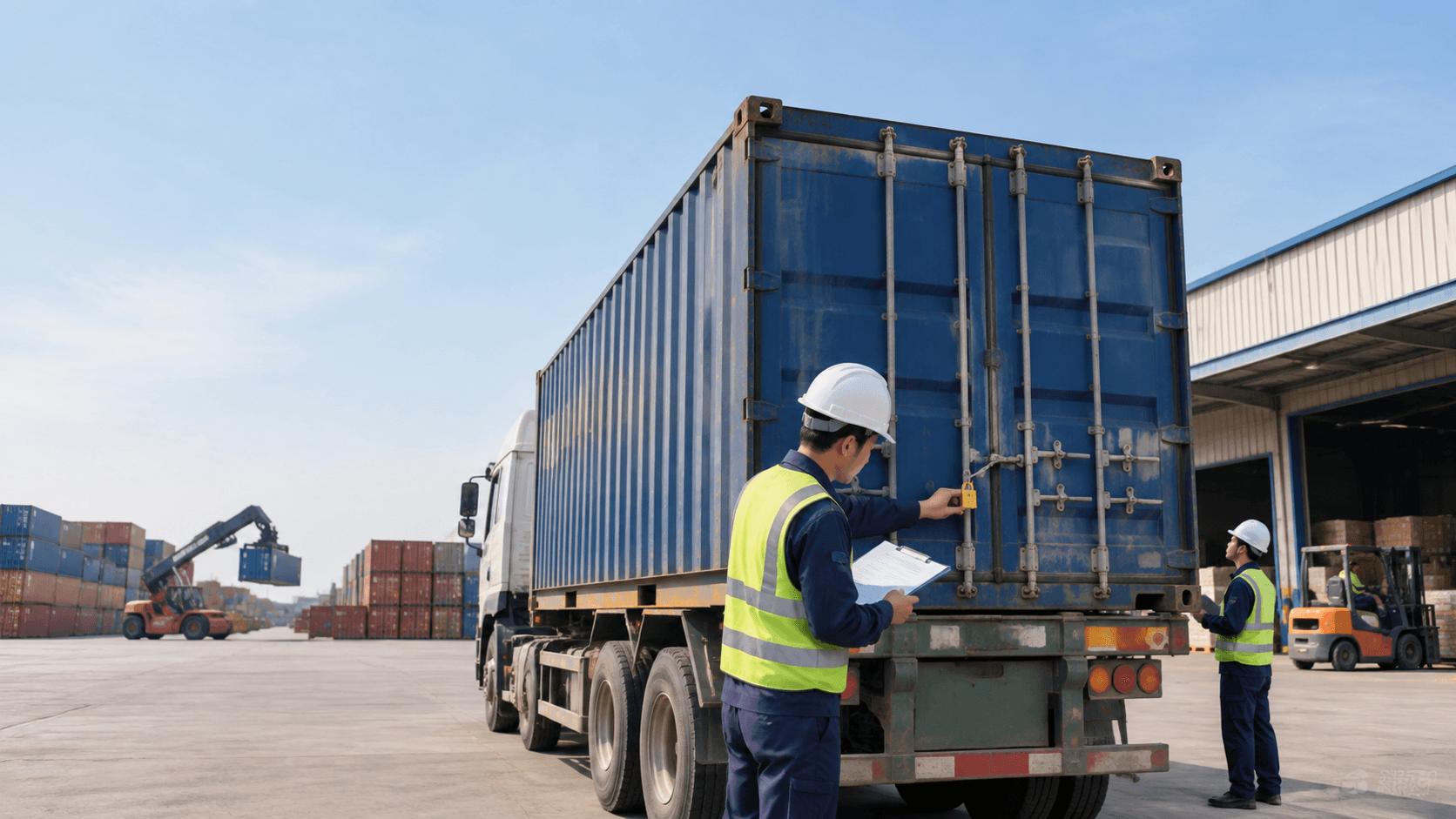
The first step is not booking a truck but checking the shipment data. The coordinator needs to identify the cargo name, expected HS code, weight, number of packages, container type, packing or stripping location, booking, shipping line, terminal, depot for empty pick-up or return, document cut-off, container cut-off and the time the factory can accept vehicles.
If the route involves several transport modes, the plan must clearly define the handover points of responsibility. For example, a container may travel by road from the factory to the ICD, then continue to the port or combine another mode depending on the operating network. Each handover needs consistent container, seal, EIR and cargo status data to avoid discrepancies between documents and reality.
For businesses that require container trucking from Hai Phong port regularly, HNT Logistics recommends planning by individual booking rather than using one fixed truck schedule for all shipments. Shipping lines may change the empty release point, the discharge terminal or the vessel schedule, so the latest booking data must be the operating basis at the time the truck is actually dispatched.
Container receipt at the depot includes checking the shell, seal, EIR and updating the operating status
When the truck arrives at the depot to collect an empty container, the driver and dispatcher must check the container number against the release order, inspect its external condition and suitability for use before leaving the yard. For dry containers, faults such as holed walls, damaged floors, doors that do not close tightly or unusual odours can affect the cargo. For reefers, pay particular attention to the condition of the refrigeration unit and PTI requirements where the booking calls for them.
EIR – Equipment Interchange Receipt is an important document recording the handover of equipment between parties at the transfer point. The container number, equipment condition, handover time and any abnormal remarks should be checked immediately at the depot. If damage already exists but is not recorded at the outset, determining responsibility when returning the container can become more difficult.
A seal should only be applied once the container has been fully packed according to the cargo owner's procedure. After sealing, the seal number must be recorded consistently across all related documents. For export cargo, a mismatch of container or seal number between the packing list, shipping instruction, customs declaration or shipping line data is a minor formal error but can cost time in last-minute corrections before vessel cut-off.
Coordination between ICD, shipping lines, transport operators and businesses to control delivery schedules
A transport provider that only watches the pick-up time will struggle to control the whole chain. Coordinators must simultaneously track container status, shipping line instructions, the time the factory completes packing, declaration status, quarantine schedules if any, terminal container acceptance hours and cut-off. Any change to these milestones must be reflected in the truck schedule immediately to limit vehicle waiting time that adds no value.
HNT Logistics typically divides progress into easily controlled stages such as waiting for empty release, empty collected, truck arrived at factory, packing in progress, packed and sealed, in transit, discharged at terminal or delivered to factory. Tracking by stage helps the logistics lead identify bottlenecks before they become vehicle waiting, yard or warehouse costs, or missed sailings.
Hai Phong ICD, container and cargo transshipment cost specifications in detail

Comparison table of ICD, depot and seaport functions by role in the logistics chain
When budgeting shipping to hai phong, businesses should treat the ICD, depot and terminal as three different groups of handling points. The number of points a container passes through determines the number of lifts, transport legs and processing time. The table below helps the purchasing or logistics team identify which charges should be queried before requesting quotations.
| Handling point | Typical activities | Data to be checked | Cost risk |
|---|---|---|---|
| ICD | Transshipment, yard storage, lifts, consolidation or handover according to function | Working hours, location, storage period limits and handover procedures | Yard storage, lifts and additional truck legs |
| Depot | Release and return of empty containers, inspection and repair | Empty release order, container type, container condition | Waiting for container, container swap, empty running, disputed repair |
| Port terminal | Receiving and delivering laden containers, ship loading and unloading | Booking, cut-off, port code, customs declaration status | Yard storage, lifts, vessel schedule changes, gate waiting |
Analysis table of 20-foot and 40-foot containers, reefer containers and operating suitability for each cargo type
Container specifications may vary slightly by shipping line, manufacturer and equipment series, so the figures below are for preliminary planning. When actually packing, the specifications on the container door and the shipping line's equipment documentation must take priority. Maersk currently operates popular types such as 20 ft dry, 40 ft dry, 40 ft high cube and 40 ft high cube reefer.
| Type of Container | Reference external dimensions | Reference capacity | Reference payload | Suitable cargo groups |
|---|---|---|---|---|
| 20′ Dry | 6,058 x 2,438 x 2,591 mm | Approximately 33.2 m³ | Approx. 28.3 tonnes depending on equipment | Dry cargo, heavy cargo, raw materials, packaged machinery |
| 40′ Dry | 12,192 x 2,438 x 2,591 mm | Approximately 67.7 m³ | Approx. 28.8 tonnes depending on equipment | Bulky dry cargo, palletised cargo |
| 40′ High Cube | 12,192 x 2,438 x 2,896 mm | Approx. 76.4 m³ | Approx. 28.7 tonnes depending on equipment | Light but bulky cargo, cargo requiring additional height |
| 20′ Reefer | 6,058 x 2,438 x 2,591 mm | Approx. 27-28 m³ | Approx. 27.5-27.8 tonnes | Food, agricultural produce or medium-volume temperature-controlled cargo |
| 40′ HC Reefer | 12,192 x 2,438 x 2,896 mm | Approximately 67.5 m³ | Approx. 29.5-29.7 tonnes | Fresh produce, frozen food, large-volume cold-chain cargo |
Reefer containers have lower usable volume than dry containers of the same external size, because space must be reserved for insulation, the refrigeration unit and airflow. For a 40 ft high cube reefer, Maersk documentation states a volume of approximately 67.5 m³ and a payload of roughly 29.5 tonnes depending on series. Businesses should not calculate pallet numbers based only on theoretical volume but must maintain the airflow clearance required by the technical specifications.
Table of cost components including lifting, yard storage, domestic transport and vehicle waiting time
There is no single “shipping to Hai Phong” rate applicable to every shipment. Total cost depends on the port, depot, shipping line, container type, cargo weight, handover points, free time and handling conditions on the day of execution. The cost table should be used as a control framework so that logistics providers quote all components from the outset.
| Cost group | How it is incurred | Factors that increase costs | Control method |
|---|---|---|---|
| Domestic shipping | By route, vehicle or container type and pick-up or delivery points | Distance, heavy cargo, multiple delivery points, time restrictions | Confirm addresses and traffic flow before quoting |
| Container lifting/loading and unloading | Charges at the depot, ICD or terminal according to the applicable tariff | Passing through several transshipment points or changing containers | Reducing unnecessary handover points |
| Storage fees | Based on container or cargo time in the yard after the free period | Delays in documents, customs inspection, quarantine or factory delivery | Preparing documents before cargo arrives |
| Vehicle waiting time | Charges incurred while trucks wait for packing or stripping, or wait at the gate | Warehouse not ready, labour shortage, terminal congestion | Book slots and confirm times before dispatching trucks |
| Refrigeration | Applies to reefers during power connection in the yard | Waiting for quarantine or delayed loading onto the vessel | Synchronising quarantine, yard drop-off and vessel schedule |
| Container-related charges | Equipment use beyond the free time under shipping line conditions | Delayed stripping or late container return | Monitoring free time and empty return depot |
When receiving a quotation, the key question is what the scope covers. A low haulage rate that does not include lifts, vehicle waiting, out-of-hours charges or depot change costs may make the final budget higher than a complete initial quotation. Businesses should require the additional charge conditions and how each item is calculated to be set out before confirming transport.
Table of documents, quarantine and procedures to prepare when transporting cargo through the Hai Phong ICD
Documents must be prepared according to the import-export type and the policy for each cargo. A fixed checklist should not be used for every shipment. For cargo subject to specialist inspection, document processing time must be built into the transport plan, because a container may reach port first but still not meet customs clearance conditions, which can still generate yard storage and delivery delays.
| Documents and information | Control purpose | Operational notes |
|---|---|---|
| Commercial Invoice | Value and commercial transaction information | Checking cargo name, quantity and trade terms |
| Packing List | Packing specifications, number of packages and weight | Checking actual packing and container against the documents |
| Booking | Confirming vessel, voyage, terminal and deadlines | Monitoring changes from the shipping line |
| Bill of Lading and Shipping Instruction | Sea transport information | Checking container, seal, shipper and consignee |
| Customs declaration form | Carrying out import and export procedures | Checking HS code, cargo policy and declaration location |
| C/O where applicable | Certificate of origin | Checking the C/O sample and origin criteria by market |
| Inspection certificate | Meeting quarantine requirements for controlled goods | Planning sampling and certificate issuance time |
| Growing area code and packing facility | Meeting import market requirements for related agricultural produce | Checking the rules applicable to each product and market |
Declaration must comply regulations of customs authorities and the specialist management policies in force at the time the declaration is opened. HS code, tariff rate, licences or specialist inspection requirements should not be determined solely from the trade name of the goods. Technical documentation and the actual nature of the product are the key basis for review.
For plant quarantine on exports, the specialist authority publishes the procedure for issuing phytosanitary certificates and related requirements. Agricultural exporters should check the importing country's specific rules before packing, particularly for fresh fruit that requires growing area codes, packing facility codes or quarantine treatment measures.
Shipping to Hai Phong by truck and ICD connection solutions with warehouses and industrial parks in the North
Choosing tractor heads, trucks and vehicles suited to each cargo group
Trucks shipping to Hai Phong should be selected according to the actual transport operator, not just cargo weight. FCL cargo requires a tractor head and trailer compatible with the container. Less-than-container or warehouse-delivery cargo may use trucks suited to load and size. Cold-chain cargo requires vehicles or containers with a temperature control system and corresponding power supply throughout the journey.
For heavy containers, the plan must also check vehicle load limits and traffic regulations on the route. A container with a technical payload of nearly 28-29 tonnes does not mean the vehicle is allowed to travel at every load on every road. Cargo weight must be calculated together with container tare, tractor, trailer and actual operating limits.
Safety control for dry and reefer containers during road transshipment
Dry containers must be controlled for door locks, seals, container condition and cargo lashing where needed. Cargo must not be distributed unevenly, as this can affect stability when the vehicle turns or brakes. For moisture-sensitive cargo, the cargo owner must determine desiccant requirements, packaging and container conditions in advance rather than dealing with condensation after it is found.
Reefer containers must maintain the cold chain from before packing until handover. Cargo temperature before loading is particularly important, because reefers mainly maintain conditions already set rather than acting as rapid freezers for warm cargo. Cold air must circulate beneath the T-bar floor and return to the refrigeration unit without being blocked by pallets or goods.
During road transport, coordinators must monitor the set-point, refrigeration unit status and any incidents that may affect power supply or journey time. If the container has to stop for longer than expected, the operations team needs a set procedure rather than checking temperature data only at the point of delivery.
Journey tracking, vehicle dispatch and handling of delivery delay risks
GPS tracking only shows where a vehicle is, which is not enough to manage container handover. An effective dispatch system must match vehicle position with booking status, port conditions, warehouse receiving times and the shipment deadline. When one truck is delayed, the coordinator needs to know immediately which shipment is at risk of missing cut-off and which truck can be reassigned.
HNT Logistics applies operational milestone management: truck arrival at depot, container pick-up time, arrival at factory, packing or stripping time, departure from the warehouse and entry to the terminal. Analysing these milestones across many trips reveals hidden costs. For example, a warehouse that regularly takes two hours to begin stripping cargo creates repeated vehicle waiting costs even when the route rate does not change.
Optimising the Hai Phong to Hanoi transport route to reduce turnaround time and logistics costs
Online cargo transport from Hai Phong to Hanoi has the advantage of relatively direct road connections, with the Hanoi – Hai Phong expressway as the key axis linking production zones and the port system. Sector management documents also recognise the role of the expressway and the Tan Vu – Lach Huyen bridge in connecting the Hai Phong port system with the transport network behind the port.
However, optimisation is not simply choosing the shortest route. The dispatch team must consider the container pick-up point, terminal, factory location, time or vehicle restrictions, traffic density and the ability to turn around for the next trip. If the outbound and return legs can be organised sensibly, the business reduces the distance run empty and increases the number of working cycles for each tractor head.
For the Hanoi – Hai Phong route with stable volume, businesses should analyse costs per cycle rather than per one-way leg. A truck that delivers an import container to Hanoi and can then collect an export container scheduled back to Hai Phong will perform better than two separate trips with one leg running empty. This is the foundation of network-based fleet dispatch.
HNT Logistics optimises safe shipping to Hai Phong via the ICD and seaport system
Combining sea transport, road transport, customs declaration and container management in one synchronised process
The difficulty of import-export logistics lies not solely in sea or road transport but in the intersections between the two systems. Vessels have their own schedules, ports have their own processes, customs has its own document requirements and factories operate to production plans. If each provider optimises only its own part, the cargo owner still has to manage the gaps between stages internally.
HNT Logistics organises the plan in the direction of multimodal transportationconnecting container transport, customs declaration, port coordination and domestic delivery into one data flow. For each shipment, container, document and vehicle milestones must be updated in sync so that the client's import-export team knows where the cargo is and which conditions the next step depends on.
When using multimodal transportation for routes with several transshipment points, the goal is not to increase the number of modes but to reduce total time and total cost. The plan should only add an ICD or transshipment point when it creates real benefits in consolidation, time, equipment capacity or network connectivity.
Solutions for exporting fresh agricultural products with strict quarantine and preservation requirements
For fresh produce, a deviation of a few hours can have a greater impact than a truck waiting charge. Product quality continues to change during transport, so the harvest, pre-processing, packing, pre-cooling, container stuffing, quarantine and port discharge schedules must be treated as one chain. A reefer container cannot fully compensate for cargo that was mishandled before packing.
For fruit exported to China, each product may have specific requirements for growing area codes, packing facilities, quarantine targets and documentation. Information from the plant protection authority in 2026 continues to show that protocols are implemented product by product, so a document set for one fruit should not be copied to another.
The transport plan should lock parameters such as the set-point, ventilation, pre-cooling requirements, expected packing time and the maximum time the container may be without power. For sensitive products, temperature data should be stored to support traceability if a quality dispute arises. This step is necessary to move cold-chain management from experience to data.
Building flexible logistics solutions that help businesses control costs, schedules and cargo safety
A good plan always has a contingency. A depot may lack the right container type, a vessel may change schedule, a terminal may be congested, a factory may pack late or specialist procedures may take longer than expected. Therefore, before dispatching trucks, the logistics provider should identify which points can change and which must be held firm so the whole journey is not disrupted.
Three indicators should be tracked by businesses in parallel: actual cost per container, the rate of milestones met on time, and the number of additional waiting hours. Looking only at haulage rates hides many operational problems. Once sufficient data accumulates, businesses can identify which depots regularly cause long waits, which factories have long cargo stripping times, or which routes often generate empty running.
For shipments involving import-export procedures, HNT Logistics also reviews documents in line with regulations of customs authorities and the applicable specialist requirements. HNT Logistics also recommends that businesses cross-check terminal information, cargo flows and planning from Vietnam Maritime and Inland Waterway Administration or the competent management authority when verifying important operational data.
HNT Logistics provides transport via the Hai Phong ICD, Hai Phong seaports and intermodal routes suited to business needs
HNT Logistics focuses on FCL container transport by sea and road, container haulage at the Hai Phong port clusters, North – South cold-chain container transport, customs declaration, C/O, plant quarantine and international intermodal routes for Vietnam – Laos – China. This capability allows businesses to work with a single coordinating point throughout, rather than connecting several separate providers themselves.
When receiving a request shipping to hai phongthe HNT Logistics team needs minimum data including cargo name, pick-up point, delivery point, quantity, weight, container type, booking if already available and required timing. For cold cargo, temperature and storage requirements must be added; for import-export cargo, documents and cargo policy are reviewed before the transport schedule is confirmed.
The value of a logistics plan lies not in offering the lowest haulage rate, but in clarifying total cost, the operating route, each party's responsibilities and the risks that may arise before cargo starts to move. This is how HNT Logistics approaches container shipments passing through the ICD and the Hai Phong seaport system.
Businesses planning shipping to Hai Phong, container haulage at Dinh Vu, Tan Vu or Lach Huyen, or connecting Hai Phong with Hanoi and northern industrial zones, can contact HNT Logistics to check the route, container type and delivery plan before booking trucks.