The cost of transporting a container in Ho Chi Minh City is not limited to the tractor fare from the port to the factory. For import-export cargo, the timing of container pickup, the drop-off location, waiting time, lifting charges, DEM/DET and how well the seaport and ICD are coordinated can all change the total cost significantly. It is therefore important to correctly understand the role of ICD Transimex, ICD Phuc Long, ICD Song Than and the depot network in the eastern area of Ho Chi Minh City have a direct impact on the logistics plans of cargo owners.
An effective approach views the ICD as one link in the entire chain, from the shipping line, seaports, customs and container yards through to the factory, rather than merely a place to drop off containers. This article analyses how to operate an ICD, document flows, FCL containers, reefer containers, costs and practical dispatch options. Distances and costs are given for reference only; businesses should reconfirm them against the route, the ICD tariff, the shipping line and the actual handling time.
What Is an ICD Transimex? Its Role as an Inland Container Depot in the Container Logistics Chain in Ho Chi Minh City
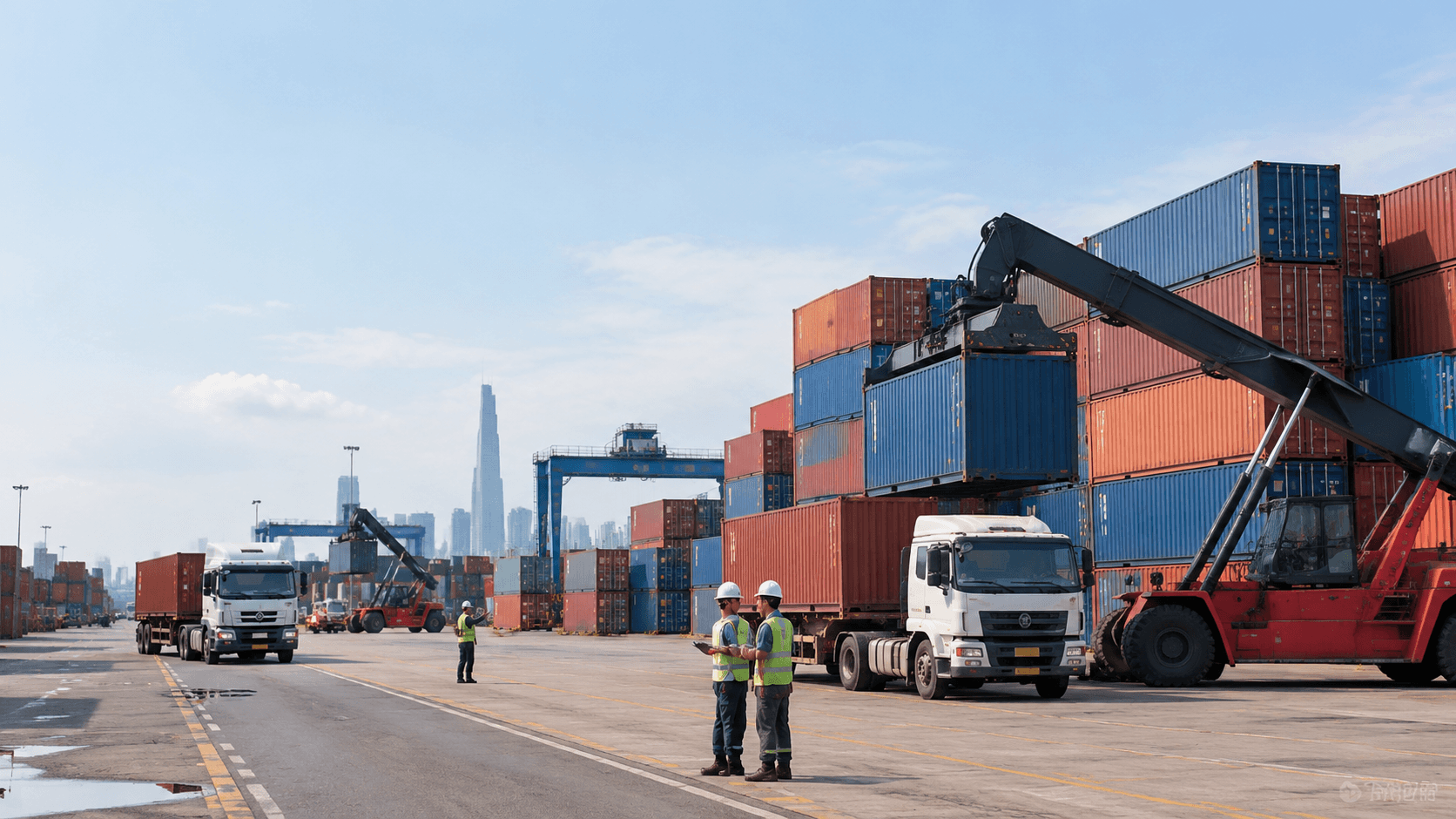
Overview of ICD Transimex, its location linking Cat Lai port and the cargo transport network of the southern region
ICD Transimex is a domestic customs clearance point and container handling centre in the Thu Duc area, conveniently connected to road and waterway networks serving Ho Chi Minh City, Dong Nai, Binh Duong and the other south-eastern provinces. According to information published by Transimex, the depot has a container yard, CFS warehouse, bonded warehouse, cold and cool storage and a wharf for waterway transport, making it possible to organise several transhipment options rather than relying entirely on road tractors.
Transimex's published documents record an ICD site of about 100,000 m², a container yard of about 57,498 m², a bonded warehouse of 10,000 m², a CFS warehouse of 14,000 m², cold and cool storage of 3,000 m² and a wharf 180 m long. In terms of operations, a notable advantage is its location at the eastern gateway, which provides good access to industrial zones and the Cat Lai port cluster.
The role of ICD Transimex in handling FCL containers, reefer containers and domestic import-export cargo
For FCL containers, the ICD can handle lifting operations, storage of laden and empty containers, stuffing and unstuffing, delivery and receipt, and transport arrangements. Transimex also publishes details of container repair and cleaning services, bonded warehousing, CFS warehousing and customs procedures. This provides a basis for businesses to organise an operational chain from the production warehouse to the ICD and onward to seaports according to shipping schedules.
Reefer containers require more demanding handling than dry containers, because temperature settings, refrigeration unit condition, power supply, power interruption time during transfer between vehicles and temperature data must all be controlled. Transimex's cold and cool storage is intended to serve food, seafood and fruit. However, there is no single transport temperature for all goods; the correct product specification and the buyer's requirements must be applied.
The role of ICD depots in easing pressure on seaports in Ho Chi Minh City and optimising container transport flows
Their seaports in Ho Chi Minh City focus on vessel handling and processing large container volumes during peak hours. The ICD provides additional back-up space to store containers, carry out a number of logistics operations and organise transhipment. When businesses bring containers to a suitable ICD instead of concentrating all activity at a sea terminal, truck flows can be distributed more flexibly.
This efficiency does not mean every shipment should go through an ICD. If the factory is close to the port, the free time is suitable and the stuffing schedule is stable, adding a transhipment point may create extra lifting or transport charges. The decision should be based on the total landed logistics cost, delivery time and operational risk, rather than comparing the unit price of a single leg only.
The criteria businesses should assess when choosing ICD Transimex as a cargo transhipment point
Businesses should simultaneously check the factory location, the terminal used by the shipping line, the depot designated by the shipping line, the container type, the free time limit, the ability to accept reefer containers and the cut-off times. An ICD close to the factory does not necessarily produce a lower total cost if additional lifts or empty container returns are required at a Tan Cang depot or another depot designated by the shipping line.
For export cargo, work backwards from the closing time and CY cut-off to determine the stuffing time, the time the truck leaves the factory and a contingency buffer. For import cargo, calculate from the vessel's arrival date, the time the D/O is available, the customs clearance status and the free time. This is how HNT Logistics builds the plan multimodal transportation around the whole journey rather than handling each leg separately.
Container Handling Process at ICD Transimex, from Container Receipt to Delivery to the Factory
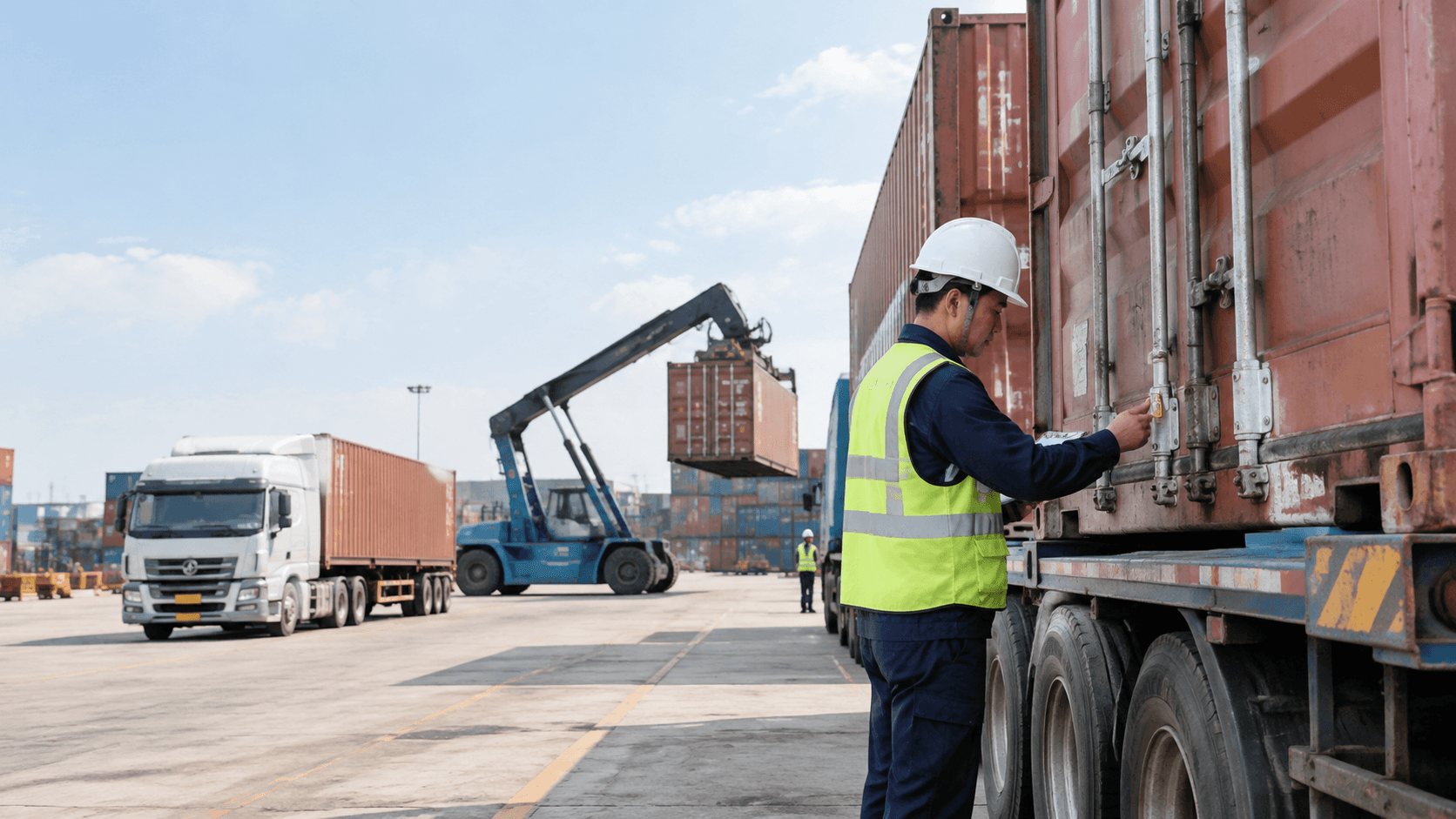
Receiving the transport plan, checking the booking, the D/O delivery order and determining the container handling option
For export cargo, the dispatch team needs to read the booking to identify the shipping line, booking number, port of loading, port of discharge, container type, empty pick-up depot, discharge terminal, cut-off and any special requirements. For import cargo, the D/O or electronic delivery order, customs clearance status, shipping line charges and DEM/DET deadlines must be checked before trucks are dispatched.
Even a small error at this stage can cause a truck to arrive at the wrong depot, collect the wrong container type or fail to meet the conditions for pick-up. For this reason, the booking and D/O should not be treated merely as administrative paperwork; they must become input data for the transport plan, especially for 40-foot containers, reefer containers or cargo that must be delivered by appointment.
The process of bringing a container into ICD Transimex, including receiving the EIR, checking the container condition and updating the management system
When a container is handed over at an ICD, the EIR is an important operational document recording the condition of the equipment at handover. Drivers and transport operators need to check the container number, seal number where applicable, size, equipment type and the condition of the body. Signs of dents, holes, cracks, doors that are hard to close, damaged floors or any abnormality in a reefer must be recorded immediately at the time of interchange.
For empty containers to be used for export stuffing, inspection must be carried out before they are taken to the factory. The container should be dry, clean and free of unusual odours, and suitable for the nature of the cargo. For food or agricultural products, hygiene requirements are usually stricter. If a fault is discovered after the container has left the ICD, the business may incur the cost of changing the container and lose time in redispatching trucks.
Coordinating tractors, trucks and transhipment vehicles between ICD Transimex, seaports, warehouses and industrial zones
Container dispatch should not rely solely on distance in kilometres. A short route that is frequently congested, has restricted truck hours or takes a long time at the gate can cost more than a longer but reliable route. The dispatcher needs to combine ETA data, cut-off times, the stuffing schedule, warehouse working hours and fleet capacity to determine the departure time.
At multi-container scale, businesses can organise truck rounds on the principle of reducing empty runs: delivering import containers, combining the collection of empty containers or arranging suitable export trips where operating conditions allow. This is one of the practical sources of efficiency multimodal transportation when it is managed at network level.
Controlling documents, container dwell time and handling any incidents that arise during the delivery process
Each container should have its own timeline covering the time the order is received, empty or laden pick-up, gate-in, gate-out, arrival at the warehouse, stuffing or unstuffing, empty return or port discharge. If port congestion occurs, the cut-off changes, a container is damaged, an unusual seal is found or the port system is disrupted, the operations team must update the cargo owner immediately so they can choose a way to handle it.
The key items to control closely are DEM, DET and storage, which are not the same type of charge. The conditions that apply depend on the shipping line, the terminal and the contract. Businesses should manage free time for each container and each deadline, rather than relying on a single consolidated spreadsheet without final-deadline alerts.
ICD Phuc Long, ICD Song Than and ICD Transimex: Comparing the Inland Container Depot Systems Serving Ho Chi Minh City
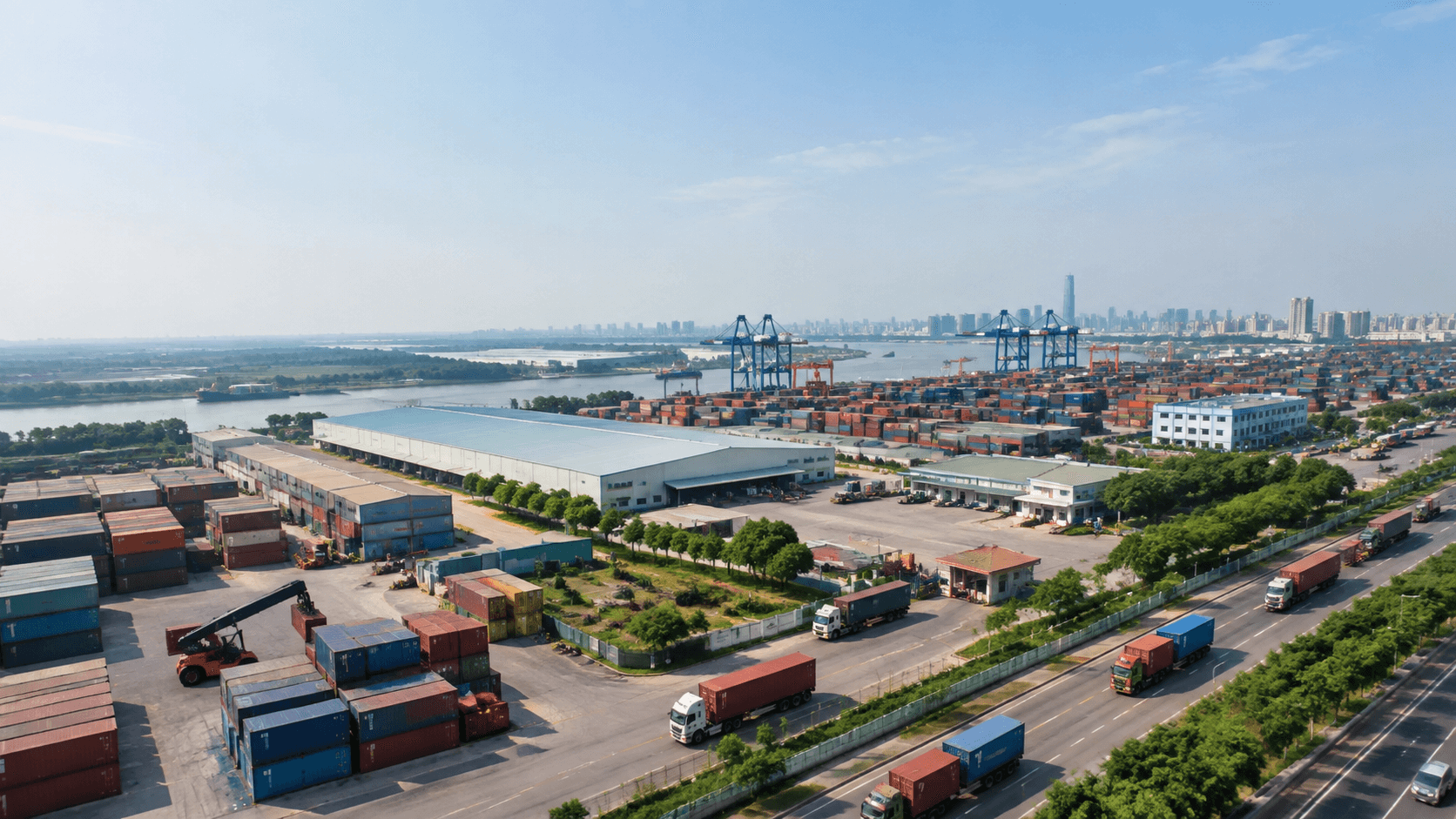
Operating features of ICD Phuc Long and its capacity to support import-export businesses in the eastern area of Ho Chi Minh City
ICD Phuc Long is located in the Thu Duc area, on the connecting axis of eastern Ho Chi Minh City. Domestic route data from the TCIT system records ICD Phuc Long at Road No. 1, Truong Tho area, Thu Duc. This location allows the ICD to take part in the logistics network linking the eastern production area, the Thu Duc ICD system and the container ports.
When choosing ICD Phuc Long, businesses must still check whether the depot or ICD is included in the pick-up and delivery arrangements accepted by the shipping line. For empty containers, pick-up and return points usually depend on the designation at the time; changing depot without confirmation may create extra repositioning costs or may not be accepted by the system.
The role of ICD Song Than in connecting containers with Binh Duong, industrial zones and inter-provincial transport routes
ICD Song Than, currently operated as ICD Tan Cang – Song Than, is located on the DT743 road in the Binh Hoa area. This position gives an advantage in access to the industrial production zones of Binh Duong and to the transport network connecting Ho Chi Minh City and Dong Nai. The operator's website publishes its service groups for yard, warehouse and distribution centre, transport and customs agency services.
For businesses with factories in the Thuan An and Di An areas or nearby industrial clusters, the main benefit to assess is the potential to reduce truck distance between the factory and the back-up logistics point. The national inland port plan identifies the Binh Hoa – Tan Cang Song Than inland port as connecting important road routes and serving the southern seaport system.
Comparing ICD Transimex, ICD Phuc Long and ICD Song Than by location, service type and service area
ICD Transimex and ICD Phuc Long have a location advantage in the eastern area of Ho Chi Minh City, while ICD Tan Cang – Song Than is close to the industrial production zones of Binh Duong. For this reason, no ICD should be ranked as absolutely better than the others. The result depends on the origin and destination of the cargo, the shipping line, the port of handling, the container type and each business's transport structure.
Beyond these three, the southern logistics system has many other ICDs, ports and depots. One Tan Cang depot suitable for empty container pick-up or return is not necessarily the best point for storage or distribution. Cargo owners need to clearly distinguish the functions of a depot, an ICD, a seaport and a distribution centre when designing routing.
How to choose a suitable inland depot based on the trade lane, container type and delivery time requirements
The practical way to choose is to map the entire container journey on a single timeline. For export cargo, start from the stuffing date and work back to the cut-off. For import cargo, start from the ETA, the time to collect the D/O, customs clearance, container pick-up, delivery to the warehouse and empty return. Only then compare each ICD by total kilometres, number of lifts and waiting time.
Reefer containers require additional variables such as the reefer power supply, PTI if requested, the ability to monitor temperature and the time taken to switch power sources. Dangerous goods must be checked against the acceptance conditions for their classification and the applicable regulations. Do not assume that every ICD accepts every special container type.
Operating Specifications of ICD Transimex and Other Inland Container Depots in Ho Chi Minh City in Detail
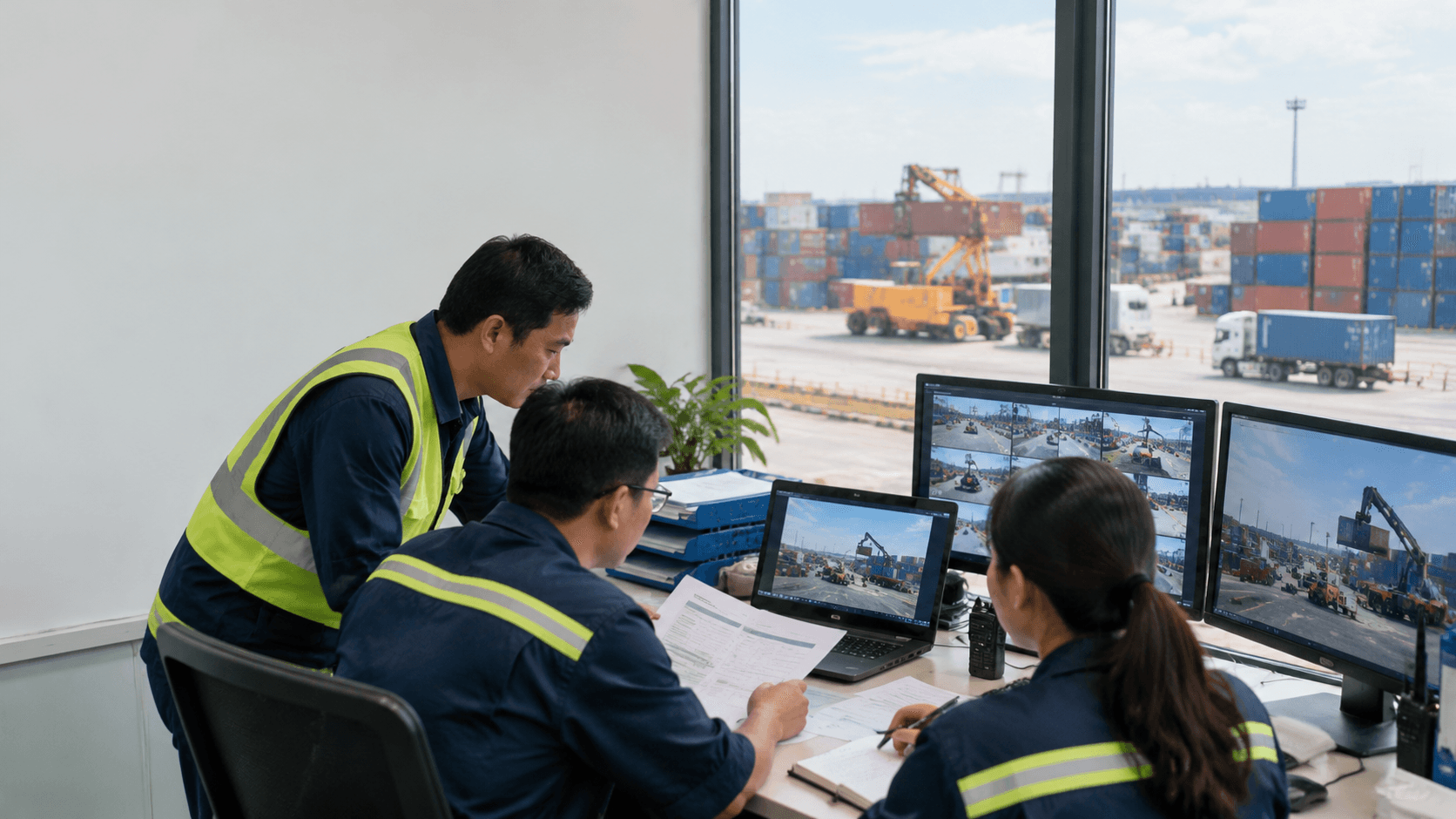
Table comparing the location, distance to seaports, industrial zones and main transport routes of each ICD
The table below focuses on the logic of route selection. The actual distance from the ICD to the port or factory should be recalculated using the specific gate point, the truck routes permitted for container traffic and traffic conditions on the day of transport.
| ICD | Area | Main connection | Suitable scope for assessment |
|---|---|---|---|
| ICD Transimex | Thu Duc, HCMC | Road, waterway, eastern port cluster | Ho Chi Minh City, Dong Nai, Binh Duong, south-eastern region |
| ICD Phuc Long | Thu Duc, HCMC | Eastern axis and Thu Duc ICD network | Ho Chi Minh City and eastern production area |
| ICD Tan Cang – Song Than | Binh Hoa area | DT743, connecting industrial zones | Binh Duong, Ho Chi Minh City and inter-provincial routes |
Transimex's previously published documents show that the ICD has a relatively close connection to Cat Lai and the southern port areas. However, businesses should not use historical distance as the basis for current freight rates, because infrastructure, administrative boundaries and truck routing may change.
Table analysing the capacity to receive 20-foot and 40-foot containers, reefer containers and specialised cargo containers
20-foot and 40-foot containers are the two most common equipment types in FCL transport. Actual dimensions may vary slightly by manufacturer and container type, so the figures below are for preliminary planning only and do not replace the specification of the container supplied.
| Type of Container | Nominal size | Application | Control point |
|---|---|---|---|
| 20′ Dry | Length approx. 6.06 m | Dry cargo, heavy cargo, FCL | Payload, load distribution, floor condition |
| 40′ Dry | Length approx. 12.19 m | Bulky dry cargo | Volume, payload, warehouse access |
| 40′ High Cube | Length approx. 12.19 m, height approx. 2.90 m | Light, bulky cargo | Vehicle height and route restrictions |
| Reefer | 20′ or 40′, depending on equipment | Suitable for food, seafood, fruit and pharmaceuticals | Set point, power supply, ventilation, PTI, temperature |
| Specialised containers | Open top, flat rack and other specialised types | Machinery, oversized or special cargo | Shipping line approval, lashing, payload, ICD conditions |
For reefers, the equipment's operating temperature range can be wide, but the set point must be based on the specific cargo. Fresh fruit cannot be kept at the same temperature as frozen seafood. Beyond temperature, some goods also require control of ventilation, humidity or atmosphere according to technical requirements.
Table of the cost components of ICD operations, including lifting, storage, domestic transport and incidental charges
A fixed price should not be published for an ICD unless the container type and the tariff at the time of operation have been confirmed. The table below shows the cost structure so that businesses can prepare RFQs and compare quotations on the same scope of service.
| Cost group | Cost basis | Control measure |
|---|---|---|
| Container lifting/loading and unloading | Number of moves and container type | Reducing unnecessary transhipment |
| Storage fees | Number of days, container type, tariff | Scheduling pick-up and drop-off on time |
| Domestic shipping | Route, truck type, waiting time | Optimising truck rounds and dispatch times |
| Reefer | Plug-in power, monitoring and related services | Reducing dwell time, controlling schedules |
| DEM/DET | Shipping line conditions and free time | Tracking each container's deadline |
| Incidental costs | Truck waiting, order changes, container repair, customs inspection | Confirming documents before dispatch |
Table of the container control process at the ICD, from receipt and yard storage through to cargo release
| Phase | Control points | Risk to avoid |
|---|---|---|
| Before entering the ICD | Booking/D/O, container number, equipment type, order | Wrong depot, wrong order |
| Gate-in | EIR, seal, container condition | Damage not recorded |
| Storage fees | Location, time, cargo status | Overdue, storage charges incurred |
| Operations | Lifting, stuffing/unstuffing, reefer where applicable | Cargo damage, process errors |
| Gate-out | Delivery order, vehicle, EIR | Wrong container delivered |
| Completion | POD, empty return, charge reconciliation | DET and unplanned costs |
Optimising Logistics Costs Through ICD Transimex by Combining Sea and Road Transport
Building a multimodal transport plan that combines seaports, ICD Transimex and container tractors
A combined model of sea, inland waterway and road transport can reduce dependence on a single transport mode, but it is only effective when total time and cost are fully calculated. With ICD Transimex's ability to connect both road and waterway, businesses have additional options for organising container flows between production areas and the port.
HNT Logistics can design multimodal transportation for each shipment, determining which leg needs a tractor, which leg suits transhipment and which milestones must have a time buffer. The goal is not to create more transport modes, but to reduce the total cost per container delivered on time.
Controlling DEM/DET, storage and waiting costs through accurate container scheduling
DEM/DET often becomes a significant cost when cargo has not been cleared through customs, the factory changes its collection schedule or empty containers are not returned on time. The control solution is to set a deadline for each container as soon as the arrival notice or booking is received, and to update the actual free days from the shipping line rather than applying a default number of days.
The dispatch team must also monitor truck waiting time at the port, the ICD and the factory. An option with a low tractor fare but a long waiting time rarely gives a real advantage. For subcontracted fleets, free waiting time and the surcharge calculation must be agreed clearly before trucks are dispatched.
Consolidation, domestic distribution and container transhipment solutions through the ICD to reduce operating costs
An ICD with a CFS warehouse and a supporting warehouse system can create value for businesses that need to consolidate, split or distribute goods. Transimex publishes that the ICD's CFS warehouse covers about 14,000 m², together with related warehousing and handling services. This allows businesses to evaluate moving goods to a central point before distribution, rather than delivering small lots directly from the port.
However, a consolidation plan must be calculated on a cost-per-unit basis. If the costs of stripping the container, storage, picking and final delivery rise above the transport savings, cross-docking or direct distribution may be more reasonable. The analysis should use the business's actual volume data.
GPS journey tracking, vehicle management and cargo status monitoring applications across the entire route
GPS only has value when the data is linked to operational milestones. The system should identify the status of a truck arriving at the ICD, collecting a container, leaving the yard, arriving at the factory, completing stuffing or unstuffing and returning the container. Dispatchers can then identify trips at risk of missing the cut-off early, rather than waiting for drivers to report problems.
For cold cargo, journey data should be combined with temperature control and power-loss events where the equipment supports this. For high-value goods, geofencing and alerts for unusual stops increase the level of control. Technology does not replace SOPs, but it allows deviations from the SOP to be detected more quickly.
Customs Procedures and Cargo Control Through ICD Transimex in the Import-Export Chain
Preparing customs declaration documents, transport documents and the cargo handling process at the ICD inland depot
Customs documentation depends on the type of import or export and the goods. The commercial document set usually includes the invoice, packing list, contract where needed for cross-checking, bill of lading or transport documents, and licences and specialised documents if the goods are subject to control. Businesses need to check the cargo policy and customs regulations whether the relevant licences are still valid at the time the declaration is opened.
The information on the documents must be consistent regarding the exporter, importer, cargo description, quantity, weight, delivery terms and HS code. An incorrect HS code or a declaration that does not match the cargo policy may lead to requests for additional documents, physical inspection, adjustment of tax obligations or other action under the regulations.
Coordinating specialised inspection, plant quarantine and customs clearance for agricultural export goods through the ICD
For exported fruit, especially on the China route, businesses must check the plant quarantine requirements, growing area codes, packing facilities, labelling and any specific requirements for each product under the protocol or regulations in force. A phytosanitary certificate should not be handled as a standalone procedure after the container has already been stuffed.
The plan needs to be synchronised between the stuffing schedule, sampling or inspection, certificate issuance, customs declaration and truck timing. If cargo has to wait for documents to be completed inside a reefer container, every hour of waiting increases cost and quality risk. Related export requirements also need to be checked against Ministry of Industry and Trade regulations and the competent specialised agencies, depending on the goods.
Managing reefer containers at ICD Transimex with requirements for temperature control, power supply and cargo quality
Reefer containers must have their set point checked before stuffing. Depending on the product, businesses also need to determine ventilation, humidity, pre-cooling and PTI requirements. A common mistake is using a reefer container to cool down warm cargo quickly; in practice, many cold chains require the cargo to reach the appropriate temperature before stuffing.
When a container is at the ICD, the power supply and the condition of the refrigeration unit must be monitored according to the operator's procedures. Transimex publishes that it has a reefer container yard and cold and cool storage at the ICD. For sensitive shipments, cargo owners should clearly request how temperature is recorded and how alerts are handled before the cargo enters the transport chain.
The role of a logistics provider in connecting ICDs, seaports, shipping lines and import-export businesses
A forwarder or logistics provider responsible for dispatch should not stop at booking trucks. The real value lies in the ability to read the whole chain of events: booking, empty pick-up depot, stuffing schedule, customs declaration, cut-off, terminal, vessel schedule, delivery and empty return. When one link changes, the entire plan that follows must be updated.
For businesses with large volumes, the logistics provider must also standardise KPIs such as on-time delivery rate, average waiting time, cost per container, DEM/DET incidence rate and the number of equipment incidents. This forms the basis for optimising with data rather than handling each trip separately.
HNT Logistics Supports ICD Transimex Operations and the Ho Chi Minh City Inland Depot System Safely and Efficiently
Providing container haulage, multimodal transport and full-service cargo delivery solutions through the ICD
HNT Logistics organises FCL container transport by road and sea, container haulage at major port clusters, and builds transhipment plans suited to each trade lane. For shipments through ICD Transimex, the dispatch objective is to control truck hours, yard time, factory schedules and cut-off at the same time, rather than optimising the tractor fare alone.
Before quoting, businesses should provide at least the container type, port or ICD, pick-up and delivery addresses, weight, commodity, expected schedule and any special requirements. HNT Logistics can then break down the transport charge, waiting charges and other items that may arise, so that cargo owners can easily control their budget.
Combining customs declaration, quarantine and reefer container transport services for import-export businesses
For shipments that require several consecutive operations, using a single coordinating point reduces information gaps between customs declaration, quarantine, transport and warehousing. HNT Logistics provides services customs declaration, supporting C/O, plant quarantine and cold-chain transport, suited to businesses that need to keep control of progress throughout.
For exported agricultural products in particular, the transport plan must be built from the requirements of the import market, not start from booking trucks. The harvest, primary processing, packing, quarantine, container stuffing, temperature and border or vessel schedules must be linked into one unified plan.
Building flexible logistics solutions that help businesses control costs, schedules and cargo safety
HNT Logistics prioritises analysis of total logistics cost rather than quoting a single transport rate. When comparing ICD Transimex, ICD Phuc Long or ICD Song Than, the variables to include in the model are distance, number of lifts, dwell time, free time, truck restriction hours, factory schedules and the ability to turn vehicles around.
For the North-South route and the Vietnam – Laos – China cross-border route, the same logic applies: choose the transhipment point based on the whole journey and the cargo's requirements. The option with the fewest kilometres is not necessarily the lowest cost if waiting time, transhipment or procedures increase the total lead time.
HNT Logistics helps optimise the supply chain through ICD Transimex, ICD Phuc Long and ICD Song Than in Ho Chi Minh City
ICD Transimex, ICD Phuc Long and ICD Song Than have different locations and operating roles within the southern logistics network. Businesses should choose a transhipment point based on the factory – ICD – seaport route, shipping line conditions, container type and delivery time, rather than defaulting to the nearest ICD.
For FCL, reefer or cargo that requires combined customs declaration and transport, HNT Logistics can build a plan from receipt of the booking/D/O until the container handover is complete. This approach gives businesses a clear view of expected costs, deadlines and risk points before trucks start running.
Businesses that need advice on routes via ICD Transimex, ICD Phuc Long, ICD Song Than or the Ho Chi Minh City port system can contact HNT Logistics to review the transport plan for each shipment.