


A container of mangoes from Tien Giang to Cat Lai Port can make a profit or a loss simply because of an incorrect shipping rate calculation. This article provides formulas, variables, and examples to help cargo owners control costs before confirming the vessel schedule.
The situation is not easy. The Ministry of Industry and Trade recorded total import-export turnover for the first 10 months of 2026 at approximately USD 762 billion, up 17.4%. Drewry reported the container freight index on 02/07/2026 at USD 4,530 per 40-foot container. Therefore, calculating shipping rates must go together with checking routes, documentation, and surcharges.
For agricultural products, seafood, and fresh fruit, a small error can eliminate the entire profit margin. Shipping costs are not just the vessel or truck rate. They also include handling fees, storage fees, quarantine, insurance, fuel, peak season charges, and delay risks.
Calculating shipping rates starts with cargo data
To provide an accurate quotation, do not ask for a price before locking in the cargo data. The formula is only reliable when weight, volume, temperature requirements, and trade terms are clear. HNT LOGISTICS recommends that businesses standardize shipment information forms before requesting quotations.
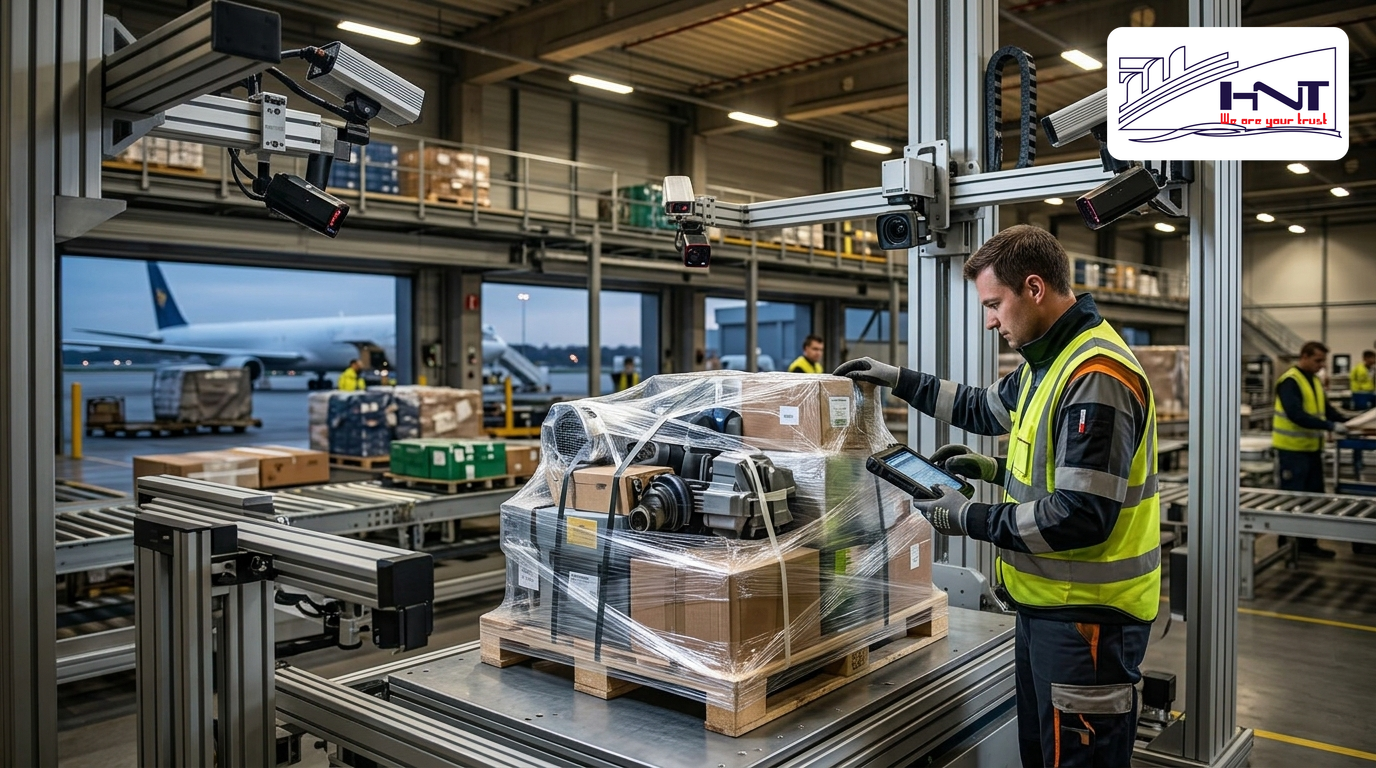
How to calculate shipping rates by weight and volume
The first principle is to determine the billing unit. Road transport usually uses kilograms, tons, or cubic meters. Air freight uses chargeable weight. Sea freight uses containers, cubic meters, or tons depending on full container loads or less-than-container loads (FCL/LCL).
- Record the actual weight, number of packages, dimensions of each package, and total volume before requesting a quotation.
- Identify whether the cargo is general cargo, refrigerated cargo, fragile cargo, oversized cargo, or cargo requiring quarantine.
- Check trade terms such as FOB, CIF, or DDP to determine who pays for each transport leg.
- Verify the pickup point, loading port, discharge port, and final delivery point.
- Clarify the cargo cut-off time, loading time, and document submission deadline.
- Request a quotation that separates the base rate, surcharges, domestic charges, and additional fees.
| Method | Main billing unit | When to use | Risks that need checking |
|---|---|---|---|
| Domestic road transport | Ton or cubic meter | Warehouse to port delivery | Waiting for loading surcharge |
| Full container sea freight | 20-foot or 40-foot container | Cargo with sufficient volume | Container demurrage fees |
| Less-than-container-load sea freight | Cubic meter or ton | Small shipment, not enough for a full container | Cargo consolidation and deconsolidation fees |
| Air | Chargeable weight | Urgent, high-value cargo | Large volume difference |
For example, Minh Qua Company in Tien Giang exports 18 tons of mangoes to Shanghai. After remeasuring, the palletized volume exceeded the estimate by 12%. By changing the loading arrangement, the company still used one 40-foot refrigerated container and avoided the additional cost of another consolidation truck.
Another example: Nam Binh Mechanical Company in Binh Duong exports components to Long Beach. The weight is low but the volume is high. When applying cubic meter pricing for less-than-container-load shipments, the purchasing team found that a full container option was 8% cheaper if two orders were consolidated in the same week.
Practical tip: the more unclear the cargo data, the more uncertainty there is in the quotation. Lock in the specifications before negotiating.
Công thức cách tính cước vận chuyển cho từng phương thức
Công thức nền tảng là tổng chi phí bằng cước chính cộng phụ phí cộng phí nội địa cộng bảo hiểm và chi phí tuân thủ. Đây là khung kiểm tra, không phải bảng giá cố định. Nó giúp người mua dịch vụ biết phần nào có thể đàm phán, phần nào phụ thuộc thị trường.

Công thức cho đường bộ, đường biển và đường hàng không
Với đường bộ, công thức thường là đơn giá nhân trọng lượng hoặc quãng đường. Với đường biển, cước vận chuyển gồm giá container hoặc giá hàng lẻ. Với hàng không, trọng lượng tính cước thường lấy giá trị lớn hơn giữa trọng lượng thực và trọng lượng thể tích.
- Tính cước chính theo đơn vị báo giá của nhà vận chuyển hoặc hãng tàu.
- Cộng phụ phí nhiên liệu, mùa cao điểm, mất cân bằng container và điều chỉnh tiền tệ.
- Cộng phí nội địa gồm kéo container, nâng hạ, soi chiếu và chứng từ.
- Cộng phí bảo hiểm nếu điều kiện thương mại yêu cầu người bán mua bảo hiểm.
- Cộng phí kiểm dịch, hun trùng, cấp chứng thư hoặc kiểm tra chuyên ngành.
- Dự phòng phí lưu bãi, phí lưu container và phí sửa chứng từ khi lịch bị trễ.
| Loại cước | Công thức ngắn | Ví dụ biến số | Note |
|---|---|---|---|
| Road | Đơn giá x tấn hoặc chuyến | 18 tấn từ Tiền Giang | Kiểm tra giờ cấm tải |
| Hàng lẻ biển | Đơn giá x mét khối | 12 mét khối hàng khô | So với mức tối thiểu |
| Nguyên cont biển | Giá container + phụ phí | 40-foot reefer container | Kiểm tra phí điện lạnh |
| Air freight | Đơn giá x trọng lượng tính cước | Trọng lượng thể tích cao | Đo kiện thật chính xác |
Công Ty Hải Sản Mũi Nam tại Cà Mau xuất 9 tấn tôm đông lạnh đi Nhật Bản. Khi cộng phí điện lạnh tại cảng và phí chứng thư, tổng chi phí tăng 6,5% so với cước tàu ban đầu. Đây là lỗi phổ biến khi chỉ nhìn giá chào đầu tiên.
Công Ty Nội Thất Sông Hàn tại Đà Nẵng gửi hàng mẫu đi Singapore bằng đường hàng không. Trọng lượng thực là 180 kg, nhưng trọng lượng thể tích lên 260 kg. Nhờ tính trước, bộ phận bán hàng tránh báo thiếu gần một phần ba chi phí giao hàng.
Mẹo thực tiễn: hãy yêu cầu bảng báo giá tách dòng. Một giá trọn gói quá ngắn thường che mất phụ phí.
Cách tính tiền ship hàng xuất khẩu bằng bảng chi phí đầy đủ
Cách tính tiền ship hàng không nên dừng ở vận tải chính. Với xuất khẩu, chi phí nằm rải rác từ kho, cảng, hãng tàu, cơ quan kiểm tra và ngân hàng. Nếu không gom vào một bảng, doanh nghiệp dễ thắng đơn hàng nhưng thua lợi nhuận.

Commonly overlooked domestic charges and surcharges
Based on HNT LOGISTICS' experience, refrigerated cargo should be quoted using a door-to-port cost chain. The reason is simple. One hour of power waiting, one temperature adjustment, or one day of container storage all directly affect cargo quality.
- Container haulage fee from the empty depot to the warehouse and from the warehouse to the loading port.
- Container lifting and handling fees at the port, bonded warehouse, or transshipment yard.
- Bill of Lading (B/L) documentation fee and port system declaration fee.
- Plant quarantine, animal quarantine, or food safety inspection fees.
- Reefer power, container cleaning, and temperature setting fees before loading.
- Yard storage and container detention fees if documents or the vessel schedule are delayed.
| Charge | Applicable to | Control method | Impact |
|---|---|---|---|
| Container haulage | Full container load | Confirm the stuffing schedule early | Reduce truck waiting time |
| Port reefer power | Fruit, seafood | Specify the temperature clearly | Protect quality |
| Quarantine | Agricultural products, seafood | Prepare documents in advance | Avoid missing the cargo cutoff |
| Document correction | All shipments | Cross-check the bill of lading | Reduce additional charges |
| Container detention | Shipment delayed by procedures | Monitor the free time limit | Maintain profit margin |
Example: Binh Thuan Dragon Fruit Company exports 22 tons of dragon fruit to Shanghai Port. The complete cost table shows that reefer power and quarantine fees account for nearly 9% of the total cost. After changing the loading date, the company reduced one day of yard storage.
Example: Phu Hoa Garment Company in Dong Nai sells goods under CIF terms to the United States. After adding insurance, peak season surcharges, and documentation fees, the cost increased by 4.2%. The sales department adjusted the quotation before signing the contract.
A natural internal link sentence to insert is: Businesses can refer to Sea Freight Routes to the US to compare transit times, transshipment ports, and common surcharges.
Practical tip: the cost table must include a column for “who pays”. Otherwise, disputes arise as soon as unexpected charges occur.
How to calculate shipping costs for refrigerated cargo, LCL cargo, and high-value goods
Shipping cost calculation varies significantly depending on cargo sensitivity. Refrigerated cargo requires temperature control. LCL cargo requires consolidation control. High-value goods require insurance and security control. A single formula is not safe enough.

How to calculate shipping costs for cold chain cargo
According to experts at HNT LOGISTICS, a reefer container should be calculated as a preservation system, not just a means of transport. The ISPM 12 standard for phytosanitary certificates helps businesses understand why quarantine documents must accompany the cargo loading schedule.
- Choose a refrigerated container based on temperature, ventilation, humidity, and transit time.
- Request an empty container inspection, cleaning, pre-trip refrigeration test, and temperature recording before stuffing.
- Include additional refrigerated power charges at the depot, port of loading, port of discharge, and transshipment points.
- Schedule quarantine inspection before the stuffing date to avoid the container waiting at the port.
- Monitor temperature data when cargo travels long distances or passes through multiple transshipment points.
- Prepare a vessel change contingency plan if the route has congestion risks or bad weather.
| Cargo type | Reference temperature | Costs to add | Control point |
|---|---|---|---|
| Fresh mangoes | About 10 to 13°C | Refrigerated power, quarantine inspection | Suitable ventilation |
| Dragon Fruit | About 5 to 8°C | Pre-trip refrigeration | Avoid thermal shock |
| Frozen shrimp | About -18°C | Continuous refrigerated power | Do not disconnect the power supply |
| Pharmaceuticals | According to the product dossier | Insurance, monitoring | Temperature evidence |
Example: Green Garden Company in Can Tho exports mangoes to China. After adding pre-trip refrigeration and quarantine inspection costs, the shipping cost increases by 5%. In return, the temperature remains stable, helping reduce quality complaints after delivery.
Example: Anh Viet Pharmaceutical Company in Ho Chi Minh City ships high-value goods to Germany. Air freight costs 38% more than sea freight, but reduces delivery time from 32 days to 4 days. For products sensitive to shelf life, this decision is reasonable.
A natural internal link sentence to insert is: The Refrigerated Container Standards page helps the export team check temperature, ventilation, and sanitation requirements before stuffing cargo.
Practical tip: for sensitive goods, calculate the cost of failure. Cheap freight that results in damaged goods is the most expensive decision.
How to calculate shipping freight and review supplier quotations
No quotation is completely neutral. Each supplier bundles surcharges differently. Therefore, calculating shipping freight must go together with checking the service scope, validity period, delay responsibilities, and conditional charges.

Sample shipping freight comparison table
When comparing, do not only look at the total line. Normalize to the same delivery terms, the same vessel schedule, and the same free container detention period. Drewry recorded weekly fluctuations in container freight rates during 07/2026, so an expired quotation can easily become a trap.
- Compare the same port of departure, port of destination, container type, and delivery terms.
- Check the quotation validity date, peak season surcharges, and fuel surcharges.
- Clearly ask about the free storage period and free container detention at the port of departure and the port of destination.
- Request the vessel schedule, estimated transit time, ETA and ETD to be clearly stated.
- Check responsibilities when there is a vessel change, rolled cargo, or a container that does not meet standards.
- Cross-check the required documents with the HS Code and the requirements of the import market.
| Criteria | Quotation A | Quotation B | Questions to ask |
|---|---|---|---|
| Main freight | Lower | Higher | Are surcharges included yet |
| Vessel schedule | Transshipment | Fewer stops | How much is the delay risk |
| Free detention | 5 days | 10 days | Is it compatible with the documents |
| Documentation fee | Separated | Included | Is there an amendment fee |
| Refrigerated | Electricity not included | Electricity included | Who monitors the temperature |
Example: Tay Nguyen Cashew Company chose a quotation that was USD 120 cheaper for the route from Cat Lai Port to Rotterdam. After adding documentation fees and peak season surcharges, the cheaper quotation ended up costing 3% more. The comparison table helps avoid subjective decisions.
Example: An Phat Wood Company in Binh Duong needed to deliver goods to Long Beach before a trade fair. Quotation B was higher, but had a schedule with fewer transshipments. The business accepted an additional 4% in cost to reduce the risk of missing the sales schedule.
A natural internal link sentence is: Customs brokerage services help review HS Codes, export documents and customs clearance bottlenecks before the vessel departs.
Practical tip: A good quotation is one that can be audited. If the charges are not itemized, do not rush to sign.
Conclusion: apply shipping freight calculation methods to control profit
Calculating shipping freight is not a simple accounting exercise. It is a risk management tool. During periods when ocean freight, vessel capacity and quarantine requirements fluctuate, businesses need to calculate costs based on cargo data, transport methods, surcharges and commercial responsibilities.

- Always lock in the weight, volume, cargo type and trade terms before requesting a quotation.
- Separate the main freight, surcharges, domestic charges, insurance and compliance fees into individual line items.
- Compare quotations for the same route, the same vessel schedule and the same validity period.
- Calculate cold chain costs separately for agricultural products, seafood and fresh fruit.
- Set aside contingency costs for container detention, storage and document amendments when the market fluctuates.
- Include risk costs in the selling price, especially for urgent or high-value cargo.
If your business needs to check freight charges, calculate shipping costs or determine transport costs for a specific export shipment, HNT LOGISTICS can help break down each cost component. The right approach is to ensure transparency before the cargo reaches the port, not argue after costs arise.