

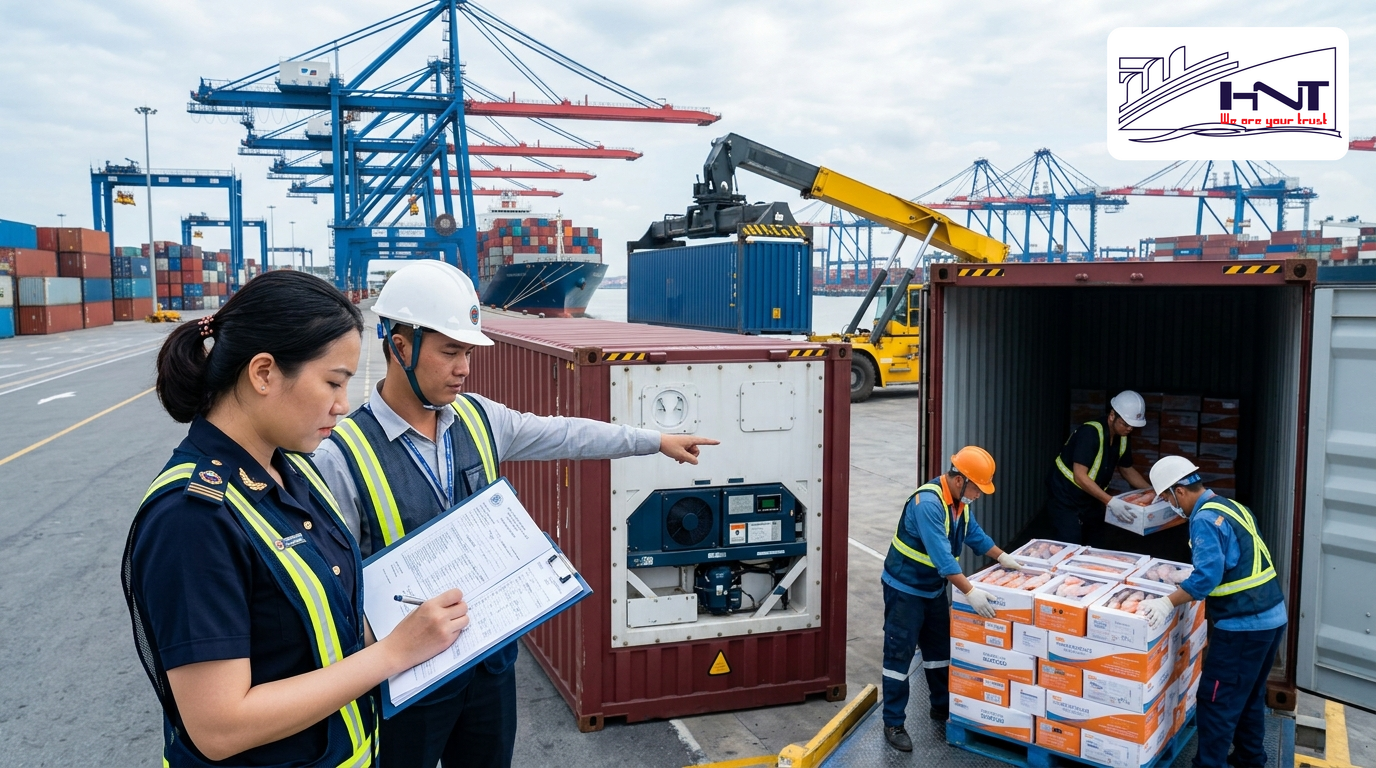
Import and export goods often face risks when documents are inconsistent, inspections are prolonged, or on-site coordination lacks synchronization, causing businesses to incur container storage costs and delivery delays.
In 2026, Vietnam continues to adjust many customs regulations under Law No. 90/2026/QH15 and new guiding decrees. At the same time, seafood export turnover in 2026 exceeded 11.34 billion USD, showing that supply chain management pressure is increasing for exporting businesses. According to maritime transport market reports, international container freight rates continue to fluctuate significantly by season and vessel scheduling conditions.
This article analyzes the entire import-export goods management process, from invoices, inspections, and logistics operations to on-site activities, helping businesses control risks and optimize international trade efficiency.
Managing import-export goods from the document preparation stage
Documents are the foundation of every shipment. Even small declaration errors can lead to physical inspections, tax reassessments, or additional storage costs.
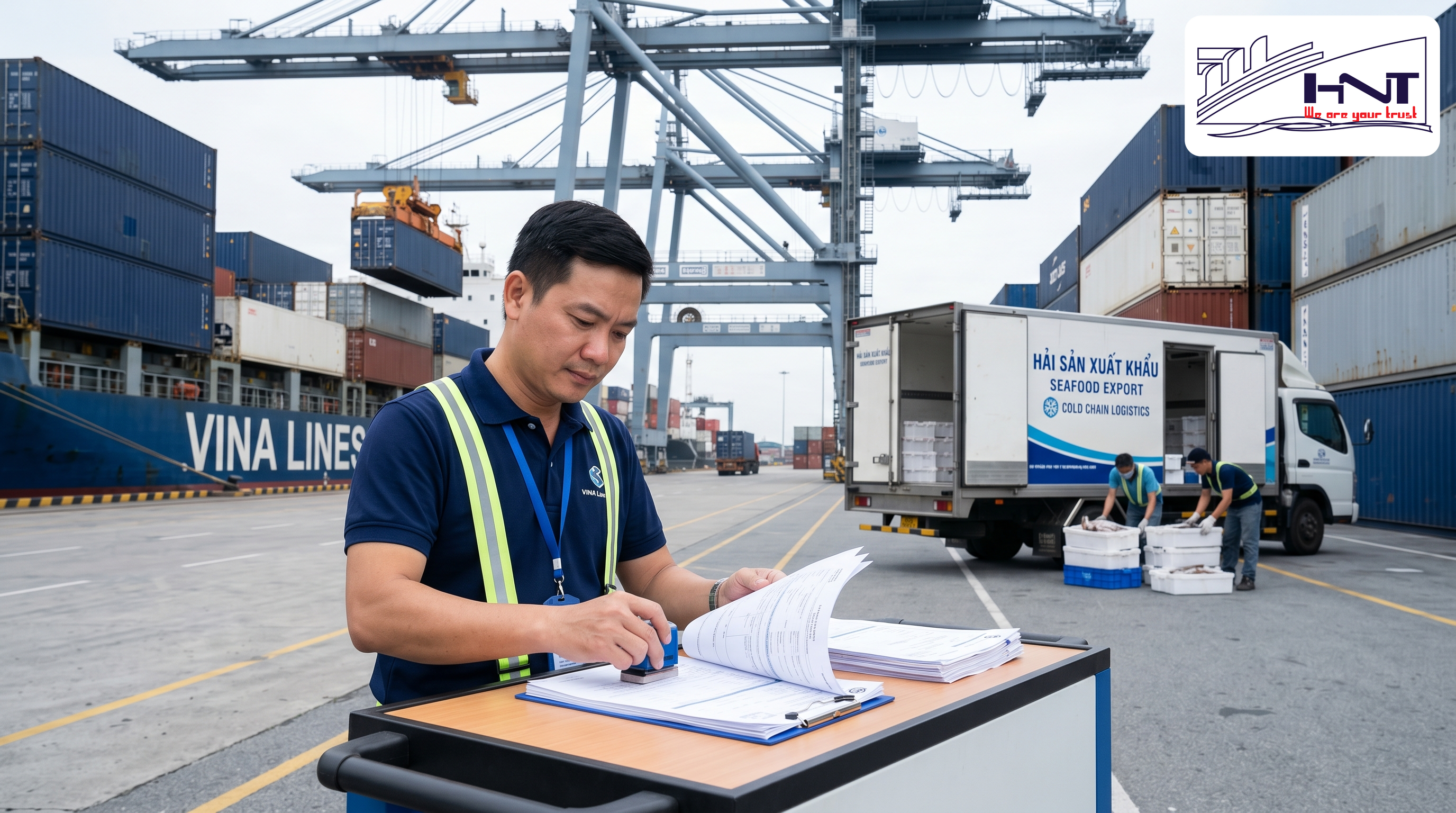
The role of import invoices in customs inspection and international payment
Import invoices are the basis for determining taxable value, reconciling payments, and verifying origin. Businesses must ensure that the data between the Invoice, Packing List, and commercial contract is completely consistent.
A mechanical engineering company in Binh Duong once had a shipment of components from Busan detained because the unit price on the Invoice differed from the declared data. Correcting the documents took three days and incurred container storage costs of more than VND 18 million.
An electrical equipment importer in Dong Nai implemented a cross-checking process before opening the customs declaration. As a result, document errors decreased by 90% over six months of operation.
- Check the product name according to the correct HS code before declaration.
- Compare quantities between the Invoice and Packing List.
- Check the Incoterms conditions in the contract.
- Confirm that the unit price matches the international payment documents.
- Review seller and buyer information.
- Check insurance terms if applicable.
Import-export document sets must be controlled according to each business type.
Businesses should build separate checklists for commercial imports, processing, export manufacturing, or temporary import for re-export. Each business type has different management requirements.
| Documentation | Commercial import | Export manufacturing | Processing |
|---|---|---|---|
| Invoice | Yes | Yes | Yes |
| Packing List | Yes | Yes | Yes |
| Bill of Lading | Yes | Yes | Yes |
| Care of | Depending on the case | Depending on the case | Depending on the case |
| Contract | Yes | Yes | Mandatory |
According to HNT LOGISTICS' experience, agricultural exporters should standardize their document inspection process at least 48 hours before the vessel closing time to avoid manifest amendment costs.
Managing import-export goods through inspection and technical compliance
Inspection is the decisive step for customs clearance and access to the destination market. Many countries continuously update new technical standards.
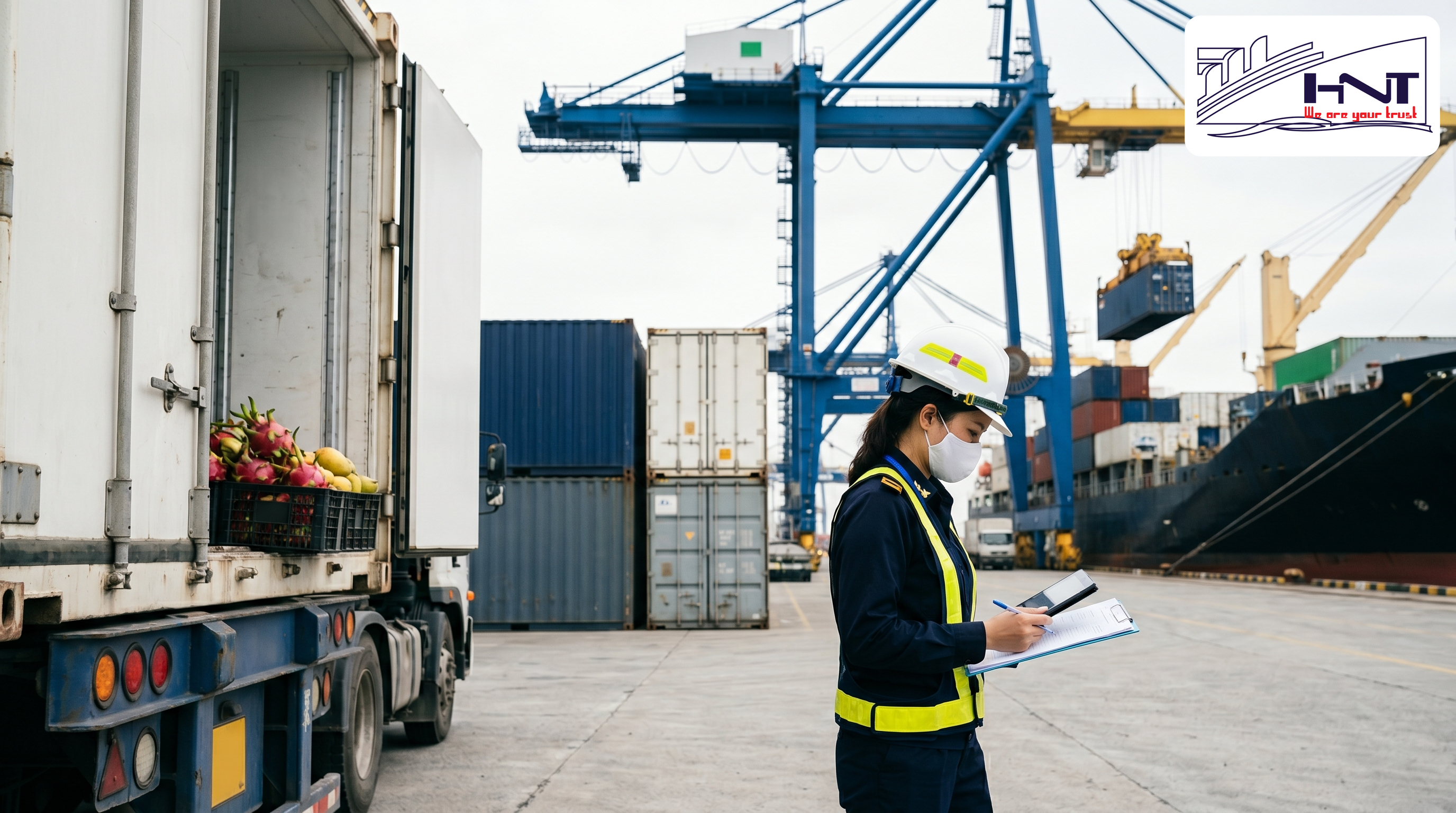
When must businesses inspect imported goods?
Inspection of imported goods is commonly applied to food, electrical equipment, specialized machinery, or goods subject to state quality management.
A food company in Ho Chi Minh City imported raw materials from Thailand but had not completed the standard declaration dossier. The shipment remained at Cat Lai Port for an additional five days.
A packaging manufacturer in Long An proactively registered for quality inspection before the goods arrived at the port. Customs clearance time was reduced from four days to two days.
- Identify products subject to specialized management.
- Check conformity declaration requirements.
- Register for quality inspection at the right time.
- Prepare complete technical documentation.
- Monitor the sampling schedule for testing.
- Store results for post-clearance inspections.
Quarantine, quality inspection, and new technical standards
The US, EU, and Chinese markets are increasing requirements for traceability and quarantine certification. This is especially important for fresh fruit and frozen seafood.
According to reports from VASEP, Vietnam's seafood exports in 2026 exceeded USD 11.34 billion. However, requirements for quality and supply chain transparency are becoming increasingly stringent.
| Market | Key requirements | Risk | Recommendation |
|---|---|---|---|
| China | Planting area code | Return shipment | Pre-export document inspection |
| EU | Traceability | Enhanced inspection | Store production data |
| USA | Seafood standards | Customs clearance delay | Periodic compliance assessment |
| ASEAN | Product labeling | Administrative penalties | Review packaging |
Based on HNT LOGISTICS' experience, exporters of chilled fruit should verify all phytosanitary documents before vessel booking to minimize the risk of rejection at the destination port.
Other import-export logistics services in the operational chain
Logistics management is not only about transportation. Businesses need to synchronize transport, customs clearance, warehousing, and container tracking.
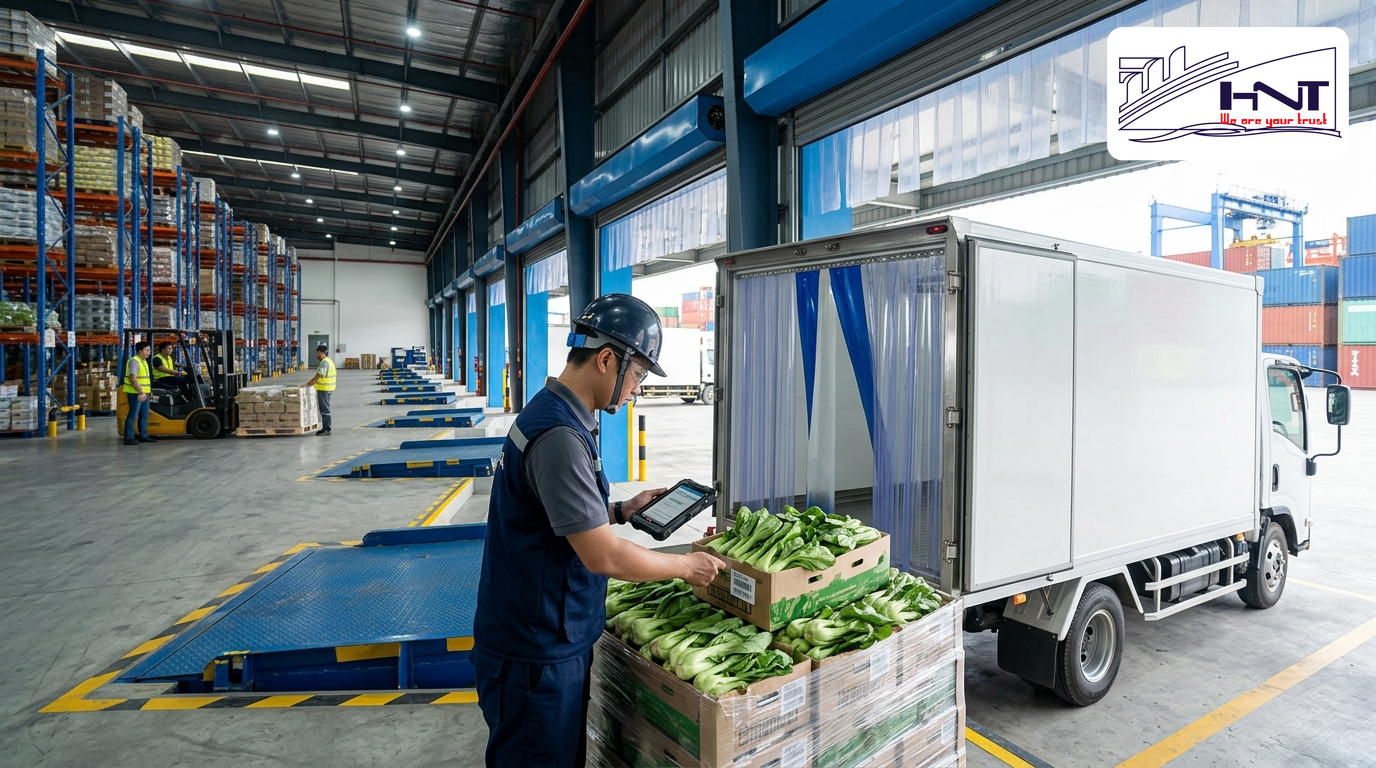
The role of freight forwarding, customs brokerage, and trucking
Other import-export logistics services help optimize processing time and reduce pressure on internal departments. Coordination between the forwarder and the shipping line significantly determines the delivery schedule.
A dragon fruit company in Tien Giang exporting to Shanghai used integrated customs clearance and trucking services. The time from cargo loading to yard drop-off decreased by nearly 20%.
A pangasius factory in Can Tho implemented real-time refrigerated container tracking. The rate of temperature alert incidents decreased by more than 70%.
- Select transport routes suitable for the market.
- Control vessel schedules and cut-off times.
- Track containers with real-time data.
- Manage electronic documents centrally.
- Assess the capabilities of logistics partners.
- Prepare contingency transshipment plans.
The impact of fluctuations in ocean freight rates
In 2026, international container freight rates fluctuated significantly on Asia-US and Asia-Europe routes. Businesses should forecast logistics costs quarterly rather than annually.
| Online | Freight trend | Cause | Recommendation |
|---|---|---|---|
| Asia – US West Coast | Highly volatile | Peak season demand | Book early |
| Asia – US East Coast | Increase by quarter | Capacity adjustment | Sign long-term contracts |
| Asia – EU | Unstable | Adjust shipping routes | Set aside a contingency budget |
| ASEAN | More stable | Shorter distance | Optimize export schedules |
HNT LOGISTICS recommends that seafood exporters maintain booking plans at least two to three weeks in advance during the peak season to minimize shortages of refrigerated containers.
Import-export goods management through import-export field staff
The field operation is the link connecting documentation and actual goods. Errors in the field often have direct consequences for delivery schedules.
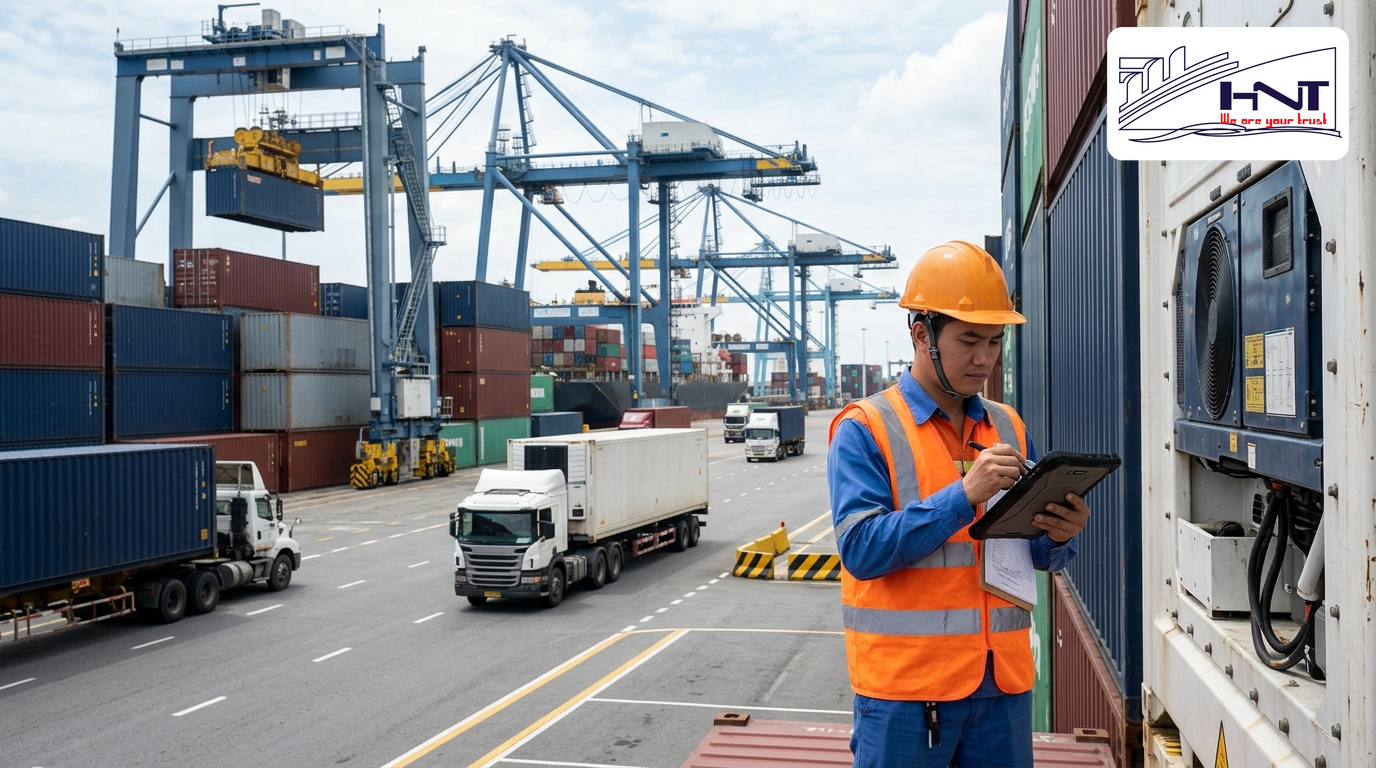
Practical work at ports, ICDs, and CFS warehouses
Import-export field staff are responsible for collecting delivery orders, supervising cargo loading, handling customs inspections, and updating container status.
A wood company in Binh Phuoc exporting to Los Angeles assigned field staff directly at the ICD. Container processing time was reduced by nearly one day.
An electronics company in Bac Ninh adopted a real-time image reporting application. The cargo loading error rate decreased by more than 40%.
- Check the container seal before handover.
- Verify the container number against the booking.
- Monitor yard drop-off progress.
- Coordinate customs inspections when required.
- Continuously update cargo status.
- Store field operation image records.
Actual customs inspection container handling process
Field staff need to coordinate with customs, warehouses, and businesses to ensure the container opening process follows the correct procedures.
Businesses should establish KPIs including on-time delivery rate, field documentation processing time, and the rate of unplanned costs.
Build an effective import-export goods management system
Modern businesses need end-to-end data management instead of handling each shipment separately.
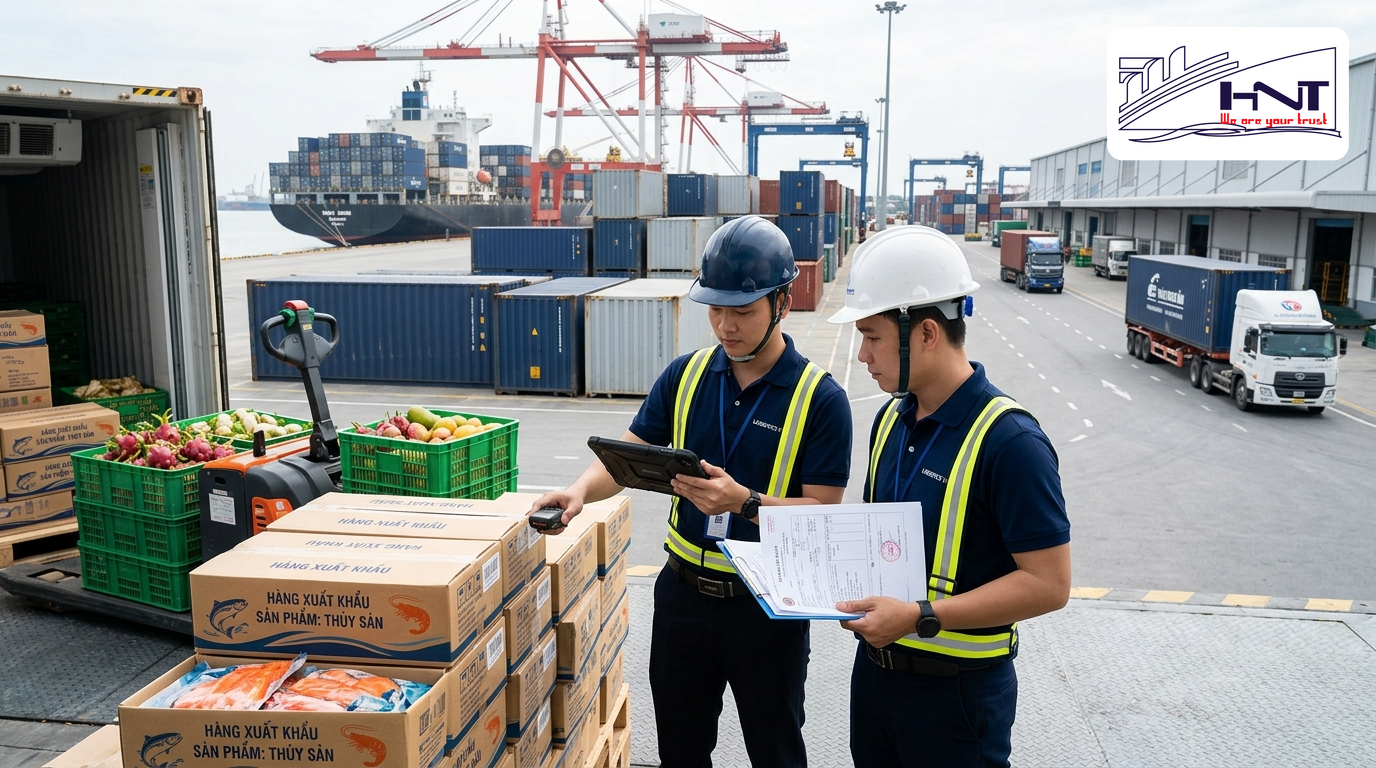
Establish a control process from booking to delivery
Each shipment should have a clear control flow from booking, customs clearance, transportation, inspection, to final delivery.
- Standardize operational forms.
- Apply progress tracking dashboards.
- Automate document alerts.
- Clearly assign responsibilities.
- Evaluate suppliers periodically.
- Store data for auditing.
A mango business in Dong Thap applied digital management to its entire export process to South Korea. Document processing time decreased by 35%.
A frozen shrimp factory in Ca Mau connected cold storage data with the transportation provider. The on-time delivery rate exceeded 97%.
According to experts at HNT LOGISTICS, businesses should integrate document management, transportation, and inspection on the same data platform to reduce discrepancies between departments.
Effective import-export goods management not only helps businesses reduce costs but also enhances international competitiveness. Continuous changes in customs procedures, inspections, and market standards require more flexible operational systems.
- Control documents from the beginning of the process.
- Accurately verify import invoices.
- Proactively plan inspections and quarantine.
- Regularly monitor freight rate fluctuations.
- Strengthen the capabilities of field staff.
- Digitize logistics and customs data.
- Choose logistics partners with specialized industry experience.
As agricultural, seafood, and industrial exports continue to grow, partnering with a professional logistics provider helps businesses better control risks. HNT LOGISTICS supports Vietnamese businesses with international transportation, customs clearance, inspection, and cross-border supply chain optimization.