

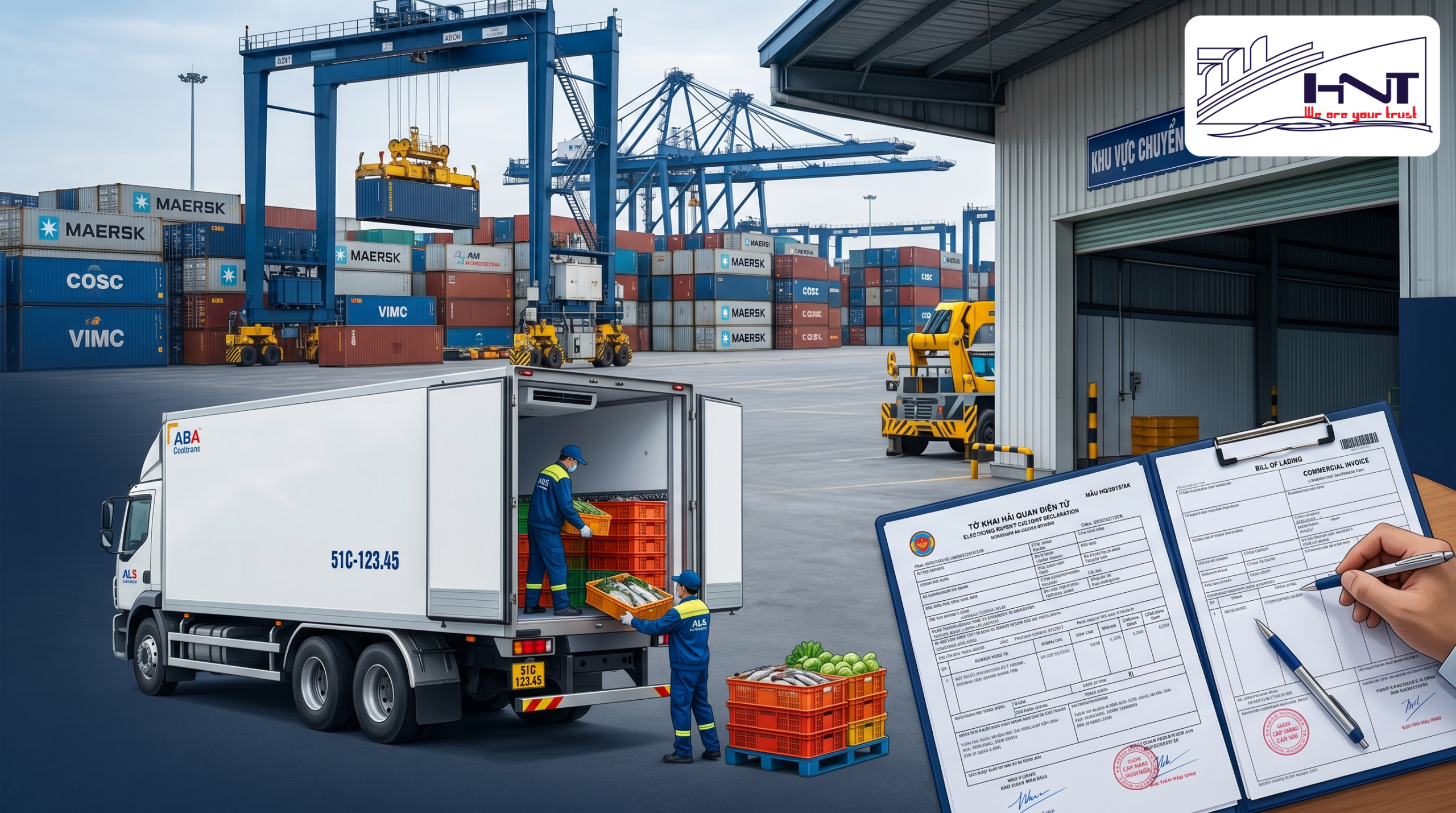
Cargo transshipment is becoming a mandatory requirement as many Vietnamese businesses must combine sea transport, transshipment ports and road transport to ensure delivery schedules.
According to updates from the General Department of Customs and the Ministry of Finance during the 2026–2026 period, many new regulations related to transit goods, customs supervision and transit fees have been adjusted. Vietnam's seafood export turnover in 2026 exceeded 11.3 billion USD, while the demand for agricultural product and cold cargo transportation continues to grow strongly. This makes it necessary for businesses to clearly understand the operational process from containers to road transport to reduce risks and optimize costs.
This article analyzes the entire practical process, documentation requirements, transshipment options and operational strategies for import-export businesses today.
What is cargo transshipment and its role in the modern transportation chain
The concept of cargo transshipment, cargo transit and differences from direct transportation
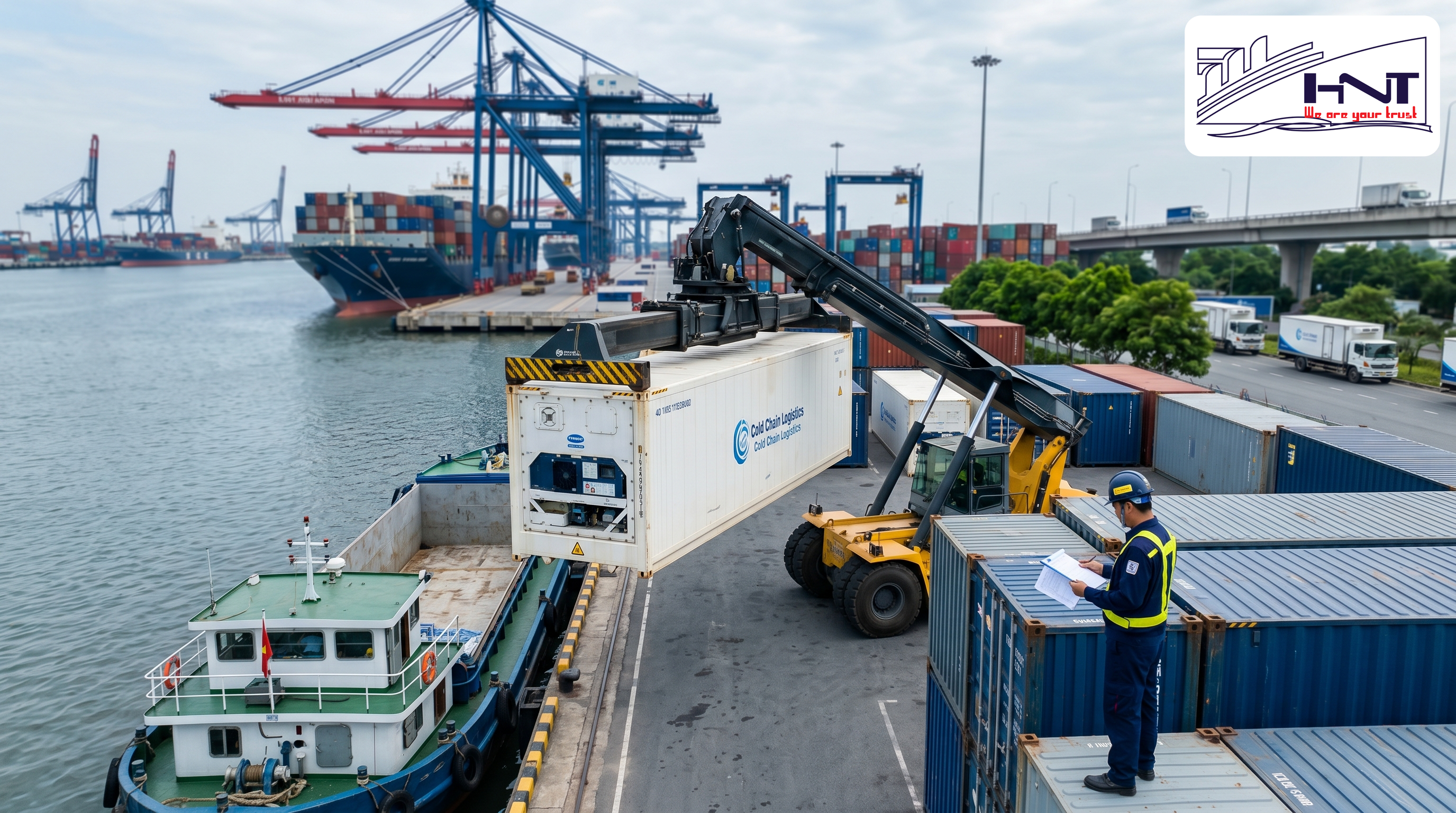
Cargo transshipment is the process of changing the mode of transport or means of transport throughout the logistics journey. This activity usually takes place at seaports, ICDs, bonded warehouses or international border gates.
Cargo transit is commonly applied to shipments passing through a country or logistics hub before reaching the final destination. Unlike direct transportation, this model helps optimize costs and expand market access capabilities.
| Criteria | Direct transportation | Cargo transshipment | Benefits |
|---|---|---|---|
| Online shipping | One leg | Multiple legs | Flexible |
| Cost | Higher | More optimized | Save budget |
| Expansion capability | Restrictions | Infrastructure | Access to multiple markets |
| Coordinate | Simple | More complex | Optimize the supply chain |
- Applied to exported goods requiring transshipment through multiple countries.
- Reduce pressure from container shortages at export ports.
- Leverage international logistics hubs.
- Optimize delivery time during peak seasons.
- Support multi-destination distribution within the same region.
- Reduce transportation costs for large shipments.
Mekong Fresh Company in Tien Giang once exported dragon fruit to Shanghai through Cat Lai Port. After applying the transshipment model through a logistics hub in Guangxi, the company reduced 12% of transportation costs.
A seafood company in Ca Mau transported frozen shrimp to Nanning using a model combining refrigerated containers and specialized trucks. Delivery time was reduced from 6 days to 4 days.
Based on practical experience, businesses should evaluate total logistics costs instead of only comparing sea freight rates.
When do businesses need to transship from containers to road transport
Transshipment activities often arise when the destination port does not accept direct container delivery or customers require deep inland delivery.
Many agricultural export shipments to China are currently transferred from refrigerated containers to refrigerated trucks at border gates to meet flexible delivery requirements.
Impact of new customs regulations and transit goods in the 2026–2026 period
Regulations on transit goods have been updated according to Decree 167/2026/ND-CP and related guidelines on customs supervision for transit goods. Enterprises must clearly declare transshipment locations, changes in transport methods and goods storage areas.
In addition, regulations on transit goods fees according to Circular 86/2026/TT-BTC also directly affect logistics budget planning.
Process of transferring goods from container transport to road transport
Document preparation and customs declaration
Enterprises need to prepare Bill of Lading, Commercial Invoice, Packing List, Certificate of Origin and specialized permits if any.
Documents must be consistent between transport documents and customs declarations to avoid physical inspection issues.
- Check commercial contracts.
- Verify container information.
- Electronic customs declaration.
- Register quarantine if needed.
- Prepare domestic transport documents.
- Confirm transshipment plans.
A mango export business in Dong Thap was once delayed by two days due to an incorrect container number on the bill of lading. After standardizing the documentation process, the error occurrence rate decreased by more than 90%.
A pangasius processing factory in An Giang applied a document checking system before the cut-off time. Document completion time decreased from 6 hours to 2 hours.
Receive containers at the port and check cargo condition
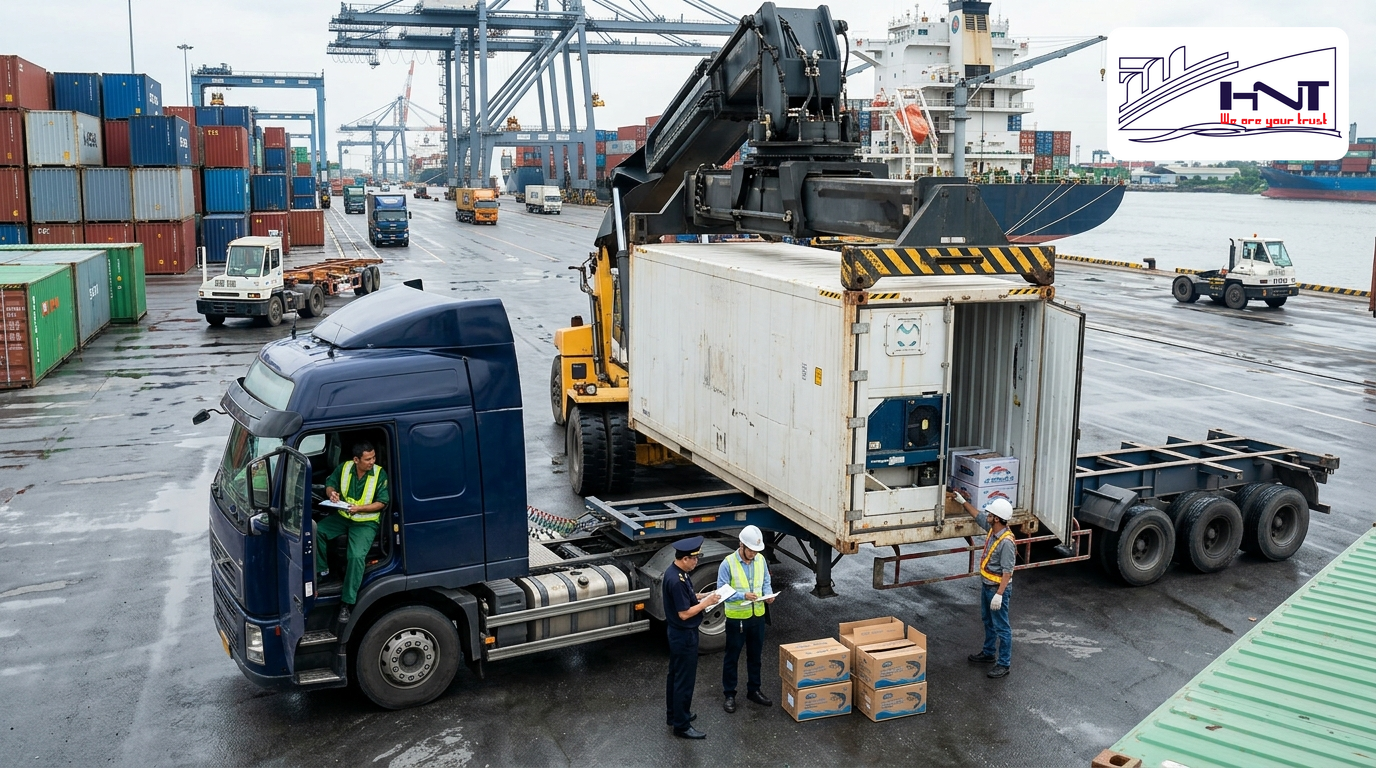
When the container arrives at the port, the logistics unit needs to check seals, temperature and container exterior condition. This is an important step for refrigerated cargo.
Perform transshipment at ports, ICDs or bonded warehouses
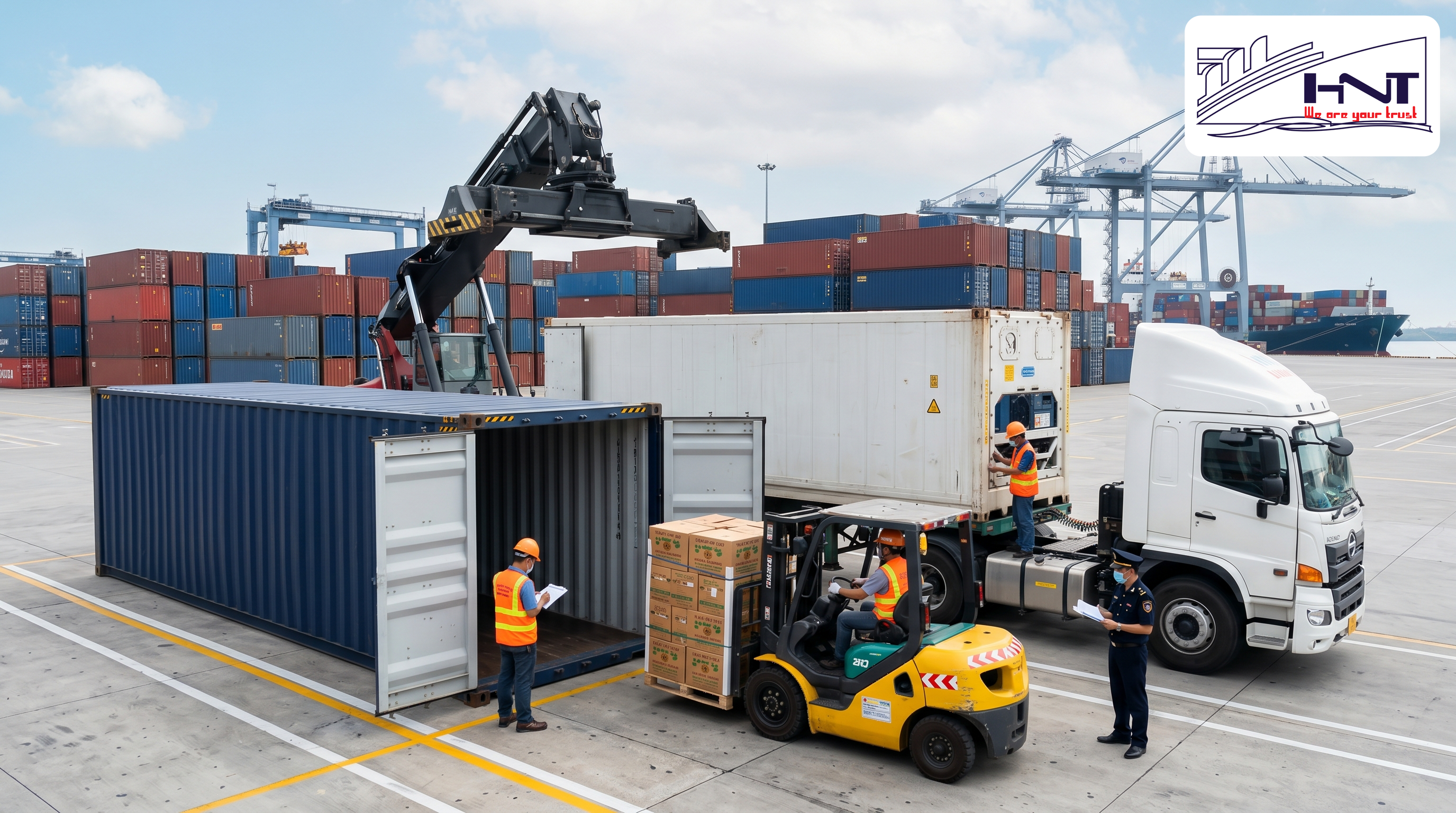
Transshipment must be carried out in areas approved by customs authorities. Goods need to maintain supervised status throughout the handling process.
Transport by road to the destination and complete delivery
After completing transshipment, goods are loaded onto trucks or tractor units for transport to factories, border gates or final customers.
| Step | Location | Duration | Main risks |
|---|---|---|---|
| Declaration | Customs | 1 day | Incorrect documents |
| Container receipt | Port | 2-6 hours | Container damage |
| Transshipment | ICD | 4-12 hours | Cold chain loss |
| Road | Domestic | 1-3 days | Traffic congestion |
| Delivery | Destination point | 2-4 hours | Missing documents |
Container freight management and domestic goods transport after transshipment
Choose FCL or LCL according to cargo characteristics
Container freight transport under the FCL model is suitable for businesses with large volumes. Meanwhile, LCL optimizes budgets for small shipments.
According to experts at HNT LOGISTICS, seasonal agricultural exporters should evaluate actual monthly volumes before deciding to rent full refrigerated containers.
Temperature control for agricultural products, seafood and refrigerated goods
Storage temperature directly affects goods quality. A deviation of only 1–2 degrees C can reduce the commercial value of the shipment.
- Check temperature data before loading.
- Calibrate refrigerated container sensors.
- Monitor temperature in real time.
- Prepare backup power plans.
- Check container door tightness.
- Evaluate transport schedules.
Green Fruit Logistics in Long An exports durian to Nanning. The company maintains a stable temperature of 13 degrees C and reduces loss rates to below 2%.
A seafood factory in Soc Trang transports frozen shrimp to Busan. The online temperature monitoring system helps reduce quality complaints by 15%.
Coordinate domestic cargo transport from ports to factories or border gates
Domestic cargo transport needs to be synchronized with vessel schedules and customs clearance times. Delayed vehicle arrangement can increase container storage costs.
Based on HNT LOGISTICS’s experience, booking domestic transport capacity in advance during peak seasons helps businesses reduce the risk of lacking tractor units and significantly save additional costs.
Optimize container storage, demurrage and detention costs
Businesses need to closely control container pickup time and empty container return time. This is a decisive factor in the financial efficiency of the entire shipment.
| Item | Cause | Impact | Solution |
|---|---|---|---|
| Demurrage | Store containers at ports | Increase costs | Early cargo withdrawal |
| Detention | Keep containers outside ports | Incurred fees | Return on time |
| Storage | Warehousing | Reduce profit | Plan in advance |
| Reefer Charge | Refrigeration | Increase budget | Optimize time |
Import process for goods by road and risks that need to be controlled
Customs documents and new quarantine requirements
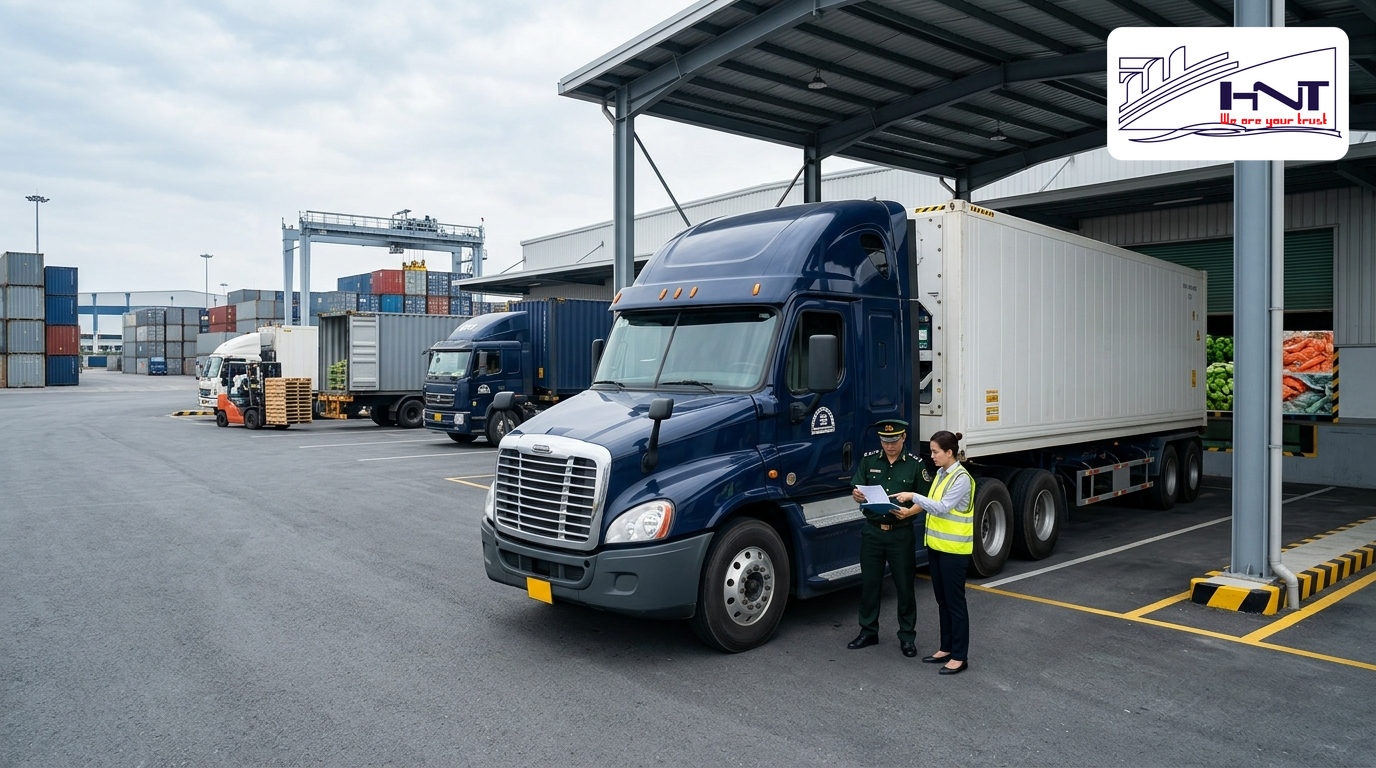
The current road import process requires businesses to carefully check quarantine standards and traceability requirements of each market.
Many markets such as China, the United States and the European Union are increasing requirements for food safety certificates and plant quarantine.
Control transit time at border gates
Transit of goods through international border gates requires accurate vehicle scheduling. Delays can lead to congestion and additional storage costs.
- Schedule vehicles before goods arrive.
- Monitor customs clearance time.
- Prepare backup documents.
- Check border gate regulations.
- Maintain communication with transport units.
- Monitor weather alerts.
AgroStar in Binh Duong transports animal feed to Laos. By planning border gate arrangements 48 hours in advance, the company reduces waiting time by 20%.
A plastic material importer in Dong Nai applied hourly vehicle schedules. Delivery and receipt time decreased by nearly one day.
Common errors when transshipping multimodal goods
Common errors include incorrect bill of lading information, missing specialized permits, unreported changes in transport methods and violations of customs supervision regulations.
Optimized supply chain solutions for import-export businesses
Businesses should build integrated logistics plans combining sea transport, road transport and warehousing instead of managing each stage separately.
Strategies to optimize goods transshipment for Vietnamese businesses in 2026
Current freight trends and container capacity
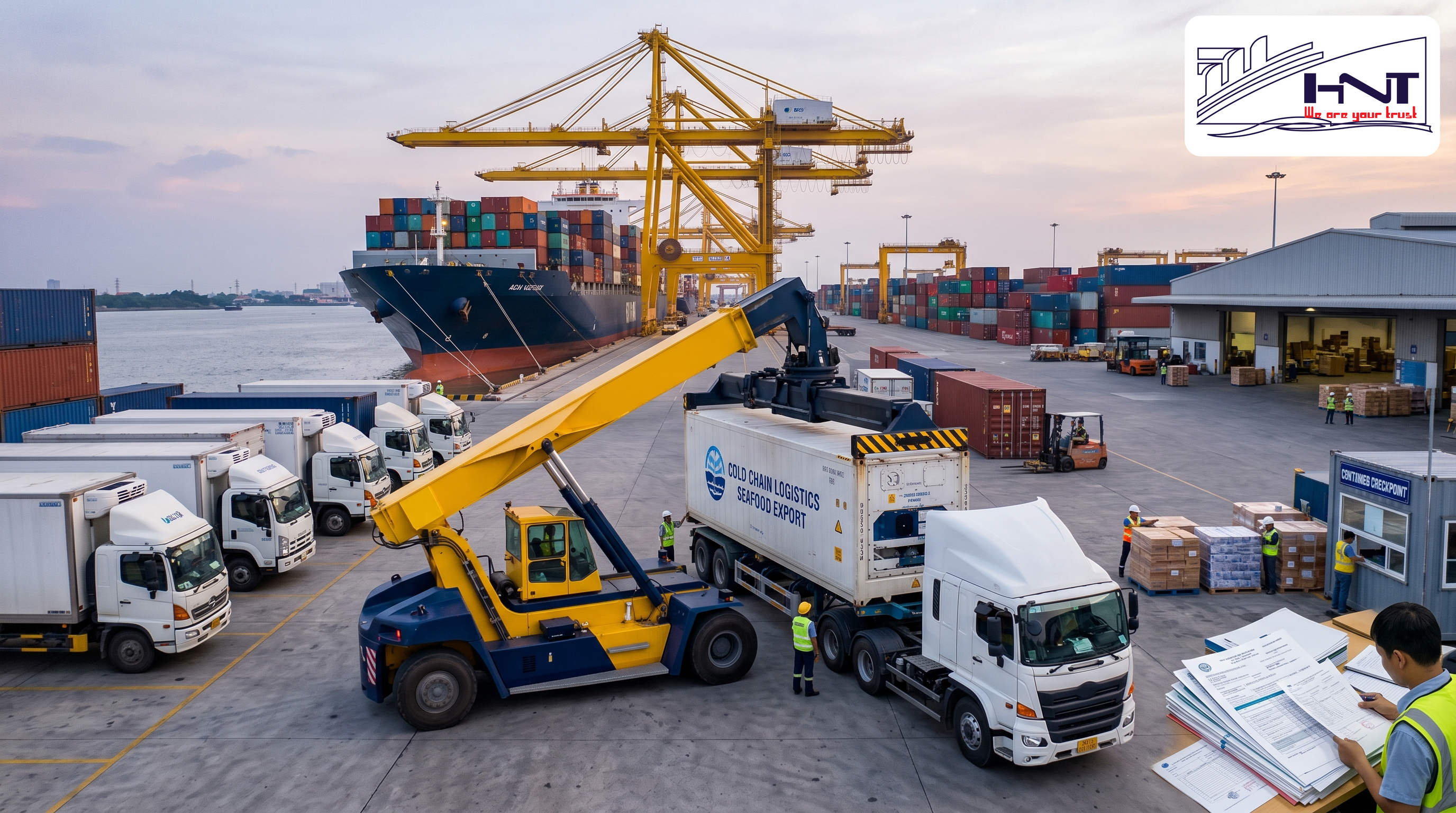
The international transport market continues to fluctuate by route. Some Asia to North America routes recorded significant freight changes in late 2026.
Choosing suitable transport routes by export market
Seafood exporters to the United States need to consider routes through Long Beach or Los Angeles. Meanwhile, agricultural goods to China should prioritize combined sea and road transport options.
The role of logistics providers in risk management
According to experts at HNT LOGISTICS, continuously monitoring vessel schedules, customs policies and border conditions helps businesses significantly reduce supply chain disruption risks.
Practical recommendations from HNT LOGISTICS
HNT LOGISTICS recommends that agricultural and seafood exporters build logistics plans at least 30 days before peak seasons. This helps proactively secure refrigerated containers, domestic transport capacity and customs clearance schedules.
Goods transshipment will continue to play a central role in Vietnam’s import-export activities. Businesses need to understand procedures, control documents and coordinate effectively between sea transport and road transport.
- Evaluate total logistics costs instead of only looking at freight rates.
- Control documents from the booking stage.
- Closely monitor temperature for refrigerated cargo.
- Proactively plan domestic transport.
- Fully comply with customs and quarantine regulations.
- Optimize delivery time to reduce container storage fees.
- Choose logistics partners with strong risk management capabilities.
As seafood exports exceed 11 billion USD and customs regulations continue to update, cooperating with experienced logistics providers will help businesses improve competitiveness. HNT LOGISTICS is an international transport and forwarding partner ready to accompany Vietnamese businesses on key import-export routes.