


International sea freight often incurs costs because businesses choose FCL or LCL too late. In 2026, Vietnam's seafood exports reached approximately 11.3 billion USD; the world container freight index also increased sharply at the beginning of June 2026. This article helps you choose the right option, control vessel schedules, and complete shipments with discipline.
Choosing between FCL or LCL before booking: Which decision helps optimize costs and transit time for international sea freight?
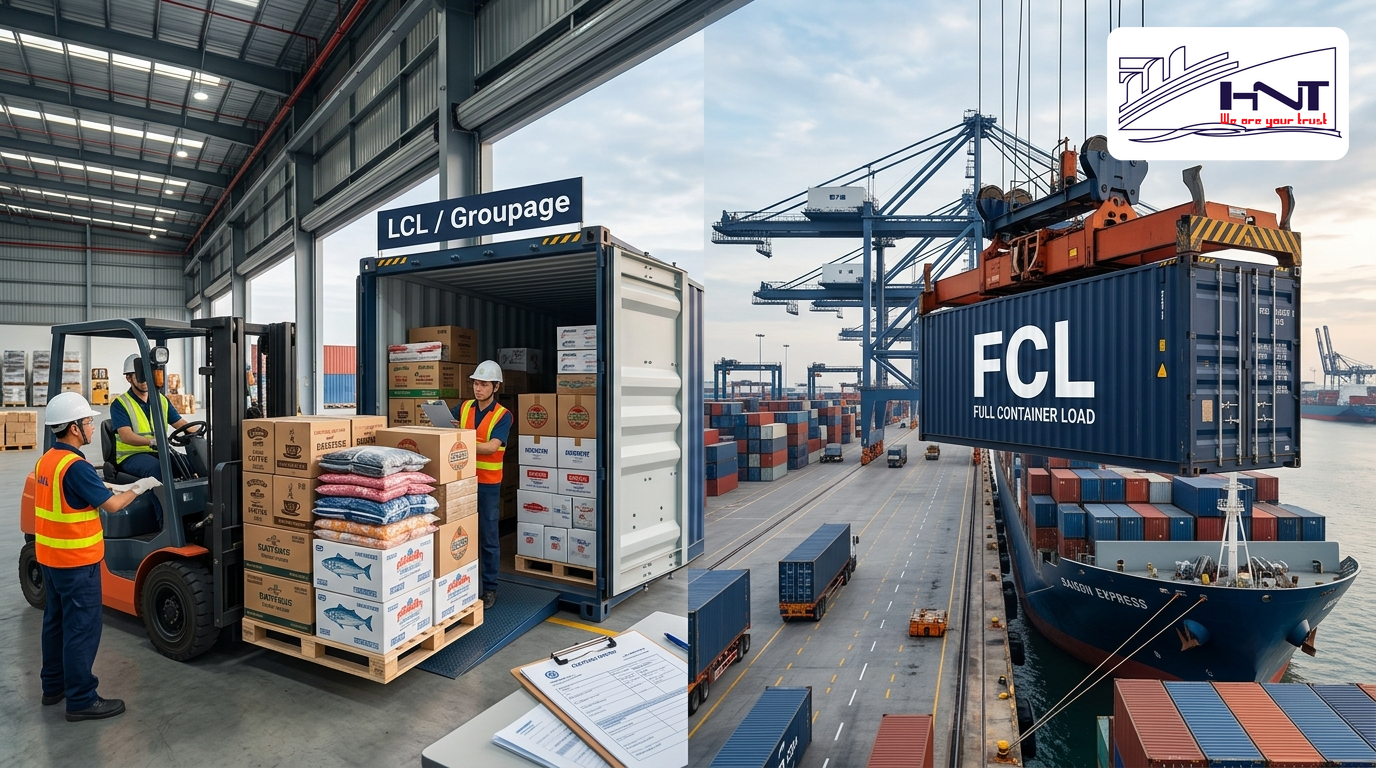
FCL stands for Full Container Load, while LCL is Less than Container Load consolidated in the same container. The difference is not just in sea freight. It affects cargo consolidation time, level of cargo control, port fees, and temperature retention for fresh goods.
When is cargo eligible for FCL instead of LCL consolidation?
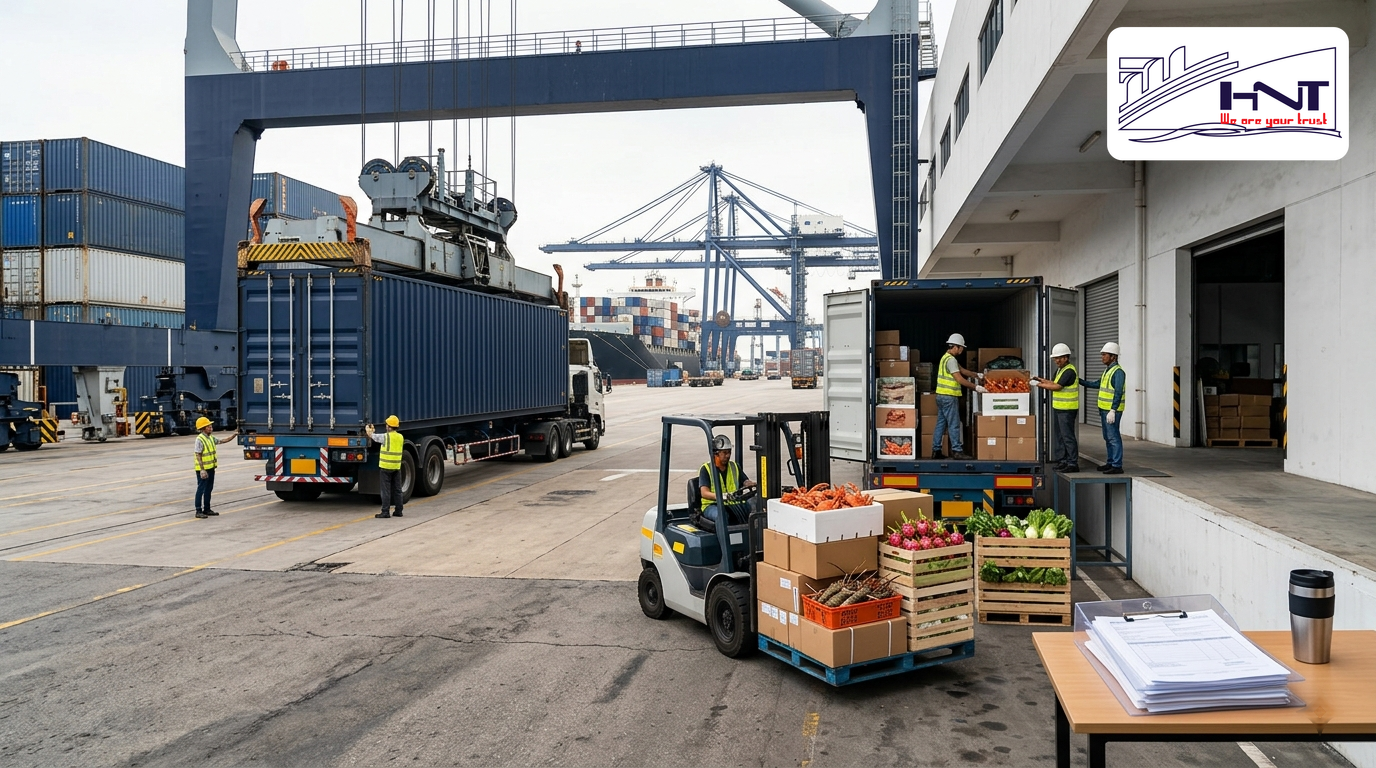
FCL is usually suitable when goods reach about 12–15 cubic meters or more, have a stable delivery schedule, or have a high risk of spoilage. Cold goods, high-value goods, and fragile goods should be prioritized for separate control. An incomplete container can still be reasonable if it reduces the risk of odor mixing, waiting for consolidation, or additional costs at the CFS warehouse.
For example, Minh Phu Agricultural Products Company in Tien Giang exports mangoes to Shanghai. A 17-cubic-meter shipment was transferred to a 20-foot refrigerated container instead of LCL. The business reduced one intermediate unloading and kept the temperature more stable throughout the journey.
How to calculate total actual costs between FCL and LCL shipping
Do not compare by single sea freight rates alone. With FCL, total costs include sea freight, container hauling, lifting/lowering fees, cleaning, and container storage fees if delayed. With LCL shipping, you must add CFS fees, documentation processing fees, deconsolidation fees, and delivery fees at the destination port.
| Item | FCL | LCL | Risks that need checking |
|---|---|---|---|
| Main freight | Per container | By cubic meter or ton | Surcharges vary by route |
| Origin port fees | Hauling and lifting/lowering | Receiving, consolidating, and CFS stuffing | Missing all-in quotes |
| Processing time | Faster when cargo is ready | Dependent on consolidation | Slow due to cargo in the same container |
| Cargo control | Infrastructure | Lower | Damage during loading/unloading |
Situations where businesses often choose the wrong shipping method
A common mistake is choosing LCL just because the shipment is less than a container load. That decision can slow down orders that need to be delivered on time for the season. Another mistake is booking FCL for small shipments without a plan to consolidate more, causing costs per unit of goods to rise sharply.
For example, An Loc Wood Workshop in Binh Duong exported 8 cubic meters of furniture to Melbourne. Because goods needed to be delivered before the retail season, the business used LCL but the goods waited for consolidation for seven days. Later, they switched to an FCL schedule consolidating two orders and shortened processing time by three days.
Decision matrix based on volume, delivery schedule, and budget
- Choose FCL when goods are high-value, perishable, or require separate temperature control.
- Choose LCL when cargo volume is small, delivery deadlines are flexible, and the buyer accepts consolidation time.
- Compare costs per cubic meter instead of just looking at initial freight rates.
- Check waiting time at CFS warehouse before confirming LCL options.
- Estimate container storage and yard storage fees for all shipping options.
- Evaluate the ability to consolidate orders within the same week or the same target market.
Practical summary: Make the FCL/LCL decision before finalizing selling prices with customers. Based on HNT LOGISTICS' experience, the comparison table must include transit times at both origin and destination, and the level of cargo risk.
Prepare export shipments to avoid extra fees from the beginning
Good preparation helps reduce costs for document revisions, schedule changes, and handling rejected cargo. Circular No. 121/2026/TT-BTC effective from 01/02/2026 has adjusted many contents of customs procedures and tax management. Therefore, businesses should check the document set before submitting a booking request.
Checklist of documents to complete before vessel booking
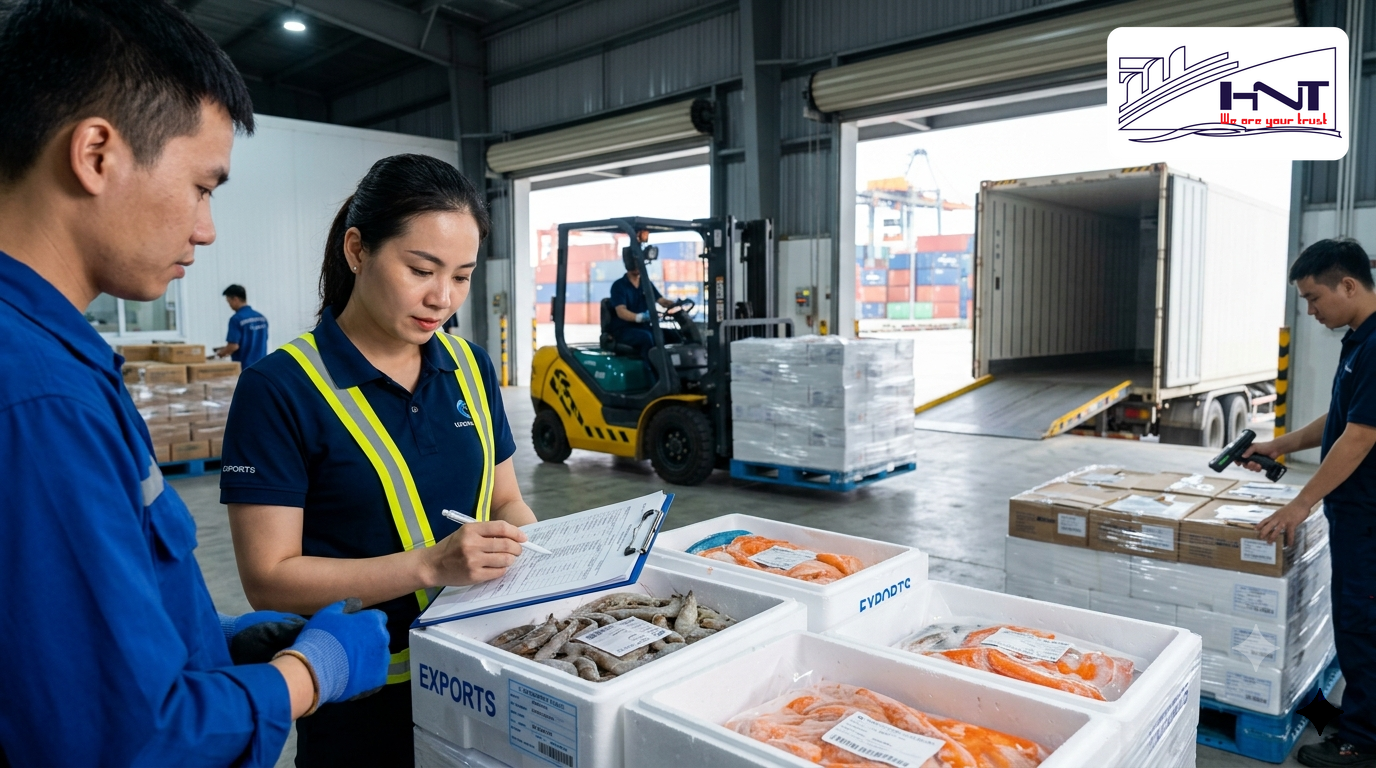
The basic document set includes contract, commercial invoice, packing list, HS code information, specialized license if any, and bill of lading instructions. Agricultural or aquatic products may also need quarantine, certificate of origin (C/O), and certificates according to import market conditions.
| Documentation | Time to check | Person in charge | Consequences of errors |
|---|---|---|---|
| Sales contract | Before booking | Business | Wrong delivery terms |
| Commercial invoice | Pre-declaration | Export accounting | Wrong value and consignee |
| Packing | Before loading goods | Warehouse and logistics | Wrong number of packages or weight |
| Quarantine and C/O | According to certificate deadlines | Import export | Delayed customs clearance at destination |
Packaging and labeling methods according to specific export commodity characteristics
Packaging must be suitable for both sea transport and import regulations. Wood products need dunnage material treatment according to market requirements. Cold cargo needs clear indication of set temperature, ventilation, humidity, and lot code. Package labels must perfectly match the packing list and bill of lading.
Errors that cause shipments to be refused at the warehouse or export port
CFS warehouses may refuse when packages lack labels, packaging is torn, weight exceeds the declaration, or dangerous goods are not declared correctly. Ports may also refuse overloaded containers, inadequate seals, or cargo arriving after the closing time.
For example, Nam Bien Seafood Company in Ca Mau once delivered frozen goods to the warehouse late because the reefer truck was not coordinated. After applying a one-day-prior pickup schedule and checking seals at the factory, the business avoided rebooking fees for subsequent lots.
How to work with an international shipping company to limit risks
A good international shipping company must be transparent about vessel schedules, freight conditions, local charges, and responsibilities when changing voyages. Businesses should request quotes with validity periods, lists of surcharges, document closing times, and contact points for incident handling.
- Send complete cargo information before requesting quotes and vessel schedules.
- Require written confirmation of container type, port of loading, and port of discharge.
- Reconcile local charges at both ends before approving the booking.
- Define feedback contact points in case of voyage changes, container shortages, or inspection occurrences.
- Check capacity for handling cold cargo, food cargo, and quarantine-required cargo.
- Save quotes, booking confirmations, and schedule change emails for each lot.
Practical summary: use a standard quote request template. According to experts at HNT LOGISTICS, this template should clearly separate sea freight, surcharges, quote validity, and destination responsibilities.
International sea freight transportation process from booking to vessel loading
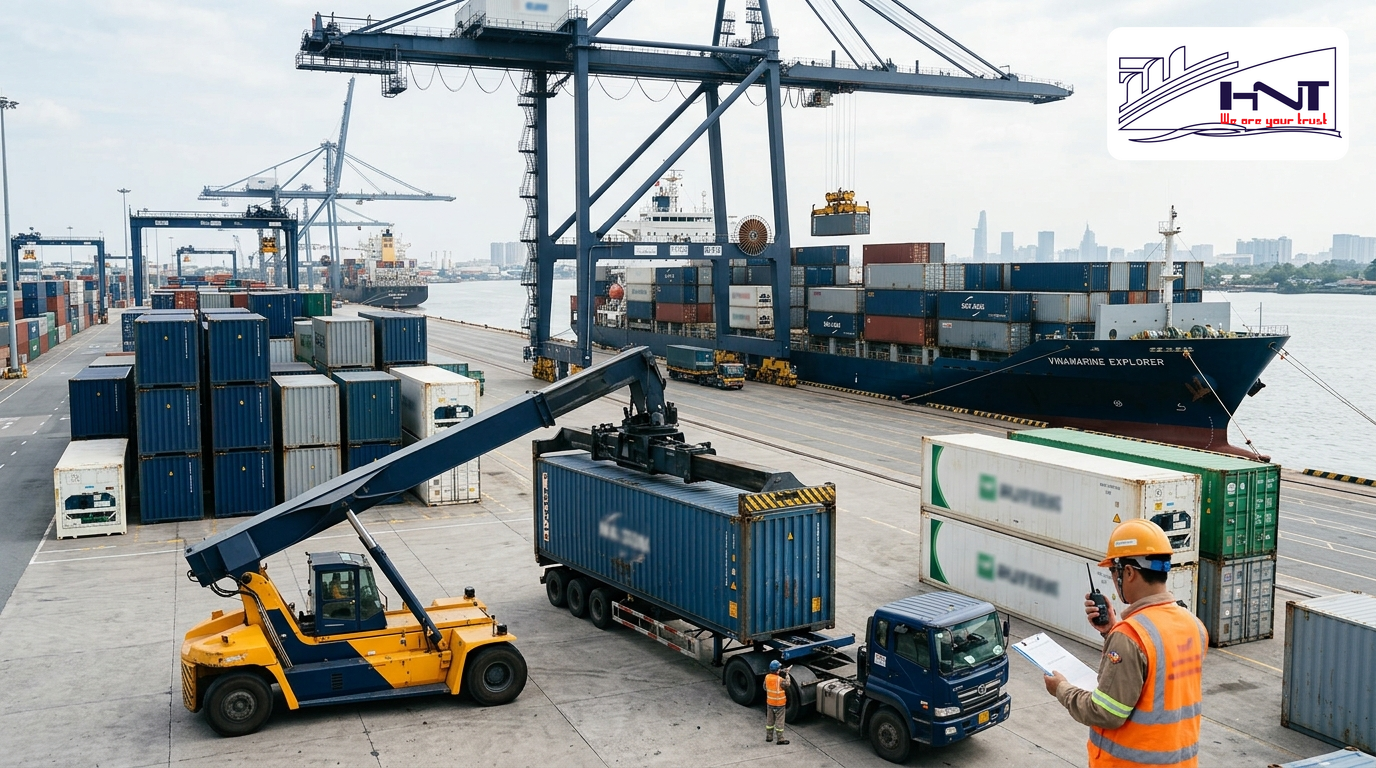
The booking stage determines the ability to pick up containers, enter the port on time, and issue bills of lading with correct data. For routes with fluctuations, businesses should not view the estimated schedule as an absolute commitment. It is necessary to establish at least one contingency plan before the cargo closing date.
Steps for ship booking and confirming a suitable schedule
- Determine delivery terms, port of loading, port of discharge, and freight payer before sending a booking.
- Declare the correct cargo type, number of packages, weight, volume, and reefer container requirements if applicable.
- Receive booking confirmation with booking number, ETD, ETA, and cargo cutoff milestones.
- Book trailers or CFS delivery schedule according to container pickup time and warehouse opening hours.
- Check free-time conditions for container storage at both the port of loading and port of discharge.
- Submit shipping instructions on time to avoid document amendments after vessel departure.
Guide to checking vessel schedules and identifying early delay risks
Checking vessel schedules is not just about looking at ETD. Compare voyage numbers, transit time, port rotation, equipment availability, and cutoff dates. Schedule changes often appear through notifications of omitted ports, vessel changes, berth delays, or extended transshipments.
In June 2026, the index Drewry World Container Index recorded an upward trend on Trans-Pacific and Asia-Europe routes. This indicates that businesses must lock in plans earlier during the peak season, especially for reefer containers.
Procedure for delivering cargo to port or CFS warehouse by FCL and LCL types
| Step | FCL | LCL | Control point |
|---|---|---|---|
| Receive container | Pick up empty container based on release order | Not applicable | Inspect container condition |
| Packing | At the shipper's warehouse | Deliver packages to CFS | Photos of packages and seals |
| Deliver to port | Gate-in before cutoff time | CFS co-loading in container | Delivery receipt |
| Declaration | Before or during the deadline | Synchronize CFS data | Match package count and weight |
Common errors arising before the cargo cutoff and documentation cutoff times
Incorrect declared weight, missing shipping instructions, or sending containers after the cutoff can lead to cargo being rolled. For FCL, check the seal number immediately after loading. For LCL, confirm the CFS warehouse has received all packages and updated the correct measurements.
For example, Dong Nam Mechanical Company in Dong Nai exports spare parts to Busan. By checking documentation cutoff 48 hours in advance, the business corrected the consignee name in time. The shipment kept the original voyage instead of requiring an amendment bill of lading after vessel departure.
- Confirm ETD and ETA in writing before the container pickup date or CFS delivery.
- Check port rotation and number of transshipments when cargo has strict delivery deadlines.
- Cross-check the seal number with the packing list immediately upon completing container loading.
- Submit shipping instructions before the document cutoff time specified by the carrier or agent.
- Prepare contingency plans for transshipment when the route is at risk of skipping ports or experiencing container shortages.
- Include buffer time in the trucking schedule to avoid delays in yard drop-off.
Practical summary: All cutoff milestones must be managed using a shared calendar across the sales, warehouse, and documentation departments. HNT LOGISTICS recommends confirming the schedule one day before loading.
Monitor the voyage and control risks while the cargo is at sea.
After the vessel departs, management responsibility does not end. The exporter still needs to monitor transshipment, documents, payment status, and the buyer's capability to receive the cargo. This is the stage that determines whether the cargo incurs storage fees or other charges at the destination port.
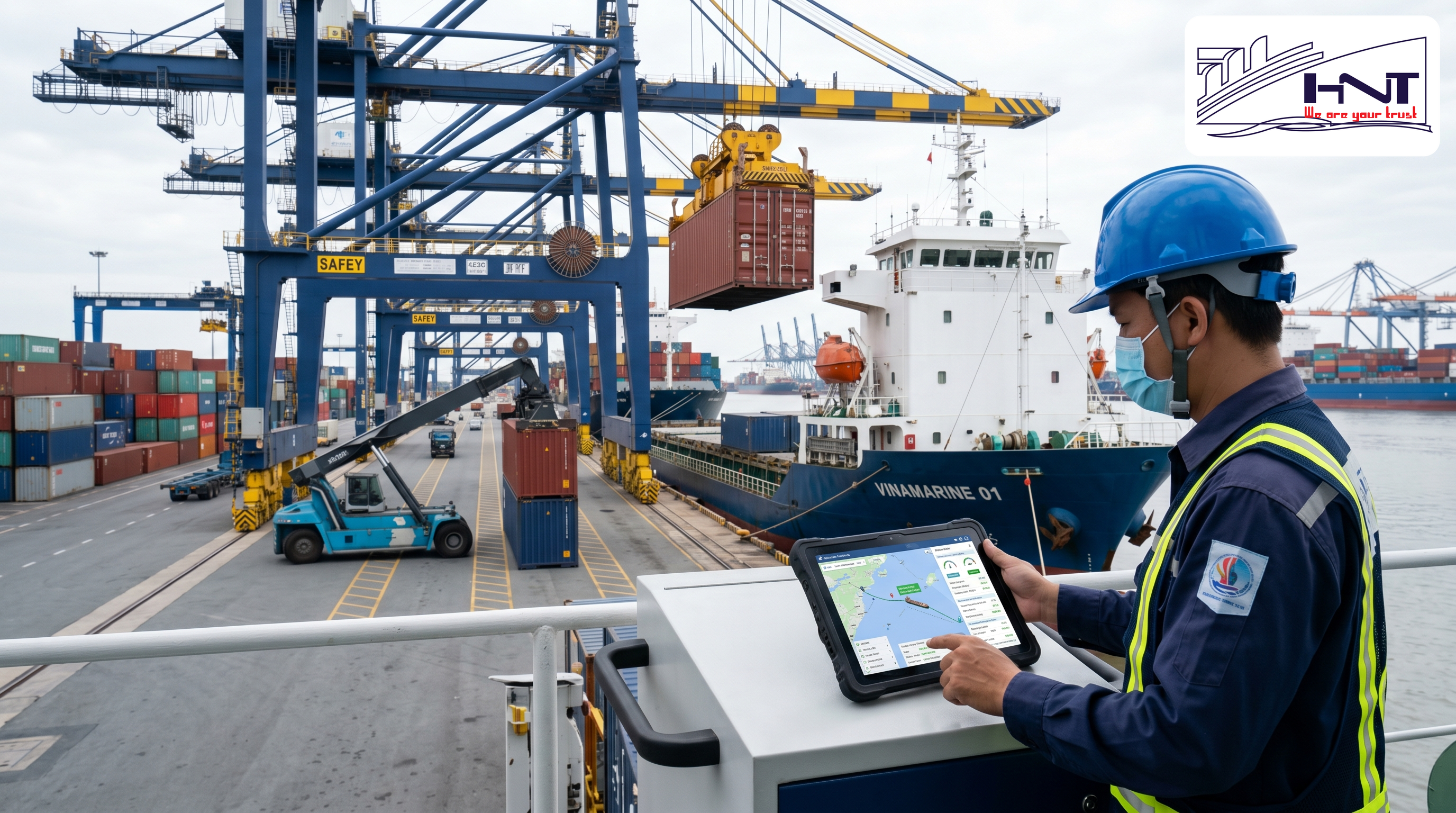
Shipping milestones to monitor after vessel departure
Key milestones include vessel departure, arrival at transshipment port, loading onto connecting vessel, arrival at destination port, and arrival notice. For reefer cargo, additional monitoring of temperature data, power supply alerts, and equipment status during transshipment is required.
How to handle vessel schedule changes, transshipments, or late arrivals
Request the agent to send a written notice stating the old schedule, new schedule, and the reason. Then, assess the impact on delivery deadlines, inspection certificates, insurance, and cargo receipt plans. Do not wait until the vessel is many days late to inform the client.
For example, Dai Phat Fruit Company in Long An exports dragon fruit to Singapore. When the vessel changed berths, the business informed the buyer that same day. Thanks to adjusting the receipt schedule, the cargo did not incur storage fees at the destination.
Check transport documents to prepare for the receipt process
Before ETA, check the bill of lading, invoice, packing list, C/O, and specialized certificates. Information regarding the consignee, cargo description, container number, and seal number must be consistent. If payment uses a letter of credit, check every detail against the letter of credit terms before presentation.
Warning signs of costs incurred at the destination port
| Sign | Potential costs | Early action |
|---|---|---|
| Consignee has not received notification | Storage fees | Send ETA and documents in advance |
| Incorrect name or package count on documents | Bill of lading amendment | Request amendments before ETA |
| Missing import license | Container detention | Check destination market conditions |
| Delayed transshipment | Reschedule delivery | Update buyer immediately |
- Track the new ETA at least twice per week for shipments with transshipment.
- Send draft documents for the consignee to check before official issuance.
- Check the validity of quarantine certificates and certificates of origin before the vessel arrives.
- Request delivery schedule confirmation from the buyer before the arrival notice is issued.
- Save all schedule change notifications as a basis for discussing service responsibilities.
- Check the free container storage period at the destination port before releasing the delivery rights.
Practical summary: Use a tracking table for ETA, documents, and consignees for each container. This table helps detect delays before they turn into container storage fees.
Receiving goods at the destination port and completing the export shipping process
The export shipping process is only completed when the consignee clears customs, picks up the goods, and confirms the condition of the goods. Exporters need to provide quick support when document errors or additional requests arise. This is especially important for refrigerated shipments, seasonal goods, and orders with just-in-time delivery terms.
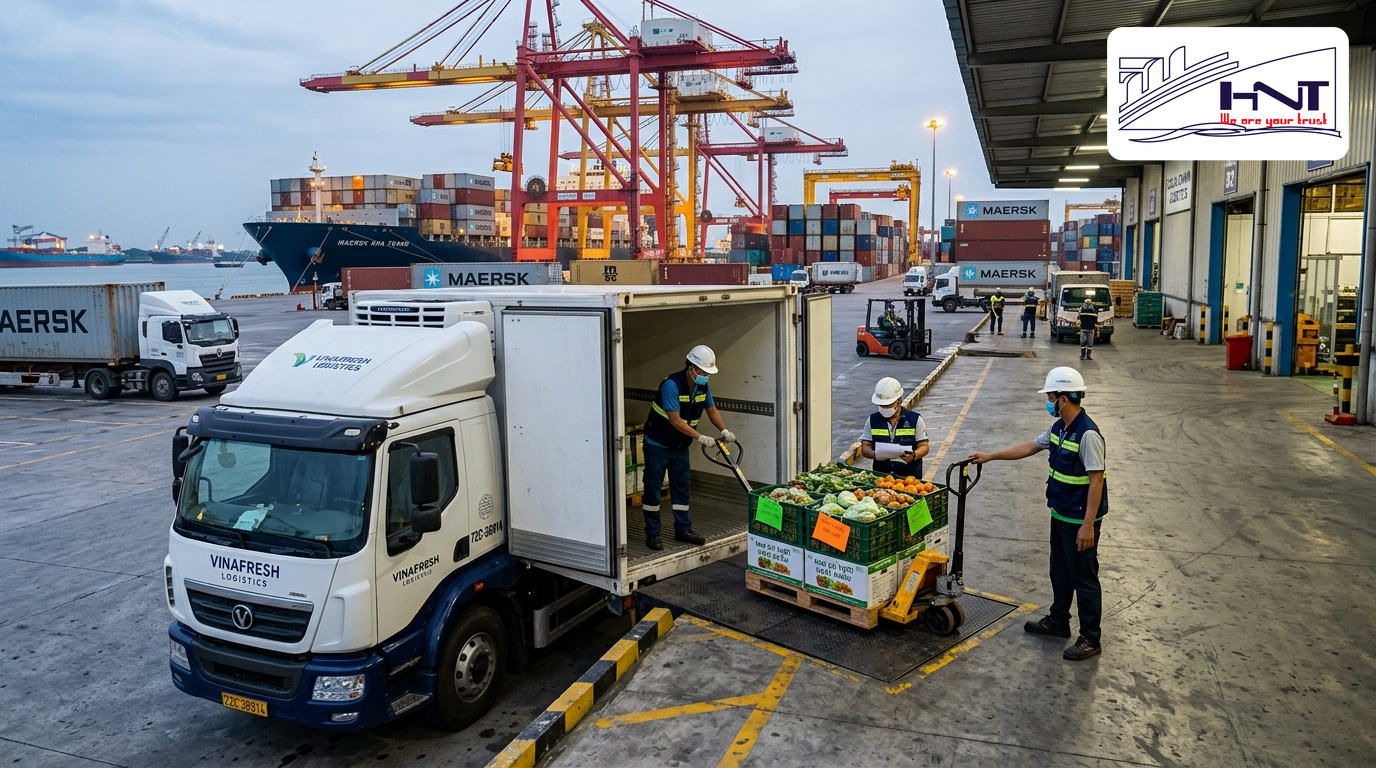
Customs clearance and receiving steps for FCL shipments
The consignee obtains the delivery order, makes the import declaration, completes specialized inspections if required, pays local fees, and hauls the container out of the port. After unpacking, the empty container must be returned to the correct depot within the free time to avoid container storage fees.
Receiving steps for LCL shipments
With LCL, the consignee completes procedures at the CFS warehouse or consolidation agent. They submit documents, pay handling fees, receive the delivery order, and count the packages before the truck enters for pickup. Since LCL involves many shipments sharing a container, package quantity errors or labeling errors must be reported immediately at the warehouse.
Common errors when reconciling documents at the destination port
Common errors include incorrect container numbers, incorrect seal numbers, cargo descriptions that do not match the invoice, or discrepancies in the consignee's name. A minor error can cause goods to be held pending bill of lading amendments. Therefore, reviewing the draft bill of lading before the issuance date is mandatory.
For example, Blue Sea Food Company in Da Nang exported frozen squid to Osaka. The consignee discovered a missing character in the lot code on the packing list. Since they had saved the draft and photos of the loading, the business provided an explanation within the day, not affecting the container pickup schedule.
Check the condition of the goods before final sign-off
| Checklist content | FCL | LCL | Evidence to save |
|---|---|---|---|
| Sealed | Check before opening the door | Check when receiving packages | Photos and report |
| Quantity | Count according to the packing list | Count each package | Delivery note |
| Packaging | Check during unpacking | Check at CFS | Damage photos |
| Temperature | Read device data | According to shipment conditions | Temperature chart |
- Reconcile container numbers, seal numbers, and package numbers before opening the container.
- Take photos of packaging, stowage positions, and signs of dampness when abnormalities are detected.
- Prepare a report immediately at the port, CFS warehouse, or delivery location with witnesses present.
- Notify the shipping line, insurer, and seller within the time limit specified in the contract.
- Do not sign a clean receipt before checking the full number of packages and the packaging.
- Keep shipment records to analyze responsibility and improve future shipments.
Practical summary: The consignee should have a standard cargo inspection process before signing for receipt. This is the most important evidence if there is a claim for loss or damage.
An often-overlooked perspective: Costs lie not in ocean freight but in planning capability
Low ocean freight does not necessarily mean low total costs. An unstable sailing schedule, incorrect documentation, or weak cargo consolidation planning can eliminate all the benefits of lower freight rates. Planning capability helps businesses purchase the right service, at the right time, and with the right level of risk.
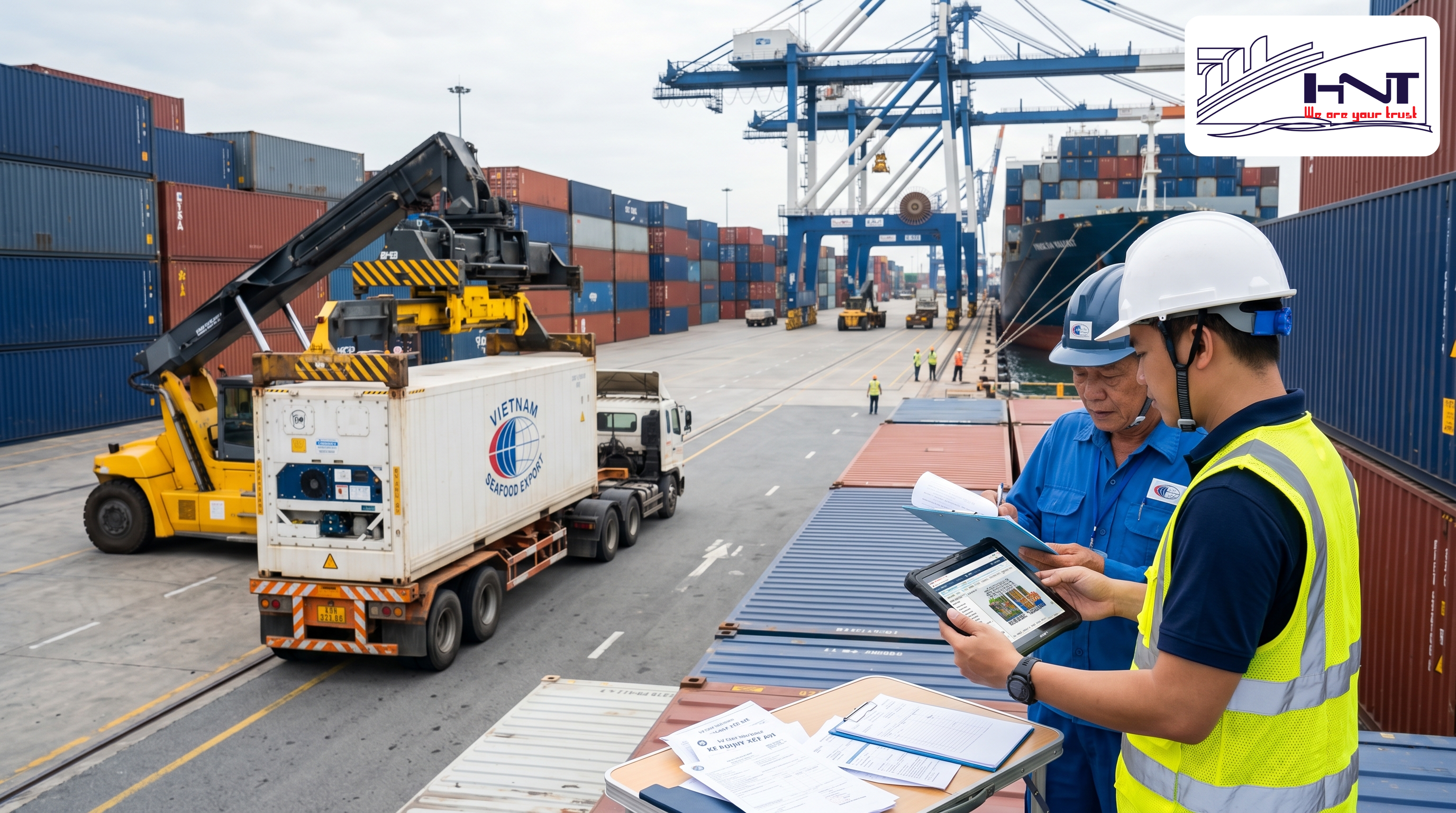
Why low freight rates do not necessarily optimize total logistics costs
Low freight rates sometimes come with long transshipment times, fewer free days, or high destination charges. Businesses should compare the total cost to the consignee's warehouse. Also calculate the risk of lost revenue due to late delivery, especially for agricultural products, seafood, and seasonal goods.
How to forecast volume to switch from LCL to FCL at the right time
Weekly forecasting helps identify when multiple LCL shipments can be consolidated into one FCL shipment. Track cubic meters, order volume, destination markets, and delivery deadlines. When total volume becomes stable, FCL usually provides better control and reduces handling at the CFS warehouse.
For example, Phu An Spice Company in Ho Chi Minh City exports goods to Rotterdam. After eight weeks of monitoring, the business consolidated three LCL shipments into one 40-foot FCL shipment each month. Handling costs per package decreased while also reducing the risk of documentation shortages across multiple small shipments.
Build a carrier evaluation process after each shipment
Evaluate carriers based on data, not just price. Criteria should include schedule reliability, documentation accuracy, response speed, surcharge transparency, incident handling capability, and destination coordination quality. This provides the basis for negotiating rates during peak season.
Key metrics to store for optimizing future international shipments
| Indicator | Measurement method | Management Objective |
|---|---|---|
| Tỷ lệ đúng lịch | On-time ETD and ETA | Evaluate route stability |
| Cost per cubic meter | Total cost divided by volume | Comparing FCL and LCL |
| Document processing time | From draft to issuance | Reduce errors and bill of lading amendments |
| Incurred fees | Charges outside the quotation | Evaluate all-inclusive quotations |
- Record actual ETD, ETA, and the number of delay days for each shipping route.
- Record all surcharges by port of loading, port of discharge, and container type.
- Compare FCL, LCL, and domestic handling costs using the same unit of cargo.
- Track the documentation error rate, the number of bill of lading amendments, and their causes.
- Measure the carrier's response time when schedules change or containers are unavailable.
- Evaluate cargo claims, temperature compliance, and the level of destination support.
Practical summary: Efficient international sea freight starts with data from previous shipments. HNT LOGISTICS can support Vietnamese exporters in standardizing quotations, controlling sailing schedules, and building shipping route evaluation records.
For sustainable international sea freight, businesses should treat FCL/LCL as a planning decision rather than choosing the cheapest freight rate. Prioritize total cost, delivery deadlines, and shipment control.
- Choose FCL when output, cargo sensitivity, or delivery deadline require high control.
- Choose LCL when the shipment is small, the schedule is flexible, and the total landed cost remains reasonable.
- Check the vessel schedule based on cut-off dates, transshipment, and container availability.
- Standardize documents before booking to avoid shipment changes and bill of lading amendments.
- Track ETA, documents, and consignee until the goods are cleared.
- Store data for each shipment to convert from LCL to FCL at the right time.
For agricultural products, seafood, and fresh fruits, missing one operational milestone can devalue the entire shipment. Plan early, check landed conditions, and choose a partner with practical handling capabilities. HNT LOGISTICS is a reputable freight forwarding and logistics partner for Vietnamese exporters needing to optimize sea routes, containers, and shipping documentation.