

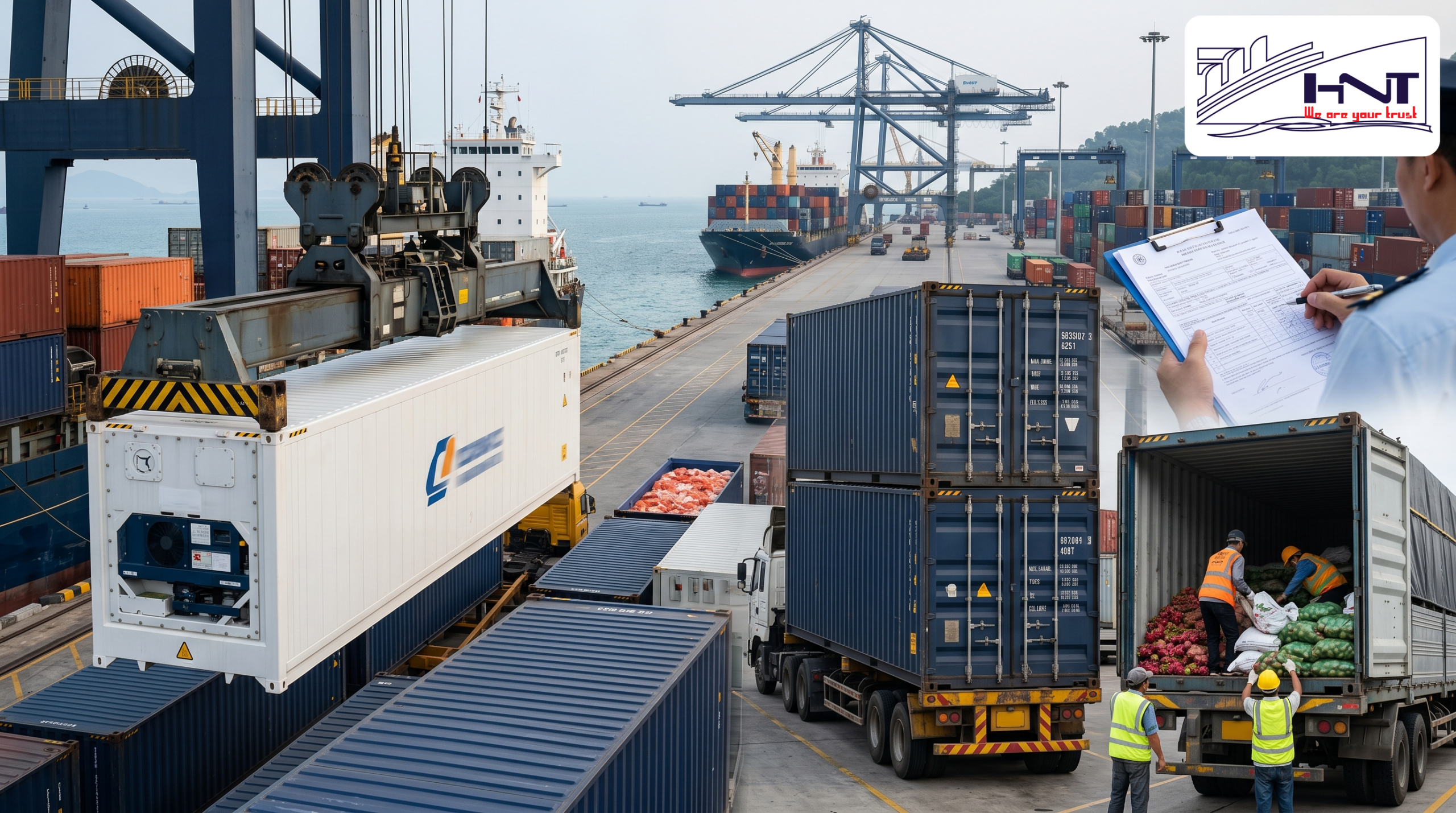
Shipping goods to China is becoming a critical challenge for many Vietnamese agricultural and seafood businesses as China continues to tighten quarantine requirements, product traceability, and customs procedures.
In 2026, Vietnam's seafood exports to China reached nearly USD 2.3 billion, up about 32% compared to the previous year. China also accounted for more than 25% agricultural trade turnover of Vietnam. This has significantly increased the demand for optimizing cross-border logistics.
Meanwhile, northern border gates continue to experience refrigerated container congestion during peak seasons. Some durian and seafood shipments have undergone additional inspections as China strengthens checks on residue levels and planting area codes.
This article helps businesses understand the benefits and risks of official and unofficial shipping channels, enabling them to choose the most suitable transportation model for each type of cargo and export strategy.
Trends in shipping goods to China in 2026 and why businesses must choose the right method
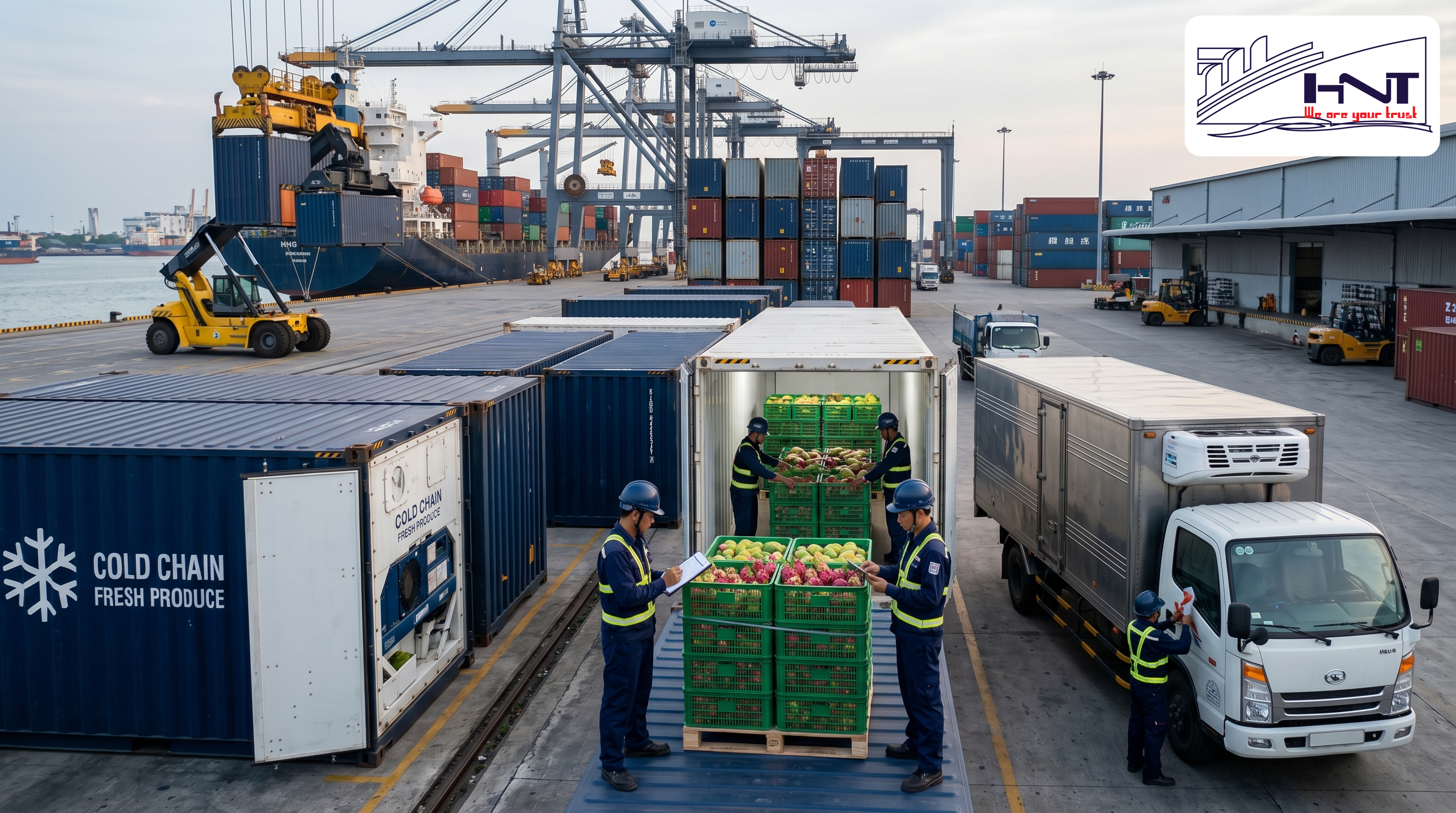
Growth in agricultural and seafood exports to China
The Chinese market continues to be the largest destination for many Vietnamese agricultural product groups. Products such as durian, dragon fruit, frozen shrimp, and pangasius have all seen strong growth in import demand.
According to Vietnam Customs data for 2026, seafood exports to China increased by more than 57% in the first four months of the year. This is a positive signal but also creates greater logistics pressure at border gates and seaports.
Export businesses no longer prioritize low cost alone. They are increasingly concerned with schedule reliability, temperature control, and customs clearance speed.
- Durian exports require registered planting area codes and clear QR traceability.
- Refrigerated containers must maintain stable temperatures throughout the cross-border journey.
- Many seafood products must have a complete Certificate of Origin.
- China has increased inspection rates for unofficial channel shipments.
- Businesses prioritize sea routes instead of depending on land border crossings.
Mekong Fresh Company in Tien Giang previously exported durian via unofficial overland transport through Lang Son. In August 2026, the company experienced a three-day vehicle delay due to missing traceability documents. Additional cold storage costs exceeded VND 180 million.
In contrast, Blue Ocean Seafood Company in Ca Mau switched to the Cat Lai–Shanghai route using official FCL reefer containers. On-time delivery performance increased to 96% while inspection risks were significantly reduced.
According to HNT LOGISTICS' experience, exporters of frozen seafood should prioritize official sea freight routes when shipment values exceed VND 500 million to reduce the risk of losing cold chain control.
Why unofficial shipping to China is now riskier than before
Previously, unofficial shipping to China helped businesses reduce input costs and ship goods faster. However, since 2026, China has significantly tightened quarantine controls and origin documentation requirements.
Many border gates have implemented automatic planting area code scanning. Shipments lacking documents or containing inconsistent declarations are more likely to be returned or held for extended inspections.
In particular, fresh fruit and frozen seafood are now subject to stricter quality inspections than before. As a result, the risk level of the unofficial shipping model has increased.
| Criteria | Official channel | Unofficial channel | Main risks |
|---|---|---|---|
| Customs documentation | Complete | Simpler | Documents may be missing |
| Stable customs clearance | Infrastructure | Fluctuation | Border gate congestion |
| Cold chain control | Good | Difficult to stabilize | Cargo damage |
| International payment | Safety | High risk | Difficult reconciliation |
| Suitable for high-value goods | Yes | Not suitable | Lost goods |
Comparison of official and unofficial goods transport to China
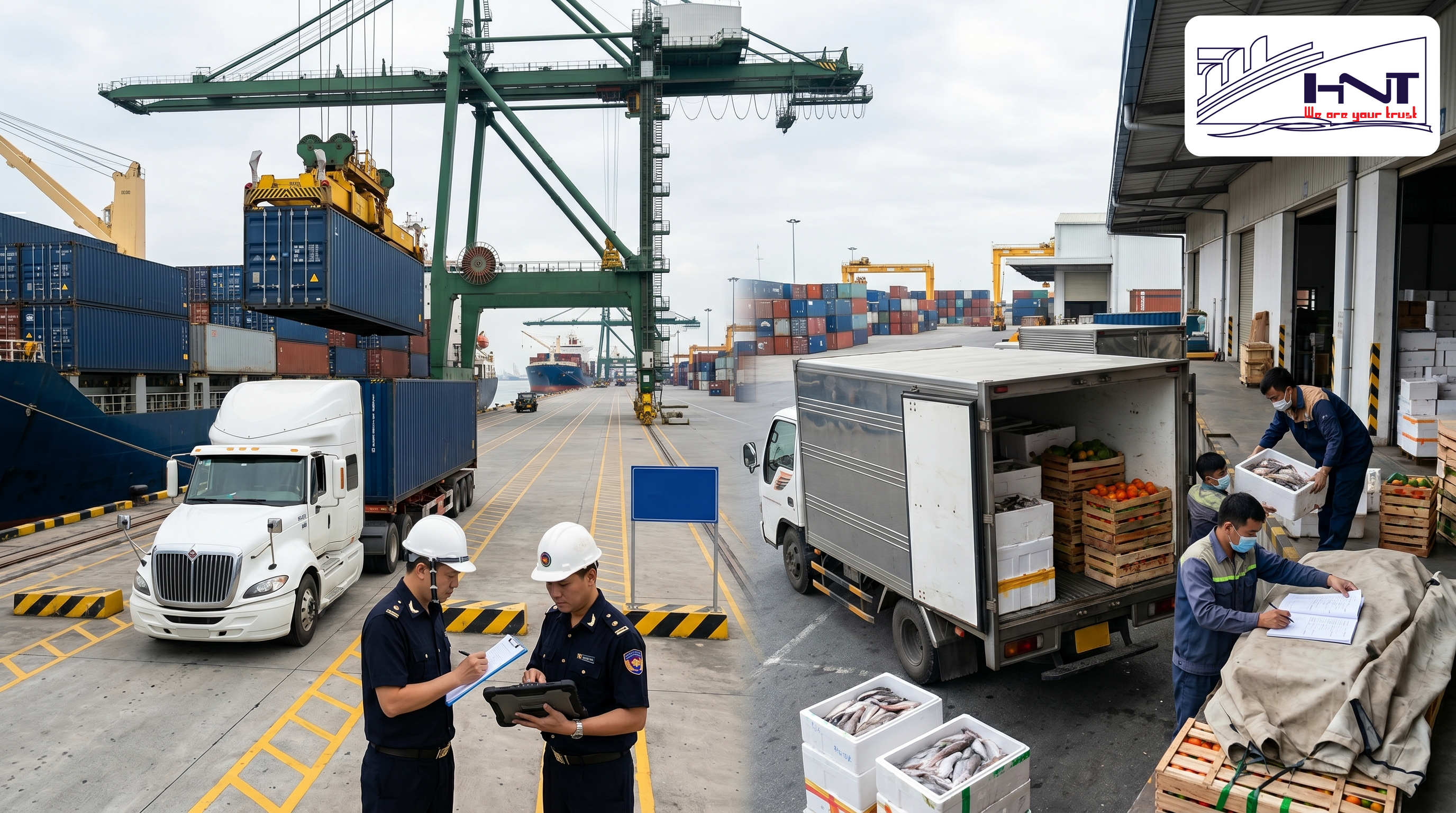
Differences in customs procedures and documentation
Official transport to China requires a complete Invoice, Packing List, Bill of Lading, and Certificate of Origin. In addition, many agricultural products require a phytosanitary certificate.
In contrast, unofficial transport to China usually has a simpler documentation process. However, this makes it difficult for businesses to handle commercial disputes or insurance claims.
According to experts at HNT LOGISTICS, businesses should standardize export documentation from the beginning to avoid dependence on border traders during peak seasons.
- Prepare the correct HS code for each type of goods.
- Check the growing area code before loading the container.
- Confirm the vessel schedule and refrigerated container cut-off time.
- Ensure quarantine documents match the Invoice.
- Keep international payment records for at least five years.
Green Delta Fruit Company in Long An once had a dragon fruit container held due to an incorrect HS code on the documents. After switching to a standardized official customs declaration process, customs clearance time was reduced to 18 hours.
A seafood company in Soc Trang used unofficial consolidated shipping services through Guangxi. The shipment was delayed by six days due to sudden changes in inspection regulations.
Differences in logistics costs and delivery time
Many businesses choose unofficial transport because the initial cost is about 10% to 20% lower. However, additional costs caused by border congestion can far exceed the initial savings.
For official sea freight routes, refrigerated container rates fluctuate by season. However, vessel schedules are more stable and delivery times are easier to control.
| Elements | Official channel | Unofficial channel | Business impact |
|---|---|---|---|
| Initial cost | Higher | Lower | Easily attracted |
| Additional costs | Stable | Highly volatile | Difficult to estimate |
| Delivery time | Stable | Not fixed | Contract impact |
| Cargo insurance | Easy to buy | Difficult to handle | Financial risk |
| Expansion capability | Good | Limited | Difficult to increase output |
Businesses should consider total logistics costs instead of focusing only on the initial shipping price. This is especially important for frozen goods and seasonal agricultural products.
Real risks of unofficial transport to China
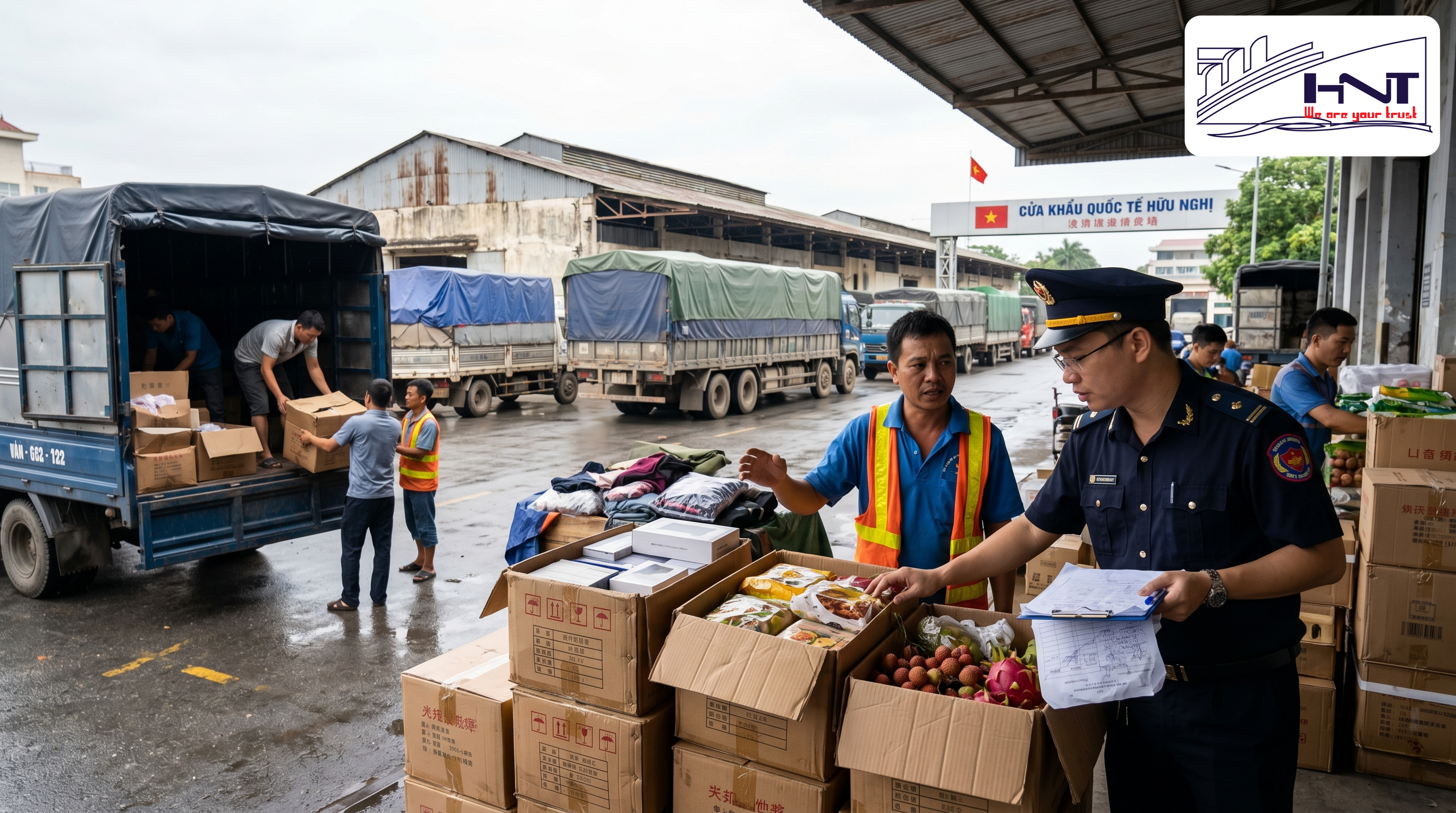
Border congestion and cargo inspection
The biggest risk of unofficial transport to China is border congestion. When the number of trucks increases, waiting times can last for many days.
For fresh fruits and vegetables, a delay of just 48 hours can reduce commercial quality. This directly affects selling prices and the exporter's reputation.
- Refrigerated containers consume significant fuel while waiting.
- Fresh produce easily loses sweetness and color.
- Storage yard costs increase sharply each day.
- Businesses struggle to keep delivery schedules for partners.
- The risk of payment rejection increases significantly.
Dong Nam Fruit Company in Dak Lak once had 12 durian trucks held at Tan Thanh border gate during peak season. After waiting four days for customs clearance, the business lost nearly 15% of the cargo value.
A pangasius company in An Giang exporting by road was required to provide additional quarantine documents. The container had to return to a cold warehouse in Lang Son for document processing.
Risk of losing cold chain control for agricultural and seafood products
The cold chain is critical for seafood and fresh fruit. When unofficial transport is prolonged, it is difficult to maintain a stable container temperature.
This increases the risk of microbial growth and reduces the product's sensory quality. Some Chinese customers now check container temperature data before accepting shipments.
HNT LOGISTICS recommends that businesses exporting frozen shrimp use reefer containers with remote temperature monitoring systems to control risks throughout the journey.
First Translation
How to optimize transport to China safely and reliably
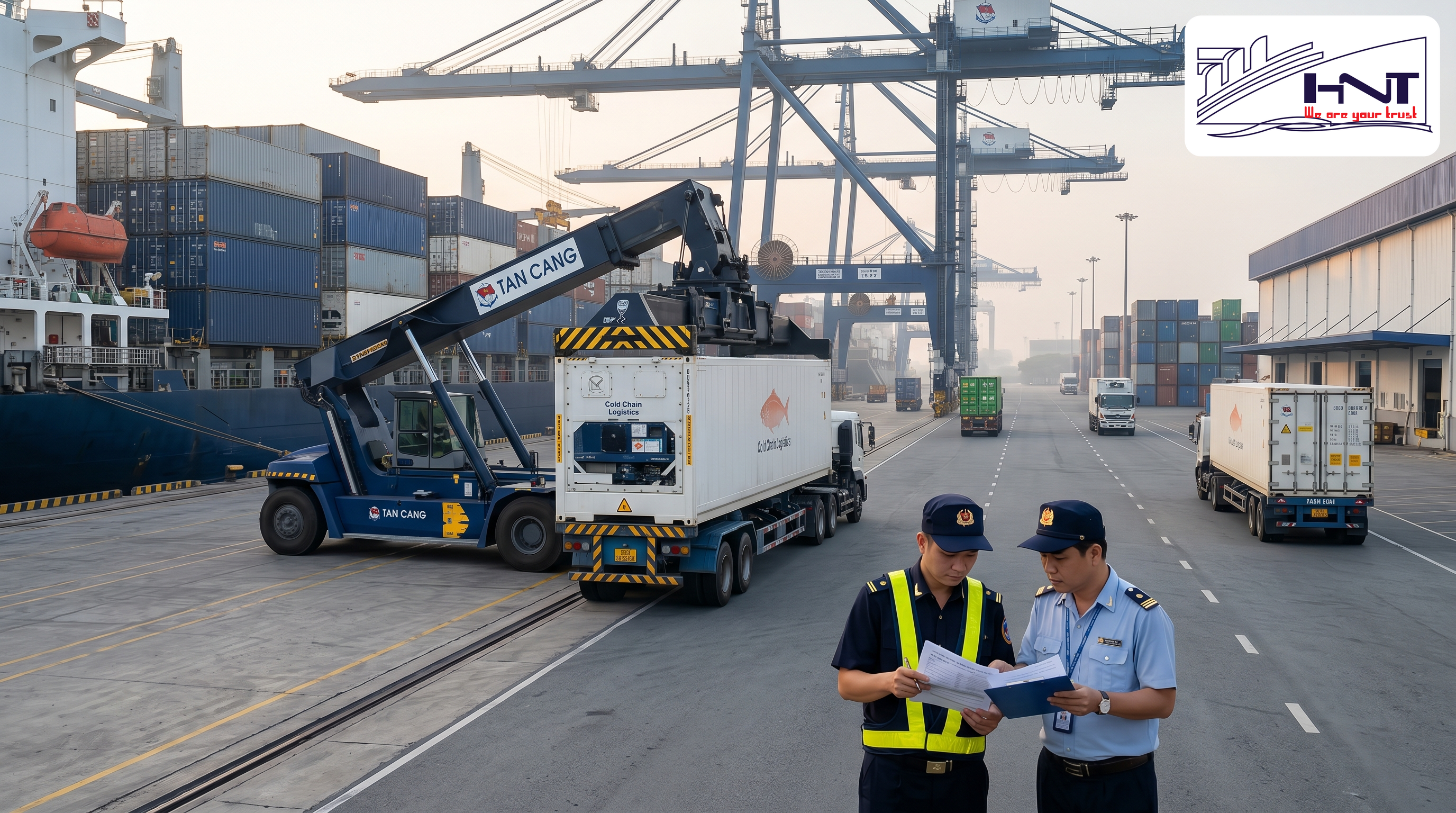
Choose the right China freight transport provider
Second Translation
A professional China freight transport provider should have an agency network in both Vietnam and China. This helps resolve customs inspections or vessel schedule changes quickly.
- Check actual customs declaration capabilities.
- Evaluate experience in handling refrigerated cargo.
- Confirm the container tracking system.
- Prioritize providers with liability insurance.
- Compare transit times instead of looking only at price.
Minh Hai Foods Company in Bac Lieu switched to a forwarder with a cold warehouse near Cat Lai. Container processing time was reduced by nearly 30% during the peak season.
A mango business in Dong Thap optimized sea freight instead of road transport. Logistics costs increased slightly, but the on-time delivery rate exceeded 95%.
When to use low-cost transport to China
Low-cost transport to China is suitable for common consumer goods or small shipments. However, businesses need to balance cost and safety.
For high-value or perishable goods, operational stability is more important than low freight rates. This is the key factor in maintaining long-term contracts.
- Do not use low-cost routes for frozen seafood.
- Prioritize FCL instead of consolidating with fresh products.
- Check insurance terms before shipping.
- Monitor vessel schedules and port conditions continuously.
- Set aside a contingency budget for peak seasons.
Businesses should also refer to guides such as sea freight routes to China, refrigerated container size standards and export customs declaration services to standardize long-term logistics operations.
Transport to China will continue to grow strongly in the coming years. However, businesses need to shift from a “fast and cheap” mindset to one focused on “stability and risk control”.
The choice between official and unofficial transport depends on the type of goods, shipment value, and the importer's requirements. For agricultural products and frozen seafood, the current trend strongly favors the official model.
- Official transport provides better legal risk control.
- Unofficial transport is suitable for small and flexible shipments.
- The cold chain determines the quality of exported goods.
- Lower costs do not necessarily result in higher profits.
- Refrigerated containers need continuous temperature monitoring.
- Businesses should standardize customs documentation from the beginning.
Based on HNT LOGISTICS' practical implementation experience, Vietnamese businesses that want to sustainably expand their market share in China need to seriously invest in logistics processes, customs declaration, and cold chain management from the very beginning. As a professional transport provider, HNT LOGISTICS is committed to delivering comprehensive supply chain solutions, helping Vietnamese businesses confidently conquer global markets. Contact us today at 8A Hoang Minh Giam, Ho Chi Minh City or via the marketing email at hntshipping.com for quotation support!