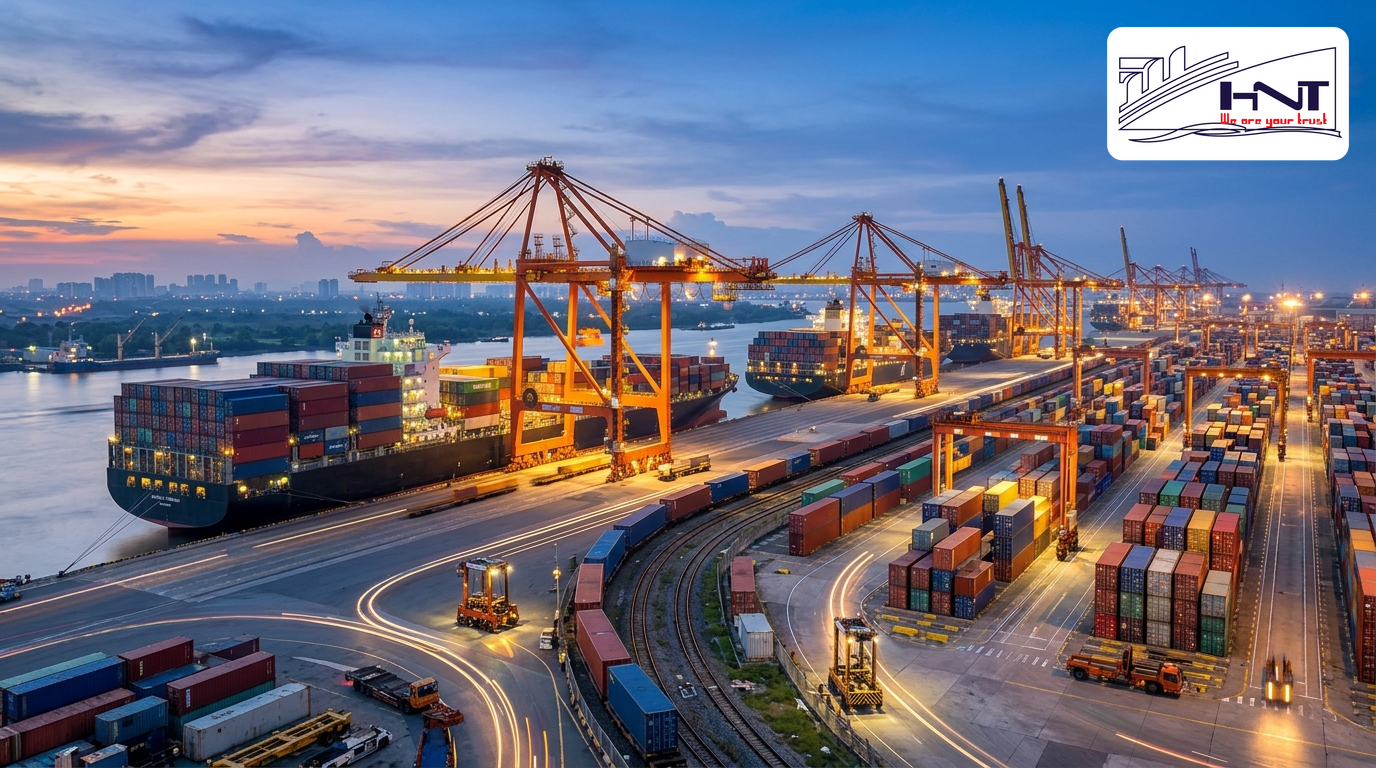
Official customs-cleared shipments are often delayed not because of a shortage of trucks, but because of discrepancies in product codes, missing registration with the General Administration of Customs of China (GACC), or late bookings for refrigerated containers.
In 2026, Vietnam's exports to China reached more than USD 70.4 billion, according to republished customs data. On July 2, 2026, the Drewry World Container Index reached USD 4,530 per 40-foot container. The Ministry of Industry and Trade also updated its guidance on China's Order 280 in 2026.
This article will help cargo owners design an official export process, standardize documentation, select suitable routes, and correctly interpret Vietnam-China shipping rates. The goal is not to ship as quickly as possible at any cost. The goal is to ensure goods pass through border gates or ports legally, at the correct temperature, and within budget.
What Is Official Customs-Cleared Shipping and When Should Businesses Choose It?
Official export shipping is a method of exporting goods under commercial contracts, with full customs declarations and compliance with the requirements of the importing market. In China, this model is particularly important for agricultural products, seafood, processed foods, machinery, and industrial goods requiring clear traceability.

Differences Between Official Customs-Cleared and Informal Border Trade
The biggest difference lies in risk management capabilities. Official exports require commercial invoices, packing lists, contracts, bills of lading, and relevant certificates. In return, businesses gain a legal basis for filing claims, making international payments, and expanding long-term orders.
- Suitable for businesses requiring stable contracts, bank transfers, and auditable export documentation.
- Reduces the risk of congestion when China tightens quarantine controls, changes border gates, or conducts traceability inspections.
- Supports export brand building because Chinese buyers can verify shipment documentation.
- Suitable for temperature-controlled goods, including durian, dragon fruit, mangoes, frozen shrimp, and pangasius.
- Creates transparent cost data for negotiating FOB, CIF, or DDP terms with importers.
| Criteria | Official channel | Unofficial channel | Risks that must be addressed directly |
|---|---|---|---|
| Records | Complete commercial documentation | Simpler | Missing documents can delay payments |
| Quarantine | Subject to Chinese requirements | Depends on the specific period | Fresh goods may be rejected |
| Cost | Costs can be estimated | Can fluctuate significantly | Difficult-to-control additional fees |
| Scale | Suitable for long-term shipments | Suitable for small shipments | Difficult to expand sustainably |
For example, a mango grower in Tien Giang selling mangoes to Guangxi previously used cross-border trade trucks. After switching to official Vietnam-China cargo transportation under formal commercial contracts, the company reduced border waiting time by 18 hours by standardizing growing-area codes before the loading date.
A component manufacturer in Binh Duong chose sea freight from Cat Lai Port to Shanghai for a 22-ton shipment. Using a clean Bill of Lading helped the company receive payment on time. The takeaway: do not choose official exports just because they sound more prestigious; choose them when legal control is necessary.
Step-by-Step Process for Official Customs-Cleared Shipping to China
A proper process begins before the truck enters the warehouse. Businesses need to finalize trade terms, HS Codes, quarantine requirements, transportation routes, and delivery schedules. If documentation is reviewed only after the container is loaded, the cost of correcting mistakes is usually higher than the initial service fee.

Steps from Contract Signing to Customs Clearance
- Determine delivery terms, insurance responsibilities, and the party responsible for domestic charges in Vietnam.
- Review the goods classification code (HS Code), product-specific policies and specialized inspection requirements before providing a quotation.
- Prepare invoices, packing lists, contracts, C/O certificates, and quarantine certificates if required for the goods.
- Book trucks, containers, or cold storage according to the loading schedule, avoiding last-minute bookings before vessel departure.
- Submit export customs declarations, transmit electronic data, and handle customs channel assignments.
- Hand over documents to the Chinese partner so they can prepare import customs declarations at the appropriate time.
| Step | Main tasks | Person in charge | Control point |
|---|---|---|---|
| 1 | Finalize the contract | Shipper | Free On Board (FOB), Cost, Insurance and Freight (CIF), or Delivered Duty Paid (DDP) terms |
| 2 | Check policy | Customs broker | HS Codes and permits |
| 3 | Arrange transportation | Logistics provider | Truck, vessel, or refrigerated container schedules |
| 4 | Customs declaration | Customs declarant | Green, yellow, or red channel |
| 5 | Document handover | Both trading parties | Match product names and quantities |
HNT LOGISTICS recommends that businesses finalize loading schedules only after checking product-specific policies, rather than doing things in reverse. For fresh goods, even a one-day discrepancy in quarantine inspection schedules can result in refrigerated container Demurrage/Detention charges and reduced commercial freshness.
For example, An Phu Mekong Company in Can Tho exported 18 tons of durian to Nanning. By finalizing documentation 72 hours in advance, the refrigerated truck passed through Lang Son within one working day. A wood manufacturer in Dong Nai shipping to Shenzhen saved 12% in costs by consolidating less-than-container-load (LCL) cargo according to schedule.
Practical takeaway: a good process is more than a checklist of tasks. It is a mechanism for detecting errors before they appear on customs declarations. Businesses should maintain a customs brokerage checklist for each recurring export product category.
Official Shipping Documentation and Required Supporting Documents
Documentation is the first line of defense for businesses. China increasingly emphasizes facility registration, food safety, labeling, and traceability. The Ministry of Industry and Trade has highlighted Document No. 500/XNK-NH concerning Order 280 and registration requirements for foreign food manufacturers.

Commercial and Quarantine Documentation
- The commercial contract must match the seller's name, buyer's name, delivery terms, and payment method.
- The commercial invoice must consistently state product codes, unit prices, payment currency, and the total declared value.
- The packing list must specify the number of packages, weight, packaging specifications, and shipping marks.
- A Certificate of Origin (C/O) should be prepared early if the buyer intends to benefit from preferential tariffs.
- Phytosanitary or veterinary certificates must accompany agricultural and seafood products subject to regulatory controls.
- The sea or road bill of lading must match the container number, seal number, and delivery and collection points.
| Documentation | When required | Common errors | Control method |
|---|---|---|---|
| Commercial invoice | Every official export shipment | Incorrect unit prices or delivery terms | Verify against the contract |
| Packing | Every packaged shipment | Discrepancies in actual weight | Weigh before loading the truck |
| Care of | When tariff preferences are required | Incorrect origin criteria | Check raw material consumption norms |
| Quarantine | Agricultural products, seafood | Missing growing area code | Review before harvesting |
| GACC registration | Regulated food products | Expired facility registration codes | Check before quoting |
Based on HNT LOGISTICS' experience, fresh fruit exporters should check growing-area codes, packing facility registration, and Chinese-language labels before booking trucks. This may seem like a minor detail, but it determines whether goods can clear customs when shipping officially to China.
For example, Loc Phat Cooperative in Long An exported dragon fruit to Guangzhou. The first shipment was required to provide additional photographs of carton labels. After standardizing the label template, document processing time decreased from 14 hours to just 5 hours. A shrimp processing plant in Ca Mau maintained a temperature of minus 18 degrees Celsius and recorded no deviations.
Practical takeaway: do not hand documentation over to the logistics department without assigning internal responsibility. A typing error on a C/O can result in the loss of tariff preferences. Businesses should develop an import-export documentation consulting page for their sales and accounting teams.
How to Choose an Official Shipping Route: Road, Sea or Air Freight
There is no single best route for every shipment. There are only routes suited to profit margins, delivery deadlines, and the risk of damage. For cargo transportation from Vietnam to China, businesses typically choose between road transport through border gates, sea freight to Chinese ports, or air freight for urgent shipments.

Choosing the Right Route Based on Cargo Type and Transit Time
- Road transport is suitable for fresh goods, fast-turnover orders, and destinations in Guangxi, Yunnan, or Guangdong.
- Sea freight is suitable for heavy goods, industrial products, frozen seafood, and orders with stable delivery schedules.
- Air freight is suitable for samples, urgent components, or high-value products requiring delivery within a few days.
- Refrigerated containers should be booked before peak seasons, especially when major fruit harvests begin in the Mekong Delta.
- Border crossing routes require monitoring of operating schedules, weather, quarantine inspections, and weekly truck queues.
| Method | Indicative transit time | Suitable cargo | Cost considerations |
|---|---|---|---|
| Road | 2-5 days | Fresh fruit and consumer goods | Prone to border waiting delays |
| Sea | 5–12 days | Frozen seafood and machinery | Port charges and documentation fees must be calculated |
| Air | 1-3 days | Samples and urgent components | High freight rates based on chargeable weight |
| Rail | 4-8 days | Stable dry cargo | Requires railcar and receiving station schedules |
According to experts at HNT LOGISTICS, frozen goods from Ca Mau to Shanghai should prioritize refrigerated sea containers if delivery schedules allow. Conversely, durian shipments to Nanning require refrigerated road transport because their commercial value declines rapidly when delivery is delayed.
For example, Minh Hai Frozen Company in Ca Mau transported 25 tons of shrimp to Shanghai through Cat Lai Port. Although the sea route took longer than road transport, it saved 9% in total costs. An electronics company in Bac Ninh shipped components to Shenzhen by air and avoided a 16-hour production line shutdown.
Practical takeaway: choose transportation routes using a three-layer formula. First, consider the delivery deadline. Next, assess quality risks. Only then should freight rates be considered. Businesses should keep a China sea freight route schedule ready for each shipping season.
Vietnam–China Shipping Rates and the Cost Components to Break Down
Vietnam-China shipping rates should not be interpreted as a single figure. A good quotation must separate base freight, domestic charges, documentation fees, quarantine fees, storage charges, and peak-season surcharges. If a fee is missing from the breakdown, the risk does not disappear; it simply moves to the final invoice.

Cost Components to Check Before Confirming a Quote
- Main transportation charges based on trucks, containers, cubic meters, tons, or air freight chargeable weight.
- Container trucking, loading and unloading, scanning, documentation, and handling charges at ports or border gates.
- Quarantine inspection, fumigation, certification, and sampling fees if the goods are subject to regulatory controls.
- Storage, container detention, and truck waiting charges when documentation, quarantine inspections, or vessel schedules are delayed.
- Peak-season surcharges, fuel surcharges, and adjustment surcharges announced by transportation companies.
- Cargo insurance costs if the shipment has a high value or the sales terms require insurance.
| Charge | Common calculation methods | When it occurs | Question to ask |
|---|---|---|---|
| Main freight | Per trip or container | All shipments | Is fuel included? |
| Domestic charges | By port or border gate | When handling cargo at the Vietnamese origin | Who pays the loading and unloading charges? |
| Documentation fee | Per document set | Upon issuance of bill of lading | Are document amendment fees included? |
| Refrigeration charges | Per day or container | Goods requiring stable temperatures | Is temperature monitoring included? |
| Terminal storage charges | Per day | When customs clearance is delayed | How many free days are provided? |
On July 2, 2026, the Drewry World Container Index recorded USD 4,530 per 40-foot container, demonstrating that freight markets remain sensitive to peak seasons. Although Vietnam-China routes differ from trans-Pacific routes, fluctuations in vessel capacity still affect booking rates.
For example, Gia Hung Food Company in Dong Thap received two quotations with an 11% difference. The cheaper quotation did not include refrigerated container storage charges at the border gate. After breaking down the costs, the more expensive option actually saved VND 7 million. A mechanical engineering plant in Binh Duong chose sea freight and reduced costs per ton by 14%.
Practical takeaway: do not ask how much it costs first. Ask what the price includes. A transparent quotation helps export teams calculate profit margins accurately and avoid losses caused by overlooked customs clearance and additional charges.
Official Export Shipping Risks and How to Control Them Before Dispatch
The biggest risks do not lie in having too many procedural steps. They lie in incorrect assumptions. Businesses often assume that import partners already have registration codes, border gates are always uncongested, refrigerated containers are always available, and HS Codes will not be disputed. These assumptions can be very costly.

Common mistakes that delay shipments or result in rejection
- Product names on invoices, packing lists, and customs declarations do not match in specifications or units of measurement.
- Growing-area codes, packing facility registration, or GACC registration have not been checked before harvesting.
- The refrigerated container temperature setting is unsuitable for the specific type of fruit or seafood.
- Chinese buyers have not prepared import documentation, causing trucks or containers to wait.
- Businesses fail to purchase insurance even when shipments have high values and significant transportation risks.
- Quotations do not clearly specify free storage days, resulting in additional costs when customs inspections take longer than expected.
| Risk | Early signs | Potential losses | Control measure |
|---|---|---|---|
| Incorrect documents | Product names do not match | Customs clearance delay | Cross-check before declaration |
| Quarantine inspection errors | Missing growing area code | Cargo rejection or prolonged inspections | Confirm before harvesting |
| Refrigerated container shortage | Peak fruit season | Delivery delays | Book 5-7 days in advance |
| Freight rate fluctuations | Shipping lines announce surcharges | Increased cost of goods | Confirm quotation validity |
| Cold chain breakage | Temperature fluctuation | Reduced cargo quality | Record temperature data |
For example, Vuon Xanh Soc Trang Company once shipped fresh longan to Pingxiang. Due to missing confirmation of the packing facility code, the truck had to wait an additional 20 hours. The company subsequently implemented a pre-harvest checklist and reduced documentation error rates to below 2%.
An exporter of pangasius in An Giang used a temperature logger in a refrigerated container traveling to Guangzhou. When the buyer raised concerns about temperature, the recorded data showed that the cold chain had remained stable. The dispute was resolved within one day instead of dragging on for several weeks.
Practical takeaway: risk control must begin during the sales process. Sellers need to know which shipments require quarantine inspections, which require insurance, and which orders should be declined if delivery deadlines are too tight. This is operational discipline, not paperwork.
Conclusion: Implement Official Export Shipping as a System
Official export shipping to China is not simply about hiring trucks, booking vessels, or filing customs declarations. It is an interconnected system involving contracts, documentation, quarantine inspections, transportation routes, costs, and the responsibilities of both parties. When this system is weak, shipments may still move. However, profit margins and business reputation will gradually deteriorate.
- Check product-specific policies before accepting orders, especially for food, agricultural products, and seafood.
- Finalize the complete set of documents before the loading date instead of waiting until the goods leave the warehouse to review the paperwork.
- Choose routes based on delivery deadlines, quality sensitivity, and total costs, not simply the lowest freight rate.
- Break down every charge in the quotation, including domestic fees, quarantine inspections, storage, and peak-season surcharges.
- Monitor the cold chain using data because assumptions alone cannot protect high-value fresh goods.
- Standardize internal checklists so that sales, accounting, and logistics teams follow the same procedures.
HNT LOGISTICS is a trusted freight forwarding and logistics partner for Vietnamese exporters nationwide. Businesses need to prepare early, ask the right questions, and require every quotation to be transparent. By doing so, official export shipping becomes not a barrier but a sustainable competitive advantage. As a professional transportation provider, HNT LOGISTICS is committed to delivering comprehensive supply chain solutions, helping Vietnamese businesses confidently conquer global markets. Contact us today at 8A Hoang Minh Giam, Ho Chi Minh City or via the marketing email at hntshipping.com for quotation support!