



When a customer in Tokyo needs fruit samples within 48 hours, air freight shipping rates determine profit margins even before the sales contract.
In 2026, IATA reported that global air cargo demand increased by 3.4%, reaching a record high; in January 2026 alone, it rose by 5.6% year on year. In Vietnam, the Civil Aviation Authority of Vietnam reported that 811.4 thousand tonnes of cargo passed through airports in the first six months of 2026, an increase of 12.5%. Therefore, businesses should not simply ask for a single figure in an air freight shipping rate table, but should understand the structure of the quotation.
This article on air freight shipping rates helps shippers look up indicative price ranges, understand chargeable weight, identify surcharges and check quotation terms. The figures in the air freight shipping rate table below are market-based estimates and do not replace official quotations from airlines or freight forwarders at the time of booking.
Air Freight Rates by Route and Type of Goods
Air Freight Shipping Rate Table Rates in an air freight shipping rate table typically vary according to the flight route, peak seasons, available cargo capacity and delivery priority. Product samples, electronic components, frozen seafood and fresh fruit do not carry the same level of risk. Consequently, the unit rate can differ considerably even for the same weight in kilograms.

How to Read an Air Freight Rate Sheet
A good air freight shipping rate table should clearly itemise the basic freight charge, fuel surcharge, security screening fee, cargo handling fee and delivery terms. HNT LOGISTICS recommends Businesses should also ask about the quotation's validity period, as air freight shipping rates can change rapidly when cargo capacity becomes scarce or fuel prices fluctuate.
- Check the origin, destination and transit airports before comparing rates.
- Compare the minimum charge per consignment, as lightweight shipments may be charged at the minimum rate.
- Clarify the flight time, cargo cut-off time and document submission deadline.
- Request separate quotations for general cargo, refrigerated cargo, dangerous goods and high-value cargo.
- Ask for the quotation to specify clearly whether taxes and local charges are included.
- Check the compensation conditions, particularly for perishable goods and samples.
| Reference route | Suitable types of goods | Indicative Freight Rates | Operational Notes |
|---|---|---|---|
| Ho Chi Minh City to Singapore | Samples, small components | USD 2.2–3.8/kg | Suitable for shipments requiring next-day delivery |
| Ho Chi Minh City to Tokyo | Fresh fruit, chilled goods | USD 3.8–6.5/kg | The cold chain must be maintained before the cargo cut-off time |
| Hanoi to Frankfurt | Garment samples, non-prescription pharmaceuticals | USD 5.5–8.5/kg | Security and transit charges may apply |
| Ho Chi Minh City to Los Angeles | Electronics and e-commerce goods | 6.5-10.5 USD/kg | Peak-season capacity must be checked |
| Da Nang to Bangkok | Manufacturing samples | 2.8-4.8 USD/kg | Consolidation through major hubs is usually required |
Example 1: An Phu Fruits Company in Tien Giang ships 420 kg of star apples to Tokyo. By scheduling the pickup 12 hours earlier, the company maintains a stable temperature and avoids urgent handling surcharges. Costs decrease by approximately 9% compared with booking at the last minute.
Example 2: Minh Khang Components Factory in Binh Duong ships 180 kg of sample circuit boards to Los Angeles. The shipment is lightweight but bulky, so the price is calculated based on volumetric weight. After compressing the packaging, the chargeable weight decreases from 265 kg to 218 kg.
Practical tip: Do not choose the lowest air freight shipping rate if the quotation does not clearly state its validity period, destination airport, and mandatory surcharges.
How to Calculate Air Freight Charges Based on Chargeable Weight
In air freight, buyers of air freight shipping services do not pay solely based on actual weight. Airlines compare actual weight with volumetric weight and use whichever is higher. This is why many air freight quotations nationwide initially look inexpensive but increase significantly after the packages are measured.
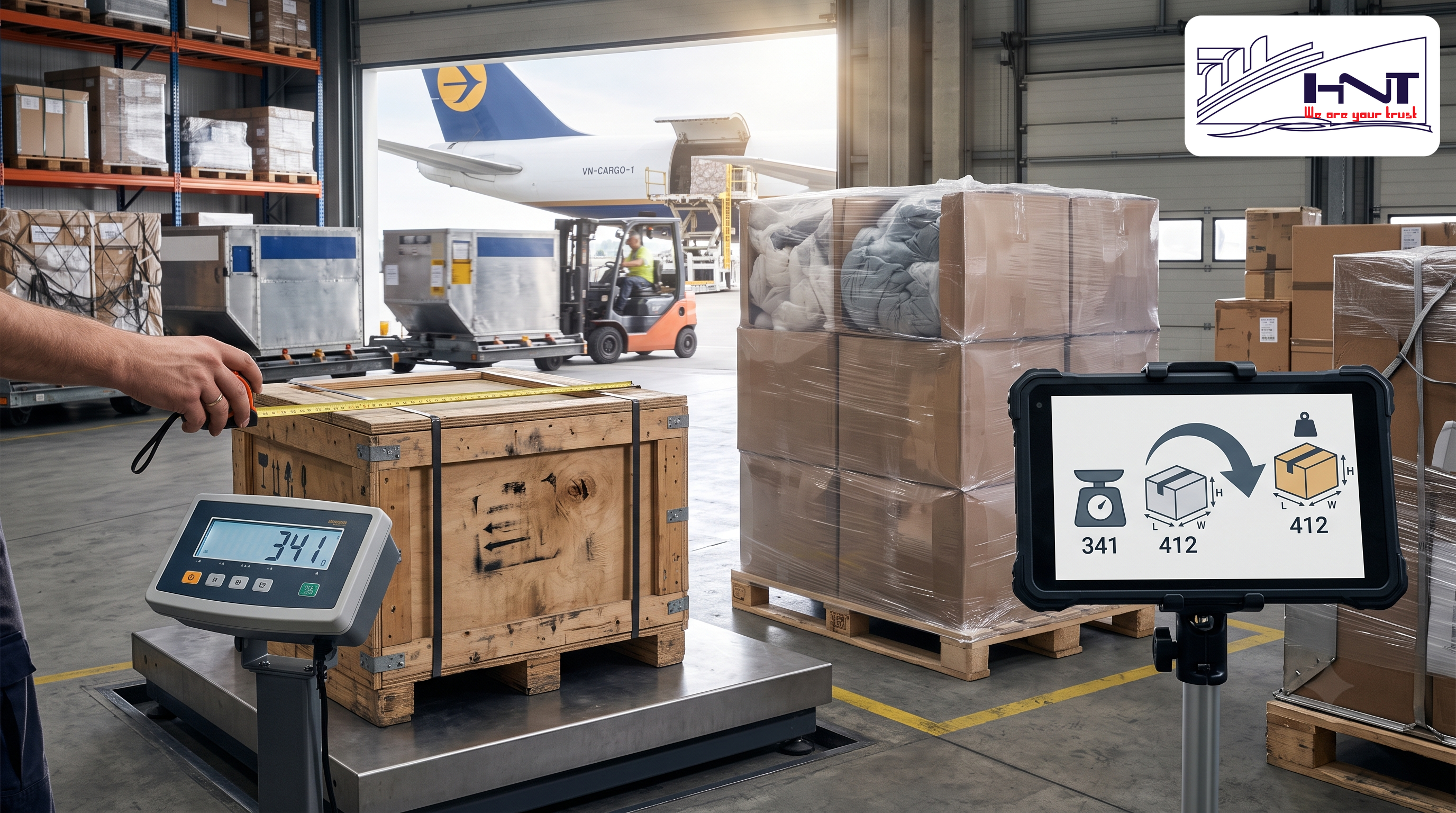
Volumetric Weight Formula for Air Freight Charges
In air freight rate calculations, the common formula is length multiplied by width multiplied by height, measured in centimeters, then divided by 6,000. Some express delivery routes may use a different divisor. Therefore, the formula should be confirmed as soon as you receive the air freight charges, especially for foam products, gift boxes, fashion goods, or components with shock-resistant padding.
- Measure each package after completing the packaging process; do not use the bare product dimensions.
- Calculate the volume of each package, then add up the total volumetric weight of the shipment.
- Compare it with the actual weight measured at the receiving warehouse or airport.
- Use the higher figure as the chargeable weight in the quotation.
- Multiply the chargeable weight by the applicable rate per weight tier.
- Add mandatory surcharges, local fees, and domestic pickup and delivery costs.
| Parameters | Shipment A | Shipment B | Cost implications |
|---|---|---|---|
| Net weight | 120 kg | 120 kg | Both shipments look identical in terms of weight |
| Total dimensions | 720,000 cm3 | 1,080,000 cm3 | Shipment B occupies more cargo space |
| Volumetric weight | 120 kg | 180 kg | Shipment B is charged based on volumetric weight |
| Chargeable weight | 120 kg | 180 kg | Basis for applying the rate in the air freight quotation |
| Assumed rate | 4.2 USD/kg | 4.2 USD/kg | The rate remains unchanged, but the total cost changes |
| Main freight | 504 USD | 756 USD | A difference of 252 USD due to packaging |
Example 1: Loc Nam Cooperative in Can Tho ships 250 kg of Cat Hoa Loc mangoes to Singapore. By switching from thick foam boxes to insulated cardboard boxes that meet standards, volumetric weight decreases by 14%. The shipment maintains a stable temperature for 18 hours.
Example 2: Gia Hung Medical Company in Dong Nai ships medical equipment samples to Frankfurt. The purchasing department only considers the actual weight of 95 kg. After measuring the packages, the chargeable weight is 142 kg. By checking in advance, the company adjusts its budget before issuing the purchase order.
Based on the experience of HNT LOGISTICS, businesses should request package photos, weighing slips, and post-packaging dimensions. This helps reduce disputes when receiving freight rates from different suppliers.
Practical tip: Optimize packaging before receiving air freight quotations and negotiating rates, because reducing volume is generally more reliable than reducing the unit rate.
Air Freight Rates and Common Surcharges
Air Freight Shipping Rate Table Air freight costs include more than just the main freight charge listed in the quotation. Surcharges can account for a significant proportion of the total when shipments require cold storage, security screening, special declarations, or after-hours delivery. In 2026, fuel price risks and flight route disruptions caused by conflicts mean that surcharges must be treated as essential variables rather than incidental costs.
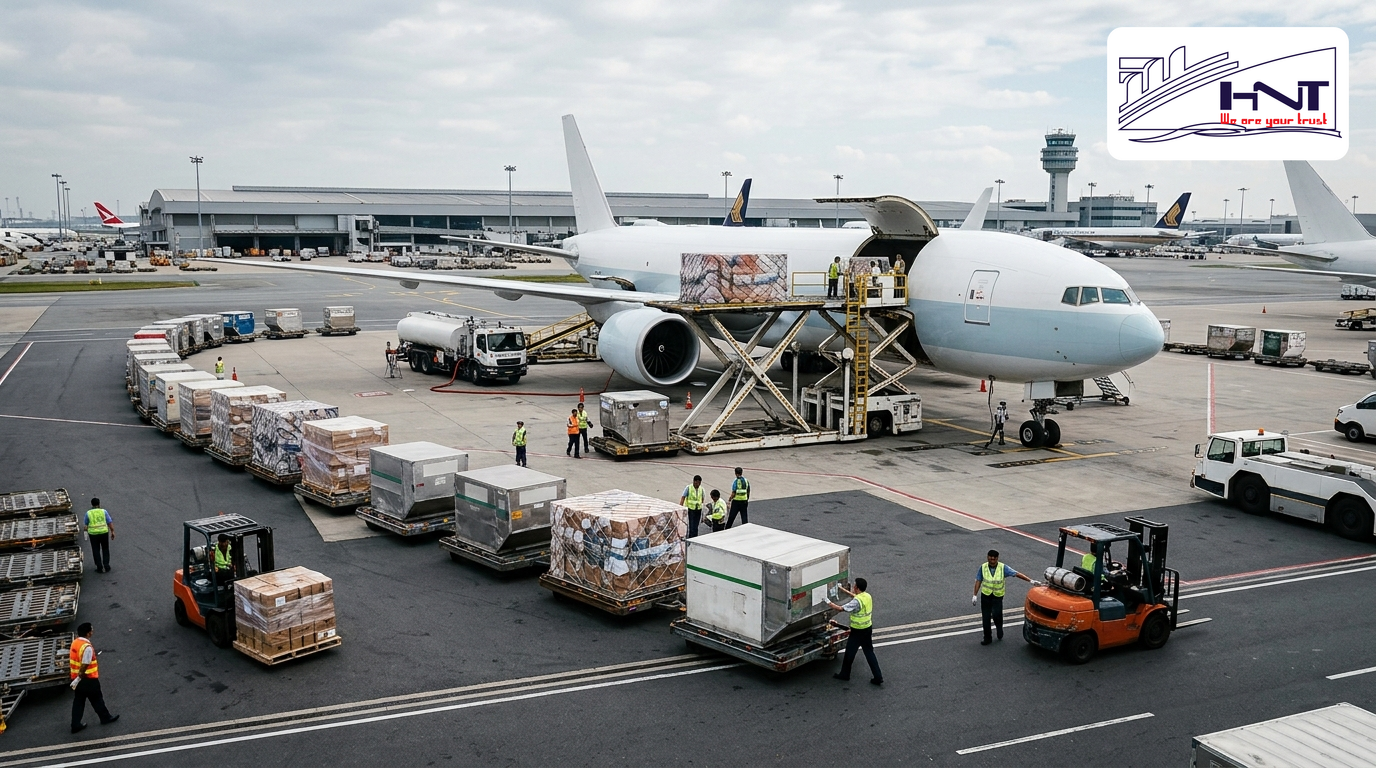
Surcharges to Check in an Air Freight Rate Sheet Before Confirming a Quotation
IATA reported that jet fuel prices in January 2026 decreased by 6.5% year over year, while Reuters also reported that some routes had previously experienced sharp increases due to Middle East conflicts. This demonstrates that fuel and risk surcharges can change direction rapidly.
- Fuel surcharges should be specified per kilogram, per shipment, or as a minimum charge.
- Security screening fees apply to most goods exported through airports.
- Cold-chain handling fees arise when refrigerated storage or temperature-control equipment is required.
- Oversized cargo fees apply when packages exceed standard handling limits.
- Documentation fees cover air waybills and electronic declarations.
- Domestic pickup and delivery fees depend on the pickup location, vehicle schedule, and type of specialized vehicle.
- Storage fees arise when documents are incomplete or the recipient delays customs clearance.
| Surcharge type | When it occurs | Checking method | Risk if omitted |
|---|---|---|---|
| Fuel surcharge | Most international routes | Ask about the applicable rate per kilogram | Total costs increase after booking |
| Security screening fee | Cargo passing through airports | Request a separate line item in the quotation | Supplier comparisons become difficult |
| Cold storage fee | Fruit, seafood, and pharmaceuticals | Confirm the temperature range and storage duration | Damage or loss of claim eligibility |
| Documentation fee | Commercial export shipments | Check the air waybill and declarations | Missed cargo cut-off or incorrect recipient details |
| Domestic pickup and delivery fee | Pickup outside the airport area | Specify the pickup location and time | Additional charges for refrigerated or transfer vehicles |
Example 1: Hai Au Foods Company in Ca Mau ships 600 kg of frozen shrimp to Seoul. The initial quotation does not include airport cold storage fees. After adding this fee, the company arranges refrigerated truck delivery close to the cargo cut-off time and reduces storage time by eight hours.
Example 2: Dai Tin Garment Factory in Nam Dinh ships 90 kg of garment samples to Paris. The freight rate is low, but the minimum charge and documentation fees are high. By consolidating additional samples for the same customer, the total freight cost per kilogram decreases by approximately 18%.
According to experts at HNT LOGISTICS, a reliable air freight quotation must also specify responsibility for shipment delays. For routes requiring air customs brokerage services, businesses should submit the document package at least one working day in advance to avoid storage fees.
Practical tip: Request air freight quotations in a “main freight plus surcharges” format rather than accepting a single lump-sum figure without clearly stated conditions.
Air Freight Rates for Chilled Goods, Agricultural Produce and Seafood
In air freight quotations, refrigerated cargo cannot be calculated based on kilograms alone. Buyers must also consider pre-cooling time, packaging methods, temperature ranges, quarantine certificates, and the possibility of connecting flights. This is particularly important when exporting agricultural products, seafood, and fresh fruit from Vietnam to Northeast Asia, the United States, or the European Union.
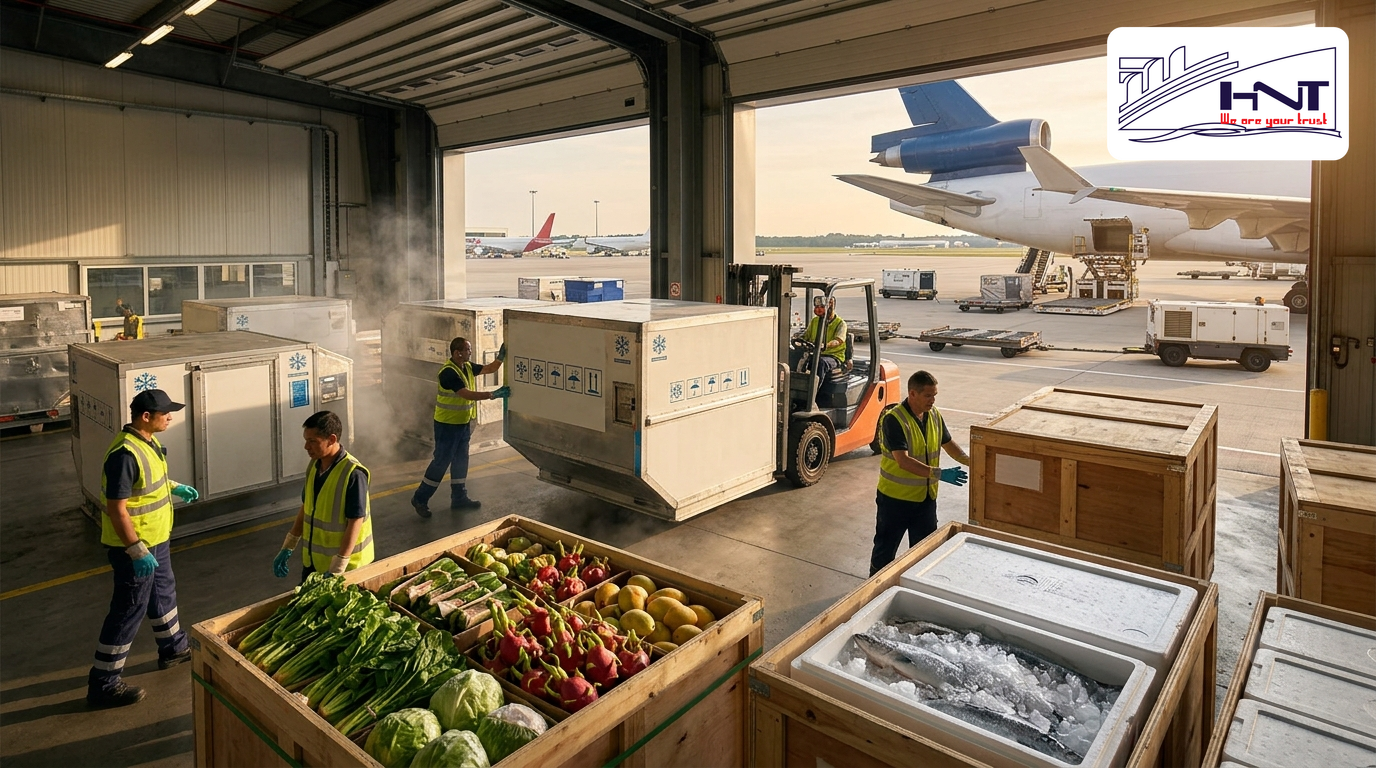
Documentation Requirements for Air Freight Rates and Cold Chain Shipments When Reviewing a Quotation
In 2026, Vietnam's seafood exports are estimated to reach approximately USD 11.3 billion, up 12.4%; fruit and seafood exports reach USD 19.8 billion, increasing by nearly 15.2%. For fresh fruit exports to China, the Department of Crop Production and Plant Protection has specified food safety testing requirements at the request of GACC.
- Confirm the required temperature range before packing the shipment instead of simply labeling it “refrigerated cargo”.
- Prepare phytosanitary or veterinary quarantine certificates according to the requirements of each market.
- Check the HS Code to determine the required documents and specialized regulatory policies.
- Request a minimum connection time if the shipment passes through a transit airport.
- Attach temperature data loggers to high-value shipments or goods that are susceptible to quality deterioration.
- Review FOB, CIF, or DDP trading terms before allocating costs.
| Group of goods | Reference temperature range | Documents requiring attention | Cost risk factors |
|---|---|---|---|
| Fresh durian | 12-15 degrees Celsius | Phytosanitary quarantine and test results | Delayed testing may cause missed flights |
| Fresh mangoes | 10-13 degrees Celsius | Phytosanitary quarantine and commercial invoice | Poor packaging increases volumetric weight |
| Frozen shrimp | Negative 18 degrees Celsius | Veterinary quarantine and quality certification | Insufficient cold storage increases storage fees |
| Standard pharmaceuticals | 2-8 degrees Celsius | Product documentation and storage instructions | Temperature data loggers and priority handling are required |
| Fresh Flowers | 2-6 degrees Celsius | Plant quarantine | Risk of wilting during long connections |
Example 1: Mekong Fresh Company in Vinh Long ships 350 kg of rambutan to Seoul. The operations team uses ventilated boxes and cooling gel, maintaining a temperature range of 10-12 degrees Celsius. The shipment clears customs six hours faster thanks to advance quarantine preparation.
Example 2: Bien Xanh Ca Mau Company ships frozen fish fillets to Osaka. By changing the pickup time from afternoon to nighttime, airport waiting time decreases by 40%. The company saves on cold storage fees and maintains a continuous temperature of minus 18 degrees Celsius.
For air freight quotations involving cargo with strict temperature requirements, businesses should also refer to export refrigerated container standards even when shipping by air. Understanding how refrigerated cargo is arranged helps businesses select appropriate packaging materials and reduce the risk of temperature loss.
Practical tip: Cold-chain costs in air freight quotations must be calculated before the quotation is finalized, because damaged goods cannot be compensated for by cheap freight rates.
Air Freight Rates: How to Request a Quotation and Evaluate Suppliers
To receive air freight shipping rates accurate quotations, businesses must provide sufficient data. A request missing dimensions, product codes, temperature requirements, or the destination airport will produce an attractive but useless quotation. The issue is not how many suppliers you contact, but whether you provide the same set of data to each one.
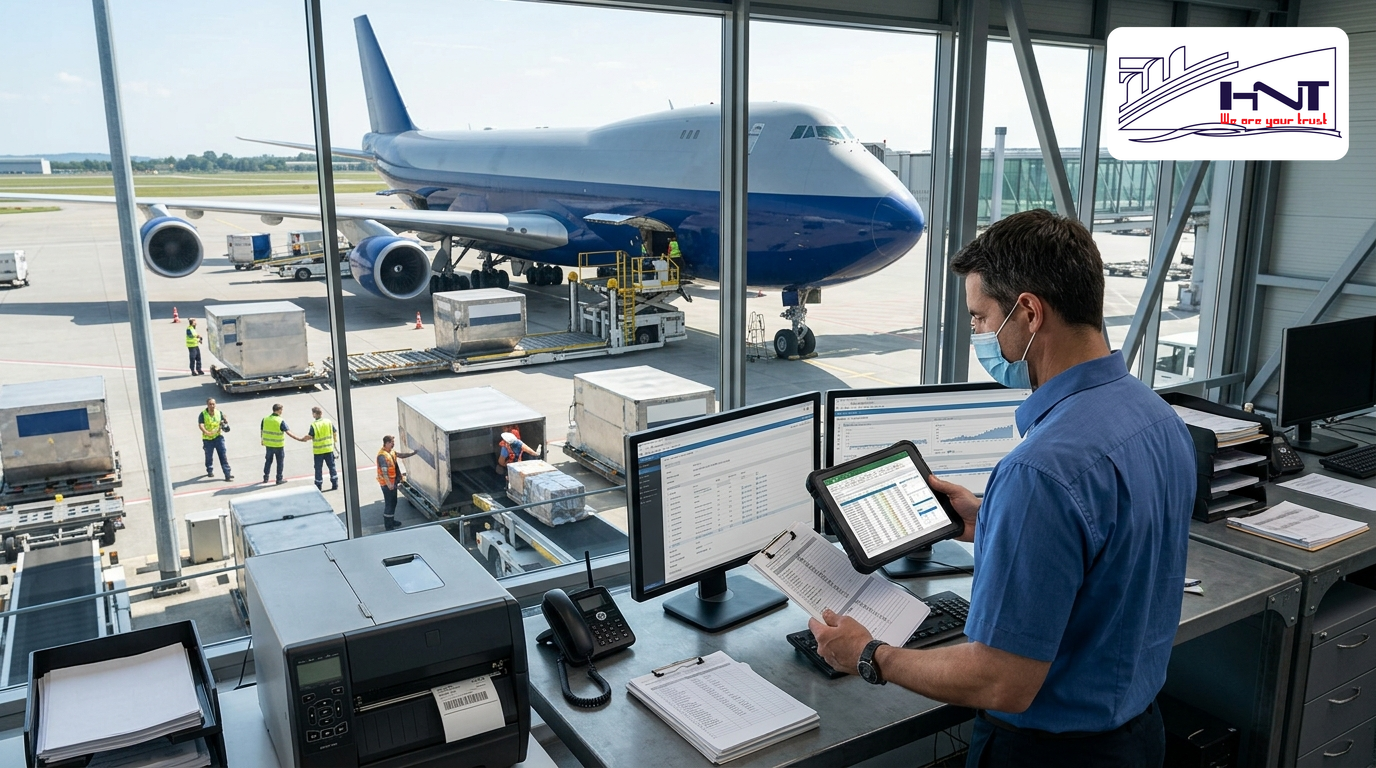
Information to Provide When Requesting a Quotation
A quotation request should contain sufficient information for the freight forwarder to check routes, capacity, documentation, and surcharges. Businesses can also include requirements for import-export document consulting if their goods are being shipped to markets with strict quarantine or food safety standards.
- Specify the product name, HS Code, and whether the goods are new products, samples, or commercial merchandise.
- Provide the number of packages, actual weight, dimensions of each package, and packaging photos.
- Specify the departure airport, destination airport, pickup address, and delivery address.
- Determine when the goods will be ready, the final delivery deadline, and the required shipping priority.
- Declare temperature requirements and whether the goods are fragile, contain batteries or chemicals, or are high-value items.
- Provide the commercial invoice, packing list, permits, and quarantine certificates, if applicable.
- Request a quotation that separates main freight, surcharges, taxes, and domestic pickup and delivery fees.
| Inspection criteria | What suppliers should offer | Warning signs requiring further questions | Recommended action |
|---|---|---|---|
| Quotation validity | Clearly state the expiration date | Quoted verbally only | Request written confirmation |
| Surcharge | Separate each fee into individual line items | A vague all-inclusive price | Demand a detailed breakdown before booking |
| Cold-chain capabilities | Refrigerated trucks and cold storage facilities available | No temperature range specified | Request a temperature handover procedure |
| Documentation | Pre-shipment inspection | Waiting until just before departure to conduct checks | Submit documentation one day in advance |
| Responsibility for flight delays | Specify alternative flight arrangements | No commitment to handling unexpected issues | Request a contingency plan |
Example 1: Son Ha Tech Company in Bac Ninh needs to ship 75 kg of warranty replacement components to Munich. After receiving complete package photos and the HS Code, the freight forwarder discovers that the package contains spare batteries. The shipment is correctly reclassified, avoiding detention during security screening.
Example 2: Loc Phat Farm Exporter in Long An ships dragon fruit to Bangkok. The company submits quarantine documents and the harvest schedule in advance, allowing the quotation to include refrigerated trucking, cold storage, and cargo cut-off times. The total cost is 5% higher, but the on-time delivery rate reaches 100%.
When comparing alternative options, businesses can refer to ocean freight route to the United States for non-urgent shipments. This comparison helps identify the additional costs paid for speed rather than treating air freight as the default option.
Practical tip: Standardize your internal quotation request template, then require every supplier to respond using the same structure.
Conclusion on Air Freight Rates
Air Freight Shipping Rate Table is only useful when businesses understand how the figures behind it are calculated. Main freight, volumetric weight, surcharges, documentation, and cold-chain logistics must be treated as an integrated system. If you only look at the price per kilogram, your service purchasing decision can easily be wrong.
- Always compare actual weight with volumetric weight before finalizing the budget.
- Request quotations that separate main freight, surcharges, and domestic pickup and delivery fees.
- Check price validity, cargo cut-off times, transit routes, and destination airports.
- For refrigerated cargo, calculate temperature-control costs before negotiating the unit rate.
- Prepare documentation early to avoid storage fees and the risk of missed flights.
- Do not choose the lowest rate if compensation terms and procedures for handling unexpected issues are unclear.
- Standardize quotation request templates to maintain control over all suppliers.
If your export business needs a transparent nationwide freight forwarding partner, HNT LOGISTICS can help review quotations, verify surcharges, and design suitable shipping solutions for agricultural products, seafood, and fresh fruit from Vietnam. Good decisions do not start with the lowest price, but with sufficient data and clearly defined responsibilities. As a professional transportation provider, HNT LOGISTICS is committed to delivering comprehensive supply chain solutions, helping Vietnamese businesses confidently conquer global markets. Contact us today at 8A Hoang Minh Giam, Ho Chi Minh City or via the marketing email at hntshipping.com for quotation support!