


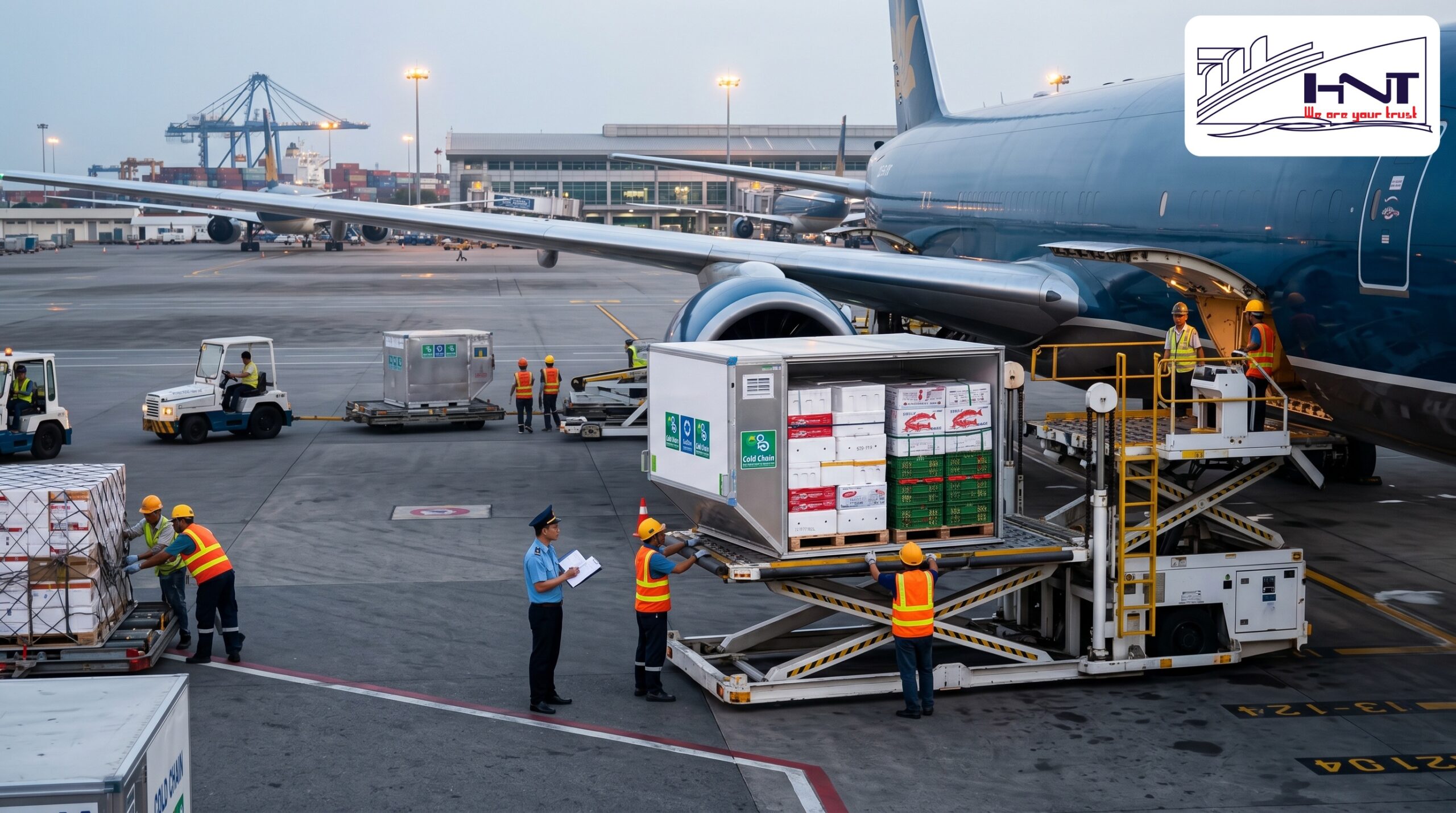
Demand air freight for frozen goods is rising. In 2026, seafood export turnover reached over 9 billion USD. By early 2026, air cargo accounted for 25% of fresh shipments to North America. This article helps you optimize processes and costs.
1. Overview of Air Freight for Frozen Goods
Method air freight for frozen goods requires precision. Temperatures must remain stable. Delivery times are extremely fast. This helps protect product quality. Goods do not lose nutritional value. Customers receive the freshest products.
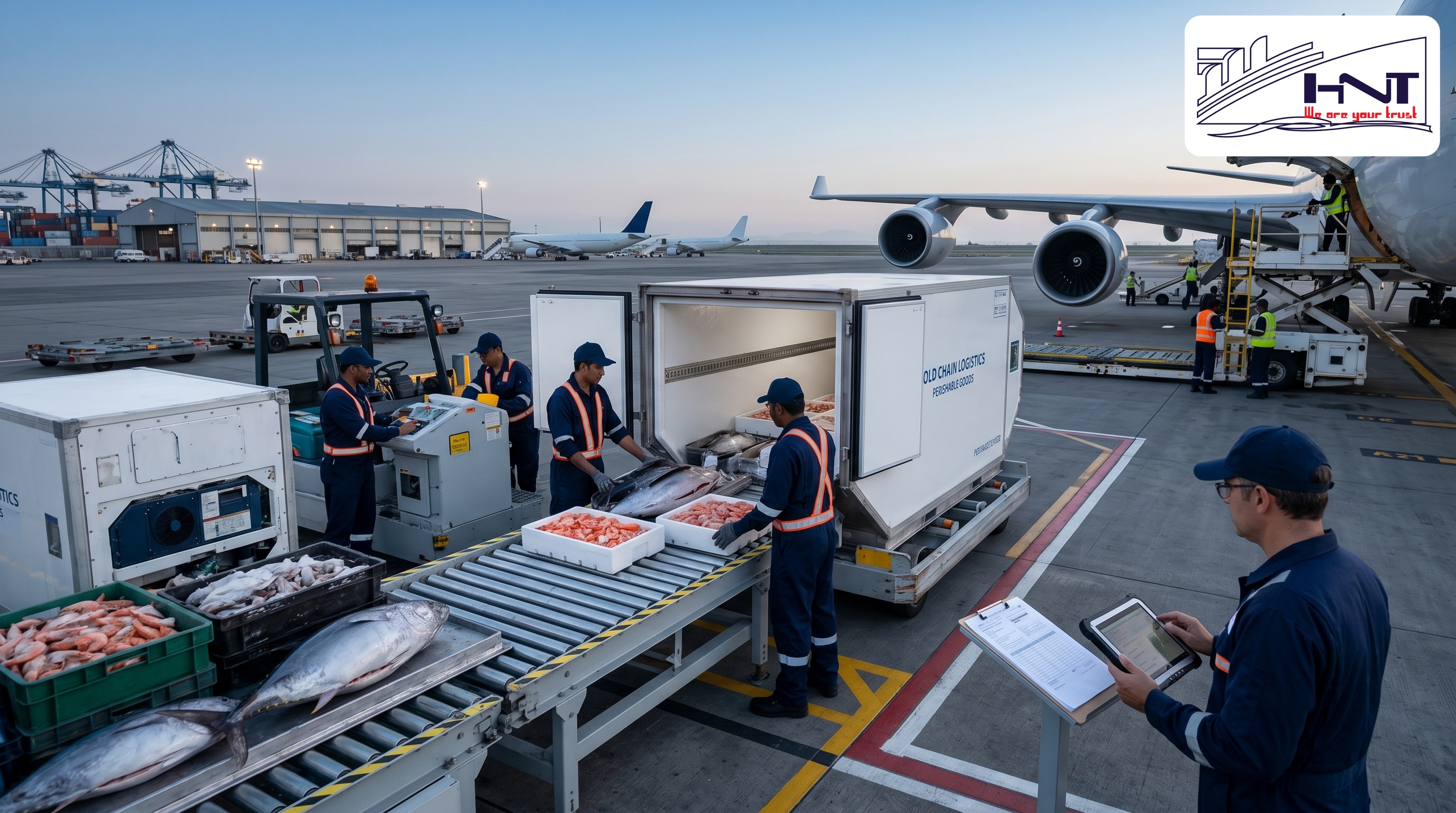
Strict temperature preservation requirements
Goods require very low temperatures. The aircraft cargo hold environment has many variations. Packaging must withstand high pressure. Cold air flow needs to circulate evenly. Temperature sensors are attached. They help closely monitor the shipment's condition.
Advantages in delivery speed
Speed is the absolute advantage of air transport. Flight time takes only a few hours to a day. It is completely superior to sea freight. Speed makes business capital turnover faster. The ability to fulfill urgent orders is very high. Consumer markets are expanded.
Aviation safety standards
Aviation has very strict IATA standards. Every shipment must comply strictly. The maximum weight of dry ice is limited. Package dimensions must meet pallet standards. Leaking goods will be immediately refused for flight. Flight safety is the number one priority.
- Quality protection: Goods maintain absolute freshness thanks to very short travel times between countries.
- Risk reduction: The rate of goods spoilage is minimized due to less vibration and strong impact.
- Fast procedures: Airport customs clearance systems are usually prioritized for fast processing of perishable goods.
- Easy tracking: Aviation tracking systems help shippers grasp flight schedules continuously and accurately.
- Low storage costs: Goods are shipped immediately, reducing the burden of warehouse rental costs.
Hai Minh Seafood Company in Ca Mau has applied strict IATA packaging standards . They used air freight for frozen goods to Japan. As a result, customs clearance time decreased by 4 hours. Goods loss costs decreased by 15% per trip.
Vinh Long Fruit Cooperative exports durian to the US. They chose direct flights instead of sea freight. The shipment kept its freshness. The rejection rate decreased to 0%. Q3 revenue grew strongly by 20%.
Practical lesson: Always double-check the allowable dry ice weight limit per flight to avoid being offloaded at the airport.
| Commodity Type | Required Temperature | Maximum Time | Recommended Packaging Types |
|---|---|---|---|
| Frozen seafood | -18°C to -20°C | 72 hours | EPS foam box, dry ice |
| Premium beef | -2°C to 0°C | 48 hours | Insulated plastic box, cold gel |
| Medical vaccines | 2°C to 8°C | 96 hours | Specialized box, thermometer |
| Pre-cut fresh fruit | 4°C to 10°C | 36 hours | Waterproof carton, ice gel |
2. Core Process of International Frozen Goods Transportation
Execution international frozen goods transportation requires a precise process. Coordination between stages is crucial. Every small error causes significant damage. Packing steps determine success or failure. We need to clearly understand each step.
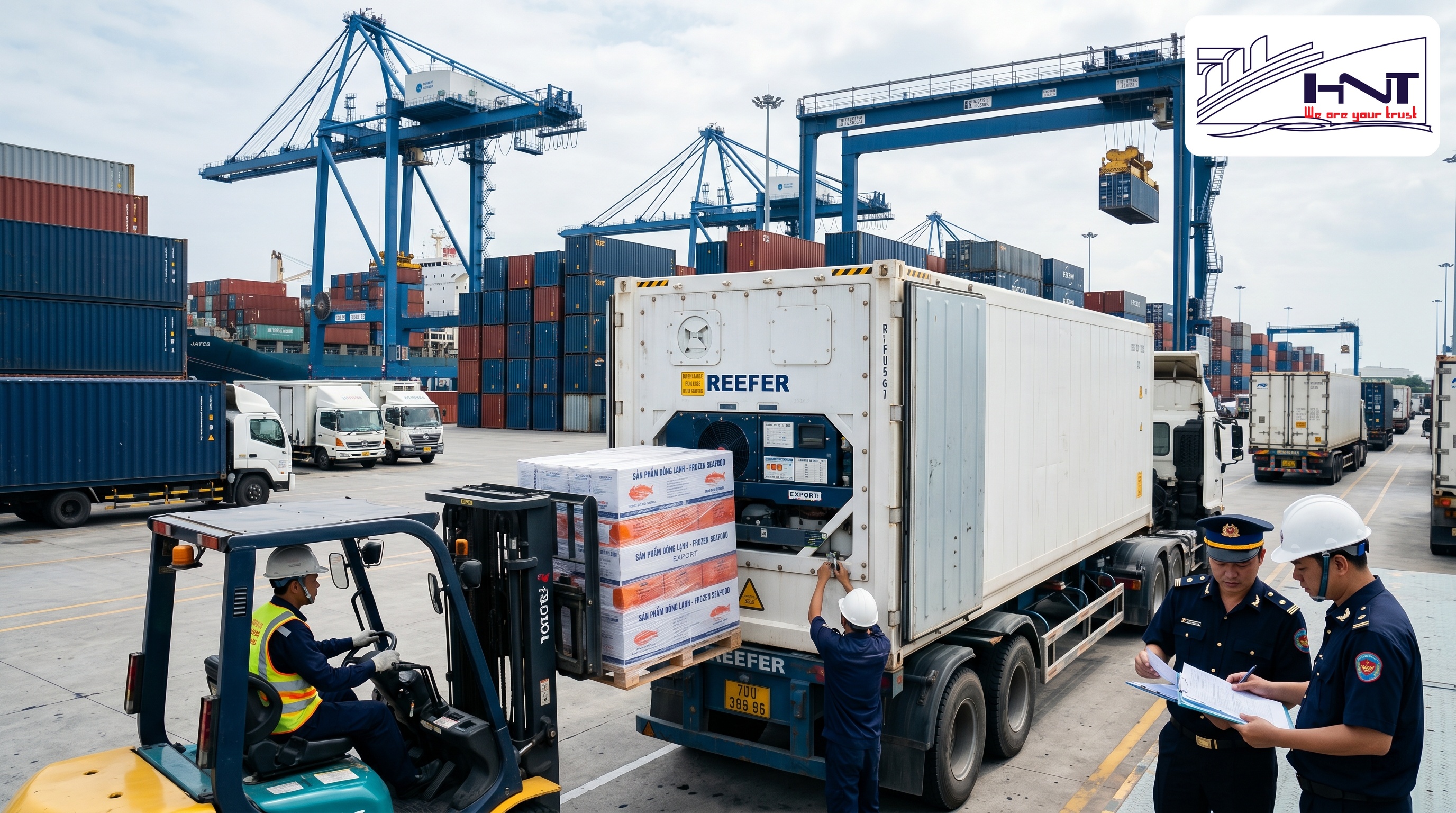
Selection of foam boxes and wrapping film
Foam boxes must have high density. The insulation capacity of the box must be good. The outer wrapping film effectively prevents water leakage. It prevents water from leaking into the aircraft compartment. The size of the box must be suitable for the goods. The space inside needs to be packed tightly.
Safety rules for using dry ice
According to HNT LOGISTICS' experience, the use of dry ice needs careful calculation. The amount of ice depends on the flight time. The maximum weight is often limited by the airline. The foam box must have small air vents. The CO2 gas released helps to avoid pressure explosions in the box.
Labeling dangerous goods
Labels are a mandatory requirement. Perishable goods labels must be clearly attached. 'This side up' labels must be attached in the correct direction. Dry ice is considered dangerous goods. The UN 1845 label must be attached in a visible position. The weight of the dry ice should be clearly stated on the box exterior.
- Prepare insulating container: Choose a foam or specialized plastic box with standard thickness to maintain maximum cold.
- Line with waterproof film: Use thick nylon or silver film inside the box to absolutely prevent water from leaking out.
- Arrange goods: Place items in the middle of the box, ensuring equal spacing for good cold airflow circulation.
- Arrange cooling materials: Place dry ice or cold gel around and on top of the goods to cool evenly.
- Seal and tape: Use specialized tape to seal the edges of the box, preventing hot air from entering.
- Attach warning labels: Attach full perishable goods labels, temperature labels, and 'this side up' arrow labels.
VinaSea Co., Ltd in Bac Lieu once faced difficulties when exporting shrimp. After switching to high-density pressed foam boxes, the situation improved. The cold retention time increased by 12 hours. The rate of damaged goods due to water leakage decreased from 5% to 0.1%.
An Binh Food Joint Stock Company in Dong Nai exports chilled pork. They apply international standard labeling rules. The host country's customs prioritizes fast inspection. The shipment was cleared in just 2 hours. Storage costs were significantly reduced.
Practical lesson: Never completely seal a foam box containing dry ice; leave a small vent hole to avoid the risk of pressure explosion.
3. Evaluating Sea Freight and Air Freight Costs
Many shippers are hesitant between flying and shipping. Comparing sea freight costs and air freight is a necessary step. Depends on budget and type of goods. Each method has its own price structure. Understanding them clearly helps optimize profits.
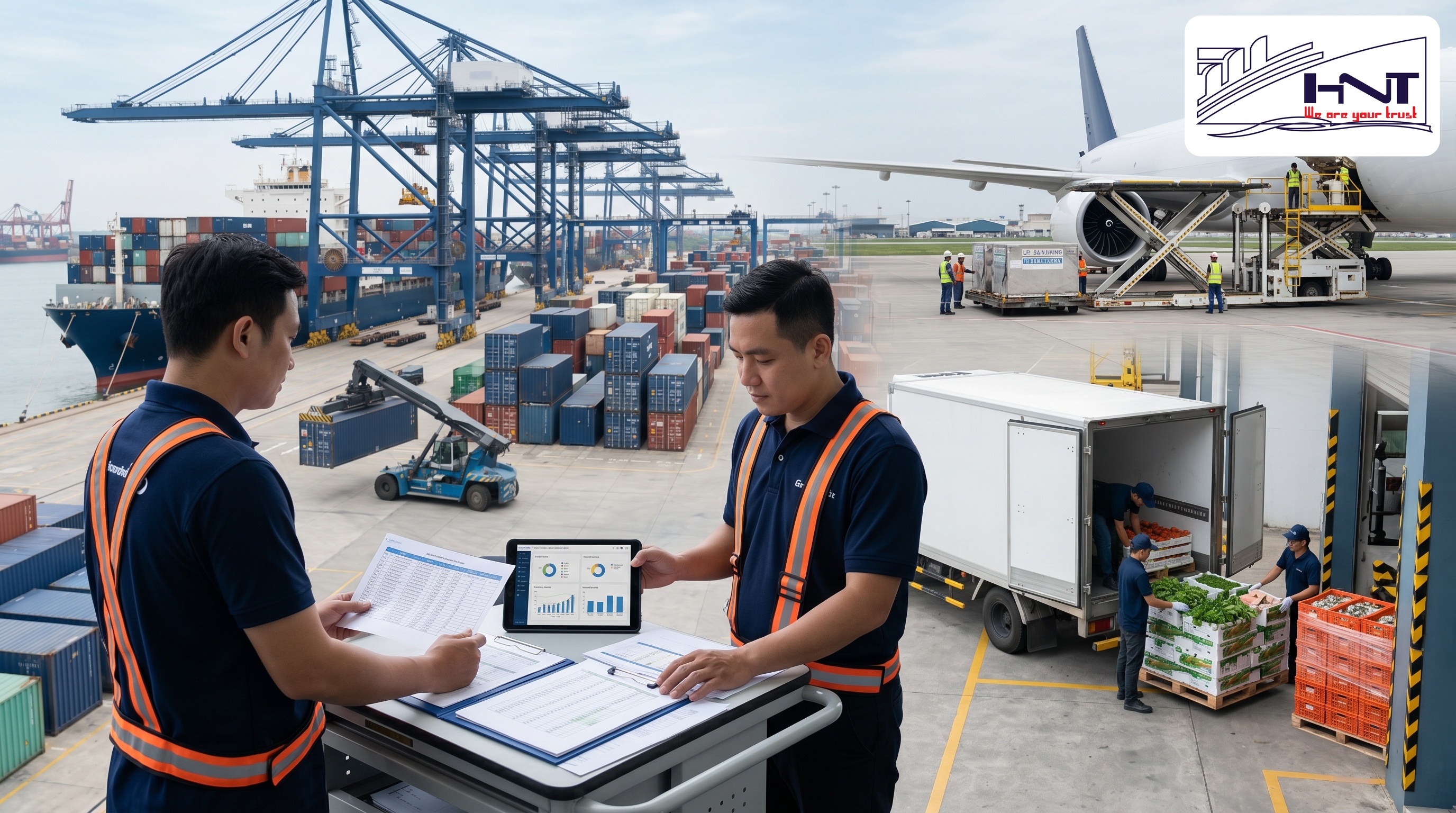
Air freight surcharge structure
Air freight is calculated by actual or volumetric weight. The base price comes with many surcharges. Fuel surcharges change constantly. Security screening surcharges are mandatory. Handling surcharges for cold goods at the terminal are also quite high. This cost is worth it for the speed.
Types of sea freight charges
Sea freight has much cheaper rates. Suitable for extremely large quantities. However, THC surcharges at the port are significant. Electricity charges for refrigerated containers are calculated per day. Storage fees also arise if there are delays. Sea transit time takes weeks.
Break-even point between two methods
The break-even point depends on the value of the goods. High-value goods should go by air. Low-value goods are suitable for sea freight. Quality degradation is also a type of hidden cost. Total final costs need to be calculated. Capital turnover speed should also be considered.
- Main freight charge: The largest amount to be paid to the shipping line or airline based on weight or volume.
- Fuel surcharge: A fluctuating fee to compensate for volatile fuel costs in the international market.
- Port handling charge: Costs paid for workers and lifting equipment for refrigerated containers at the port of origin and destination.
- Reefer plugging charge: Electricity cost to maintain temperature for refrigerated containers while waiting at the port yard before loading onto the ship.
- Documentation fee: A small fee paid to the agent for issuing bills of lading and related documents.
Rach Gia Seafood Co., Ltd. switched from sea to air for a shipment of cuttlefish. Although the air freight was 30% higher, the goods arrived 14 days earlier. The selling price in the Japanese market was 15% higher. Overall, net profit increased by 2000 USD per trip.
Long An Fruit Enterprise encountered a storage delay waiting for a ship. The dragon fruit container incurred electricity charges for 7 consecutive days. The goods lost freshness. Afterward, they split the shipment to go by air. Cash flow turned over 3 times faster. Raw material inventory decreased by 40%.
Practical lesson: For goods with a shelf life of under 15 days, choose air transport even if the freight cost is higher.
| Evaluation Factors | Air | Sea Freight (Refrigerated Container) |
|---|---|---|
| Basic freight cost | Very high (calculated by kg) | Low (calculated by full container) |
| Transportation Time | 1 to 3 days | 15 to 40 days |
| Suitable volume | Under 5 tons | Over 10 tons |
| Refrigeration maintenance surcharge | High (dry ice, cold storage gas) | Low (daily electricity charge) |
4. Domestic Connection And Road Container Shipping Quote
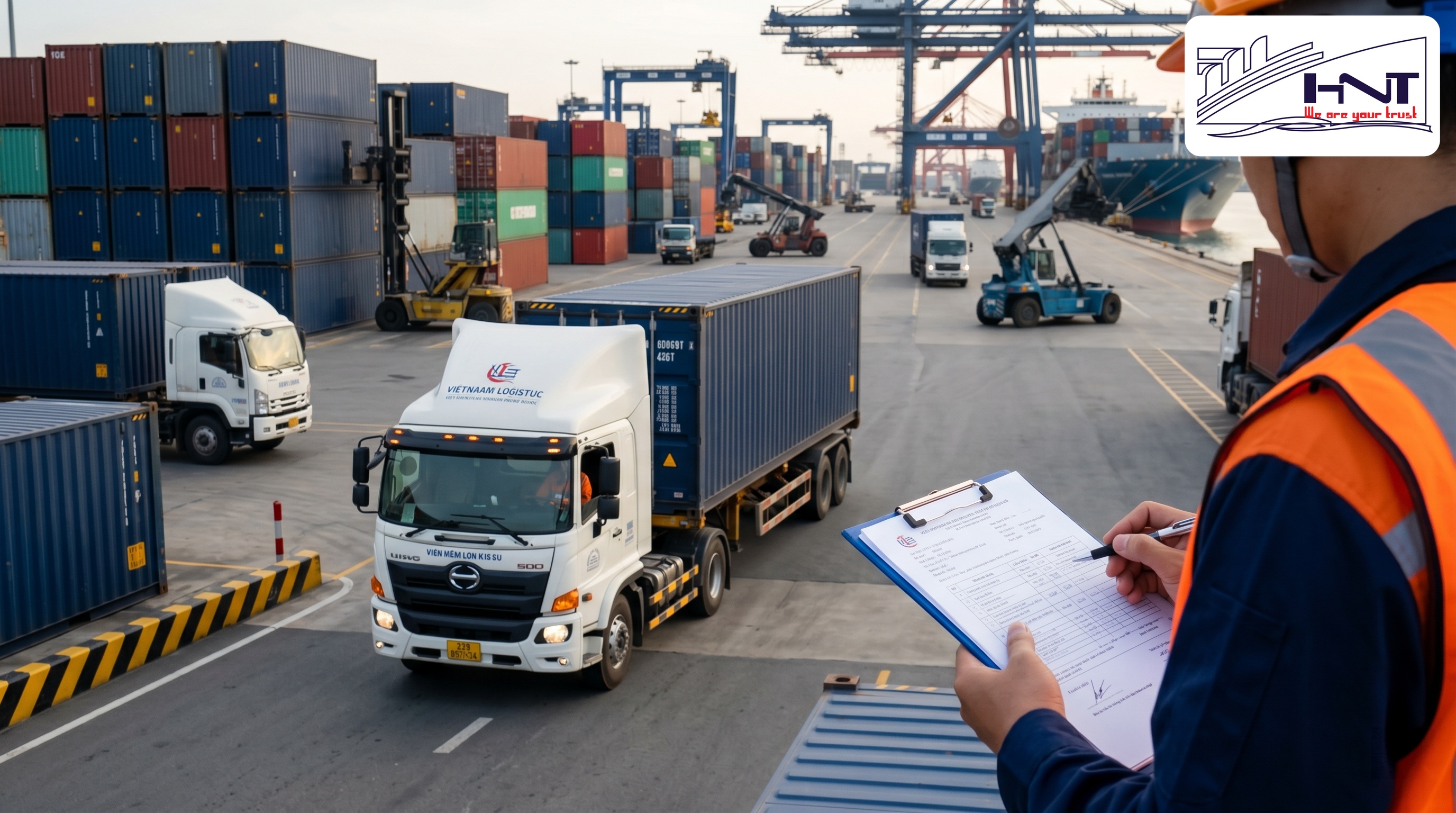
Goods must arrive at the airport safely before flying. Learning about road container shipping quotes is very important. The cold chain must not be broken on the domestic leg. Refrigerated trucks play an essential transit role. Road freight rates affect total costs.
Role of domestic refrigerated trucks
Refrigerated trucks carry goods from the factory to the airport. The cooling unit on the truck must operate continuously. Temperature sensors are monitored via GPS. The truck bed must be clean and sterile. Drivers need experience in running refrigerated goods. Travel time must be accurate.
Factors determining road freight rates
Distance is the main pricing factor. Vehicle tonnage also determines the rate level. The deeper the temperature requirement, the more fuel it consumes. Diesel prices directly affect it. Waiting time for loading and unloading at the warehouse is also charged. Toll stations along the way are added.
Minimize cold chain disruption risks
Transshipment from truck to airport is very sensitive. Temperature exposure time must be very short. Trucks must park close to the cold storage door. Loading staff need to work at high speed. Based on practice, HNT LOGISTICS evaluates schedule coordination as key. Avoid traffic jams during peak hours.
- Vehicle age and cooling system: New trucks with Thermo King refrigeration systems ensure stable temperature throughout the route.
- Travel distance: The distance from the packing plant to the border gate or airport directly determines the freight cost.
- GPS temperature probe: Real-time tracking devices help shippers check temperatures remotely and continuously.
- Loading and unloading waiting time: Long vehicle anchoring time at the warehouse will incur additional waiting costs calculated by the hour.
- BOT road tolls: The total of toll stations on the route is directly accounted for in the transport quote.
Da Lat Agricultural Products Company hired a refrigerated truck to Tan Son Nhat airport. They chose a unit that quoted a cheap price by mistake. The truck's air conditioner broke down in the middle of the pass. The entire batch of fresh flowers was severely damaged. Losses amounted to 200 million VND. A costly lesson on choosing a partner.
Binh Minh Logistics Company in HCMC specializes in transporting salmon. They optimize night schedules to avoid traffic jams. Arrival time at the airport is reduced by 1 hour. The temperature is maintained at a perfect -18°C. Operating costs are reduced by 1.5 million VND per trip.
Practical lesson: Request the transporter to provide a temperature chart (data logger) printed immediately when the truck arrives at the airport.
| Road Route | Refrigerated Vehicle Type | Long-term Temperature | Estimated Quote (VND) |
|---|---|---|---|
| Ca Mau – HCMC | 5-ton Truck | -20°C | 8,000,000 – 10,000,000 |
| Da Lat – HCMC | 2-ton Truck | 5°C | 4,000,000 – 5,500,000 |
| Binh Duong – Cat Lai Port | 40RF Container | -18°C | 3,500,000 – 4,500,000 |
| Nha Trang – TSN Airport | 8-ton Truck | -5°C | 11,000,000 – 13,000,000 |
5. 6 Factors Deciding Cold Chain Transport Quality
To frozen transport To succeed, it is necessary to grasp the key factors. Thorough preparation brings peace of mind. Small errors can also ruin the entire shipment. We have summarized the most important standards. This is the secret of large exporters.
Temperature recording equipment
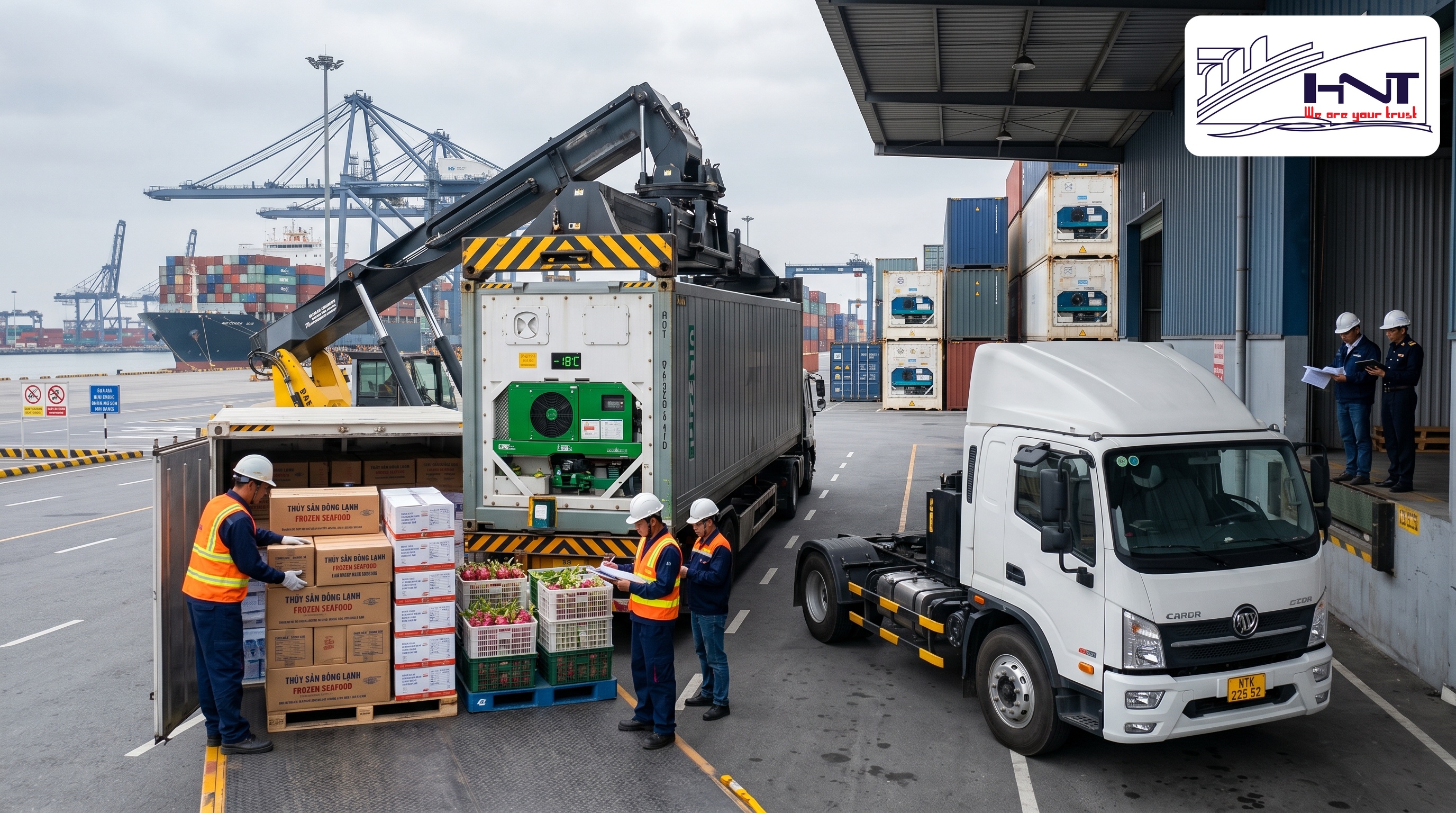
A data logger is an indispensable device. It records temperature fluctuations throughout the journey. This device fits neatly inside the container. Data is extracted when the goods arrive. It is the clearest evidence. Helps resolve insurance claims quickly.
Processing customs documents
Declaration documents require absolute accuracy. Food hygiene and safety certificate. Certificate of origin of goods (C/O). Commercial invoice and packing list. Incorrect HS code declaration causes major delays. Customs clearance time determines the freshness of the goods.
Contingency planning
There must always be a Plan B for every situation. Flights may be delayed due to weather. Cold storage near the airport needs to be prepared in advance. Backup dry ice supplies must always be ready. Destination agents must be on standby to provide support. Proactivity helps minimize risks.
- 1. Accurate measurement: Attach a data logger device in the middle of the package to truthfully record the temperature chart throughout the entire route.
- 2. Proper declaration: Prepare a complete set of customs documents in advance to ensure the fastest customs clearance time.
- 3. Professional packaging: Seal the goods with multiple layers of waterproof plastic film before placing them into insulated foam boxes.
- 4. Update flight schedule: Closely monitor the departure schedule to arrange bringing goods to the airport at exactly the right time.
- 5. Risk insurance: Purchase level A cargo insurance to protect finances against force majeure incidents.
- 6. Reliable partners: Choose a logistics company with deep expertise in cold chain goods to receive advice on the most optimal route.
Vung Tau Seafood Import Export Co., Ltd. once faced a 12-hour flight delay incident. Thanks to timely preparation of backup dry ice, the ocean tuna shipment remained safe. Quality remained unchanged. Losses were completely prevented. Reputation with Japanese partners was maintained.
Hau Giang Agricultural Products Company exported mangoes to Europe. They used customs declaration services electronic before the goods arrived. The shipment received green channel clearance. Customs clearance at the airport only took 45 minutes. Cold storage costs at the cargo terminal were zero.
Practical lesson: Always prepare an extra 20% amount of dry ice or cold gel compared to the initial calculation for long flights.
Conclusion
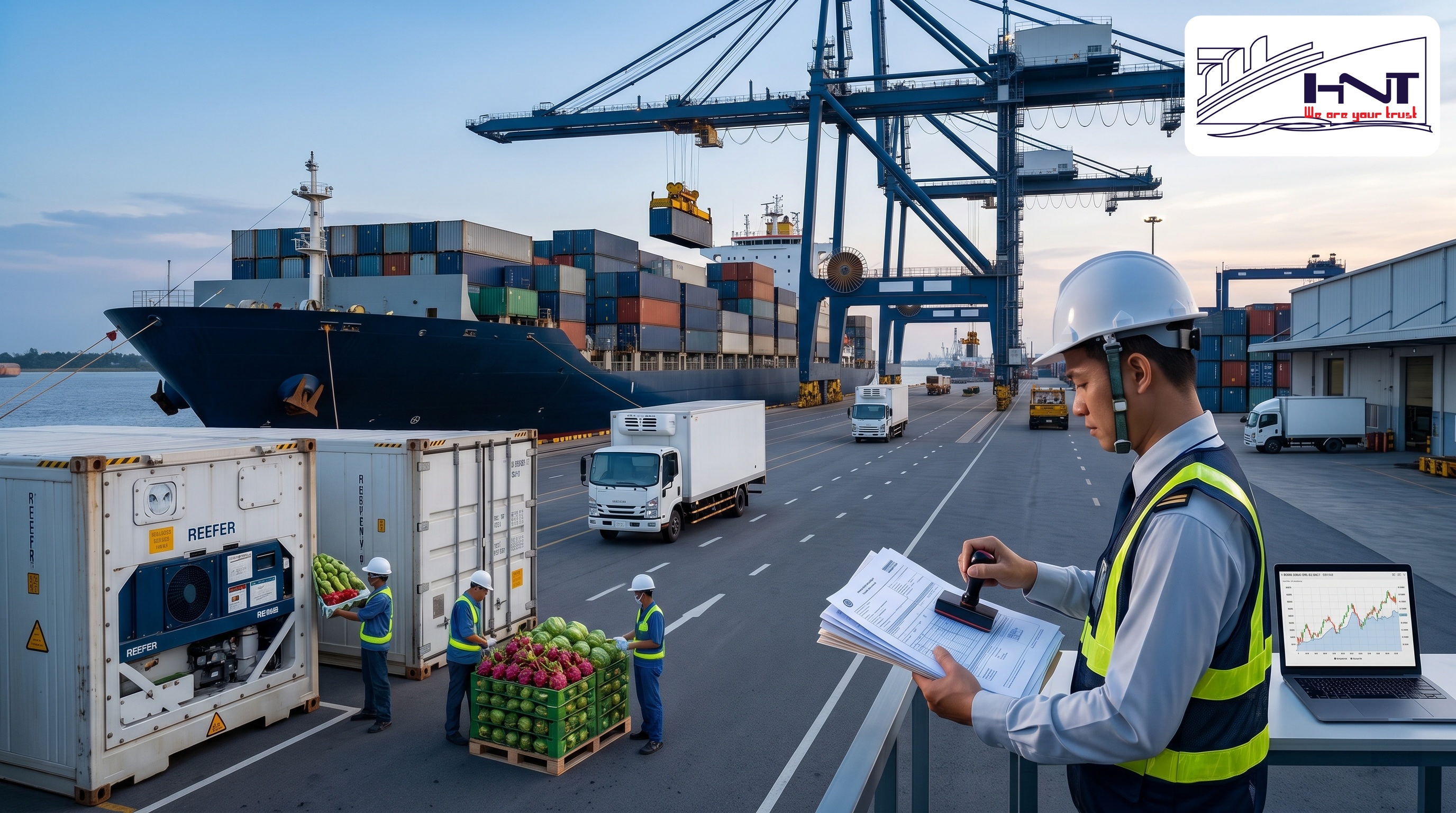
In summary, air freight for frozen goods is the optimal solution for high-value goods. It ensures freshness, shortens time and increases competitiveness. Although the cost is high, the benefits brought are completely worthwhile. Businesses need to master the packaging process.
- Understand the dry ice weight regulations of each airline.
- Invest in high-quality foam boxes with high-density compression.
- Carefully compare air freight and sea freight rates before finalizing the plan.
- Strictly control the temperature of domestic truck transport segments.
- Attach a data logger temperature monitoring device inside the package.
- Prepare accurate customs documents, avoiding HS code errors.
- Always have a handling plan ready when flights are delayed.
HNT LOGISTICS It is recommended that businesses always make detailed logistics plans before each export season. As a professional transport partner, we are committed to accompanying Vietnamese businesses. Please contact HNT LOGISTICS via hotline 096 309 78 19 or email marketing@hntshipping.com for consultation and quotation today.