


When a refrigerated truck arrives at the warehouse two hours late, frozen food preservation can determine whether the entire shipment remains saleable or faces a temperature claim.
In 2026, the pressure is even clearer. Vietnam's seafood exports reached approximately USD 6.86 billion in the first seven months, while fruit and vegetable exports in the first four months reached nearly USD 2.06 billion, up 22%. The Drewry index on 30/07/2026 recorded USD 4,255 for a 40-foot container, making temperature deviations more costly.
This article helps cargo owners preserve frozen food, determine temperature ranges, choose refrigerated trucks or containers, prepare documentation, and control transportation routes. The focus is cargo safety, legal compliance, and reducing commercial losses in the cold chain.
Frozen food preservation: standard temperature ranges by product group
Temperature ranges should not be selected based on subjective experience. Each product group has different freezing points, respiration rates, and moisture sensitivity; frozen food preservation requires classification first. For frozen goods, the goal is to keep the product core stable, not merely to cool the air inside the container.
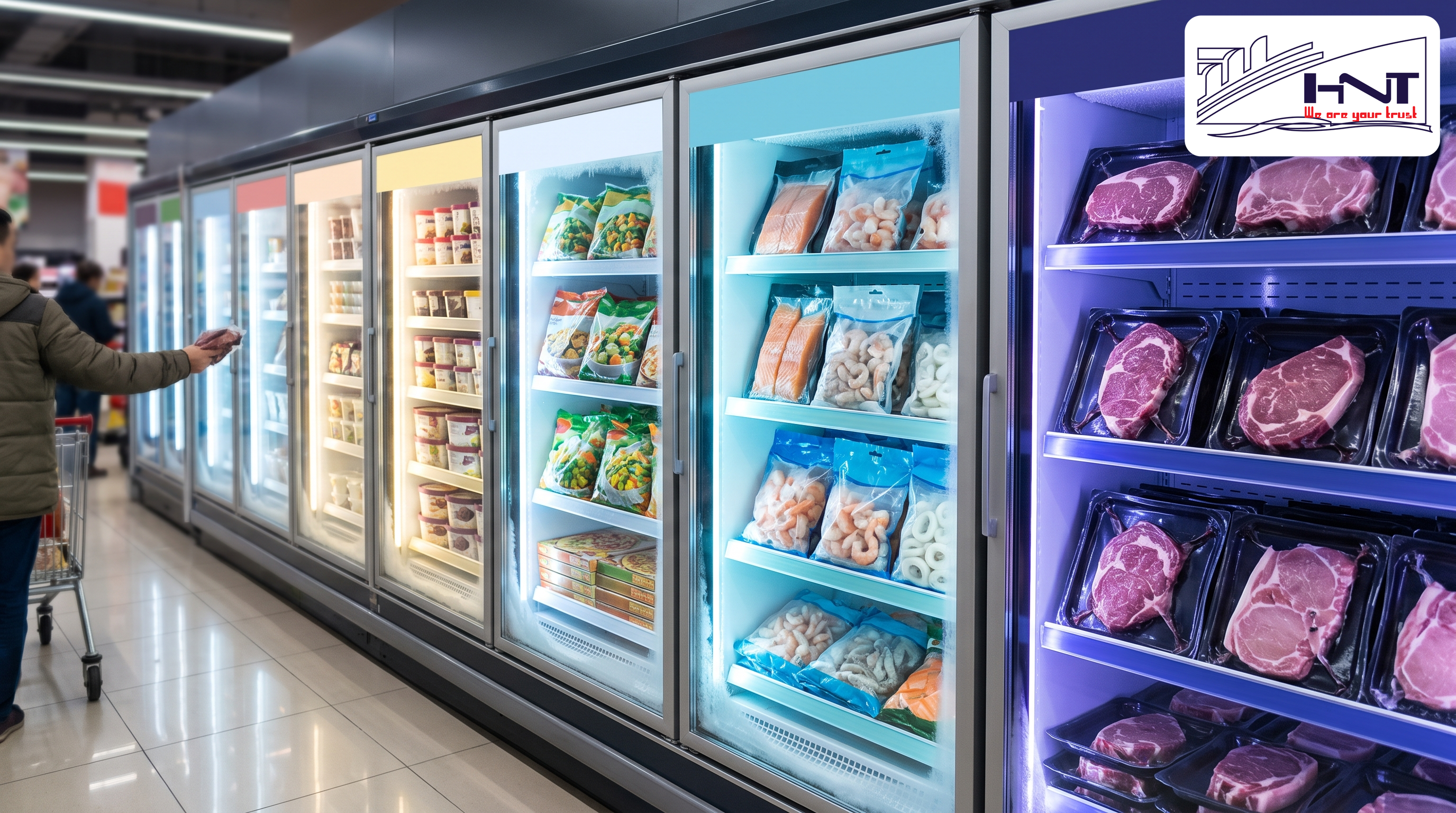
Baseline temperature ranges for seafood, meat, and processed foods
Frozen seafood, frozen meat, and processed foods generally require deep temperature ranges for frozen food preservation. A common temperature is -18°C or lower. For shrimp, pangasius, squid, and high-value goods, the setting should be 1°C to 2°C lower in advance to compensate for fluctuations when doors are opened.
Cold agricultural product storage temperatures by respiration level
cold agricultural product storage temperatures need to be separated from the frozen category. Fresh fruit cannot withstand freezing. Dragon fruit, mango, pomelo, and durian require different cool ranges. A 2°C deviation can cause skin pitting, chilling injury, or accelerated ripening upon arrival at the receiving warehouse.
| Group of goods | Recommended temperature range | Suggested humidity | Risks from incorrect temperature |
|---|---|---|---|
| Frozen shrimp, fish, squid | -18°C to -25°C | Do not leave the door open for long | Ice recrystallization, surface dehydration |
| Meat and processed foods | -18°C to -22°C | Keep packaging stable | Color changes, reduced shelf life |
| Chilled vegetables | 0°C to 5°C | 85% to 95% | Waterlogging, wilting, mold |
| Tropical fruits | 5°C to 13°C | 85% to 95% | Chilling injury or premature ripening |
| Milk and chilled processed goods | 0°C to 4°C | According to product labels | Increased microbial growth, reduced quality |
- Check the product core temperature before loading, because a refrigerated container does not replace the freezing process.
- Set the temperature lower than the target level when the route involves multiple door openings or domestic transshipment.
- Clearly state the temperature range on the delivery order, packing slip, and instructions for the driver.
- Do not load highly respiring fruit together with frozen food in the same refrigerated compartment, because frozen food preservation requires deep temperatures.
- For example, Mekong Fresh Company in Tien Giang keeps dragon fruit at 5°C, reducing soft-skin complaints by 18%.
- For example, Bien Xanh Ca Mau Factory exports shrimp to Yokohama at -22°C, maintaining a continuous temperature log for 11 days.
Practical summary: The temperature range must be recorded as an operating parameter. HNT LOGISTICS recommends that cargo owners create a separate temperature-range table for each product code and attach it to the truck or refrigerated container booking order.
Frozen food preservation in the food cold supply chain
The food cold supply chain is safe only when every touchpoint is controlled. Warehouses, transfer trucks, port yards, containers, and destination warehouses must all maintain the same temperature logic. A single uncontrolled link can break the continuity of the temperature log.
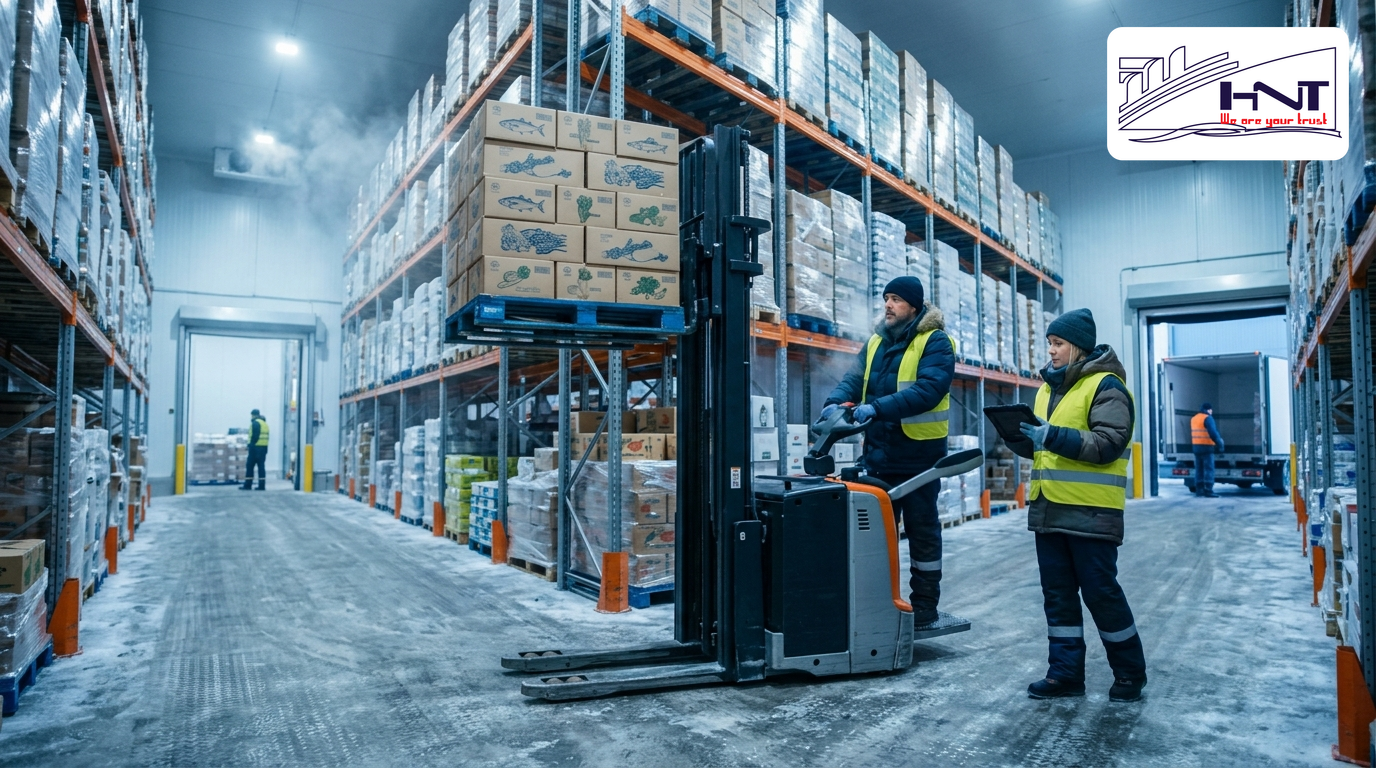
Control points from the loading warehouse to the port
Even short routes carry significant risks. Trucks waiting at gates, a lack of power connections for containers, or drivers turning off refrigeration units can all create hot spots. Therefore, cold-chain planning must account for waiting time, not just driving time.
Temperature logs and data traceability
Temperature logs are commercial evidence of frozen food preservation. They help distinguish whether an issue was caused by the product, refrigerated truck, or shipping line. TCVN 14319:2026 remains in effect and is equivalent to ISO 23412:2026, applying to indirect temperature-controlled cold delivery services.
| Touchpoint | Mandatory control | Evidence of frozen food preservation to retain | Alert threshold |
|---|---|---|---|
| Outbound warehouse | Measure product core temperature | Pre-loading temperature record | Deviation over 2°C |
| Domestic truck | Pre-cool the container | Photo of temperature display | Container has not reached temperature |
| Port yard | Continuous power connection | Yard entry record | Power interruption over 30 minutes |
| Refrigerated container | Correct parameter setting | Data export | Prolonged fluctuation |
| Warehouse | Cross-check the seal | Minutes of receipt of goods | Incorrect seal number |
- Place temperature measurement points at the center of the package, rear door, and middle of the container to detect hot spots.
- Pre-cool the truck body for at least 30 minutes, especially for loose goods packed in foam boxes.
- Open the doors only according to dispatch instructions; do not spend too long manually counting goods in the warehouse yard.
- Attach an independent temperature recorder to high-value shipments or shipments under difficult-to-manage contracts.
- For example, Luc Ngan Select Company transported lychees to Hai Phong Port, reducing warehouse waiting time by four hours.
- For example, Nam Song Hau Cooperative uses dual sensors, keeping exported mangoes to Singapore stable at 9°C.
Practical summary: Do not just rent a refrigerated truck. Buy the capability to prove the temperature for frozen food preservation. A route with complete data is generally easier to handle when claims arise than one based only on verbal commitments.
Standards for refrigerated food trucks and cold containers to control
refrigerated food truck standards must be checked before accepting the truck. Cargo owners need to inspect refrigeration capacity, body tightness, cleanliness, air-distribution floor, and maintenance schedule. A compliant truck helps keep frozen food preservation more stable during domestic transport.
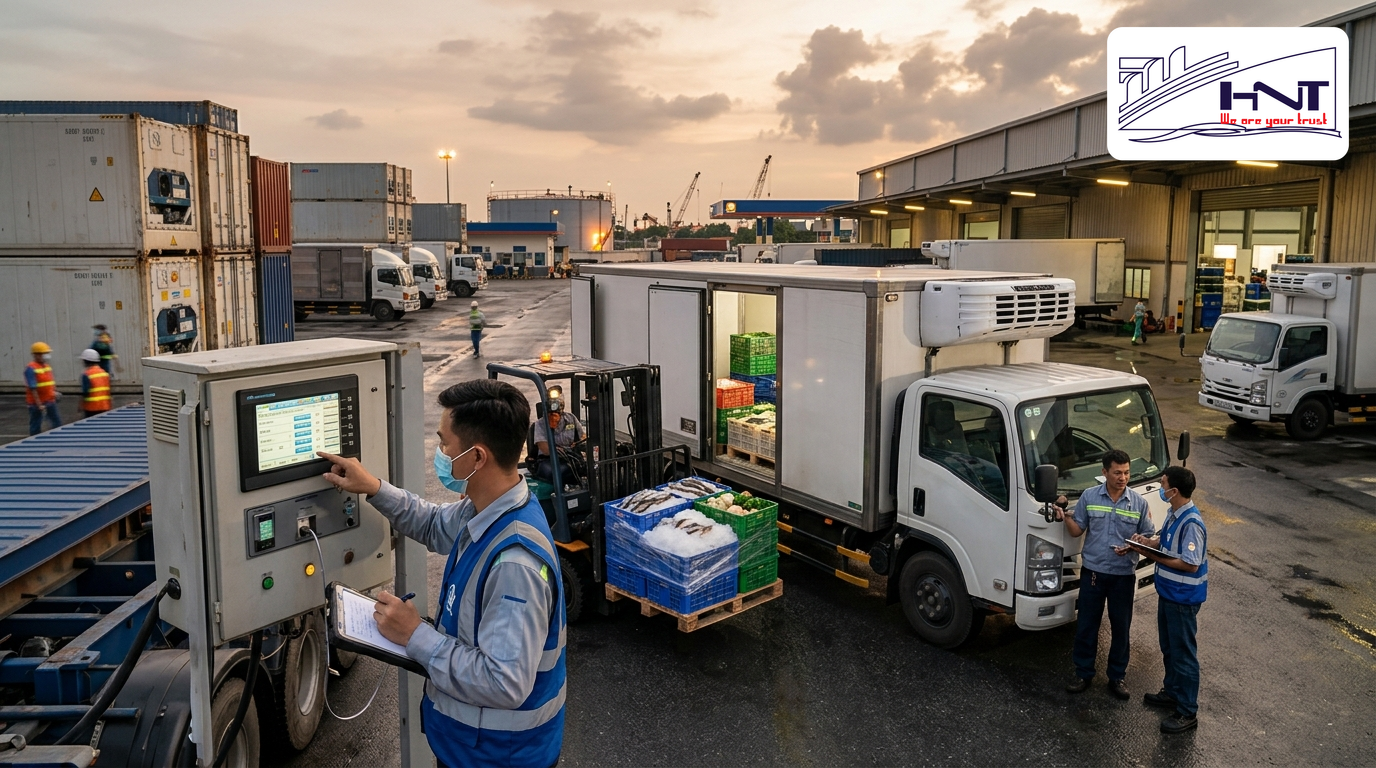
Refrigerated truck specifications before loading
An unsuitable refrigerated truck will create localized heat during frozen food preservation. This often occurs when goods are stacked too close to the cooling unit, block the return-air path, or exceed the load capacity. Based on HNT LOGISTICS experience, frozen goods should leave clearance at the doors and ceiling so cold air can circulate.
Cold container specifications before yard delivery
Refrigerated containers need to be inspected before the trip. Cargo owners should request a pre-trip inspection certificate, inspect the walls and T-floor, and verify ventilation settings. For fresh fruit, incorrect ventilation can cause gas accumulation and accelerate ripening.
| Frozen food preservation equipment | Specifications to check | Documents to request | Suitable application |
|---|---|---|---|
| 1 to 3-ton refrigerated truck | Body tightness, independent refrigeration unit | Cleaning record | Short-distance delivery within Ho Chi Minh City |
| 8 to 15-ton refrigerated truck | Deep cooling, sealed doors | Maintenance schedule | Dong Nai to Cat Lai Port route |
| 20-foot refrigerated container | Temperature setting, ventilated floor | Pre-trip inspection record | Small, high-value shipment |
| 40-foot reefer container | Air circulation, ventilation | Refrigeration unit data | Large export shipment |
| Controlled-atmosphere container | Oxygen, CO2, humidity | Technical configuration | Long-distance fruit transport |
- Require the truck to arrive early for pre-cooling, avoiding loading while the container is still at ambient temperature.
- Check door gaskets, air-distribution floor, and unusual odors before placing goods in the container.
- Do not load goods beyond the refrigerated load line, because frozen food preservation will fail when airflow is obstructed.
- Take a photo of the temperature setting display before sealing and after delivery.
- For example, An Phu Foods Company in Binh Duong switched to a truck with an independent refrigeration unit, reducing temperature deviation by 1.5°C.
- For example, Cao Nguyen Xanh Farm uses a controlled-atmosphere container to Rotterdam, extending fruit firmness by another six days.
Practical summary: When selecting equipment, compare it with the cold container size standards page. This helps avoid booking insufficient volume, inadequate capacity, or the wrong floor-airflow type.
Frozen food preservation for export: documentation, quarantine, and customs clearance
Frozen food preservation does not stop at the cold warehouse. Incorrect documentation can cause goods to remain in the yard for a long time, even when frozen food preservation is maintained at the correct temperature. For agricultural products, seafood, and food, frozen food preservation must go together with quarantine, labeling, and traceability.
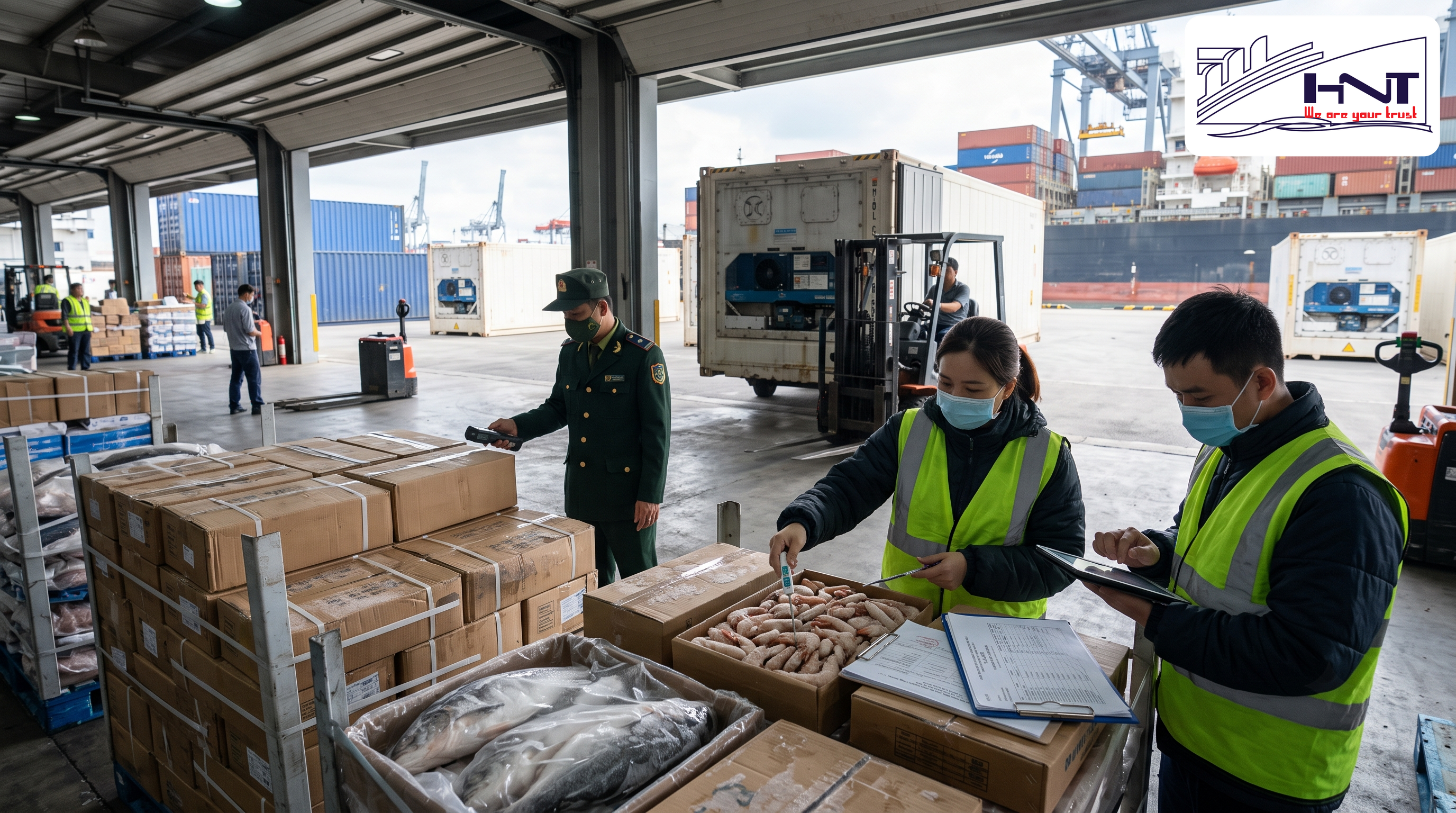
Commercial documents and temperature records
The document set usually includes the contract, commercial invoice, packing list, bill of lading, certificate of origin, and quarantine certificate. The term bill of lading should be understood as evidence of receipt of goods and the carriage contract, not a quality certificate.
Plant quarantine, animal quarantine, and type codes
Các thị trường như Trung Quốc, Hoa Kỳ và Liên Minh Châu Âu thường yêu cầu truy xuất vùng trồng, cơ sở đóng gói hoặc cơ sở chế biến. Hải quan Việt Nam cũng cập nhật địa bàn và phối hợp quản lý qua Nghị định số 153/2026/NĐ-CP, liên quan đến hoạt động hải quan hiện hành.
| Records | Purpose | Common errors | Control method |
|---|---|---|---|
| Packing | Cross-check package count | Incorrect net weight | Match warehouse scale |
| Inspection certificate | Meet import border requirements | Incorrect product name | Compare with commercial label |
| Certificate of origin | Enjoy tax incentives | Incorrect HS Code | Review before declaration |
| Temperature data | Prove the cold chain | Missing transshipment hours | Synchronize time zones |
| Customs declaration form | Export customs clearance | Incorrect type code | Check export purpose |
- Review the HS Code together with the product description before requesting a quarantine certificate or certificate of origin.
- Synchronize the company name, address, and facility code across all commercial documents.
- Store frozen food preservation temperature data according to local time and the destination port's time.
- Check FOB, CIF, or DDP delivery terms before allocating cold-chain responsibilities.
- For example, Huong Bien Ca Mau Company corrected the shrimp description before ETD, avoiding a 24-hour vessel delay.
- For example, Phu Sa Fruit Enterprise in Can Tho added the growing-area code, completing customs clearance in Shanghai one day faster.
Practical summary: According to experts at HNT LOGISTICS, temperature documentation should be considered part of the export documentation set, not an internal warehouse document.
Frozen food preservation: choosing routes and food transportation services
the right food transportation service must balance time, freight cost, and temperature risk. A fast route is not necessarily optimal for frozen food preservation if it lacks a stable power-connection schedule. A cheap route is also unsafe if it increases yard dwell time.

When to choose sea freight, air freight, or multimodal transport
Sea freight is suitable for stable frozen food preservation and large shipments. Air freight is suitable for fresh fruit, samples, or urgent deliveries. Multimodal transport helps reduce waiting time when the main port is congested or refrigerated containers are unavailable.
Assessing freight rates, surcharges, and route-delay risks
The 2026 market is highly volatile. Drewry reported that the container index on 23/07/2026 fell 4% to USD 4,374 per 40-foot container, while the Shanghai to Los Angeles route remained at USD 5,878. This shows that cold-chain contracts need to allow for freight-rate fluctuations.
| Reference route | Method | Expected duration | Key points to monitor |
|---|---|---|---|
| Cat Lai Port to Shanghai | Sea | 4 to 7 days | Power connection at yard and quarantine |
| Hai Phong Port to Long Beach | Sea | 23 to 30 days | Container storage fees and vessel schedule |
| Ho Chi Minh City to Singapore | Air freight | 1 to 2 days | Airport waiting time |
| Dong Nai to Cat Lai Port | Road | 3 to 6 hours | Gate congestion and yard delivery schedule |
| Da Nang to Busan | Multimodal transport | 7 to 12 days | Transshipment and sealing |
- Prioritize routes with stable vessel schedules, because refrigerated cargo faces significant risk when a sailing is missed.
- Compare the total cost of frozen food preservation, including sea freight, yard electricity, and cold-chain surcharges.
- Book refrigerated containers early during the fruit peak season, especially on routes to China and the United States.
- Use sea freight routes to the United States when a longer plan is needed for high-value frozen goods.
- For example, Dai Loc Seafood Company transported pangasius from Hai Phong Port to Long Beach, reducing costs by 9% by securing the schedule early.
- For example, Binh Phuoc Durian Garden chose air freight to Dubai, reducing delivery time from eight days to two days.
Practical summary: A good route is one that preserves both temperature and documentation. For sensitive shipments, schedule yard delivery, quarantine, and vessel departure as part of one unified plan.
Frozen food preservation is an operational, legal, and commercial challenge. Businesses need to control frozen food preservation from the product core to delivery documentation. When export markets grow but freight rates fluctuate, every hot spot can become a real cost.
- Determine the frozen food preservation temperature range by product group, rather than using one common level.
- Pre-cool trucks, containers, and storage compartments before loading goods into the equipment.
- Keep an independent temperature log to protect the business when quality claims arise.
- Check quarantine certificates, certificates of origin, and HS Codes before declaration.
- Compare routes by total cold-chain cost, not just the listed transportation rate.
- Book refrigerated containers and yard delivery schedules early during the peak agricultural and seafood season.
- Coordinate warehouses, drivers, shipping lines, and import agents using one unified checklist.
If your business needs to build a cold-chain process for agricultural products, seafood, or fresh fruit, HNT LOGISTICS can support you as a freight forwarding and logistics partner for Vietnamese exporters nationwide. The right approach to frozen food preservation starts with the temperature range, then moves on to selecting the truck, container, route, and documentation. With its position as a professional transportation provider, HNT LOGISTICS is committed to delivering comprehensive supply chain solutions, helping Vietnamese businesses confidently conquer global markets. Contact us today at 8A Hoang Minh Giam, Ho Chi Minh City or via the marketing email at hntshipping.com for quotation support!